Dolce far niente, John Ashbery, Richard Blanco, Stacie Cassarino, Silas Weir Mitchell


Dolce far niente


Nr. 512 door Roel Rolleman, 1982


The Painter

Sitting between the sea and the buildings
He enjoyed painting the sea’s portrait.
But just as children imagine a prayer
Is merely silence, he expected his subject
To rush up the sand, and, seizing a brush,
Plaster its own portrait on the canvas.

So there was never any paint on his canvas
Until the people who lived in the buildings
Put him to work: “Try using the brush
As a means to an end. Select, for a portrait,
Something less angry and large, and more subject
To a painter’s moods, or, perhaps, to a prayer.”

How could he explain to them his prayer
That nature, not art, might usurp the canvas?
He chose his wife for a new subject,
Making her vast, like ruined buildings,
As if, forgetting itself, the portrait
Had expressed itself without a brush.

Slightly encouraged, he dipped his brush
In the sea, murmuring a heartfelt prayer:
“My soul, when I paint this next portrait
Let it be you who wrecks the canvas.”
The news spread like wildfire through the buildings:
He had gone back to the sea for his subject.

Imagine a painter crucified by his subject!
Too exhausted even to lift his brush,
He provoked some artists leaning from the buildings
To malicious mirth: “We haven’t a prayer
Now, of putting ourselves on canvas,
Or getting the sea to sit for a portrait!”

Others declared it a self-portrait.
Finally all indications of a subject
Began to fade, leaving the canvas
Perfectly white. He put down the brush.
At once a howl, that was also a prayer,
Arose from the overcrowded buildings.

They tossed him, the portrait, from the tallest of the buildings;
And the sea devoured the canvas and the brush
As though his subject had decided to remain a prayer.


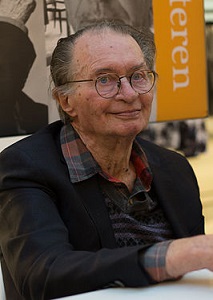
John Ashbery (28 juli 1927 – 3 september 2017)
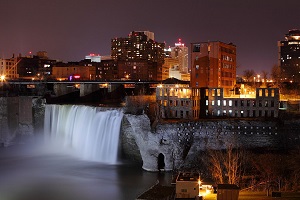
De High Falls in Rochester, New York, de geboorteplaats van John Ashbery


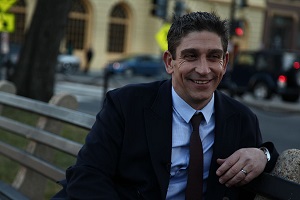
De Amerikaanse dichter en schrijver Richard Blanco werd geboren op 15 februari 1968 in Madrid. Zie ook alle tags voor Richard Blanco op dit blog.


Until we could (Fragment)

I knew it then, in that room where we found
for the first time our eyes, and everything—
even the din and smoke of the city around us—
disappeared, leaving us alone as if we stood
the last two in the world left capable of love,
or as if two mirrors face-to-face with no end
to the light our eyes could bend into infinity.

I knew since I knew you—but we couldn’t..

I caught the sunlight pining through the shears,
traveling millions of dark miles simply to graze
your skin as I did that first dawn I studied you
sleeping beside me: Yes, I counted your eyelashes,
read your dreams like butterflies flitting underneath
your eyelids, ready to flutter into the room. Yes,
I praised you like a majestic creature my god forgot
to create, till that morning of you suddenly tamed
in my arms, first for me to see, name you mine.
Yes to the rise and fall of your body breathing,
your every exhale a breath I took in as my own
wanting to keep even the air between us as one.

Yes to all of you. Yes I knew, but still we couldn’t..

I taught you how to dance Salsa by looking
into my Caribbean eyes, you learned to speak
in my tongue, while teaching me how to catch
a snowflake in my palms and love the grey
clouds of your grey hometown. Our years began
collecting In glossy photos time-lining our lives
across shelves and walls glancing back at us:
Us embracing in some sunset, more captivated
by each other than the sky brushed plum and rose.
Us claiming some mountain that didn’t matter
as much our climbing it, together. Us leaning
against columns of ruins as ancient as our love
was new, or leaning into our dreams at a table
flickering candlelight in our full-mooned eyes.


Richard Blanco (Madrid, 15 februari 1968)


De Amerkiaanse dichteres en schrijfster Stacie Cassarino werd geboren op 15 februari 1975 in Hartford, Connecticut. Zie ook alle tags voor Stacie Cassarino op dit blog.


In the Kitchen

It’s right before you drive away:
our limbs still warm with sleep,
coffee sputtering out, the north
wind, your hips pressing me
hard against the table. I like it hard
because I need to remember this.
I want to say harder. How we must
look to the road that’s gone,
to the splayed morning of cold
butter and inveterate greed.
Light comes and goes in the field.
Oranges in a bowl, garlic, radio.
In the story of us, no one wins.
Isolation is a new theme
someone says. By now
I’ve invented you. Most people
don’t like to touch dead things.
That’s what my friend tells me
when I find my fish on the floor.
It must have wanted an out.
Sometimes my desire scares me.
Sometimes I watch football
and think: four chances
is enough to get there. But
we don’t have helmets.
I want to say harder,
I can take it, but
there’s no proof I can.


Northwest

I admit, I am afraid of isolation,

and of the way the land breaks off here
into pieces,

and of the woman who says forever
moving her tongue along my skin
like she means it.

If I believe her, I will suffer.
If I don’t believe her, I will suffer.

Who has never wanted to be unneeding?

One year since I’ve seen the mountains
or had proof love could be enough.
The mind loves hope.

Dumb heart, come down from the walnut tree.
All the distance is ultimately a lie.

In Alaska, the heart was a fourteen-pound King.
In Seattle, she held a fishing pole to the sky.
She waited.

I will remember this version of me.
I will remember loganberry, fishscales, the future,
the letter that says:
love can sidewind.

Dear god, it is years since I’ve prayed.
I understand the birds are holy.
I understand the body leads us to love, or

this is one way of knowing the world.


 cassarino
Stacie Cassarino (Hartford, 15 februari 1975)


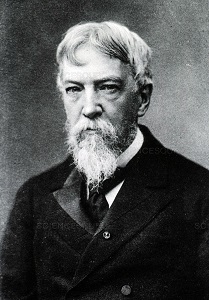
De Amerikaanse dichter, schrijver en arts Silas Weir Mitchell werd geboren op 15 februari 1829 in Philadelphia, Pennsylvania, als zoon van de arts John Kearsley Mitchell. Zie ook alle tags voor Silas Weir Mitchell op dit blog.


A Camp In Three Lights

Against the darkness sharply lined
Our still white tents gleamed overhead,
And dancing cones of shadow cast
When sudden flashed the camp-fire red,

Where fragrant hummed the moist swamp-spruce,
And tongues unknown the cedar spoke,
While half a century’s silent growth
Went up in cheery flame and smoke.

Pile on the logs! A flickering spire
Of ruby flame the birch-bark gives,
And as we track its leaping sparks,
Behold in heaven the North-light lives!

An arch of deep, supremest blue,
A band above of silver shade,
Where, like the frost-work’s crystal spears,
A thousand lances grow and fade,

Or shiver, touched with palest tints
Of pink and blue, and changing die,
Or toss in one triumphant blaze
Their golden banners up the sky,

With faint, quick, silken murmurings,
A noise as of an angel’s flight,
Heard like the whispers of a dream
Across the cool, clear Northern night.

Our pipes are out, the camp-fire fades,
The wild auroral ghost-lights die,
And stealing up the distant wood
The moon’s white spectre floats on high,

And, lingering, sets in awful light
A blackened pine-tree’s ghastly cross,
Then swiftly pays in silver white
The faded fire, the aurora’s loss.


Silas Weir Mitchell (15 februari 1829 – 4 januari 1914)


Zie voor nog meer schrijvers van de 15e februari ook mijn blog van 15 februari 2018 en ook mijn blog van 15 februari 2015 deel 1 en eveneens deel 2.

In Memoriam John Ashbery

In Memoriam John Ashbery

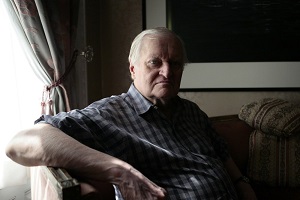
De Amerikaanse dichter John Ashbery is gisteren op 90-jarige leeftijd overleden. John Ashbery werd geboren op 28 juli 1927 in Rochester, New York. Zie ook alle tags voor John Ashberry op dit blog en ook mijn blog van 28 juli 2010.


How to Continue

Oh there once was a woman
and she kept a shop
selling trinkets to tourists
not far from a dock
who came to see what life could be
far back on the island.

And it was always a party there
always different but very nice
New friends to give you advice
or fall in love with you which is nice
and each grew so perfectly from the other
it was a marvel of poetry
and irony

And in this unsafe quarter
much was scary and dirty
but no one seemed to mind
very much
the parties went on from house to house
There were friends and lovers galore
all around the store
There was moonshine in winter
and starshine in summer
and everybody was happy to have discovered
what they discovered

And then one day the ship sailed away
There were no more dreamers just sleepers
in heavy attitudes on the dock
moving as if they knew how
among the trinkets and the souvenirs
the random shops of modern furniture
and a gale came and said
it is time to take all of you away
from the tops of the trees to the little houses
on little paths so startled

And when it became time to go
they none of them would leave without the other
for they said we are all one here
and if one of us goes the other will not go
and the wind whispered it to the stars
the people all got up to go
and looked back on love


John Ashbery (28 juli 1927 – 3 september 2017)

Remco Campert, Malcolm Lowry, Herman Stevens, Gerard Manley Hopkins, Stephan Sanders, Angélica Gorodischer, Shahyar Ghanbari, John Ashbery, Drew Karpyshyn

De Nederlandse dichter en schrijver Remco Campert werd op 28 juli 1929 in Den Haag geboren. Zie ook alle tags voor Remco Campert op dit blog.


Den Haag

Overal bevuilde daken
groen koper van kerken
brakke lucht uitgebeten huizen
afgegraasd grasland verwaarloosde zee.
O en de trieste trage gele trams
en het kippevel van de verwaaide straten.
Heel Den Haag was één Panorama Mesdag
elke dag een verregende koninginnedag.

Mijn grootvader ongeschoren
dwaalde als Strindberg door het huis
gevangen in zijn eigen kamerjas.

En zo speelziek en verlegen als ik was
met mijn kleine rubberdolk
beheerste dolleman
pleegde ik sluipmoord op een schemerlamp
of op zolder het oude lila kussen.


Bandrecorder, eenvoudig

Je hoeft niet te praten
ook geknisper van kranten komt duidelijk over
of als je slikt keelschraapt
een schoen uitschopt

het suizen van het gas
de tik van het licht uit
de telefoon buiten de auto’s
mijn korte adem

maar als je toch iets zegt
zeg dan liever iets aardigs
iets dat i nog eens af kan draaien
als je weg bent.


Zo lag ik wel

(Zo lag ik wel
en lig ik nog: liefde
vernieuwt en en verdiept zich.

Steeds meer huiden wierp ik af-
nu eindelijk in mijn eigen
laatste vel,

ben ik kwetsbaarder dan ooit)


Remco Campert (Den Haag, 28 juli 1929)
Lees verder “Remco Campert, Malcolm Lowry, Herman Stevens, Gerard Manley Hopkins, Stephan Sanders, Angélica Gorodischer, Shahyar Ghanbari, John Ashbery, Drew Karpyshyn”

Stephan Sanders, Shahyar Ghanbari, John Ashbery, Drew Karpyshyn, Collin Higgins, Józef Ignacy Kraszewski, Hilde Van Cauteren

De Nederlandse schrijver, columnist, presentator en essayist Stephan Sanders werd geboren in Haarlem op 28 juli 1961. Zie ook alle tags voor Stephan Sanders op dit blog.


Uit: Kleurling

„Of eigenlijk moet ik het anders vertellen:

Paramaribo is de stad waarmee ik voor het eerst werd geconfronteerd in Amsterdam, toen ik daar als 17-jarige student net was komen wonen. In een avondwinkel werd ik aangesproken door een mij vriendelijk toeknikkende man, die iets aardigs tegen mij zei, dat jammer genoeg ook onverstaanbaar was. Hij zei het nog een keer, iets luider, en ik begon van de schrik maar eens in het Engels terug te praten. “Ben jij geen Surinamer dan?” vroeg hij uiteindelijk beteuterd. Ik geloof dat hij dat vooral sneu vond voor mij, zo’n niet-blanke jongen in Nederland, die niet eens de geringste notie had van het

Sranan.

Paramaribo is dus de stad die ik in Amsterdam heb leren kennen, vooruitlopend op een later bezoek, en Nederlandse Surinamers hebben me sindsdien zo’n beetje geadopteerd als een van hen. Ze herkende mij als een ‘rode neger’ en besloten dat ik precies leek op een neef of achterneef die ook nog ergens in de familie rondzwierf. Ik paste daar moeiteloos bij.

Ik vond dat deel van ze, want Nederlanders zijn, zeker de laatste tijd niet zo scheutig met het delen van hun nationaliteit.

En toen kreeg ik een Surinaamse geliefde, een man van mijn leeftijd die op achtduizend kilometer afstand van mij is opgegroeid, en die precies dezelfde kinderrijmpjes heeft geleerd. Ook een bruine man, ook in het Nederlands gedrenkt, als een onbekend broertje op afstand.

Inmiddels ben ik vaak in Paramaribo geweest. De laatste keer dat ik er was, liet ik mij ontvallen dat het straatbeeld me zo aan Kaapstad deed denken. Ik bedoel niet de vier- of zesbaans autowegen die Kaapstad kent en die in Paramaribo zo goed als afwezig zijn; niet de gebouwen van downtown Capetown, waarbij Paramaribo provinciaal afsteekt. Ik bedoel de mensen, het overheersende beeld van allerlei soorten bruin op straat (licht-, middel-, donker-bruin), de onnavolgbare raciale mixen die je op de markt tegenkomt, in busjes.“


Stephan Sanders (Haarlem, 28 juli 1961)

Lees verder “Stephan Sanders, Shahyar Ghanbari, John Ashbery, Drew Karpyshyn, Collin Higgins, Józef Ignacy Kraszewski, Hilde Van Cauteren”

Remco Campert, Malcolm Lowry, Gerard Manley Hopkins, Stephan Sanders, Drew Karpyshyn, John Ashbery, Colin Higgins, Józef Kraszewski


De Nederlandse dichter en schrijver Remco Campert werd op 28 juli 1929 in Den Haag geboren. Zie ook alle tags voor Remco Campert op dit blog.


Zondag


Zondag had ik me voorgesteld
in de hangmat door te brengen
tussen de stevige stammen van de bomen
dicht boven de aarde
en van de hemel ver genoeg verwijderd
om me een mens op zijn plaats te voelen.


Maar het regende.


Nu is er weer dat zomerse godlof


Nu is er weer dat zomerse godlof
van meisjes die in korte rokken
door alle straten fietsen
in ons land, ons land gezegend
met pastoors en dominees
die met schuine oogjes kijken
naar dat deksels jonge volkje
dat met naakte knietjes
door hun straten fietst godlof


en in de zwoele avondlucht
in hun seringentuin
werken zij verder
de pastoors en dominees
aan het gemengd-zwemverbod


Tegen de zomer


Niets is vernielender dan de warmte
De kou houdt in stand, is statisch;
de warmte beweegt met de vernieling mee
en wekt een valse schijn
van zon, gezondheid, zinvolle zonde


De warmte vleit, paait, belooft,
maakt stofgoud van stof
liefde van begeerte,
poëzie van leugens
Ik hou niet van de warmte,
broedplaats van muggen en maden
poel van limonade en andere slopende dranken
Schenk mij liever klare
kou en koffie,
destructie bevroren, duidelijk zichtbaar
en aanvaardbaar
Wie in de kou zit schept geen illusies,
Maar schept sneeuw, vrij ongenaakbaar,
in de menselijke
soms bovenmenselijke winter.


Campert

Remco Campert (Den Haag, 28 juli 1929)


De Engelse dichter, verhalen- en romanschrijver Malcolm Lowry werd geboren 28 juli 1909 in Birkenhead Merseyside. Zie ook alle tags voor Malcolm Lowry op dit blog.


Uit: Under the Volcano


M. Laruelle finished his drink. He rose and went to the parapet; resting his hands one on each tennis racquet, he gazed down and around him: the abandoned jai-alai courts, their bastions covered with grass, the dead tennis courts, the fountain, quite near in the centre of the hotel avenue, where a cactus farmer had reined up his horse to drink. Two young Americans, a boy and a girl, had started a belated game of ping-pong on the verandah of the annex below. What had happened just a year ago to-day seemed already to belong in a different age. One would have thought the horrors of the present would have swallowed it up like a drop of water. It was not so. Though tragedy was in the process of becoming unreal and meaningless it seemed one was still permitted to remember the days when an individual life held some value and was not a mere misprint in a communique. He lit a cigarette. Far to his left, in the northeast, beyond the valley and the terraced foothills of the Sierra Madre Oriental, the two volcanoes, Popocatepetl and Itaccihuatl, rose clear and magnificent into the sunset. Nearer, perhaps ten miles distant, and on a lower level than the main valley, he made out the village of Tomalin, nestling behind the jungle, from which rose a thin blue scarf of illegal smoke, someone burning wood for carbon. Before him, on the other side of the American highway, spread fields and groves, through which meandered a river, and the Alcpancingo road. The watchtower of a prison rose over a wood between the river and the road which lost itself further on where the purple hills of a Dore Paradise sloped away into the distance. Over in the town the fights of Quauhnahuac’s one cinema, built on an incline and standing out sharply, suddenly came on, flickered off, came on again. “No se puede vivir sin amar,” Mr. Laruelle said . “As that estupido inscribed on my house.”

“Come, amigo, throw away your mind,” Dr. Vigil said behind him.

“–But hombre, Yvonne came back! That’s whatI shall never understand. She came back to the man!” M. Laruelle returned to the table where he poured himself and drank a glass of Tehuacan mineral water. He said:

“Salud y pesetas.”

“Y tiempo Para gastarlas,” his friend returned thoughtfully.”


Lowry

Malcolm Lowry (28 juli 1909  – 26 juni 1957)


De Engelse dichter en Jezuïet Gerard Manley Hopkins werd geboren op 28 juli 1844 in Stratford, Essex. Zie ook alle tags voor Gerard Manley Hopkins op dit blog.


AS kingfishers catch fire, dragonflies dráw fláme


AS kingfishers catch fire, dragonflies dráw fláme;

As tumbled over rim in roundy wells

Stones ring; like each tucked string tells, each hung bell’s

Bow swung finds tongue to fling out broad its name;

Each mortal thing does one thing and the same:

Deals out that being indoors each one dwells;

Selves—goes itself; myself it speaks and spells,

Crying Whát I do is me: for that I came.


Í say móre: the just man justices;

Kéeps gráce: thát keeps all his goings graces;

Acts in God’s eye what in God’s eye he is—

Chríst—for Christ plays in ten thousand places,

Lovely in limbs, and lovely in eyes not his

To the Father through the features of men’s faces.


The Handsome Heart:
at a Gracious Answer


‘BUT tell me, child, your choice; what shall I buy
You?’ — ‘Father, what you buy me I like best.’
With the sweetest air that said, still plied and pressed,
He swung to his first poised purport of reply.


What the heart is! which, like carriers let fly —
Doff darkness, homing nature knows the rest —
To its own fine function, wild and self-instressed,
Falls light as ten years long taught how to and why.


Mannerly-hearted! more than handsome face —
Beauty’s bearing or muse of mounting vein,
All, in this case, bathed in high hallowing grace…


Of heaven what boon to buy you, boy, or gain
Not granted? — Only … O on that path you pace
Run all your race, O brace sterner that strain!


TO seem the stranger lies my lot, my life


TO seem the stranger lies my lot, my life
Among strangers. Father and mother dear,
Brothers and sisters are in Christ not near
And he my peace my parting, sword and strife.


England, whose honour O all my heart woos, wife
To my creating thought, would neither hear
Me, were I pleading, plead nor do I: I wear-
y of idle a being but by where wars are rife.


  I am in Ireland now; now I am at a thírd
Remove. Not but in all removes I can
Kind love both give and get. Only what word


Wisest my heart breeds dark heaven’s baffling ban
Bars or hell’s spell thwarts. This to hoard unheard,
Heard unheeded, leaves me a lonely began.


hopkins_small

Gerard Manley Hopkins (28 juli 1844 – 8 juni 1889)


De Nederlandse schrijver, columnist, presentator en essayist Stephan Sanders werd geboren in Haarlem op 28 juli 1961. Sanders studeerde sinds 1979 filosofie en politieke wetenschappen aan de Universiteit van Amsterdam. Sinds 1986 publiceert hij in onder meer in De Groene Amsterdammer, de Volkskrant en heeft hij zijn eigen vaste column in Vrij Nederland en in onzeWereld. Bij de VARA presenteerde hij onder andere het radioprogramma Ophef en Vertier. Met Anil Ramdas presenteerde Sanders Het Blauwe licht bij de VPRO. Hij is regelmatig gastcolumnist bij Theodor Holmans Desmet live, sinds 2008 OBA Live. Eén keer per week presenteert hij bij de NOS het populaire laatavond-nieuwsprogramma op Radio 1 Met het oog op morgen.

Werk o.a.: Ai Jamaica! (1991), Liefde is voor vrouwen (2002), Zon, Zee, Oorlog (2007)


Uit: Heilige homo’s (column)

“Er is iets raars gebeurd met homoseksualiteit. Als je mij dertig jaar geleden had verteld dat de christen-democraten een minister voor Landbouw zouden leveren die openlijk lesbisch is, zou ik gewezen hebben op drie onwaarschijnlijkheden. Landbouw, pot, CDA, dat is te veel van het goede.
Enfin, die droom is dus heel gewoontjes uitgekomen, en er is eigenlijk niemand die er nu nog om moet giechelen. De homo is officieel het uithangbord geworden van het goede Nederland, het Nederland waarmee iedereen zich wil vereenzelvigen. Dat heeft de homo voor een belangrijk deel te danken aan de K-Marokkaan, die ervoor heeft gezorgd dat Nederlanders moesten kiezen. Wordt het a. of b. en uitweg c. is afgesloten. Massaal werd er op de homo gestemd, al was het maar om van die K-Marokkanen af te zijn, en zo werd de homo zo’n beetje het geweten van de natie. Gaat het goed met die lui, dan gaat het goed met Nederland. De kanaries in de mijnschacht.
Vandaar ook de ontreddering als er ineens sprake is van slechte homo’s, homo’s die anderen willens en wetens met hiv besmetten: iedereen begint volautomatisch een omslachtig verhaal, dat we moeten oppassen homo’s niet te stigmatiseren. Het is zoals we dertig jaar geleden niet mochten zeggen: die zakkenroller, dat is een Marokkaan. Nee, dat was een jongen die tussen twee culturen viel en daarom wel gedwongen was de portefeuille van die vrouw tot zich te nemen.”


sanders1

Stephan Sanders (Haarlem, 28 juli 1961)


De Canadese schrijver Drew Karpyshyn werd geboren op 28 juli 1971 in Edmonton. Zie ook alle tags voor Drew Karpyshyn op dit blog.


Uit: Mass Effect: Revelation


Eight Years Later

Staff Lieutenant David Anderson, executive officer on the SSV Hastings, rolled out of his bunk at the first sound of the alarm. His body moved instinctively, conditioned by years of active service aboard Alliance Systems Space Vessels. By the time his feet hit the floor he was already awake and alert, his mind evaluating the situation.

The alarm rang again, echoing off the hull to rebound throughout the ship. Two short blasts, repeating over and over. A general call to stations. At least they weren’t under immediate attack.

As he pulled his uniform on, Anderson ran through the possible scenarios. The Hastings was a patrol vessel in the Skyllian Verge, an isolated region on the farthest fringes of Alliance space. Their primary purpose was to protect the dozens of human colonies and research outposts scattered across the sector. A general call to stations probably meant they’d spotted an unauthorized vessel in Alliance territory. Either that or they were responding to a distress call. Anderson hoped it was the former.

It wasn’t easy getting dressed in the tight confines of the sleeping quarters he shared with two other crewmen, but he’d had lots of practice. In less than a minute he had his uniform on, his boots secured, and was moving quickly through the narrow corridors toward the bridge, where Captain Belliard would be waiting for him. As the executive officer it fell to Anderson to relay the captain’s orders to the enlisted crew . . . and to make sure those orders were properly carried out.”


Karpyshyn

Drew Karpyshyn (Edmonton, 28 juli 1971)


De Amerikaanse dichter en schrijver John Ashbery werd geboren op 28 juli 1927 in Rochester. Zie ook alle tags voor John Ashbery op dit blog.


My Philosophy of Life


Just when I thought there wasn’t room enough
for another thought in my head, I had this great idea–
call it a philosophy of life, if you will.Briefly,
it involved living the way philosophers live,
according to a set of principles. OK, but which ones?

That was the hardest part, I admit, but I had a
kind of dark foreknowledge of what it would be like.
Everything, from eating watermelon or going to the bathroom
or just standing on a subway platform, lost in thought
for a few minutes, or worrying about rain forests,
would be affected, or more precisely, inflected
by my new attitude.I wouldn’t be preachy,
or worry about children and old people, except
in the general way prescribed by our clockwork universe.
Instead I’d sort of let things be what they are
while injecting them with the serum of the new moral climate
I thought I’d stumbled into, as a stranger
accidentally presses against a panel and a bookcase slides back,
revealing a winding staircase with greenish light
somewhere down below, and he automatically steps inside
and the bookcase slides shut, as is customary on such occasions.
At once a fragrance overwhelms him–not saffron, not lavender,
but something in between.He thinks of cushions, like the one
his uncle’s Boston bull terrier used to lie on watching him
quizzically, pointed ear-tips folded over. And then the great rush
is on.Not a single idea emerges from it.It’s enough
to disgust you with thought.But then you remember something
William James
wrote in some book of his you never read–it was fine, it had the
fineness,
the powder of life dusted over it, by chance, of course, yet
still looking
for evidence of fingerprints. Someone had handled it
even before he formulated it, though the thought was his and
his alone.

It’s fine, in summer, to visit the seashore.
There are lots of little trips to be made.
A grove of fledgling aspens welcomes the traveler.Nearby
are the public toilets where weary pilgrims have carved
their names and addresses, and perhaps messages as well,
messages to the world, as they sat
and thought about what they’d do after using the toilet
and washing their hands at the sink, prior to stepping out
into the open again.Had they been coaxed in by principles,
and were their words philosophy, of however crude a sort?
I confess I can move no farther along this train of thought–
something’s blocking it.Something I’m
not big enough to see over.Or maybe I’m frankly scared.
What was the matter with how I acted before?
But maybe I can come up with a compromise–I’ll let
things be what they are, sort of.In the autumn I’ll put up jellies
and preserves, against the winter cold and futility,
and that will be a human thing, and intelligent as well.
I won’t be embarrassed by my friends’ dumb remarks,
or even my own, though admittedly that’s the hardest part,
as when you are in a crowded theater and something you say
riles the spectator in front of you, who doesn’t even like the idea
of two people near him talking together. Well he’s
got to be flushed out so the hunters can have a crack at him–
this thing works both ways, you know. You can’t always
be worrying about others and keeping track of yourself
at the same time.That would be abusive, and about as much fun
as attending the wedding of two people you don’t know.
Still, there’s a lot of fun to be had in the gaps between ideas.
That’s what they’re made for!Now I want you to go out there
and enjoy yourself, and yes, enjoy your philosophy of life, too.
They don’t come along every day. Look out!There’s a big one…


John_Ashbery

John Ashbery (Rochester,  28 juli 1927)


Zie voor onderstaande schrijvers ook mijn blog van 28 juli 2007.

 De Australische schrijver, regisseur en draaiboekauteur Colin Higgins werd geboren op 28 juli 1941 in Nouméa, Nieuw Caledonië.

De Poolse schrijver Józef Ignacy Kraszewski werd geboren op 28 juli 1812 in Warschau.

Remco Campert, Malcolm Lowry, Gerard Manley Hopkins, Colin Higgins, Józef Kraszewski, Drew Karpyshyn, John Ashbery


De Nederlandse dichter en schrijver Remco Campert werd op 28 juli 1929 in Den Haag geboren. Zie ook alle tags voor Remco Campert op dit blog.


Berchtesgaden


Hier hadden wij plezier,

Nietwaar? Terwijl sneeuw zich ophoopte

En vorst op ramen oorlogskaarten sloeg;

Terwijl gidsen verdwaalden en touristen

Langs lakens in de kloven daalden

Hadden wij wel plezier

In ons buitenhuis van liefde.


Soms dronken wij cognac, een nachtlang,

En schaakten met vrienden, nieuwe en

Oude kameraden. Beheerst bewogen zich

De vrouwen – neen eerder ontspannen –

Door de kamer, zorgden voor koffie,

Streelden ons haar en verbrandden

De kranten, die wij niet lazen.


Toch zou spoedig de morgen komen

Die de haard gedoofd vond en

Herinnering aan de avond tevoren

Een bittere smaak in de mond; jij

En ik in bed, de dekens opgetrokken,

Bang luisterend hoe dorpsbewoners

Ruiten versplinterden en

Vernieling begon.


Te hard geschreeuwd?


Nu Roland Holst oud geworden is

en vierregelrijmen wisselt met Vestdijk,

weggelopen demonen tracht terug te roepen,

en men Voeten een belangrijk dichter vindt,

wordt het tijd dat wij iets laten horen,

een stem dwars door puinstof heen,

die glipt door de spijlen van het bedskelet,

die nooit de baard in de keel wil hebben,

die wil bevechten een groot geluk of ongeluk

(een klein geluk is geen geluk),

die door schade en schande

nooit wijzer wil worden.

Een stem, die door alle huizen zingt

het water doet overkoken en

de stoppen der berusting doet doorslaan.

Een stem, waarvan het geluid zich voortplant

door de buizen onder de vermoeide stad

en die antennedraden op maanlichtdaken

doet trillen, trillen, trillen …

Zo’n stem; eerder rusten wij niet.


Nacht

Wereld van aarde,
alle lichten uit.

Slapend lichaam van grond,
geurige lieve mandarijn,

hangend aan je gedroomde takje
in de nachtgaard.

Regen in juli,
liefde in woorden.

Je lichaam slaapt
als de schim van jonge bomen.


campert

Remco Campert (Den Haag, 28 juli 1929)


De Engelse dichter, verhalen- en romanschrijver Malcolm Lowry werd geboren 28 juli 1909 in Birkenhead Merseyside. Behalve Under the volcano publiceerde Lowry nog een korte roman Ultramarine (1933), op basis van zijn ervaringen als matroos op de wilde vaart, en verscheen postuum nog Lunar caustic. Lowry bereisde de halve wereld en woonde voor langere tijd in Mexico en Canada, waar hij met zijn tweede Vrouw Margerie Bonner leefte in een hutje aan het water. Lowry had twee obsessies: schrijven en drinken, tot de dood erop volgt: ‘Geen uur, geen ogenblik van mijn dronkenschap, mijn constante sterven was verspild: er is geen druppel mescal die ik niet in puur goud heb veranderd, geen borrel die ik niet heb laten zingen.
De roman Under the volcano, waar Lowry vanaf 1936 tien jaar lang als een bezetene aan heeft gewerkt, werd in 1947 zowel in Amerika als in Engeland gepubliceerd. Lowry had het drie keer herschreven. Dertien uitgevers hadden zijn manuscript afgewezen. Lowry besteedde daarop jaren aan het herschrijven en het verdiepen van de magische en mythische elementen. De uitgave daarna was een groot succes. Under the Volcano werd met Albert Finney in 1985 ook succesvol verfilmd door John Huston. Postuum verscheen behalve Lunar caustic ook nog de onvoltooide roman Dark as the Grave Wherein My Friend Is Laid.


Uit: Under the Volcano

 “Slightly to the right and below them, below the gigantic red evening, whose reflection bled away in the deserted swimming pools scattered everywhere like so many mirages, lay the peace and sweetness of the town. It seemed peaceful enough from where they were sitting. Only if one listened intently, as M. Laruelle was doing now, could one distinguish a remote confused sound–distinct yet somehow inseparable from the minute murmuring, the tintinnabulation of the mourners-as of singing, rising and failing, and a steady trampiing-the bangs and cries of the fiesta that had been going on all day.

M. Laruelle poured himself another anis. He was drinking am’s because it reminded him of absinthe. A deep flush had suffused his face, and his hand trembled slightly over the bottle, from whose label a florid demon brandished apitchfork at him.

“–I meant to persuade him to go away and get dealcoholise,” Dr. Vigil was saying. He stumbled over the word in French and continued in English. “But I was so sick myself that day after the ball that I suffer, physical, really. That is very bad, for we doctors must comport ourselves like apostles. You remember, we played tennis that day too. Well, after I looked the Consul ‘in his garden I sended a boy down to see if he would come for a few minutes and knock my door, I would appreciate it to him, if not, please write me a note, if drinking have not killed him already.”

M. Laruelle smiled.

“But they have gone,” the other went on, “and yes, I think to ask you too that day if you had looked him at his house.”

“He was at my house when you telephoned, Arturo.”

“Oh, I know, but we got so horrible drunkness that night before, so perfectamente borracho, that it seems to me, the Consul is as sick as I am.” Dr. Vigil shook his head. “Sickness is not only in body, but in that part used to be call: soul. Poor your friend, he spend his money on earth in such continuous tragedies.”


Lowry-Paris

Malcolm Lowry (28 juli 1909  – 26 juni 1957)


De Engelse dichter en Jezuïet Gerard Manley Hopkins werd geboren op 28 juli 1844 in Stratford, Essex. Hij ging naar school op Highgate in Hampstead en vervolgens naar Oxford in 1863. Aan die universiteit kreeg hij de Governor’s Gold Medal voor Latijnse poëzie en ook nog eens de Headmaster’s Poetry Prize.  Tijdens zijn studiejaren in Oxford kwam Hopkins onder de invloed te staan van de Brotherhood of the Holy Trinity, een religieuze studentenorganisatie die katholieke gebruiken zoals de biecht toevoegde aan het Anglicaanse geloof. Hopkins, die uit een streng Anglicaans gezin kwam, besloot zich, aangespoord door zijn lectuur van John Henry Newman in 1866 uiteindelijk zelfs te bekeren tot het katholicisme. Eén jaar later, in 1867, studeerde de dichter af met een zogenaamde First in Greats.  Na een jaar lesgegeven te hebben, besloot Hopkins tot de Jezuïeten toe te treden. Van 1868 tot 1874 gaf hij les en studeerde hij aan de Jezuïteninstellingen van Roehampton en Stonyhurst. Al die tijd schreef hij geen poëzie meer. Dat kwam pas nadat hij overgeplaatst was naar St. Bueno’s College in Wales, waar hij intensief theologie begon te studeren. Zijn poëtische stem was ondertussen gerijpt.  In 1884 werd Hopkins benoemd tot professor voor Latijn en Grieks aan de universiteit van Dublin. De job was zwaar en stortte hem af en toe in een depressie. Dat uitte zich ook in zijn gedichten die de donkerste waren uit zijn carrière (de zogenaamde “Terrible sonnets“).


God’s Grandeur

THE WORLD is charged with the grandeur of God. 
  It will flame out, like shining from shook foil; 
  It gathers to a greatness, like the ooze of oil 
Crushed. Why do men then now not reck his rod? 
Generations have trod, have trod, have trod;         
  And all is seared with trade; bleared, smeared with toil; 
  And wears man’s smudge and shares man’s smell: the soil 
Is bare now, nor can foot feel, being shod.  

And for all this, nature is never spent; 
  There lives the dearest freshness deep down things;         
And though the last lights off the black West went 
  Oh, morning, at the brown brink eastward, springs— 
Because the Holy Ghost over the bent 
  World broods with warm breast and with ah! bright wings


Pied Beauty

GLORY be to God for dappled things—
For skies of couple-colour as a brinded cow;
For rose-moles all in stipple upon trout that swim;
Fresh-firecoal chestnut-falls; finches’ wings;
Landscape plotted and pieced—fold, fallow, and plough;
And áll trádes, their gear and tackle and trim.

All things counter, original, spare, strange;
Whatever is fickle, freckled (who knows how?)
 With swift, slow; sweet, sour; adazzle, dim;
He fathers-forth whose beauty is past change:
                  Praise him


hopkins1

Gerard Manley Hopkins (28 juli 1844 – 8 juni 1889)


De Australische schrijver, regisseur en draaiboekauteur Colin Higgins werd geboren op 28 juli 1941 in Nouméa, Nieuw Caledonië. Hij studeerde aan de universiteit van Los Angeles en volgde daar ook een cursus draaiboekschrijven. Het afsluitende werkstuk was het draaiboek Harold und Maude over de liefde van een achttienjarige jongeman en een tachtigjarige vrouw. In 1971 werd het boek verfilmd door Hal Ashby. Colin Higgins stierf in 1988 aan aids.


Uit: Harold and Maude


MRS. CHASEN

Hello. Fay, darling. Be a dear and cancel my appointment with

Rene this afternoon. Yes, I know he’ll be furious, but I’ve had the

most trying day, and with guests coming this evening…

Would you? Oh, that’s sweet.Tell him I promise to be in Tuesday…

for a rinse. Thank you, Fay. You’re a darling. Yes. Yes. Bye.


She replaces the receiver, stands up, takes her purse and gloves,

and leaves the room, saying:


MRS. CHASEN

Dinner at eight, Harold…


At the door she stops and turns.


MRS. CHASEN

… And try to be a little more vivacious.


CLOSEUP HAROLD


Quick cut of his ashen face as we HEAR the door close.


INT. DINING ROOM – NIGHT


Mrs. Chasen is seated at the head of the table entertaining

eight to ten guests.


They are all in evening clothes and are laughing as Mrs. Chasen in a

dress of white ostrich feathers continues a witty story.


MRS. CHASEN

Needless to say, the first time it happened I was absolutely abashed.

I was so shook I needed three tranquilizers to calm me down. Well,

you can imagine. Suicide notes all over the house – “Goodbye,”

“Farewell,” “Arrivederci.”                                                                                                            Other children pretend to run away from home, but Harold –

he’s so dramatic.”


higgins

Colin Higgins (28 juli 1941 – 5 augustus 1988)


De Poolse schrijver Józef Ignacy Kraszewski werd geboren op 28 juli 1812 in Warschau. Hij studeerde medicijnen en filosofie in Vilnius en was een aanhanger van de Poolse Onafhankelijkheidsbeweging. Kraszewski liet ongeveer 240 romans en verhalen na. Met zijn zes tussen 1873 en 1885 in Dresden geschreven „Saksenromans“  – (Duitse titels) “August der Starke”, “Gräfin Cosel”, “Flemmings List”, “Graf Brühl”, “Aus dem Siebenjährigen Krieg”, en “Der Gouverneur von Warschau” – schiep hij een veelomvattend en kleurrijk tijdsbeeld van Polen en Saksen.


Uit: Der Gouverneur von Warschau (Vertaald door Kristiane Lichtenfeld)


Am selben Abend wartete der Vater auf Alois. Beider Verhältnis war zärtlich, aber die äußeren Zeichen der Ehrerbietung von der einen, die der Anhänglichkeit von der anderen Seite überdeckten eine tatsächliche Kühle. Man beobachtete einander. Als der Gouverneur eintrat, prüfte der Minister ihn mit dem Blick, indes er eilte, den Sohn zu umarmen.
»Warst du beim König?«
»Ich komme von ihm.«
Sie sahen einander in die Augen. Der Minister machte ein paar Schritte.
»Und, was meinst du?« fragte er.
»Lieber Vater«, sagte der Gouverneur im Ton jener traurigen Fröhlichkeit, den er gewöhnlich im Gespräch mit dem Vater anschlug. »Wie es scheint, habe ich hier keine Stimme.«
»Mein Teurer, doch nur deshalb«, rief der Minister, »weil wir Alten uns weit besser darin auskennen, was das Glück zu geben vermag; was nötig ist, ist nützlich! Im übrigen, mein Alois, die Könige und wir, das heißt ich und du, wir stehen hoch im Rang und sind zu höheren Geschicken bestimmt. Wir sind nicht so frei, selbst über uns zu verfügen. Alsdann …«


kraszewski

Józef Ignacy Kraszewski (28 juli 1812 – 19 maart 1887)


De Canadese schrijver Drew Karpyshyn werd geboren op 28 juli 1971 in Edmonton. Behalve romans schrijft hij ook verhaallijnen voor videospelen, zoals het verhaal van het bekroonde Star Wars spel Star Wars: Knights of the Old Republic. Ook was hij betrokken bij de totstandkoming van de Baldur’s Gate serie.


Uit: Star Wars – Darth Bane: Path of Destruction


“Dessel was lost in the suffering of his job, barely even aware of his surroundings. His arms ached from the endless pounding of the hydraulic jack. Small bits of rock skipped off the cavern wall as he bored through, ricocheting off his protective goggles and stinging his exposed face and hands. Clouds of atomized dust filled the air, obscuring his vision, and the screeching whine of the jack filled the cavern, drowning out all other sounds as it burrowed centimeter by agonizing centimeter into the thick vein of cortosis woven into the rock before him.

Resistant to both heat and energy, cortosis was highly prized in the construction of armor and shielding by both commercial and military interests, especially with the galaxy at war. Highly resistant to blaster bolts, cortosis alloys supposedly could withstand even the blade of a lightsaber. Unfortunately the very properties that made it so valuable made it extremely difficult to mine. Plasma torches were virtually useless; it would take days to burn away even a small section of cortosis-laced rock. The only effective way to mine it was through the brute force of hydraulic jacks pounding relentlessly away at a vein, chipping the cortosis free bit by bit.”


Karpyshyn

Drew Karpyshyn (Edmonton, 28 juli 1971)


De Amerikaanse dichter en schrijver John Ashbery werd geboren op 28 juli 1927 in Rochester, New York. Op de middelbare school raakte Ashbery geïnteresseerd in poëzie. Hij studeerde aan Harvard University, waar hij Kenneth Koch en Frank O’Hara ontmoette en zijn proefschrift schreef over de poëzie van W.H. Auden, die hem later de Yale Younger Poets Award zou uitreiken voor zijn poëziebundel Some Trees. Na Harvard studeerde Ashbery nog enige tijd Frans aan diverse hogescholen maar maakte deze studie nooit af. Aan het begin van de jaren vijftig werkte hij voor enkele uitgeverijen tot hij in 1955 een beurs kreeg toegewezen om zich in Parijs in de Franse literatuur te mogen gaan verdiepen. Hij raakte verkikkerd op Frankrijk en zou daar de volgende tien jaar verblijven. In deze periode schreef Ashbery als kunstcriticus artikelen voor onder meer de New York Herald Tribune en Art International. Daarnaast maakt hij samen met Kenneth Koch, James Schuyler en Harry Mathews deel uit van de redactie van het invloedrijke literaire tijdschrift Locus Solus. In 1962 publiceerde hij zijn derde poëziebundel The Tennis Court Oath, die door gevestigde critici slecht werd ontvangen, maar door experimentele en avant-garde dichters op een voetstuk werd geplaatst. De laatsten zagen in de gefragmenteerde verhalen, collages en readymades die tezamen The Tennis Court Oath vormen een belangrijk postmodern statement en een voorbeeld voor toekomstige vernieuwende poëzie.


Just Walking Around


What name do I have for you?
Certainly there is not name for you
In the sense that the stars have names
That somehow fit them. Just walking around,

An object of curiosity to some,
But you are too preoccupied
By the secret smudge in the back of your soul
To say much and wander around,

Smiling to yourself and others.
It gets to be kind of lonely
But at the same time off-putting.
Counterproductive, as you realize once again

That the longest way is the most efficient way,
The one that looped among islands, and
You always seemed to be traveling in a circle.
And now that the end is near

The segments of the trip swing open like an orange.
There is light in there and mystery and food.
Come see it.
Come not for me but it.
But if I am still there, grant that we may see each other.


Ashbery

John Ashbery (Rochester,  28 juli 1927)