Piet Paaltjens, Patrick Modiano, Emily Brontë, Pauline van der Lans

Dolce far niente


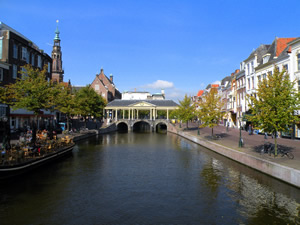
Nieuwe Rijn, Leiden


Immortelle IX

Op `t hoekje van de Hooigracht
En van den Nieuwen Rijn,
Daar zwoer hij, dat hij zijn leven lang
Mijn boezemvriend zou zijn.

En halverwegen tusschen
De Vink en de Haagsche Schouw,
Daar brak hij, zes weken later zoowat,
Den eed van vriendentrouw.
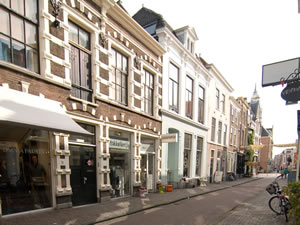


Hogewoerd, Leiden


Des zangers min (Fragment)

De morgendamp hangt over ’t veld,
En kleurt den herfstdraad wit.
Voor ’t venster op de Hoogewoerd
Een minnedichter zit.

Een dichter, die gewoon is, om
Na d’ afloop van ’t ontbijt,
Een lied te tokklen op de harp,
Zijn liefje toegewijd.

Niet, dat hij echt een liefje heeft;
Hij stelt het zich maar voor.
Dat doen minnedichters meer;
Daar zijn ze dichters voor.
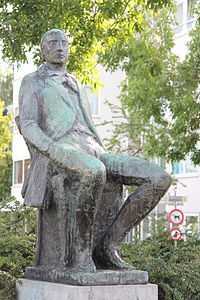


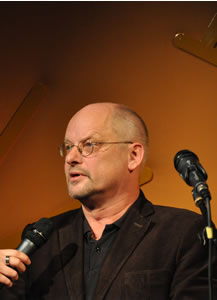
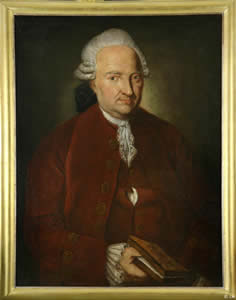
Piet Paaltjens (14 februari 1835 – 19 januari 1894)

Standbeeld in Leiden door Auke Hettema, 1960

Lees verder “Piet Paaltjens, Patrick Modiano, Emily Brontë, Pauline van der Lans”
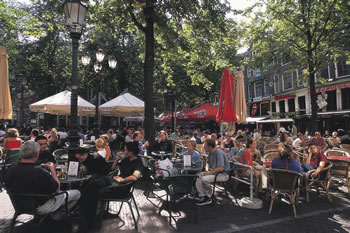
Dolce far niente (Leidseplein, Paul Gellings)


Dolce far niente


Leidseplein, Amsterdam


Leidseplein

Fonteinen zo zilver dat
de avond zwart-wit wordt
als een foto van licht en
van leven waarop de stad
begint te bewegen

mijn ouders weer jong
gearmd onderweg naar
restaurant Bali, een tafel
aan het raam, kaarsverlichte
pupillen, vlechtwerk van
vingers en ringen

treed ik dieper in deze foto
dan tref ik na dwalen naar
Zuid misschien ons oude huis
waar een tante waakt over mij
over het kind dat ik was
– of logeer ik bij opa’s en oma’s?

ik staar in de gloed van het
overgordijn en kan niet zien
of ik thuis ben – ik ben hier
jaren later in een bloedrode
bar met zicht op een plein
verzilverd door water

foto zwart-wit en bewogen
ouders nog jong en verliefd
avond in de stad zoals hun kind
ver weg in Zuid ervan droomt


Paul Gellings (Amsterdam, 16 mei 1953)


Zie voor de schrijvers van de 27e juli ook mijn twee blogs van 27 juli 2011.


Dolce far niente (Wie freu`ich mich der Sommerwonne!, Hoffmann von Fallersleben)

Dolce far niente


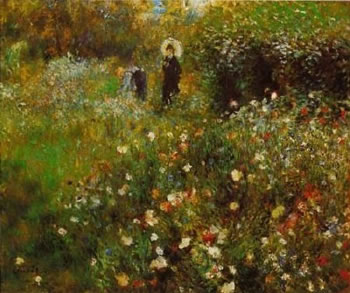
Zomerlandschap, Pierre-Auguste Renoir, 1873


Wie freu`ich mich der Sommerwonne!

Wie freu`ich mich der Sommerwonne,
Des frischen Grüns in Feld und Wald,
Wenn`s lebt und webt im Glanz der Sonne
Und wenn`s von allen Zweigen schallt!

Ich möchte jedes Blümchen fragen:
Hast du nicht einen Gruß für mich?
Ich möchte jedem Vogel sagen:
Sing, Vöglein, sing und freue dich!

Die Welt ist mein, ich fühl es wieder:
Wer wollte sich nicht ihrer freu`n,
Wenn er durch frohe Frühlingslieder
Sich seine Jugend kann erneu`n?

Kein Sehnen zieht mich in die Ferne,
Kein Hoffen lohnet mich mit Schmerz;
Da wo ich bin, da bin ich gerne,
Denn meine Heimat ist mein Herz.


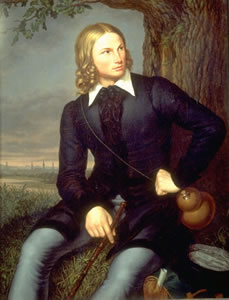
Hoffmann von Fallersleben (2 april 1798 – 19 januari 1874)

Porträt von Karl Georg Schumacher, 1819


Zie voor nog meer schrijvers van de 26e juli ook mijn twee blogs van 26 juli 2011.

Dolce far niente, (Sommerabend, Rainer Maria Rilke)


Dolce far niente


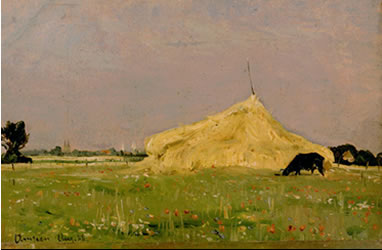
Otto Modersohn, Hooimijt bij Soest, 1888


SOMMERABEND

Die große Sonne ist versprüht,
der Sommerabend liegt im Fieber,
und seine heiße Wange glüht.
Jach seufzt er auf: “Ich möchte lieber …”
Und wieder dann: “Ich bin so müd …”

Die Büsche beten Litanein,
Glühwürmchen hängt, das regungslose,
dort wie ein ewiges Licht hinein;
und eine kleine weiße Rose
trägt einen roten Heiligenschein.


Rainer Maria Rilke (4 december 1875 – 29 december 1926)
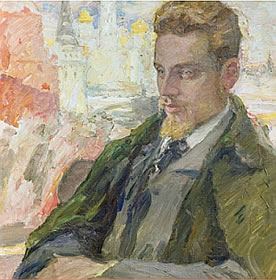
Rilke in Moskou, Leonid Pasternak, 1928


Zie voor nog de schrijvers van de 25e juli ook mijn twee blogs van 25 juli 2011.


Dolce far niente (Gewitter, Stefan George)


Dolce far niente


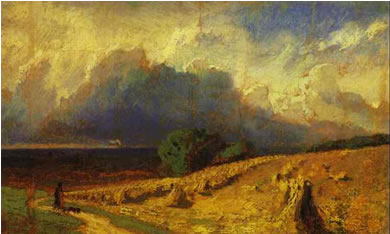
Feodor Vasilyev, Wolk studie, rond 1870


Gewitter

Die irren flämmchen allerwege sind erloschen
Ein jäher donner hat die hohe saat gedroschen
Der sturm der nacht zerspaltet das geäst im forste
Er stört der eber lager und der geier horste.

Der strenge könig sprengt aus seinem wolkenschlosse
Er folgt auf goldgeschirrtem pferd mit grossem trosse
Der falschen gattin die sich tummelt in den wettern
Und preisgegeben ist den zügellosen rettern.

Oft glaubt er mit der rauhen faust sie zu versichern
Doch sie entwindet sich mit einem leisen kichern –
Bis er sie festet… zwischen seines gürtels spangen
Und dem genick des pferdes ist sie quer gefangen.

Bezwungen schluchzend regt sie ihre blanken zähne
Und schüttelt zürnend ihre aufgelöste mähne
Um ihre nackten glieder spült der schiefe regen
Ihr kalter busen sieht gefasst der haft entgegen.


Stefan George (12 juli 1868 – 4 december 1933)


Zie voor nog meer schrijvers van de 24e juli ook mijn drie blogs van 24 juli 2011.

Dolce far niente (Summer Sun, Robert Louis Stevenson)


Dolce far niente


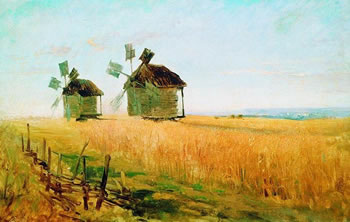
Feodor Vasilyev, Koren, 1870


Summer Sun

Great is the sun, and wide he goes
Through empty heaven with repose;
And in the blue and glowing days
More thick than rain he showers his rays.

Though closer still the blinds we pull
To keep the shady parlour cool,
Yet he will find a chink or two
To slip his golden fingers through.

The dusty attic spider-clad
He, through the keyhole, maketh glad;
And through the broken edge of tiles
Into the laddered hay-loft smiles.

Meantime his golden face around
He bares to all the garden ground,
And sheds a warm and glittering look
Among the ivy’s inmost nook.

Above the hills, along the blue,
Round the bright air with footing true,
To please the child, to paint the rose,
The gardener of the World, he goes.


Robert Louis Stevenson (13 november 1850 – 3 december 1894)
Portret door William Blake Richmond, 1887


 Zie voor de schrijvers van de 23e juli ook mijn twee blogs van 23 juli 2011.

Dolce far niente (A something in a summer’s Day, Emily Dickinson)


Dolce far niente


Feodor Vasilyev, Op het eiland Valaam, 1869


 A something in a summer’s Day

A something in a summer’s Day
As slow her flambeaux burn away
Which solemnizes me.

A something in a summer’s noon —
A depth — an Azure — a perfume —
Transcending ecstasy.

And still within a summer’s night
A something so transporting bright
I clap my hands to see —

Then veil my too inspecting face
Lets such a subtle — shimmering grace
Flutter too far for me —

The wizard fingers never rest —
The purple brook within the breast
Still chafes it narrow bed —

Still rears the East her amber Flag —
Guides still the sun along the Crag
His Caravan of Red —

So looking on — the night — the morn
Conclude the wonder gay —
And I meet, coming thro’ the dews
Another summer’s Day!


Emily Dickinson (10 december 1830 – 15 mei 1886)


Zie voor de schrijvers van de 22e juli ook mijn twee blogs van 2 juli 2011 en eveneens mijn blog van 22 juli 2012.

Dolce far niente (A Summer Invocation, Walt Whitman)

Dolce far niente


Feodor Vasilyev, Warme zomerdag, 1869


A Summer Invocation


Thou orb aloft full dazzling,

    Flooding with sheeny light the gray beach sand;

Thou sibilant near sea, with vistas far, and foam,

    And tawny streaks and shades, and spreading blue;

Before I sing the rest, O sun refulgent,

    My special word to thee.


Hear me, illustrious!

    Thy lover me—for always I have loved thee,

Even as basking babe—then happy boy alone by some wood edge—thy touching distant beams enough,

    Or man matured, or young or old—as now to thee I launch my invocation.

(Thou canst not with thy dumbness me deceive.

    I know before the fitting man all Nature yields.

Though answering not in words, the skies, trees, hear his voice—and thou, O sun,

    As for thy throes, thy perturbations, sudden breaks and shafts of flame gigantic,

I understand them—I know those flames, those perturbations well.)


Thou that with fructifying heat and light,

    O’er myriad forms—o’er lands and waters, North and South,

O’er Mississippi’s endless course, o’er Texas’ grassy plains, Kanada’s woods,

    O’er all the globe, that turns its face to thee, shining in space,

Thou that impartially enfoldest all—not only continents, seas,

    Thou that to grapes and weeds and little wild flowers givest so liberally,

Shed, shed thyself on mine and me—mellow these lines.

    Fuse thyself here—with but a fleeting ray out of thy million millions,

Strike through this chant.


Nor only launch thy subtle dazzle and thy strength for this;

    Prepare the later afternoon of me myself—prepare my lengthening shadows.

Prepare my starry nights.


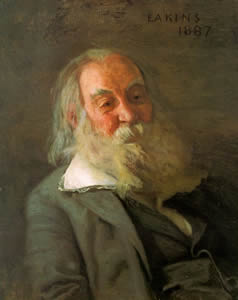
Walt Whitman (31 mei 1819 – 26 maart 1893)

Portret door Thomas Cowperthwaite Eakins, 1887


Zie voor de schrijvers van de 21e juli ook mijn blog van 21 juli 2011 deel 1 en eveneens deel 2.

Dolce far niente (Lazy, James Weldon Johnson)

Dolce far niente

“Wake Up You Lazy Boy” door Florence A. Saltmer, 1907


Lazy

Some men enjoy the constant strife
Of days with work and worry rife,
But that is not my dream of life:
I think such men are crazy.
For me, a life with worries few,
A job of nothing much to do,
Just pelf enough to see me through:
I fear that I am lazy.

On winter mornings cold and drear,
When six o’clock alarms I hear,
‘Tis then I love to shift my ear,
And hug my downy pillows.
When in the shade it’s ninety-three,
No job in town looks good to me,
I’d rather loaf down by the sea,
And watch the foaming billows.

Some people think the world’s a school,
Where labor is the only rule;
But I’ll not make myself a mule,
And don’t you ever doubt it.
I know that work may have its use,
But still I feel that’s no excuse
For turning it into abuse;
What do you think about it?

Let others fume and sweat and boil,
And scratch and dig for golden spoil,
And live the life of work and toil,
Their lives to labor giving.
But what is gold when life is sped,
And life is short, as has been said,
And we are such a long time dead,
I’ll spend my life in living.


James Weldon Johnson (17 juni 1871 – 26 juni 1938)


Zie voor de schrijvers van de 17e februari ook mijn blog van 17 februari 2012 deel 1 en eveneens deel 2.

Dolce far niente, Neil Cassady, Robin Block, Gotthold Ephraim Lessing


Dolce far niente


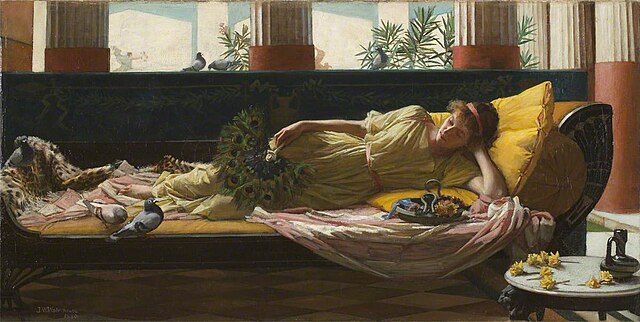
Dolce far niente, door John William Waterhouse, 1880


Die Faulheit

Fleiß und Arbeit lob’ ich nicht.
Fleiß und Arbeit lob’ ein Bauer.
Ja, der Bauer selber spricht,
Fleiß und Arbeit wird ihm sauer.
Faul zu sein, sei meine Pflicht;
Diese Pflicht ermüdet nicht.

Bruder, lass das Buch voll Staub.
Willst du länger mit ihm wachen?
Morgen bist du selber Staub!
Lass uns faul in allen Sachen,
Nur nicht faul zu Lieb’ und Wein,
Nur nicht faul zur Faulheit sein.


Gotthold Ephraim Lessing (22 januari 1729 – 15 februari 1781)
Rond 1780

Lees verder “Dolce far niente, Neil Cassady, Robin Block, Gotthold Ephraim Lessing”