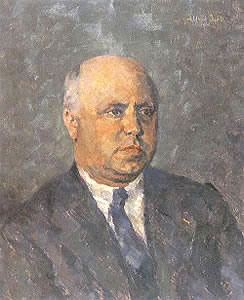
Willem de Mérode, James Fenton, Walter de la Mare, Ted Kooser, Ross Franklin Lockridge Jr., Richard Anders

Aan alle bezoekers en mede-bloggers een Vrolijk Pasen! 


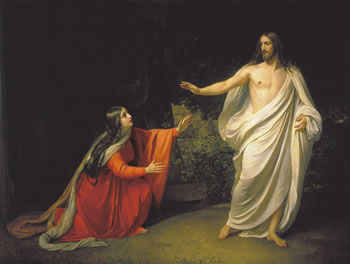
Jezus verschijnt aan Maria Magdalena, Aleksandr Ivanov (16 juli 1806 – 3 juli 1858)


Paasmorgen

Hij was het graf al uitgegaan
Vóór ik Zijn dood bezoeken kon.
Een zwarte leegte in de zon
Gaapt de spelonk mij aan.

O wát ik hoopte in mijn verdriet,
Hij kwam mijn ongeduld nog vóór.
Maar, Die ik door de dood verloor
Vind ik ook levend niet.
 
De olijven met de lichte wind
Verzilvren in de zonneschijn,
Waar ’t hart niets dan zijn oude pijn
langs alle paden vindt.

Maar om de donkre nauwe bocht
Wappert een oogwenk zijn gewaad.
Mij blindt de glans van zijn gelaat.
Hij had MIJ lang gezocht.


Willem de Mérode (2 september 1887 – 22 mei 1939)

Lees verder “Willem de Mérode, James Fenton, Walter de la Mare, Ted Kooser, Ross Franklin Lockridge Jr., Richard Anders”

Achim von Arnim, Frans Coenen, Eric Bogosian, Michael Schaefer, Robert Penn Warren

Aan alle bezoekers en mede-bloggers een Vrolijk Pasen! 


 paolo_veronese

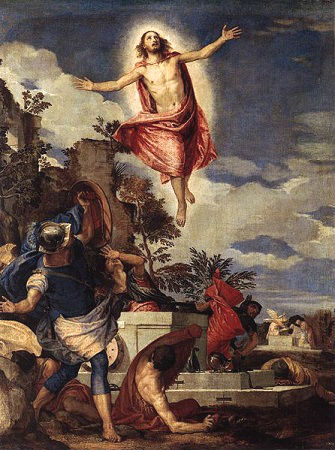
De opstanding van Christus, Paolo Veronese (1528 – 19 april 1588)


Ostern

Vom Erdenstaub zu reinen, blauen Lüften
Dringt weit der Blick in ersten Frühlingstagen,
Und höher steigt der mächt’ge Sonnenwagen,
Die Erde sehnt nach Blättern sich und Düften,
Und heilige Geschichten uns dann sagen
Was sich geahnet in des Herzens Klüften.
Er ist erstanden aus den Todesgrüften,
Und wie vergebens war der Menschen Zagen,
Ja so ersteht die Welt der Himmelsgaben
Mit jedem Jahre neu, die Knospen brechen,
Und nichts ist unsrer Liebe zu erhaben,
Sie giebt uns alles in den Wonnebächen,
Die nach dem Eisgang Flur und Aug’ durchgraben,
Das Unsichtbarste will zum Lichte sprechen.


Achim von Arnim (26 januari 1781 – 21 januari 1831)

Lees verder “Achim von Arnim, Frans Coenen, Eric Bogosian, Michael Schaefer, Robert Penn Warren”

Sipko Melissen, William Shakespeare, Andrey Kurkov, Pascal Quignard, Peter Horst Neumann

Bij Stille zaterdag


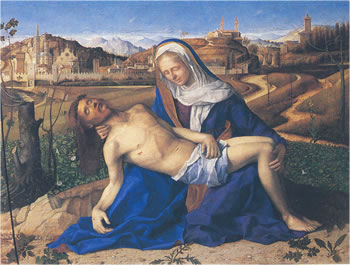
Pietà,  Giovanni Bellini (1430 – 29 november 1516)


Stille zaterdag

Het regent nu en dat betekent niets
het regent in zoveel gedichten
het weerbericht voorspelde weliswaar
zacht voorjaarsweer maar dat betekent niet
dat ik de moed laat varen op dit plein

ik denk aan jou en dat betekent niets
je duikt zo vaak door mijn gedachten
weer geen bericht maar dat betekent niet
dat jij niet bezig bent met mij ook nu
het regent op dit godverlaten plein.


Sipko Melissen (Scheveningen, 23 november 1944)


Lees verder “Sipko Melissen, William Shakespeare, Andrey Kurkov, Pascal Quignard, Peter Horst Neumann”

A. Marja, Vladimir Nabokov, Jan de Hartog, Jos de Haes, Chetan Bhagat, Peter Weber

Bij Goede Vrijdag


 cranach

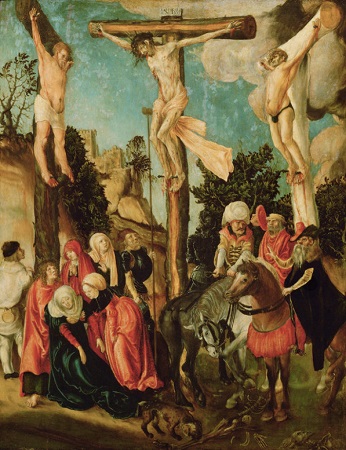
Kruisiging, Lucas Cranach de Oude (1472-1553)


Neo-golgotiek

Dat kruis kun je elke dag
van me kado krijgen
maar de vent die eraan hing
hángt –

kijk al die vette
magere papen
die protestanten
joviaal uitgestreken
die dichters schilders
estetisch ontroerd
daarvan kakelend
in de doodsslaap die
ze leven noemen –

een nieuwe beeldenstorm
hoe zindelijk ook
is niet per se nodig
we kunnen er gelukkig
om lachen –

zwaai met een strop
een stengun
een gaskamerhandle
alles gaat nu eenmaal
vlugger tegenwoordig –

zie die vent hangen
zie met pascal
die mens in doodsstrijd
tot het einde der dagen –

we kunnen niet maffen
we kunnen niet kakelen
we kunnen er niet diepzinnig
over doen –

we moeten gewoon
opstaan
wat dood is dood laten
doen wat we kunnen –

god weet is het niet
voor eeuwig te laat.


A. Marja (8 maart 1917 – 10 janüari 1964)

Lees verder “A. Marja, Vladimir Nabokov, Jan de Hartog, Jos de Haes, Chetan Bhagat, Peter Weber”

Charlotte Brontë, Patrick Rambaud, John Mortimer, Peter Schneider, María Elena Cruz Varela


 Bij Witte Donderdag


macip
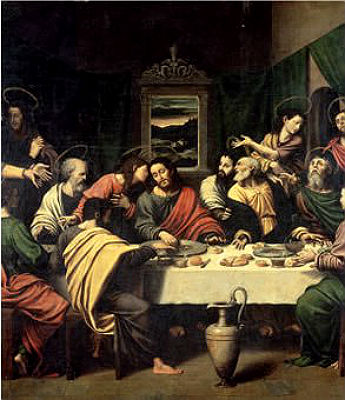
Het laatste avondmaal door Vicente Juan Macip (1475– 1545)


Het Laatste Avondmaal (door María Elena Cruz Varela *)

De lucht ruikt duidelijk naar rampspoed. Ik speel met kaarten
die niet van mij zijn. Aan mijn rechterkant. Stijfjes. De Heilige Familie.
Als een strop om mijn nek. Mij omringend. Mij verstikkend.
En zij zijn zó zwaar. God. En zij doen mij zó’n pijn. En zij verlammen mij
met hun pathetische gezichten. Hun nobele gebaren. Onder hun lichte masker
en hun zwijgzaamheid vermoed ik zwarte plekken. De lucht ruikt naar mest.
Angstaanjagende heksensabbat die de zintuigen afstompt. En het doet zo pijn. God.
En zij drukken hun stempel van opgewonden hemelbewakers op ons.
De lucht voert geuren van messen aan na de ochtendstond te hebben doorkliefd.
De lucht ruikt naar schanddaad, Naar eenzaam kind. Naar grijs. Naar warme as.
De lucht ruikt nar avondmaal. Oneindig. Treurig. Natgeworden brood
van het laatste avondmaal. En zij drukken zo. God.
Het bestek dat in het krijtstaat, schraapt zo over de huid.
Ze genieten onverstoorbaar van jouw bloeddruppels die zich mengen met de wijn.
De lucht ruikt naar namen. Naar tijdloze namen. Voorspellers vereeuwigen de vrede in de vensters.
Aan mijn rechterkant. Eeuwig. Levert de Heilige Familie strijd om de resten
van de zoon die ik niet was. En zij krabben zo. God. En zij vinden zichzelf zo fantastisch.
De wind draait. Draagt de dobbelstenen met behulp van verbazing.
Het scherp van zijn blad snijdt de hoop af. De lucht ruikt naar roest.
Naar duidelijke rampspoed. En ik weet dat ik speel. God. En ik weet dat ik mezelf
voor de gek hou.

Vertaald door Mariolein Sabarte Belacortu

* Zie „Onafhankelijk van geboortedata“

Lees verder “Charlotte Brontë, Patrick Rambaud, John Mortimer, Peter Schneider, María Elena Cruz Varela”

Journey Of The Magi (T. S. Eliot)

Bij het feest van Driekoningen


burne-jones<
Star of Bethlehem, David Burne-Jones, 1890


Journey Of The Magi

‘A cold coming we had of it,
Just the worst time of the year
For a journey, and such a journey:
The ways deep and the weather sharp,
The very dead of winter.’
And the camels galled, sore-footed,
refractory,
Lying down in the melting snow.
There were times we regretted
The summer palaces on slopes, the
terraces,
And the silken girls bringing sherbet.

Then the camel men cursing and
grumbling
And running away, and wanting their
liquor and women,
And the night-fires going out, and the
lack of shelters,
And the cities hostile and the towns
unfriendly
And the villages dirty and charging high
prices:
A hard time we had of it.
At the end we preferred to travel all
night,
Sleeping in snatches,
With the voices singing in our ears,
saying
That this was all folly.

Then at dawn we came down to a
temperate valley,
Wet, below the snow line, smelling of
vegetation;
With a running stream and a water-mill
beating the darkness,
And three trees on the low sky,
And an old white horse galloped in
away in the meadow.
Then we came to a tavern with
vine-leaves over the lintel,
Six hands at an open door dicing for
pieces of silver,
And feet kicking the empty wine-skins.
But there was no imformation, and so
we continued
And arrived at evening, not a moment
too soon
Finding the place; it was (you may say)
satisfactory.

All this was a long time ago, I
remember,
And I would do it again, but set down
This set down
This: were we led all that way for
Birth or Death? There was a Birth,
certainly,
We had evidence and no doubt. I had
seen birth and death,
But had thought they were different;
this Birth was
Hard and bitter agony for us, like
Death, our death.
We returned to our places, these
Kingdoms,
But no longer at ease here, in the old
dispensation,
With an alien people clutching their
gods.
I should be glad of another death.


T. S. Eliot (26 september 1888 – 4 januari 1965)

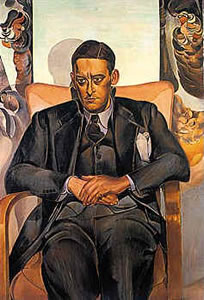
 Portret door Wyndham Lewis, 1938


Zie voor de schrijvers van de 6e januari ook mijn volgende blog van vandaag.


Sonnets At Christmas I, II (Alan Tate)

Aan alle bezoekers en mede-bloggers een Prettig Kerstfeest!
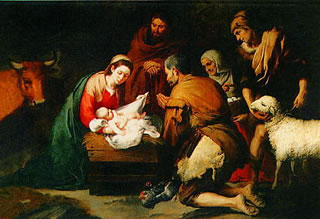


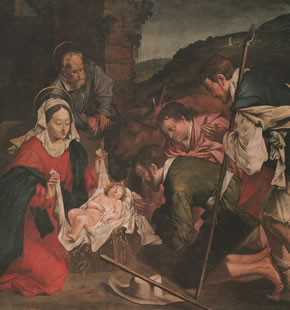
L’adoration des bergers (détail), Jean Le Clerc (1586 – 1633)


Sonnets At Christmas I

This is the day His hour of life draws near,
Let me get ready from head to foot for it
Most handily with eyes to pick the year
For small feed to reward a feathered wit.

Some men would see it an epiphany
At ease, at food and drink, others at chase
Yet I, stung lassitude, with ecstasy
Unspent argue the season’s difficult case

So: Man, dull critter of enormous head,
What would he look at in the coiling sky?
But I must kneel again unto the Dead

While Christmas bells of paper white and red,
Figured with boys and girls spilt from a sled,
Ring out the silence I am nourished by.


Sonnets At Christmas II

Ah, Christ, I love you rings to the wild sky
And I must think a little of the past:
When I was ten I told a stinking lie
That got a black boy whipped; but now at last

The going years, caught in an accurate glow,
Reverse like balls englished upon green baize-
Let them return, let the round trumpets blow
The ancient crackle of the Christ’s deep gaze.

Deafened and blind, with senses yet unfound,
Am I, untutored to the after-wit
Of knowledge, knowing a nightmare has no sound;

Therefore with idle hands and head I sit
In late December before the fire’s daze
Punished by crimes of which I would be quit.


Allen Tate (19 november 1899 – 9 februari 1979)


Zie voor de schrijvers van de 26e december mijn vorige blog van vandaag en eveneens mijn derde, mijn tweede en mijn eerste blog van vandaag.


Christmas Greetings 1941 (Marie Under)

Aan alle bezoekers en mede-bloggers een Prettig Kerstfeest! 


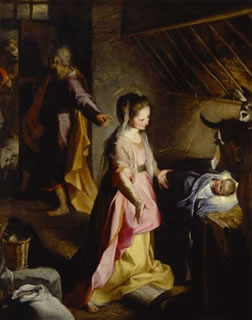
De geboorte van Christus, Federico Barocci, rond 1597


Christmas Greetings 1941

I walk the silent, Christmas-snowy path
that goes across the homeland in its suffering.
At each doorstep I would like to bend my knee:
there is no house that knows not mourning’s sting.

The spark of anger flickers in sorrow’s ashes,
the mind is hard with anger, soft with pain:
there is no way of being pure as Christmas
on this white, pure-as-Christmas lane.

Alas, to have to live such stony instants,
to carry on one’s heart a coffin lid!
Not even tears will come now any more –
that gift of mercy also died and hid.

I’m like someone rowing backwards:
eyes permanently set on past –
backwards, yes – yet reaching home at last …
my kinsmen, though, are left without a home…

I always think of those who were torn from here…
The heavens echo with the cries of their distress.
I think that we are all to blame
for what they lack – for we have food and bed!

Shyly, almost as in figurative language,
I ask without believing it can come to pass:
Can we, I wonder, ever use our minds again
for sake of joy and happiness?

Now light and darkness join each other,
towards the stars the parting day ascends.
The sunset holds the first sign of the daybreak –
It is as if, abruptly, night expands.

All things are ardent, serious and sacred,
snow’s silver leaf melts on my lashes’ flame,
I feel as though I’m rising ever further:
that star there, is it calling me by name?

And then I sense that on this day they also
are raising eyes to stars, from where I hear
a greeting from my kinsfolk, sisters, brothers,
in pain and yearning from their prison’s fear.

This is our talk and dialogue, this only,
a shining signal – oh, read, and read! –
with thousand mouths – as if within their glitter
the stars still held some warmth of breath inside.

The field of snow dividing us grows smaller:
of stars our common language is composed….
It is as if we d started out for one another,
were walking, and would soon meet on the road.

For an instant it will die away, that ‘When? When?’
forever pulsing in you in your penal plight,
and we shall meet there on that bridge in heaven,
face to face we’ll meet, this Christmas night.


Vertaald door Leopoldo Niilus en David McDuff


Marie Under (27 maart 1883 – 25 september 1980)


Zie voor de schrijvers van de 25e december ook mijn vorige blog van vandaag en eveneens mijn eerste blog van vandaag.


Am Weihnachtsabend (Maximilian von Schenkendorf)

Aan alle bezoekers en mede-bloggers een Prettig Kerstfeest!


De aanbidding van de herders, Esteban Murillo (1617 – 1682)


Am Weihnachtsabend

Aachen 1814.


Willkommen, trautes Dämmerlicht!

Willkommen, Mondenschein!

Ihr bleibt getreu, verlaßt mich nicht,

Sonst bin ich ganz allein.


»Wie magst du klagen undankbar,

Und merkst nicht was geschieht,

Und grüßest nicht das Friedensjahr,

Das heute frisch erblüht?


Es ist ja frohe Weihnachtszeit,

Engleins- und Kindleins Lust;

Verbanne Streit und Herzeleid

Nur schnell aus deiner Brust.«


Das ist es ja, das ist es ja,

Das einzig, was mich quält;

Wol denk ich, was vordem geschah

Und was mir heute fehlt.


Nicht mag ich zu dem hellen Stern,

Nicht auf zum Himmel schau’n,

Es ziehet mich in weite Fern’

Wol fort nach andern Au’n.


Zu meinem Hof, zu meinem Haus,

Zu ihr, der keine gleicht,

Die Gabe mir und Blumenstrauß

Zum Feste sonst gereicht.


O Hausfrau, schön und fromm und mild,

Die jede Tugend schmückt,

Und du, mein Muttergottesbild,

Nach dem sie sinnend blickt,


Und du, viel süßes, liebes Kind,

Das uns der Herr geschenkt,

Das, wie die Mutter still gesinnt,

Des fernen Wand’rers denkt.


Ich grüß euch, ihr geliebten Drei,

Dich grüß ich, kleine Welt,

In der mein Herz und meine Treu

Sich gar zu wohl gefällt.


Wie krank ich bin und einsam hier,

Mir träumt vom Wiedersehn,

Von unserm Haus, – da wollen wir

Noch manches Fest begehn.


Willkommen, süße Weihnachtslust,

O wunderbarer Schein!

Vom Himmel zeuch in meine Brust

Und nimm sie gänzlich ein.
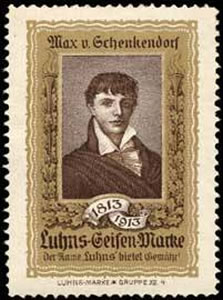


Maximilian von Schenkendorf (11 december 1783 – 11 december 1817)


Zie voor de schrijvers van de 24e december ook mijn vorige blog van vandaag en eveneens mijn eerste blog van vandaag.
Miles Marshall Lewis, Gatien Lapointe, Heinrich Smidt, Saki, Annette von Droste-Hülshoff

De Amerikaanse schrijver Miles Marshall Lewis werd geboren op 18 december 1970 in The Bronx, New York. Zie ook mijn blog van 18 december 2006 en ook mijn blog van 18 december 2007 en ook mijn blog van 18 december 2008 en ook mijn blog van 18 december 2009.


Uit: There’s a Riot Goin’ On 


„And as certain things come together, others fall apart—like the recording industry. Butch hasn’t bought a CD in quite a while. All the music he wants is available on Napster and he already laid down a few hundred dollars for a portable MP3 player. After decades of nefarious activities—contractually cheating musicians out of profits; overcharging the public for compact discs; paying artists less than fifteen percent of their musics earnings and owning their master recordings forever and ever—record companies felt the big payback, revenge. To Butch record companies seem like the first crumbling institution in a wave of falling multinational corporate entities to follow.

In the Brooklyn arts community surrounding him unsigned independent bands all take encouragement from the digital revolution, burning their own CDs, setting up their own websites, selling their own music. Screw the industry. In the new age everyone can have his own record label, be her own CEO. One’s artistic worth won’t be measured or rejected by a corporation. On the verge of the twenty-first century Butch saw people self-actualizing, believing in themselves without looking for outside approval. How liberating.

To top things off the death of immediate hiphop icons Tupac Shakur and the Notorious BIG has made the power of intention common knowledge to the pop community. At first only a few made the crass observation that Biggie Smalls named his albums Ready to Die and Life After Death and was then killed; that Tupac rhymed incessantly about death and dying young and was murdered at 25. The moral slowly spilling over into the mass consciousness? We get what we ask for, all of us. This was the beginning, Butch thought, of folks being more careful of what they put out into the universe, consciously exercising universal laws of cause and effect more carefully. It’s the biggest legacy the senseless deaths of the young and talented MCs could have left their generation.“


Miles Marshall Lewis (New York, 18 december 1970)


Lees verder “Miles Marshall Lewis, Gatien Lapointe, Heinrich Smidt, Saki, Annette von Droste-Hülshoff”