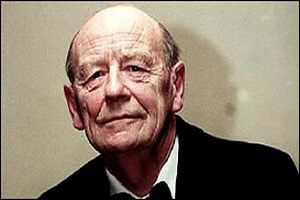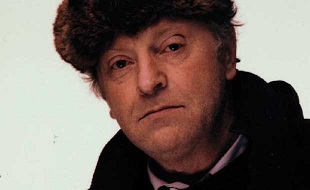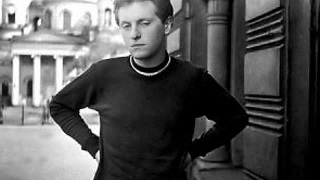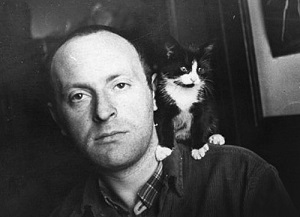
Joseph Brodsky, Michael Chabon, Bob Dylan, Henri Michaux, William Trevor, Tobias Falberg, Arnold Wesker, Rainald Goetz, Louis Fürnberg

De Russisch-Amerikaanse dichter en schrijver Joseph Brodsky werd op 24 mei 1940 in Leningrad (het huidige St.Petersburg) geboren als Iosif Brodski. Zie ook alle tags voor Joseph Brodsky op dit blog.

Uit:Anna Achmatova (Vertaald door Kristien Warmenhoven)

“Anna Achmatova behoort tot de categorie dichters die geen genealogie hebben en ook geen duidelijk bespeurbare ‘ontwikkeling’. Zij is het soort dichter dat gewoon ‘toevallig ontstaat’, dat de wereld betreedt met een reeds gevestigde dictie en zijn of haar eigen unieke sensibiliteit. Ze kwam volledig toegerust, en ze heeft nooit op iemand geleken. Misschien nog veelzeggender is dat geen van haar talloze imitators ooit in staat is geweest een overtuigende Achmatova-pastiche te produceren: vroeg of laat leken ze meer op elkaar dan op haar.
Dit suggereert dat Achmatova’s idioom een produkt was van iets minder bevattelijks dan een scherpzinnige stilistische berekening en laat ons achter met de noodzaak het tweede deel van Buffon’s beroemde vergelijking aangaande het begrip ‘zelf’ te herwaarderen.
Los van de algemene geestelijke aspecten van de genoemde entiteit, werd de uniekheid in het geval van Achmatova voorts nog bevestigd door haar feitelijke lichamelijke schoonheid. Ze zag er echt fantastisch uit. Met haar een meter vijfenvijftig, donkere haar, blanke huid, lichte grijsgroene ogen als die van een sneeuwluipaard, slank en ongelooflijk lenig, werd zij gedurende een halve eeuw getekend, geschilderd, geboetseerd, gebeeldhouwd en gefotografeerd door legio kunstenaars, te beginnen met Amedeo Modigliani. Wat betreft de verzen die aan haar zijn opgedragen – die zouden meer boekdelen beslaan dan haar eigen verzamelde werk.
Hiermee is bedoeld te zeggen dat het zichtbare deel van die persoonlijkheid bepaald adembenemend was; dat het verborgen deel daar volmaakt tegenop woog, daarvan getuigt haar schrijftrant die een mengeling is van die twee.
De voornaamste karakteristieken van deze mengeling zijn adeldom en gereserveerdheid. Achmatova is de dichter van het strenge metrum, exacte rijmen en korte zinnen. Haar syntaxis is eenvoudig en vrij van bijzinnen, wier aforistische kronkelingen verantwoordelijk zijn voor het overgrote deel van de Russische literatuur; eigenlijk lijkt haar syntaxis qua eenvoud op het Engels. Vanaf het prille begin van haar carrière tot aan het einde toe is zij altijd volkomen helder en samenhangend gebleven. Temidden van haar tijdgenoten is zij een Jane Austen. Hoe het ook zij, als haar gezegden duister waren, kwam dat niet door haar grammatica.”
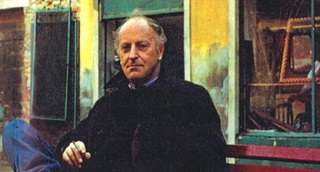


Joseph Brodsky (24 mei 1940 – 28 januari 1996)


De Amerikaanse schrijver Michael Chabon werd geboren op 24 mei 1963 in Washington. Zie ook alle tags voor Michael Chabon op dit blog.

Uit:Gentlemen of the Road

“For numberless years a myna had astounded travelers to the caravansary with its ability to spew indecencies in ten languages, and before the fight broke out everyone assumed the old blue-tongued devil on its perch by the fireplace was the one who maligned the giant African with such foulness and verve. Engrossed in the study of a small ivory shatranj board with pieces of ebony and horn, and in the stew of chickpeas, carrots, dried lemons and mutton for which the caravansary was renowned, the African held the place nearest the fire, his broad back to the bird, with a view of the doors and the window with its shutters thrown open to the blue dusk. On this temperate autumn evening in the kingdom of Arran in the eastern foothills of the Caucasus, it was only the two natives of burning jungles, the African and the myna, who sought to warm their bones. The precise origin of the African remained a mystery. In his quilted gray bambakion with its frayed hood, worn over a ragged white tunic, there was a hint of former service in the armies of Byzantium, while the brass eyelets on the straps of his buskins suggested a sojourn in the West. No one had hazarded to discover whether the speech of the known empires, khanates, emirates, hordes and kingdoms was intelligible to him. With his skin that was lustrous as the tarnish on a copper kettle, and his eyes womanly as a camel’s, and his shining pate with its ruff of wool whose silver hue implied a seniority attained only by the most hardened men, and above all with the air of stillness that trumpeted his murderous nature to all but the greenest travelers on this minor spur of the Silk Road, the African appeared neither to invite nor to promise to tolerate questions. Among the travelers at the caravansary there was a moment of admiration, therefore, for the bird’s temerity when it seemed to declare, in its excellent Greek, that the African consumed his food in just the carrion-scarfing way one might expect of the bastard offspring of a bald-pated vulture and a Barbary ape.”



Michael Chabon (Washington, 24 mei 1963)


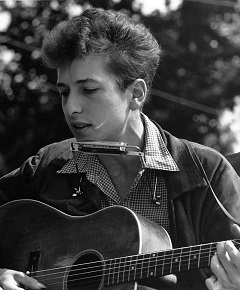
De Amerikaanse zanger, songwriter en dichter Bob Dylan werd geboren als Robert Allen Zimmerman op 24 mei 1941 in Duluth, Minnesota. Zie ook alle tags voor Bob Dylan op dit blog.


Positively 4th Street

You’ve got a lotta nerve to say you are my friend
When I was down you just stood there grinnin’
You’ve got a lotta nerve to say you got a helping hand to lend
You just want to be on the side that’s winnin’

You say I let you down, ya know its not like that
If you’re so hurt, why then don’t you show it?
You say you’ve lost your faith, but that’s not where its at
You have no faith to lose, and ya know it

I know the reason, that you talked behind my back
I used to be among the crowd you’re in with
Do you take me for such a fool, to think I’d make contact
With the one who tries to hide what he don’t know to begin with?

You see me on the street, you always act surprised
You say “how are you?”, “good luck”, but ya don’t mean it
When you know as well as me, you’d rather see me paralyzed
Why don’t you just come out once and scream it

No, I do not feel that good when I see the heartbreaks you embrace
If I was a master thief perhaps I’d rob them
And tho I know you’re dissatisfied with your position and your place
Don’t you understand, its not my problem?

I wish that for just one time you could stand inside my shoes
And just for that one moment I could be you
Yes, I wish that for just one time you could stand inside my shoes
You’d know what a drag it is to see you



Bob Dylan (Duluth, 24 mei 1941)
In 1989


De Franse schrijver, dichter  en schilder Henri Michaux werd geboren op 24 mei 1899 in Namur in België. Zie ook alle tags voor Henri Michaux op dit blog.


Annales

Alors commença la grande guerre des statues.
Ce fut dans l’année du cheval de feu et il y eut grande immolation.
Jeune ni vieux ne pouvait retenir sa vie.
Il fallut la sacrifier.

Pour statue, pour statue immobile.

Tribus du feu écrasèrent tribus du chêne.

Tribus de la flèche écrasèrent pays de la houe.

Le monde était tout spasme.
Ce furent les années, où ils durent vivre leur vie.


Chant Cinquième

Un désert brûlant, en sa saison extrême, sous le soleil le plus ouvert, en la
Saison que, même le grand scorpion noir africain hésite à sortir ses pattes sur le sable poivré de chaleur, ce désert, une armée qu’on croyait endormie, le
traversa, s’ébranlant dans des chars plus chauds que des poêles, fonçant en avant, et une bataille nouvelle dut être livrée.

Les éléments hostiles ne faisaient pas reculer.

Ici, le sable était si chaud qu’il faisait éclater la peau des jambes.

Là, si dense était la boue qu’elle engluait les canons, les hommes, les chevaux, dans un écœurant et gigantesque empêtrement.

Ailleurs, le froid glaçait l’œil dans l’orbite comme une bille.

Les armes, l’acier, collaient aux doigts, martyrisaient l’homme longuement, comme une grenouille sous un savant penché, bistouri à la main et préoccupé, préoccupé
de ses réflexes, si curieux, si curieusement finalistes d’allure, quand on y songe.

Le ciel était mis en batterie contre la terre et la terre contre le ciel.

Même au fond des eaux un navire n’était pas tranquille.

Hébétés dans la mêlée.
Hébétés hors de la mêlée.

La vie entre l’écorce et l’arbre pour les plus fortunés.
Les pensées, les propos étaient mitraillés.

L’air même était devenu policier.

Beaucoup regardaient leur nez, leur nom avec inquiétude, cherchant dans leur tréfonds les tendances d’une race honnie.
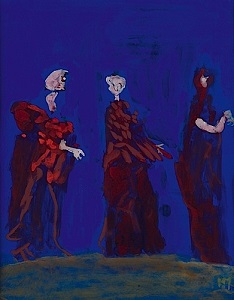


Henri Michaux (24 mei 1899 – 19 oktober 1984)
Les Trois Graces door Henri Michaux, 1930


De Ierse schrijver William Trevor werd geboren op 24 mei 1928 in Mitchelstown, County Cork. Zie ook alle tags voor William Trevor op dit blog.

Uit: A Bit on the Side

“His eyes had been closed and he opened them, saying he wanted to see the stable-yard.
Emily’s expression was empty of response. Her face, younger than his and yet not seeming so, was empty of everything except the tiredness she felt. ‘From the window?’ she said.
No, he’d go down, he said. ‘Will you get me the coat? And have the boots by the door.’
She turned away from the bed. He would manage on his own if she didn’t help him: she’d known him for twenty-eight years, been married to him for twenty-three. Whether or not she brought the coat up to him would make no difference, any more than it would if she protested.
‘It could kill you,’ she said.
‘The fresh air’d strengthen a man.’
Downstairs, she placed the boots ready for him at the back door. She brought his cap and muffler to him with his overcoat. A stitch was needed where the left sleeve met the shoulder, she noticed. She hadn’t before and knew he wouldn’t wait while she repaired it now.
‘What’re you going to do there?’ she asked, and he said nothing much. Tidy up a bit, he said.

* * * * *
He died eight days later, and Dr Ann explained that tidying the stable-yard with only a coat over his pyjamas wouldn’t have hastened anything. An hour after she left, the Geraghtys came to the house, not knowing that he was dead.
It was half past seven in the evening then. At the same time the next morning, Keane the undertaker was due. She said that to the Geraghtys, making sure they understood, not wanting them to think she was turning them away for some other reason. Although she knew that if her husband had been alive he wouldn’t have agreed to have the Geraghtys at his bedside. It was a relief that they had come too late.
The Geraghtys were two middle-aged women, sisters, the Misses Geraghty, who sat with the dying. Emily had heard of them, but did not know them, not even to see: they’d had to give their name when she opened the door to them. It had never occurred to her that the Geraghtys would attempt to bring their good works to the sick-room she had lived with herself for the last seven months. They were Legion of Mary women, famed for their charity, tireless in their support of the Society of St Vincent de Paul and their promulgation of the writings of Father Xavier O’Shea, a local priest who, at a young age in the 1880s, had contracted malaria in the mission fields of the East.”
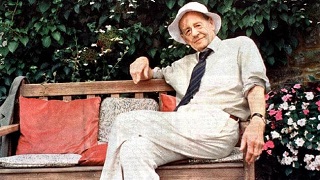


William Trevor (24 mei 1928 – 20 november 2016)


De Duitse schrijver en tekenaar Tobias Falberg werd geboren op 24 mei 1976 in Wittenberg. Zie ook alle tags voor Tobias Falberg op dit blog.


Plastiniertes Gelände

Kernkraftwerk Isar 1

/
/

Aufkeimt Kraftwerksbeton, erst eine Knospe nur,
glatt und grau aus dem Braun körniger Erde, dann
pumpt er Triebe nach oben,
fünf zylindrische Röhren, dick,

saftig, voller Substanz, um Energie aus Brenn-
elementen und Dampf mittels Turbinenpark
tief im Wald zu erzeugen,
sie zu speichern im Wurzelblock.

Stäbe reifen, ihr Schmelz stockt an der Luft, gerinnt,
bindet Käfer und Tier, Unkraut, Gebüsch, das hier
ledrig siedelt, sich gegen
Licht und Reste von Regen wehrt.

Eichen, Buchen gebannt. Reglos verharrt ein Schwarm
luftversiegelter Krähn. Rehe und Hasen stehn
starr, in seltsam verrenkter
Körperhaltung im Raum fixiert.

Bald sprießt neuer Beton. Kraftwerke treiben aus
über steinigem Grund. Es konserviert der Wald
mit aseptischen Blättern
unermüdlich sein Biotop.


Tobias Falberg (Wittenberg, 24 mei 1976)
In 2013


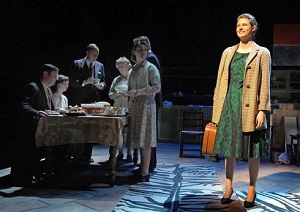
De Britse schrijver Arnold Wesker werd geboren op 24 mei 1932 in Londen. Zie ook alle tags voor Arnold Wesker op dit blog.

Uit: Roots

“BEATIE Watcha Jimmy Beales, how you doin’ bor?
JIMMY Not so bad gal, how’s yourself?
BEATIE All right you know. When you comin’ to London again for a football match?
JIMMY O blust gal, I don’ wanna go to any more o’ those things. Ole father Bryant was there in the middle of that crowd and he turn around an’ he say (imitating), ‘Stop you a-pushin’ there,’ he say, ‘stop you a-pushin’.’
JIMMY Where’s Ronnie?
BEATIE He’s comin’ down at the end of two weeks.
JIMMY Ent you married yit?
BEATIE No.
JIMMY You wanna hurry then gal, a long engagement don’t do the ole legs any good.
JENNY Now shut you up Jimmy Beales and get that food down you. Every time you talk, look, you miss a mouthful! That’s why you complain of pain in your shoulder blades.
BEATIE You bin hevin’ pains then Jimmy?
JIMMY Blust yes! Right a’tween my shoulder blades.
JENNY Mother says it’s indigestion.
BEATIE What the hell’s indigestion doin’ a’tween his shoulder blades?”
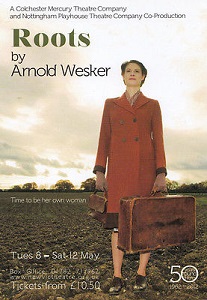


Arnold Wesker (24 mei 1932 – 12 april 2016)
Affiche voor een voorstelling


De Duitse schrijver Rainald Maria Goetz werd geboren op 24 mei 1954 in München. Zie ook alle tags voor Rainald Goetz op dit blog.

Uit:Klage

„Hauptwerke der politischen Theorie
Mittwoch, 7. Februar 2007, Berlin
Ein herrlicher Morgen, Kyritz dahin am Rad, Kronprinzenbrücke, Adenauerstraße, Bismarckallee, heißt so hier, die immer noch traumhaft leergefegteWeite zwischen Bahnhof und Regierungsbauten, blassgelb besonnt da vorn im Westen nähert sich das Kanzleramt, Ecke Willy-Brandt-Straße, absteigen bitte. 9 Uhr 30, Kabinett.
In der Sicherheitskontrolle bleibt Kyritz schon am ersten strengen Türhüter hängen, schade, dass ich nie richtig Kafka gelesen habe. Die Verhandlungen mit der den Zugang zum Kabinett bewachenden Frau Gillar, die sich erst empört, dann freundlich, aber auf jeden Fall ausgiebig unerbittlich der Abweisung des Kyritz von hier widmet, passen zu diesem halkyonischen Tag. Die Anordnungen sind Unsinn, aber sie werden eingehalten, das stabilisiert dasWeltgefühl. Ich notiere den nächsthöheren Ansprechpartner, telefoniere mit ihm von daheim aus, schreibe ihm eine kurze Mail, sehr geehrter Herr, vielen Dank für Ihr Entgegenkommen. Und nächsten
Mittwoch wieder: 9 Uhr 30, Kabinett.
Der brandenburgische Held ist verliebt, passt nicht richtig auf, wie der Schlachtplan besprochen wird. Gegen ausdrückliche Weisung greift er den Feind an und siegt. Wegen Renitenz wird er trotz seines Sieges zum Tod verurteilt, aus Prinzip.
Er sieht seine Schuld ein, kann deshalb begnadigt werden.
Die Prinzessin tritt vor ihn hin und wird seine Frau. Da fällt der Held in Ohnmacht.
Mitschrift
Medienspiegel
Rede
Meldungen”


Rainald Goetz (München, 24 mei 1954)


De Tsjechoslovaaks-Duitse schrijver, dichter, journalist, componist en diplomaat Louis Fürnberg werd geboren op 24 mei 1909 in Jihlava, Moravië, Oostenrijk-Hongarije. Zie ook alle tags voor Louis Fürnberg op dit blog.


Und noch ein Frühlingslied

So viele Lieder geschrieben werden
auf den Frühling, es sind noch immer zu wenig
und je älter ich werde, desto mehr lieb ich ihn.
Wenn ich am Morgen in den jungfräulichen Tagen
nach den Bäumen schau, die die nackten Arme ausstrecken
und sie in der Sonne wärmen,
dann seh ich schon, wie sie Blätter tragen
und wie die Kastanien die Kerzen anstecken
und wie die Erde, von Blütenschauern erschreckt,
in hektischen Atemstößen den Vogelschwärmen
sich entgegenwirft, den Libellen, den Faltern,
den Bienen, den Blumen, den Käfern, den Beeten
und wie in der Nacht die Gärten vom Flöten
und Singen der Nachtigallen klingen und klingen
und nach jungem Heu duften und nach Holunder,
nach Maiglöckchenschlaf und Jasmin und Linden
und spür schon den Frühling den Sommer entbinden
und seh schon die Kinder Blumen winden
zu Kränzen und fühl die Buchen, die Birkenwunder,
die Ahornträume, die glitzernden Teiche,
den Halm, in den ich beiße,
das Blaue und Weiße
des Mittsommermittags…
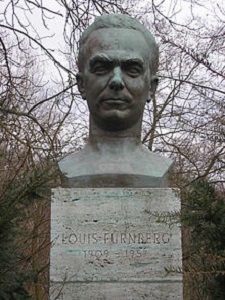


Louis Fürnberg (24 mei 1909 – 23 juni 1957)
Monument in Weimar


Zie voor nog meer schrijvers van de 24e mei ook mijn blog van 24 mei 2017 en ook mijn drie blogs van 24 mei 2015.
 

Joseph Brodsky, Michael Chabon, Bob Dylan, Henri Michaux, William Trevor, Tobias Falberg, Arnold Wesker, George Tabori, Rainald Goetz

De Russisch-Amerikaanse dichter en schrijver Joseph Brodsky werd op 24 mei 1940 in Leningrad (het huidige St.Petersburg) geboren als Iosif Brodski. Zie ook alle tags voor Joseph Brodsky op dit blog.


Tsushima Screen The perilous yellow sun follows with its slant eyes

masts of the shuddered grove steaming up to capsize
in the frozen straits of Epiphany. February has fewer
days than the other months; therefore, it’s more cruel
than the rest. Dearest, it’s more sound
to wrap up our sailing round
the globe with habitual naval grace,
moving your cot to the fireplace
where our dreadnought is going under
in great smoke. Only fire can grasp a winter!
Golder unharnessed stallions in the chimney
dye their manes to more corvine shades as they near the finish,
and the dark room fills with the plaintive, incessant chirring
of a naked, lounging grasshopper one cannot cup in fingers.


Moscow Carol

In such an inexplicable blue,

Upon the stonework to embark,
The little ship of glowing hue
Appears in Alexander Park.
The little lamp, a yellow rose,
Arising — ready to retreat —
Above the people it adores;
Near strangers’ feet.
In such an inexplicable blue
The drunkards’ hive, the loonies’ team.
A tourist takes a snapshot to
Have left the town and keep no dream.
On the Ordynka street you find
A taxicab with fevered gnomes,
And dead ancestors stand behind
And lean on domes.
A poet strolls across the town
In such an inexplicable blue.
A doorman watches him looking down
And down the street and catches the flu.
An old and handsome cavalier
Moves down a lane not worth a view,
And wedding-party guests appear
In such an inexplicable blue.
Behind the river, in the haar,
As a collection of the blues —
The yellow walls reflecting far
The hopeless accent of the Jews.
You move to Sunday, to despair
(From love), to the New Year, and there
Appears a girl you cannot woo —
Never explaining why she’s blue.
Then in the night the town is lost;
A train is clad in silver plush.
The pallid puff, the draught of frost
Will sheathe your face until you blush.
The honeycomb of windows fits
The smell of halva and of zest,
While Christmas Eve is carrying its
Mince pies abreast.
Watch your New Year come in a blue
Seawave across the town terrain
In such an inexplicable blue,
As if your life can start again,
As if there can be bread and light —
A lucky day — and something’s left,
As if your life can sway aright,
Once swayed aleft.


Joseph Brodsky (24 mei 1940 – 28 januari 1996)
In 1964


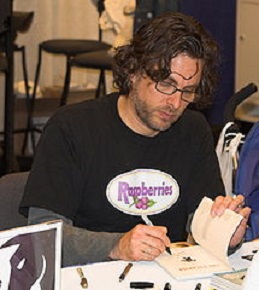
De Amerikaanse schrijver Michael Chabon werd geboren op 24 mei 1963 in Washington. Zie ook alle tags voor Michael Chabon op dit blog.

Uit: Maangloed (Vertaald door Gerda Baardman, Jan de Nijs en Tjadine Stheeman)

“Zo heb ik het verhaal gehoord. Toen Alger Hiss uit de gevangenis kwam, kon hij moeilijk aan een baan komen. Hij had aan Harvard rechten gestudeerd, bij Oliver Wendell Holmes op kantoor gewerkt en een bijdrage geleverd aan het opstellen van het Handvest van de Verenigde Naties, maar hij was ook veroordeeld wegens meineed en was berucht als werktuig van het wereldwijde communisme. Hij had zijn memoires gepubliceerd, maar die waren saai en niemand wilde ze lezen. Zijn vrouw was bij hem weggegaan. Hij was blut en wanhopig. Uiteindelijk kreeg een van de vrienden die hij nog over had medelijden met de stumper en boorde zijn connecties aan. Hiss werd in dienst genomen door een bedrijf in New York dat een modieus soort haarspeldje van lussen pianosnaar maakte en verkocht.
Feathercombs Inc. was goed van start gegaan, maar zat nu in zwaar weer doordat een grotere concurrent die hun ontwerpen namaakte, hun merkenrecht schond en artikelen onder de prijs op de markt bracht. De verkoop was sterk afgenomen. De salarissen konden maar net worden betaald. Om Hiss te kunnen aannemen, moest iemand anders worden ontslagen.
In een verslag van de arrestatie van mijn grootvader in The Daily News van 25 mei 1957 wordt hij door een niet met name genoemde collega beschrevenals ‘het stille type’. Voor zijn collega-verkopers bij Feathercombswas hij een vilthoed aan de kapstok in de hoek. Hij was de hardstwerkendemaar minst presterende medewerker van de verkoopafdeling. In zijn lunchpauze zonderde hij zich af met een boterham en de nieuwe Sky and Telescope of de Aviation Week. Men wist dat hij in een Crosley reed, een buitenlandse vrouw en een puberdochter had en ergens diep in BergenCounty woonde. Voor zijn arrestatie had mijn grootvader twee keer indrukop zijn collega’s gemaakt. Midden onder de vijfde wedstrijd van de WorldSeries van 1956 hield de radio op kantoor er ineens mee op, waarop mijngrootvader hem repareerde met een buisje dat hij uit de telefooncentralehad gesloopt. En een copywriter van Feathercombs meldde een keer dat hijmijn grootvader tegen het lijf was gelopen bij het Paper Mill Playhouse inMillburn, waar de buitenlandse echtgenote nota bene de hoofdrol, Serafina, speelde in De getatoeëerde roos. Verder wist niemand veel over mijngrootvader en zo leek hij het ook graag te willen houden. Hij glimlachte weleens, maar lachte nooit. Als hij er al een politieke mening op nahield.”


Michael Chabon (Washington, 24 mei 1963)


De Amerikaanse zanger, songwriter en dichter Bob Dylan werd geboren als Robert Allen Zimmerman op 24 mei 1941 in Duluth, Minnesota. Zie ook alle tags voor Bob Dylan op dit blog.


All Along the Watchtower

“There must be some way out of here,” said the joker to the thief,
“There’s too much confusion, I can’t get no relief.
Businessmen, they drink my wine, plowmen dig my earth,
None of them along the line know what any of it is worth.”

“No reason to get excited,” the thief he kindly spoke,
“There are many here among us who feel that life is but a joke.
But you and I, we’ve been through that, and this is not our fate,
So let us not talk falsely now, the hour is getting late.”

All along the watchtower, princes kept the view
While all the women came and went, barefoot servants too.
Outside in the distance a wildcat did growl;
Two riders were approaching – the wind began to howl.


Man Of Constant Sorrow

I am a man of constant sorrow
I’ve seen trouble all my days
I’ll say goodbye to Colorado
Where I was born and partly raised

Through this open world I’m a-bound to ramble
Through ice and snow, sleet and rain
Im a-bound to ride that mornin’ railroad
Perhaps I’ll die upon that train

Your mother says that I’m a stranger
A face you’ll never see no more
But here’s one promise to ya
I’ll see you on God’s golden shore

I’m a-goin’ back to Colorado
The place that I’ve started from
If I’d knowed how bad you’d treat me
Babe, I never would have come


Bob Dylan (Duluth, 24 mei 1941)
In 1963


De Franse schrijver, dichter  en schilder Henri Michaux werd geboren op 24 mei 1899 in Namur in België. Zie ook alle tags voor Henri Michaux op dit blog.


A Bas le Succès

Non, il est vrai, je ne suis pas l’homme des réussites.
Pourquoi le serais-je?
Puisque de toute façon je réussis.
Le but que je n’atteins pas est le but qui me rapporte, que je rapporte.
Pourquoi irais-je à la tête d’armées nombreuses m’installer impudemment dans la capitale d’un pays étranger?
Pour une si petite insolence, je m’en voudrais de m’être donné tant de mal, d’avoir conquis en vingt ans des galons qu’on peut avoir pour cent francs et pour dix sous de
méditation inventive, d’avoir sacrifié des tas d’hommes réellement qui ne revivront plus (et qui ne s’y sont pas tous amusés, ni le chef lui-même).
A la vérité, j’aurais honte d’être à sa place, ou du moins d’en être content.
Même si je ne m’étais astreint que vingt minutes et non vingt ans à l’esclavage de la discipline.
S’être appuyé sur tant de règles, pour blesser de pauvres diables qu’on ne peut même plus ni achever proprement ni ressusciter dans leur santé première.
Non vraiment, je ne comprends pas ce gaspilleur malfaisant.
Heureusement, nous ne nous rencontrons jamais.


Alphabet

Tandis que j’étais dans le froid des approches de la mort, je regardai comme pour la dernière fois les êtres, profondément.
Au contact mortel de ce regard de glace, tout ce qui n’était pas essentiel disparut.
Cependant je les fouaillais, voulant retenir d’eux quelque chose que même le
Mort ne pût desserrer.
Ils s’amenuisèrent et se trouvèrent enfin réduits à une sorte d’alphabet, mais à un alphabet qui eût pu servir dans l’autre monde, dans n’importe quel monde.
Par là, je me soulageai de la peur qu’on ne m’arrachât tout entier l’univers où j’avais vécu.
Raffermi par cette prise, je le contemplais invaincu, quand le sang avec la satisfaction, revenant dans mes artérioles et mes veines, lentement je regrimpai le versant ouvert de la vie.


Henri Michaux (24 mei 1899 – 19 oktober 1984)


De Ierse schrijver William Trevor werd geboren op 24 mei 1928 in Mitchelstown, County Cork. Zie ook alle tags voor William Trevor op dit blog.

Uit: Love and Summer

“They recalled how no task had been too menial for her to undertake, how the hours spent polishing a surfeit of brass or scraping away old candle-grease had never been begrudged. The altar flowers had not once in sixty years gone in need of fresh water; the missionary leaflets were replaced when necessary. Small repairs had been effected on cassocks and surplices and robes. Washing the chancel tiles had been a sacred duty.
While such recollections were shared, and the life that had ended further lauded, a young man in a pale tweed suit that stood out a bit on a warm morning surreptitiously photographed the scene. He had earlier cycled the seven and a half miles from where he lived, and was then held up by the funeral traffic. He had come to photograph the town’s burnt-out cinema, which he had heard about in a similar small town where recently he had photographed the perilous condition of a terrace of houses wrenched from their foundations in a landslip.
Dark-haired and thin, in his early twenties, the young man was a stranger in Rathmoye. A suggestion of stylishness — in his general demeanour, in his jaunty green-and-bluestriped tie — was repudiated by the comfortable bagginess of his suit. His features had a misleading element of seriousness in their natural cast, contributing further to this impression of contradiction. His name was Florian Kilderry.
‘Whose funeral?’ he enquired in the crowd, returning to it from where he had temporarily positioned himself behind a parked car in order to take his photographs. He nodded when he was told, then asked for directions to the ruined cinema. ‘Thanks,’ he said politely, his smile friendly. ‘Thanks,’ he said again, and pushed his bicycle through the throng of mourners.”


William Trevor (24 mei 1928 – 20 november 2016)


De Duitse schrijver en tekenaar Tobias Falberg werd geboren op 24 mei 1976 in Wittenberg. Zie ook alle tags voor Tobias Falberg op dit blog.


Büro mit neurotischen Crackern

Überall stoßen wir uns
in den kleinen Kabinen,
wir kultivieren die Weltsicht
geschlagener Köter,

das Fleisch wird zart,
das Fell spannt. Bei Erfolg
regnet es Cracker.
Die Futternäpfe scheppern,

wir versuchen zu fressen,
doch sie saugen sich fest,
ein Tinnitus aus lautem Blech.
So gehen wir ein

ins Nirwana der Schlachtfeste,
sauber zerlegt und der harte Kern
gepresst, ein delikates Substrat
für unsere Nachfolger.


Tobias Falberg (Wittenberg, 24 mei 1976)


De Britse schrijver Arnold Wesker werd geboren op 24 mei 1932 in Londen. Zie ook alle tags voor Arnold Wesker op dit blog.

Uit: Roots

“JENNY That’s what I say. Blust Mother, I say, you don’t git indigestion in the back. Don’t you tell me, she say, I hed it!
JIMMY What hevn’t she hed.
Jenny returns to washing up while Jimmy struggles a while on the sofa. Jenny hums. No word. Then —
JENNY Who d’you see today?
JIMMY Only Doctor Gallagher.
JENNY (wheeling round) You see who?
JIMMY Gallagher. His wife driv him up in the ole Armstrong.
JENNY Well I go t’hell if that ent a rum thing.
JIMMY (rising and going to table; pain has eased) What’s that then?
JENNY (moving to get him supper from oven) We was down at the whist drive in the village and that Judy Maitland say he were dead. ‘Cos you know he’ve hed a cancer this last year and they don’t give him no longer’n three weeks don’t you?
JIMMY Ole crows. They don’ wan’ nothin’ less than a death to wake them up.
JENNY No. No longer’n three weeks. Girl’s voice (off) Yoo-hoo! Yoo-hoo!
JIMMY There’s your sister.
JENNY That’s her.
Girl’s voice (off) Yoo-hoo! Anyone home?
JENNY (calling) Come you on in gal, don’t you worry about yoo-hoo. Enter Beatie Bryant, an ample, blonde, healthy-faced young woman of twenty-two years. She is carrying a case.
JIMMY Here she is.
JENNY (with reserve, but pleased) Hello, Beatrice — how are you?
BEATIE(with reserve, but pleased) Hello, Jenny — how are you? What’s that lovely smell I smell? JENNY Onions for supper and bread for the harvest festival.”


Arnold Wesker (24 mei 1932 – 12 april 2016)
Scene uit een opvoering in Colchester, 2012


De van oorsprong Duits-Hongaarse, maar Engelstalig schrijver en dramaturg George (György) Tabori werd geboren in Boedapest op 24 mei 1914. Zie ook alle tags voor George Tabori op dit blog.

Uit: Bett & Bühne: Über das Theater und das Leben

“Unsere Beziehung war zwar intensiv, aber ganz einseitig. Ich habe ihn nur zweimal gesehen.
Das erste Mal am 30. Januar 1933, in jener Nacht, als er sich den Weg zur Macht erschwindelt hatte und sich am Fenster in der Wilhelmstraße im Jubel der Massen badete; er erschien im lodernden Licht der Fakkeln und stand einsam da, als ob ein Mächtiger immer einsam zu sein hätte. Er winkte den Massen zu, und ich habe ihm zugewunken, jung und dumm wie ich war. Er hat mir leid getan, weil mir ein weiser Spruch meiner Großmutter
wieder in den Sinn gekommen ist: “Wenn man ganz nach oben gekommen ist, dann bleibt nur noch eins, der Abstieg.”
Zum zweiten Mal habe ich ihn bei einer Massenkundgebung gesehen, im Sportpalast. Das war eine verschwitzte Veranstaltung, überaus wirkungsbewußt inszeniert, eine Passio histerica: Über allem hing ein widerlicher Geruch nach Leichen. Noch Jahre später ist mir dieser Geruch immer wieder in die Nase gestiegen, und ich habe seitdem eine tiefe Abneigung gegen diese Art von Effekthascherei. Das Ganze war allerdings auch wie ein Witz: wegen dem Mißverständnis zwischen dem bombastischen Aufwand um ihn und diesem Bärtchen; das fand ich komisch, wie Tausende andere auch. Er hat “den Teufel überteufelt, den Herodes überrodet”, wie Hamlet sagen würde, all jene Bühnengesten und -tricks angewandt, die ich Jahre später beim Theatermachen immer mehr verabscheut habe.
Ich kann also nicht behaupten, daß ich ihn gekannt habe.“


George Tabori (24 mei 1914 – 23 juli 2007)
Cover


De Duitse schrijver Rainald Maria Goetz werd geboren op 24 mei 1954 in München. Zie ook alle tags voor Rainald Goetz op dit blog.

Uit: Klage

“Accatone Dienstag, 6. Februar acc7, Berlin

Man sieht das Leuchten im dritten Stock, kommt aber vorne beim Eingang nicht ins Haus. Soll von der Seite kommen, da ist keine Türe, kommt von hinten, durch die Baustelle. Sperrholz, eine Leiter neben einem Vorsicht-Schild im Treppen-haus, der 4. Stock, schon zu hoch. Aber da ist es doch, schräg unten, hinter Glas im Hellen: die Schreibtischarmada, da sitzen sie, eng gepackt in einem weiten großen Raum, die Köpfe und Bildschirme, einzelne aufrecht dahingehende Menschen, ja, das Kommando Gegenwart. Dann stehe ich an der Empfangstheke, wirr, kann vor lauter Vielheit kaum etwas erkennen. Volker Corsten bringt mich nach links hinten, wo ich am Ende des hallenartigen Raums durch eine gläserne Trennwand hindurch Ulf an seinem Schreibtisch sitzen und auf seinen Computer schauen sehe, während rechts von ihm Herlinde Koelbl mit Assistenten ihre Lichtgerätschaften aufbaut, um eine Fotographie zu machen. Ulf schaut auf, sieht mich, kommt kurz raus, kurzes Gespräch. Im Knieen notiere ich ihm meine neue Nummer auf die ausgedruckten Textbeispiele. Eto Sekunden höchstens, bin schon wieder draußen. Nichts schöner als laberlose schnelle Arbeitskontakte. Akut euphorisiert stehe ich dann in der Deutschen Guggenheim gegenüber, ARKADIEN UND ANARCHIE. Montags freier Eintritt. Die Leute drängen sich vor seltsam lichtflirrend düsteren Gemälden, italienischer Divisionismus, verstehe.
Aber der römische Held will mit seinen Freunden rumhängen, hat keine Lust zu arbeiten. Er schickt seine Frau auf die sogenannte Straße. Sie verlässt ihn. Er lernt eine andere kennen, die sich in ihn verliebt. Seriöse Arbeit ist ihm zu anstrengend. Die neue Freundin soll für ihn arbeiten. Er sieht seinen eigenen Tod im Traum. Er begeht einen Wurstdiebstahl in der Stadt, kommt beim Fluchtversuch mit einem Motorrad zu Tode. Accatone, 1961, heute Mitte 40.”


Rainald Goetz (München, 24 mei 1954)
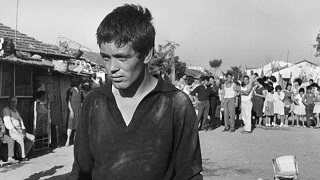
Franco Citti als Accattone in Pier Paolo Pasolini’s fim uit 1961


Zie voor nog meer schrijvers van de 24e mei ook mijn drie blogs van 24 mei 2015.
In Memoriam William Trevor

In Memoriam William Trevor

De Ierse schrijver William Trevor is afgelopen zondag op 88-jarige leeftijd overleden. William Trevor werd geboren op 24 mei 1928 in Mitchelstown, County Cork. Zie ook alle tags voor William Trevor op dit blog.

Uit: After Rain

“Owen Dromgould had run his fingers over the bark of trees. He could tell the difference in the outline of their leaves; he could tell the thorns of gorse and bramble. He knew birds from their song, dogs from their bark, cats from the touch of them on his legs. There were the letters on the gravestones, the stops of the organ, his violin. He could see red, berries on holly and cotoneaster. He could smell lavender and thyme.
All that could not be taken from him. And it didn’t matter if, overnight, the colour had worn off the kitchen knobs. It didn’t matter if the china light-shade in the kitchen had a crack he hadn’t heard about before. What mattered was damage done to something as fragile as a dream.
The wife he had first chosen had dressed drably: from silence and inflexions – more than from words – he learned that now. Her grey hair straggled to her shoulders, her back was a little humped. He poked his way about, and they were two old people when they went out on their rounds, older than they were in their ageless happiness. She wouldn’t have hurt a fly, she wasn’t a person you could be jealous of, yet of course it was hard on a new wife to be haunted by happiness, to be challenged by the simplicities there had been. He had given himself to two women; he hadn’t withdrawn himself from the first, he didn’t from the second.
Each house that contained a piano brought forth its contradictions. The pearls old Mrs Purtill wore were opals, the pallid skin of the stationer in Kiliath was freckled, the two lines of oaks above Oghill were surely beeches? ‘Of course, of course,’ Owen Dromgould agreed, since it was fair that he should do so. Belle could not be blamed for making her claim, and claims could not be made without damage or destruction. Belle would win in the end because the living always do. And that seemed fair also, since Violet had won in the beginning and had had the better years.”

 
William Trevor (24 mei 1928 – 20 november 2016)

Joseph Brodsky, Michael Chabon, 75 jaar Bob Dylan, Henri Michaux, William Trevor, Tobias Falberg, Arnold Wesker

De Russisch-Amerikaanse dichter en schrijver Joseph Brodsky werd op 24 mei 1940 in Leningrad (het huidige St.Petersburg) geboren als Iosif Brodski. Zie ook alle tags voor Joseph Brodsky op dit blog.


A List Of Some Observation…

A list of some observation. In a corner, it’s warm.
A glance leaves an imprint on anything it’s dwelt on.
Water is glass’s most public form.
Man is more frightening than its skeleton.
A nowhere winter evening with wine. A black
porch resists an osier’s stiff assaults.
Fixed on an elbow, the body bulks
like a glacier’s debris, a moraine of sorts.
A millennium hence, they’ll no doubt expose
a fossil bivalve propped behind this gauze
cloth, with the print of lips under the print of fringe,
mumbling “Good night” to a window hinge


A Polar Explorer

All the huskies are eaten. There is no space
left in the diary, And the beads of quick
words scatter over his spouse’s sepia-shaded face
adding the date in question like a mole to her lovely cheek.
Next, the snapshot of his sister. He doesn’t spare his kin:
what’s been reached is the highest possible latitude!
And, like the silk stocking of a burlesque half-nude
queen, it climbs up his thigh: gangrene.


Galatea Encore

As though the mercury’s under its tongue, it won’t
talk. As though with the mercury in its sphincter,
immobile, by a leaf-coated pond
a statue stands white like a blight of winter.
After such snow, there is nothing indeed: the ins
and outs of centuries, pestered heather.
That’s what coming full circle means –
when your countenance starts to resemble weather,
when Pygmalion’s vanished. And you are free
to cloud your folds, to bare the navel.
Future at last! That is, bleached debris
of a glacier amid the five-lettered “never.”
Hence the routine of a goddess, nee
alabaster, that lets roving pupils gorge on
the heart of color and the temperature of the knee.
That’s what it looks like inside a virgin.


Joseph Brodsky (24 mei 1940 – 28 januari 1996) 

Lees verder “Joseph Brodsky, Michael Chabon, 75 jaar Bob Dylan, Henri Michaux, William Trevor, Tobias Falberg, Arnold Wesker”

Joseph Brodsky, Michael Chabon, Bob Dylan, Henri Michaux, William Trevor, Tobias Falberg, Arnold Wesker

De Russisch-Amerikaanse dichter en schrijver Joseph Brodsky werd op 24 mei 1940 in Leningrad (het huidige St.Petersburg) geboren als Iosif Brodski. Zie ook alle tags voor Joseph Brodsky op dit blog.


A Song

I wish you were here, dear, I wish you were here.
I wish you sat on the sofa
and I sat near.
the handkerchief could be yours,
the tear could be mine, chin-bound.
Though it could be, of course,
the other way around.

I wish you were here, dear,
I wish you were here.
I wish we were in my car,
and you’d shift the gear.
we’d find ourselves elsewhere,
on an unknown shore.
Or else we’d repair
To where we’ve been before.

I wish you were here, dear,
I wish you were here.
I wish I knew no astronomy
when stars appear,
when the moon skims the water
that sighs and shifts in its slumber.
I wish it were still a quarter
to dial your number.

I wish you were here, dear,
in this hemisphere,
as I sit on the porch
sipping a beer.
It’s evening, the sun is setting;
boys shout and gulls are crying.
What’s the point of forgetting
If it’s followed by dying?


Constancy

Constancy is an evolution of one’s living quarters into
a thought: a continuation of a parallelogram or a rectangle
by means—as Clausewitz would have put it—
of the voice and, ultimately, the gray matter.
Ah, shrunken to the size of a brain-cell parlor
with a lampshade, an armoire in the “Slavic
Glory” fashion, four studded chairs, a sofa,
a bed, a bedside table with
little medicine bottles left there standing like
a kremlin or, better yet, manhattan.
To die, to abandon a family, to go away for good,
to change hemispheres, to let new ovals
be painted into the square—the more
volubly will the gray cell insist
on its actual measurements, demanding
daily sacrifice from the new locale,
from the furniture, from the silhouette in a yellow
dress; in the end—from your very self.
A spider revels in shading especially the fifth corner.
Evolution is not a species’
adjustment to a new environment but one’s memories’
triumph over reality, the ichthyosaurus pining
for the amoeba, the slack vertebrae of a train
thundering in the darkness, past
the mussel shells, tightly shut for the night, with their
spineless, soggy, pearl-shrouding contents.


Joseph Brodsky (24 mei 1940 – 28 januari 1996)
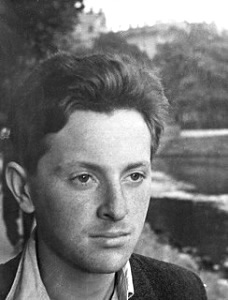
Een jonge Brodsky

Lees verder “Joseph Brodsky, Michael Chabon, Bob Dylan, Henri Michaux, William Trevor, Tobias Falberg, Arnold Wesker”

Joseph Brodsky, Michael Chabon, Bob Dylan, Henri Michaux, William Trevor, Tobias Falberg, Arnold Wesker

De Russisch-Amerikaanse dichter en schrijver Joseph Brodsky werd op 24 mei 1940 in Leningrad (het huidige St.Petersburg) geboren als Iosif Brodski. Zie ook alle tags voor Joseph Brodsky op dit blog.


24 mei 1980

In plaats van een beest heb ik me steeds in een kooi laten zetten,
mijn straftijd en nummer heb ik gekrast in celmuren,
‘k heb aan zee gewoond, gespeeld aan de roulette,
in rok gesoupeerd met de vreemdste sinjeuren.
Hoog op een gletsjer had ik de halve wereld voor ogen,
‘k ben driemaal verdronken, heb tweemaal onder het mes gelegen.
Het land dat mij grootbracht heb ik verloochend.
Je kunt een stad vullen met allen die mij zijn vergeten.
‘k Heb door steppen gedwaald waar de grond zich de Hunnen herinnert,
kleren aangehad die weer in de mode raken,
rogge gezaaid, schuren van hardhout getimmerd
en het enige dat ik nimmer dronk is droog water.
‘k Heb mijn dromen gevuld met ’t stalen oog van de bewaking,
het genadebrood van de balling tot de laatste kruimel verslonden.
Elke klank is mijn keel gepasseerd behalve janken;
‘k ben gaan fluisteren. Vandaag ben ik veertig geworden.
Wat moet ik zeggen van het leven ? Dat het lang is gebleken.
Solidariteit voel ik alleen met mislukten en manken.
Maar zolang mijn strot niet onder de klei wordt vertreden
zal ’t geluid dat hij geeft enkel dit zijn: danken.


Ter nagedachtenis aan mijn vader: Australië

Ik droomde dat je nog leefde en geëmigreerd
was naar Australië. Doodgemoedereerd
kwam je stem tot mij, mopperend over het klimaat
en het behang: de flat die je hebt gehuurd staat
jammer genoeg niet in het centrum maar aan zee,
vier hoog, geen lift, wel een bad, dat valt mee,
dikke enkels, ‘En m’n pantoffels ben ik kwijt’
klonk het goed verstaanbaar en ietwat zuur.
En in de hoorn gierde opeens ‘Adelaide ! Adelaide !’,
het bulderde, beukte, alsof er tegen een muur
een luik sloeg, van de scharnieren bijna los.

Toch is dit stukken beter dan de urn met je as,
dan het document waarop je sterfdatum staat –
deze flarden van een stem die praat en praat
en de pogingen nors te lijken en onaangedaan

de eerste keer sinds jij in rook bent opgegaan.


Vertaald door Jan Robert Braat e.a.


I threw my arms about those shoulders

I threw my arms about those shoulders, glancing
at what emerged behind that back,
and saw a chair pushed slightly forward,
merging now with the lighted wall.
The lamp glared too bright to show
the shabby furniture to some advantage,
and that is why sofa of brown leather
shone a sort of yellow in a corner.
The table looked bare, the parquet glossy,
the stove quite dark, and in a dusty frame
a landscape did not stir. Only the sideboard
seemed to me to have some animation.
But a moth flitted round the room,
causing my arrested glance to shift;
and if at any time a ghost had lived here,
he now was gone, abandoning this house.


Joseph Brodsky (24 mei 1940 – 28 januari 1996)

Lees verder “Joseph Brodsky, Michael Chabon, Bob Dylan, Henri Michaux, William Trevor, Tobias Falberg, Arnold Wesker”

70 Jaar Bob Dylan, Joseph Brodsky, Michael Chabon, Henri Michaux, William Trevor


70 Jaar Bob Dylan


De Amerikaanse zanger, songwriter en dichter Bob Dylan werd geboren als Robert Allen Zimmerman op 24 mei 1941 in Duluth, Minnesota. Zie ook alle tags voor Bob Dylan op dit blog. Bob Dylan viert vandaag zijn 70e verjaardag.


Blowing In The Wind


How many roads must a man walk down,

before you call him a man?

How many seas must a white dove fly,

before she sleeps in the sand?

And how many times must a cannon ball fly,

before they’re forever banned?


The answer my friend is blowing in the wind,

the answer is blowing in the wind.


How many years can a mountain exist,

before it is washed to the sea?

How many years can some people exist,

before they’re allowed to be free?

And how many times can a man turn his head,

and pretend that he just doesn’t see?


The answer my friend is blowing in the wind,

the answer is blowing in the wind.


How many times must a man look up,

before he sees the sky?

And how many ears must one man have,

before he can hear people cry ?

And how many deaths will it take till we know,

that too many people have died?


The answer my friend is blowing in the wind,

the answer is blowing in the wind.


The answer my friend is blowing in the wind,

the answer is blowing in the wind.


Bob Dylan (Duluth, 24 mei 1941)

Lees verder “70 Jaar Bob Dylan, Joseph Brodsky, Michael Chabon, Henri Michaux, William Trevor”

Joseph Brodsky, Michael Chabon, Rainald Goetz, Kamiel Vanhole, Henri Michaux, Bob Dylan, William Trevor


De Russisch-Amerikaanse dichter en schrijver Joseph Brodsky werd op 24 mei 1940 in Leningrad (het huidige St.Petersburg) geboren als Iosif Brodski. Zie ook alle tags voor Joseph Brodsky op dit blog.


IK DENK AAN HOLLAND als een vlak en effen land,

een laaggelegen land dat over gaat in zee,

en zee, dat is wat Holland eigenlijk

in wezen is. De ongevangen vissen

die met elkaar in ’t Hollands keuvelen

zijn zeker dat hun vrijheid een soort kruising is

van kant en een gravure. Bergbeklimmen

of sterven van de dorst, dat gaat in Holland niet;

nog moeilijker is het om sporen na te laten

wanneer je op je fiets van huis wegrijdt,

laat staan wanneer je wegvaart. Holland-

herinneringen. En die breng je met geen dijk

of dam tot staan. ’t Is in die zin dat ik

al vele malen langer leef in Holland

dan al die golven die daarginder rollen

zonder bestemming. Net als deze regels.


Elegie


M’n lieveling, de kroeg is nog hetzelfde,
dezelfde rotzooi pronkt nog aan de muren,
dezelfde prijzen. Beet’re wijn misschien?
Ik dacht van niet; niet beter en niet slechter.
Een status quo, en ach, zo hoort het ook.

Een vliegenier zit sombertjes alleen,
als een gevallen engel, drinkt z’n wodka.
Violen werken in op mijn verbeelding,
vanwege vroeger. Buiten tekenen
zich maagd’lijk witte daken af, en ergens
begint een klok te luiden. ’t Is al nacht.

Je loog, waarom? Waarom kan ik niet langer
een leugen van de waarheid onderscheiden,
en eis ik nieuwe woorden, steeds maar weer,
gedempte, vreemde en jou onbekende,
maar woorden welke, net als in ’t verleden,
uitsluitend kunnen komen uit jouw mond.


Vertaald door Peter Zeeman


Odysseus to Telemachus 


My dear Telemachus,

The Trojan War

is over now; I don’t recall who won it.

The Greeks, no doubt, for only they would leave

so many dead so far from their own homeland.

But still, my homeward way has proved too long.

While we were wasting time there, old Poseidon,

it almost seems, stretched and extended space.


I don’t know where I am or what this place

can be. It would appear some filthy island,

with bushes, buildings, and great grunting pigs.

A garden choked with weeds; some queen or other.

Grass and huge stones . . . Telemachus, my son!

To a wanderer the faces of all islands

resemble one another. And the mind

trips, numbering waves; eyes, sore from sea horizons,

run; and the flesh of water stuffs the ears.

I can’t remember how the war came out;

even how old you are–I can’t remember.


Grow up, then, my Telemachus, grow strong.

Only the gods know if we’ll see each other

again. You’ve long since ceased to be that babe

before whom I reined in the plowing bullocks.

Had it not been for Palamedes’ trick

we two would still be living in one household.

But maybe he was right; away from me

you are quite safe from all Oedipal passions,

and your dreams, my Telemachus, are blameless.


Brodsky

Joseph Brodsky (24 mei 1940 – 28 januari 1996)


De Amerikaanse schrijver Michael Chabon werd geboren op 24 mei 1963 in Washington. Zie ook alle tags voor Michael Chabon op dit blog.


Uit: The Yiddish Policemen’s Union


Nine months Landsman’s been flopping at the Hotel Zamenhof without any of his fellow residents managing to get themselves murdered. Now somebody has put a bullet in the brain of the occupant of 208, a yid who was calling himself Emanuel Lasker.

“He didn’t answer the phone, he wouldn’t open his door,” says Tenenboym the night manager when he comes to roust Landsman. Landsman lives in 505, with a view of the neon sign on the hotel across Max Nordau Street. That one is called the Blackpool, a word that figures in Landsman’s nightmares. “I had to let myself into his room.”

The night manager is a former U.S. Marine who kicked a heroin habit of his own back in the sixties, after coming home from the shambles of the Cuban war. He takes a motherly interest in the user population of the Zamenhof. He extends credit to them and sees that they are left alone when that is what they need.

“Did you touch anything in the room?” Landsman says.

Tenenboym says, “Only the cash and jewelry.”

Landsman puts on his trousers and shoes and hitches up his suspenders. Then he and Tenenboym turn to look at the doorknob, where a necktie hangs, red with a fat maroon stripe, already knotted to save time. Landsman has eight hours to go until his next shift. Eight rat hours, sucking at his bottle, in his glass tank lined with wood shavings. Landsman sighs and goes for the tie. He slides it over his head and pushes up the knot to his collar. He puts on his jacket, feels for the wallet and shield in the breast pocket, pats the sholem he wears in a holster under his arm, a chopped Smith & Wesson Model 39.

“I hate to wake you, Detective,” Tenenboym says. “Only I noticed that you don’t really sleep.”


chabon

Michael Chabon (Washington, 24 mei 1963)


De Duitse schrijver Rainald Maria Goetz werd geboren op 24 mei 1954 in München. Zie ook alle tags voor Rainald Goetz op dit blog.


Uit: Loslabern


„1. Der Gefangene

In einer Aufwallung von Direktheit und quasi sinnfreier Intentionalität hatte der Höllor, die Arme von sich werfend himmelwärts, ausgerufen: LOSLABERN: Traktat, Traktat über den Tod, über Wahn, Sex und Text, und, erheitert von diesem soeben durch ihn hindurchgefahrenen Expressivitätsereignis: Bericht!, der Herbst 2008!, dem davon Angestoßenen sofort stattgegeben und es geschehen lassen, dass da also LOSGELABERT würde, und dabei erzählt, wie ich, hier ja in Gestalt des Klagor noch, auf der Buchmesse 2008 bei Joachim Unseld auf dem Gang gestanden war, zu etwas vorgerückter Stunde schon, an dieser Ecke bei der Treppe, im Gespräch mit dem Schriftsteller Binswanger und dem Feuilletonredakteur Canetti, selbst schon etwas angetrunken, dadurch aber auch gesteigert animiert und verstärkt bei Sinnen, und wie es dort also zu diesen sofortistisch hochfahrenden Darlegungen über das LOSLABERN, eine entsprechend maximale Ethik der Schrift gekommen war, eine Moral des Schreibens, ich hatte in den Tagen zuvor diesbezüglich einige Notizen gemacht und war dadurch aktuell besonders besessen von diesen für mich verschiedene sehr existentielle Fragen lösenden Ideen, redete dadurch aber auch wie eingesperrt in diese Ideen daher, viel zu sehr gefesselt von ihnen, grotesk hysterifiziert durch sie, ich fing schon an, mich zum Ausgleich gegen das von mir selbst Gesagte nocheinmal auf das zuvor von Binswanger Gesagte konzentrieren zu wollen, während ich aber zugleich weiter über das LOSLABERN redete, es war mir jedoch entfallen, worauf genau ich eigentlich gerade zu antworten versuchte, der binswangersche Gesprächsbeitrag war von mir missbräuchlich nur in einen Anstoß für diesen meinerseitigen Moralmonolog umformatiert worden, ein Missbrauch der Kommunikationsfreiheiten nach Artikel 5 Grundgesetz (du sollst nicht missachten das Gesagte deines Gegenübers), es war mir jedoch viel weniger gegenwärtig, was er eben gesagt hatte, als das von mir in den vergangenen Tagen zur Moral der Schrift Zusammennotierte, und während ich gerade am Preisen der mit dieser Schriftmoral einhergehenden, ihr tatsächlich vorausgehenden richtigen Haltung zu den Realien des Sozialen im mitmenschlichen Kontakt gewesen war, war mir im staunenden Innersten meiner betrübten Seele klar, was für ein absolut absurder Irrsinn dies hier war, den Takt und die Tugenden der Geselligkeit als Basis für ein richtiges Schreiben zu preisen und dabei wie ein Verrückter und rücksichtslos monoman auf die direkt um einen Herumstehenden einzutexten und auch gar nicht mehr damit aufzuhören, das LOSLABERN, das einfach so dahergelaberte Schreiben, als höchste Textethik darzustellen, weil ja in ihm als vorher schon Gelöstes alles Entscheidende darin und enthalten und ausgesprochen sei usw usf, und in Wirklichkeit dabei selber daherzureden und aufzutreten wie der letzte Idiot, als, um hier zuletzt ganz an den Anfang, in die achternbuschischen Urgründe der Textmotorik zurückzukehren: DER DEPP.


Goetz

Rainald Goetz (München, 24 mei 1954)


De Vlaamse schrijver Kamiel Vanhole werd geboren in Etterbeek op 24 mei 1954.Zie ook alle tags voor Kamiel Vanhole op dit blog.


Uit: Simsalabim


„(…) een rimram van klanken, dartel als kosmisch gruis, waarvan ik wou dat ik ze zelf had uitgevonden, dat woord dus, waarover Frans Kellendonk ooit zei dat het Bijbelse kracht bezat, dat specifieke woord hebt u intussen al lang in het oog gekregen, waarde lezer, aangezien het zich als kopje boven dit stuk bevindt en u zich niet altijd meer de moeite getroost om teksten in hun geheel te
lezen, er verschijnt ook zoveel de jongste jaren, de bundels en de bladen en de bijlagen bulken van de Nederlandse woorden, ze fokken als konijnen, alleen van dit woord weet ik allerminst hoe het is ontstaan, het is dan ook een toverspreuk die net als alle andere woorden geheime luikjes in onze hersenschors openklapt en werelden ontvouwt, mensen, ikken, zo werken woorden en zo heeft voornoemde titel in zijn eentje alle andere woorden weten op te trommelen die ik voor deze zin nodig had, dat schijnt de mysterieuze drift van taal te zijn, en om de lezers te gerieven die gauw gauw naar de slotregel gaan kijken om zich al enig idee van de afloop te vormen en desgewenst op een volgend stuk over te springen, voor die geheide lezers zou ik nog een ander woord willen opgooien dat mij eveneens na aan het hart ligt, maar dat vooral een waardig slotakkoord mag vormen waar al het voorgaande in meezindert, dat woord, ik wil het best nog even uitstellen, mijn vingers hangen gereed boven het klavier, ik hoef ze slechts met een brede pianistengeste te laten neerkomen om er een punt achter te zetten, dat woord, beste lezer, dat volgens de jongste Van Dale van Westvlaamse origine is, als zulks u enig plezier kan doen, dat woord luidt apekool.”


VANHOLE

Kamiel Vanhole (24 mei 1954 – 12 juni 2008)


De Franse schrijver, dichter  en schilder Henri Michaux werd geboren op 24 mei 1899 in Namur in België. Zie ook alle tags voor Henri Michaux op dit blog.


Un homme perdu


En sortant, je m’égarai. Il fut tout de suite trop tard pour reculer. Je me trouvais au milieu d’une plaine. Et partout circulaient de grandes roues. Leur taille était bien cent fois la mienne. Et d’autres étaient plus grandes encore.Pour moi, sans presque les regarder, je chuchotais à leur approche, doucement, comme à moi-même :

” Roue, ne m’écrase pas… Roue, je t’en supplie, ne m’écrase pas… Roue, de grâce, ne m’écrase pas. ” Elles arrivaient, arrachant un vent puissant, et repartaient. Je titubais. Depuis des mois ainsi : ” Roue, ne m’écrase pas… Roue, cette fois-ci, encore, ne m’écrase pas. ” Et personne n’intervient ! Et rien ne peut arrêter ça ! Je resterai là jusqu’à ma mort.


Ma vie s’arréta


J’étais en plein océan. Nous voguions. Tout à coup le vent tomba. Alors l’océan démasqua sa grandeur, son interminable solitude.

Le vent tomba d’un coup, ma vis fit « toc ». Elle était arrêtée à tout jamais.

Ce fut une après-midi de délire, ce fut après-midi singulière, l’après-midi de « la fiancée se retire ».

Ce fut un moment, un éternel moment, comme la voix de l’homme et sa santé étouffe sans effort les gémissements des microbes affamés, ce fut un moment, et tous les autres moments s’y enfournèrent, s’y envaginèrent, l’un après l’autre, au fur au mesure qu’ils arrivaient, sans fin, sans fin, et je fus roulé dedans, de plus en plus enfoui, sans fin, sans fin.


henri_michaux

Henri Michaux (24 mei 1899 – 19 oktober 1984)


De Amerikaanse zanger, songwriter en dichter Bob Dylan werd geboren als Robert Allen Zimmerman op 24 mei 1941 in Duluth, Minnesota. Zie ook alle tags voor Bob Dylan op dit blog.


Clothes Line


After a while we took in the clothes,

Nobody said very much.

Just some old wild shirts and a couple pairs of pants

Which nobody really wanted to touch.

Mama come in and picked up a book

An’ papa asked her what it was.

Someone else asked, what do you care?

Papa said, well, just because.

Then they started to take back their clothes,

Hang ’em on the line.

It was january the thirtieth

And everybody was feelin’ fine.


The next day everybody got up

Seein’ if the clothes were dry.

The dogs were barking, a neighbor passed,

Mama, of course, she said, hi!

Have you heard the news? he said, with a grin,

The vice-president’s gone mad!

Where? downtown. when? last night.

Hmm, say, that’s too bad!

Well, there’s nothin’ we can do about it, said the neighbor,

It’s just somethin’ we’re gonna have to forget.

Yes, I guess so, said ma,

Then she asked me if the clothes was still wet.


I reached up, touched my shirt,

And the neighbor said, are those clothes yours?

I said, some of ’em, not all of ’em.

He said, ya always help out around here with the chores?

I said, sometime, not all the time.

Then my neighbor, he blew his nose

Just as papa yelled outside,

Mama wants you t’ come back in the house and bring them clothes.

Well, I just do what I’m told,

So, I did it, of course.

I went back in the house and mama met me

And then I shut all the doors. 


bob_dylan

Bob Dylan (24 mei 1941)


De Ierse schrijver William Trevor werd geboren op 24 mei 1928 in Mitchelstown, County Cork. Zie ook alle tags voor William Trevor op dit blog.


Uit: Love and Summer


On a June evening some years after the middle of the last century Mrs Eileen Connulty passed through the town of Rathmoye: from Number 4 The Square to Magennis Street, into Hurley Lane, along Irish Street, across Cloughjordan Road to the Church of the Most Holy Redeemer. Her night was spent there.
The life that had come to an end had been one of good works and resolution, with a degree of severity in domestic and family matters. The anticipation of personal contentment, which had long ago influenced M
rs Connulty’s acceptance of the married state and the bearing of two children, had since failed her: she had been disappointed in her husband and in her daughter. As death approached, she had feared she would now be obliged to join her husband and prayed she would not have to. Her daughter she was glad to part from; her son — now in his fiftieth year, her pet since first he lay in her arms as an infant — Mrs Connulty had wept to leave behind.
The blinds of private houses, drawn down as the coffin went by, were released soon after it had passed. Shops that had closed opened again. Men who had uncovered their heads replaced caps or hats, children who had ceased to play in Hurley Lane were no longer constrained. The undertakers descended the steps of the church. Tomorrow’s Mass would bring a bishop; until the very last, Mrs Connulty would be given her due.
People at that time said the family Mrs Connulty had married into owned half of Rathmoye, an impression created by their licensed premises in Magennis Street, their coal yards in St Matthew Street, and Number 4 The Square, a lodging house established by the Connultys in 1903. During the decades that had passed since then there had been the acquisition of other properties in the town; repaired and generally put right, they brought in modest rents that, accumulating, became a sizeable total. But even so it was an exaggeration when people said that the Connultys owned half of Rathmoye.“


trevorwilliam

William Trevor (Mitchelstown, 24 mei 1928)


Zie voor alle bovenstaande schrijvers ook mijn blog van 24 mei 2009. 

Zie voor nog meer schrijvers van de 24e mei ook mijn vorige blog van vandaag.


Joseph Brodsky, Michael Chabon, Rainald Goetz, Kamiel Vanhole, Henri Michaux, Bob Dylan, Arnold Wesker, William Trevor, George Tabori, Louis Fürnberg, Michail Sjolochov, Jean de La Varende, Arthur Wing Pinero

De Russisch-Amerikaanse dichter en schrijver Joseph Brodsky werd op 24 mei 1940 in Leningrad (het huidige St.Petersburg) geboren als Iosif Brodski. Zie ook alle tags voor Joseph Brodsky op dit blog.


Belfast Tune


Here’s a girl from a dangerous town

She crops her dark hair short

so that less of her has to frown

when someone gets hurt.


She folds her memories like a parachute.

Dropped, she collects the peat

and cooks her veggies at home: they shoot

here where they eat.


Ah, there’s more sky in these parts than, say,

ground. Hence her voice’s pitch,

and her stare stains your retina like a gray

bulb when you switch


hemispheres, and her knee-length quilt

skirt’s cut to catch the squall,

I dream of her either loved or killed

because the town’s too small.


Seaward


Darling, you think it’s love, it’s just a midnight journey.

Best are the dales and rivers removed by force,

as from the next compartment throttles “Oh, stop it, Bernie,”

yet the rhythm of those paroxysms is exactly yours.

Hook to the meat! Brush to the red-brick dentures,

alias cigars, smokeless like a driven nail!

Here the works are fewer than monkey wrenches,

and the phones are whining, dwarfed by to-no-avail.

Bark, then, with joy at Clancy, Fitzgibbon, Miller.

Dogs and block letters care how misfortune spells.

Still, you can tell yourself in the john by the spat-at mirror,

slamming the flush and emerging with clean lapels.

Only the liquid furniture cradles the dwindling figure.

Man shouldn’t grow in size once he’s been portrayed.

Look: what’s been left behind is about as meager

as what remains ahead. Hence the horizon’s blade.


Liefde


‘k Werd wakker en ontdeed me van de deken.

Liep naar het raam. De lichten in de ruit

beëindigden een zin, in slaap geuit,

maar brachten, net als een beletselteken,

mij geen vertroosting, gingen langzaam uit.


Ik droomde dat je zwanger was en, gek,

na zoveel jaar van jou te zijn gescheiden,

bekroop me toch een schuldgevoel. Mijn beide

handen die net nog blij jouw ronde buik

betastten, graaiden naar mijn broek en reikten


omhoog naar ’t knopje van het licht. Ik stond

bij ’t raam en wist dat jij je daar bevond,

in ’t donker, in de droom alleen gebleven.

Je wachtte tot ik terugkwam, uit je mond

klonk geen verwijt, je wilde me vergeven.


Want zolang jij daar in dat donker wacht

duurt voort wat door het licht wordt afgesneden.

Daar blijven we verbonden in de echt,

en kinderen zijn het excuus, de reden

dat wij er naakt, tweeruggig zijn verhecht.


Eens op een nacht zal jij opnieuw voor mij

verschijnen, dodelijk vermoeid en mager.

Ik heb er dan een zoon of dochter bij,

een baby nog. Ik zal het dan niet wagen

de lamp we
er aan te doen: ik ben niet vrij,


heb niet het recht jullie alleen te laten,

als opgeslotenen in dat domein

van stomme schimmen, sprakeloos en klein

voor de hoog opgetrokken haag der dagen

die mij zo onbenaderbaar doet zijn.


Vertaald door Peter Zeeman


Brodsky

Joseph Brodsky (24 mei 1940 – 28 januari 1996)


De Amerikaanse schrijver Michael Chabon werd geboren op 24 mei 1963 in Washington. Chabon had zijn eerste stripwinkeltje op zijn tiende. Tijdens zijn studie speelt hij in het punkbandje ‘The Brats’ en op zijn vierentwintigste debuteerde hij met de roman ‘The Mysteries of Pittsburgh’, dat door de kritiek de hemel in geprezen werd.  Voor zijn roman ‘The Amazing Adventures of Kavalier & Clay’ (2000), ontving hij in 2001 de Pulitzer Prize voor fictie. Naast romans, schrijft Chabon hier en daar scripts voor tekenfilms.


Uit: The Amazing Adventures of Kavalier & Clay


„It was a caterpillar scheme–a dream of fabulous escape–that had ultimately carried Josef Kavalier across Asia and the Pacific to his cousin’s narrow bed on Ocean Avenue.

As soon as the German army occupied Prague, talk began, in certain quarters, of sending the city’s famous Golem, Rabbi Loew’s miraculous automaton, into the safety of exile. The coming of the Nazis was attended by rumors of confiscation, expropriation, and plunder, in particular of Jewish artifacts and sacred objects. The great fear of its secret keepers was that the Golem would be packed up and shipped off to ornament some institut or private collection in Berlin or Munich. Already a pair of soft-spoken, keen-eyed young Germans carrying notebooks had spent the better part of two days nosing around the Old-New Synagogue, in whose eaves legend had secreted the long-slumbering champion of the ghetto. The two young Germans had claimed to be merely interested scholars without official ties to the Reichsprotektorat, but this was disbelieved. Rumor had it that certain high-ranking party members in Berlin were avid students of theosophy and the so-called occult. It seemed only a matter of time before the Golem was discovered, in its giant pine casket, in its dreamless sleep, and seized.“


Chabon

Michael Chabon (Washington, 24 mei 1963)


De Duitse schrijver Rainald Maria Goetz werd geboren op 24 mei 1954 in München. Zie ook alle tags voor Rainald Goetz op dit blog.


Uit: Über Thomas Bernhard: “Die Kälte”


“Thomas Bernhard lesen und in seine abgründige Ekel-Welt gerissen sein: das ist eins, nahezu unausweichlich. Auch der vierte Teil seiner Jugenderinnerungen entwickelt diesen längst bekannten Sog. Von den ersten Sätzen an wird das Arsenal der Schreckensworte in der üblichen Bernhardschen Virtuosität zu den üblichen Bedrückungsbildern arrangiert.

Hat der Leser nicht nach wenigen Seiten, gelangweilt vom immer-gleichen Elend, das Buch weggelegt, hat er weitergelesen, ist er schon verloren. Das Unbedingte und Monomane dieser Prosa verschlingt ihn. Seit Bernhard schreibt, ist das so.

Gibt es also nichts Neues zu berichten von Thomas Bernhard? Zunächst: Die biographische Katastrophe, wir notieren es ohne Erstaunen, nimmt wie unweigerlich ihren Fortgang. “Die Kälte. Eine Isolation” schildert die Patientenkarriere des 18jährigen Bernhard in der Lungenheilstätte Grafenhof. Was diese Krankengeschichte an Ungeheuerlichkeiten bereithält, wirkt wie erfunden.

Bei seiner Einweisung in das von der Außenwelt streng isolierte Sanatorium ist der junge Mann zwar lungenkrank, leidet jedoch nicht, wie alle anderen, an Tuberkulose. Die Ansteckung ist freilich nur eine Frage der Zeit. Als der immer routinierter produzierte Auswurf vom Labor endlich als positiv klassifiziert wird, breitet sich unter den Mitpatienten und Ärzten Zufriedenheit aus: Der bislang vergleichsweise Gesunde, als Außenseiter argwöhnisch beobachtet, kann jetzt vereinnahmt werden von der Kranken- und Todesgemeinschaft.”


reinald_goetz

Rainald Goetz (München, 24 mei 1954)


De Vlaamse schrijver Kamiel Vanhole werd geboren in Etterbeek op 24 mei 1954. Hij bracht zijn jeugd door in de Vlaams-Brabantse gemeente Sterrebeek. Hij studeerde Germaanse filologie aan de Katholieke Universiteit Leuven. Hij woonde in Kessel-Lo bij Leuven. Na zijn burgerdienst ging hij als scenarist bij de Brusselse tekenfilmstudio Graphoui werken. Vanhole debuteerde in 1990 met de reisverhalen “Een demon in Brussel”. Hij schreef verscheidene romans en toneelstukken, en vertaalde verhalen en essays van onder andere Vladimir Nabokov, John Berger, Marguerite Duras, John Updike en Charles Simic. Vanhole heeft veel gereisd. Hij was politiek geëngageerd. Zo was hij een van de initiatiefnemers van het “Bomspotting”-project, dat België kernwapenvrij wilde maken. Samen met Charles Ducal schreef hij in 1993 Over de voorrang van rechts, waarin hij de opkomst van het uiterst rechtse Vlaams Blok (het huidige Vlaams Belang) hekelde.


Pantoffelparade

Kent u de Verminkte Vovniks, lezer?

In Argentinië gaat de fabel dat de mensheid altijd zesendertig rechtvaardigen telt, die de Verminkte Vovniks worden genoemd. Ze kennen elkaar niet, ze zijn zelfs van elkaars bestaan niet op de hoogte, maar met z’n allen tillen ze de last van het heelal. In het geheim. En niemand die weet wie ze zijn of waar ze wonen.

Wie de literaire Vovniks van de volgende eeuw zullen zijn, is al evenzeer een raadsel. Toch zijn ze reeds onder ons. Ze grijpen ons aan. Ze krijgen ons aan ’t lachen en besmetten ons met hun waarheden.

En ach, ze zien er niet uit. Als honden draaien ze om een bot heen. Ze knagen het stuk en zuigen er het merg uit. Het merg van de wereld, zeggen ze. En daarover zingen ze, daarvan willen ze leven.

Wij likken er de vingers bij af.

We knikken en huiveren en lachen.

Lezer, u die wilt vernemen wie de Vovniks van de toekomst zijn, ik zal u moeten teleurstellen: mijn koffiedik is voor de mesthoop. En ‘men moet soms voorzichtig wezen, (…) ik mocht eens wegens voortijdige overmaat van klassicismus verraderlyk ontmand worden tot letterprofessor.’

Daarom zeg ik u: weg met de pantoffelparade!

Iedereen zijn eigen Vovniks!

Leve de doden.


Vanhole

Kamiel Vanhole (24 mei 1954 – 12 juni 2008)


De Franse schrijver, dichter  en schilder Henri Michaux werd geboren op 24 mei 1899 in Namur in België. Zie ook alle tags voor Henri Michaux op dit blog.


La jeune fille de Budapest


Dans la brume tiède d’une haleine de jeune fille, j’ai pris place

Je me suis retiré, je n’ai pas quitté ma place.

Ses bras ne pèsent rien. On les rencontre comme l’eau.

Ce qui est fané disparaît devant elle. Il ne reste que ses yeux.

Longues belles herbes, longues belles fleurs croissaient dans notre champ.

Obstacle si léger sur ma poitrine, comme tu t’appuies maintenant.

Tu t’appuies tellement, maintenant que tu n’es plus.


Je vis un arbre dans un oiseau


Celui-ci le réfléchissait tout entier et une brise infiniment légère en assouplissait seulement l’extrême bord des feuilles.

L’oiseau était immobile et grave.

C’était un matin clair, sans soleil, un matin qui ne dévoile rien encore de la journée à venir, ou très peu.

 Moi aussi, j’étais calme.

 L’oiseau et moi, nous nous entendions, mais à distance, comme il convient à des êtres d’espèce animale, ayant eu, sans retour possible, une évolution parfaitement divergente.


michaux

Henri Michaux (24 mei 1899 – 19 oktober 1984)


De Amerikaanse zanger, songwriter en dichter Bob Dylan werd geboren als Robert Allen Zimmerman op 24 mei 1941 in Duluth, Minnesota. In september 2008 werden twee gedichten van hem gepubliceerd in The New Yorker. Ze werden geschreven voor het boek Hollywood Foto-Rhetoric:The Lost Manuscript, met teksten van Bob Dylan en foto’s van Barry Feinstein. Zie ook mijn blog van 24 mei 2006.


17


after crashin the sportscar

into the chandelier

i ran out the phone booth

made a call t my wife. she wasnt home.

i panicked. i called up my best friend

but the line was busy

then i went t a party but couldnt find a chair

somebody wiped their feet on me

so i decided t leave

i felt awful. my mouth was puckered.

arms were stickin thru my neck

my stomach was stuffed an bloated

dogs licked my face

people stared at me an said

“what’s wrong with you?”

passin two successful friends of mine

i stopped t talk.

they knew i was feelin bad

an gave me some pills

i went home an began writin

a suicide note

it was then that i saw

that crowd comin down

the street

i really have nothing

against

marlon brando


Dylon

Bob Dylan (24 mei 1941)


De Britse schrijver Arnold Wesker werd geboren op 24 mei 1932 in Londen. Voordat hij met schrijven begon werkte hij in de jaren vijftig als timmerman, kok en oogstarbeider. Jonge toneelschrijvers als John Osborne moedigden hem aan om voor het toneel te gaan schrijven. De doorbraak kwam al snel met werken als The Kitchen, 1957, Chicken Soup with Barley, 1958, Roots, 1958, en I’m talking about Jerusalem, 1958. Later volgden ook proza, gedichten, hoorspelen en draaiboeken voor films.

Uit: Roots


„”Do you think we really count? You don’ wanna take any notice of what them ole papers say about the workers bein’ all-important these days – that’s all squit! ‘Cos we aren’t. Do you think when the really talented people in the country get to work they get to work for us? Hell if they do? Do you think they don’t know we ‘ont make the effort? The writers don’t write thinkin’ we can understand, nor the painters don’t paint expectin’ us to be interested – that they don’t, nor don’t the composer
s give out music thinkin’ we can appreciate it. ‘Blust,’ they say, ’the masses is too stupid for us to come down to them. Blust,’ they say, ‘if they don’t make no effort why should we bother?” So you know who come along? The slop singers and the pop writers and the film makers and the women’s magazines and the tabloid papers and the picture-strip love stories – thaas who come along, and you don’t hev to make no effort for them, it come easy… The whole stinkin’ commercial world insults us and we don’t care a damn. Well Ronnie’s right – it’s our own bloody fault. We want the third-rate – we got it!”


wesker

Arnold Wesker (Londen, 24 mei 1932)


De Ierse schrijver William Trevor werd geboren op 24 mei 1928 in Mitchelstown, County Cork. Hij studeerde geschiedenis aan het Trinity College in Dublin en werkte daarna als leraar. Al vroeg maakte hij naam als beeldhouwer. In 1952 trok hij naar Engeland om als kunstdocent te werken. In 1958 verscheen zijn eerste roman Trinity College in Dublin. Trevor won vele literaire prijzen en ontving enkele jaren geleden de twee hoogste Britse onderscheidingen: de eretitel Commander of the British Empire en de David Cohen British Literature Prize. In 2003 verscheen bij Meulenhoff zijn roman Het verhaal van Lucy Gault, die was genomineerd voor de ManBooker Prize en de Whitbread Award. Van al zijn boeken is Felicia’s reis zijn bekendste roman. Het boek werd verfilmd door Atom Egoyan.


Uit: The Story of Lucy Gault


“Captain Everard Gault wounded the boy in the right shoulder on the night of June the twenty-first, nineteen twenty-one. Aiming above the trespassers’ heads in the darkness, he fired the single shot from an upstairs window and then watched the three figures scuttling off, the wounded one assisted by his companions.

They had come to fire the house, their visit expected because they had been before. On that occasion they had come later, in the early morning, just after one. The sheepdogs had seen them off, but within a week the dogs lay poisoned in the yard and Captain Gault knew that the intruders would be back. ‘We’re stretched at the barracks, sir,’ Sergeant Talty had said when he came out from Enniseala. ‘Oh, stretched shocking, Captain.’ Lahardane wasn’t the only house under threat; every week somewhere went up, no matter how the constabulary were spread. ‘Please God, there’ll be an end to it,’ Sergeant Talty said, and went away. Martial law prevailed, since the country was in a state of unrest, one that amounted to war. No action was taken about the poisoning of the dogs.

When daylight came on the morning after the shooting, blood could be seen on the sea pebbles of the turn-around in front of the house. Two petrol tins were found behind a tree. The pebbles were raked, a couple of bucketfuls that had been discoloured in the accident taken away.”


Trevor

William Trevor (Mitchelstown, 24 mei 1928)


De van oorsprong Duits-Hongaarse, maar Engelstalig schrijver en dramaturg George (György) Tabori werd geboren in Boedapest op 24 mei 1914. Hij was de tweede zoon van een joodse journalist. Na de machtsovername van de nazi’s week hij uit en emigreerde in 1936 naar Londen waar hij journalist werd en oorlogscorrespondent voor de BBC. In 1941 wer
d hij Brits staatsburger. Het merendeel van zijn familie werd uitgemoord in Auschwitz. In 1947 vertrok hij naar de VS, waar hij scenario’s ging schrijven en samenwerkte met Joseph Losey en Alfred Hitchcock, en waar hij onder meer Bertolt Brecht ontmoette. Met Brecht werkte hij aan een Engelse versie van Leben des Galileï. Onder diens invloed begon hij te schrijven voor het theater en werd tevens regisseur.
In 1969 keerde hij terug naar Europa, eerst Londen, daarna Bremen, waar hij een eigen gezelschap stichtte. Vanaf 1978 werkte hij in München, na 1986 in Wenen, waar hij ging samenwerken met de beroemde regisseur Claus Peymann. Pas hier kwam zijn carrière werkelijk tot ontplooiing, en ontstonden zijn beroemdste stukken. In 1992 ontving hij de Georg-Büchner-Preis. In 1999 vertrok hij wederom naar Berlijn. Het eerste eigen stuk waarmee hij doorbrak was Die Kannibalen (1968). In Nederland is Tabori bekend sinds de opvoering van Mein Kampf door Toneelgroep Amsterdam (1988).


Uit: Der Zauberberg und das Hollywoodschnitzel

“Das dritte Mal, im wunderschönen Monat Mai, begegneten wir uns vor meinem Geburtstag bei mir zu Hause. Thomas und Katja Mann kamen zum Abendessen. Meine damalige deutsche Ehefrau war so aufgeregt, dass das Essen ungefähr zwei Stunden verspätet fertig wurde (Hollywoodschnitzel und Bratkartoffeln). Thomas Mann, an dessen Lippen mir die weiße Spur eines Magenpulvers aufgefallen war, beklagte sich nicht über die Verspätung. Er nutzte die Zeit, um einen Witz zu erzählen, worauf die Gäste mit freundlich gebleckten Zähnen reagierten und die Schauspielerin Greta Garbo gleich und leichtsinnig mit einem prachtvollen Witz antwortete. Wir brüllten alle. Thomas Mann war so beleidigt, dass er in seinem Tagebuch alle Gäste, auch die Garbo, ignorierte und stattdessen eintrug: „Zum Abendessen bei Taboris hoch über Hollywood. Kleine ungarisch schwedisch englische Gesellschaft … Lange Sitzerei vorm Dinner.“
Ich hatte damals ein paar Monate am Drehbuch für eine Verfilmung des „Zauberberg“ geschrieben. Thomas Mann hoffte auf Hollywood und hatte sich schon damit abgefunden, dass nicht alle seiner vielen „Zauberberg“-Figuren in einer anderthalbstündigen Kinoversion vorkommen könnten. In den Anmerkungen zu den von Inge Jens herausgegebenen Tagebüchern Thomas Manns (1946–48) steht dazu: „Dramatisierung des ,Zauberberg ’(…): Ein Treatment lag vor, und auch die Hauptdarsteller, auf die sich Tabori mit seinem Freund Zoltán Korda, dem Bruder des Rechtsinhabers Sir Alexander Korda, einigen konnte, standen bereits fest: Greta Garbo als Claudia Chauchat und Montgomery Clift als Hans Castorp. Der Plan wurde niemals realisiert.“
Um das etwas genauer zu berichten: Mein Agent Harry Tatterbaum weigerte sich, den „Zauberberg“ an die Studios zu geben. „Bist du wahnsinnig“, sagte er mir ganz freundlich, „ein Script über eine Lungenheilanstalt? Du willst in Amerika einen Film über lauter Kranke und Moribunde machen?“ Das war das Ende von Thomas Manns und meinem „Zauberberg“ in der neuen heilen Welt.”


tabori

George Tabori (24 mei 1914 – 23 juli 2007)


De Duitse dichter en componist Louis Fürnberg werd geboren op 24 mei 1909 in Iglau.Hij studeerde vanaf 1927 aan de Praagse handelsacademie en stichtte daar de Agitprop-Gruppe ‘Echo von links’. Een uitgesproken communistisch geïnspireerd literair blad. Toen de nazi’s in maart 1939 Praag binnenmarcheerden werd Fürnberg gearresteerd, gefolterd en later, door zijn vrouw, terug vrijgekocht. Na zijn vrijlating vluchtte de dichter-componist naar Palestina. In 1946 keerde Fürnberg terug naar Tsjechoslowakije om zich in 1954 met wat van zijn familie over was in Weimar te vestigen. In 1957 overleed hij aan een hartstilstand. Fürnberg  was de schrijver van het gedicht ‘Lied der Partei’ dat door de staatspartij SED als dé DDR-hymne werd geadopteerd.


Spätsommerabend


Die Äpfel an den Bäumen,

die wiegt ein leiser Wind,

die letzten Rosen träumen,

der Sommerfaden spinnt.


Es färbt mit abenzarten

Pastellen Zaun und Haus

die Sonne hinterm Garten.

Die Wiese atmet aus.


Leis raschelt’s in den Bäumen.

Die Taube gurrt im Schlag.

Wir sitzen und wir träumen.

Es war ein guter Tag.


Alt möcht ich werden


Alt möcht ich werden wie ein alter Baum, 

mit Jahresringen, längst nicht mehr zu zählen, 

mit Rinden, die sich immer wieder schälen, 

mit Wurzeln tief, daß sie kein Spaten sticht. 


In dieser Zeit, wo alles neu beginnt, 

und wo die Saaten alter Träume reifen, 

mag wer da will den Tod begreifen – – 

ich nicht! 


Alt möcht ich werden wie ein alter Baum, 

zu dem die sommerfrohen Wandrer fänden, 

mit meiner Krone Schutz und Schatten spenden 

in dieser Zeit, wo alles neu beginnt.


Aus sagenhaften Zeiten möcht ich ragen, 

durch die der Schmerz hinging, ein böser Traum, 

in eine Zeit, von der die Menschen sagen: 

Wie ist sie schön! O wie wir glücklich sind! 


Fuernberg_Weimar

Louis Fürnberg (24 mei 1909 – 23 juni 1957)
Buste in het Ilmpark in Weimar


De Russische schrijver Michail Aleksandrovitsj Sjolochov werd geboren in Kroesjilin op 24 mei 1905.  Zijn vader behoorde tot de lagere middenklasse, werkzaam als boer, veehandelaar en molenaar. Sjolochovs moeder was van Oekraïense afkomst en was weduwe van een kozak. Sjolochow was een leerling op scholen in Kargin, Moskou, Bogoetsjar en Vesjenskaja tot 1918. Toen hij 13 jaar was werd hij lid van de revolutionairen in de Russische Burgeroorlog. Hij begon met schrijven op de leeftijd van 17 jaar. Zijn eerste boek, Het Geboortemerk, verscheen toen hij 19 jaar was. In 1922 verhuisde Sjolochov naar Moskou om journalist te worden, maar hij moest allerlei baantjes aannemen om in zijn levensonderhoud te voorzien. Hij was dokwerker, beeldhouwer en accountant van 1922 tot 1924, maar hij nam ook deel aan – met tussenpozen – seminaries. Zijn eerste (op grote schaal) gedrukte werk was het satirische artikel Een test (19
22). Sjolochov won in 1965 de Nobelprijs voor de Literatuur.


Uit: Der stille Don (Vertaald door Erich Müller)


“Die Jelansker und Wjoschensker haben sich erhoben. Fomin und die ganze Obrigkeit sind aus Wjoschki und Tokingeflohen. Vielleicht sind auch Kasanskaja, Schumilinskaja und Migulinskaja im Aufstand. Begreifst du, wonach dasriecht?” Die Adern an Grigoris Stirn und Hals schwollen an, grünliche Fünkchen blitzten in seinen Augen. Er konnte seine Freude nicht verbergen, seine Stimme bebte, ziellos glitten seine schwarzen Finger über die Knopflöcher des Mantels. “Und bei euch … im Chutor? Was? Wie?” “Nichts zu hören. Ich hab den Vorsitzenden gesehen, der lacht. ‚Mir ist’s gleich’, sagt er, ‚zu welchem Gott ich bete, Hauptsache, ein Gott ist da.’ So kriech schon raus aus deinem Loch!” Sie gingen ins Haus. Grigori machte Riesenschritte, neben ihm tippelte der Hausherr und erzählte: “Im JelanskerBezirk hat sich als erster der Chutor Krasnojarski erhoben. Vorgestern waren zwanzig Kommunisten aus Jelanskajanach Kriwskoi und Pleschakow ausgezogen, um dort Kosaken zu verhaften. Aber die Krasnojarsker hatten Wind von der Sache bekommen. Sie versammelten sich und beschlossen: ,Wie lange wollen wir das noch dulden? Jetzt greifen sie nach unsern Vätern, dann kommen wir dran. Sattelt die Pferde, befreien wir die Verhafteten!’ An die fünfzehn Mann hatten sich zusammengefunden, lauter junge Draufgänger … So begann der Tanz. Aus ist’s mit der Sowjetmacht, zum Teufel mit ihr!” …Das Gespräch war eben in Fluß gekommen – einer der Kosaken hatte zu erzählen begonnen, wie die Reschetowsker, Dubrowsker und Tschernowsker Fomin aus Wjoschenskaja vertrieben hatten –, als am Ende der Straße, die auf einen weißen, breitstirnigen Hang zuführte, zwei Reiter erschienen. Sie jagten die Straße herauf, hielten bei jeder Gruppe an, rissen ihre Pferde herum, fuchtelten mit den Armen und schrien etwas. Grigori erwartete ungeduldig ihr Kommen.“


Sjolochov

Michail Sjolochov (24 mei 1905 – 21 februari 1984)


De Franse schrijver Jean de La Varende werd geboren op 24 mei 1887 op het kasteel van Bonneville à Chamblac (Eure). Zijn eerste boek Nez-de-Cuir verscheen in 1936. Een jaar later werd de roman opnieuw uitgegeven door Les éditions Plon. Het werd een succes. In 1942 werd hij gekozen als lid van de Académie Goncourt. Normandië en de zee speelden altijd een grote rol in zijn oeuvre.


Uit: Mademoiselle de La Vallière


„Elle est particulièrement touchante et connue. C’est qu’elle fut bonne et d’une vraie tendresse, et qu’elle diminua son péché de toute sa faiblesse ardente et de tout son remords, elle qui aurait tant voulu ne jamais faire de mal. Au centre des impérieuses, des vaniteuses, elle apparaît dégagée de tout orgueil, uniquement soucieuse de l’Amour. Elle est comme égarée dans une situation fausse. On se souvient qu’elle sut expier ses pâles bonheurs par une longue retraite de pénitence, et, si l’on prend conscience des époques et des dates, ce sentiment d’affectueuse pitié s’accroît et l’absout plus encore.

Vie amoureuse de treize ans ; vie repentante qui dura trente-six années. Mieux informé d’elle, quel malaise d’imaginer que ce fin visage subit les stigmates de l’orde vieillesse, dans son serre-tête et sa guimpe ; que ces traits allongés et souples, si mobiles, se durcirent sous l’émaciement de l’âge et des sacrifices, et que la duchesse de La Vallière, soeur Louise-de-la-Miséricorde, mourut au Carmel, à soixante-six ans !“


LaVarende04a

Jean de La Varende (24 mei 1887 – 8 juni 1959)


De Britse schrijver Arthur Wing Pinero werd geboren in Londen op 24 mei 1855. Hij werd oorspronkelijk voor een kantoorbaan opgeleid, maar die hield hij al vroeg voor gezien. Hij voelde zich sterk aangetrokken tot het toneel, waarop hij in 1874 in het Theatre Royal in Edinburgh debuteerde. Zijn eerste optreden op het Londense toneel, in het Globe Theatre, dateert van 15 april 1876. Hij vervulde al spoedig grote rollen in het klassieke en moderne repertoire, en vooral zijn Shakes
peare-vertolkingen trokken de aandacht. Kort na zijn eerste toneelstappen begon hij ook te schrijven, en werd zijn eerste werk opgevoerd. Het was de éénacter £200 a Year. Na het succes dat dit werkje verkreeg, ontwikkelde hij zich tot een der bekendste dramaturgen van zijn tijd, waarbij hij een grote productiviteit aan de dag legde. Jaarlijks werden wel een of twee nieuwe werken van zijn hand vertoond.


Uit: The ‘Mind the Paint’ Girl


FARNCOMBE.

[Nodding to ROPER and then coming forward and addressing MRS. UPJOHN.] I– er– I think I’ll go for a little walk and come back later on, if I may.

MRS. UPJOHN.

[Contentedly.] Oh, jest as you like.

FARNCOMBE.

[Moving towards the door.] In about a quarter-of-an-hour.

MRS. UPJOHN.

If we don’t see you again, I’ll tell Lil you’ve been ‘ere.

FARNCOMBE.

[At the door.] Oh, but you will; you will see me again.

MRS. UPJOHN.

Well, please yourself and you please your dearest friend, as Lil’s dad used to say.

FARNCOMBE.

Thank you– thank you very much.

[He disappears, closing the door after him.

MRS. UPJOHN.

[To ROPER, looking up.] I b’lieve you gave that young man the ‘int to go, Uncle.

ROPER.

I did; told him I wanted to talk business with you.“


Pinero

Arthur Wing Pinero (24 mei 1855 – 23 november 1934)