De magere jaren werden vette. Je had hard gewerkt en gespaard. En als bewijs van zekere welvaart, kocht je je eerste Mobylette.
’s Nachts stond hij in ’t schuurtje, onder een deken voor het stof. Zondags reed je menig uurtje, als een vorst rond op de plof.
Je zette mij op de bagagedrager en spande trots de kabels. Je trok sporen als je gas gaf,
het grint sprong krachtig op. Huizenhoog soms als je op gaf van de bougies en de kogellagers.
Straat
De straat waar ik geboren ben heeft gelukkige tijden gekend. Want slaan we er Prisma 381 op na, dan lezen we dat Meindert Hobbema:
‘in zijn zonnige Gelderse land- schappen met watermolens een blijmoediger kijk op de natuur geeft dan zijn leermeester Jacob van Ruisdael, en die in een gelukkig moment een der statigste Hollandse landschappen schiep: het Laantje van Middelharnis.’
Het Laantje heet nu Steeneweg en ligt in een grauwe nieuwbouwwijk. Geluk en statigheid zijn daar verdreven, geen schilder geeft er nog blijmoedig kijk.
Het schilderij dat hangt in Londen, in een museum van de staat. Ik heb hem daar gezien, mijn straat, achter glas, door de eeuwen ongeschonden.
Uitzicht
De buren waar we toen op keken, gescheiden door meer dan de straat, hadden als hun welvaartsteken een Fiat 500 voor de deur staan.
Jaloers keek ik op ’t voertuig neer. Hun zoon was in de klas veel dommer dan ik, en toch hadden zij een brommer met een dak en twee wielen meer.
Als ze zondags gingen rijden zwaaide hij naar mij. En ik terug, maar ‘k laaide van woede en zon op wraak voor ’t zwaaien.
Op een avond haalde ik met een spijker een lange haal over het lakwerk. ’t Haalde niets uit. Ze werden alsmaar rijker.
LEVEND BEGRAVEN
Zestien passen
Op drieëntwintig. Ze
Belegeren de menselijkheid
En de Waarheid
Tijd gebruikend om door te boren tot zijn oordeel
Schismatische Minnaar van Antigone! Zal je? Zal je lijken Van vorig jaar Opgraven? De mest blootleggen van de huidige geboorte?
Verzegel hem levend In diezelfde dodenstad. Moge zijn geestgeliefde De klassieke weg Wijzen naar Stygische Mysteries voor Buitenstaanders.
Bulletin: Hij slaapt goed, eet Goed. Zijn dokters maken geen melding Van beschadiging Onze plastisch chirurgen verzorgen zijn imago.
Bekentenis Fictie? Is waarheid niet de essentie Van Kunst, en fictie Kunst? Om haar niet te laten verroesten Hebben we beleefd zijn dichterslicentie geleend.
Galileo Zo hoopten we, zou hij worden – leeftijd Of genie kunnen berouw tonen – onze slachters Het wachten moe Bevalen; neem de zondebok, laat de wijze vallen.
Wachters De hagedis: Elke minuut schraapt De keel van een betonmolen. Het colaslijm Vliegt om de muren te bekladden in groezig patroon
De lijkeneter: Bezweet van het hangen, snuift, Om zijn hoofd van zonden te Zuiveren waar – zoals de wet verklaarde – de galgenlading die ochtend dood van was.
De voyeur: Stelt zijn sluwe patrouille af Voor het uur op de troon Ik denk dat hij huivert Bij het horen van het verstopte gekreun van de muze.
How beautiful is the rain! After the dust and heat, In the broad and fiery street, In the narrow lane, How beautiful is the rain! How it clatters along the roofs, Like the tramp of hoofs How it gushes and struggles out From the throat of the overflowing spout! Across the window-pane It pours and pours; And swift and wide, With a muddy tide, Like a river down the gutter roars The rain, the welcome rain! The sick man from his chamber looks At the twisted brooks; He can feel the cool Breath of each little pool; His fevered brain Grows calm again, And he breathes a blessing on the rain. From the neighboring school Come the boys, With more than their wonted noise And commotion; And down the wet streets Sail their mimic fleets, Till the treacherous pool Ingulfs them in its whirling And turbulent ocean. In the country, on every side, Where far and wide, Like a leopard’s tawny and spotted hide, Stretches the plain, To the dry grass and the drier grain How welcome is the rain! In the furrowed land The toilsome and patient oxen stand; Lifting the yoke encumbered head, With their dilated nostrils spread, They silently inhale The clover-scented gale, And the vapors that arise From the well-watered and smoking soil. For this rest in the furrow after toil Their large and lustrous eyes Seem to thank the Lord, More than man’s spoken word. Near at hand, From under the sheltering trees, The farmer sees His pastures, and his fields of grain, As they bend their tops To the numberless beating drops Of the incessant rain. He counts it as no sin That he sees therein Only his own thrift and gain. These, and far more than these, The Poet sees! He can behold Aquarius old Walking the fenceless fields of air; And from each ample fold Of the clouds about him rolled Scattering everywhere The showery rain, As the farmer scatters his grain. He can behold Things manifold That have not yet been wholly told,– Have not been wholly sung nor said. For his thought, that never stops, Follows the water-drops Down to the graves of the dead, Down through chasms and gulfs profound, To the dreary fountain-head Of lakes and rivers under ground; And sees them, when the rain is done, On the bridge of colors seven Climbing up once more to heaven, Opposite the setting sun. Thus the Seer, With vision clear, Sees forms appear and disappear, In the perpetual round of strange, Mysterious change From birth to death, from death to birth, From earth to heaven, from heaven to earth; Till glimpses more sublime Of things, unseen before, Unto his wondering eyes reveal The Universe, as an immeasurable wheel Turning forevermore In the rapid and rushing river of Time.
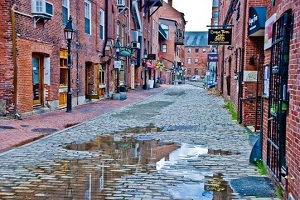
Henry Longfellow (27 februari 1807 – 24 maart 1882) Portland, Maine. Wharf Street na de regen. Henry Longfellow werd geboren in Portland
“The
bedroom door opened and mother peeped in. Seeing me awake she entered,
and was followed in by father. When I asked for Osiki, she gave me a
peculiar look and turned to say something to father. I was not too sure,
but it sounded as if she wanted father to tell Osiki that killing me
was not going to guarantee him my share of iyan. I studied their faces
intently as they asked me how I felt, if I had a headache or a fever and
if I would like some tea. Neither would touch on the crucial question,
so finally I decided to put an end to my suspense. I asked them what
they had done with my dansiki. ‘It’s going to be washed,’ mother said, and began to crush a halftablet in a spoon for me to take. ‘What did you do with the blood?’ She
stopped, they looked at each other. Father frowned a little and reached
forward to place his hand on my forehead. I shook my head anxiously,
ignoring the throb of pain this provoked. ‘Have you washed it away?’ I persisted. Again
they looked at each other. Mother seemed about to speak but fell silent
as my father raised his hand and sat on the bed, close to my head.
Keeping his eyes on me he drew out a long, ‘No-o-o-o-o.’ I
sank back in relief. ‘Because, you see, you mustn’t. It wouldn’t matter
if I had merely cut my hand or stubbed my toe or something like that –
not much blood comes out when that happens. But I saw this one, it was
too much. And it comes from my head. So you must squeeze it out and pump
it back into my head. That way I can go back to school at once.’ My father nodded agreement, smiling. ‘How did you know that was the right thing to do?’ I looked at him in some surprise, ‘But everybody knows.’ Then
he wagged his finger at me, ‘Ah-ha, but what you don’t know is that we
have already done it. It’s all back in there, while you were asleep. I
used Dipo’s feeding-bottle to pour it back.’ I was satisfied. ‘I’ll be ready for school tomorrow’ I announced.”
Uit: De geschiedenis van mijn duiventil (Vertaald door Froukje Slofstra)
“In
onze winkel zat een klant, een boer, zich besluiteloos het hoofd te
krabben. Toen hij mij zag, liet mijn vader de boer achter en hij hoorde
gretig, zonder enige scepsis, mijn verhaal aan. Hij riep de bediende om
de winkel te sluiten en snelde naar de Sobornaja-straat om een pet met
het schoolembleem voor mij te kopen. Mijn arme moeder kon me nauwelijks
van die uitzinnige man wegrukken. Mijn moeder zag bleek op dat moment en
peilde het lot. Ze aaide over mijn hoofd en duwde me dan weer vol
weerzin weg. Ze zei dat de krant de namen publiceerde van de jongens die
waren toegelaten tot het gymnasium en dat God ons zou straffen en de
mensen ons zouden uitlachen als we voortijdig een schooluniform kochten.
Mijn moeder zag bleek, ze peilde het lot in mijn ogen en keek naar me
met bitter medelijden, als naar een kreupele, omdat alleen zij wist hoe
ongelukkig onze familie was. Alle mannen van ons geslacht waren te
goed van vertrouwen en geneigd tot ondoordachte daden, we hadden nergens
geluk in gehad. Mijn grootvader was ooit rabbijn geweest in Belaja
Tserkov, hij was wegens godslastering verjaagd en had nog veertig jaar
tumultueus en armoedig verder geleefd, vreemde talen gestudeerd, en
vanaf zijn tachtigste zijn verstand verloren. Mijn oom Lev, de broer van
mijn vader, had aan de jesjiva in Volozjin gestudeerd, was in 1892
weggelopen uit de militaire dienst en had de dochter ontvoerd van een
intendant die in het militaire district Kiev diende. Oom Lev had die
vrouw meegenomen naar Californië, naar Los Angeles, had haar daar in de
steek gelaten en was gestorven in een dubieus huis, tussen negers en
Maleiers. Na zijn dood stuurde de Amerikaanse politie ons zijn erfenis
uit Los Angeles: een grote hutkoffer, beslagen met bruine ijzeren
banden. In die koffer zaten halters, lokken vrouwenhaar, mijn
grootvaders talliet, zweepjes met vergulde handgrepen en bloementhee in
met goedkope parels versierde kistjes. Van de hele familie waren alleen
mijn krankzinnige oom Simon, die in Odessa woonde, mijn vader en ik
over. Maar mijn vader was te goed van vertrouwen, hij beledigde de
mensen met zijn uitgelaten, idolate onthaal, dat vergaven ze hem niet en
ze bedrogen hem. Mijn vader geloofde derhalve dat zijn leven werd
geregeerd door een kwade genius, een ondoorgrondelijk wezen dat hem
achtervolgde en in niets op hem leek. En dus was ik voor mijn moeder de
enige die overbleef van onze hele familie.”
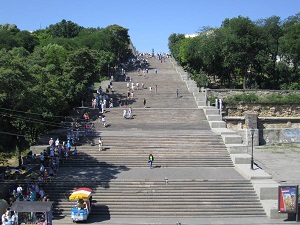
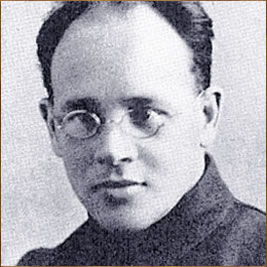
Isaak Babel (13 juli 1894 – 27 januari 1940) De Potjomkintrappen in Odessa
“To
rest a moment … slowly it focused him … drew him out again — he
heard the thunder of the candles … and again his eardrums were probed
and penetrant — again he lost his male maidenhead … he reeled, held
tight, and then relented … gave himself to the verity … and as he
did he felt his eyes palped by the entrelacings of the gilt pillars ..
and he followed the line of gold, up to the gold florescence under the
balcony — to the scallopings of wood frieze … and he knew that he had
to abandon himself to this … had to give to this — give himself to
this. There was no other viable alternative. No other way — not out —
but in. No other truth. Everything else was shadow. … for a moment the
veil dropped again — threatened to drop — he tried to make his eye
bounce back off the entrelacs … briefly he succeeded — yet he knew
that if the veil did drop, he was lost — that once again he was
still-born…. He looked back at the writhings of the gold … and as
his eye turned to them, they shot in, under his guard, before he even
knew what had happened … shot into him, writhing and convulsing — the
candles raged in him — again he tried to close down — to shut out this
realization … but now it was too late, gloriously, with absolute
finality, too late … his whole body soared from the pew — followed his
eyeballs in with the entrelacings … the roof lifted and he was adrift
absolutely, afloat … no longer was there any question of details, of
itemization — all that had gone now … he was confounded in utter
conjugation with the body of the Church — it was militant in him. He
turned — and staggered out … the Place d’Armes was outrageously alive
in him … detonating everywhere, everything, in a profusion of
knowledge … suddenly every detail was searingly evident — each outline
blared in him, and the mass of the square raged in him … he saw the
beaver again … and as he did heard the thunder of the candles … his
throat swole, his eyes blazed … ca creve les yeux, Pierre had said —
he was right — it stabbed your eyes out … no in … stabbed his eyes
back in…. He was haemorrhaging now … could feel the stream of blood
blurting from him … hideously alive…. La Place….The Place … he
could see the Place … he started to shout … “La Place … it’s there
… don’t you see … La Place … Look….” And he started to run
toward the statue of Maisonneuve … and his run became a dance, his
whole body vibrant, like the dancers in the nightclub, like the old High
Altar by Quevillon in the Church, that was (he knew it now) the same
altar as in his dream at home, as sideboard of hospitality, like the
commode in the Flesh Market, like the sternum of the Lesser Sphinx …
out into La Place, grasping Holy Host to place it in the very centre of
La Place.”
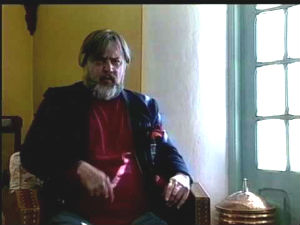
Scott Symons (13 juli 1933 – 23 februari 2009) Toronto
„Die
Übelkeit müsse wohl eine Form der Vorahnung gewesen sein. Denn noch nie
war das Gewissen so hinterrücks über den Klavierstimmer hergefallen wie
an jenem Tag. Jahrelang hatte Kazimierz das Gefühl der Scham mit sich
herumgetragen, ohne zu wissen, wofür er sich schämte. In den letzten
Tagen hatte er sich eingestanden, dass es die Mitwisserschaft war, die
ihm ein Dauergefühl der Scham verursachte, dass ihm davon übel wurde.
Dazu war eine Macke, ein Tick gekommen, den er sich selbst nie hatte
erklären können: Wo immer er auch ging oder stand, was immer er auch
tat, ständig sah der Klavierstimmer sich fallen, ausrutschen, stürzen
und seinen Kopf auf Kanten knallen. Er sah sich, wie er sich den Schädel
an Klavieren und Flügeln stieß, er sah sich auf Bordsteinkanten
stürzen, wo sein Kopf blutig aufschlug. Er sah sich auf Treppen
ausrutschen, den Hinterkopf hart auf den Stufen aufprallen, er sah sich
gegen die Straßenbahnwagen laufen, deren Elektrizität ihm immer noch
Angst einjagte, obwohl sie schon seit einigen Jahren die
pferdebetriebene ersetzte, und sah seinen Kopf von der Härte des
Aufpralls aus Nacken und Genick reißen. Fuhr er doch einmal mit der
Straßenbahn, klammerte er sich mit schwitzigen Handflächen an die
Metallstangen, dass es in den Kurven nur so quietschte, damit er nicht
bei jeder Station den Halt verlöre und mit dem Kopf gegen Holzbänke,
heruntergeklappte Fenster oder andere Passagiere stoße. Tischkanten
musste er umklammern, um vor einer Kollision mit ihnen gefeit zu sein.
Wenn er abends zu Bett lag und die Termine des nächsten Tages ordnete
oder Vergangenes Revue passieren ließ, so sah er sich jedes Mal in dem
Moment, in dem er das Wort ergriff, um seine eigene Meinung kundzutun,
keine streitende oder rechthaberische, nein, nur seine ganz persönliche
Meinung, in dem Moment, wo die Worte aus seinem Mund kamen und die
Gesichter sich ihm zuwandten, sah er sich stürzen. Es reichte schon der
Gedanke daran, Lieba oder Dawid um ein Brot zu bitten, und er sah seinen
Kiefer auf ihre Verkaufstheke krachen, dass seine restlichen Zähne
zersplitterten. Nie war eine dieser schmerzvollen Visionen Wirklichkeit
geworden, er kannte andere seines Alters, die wirklich stürzten und
fielen, er hatte sich jedoch, aus Angst vor dem Sturz, einen langsamen
tastenden Gang angewöhnt. Er war immer sehr aufmerksam, besah jeden
Schritt seiner Wege genau, schätzte alle Gefahren im Umkreis von einigen
Metern mit den Augen ab, bevor er sich ein Gefühl der Entspannung
zugestand. An diesem Nachmittag, in Karols Stube, hatte er sich gefragt,
ob es die Ereignisse im dwór, zwanzig Jahre zuvor, gewesen waren, die
ihm derart den Boden unter den Füßen wegzogen.“
“For a long time it all went without mishap. Then Osiki got carried away. He was a bigger boy than I, so that I had to exert a lot of energy to raise him up, lifting myself on both hands and landing with all possible weight on my seat. Suddenly, while he was up in his turn, it entered his head to do the same. The result was that I was catapulted up very sharply while he landed with such force that the leg of the bench broke on his side. I was flung in the air, sailed over his head and saw, for one long moment, the Canon’s square residence rushing out to meet me. It was only after I had landed that I took much notice of what I had worn to the party. It was a yellow silk dansiki, and I now saw with some surprise that it had turned a bright crimson, though not yet entirely. But the remaining yellow was rapidly taking on the new colour. My hair on the left side was matted with blood and dirt and, just before the afternoon was shut out and I fell asleep, I wondered if it was going to be possible to squeeze the blood out of the dansiki and pump it back through the gash which I had located beneath my hair. The house was still and quiet when I woke up. One moment there had been the noise, the shouts and laughter and the bumpy ride of the see-saw, now silence and semi-darkness and the familiar walls of mother’s bedroom. Despite mishaps, I reflected that there was something to be said for birthdays and began to look forward to mine. My only worry now was whether I would have recovered sufficiently to go to school and invite all my friends. Sending Tinu seemed a risky business, she might choose to invite all her friends and pack my birthday with girls I hardly even knew or played with. Then there was another worry. I had noticed that some of the pupils had been kept back in my earlier class and were still going through the same lessons as we had all learnt during my first year in school. I developed a fear that if I remained too long at home, I would also be sent back to join them. When I thought again of all the blood I had lost, it seemed to me that I might actually be bed-ridden for the rest of the year. Everything depended on whether or not the blood on my dansiki had been saved up and restored to my head. I raised it now and turned towards the mirror; it was difficult to tell because of the heavy bandage but, I felt quite certain that my head had not shrunk to any alarming degree.”
Uit:De geschiedenis van mijn duiventil (Vertaald door Froukje Slofstra)
“Die Karavajev was een blozende, verbolgen man, die in Moskou had gestudeerd. Hij was amper dertig. Zijn mannelijke wangen hadden een blos als die van boerenkinderen, op zijn ene wang zat een wrat waaruit een plukje asgrauw kattenhaar groeide. Behalve Karavajev was ook de conrector Pjatnitski, die op het gymnasium en in het hele gouvernement gold als een belangrijk man, aanwezig bij het examen. De conrector ondervroeg me over Peter de Grote, waarbij ik een gevoel van wezenloosheid kreeg, van de nabijheid van het einde en de afgrond, een dorre afgrond, bekleed met wanhoop en vervoering. Over Peter de Grote kende ik de passages uit Poetsykovitsj en de gedichten van Poesjkin vanbuiten. Ik zei die gedichten met snikkende uithalen op, plotseling trokken er menselijke gezichten voor mijn ogen langs en raakten daar vermengd als kaarten uit een nieuw spel. Ze werden op de bodem van mijn ogen geschud, en ondertussen richtte ik me op en schreeuwde bevend, gejaagd, uit volle borst Poesjkins strofen uit. Ik stond lang te schreeuwen, niemand onderbrak mijn krankzinnige gestamel. Door mijn vuurrode verblinding, door mijn roes van vrijheid, zag ik alleen het oude, voorovergebogen gezicht van Pjatnitski met zijn zilverkleurige baard. Hij onderbrak me niet, maar richtte zich tot Karavajev, die ingenomen was met mij en met Poesjkin: ‘Wat een volk,’ fluisterde de oude man, ‘in die joden van jullie huist de duivel.’ En toen ik zweeg, zei hij: ‘Goed, mijn jongen, je kunt gaan…’ Ik liep de klas uit en de gang op, en daar, leunend tegen de ongewitte muur, kwam ik bij uit de stuiptrekkingen van mijn droom. Om me heen speelden Russische jongens; vlakbij, in het institutioneel ogende trappenhuis, hing de schoolbel, een toezichthouder zat te soezen op een doorgezakte stoel. Ik keek naar hem en kwam weer bij zinnen. Van alle kanten slopen er kinderen op me af. Ze wilden me een tik geven of gewoon spelen, maar opeens verscheen Pjatnitski in de gang. Toen hij langs me liep, bleef hij even staan, zijn geklede jas golfde traag en zwaar over zijn rug. Ik zag de verwarring in die brede, vlezige herenrug, en schoof in de richting van de oude man. ‘Kinderen,’ zei hij tegen de leerlingen, ‘laat deze jongen met rust’, en hij legde een vette, weke hand op mijn schouder. ‘Mijn jongen,’ wendde Pjatnitski zich toen tot mij, ‘zeg tegen je vader dat je bent toegelaten tot de eerste klas.’ Op zijn borst blonk een prachtige ster, aan zijn revers rinkelden medailles, zijn grote zwarte geüniformeerde lichaam liep op stramme benen weg. Ingeklemd tussen de sombere muren bewoog het zich als een binnenschip door een diep kanaal en verdween door de deuren van de directeurskamer. Een kleine bediende bracht hem met veel ceremonieel zijn thee, en ik rende naar huis, naar de winkel.”
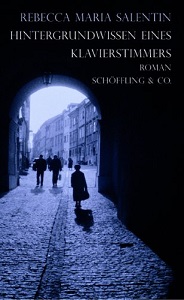
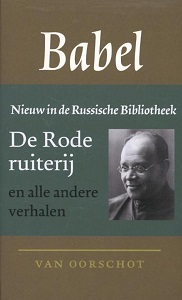
Isaak Babel (13 juli 1894 – 27 januari 1940) Cover
„The low organic bas-relief of the Providence Building dallied him, as he scaled the careful crags to the top, like some wellbred mountain goat. And then skyhopping … passed to the well-fed balustrading atop the brownstone stack beside … balustrades that distended in prime sirloin…. He pocketed the ironwork of the clock, particularly the hour-hands … and then he was interrogating again the crest pedimenting the Mother Bank of All Montreal: merchantman’s Parthenon frieze … whereon the heroes were sailor and yeoman-worker, and Indian: it was a quotation from the Amurrican world of Currier and Ives — with this difference — it was in stone! It was in 3-D … Currier and Ives for Cubes. And so aptly, atop the crest of Montreal itself … the beaver — the Complete Canadian Cube … the symbol of the state — substantial, diligent, sure, sombre, comestible (but only by the tail) … and, of course, it could be fleeced — the Canadian Golden Fleece. he was sucked over to the Bank … and in, and endlessly voyeur mounted to say goodbye to the castors within … to his legal guinea pigs: and as he expected, they had that look of men about to lose their maidenheads … in fact of men who had lost their maidenheads, but didn’t quite know how or why…. Somewhere they had been had.By him. But if they acknowledged it then they were lost to respectability — and they clung to that matriarch with all the diligent will of the foredoomed. crossed La Place … into the garden of the Church … the snow kindly absolved the dirt of it — the evident sterility of its soil. Covered it and gave it back its beauty … flowered the rows of chestnut trees that flanked it … in the centre, a saint or other, wintered under a contraceptual bag.Some day this garden would flower again, would welcome the public again … but only when the people wanted gardens again —perhaps the city would make it a tourist attraction for the Centennial Exposition —it was excuse sufficient. Meanwhile it remained a medieval close, curious analogue of the Place itself. He made his way to the flank of the Church … up a back alley — the tower strode over him … and seen from these abutments, it was immensely convincing — no mere Gothic revival facade … and doubly so in that through the portcullised gate beside he could see the Mother Bank brooding over the Place: it was an unexpected dividend — and it sufficed him … He turned up the front steps of the Church … past the huge cast-iron lamps in front, through the central of the three arches, into the Church … he intended to visit the Church Museum — to see Jean Le Ber’s frontal — but he stopped abruptly … in a pew at the back of the Church. »
“Der Klavierstimmer war kopfschüttelnd und mit zittrigen Beinen die ul. Stradomska hochgegangen. Oft hatte er anhalten und sich die Stirn mit dem Taschentuch abwischen müssen, dabei die Tüte mit dem Gebäck in der Hand mit dem Stock haltend. Zu guter Letzt war ihm dann noch der schwerliche Gang hinauf zu Karols Wohnung geblieben. Erst hatten sie schweigend gesessen, Tee getrunken und das mitgebrachte Gebäck gegessen. Dann hatte der Klavierstimmer ein wenig vom Schtetl erzählt, vom Rabbiner Jehoschua Thon, der ihm gefiel, weil seine Ansichten fortschrittlich waren, weil er unter den Krakauer Zionisten herausragte. Kazimierz hatte nach seiner Flucht aus Georgien erst in Lemberg gelebt. Er berichtete Karol, dass er den Rabbiner dort schon als kleinen Jungen kennen gelernt hatte, bevor Jehoschua nach Berlin gegangen war, um dort an der Universität den Doktor der Theologie und Philosophie zu machen. Dass er Jehoschua Thon in Krakau wiedergetroffen hatte, als dieser dort vor zehn Jahren Rabbi der Tempelsynagoge geworden war. Und dass der Rabbi Thon nur drei Jahre nach seiner Amtseinführung die jüdische Bibliothek Ezra an der ul. Krakowska mitgegründet habe. Er erzählte von den Gelehrten und Künstlern, oft konfessionslose Juden wie er selbst, die seine Freunde waren. Davon, dass Josef Sare als jüdischer Vertreter nicht nur in den Stadtrat gewählt worden sei, sondern sogar zum Vizepräsidenten von Krakau. Normalerweise erzählte er auch ein wenig vom dwór, belangloses meist, nichts von dem Gestank der Katzen, nichts vom Drozdowski, nichts vom Verfall. Einmal im Jahr stimmte er Karols Klavier, auf dem nie gespielt wurde. An diesem Donnerstag aber hatte er, nachdem er vom Rabbi Thon und Josef Sare gesprochen hatte, Karol von den Hochzeitsplänen zwischen den Häusern Laub und Kożny berichtet. Stockend hatte er das wiedergegeben, was er mitbekommen hatte, als er dort am Tag zuvor den Bösendorfer gestimmt hatte. Davon, dass er dies eigentlich schon tags zuvor hatte tun wollen, nachdem er bei Elżbieta den Drozdowski gestimmt hatte. Dass ihn dann aber eine derartige Übelkeit erfasst habe, dass er die Kożnyschen Ländereien erst besudelt und dann verlassen habe, ohne seinen Auftrag erfüllt zu haben. Also sei er am nächsten Tag den weiten Weg noch einmal gegangen, und während er am Bösendorfer gearbeitet habe, sei Elżbieta aufgetaucht.
An eagle of steel has broken forgetfulness. My apocalyptic words have a sugary smile. My sandy exploits mock incendiary ideas. My elephant-hide courage challenges fraud.
Meaning disappears in a pool – the sweat of grief weeps for it. The shades of the dead crackle like flames. The lost have only their idols left, who open wide their huge marble eyes. Redemption has broken its oath. Between hell’s knees the sword of sin blazes with rage. Seductions with shining loincloths are the prey of idleness. The gauze-winged wind whistles. before my ear’s window. The villages advance with quickened steps to save the world’s treasures from disaster. The spirit sticks to the narrow limits of reality. The raised dagger stolen from sowers of good words slowly enters the brain of space – the sowers who L A U G H at us. The towns drag their sandals and carry the weight of hunger in their bellies. Here is the essence passing by way of fantasy at the hour of dusk in the countryside, where parrots jabber, messengers of the baobab’s strength. Give me solar muscles, thighs of forest, a stinging kiss of pepper, the fleshy lips of sleep. Give me the damp air of butterflies, desire’s frenetic belly, the fragrance of memory, the rainy season’s cool.
Bamboula – the rat grapples with the bark of night. Bamboula – the oarsman-bird who spits phenomena – bamboula bamboula – the sorcerer-man who hunts the scent of flesh – bamboula oho! bamboula – the landscape that has fallen apart by chance has only one way out: saving its skin.
Vertaald door Yvonne Reddick
Antoine-Roger Bolamba (13 juli 1913 – 2 juli 2002)
Uit: Aké, Jahre der Kindheit (Vertaald door Inge Uffelmann)
„All das überwucherte, hügelige Gelände gehört zu Aké. Wir empfanden mehr als bloße Loyalität gegenüber dem Pfarrhaus, und daraus erwuchs – nicht ohne stillen Groll – die Frage, warum es Gott gefiel, von der profanen Höhe Itokos aus auf seine fromme Zweigstelle, das Pfarreigelände, hinabzuschauen. Denn dort, fast auf dem Gipfel des Berges, gab es auch den geheimnisvollen Pferdestall des Chiefs mit lebendigen Pferden. Dahinter scherte dann der schwindelerregende Pfad ab, führte von einem lärmerfüllten Markt zum nächsten und gab schließlich über Ibàràpa und Ita Aké den Blick frei bis hinein in die tiefsten Schlupfwinkel des Pfarreigrundstücks. An diesigen Tagen wurde die steile Anhöhe von Itoko eins mit dem Himmel. Wenn Gott vielleicht auch nicht wirklich dort oben wohnte, so gab es doch kaum Zweifel, daß er zuerst auf diesen Gipfel herabstieg, ehe er mit gigantischem Schritt über die lärmenden Märkte setzte – die es wagten, am Sonntag Waren feilzubieten – und die Kirche von St. Peter betrat. Danach besuchte er das Pfarrhaus und nahm mit dem Kanonikus den Tee. Immerhin gab es den kleinen Trost, daß er, trotz der Versuchung, zu Pferde herabzukommen, niemals zuerst beim Chief einkehrte, denn der war als Heide bekannt. Nie sah man den Chief bei einem Gottesdienst, außer am Jahrestag der Krönung des Alake. Nein, Gott schritt zur Morgenandacht geradewegs auf St. Peter zu, verweilte kurz bei der Mittagsmesse, behielt sich seine feierlichste und exotischste Audienz aber für die Abendandacht vor, die zu seinen Ehren immer auf englisch abgehalten wurde. Dann tönte die Orgel dunkel, rauchig-sonor; zweifellos wollte sie mit diesem Timbre eines egúngún ihren normalen Klang Gottes eigener Grabesstimme angleichen, mit der er auf die ihm dargebotenen Gebete antwortete. Nur das Haus des Kanonikus konnte dem allwöchentlichen Gast Herberge bieten. Schon allein, weil es das einzige mehrstöckige Gebäude im Pfarreigelände war, quadratisch und massig wie der Kanonikus selbst, durchlöchert von schwarzen, holzgerahmten Fenstern. BishopsCourt war auch ein mehrstöckiges Gebäude, aber es wohnten nur Schüler darin, und folglich war es kein Haus.“
een vrieshal kent meer functies dan bier opslaan; kille lijkbaren van mortuaria leggen hun schulden voor, opgetuigd -goddank!-
in de kille hand van de dood… zijn mond was met katoen gevuld, zijn pik verschrompeld tot een ondergrondse made
zijn hoofd was uitgehold en zijn hersens op een weegschaal – was dit een truc om voorkennis na de dood te bewijzen?
zijn vlees getuigt van wat zijn tong deed zwijgen; gemaskerde vingers denken van hem te leren hoe niet te sterven.
laat ons al het grijze beminnen; grijze platen grijze scalpel, één grijze slaap en vorm, grijze beelden.
KAPITAAL
Het kan niet zijn Dat de kiemen die de aarde heeft gevoed De mens gekoesterd – ooit bekeek ik een waterval Van kiemen, een korrelwolk volheid Verstoven uit kokers van breedmondige Blijde verzadiging; ik zweer dat de korrels Aan het zingen waren –
Het kan niet zijn Dat politiek, overleg Deze sintels van mijn leven Tot asse maakt, en in vervuilde zeeën Droevige bedden van gist legt om deeg Te doen rijzen Op de wereldmarkt.
Uit:De geschiedenis van mijn duiventil (Vertaald door Froukje Slofstra)
“Als kind wilde ik heel graag een duiventil hebben. Mijn leven lang heb ik geen vuriger verlangen gekend. Ik was negen toen mijn vader me het geld beloofde voor drie duivenpaartjes en planken. Het was 1904. Ik moest toelatingsexamen doen voor de voorbereidende klas van het Nikolajevski-gymnasium. Mijn familie woonde in de stad Nikolajev, in het gouvernement Cherson. Dat gouvernement bestaat niet meer, onze stad is opgenomen in het district Odessa. Ik was pas negen, en ik was bang voor de examens. Voor twee vakken – Russisch en rekenen – mocht ik niet minder dan een vijf halen. De numerus clausus was streng op ons gymnasium, slechts vijf procent. Op veertig jongens werden maar twee joodse jongens toegelaten tot de voorbereidende klas. De leraren ondervroegen die jongens listig; niemand kreeg zulke ingewikkelde vragen als wij. Daarom beloofde mijn vader de duiven te kopen op voorwaarde dat ik twee vijf plussen zou halen. Hij kwelde me uitentreuren, ik verviel in een eindeloze dagdroom, een lange, wanhopige kinderdroom, en al dromend ging ik naar het examen en ik bracht het er toch beter af dan de anderen. Ik kon goed leren. Welke listen de leraren ook gebruikten, mijn verstand en mijn gretige geheugen konden ze me niet afnemen. Ik kon goed leren en kreeg twee vijven. Maar daarna veranderde alles. Chariton Efroessi, een graanhandelaar die tarwe exporteerde naar Marseille, betaalde vijfhonderd roebel smeergeld voor zijn zoon, van mijn vijf werd een vijf min gemaakt, en in mijn plaats werd de kleine Efroessi toegelaten tot het gymnasium. Het was een zware klap voor mijn vader. Vanaf mijn zesde had hij me in alle mogelijke vakken onderwezen. Het voorval met die min dreef hem tot wanhoop. Hij wilde Efroessi in elkaar slaan, of twee sjouwers omkopen om Efroessi in elkaar te slaan, maar mijn moeder bracht hem daarvan af, en ik begon me voor te bereiden op een ander toelatingsexamen, dat van volgend jaar voor de eerste klas. Achter mijn rug haalden mijn familieleden een leraar over om in één jaar de stof van zowel de voorbereidende als de eerste klas met mij door te nemen, en aangezien we ten einde raad waren, leerde ik drie boeken vanbuiten: de grammatica van Smirnovski, het rekenboek van Jevtoesjevski en de inleiding tot de Russische geschiedenis van Poetsykovitsj. Nu gebruiken kinderen die boeken niet meer, maar ik heb ze vanbuiten geleerd, regel voor regel, en het jaar daarna kreeg ik voor het examen Russisch van de leraar Karavajev de onbereikbare vijf plus.”
Isaak Babel (13 juli 1894 – 27 januari 1940) Monument in Odessa
“And thus he lived in his corner—he ate and slept, and in the summer he also lay baking in the sun. It seemed that he had long ago lost all ability to comprehend anything. Neither his son’s business nor household matters interested him. He looked blankly at everything that took place around him, and the only fear that would flutter up in him was that his grandson might catch on that he had hidden a dried-up piece of honey cake under his pillow. Nobody ever spoke to Shloyme, asked his advice about anything, or asked him for help. And Shloyme was quite happy, until one day his son came over to him after dinner and shouted loudly into his ear, “Papa, they’re going to evict us from here! Are you listening? Evict us, kick us out!” His son’s voice was shaking, his face twisted as if he were in pain. Shloyme slowly raised his faded eyes, looked around, vaguely comprehending something, wrapped himself tighter in his greasy frock coat, didn’t say a word, and shuffled off to sleep.
From that day on Shloyme began noticing that something strange was going on in the house. His son was crestfallen, wasn’t taking care of his business, and at times would burst into tears and look furtively at his chewing father. His grandson stopped going to high school. His daughter-in-law yelled shrilly, wrung her hands, pressed her son close to her, and cried bitterly and profusely.
Shloyme now had an occupation, he watched and tried to comprehend. Muffled thoughts stirred in his long-torpid brain. “They’re being kicked out of here!” Shloyme knew why they were being kicked out. “But Shloyme can’t leave! He’s eighty-six years old! He wants to stay warm! It’s cold outside, damp …. No! Shloyme isn’t going anywhere!
„Although our town is small, its inhabitants few in number, and although Shloyme had not left this town once in sixty years, you’d be hard-pressed to find a single person who was able to tell you exactly who Shloyme was or what he was all about. The reason for this, plain and simple, is that he was forgotten, the way you forget an unnecessary thing that doesn’t jump out and grab you. Old Shloyme was precisely that kind of thing. He was eighty-six years old. His eyes were watery. His face—his small, dirty, wrinkled face—was overgrown with a yellowish beard that had never been combed, and his head was covered with a thick, tangled mane. Shloyme almost never washed, seldom changed his clothes, and gave off a foul stench. His son and daughter-in-law, with whom he lived, had stopped bothering about him—they kept him in a warm corner and forgot about him. His warm corner and his food were all that Shloyme had left, and it seemed that this was all he needed. For him, warming his old broken bones and eating a nice, fat, juicy piece of meat were the purest bliss. He was the first to come to the table, and greedily watched every bite with unflinching eyes, convulsively cramming food into his mouth with his long bony fingers, and he ate, ate, ate till they refused to give him any more, even a tiny little piece. Watching Shloyme eat was disgusting: his whole puny body quivered, his fingers covered with grease, his face so pitiful, filled with the dread that someone might harm him, that he might be forgotten. Sometimes his daughter-in-law would play a little trick on Shloyme. She would serve the food, and then act as if she had overlooked him. The old man would begin to get agitated, look around helplessly, and try to smile with his twisted, toothless mouth. He wanted to show that food was not important to him, that he could perfectly well make do without it, but there was so much pleading in the depths of his eyes, in the crease of his mouth, in his outstretched, imploring arms, and his smile, wrenched with such difficulty, was so pitiful, that all jokes were dropped, and Shloyme received his portion.“
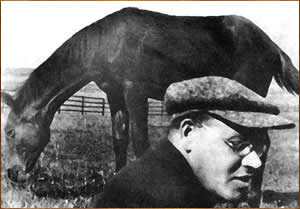
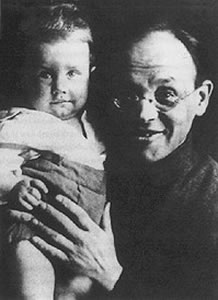
Isaak Babel (13 juli 1894 – 27 januari 1940) Babel met dochter
Uit: Savage Shorthand: The Life and Death of Isaac Babel (Biografie door Jerome Charyn)
„In
1955, lionel trilling published a dazzling introduction to the
collected stories of Isaac Babel, a writer whod become a ghost in his
own country, his books removed from libraries, his name scratched out of
encyclopedias, as if hed never existed. Babel had written the first
masterpiece of the Russian Revolution, Red Cavalry, a cycle of stories
about Cossack horse soldiers fighting against the Poles in a brutal and
bloody campaign; these stories had the “architecture” and complexity of a
novel, a Cubist novel built on a wild geometry where the missing pieces
were an essential part of the puzzle. Babel was idolized and attacked
for the same reason: rather than celebrate the Revolution, he galloped
across it with a cavalrymans panache. He was the one Soviet writer who
was read abroad. That made him an infidel in the Partys eyes. And he had
to walk a curious tightrope for the rest of his liferevere the
Revolution and write a prickly, personal prose that was like a time bomb
to the Revolutions dull, pragmatic songs.
Babel
fell into silence, wandered the Soviet Union; in the few photographs we
have of him, he looks like a man wearing the mask of a grocery clerk.
The rebellious writer had to be hidden at all cost. And so Babel became
the jovial pal of the proletariat, whod rather talk with jockeys and
whores than with a fellow writer. Whereas hed talked about literature
day and night with his first wife, Zhenya, while he was with her in
Batum, would read his stories to her until they were burnt into her
heart and she could recite them twenty years later, he wouldnt even show
his manuscripts to his second wife, Antonina. He was practicing to
become a man of the people who hung out at a stud farm, but hed used up
his own interior space. He was one of the voiceless men“Ten steps away
no one hears our speeches”in Osip Mandelstams poem about Stalin, a poem
that got Mandelstam arrested, exiled, and killed. Babel never attacked
the Kremlins “mountaineer” with “cockroach whiskers.” Stalin was one of
his readers, but that couldnt save him.“
„Mr
Olagbaju’s bachelor house behind the school became a second lunch-hour
home. His favourite food appeared to be the pounded yam, iyan, at which I
soon became his keen accomplice. Through the same iyan, I made my first
close school friend, Osiki, simply by discovering that he was an even
more ardent lover of the pounded yam than either Mr Olagbaju or I. It
seemed a simple matter of course that I should take him home or to Mr
Olagbaju’s whenever the meal was iyan; moreover, Mr Olagbaju was also
teaching me to play ayo, and this required a partner to play with. It was with some surprise that I heard my mother remark:
‘This one is going to be like his father. He brings home friends at meal-times without any notice.’
I
saw nothing to remark in it at all; it was the most natural thing in
the world to bring a friend home at his favourite meal-time. So Osiki
became an inseparable companion and a regular feature of the house,
especially on iyan days. One of the house helps composed a song on him:
Osiki oko oniyan A ti nwa e, a ko ri e
which
she began singing as soon as we appeared, hand in hand, on the path
leading from the school. But the pounded yam was also to provide the
first test of our friendship.”
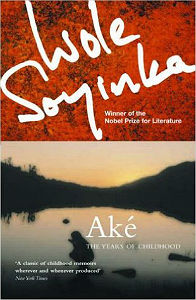
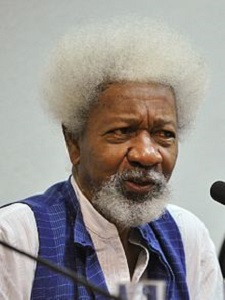
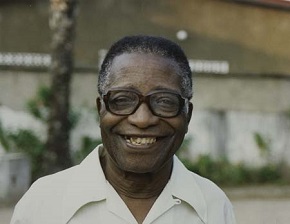
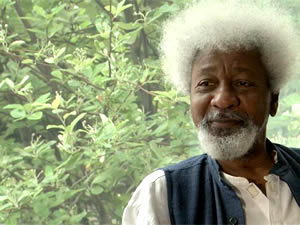
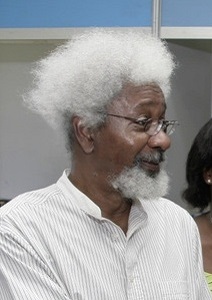
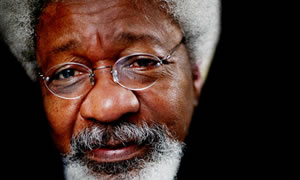
Wole Soyinka (Abeokuta, 13 juli 1934)
De Duitse schrijfster Rebecca Salentin
werd geboren op 13 juli 1979 in Eschweiler. Nog voor haar eindexamen
aan het gymnasium werd zij moeder. Zij verbleef voor kortere of langere
tijd in Nigeria, Canada, Israël en Nieuwzeeland. Zij werkte als
redactie-assistente voor Edit – Papier für neue Texte schreef recensies voor de Leipzig-Almanach, en werkte mee aan diverse tijdschriften.
Uit: Geschichten aus der Oberpfalz
Künstlerpech
Da
war der Künstler, ein Zugezogener. Der hat sich den ganzen Garten
zugestellt, mit so ein paar seltsamen Figuren. Sachen hat der gebaut,
der Künstler! Aus Bratpfannen, Stühlen, Fahrrädern und Blechdosen.
Lauter unbrauchbares Zeug, das er auch noch bunt angemalt hat. Und
gesoffen hat er, wie ein Wilder. Ja, bis er dann eines nachts auf dem
Heimweg drei Burschen mit seinem Mofa totgefahren hat. War mal wieder so
betrunken, dass er nicht mehr wußte, wo er langfährt, und Licht hat er
auch keins gehabt. Die Jungs kamen grad’ vom Star in ihrem Opel, wollten
dem Künstler ausweichen und sind am Baum gelandet. Danach hat er nichts
mehr gebaut. Der Garten ist verwildert, die paar komischen Gestalten
waren schon ganz zugewachsen. Auf seinen Prozeß hat er gewartet, der
Künstler. Mit dem Mofa ist er nicht mehr gefahren und getrunken hat er
auch nicht mehr. Bis auf ein einziges Mal, und dass auch nur, um sich
dann selbst totzufahren.
Rebecca Salentin (Eschweiler, 13 juli 1979)
De Canadese schrijver Scott Symons werd geboren op 13 juli 1933 in Toronto.
Uit: Place d’Armes
„A
son with one of them. Juniper vision. Age 17? He has the felinity of
youth – but already over that imposes the same kind of jerked
electronically controlled order that entirely governed the lady of the
choirmistress. His brain keeps sending out messages to his body. Do
this. Do that. Don’t do that. And his body conforms correctly, but
always a split second after the order, so that there is that accusative
slight divergence . . . Mind over matter it is called. Or intellect over
sensibility. The beginning of the long slow death.“
(…)
„Oh
– how difficult to write all this . . . each word a brand seeming the
flesh. Impossible to write it, for we who have never said us. . . . So
much easier to be a Jew, a member of that fraternity of exiles, whose
only redemption lives in the magnificent written plaint – in a whole
North American literature culminating in Bellow, and, in Canada, in
Richler and Layton and Cohen. I don’t lessen their achievement . . . but
they were born into a culture of expostulation! They were born with
right to permanent exile. But what of the goddamn Legitimist,
Establishment, Hereditary, Infeodated, Loyalist, Christian Canadian
Tory? For him to speak his mind . . .requires a Counter-Revolution at
least. And – worse (or better!) – for him to bespeak his sensibility
requires at least a nervous breakdown!“
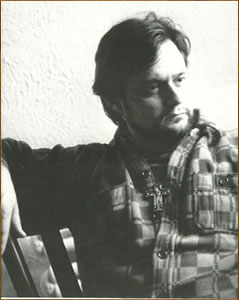
Scott Symons (13 juli 1933 – 23 februari 2009)
De Duitse schrijfster Claire Beyer werd geboren op 13 juli 1947 in Blaichach in de Oberallgäu.
Uit: Remis
„Einer
kann ohne Wurzeln leben, sagt Friedrich. Ich schon, denkt Philipp, sagt
es aber nicht. Schließlich haben seine Frau Kira und er gerade den
Schlüssel für das Haus in Südfrankreich bekommen. Es ist Friedrichs und
Margaretes Haus, steht mit dem Rücken zum Berg und weit entfernt vom
Meer. Verborgen in einem Tal der Pyrenäen. Auch Margarete verbirgt sich.
Weinend sitzt sie in ihrem Zimmer am Fenster. Greta, liebe Greta, ruft
sie, steh auf. Der Wächter hat das Land verlassen. Ich brauche deine
Augen für die schwarzen Nächte der Vergangenheit und deine Lieder für
die Tage der Löwen. Vom Briefkasten bis zur Wohnungstür sind es
neunundvierzig Stufen und bis sie dort angelangt ist, hat Kira die
Titelseite der Tageszeitung gelesen, Bankauszüge geöffnet oder
Abrechnungen der Energiegesellschaft überflogen. Andere Briefe klemmt
sie unter den Arm, aber die sind selten. Für Post solcher Art braucht
sie Zeit und, wenn möglich, eine Tasse Tee und einen aufgeräumten
Schreibtisch. Am Tag vor ihrer Abreise in die Ferien lag ein
handschriftlich adressiertes Kuvert im Briefkasten. Es sah wertvoll aus
zwischen all den bunten Prospekten und Werbebriefen. Kira brühte Tee
auf, räumte die Mitte der Schreibtischauflage frei und griff nach dem
Brieföffner mit den orientalischen Ornamenten. Sie schob ihn sacht in
die kleine, nicht gummierte Lücke und zog den Öffner vorsichtig hoch und
längs, das Kuvert sollte nicht zerreißen. Auf der Rückseite fehlte der
Absender. Erst jetzt las sie gründlicher, sah, der Brief war an ihren
Mann gerichtet.“
O the evening’s for the fair, bonny lassie O! To meet the cooler air and walk an angel there, With the dark dishevelled hair, Bonny lassie O!
The bloom’s on the brere, bonny lassie O! Oak apples on the tree; and wilt thou gang to see The shed I’ve made for thee, Bonny lassie O!
Tis agen the running brook, bonny lassie O! In a grassy nook hard by, with a little patch of sky, And a bush to keep us dry, Bonny lassie O!
There’s the daisy all the year, bonny lassie O! There’s the king-cup bright as gold, and the speedwell never cold, And the arum leaves unrolled, Bonny lassie O!
O meet me at the shed, bonny lassie O! With a woodbine peeping in, and the roses like thy skin Blushing, thy praise to win, Bonny lassie O!
I will meet thee there at e’en, bonny lassie O! When the bee sips in the bean, and grey willow branches lean, And the moonbeam looks between, Bonny lassie O!
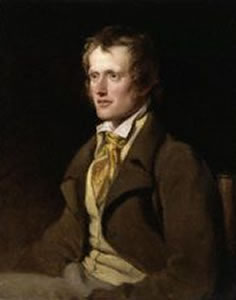
John Clare (13 juli 1793 – 19 mei 1864)Portret door William Hilton