In Memoriam Edward Albee

In Memoriam Edward Albee

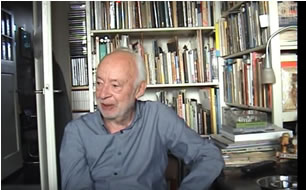
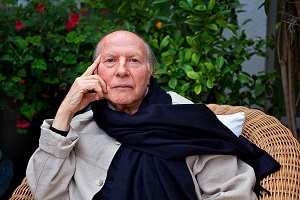
 De Amerikaanse toneelschrijver Edward Albee is op 88-jarige leeftijd overleden. Edward Albee werd geboren op 12 maart 1928 in Washington DC. Zie ook alle tags voor Edward Albee op dit blog.

Uit: Who’s Afraid of Virginia Woolf?

„GEORGE. Well. just stay on your feet, that’s all These people are your guess, you know, and…
MARTHA. I can’t even see you I haven’t been able to see you for years…
GEORGE. if you pass out, or throw up, or something…
MARTHA. I mean, you’re a blank, a cipher…
GEORGE. and try to keep your clothes on. too. There aren’t many more sickening sights than you with a couple of drinks in you and your skirt up over your head…
MARTHA : …..a zero………
GEORGE. . . . your heads I should say . .. (The fiontdoorbell chimes.)
MARTHA: Party! Party!
GEORGE. Murderously) I’m really looking forward to this, Martha…
MARTHA. (Same) Go answer the door.
GEORGE. (Not moving.) You answer it.
MARTHA. Get to that door, you. (He does not move.) I’ll fix you, you…
GEORGE. (Fake-spits.) To you (Door chime again.)
MARTHA. (Shouting… to the door.) C’MON IN! (To George, between her teeth.) I said, get over there!
GEORGE. (Moving toward the door.) All right, love whatever love wants. Isn’t it nice the way some people have manners, though, even in this day and age? Isn’t it nice that some people won’t just come braking into other people’s house: even if they do hear some subhuman monster yowling at ’em from inside…?
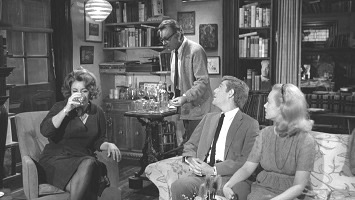


Scene uit de film van Mike Nichols met o.a. Richard Burton en Elizabeth Taylor (1966)


MARTHA. FUCK YOU! (Simultaneously with Martha’s last remark, George flings open the font door. Honey and Nick are framed in the entrance. There is a brief silence then…)
GEORGE. (Ostensibly a pleased recognition of Honey and Nick, but really satifaction at having Martha’s explosion overheard)
Ahhhhhhhhh!
MARTHA. (A little too loud… to cover) HI! Hi, there…c’mon in!
HONEY and NICK. (Ad lib.) Hello, here we are hi… (Etc.)
GEORGE. (Very matter-off-factky) You must be our little guests.
MARTHA. Ha, ha, ha, HA! Just ignore old sour-puss over there. C’mon in, kids give your coats and stuff to sour-puss.
NICK. (Without expression.) Well, now, perhaps we shouldn’t have come.
HONEY. Yes… it is late, …and…
MARTHA. Late! Are you kidding? Throw your stuff down anywhere and c’mon in.
GEORGE. (Vaguely walking away) Anywhere . .. furniture, floor doesn’t make any difference around this place.
NICK. (To Honey) I told you we shouldn’t have come.
MARTHA. (Stentorian) I said c’mon in! Now c’mon!”
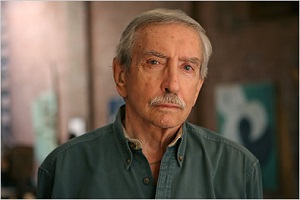


Edward Albee (12 maart 1928 – 16 september 2016)

Bewaren

In Memoriam Elie Wiesel

In memoriam Elie Wiesel

De Amerikaans Joodse schrijver en Holocaust-overlevende Elie Wiesel is op 87-jarige leeftijd overleden. Elie Wiesel werd geboren op 30 september 1928 in Sighet (nu Sighetu Marmaţiei), Roemenië. Zie ook mijn blog van 30 september 2010 en eveneens alle tags voor Elie Wiesel op dit blog.

Uit: Night

“There are no Kabbalists in Sighet,” my father would often tell me.
He wanted to drive the idea of studying Kabbalah from my mind. In vain. I succeeded on my own in finding a master for myself in the person of Moishe the Beadle.
He had watched me one day as I prayed at dusk.
“Why do you cry when you pray?” he asked, as though he knew me well.
“I don’t know,” I answered, troubled.
I had never asked myself that question. I cried because … because something inside me felt the need to cry. That was all I knew.
“Why do you pray?” he asked after a moment.
Why did I pray? Strange question. Why did I live? Why did I breathe?
“I don’t know,” I told him, even more troubled and ill at ease. “I don’t know.”
From that day on, I saw him often. He explained to me, withgreat emphasis, that every question possessed a power that was lost in the answer …
Man comes closer to God through the questions he asks Him, he liked to say. Therein lies true dialogue. Man asks and God replies. But we don’t understand His replies. We cannot understand them. Because they dwell in the depths of our souls and remain there until we die. The real answers, Eliezer, you will find only within yourself.
“And why do you pray, Moishe?” I asked him.
“I pray to the God within me for the strength to ask Him the real questions.”
We spoke that way almost every evening, remaining in the synagogue long after all the faithful had gone, sitting in the semidarkness where only a few half-burnt candles provided a flickering light.
One evening, I told him how unhappy I was not to be able to find in Sighet a master to teach me the Zohar, the Kabbalistic works, the secrets of Jewish mysticism. He smiled indulgently. After a long silence, he said, “There are a thousand and one gates allowing entry into the orchard of mystical truth. Every human being has his own gate. He must not err and wish to enter the orchard through a gate other than his own. That would present a danger not only for the one entering but also for those who are already inside.”
And Moishe the Beadle, the poorest of the poor of Sighet, spoke to me for hours on end about the Kabbalah’s revelations and its mysteries. Thus began my initiation. Together we would read, over and over again, the same page of the Zohar. Not to learn it by heart but to discover within the very essence of divinity.
And in the course of those evenings I became convinced that Moishe the Beadle would help me enter eternity, into that time when question and answer would become ONE.”


Elie Wiesel (30 september 1928 – 2 juli 2016)


In Memoriam Henk Hofland

In Memoriam Henk Hofland

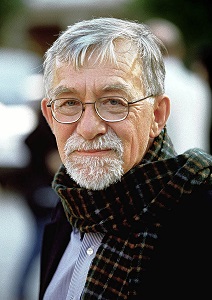
De Nederlandse schrijver, journalist, commentator, essayist en columnist Henk Hofland is dinsdagochtend overleden. Hij is 88 jaar oud geworden. Henk Hofland werd geboren in Rotterdam op 20 juli 1927. Zie ook alle tags voor Henk Hofland op dit blog.

Uit: Tegels lichten

“Van Troelstra is de waarneming afkomstig, dat na de invoering van het algemeen kiesrecht de bourgeoisie zich van de democratie en het parlementarisme heeft afgekeerd en ook in Nederland sympathie heeft gekregen voor een beetje dictatuur. In mei 1940 stond het er met de Nederlandse democratie niet uitstekend voor, zoals ook toen al vaak werd vastgesteld. Maar de kritiek kwam van twee kanten. Er was een sociaaldemocratische en vrijzinnig liberale minderheid, die via de parlementaire democratie naar emancipatie streefde. En er was een niet geringe, zelfbewuste minderheid die vond dat er al meer dan genoeg werd geëmancipeerd, dat al veel te veel mensen hun neus in de publieke zaak staken, en dat de parlementaire democratie dit hinderlijke proces alleen maar bevorderde, zodat een manier moest worden gevonden om in te grijpen (typische term uit de notabele woordenschat). De eerste vorm van kritiek wilde zichzelf versterken met behulp van de parlementaire methoden; de tweede wilde ook een versterkte positie, maar ten koste van het democratische systeem.
In mei 1940 werden daarom de critici van de eerstgenoemde soort van een probleem verlost: de democratische procedures werden opgeheven. Voor de anderen ontstond min of meer per mirakel het praktische vraagstuk van het wegen en grijpen der nieuwe kansen.
Het morele onderzoek dat hierop betrekking heeft, is nog altijd in volle gang, maar komt in dit verhaal niet voor. Vandaar dat hierna geen sprake zal zijn van goed of fout gedrag, collaboratie, onverzoenlijkheid, vaderlandsliefde, landverraad, enz. Het gaat er meer om, een verschijnsel in de Nederlandse politiek te beschrijven dat niet tot de oorlog is beperkt, maar dat voor 1940 ook al bestond en dat na 1945 zijn invloed op het Bestel onverzwakt heeft behouden. Dat is misschien niet de sympathie van de ‘bourgeoisie’ van Troelstra voor ‘het kleine beetje dictatuur’. Het is meer het gevoel of het besef dat heerst bij menig bestuurder, autoriteit, politicus, directeur en magistraat, zijn natuurlijk inzicht, dat hij en zijn gelijken het onvervreemdbare monopolie hebben om te bekokstoven. We hebben niet te doen met een kwaadwillig potentatisme, maar met het voortdurend nemen van ‘rustige, weloverwogen beslissingen’, gedekt door de magie der geheimhouding en een passende gelegenheidsideologie.”

 
Henk Hofland (20 juli 1927 – 21 juni 2016)

In Memoriam Benoîte Groult

In Memoriam Benoîte Groult
 

De Franse feministische schrijfster Benoîte Groult is gisteren op 96-jarige leeftijd overleden. Dat heeft haar familie bekendgemaakt. Benoîte Groult werd geboren op 31 januari 1920 in Parijs. Zie ook alle tags voor Benoîte Groult op dit blog.

Uit: Mon évasion

« Ce ne serait sans doute pas inintéressant de le savoir et c’est indispensable pour les psychanalystes face à des patients qui souffrent de leur enfance comme d’une plaie qui ne veut pas se refermer. Autrefois on se passait très bien d’enfance. Elle n’occupait pas la place primordiale dans une exis-tence.
Elle n’occupera pas non plus une place primor-diale dans ce livre. Car je n’ai aucun procès à ins-truire, aucune rancune à assouvir, aucune excuse à invoquer pour expliquer que je n’aie pas été une surdouée ou un de ces cancres magnifiques que tant d’écrivains se vantent d’avoir été. L’éducation qu’on me donnait, en revanche, les personnes qui me la dis-pensaient jettent un éclairage indispensable pour comprendre comment je suis devenue cette adoles-cente timorée et incapable d’exploiter ses dons, alors que tant de fées s’étaient penchées sur mon berceau.
J’étais une gentille petite fille avec de très grands yeux bleus un peu fixes, une frange de cheveux châ-tains bien raides et une bouche trop charnue pour l’époque et que je laissais souvent ouverte, ce qui me donnait un air débile qui désolait ma mère. Comme elle n’était pas femme à se désoler mais à agir, afin de me rappeler de mimer cette bouche en cœur qui était à la mode pour les filles dans les années 30, elle me soufflait en public, dans un chuchotement que je jugeais tonitruant : « Pomme, Prune, Pouce, Rosie ! »
Je ne lui ai jamais répondu « Zut Maman ! ». Je devais bien être débile quelque part… Docile, je ras-semblais mes deux lèvres pour qu’elles ressemblent à celles de ma sœur qui étaient parfaites. Comme tout le reste de son être aux yeux de ma mère. Ah ! se dit le psy, l’air connu de la jalousie !
Eh bien non, même pas. J’aimais ma petite sœur, de quatre ans ma cadette et, en tout cas, je ne l’ai jamais haïe. Je l’ai à peine torturée, de bonnes grosses bri-mades bien innocentes. Après tout, je n’avais jamais prétendu adorer ma mère comme elle. Il est donc normal que maman préférât le genre de beauté de Flora et l’attachement passionné qu’elle lui a d’ail-leurs voué toute sa vie.”

Benoîte Groult (31 januari 1920 – 20 juni 2016)


In Memoriam Peter Shaffer

In Memoriam Peter Shaffer


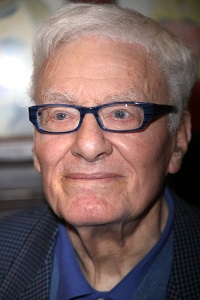
De Britse toneelschrijver Peter Shaffer is maandag op 90-jarige leeftijd in Ierland overleden. Peter Shaffer werd geboren op 15 mei 1926 in Liverpool.  Zie ook alle tags voor Peter Schaffer op dit blog.

Uit: Equus

„DYSART Me?
HESTHER I mean, to hospital.
DYSART Now look, Hesther. Before you say anything else, I can take no more patients at the moment. I can’t even cope with the ones I have.
HESTHER You must.
DYSART Why?
HESTHER Because most people are going to be disgusted by the whole thing. Including doctors.
DYSART M AY I REMIND YOU I SHARE THIS ROOM WITH TWO
HIGHLY competent psychiatrists?
HESTHER Bennett and Thoroughgood. They’ll be as shocked as the public.
DYSART T HAT ‘ S AN ABSOLUTELY UNWARRANTABLE STATEMENT .

 
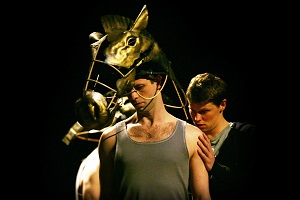
Scene uit een opvoering in Londen, 2012


HESTHER O H , THEY ‘ LL BE COOL AND EXACT . A ND
UNDERNEATH they’ll be revolted, and immovably English. Just like my bench.
DYSART Well, what am I? Polynesian?
HESTHER You know exactly what I mean!……
(pause) Please, Martin. It’s vital. You’re this boy’s only chance.
DYSART Why? What’s he done? Dosed some little girl’s Pepsi with Spanish Fly? What could possibly throw your bench into two-hour convulsions?
HESTHER He blinded six horses with a metal spike.
A long pause.
DYSART Blinded?
HESTHER Yes.
DYSART All at once, or over a period?
HESTHER All on the same night.“


Peter Shaffer (15 mei 1926 – 6 juni 2016)

In Memoriam Wim Brands

In memoriam Wim Brands

De Nederlandse dichter, journalist en presentator Wim Brands is maandag op 57-jarige leeftijd in zijn woonplaats Amsterdam overleden. Dat maakte de VPRO bekend. Wim Brands werd geboren in Brummen op 29 maart 1959. Zie ook alle tags voor Wim Brands op dit blog.


Ze hangt als een lege boodschappentas

Ze hangt als een lege boodschappentas
aan mijn arm en ik bedenk me
wat er met haar
uit mijn leven verdwijnt: Buisman,
een stoof, de theemuts.
Niets houdt haar trouwens
nog warm.
Bevelend wijst ze naar de supermarkt
en vraagt me wat ik zie: ik noem
een naam.
Nee idioot, dat is de overkant
en hoe komen wij daar?
Ik wil haar nooit meer ontstemmen,
zeg me hoe.
Maak je maar klaar,
we zullen moeten zwemmen.


Ik sta op en ga naar het vliegveld

Ik sta op en ga naar het vliegveld,
verlies mezelf in een massa bij Aankomst.
Seattle: 9:30, Hanoi: 9:20. Ik kies.
En praat met een arrivé. Over het noodweer
boven zee, de uiteindelijk voorspoedige
vlucht.
Ik ben vrolijk als het moet, klaag
desgewenst mee.
Na een half uur ga ik terug en sta
op tijd aan het bed.
Waar kom je vandaan?
Ik heb boodschappen gedaan.
Kijk, een vingerhoed en een zoutvaatje.
Handig als we gaan.

 
Wim Brands (29 maart 1959 – 4 april 2016)

In Memoriam Lars Gustafson

In Memoriam Lars Gustafson

De Zweedse dichter en schrijver Lars Gustafsson is op 79-jarige leeftijd overleden. Lars Gustafsson werd geboren in Västeras, op 17 mei 1936. Zie ook alle tags voor Lars Gustafsson op dit blog.

Elegie over een dode labrador

in twee verschillende werelden: de mijne,
meest letters, een tekst die door het leven loopt,
de jouwe voornamelijk gebeuren. Je bezat een kennis
die ik dolgraag bezeten zou hebben: het vermogen
gevoel, lust, haat of liefde
als een golf door je hele lichaam te laten gaan,
van je neus tot je staartpunt, het onvermogen
om het bestaan van de maan te accepteren.
Bij volle maan huilde je steeds luid naar haar op.
Je was een beter gnosticus dan ik. En je leefde
zodoende voortdurend in het paradijs.
Je had de gewoonte al springend vlinders te vangen
en ze op te peuzelen, iets dat sommige mensen weerzinwekkend vonden.
Ik stelde dat immer op prijs. Waarom
kon ik er geen lering uit trekken? En deuren!
Voor gesloten deuren ging je liggen slapen,
vast overtuigd dat vroeg of laat degene moest komen
die de deur open zou doen. Je had gelijk.
Ik had ongelijk. Ik vraag me af, nu deze lange
woordloze vriendschap voorgoed voorbij is,
of ik mogelijkerwijs iets kon dat jou
imponeerde. Je vaste overtuiging dat
ik het was die het onweer opriep
telt niet mee. Dat was een vergissing. Ik denk
dat mijn geloof dat de bal bleef bestaan
ook wanneer hij achter de bank verscholen lag
je ergens een idee gaf van mijn wereld.
In mijn wereld lag het meeste verscholen
achter iets anders. Ik noemde je ‘hond’.
Ik vraag mij vaak af of je mij beschouwde
als een grotere, meer lawaai makende ‘hond’,
of als iets anders, voor altijd onbekend,
dat is wat het is, bestaat in de eigenschap
waarin het bestaat, een fluitje
door het nachtelijke park waarop je
gewend was terug te keren zonder eigenlijk
te weten waarnaar. Over jou, over
wie je was, wist ik niet meer.
Je zou kunnen zeggen, vanuit dit wat objektievere
standpunt: We waren twee organismen.
Twee van deze plekken waar het universum
in zichzelf verstrikt raakt, kortstondige, komplexe
proteïnestrukturen, die steeds ingewikkelder
moeten worden om te overleven, tot alles
uiteenspringt en weer eenvoudig wordt, de knoop
ontward, het raadsel vervlogen. Je was niets dan
een vraag gericht aan een andere vraag
en geen van beiden bezat andermans antwoord.

Vertaald door Bernlef

 
Lars Gustafsson (17 mei 1936 – 3 april 2016)

In Memoriam Imre Kertész

In Memoriam Imre Kertész

De Hongaarse auteur en winnaar van de Nobelprijs voor Literatuur Imre Kertész is op 86-jarige leeftijd overleden. Kertész overleed volgens het Hongaarse staatspersbureau MTI na een lang ziekbed. Imre Kertész werd geboren op 9 november 1929 in Boedapest. Zie ook alle tags voorImre Kertész op dit blog en ook mijn blog van 9 november 2010

Uit: Fateless

“I took my own steps. No one else did. And I remained honest in the end to my given fate. The only stain or beauty flaw, I might say the only incorrectness, that anyone could accuse me of is maybe the fact that we are talking now. But thatis not my doing. Do you want all this horror and all my previous steps to lose their meaning entirely? Why this sudden turn, why this opposition? Why can’t you see that if there is such a thing as fate, then there is no freedom? If, on the other hand,” I continued, more and more surprised at myself and more and more wound up, “if, on the other hand, there is freedom, then there is no fate. That is,” and I stopped to take a breath, “that is, we ourselves are fate.” I recognized this all of a sudden and with such clarity that I had never seen before. I was a little sorry that I was only facing them and not someone more intelligent-let’s say, more worthy opponents. But they were the ones who were here, at that moment, and at any rate they were the ones who had also been there when we were saying good-bye to my father.
They too had taken their steps. They too knew. They too had seen ahead. They too had said good-bye to my father as if we were already hurrying out. Later, all they fought about was whether I should take the local tram or the local bus on the way to Auschwitz. At this point not only Uncle Steiner but also Uncle Fleischmann jumped up. He tried to restrain Uncle Steiner but was no longer able. “What?” he screamed at me, his face crimson-red and his fist beating against his chest. “What? Are we now the guilty ones-we, the victims?” I tried to explain to him: “It’s not that this is a sin. We ought to simply, modestly recognize it for the sake of our honor, so to speak.”
They had to try to understand that they couldn’t take everything away from me. It couldn’t be that I was either the victim or the vanquished, that I couldn’t be right and that I couldn’t have been mistaken, that I was not the reason or the result of anything. I almost begged them to understand this. I couldn’t simply swallow this silly bitterness simply for the sake of be- coming innocent again.”


Imre Kertész (9 november 1929 – 31 maart 2016)

In Memoriam Jim Harrison

In Memoriam Jim Harrison

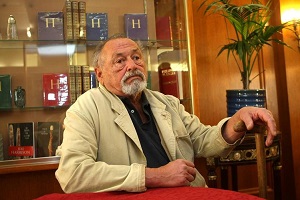
De Amerikaanse schrijver Jim Harrison is zaterdag op 78-jarige leeftijd overleden. Zijn uitgeverij maakte zijn overlijden zondag bekend. Zie ook alle tags voor Jim Harrison op dit blog.

Uit: The Great Leader

“On the way to work he was drowsy so he drove down to the harbor and stood out in the cold north wind that was pushing waves over to the top of the break wall. He felt forlornly on the wrong track with the Great Leader. His colleagues and captain in the state police teased him with, “Where’s the evidence of a crime?” Everyone knew there wasn’t a provable one and it was certainly an ironic way to end a fine career. His uncle John Shannon who was a commercial fisherman liked to say, “Every boat is looking for a place to sink.” There were far more rumors of sexual abuse these days than day-old bread and in this case the mother and daughter were unwilling to testify.
He turned and looked at the huge Catholic church on the hill and received a modest jolt in his frontal lobe, not really a clue. The year before the divorce they had taken a vacation in northern Italy and his wife had been in a serene trance over religious art and architecture while he as an historian mostly saw the parasitical nature of the Catholic Church. This was what truly goaded him about Dwight who had managed to get seventy people to give up their lives and money. By living in primitive conditions in the “past before the past” as Dwight called it they would have a wonderful future. Was this any more cockamamie than the Mormons, or the Catholics for that matter? The idea that something so obviously stupid worked with people irked him. They beat on their drums, chanted in tongues, danced, and hunted and fished. As the members spiritually matured their pasts would reshape themselves. Dwight seemed to utterly believe in what he was doing and then one day he didn’t and would move on. The little information Roxie had gathered on the Great Leader’s activities seemed to center on the Mayan calendar, the nature of which Sunderson didn’t yet understand. He suspected that it was true Dwight had had sexual relations with the twelve-year-old daughter of a cult member but there was nowhere to go with this. Sunderson was concerned that when you looked into the history of religion those in power generally devised a way to get at the young stuff, which seemed also to be a biological premise in other mammals. This was scarcely a new idea as Marion had noted. Just as Sunderson’s hobby was history Marion, as a mixed blood, was obsessive about anthropology.”

 
Jim Harrison (11 december 1937 – 26 maart 2016)

In Memoriam Johan Cruijf

In Memoriam Johan Cruijf


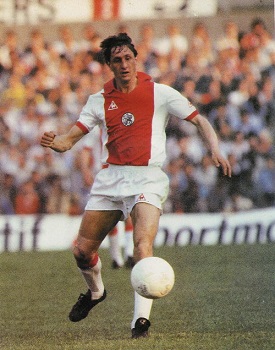
Johan Cruijff (25 april 1947 – 24 maart 2016)


CRUIJFF

Een gestrekte bal,
een balk door de lucht,
een eerlijk eikenhouten schot:
zo gaat de waarheid op haar doel af.

Of heen en weer
en heen bewegend, de tegenstrever,
de lezer, steeds weer op het verkeerde
been zettend, door een overstapje, een
oversprongetje, elke nieuwe regel
uit leesevenwicht te beginnen,
deze beweeglijkheid, deze fysieke
bewogenheid, god, dit is kunst:

geboren worden en een lichaam hebben
en er dan gedurende een blauwe maandag
Johan Cruijff mee zijn

in een gedicht, een speelveld
van Herman de Coninck.


Herman de Coninck (21 februari 1944 – 22 mei 1997)
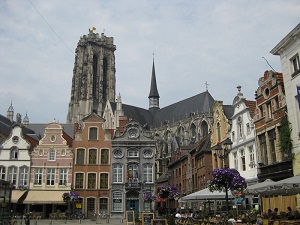
Mechelen, Grote Markt met Sint Romboutstoren.
Herman de Coninck werd geboren in Mechelen.