Szilárd Borbély

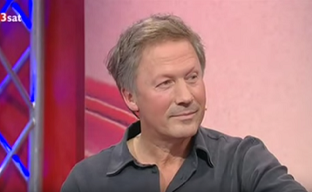
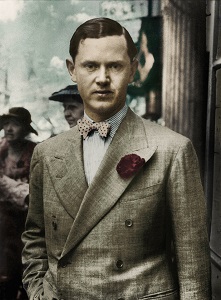
De Hongaarse dichter, schrijver, vertaler en letterkundige Szilárd József Borbély werd geboren op 1 november 1963 in Fehérgyarmat. Szilárd Borbély stamde uit een arme (half-joodse) familie, de grootvader van vaders kant kwam om in concentratiekamp Auschwitz. Hij is opgegroeid in een dorp en studeerde na zijn militaire dienst Hongaarse taal en literatuur aan de Lajos-Kossuth Universiteit in Debrecen. Hij werd in 1989 assistent aan de leerstoel Oude Hongaarse literatuur en was gespecialiseerd in de Hongaarse literatuur van de Barok en vroege 19e eeuw. In zijn studie “Een Vanitatum vanitas szövegvilágáról” (1995) onderzocht hij de poëzie van Ferenc Kölcsey. Hij promoveerde in 1998. In 1988 publiceerde hij zijn eerste gedicht “Adatok”. Borbély noemde Kafka, János Pilinszky, Miklós Mészöly, Péter Nádas en Péter Esterházy als referentiepunten van zijn poëtische werk. Borbély werkte als vertaler uit het Duits en Engels, o.a. werk van Rumjana Zacharieva, Monika Rinck, Hendrik Jackson, Robert Gernhardt en Durs Grünbein. Op het laatste bereidde hij een vertaling voor van “Europa erfindet die Zigeuner” van Klaus-Michael Bogdal, waarvoor hem een “Paul-Celan Fellowship” toegekend was. Borbély heeft tal van Hongaarse literaire prijzen ontvangen, waaronder de Tibor Déry-prijs, de József Attila-prijs en de Füst-Milánprijs. Bij een inbraak in het huis van zijn ouders, werd zijn moeder gedood, zijn vader werd ernstig gewond; Borbély verwerkte in “Halotti pompa” (2004) de gebeurtenissen poëtisch. Hij publiceerde in 2013 zijn eerste roman. Borbély leed aan depressies en pleegde zelfmoord op 19 februari 2014.

Im Körper zu leben

Im Laufe der Evolution menschlichen Verhaltens
wurde die Sprache zum Mittel der Isolation.
Denn parallel zur Welt der Gegenstände
kann sich das Bewußtsein die Dinge vorstellen

durch geistige Vergegenwärtigung. Wenn sie auf-
tauchen im Bewußtsein. Die Sprache ist die dritte Ebene
der Repräsentation. Mit ihrer Hilfe kann auch in einem
anderen Bewußtsein das Bild des Gegenstandes

vorgestellt werden. Auf dieser Stufe der Repräsentation
kann die Erfahrung der Metaphern durch das Gespräch
vermittelt werden. Und wenn sich die Liebenden des Nachts

treffen, berührt sich im Dunkeln ihr Geist.
Denn das Dasein verfügt über eine höhere
Dimension. Denn im Körper zu leben ist der Tod.


Letzte Dinge
Die Ewigkeit

Dunst quillt in der Winterlandschaft auf,
der leichte Rauch im Kesselhaus.
Am Berghang blendet im Sonnenschein
ein orthodoxer Friedhof wie der Stein,

der glühte, wie das geschmolzene Erz
im Feuer und im Kessel gärt.
So begann der Nachmittag zu fallen,
wie mancher Engel vor der Bahnhofshalle

wartete, den Kopf über die Pfütze gesenkt,
auf ein leichtes Mädchen, ein Gratisgetränk.
Indes in den Bezirken am äußersten Ring
die Zeit jetzt und für immer verging,

denn dort hielt man das Jüngste Gericht,
und es kämpfte dabei Christ gegen Christ.
Die Heiden hingegen tranken Cola light
in einer Kneipe namens Ewigkeit.


Vertaald door Heike Flemming
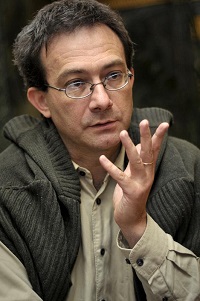
 
Szilárd Borbély (1 november 1963 – 19 februari 2014)

Dolce far niente, Henry Longfellow, Joseph Boyden, John Kea


Dolce far niente – Bij Halloween


The Haunted House door John Atkinson Grimshaw, 1874


Haunted Houses

All houses wherein men have lived and died
Are haunted houses. Through the open doors
The harmless phantoms on their errands glide,
With feet that make no sound upon the floors.

We meet them at the door-way, on the stair,
Along the passages they come and go,
Impalpable impressions on the air,
A sense of something moving to and fro.

There are more guests at table than the hosts
Invited; the illuminated hall
Is thronged with quiet, inoffensive ghosts,
As silent as the pictures on the wall.

The stranger at my fireside cannot see
The forms I see, nor hear the sounds I hear;
He but perceives what is; while unto me
All that has been is visible and clear.

We have no title-deeds to house or lands;
Owners and occupants of earlier dates
From graves forgotten stretch their dusty hands,
And hold in mortmain still their old estates.

The spirit-world around this world of sense
Floats like an atmosphere, and everywhere
Wafts through these earthly mists and vapours dense
A vital breath of more ethereal air.

Our little lives are kept in equipoise
By opposite attractions and desires;
The struggle of the instinct that enjoys,
And the more noble instinct that aspires.

These perturbations, this perpetual jar
Of earthly wants and aspirations high,
Come from the influence of an unseen star
An undiscovered planet in our sky.

And as the moon from some dark gate of cloud
Throws o’er the sea a floating bridge of light,
Across whose trembling planks our fancies crowd
Into the realm of mystery and night,—

So from the world of spirits there descends
A bridge of light, connecting it with this,
O’er whose unsteady floor, that sways and bends,
Wander our thoughts above the dark abyss.


Henry Longfellow (27 februari 1807 – 24 maart 1882)
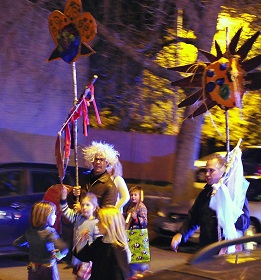
West End Halloween Parade in Portland, Maine. Lomfellow werd geboren in Portland.

Lees verder “Dolce far niente, Henry Longfellow, Joseph Boyden, John Kea”

Don Winslow

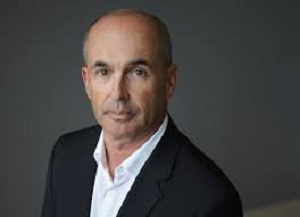
De Amerikaanse schrijver Don Winslow werd geboren in New York op 31 oktober 1953. Hij groeide op in Perryville, een kustdorpje in South Kingstown, Washington County (Rhode Island)). Zijn moeder was een bibliothecaris en zijn vader was een onderofficier van de United States Navy. Winslow studeerde af in Afrikaanse Geschiedenis aan de Universiteit van Nebraska. Voordat hij schrijver werd had hij verschillende baantjes. Eind jaren 1970 verhuisde hij terug naar New York, waar hij werkzaam was als de manager van een bioscoopketen en als privédetective. Nadien ging hij terug naar school en behaalde hij een Masterdiploma in de richting Militaire Geschiedenis. Hij leidde ook safari’s in Kenia en ondernam grote wandeltochten in de Chinese provincie Sichuan. In 1991 werd zijn debuutroman “A Cool Breeze on the Underground” uitgebracht. Het was tevens zijn eerste boek over het hoofdpersonage Neal Carey, een jonge, New Yorkse boekenwurm en privédetective. Midden jaren 1990 verhuisde Winslow met zijn gezin naar Californië. In 1997 bracht hij de roman”The Death and Life of Bobby Z” uit. Het boek werd een groot succes, hetgeen hem toeliet om voltijds schrijver te worden. Tien jaar later werd het boek verfilmd door regisseur John Herzfeld. In 2010 schreef Winslow de misdaadroman “Savages”. Het boek, over twee Amerikaanse drugsdealers die ruzie krijgen met een Mexicaans drugskartel, werd twee jaar later verfilmd door Oliver Stone. Winslow zelf schreef het scenario voor de verfilming.

Uit:The Cartel

„The bell rings an hour before dawn.
The beekeeper, released from a nightmare, gets up.
His small cell has a bed, a chair, and a desk. A single small window in the thick adobe wall looks out onto the gravel path, silver in the moonlight, which leads up toward the chapel.
The desert morning is cold. The beekeeper pulls on a brown woolen shirt, khaki trousers, wool socks, and work shoes. Walking down the hall to the communal bathroom, he brushes his teeth, shaves with cold water, and then falls in with the line of monks walking to the chapel.
No one speaks.
Except for chanting, prayers, meetings, and necessary conversation at work, silence is the norm at the Monastery of Christ in the Desert.
They live by Psalm 46:10—­“Be still and know that I am God.”
The beekeeper likes it that way. He’s heard enough words.
Most of them were lies.
Everyone in his former world, himself included, lied as a matter of course. If nothing else, you had to lie to yourself just to keep putting one foot in front of the other. You lied to other people to survive.
Now he seeks truth in silence.
He seeks God in the same, although he has come to believe that truth and God are the same.
Truth, stillness, and God.
When he first arrived, the monks didn’t ask him who he was or where he came from. They saw a man with saddened eyes, his hair still black but streaked with silver, his boxer’s shoulders a little stooped but still strong. He said that he was looking for quiet, and Brother Gregory, the abbot, responded that quietude was the one thing they had in abundance.
The man paid for his small room in cash, and at first spent his days wandering the desert grounds, through the ocotillo and the sage, walking down to the Chama River or up onto the mountain slope.
Eventually he found his way into the chapel and knelt in the back as the monks chanted their prayers.“

 
Don Winslow (New York, 31 oktober 1953)

Dolce far niente, Robert Frost, Jan Van Loy, Ezra Pound, Paul Valéry, Andrew Solomon


Dolce far niente


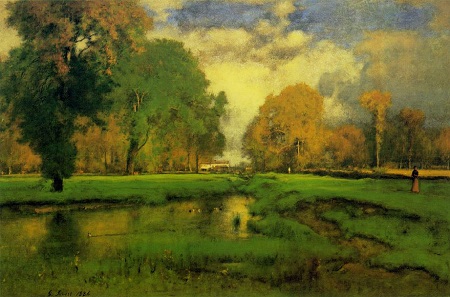
October door George Inness, 1886


October

O hushed October morning mild,
Thy leaves have ripened to the fall;
Tomorrow’s wind, if it be wild,
Should waste them all.
The crows above the forest call;
Tomorrow they may form and go.
O hushed October morning mild,
Begin the hours of this day slow.
Make the day seem to us less brief.
Hearts not averse to being beguiled,
Beguile us in the way you know.
Release one leaf at break of day;
At noon release another leaf;
One from our trees, one far away.
Retard the sun with gentle mist;
Enchant the land with amethyst.
Slow, slow!
For the grapes’ sake, if the were all,
Whose elaves already are burnt with frost,
Whose clustered fruit must else be lost—
For the grapes’ sake along the all.


Robert Frost (26 maart 1874 – 29 januari 1963)
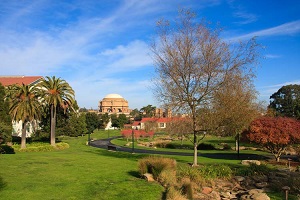
Herfst in het Presidio park, San Francisco. Robert Frost werd geboren in San Francisco.

Lees verder “Dolce far niente, Robert Frost, Jan Van Loy, Ezra Pound, Paul Valéry, Andrew Solomon”

Matthias Zschokke, Harald Hartung, Mohsen Emadi, Lee Child, Dominick Dunne, Claire Goll

De Zwitserse dichter, schrijver en filmmaker Matthias Zschokke werd geboren op 29 oktober 1954 in Bern. Zie ook mijn blog van 29 oktober 2010 en eveneens alle tags voor Matthias Zschokke op dit blog.

Uit: Die Wolken waren groß und weiß und zogen da oben hin

„Gestern, als der Boden noch frisch war und feucht, lebte in Berlin ein Mann, der sich – in der Hoffnung, mit diesem Namen Erfolg zu haben und glücklich zu werden – Roman nannte.
Seine greise Mutter wohnte tausend Kilometer weiter südwestlich und rief ihn mehrmals in der Woche an, an den Wochenenden fast immer, um zu fragen, wann er endlich bei ihr vorbeikomme und Schluss mache mit ihr; sie lebte nicht mehr gern. Er lachte jedes Mal mit einem kurzen, vernehmlichen Prusten und sagte, das sei nicht so einfach, wie sie sich das vorstelle.
Er hatte noch ein altes, eierschalfarbenes Telefon mit einer W’ählscheibe und einem Hörer, der wie ein Knochen aussah und mit einem spiralförmigen schwarzen Kabel am Apparat hing. Auf der Abdeckung der Sprechmuschel klebten vertrocknete Speisereste, die durch den I.uftausstoß bei diesem Prusten jeweils zwischen seinen Zähnen hervorspritzten. Sein vernehmliches Prusten war ihm unangenehm, so dass es ihm jedes Mal auf die Stimme schlug und er sich danach oft noch stundenlang räuspern musste, bevor er einen Satz herausbrachte. Irgendwo hatte er gelesen, räuspern helfe nichts, man müsse kräftig husten, um einen belegten Hals frei zu bekommen. Am Telefon traute er sich jedoch nicht zu husten, weil das im Ohr des Gesprächspartners wie eine kleine Explosion klingen würde.
Das Prusten hatte er sich angewöhnt, nachdem zwei seiner Bekannten eine Bemerkung von ihm – die er am Telefon gemacht hatte und die ohne seinen dazu ironisch lächelnden Gesichtsausdruck offenbar als Beleidigung aufgefasst werden konnte – missverstanden hatten, woraufhin sie den Kontakt zu ihm abbrachen. Auch als er einmal zu seiner Mutter sagte, zurzeit gehe es nicht – seine Pistole, die er zu diesem Zweck einsetzen wolle, sei leider verrostet, er müsse sie erst putzen -, trübte das die Atmosphäre zwischen ihnen.“


Matthias Zschokke (Bern, 29 oktober 1954)

Lees verder “Matthias Zschokke, Harald Hartung, Mohsen Emadi, Lee Child, Dominick Dunne, Claire Goll”

Zbigniew Herbert, Aleksandr Zinovjev, Georg Engel, Jean Giraudoux, André Chénier, Lodewijk van Oord

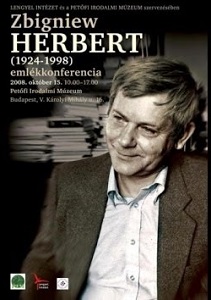
De Poolse dichter, schrijver en essayist Zbigniew Herbert werd geboren op 29 oktober 1924 in Lemberg. Zie ook alle tags voor Zbigniew Herbert op ditblog en ook mijn blog van 29 oktober 2009 en ook mijn blog van 29 oktober 2010.


Meneer Cogito’s twee benen

Het linkerbeen is normaal
optimistisch kun je zeggen
aan de korte kant
jongensachtig
glimlachend in de spieren
met een welgevormde kuit

het rechter
miserabel –
mager
met twee littekens
het ene langs de achillespees
het andere ovaal
lichtroze
de smadelijke herinnering aan een vlucht

links
is geneigd tot huppelen
tot dansen
geeft te veel om het leven
om iets te riskeren

rechts
is edelmoedig stijf
spot met elk gevaar

en zo
trekt
op zijn beide benen
links te vergelijken met Sancho Pancha
en rechts
herinnerend aan de dolende ridder

meneer Cogito
de wereld door
licht wankelend


Vertaald door Gerard Rasch


Zbigniew Herbert (29 oktober 1924 – 28 juli 1998)
Cover 

Lees verder “Zbigniew Herbert, Aleksandr Zinovjev, Georg Engel, Jean Giraudoux, André Chénier, Lodewijk van Oord”

Andrea Voigt

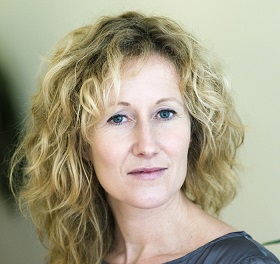
De Nederlandse dichteres en schrijfster Andrea Voigt werd geboren in Rotterdam op 29 oktober 1968. Voigt studeerde Scandinavische Taal- en Letterkunde en Wijsbegeerte. Zij is mede-eigenaar van vertaalbureau Tekst|Support en vertaler van de tijdschriften Wetenschap in Beeld en Historia. In 2004 verscheen haar eerste gedichtenbundel “De tempel van Saturnus”. In 2007 volgde de roman “Augustus in Parijs”. Daarna publiceerde zij nog de dichtbundel “Serveer de makrelen”(2008) en de novelle “Los van de schittering” (2010) Gedichten van Voigt zijn gepubliceerd in diverse tijdschriften, waaronder Tzum en Lopend Vuur, en op websites, zoals brakkehondblogt. In 2001 won zij de VU Podium Poëzieprijs voor het beste gedicht en in 2010 de Oerkroontjespen voor het beste Nederlandstalige boek volgens OER.


Zoekend langs de Maas

Ik zocht het smeedijzer van de stad
in de blauwe klinkers en het zandveld
het verband tussen zangers, patat
en de bibliotheek, driemasters, doctoren

de ritmische pols van moderne cafés
olietankers, de verlaten Euromast
in een glimmend zondagochtendlicht

een gezicht in een plas, maar iets
een reden om hier te zijn
om in deze stad het licht te zien
de uiteengedreven meeuwen jankend op de wind
de flats, de jaren zestig in de sneeuw

de regen raast over de Maas
van binnen vervuild maar verlicht


De tuin der zintuigen

Hoor je het ruisen van de vroege cyclamen
het klapperen van de vleugels van de vliegen
het vallen van de overrijpe pruimen in het gras
het zingen van de wind?

ruik je de geur van natte hagen in de doolhof
de geur van neergeregend stof
het kruidige basilicum, de selderij
het luie parfum van lavendel?

voel je de champagneblaadjes van de rozen
de stekels in je vingers, de druppels over je rug
voel je de beweging in de lucht
het ruwe hout van de hekken?

proef je in de tuin der zintuigen mijn huid
proef je mijn lippen, mijn handen op je lichaam
het fluweel van vlindervleugels op je tong
de stroeve rode peren en rabarber, de modder, het graniet?

zie je mij, zie je de fontein en het kasteel?
het wildebloemenveld en alles wat er is? zie je
jou en mij, en met je hoofd ver achterover:
de takken van de pruimenbomen tegen de blauwe lucht?


Andrea Voigt (Rotterdam, 29 oktober 1968)

Dora Read Goodale


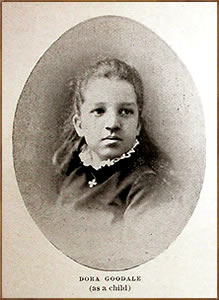
De Amerikaanse dichteres Dora Read Goodale werd geboren op 29 oktober 1866 als dochter van Dora Hill Read en Henry Sterling Goodale, een boer en schrijver in Mount Washington, Massachusetts. Haar vader kon zijn stamboom helemaal terug naar 1632 traceren, naar een voorvader die zich in Salem, Massachusetts vestigde. Elaine, geboren op 9 oktober 1863, was het eerste kind van het echtpaar en zou ook een bekende dichteres worden. Nadat zij was afgestudeerd aan Smith College publiceerde Dora in 1887 haar eerste bundel poëzie “Heralds of Easter”, Zij werd docente kunst en Engels in Reading, Connecticut, iets wat haar familie voor haar had geregeld. Zij is nooit getrouwd, maar zij en haar zus Elaine hebben in de loop der decennia talrijke brieven uitgewisseld waarin ze de verschillende alternatieven voor vrouwen onderzocht hebben. Later in haar leven werkte Dora als lerares en directrice van Uplands Sanatorium in Pleasant Hill, Tennessee. In 1941 publiceerde zij “Mountain Dooryards”, haar laatste dichtbundel, een werk dat in een modernistisch vrij vers was geschreven en waarin zij het dialect van de mensen van de Appalachians gebruikte om uitdrukking te geven aan hun traditionele maar veranderende wereld.


The Flight of the Heart

The heart soars up like a bird
  From a nest of care;
Up, up to a larger sky,
  To a softer air.
No eye can measure its flight        
  And no hand can tame;
It mounts in beauty and light,
  In music and flame.
Of all the changes of Time
  There is none like this;        
The heart soars up like a bird
  At the stroke of bliss.

The heart soars up like a bird,
  But its wings soon tire;
Enough of rapture and song,        
  The cloud and the fire!
Its look, the look of a king—
  Of a slave, its birth,
The poor, tired, impotent thing
  Sinks back to the earth.        
And the mother spreads her lap,
  And she lulls its pain:
“Oh, thou who sighed for the sun,
  Art thou mine again?”


The Feast-Time Of The Year

This is the feast-time of the year,
When plenty pours her wine of cheer,
And even humble boards may spare
To poorer poor a kindly share.
While bursting barns and granaries know
A richer, fuller overflow.
And they who dwell in golden ease
Blest without toil, yet toil to please.


Dora Read Goodale (29 oktober 1866 – 12 december 1953)

Evelyn Waugh, Jan Weiler, JMH Berckmans, John Hollander, Al Galidi, Uwe Tellkamp, Johannes Daniel Falk, Karl Philipp Conz

De Britse schrijver Evelyn Waugh werd geboren in Londen op 28 oktober 1903. Zie ook alle tags voor Evelyn Waugh op dit blog.

Uit:Brideshead Revisited

“Sebastian lived at Christ Church, high in Meadow Buildings. He was alone when I came, peeling a plover’s egg taken from the large nest of moss in the centre of his table.
‘I’ve just counted them,’ he said. ‘There were five each and two over, so I’m having the two. I’m unaccountably hungry today. I put myself unreservedly in the hands of Dolbear and Goodall, and feel so drugged that I’ve begun to believe that the whole of yesterday evening was a dream. Please don’t wake me up.
He was entrancing, with that epicene beauty which in extreme youth sings aloud for love and withers at the first cold wind.
His room was filled with a. strange jumble of objects—a harmonium in a gothic case, an elephant’s-foot waste-paper basket, a dome of wax fruit, two disproportionately large Sèvres vases, framed drawings by Daumier—made all the more incongruous by the austere college furniture and the large luncheon table. His chimney-piece was covered in cards of invitation from London hostesses.


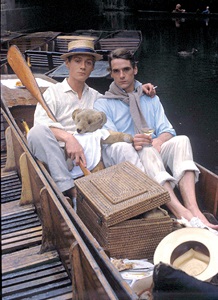
Anthony Anfrews (Sebastian) en Jeremy Irons (Charles) in de tv-serie Brideshead Revisited uit 1981


‘That beast Hobson has put Aloysius next door,’ he said. ‘Perhaps it’s as well, as there wouldn’t have been any plovers’ eggs for him. D’you know, Hobson hates Aloysius. I wish I had a scout like yours. He was sweet to me this morning where some people might have been quite strict.’
The party assembled. There were three Etonian freshmen, mild, elegant, detached young men who had all been to a dance in London the night before, and spoke of it as though it had been the funeral of a near but unloved kinsman. Each as he came into the room made first for the plovers’ eggs, then noticed Sebastian and then myself with a polite lack of curiosity which seemed to say: ‘We should not dream of being so offensive as to suggest that you never met us before.’
‘The first this year,’ they said. ‘Where do you get them?’
‘Mummy sends them from Brideshead. They always lay early for her.’
When the eggs were gone and we were eating the lobster Newburg, the last guest arrived.
‘My dear,’ he said, ‘I couldn’t get away before. I was lunching with my p-ppreposterous tutor. He thought it ‘was very odd my leaving when I did. I told him I had to change for F-f-footer.’


Evelyn Waugh (28 oktober 1903 – 10 april 1966)

Lees verder “Evelyn Waugh, Jan Weiler, JMH Berckmans, John Hollander, Al Galidi, Uwe Tellkamp, Johannes Daniel Falk, Karl Philipp Conz”

Sylvia Plath, Dylan Thomas, Zadie Smith, Nawal el Saadawi, Albrecht Rodenbach, Jamie McKendrick, Fran Lebowitz, Reza Allamehzadeh

De Amerikaanse dichteres en schrijfster Sylvia Plath werd geboren op 27 oktober 1932 in Jamaica Plain, een buitenwijk van Boston. Zie ook mijn blog van 27 oktober 2010 en eveneens  alle tags voor Sylvia Plath op dit blog.


All Appearance

The smile of iceboxes annihilates me.
Such blue currents in the veins of my loved one!
I hear her great heart purr.

From her lips ampersands and percent signs
Exit like kisses.
It is Monday in her mind: morals

Launder and present themselves.
What am I to make of these contradictions?
I wear white cuffs, I bow.

Is this love then, this red material
Issuing from the steele needle that flies so blindingly?
It will make little dresses and coats,

It will cover a dynasty.
How her body opens and shuts-
A Swiss watch, jeweled in the hinges!

O heart, such disorganization!
The stars are flashing like terrible numerals.
ABC, her eyelids say.


Incommunicado

The groundhog on the mountain did not run
But fatly scuttled into the splayed fern
And faced me, back to a ledge of dirt, to rattle
Her sallow rodent teeth like castanets
Against my leaning down, would not exchange
For that wary clatter sound or gesture
Of love : claws braced, at bay, my currency not hers.

Such meetings never occur in marchen
Where love-met groundhogs love one in return,
Where straight talk is the rule, whether warm or hostile,
Which no gruff animal misinterprets.
From what grace am I fallen. Tongues are strange,
Signs say nothing. The falcon who spoke clear
To Canacee cries gibberish to coarsened ears.


Dirge for a Joker

Always in the middle of a kiss
Came the profane stimulus to cough;
Always from the pulpit during service
Leaned the devil prompting you to laugh.

Behind mock-ceremony of your grief
Lurked the burlesque instinct of the ham;
You never altered your amused belief
That life was a mere monumental sham.

From the comic accident of birth
To the final grotesque joke of death
Your malady of sacrilegious mirth
Spread gay contagion with each clever breath.

Now you must play the straight man for a term
And tolerate the humor of the worm.


Sylvia Plath (27 oktober 1932 – 11 februari 1963)
Hier met dichter en echtgenoot Ted Hughes

Lees verder “Sylvia Plath, Dylan Thomas, Zadie Smith, Nawal el Saadawi, Albrecht Rodenbach, Jamie McKendrick, Fran Lebowitz, Reza Allamehzadeh”