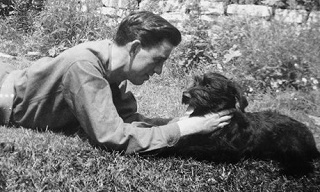
Svend Fleuron, Maurice Mac-Nab, Mite Kremnitz, Rajvinder Singh

De Deense schrijver Svend Fleuron werd geboren op 4 januari 1874 op het landgoed Katrinedal bij Keldby. Zie ook alle tags voor Svend Fleuron op dit blog.

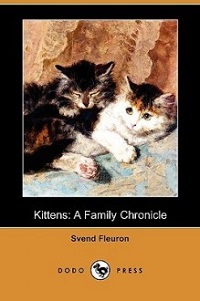
Uit: Kittens : A Family Chronicle (Vertaald door David Pritchard)

“One afternoon very early in spring a small, snow-white he-cat came strolling carelessly along the road. His ears were thrust forward, betraying his interest in something ahead: he meant to take a walk round the farm, whither the road led . . . there was a grey puss there who attracted him!
He ought to have been more cautious, the little white dwarf! A giant cat, a coloured rival, with the demon of passion seething in his blood and hate flaming from his eyes, caught sight of the hare-brained fellow from afar off and straight-way guessed his errand.
With rigid legs, lowered head, and loins held high, he comes rushing from behind . . . runs noiselessly over the soft grass at the side of the road and overhauls the other un-perceived.
With one spring he plants all his foreclaws deep in the flesh of the smaller cat, who utters a loud wail and collapses on the ground.
The big one maintains his grip on his defeated foe’s shoulder, crushing him ruthlessly in the dust. Then he presses back his torn ears, giving an even more hateful expression to the evil eyes, and lowering his muzzle, gloatingly he howls his song of victory straight into his fallen rival’s face.
For a good quarter of an hour he continues to martyr his victim, who is too terrified to move a muscle; he tears the last shred of self-respect and honour from the coward—then releases him and stalks before him to the farm, without deigning to throw him another glance. He was too despicable a rival, the little white mongrel! The big, spotted he-cat considered it beneath his dignity even to thrash him.”


Svend Fleuron (4 januari 1874 – 5 april 1966)

Cover
Lees verder “Svend Fleuron, Maurice Mac-Nab, Mite Kremnitz, Rajvinder Singh”

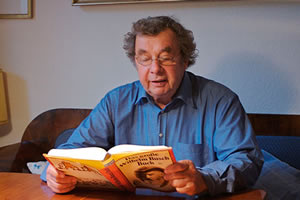
Hellmuth Karasek

De Duitse journalist, schrijver, film- en literair criticus en hoogleraar theaterwetenschap Hellmuth Karasek werd geboren op 4 januari 1934 in Brno, Moravië, Tsjechoslowakije. De familie Karasek vluchtte in 1944 tijdens WO II voor het Rode Leger van het Silezische Bielsko naar Duitsland en kwam via tussenstations in Bernburg terecht. Eerder was Karasek lid van de Hitlerjugend geweest. Zijn middelbare schoolperiode (1948-1952) in Bernburg heeft hij literair verwerkt in zijn boek “Auf der Flucht”. Na zijn eindexamen in 1952 verhuisde Karasek van de DDR naar de Bondsrepubliek Duitsland. Hij studeerde Duitse literatuur, geschiedenis en Engels aan de Universiteit van Tübingen. Karasek begon zijn journalistieke carrière bij de Stuttgarter Zeitung. Daarna was hij een jaar hoofd dramaturgie aan het Württembergische Staatstheater Stuttgart en vanaf 1968 theatercriticus voor het weekblad Die Zeit. Tussen 1974 en 1996 leidde Karasek de culturele afdeling van het tijdschrift Der Spiegel, Zijn ervaring verwerkte hij in 1998 in de roman “Das Magazin”. Na Der Spiegel was hij tot 2004 mede-redacteur van de Berlijnse krant Der Tagesspiegel. Karasek woonde in Hamburg en werkte voor de krant Die Welt, Welt am Sonntag en de Berliner Morgenpost van Axel Springer SE, maar was ook vaak te zien in verschillende televisieprogramma’s. Zo trad hij onder andere, in alle edities van het RTL programma Die 5-Millionen-SKL-Show als prominente sponsor van de kandidaten op. Gedurende de lange periode van 1988 tot 2001 was Karasek vaste deelnemer van het ZDF-programma Das Literarische Quartett onder de dominante leidiing van Marcel Reich-Ranicki. In 1992 werd Karasek honorair hoogleraar bij de afdeling Theater Studies van de Universiteit van Hamburg.
Uit zijn tweede huwelijk met Armgard Seegers heeft Karasek vier kinderen, waaronder de regisseur en artistiek leider Daniel Karasek en de advocaat en schrijver Laura Karasek-Briggs. Zijn jongere broer was de schrijver Horst Karasek.

Uit: Frauen sind auch nur Männer

“Normalerweise reden wir, »wie uns der Schnabel gewachsen ist«, wir nehmen dabei »kein Blatt vor den Mund« – während wir offiziell bei Feiern, Reden, Ansprachen »nach der Schrift« reden, sogenanntes »Schriftdeutsch«. Manch- mal heißt es auch, dass wir »wie gedruckt« lügen.
Jetzt geht’s einmal nicht» hochdeutsch« zu,also rechtschreiberisch rechthaberisch, nicht dudenmäßig, sondern phonetisch, gebabbelt, genuschelt, gequatscht, gesabbert. Wie der Volksmund spricht.
Die folgende Geschichte sollte am besten laut gelesen werden, mit allen Tücken und Weichheiten der sächsischen Sprache: Da bestellte eine Frau telefonisch ein Flugticket von Leipzig nach Porto. Und bekam ein Ticket nach Bordeaux. Bordeaux in Südfrankreich, Porto in Portugal.
Oder war’s umgekehrt, sie wollte nach Bordeaux und be- kam eins nach Porto? Ist ja egal, gehupft wie gesprungen, denn offenbar sprach sie Bordeaux oder Porto gleich aus, als Bordo, eben sächsisch. Und da saß sie nun mit ihrem falschen »Ticket«, respektive »Digged«, und bekam es nicht getauscht. Ein Schicksal aus Sachsen, wo harte Männer im Liebesrausch schon mal stöhnen: »Gib mir wilde Diernamen, nenn misch Buma!« Auf Hochdeutsch: Puma.
In Sachsen hat der Satz »Rechenwärmer kriechen« zweierlei Bedeutung. Er kann biologisch sein: »Regenwürmer kriechen«. Oder meteorologisch: »Regen werden wir kriegen.« Je nachdem. Ähnlich beinlos weichtierhaft wie in der sächsischen Artikulation geht es nur noch im Hessischen zu, wo Goethe im »Faust« »Ach neige, du Schmerzensreiche« dichtet: »Ach neiche«, sagt Gretschen im Gebet. Damit es sich auf die »schmerzensreiche« Himmelskönigin reime. Oder Goethes berühmte letzte Worte: »Mehr Licht!«, soll der Olympier gesagt haben. Aber sagen wollte er: »Mer licht hier schlescht.« Man liegt hier schlecht; da fuhr ihm der Tod in die Parade.
Auch der »Struwwelpeter«-Autor Dr. Heinrich Hoffmann babbelte eindeutig hessisch weich und dichtete über den fliegenden Robert: »Hui, wie pfeift der Sturm und keucht – dass der Baum sich niederbeugt.« Was sich auf Hessisch  tatsächlich reimt.
In Sachsen gibt es die Geschichte vom Zoologie-Professor, der angeblich alle Studenten nur über Würmer examinierte. Also lernten sie nur über diese Griechdiere. Er fragt den Ersten, oh, Schreck!, überraschend nach den Elefanten. Der sagt: »Der Elefant ist groß und hat einen Rüssel. Der Rüssel ist wie ein Wurm. Die Würmer zerfallen in die Faden-, Band- und Spulwürmer …«, und dann rasselt und kellerasselt es nur so. Den Zweiten fragt er nach den Löwen.Der antwortet erschrocken:» Der Löwe lebt in Afrika. In Afrika ist es wärmer. Die Wärmer zerfallen in die Faden-, Band- und Spulwärmer …«

 
Hellmuth Karasek (Brno, 4 januari 1934)

Peter Ghyssaert, J.R.R. Tolkien, Marie Darrieussecq, Alex Wheatle, Cicero, Drieu la Rochelle

De Vlaamse dichter Peter Ghyssaert werd geboren op 3 januari 1966 te Wilrijk. Zie ook alle tags voor Peter Ghyssaert op dit blog.


Eiken

Eiken zijn de bomen van het dies irae;
als de grond breekt zullen zij,
over het land gezaaiden, toekijken
met een oud, houten gezicht
dat onbewogen blijft:

te veel stormwind is in
hun taaie takkenkroon verstard;
zij zijn niet meer verstoord
door groei, dat eeuwenoud tumult
en in hun stilstand glanst niets op
van minachting, van deernis
met het oude land,
alleen geduld.

En vliegen dan zielen der geredden
als briljante edelgassen
naar hun maker; schieten verdoemden,
brandend van de diarree, voorbij
koude, ijzerharde wortels
dieper in de grond:

zij hebben het gezien,
zij hebben het gehoord,
zij doen niet mee.


Levensverhaal

Toen hij geboren was begon het al:
zijn moeder had de bijsluiter verloren.

Nooit wist hij waartoe dit
of dat dienen moest. Hoewel
hij toch kon raden
liep het steeds verkeerd.

Zijn vrienden durfde hij niet vragen:
in hun jeugd hadden die goed
hun eigen voorschriften gelezen
en die toen verbrand.

Iedereen hield alles maar geheim
en deed volmaakt wat hij niet kon:
ze lachten hem al op de speelplaats uit:

een tegenstrijdigheid, verlamd
en huilend in de zon.


Peter Ghyssaert (Wilrijk, 3 januari 1966)

Lees verder “Peter Ghyssaert, J.R.R. Tolkien, Marie Darrieussecq, Alex Wheatle, Cicero, Drieu la Rochelle”

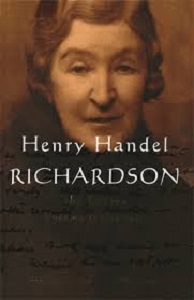
Henry Handel Richardson, Xavier Orville, Jacob Balde, Wolf von Aichelburg, Elsa Asenijeff, John Gould Fletcher

De Australische schrijfster Henry Handel Richardson (eig. Ethel Florence) werd geboren op 3 januari 1870 in Melbourne. Zie ook alle tags voor Henry Handel Richardson op dit blog.

Uit: Australia Felix

“That had been the hardest job of any: keeping the party together. They had only been eight in all–a hand-to-mouth number for a deep wet hole. Then, one had died of dysentery, contracted from working constantly in water up to his middle; another had been nabbed in a manhunt and clapped into the “logs.” And finally, but a day or two back, the three men who completed the nightshift had deserted for a new “rush” to the Avoca. Now, his pal had gone, too. There was nothing left for him, Long Jim, to do, but to take his dish and turn fossicker; or even to aim no higher than washing over the tailings rejected by the fossicker.
At the thought his tears flowed anew. He cursed the day on which he had first set foot on Ballarat.
“It’s ‘ell for white men–‘ell, that’s what it is!”
“‘Ere, ‘ave another drink, matey, and fergit yer bloody troubles.”
His re-filled pannikin drained, he grew warmer round the heart; and sang the praises of his former life. He had been a lamplighter in the old country, and for many years had known no more arduous task than that of tramping round certain streets three times daily, ladder on shoulder, bitch at heel, to attend the little flames that helped to dispel the London dark.”


Henry Handel Richardson (3 januari 1870 – 20 maart 1946)
Cover

Lees verder “Henry Handel Richardson, Xavier Orville, Jacob Balde, Wolf von Aichelburg, Elsa Asenijeff, John Gould Fletcher”

Douglas Jerrold, Charles Palissot de Montenoy, Heinrich Wilhelm von Gerstenberg, Hermann von Weinsberg, Sven Kivisildnik

De Engelse schrijver Douglas William Jerrold werd geboren op 3 januari 1803 in Londen. Zie ook alle tags voor Douglas Jerrold op dit blog.

Uit: St. Giles and St. James

“The streets were empty. Pitiless cold hod driven all who had the shelter of a roof to their homes : and the north-east blast seemed to howl in triumph above the untrodden snow. “Winter was at the heart of all things. The wretched, dumb with excessive misery, suffered, in stupid resignation, the tyramiy of the season. Human blood stagnated in the breast of want ; and death in that despoji’ing hour losing its terrors, looked, in the eyes of many a wretch, a sweet deliverer. It was a time when the very poor, barred from the commonest things of earth, take strange counsel with themselves, and, in the deep humility of destitution, believe they are the burden and the offal of the world,
It was a time whea the easy, comfortable man, touched with finest sense of human suffering, gives from his abundance ; and, whilst bestowing, feels almost ashamed that, with such widespread misery circled round him, he has all things fitting ; all things grateful. The smitten spirit asks wherefore he is not of the multitude of wretchedness ; demands to know for what especial excellence he is promoted above the thousand, thousand starving creatures ; in his very tenderness for misery, tests his privilege of exemption from a woe that withers manhood in man, bowing him downward to the brute. And so questioned, this man gives in modesty of spirit — in very thankfulness of soul.”


Douglas Jerrold (3 januari 1803 – 8 juni 1857)

Lees verder “Douglas Jerrold, Charles Palissot de Montenoy, Heinrich Wilhelm von Gerstenberg, Hermann von Weinsberg, Sven Kivisildnik”

Jean Muno

De Belgische schrijver Jean Muno (pseudoniem van Robert Burniaux) werd geboren in Molenbeek op 3 januari 1924. Zijn vader, Constant Burniaux, was een bekend schrijver. Zijn moeder, Jeanne Taillieu, was eveneens schrijfster. Beide werkten ook als docent(e). Na de Grieks-Latijnse humaniora studeerde hij Romaanse filologie aan de Vrije Universiteit van Brussel. Vanaf 1945 leverde hij bijdragen aan literaire tijdschriften en koos hij het pseudoniem Jean Muno, verwijzend naar een dorp in de Gaumestreek waar hij een vakantie vierde. Hoewel hij vooral bekend is als schrijver van romans en kort verhalen schreef Muno eerst artikelen over film en hoorspelen. In 1947 werd hij professor aan normaalschool Charles Buls. Hij trouwde en leidde blijkbaar lhet rustige leven van een jonge leraar en ambtenaar. Zijn eerste belangrijke publicatie, na “St. Bedon” (1955) en “L’Homme qui s’efface” (geschreven in 1958, maar pas gepubliceerd in 1963) was “L’Hipparion” in 1962, een korte poëtische-satirische roman. In 1968, met “The Joker”, toonde Muno zijn meesterschap als schrijver. De jaren zeventig waren voor de schrijver een periode van twijfels en aarzelingen maar er ontstonden wel belangrijke boeken. “Ripple-mark” verscheen, een eerste autobiografische bekentenis en “Histoires singulières” waarvoor hij in 1979, de Rossel prijs kreeg. In 1981 publiceerde hij het monoloogstuk Caméléon” en ook een prachtig kerstverhaal “Les Petits Pingouins”. In 1981 nam hij ook deel aan de oprichting van het Centre international du fantastique. In 1982 verscheen “Histoire exécrable d’un héros brabançon”, in 1983 “Entre les lignes”, in 1985 “Histoires griffues” en in 1988 “Jeu de rôles”.

Uit: Histoires singulières

« Ce jour-là, de juin ou de septembre, était l’anniversaire de sa mort. Trois ans tout juste l’en séparaient. Sans doute le terme anniversaire convient-il mal ici; mais je n’en ai pas d’autre pour évoquer cette espèce de souvenir du futur, cette très vague prémonition célébrant un événement qui s’accomplira à pareille date, quelques années plus tard.
Comme il faisait agréable, Walter se rendit à son bureau à pied. Il travailla avec zèle à la vérification des formulaires jaunes. Il se sentait bien, plutôt heureux de vivre. L’après-midi, à cause de la chaleur, portes et fenêtres s’ouvrirent au large.
Six heures. Walter refit sa route du matin et refranchit le fleuve. Deux fois par jour, il passait ainsi d’une rive à l’autre, du travail au repos, du repos au travail. Jamais il ne s’arrêtait sur le pont. A quoi bon regarder les eaux grises s’engouffrer sous les arches ?
– Toujours rien, madame Blanche ?
Elle eut comme une hésitation avant de secouer la tête.
– Rien, monsieur Walter.
Elle n’était blanche que de prénom, la concierge. Grise pour le reste, d’un gris sans rémission, comme les eaux du fleuve.
– Il me semble pourtant que je devais vous dire quelque chose. Mais quoi ?
Un moment, ils se dévisagèrent. Quoi ? à propos de quoi ? Les yeux mi-clos, Mme Blanche se passa les doigts sur le front. Walter eut un petit sourire incertain.
– Une visite peut-être ? »


Jean Muno (3 januari 1924 – 6 april 1988)

Jimmy Santiago Baca, David Shapiro, André Aciman, Nyk de Vries, Look J. Boden, Hans Herbjørnsrud, Anton van Duinkerken, Christopher Durang

De Amerikaanse dichter en schrijver Jimmy Santiago Baca werd geboren in Santa Fe, New Mexico, op 2 januari 1952. Zie ook alle tags voor Jimmy Santiago Baca op dit blog.


The Day Brushes It’s Curtains Aside

to a dark stage.
I lie there awake in my prison bunk,
in the eye-catching silence
of prison night.

I study the moon out my grilled window.
I figure this and that,
not out, just figure, figuring more,
the inner I go, through illimitable tunnels,

roaring great, myself back back back.

I lie still, listening to water drops
clink and pap pap pap
in the shower stall next to my cell.

In that airy place we call the heart,
I move like a magician
in the colorful stage lights of my moods,
my bright dreams, and blue light
circles a tear on my cheek, and lips with her name.

>From flowers in my hands
her face appears. In cards
she is the queen. These are tricks
and I am the magician.

Tomorrow morning I will crawl out of bed
knowing I cannot escape the chains
they’ve wrapped around me.

I will crawl out of bed tomorrow,
as though I had stepped out of a box
on stage. It was no illusion,
when the sword plunged into the box,
I smiled at the crowd,
as it went deeper and deeper into my heart.


Jimmy Santiago Baca (Santa Fe, 2 januari 1952)

Lees verder “Jimmy Santiago Baca, David Shapiro, André Aciman, Nyk de Vries, Look J. Boden, Hans Herbjørnsrud, Anton van Duinkerken, Christopher Durang”

Een nieuwe dag (Alexis de Roode)

Aan alle bezoekers en mede-bloggers een gelukkig Nieuwjaar!


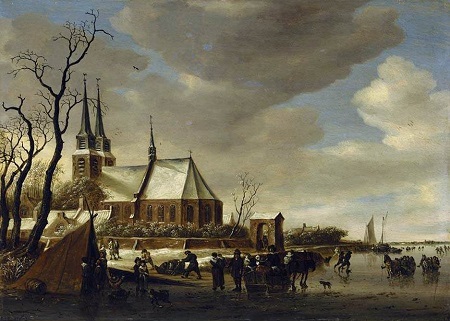
Winterlandschap door Salomon van Ruysdael, jaren 1650


Een nieuwe dag

Kyrie eleison
Kyrie eleison
deze treurigheid gaat nooit meer weg.

Het is nieuwjaarsdag
en de wereld is wit, wit,
maar met sneeuw heeft het niks te maken,
het is meer een verbleken
nu de seizoenen ongescheiden zijn geworden.

Het is nieuwjaarsdag
en de plannen zijn goed,
maar de wereld is slecht,
we zijn trouwens allemaal klootzakken
(zo mijn vader sprak in vervlogen dagen)

We wagen het erop, jazeker.
Er gaan hier vele dagen om
waarin niets doordringt van de droefheid
die niet beperkt tot mensen is.
Ik wil gaan zoals het oude liedje ging:
naar een hoogmis en geboren worden
in een orgelpijp.
En dan maar stijgen als een dolle.

Maar ik mag niet zomaar weg.
Er loopt een vrouw door mijn huis
op zeer dunne vogelbenen,
een baltsende vogel die op leven wacht,
niet voor mij,
slechts voor het Ware en het Goede,
daarvoor strekt ze zich
en neigt.

Het Goede en het Ware.
Kyrie eleison.

Deze treurigheid gaat nooit meer weg,
nooit meer.


Alexis de Roode (Hulst, 8 oktober 1970)
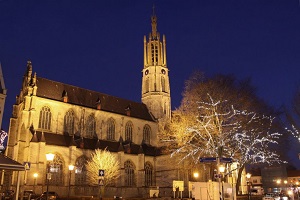
De Willibrordus-basiliek in Hulst.


Zie voor de schrijvers van de 1e januari ook mijn vorige twee blogs van vandaag.

Adonis, Jonas T. Bengtsson, Chantal van Gastel, Juan Gabriel Vásquez, Paul Hamilton Hayne

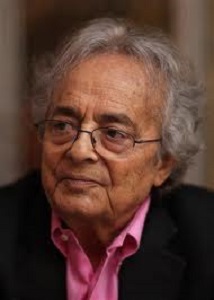
De Syrische schrijver Adonis (pseudoniem van Ali Ahmad Sa’id) werd geboren op 1 januari 1930 in Qassabin in het noorden van Syrië. Zie ook alle tags voor Adonis op dit blog.


Celebrating Childhood

Even the wind wants
to become a cart
pulled by butterflies.

I remember madness
leaning for the first time
on the mind’s pillow.
I was talking to my body then
and my body was an idea
I wrote in red.

Red is the sun’s most beautiful throne
and all the other colors
worship on red rugs.

Night is another candle.
In every branch, an arm,
a message carried in space
echoed by the body of the wind.

The sun insists on dressing itself in fog
when it meets me:
Am I being scolded by the light?

Oh, my past days—
they used to walk in their sleep
and I used to lean on them.

Love and dreams are two parentheses.
Between them I place my body
and discover the world.

Many times
I saw the air fly with two grass feet
and the road dance with feet made of air.

My wishes are flowers
staining my days.

I was wounded early,
and early I learned
that wounds made me.

I still follow the child
who still walks inside me.

Now he stands at a staircase made of light
searching for a corner to rest in
and to read the face of night again.

If the moon were a house,
my feet would refuse to touch its doorstep.

They are taken by dust
carrying me to the air of seasons.

I walk,
one hand in the air,
the other caressing tresses
that I imagine.

A star is also
a pebble in the field of space.

He alone
who is joined to the horizon
can build new roads.

A moon, an old man,
his seat is night
and light is his walking stick.

What shall I say to the body I abandoned
in the rubble of the house
in which I was born?
No one can narrate my childhood
except those stars that flicker above it
and that leave footprints
on the evening’s path.

My childhood is still
being born in the palms of a light
whose name I do not know
and who names me.

Out of that river he made a mirror
and asked it about his sorrow.
He made rain out of his grief
and imitated the clouds.

Your childhood is a village.
You will never cross its boundaries
no matter how far you go.

His days are lakes,
his memories floating bodies.

You who are descending
from the mountains of the past,
how can you climb them again,
and why?

Time is a door
I cannot open.
My magic is worn,
my chants asleep.

I was born in a village,
small and secretive like a womb.
I never left it.
I love the ocean not the shores.


Vertaald door Khaled Mattawa


Adonis (Qassabin, 1 januari 1930)

Lees verder “Adonis, Jonas T. Bengtsson, Chantal van Gastel, Juan Gabriel Vásquez, Paul Hamilton Hayne”

J.D. Salinger, E. M. Forster, Douglas Kennedy, Rascha Peper, Carry van Bruggen

De Amerikaanse schrijver Jerome David Salinger werd in New York geboren op 1 januari 1919. Zie ook alle tags voor J. D. Salinger op dit blog.

Uit:The Catcher in the Rye

“They went mad. They were exactly the same morons that laugh like hyenas in the movies at stuff that isn’t funny. I swear to God, if I were a piano player or an actor or something and all those dopes thought I was terrific, I’d hate it. I wouldn’t even want them to clap for me. People always clap for the wrong things. If I were a piano player, I’d play it in the goddam closet. Anyway, when he was finished, and everybody was clapping their heads off, old Ernie turned around on his stool and gave this very phony, humble bow. Like as if he was a helluva humble guy, besides being a terrific piano player. It was very phony–I mean him being such a big snob and all. In a funny way, though, I felt sort of sorry for him when he was finished. I don’t even think he knows any more when he’s playing right or not. It isn’t all his fault. I partly blame all those dopes that clap their heads off–they’d foul up anybody, if you gave them a chance. Anyway, it made me feel depressed and lousy again, and I damn near got my coat back and went back to the hotel, but it was too early and I didn’t feel much like being all alone.
They finally got me this stinking table, right up against a wall and behind a goddam post, where you couldn’t see anything. It was one of those tiny little tables that if the people at the next table don’t get up to let you by–and they never do, the bastards–you practically have to climb into your chair. I ordered a Scotch and soda, which is my favorite drink, next to frozen Daiquiris. If you were only around six years old, you could get liquor at Ernie’s, the place was so dark and all, and besides, nobody cared how old you were.
You could even be a dope fiend and nobody’d care.
I was surrounded by jerks. I’m not kidding. At this other tiny table, right to my left, practically on top of me, there was this funny-looking guy and this funny-looking girl.
They were around my age, or maybe just a little older. It was funny. You could see they were being careful as hell not to drink up the minimum too fast. I listened to their conversation for a while, because I didn’t have anything else to do. He was telling her about some pro football game he’d seen that afternoon. He gave her every single goddam play in the whole game–I’m not kidding. He was the most boring guy I ever listened to.”


J.D. Salinger (1 januari 1919 – 27 januari 2010)

Lees verder “J.D. Salinger, E. M. Forster, Douglas Kennedy, Rascha Peper, Carry van Bruggen”