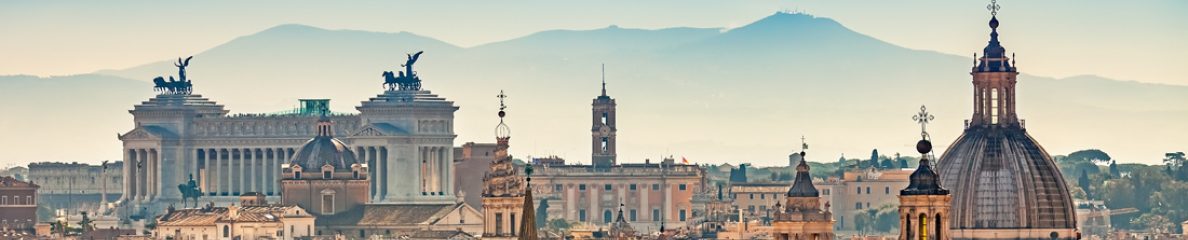
The Three Kings (Henry Longfellow)


Bij het feest van Driekoningen
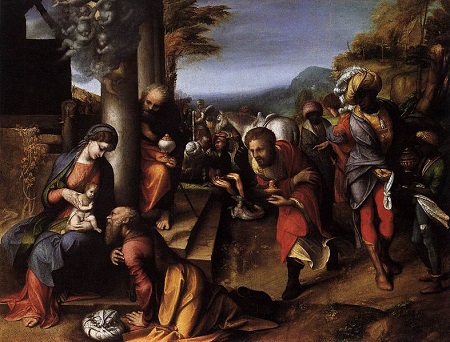


De aanbidding van de Drie Koningen door Corregio, rond 1518


The Three Kings

Three Kings came riding from far away,
Melchior and Gaspar and Baltasar;
Three Wise Men out of the East were they,
And they travelled by night and they slept by day,
For their guide was a beautiful, wonderful star.

The star was so beautiful, large and clear,
That all the other stars of the sky
Became a white mist in the atmosphere,
And by this they knew that the coming was near
Of the Prince foretold in the prophecy.

Three caskets they bore on their saddle-bows,
Three caskets of gold with golden keys;
Their robes were of crimson silk with rows
Of bells and pomegranates and furbelows,
Their turbans like blossoming almond-trees.

And so the Three Kings rode into the West,
Through the dusk of the night, over hill and dell,
And sometimes they nodded with beard on breast,
And sometimes talked, as they paused to rest,
With the people they met at some wayside well.

“Of the child that is born,” said Baltasar,
“Good people, I pray you, tell us the news;
For we in the East have seen his star,
And have ridden fast, and have ridden far,
To find and worship the King of the Jews.”

And the people answered, “You ask in vain;
We know of no King but Herod the Great!”
They thought the Wise Men were men insane,
As they spurred their horses across the plain,
Like riders in haste, who cannot wait.

And when they came to Jerusalem,
Herod the Great, who had heard this thing,
Sent for the Wise Men and questioned them;
And said, “Go down unto Bethlehem,
And bring me tidings of this new king.”

So they rode away; and the star stood still,
The only one in the grey of morn;
Yes, it stopped –it stood still of its own free will,
Right over Bethlehem on the hill,
The city of David, where Christ was born.

And the Three Kings rode through the gate and the guard,
Through the silent street, till their horses turned
And neighed as they entered the great inn-yard;
But the windows were closed, and the doors were barred,
And only a light in the stable burned.

And cradled there in the scented hay,
In the air made sweet by the breath of kine,
The little child in the manger lay,
The child, that would be king one day
Of a kingdom not human, but divine.

His mother Mary of Nazareth
Sat watching beside his place of rest,
Watching the even flow of his breath,
For the joy of life and the terror of death
Were mingled together in her breast.

They laid their offerings at his feet:
The gold was their tribute to a King,
The frankincense, with its odor sweet,
Was for the Priest, the Paraclete,
The myrrh for the body’s burying.

And the mother wondered and bowed her head,
And sat as still as a statue of stone,
Her heart was troubled yet comforted,
Remembering what the Angel had said
Of an endless reign and of David’s throne.

Then the Kings rode out of the city gate,
With a clatter of hoofs in proud array;
But they went not back to Herod the Great,
For they knew his malice and feared his hate,
And returned to their homes by another way.


Henry Longfellow (27 februari 1807 – 24 maart 1882)
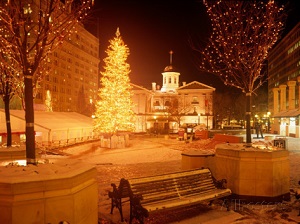
Portland in Kersttijd. Henry Longfellow werd geboren in Portland.


Zie voor de schrijvers van de 6e januari ook mijn vorige blog van vandaag.
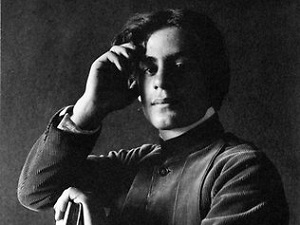
Khalil Gibran, Hester Knibbe, Romain Sardou, Carl Sandburg, Jens Johler, E. L. Doctorow

De Libanese dichter en romanschrijver Khalil Gibran werd geboren op 6 januari 1883 in Bischarri. Zie ook alle tags voor Khalil Gibran op dit blog.


Over Vriendschap

En een jongeling zei: Spreek tot ons over vriendschap.
En hij antwoordde, zeggende:
Je vriend is een antwoord op je verlangen.
Hij is je akker die je met liefde bezaait en vol dankzegging oogst.
En hij is je tafel en haardvuur.
Want je komt tot hem met je honger en bij hem zoekt ge rust.

Wanneer je vriend je zijn eigen geest ontsluit, ben je niet bang voor het ‘neen’ in je eigen geest, noch onthou je hem het ‘ja’.
En wanneer hij zwijgt, blijft je hart luisteren naar zijn hart;
want zonder woorden worden in vriendschap alle gedachten, alle verlangens, alle verwachtigen geboren en gedeeld, vol ongevraagde vreugde.
Wanneer je afscheid neemt van je vriend, treur je niet;
want wat je het diepst in hem bemint, kan klaarder voor je zjin bij zijn afwezigheid, zoals een bergbeklimmer de berg duidelijker ziet vanuit de vlakte.
En laat je vriendschap geen andere bedoeling hebben dan een verdieping van de geest.
Want de liefde die iets anders zoekt dan de openbaring van haar eigen mysterie is geen liefde, maar een net dat uitgeworpen wordt; en alleen het waardeloze wordt gevangen.

En laat het beste voor je vriend zijn.
Zo hij de eb van je getij moet ervaren, doe hem ook de vloed kennen.
Want wat is je vriend dat je hem enkel zoeken zou om de tijd te doden.
Zoek hem steeds om de tijd te leven.
Want hij moet je tekort vullen, maar niet je ledigheid.
En laat er een lach zijn in de zoetheid der vriendschap en een samen beleven van genoegens.
Want in de dauw der kleine dingen vindt het hart zijn morgen en wordt verfrist.


Khalil Gibran (6 januari 1883– 10 april 1931)

Lees verder “Khalil Gibran, Hester Knibbe, Romain Sardou, Carl Sandburg, Jens Johler, E. L. Doctorow”

Umberto Eco, Paul Ingendaay, Ngũgĩ wa Thiong’o, László Krasznahorkai, Friedrich Dürrenmatt

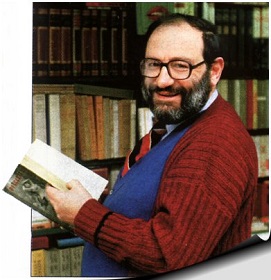
 De Italiaanse schrijver Umberto Eco werd geboren op 5 januari 1932 in Allasandria. Zie ook alle tags voor Umberto Eco op dit blog.

Uit: The Prague Cemetery (Vertaald door Richard Dixon)

“A passerby on that gray morning in March 1897, crossing, at his own risk and peril, Place Maubert, or the Maub, as it was known in criminal circles (formerly a center of university life in the Middle Ages, when students flocked there from the Faculty of Arts in Vicus Stramineus, or Rue du Fouarre, and later a place of execution for apostles of free thought such as Étienne Dolet), would have found himself in one of the few spots in Paris spared from Baron Haussmann’s devastations, amid a tangle of malodorous alleys, sliced in two by the course of the Bièvre, which still emerged here, flowing out from the bowels of the metropolis, where it had long been confined, before emptying feverish, gasping, and verminous into the nearby Seine. From Place Maubert, already scarred by Boulevard Saint-Germain, a web of narrow lanes still branched off, such as Rue Maître-Albert, Rue Saint-Séverin, Rue Galande, Rue de la Bûcherie, Rue Saint-Julien-le-Pauvre, as far as Rue de la Huchette, littered with filthy hotels generally run by Auvergnat hoteliers of legendary cupidity, who demanded one franc for the first night and 40 centimes thereafter (plus 20 sous if you wanted a sheet).
If he were to turn into what was later to become Rue Sauton but was then still Rue d’Amboise, about halfway along the street, between a brothel masquerading as a brasserie and a tavern that served dinner with foul wine for two sous (cheap even then, but all that was affordable to students from the nearby Sorbonne), he would have found an impasse, or blind alley, which by that time was called Impasse Maubert, but up to 1865 had been called Cul-de-sac d’Amboise, and years earlier had housed a tapis-franc (in underworld slang, a tavern, a hostelry of ill fame, usually run by an ex-convict, and the haunt of felons just released from jail), and was also notorious because in the 18th century there had stood here the laboratory of three celebrated women poisoners, found one day asphyxiated by the deadly substances they were distilling on their stoves.”


Umberto Eco (Allasandria, 5 januari 1932)

Lees verder “Umberto Eco, Paul Ingendaay, Ngũgĩ wa Thiong’o, László Krasznahorkai, Friedrich Dürrenmatt”

Luisa Futoransky, Forough Farokhzad, Yevgeni Popov, William Snodgrass

De Argentijnse dichteres en schrijfster Luisa Futoransky werd geboren op 5 januari 1939 in Buenos Aires. Zie ook alle tags voor Luisa Futoransky op dit blog.


Tatoong

Golden buddhas of Tatoong with their centers of balance in flames
buddhas with guardians strumming wise mandolins to help them sleep

meanwhile the interpreter strives before a shining trinity
explaining that the figures on the sides are the secretaries
but without specifying as to what faction, which cosmic party
what paperwork they have to fill out to pass from the blue
to the orange of illumination

how many incarnations at the mercy of the elements in the shacks of Yunnan
how much silk and manure and horse sweat
and yak’s milk so that the gust of silence and wind
causes me to doubt my light and shadow

but the Japanese are filming murmured sequences
of martial arts at the feet of the Contemplator
and after we go off in our buses to empty ourselves
of more dinners, more temples, more purchases

what do these tens of thousands of buddhas do at night
to be so happy and composed the next morning?


Circery

I changed
these men into little poems
and confined them to books and journals
because, nowadays,
it’s not worth
going about finding them acorns
or daisies for holy days.

As for Ulysses, the guy from Ithaca,
tell him my oven’s already full
of asps, toads
and mastodons like him.
Besides, the (circus) game
of resurrections
is no longer my specialty.
Now I weave.
Believe me.


Vertaald door Jason Weiss


Luisa Futoransky (Buenos Aires, 5 januari 1939)

Lees verder “Luisa Futoransky, Forough Farokhzad, Yevgeni Popov, William Snodgrass”

Pierre Seghers, Fred Wander, Humbert Wolfe, Stella Gibbons, Terenci Moix

De Franse dichter en uitgever Pierre Seghers werd geboren op 5 januari 1906 in Parijs. Zie ook alle tags voor Pierre Seghers op dit blog.


La vie

Ainsi passe la vie, de l’un à l’autre va
Se fait et se défait, s’invente, se prolonge
S’endort dans des maisons que bâtissent les songes
Se rêve et s’éveillant ne se reconnaît pas

Ainsi passe la vie. Quand le soleil va naître
Il partage déjà ses hautes graminées
Ses nuages, ses fleurs, ses défuntes années
Son devenir de feux passant dans nos fenêtres

Ainsi passe la vie. On entend des bourdons
Tracer dans la lumière un sillage illusoire
Pour lui seul le poète écoute ses histoires
Et plonge au cœur des fleurs pour apprendre leur nom

Ainsi passe la vie à surprendre un langage
Inaudible et pourtant comme l’herbe vivant
De l’éternel azur qui n’est fait que de vents
De silence, d’attente, et d’autres paysages


Pierre Seghers (5 januari 1906 – 4 november 1987)
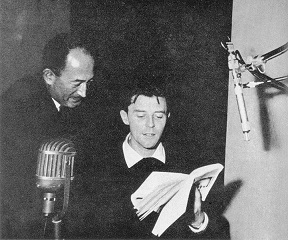
Hier met de acteur Gerard Philipe die zijn gedichten leest, 1955

Lees verder “Pierre Seghers, Fred Wander, Humbert Wolfe, Stella Gibbons, Terenci Moix”

Emil Zopfi, David Berman, Gao Xingjian, Fernand Handtpoorter, Doris Kearns Goodwin

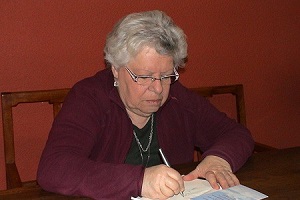
De Zwitserse schrijver Emil Zopfi werd geboren op 4 januari 1943 in Wald. Zie ook alle tags voor Emil Zopfi op dit blog.

Uit: Spitzeltango

„Robert stand neben dem Gepäckband an der Kurve, wo die Koffer und Taschen der Flugpassagiere aus der Tiefe heraufbefördert wurden und auf die schwarzen Gummischuppen fielen. Er sah zu, wie die halbmondförmigen Schuppen ineinandergriffen, sich verdrehten und dann wieder ausrichteten. Das Band lief schon eine Weile leer, dann stoppte es, die Anzeige am Bildschirm erlosch. Sein Koffer war nicht angekommen.
Die letzten Passagiere seines Flugs schoben ihre Trolleys zum Ausgang. Durch die Glasfront sah er Menschen in der Ankunftshalle, die sich umarmten und küssten. Zwei Kinder schwenkten Fähnchen. Weisses Kreuz auf rotem Grund. «Welcome to Switzerland», stand in schwarzer Schrift auf einer Wand aus Chromstahl.
Der Flug aus Chicago hatte in Frankfurt den Anschluss verpasst, Sturm über dem Atlantik. Man hatte ihm versichert, sein Koffer werde nach Zürich umgeleitet. Er schritt durch die Halle, wo die Passagiere anderer Flüge ihr Gepäck von den Bändern hoben und auf Trolleys türmten. Skiausrüstungen, Rucksäcke, ein Cello, ein Teddybär, der auf einer mit Bindfaden umschnürten Schachtel sass.
Im Fundbüro «Lost and Found» sass eine Afrikanerin hinter einem der Bildschirme, das schwarzglänzende Haar in dicht am Kopf anliegende Zöpfchen geflochten. «May I help you, Sir?»
Ihr Englisch klang kantig, so wie Schweizer sprechen. Im Midwestern-Slang, den er sich seit langem angewöhnt hatte, erklärte Robert, dass sein Koffer nach der verspäteten Ankunft in Frankfurt umgeleitet worden sei. Zuverlässig auf den Anschlussflug, habe man versichert. Er schob der Frau das Flugticket mit dem angeklebten Gepäckschein hin. Sie warf einen Blick darauf, tippte einige Daten in ihre Tastatur, legte ihre Stirn in Falten. Dann telefonierte sie, ihre rauchige Stimme und die Zürcher Mundart befremdeten ihn
.“


Emil Zopfi (Wald, 4 januari 1943)

Lees verder “Emil Zopfi, David Berman, Gao Xingjian, Fernand Handtpoorter, Doris Kearns Goodwin”

Andreas Altmann, Max Eastman, Daniel Mursa, Jacob Grimm, Markus Seidel

De Duitse dichter en schrijver Andreas Altmann werd geboren in Hainichen (Sachsen) op 4 januari 1963. Zie ook alle tags voor Andreas Altmann op dit blog. Zie ook mijn blog van 8 juni 2009.


EIN FISCHREIHER STEHT AUF einer tot
holzinsel im teich unter den regengeräuschen
der pappeln als wäre er aus stein. der himmel
ist einsilbig blau. an unsichtbaren bändern
sind die töne der vögel aufgefädelt. sie singen
zwischen den hohen bäumen, bleiben hängen,
reißen sich los. unzählige kohlweißlinge flattern
im lavendelrausch. der sommer ist ein schlafendes
tier im weißen fell, das im eigenen schatten liegt.
manchmal nachts wechselt es seinen platz. dann
kann es regen geben. ich hätte dir seine spuren
gezeigt. auf dem wasser bilden sich wellen,
die an dich erinnern. sie sind grün und bewegen
sich schnell. der reiher ist gesunken. himmel
hängt an seinem schatten.


Andreas Altmann (Hainichen, 4 januari 1963)

Lees verder “Andreas Altmann, Max Eastman, Daniel Mursa, Jacob Grimm, Markus Seidel”

Svend Fleuron, Maurice Mac-Nab, Mite Kremnitz, Rajvinder Singh

De Deense schrijver Svend Fleuron werd geboren op 4 januari 1874 op het landgoed Katrinedal bij Keldby. Zie ook alle tags voor Svend Fleuron op dit blog.

Uit: Kittens : A Family Chronicle (Vertaald door David Pritchard)

“On the whole, the babies had grown. True, their coats were not quite in order, for the fur still stuck out patchily all over their bodies; but the hair was there right enough, and the colours too . . . the white was as white as day, and the black as black as night; even the cross stripes on the grey kitten showed up plainly.
Their hindquarters alone remained noticeably undeveloped; they were still quite conical and stunted, and jerked up stiffly and clumsily with every movement of the body. It would be a long time before that part attained perfection.
The imps were still far from being active and graceful! They reeled and rolled as they crawled over the lumps of touchwood; they could not jump at all, indeed they could scarcely walk. It seemed as if, once having acquired eyes, they had neglected everything else. They used them incessantly . . . and were never tired of looking and looking!
They had no opportunity to gormandize. They drank greedily, and soon sucked old Grey Puss dry. Then she shook them off and closed the milk-spring. This she effected by rolling herself into a ball and pressing her forepaws tightly to her breasts—and however much the little ones exerted themselves to widen the opening with their snouts so as to get inside and continue drinking, they never succeeded.
Then they had revenge by clambering up and nestling on her back and neck; where they lay licking their chops.”

 
<Svend Fleuron (4 januari 1874 – 5 april 1966)
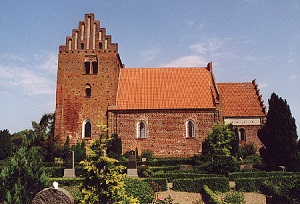
De kerk van Keldby op het eiland Mön

Lees verder “Svend Fleuron, Maurice Mac-Nab, Mite Kremnitz, Rajvinder Singh”

Peter Ghyssaert, Alex Wheatle, J.R.R. Tolkien, Marie Darrieussecq, Cicero, Drieu la Rochelle, Henry Handel Richardson

De Vlaamse dichter Peter Ghyssaert werd geboren op 3 januari 1966 te Wilrijk. Zie ook alle tags voor Peter Ghyssaert op dit blog.


Opa

Opa is duizendjarig
en van glas, lijkt het.
Stoot je hem aan, dan begint er
een fijn koperen mechaniek te zingen
in zijn borst: ik heb het warm,
te koud, zit op de tocht.

Zijn eigen handen
zijn een vale nevel voor zijn ogen.
Hij denkt dat bomen brancadiers zijn
– ’s winters wit, altijd beweeglijk –
en morst dagelijks van angst.

’s Avonds leggen wij zijn beweegbare delen
in hun houten kistjes. Maar iemand
maakt zoek, verlegt wat, en bij dageraad
staat opa’s hoofd te schreien
aangebrand van ochtenddauw,
zo eenzaam op de schoorsteenmantel.


Kind in de storm

Ze heeft een regendruppel in haar hand,
een klein gezicht
maar slecht gemaakt. Ze wrijft hem droog.

Het waait onder haar vliesdun kleed;
ze vangt, verkleumd, een nieuw gezicht
en spreekt ertegen: lief
is klein en klein is
overboord voorgoed verloren.

Wat ze heeft dat mag ze houden:
mager haar
en wit gezicht van louter wind;
een vuist zo rond
of daar een angst begint.

Eén dunne rug onder de storm
– een juk onder een juk –
twee schouderbladen
om ter bangst.


Peter Ghyssaert (Wilrijk, 3 januari 1966)

Lees verder “Peter Ghyssaert, Alex Wheatle, J.R.R. Tolkien, Marie Darrieussecq, Cicero, Drieu la Rochelle, Henry Handel Richardson”

Jimmy Santiago Baca, Christopher Durang, David Shapiro, André Aciman, Nyk de Vries, Hans Herbjørnsrud, Anton van Duinkerken

De Amerikaanse dichter en schrijver Jimmy Santiago Baca werd geboren in Santa Fe, New Mexico, op 2 januari 1952. Zie ook alle tags voor Jimmy Santiago Baca op dit blog.


Cloudy Day

It is windy today. A wall of wind crashes against,
windows clunk against, iron frames
as wind swings past broken glass
and seethes, like a frightened cat
in empty spaces of the cellblock.

In the exercise yard
we sat huddled in our prison jackets,
on our haunches against the fence,
and the wind carried our words
over the fences,
while the vigilant guard on the tower
held his cap at the sudden gust.

I could see the main tower from where I sat,
and the wind in my face
gave me the feeling I could grasp
the tower like a cornstalk,
and snap it from its roots of rock.

The wind plays it like a flute,
this hollow shoot of rock.
The brim girded with barbwire
with a guard sitting there also,
listening intently to the sounds
as clouds cover the sun.

I thought of the day I was coming to prison,
in the back seat of a police car,
hands and ankles chained, the policeman pointed,
“See that big water tank? The big
silver one out there, sticking up?
That’s the prison.”

And here I am, I cannot believe it.
Sometimes it is such a dream, a dream,
where I stand up in the face of the wind,
like now, it blows at my jacket,
and my eyelids flick a little bit,
while I stare disbelieving. . . .

The third day of spring,
and four years later, I can tell you,
how a man can endure, how a man
can become so cruel, how he can die
or become so cold. I can tell you this,
I have seen it every day, every day,
and still I am strong enough to love you,
love myself and feel good;
even as the earth shakes and trembles,
and I have not a thing to my name,
I feel as if I have everything, everything.


Jimmy Santiago Baca (Santa Fe, 2 januari 1952)

Lees verder “Jimmy Santiago Baca, Christopher Durang, David Shapiro, André Aciman, Nyk de Vries, Hans Herbjørnsrud, Anton van Duinkerken”