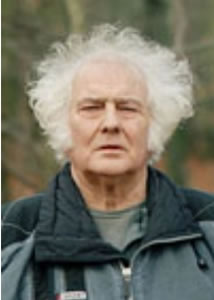
Georg-Büchner-Preis voor Friedrich Christian Delius

Georg-Büchner-Preis voor Friedrich Christian Delius


Gisteren heeft de Duitse schrijver Friedrich Christian Deliusin Darmstadt de Georg-Büchner-Preis in ontvangst genomen. De Georg-Büchner-Preis is de belangrijkste literaire prijs in Duitsland en het Duitse taalgebied. De Deutsche Akademie für Sprache und Dichtung is verantwoordelijk voor de toekenning. Friedrich Christian Deliuswerd geboren in Rome op 13 februari 1943.Zie ook alle tags voor Friedrich Christian Deliusop dit blog.

Uit: Die Frau, für die ich den Computer erfand

“An einem heißen Julitag 1994 entdeckte ich auf der Terrasse des Gasthauses “Burg Hauneck”, auf einer abgelegenen Höhe des hessischen Berglands, den alten Herrn, den ich seit Jahren zu sprechen suchte. Obwohl wir verabredet waren, glaubte ich im ersten Moment an eine Erscheinung: so weiß leuchtete sein Haar im Spätnachmittagslicht. Ich trat näher, schaltete das Aufnahmegerät ein, begrüßte ihn und fand später folgende Sätze auf sieben Tonbändern gespeichert:

(Zwischen Oberstoppel und Unterstoppel)

Ja, der bin ich. Aber sprechen Sie meinen Namen nicht so ehrfürchtig aus, junger Mann! Ich bin hier in Zivil, und Sie hoffentlich auch … Setzen Sie sich! Nein, neben mich, damit Sie was von der Landschaft haben. Außerdem hör ich besser auf dem linken Ohr. Ich hab Ihnen ja gesagt, Sie werden mich auf Anhieb finden, so viele Doppelgänger hab ich nicht, jedenfalls nicht auf der Höhe zwischen Oberstoppel und Unterstoppel … Ganz meinerseits. Ich freue mich, Sie wiederzusehen. Bitte, nehmen Sie Ihr Gert aus der Tasche, legen Sie es auf den Tisch, ich hab keine Angst vor diesen Maschinchen … Dafür sind wir ja noch gut, wir Alten, dass wir die Mikrofone füttern, die unersättlichen Raubtiere … Sie haben auch so ein winziges. Früher, die großen fand ich viel schnittiger, da kam man sich gleich irgendwie bedeutend vor … Sie haben Ihr Zimmer bezogen? Alles in Ordnung? … Ja, es ist einfach, aber solide, ich mag diese einfachen Landgasthöfe.

Das Schwimmbad im Keller hätten sie sich sparen können meinetwegen, Schwimmen auf dem Stoppelsberg, das passt irgendwie nicht, oder? … Haben Sie die Hitze gut Überstanden? … Ich hab uns den Ecktisch reservieren lassen, mein Stammplatz, bin oft hier oben. Ist doch schön, der weite Blick in die Rhön hinein, auf die spitzen Berge, direkt auf das Hessische Kegelspiel … Sehr gut, ich sehe, Sie haben keine Frage im Gesicht, was das nun wieder sein soll, das Hessische Kegelspiel. Schon die Hessen aus Frankfurt oder Wiesbaden, keine Ahnung haben sie von den Schönheiten der Vorderrhön, von diesen Basaltkuppeln, den eleganten Basaltkuppeln, erloschne Vulkane, einer neben dem andern. Fast so anmutig wie die Hügel in der Toskana, finden Sie nicht? … Ich weiß, das hab ich nicht vergessen … Trotzdem, ich gratuliere, der Test mit dem Kegelspiel ist bestanden. Heimatkunde, das ist immer ein Pluspunkt bei mir. Auch das glaubt mir keiner … Aber nicht dass Sie denken, ich hätte Sie nur deswegen hierher auf den Stoppelsberg eingeladen, weil Sie die Gegend kennen … Das werd ich Ihnen noch verraten, später, weshalb Sie heute neben mir sitzen und kein anderer …“
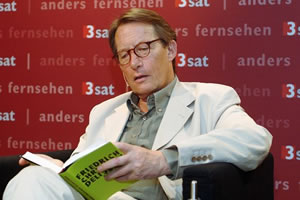
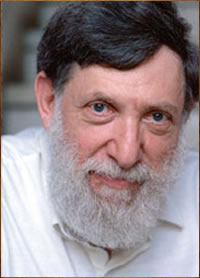
Friedrich Christian Delius (Rome, 13 februari 1943)

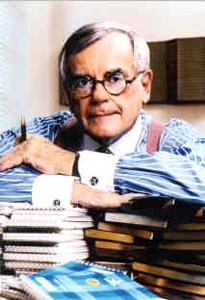
Harald Hartung, Matthias Zschokke, Claire Goll, Mohsen Emadi, Zbigniew Herbert

De Duitse schrijver, dichter en literatuurwetenschapper Harald Hartung werd geboren op 29 oktober 1932 in Heme. Zie ook mijn blog van 29 oktober 2010 en eveneens alle tags voor Harald Hartung op dit blog.


Vergessene Zeile

Gestern sehr früh fiel mir eine Zeile ein
Sie handelte vom Tod und begann Der Tod…
dann folgte etwas wie eine Behauptung

Sie schien mir gut und tröstete mich zugleich
so daß ich liegen blieb und mein Glück genoß

Dann stand ich auf Der Tod ist … probierte ich
und hatte vergessen wie es weiterging

Der Tod ist eine vergessene Zeile.


 Mantegnas Sebastian

Ich zählte alle Pfeile
die er an seinem Leib trägt

die Stellen wo sie eintreten
die Stellen wo sie austreten
auch die verdeckten

und vergaß über meinem Zählen
den eigenen Schmerz

Ich trat hinaus in das Licht des Kanals
Zwischen Schmutz
und dümpelnden Plastikflaschen

trieb bäuchlings ein Teddybär
Da trat mir das Salz ins Aug


 Blick in den Hof

Während es anfängt zu schneien
schaukelt das Mädchen im Hof
schaukelt sich tief
ins wachsende weiße Dunkel
Glück ist ein Sekundenschlaf
Ich schaue auf, die leere Schaukel
schwingt noch ein wenig nach


Harald Hartung (Herne, 29 oktober 1932)

Lees verder “Harald Hartung, Matthias Zschokke, Claire Goll, Mohsen Emadi, Zbigniew Herbert”

Dominick Dunne, Aleksandr Zinovjev, Georg Engel, Jean Giraudoux, André Chénier

De Amerikaanse schrijver, journalist en filmproducent Dominick Dunne werd geboren 29 oktober 1925 in Hartford, Connecticut. Zie ook alle tags voor Dominick Dunne op dit blog.

Uit: Another City, Not My Own

„Certainly, there are enough references to his obliteration in his journal in the months before he was found dead in the media room of his country house in Prud’homme, Connecticut, where he had been watching the miniseries of one of his novels, A Season in Purgatory. The book was about a rich young man who got away with murder because of the influence of his prominent and powerful father. Getting away with murder was a relentless theme of Gus Bailey’s. He was pitiless in his journalistic and novelistic pursuit of those who did, as well as of those in the legal profession who created the false defenses that often set their clients free. That book, the miniseries of which he was watching, had brought Gus Bailey and the unsolved murder in Greenwich, Connecticut, which, to avoid a libel suit, he had renamed Scarborough Hill, a great deal of notoriety at the time of its publication, resulting in the reopening of the murder case by the police. Gus had fervently believed that the case remained unsolved because the police had been intimidated by the power and wealth of the killer’s family, which extended all the way to the highest office in the land.
“It was exactly the same thing in the Woodward case,” said Gus, who had written an earlier novel about a famous society shooting in the aristocratic Woodward family on Long Island in the fifties called The Two Mrs. Grenvilles. “The police were simply outdazzled by the grandeur of Elsie, whom I called Alice Grenville, and Ann Woodward got away with shooting her husband.”
As always, when Gus’s passions were involved in his writing, he ruffled feathers. Powerful families became upset with him. He created enemies.
“You seem to have annoyed a great many very important people,” said Gillian Greenwood of the BBC, as a statement not a question, in the living room of Gus Bailey’s New York penthouse, where she was interviewing him on camera for a documentary on his life called The Trials of Augustus Bailey“.


Dominick Dunne (29 oktober 1925 – 26 augustus 2009)

Lees verder “Dominick Dunne, Aleksandr Zinovjev, Georg Engel, Jean Giraudoux, André Chénier”

Evelyn Waugh, JMH Berckmans, Uwe Tellkamp

De Britse schrijver Evelyn Waugh werd geboren in Londen op 28 oktober 1903. Zie ook mijn blog van 28 oktober 2010 en eveneens alle tags voor Evelyn Waugh op dit blog.


Uit: Brideshead Revisited

„I thanked him.
“Yes, it’s indulgent of me, but it all comes out of capital, you know. . . . I suppose this is the time I should give you advice. I never had any myself except once from your cousin Alfred. Do you know in the summer before I was going up, your cousin Alfred rode over to Boughton especially to give me a piece of advice? And do you know what that advice was? ‘Ned,’ he said, ’there’s one thing I must beg of you. Always wear a tall hat on Sundays during term. It is by that, more than anything, that a man is judged.’ And do you know,” continued my father, snuffling deeply, “I always did? Some men did, some didn’t. I never saw any difference between them or heard it commented on, but I always wore mine. It only shows what effect judicious advice can have, properly delivered at the right moment. I wish I had some for you, but I haven’t.”


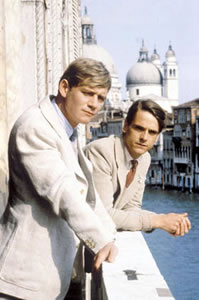
Anthony Andrews en Jeremy Irons als Sebastian en Charles

In de tv-serie Brideshead Revisited uit 1981


My cousin Jasper made good the loss; he was the son of my father’s elder brother, to whom he referred more than once, only half facetiously, as “the Head of the Family”; he was in his fourth year and, the term before, had come within appreciable distance of getting his rowing blue; he was secretary of the Canning and president of the J.C.R. – a considerable person in college. He called on me formally during my first week and stayed to tea; he ate a very heavy meal of honey-buns, anchovy toast and Fuller’s walnut cake, then he lit his pipe and, lying back in the basket-chair, laid down the rules of conduct which I should follow; he covered most subjects; even to-day I could repeat much of what he said, word for word. “. . . You’re reading History? A perfectly respectable school. The very worst is English Literature and the next worst is Modern Greats. You want either a first or a fourth. There is no value in anything between. Time spent on a good second is time thrown away. You should go to the best lectures – Arkwright on Demosthenes for instance – irrespective of whether they are in your school or not. . . . Clothes. Dress as you do in a country house. Never wear a tweed coat and flannel trousers – always a suit. And go to a London tailor; you get better cut and longer credit. . . . Clubs. Join the Carlton now and the Grid at the beginning of your second year. If you want to run for the Union – and it’s not a bad thing to do – make your reputation outside first, at the Canning or the Chatham, and begin by speaking on the paper. . . . Keep clear of Boar’s Hill . . .” The sky over the opposing gables glowed and then darkened; I put more coal on the fire and turned on the light, revealing in their respectability his London-made plus fours and his Leander tie. . . . “Don’t treat dons like schoolmasters; treat them as you would the vicar at home. . . . You’ll find you spend half your second year shaking off the undesirable friends you made in your first. . . . Beware of the Anglo-Catholics – they’re all sodomites with unpleasant accents. In fact, steer clear of all the religious groups; they do nothing but harm. . . .”


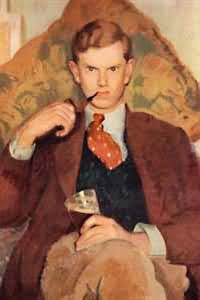
Evelyn Waugh (28 oktober 1903 – 10 april 1966)

Portret door Henry Lamb, 1929

Lees verder “Evelyn Waugh, JMH Berckmans, Uwe Tellkamp”

John Hollander, Al Galidi, Johannes Daniel Falk, Karl Philipp Conz

De Amerikaanse dichter en criticus John Hollander werd geboren op 28 oktober 1929 in New York. Zie ook mijn blog van 28 oktober 2009 en ook mijn blog van 28 oktober 2010


Adam’s Task
“And Adam gave names to all cattle, and to the fowl of the air, and to every beast of the field. . . ”
– Gen. 2:20

Thou, paw-paw-paw; thou, glurd; thou, spotted
Glurd; thou, whitestap, lurching through
The high-grown brush; thou, pliant-footed,
Implex; thou, awagabu.

Every burrower, each flier
Came for the name he had to give:
Gay, first work, ever to be prior,
Not yet sunk to primitive.

Thou, verdle; thou, McFleery’s pomma;
Thou; thou; thou — three types of grawl;
Thou, flisket, thou, kabasch; thou, comma-
Eared mashawok; thou, all; thou, all.

Were, in a fire of becoming,
Laboring to be burned away,
Then work, half-measuring, half-humming,
Would be as serious as play.

Thou, pambler; thou, rivarn; thou, greater
Wherret, and thou, lesser one;
Thou, sproal; thou, zant; thou, lily-eater.
Naming’s over. Day is done.

John Hollander (New York, 28 oktober 1929)

Lees verder “John Hollander, Al Galidi, Johannes Daniel Falk, Karl Philipp Conz”

Dylan Thomas, Sylvia Plath, Nawal el Saadawi

De Engelse dichter Dylan Thomas werd geboren op 27 oktober 1914 in Swansea in Wales. Zie ook mijn blog van 27 oktober 2010 en eveneens alle tags voor Dylan Thomas op dit blog.


Being But Men

Being but men, we walked into the trees
Afraid, letting our syllables be soft
For fear of waking the rooks,
For fear of coming
Noiselessly into a world of wings and cries.

If we were children we might climb,
Catch the rooks sleeping, and break no twig,
And, after the soft ascent,
Thrust out our heads above the branches
To wonder at the unfailing stars.

Out of confusion, as the way is,
And the wonder, that man knows,
Out of the chaos would come bliss.

That, then, is loveliness, we said,
Children in wonder watching the stars,
Is the aim and the end.

Being but men, we walked into the trees


A Saint About To Fall

A saint about to fall,
The stained flats of heaven hit and razed
To the kissed kite hems of his shawl,
On the last street wave praised
The unwinding, song by rock,
Of the woven wall
Of his father’s house in the sands,
The vanishing of the musical ship-work and the chucked bells,
The wound-down cough of the blood-counting clock
Behind a face of hands,
On the angelic etna of the last whirring featherlands,
Wind-heeled foot in the hole of a fireball,
Hymned his shrivelling flock,
On the last rick’s tip by spilled wine-wells
Sang heaven hungry and the quick
Cut Christbread spitting vinegar and all
The mazes of his praise and envious tongue were worked in flames and shells.

Glory cracked like a flea.
The sun-leaved holy candlewoods
Drivelled down to one singeing tree
With a stub of black buds,
The sweet, fish-gilled boats bringing blood
Lurched through a scuttled sea
With a hold of leeches and straws,
Heaven fell with his fall and one crocked bell beat the left air.
O wake in me in my house in the mud
Of the crotch of the squawking shores,
Flicked from the carbolic city puzzle in a bed of sores
The scudding base of the familiar sky,
The lofty roots of the clouds.
From an odd room in a split house stare,
Milk in your mouth, at the sour floods
That bury the sweet street slowly, see
The skull of the earth is barbed with a war of burning brains and hair.

Strike in the time-bomb town,
Raise the live rafters of the eardrum,
Throw your fear a parcel of stone
Through the dark asylum,
Lapped among herods wail
As their blade marches in
That the eyes are already murdered,
The stocked heart is forced, and agony has another mouth to feed.
O wake to see, after a noble fall,
The old mud hatch again, the horrid
Woe drip from the dishrag hands and the pressed sponge of the forehead,
The breath draw back like a bolt through white oil
And a stranger enter like iron.
Cry joy that hits witchlike midwife second
Bullies into rough seas you so gentle
And makes with a flick of the thumb and sun
A thundering bullring of your silent and girl-circled island.


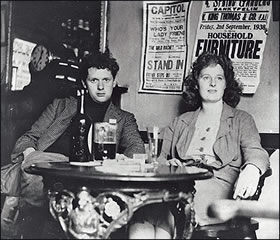
Dylan Thomas (27 oktober 1914 – 9 november 1953)
Hier met zijn vrouw Caitlin

Lees verder “Dylan Thomas, Sylvia Plath, Nawal el Saadawi”

Zadie Smith, Enid Bagnold, Albrecht Rodenbach, Fran Lebowitz, Reza Allamehzadeh, Kazimierz Brandys

De Engelse schrijfster Zadie Smith werd geboren op 27 oktober 1975 in Londen. Zie ook alle tags voor Zadie Smith op dit blog.

Uit: Changing My Mind

„My father had few enthusiasms, but he loved comedy. He was a comedy nerd, though this is so common a condition in Britain as to be almost not worth mentioning. Like most Britons, Harvey gathered his family around the defunct hearth each night to watch the same half-hour comic situations repeatedly, in reruns and on video. We knew the “Dead Parrot” sketch by heart. We had the usual religious feeling for Monty Python’s Life of Brian. If we were notable in any way, it was not in kind but in extent. In our wood-cabinet music center, comedy records outnumbered the Beatles. The Goons’ “I’m Walking Backwards for Christmas” got an airing all year long. We liked to think of ourselves as particular, on guard against slapstick’s easy laughs — Benny Hill was beneath our collective consideration. I suppose the more precise term is “comedy snobs.”

Left unchecked, comedy snobbery can squeeze the joy out of the enterprise. You end up thinking of comedy as Hemingway thought of narrative: structured like an iceberg, with all the greater satisfactions fathoms underwater, while the surface pleasure of the joke is somehow the least of it. In my father, this tendency was especially pronounced. He objected to joke merchants. He was wary of the revue-style bonhomie of the popular TV double act Morecambe and Wise and disapproved of the cheery bawdiness of their rivals, the Two Ronnies. He was allergic to racial and sexual humor, to a far greater degree than any of the actual black people or women in his immediate family. Harvey’s idea of a good time was the BBC sitcom Steptoe and Son, the grim tale of two mutually antagonistic “rag-and-bone” men who pass their days in a Beckettian pile of rubbish, tearing psychological strips off each other. Each episode ends with the son (a philosopher manque, who considers himself trapped in the filthy family business) submitting to a funk of existential despair. The sadder and more desolate the comedy, the better Harvey liked it.“


Zadie Smith (Londen, 27 oktober 1975)

Lees verder “Zadie Smith, Enid Bagnold, Albrecht Rodenbach, Fran Lebowitz, Reza Allamehzadeh, Kazimierz Brandys”

Marja Pruis


De Nederlandse schrijfster en journaliste Marja Pruis werd geboren in Amsterdam op 26 oktober 1959. Marja Pruis studeerde Nederlands en Algemene Taalwetenschap aan de Universiteit van Amsterdam. Daarna ging zij aan de slag als literatuurredactrice bij De Groene Amsterdammer, waar zij sinds 2006 deel uitmaakt van de redactie. Sinds 1999 schrijft zij romans. Haar eerste roman, Bloem (2002), was een experimentele, impressionistische novelle over lust en seks, en over de afstand tussen twee mensen in een liefdesrelatie. In 2005 verscheen haar tweede roman De Vertrouweling. Deze leverde Pruis nominaties op voor de AKO Literatuurprijs en de Anna Bijns Prijs. De meest recente roman van Pruis, Atoomgeheimen, verscheen in 2008. Atoomgeheimen kwam op de longlist van de AKO Literatuurprijs. In 2011 heeft Pruis het literatuurkritische werk Kus me, straf me uitgegeven. Kus me, straf me haalde de shortlist van AKO Literatuurprijs.


Uit: Bloem


Seks, seks, seks.
Eigenlijk denkt Bloem wat anders, maar dit staat wel zo netjes. Ze kon het spel niet anders spelen dan door zich klein te maken, dan door te denken aan het meisje dat ze eens op televisie had gezien, dat met een zwaar Gronings accent zei dat ze dat ook welns wilde probeern, vastbindn en zo. Ze liet hem met een sigaret langzaam langs de binnenkant van haar dijen omhooggaan tot ze het voelde schroeien. Ze liet zich bekijken, om en om rollen. Als ze bij de bakker stond leek alles ervoor gemaakt om bij haar naar binnen te proppen, van harde puntjes tot kaasstengels, een handjevol graag. Ze ging naar de dokter omdat ze pijn in haar buik had en was bang dat de dokter iets zou uitroepen als hij tussen haar benen zou kijken, maar die vertrok geen spier en schreef alleen het recept voor een zalfje uit dat het schrijnen minder moest maken, en een antibioticum tegen blaasontsteking. Ze voelde zich een wandelende trechter. Het was alsof een gulzig zuigende slang zich van mond tot mond in haar had genesteld en voortdurend meer wilde. Meer, meer, meer. Ze kreeg ook meer, meer, meer, waardoor ze soms met verbazing op straat, in de trein, in de supermarkt, op het schoolplein, om zich heen keek en zich afvroeg in welke dorheid die mensen zich staande moesten zien te houden. Ze wist niet hoe gauw ze zich thuis op bed moest laten vallen, op haar buik, met haar hand tussen haar benen, met haar telefoon tussen haar benen, met de hele groentela tussen haar benen, en het kratje bier niet te vergeten. Ze was vol, maar het kon altijd nog voller. De splinters zaten in haar handpalmen, opgedroogd sperma in haar hals, maar het kon nog meer.“


Marja Pruis (Amsterdam, 26 oktober 1959)

Jan Wolkers, Andrew Motion, Stephen L. Carter, Karin Boye

De Nederlandse dichter, schrijver en beeldend kunstenaar Jan Wolkers werd geboren in Oegstgeest op 26 oktober 1925. Zie ook mijn blog van 26 oktober 2010 en eveneens alle tags voor Jan Wolkers op dit blog.


Uit: Langpootmuggen

„Gek van het licht zeilen ze door het open raam naar binnen. Hun achterpoten slierten slap achter hun lichamen aan, willoos laten ze zich meevoeren. Maar hun voorpoten zwemmen begerig door de ruimte, omarmen schokkend het licht. Dan tuimelen ze verblind omlaag en blijven trillend op de grond zitten tot ze weer omhoog kunnen vliegen om in een laatste waanzin het gloeiende glas van de lamp te omhelzen. Met verbrande poten en vleugels vallen ze als een dor reepje boombast naar beneden.

– Ik moet het raam sluiten, mompelt hij.

Hij loopt naar het raam en sluit het.

Het zijn schepselen Gods, denkt hij. Ik mag ze niet willens en wetens door het executiepeloton van 150 Watt laten ombrengen. Jeltsma, ja, die vuilak. Die stak, op de verjaardag van Mies nog wel, de stekker van het elektrisch straalkacheltje in het stopkontakt. En maar op zijn dronken poten door de kamer waggelen. In de ene hand het brandende kacheltje en in de andere een stoel. En overal waar er een zat ging hij op de stoel staan en drukte het gloeiende deksel tegen het plafond. Het leek wel of er menselijk geluid uit die hete kabine kwam. Een deernis-wekkend gefluister dat overging in gesis van pijn. Ik moest ineens kotsen. Met samengeklemde kaken rende ik naar de W.C., maar terwijl ik de bril omhoog klapte zag ik dat er een motvisje in de pot liep. Ik kon niet op dat beestje kotsen en het met mijn bedorven eten doortrekken. Ik kotste naast de W.C. en met het maagzuur druipend van mijn kin zei ik tegen dat diertje:

– Ben jij zo laat nog aan de wandel, klein druppeltje kwik, voortschuivend traantje. Je kan hier niet meer uit, hè. Ik zal je helpen. Voordat die goorling komt en je boven op je kop schijt.

En ik pakte een W.C.-papiertje en liet hem er op lopen en zette hem

[p. 42]

op de grond.

– Ga maar gauw naar je moeder toe, zei ik.

Maar toen kwam Mies en die zei:

– Hoe heb ik het nou met je Johan, je zit naast de W.C. te kotsen. Je ziet alles dubbel.

Er was maar één motvisje, zei ik.

Ach, jij, je bent hartstikke teut, zei ze.

Ze trok me overeind en veegde in de keuken mijn gezicht af met een natte punt van de handdoek.

Toen ik de kamer weer binnenkwam had Jeltsma een krant op de tafel uitgespreid en daarboven keerde hij het straalkacheltje om. De krant lag vol afgebrande lucifers, kromgetrokken door de hitte.

– Willem Jeltsma, zei ik langzaam en nadrukkelijk, dat had je niet mogen doen. Je kan zelf nog geen spijker in de muur slaan, laat staan een langpootmug maken. God is duizenden jaren bezig geweest met die beesten. Ontwerpen… ontwerpen en nog eens helemaal opnieuw beginnen. Tot hij zag dat het goed was. Je kan het zien aan de vleugeltjes. Ze zijn van allemaal kleine stukjes aan elkaar gezet. Tot ze groot genoeg waren om te vliegen. En toen zei God:

Gaat heen en vermenigvuldigt u!

Maar die Jeltsma begint me straal in mijn gezicht uit te lachen.“


Jan Wolkers (26 oktober 1925 – 19 oktober 2007)

Lees verder “Jan Wolkers, Andrew Motion, Stephen L. Carter, Karin Boye”

Trevor Joyce, Pat Conroy, Ulrich Plenzdorf, Sorley MacLean, Andrej Bely

De Ierse dichter Trevor Joyce werd geboren op 26 oktober 1947 in Dublin. Zie ook mijn blog van 26 oktober 2008 en ook mijn blog van 26 oktober 2009 en ook mijn blog van 26 oktober 2010

Fast Rivers

for Michael Smith

right at the very

instant of delivery

the messengers

begin to fail

and are already

exhausted

when we see the moment so

instantaneously

spent

reckoning surely we regard

time not yet come

extinct

let not the fool delude himself

that which he foresees

will last

no longer than the bygone show

and all things thus

shall pass

our lives are fast rivers soon

delivered to the sea

of death

whereto go all dominions down

exhausted and

are quenched

there must find the slightest rill

with tributary stream

and flood

all then levelled utterly

daylabourer

and lord

this world is but a road to one

wherein is no abiding

grief

he needs due bearing who would not

from that true path

fall off

the setting out is at our birth

we travel as we live

dying

at last complete the course

and in that death

lie down


Trevor Joyce (Dublin, 26 oktober 1947)

Lees verder “Trevor Joyce, Pat Conroy, Ulrich Plenzdorf, Sorley MacLean, Andrej Bely”