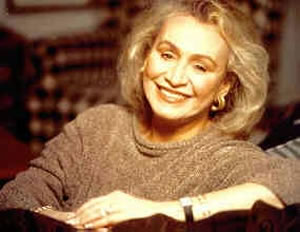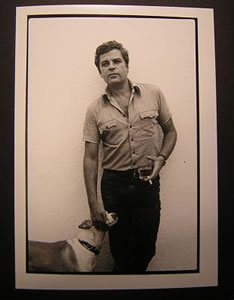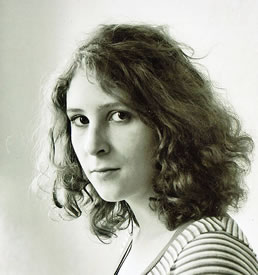
Philip Levine, Renate Schostack, Ingeborg Drewitz, Vicente Huidobro

De Amerikaanse dichter Philip Levine werd geboren op 10 januari 1928 in Detroit, Michigan. Zie ook alle tags voor Philip Levine op dit blog.


Father 


The long lines of diesels

groan toward evening

carrying off the breath

of the living.

The face of your house

is black,

it is your face, black

and fire bombed

in the first street wars,

a black tooth planted in the earth

of Michigan

and bearing nothing,

and the earth is black,

sick on used oils.


Did you look for me in that house

behind the sofa

where I had to be?

in the basement where the shirts

yellowed on hangers?

in the bedroom

where a woman lay her face

on a locked chest?

I waited

at windows the rain streaked

and no one told me.


I found you later

face torn

from The History of Siege,

eyes turned to a public wall

and gone

before I turned back, mouth

in mine and gone.

I found you whole

toward the autumn of my 43rd year

in this chair beside

a masonjar of dried zinnias

and I turned away.


I find you

in these tears, few,

useless and here at last.


Don’t come back.
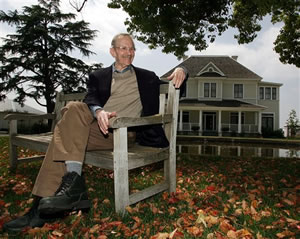


Philip Levine (Detroit, 10 januari 1928)


Lees verder “Philip Levine, Renate Schostack, Ingeborg Drewitz, Vicente Huidobro”
Robinson Jeffers, Alexei Tolstoy, Jan H. Eekhout, Aubrey Thomas de Vere, Giselher Werner Hoffmann

De Amerikaanse dichter en schrijver John Robinson Jeffers werd geboren op 10 januari 1887 in Allegheny, nu Pittsburgh, Pennsylvania. Zie ook ook alle tags voor Robinson Jeffers op dit blog.


To A Young Artist


It is good for strength not to be merciful
To its own weakness, good for the deep urn to run
over, good to explore
The peaks and the deeps, who can endure it,
Good to be hurt, who can be healed afterward: but
you that have whetted consciousness
Too bitter an edge, too keenly daring,
So that the color of a leaf can make you tremble
and your own thoughts like harriers
Tear the live mind: were your bones mountains,
Your blood rivers to endure it? and all that labor
of discipline labors to death.
Delight is exquisite, pain is more present;
You have sold the armor, you have bought shining
with burning, one should be stronger than
strength
To fight baresark in the stabbing field
In the rage of the stars: I tell you unconsciousness
is the treasure, the tower, the fortress;
Referred to that one may live anything;
The temple and the tower: poor dancer on the flints
and shards in the temple porches, turn home.


The Bed By The Window


I chose the bed downstairs by the sea-window for a good death-bed
When we built the house, it is ready waiting,
Unused unless by some guest in a twelvemonth, who hardly suspects
Its latter purpose. I often regard it,
With neither dislike nor desire; rather with both, so equalled
That they kill each other and a crystalline interest
Remains alone. We are safe to finish what we have to finish;
And then it will sound rather like music
When the patient daemon behind the screen of sea-rock and sky
Thumps with his staff, and calls thrice: “Come, Jeffers.”


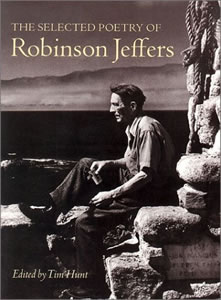
Robinson Jeffers (10 januari 1887 – 20 januari 1962)


Lees verder “Robinson Jeffers, Alexei Tolstoy, Jan H. Eekhout, Aubrey Thomas de Vere, Giselher Werner Hoffmann”

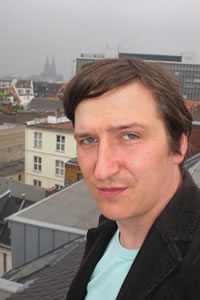
Adrian Kasnitz

De Duitse dichter en schrijver Adrian Kasnitz werd geboren op 10 januari 1974 in Orneta, Polen. Kasnitz groeide op in Lüdenscheid en studeerde in Keulen en Praag (MA 2002). Hij schrijft poëzie, proza​​, essays, en richt zich op fotografie en geschiedenis. Gedichten zijn verschenen in tal van literaire tijdschriften en bloemlezingen, zoals in Der Große Conrady. Sinds 2003 runt hij zijn uitgeverij Parasitenpresse, waarinpoëzie en proza verschijnt. Kasnitz is mede-organisator van de Lesebühne am Brüsseler Platz.

Uit: Innere Sicherheit

am bankomat leuchten die augen. ein glückender glanz
der sich spiegelt im lcd. du bist jung, du siehst gut
aus, dein kleid findest du in einer hippen filiale
(wie in jeder stadt). in die city, das ist dein sinn nach
der arbeit, nach dem essen, nach der liebe. aber was dein
mann sagt, bleibt geläufig: in die city, das ist sein sinn.
aus dem bankomat fallen scheine, deine gunst & dei
ne blütenfrische. das papier ist rein, jeder mag es
wie du dich bewegst von boutique zu boutique. kauf dir was
schönes, ein kind, wie es in der werbung lacht, weil der wunsch
einfach zu begleichen war mit der goldenen karte.
ein chip, der deine daten trägt, deine maße. dein slip
wird er feucht beim anblick der flakons? bei musik die der
kaufhaus-dj auflegt für deinen privaten cash-flow?


Adrian Kasnitz (Ometa, 10 januari 1974)

Bas Heijne, Benjamin Lebert, Simone de Beauvoir, Theodor Holman, Danny Morrison

De Nederlandse schrijver, essayist, columnist en vertaler Bas Heijne werd geboren op 9 januari 1960 in Nijmegen. Zie ook alle tags voor Bas Heijne op dit blog.

Uit: Open brief aan Bas Heijne (Hollandse toestanden)

„Dat laatste literaire genre is anoniem; de briefschrijver zwelgt in zijn onzichtbare macht. De open brief is bij uitstek een celebrity-genre; de schrijver voelt zich te goed voor een eenvoudig stuk op de opiniepagina, of nog erger, de ingezonden-brievenrubriek; hij gaat niet met zijn mening in de rij staan wachten op zijn beurt. Net als die zelfbenoemde denktanks die in het kielzog van Fortuyn overheid en regering bestoken met nota’s, aanbevelingen, opdrachten, manifesten, protocollen, gaat ook de schrijver van de open brief recht op zijn doel af – hij wil meteen de baas zelf spreken, voor minder doet hij het niet.

Ook ik een Zola!

De open brief is een vorm van engagementskitsch. De schrijver ervan waant zich een moedige buitenstaander – joodse intellectuelen in de jaren dertig! – maar hij ademt juist in alles de tijdgeest. Hij is helemaal geen bepalende kracht, hij is een symptoom.

Een symptoom waarvan? Van de hoge toon die ons land in zijn greep heeft, van de neiging om in Nederland alles persoonlijk te maken, van de Hollandse hang om reële sociale en politieke problemen te misbruiken voor persoonlijk melodrama, van de misvatting dat ons land het beste vanaf de zijlijn kan worden bestuurd, en van de inmiddels totale afkeer van de reguliere politieke en maatschappelijke instituties.

Maar vooral is de open brief een symptoom van het ontbreken van een echt debat – ogenschijnlijk gaat de schrijver direct in gesprek met de aangeschrevene, maar dat contact is schijn. Nu iedereen over elkaar heen struikelt om zijn tegenstander of vijand klein te maken door middel van een even vlammend als vernietigend persoonlijk appèl, valt op hoe ijdel het genre eigenlijk is, hoe weinig er werkelijk contact of discussie wordt gezocht. De schrijver van de open brief staat uiteindelijk altijd voor de spiegel.“


Bas Heijne (Nijmegen, 9 januari 1960)


Lees verder “Bas Heijne, Benjamin Lebert, Simone de Beauvoir, Theodor Holman, Danny Morrison”

Pierre Guyotat, Heiner Müller, Pierre Combescot, Gisbert Haefs, Karel Čapek, Klaus Schlesinger

De Franse schrijver Pierre Guyotat werd geboren op 9 januari 1940 in Bourg-Argental. Zie ook alle tags voor Pierre Guyotat op dit blog.

Uit: Eden, éden, éden 


”Les soldats, casqués, jambes ouvertes, foulent, muscles retenus, les nouveaux-nés emmaillotés dans les châles écarlates, violets : les bébés roulent hors des bras des femmes accroupies sur les tôles mitraillées des G.M.C. ; le chauffeur repousse avec son poing libre une chèvre projetée dans la cabine ; / au col Ferkous, une section du RIMA traverse la piste ; les soldats sautent hors des camions ; ceux du RIMA se couchent sur la caillasse, la tête appuyée contre les pneus criblés de silex, d’épines, dénudent le haut de leur corps ombragé par le garde-boue ; les femmes bercent les bébés contre leurs seins : le mouvement de bercée remue renforcés par la sueur de l’incendie les parfums dont leurs haillons, leurs poils, leurs chairs sont imprégnés : huile, girofle, henné, beurre, indigo, soufre d’antimoine – au bas du Ferkous, sous l’éperon chargé de cèdres calcinés, orge, blé, ruchers, tombes, buvette, école, gaddous, figuiers, mechtas, murets tapissés d’écoulements de cervelle, vergers rubescents, palmiers, dilatés par le feu, éclatent : fleurs, pollen, épis, brins, papiers, étoffes maculées de lait, de merde, de sang, écorces, plumes, soulevés, ondulent, rejetés de brasier à brasier par le vent qui arrache le feu, de terre ; les soldats assoupis se redressent, hument les pans de la bâche, appuient leurs joues marquées de pleurs séchés contre les ridelles surchauffées, frottent leur sexe aux pneus empoussiérés ; creusant leurs joues, salivent sur le bois peint ; ceux des camions, descendus dans un gué sec, coupent des lauriers-roses, le lait des tiges se mêle sur les lames de leurs couteaux au sang des adolescents éventrés par eux contre la paroi centrale de la carrière

d’onyx …“


Pierre Guyotat (Bourg-Argental, 9 januari 1940)

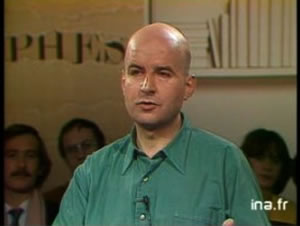
In 1984 in het Franse tv-programma „apostophe“


Lees verder “Pierre Guyotat, Heiner Müller, Pierre Combescot, Gisbert Haefs, Karel Čapek, Klaus Schlesinger”

Wilbur Smith, Kurt Tucholsky, Brian Friel, August Gailit, Chaim Nachman Bialik

De Zuid-Afrikaanse schrijver Wilbur Addison Smith werd geboren in Broken Hill in Zimbabwe (Rhodesië) op 9 januari 1933. Zie ook alle tags voor Wilbur Smith op dit blog.


Uit: Assegai


„AUGUST 9, 1906, was the fourth anniversary of the coronation of Edward VII, King of the United Kingdom and the British Dominions, and Emperor of India. Coincidentally it was also the nineteenth birthday of one of His Majesty’s loyal subjects, Second Lieutenant Leon Courtney of C Company, 3rd Battalion 1st Regiment, The King’s African Rifles, or the KAR, as it was more familiarly known. Leon was spending his birthday hunting Nandi rebels along the escarpment of the Great Rift Valley in the far interior of that jewel of the Empire, British East Africa.

The Nandi were a belligerent people much given to insurrection against authority. They had been in sporadic rebellion for the last ten years, ever since their paramount witch doctor and diviner had prophesied that a great black snake would wind through their tribal lands belching fire and smoke and bringing death and disaster to the tribe. When the British colonial administration began laying the tracks for the railway, which was planned to reach from the port of Mombasa on the Indian Ocean to the shores of Lake Victoria almost six hundred miles inland, the Nandi saw the dread prophecy being fulfilled and the coals of smouldering insurrection flared up again. They burned brighter as the head of the railway reached Nairobi, then started westwards through the Rift Valley and the Nandi tribal lands down towards Lake Victoria. When Colonel Penrod Ballantyne, the officer commanding the KAR regiment, received the despatch from the governor of the colony informing him that the tribe had risen again and were attacking isolated government outposts along the proposed route of the railway he remarked, with exasperation, ‘Well, I suppose we shall just have to give them another good drubbing.’


Wilbur Smith (Broken Hill, 9 januari 1933)


Lees verder “Wilbur Smith, Kurt Tucholsky, Brian Friel, August Gailit, Chaim Nachman Bialik”

Anne Rivers Siddons, Giovanni Papini, Lascelles Abercrombie, Pierre Garnier, Thomas Warton

De Amerikaanse schrijfster Anne Rivers Siddons werd geboren op 9 januari 1936 in Atlanta, Georgia. Zie ook alle tags voor Anne River Siddons op dit blog.


Uit: Low Country


„I think I’ll go over to the island for a few days,” I said to my husband at breakfast, and then, when he did not respond, I said, “The light’s beautiful. It can’t last. I hate to waste it. We won’t get this pure gold again until this time next year.”

Clay smiled, but he did not put down his newspaper, and he did not speak. The smile made my stomach dip and rise again, as it has for the past twenty-five years. Clay’s smile is wonderful, slow and unstinting and a bit crooked, and gains much of its power from the surrounding austerity of his sharp, thin face. Over the years I have seen it disarm a legion of people, from two-year-olds in mid-tantrum to Arab sheiks in same. Even though I knew that this smile was little more than a twitch, and with no more perception behind it, I felt my own mouth smiling back. I wondered, as I often do, how he could do that, smile as though you had absolutely delighted him when he had not heard a word you said.

“There is a rabid armadillo approaching you from behind,” I said. “It’s so close I can see the froth. It’s not a pretty sight.”

“I heard you,” he said. “You want to go over to the island because the light’s good. It can’t last.”

I waited, but he did not speak again, or raise his eyes.

Finally I said, “So? Is that okay with you?”

This time he did look up.

“Why do you ask? You don’t need my permission to go over to the island. When did I ever stop you?”
His voice was level and reasonable; it is seldom anything else. I knew that he did not like me to go over to the island alone, though, for a number of reasons that we had discussed and one that we had not, yet.“


Anne Rivers Siddons (Atlanta, 9 januari 1936)


Lees verder “Anne Rivers Siddons, Giovanni Papini, Lascelles Abercrombie, Pierre Garnier, Thomas Warton”

Juan Marsé, Waldtraut Lewin, Gaston Miron, Ko Un, Béla Zsolt

De Catalaanse schrijver Juan Marsé werd geboren op 8 januari 1933 in Barcelona. Zie ook alle tags voor Juan Marsé op mijn blog.


Uit: Last evenings with Teresa 


„Mount Carmel is a naked, barren hill located northwest of the city. Their invisible strings managed by the expert hands of children, you will often see brightly-coloured kites in the blue of the sky, shuddering in the wind, hovering above the summit like coats of arms announcing a warrior dream. In those grey postwar years, when empty stomachs and body lice required a dream a day to make reality more bearable, Mount Carmel was the favourite and fabulous field of adventure for the scruffy children from the neighbourhoods of Casa Baró, Guinardó and La Salud. They climbed to the top where the wind whistles to launch crude home-made kites constructed with flour paste, cane, rags and newspaper: for a long time there trembled and flapped fiercely in the city sky photos and news of the German advance on the fronts of Europe, death and destruction reigned, the weekly ration of Spaniards, misery and hunger. Now, in the summer of 1956, Carmel’s kites no longer bear news or photos, nor are they made of newspapers, but rather of fine tissue paper bought in some shop, and their are colours garish, shocking. But despite this improvement in their appearance, many are still home-made, their frames coarse and heavy, and they gain height with difficulty: still the neighborhood’s warrior banner.“


Juan Marsé (Barcelona, 8 januari 1933)

In 1975


Lees verder “Juan Marsé, Waldtraut Lewin, Gaston Miron, Ko Un, Béla Zsolt”

Claudia Grehn, Leonardo Sciascia, Alfred Tomlinson, Francico Bocanegra, Baltasar Gracián y Morales, Roland Moed, Vasyl Stus

De Duitse (toneel)schrijfster Claudia Grehn werd geboren op 8 januari 1982 in Wiesbaden. Zie ook alle tags voor Claudia Grehn op dit blog.


Uit: Heimlich bestialisch  I can’t wait to love in heaven


„HÄHNCHENESSEN 1

IRMGARD

fürs hähnchenessen sind meine eltern perfekt

papa mag die keule mama brust und flügel ich

bin wie papa keule schnell fahrn: sausen, lässig

aber konzentriert handeln im notfall,

sportler papa klärt mich über die frauen auf:

brünette sind ihm lieber ungeschminkte

blonde müssen sich schminken um zu wirken ich

bin froh dass ich ein kind bin mama macht alles

falsch sie ist blond hysterisch meckert liest

konsaliksimmel kapiert gar nichts von literatur

raucht die alte fümöse und trifft sich mit

freundinnen um dallas zu gucken

macht doch mal etwas rentables, ihr könnt doch

stricken oder töpfern, seidenmalerei, sagt

papa, was dazu verdienen, fähigkeiten ausbilden

meine schwester schreit immer wenn ich die

fusel zwischen ihren fingern rauspule und sie

ihr ins nasenloch stecke – dann muss sie endlich

mal den schnuller ausspucken…“


Claudia Grehn (Wiesbaden, 8 januari 1982)


Lees verder “Claudia Grehn, Leonardo Sciascia, Alfred Tomlinson, Francico Bocanegra, Baltasar Gracián y Morales, Roland Moed, Vasyl Stus”

Frans Kellendonk, Dionne Brand, Henk van Zuiden, Nicholson Baker, Marie Desplechin

De Nederlandse schrijver en vertaler Frans Kellendonk werd geboren in Nijmegen op 7 januari 1951. Zie ook mijn blog van 25 februari 2007 en ook mijn blog van 7 januari 2008 en ook mijn blog van 7 januari 2009 en ook mijn blog van 7 januari 2010.

Uit: Mystiek Lichaam 

„Wees gegroet, zuster, vol van nijd, niemandsbruid […]. Je bent de gesjochtenste onder de vrouwen en gesjochten is ook de foet in je schoot. Maar je nijd is genade, je zelfzucht schepping, je buik de wieg der geschiedenis. Daarom, nijdige Magda, moeder van een hoerenkind, wend ik me tot jou, nu, in dit uur van mijn levenslange dood. Moeder modder, mater materia, heerseres over het rijk van geboorte, copulatie en dood, gegroet! Tot jou roep ik, eens kind van een vrouw, toen deserteur uit de vrouwendienst, nu balling, tot jou zucht ik, klaag ik, ween ik, vanuit mijn barre mannenwereld. Kwaadspreekster, kromspreekster, wees mijn voorspreekster. Die schele ogen van jou, sla ze op mij neer. Dochter van de Doornenhof, toren van vlees, toren van het vlees dat altijd het laatste woord heeft, voor jou buig ik.
(…)

Ze is wel zes meter hoog, die maagd, en ze is van vlees en bloed. Achter haar, door een doksaalboog, zie je twee engelen zingen, theologische schepselen, die toch niet groter zijn dan mensen. Ook achter haar, in een nis, staat een madonna van aardewerk, een kunstmaagd van mensenwerk, stukken kleiner dan levensgroot, die in het niet zinkt bij de toren van vlees ervoor. Dwaze pottenbakker! Uit het leem waaruit hij zelf gevormd is vormt hij broze beelden, nietige goden, en zijn hart wordt enkel as, zijn hoop geringer dan zand, zijn leven waardelozer dan het leem dat hij kneedt. Steen buigt voor vlees. De hoge ogiefbogen voegen zich naar de rondingen van het maagdenvlees. De kerk is dun en plooibaar, en zit het maagdenlichaam als gegoten.“


Frans Kellendonk (7 januari 1951 – 15 februari 1990)


Lees verder “Frans Kellendonk, Dionne Brand, Henk van Zuiden, Nicholson Baker, Marie Desplechin”