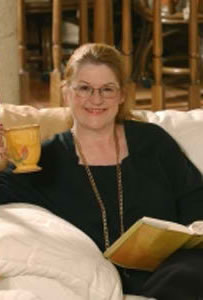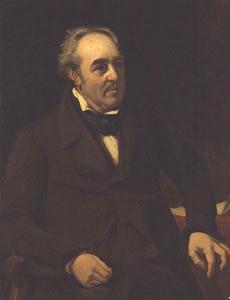
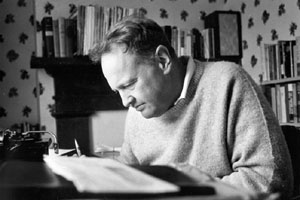
Hella Haasse, James Joyce, Eriek Verpale, Michel Marc Bouchard

De Nederlandse schrijfster Hella Haasse werd geboren op 2 februari 1918 in Batavia. Zie ook mijn blog van 2 februari 2007 en ook mijn blog van 2 februari 2008 en ook mijn blog van 2 februari 2009.

Uit: Heren van de thee

„Verborgen in de diepten van het woud ruiste een waterval. Zij gingen op het geluid af en kwamen bij een stroom die breder en woester was dan de andere riviertjes. Hij begreep dat dit de Tjisondari moest zijn; de steile oever aan de overkant leek hem de natuurlijke grens van de plantage. Maar Djengot, die de omgeving kende, hield vol dat dit niet zo was. Zij liepen langs de Tjisondari totdat zij een plek vonden waar zij wadend en springend van steen op steen konden oversteken. Inderdaad ontdekte hij nog oude tuinen waarvan hij het bestaan niet had vermoed, en enkele min of meer open plekken die geschikt leken voor nieuwe veldjes.
Het liefst was hij dadelijk naar de top van de Goenoeng Tiloe geklommen, om vandaar de omvang van zijn gebied te kunnen schatten – nog had hij geen flauw idee hoe hij de grenzen van de her en der over de berghelling verspreide koffietuinen in kaart moest brengen. Landmeten zou zijn eerste taak zijn. Hij had daar echter deskundige hulp bij nodig. De talloze ravijnen, onbruikbaar voor aanplant, vormden moeilijk te becijferen enclaves.

(…)

Er trok een wolk voor de zon, de eerste van de gestaag rijzende wal die later in de middag in een stortbui uiteen zou breken. Dat het op Gamboeng zo vaak en zo hevig zou regenen, had hij niet voorzien. Die regen en de eenzaamheid (hij had nu in bijna drie maanden geen woord Nederlands gehoord of gesproken) waren de schaduwzijden van zijn Eldorado. Hij dacht soms met een vleug zelfspot aan de grenzeloze verrukking die hem had bevangen toen hij voor de eerste maal op de bergkam stond. Nog beleefde hij dergelijke ogenblikken van puur geluk, wanneer na noodweer bij de uitgang van het druipende oerwoud, of ’s ochtends als hij zijn deur opendeed, het grandioze panorama van de Pantjoer, de Patoeha en de Tambagroejoeng zich voor hem ontvouwde, de Gedeh op de achtergrond, in schakeringen van blauw en violet zichtbaar was, terwijl vlakbij de drietoppige Goenoeng Tiloe zich machtig verhief. Hij ervoer telkens weer dat dit landschap – al meende hij het nu beter te kennen omdat hij het in alle richtingen doorkruist had – zich als het ware terugtrok in een niet te doorgronden eigen bestaan. Hij begreep ook waarom voor de mensen die hier woonden elke boom, steen en bergstroom bezield was, een wezen met een naam, een bijzondere macht.“

Hella_Haasse

Hella Haasse (Batavia, 2 februari 1918)


De Ierse schrijver James Joyce werd geboren in Dublin op 2 februari 1882. Zie ook mijn blog van 2 februari 2007 en mijn blog van 16 juni 2006 en ook mijn blog van 2 februari 2008 en ook mijn blog van 2 februari 2009.

Uit: A Portrait of the Artist as a Young Man

“Et ignotas animum dimittit in artes.”
ovid, metamorphoses, viii., 18.

ONCE UPON a time and a very good time it was there was a moocow coming down along the road and this moocow that was down along the road met a nicens little boy named baby tuckoo. . . .
His father told him that story: his father looked at him through a glass: he had a hairy face.
He was baby tuckoo. The moocow came down the road where Betty Byrne lived: she sold lemon platt.
O, the wild rose blossoms
On the little green place.
He sang that song. That was his song.
O, the green wothe botheth.
When you wet the bed, first it is warm then it gets cold. His mother put on the oilsheet. That had the queer smell.
His mother had a nicer smell than his father. She played on the piano the sailor’s hornpipe for him to dance. He danced:

Tralala lala,
Tralala tralaladdy,
Tralala lala,
Tralala lala.

Uncle Charles and Dante clapped. They were older than his father and mother but Uncle Charles was older than Dante.
Dante had two brushes in her press. The brush with the maroon velvet back was for Michael Davitt and the brush with the green velvet back was for Parnell. Dante gave him a cachou every time he brought her a piece of tissue paper.
The Vances lived in number seven. They had a different father and mother. They were Eileen’s father and mother. When they were grown up he was going to marry Eileen. He hid under the table.
His mother said:
—O, Stephen will apologise.
Dante said:
—O, if not, the eagles will come and pull out his eyes—

Pull out his eyes,
Apologise,
Apologise,
Pull out his eyes.

Apologise,
Pull out his eyes,
Pull out his eyes,
Apologise.

The wide playgrounds were swarming with boys. All were shouting and the prefects urged them on with strong cries. The evening air was pale and chilly and after every charge and thud of the foot-ballers the greasy leather orb flew like a heavy bird through the grey light. He kept on the fringe of his line, out of sight of his prefect, out of the reach of the rude feet, feigning to run now and then. He felt his body small and weak amid the throng of players and his eyes were weak and watery. Rody Kickham was not like that: he would be captain of the third line all the fellows said.“

James_Joyce_Statue

James Joyce (2 februari 1882 – 13 januari 1941)
Standbeeld in Zürich, Zwitserland


De Vlaamse dichter en schrijver Eriek Verpale werd geboren op 2 februari 1952 te Zelzate. Zie ook mijn blog van 2 februari 2007 en ook mijn blog van 2 februari 2008 en ook mijn blog van 2 februari 2009.


Uit: Katse nachten


„Ik leg de hoorn neer, neem mijn sigaretten en begeef mij naar een aangrenzend vertrek (’t drukkerskot) alwaar ik haastig in De Standaard begin te bladeren. En daar staat het. In de nacht van eergisteren op gisteren is in de Brugse St-Lucaskliniek op 21-jarige leeftijd de veelbelovende Vlaamse dichter Jotie T’Hooft overleden. Een overdosis. Ik vouw de krant dicht en ga voor het raam staan: achter mijn rug hoor ik de Marchands ratelen, telefoons rinkelen en buiten worden lege goederenwagons gerangeerd. T’Hooft is dood.
Ik heb weinig van hem gelezen en ontmoet heb ik Jotie eigenlijk maar één keer: op een donkere namiddag in december, in Gent, op een of andere redactievergadering. Buiten was het al zo donker dat het wel leek alsof al het nacht was. Het redactielokaal was niet veel meer dan een krottig hok en ook daar was alles duister, zó duister dat ik bij de begroeting “Dag juffrouw” tegen Jotie zei. Ik hield hem voor een meisje. Maanden later stuurde hij nog een briefje waarin hij me in het Zwarte Huis uitnodigde om eens over de Baal Sjem Tov te spreken maar ik moest wel mijn eigen bokes meebrengen.
Ik ben nooit gegaan.“


Verpale

Eriek Verpale (Zelzate, 2 februari 1952)


De Zwitserse schrijfster Monica Camuglia werd geboren op 2 februari 1960 in St. Gallen. Zie ook mijn blog van 11 januari 2010.


Uit: IRRTUM 2012


Eine Stunde vor Mitternacht, das Jahr 2013 beginnt in 59 Minuten und 20 Sekunden. Steht dieses eine Jahr tatsächlich für den Beginn einer neuen Epoche?

Ein Glas Limoncello in der einen, eine Zigarette in der anderen Hand wiege ich in der Hängematte, die zwischen zwei weiß verputzten Säulen aufgespannt ist. Die beiden Säulen stützen auch das Dach der kleinen, liebevoll eingerichteten und fürsorglich gepflegten Veranda vor unseren beiden Schlafzimmern. Das Bistro und die acht Schlafräume der schmucken Pension sind auf vier verschiedene Terrassen verteilt und fügen sich so perfekt in die Wölbungen des Hanges, sodass ihre

Größe von außen betrachtet unterschätzt wird. Der steile Hang reicht vom
vulkanischen Grat bis hinab zum pechschwarzen Meer nach Filicudi Porto. Aus dieser etwas erhobenen Perspektive wirken die Schiffe auf dem Meer wie Spielzeug; und doch erreichen wir über den Fußpfad durch den Kakteenwald den Badestrand in zwanzig Minuten. Mein Blick schweift am Dach vorbei nach oben; der Himmel ist übersät mit funkelnden Punkten, nur der Mond versteckt sich noch hinter dem Krater. Sobald er zum Vorschein kommt, verwandelt sich das dunkle Wasser in einen Teppich goldener

Plättchen. Eines von der Sorte Wunder, die nur in der Poesie angemessen gewürdigt werden.

So wie es aussieht, muss ich um Mitternacht alleine auf das neue Jahr anstoßen. Nathan ist erschöpft und vor einer Stunde in einen tiefen Schlaf gefallen. Das ist völlig in Ordnung. Außerdem habe ich so ein fantastisches inneres Gefühl, das ich auch gut alleine auskosten kann. Morgen um elf werde ich das Schiff nach Hause nehmen und zu Lia, meiner Tochter zurück- kehren. Sie ist bei ihrem Vater in Zürich. Nathan bleibt noch ein paar Tage.”


Camuglia

Monica Camuglia (St. Gallen, 2 februari 1960)


De Canadese toneelschrijver Michel Marc Bouchard werd geboren op 2 februari 1958 in Saint Coeur-de-Marie, Quebec. Zie ook mijn blog van 2 februari 2009.


Uit: La Contre-Nature de Chrysippe Tanguay, écologiste


“Encore au lit? Debout! Il y a une heure que vous devriez être dans la grande salle en train d’y laver les planchers. Laïos, debout! Qui a couché avec vous? Qui a couché avec vous? Mon dieu! Quelle puanteur!v Quelle orgie! J’aurais les mains en sang que vous ne comprenderiez rien encore. Savez-vous ce que la Bible raconte à ce sujet? Diane/La Religieuse.

(…)


:”Quand la police est arrivée, y t’ont trouvé caché dans le placard. Y ont dessiné le profil d’Alice, ta femme, avec un craie. T’as pris la craie pis sur le profil, t’as dessiné les yeux, la bouche, les seins, le ventre d’Alice. T’as rajouté un pénis, des testicules, pis t’a écrit sur le ventre “Sébastien”. Après tu t’es mis à brailler devant ton chef d’oeuvre. Y a un photographe du journal où tu travaillais qu’y a mis sa main sur ton épaule pis y t’a dit; Braille pas chum, à c’t’heure, t’es une vedette!” LAÏOS.“


Michel_Marc_Bouchard

Michel Marc Bouchard (Saint Coeur-de-Marie, 2 februari 1958)


Zie voor nog meer schrijvers van de 2e februari ook mijn vorige twee blogs van vandaag.
 

James Dickey, Santa Montefiore, Xuân Diệu, Ayn Rand, William Rose Benét

De Amerikaanse dichter en schrijver James Dickey werd geboren op 2 februari 1923 in Atlanta, Georgia. Zie ook mijn blog van 2 februari 2007 en ook mijn blog van 2 februari 2008 en ook mijn blog van 2 februari 2009.


Uit: The Shark’s Parlor


„Memory: I can take my head and strike it on a wall on Cumberland Island
Where the night tide came crawling under the stairs came up the first
Two or three steps and the cottage stood on poles all night
With the sea sprawled under it as we dreamed of the great fin circling
Under the bedroom floor. In daylight there was my first brassy taste of beer
And Payton Ford and I came back from the Glynn County slaughterhouse
With a bucket of entrails and blood. We tied one end of a hawser
To a spindling porch-pillar and rowed straight out of the house
Three hundred yards into the vast front yard of windless blue water
The rope out slithering its coil the two-gallon jug stoppered and sealed
With wax and a ten-foot chain leader a drop-forged shark-hook nestling.
We cast our blood on the waters the land blood easily passing
For sea blood and we sat in it for a moment with the stain spreading
Out from the boat sat in a new radiance in the pond of blood in the sea
Waiting for fins waiting to spill our guts also in the glowing water.
We dumped the bucket, and baited the hook with a run-over collie pup. The jug
Bobbed, trying to shake off the sun as a dog would shake off the sea.
We rowed to the house feeling the same water lift the boat a new way,
All the time seeing where we lived rise and dip with the oars.
We tied up and sat down in rocking chairs, one eye on the other responding
To the blue-eye wink of the jug. Payton got us a beer and we sat“


Dickey

James Dickey (2 februari 1923 – 19 januari 1997)


De Britse schrijfster Santa Montefiore (eig. Santa Palmer-Tomkinson) werd geboren op 2 februari 1970 in Hampshire. Montefiore is de dochter van Charles Palmer-Tomkinson. Haar vader vertegenwoordigde zijn land met skiën op Olympisch niveau tijdens de Olympische Winterspelen van 1964. Voordat ze Spaans en Italiaans leerde aan de Universiteit van Exeter, werkte ze een jaar op een Argentijnse ranch. Voordat ze terug kwam naar het Verenigd Koninkrijk woonde ze in de jaren negentig een tijd in Buenos Aires. Vier van haar boeken spelen zich af in Argentinië.


Uit: The Gypsy Madonna


„It all began on a snowy January day. January is bleak in New York. The trees are bare, the festivities over, the Christmas tree lights taken down for another year. The wind that races down the streets is edged with ice. I walked briskly with my hands in my coat pockets. Head down, eyes to the ground, lost in thought: nothing particular, just
the business of the day. I tried not to think of my mother. I am an avoider. If something gives me pain I don’t think about it. If I don’t think about it, it isn’t happening. If I can’t see it, it isn’t there, right? My mother had been dead a week. The funeral was over. Only the journalists pestered like flies, determined to find out why an uncatalogued, unknown Titian of such importance had only now come to light. Didn’t they understand that I knew as little as they did? If they were grappling in the dark, I was floundering
in space.

I reached my office. A redbrick building in the West Village with an antique shop on the ground floor. Zebedee Hapstein, the eccentric clockmaker, toiled against a discordant orchestra of ticking in his workshop next door. I fumbled in my pocket for the key. My fingers were numb. I had forgotten to wear gloves. For a moment I looked at my reflection in the glass“.


SantaMontefiore

Santa Montefiore (Hampshire, 2 februari 1970)


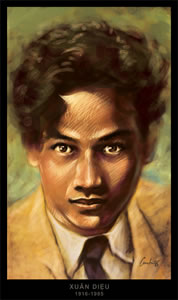
De Viëtnamese dichter Xuân Diệu werd geboren op 2 februari 1916 in Gò Bồi, gemeente Tùng Giản. Zie ook mijn blog van 2 februari 2007 en ook mijn blog van 2 februari 2009.


Say It


“I am deeply in love, dear, is that not enough?
“How greedy you are, and demanding too!
“You already know, for I’ve told you I love you.
“Why insist on me repeating old stuff so oft?


You love me deeply, but is that enough?
If you are in love, but you just keep it inside
And not show it, then words are empty,
And beauty is as cold as marble.


I have an immense desire, did you know?
And absolute, too. I’m in constant search of you.
If today’s truth is truth no longer tomorrow,
How can, my dear, love ever be old too?


Be deeply in love, but that is still not enough.
You’ve got to say love, hundreds, no, thousands of times.
Be so loving that every night is one of spring,
And birds and butterflies freed in the love garden.


Say it, you must say it, you must.


With words that dwell privy in your eyes and your brows
With joy, bashfulness, and ecstasy at dusk,
With head cuddling, smile on your lips, and grasping arms,
With wordless intensity, what else do I know!


Just make sure you don’t stay frigid as ice
Or be unmoved beside one burning with desire,
Nor be as placid as still water in the pond.
Be deeply in love, but that is still not enough.


Vertaald door Thomas D. Le


XuanDieu

Xuân Diệu (2 februari 1916 – 18 december 1985)


De Amerikaanse schrijfster van Russische komaf Ayn Rand (eig. Alissa “Alice” Zinovievna Rosenbaum) werd geboren in Sint-Petersburg op  2 februari 1905. Zie ook mijn blog van 2 februari 2007 en ook mijn blog van 2 februari 2009.


Uit: The Anthem


„We look ahead, we beg our heart for guidance in answering this call no voice has spoken, yet we have heard. We look upon our hands. We see the dust of centuries, the dust which hid the great secrets and perhaps great evils. And yet it stirs no fear within our heart, but only silent reverence and pity.

May knowledge come to us! What is the secret our heart has understood and yet will not reveal to us, although it seems to beat as if it were endeavoring to tell it?

I am. I think. I will.

My hands . . . My spirit . . . My sky . . . My forest . . . This earth of mine. . . . What must I say besides? These are the words. This is the answer.

I stand here on the summit of the mountain. I lift my head and I spread my arms. This, my body and spirit, this is the end of the quest. I wished to know the meaning of things. I am the meaning. I wished to find a warrant for being. I need no warrant for being, and no word of sanction upon my being. I am the warrant and the sanction.

It is my eyes which see, and the sight of my eyes grants beauty to the earth. It is my ears which hear, and the hearing of my ears gives its song to the world. It is my mind which thinks, and the judgement of my mind is the only searchlight that can find the truth. It is my will which chooses, and the choice of my will is the only edict I must respect.

Many words have been granted me, and some are wise, and some are false, but only three are holy: “I will it!”

Whatever road I take, the guiding star is within me; the guiding star and the loadstone which point the way. They point in but one direction. They point to me.“


ayn_rand

Ayn Rand (2 februari 1905 – 6 maart 1982)


De Amerikaanse dichter en uitgever William Rose Benét werd geboren op 2 febrari 1886 in Fort Hamilton, Brooklyn, New York. Zie ook mijn blog van 2 februari 2009.


The Falconer of God


I flung my soul to the air like a falcon flying.

I said, “Wait on, wait on, while I ride below!

I shall start a heron soon

In the marsh beneath the moon —

A strange white heron rising with silver on its wings,

Rising and crying

Wordless, wondrous things;

The secret of the stars, of the world’s heart-strings,

The answer to their woe.

Then stoop thou upon him, and grip and hold him so!”


My wild soul waited on as falcons hover.

I beat the reedy fens as I trampled past.

I heard the mournful loon

In the marsh beneath the moon.

And then — with feathery thunder — the bird of my desire

Broke from the cover

Flashing silver fire.

High up among the stars I saw his pinions spire.

The pale clouds gazed aghast

As my falcon stoopt upon him, and gript and held him fast.


My soul dropt through the air — with heavenly plunder? —

Gripping the dazzling bird my dreaming knew?

Nay! but a piteous freight,

A dark and heavy weight

Despoiled of silver plumage, its voice forever stilled, —

All of the wonder

Gone that ever filled

Its guise with glory. Oh, bird that I have killed,

How brilliantly you flew

Across my rapturous vision when first I dreamed of you!


Yet I fling my soul on high with new endeavor,

And I ride the world below with a joyful mind.

I shall start a heron soon

In the marsh beneath the moon —

A wondrous silver heron its inner darkness fledges!

I beat forever

The fens and the sedges.

The pledge is still the same — for all disastrous pledges,

All hopes resigned!

My soul still flies above me for the quarry it shall find.


Bennet

William Rose Benét (2 februari 1886 – 4 mei 1950)
Hier zittend links temidden van vele collega’s in de Gotham Book Mart, 1948

Gostan Zarian, Ludwig Eichrodt, Johann Ch. Gottsched, Michael Öchsner

De Armeense schrijver Gostan Zarian werd geboren op 2 februari 1885 in Shemakha, voormalige hoofdstad van Azerbeidzjan. Zie ook mijn blog van 2 februari 2009.


Uit: The Ship On The Mountain (Vertaald door Shant Norashkharian)


When his eyes started to get used to the darkness, pictures from the wall of the altar stared at him. Slowly they awakened and grew larger. The wall flashed out long bodies, chiseled faces, deep-fallen black eyes, untidy beards, and bony, unnatural hands, which, creeping over the ravaged chests squeezed some worn-out books.

Herian’s eyes met their eyes.

Fierce, huge, phosphorous eyes.

The pictures, leaving the wall, were advancing toward him inconspicuously.

Herian stepped back.

At that instant, something hanging from the roof moved. Perhaps it was a bat or… He looked up. He saw nothing. He looked at the pictures, as their enlarged eyes dominated him. They pushed his stare inward, they subdued it.

He could not move anymore. An uncertain battle started within him. His awareness became veiled, it lost its clarity.

A pair of candles blinked, washed a few shadows as they shimmered, and died.

The darkness became even deeper. And, suddenly, from the depth of the church, he heard footsteps. Herian turned around and was astonished. In front of him stood Peter Mark.

Mark, the Armenian from India, whom he had met at the restaurant.

“Hello, Captain, hello…”

He stretched his tanned and hairy hand and greeted Herian warmly. The hand was cold, and the arm -Herian later remembered- unusually long.

“I saw you as you came inside and waited for you to finish your prayer…Truly, these are special places, with which to communicate, it is worthwhile to cross thousands of kilometers, as I have done…Special, momentous places…”

” My pleasure, Mr. Mark…I was not expecting…”

” I believe, that one must always, always expect…I was expecting to see you, as these pictures were expecting to see me and you…for centuries…the boundaries of the soul, Captain, no matter which way you choose to reach them, constantly expand and go farther, the depth of the soul is great and its potentialities are limitless…”

He smiled slowly under the nose and at that moment his face took the form of a mask which had come out of Indian wall-sculptures.“


Zarian

Gostan Zarian (2 februari 1885 – 11 december 1969)


De Duitse dichter Ludwig Eichrodt werd geboren op 2 februari 1827 in Durlach bij Karlsruhe. Zie ook mijn blog van 2 februari 2009.

In der Früh

Die Sonn ist aufgegangen,
Ich steh im Thau der Flur,
Die Glockenblumen prangen
Und schillern im Azur.

Die süßen Strahlen scheuchten
Die lange schwarze Nacht,
Und Wald und Wiesen leuchten
Wie funkelnder Smaragd.

Die Frühlingsnelken blühen
Wie glühender Rubin
Wie Diamanten sprühen
Die Tropfen im Jasmin.

Und von den Wasserfällen
Die Perle glänzend rollt,
Es blitzet aus den Quellen
Wie Silber und wie Gold.

O Liebste, wie beschenk ich
Mit all dem Schmuck dich gleich?
Durch dieses Liedchen denk ich
Mach ich mein Liebchen reich!


Ludwig_Eichrodt

Ludwig Eichrodt (2 februari 1827 – 2 februari 1892)
Monument in het Stadtpark van Lahr


De Duitse schrijver Johann Christoph Gottsched werd geboren in Juditten (bij Koningsbergen) op 2 februari 1700. Zie ook mijn blog van 2 februari 2009.


Uit: Der strenge Ehemann


„Karl der Achte, König in Frankreich, … schickte einen vornehmen Hofbedienten nach Deutschland, gewisse Reichsangelegenheiten zu besorgen. Die Reise ward sehr geschwinde fortgesetzt, und der Gesandte schonte sogar der Nacht nicht, den Befehl seines Herrn desto schleuniger zu vollziehen. Einen Abend kam er ganz spät an das Schloß eines Landjunkers, bei welchem er um Herberge bat. Es kostete viel Mühe, ehe er eingelassen ward; doch da der Edelmann hörte, daß es ein Bedienter seines Königs wäre, kam er ihm entgegen und entschuldigte die Grobheit seiner Leute, setzte aber hinzu, daß er um einiger übelgesinnten Anverwandten halber von seiten seiner Ehegattin dergleichen Vorsichtigkeit vonnöten hätte. Hierauf führte er den Gast herein und nahm ihn mit aller möglichen Ehrenbezeigung auf. Als es Essenszeit war, führte der Wirt diesen Fremden in einen schönen tapezierten Saal. Man trug auf, und alsbald kam unter den Tapeten das schönste Frauenzimmer von der Welt hervorgetreten, aber mit einem kahlbeschornen Haupte und in einem nach deutscher Manier gemachten schwarzen Trauerkleide. Man brachte das Handbecken, und als der Gast und Wirt sich gewaschen hatten, reichte man es dieser Dame, welche sich auch wusch und, ohne ein Wort zu sprechen, noch von jemandem angeredet zu werden, sich am Ende des Tisches niederließ. Der Fremde sah sie oft an und fand, daß sie bei ihrer großen Schönheit doch sehr blaß und ganz niedergeschlagen war.

Als sie etwas gegessen hatte, forderte sie zu trinken. Ein Bedienter brachte ihr solches, aber in einem Gefäße von wunderbarer Gestalt. Es war die Hirnschale von einem Menschen, darinnen die Augenlöcher mit silbernen Blechen vermacht waren. Sie trank zwei- oder dreimal daraus; und als sie satt war, stand sie auf, wusch wieder die Hände, machte dem Hausherrn einen Reverenz und verfügte sich wieder hinter die Tapeten, ohn’ ein einziges Wort zu sagen.“


Johann_Christoph_Gottsched_1744

Johann Ch. Gottsched (2 februari 1700 – 12 december 1766)


De Duitse dichter en leraar Michael Öchsner werd geboren op 2 februari 1816 in München. Zie ook mijn blog van 2 februari 2009.


Für Bayern


Gott mit dir du Land der Bayern
Deutsche Erde Vaterland!
Über deinen weiten Gauen
Ruhe deine Segenshand!
Er behüte deine Fluren
Schirme deiner Städte Bau
Und der Himmel dir erhalte
Seine Farben – Weiß und Blau.


Gott mit dir dem Bayernvolke
Daß wir unsrer Väter wert
fest in Eintracht und in Friede
bauen unseres Glückes Herd;
Daß der Freund da Hilfe finde
Wehrhaft uns der Gegner schau
Wo die Rauten-Banner wehen
Unsre Farben – Weiß und Blau!

Gott mit ihm dem Bayer-König
Vater Max aus Wittelsbach!
Über seinem Hause wölbe
Sich des Himmels schirmend Dach!
Gott erhalte uns den Herrscher
Volkes-Glück in jedem Gau
Reine Sitte deutsche Treue
Ew’ge Farben – Weiß und Blau.


Oechsner

Michael Öchsner (2 februari 1816 – 8 oktober 1893)

Hugo von Hofmannsthal, Günter Eich, Dieter Kühn, F. B. Hotz, Muriel Spark

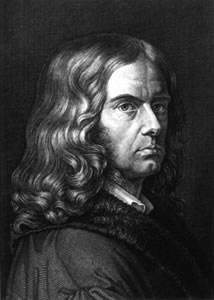
De Oostenrijkse dichter en schrijver Hugo von Hofmannsthal werd geboren op 1 februari 1874 in Wenen. Zie ook alle tags voor Hugo von Hofmannsthal op dit blog.


Sonett der Welt

Unser Leiden, unsre Wonnen
Spiegelt uns die Allnatur,
Ewig gilt es unsrer Spur,
Alles wird zum Gleichnisbronnen:

Erstes Grün der frischen Flur,
Mahnst an Neigung, zart begonnen,
Heißes Sengen reifer Sonnen,
Bist der Liebe Abglanz nur!

Schlingt sich um den Baum die Winde,
Denken wir an uns aufs neue,
Sehnen uns nach einer Treue,

Die uns fest und zärtlich binde …
Und wir fühlen uns verwandt,
Wie wir unser Bild erkannt.


Der Kaiser von China spricht:

In der Mitte aller Dinge
Wohne Ich, der Sohn des Himmels.
Meine Frauen, meine Bäume,
Meine Tiere, meine Teiche
Schließt die erste Mauer ein.
Drunten liegen meine Ahnen:
Aufgebahrt mit ihren Waffen,
Ihre Kronen auf den Häuptern,
Wie es einem jeden ziemt,
Wohnen sie in den Gewölben.
Bis ins Herz der Welt hinunter
Dröhnt das Schreiten meiner Hoheit.
Stumm von meinen Rasenbänken,
Grünen Schemeln meiner Füße,
Gehen gleichgeteilte Ströme
Osten-, west- und süd- und nordwärts,
Meinen Garten zu bewässern,
Der die weite Erde ist.
Spiegeln hier die dunkeln Augen,
Bunten Schwingen meiner Tiere,
Spiegeln draußen bunte Städte,
Dunkle Mauern, dichte Wälder
Und Gesichter vieler Völker.
Meine Edlen, wie die Sterne,
Wohnen rings um mich, sie haben
Namen, die ich ihnen gab,
Namen nach der einen Stunde,
Da mir einer näher kam,
Frauen, die ich ihnen schenkte,
Und die Scharen ihrer Kinder;
Allen Edlen dieser Erde
Schuf ich Augen, Wuchs und Lippen,
Wie der Gärtner an den Blumen.
Aber zwischen äußern Mauern
Wohnen Völker, meine Krieger,
Völker, meine Ackerbauer.
Neue Mauern und dann wieder
Jene unterworfnen Völker,
Völker immer dumpfern Blutes,
Bis ans Meer, die letzte Mauer,
Die mein Reich und mich umgibt.


Terzinen  III

Wir sind aus solchem Zeug, wie das zu träumen,
Und Träume schlagen so die Augen auf
Wie kleine Kinder unter Kirschenbäumen,

Aus deren Krone den blassgoldnen Lauf
Der Vollmond anhebt durch die große Nacht.
…Nicht anders tauchen unsre Träume auf,

Sind da und leben wie ein Kind, das lacht,
Nicht minder groß im Auf- und Niederschweben
Als Vollmond, aus Baumkronen aufgewacht.

Das Innerste ist offen ihrem Weben;
Wie Geisterhände in versperrtem Raum
Sind sie in uns und haben immer Leben.

Und drei sind eins: ein Mensch, ein Ding, ein Traum.


hofmannsthal_hugo_von

Hugo von Hofmannsthal (1 februari 1874 – 15 juli 1929)


De Duitse dichter en schrijver Günter Eich werd geboren op 1 februari 1907 in Lebus an der Oder. Zie ook alle tags voor Günter Eich op dit blog.


Wacht auf!


Wacht auf, – denn eure Träume sind schlecht!

Bleibt wach, – weil das Entsetzliche näher kommt.


Auch zu dir kommt es, der weitentfernt wohnt

von den Stätten, wo Blut vergossen wird,

auch zu dir und deinem Nachmittagsschlaf,

worin du ungern gestört wirst.

Wenn es heute nicht kommt, kommt es morgen,

aber sei gewiß.


“Oh, angenehmer Schlaf

auf dem Kissen mit roten Blumen,

einem Weihnachtsgeschenk von Anita, woran sie drei Wochen gestickt hat,


oh, angenehmer Schlaf,

wenn der Braten fett war und das Gemüse zart.

Man denkt im Einschlummern an die Wochenschau von gestern abend:

Osterlämmer, erwachende Natur, Eröffnung der Spielbank in Baden-Baden,

Cambridge siegte gegen Oxford mit zweieinhalb Längen, –

das genügt, das Gehirn zu beschäftigen.


Oh, diese weichen Kissen, Daunen aus erster Wahl!

Auf ihm vergißt man das Ärgerliche der Welt, jene Nachricht zum Beispiel:

Die wegen Abtreibung Angeklagte sagte zu ihrer Verteidigung:

Die Frau, Mutter von sieben Kindern, kam zu mir mit einem Säugling,

für den sie keine Windeln hatte und der

in Zeitungspapier gewickelt war.

Nun, das sind Angelegenheiten des Gerichtes, nicht unsre.

Man kann dagegen nichts tun, wenn einer etwas härter liegt als der andre.

Und was kommen mag, unsere Enkel mögen es ausfechten.”


Ach, du schläfst schon? Wache gut auf, mein Freund!

Schon läuft der Strom in den Umzäunungen, und die Posten sind aufgestellt.


Nein, schlaft nicht, während die Ordner der Welt geschäftig sind!

Seid mißtrauisch gegen ihre Macht, die sie vorgeben für

euch erwerben zu müssen.

Wacht darüber, daß eure Herzen nicht leer sind, wenn mit

der Leere eurer Herzen gerechnet wird!

Tut das Unnütze, singt die Lieder, die man aus eurem Mund nicht erwartet!

Seid unbequem, seid Sand, nicht das Öl im Getriebe der Welt!


Eich

Günter Eich (1 februari 1907 – 20 december 1972)


De Duitse schrijver Dieter Kühn werd geboren op 1 februari 1935 in Keulen. Zie ook alle tags voor Dieter Kühn op dit blog.

Uit: Der König von Grönland


Die Blechtür wird mit einem Vierkantschlüssel zugesperrt, die Gondel ruckt an, gleitet hinauf zur ersten Zwischenstütze, rasselt, schaukelt, und schon der Rhein, rechts und links der Zoobrücke, die dem Panoramabild eine breite Mittelachse setzt. Dreibahnig gleitet es heran, westwärts, dreibahnig gleitet es unter der Gondel hervor, ostwärts.

Er läßt den Blick nach links hinausschwingen, zur Mülheimer Hängebrücke, zum Hochhaus der Firma Bayer in Leverkusen, zu den Ausläufern des Bergischen Landes. Die Gondel schwebt über die Zoobrücke hinweg, schon gleißt der Fluß auf.- Flimmerpunkte so dicht beisammen, daß eine schwingende Lichtfläche entsteht, gegliedert von gestaffelten Bugwellen eines Güterschiffs, dessen Konturen abzuschmelzen scheinen. Je näher die Lichtbahn, Flimmerbahn an die Brücke heranreicht, desto stärker die Auflösung; an den Rändern nur noch einzelne Blitz- und Funkelpunkte, in Zufallsverteilung.

Herkenrath löst den Blick von den Lichtpunkten, schaut südwärts auf den Fluß zwischen dem unbefestigten, flachen Ufer des Rheinparks und dem befestigten Ufer rechts. Weiter hinaus der Dom und Groß St. Martin, die beiden Funkhochhäuser am Raderberggürtel, die Südbrücke. Rechts von ihr, im Stadtbild nicht betont, sein künftiger Tatort. Und vor der Südbrücke die Severinsbrücke und die Deutzer Brücke und die Hohenzollernbrücke: der künftige Aktionsraum. Ja, Aktionsraum Rheinschiene, im Streckenabschnitt Südbrücke/ Zoobrücke, eventuell erweitert zur Rodenkirchener Brücke dort im Süden, zur Mülheimer Brücke hier im Norden der Stadt…”


Dieter_Kuehn

Dieter Kühn (Keulen,1 februari 1935)


De Nederlandse schrijver Frits Bernard Hotz werd geboren op 1 februari 1922 in Leiden. Zie ook alle tags voor F. B. Hotz op dit blog.


Uit: Evolutie


Hij boog zich over naar De Bree en fluisterde: “Dat meisje [Marie], ik weet het niet zeker, maar ik dacht even dat ik die kende. Een beetje vervelende geschiedenis, destijds in Noyon of waar was het. Niks onbehoorlijks natuurlijk, alleen maar een kleine vrijage; maar ja ik moest verder met die Wapenstilstandscommissie, je begrijpt…”

“Ik begrijp het,” zei De Bree. Z’n kraaloogjes draaiden. “Maar toch geen echte moeilijkheden?” vroeg hij nog snel, “geen vaderschappen? Nou ja ik nóém maar wat.”

“Ben je gek geworden!” riep Thomas. “Alleen, nou ja, ik zou het vervelend vinden als die oudere vrouw iets wist of alsnog hoorde.”

“Onder de leeftijd toen zeker?” vroeg De Bree nog bij vingergetrommel op de brede leren armleuning.

“Een beetje misschien,” zei Thomas.

(…)


Hij herinnerde zich, met een ongeopend boek in z’n armstoel bij de schouw, een verlaten loopgraaf in Noord-Frankrijk, gezien op een werkbezoek met de commissie. Er zat oud bloed aan een onderkomen.

De dood was niet te vermijden. Eens zou z’n eigen bloed, nu nog levend en dun, stollen en verkleuren in dezelfde aderen die hij nu ongewoon dik op z’n handrug zag liggen.”


Hotz1988

F. B. Hotz (1 februari 1922 – 5 december 2000)
Portret door Hennie Dijkstra, 1988


De Schotse schrijfster Muriel Spark werd op 1 februari 1918 geboren als Muriel Sarah Camberg in Edinburgh. Zie ook alle tags voor Muriel Spark op dit blog.


Uit: The Finishing School


“You begin,” he said, “by setting your scene. You have to see your scene, either in reality or in imagination. For instance, from here you can see across the lake. But on a day like this you can’t see across the lake, it’s too misty. You can’t see the other side.” Rowland took off his reading glasses to stare at his creative writing class whose parents’ money was being thus spent: two boys and three girls around sixteen to seventeen years of age, some more, some a little less. “So,” he said, “you must just write, when you set your scene, ’the other side of the lake was hidden in mist.’ Or if you want to exercise imagination, on a day like today, you can write, ‘The other side of the lake was just visible.’

But as you are setting the scene, don’t make any emphasis as yet. It’s too soon, for instance, for you to write, ‘The other side of the lake was hidden in the fucking mist.’ That will come later. You are setting your scene. You don’t want to make a point as yet.”
College Sunrise had begun in Brussels, a finishing school for both sexes and mixed nationalities. It was founded by Rowland Mahler, assisted by his wife, Nina Parker.
The school had flourished on ten pupils aged sixteen and upward, but in spite of this flourishing, mainly by reputation, Rowland had barely been able to square the books at the end of the first year. So he moved the school to Vienna, increased the fees, wrote to the parents that he and Nina were making an exciting experiment: College Sunrise was to be a mobile school which would move somewhere new every year.
They had moved, leaving commendably few debts behind, from Vienna to Lausanne the next year. At present they had nine students at College Sunrise at Ouchy on the lake. Rowland had just taken the very popular class, attended by five of the students, on Creative Writing. Rowland was now twenty-nine, Nina twenty-six. Rowland himself hoped to be a published novelist one day. To conserve his literary strength, as he put it, he left nearly all the office work to Nina, who spoke good French and was dealing with the bureaucratic side of the school and with the parents, employing a kind of impressive carelessness.


Spark

Muriel Spark (1 februari 1918 – 13 april 2006)


Zie voor nog meer schrijvers van de 1e februari ook mijn vorige blog van vandaag.


Langston Hughes, Jevgeni Zamjatin, Georg Rendl, Abraham E. Fröhlich, Michel Zevaco

De Amerikaanse schrijver Langston Hughes werd geboren op 1 februari 1902 in Joplin, Missouri. Zie ook alle tags voor Langston Hughes op dit blog.


Daybreak in Alabama 


When I get to be a composer

I’m gonna write me some music about

Daybreak in Alabama

And I’m gonna put the purtiest songs in it

Rising out of the ground like a swamp mist

And falling out of heaven like soft dew.

I’m gonna put some tall tall trees in it

And the scent of pine needles

And the smell of red clay after rain

And long red necks

And poppy colored faces

And big brown arms

And the field daisy eyes

Of black and white black white black people

And I’m gonna put white hands

And black hands and brown and yellow hands

And red clay earth hands in it

Touching everybody with kind fingers

And touching each other natural as dew

In that dawn of music when I

Get to be a composer

And write about daybreak

In Alabama.


Mother to Son 


Well, son, I’ll tell you:

Life for me ain’t been no crystal stair.

It’s had tacks in it,

And splinters,

And boards torn up,

And places with no carpet on the floor—

Bare.

But all the time

I’se been a-climbin’ on,

And reachin’ landin’s,

And turnin’ corners,

And sometimes goin’ in the dark

Where there ain’t been no light.

So, boy, don’t you turn back.

Don’t you set down on the steps.

‘Cause you finds it’s kinder hard.

Don’t you fall now—

For I’se still goin’, honey,

I’se still climbin’,

And life for me ain’t been no crystal stair.


langstonhughes1

Langston Hughes (1 februari 1902 – 22 mei 1967)


De Russische revolutionair en schrijver Jevgeni Zamjatin werd geboren op 1 februari 1884 in Lebedyan. Zie ook alle tags voor Jevgeni Zamjatin op dit blog.


Uit: We (Vertaald door Mirra Ginsburg)


Spring. From beyond the Green Wall, from the wild, invisible plains, the wind brings the yellow honey-dust from a flower of some kind. This sweet dust parches the lips—you skim your tongue across them every minute—and you presume that there are sweet lips on every woman you encounter (and man, of course). This somewhat interferes with logical reasoning.
But then, the sky! Blue, untainted by a single cloud (the Ancients had such barbarous tastes given that their poets could have been inspired by such stupid, sloppy, silly-lingering clumps of vapor). I love—and I’m certain that I’m not mistaken if I say we love—skies like this, sterile and flawless!
On days like these, the whole world is blown from the same shatterproof, everlasting glass as the glass of the Green Wall and of all our structures. On days like these, you can see to the very blue depths of things, to their unknown surfaces, those marvelous expressions of mathematical equality—which exist in even the most usual and everyday objects.
For instance, this morning I was at the hangar, where the Integral is being built, and suddenly: I noticed the machines. Eyes shut, oblivious, the spheres of the regulators were spinning; the cranks were twinkling, dipping to the right and to the left; the shoulders of the balance wheel were rocking proudly; and the cutting head of the perforating machine curtsied, keeping time with some inaudible music. Instantly I saw the greater beauty of this grand mechanized ballet, suffused with nimble pale-blue sunbeams.“


Zamjatin

Jevgeni Zamjatin (1 februari 1884 – 10 maart 1937)


De Oostenrijkse dichter en schrijver Georg Rendl werd geboren op 1 februari 1903 in Zell am See. Zie ook alle tags voor Georg Rendl op dit blog.


Das Alleinsein


Herrlich herb dieses Geschenk: Alleinsein!
Alleinsein: Die Geliebten
ganz bei sich haben und Gespräche
tun mit ihnen.
Das Weib zuerst, zuvörderst,
das, geliebt, gab, was Größeres,
das Göttliche, zu geben vermag
als das Heldische:
sich selbst, den Tod wagend
des Lebens willen.
Das Weib, die Frau, die geliebte Frau:
da!
Das Gewordene: da!
Zu wenig das Falten der Hände,
nur Geste wärs.
Was aber dann?
Leben bis zum Tode
Für das Geschenk des Weibes.
Dann:
Freund,
die Beschwingung des Weins,
der der Seele Zunge löst,
läßt mich sagen:
Ich trinke Dir zu
mit der göttlichen Gabe: Wein.
Herrlich herb dieses Geschenk: Alleinsein.
Herrlich auch morgen die Strafe
für alle Entäußerung,
die längst schon Strafe ist
dem, der sich übt durch das Gottesgeschenk: Wein.


georg_rendl

Georg Rendl (1 februari 1903 – 10 januari 1972)
Zelfportret met rechter hand, 1968


De Zwitserse dichter en schrijver Abraham Emanuel Fröhlich werd geboren op 1 februari 1796 in Brugg. Zie ook alle tags voor Abraham E. Fröhlich op dit blog.

Regenlied

Es regnet, es regnet, der Kuckuck wird naß,
bunt werden die Blumen, und grün wird das Gras.
Mairegen bringt Segen, heraus aus dem Haus,
steigt schnell in die Kutsche, gleich fahren wir aus.
Es regnet, es regnet, der Kuckuck wird naß,
wir sitzen im Trocknen, was schadet uns das?
Mairegen bringt Segen, und werden wir naß,
so wachsen wir lustig, wie Blumen und Gras.


Froehlich

Abraham E. Fröhlich (1 februari 1796 – 1 december 1865)


De Franse schrijver, journalist en anarchistisch activist Michel Zevaco werd geboren op 1 februari 1860 in AjaccioZie ook alle tags voor Michel Zevaco op dit blog.


Uit: Fleurs de Paris


Deux heures du matin. Une de ces nuits funèbres des grands hivers parisiens. L’hôtel d’Anguerrand était désert, son grand portail massif solidement fermé, ses croisées closes, sa façade muette et noire. À travers les persiennes de deux fenêtres qui se touchaient, une pâle et triste lueur, pourtant, filtrait…
Sur le trottoir d’en face, un homme et une femme, renfoncés contre le mur de la maison que Lise avait habitée, immobiles, silencieux, raidis par l’attention, fixaient cette double lueur.
À dix pas de là, une voiture stationnait…
La femme, parfois, jetait à droite et à gauche un long regard qui fouillait la nuit. Mais l’homme ne pouvait détacher se yeux hagards de ces fenêtres.
Il eut un soupir rauque et passa le revers de sa main sur son front…
– Marche… murmura la jeune femme. Songes-y ! L’occasion, la voici !…
– Oui, fit l’homme dans une sorte de grognement, – mais il ne fit pas un pas.
– Tu n’oses pas ! reprit la femme. Tu aurais dû amener deux ou trois aminches…
– Jamais !… Je ne veux pas qu’on voie que je vais faire cela… moi !… C’est déjà trop que tu aies fait venir Biribi… nous n’avions pas besoin de sapin !…
– Biribi est un frère. Allons, vas-y !… C’est la fortune !… continua la femme dans un murmure imperceptible et ardent. Avant-hier soir, nous ne pouvions pas acheter deux sous de pain… Pour un mauvais quart d’heure à passer, nous voilà riches !… Est-ce que ce n’est pas un peu notre tour, dis ?…
– Assez ! haleta l’homme. Ne me remets pas ces colères-là au ventre… j’y vais !…
– Bon !… Te rappelles-tu bien le plan, tel que Charlot te l’a remis ce matin ?
– Je l’ai là, dit l’homme en se frappant le front.
Il traversa la rue ; d’un bond il atteignit le faîte du mur de bordure, se hissa à la force du poignet, sauta… Il était dans l’intérieur de l’hôtel !…”


zevaco

Michel Zevaco (1 februari 1860 – 8 augustus 1918)


Norman Mailer, Anna Blaman, Alfred Kossmann, Anton Korteweg, Benoîte Groult

De Amerikaanse schrijver Norman Mailer werd op 31 januari 1923 in Long_Branch, New Jersey geboren. Zie ook mijn blog van 31 januari 2008 en mijn blog van 10 november 2007 en mijn blog van 31 januari 2007 en ook mijn blog van 31 januari 2009.


Uit: Harlot’s Ghost


„On a late-winter evening in 1983, while driving through fog along the Maine coast, recollections of old campfires began to drift into the March mist, and I thought of the Abnaki Indians of the Algonquin tribe who dwelt near Bangor a thousand years ago.
In the spring, after the planting of corn, the younger braves and squaws would leave the aged to watch over the crops and the children, and would take their birchbark canoes south for the summer. Down the Penobscot River they would travel to Blue Hill Bay on the western side of Mount Desert where my family’s house, built in part by my great-great-grandfather, Doane Hadlock Hubbard, still stands. It is called the Keep, and I do not know of all else it keeps, but some Indians came ashore to build lean-tos each summer, and a few of their graves are among us, although I do not believe they came to our island to die. Lazing in the rare joys of northern warmth, they must have shucked clams on the flats at low tide and fought and fornicated among the spruce and hemlock when the water was up. What they got drunk on I do not know, unless it was the musk of each other, but many a rocky beach in the first hollow behind the shore sports mounds of ancient clamshells, ground to powder by the centuries, a beach behind the beach to speak of ancient summer frolics. The ghosts of these Indians may no longer pass through our woods, but something of their old sorrows and pleasures joins the air. Mount Desert is more luminous than the rest of Maine.
Even guidebooks for tourists seek to describe this virtue: “The island of Mount Desert, fifteen miles in diameter, rises like a fabled city from the sea. The natives call it Acadia, beautiful and awesome.”
Beautiful and awesome. We have a fjord in the middle of Mount Desert, a spectacular four-mile passage by water between promontories on either side. It is the only true fjord on the Atlantic coast of North America, yet it is but a part of our rock-hewn splendor. Near the shore, peaks rise abruptly a thousand feet to afford sailing craft the illusion of great mountains, and our finest anchorage, Northeast Harbor, is in summer a dazzle of yachts.
Perhaps it is the nearness of our mountains to the sea, but silences are massive here, and summers have an allure not simple to describe. For one thing, we are not an island to attract people who follow the sun. We have almost no sand beach. The shore is pebble and clamshell strand, and twelve-foot tides inundate the rocks. Washed by incoming waves are barnacles and periwinkles, rockweed mussels, Irish moss, red seaweed, dulse. Sand dollars and whelks lie scattered in the throw of the surf. Kelp is everywhere and devil’s-apron often winds around one’s ankles. In the tide pools grow anemone and sponge. Starfish and sea urchins are near your toes.“


norman_mailer

Norman Mailer (31 januari 1923 – 10 november 2007)


De Nederlandse dichteres en schrijfster Anna Blaman werd geboren op 31 januari 1905 te Rotterdam. Zie ook mijn blog van 31 januari 2007 en ook mijn blog van 31 januari 2008 en ook mijn blog van 31 januari 2009.


Uit: Eenzaam avontuur


‘Maar zij, zij wachtte ook, al was ’t alleen maar op een weerzien, een ontmoeten, nieuws, een brief. Verschrikt hield ze de adem in, die holle en verongelijkte stemming was dus verlangen. Steels keek ze op naar Peps die in pyama door de kamer liep. Peps merkte niets. Veel kon er in je omgaan, veel kon je denken zonder dat een ander daar zelfs ook maar erg in had. Er speelde een vaag lachje om haar mooie mond. Mijn wezen achter een façade, dacht ze, een volkomen ondoordringbare façade die niets verraadt… Ze wachtte totdat hij haar blik ontdekte, een lieve blik die niets verried. Ze zag zijn bruine ogen, eerst verwonderd, dan met iets juichend… Ze sloeg haar armen om zijn hals en zei: “We blijven heel ons leven saampies.” – Ze zei het met een tederheid die niets verried. En het ontroerde hem… En onderwijl dacht ze er verder nog op door hoe diep een mens is en hoe gemakkelijk het is die diepten te verstoppen en er in weg te schuilen.’

‘Peps droeg een half kunstgebit. Dat nam hij uit de bovenkaak en borstelde hij schoon, boven de wastafel, zwijgend en van haar afgekeerd. Er waren ochtenden dat ze de voorkamer in liep, als hij dat deed, uit kiesheid en uit weerzin. Maar soms ook bleef ze juist zitten en dan zei ze iets waarom hij lachen moest of waarop hij moest antwoorden en spiedde ze via de spiegel waar hij voor stond naar zijn misvormde lach, zijn lispelende lipbewegingen. Zonder zijn tanden was hij weerloos, en hij wist het. Soms ook overviel ze hem precies op dat moment met tederheid. “Ach lieverd, kom toch even bij me, maar direct.” – Haar stem klonk mild, maar niettemin bevelend, als van een moeder met een absoluut gezag over haar leidzaam kind. Ze greep zijn handen, dwong hem op de knieën, streelde zijn hoofd, vlijde dat aan haar borst en keek hem in de ogen. En dat alles voordat hij zijn tanden weer had ingezet. Ze zag de vreugde in zijn ogen om haar vertedering, waarachter hij geen dubbelzinnigheid vermoeden kon. Ze zag zijn heimelijk bevangen vreugde, zonder tanden durfde hij natuurlijk niet te glimlachen en daarom koos hij een bepaald geluksmasker; roerloze bovenlip, een mond als in naïeve ernst, en alle vreugd verlegd in stralend kijken. Zo maakte ze het hem niet makkelijk. En op een ochtend ging ze nog wat verder. Ze ging naast hem voor de spiegel staan… Hij keerde zich toen af, verschrikt, en deed alsof hij, hoewel nog niet klaar met zijn gebit, iets zoeken ging. Maar zij keerde zich daarop ook om, leunend tegen de wastafel, en met dezelfde lach vol uitdaging en praal. “Wat zoek je, lieverd?” vroeg ze. Zo gebeurde er veel heimelijks tussen die twee.’


Blaman

Anna Blaman (31 januari 1905 – 13 juli 1960)
Portret door Helena de Boer


De Nederlandse dichter en schrijver Alfred Kossmann werd geboren op 31 januari 1922 in Leiden. Zie ook mijn blog van 31 januari 2007 en ook mijn blog van 31 januari 2008 en ook mijn blog van 31 januari 2009.


Uit: Negen Blasphemieën


1

Over twee weken ga ik met mijn vrouw

Naar Napels varen.

O God, dat is de tijd voor openbaren,

Open uw hemel, toon u naakt,

Bewijs dat gij dit alles hebt gemaakt

En laat ons weten wat wij zijn vergeten.

Ik geef u tijd. Twee weken

Zijn wij met enige ootmoedigheid

(Zij ’t niet als loon voor smeken of verlangen)

Geestlijk bereid

Om u met feestlijk eerbetoon te ontvangen.


2

Simultaanspeler van ons lot,

Het is ons goed dat gij altijd met wit

Ons spel begint,

Dat gij

Blinkende engelen opstelt in de rij

Van uw pionnen,

Ons afleidt met uw rinkelende zonnen

En al uw tover aanwendt dat gij wint,

Maar niet, valsspeler God,

Dat gij met voze rust aanschouwt hoe wij

In ’t spel waarmee gij ons een leven lang

Misdeelde

De zet beramen die uw boze dwang

Ons inpraat dat wij kozen,

Opdat perslot wij in een zoete weelde

Wenend de koning nederleggen

En zeggen:

Wij willen boeten dat wij met u speelden.


alfred-kossman

Alfred Kossmann (31 januari 1922 – 27 juni 1998)
Getekend door Siegfried Woldhek, 1981


De Nederlands dichter en neerlandicus Anton Korteweg werd geboren in Zevenbergen op 31 januari 1944. Zie ook mijn blog van 31 januari 2009.


Prettig vooruitzicht


In het oksel van twee spoordijkjes,

tussen verwaaide dahlia’s en

stinkende afrikaantjes,


op bonte klompen naast

een zelfgemaakte molen

waarvan, het kan niet op,

de wieken lustig draaien –


een knuistje in de hand.


Laatste stukje


Ben je er bijna,

wil je nog harder,

wil je nog mooier,

wil je geen adem meer,

wil je er zijn.


Doodgaan doe je om

aan te komen

waar je niet, nooit meer

hoeft te gaan leven.


korteweg

Anton Korteweg (Zevenbergen, 31 januari 1944)


De Franse schrijfster Benoîte Groult werd geboren op 31 januari 1920 in Parijs. Zie ook mijn blog van 31 januari 2007 en ook mijn blog van 31 januari 2008 en ook mijn blog van 31 januari 2009.

Uit: Mon évasion

Pas de théoriciens du moindre effort, pas de camouflage des matières scolaires sous des appellations ludiques et frauduleuses laissant croire aux élèves et aux parents que l’on peut s’instruire en faisant l’économie du travail. Pas d’activités d’éveil, impliquant que les autres activités seraient soporifiques ! Pas de psychologues scolaires enfin pour interdire toute punition, toute note trop basse qui pourrait traumatiser le nul, ou pour expliquer, donc justifier, l’insolence vis-à-vis du prof, voire la violence ou le passage à tabac avec la complicité d’un parent, conduites qui ne représentent plus tout bêtement l’arrogance et le refus de toute discipline mais un signe d’angoisse des jeunes, un appel au secours qu’il convient non de sanctionner mais de soigner, en remettant en question les enseignants, l’enseignement et la société tout entière. Nous, d’avant-guerre, étions des enfants, « infans », étymologiquement ceux qui ne parlent pas, qui ne donnent pas leur avis et nos parents à nous étaient « les parents », une espèce qui n’avait pas à être jugée ni remise en question.
La plupart des écrivains aujourd’hui, hommes ou femmes, en reviennent sans cesse à leur enfance comme à une caverne d’Ali Baba, qui peut se révéler, selon les cas, pleine de trésors ou d’horreurs, d’attendrissements ou de rancunes inexpiables. En tout cas ils prétendent y trouver les raisons de leur réussite et surtout de leurs échecs, analysant interminablement les phrases de papa ou de maman, instruisant sans cesse le procès de leurs géniteurs, de leur laxisme ou de leur autoritarisme, s’interrogeant même sur la façon dont ils ont fait l’amour le jour où ils ont conçu leur enfant, et dénonçant avec la même amertume le désintérêt parental pour la passionnante promesse qu’ils constituaient ou bien leur intolérable exigence de résultats pour leur enfant.
Personnellement, sauf talent exceptionnel du scripteur, les enfances m’ennuient et les actes d’accusation dressés contre les parents, qu’ils soient biologiques ou adoptifs, présents ou enfuis, aimants ou indifférents, commencent à m’écœurer. Je me suis avisée que ce qui est si reposant chez les Anciens, comme chez les Classiques ou les Romantiques, c’est qu’ils nous ont fait grâce de leur enfance. Corneille fut-il un enfant battu ? Est-ce que Platon se masturbait à dix ans ? Musset a-t-il beaucoup pleuré parce que sa mère ne venait pas l’embrasser le soir dans son lit ?“

GroultM

Benoîte Groult (Parijs, 31 januari 1920)


Zie voor nog meer schrijvers van de 31e januari ook mijn twee vorige blogs van vandaag.


Stefan Beuse, Marie Luise Kaschnitz, Kenzaburo Oe, Kurt Marti, John ‘O Hara

De Duitse schrijver Stefan Beuse werd geboren op 31 januari 1967  in Münster. Zie ook mijn blog van 31 januari 2007 en ook mijn blog van 31 januari 2008 en ook mijn blog van 31 januari 2009.


Uit: 99 Cent für ein Hallelujah (column)


Ich bin nicht immer freier Autor gewesen. Ich war mal in der Werbung, wo ich über 10 Jahre lang so viel Geld verdient habe, dass mir der Kundenbetreuer einen Dispokredit aufgedrängt hat, für den ich bequem eine Doppelhaushälfte hätte kaufen können.

Das war in den Achtzigern. Die Jahre, die Peter Licht meint, wenn er den Kapitalismus einen „alten Schlawiner“ nennt. Man hat genommen, was man kriegen konnte. Ich auch.

Aber irgendwann bin ich aufgewacht und habe gemerkt: Hey! Geld ist nicht alles! Und glücklich macht es dich auch nicht! Was glücklich macht, ist dies: Sei, wer du bist, immer. Mach, was du tun solltest.

Was ich nicht tun sollte, war Werbung. Also habe ich damit aufgehört. Ich tauschte, was mir viel Geld für wenig Arbeit einbrachte, gegen etwas, das mich zwang, jeden Tag mein Herz rauszureißen – zu einem Stundenlohn, für den man maximal eine Kugel Eis bekommt.

So wurde ich zu einem glücklichen Menschen. Und verlor meinen Dispokreditrahmen.

Soweit zur Vorgeschichte. Die Hauptgeschichte spielt an Heiligabend. Sie geht so:

Die Schwägerin war zu Gast. Mit ihren Kindern; nennen wir sie Jonas und Franzi.

Franzi hatte ihre Querflöte dabei, sie spielte Weihnachtslieder. Vermutlich berauscht von dem halb höflichen, halb erleichterten Applaus am Ende ihrer Darbietung, hochgejazzt von den „Bravo“-Rufen der eigenen Mutter, entschied sie sich zu einer Zugabe. Weil sie aber kein Lied mehr auf der Querflöte konnte, fing sie an zu singen.

Nach dem zweiten Lied wurde der Applaus dünner. Nach dem fünften Lied hatte sie alle Weihnachtslieder, die sie kannte, durch. Aber satt war sie noch lange nicht.

Ihr fiel ein, dass ihr Chor gerade Hallelujah sang, Leonard Cohens ewig jungen Klassiker. Bitte nicht, dachte ich: In der fünften Klasse hat sich die englische Sprache noch nicht ausreichend gefestigt, und eine Quatschenglischversion mit viel textsubstituierendem Mmmmmmm kann einem das schönste Lied vergällen.

Natürlich wurden meine Gebete nicht erhört. Nach den ersten Tönen lud ich das Original aus dem Internet. Heimlich. Für 99 Cent. Franzi sollte lernen, dass am Anfang früher Meisterschaft demütige Rezeption steht.“


StefanBeuse

Stefan Beuse (Münster,  31 januari 1967)


De Duitse dichteres en schrijfster Marie Luise Kaschnitz werd geboren op 31 januari 1901 in Karlsruhe. Zie ook mijn blog van 31 januari 2007 en ook mijn blog van 31 januari 2008 en ook mijn blog van 31 januari 2009.

Ein Gedicht

Ein Gedicht, aus Worten gemacht.
Wo kommen die Worte her?
Aus den Fugen wie Asseln,
Aus dem Maistrauch wie Blüten,
Aus dem Feuer wie Pfiffe,
Was mir zufällt, nehm ich,

Es zu kämmen gegen den Strich,
Es zu paaren widernatürlich,
Es nackt zu scheren,
In Lauge zu waschen
Mein Wort

Meine Taube, mein Fremdling
Von den Lippen zerrissen,
Vom Atem gestoßen,
In den Flugsand geschrieben

Mit seinesgleichen
Mit seinesungleichen

Zeile für Zeile,
Meine eigene Wüste
Zeile für Zeile
Mein Paradies.


Juni

Schön wie niemals sah ich jüngst die Erde.
Einer Insel gleich trieb sie im Winde.
Prangend trug sie durch den reinen Himmel
ihrer Jugend wunderbaren Glanz.

Funkelnd lagen ihre blauen Seen,
ihre Ströme zwischen Wiesenufern.
Rauschen ging durch ihre lichten Wälder,
große Vögel folgten ihrem Flug.

Voll von jungen Tieren war die Erde.
Fohlen jagten auf den grellen Weiden,
Vögel reckten schreiend sich im Neste,
Gurrend regte sich in Schilf die Brut.

Bei den roten Häusern im Holunder
trieben Kinder lärmend ihre Kreisel;
singend flochten sie auf gelben Wiesen
Ketten sich aus Halm und Löwenzahn.

Unaufhörlich neigten sich die grünen
jungen Felder in des Windes Atem,
drehten sich der Mühlen schwere Flügel,
neigten sich die Segel auf dem Haff.

Unaufhörlich trieb die junge Erde
durch das siebenfache Licht des Himmels;
flüchtig nur wie einer Wolke Schatten
lag auf ihrem Angesicht die Nacht.

Kaschnitz

Marie Luise Kaschnitz (31 januari 1901 – 10 oktober 1974)


De Japanse schrijver Kenzaburo Oe werd op 31 januari 1935 geboren in het dorp Oso op h
et eiland Shikoku. Zie ook mijn blog van 31 januari 2007 en ook
mijn blog van 31 januari 2008 en ook mijn blog van 31 januari 2009.


Uit: Silent Cry (Vertaald door John Bester)


“Why don’t you try some water instead?” I urged her. “There’s a spring here that the valley folk say gives the best water in the whole forest. That’s if it hasn’t dried up.”

It hadn’t dried up. At the foot of the slope on the forest side of the road, an unexpected outflow of water formed a pool about as big as the circle of a man’s arms. The water–too copious, almost, to have sprung from such small beginnings–made a channel that ran down to the valley. Beside the pool stood a number of outdoor hearths, some new, some old, the clay and stones charred black and hideous inside. In my childhood, my friends and I had built just such a hearth by the spring, and cooked rice and made soup there. In a twice-yearly ritual, each of us chose the group he would camp out with, thereby determining the division of forces among the children of the valley. The outing lasted only two days each spring and autumn, but the influence of the groups thus formed by the children remained valid throughout the year. Nothing was so humiliating as to be expelled from the group one had joined.

As I bent down over the spring to drink from it directly, I had a sudden sense of certainty: certainty that everything–the small round pebbles, grayish blue and vermilion and white, lying at the bottom of water whose brightness seemed still to harbor the midday light; the fine sand that swirled upward, clouding it ever so slightly; and the faint shiver that ran over the surface of the water–was just as I’d seen it twenty years before; a certainty, born of longing yet to myself, at least, utterly convincing, that the water now welling up so ceaselessly was exactly the same water that had welled up and flowed away in those days. And the same certainty developed directly into a feeling that the “I” bending down there now was not the child who had once bent his bare knees there, that there was no continuity, no consistency between the two “I’s,” that the “I” now bending down there was a remote stranger. The present “I” had lost all true identity. Nothing, either within me or without, offered any hope of recovery.“


Oe_kenzaburo

Kenzaburo Oe (Oso, 31 januari 1935)


De Zwitserse dichter en schrijver Kurt Marti werd geboren op 31 januari 1921 in Bern. Hij studeerde twee jaar rechten voordat hij besloot om over te stappen op theologie aan de universwiteiten van Bern en Basel. In 1950 werd hij predikant in Niederlenz, in 1961 in Bern. Sinds 1983 is hij zelfstandig schrijver.

Eine Leichenrede

als sie mit zwanzig
ein kind erwartete
wurde ihr heirat
befohlen

als sie geheiratet hatte
wurde ihr verzicht
auf alle studienpläne
befohlen

als sie mit dreißig
noch unternehmungslust zeigte
wurde ihr dienst im hause
befohlen

als sie mit vierzig
noch einmal zu leben versuchte
wurde ihr anstand und tugend
befohlen

als sie mit fünfzig
verbraucht und enttäuscht war
zog ihr mann
zu einer jüngeren frau

liebe gemeinde
wir befehlen zu viel
wir gehorchen zu viel
wir leben zu wenig  

marti

Kurt Marti (Bern, 31 januari 1921)


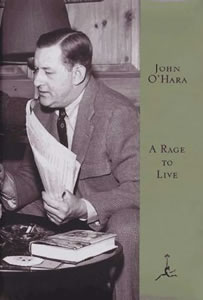
De Amerikaanse schrijver John ‘O Hara werd geboren op 31 januari 1905 in Pottsville, Pennsylvania. Zie ook mijn blog van 31 januari 2007 en ook mijn blog van 31 januari 2009.


Uit: Appointment in Samarra


Constance Walker, the little fool, was not wearing her glasses again, as if everyone in the club didn’t know she couldn’t see across the table without them. She was known on the stag line as a girl who would give you a dance; she was at Smith, and was a good student. She had a lovely figure, especially her breasts, and she was a passionate little thing who wasn’t homely but was plain and, if she only knew it, didn’t look well without her glasses. She was so eager to please that when a young man would cut in on her, he got the full benefit of her breasts and the rest of her body. The young men were fond of saying, before leaving to cut in on Constance, “Guess I’ll go get a work-out.” The curious thing about her was that four of the young men had had work-outs with her off the dance floor, and as a result Constance was not a virgin; yet the young men felt so ashamed of themselves for yielding to a lure that they could not understand, in a girl who was accepted as not attractive, that they never exchanged information as to Constance Walker’s sex life, and she was reputed to be chaste.”


OHara

John ‘O Hara (31 januari 1905 – 11 april 1970)

Zane Gray, Anthony Winkler Prins, Maria Elisa Belpaire, Jean de Crèvecoeur

De Amerikaanse schrijver Zane Grey werd geboren op 31 januari 1872 in Zanesville, Ohio. Hij volgde een opleiding tot tandarts en werkte ook in dat beroep. Nadat hij tijdens reizen het Amerikaanse westen had leren kennen begon hij zich voor deze regio en de geschiedenis ervan te interesseren. In 1910 verscheen zijn roman Heritage of the Desert die meteen een bestseller werd. Daarna volgde het ene succes op het andere. Grey schreef meer dan negentig boeken, waarvan ruim 27 miljoen exemplaren verkocht werden.


Uit: Riders of the Purple Sage


„A sharp clip-clop of iron-shod hoofs deadened and died away, and clouds of yellow dust drifted from under the cottonwoods out over the sage.
Jane Withersteen gazed down the wide purple slope with dreamy and troubled eyes. A rider had just left her and it was his message that held her thoughtful and almost sad, awaiting the churchmen who were coming to resent and attack her right to befriend a Gentile.
She wondered if the unrest and strife that had lately come to the little village of Cottonwoods was to involve her. And then she sighed, remembering that her father had founded this remotest border settlement of southern Utah and that he had left it to her. She owned all the ground and many of the cottages. Withersteen House was hers, and the great ranch, with its thousands of cattle, and the swiftest horses of the sage. To her belonged Amber Spring, the water which gave verdure and beauty to the village and made living possible on that wild purple upland waste. She could not escape being involved by whatever befell Cottonwoods.
That year, 1871, had marked a change which had been gradually coming in the lives of the peace-loving Mormons of the border. Glaze-Stone Bridge-Sterling, villages to the north, had risen against the invasion of Gentile settlers and the forays of rustlers. There had been opposition to the one and fighting with the other. And now Cottonwoods had begun to wake and bestir itself and grow hard.
Jane prayed that the tranquillity and sweetness of her life would not be permanently disrupted. She meant to do so much more for her people than she had done. She wanted the sleepy quiet pastoral days to last always. Trouble between the Mormons and the Gentiles of the community would make her unhappy. She was Mormon-born, and she was a friend to poor and unfortunate Gentiles. She wished only to go on doing good and being happy. And she thought of what that great ranch meant to her. She loved it all-the grove of cottonwoods, the old stone house, the amber-tinted water, and the droves of shaggy, dusty horses and mustangs, the sleek, clean-limbed, blooded racers, and the browsing herds of cattle and the lean, sun-browned riders of the sage.“


Grey

Zane Gray (31 januari 1872 – 23 oktober 1939)
Hier als student in 1895


De Nederlandse schrijver, dichter en dominee Anthony Winkler Prins werd geboren te Voorst op 31 januari 1817. Zie ook mijn blog van 31 januari 2007 en ook mijn blog van 31 januari 2009.

Het veenkoloniaal volkslied

Wild en woest en ledig
Was het ruwe veen,
Slechts de heide vlocht er
Kransen overheen.
Boog zich over d’oevers
Van de bruine plas
En verborg de diepte
Van het zwart moeras.

Zie, daar nad’ren mannen
Met een ijz’ren wil.
Aan de zoom dier poelen
Staan zij peinz
end stil.
Broeders op ten strijde,
Op, de band geslaakt,
Die de schatten kluistert
Door ’t moeras bewaakt.

Ja zij hebben moedig

D’ eed’le strijd volbracht
En een schat verworven
Voor het nageslacht.
Hunne namen blinken
Met ondoofb’re glans
En wij vlechten juichend
hun een heidekrans.

winkler_prins_veendam

Anthony Winkler Prins (31 januari 1817 – 4 januari 1908)
Standbeeld in Veendam


De Vlaamse dichteres en schrijfster Maria Elisa Belpaire werd geboren te Antwerpen op 31 januari 1853. Zie ook mijn blog van 31 januari 2007 en ook mijn blog van 31 januari 2009.


Uit: Het landleven in de letterkunde


Conscience is de schrijver, de dichter van ’t volk, leeft en voelt met ’t Vlaamsche volk in ’t verleden en in ’t heden, zoekt het te veredelen, op te beuren, te begeesteren voor alle verhevene zaken – godsdienst, vaderlandsliefde, verkleefdheid aan den huiselijken haard. Gelijk alle Vlaamsche schrijvers, heeft hij bijna altijd een zedelijk doelwit in ’t oog.

Of Virginie Loveling eigenlijk een ideaal heeft, konden wij niet bepalen.

Waarin dan bestaat hare voortreffelijkheid, waarin haar meesterschap? – Dat zal blijken uit het verder vergelijken der door ons gekozen werken.

In den Loteling draagt de karakterteekening de gewone hoedanigheden van Conscience’s talent: zij is breed, eenvoudig; de schrijver werkt meer met algemeene trekken, dan met nauwkeurigheden. Jan is de gewone Kempische jongeling, braaf, godvruchtig, zuiver van zeden. Trien ook is het boerenmeisje, gelijk men er zoo vele treft, gezond van hart en van lichaam, blozend en sterk, gul van gemoed en krachtig van geest. Het is het algemeene type van den Vlaamschen buitenmensch, dat Conscience ons schetst.

Virginie Loveling treedt veel meer in bijzonderheden, ontwikkelt hare karakters, schept veel uitvoeriger typen. Daar wint zij het stellig over Conscience. Met vaste hand teekent zij hare personnaadjes; hare greep is krachtig, manhaftig; niets wordt in het nevelachtige gelaten; de omlijning is scherp, nauwkeurig, de zielontleding fijn en getrouw. Dit geldt vooral voor haar meesterwerk: Een dure Eed.“


Belpaire

Maria Elisa Belpaire (31 januari 1853 – 9 juni 1948)


De Amerikaanse schrijver (van Franse afkomst) Michel-Guillaume Jean de Crèvecoeur werd geboren op 31 januari 1735 in Caen. Michel-Guillaume Jean de Crèvecoeur toonde zich in zijn Letters of an American farmer (1782) een bewogen tegenstander van slavernij. Hij maakt niet zo zeer gebruik van redeneringen als wel van sfeertekeningen en anecdoten. Het werk, opgedragen aan abbé Raynal, verscheen in 1784 in een Nederlandse vertaling: Brieven van eenen Amerikaenschen landman van Carlisle in Pennsijlvaniën geschreven aen eenen zijner vrienden in Engeland. In de negende brief tekent hij het schril contrast tussen de vrolijke en rijke bewoners van de aangename stad Charles Town (d.i. Charleston in South Carolina) en de ellendige slavenbevolking in de omstreken van de stad. Het enig recht waarop slavernij en andere misstanden in de wereld berusten, noemt hij het recht van de sterkste.


Uit: Letters from an American Farmer


„Who would have thought that because I received you with hospitality and kindness, you should imagine me capable of writing with propriety and perspicuity? Your gratitude misleads your judgment. The knowledge which I acquired from your conversation has amply repaid me for your five weeks’ entertainment. I gave you nothing more than what common hospitality dictated; but could any other guest have instructed me as you did? You conducted me, on the map, from one European country to another; told me many extraordinary things of our famed mother-country, of which I knew very little; of its internal navigation, agriculture, arts, manufactures, and trade: you guided me through an extensive maze, and I abundantly profited by the journey; the contrast therefore proves the debt of gratitude to be on my side. The treatment you received at my house proceeded from the warmth of my heart, and from the corresponding sensibility of my wife; what you now desire must flow from a very limited power of mind: the task requires recollection, and a variety of talents which I do not possess. It is true I can describe our American modes of farming, our manners, and peculiar customs, with some degree of propriety, because I have ever attentively studied them; but my knowledge extends no farther. And is this local and unadorned information sufficient to answer all your expectations, and to satisfy your curiosity? I am surprised that in the course of your American travels you should not have found out persons more enlightened and better educated than I am; your predilection excites my wonder much more than my vanity; my share of the latter being confined merely to the neatness of my rural operations.“


crevecoeur

Jean de Crèvecœur ( 31 januari 1735 – 2 november 1813)

Tijs Goldschmidt, Bernard Dewulf, Shirley Hazzard, Adelbert von Chamisso, Les Barker, Michael Dorris, Barbara Wood

De Nederlandse schrijver Tijs Goldschmidt werd geboren op 30 januari 1953 in Amsterdam. Zie ook mijn blog van 30 januari 2007 en ook mijn blog van 30 januari 2008 en ook mijn blog van 30 januari 2009.

Uit: Het feest als slagveld

“Uit het raam van mijn kamer heb ik zicht op het ouderlijk huis van Dick Hillenius (1927-1987). Het is het vierde huis voorbij de brug over de Amsterdamse Singel naar de Wijde Heisteeg aan de buitenzijde van de gracht. Binnen de grenzen van het gebied dat in zijn jeugd zijn territorium zal zijn geweest, bekeek ik zojuist op video Zintuigen zijn de voetjes van de ziel, de mooie film die zijn dochter Brigit Hillenius maakte over het verlies van haar vader en haar zoekend verdergaan daarna. Om te ontsnappen aan een al te geregeld bestaan, om te zien, te horen, te ruiken, te voelen en te proeven greep de sensuele Hillenius elke kans aan om te reizen naar, liefst mensloze, natuur. Zijn dochter reist in zijn voetsporen naar het regenwoud van Madagaskar waarover ze hem zo opgetogen had horen vertellen: het bos vol kameleons, kikkertjes en melancholiek roepende halfapen. Als ze aan de rand van het bos staat, merkt ze dat het haar weinig zegt. Zonder haar vader is het regenwoud ondoordringbaar. Ze beseft hoezeer ze hem mist. Ze besluit naar huis terug te keren en enkele familieleden en zielsverwanten te vragen naar hun band rnet Hillenius. Dat levert een rijk portret op. Vroman leest eigen gedichten en spreekt bevlogen over de kwetsbaarheid van Hillenius. Jaap Hillenius, de neo-illuministische schilder, vertelt over de totstandkoming van het meesterwerk  waaraan hij jaren werkte. Maar het sterfschilderijtje dat hij naar aanleiding van de dood van zijn broer maakte, vindt hij misschien nog wel mooier. Op een zachtaardige manier maakt hij duidelijk dat het niet altijd even gemakkelijk was de jongere broer te zijn van de wat expansieve, soms zelfs overheersende Dick. Uit de woorden van zijn vrouw, Florrie Hillenius-Gehrels, die hij tijdens zijn biologiestudie leerde kennen, blijkt hoezeer ze hem mist, terwijl zijn dood haar in sommige opzichten ook wat meer lucht heeft gegeven.”

Tijs_Goldschmidt

Tijs Goldschmidt (Amsterdam, 30 januari 1953)


De Vlaamse dichter, schrijver en journalist Bernard Dewulf werd op 30 januari 1960 in Brussel geboren. Hij debuteerde met de bundel Waar de egel gaat (1995) waarvoor hij in 1996 de Debuutprijs ontving. Zijn tweede bundel heette Blauwziek (2006). Daarnaast publiceerde hij twee boeken met essays over kunst: Bijlichtingen (2001) en Naderingen (2007). Ook vertaalde hij het klassieke toneelstuk Alcestis, in de bewerking van Ted Hughes.

Notitie


In alle vroegte doodstil opgestaan
om nog eens het eerste licht te zien.
Wassen, oude kleren aan. Koffie
en dan leven voor het open raam.

De meeuwen draaien om wat brood.
De kinderen slapen nog aan later jaren.
De duif zit dagelijks in de dakgoot.
De wolken kijken werkelijk te varen.

Terwijl ik het zit op te schrijven,
geen andere vraag zie dan het kijken,
komt er traag beweging in het huis.
Nooit wil het bij kijken blijven.


Spiegelkast


Vreemd, dat zij nu slapen moet. Er is nog
meer te doen. Net zou zij aan de strijk, het is
pas noen. En moeder zit nooit stil, meneer.

Iets in haar hoofd speelt met de tijd,
iemand die haar leven niet meer leidt.

Toch gaan gordijnen dicht. En groet zij kort
de glazen buurvouw, die zich ’s avonds
sluit. Morgen mag zij de kast weer uit.


Dewulf

Bernard Dewulf (Brussel, 30 januari 1960)


De Australische schrijfster Shirley Hazzard werd geboren op 30 januari 1931 in Sydney. Zie ook mijn blog van 30 januari 2007 en ook mijn blog van 30 januari 2008 en ook mijn blog van 30 januari 2009.


Uit: The Ancient Shore


„Of the millions who visit Italy each year, some thousands will return there “to live”—to spend a season or a year or two. Of these, a few will remain all their lives. If they are painters, writers, or musicians, they will carry on their trade in an ambiance that still esteems the individual effort of art. If they are scholars, they must take their chances in the gladiatorial arena of Italian erudition. Others may develop a career or, more usually, eke out a living with expatriate odd jobs. And there are some who can afford idleness in that peninsula where the cult of leisure flourishes still and where variety and pleasure can fill up many, though not all, days. No longer visitors, never to be natives, these people have arrived without the grim compulsions of migrants or refugees, and they move for the most part easily through the Italian dance, with excursions to their homeland. For a measure of affluence takes, these days, the edge off finality’s blade, and mobility suggests—delusively—that every journey is potentially a round trip.

Those of us who, when young, chose “to live” in the Italy of the postwar decades felt we were doing just that: living more completely among the scenes and sentiments of a humanism the New World could not provide. The Italian admixture of immediacy and continuity, of the long perspective and the intensely personal, was then reasserting itself after years of eclipse. It was a time not of affluence but of renewal, and Italy again offered to travelers her antique genius for human relations—a tact, an expansiveness never quite without form. One was drawn, too, by beauty that owed as much to centuried endurance as to the luminosity of art and which seemed, then, to create an equilibrium as lasting as nature’s. Like the historian Jakob Burckhardt, we felt all this was ours “by right of admiration.”


Shirley_hazzard

Shirley Hazzard (Sydney, 30 januari 1931)


De Duitse dichter en schrijver Adelbert von Chamisso werd op het slot Boncourt in de Champagne geboren op 30 januari 1781. Zie ook mijn blog van 30 januari 2007 en ook mijn blog van 30 januari 2008 en ook mijn blog van 30 januari 2009.


Nacht und Winter


Von des Nordes kaltem Wehen

Wird der Schnee dahergetrieben,

Der die dunkle Erde decket;


Dunkle Wolken zieh’n am Himmel,

Und es flimmern keine Sterne,

Nur der Schnee im Dunkel schimmert.


Herb’ und kalt der Wind sich reget,

Schaurig stöhnt er in die Stille;

Tief hat sich die Nacht gesenket.


Wie sie ruh’n auf dem Gefilde,

Ruh’n mir in der tiefsten Seele

Dunkle Nacht und herber Winter.


Herb’ und kalt der Wind sich reget,

Dunkle Wolken zieh’n am Himmel,

Tief hat sich die Nacht gesenket.


Nicht der Freude Kränze zieren

Mir das Haupt im jungen Lenze,

Und erheitern meine Stirne:


Denn am Morgen meines Lebens,

Liebend und begehrend Liebe,

Wandl’ ich einsam in der Fremde.


Wo das Sehnen meiner Liebe,

Wo das heiße muß, verschmähet,

Tief im Herzen sich verschließen.


Herb’ und kalt der Wind sich reget.

Dunkle Wolken zieh’n am Himmel,

Und es flimmern keine Sterne.


Wie sie ruh’n auf dem Gefilde,

Ruh’n mir in der tiefsten Seele

Dunkle Nacht und herber Winter.

Leise hallen aus der Ferne

Töne, die den Tag verkünden. –

Wird der Tag denn sich erhellen?


Freudebringend dem Gefilde

Wird er strahlen, Nacht entschweben,

Herber Winter auch entfliehen,


Und des Jahres Kreis sich wenden,

Und der junge Lenz in Liebe

Nahen der verjüngten Erde.


Mir nur, mir nur ew’ger Winter,

Ew’ge Nacht, und Schmerz und Thränen,

Kein Tag, keines Sternes Flimmer!


Chamisso_Adelbert

Adelbert von Chamisso (30 januari 1781 – 21 augustus 1838)


De Engelse dichter Les Barker werd op 30 januari 1947 geboren in Manchester. Hij volgde een opleiding tot accountant voordat zijn schrijverstalent werd ontdekt. Barker is vooral bekend om zijn komische teksten en nonsensgedichten. Hij trad eerst alleen op, maar later met de The Mrs Ackroyd Band. Gespeeld werd o.a. in Hongkong, Australië, Nieuw Zeeland, de VS en Canada. Er zijn meer dan 75 titels van Barker verschenen.


The Road To Tomorrow

Tune: Boithrin bui (the yellow road)   


The road to tomorrow’s a hard road to take;

It may lead us through sorrow for foolishness’ sake;

And it twists and it turns, at first left and then right,

And there’s many are lost in the darkness of night.


They stray from the path on the way through the trees,

For they think they may wander wherever they please,

But the road to temptation’s down there in the wood

And it won’t always lead you the way that it should.


The road out of evening that leads to the dawn

Can bless you with burdens that need to be borne;

For at sunset, the emptiest head may depart

And arrive the next morning the heaviest heart.


For which road’s the right one? The wise cannot say,

Though both foolish and wise walk the distance each day;

For there’s signposts to read, sage advice you may take

And there’s fools you may heed and wrong turnings to make.


The road to tomorrow is one I know well

For I’ve walked it to heaven and walked it to hell;

I’ve walked it both happy and sad as can be

And I wonder if you’d care to walk it with me;


The road through the night to the morning is wide

So two may walk down it to dawn, side by side;

So come with me now down that road, hand in hand;

Let’s be lovers forever in morning’s bright land;

We’ll be lovers forever in morning’s bright land.


les-barker

Les Barker (Manchester, 30 januari 1947)


De Amerikaanse schrijver Michael Anthony Dorris werd geboren op 30 januari 1945 in Louisville, Kentucky. Hij behaalde een BA aan de Georgetown University in 1967 en een M.Phil. van Yale University in 1970. In 1971 werd hij de eerste ongetrouwde Amerikaan die een kind adopteerde. De drie jaar oude Lakota jongen Reynold Abel leed aan een alcohol syndroom, omdat zijn moeder tijdens de zwangerschap had gedronken. Morris schreef er zijn beroemdste boeken over The Broken Cord (1989). Voor het boek kreeg hij de National Book Critics Circle Award for General Nonfiction. In 1987 verscheen zijn roman A Yellow Raft in Blue Water (1987). In 1991 werd Reynold Abel gedood bij een autoongeluk. Dorris pleegde in 1997 zelfmoord.


Uit: Cloud Chamber


„When I was still Rose Mannion and had the full use of myself, I was a force to behold. My hair’s fine blackness was my signature, the legacy of a shipwrecked Spaniard off the Armada who washed onto Connemara and arrived, bedraggled and desperate, at the cottage door of some love-starved great-grandmother. In every generation that followed, it is said, there is but one like me. My mother used to call my mane a rain of Moorish silk as she brushed two hundred strokes before prayers. Never cut since birth, each wisp that pulled free she collected and worked into a dark snake she scored inside a wooden box. Now, ever since that terrible night, its lengthening coil I wind within a salver of Galway crystal, my constant souvenir of destruction. In the milky glow of lamplight it shifts and expands through the engraved cuts like a Hydra with many faces, each one of them Gerry Lynch.

What was there, back then, not to love about Gerry Lynch? It’s true, I was a girl in the habit of measuring each person new to me by a tabulation of their natural imperfections: this one had too short an upper lip, that one unfortunate hair. This one was marred by the heaviness of the upper arm, that one by the gap of a missing tooth — the easier to place them the next time we met. But Gerry Lynch broke the mold.

You even had to adore his flaws. Too quick with the compliments, and those, too expansive to be absorbed without a shading of doubt. A tendency to sometimes withdraw into the depths of himself while feigning to listen politely. A furtiveness, hesitancy, better describes it, and at the late-night meetings, when his turn to speak arrived, he once or twice in his enthusiasm seemed just that much off — brasher than need be, almost as if he took personally the injury that united us all in our resolve to remedy. An occasional bout of silliness, a touch boyish in a grown man.

But if these trifles be the beads on his Sorrowful Mysteries, think only of the Joyful, the Glorious! His devotion to the Cause. His bow-head humility at the Communion rail. His gait, so bouncing with natural exuberancy that who could fail to follow where he led? His clean town-smell, warm days and chill. The tenor voice that pulled the heart tight as the cross-stitch of a doubled thread. And for the Hail Holy Queen: that song he made up, that darling brave ballad that bore my name. He sang it to all who’d listen, his eyes twinkling merry except when he’d glance into the crowd my way, and then, so serious that everyone but us two faded into nothing. I could not meet his eyes, and still draw breath.“


MichaelDorris

Michael Dorris (30 januari 1945 – 10 april 1997)


De Engels-Amerikaanse schrijfster Barbara Wood werd geboren op 30 januari 1947 in Warrington. Zie ook mijn blog van 30 januari 2008 en ook mijn blog van 30 januari 2009.


Uit: Daughter of the Sun


„The runner sprinted down the paved road, his heart pounding with fear.  Although his feet were bleeding, he dared not stop.  He looked back.  His eyes widened in terror.  He stumbled, fought for balance, and pushed on.  He had to warn the clan.
A Dark Lord was coming.
Ahoté could not help his forbidden thoughts.  There sat beautiful Hoshi’tiwa, just a hundred paces from where he stood at the Memory Wall,  radiant in the sunshine as she spun cotton ribbons for her bridal costume.  She looked so happy in front of her small adobe house, shaded by cottonwood trees, with the fresh stream trickling nearby.  All she had been able to talk about was the coming wedding day.  But all Ahoté could think about was the wedding night.
His father pinched him.
Under the elder’s tutelage, eighteen-year-old Ahoté was reciting the clan history, using the pictographs painted on the wall as a guide.  Each symbol represented a major event in the past.   And as there were too many events recorded on the Memory Wall – symbolized by spirals, animals, people, lightning strikes – for the clan to remember, it was the job of one man, He Who Links People.
This was the sacred calling to which young Ahoté was apprenticed and upon which he must concentrate.  But his mind was wandering.
His father scowled.  Takei did not understand the boy’s lovesick state.  When Takei had wed, years ago, a girl chosen by his parents, he had done his duty, begetting her with many children.  He had never wasted his time in moony-eyed daydreaming and sexual fantasies.  Sex was for creating children, not for idle amusement.  If Takei had ever taken pleasure in the intimate act, he could not recall it.“


barbara_wood

Barbara Wood (Warrington, 30 januari 1947)


Voor nog meer schrijvers van de 30e januari zie ook mijn vorige blog  van vandaag.


Richard Brautigan, Hans Erich Nossack, Anton Hansen Tammsaare, Walter Savage Landor, Franz von Sonnenfeld

De Amerikaanse dichter en schrijver Richard Brautigan werd geboren op 30 januari 1935 in Tacoma, Washinton. Zie ook mijn blog van 30 januari 2007 en  ook mijn blog van 30 januari 2009.


My Nose Is Growing Old 


Yup.

A long lazy September look

in the mirror

say it’s true.


I’m 31

and my nose is growing

old.


It starts about 1/2

an inch

below the bridge

and strolls geriatrically

down

for another inch or so:

stopping.
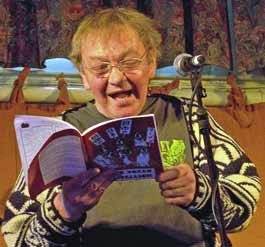
 

Fortunately, the rest

of the nose is comparatively

young.
 

I wonder if girls

will want me with an

old nose.


I can hear them now

the heartless bitches!


“He’s cute

but his nose

is old.”


30 Cents, Two Transfers, Love 


Thinking hard about you

I got on the bus

and paid 30 cents car fare

and asked the driver for two transfers

before discovering

that I was

alone.


brautigan_ferlingetti

Richard Brautigan (30 januari 1935 – september 1984)
Hier (l) met de dichter Lawrence Ferlingetti (r)


De Duitse dichter en schrijver Hans Erich Nossack werd op 30 januari 1901 geboren in Hamburg. Zie ook mijn blog van 30 januari 2007 en ook ook mijn blog van 30 januari 2009.

Ist das der Mensch?

Ich weiß, daß man mich eines Tages braucht.
Soll ich dann sagen, wenn sie suchend kommen -:
“Was war es noch, was uns die Flut genommen?”
Auch ich bin in Vergessenheit getaucht?

Schlimm ist die Welt versandet und verschlammt.
Seht auf den Straßen die Gesichter doch;
die alten süßen Formen sind es noch,
nur alles ausgelöscht, was sie entflammt.

Man geht umher wie auf dem Meeresgrunde
von Flut betäubt, bleibt stehen um zu lauschen:
Ist das das Leben? Wirklich? Ach, wir Armen!

Und dämmert weiter. Niemand weiß die Kunde.
Was war es noch? Man hört die Not nur rauschen.
Ist das der Mensch? Haben wir doch Erbarmen.


Der Abfall

Sie saßen bei Tisch. Da ging ich heimlich fort.
Nur meinen Namen ließ ich ihnen dort.
Der saß auf meinem gewohnten Platz und sollte
antworten; jedem, was er hören wollte.
Denn das genügte wohl, und es wäre
nie aufgekommen, wenn er nicht vergaß
zu lachen. Als sie wieder lachten, fraß
ihr Lachen dort sich, wo er nicht mehr saß,
ins Leere.

Was sie mit meinem Namen machten,
als sie es merkten, und was sonst geschah?
Sie saßen bei Tisch und sitzen jetzt noch da.
Vielleicht daß sie nur etwas lauter lachten.
Wie ich sie kenne, dachte keiner durch die Lücke
seiner Unsterblichkeit hinter mir her
ins Namenlose. – Weitab ihrem Glücke
steh ich und
höre sie nicht mehr

Nossack_2
Hans Erich Nossack (30 januari 1901 – 2 november 1977)


De Estlandse schrijver Anton Hansen Tammsaare werd geboren op 30 januari 1878 in Albu. Zie ook mijn blog van 30 januari 2007 en ook ook mijn blog van 30 januari 2009.


Uit: Truth and Justice (Vertaald door Alan Trei and Inna Feldbach)


“Don’t give me anything, master,” said Jaagup, “or else you might start thinking about lowering my pay because you get the idea that I can’t work well on an empty stomach.”

But Jaagup worked himself to exhaustion, and on that score Andres had nothing to grumble about. And on Saturday night and Sunday he was just as indefatigable, going to village dances and parties. It was easy to see why, since he was the best concertina player in the area and so was always invited and welcomed. Nights he rambled about in the villages and knew where all the maids and farmer’s daughters were sleeping, and with whom. But he himself had no time for those secret games and whispers. Not because no one wanted him — even farmer’s daughters wouldn’t have refused him — but because Jaagup was a dreamer who yearned for something unexplained and distant.

Often he stopped for a moment, by the gate or in the middle of the high field, and gazed at the lonely farms scattered about in the bogs, the sails of windmills showing here and there, the faraway bright white buildings of the manor, the marshes, bogs and copses which in the distance blended together and became the blue rim of the sky.

But each time, his eyes halted on two high wooded areas sheltering some gray buildings. At this distance, it was impossible to say what they were.

In fact there was a village there, with a farm called Põlluotsa where there was a daughter named Roosi. Jaagup thought she was the most beautiful girl he had ever seen. Two years ago he had worked on the farm and since then hadn’t been able to forget Roosi. It was because of her he had bought the concertina and learned to play it. He wanted to be something special in her eyes.

When people were dancing they felt that Jaagup was playing for them. But he wasn’t. Jaagup thought only of Roosi and was playing for her. Even at Robber’s Rise, on the garden steps, by the gate, along the field edges, or sitting on a stone, his mind was filled with Roosi.

For a while Leena thought he was playing for her. But finally one day she learned the truth, because Jaagup himself told her, when his heart was so filled with love that he couldn’t contain it any more. Mari, the mistress, learned about Jaagup’s great happiness in the same way. The boy would have told Andres about it too, if he had shown any interest in such things.”


Statue_of_Anton_Hansen_Tammsaare,_Tallinn
Anton Hansen Tammsaare (30 januari 1878 – 1 maart 1940)
Standbeeld in Tallin


De Engelse dichter en schrijver Walter Savage Landor werd geboren op 30 januari 1775 in Ipsley Court, Warwickshire. Zie ook mijn blog van 30 januari 2007


In spring and summer winds may blow 


In spring and summer winds may blow,

And rains fall after, hard and fast;

The tender leaves, if beaten low,

Shine but the more for shower and blast


But when their fated hour arrives,

When reapers long have left the field,

When maidens rifle turn’d-up hives,

And their last juice fresh apples yield,


A leaf perhaps may still remain

Upon some solitary tree,

Spite of the wind and of the rain . . .

A thing you heed not if you see.


At last it falls. Who cares? Not one:

And yet no power on earth can ever

Replace the fallen leaf upon

Its spray, so easy to dissever.


If such be love, I dare not say.

Friendship is such, too well I know:

I have enjoyed my summer day;

‘Tis past; my leaf now lies below. 


460px-Walter_Savage_Landor_by_William_Fisher

Walter Savage Landor (30 januari 1775 – 17 september 1864)
Portret door William Fisher


De Zwitserse schrijver Franz von Sonnenfeld (eig. Johann Girr) werd op 30 januari 1821 in Witterswil geboren. Hij bezocht de kantonschool in Solothurn en studeerde filosofie in Duitsland om tenslotyte in Jena te promoveren. Von Sonnenfeld wasd politiek aktief en had daardoor moeilijkheden ergens een aanstelling te vinden. In zijn literaire werk schilderde hij de wereldlijke en kerkelijke gebruiken uit zijn geboortestreek, het Schwarzbubenland. Politiek gezien vertegenwoordigde hij een verlicht liberalisme. Dat belette hem echter niet om over de gebruiken die hij als verouderd bestreed juist uitvoerig, beeldend en met warmte te schrijven.


Uit: Pater Severin


„Die älteren Leute aus der Umgebung van Basel, mögen sie im Laufenthal oder Frickthal, im Schwarzbubenland oder im Oberamt Säckingen, im Psirdteramt oder in der Gegend von Landser wohnen, erinnern sich gewiß noch mit Freude des Paters Severin, dieses lustigen, witzigen Kapuziners, der, wo er hinkam, irgend ein heiteres, lachendes Andenken hinterlassen hat. Wir brauchen das Kloster nicht zu nennen, wo die rosenfarbige Laune des braunkuttigen Mannes jahrelang geblüht — die geneigten Leser kennen es schon!

Die Iugend des Pater Severin siel in jene Zeit, wo die Nachklänge der konfessionellen Unionsbestrebungen den Katholizismus viel milder gestimmt hatten, als wir ihn heutzutage antreffen. Namentlich fand man damals in hen Klöstern nicht selten Männer, die mit dem weltlichen Kleid keineswegs eine heitere Weltund Lebensanschauung abgelegt hatten und in Sachen der Kirche und Theologie zuweilen Fünfe grad sein ließen. Auch in dem Kloster, in welches unser Pater nach seinem Noviziat zuerst verfetzt wurde, herrschte dieser weltmännisch heitere Geist, der hier noch besonders durch den guten Wein, welcher in der Umgegend des Klosters und dem benachbarten Elsaß wächst und den Herren Patres im Herbst immer massenweise zugefahren wird, fortwährend grün erhalten wurde. Nach der gewöhnlich mehr fetten als appetitliche,i Mahlzeit sah man in ihren Händen eher die Spielkarten als das Brevier oder tummelten sie sich lieber auf dem schattigen Kegelplah ihres hochummauerten Gartens als in dem Chor der dunkeln Kirche. An zeitweiligen größeren Mahlzeiten, zu denen jeweilen Bekannte der Umgegend oder — nicht ohne schalkhafte Absicht — reiche Partikulare geladen wurden, von denen man wußte, daß es in Bezug auf Qualität und Quantität des Weins in ihrem Keller gut bestellt war, fehlte es nicht, und die Gäste wetteiferten dann stets in Herbeischaffung eines Stoffes, der fowohl durch feine Güte, als die Unuersiegbarkeit des Vorrathes geeignet sein sollte, nach links und rechts einen gehörigen „Hieb” auszutheilen. Wer bei solchen Anlässen in das Refektorinm unferes Kapuzinerklosters trat, bemerkte zwar um die Häupter au dem hufeisenförmigen Tisch keinen Heiligenschein, aber wenn die Sonne noch hoch am Himmel stand, strahlte ihr Antlitz schon in der purpurrothen Glorie des Vollmonds und hatte sich in die Falten der unbändigsten Heiterkeit gelegt.“


Sonnenfeld

Franz von Sonnenfeld (30 januari 1821 – 5 maart 1888)