John Middleton Murry, Christa Reinig, Isabel Bolton,Conor McPherson, János Rózsás, Yacine Kateb, Rolf Boldrewood, Jiri Weil

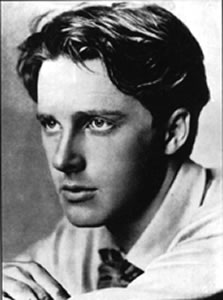
De Engelse schrijver, criticus, vertaler en dichter John Middleton Murry werd geboren op 6 augustus 1889 in Londen. Zie ook mijn blog van 6 augustus 2009 en ook mijn blog van 6 augustus 2010.

Uit: Aspects of Literature

Tchehov was aware of the gulf that separated him  from the great men before him, and he knew that it  yawned so deep that it could not be crossed. He  belonged to a new generation, and he alone perhaps  was fully conscious of it. ‘ We are lemonade,’ he  wrote in 1892.
* Tell me honestly who of my contemporaries —  that is, men between thirty and forty-five — have given  the world one single drop of alcohol ? . . . Science  and technical knowledge are passing through a great  period now, but for our sort it is a flabby, stale, dull  time. . . . The causes of this are not to be found  in our stupidity, our lack of talent, or our insolence,  but in a disease which for the artist is worse than  syphilis or sexual exhaustion. We lack ” something,”  that is true, and that means that, lift the robe of our  muse, and you will find within an empty void. Let  me remind you that the writers who we say are for  all time or are simply good, and who intoxicate us,  have one common and very important characteristic:  they are going towards something and are summoning  you towards it, too, and you feel, not with your mind  but with your whole being, that they have some object,
just like the ghost of Hamlet’s father, who did not  come and disturb the imagination for nothing. . . .
And we } We! We paint life as it is, but beyond  that — nothing at all. . . . Flog us and we can do  more! We have neither immediate nor remote aims,  and in our soul there is a great empty space. We  have no politics, we do not believe in revolution, we  have no God, we are not afraid of ghosts, and I  personally am not afraid even of death and blindness”.
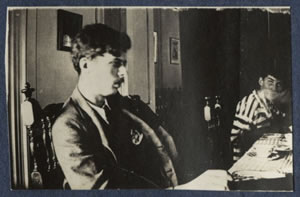


John Middleton Murry (6 augustus 1889 – 12 maart 1957)
Lees verder “John Middleton Murry, Christa Reinig, Isabel Bolton,Conor McPherson, János Rózsás, Yacine Kateb, Rolf Boldrewood, Jiri Weil”

Richard Preston, Sergio Ramírez, Conrad Aiken, Gunter Haug

De Amerikaanse schrijver Richard Preston werd geboren op 5 augustus 1954 in Cambridge, Massachusetts. Zie ook alle tags voor Richard Preston op dit blog.


Uit: The Wild Trees


“Steve Sillett had feathery light-brown hair, which hung out from under a sky-blue bandanna that he wore tied around his head like a cap. He had flaring shoulders, and his eyes were dark brown and watchful, and were set deep in a square face. The Sillett brothers stood shoulder to shoulder, looking at the birds. Their bodies were outlined against decks of autumn rollers coming in, giving off a continual roar. Scott handed the binoculars to his younger brother, and their hands touched for an instant. The Sillett brothers’ hands had the same appearance-fine and sensitive-looking, with deft movements.

Scott turned to Marwood: “Marty, I think your car should be called the Blue Vinyl Crypt. That’s what it will turn into if we fall off a cliff or get swiped by a logging truck.”

“Dude, you’re going to get us into a crash that will be biblical in its horror,” Steve said to Marwood. “You need to let Scott drive.” (Steve didn’t know how to drive a car.)

Marwood didn’t want Scott’s help with the driving. “It’s a very idiosyncratic car,” he explained to the Sillett brothers. In theory, he fixed his car himself. In practice, he worried about it. Lately he had noticed that the engine had begun to give off a clattering sound, like a sewing machine. He had also become aware of an ominous smell coming from under the hood, something that resembled the smell of an empty iron skillet left forgotten on a hot stove. As Marwood contemplated these phenomena and pondered their significance, he wondered if his car needed an oil change. He was pretty sure that the oil had been changed about two years ago, in Alaska, around the time the license plates had expired. The car had been driven twenty thousand miles since then, unregistered, uninsured, and unmaintained, strictly off the legal and mechanical grids. “I’m worried you’ll screw it up,” he said to Scott.

Steve handed the binoculars to his brother and climbed into the back of the Blue Vinyl Crypt. “Dudes, let’s go,” he said. “We need to see some tall redwoods.”


Richard Preston (Cambridge, 5 augustus 1954)

Bewaren

Lees verder “Richard Preston, Sergio Ramírez, Conrad Aiken, Gunter Haug”

Wendell Berry, Guy de Maupassant, Ron Silliman, Christian Wagner

De Amerikaanse dichter, schrijver, essayist en criticus Wendell Berry werd geboren op 5 augustus 1934 in Henry County, Kentucky. Zie ook mijn blog van 5 augustus 2010 en eveneens alle tags voor Wendell Berry op dit blog.


In A Motel Parking Lot, Thinking Of Dr. Williams


I.


The poem is important, but

not more than the people

whose survival it serves,


one of the necessities, so they may

speak what is true, and have

the patience for beauty: the weighted


grainfield, the shady street,

the well-laid stone and the changing tree

whose branches spread above.


For want of songs and stories

they have dug away the soil,

paved over what is left,


set up their perfunctory walls

in tribute to no god,

for the love of no man or woman,


so that the good that was here

cannot be called back

except by long waiting, by great


sorrows remembered and to come

by invoking the thunderstones

of the world, and the vivid air.


II.


The poem is important,

as the want of it

proves. It is the stewardship


of its own possibility,

the past remembering itself

in the presence of


the present, the power learned

and handed down to see

what is present


and what is not: the pavement

laid down and walked over

regardlessly–by exiles, here


only because they are passing.

Oh, remember the oaks that were

here, the leaves, purple and brown,


falling, the nuthatches walking

headfirst down the trunks,

crying “onc! onc!” in the brightness


as they are doing now

in the cemetery across the street

where the past and the dead


keep each other. To remember,

to hear and remember, is to stop

and walk on again


to a livelier, surer measure.

It is dangerous

to remember the past only


for its own sake, dangerous

to deliver a message

you did not get.


Wendell Berry (Henry County, 5 augustus 1934)

Bewaren

Lees verder “Wendell Berry, Guy de Maupassant, Ron Silliman, Christian Wagner”

Rutger Kopland, Witold Gombrowicz, Tom Bresemann, Tim Winton

De Nederlandse dichter en schrijver Rutger Kopland (eig. Rutger Hendrik van den Hoofdakker) werd geboren in Goor op 4 augustus 1934. Zie ook mijn blog van 4 augustus 2010 en ook alle tags voor Rutger Kopland op dit blog.


De vraag wie ze is

Intussen huist ze al zo lang in mijn hoofd
en al zo bijna overal – maar wie ze is

een zinloze vraag, je zoekt in je herinneringen
naar iets onvoorstelbaars, ik weet het, maar
ook zinloze vragen vragen een antwoord

eigenlijk is ze nog steeds die jonge vrouw
die ik ooit voevallig ergens tegenkwam
– maar wie ze is – in mijn hoofd
vind ik haar niet terug

er zijn momenten dat ik ineens weer weet
dat de mens eenzaam is, ook ik

en dat ik naar haar kijk en denk: zij daar
dat is ze, zo zichtbaar, zo sterfelijk


een merel

Er is iets in de zang van een merel
het is voorjaar, je wordt wakker

je ligt te denken in de nacht
het raam staat open – er is iets

waarvan de vogel zingt
en je denkt aan wat je moet opgeven

er is iets in je dat leeg is en het stroomt vol
met het zingen van die merel


De rode beuk

Hier staat de rode beuk
met het eindeloos grote
geduld van een boom.

Hier staat de rode beuk
hij ziet en hij hoort ons
en is ons vergeten.

Hier staat de rode beuk
voor hem is het altijd altijd
en hier is het nergens


Rutger Kopland (Goor, 4 augustus 1934)

Portret door Trudy Kramer 2002


Bewaren

Lees verder “Rutger Kopland, Witold Gombrowicz, Tom Bresemann, Tim Winton”

Jáchym Topol, Allison Hedge Coke

De Tsjechische schrijver Jáchym Topol werd geboren op 4 augustus 1962 in Praag. Zie ook mijn blog van 4 augustus 2010 en eveneens alle tags voor Jáchym Topol op dit blog.


Uit: Transcript


“Ondra found the bottles and emptied them into the sink, she would take a few gulps and forget about them. The sink smelled of wine, he rinsed it with water from the tap.
Anyway, said Pinkie, when they were lying in bed.
What? asked Ondra.
Why does Mama sit in there all day staring at that photo of Eluzína?
It’s not a photo. It’s a drawing.
What’s better? To be a boy, or a girl?
A boy, said Ondra.
So why is she always staring at Eluzína?
Go to sleep.
It was better when they both drank, said Pinkie.
Sure was, said Ondra.
On one of those distant summer afternoons, when they were all still together, Papa had made them watermills out of wood. They spent their days in a beer garden near their new house.
Before that, Papa had gone to work every morning in a suit and white shirt. Now he had a different job, in a factory. They had moved to a working class neighborhood on the outskirts of Prague.
But they always had fun in the beer garden. It was the only one around.
Would you just smell those chestnut trees! They smell of… of pure longing!
And did you know, young lady, that it was under that very same sort of chestnut tree that the Communist Party of Czechoslovakia was founded? Hm?
Often they would be joined, on those long afternoons, by Papa’s new colleagues. Usually his immediate superiors, Foreman Detmar and Sergeant Dudek. The Sergeant couldn’t take his eyes off Mama”.


Jáchym Topol (Praag, 4 augustus 1962)

Lees verder “Jáchym Topol, Allison Hedge Coke”

Percy Bysshe Shelley, Knut Hamsun, Michaël Slory, René Schickele, Munkepunke, Georges Maurice de Guérin, Erich Weinert, Otto Steiger

De Engelse dichter Percy Bysshe Shelley werd op 4 augustus 1792 geboren in Field Place, Sussex. Zie ook alle tags voor Percy Bysshe Shelley op dit blog.


TO A SKYLARK


AIL to thee, blithe Spirit!

Bird thou never wert,

That from Heaven, or near it,

Pourest thy full heart

In profuse strains of unpremeditated art.


Higher still and higher

From the earth thou springest

Like a cloud of fire;

The blue deep thou wingest,

And singing still dost soar, and soaring ever singest.


In the golden lightning

Of the sunken sun,

O’er which clouds are bright’ning,

Thou dost float and run;

Like an unbodied joy whose race is just begun.


The pale purple even

Melts around thy flight;

Like a star of Heaven,

In the broad daylight

Thou art unseen, but yet I hear thy shrill delight,


Keen as are the arrows

Of that silver sphere

Whose intense lamp narrows

In the white dawn clear

Until we hardly see — we feel, that it is there.


All the earth and air

With thy voice is loud,

As, when night is bare,

From one lonely cloud

The moon rains out her beams, and Heaven is overflowed.


What thou art we know not;

What is most like thee?

From rainbow clouds there flow not

Drops so bright to see

As from thy presence showers a rain of melody.


Like a poet hidden

In the light of thought,

Singing hymns unbidden,

Till the world is wrought

To sympathy with hopes and fears it heeded not:


Like a high-born maiden

In a palace tower,

Soothing her love-laden

Soul in secret hour

With music sweet as love, which overflows her bower:


Like a glow-worm golden

In a dell of dew,

Scattering unbeholden

Its aërial hue

Among the flowers and grass, which screen it from the view:


Like a rose embowered

In its own green leaves,

By warm winds deflowered,

Till the scent it gives

Makes faint with too much sweet these heavy-wingèd thieves.


Sound of vernal showers

On the twinkling grass,

Rain-awakened flowers,

All that ever was,

Joyous, and clear, and fresh, thy music doth surpass:


Teach us, Sprite or Bird,

What sweet thoughts are thine:

I have never heard

Praise of love or wine

That panted forth a flood of rapture so divine.


Chorus Hymeneal,

Or triumphal chant,

Matched with thine would be all

But an empty vaunt,

A thing wherein we feel there is some hidden want.


What objects are the fountains

Of thy happy strain?

What fields, or waves, or mountains?

What shapes of sky or plain?

What love of thine own kind? what ignorance of pain?


With thy clear keen joyance,

Languor cannot be:

Shadow of annoyance

Never came near thee:

Thou lovest — but ne’er knew love’s sad satiety.


Waking or asleep,

Thou of death must deem

Things more true and deep

Than we mortals dream,

Or how could thy notes flow in such a crystal stream?


We look before and after,

And pine for what is not:

Our sincerest laughter

With some pain is fraught;

Our sweetest songs are those that tell of saddest thought.


Yet, if we could scorn

Hate, and pride, and fear;

If we were things born

Not to shed a tear,

I know not how thy joy we ever should come near.


Better than all measures

Of delightful sound,

Better than all treasures

That in books are found,

Thy skill to poet were, thou scorner of the ground!


Teach me half the gladness

That thy brain must know,

Such harmonious madness

From my lips would flow

The world should listen then — as I am listening now.


Percy Bysshe Shelley (4 augustus 1792 – 8 juli 1822) 

Lees verder “Percy Bysshe Shelley, Knut Hamsun, Michaël Slory, René Schickele, Munkepunke, Georges Maurice de Guérin, Erich Weinert, Otto Steiger”

Rupert Brooke, Leon Uris, Marica Bodrozic, Mirko Wenig

De Britse dichter Rupert Brooke werd geboren in Rugby, Engeland, op 3 augustus 1887. Zie ook mijn blog van 3 augustus 2010 en eveneens alle tags voor Rupert Brooke op dit blog.


Sonnet Reversed

Hand trembling towards hand; the amazing lights

Of heart and eye. They stood on supreme heights.

Ah, the delirious weeks of honeymoon!

Soon they returned, and, after strange adventures,

Settled at Balham by the end of June.

Their money was in Can. Pacs. B. Debentures,

And in Antofagastas. Still he went

Cityward daily; still she did abide

At home. And both were really quite content

With work and social pleasures. Then they died.

They left three children (besides George, who drank):

The eldest Jane, who married Mr Bell,

William, the head-clerk in the County Bank,

And Henry, a stock-broker, doing well.


The Hill

Breathless, we flung us on the windy hill,
Laughed in the sun, and kissed the lovely grass.
You said “Through glory and ecstasy we pass;
Wind, sun, and earth remain, and birds sing still,
When we are old, are old….” “And when we die
All’s over that is ours; and life burns on
Through other lovers, other lips” said I,
“Heart of my heart, our heaven is now, is won!”


We are Earth’s best, that learnt her lesson here.
Life is our cry. We have kept the faith!” we said;
“We shall go down with unreluctant tread
Rose-crowned into the darkness!”…. Proud we were,
And laughed, that had such brave true things to say.
— And then you suddenly cried, and turned away.


Rupert Brooke (3 augustus 1887 – 23 april 1915)

Lees verder “Rupert Brooke, Leon Uris, Marica Bodrozic, Mirko Wenig”

Radek Knapp, Christoph Geiser, Leonhard Huizinga, Steven Millhauser

De Pools-Oostenrijkse schrijver Radek Knapp werd geboren op 3 augustus 1964 in Warschau. Zie ook alle tags voor Radek Knapp op dit blog.

Uit: Die Stille nach dem Sturm (Der Spiegel, 2000)

„Es ist ein offenes Geheimnis, dass Polens Literatur in zwei ungleiche Lager geteilt ist. Dem Riesen Lyrik steht eine Hand voll bedeutender Prosaisten gegenüber. Aber ausgerechnet deren erfolgreichster wird nicht anwesend sein. Stanislaw Lem, dessen Bücher weltweit die Auflage von 30 Millionen erreicht haben, bleibt in Krakau, um sich die “Buchmesse im Fernsehen anzuschauen”. Anwesend werden seine Bücher sein. Sein charmantester Klassiker “Robotermärchen” gehört zu jenen Werken, die Generationen von Polen zuerst als Kinder mit der Taschenlampe unter der Bettdecke und dann noch mal als Erwachsene unter dem Schreibtisch im Büro gelesen haben. Die Geschichte von einem Wesen namens “Bleichling”, der verglichen mit den wohlproportionierten und glänzenden Roboterkörpern wie “ein ekelhafter Klumpen aus Lehm und Erde” dasteht, ist eine Metapher, die noch immer keinen Rost angesetzt hat.

Anders als Lem hat Ryszard Kapuscin ski, der Reiseschriftsteller und Journalist, der in Afrika und Lateinamerika schon mehrmals knapp dem Tode und einmal einem Exekutionskommando entgangen war, die Reise nach Frankfurt nicht gescheut (siehe auch das Interview Seite 176). Sein Klassiker “König der Könige” hat ihn in den achtziger Jahren weltberühmt gemacht. Kapuscin ski recherchierte ein Jahr lang unter den Untergebenen des äthiopischen Kaisers Haile Selassie. Heraus kam das Porträt eines Machtbesessenen, von dem man annehmen könnte, er hätte das Herrscherhandwerk bei Kafka gelernt, wäre nicht der einst mächtigste Mann Afrikas ein Feind alles Geschriebenen gewesen.“


Radek Knapp (Warschau, 3 augustus 1964)

Lees verder “Radek Knapp, Christoph Geiser, Leonhard Huizinga, Steven Millhauser”

Isabel Allende, James Baldwin, Caleb Carr, Philippe Soupault

De Chileense schrijfster Isabel Allende werd geboren in Lima op 2 augustus 1942. Zie ook alle tags voor Isabel Allende op dit blog en ook mijn blog van 2 augustus 2010.

Uit: Zorro (Vertaald door Margaret Sayers Peden)

“Let us begin at the beginning, at an event without which Diego de la Vega would not have been born. It happened in Alta California, in the San Gabriel mission in the year 1790 of Our Lord. At that time the mission was under the charge of Padre Mendoza, a Franciscan who had the shoulders of a woodcutter and a much younger appearance than his forty well-lived years warranted. He was energetic and commanding, and the most difficult part of his ministry was to emulate the humility and sweet nature of Saint Francis of Assisi. There were other Franciscan friars in the region supervising the twenty-three missions and preaching the word of Christ among a multitude of Indians from the Chumash, Shoshone, and other tribes who were not always overly cordial in welcoming them. The natives of the coast of California had a network of trade and commerce that had functioned for thousands of years. Their surroundings were very rich in natural resources, and the tribes developed different specialties. The Spanish were impressed with the Chumash economy, so complex that it could be compared to that of China. The Indians had a monetary system based on shells, and they regularly organized fairs that served as an opportunity to exchange goods as well as contract marriages.
Those native peoples were confounded by the mystery of the crucified man the whites worshipped, and they could not understand the advantage of living contrary to their inclinations in this world in order to enjoy a hypothetical well-being in another. In the paradise of the Christians, they might take their ease on a cloud and strum a harp with the angels, but the truth was that in the afterworld most would rather hunt bears with their ancestors in the land of the Great Spirit. Another thing they could not understand was why the foreigners planted a flag in the ground, marked off imaginary lines, claimed that area as theirs, and then took offense if anyone came onto it in pursuit of a deer.”


Isabel Allende (Lima, 2 augustus 1942)

Lees verder “Isabel Allende, James Baldwin, Caleb Carr, Philippe Soupault”

Gerrit Krol, Edward van de Vendel, Frans Pointl, Jim Carroll

De Nederlandse dichter en schrijver Gerrit Krol werd geboren op 1 augustus 1943 in Groningen. Zie ook mijn blog van 1 augustus 2010 en eveneens alle tags voor Gerrit Krol op dit blog.


Uit: Laatst met een vrouw

„Als emoties waren voorzien van een nummer, zou ik er beter mee overweg kunnen en dat geldt vrees ik ook voor mijn filosofische gedachten. Het is elke keer anders. Hoe vaak niet heb ik de wereld al begrepen doordat ik mijn zaken op orde had en de volgende dag is er – door weer geheel nieuwe input – van die orde al niet veel meer over. Die wordt overstemd door zeg maar nieuwe geluiden, welke interessanter zijn dan de oude en zo blijf je aan de gang. Ik denk dat iedereen dat heeft, zo niet met nieuwe gedachten, dan wel met bijvoorbeeld nieuwe kleren. Een nieuwe jas – dan heb je de oude opeens niet meer nodig.
Punt is dit. Een mens heeft zijn voorstellingen. Daardoor leeft hij voornamelijk in het verleden en in de toekomst en aan het heden komt hij nauwelijks toe. Je bent op vakantie en je neemt een foto ‘voor later’, wanneer dit moment verleden tijd is. Ooit nam je op vakantie vijf foto’s en tegenwoordig neem de van dezelfde soort vakantie vijftig foto’s of nog veel meer. Zelfs de negatieven worden bewaard. Allemaal voor later: dat je weet hoe het vroeger was. Het heden doet er niet meer zo toe – lijkt wel. Bewust van alles, op de hoogte van alles, ben je ontzettend bewust en serieus persoon geworden, niks aan. ingeklemd tussen gisteren en morgen, tussen zo straks en straks is het heden maar een uiterst dunnen strook, dunner dan een seconde; hoe meer je erover nadenkt des te meer werk je je filosofisch in de nesten. Je kunt beter foto’s blijven nemen, en video.
Ik vind dat jammer. Dat het heden zo aan je voorbijvliegt. Grijp de gelegenheid, roep ik mezelf wel ’s toe, pluk de dag, maar voor ik het weet zit ik weer te lezen en verkeer ik met mijn eeuwige gedachten in gebieden die niet het heden zijn. Het lijkt wel of je, om in het heden te leven, geen gedachten moet hebben.
Hic et nunc – dat is het devies. De vraag is of het je nog lukt. Het heden is een evenwichtsbalk waar je voortdurend vanaf valt, zij het links (de toekomst), zij het rechts (het verleden); het vermogen eenvoudig in het heden voor te gaan, te ‘handelen’, heeft de altijd denkende mens verloren. Wat is daaraan te doen? Hoe kun je handelen zonder te denken? Wat zou de lol van dit soort handelen zijn? Een mens is geen dier.“


Gerrit Krol (Groningen, 1 augustus 1934)

Lees verder “Gerrit Krol, Edward van de Vendel, Frans Pointl, Jim Carroll”