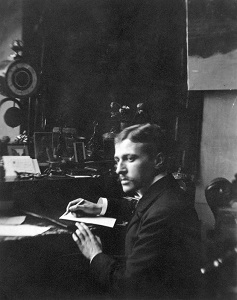
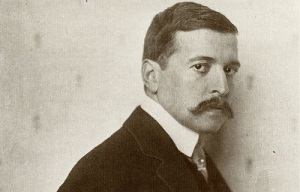
De Hongaarse schrijver en anticommunistische dissident György Konrád is op 86-jarige leeftijd overleden. György Konrád werd geboren op 2 april 1933 in Berettyóújfalu (bij Debrecen). Zie ook alle tags voor György Konrád op dit blog.
Uit:Zonsverduistering(Vertaald door R. Kellerman)
“Het
was een feest om in de oceaan van geleuter een solide eiland aan te
treffen. In de jaren van censuur was lezen een vlucht, een elke avond
weerkerende emigratie, een tijdelijke opschorting van de valse verhalen
die de woning binnen drongen. Een goed boek in mijn tas was een
compensatie voor de frases die ik lijdelijk had moeten aanhoren, en een
bron van genot, zoals de theesalon of het bordeel dat voor opgeschoten
jongens was. Met behulp van de literatuur kunnen we streng zijn
tegenover onze medemensen, maar als we leren lezen kunnen we hun ook
vergeven, ons zelfs in hen verlustigen. Sedert mijn gymnasiumtijd stel
ik mij voor dat de mensheid in standgehouden wordt door aanhoudende
conversatie tussen dicht geschreven teksten. (…)
We
hebben een huis in het dorp gebouwd, we passen erin, in deze kamer heb
ik draaglijk geschreven en hier regel ik ook wat ik van elders heb
meegebracht. Dit zich terugtrekken om te kunnen observeren geeft
vrijheid. In Berlijn ben ik Boedapester, in Boedapest Berlijner, in
beide hoofdsteden iemand uit Hegymagas. Ik verkoop mijn gebrom aan het publiek, zolang ik nog enigszins in de markt lig. Ik schrijf, ik spreek, van andere dingen heb ik geen verstand, de manifestaties bevruchten elkaar en vermeerderen zich ongeremd. Laat het huis vol zijn, laat iedereen komen!”
Uit: Flanders Diary (Vertaald door Miriam McIlfatrick)
“The first to push this anticipation further into the future was
perhaps the Church itself, when it started to build heavy stone
churches, crypts, beneath which the chosen dead had to await the
Resurrection. The very thickness of the walls shows that this event is
not likely to to come about any time soon. I have not lived in
other cultures so I do not know if anticipation occupies such an
important place in them. Some claim that it does not, but I do not place
much trust in such external observation of foreign cultures. You see
what you are looking for there. And if you live it as your own, you do
not see anything other than life. This civilisation that I see here
in the heart of Europe, in old Flanders, on my salutary bicycle trips
through these endlessly branching and snaking little concrete roads,
this is our civilisation and yet it is not. I am as much inside it as
outside it. It is a question of a small shift of time and space. I am
still not used to everything being ready, concreted, smoothed, fully
constructed, in order and reliable. But I have seen the speed and
enthusiasm with which Estonia has in recent years aspired to this state,
and with some success, though “a great deal still has to be done”. I
have never really believed that we will ever achieve this state in our
country. We made it to the party-table at the very last minute, we did
make it but a wee bit too late. Just in time for dessert. Soon the
waiters will start clearing the table, the party is over, the guests are
tired and a little drunk, everyone is going home. We probably will not
achieve such a level of concreting, mechanisation and welfare, because
before getting there the spiritual and material preconditions will have
been lost. Boredom and fear will destroy the spiritual preconditions,
mother nature will take care of the material preconditions. Because
what will happen, I am thinking on the spiritual plane, when everything
is ready? What is left for people then? Boredom, because there is
nothing else to do except everyday aimless (yes, aimless, because it
changes practically nothing) pottering about, though of course like
Sisyphus people always try to get ahead, bring home a new computer,
install a faster internet browser, fly away to some even further part of
the globe. And come back no wiser because how far away was it really?
And fear, when they occasionally stop to think about things (and this
moment comes every day), just like when we walk past the mirror and see
ourselves, before it occurs to us to make that face that we usually make
when we look in the mirror. We are afraid because we have so much. Or
it seems to us that we have so much, i.e., we have so much to lose. Or
just as much to escape from? Creating well-being has for some time
been purely fictitious. As there is actually nothing more to add,
appearances are added. What is human well-being? To eat your fill (and
not just anything, but what tastes good), to be protected from the
elements, to sleep in a warm enough room between cool clean sheets, to
“have” a husband or wife, preferably children too, who appreciate and
love you, not to spend every minute in fear for your life. In short,
peace, a fear-free existence, just enough excitement … Voilà. Of
course, the trouble with this is that well-being is very hard to define.
Because it does not exist. It is where we are not. If your stomach is
full of delicacies, it starts to hurt, your health.”
Tõnu Õnnepalu (Tallin, 13 september 1962) Cover
*************************
In de tweede helft van de jaren negentig werkte Frans Roumen aan een roman die de titel “Vriendschappelijke brieven” had moeten krijgen. Het manuscript gold na een verhuizing jarenlang als zoekgeraakt. Onlangs werden er echter toch flinke delen van bij een grote opruimactie ontdekt in een oude doos in de kelder. Romenu heeft de toestemming gekregen om er regelmatig fragmenten uit te publiceren. Vandaag volgt het eerste van een nog nader te bepalen aantal.
Uit: Vriendschappelijke brieven
“Arnhem, 1 juni 1996, 14.12 uur
Lieve Stefan,
Ik heb je net aan de telefoon gehad, dus studeer maar ijverig
verder met al je moeheid. Gefeliciteerd met je uitzicht op promotie, hoe
dan ook. Dat je je bij al die drukte niet lekker voelt kan ik me
voorstellen. Ik denk dat je op dit moment meer geleefd wordt dan zelf
leeft. Dat is heel vermoeiend.
(Voorhoeve kletst nog altijd uit zijn nek en ik vergeet ook
steeds weer dat die klojo minister van defensie is. En dat wou ik nou
even kwijt.)
14.43 uur. De wasmachine weer eens aangezet. Raar. Ik heb daar
maar twee minuten werk aan en toch moet ik mij er iedere keer toe
dwingen. 0 Mama Mia.
Naar de Aldi, Kenan.
Ik moet zeggen : je undercover uitvoering met de twee flessen
goedkope Martini is perfect. Die goeie ouwe tijd toch in het
Kronenburgerpark. Ik heb maar flink wat Primus Inter Pares ingeslagen. (
15.43 uur ).
Sorgdrager en Dijkstal hebben ook iets opgepikt over een hoeveelheid andere mentaliteit, gezien hun opdracht aan mr. C. Ficq.
Albrecht Nederland zit in Culemborg. Weten wij dat ook weer. Zou Albrecht veel lezen ?
V en D, Kenan, en daarna de COOP.
Ik sta iets zeer eenvoudigs te koken, nu om 18.28 uur, later dan
normaal. De computer staat aan. Ik luister naar mijn nieuwe cd van
Sinatra. De t.v. staat aan en af en toe lees ik in een boek en ik geniet
eigenlijk van deze vrijheid c.q. chaos. En net als ik denk dat ik
eenzaam ben – niet dus – belt Deny.
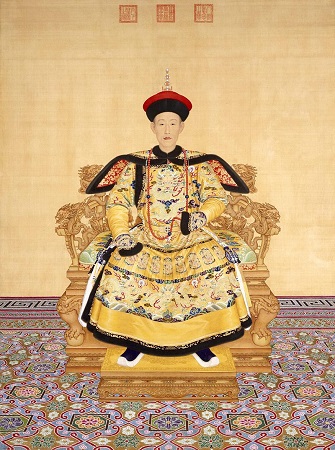
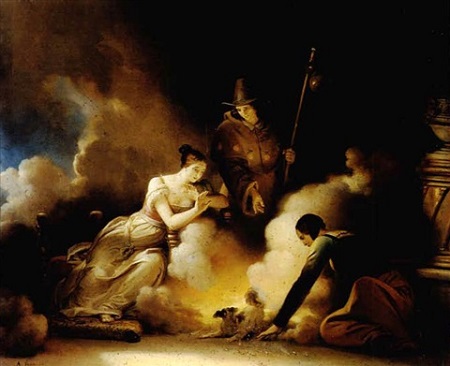
Een keizerlijk portret van de Chinese imperator Xianfeng, 1855
Der Kaiser von China spricht
In der Mitte aller Dinge Wohne Ich, der Sohn des Himmels. Meine Frauen, meine Bäume, Meine Tiere, meine Teiche Schließt die erste Mauer ein.
Drunten liegen meine Ahnen: Aufgebahrt mit ihren Waffen, Ihre Kronen auf den Häuptern, Wie es einem jeden ziemt, Wohnen sie in den Gewölben.
Bis ins Herz der Welt hinunter Dröhnt das Schreiten meiner Hoheit. Stumm von meinen Rasenbänken, Grünen Schemeln meiner Füße, Gehen gleichgeteilte Ströme
Osten-, west- und süd- und nordwärts, Meinen Garten zu bewässern, Der die weite Erde ist. Spiegeln hier die dunkeln Augen, Bunten Schwingen meiner Tiere,
Spiegeln draußen bunte Städte, Dunkle Mauern, dichte Wälder Und Gesichter vieler Völker. Meine Edlen, wie die Sterne, Wohnen rings um mich, sie haben
Namen, die ich ihnen gab, Namen nach der einen Stunde, Da mir einer näher kam, Frauen, die ich ihnen schenkte, Und den Scharen ihrer Kinder, Allen Edlen dieser Erde
Schuf ich Augen, Wuchs und Lippen, Wie der Gärtner an den Blumen. Aber zwischen äußern Mauern Wohnen Völker meine Krieger,
Völker meine Ackerbauer. Neue Mauern und dann wieder Jene unterworfnen Völker, Völker immer dumpfern Blutes, Bis ans Meer, die letzte Mauer,
Die mein Reich und mich umgibt.
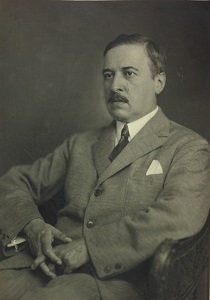
Hugo von Hofmannsthal (1 februari 1874 – 15 juli 1929)
De keizer van China spreekt
In het midden van alle dingen Woon ik de Zoon des Hemels. Mijn vrouwen, mijn bomen, Mijn dieren, mijn vijver Sluit in de eerste muur.
Beneden ligt mijn voorgeslacht Opgebaard met hun wapens, Hun kronen op de hoofden, Zoals het een ieder past, Wonen zij in de gewelven.
Tot in’t wereldhart beneden Dreunt het schrijden van mijn hoogheid. Stom vanaf mijn zodenbanken Groene bankjes van mijn voeten, Gaan stromen in gelijke delen Oost-en west en zuid-en noordwaarts,
Om mijn tuin er te bevloeien, Die de wijde aarde is. Spiegelen hier de donkere ogen, Bonte vleugels van mijn dieren, Spiegelen buiten bonte steden, Donkere muren, dichte wouden
En gezichten veler volkeren. Mijn edellieden, als de sterren, Wonen rond om mij, zij hebben Namen, die ik hun gaf, Namen naar dat eerste uur, Toen er een mij nader kwam,
Vrouwen, die ik hun schonk, En de scharen van hun kinderen ; Alle edellieden dezer aarde, Schiep ik ogen, groei en lippen, Zoals de tuinman aan de bloemen. Echter tussen buitenste muren
Wonen volkeren, mijn krijgers, Volkeren, mijn akkerbouwers. Nieuwe muren en dan weer Deze onderworpen volkeren, Volkeren van steeds doller bloed, Tot aan de zee, de laatste muur,
Hoe moet ik mijn ziel nu houden, dat zij niet de jouwe raakt? Hoe moet ik haar heentillen over jou naar andere dingen? Oh, graag zou ik haar nu zomaar wat Verloren in het donker doen bedaren, op een vreemde, stille plek die niet blijft zingen nu al je diepten zingen. Maar alles wat ons aanraakt, jou en mij, brengt ons tesamen in een wij, dat nu een toon vormt uit twee snaren. Op wiens viool zijn wij beland? En welke strijker heeft ons in de hand, Mijn liefste lied?
Vertaald door Frans Roumen
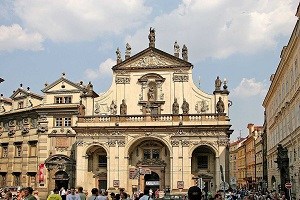
Rainer Maria Rilke (4 december 1875 – 29 december 1926) De Sint-Salvatorkerk in Praag, de geboortestad van Rilke
Im Nebel ruhet noch die Welt, Noch träumen Wald und Wiesen: Bald siehst du, wenn der Schleier fällt, Den blauen Himmel unverstellt, Herbstkräftig die gedämpfte Welt In warmem Golde fließen.
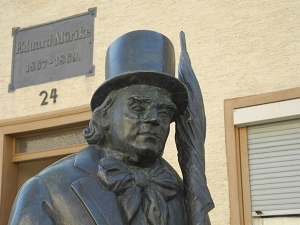
Eduard Mörike (8 september 1804 – 4 juni 1875) Standbeeld voor Mörikes voormalige woonhuis in Lorch
Youre as silent as space and youre fastened with a bar. Though its not too late you make me sleepy. But I assure you I have no wish to sleep when youre so cold to me.
Ill totally forget the sound of your voice soon. Shout at me, broke some dishes but dont keep silent. Its like nobody is beside me. If you dont love me, say so.
I still cant understand whats the matter with you. Tell me that you have missed another man for a long time, but dont keep silent. Dont be silent all day long. You must be the only speachless person among all these talkative women. Or the only intelligent enough. Theres nobody beside me again. If you dont love me, say so.
I still cant understand whats the matter with you. Tell me that you have missed another man for a long time, but dont keep silent. Dont be silent all day long.
“More
than one girl had wept, describing her terror that a husband or fiancé
would not return. Anna couldn’t listen. The talk stirred in her an
uncomfortable anger at these girls, who seemed so weak. Thankfully, Mr.
Voss had put an end to that topic during working hours, prompting an
unlikely trill of gratitude in Anna. Now they sang songs from their
colleges while they worked: Hunter, St. Joseph’s, Brooklyn College,
whose song Anna finally learned—not having bothered to in the year she
was a student there.
She
synchronized her wristwatch with the large wall clock they all answered
to, and stepped outdoors. After the sealed hush of her shop, the roar
of Yard noise always shocked her: crane and truck and train engines; the
caterwaul of steel being cut and chipped in the nearby structural shop;
men hollering to be heard. The stench of coal and oil mingled with
gusts of chocolate from the factory on Flushing Avenue. It wasn’t making
chocolate anymore, but something for soldiers to eat when they might
otherwise starve. This chocolate cousin was supposed to taste like a
boiled potato, Anna had heard, so that soldiers wouldn’t be tempted to
snack on it ahead of time. But the smell was still delicious. As she
hurried alongside Building 4, the structural shop, with its thousand
dingy windows, she saw a girl climbing onto a bicycle. Anna didn’t
register at first that it was a girl; she wore the same plain blue work
clothes they all did. But something in her bearing, the flair with which
she mounted, caught Anna’s eye, and she watched the girl glide away
with a shiver of envy.
At
a canteen near the piers, she bought her forty-cent boxed meal—today it
was chicken, mashed potatoes, canned peas, and applesauce—and made her
way toward Piers C and D, both close enough to her shop that she could
eat (often while standing, even walking) and be back on her stool by
twelve-fifteen. A ship had berthed at Pier C since the previous day, its
sudden towering apparition almost otherworldly. With each step Anna
took toward the ship, its height seemed to rise, until she had to tip
her head fully back to follow the curved prow all the way up to the
distant deck. It was thronged with sailors, identical-looking in their
toylike uniforms and caps, all leaning over the rail to gawk at
something below. In that same moment, a chorus of catcalls reached her.
She went still, clutching her boxed lunch—then saw with relief that the
object of their ardor was not her but the girl on the bicycle, who was
riding back alongside the ship from the foot of the pier, a tousle of
peroxide curls pried from her scarf by the wind. Anna watched her
approach, trying to discern whether the girl was enjoying this attention
or not. Before she could make up her mind, the bicycle hit a patch of
gravel and skidded on its side, dumping its rider onto the brick-paved
pier, to the jeering hilarity of the sailors. Had the men been within
reach of the girl, they doubtless would have elbowed each other aside to
rush to her aid. But at such a height, with only each other to show off
for, they settled for an orgy of heckling: “Aw, poor baby lost her balance.”
“In
de auto zuchtte ik zo ontzettend dat Marvin meteen deed wat ik had
gehoopt: hij vroeg wat er was. Hij vroeg het kil, niet alsof hij het
werkelijk wilde weten. Ik vroeg hem of hij dan niet wist wat er was. Ik
vroeg het zo dreigend als ik kon. En daarna zuchtte Marvin op zijn
beurt. Ik moest wel schreeuwen. Wat, brulde ik, kon er in godsnaam de
reden van zijn dat hij zuchtte? En toen maakte de auto een raar geluid,
een soort moedeloze plof die ons kortstondig door elkaar schudde. Marvin
stopte, midden op straat. Ik keek naar buiten. We hadden nog maar een
meter of dertig afgelegd. `Lekke band,’ zei hij. En stapte uit. Pas toen
ik Marvin de krik uit de laadruimte zag halen, begreep ik wat die
woorden betekenden. Heel even drong de gedachte zich op dat ik met mijn
geschreeuw de band van zijn auto lek had gestoken. Ik stapte ook uit.
De
krik was roestig en weigerde in de gewenste stand gebogen te worden. Ik
kon Marvin niet helpen. Langzaam kwam ik bij mijn positieven. Toen
besefte ik dat de identiteit van de schuldigen voor de hand lag.
Vastbesloten liep ik terug om aan te bellen bij de giechelende
watergooiers. Ik moest driemaal bellen. Een voor haar leeftijd te
jeugdig geklede vrouw verscheen in de deuropening. `U beschuldigt mijn
kinderen van vandalisme?’ concludeerde ze na mijn relaas. Haar stem
klonk koud. Nou…’ vervolgde ik, vriendelijk doch ferm, ‘ik vroeg mij
af of u heeft gemerkt dat er van de derde verdieping van uw huis volle
zakken water naar beneden zijn geworpen. Er klonk gegiechel…’ `Mijn
zoons zijn boven, met vrienden. Ik zal ze roepen.’ Twee spottende
gezichten, jong en trots. Het waren jongens van een jaar of veertien. Ik
probeerde ze me voor te stellen met een priem, een mes, een spijker —
de lol van het vernielen. Ook het hoofd van een derde jongen werd heel
kort zichtbaar. `Dat van die waterzakken — dat hebben we gezien,’ zei
ik. Dat waren jullie. Maar nu is onze band ook lek.’ De moeder bleef
erbij staan. Onbewogen nam ze haar zoons op, daarna mij. Wat vervelend,’
zei de jongen met het keurigste gezicht. ‘Daarnet was er ook al een man
aan de deur die een lekke band had. Maar wij hebben dat dus echt niet
gedaan!’
Jessica Durlacher (Amsterdam, 6 september 1961) Cover
“ONHOUDBAAR / Bizar
genoeg gaat het debat over Zwarte Piet uit van een onhoudbaar doel:
‘maak Sinterklaas weer speciaal voor iedereen!’ Het sinterklaasfeest is
helemaal geen feest speciaal voor iedereen en zal dat ook nooit kunnen
zijn. Onze multiculturele samenleving staat bol van (al dan niet
religieus gevoede) festiviteiten, manifestaties en uitingen van zeer
uiteenlopende aard. Het is ondoenlijk van iedereen in Nederland te
verlangen dat hij/zij zich zonder meer kan vinden in elk ervan. Er is
geen festiviteit of manifestatie of er is wel meer of minder gegronde
kritiek op te leveren. Vrijwel altijd is er sprake van een vorm van
discriminatie, vanwege levensovertuiging, politieke gezindheid,
godsdienst, ras, geslacht en wat al niet meer.
DREADLOCKS
/ Een willekeurig voorbeeld: wordt het geen hoog tijd een gevecht aan
te gaan tegen het dragen van dreadlocks? Het laten groeien van het
kroezige haar tot woeste manen vormt namelijk hét symbool van
dictatoriale macht, uitbuiting en racisme. Voor de religieuze
beweging van het rastafarianisme, ontstaan in Jamaica, is het dragen van
dreadlocks een symbolische toenadering tot hun god. Die god wordt
algemeen Jah genoemd en betreft Haile Selassie, ofwel Ras Tafari, de
Overwinnende Leeuw van de stam van Juda (en nog een reeks van
eretitels). In de haardracht van dreadlocks imiteert de rastafariër de
manen van de leeuw en verbindt zich zodoende met de geest van de leeuw
van Juda. Daarenboven onderstrepen de ‘manen’ de dominante rol die de
man in deze beweging speelt: vrouwen zijn er om kinderen te baren, te
koken en om te (be)dienen. Het rastafarianisme heeft naast deze
‘zwarte god’ nog als basisprincipes dat blanken inferieur zijn aan
zwarten en dat het zwarte ras voorbestemd is over de wereld te heersen.
Bob Marley heeft die ondergang op luchtige reggaeritmes en onder het
genot van ganja (hasj) bezongen.”
Aart G. Broek (Maasland, 6 september 1954) Zwarte Piet
“My
trial has barely begun, and no testimony heard, but already I know that
in the eyes of this court, I am an abomination. As I gaze from the dock
and take in all the faces gazing back, I think of the opinions they
have formed, the hateful things they have written and said. I think of
how once it stung, but my skin has grown thicker over time, and I have
worse things to endure now than mere words. They have to be respectful
in their conduct within these walls: no shouting and barracking like
when the van with its blacked-out windows pulled up outside the
prisoners’ entrance, a desperate photographer extending a hopeful arm
and firing blind with a flash gun as he pressed himself perilously close
against the moving steel. One of these days the vehicle is going to run
over one of those reckless idiots’ feet: several tons of G4S hardware
degloving the flesh from crushed and shattered bones as it rolls across
his instep, all in the service of striving for, at best, a blurry
low-contrast image of some scared and wretched prisoner cowering inside.
It would be a valuable illustration of the risk-benefit equation pour
encourager les autres. To them, I am someone who ought to have been
grateful for all that life apparently gifted me, not asked for more. I
should have settled for what I was dealt, as it was generous enough in
other people’s estimation. The actions I took in pursuit of my desires,
to better my lot and to extricate myself from an intolerable situation,
these were unforgivable, depraved. Society’s judgement is always harsher
upon a woman who has done grave deeds to get what she wants: a woman
who has challenged their values, violated the accepted order of things.
It’s a crime against society, a transgression of unwritten rules that
are far more precious than those inscribed in law. With this thought I
glance across the room, and to my surprise feel a sorority even with the
woman I came to regard as my enemy: the woman who laid me low, brought
my deeds to light. In our own ways we both acted for the purest of
reasons. Her I respect. Everyone else is merely white noise to me now. I
do not expect anyone’s sympathy. I do not seek forgiveness from people
who have never been tested like I was. I may be guilty, and I may be
sentenced, but I will not be condemned: not by those who cannot
understand. Nobody here can judge me until they know the whole truth.
Until then, their opinions are no more than impotent angry words, and
my, haven’t those been in spate since this business first came to light.
Just think how they were exercised by the revelation that this bitch
murdered her husband. The tone was one of boiling anger, and at the
heart of it all was one single rhetorical question: How dare she. How
dare she. There’s a thought: nobody ever asks ‘How dare he?’ when a man
kills his wife. The coverage is coloured by sombre tones, its language
muted and respectful. It’s like they’re reporting on a death from
disease or calamitous mishap. ‘It’s dreadful, but it happens. Poor
thing. So tragic,’ it seems to say. And like disease or disaster, the
follow-up is about asking whether more could have been done. What signs
were missed? What can we learn? By contrast there’s a conspicuous
shortage of victim-blaming when it’s a husband who lies slain. `Why
didn’t he leave her? He must have known what she might be capable of.
There must have been indications that she was dangerous. I’m not
condoning it, but surely he was aware of her triggers. There’s no
excusing what she did, but it wouldn’t have happened unless he did
something to provoke her.’ Said nobody ever. See, that’s what chills
them. They can just about handle a crime of passion, a moment of
madness.”
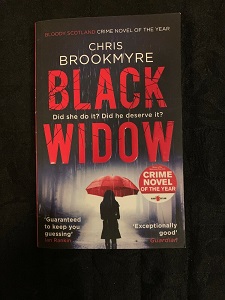
Christopher Brookmyre (Glasgow, 6 september 1968) Cover