Martin R. Dean, Rainer Kirsch, Eelke de Jong, Alie Smeding, Paul Lomami Tshibamba, James Purdy, Roger Garaudy, Clara Viebig, Lilian Loke

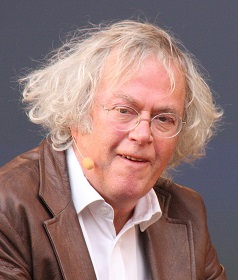
De Zwitserse schrijver Martin R. Dean werd geboren op 17 juli 1955 in Menziken Aargau. Zie ook alle tags voor Martin R. Dean op dit blog.

Uit:The Guyana Knot (Vertaald door Nadia Lawrence)

“First of all, I’ll lie down. You have to dream a city first, before you can take possession of it. Then I’ll take my clothes out of the suitcase and spread them around the room; I shove the heavy metal trunk with the work tools under the bed, to begin with. I won’t need it for my first appearance. Till then I’m a normal traveler.
The hotel room is a strange thing. The white walls radiate the blind concentration of a delivery room; towards evening they become crowded with colorful plays of light and shade, which gently heave and sway this way and that and simulate a deep ocean bed. One of the walls, the east wall, curves into the middle of the room with a wide, full angel’s swing. I felt as if I was in a submarine when I came in. There were the round windows too, molded in greyish cast iron, three bull’s eyes which lure you towards three different views.
In a certain evening light, the south window goes blind and reflects the Vittorio Emanuele monument. Behind that gleam the enormous incisors of the Colosseum. I think about the story of the hotel rooms I’ve stayed in while I’ve been on tour. In northern Germany, melancholy square double bedrooms with a rustic feel and a luxury that amazed me. Further north, purple or mustard patterned carpets, rooms which chilled or nauseated me, all of them overheated. Instead of enjoying a view of chimney pots or shrubby pedestrian precincts, I watched TV for hours at a time. Like someone chained to the bed, I shuddered at the sight of politicians, priests and sportsmen, waffling entertainers in gloomy brewery cellars.
Still further north, in Sweden, I was brought to a room completely lined in blood-red velvet. Outside it was pitch dark and cold, Stockholm in never-ending rain. I sat tight in that room; the blood-red walls flowed over my hands and feet, trickled over my body. I showered half a dozen times and switched on every available lamp. Rainwater clung to bull’s eye window panes as thick as my finger; the only window looked out onto a murky inner courtyard into which, I imagined, a small girl with red glowing eyes and a slit throat was throwing herself, over and over again. Stockholm, an ode full of blood; through my mind ran images of murder, incest, torture and refined methods of mutilation. After ten days I traveled on to Helsinki. There I was met by pure coffin wood, the euphoria of a hotel room lined with pale pinewood. Pinewood, wherever I looked: there wasn’t half an inch in this shack that wasn’t made of that wood. The bed and the walls, the rails and the shower, the breakfast dishes and the chairs and tables—everything was made of pinewood. Looking out of the window, I still saw nothing but pine trees, though in between was sand and a few heavy birches, and in the distance, where the wet black sky stuck, a dreary sea. Not the foamy, steel blue sea of the south, but a northern sea welded tightly into the horizon, heaving up and down, thick and filthy. Up here, life came to an end; obscene fact, everything lay limply on the ground and wallowed in its own oily daze.“
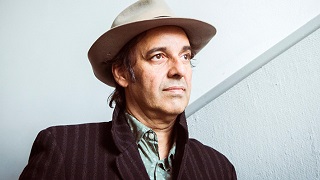


Martin R. Dean (Menziken, 17 juli 1955)
Lees verder “Martin R. Dean, Rainer Kirsch, Eelke de Jong, Alie Smeding, Paul Lomami Tshibamba, James Purdy, Roger Garaudy, Clara Viebig, Lilian Loke”

Donald Davie

De Engelse dichter en criticus Donald Alfred Davie werd geboren op 17 juli 1922 in Barnsley, Yorkshire. Hij begon zijn opleiding aan de Barnsley Holgate Grammar School en doorliep later het St Catharine’s College in Cambridge. Zijn studies daar werden onderbroken tijdens de oorlog door zijn dienst bij de Koninklijke Marine in het Russiche deel van de Noordpool, waar hij zichzelf de taal leerde. In het laatste oorlogsjaar, in Devon, trouwde hij met Doreen John. Na zijn terugkeer in Cambridge, vervolgde hij zijn studie en behaalde hij zijn B.A., M.A. en Ph.D. Hij keerde terug naar Cambridge in 1958 en werd in 1964 de eerste hoogleraar Engels aan de nieuwe universiteit van Essex. Hij doceerde Engels aan de universiteit van Essex van 1964 tot 1968, toen hij verhuisde naar Stanford University, waar hij Yvor Winters opvolgde. In 1978 verhuisde hij naar de Vanderbilt University, waar hij les gaf tot zijn pensionering in 1988. Hij schreef vaak over de techniek van poëzie, zowel in boeken als “Purity of Diction in English Verse”, en in kleinere artikelen zoals ‘Some Notes on Rhythm in Verse’. Davie’s kritiek en poëzie worden beide gekenmerkt door zijn interesse in modernistische en pre-modernistische technieken. Veel van Davie’s poëzie is vergeleken met die van de traditionalistische Philip Larkin, maar andere werken zijn meer beïnvloed door Ezra Pound.


Across the Bay

A queer thing about those waters: there are no
Birds there, or hardly any.
I did not miss them, I do not remember
Missing them, or thinking it uncanny.

The beach so-called was a blinding splinter of limestone,
A quarry outraged by hulls.
We took pleasure in that: the emptiness, the hardness
Of the light, the silence, and the water’s stillness.

But this was the setting for one of our murderous scenes.
This hurt, and goes on hurting:
The venomous soft jelly, the undersides.
We could stand the world if it were hard all over.


In California

Chemicals ripen the citrus;
There are rattlesnakes in the mountains,
And on the shoreline
Hygiene, inhuman caution.

Beef in cellophane
Tall as giraffes,
The orange-rancher’s daughters
Crop their own groves, mistrustful.

Perpetual summer seems
Precarious on the littoral. We drive
Inland to prove
The risk we sense. At once

Winter claps-to like a shutter
High over the Ojai valley, and discloses
A double crisis,
Winter and Drought.

Ranges on mountain-ranges,
Empty, unwatered, crumbling,
Hot colours come at the eye.
It is too cold

For picnics at the trestle-tables. Claypit
Yellow burns on the distance.
The phantom walks
Everywhere, of intolerable heat.

At Ventucopa, elevation
Two-eight-nine-six, the water hydrant frozen,
Deserted or broken settlements,
Gasoline stations closed and boarded.

By nightfall, to the snows;
And over the mile on tilted
Mile of the mountain park
The bright cars hazarded.

 
Donald Davie (17 juli 1922 – 18 september 1995)

In Memoriam Anne Golon

In Memoriam Anne Golon

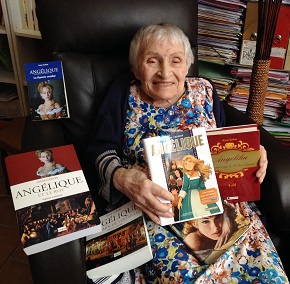
De Franse schrijfster Anne Golon is op afgelopen vrijdag op 95-jarige leeftijd overleden in Versailles. Anne Golon werd geboren als Simone Changeux in Toulon, Frankrijk op 19 december 1921. zij is vooral bekend geworden als schrijfster van de Angélique-cyclus. Zie ook ook alle tags voor Anne Golon op dit blog.

Uit:Angélique et la Cour des Miracles

« Pour un peu, elles seraient allées s’installer tout de suite devant la maison de la rue de la Ferronnerie, mais les autres les houspillèrent et Cul-de-Bois rugit une fois de plus, les injuriant copieusement: — Merde alors! Si nous nous occupons de notre boulot et de nos petites affaires, alors que le Grand Coesre nous attend! Qu’est-ce qui m’a foutu des mémés pareilles! Les usages se perdent, ma parole !… Les mémés confuses baissèrent la tête et tremblotèrent du menton. Puis chacun, qui par un trou, qui par l’autre, se glissa dans le cimetière. Le crieur des morts s’éloigna en secouant sa clochette. Aux carrefours, il s’arrêtait, levant son visage vers la lune, et psalmodiait lugubrement:
Réveillez-vous, gens qui dormez Priez Dieu pour les trépassés…
Angélique, les yeux agrandis, s’avançait à travers le vaste espace gorgé de cadavres. Çà et là il y avait des fosses communes grandes ouvertes, déjà à moitié pleines de corps cousus dans leurs linceuls, et qui attendaient un nouveau contingent de morts pour être refermées. Quelques stèles, quelques dalles, posées à même le sol, marquaient ilasmaier„,tombes de familles plus fortunées. Mais c’était ici depuis des siècles le cimetière des pauvres gens. Les riches se faisaient enterrer à Saint-Paul. La lune, qui avait choisi enfin de régner dans un ciel sans nuages, éclairait maintenant la mince couche de neige recouvrant le toit de l’église et des bâtiments alentour. La croix des Buteaux, qui était un haut crucifix de métal, dressé près du prêchoir, au centre du terrain, luisait doucement. Le froid atténuait l’odeur nauséabonde. Personne d’ailleurs n’y attachait d’importance et Angélique elle-même respirait avec indifférence cet air saturé de miasmes. Ce qui attirait son regard et la sidérait au point qu’elle avait l’impression d’être la proie d’un cauchemar, c’étaient les quatre galeries qui, partant de l’église, formaient l’enclos du cimetière. Ces bâtiments datant du Moyen Âge étaient composés, dans leurs soubassements, d’un cloître aux arcades en ogive où, le jour venu, les marchands établissaient leurs éventaires. Mais, au-dessus du cloître, se trouvaient des galetas couverts de toits de tuiles, et qui reposaient du côté du cimetière sur des piliers de bois, laissant ainsi des intervalles à claire-voie entre les toitures et les voûtes. Tout cet espace était comblé d’ossements. Des milliers et des milliers de têtes de morts et de débris de squelettes s’entassaient là. Les greniers de la mort, gorgés de leur sinistre récolte, exposaient aux regards et à la méditation des vivants des amoncellements inouïs de crânes que les courants d’air séchaient et que le temps réduisait en cendres. Mais, sans cesse, de nouvelles provendes, extraites de la terre du cimetière, les remplaçaient. En effet, un peu partout, près des tombes, on voyait des tas de squelettes assemblés en fagots ou les sinistres boules blanches des têtes de morts soigneusement empilées par le fossoyeur et qui, demain, seraient rangées dans les greniers, au-dessus du cloître. —«


Anne Golon (19 december 1921 – 14 juli 2017)

Reinaldo Arenas, Georges Rodenbach, Tony Kushner, Anita Brookner, Jörg Fauser

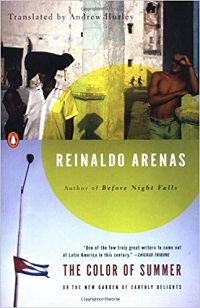
De Cubaanse dichter en schrijver Reinaldo Arenas werd geboren op 16 juli 1943 in Holguin. Zie ook alle tags voor Reinaldo Arenas op dit blog.

Uit: The Color of Summer (Vertaald door Andrew Hurley)

“FIFO: (more enraged yet)
No more delay! Do what I say—
torpedo Avellaneda!
Brought back from the grave for this special day,
this is how she repays us!
No more mercy, no more pleas—
blast her out of the waves!
The broadest spot is the best spot to aim—
do it! Bombs away!
Be sure to shoot for the backside, boys! Death to every traitor!
AVELLANEDA:
No, not the backside, seat of inspiration!
Take aim at the fore!
All who read me know my slogan:
I wish all to enter through the front door.
All the participants in the act of repudiation throw rotten eggs at Avellaneda.
CHORUS:
No more mercy, no more pleas—
blast her out of the waves!
The backside’s the best spot to aim,
so do it! Bombs away!
AVELLANEDA:
If that’s the way it’s going to be,
if that’s the way they’re going to treat me,
then I’m glad I decided not to stay.
Clearly, here there’s no home for me,
so I’ll make my getaway …
But if I ever get my hands on that Horcayés
that brought me back from the dead,
when I get through with him he’ll need
the finest seamstress in Key West,
to sew back on his head.
Meanwhile, on my rowing let me concentrate—
I think I’m going to have to paddle with both arms and both feet!”


Reinaldo Arenas (16 juli 1943 – 7 december 1990)
Cover 

Lees verder “Reinaldo Arenas, Georges Rodenbach, Tony Kushner, Anita Brookner, Jörg Fauser”

Dag Solstad, Bernard Dimey, Andrea Wolfmayr, Pierre Benoit, Franz Nabl

De Noorsde schrijver Dag Solstad werd geboren op 16 juli 1941 in Sandefjord. Zie ook alle tags voor Dag Solstad op dit blog.

Uit: Shyness and Dignity (Vertaald door Sverre Lyngstad)

“And so, when the chips are down, I must say, though not without a sense of repugnance, that if you wish to show your belief in democracy, you also have to do so when you are in the minority, convinced both intellectually and, not least, in your innermost self, that the majority, in the name of democracy, is crushing everything you stand for and that means something to you, indeed, all that gives you the strength to endure, well, that gives a kind of meaning to your life, something that transcends your own fortuitous lot, one might say. When the heralds of democracy roar, triumphantly bawling out their vulgar victories day after day so that it really makes you suffer, as in my own case, you still have to accept it; I will not let anything else be said about me, he thought.”
(…)

“for a brief moment it is his fate, and nothing else, that is frozen into immobility on the stage. The moment of the minor figure. Both before and after this he remains the same, the man who reels off those smart lines, one of which has acquired an immortal status in Norwegian literature: ‘If you take the life-lie away from an average person, you take away his happiness as well.”


Dag Solstad (Sandefjord, 16 juli 1941)

Lees verder “Dag Solstad, Bernard Dimey, Andrea Wolfmayr, Pierre Benoit, Franz Nabl”

William Irwin Thompson

De Amerikaanse dichter, sociaal filosoof en cultuurcriticus William Irwin Thompson werd geboren op 16 juli 1938 in Chicago, Illinois Hij groeide op in Los Angeles, Californië. Hij behaalde zijn B.A. aan Pomona College en zijn Ph.D. aan de Cornell University. Hij werd hoogleraar geesteswetenschappen aan het Massachusetts Institute of Technology en vervolgens aan de York University in Toronto, Ontario. Hij heeft verder gedoceerd aan de Universiteit van Syracuse, de Universiteit van Hawaï, de Universiteit van Toronto en het California Institute of Integral Studies. In 1973 verliet hij de academische wereld om de Lindisfarne Association te stichten, een groep wetenschappers, dichters en religieuze geleerden die elkaar ontmoetten om te discussiëren en deel te nemen aan de opkomende planetaire cultuur die hij leidde van 1972 tot 2012. Thompson woonde ook 17 jaar in Zwitserland. Hij beschrijft een recent werk, “Canticum Turicum” in zijn boek uit 2009, “Still Travels: Three Long Poems”, zelf als “een lang gedicht over de westerse beschaving dat begint met volksverhalen en sporen van Karel de Grote in Zürich en eindigt met de voltooiing van de westerse beschaving zoals uitgedrukt in “Finnegans Wake” en de sporen van James Joyce in Zürich. ” In 1995 ontwierp Thomson, samen met wiskundige Ralph Abraham, een nieuw type cultuurhistorisch curriculum op basis van hun theorieën over de evolutie van het bewustzijn. Thompson woont momenteel in Portland, Maine.

Four In The Morning

The universe is crawling with unseen life:
angels and djinn and spiritual guides.
Like the excess in a stagnant pond,
this abscess of the Absolute
is obscenely corpulent
in every nook and cranny,
armpit and crotch
of the Great Mother
of dark energy and dark matter
we do not see anymore
than the germs in our guts see us,
because they are not germs
but neurons of a larger brain
in which an I is only an organ,
or rather an artificially imposed
membrane drawn arbitrarily
amid a mass of interactive
molecular gates with ions
coming and going as they please
without a thought of me.
Savages knew this once
and could feel it like an itch
beyond the reach of scratch.
Christian missionaries called it animism
and tried to beat it out of them,
bringing brassieres to contain breasts,
and bibles to contain minds,
but nights when I cannot sleep,
I wake at something the clock
marks as three or four,
with my mind teeming and itching
with alien cosmologies
of journeys through other galaxies
and I wake, knowing more than I am.


Ghazal to Sleet

It is too cold to walk today, the Canadian wind
has been iced and chilled to stay cold and true North Amerind.

Only Inuit and arctic polar bears ambulate
on ice–not Maui beach sand where tanned couples congregate.

I think of Hawaiian hot volcanic spots where I sinned
Entangled in knots of Polynesian sun-tanned limbs, skin twinned.

Here I’m so wool bundled up in all, I can’t separate
my fingers from my hand or recall which parts propagate.

The sky drops down on me, I walk slippingly, my face skinned,
Aztec flayed alive and priestly held to the copaled wind.

I thought snow was supposed to fall, not slash and lacerate;
this horizontal pose of life I’d call eviscerate.

Thompson, turn round, escape inside and let the wind
scrape the wild streets while you hide as the sheets of ice abscind.


William Irwin Thompson (Chicago, 16 juli 1938)

Ann De Craemer, Jean Christophe Grangé, Driss Chraïbi, Iris Murdoch, Richard Russo, Jacques Rivière, Rira Abbasi

Bij de Tour de France


Alberto Contador


Uit: De seingever

“Hoe kon men op televisie na zijn dood nog vol lof beelden laten zien van zijn `heldhaftige’ overwinning in 1999 in Luik-Bastenaken-Luik, als een groot deel van de wielerwereld toen al wist wat David Millar later in zijn boek Koersen in het duister schreef — dat VDB de avond voor La Doyenne elf slaappillen Stilnox had genomen en niet eens meer op zijn benen kon staan of praten? Hoe kon men deze man nog ‘god’ noemen als bleek dat hij renners uitlachte die geen verboden middelen durfden te nemen? Ik begon de verslaving, de zelfoverschatting, de list en het bedrog van VDB als symptomatisch te zien voor minstens een deel van de wielrennerij. Het moet vanaf dat moment geweest zijn dat ik met cynisme naar de koers begon te kijken. Renners leken wel goden die door hun aanbidders ook hun grootste zonden worden vergeven. Eventjes waren de fans kwaad, maar vervolgens werden de helden van alle verantwoordelijkheid ontslagen door die in de schoenen te schuiven van het geld, de roem, het gebroken sleutelbeen, de kapotte knie, de wielercoach of de media. Ik wist wel dat renners vaak pionnen waren in een groter spel van ploegleiders en commercie. Ik wist ook dat niet alle renners in hetzelfde bedje ziek waren en sommige het spel wel eerlijk speelden — maar waarnaar zat ik in dat geval te kijken? Sport, of slechte cinema? Ik betrapte mezelf erop dat ik steeds vaker cynische, harde opmerkingen maakte over een renner die een explosieve prestatie neerzette: er was vast weer iets aan de hand; wacht maar een paar maanden; we zullen er nog wel van horen. Vaak kreeg ik gelijk. Ik kon de beslissing van de Duitse zenders ARD en ZDF om de Ronde van Frankrijk in 2007 wegens dopingperikelen niet langer uit te zenden begrijpen, en zelf keek ik op een bepaald moment ook niet meer. De Ronde van Frankrijk van 2010 liet ik aan me voorbijgaan, en achteraf bleek dat er met winnaar Alberto Contador ook iets ‘niet pluis’ was.”


Ann De Craemer (Tielt, 1981)
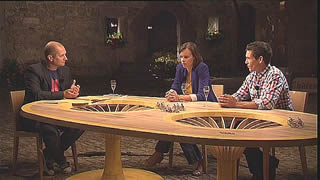
Hier in het midden tijdens een uitzending van Vive le Vélo

Lees verder “Ann De Craemer, Jean Christophe Grangé, Driss Chraïbi, Iris Murdoch, Richard Russo, Jacques Rivière, Rira Abbasi”

Robert Wohlleben, Heinrich Peuckmann, Walter Benjamin, Clive Cussler, Jacques Derrida, Hammond Innes, Kunikida Doppo

De Duitse dichter en schrijver Heinrich Peuckmann werd geboren op 15 juli 1949 in Kamen. Zie ook alle tags voor Heinrich Peuckmann op dit blog en ook mijn blog van 15 juli 2010.


Wenn überhaupt

Die Sonne schien noch
gegen Mittag, der leichte Wind
ist mild und in den Bäumen
mehr gelb als grün

Das ist jetzt deine Zeit
denkst du, Ende Oktober
wenn überhaupt, noch ein November
ein Dezember, wenn überhaupt

Die Sonne könnte wieder
scheinen, noch heute, noch
an dem einen oder andern
Tag, wenn überhaupt

Könnte das Gelb
zum Leuchten bringen, den
leichten Wind erwärmen
und dich vergessen machen

Das ist jetzt deine Zeit
Ende Oktober, noch
ein November, noch dies
noch das, wenn überhaupt

Heinrich Peuckmann (Kamen, 15 juli 1949)
Lees verder “Robert Wohlleben, Heinrich Peuckmann, Walter Benjamin, Clive Cussler, Jacques Derrida, Hammond Innes, Kunikida Doppo”

Irving Stone, Volker Kaminski, Natalia Ginzburg, Jacques de Lacretelle, Gavrila Derzjavin, Béatrix Beck, Arthur Laurents, Owen Wister, Willard Motley

De Amerikaanse schrijver Irving Stone werd geboren op 14 juli 1903 in San Francisco. Zie ook alle tags voor Irving Stone op dit blog.

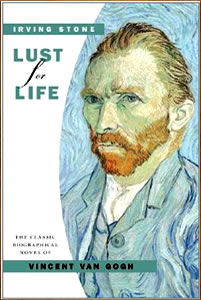
Uit:Lust for Life

“He did not know how much time passed. He got up, ripped the canvas off the frame, threw it into a corner, and put on a new one. He mixed some paints, sat down, and began work. One starts with a hopeless struggle to follow nature, and everything goes wrong; one ends by calmly creating from one’s palette, and nature agrees with it and follows. On croit que j’imagine—ce n’est pas vrai—je me souviens. It was just as Pietersen had told him in Brussels; he had been too close to his models. He had not been able to get a perspective. He had been pouring himself into the mould of nature; now he poured nature into the mould of himself. He painted the whole thing in the colour of a good, dusty, unpeeled potato. There was the dirty, linen table cloth, the smoky wall, the lamp hanging down from the rough rafters, Stien serving her father with steamed potatoes, the mother pouring the black coffee, the brother lifting a cup to his lips, and on all their faces the calm, patient acceptance of the eternal order of things. The sun rose and a bit of light peered into the storeroom window. Vincent got up from his stool. He felt perfectly calm and peaceful. The twelve days’ excitement was gone. He looked at his work. It reeked of bacon, smoke, and potato steam. He smiled. He had painted his Angelus. He had captured that which does not pass in that which passes. The Brabant peasant would never die.”
(…)

“The fields that push up the corn, and the water that rushes down the ravine, the juice of the grape, and the life of a man as it flows past him, are all one and the same thing. The sole unity in life is the unity of rhythm. A rhythm to which we all dance; men, apples, ravines, ploughed fields, carts among the corn, houses, horses, and the sun. The stuff that is in you, Gauguin, will pound through a grape tomorrow, because you and the grape are one. When I paint a peasant labouring in the field, I want people to feel the peasant flowing down into the soil, just as the corn does, and the soil flowing up into the peasant. I want them to feel the sun pouring into the peasant, into the field, the corn, the plough, and the horses, just as they all pour back into the sun. When you begin to feel the universal rhythm in which everything on earth moves, you begin to understand life….”


Irving Stone (14 juli 1903 – 26 augustus 1989)
Cover

Lees verder “Irving Stone, Volker Kaminski, Natalia Ginzburg, Jacques de Lacretelle, Gavrila Derzjavin, Béatrix Beck, Arthur Laurents, Owen Wister, Willard Motley”

Boris Pasternak, Wole Soyinka, Isaak Babel


Dolce far niente


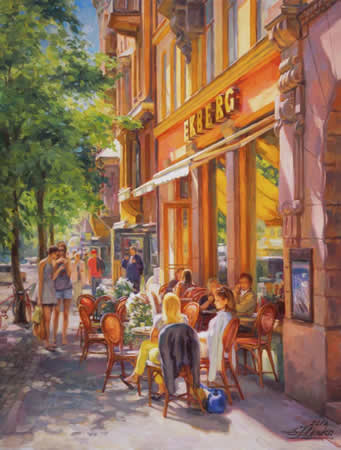
Zomer in de stad door Serguei Zlenko, 2012


Summer in the City

Soft exchanges fill the air
And in some fervent rush,
From the forehead, strands of hair
Were gathered with a brush.

Helmed, she casts a single glance
Upon your face and waits,
Throwing back her head at once
With her dangling braids.

While the humid, muggy night
Insinuates a storm,
All the passersby outside
Quickly scatter home.

And the thunder can be heard now.
There, resounding, it rings.
By the widow-frame, the curtain,
In the crosswinds, swings.

All is silent, all is hushed now
And it’s humid all the while,
And the lightning’s golden flashes
Are still groping in the skyline…

But the sunrise will ensue
With a breaking light, so stifling,
And dry the puddled avenues,
From the downpours and lightning.

You will see a look still stagnant,
From the lack of sleep, sedate,
On those age-old, on those fragrant
Limes that simply will not fade.


Vertaald door Andrey Kneller


Boris Pasternak (10 februari 1890 – 30 mei 1960)
Zomers Moskou, de stad waar Pasternak werd geboren.

Lees verder “Boris Pasternak, Wole Soyinka, Isaak Babel”