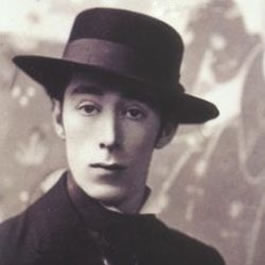
Mazarine Pingeot, A. M. Homes, Viktor Rydberg, Annette von Droste-Hülshoff

De Franse schrijfster Mazarine Pingeot werd geboren in Avignon op 18 december 1974. Zie ook alle tags voor Mazarine Pingeot op dit blog.


Uit: Pour Mémoire

Mes parents ont été arrêtés devant mes yeux. Je m’étais éloigné de la route, avec mon frère, sur le chemin de la Croix-aux-filles, pour ramasser des fraises sauvages. Une voiture a vrombi, au loin, de plus en plus proche, puis elle a ralenti. Nous nous sommes tus. J’ai entendu mes parents crier. Je n’ai pas compris leurs mots, mais ils étaient à notre intention, une intention secrète.

Ces derniers mois nous avions élaboré des messages codés (« éloignez-vous », « nous sommes pris », se traduisaient par « Attention mon chapeau » et « Doucement, vous me faîtes mal » ou n’importe quelle variante qui se serait ajustée à la situation). On avait jugé inutile ou irréaliste d’ajouter « J’ai perdu ma chaussure » pour « Je vous aime mes enfants chéris, pensez à moi, ne vous inquiétez, pas notre amour survivra », et toutes ces phrases tristes que je me répétais d’avance dans mes nuits de silence en tenant la main de ma mère. Elle, elle gardait sa peur pour elle, mais ses lèvres se mettaient à trembler dès que des pas résonnaient dans la cage d’escalier et nous tachions de ne pas bouger. Nous attendions, nous attendions que les choses changent, ou peut-être nous attendions notre arrestation.

Ma mère a crié et je n’ai pas saisi ses mots, ce que j’ai saisi c’est : « Restez là où vous êtes, cachés derrière les arbres. » Peut-être y avait-il aussi un adieu dans ses cris, « Je vous aime, pensez à moi lorsque vous serez grands », mais ses cris ont été recouverts par ceux de mon père : « Ne touchez pas à ma femme, laissez-la, elle n’est pas vraiment juive. » C’est la dernière parole que j’ai entendue. Pas vraiment juive. Toujours ce souci d’exactitude chez lui.“
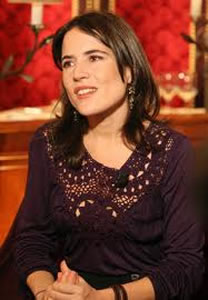
 

Mazarine Pingeot (Avignon, 18 december 1974)

Lees verder “Mazarine Pingeot, A. M. Homes, Viktor Rydberg, Annette von Droste-Hülshoff”

Miles Marshall Lewis, Christopher Fry, Thomas Strittmatter

De Amerikaanse schrijver Miles Marshall Lewis werd geboren op 18 december 1970 in The Bronx, New York. Zie ook alle tags voor Miles Marshall Lewis op dit blog.


Uit: Bronx Noir

„The all-night Baychester Diner harbored the same two wisecracking women in kempt hairweaves found at the counter every weekend past midnight. Each sported something slightly outré signaling her street profession. One wore a bright Wonder Woman bodice with deep cleavage on display, the other scarlet, fishnets with a spiked leather dominatrix collar. Both brandished five-inch stilettos. At the far corner banquette a young couple argued in Creole patois.

“Si ou pa vlé bébé-an, ale vous an,” hissed the pregnant teen in the pink Von Dutch cap.

Kingston and Lacey found an isolated booth and ordered breakfast from a homely waitress. Rain broke the August humidity, slicking the asphalt of Boston Road, while Kingston explained all about the Hernández brothers pushing their numbers turf further down Washington Heights into Harlem, their violent efforts to force him out, and his contingency fl ight plan to New Orleans.

“King. You gonna up and leave just like that?” Lacey asked. She craved a Newport.

“They ain’t runnin’ me out,” he bluffed. “I done made plenty these past fi fteen years. I don’t mind it. Business ain’t like it used to be nohow. Playin’ the numbers is old school, kiddo. More white folks is movin’ into Harlem now and they don’t know nothin’ about me. They play Lotto.”

Lacey laughed.

“You never talked about retiring to New Orleans before.”

Not to me, she thought.

“I done told you ’bout the house. We ain’t never been together, but it’s down there. Since 2000. My cousin look after it, she over in Baton Rouge.”

“When are you talking about going?”

“I ain’t right decided yet. Could be two weeks.”

“Two weeks? That’s enough time for you to wrap up everything?”

“We gon’ see.”


Miles Marshall Lewis (New York, 18 december 1970)

Lees verder “Miles Marshall Lewis, Christopher Fry, Thomas Strittmatter”

Saki, Gatien Lapointe, Heinrich Smidt

De Birmees – Britse schrijver Saki (pseudoniem van Hector Hugh Munro, een naam gekozen uit de Rubaiyat van Omar Khayyam) werd geboren op 18 december 1870 in Akyab, Birma. Zie ook alle tags voor Saki op dit blog.


Uit: The toys of peace

“There is primitive instinct to be taken into consideration, you know,” said Henry doubtfully, “and hereditary tendencies as well. One of their great-uncles fought in the most intolerant fashion at Inkerman — he was specially mentioned in dispatches, I believe — and their great-grandfather smashed all his Whig neighbours’ hot houses when the great Reform Bill was passed. Still, as you say, they are at an impressionable age. I will do my best.”

On Easter Saturday Harvey Bope unpacked a large, promising-looking red cardboard box under the expectant eyes of his nephews. “Your uncle has brought you the newest thing in toys,” Eleanor had said impressively, and youthful anticipation had been anxiously divided between Albanian soldiery and a Somali camel-corps. Eric was hotly in favour of the latter contingency. “There would be Arabs on horseback,” he whispered; “the Albanians have got jolly uniforms, and they fight all day long, and all night, too, when there’s a moon, but the country’s rocky, so they’ve got no cavalry.”

A quantity of crinkly paper shavings was the first thing that met the view when the lid was removed; the most exiting toys always began like that. Harvey pushed back the top layer and drew forth a square, rather featureless building.

“It’s a fort!” exclaimed Bertie.

“It isn’t, it’s the palace of the Mpret of Albania,” said Eric, immensely proud of his knowledge of the exotic title; “it’s got no windows, you see, so that passers-by can’t fire in at the Royal Family.”

“It’s a municipal dust-bin,” said Harvey hurriedly; “you see all the refuse and litter of a town is collected there, instead of lying about and injuring the health of the citizens.”


Saki (18 december 1870 – 14 november 1916)

Lees verder “Saki, Gatien Lapointe, Heinrich Smidt”

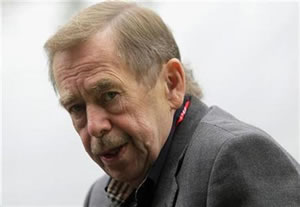
In Memoriam Vaclav Havel

In Memoriam Vaclav Havel


De Tsjechische schrijver, politicus en voormalige president van Tsjechië Vaclav Havel is overleden aan complicaties bij zijn langdurige ziekbed. Hij is 75 jaar geworden. Havel was van oorsprong (toneel)schrijver. Tijdens het communistische regime in Tsjecho-Slowakije was hij een van de belangrijkste dissidenten. Zie ook alle tags voor Václav Havel op dit blog.


Uit: To the Castle and Back (Vertaald door Paul Wilson)

„The days I spent there were important in my life. The hippie movement was at its height. There were be-ins in Central Park. People were festooned with beads. It was the time of the musical Hair. (Joe had presented it in the Public Theater before my play opened, and because it was so successful it moved to Broadway, where I saw the premiere.) It was the time when Martin Luther King Jr. was killed, a period of huge antiwar demonstrations whose inner ethos–powerful but in no way fanatical–I admired; it was also the heyday of psychedelic art. I brought many posters home, and to this day they are hanging in Hradecek. And I brought home the first record of Lou Reed with the Velvet Underground.
My stay in the United States influenced me considerably. After I returned, my friends and I experienced a very joyful, albeit a somewhat nervous, summer, which could not have ended well; on August 21, the Soviet troops arrived. And then, seeing long-haired, bead-festooned young people waving the Czechoslovak flag in front of the Soviet tanks and singing a song that was a favorite among the hippies at the time, “Massachusetts,” I had a truly strange sensation. In those circumstances it sounded a bit different from how it had sounded in Central Park, though it had essentially the same ethos: the longing for a free and colorful and poetic world without violence.
The second time I visited America–after a long and gloomy twenty-two years–I was president of my country. The former hippies were now no doubt respected senators or bosses of multinational corporations. Since then I’ve been here at least ten times; I’ve become close to three American presidents and to many American politicians (a special role among them was played by my compatriot the marvelous Madeleine Albright), as well as to important people and to many famous stars. These working or state or official visits, however, were brief and the program was always full, so that I only saw America from a speeding limousine. I sometimes found time to go for a walk or visit a rock club, but it was never easy. And so now, here I am on my second long visit almost forty years after the first one. In the meantime, I’ve lived through quite a bit, and perhaps precisely for that reason–paradoxically–I long for the freedom of movement I once enjoyed here when I was in my thirties.“


Václav Havel (5 oktober 1936 – 18 december 2011)

80 Jaar Yvonne Keuls, Ronald Giphart, Jón Kalman Stefánsson, Frank Martinus Arion, Hans Henny Jahnn

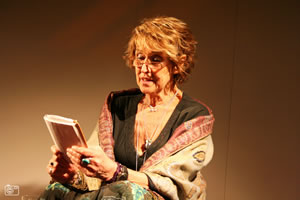
80 Jaar Yvonne Keuls

De Nederlandse schrijfster Yvonne Keuls werd geboren op 17 december 1931 in Batavia, toen nog een onderdeel van Nederlands-Indië. Yvonne Keuls viert vandaag haar 80e verjaardag. Tijdens een feestelijke bijeenkomst ter ere van deze tachtigste verjaardag in het Letterkundig Museum werd bekend dat zij in 2012 de Haagse Cultuurprijs ontvangt. De Haagse Cultuurprijs is bedoeld als bekroning op een Haagse cultuurcarrière. Zie ook alle tags voor Yvonne Keuls op dit blog.

Uit: De moeder van David S.

“Het begon met wierook.
Josientje zei: ‘Mamma, Davids kamer stinkt zo. Het stinkt helemaal naar mijn kamer door. En zijn gordijnen zijn almaar dicht en dan brandt hij kaarsjes en als ik naar binnen wil dan zegt hij dat ik weg moet gaan.’
David weer. Er was iets met hem de laatste tijd. Hij isoleerde zich, zijn schoolvriendjes kwamen niet meer over de vloer, hij had alleen nog maar contact met Bernard, een jongen van 18 jaar, die wat verder in de straat woonde.
‘Zit Bernard nog op school?’ vroeg ik.
‘Wat geeft dat nou of die op school zit?’
‘Ik mag het toch wel vragen?’
‘Ach mens, je zeurt.’
Josientje duwde tegen mijn arm. ‘Mamma, gá nou,’ riep ze, ‘zeg nou dat ik dat gestink niet wil.’
Ik opende zacht zijn deur. David merkte het niet, hij zat op zijn matras – het bed was naar de kelder verhuisd – voorover gebogen naar de kaarsjes te staren.
Nergens een schoolboek te zien, muziek van Frank Zappa. Weer dat gevoel van: er is iets mis, maar wát?’
‘David,’ zei ik, ‘David’.
Hij keek langzaam en wazig op maar zei niets. ‘David, kom je in de kamer, iets drinken?’


Yvonne Keuls (Batavia, 17 december 1931)

Lees verder “80 Jaar Yvonne Keuls, Ronald Giphart, Jón Kalman Stefánsson, Frank Martinus Arion, Hans Henny Jahnn”

Ford Madox Ford, Jules de Goncourt, Penelope Fitzgerald, Alphonse Boudard

De Engelse dichter, schrijver en publicist Ford Madox Ford werd geboren op 17 december 1873 in Merton, Surrey. Zie ook alle tags voor Ford Madox Ford op dit blog.

Uit: The Inheritors (Samen met Joseph Conrad)

“Ideas,” she said. ” Oh, as for ideas –”
“Well?” I hazarded, “as for ideas?”
We went through the old gateway and I cast a glance over my shoulder. The noon sun was shining over the masonry, over the little saints’ effigies, over the little fretted canopies, the grime and the white streaks of bird-dropping.
“There,” I said, pointing toward it, “doesn’t that suggest something to you?”
She made a motion with her head-half negative, half contemptuous.
“But,” I stuttered, ” the associations — the ideas — the historical ideas “
She said nothing.
“You Americans,” I began, but her smile stopped me. It was as if she were amused at the utterances of an old lady shocked by the habits of the daughters of the day. It was the smile of a person who is confident of superseding one fatally.
In conversations of any length one of the parties assumes the superiority — superiority of rank, intellectual or social. In this conversation she, if she did not attain to tacitly acknowledged temperamental superiority, seemed at least to claim it, to have no doubt as to its ultimate according. I was unused to this. I was a talker, proud of my conversational powers.
I had looked at her before; now I cast a side-V ways, critical glance at her. I came out of my moodiness to wonder what type this was. She had good hair, good eyes, and some charm. Yes. And something besides — a something — a something that was not an attribute of her beauty. The modelling of her face was so perfect and so delicate as to produce an effect of transparency, yet there was no suggestion of frailness; her glance had an extraordinary strength of life. Her hair was fair and gleaming, her cheeks coloured as if a warm light had fallen on them from somewhere. She was familiar till it occurred to you that she was strange.
“Which way are you going?” she asked.
“I am going to walk to Dover,” I answered.
“And I may come with you?”
I looked at her — intent on divining her in that one glance. It was of course impossible. ” There will be time for analysis,” I thought.
“The roads are free to all,” I said. “You are not an American?”
She shook her head. No. She was not an Australian either, she came from none of the British colonies.“


Ford Madox Ford (17 december 1873 – 26 juni 1939)
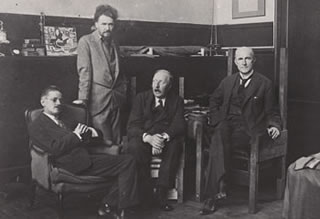
V.l.n.r. James Joyce, Ezra Pound, Ford Madox Ford en John Quinn

Lees verder “Ford Madox Ford, Jules de Goncourt, Penelope Fitzgerald, Alphonse Boudard”

Albert Drach, John Kennedy Toole, John Whittier, Thomas Haliburton, Władysław Broniewski, Érico Veríssimo

De Oostenrijkse schrijver Albert Drach werd op 17 december 1902 in Mödling geboren. Zie ook alle tags voor Albert Drach op dit blog.

Uit: Das Goggelbuch

„Bei Ermittlung seines Ahnennachweises, den Klaus Xaver Johann Guckelhupf, öffentlicher Notar, emsig und ehrlich zusammenzustellen im Begriffe stand und der ihn zunächst auf eine lange Reihe gleich und ähnlich benamster, zumeist dem Notarsstande angehöriger Blutsvorgänger führte, mit Ausnahme eines aus der Art gefallenen, der neben den noch bestehenden Erdteilen Eurasien, Afrika, Australien, Polynesien, Amerika und Antarktis auch noch das versunkene Eiland Atlantis anführte, das sich bisweilen neben die noch nicht untergegangenen als siebentes in unser Bewußtsein einschiebt, kam schließlich der Nachforscher auf den letzterweislichen Urzeuger zurück, der nicht einmal ein phantastischer Geograph oder Erdkundler gewesen, sondern kurzweg ein deutscher Diener mit dem einfachen Namen Xaver Johann Gottgetreu Goggel, der außerdem über sein Dasein in früher Neuzeit einen Bericht hinterlassen hatte, dessen Ursprünglichkeit auch noch durch die Bearbeitung dreier Notare und eines Erdkundlers seine nackte Haut zeigte, wie auch noch immer, wenn auch in Folianten gepreßt, die reine Einheit der Seele eines deutschen Dieners mit seinem Gotte, über den er trotz seinem Stande und seiner Zeit nicht allzulange nach Erfindung des Schießpulvers gehörig nachgedacht hat, sich urtümlich bekundet.
Mithin das Goggelbuch, welches gleich mit der Feststellung beginnt, daß ein deutscher Mann sich niemals in den Spiegel sehe, es sei denn zum Trotz. Hier kann es sich freilich nur um eine allegorische Meinungsäußerung handeln, zumal es in deutschen Landen durchaus üblich und vermutlich immer üblich gewesen ist, sich zwecks Bindens der Krawatte, solange es eine solche gibt, zwecks Rasierens und Haarbürstens eines Spiegels zu bedienen, ohne daß damit eine Herausforderung des Rückstrahlungsgerätes beabsichtigt wäre. Im übrigen beginnt Goggel selbst seinen Bericht mit einer eingehenden Besichtigung seiner Person mit Hilfe einer solchen Fläche“.


Albert Drach(17 december 1902 – 27 maart 1995)

Lees verder “Albert Drach, John Kennedy Toole, John Whittier, Thomas Haliburton, Władysław Broniewski, Érico Veríssimo”

Adriaan van Dis, Jane Austen, Adriaan van der Veen, Noël Coward, Tip Marugg

De Nederlandse schrijver en televisiemaker Adriaan van Dis werd op 16 december 1946 geboren in het Noord-Hollandse Bergen aan Zee. Zie ook alle tags voor Adriaan van Dis op dit blog. Adriaan van Dis viert vandaag zijn 65e verjaardag.

Uit: Doppelliebe (Vertaald door Marlene Müller-Haas)

Es war still auf der Straße und trotz der Morgensonne kühl. Ich klopfte mir die Asche vom Blazer, rieb einen Kotzefleck vom Schuh und versuchte mir den Anschein zu geben, als wäre es ganz selbstverständlich, so früh am Morgen durch Amsterdam zu laufen. Meine Muskeln taten weh, innen und außen. Wenn man mir nur nichts ansah. Bald würde ich diese Stadt, und diese Nacht, von mir abwaschen und ich würde eifrig lernen, Laurence Olivier hören, mich auf meine Aufnahmeprüfung für die Schauspielschule konzentrieren – schöne Sätze, schöne Worte, die Schönheit war meine einzige Rettung.
Wo lag wohl der Bahnhof? Hinter den Häusern kreischte eine Straßenbahn. Ich folgte meinen Ohren und kam zu einer breiten Straße mit zwei Schienen im Asphalt; denen folgte ich auf gut Glück. Kurz darauf roch ich die salzige Luft des Wassers vom IJ und sah das Schieferdach des Bahnhofs vor dem blauen Himmel glänzen.
In den Bäumen vor dem Eingang sangen die Stare. Aus einer Straßenbahn stiegen die ersten Fahrgäste. An der Fassade lehnten zwei Stadtstreicher in der Sonne. Sie tranken Bier aus der Flasche und schrieen den Passanten Zoten nach: »He, ihr da, dort läuft ’ne Hure, die hat die ganze Nacht nix verdient, die kannste ficken für ’nen Fünfer.« Auch ich mußte dran glauben. »He, du da, haste was Bares?» Ich ließ sie links liegen.
»Kannste nich höflich grüßen?«
»Guten Morgen, meine Herren.« Gespreizter ging’s nicht.
Ein Mann kam mit einer Flasche in der Hand auf mich zu. Hatte ich vielleicht was zum Rauchen? Ohne zu reagieren, steuerte ich in die Halle zu den Schaltern, aber der Mann folgte mir bettelnd. Der Schalterbeamte pulte Gulden aus einer Geldrolle. Ich klopfte gehetzt an die Scheibe. Das Schild »Geschlossen« klappte vor meiner Nase herunter.
Der Penner zog an meiner Jacke. »Bestimmt Student?« Mein Schweigen gefiel ihm nicht. »Entschuldigen Sie«, sagte ich und wollte zu den Zügen rennen. Er hielt mich fest. Ein Schubs, seine Bierflasche fiel zu Boden – Schaum und Fluchen. Auf den Lärm hin eilten seine Kumpane herbei. »Hast se wohl nich mehr alle, du Arschloch!« Ich hastete zum letzten Bahnsteig, dem festen Abfahrtsgleis für Halfstad. Eine Bierflasche flog mir zwischen die Beine. Schritte hallten in der Unterführung wider.


Adriaan van Dis (Bergen aan Zee, 16 december 1946)

Lees verder “Adriaan van Dis, Jane Austen, Adriaan van der Veen, Noël Coward, Tip Marugg”

Rafael Alberti, Pierre Lachambeaudie, V.S. Pritchett, Mary Russell Mitford, Olavo Bilac

De Spaanse dichter en schrijver Rafael Alberti werd geboren op 16 december 1902 in El Puerto de Santa María (Cádiz). Zie ook alle tags voor Rafael Alberti op dit blog.


Punishments

It is when gulfs and bays of blood,

clotted with dead and vengeful stars,

flood into my dreams.

When gulfs and bays of blood

capsize the beds that were sailing,

and, on the world’s right, an angel dies forgotten.

When the winds reek of brimstone

and mouths by night taste of bone, glass, and wire.

Hear me.

I did not know that doors moved from place to place,

that souls could blush for their bodies,

nor that at the end of a tunnel, the light would bring death.

Hear me yet.

The sleepers want to run away.

But those graves of the sea are not still,

those graves which open through

neglect and weariness of the sky are not stable,

and the dawns stumble upon disfigured faces.

Hear me yet. There’s still more.

There are nights when the hours turn to stone in space,

when veins do not flow

and when the silences raise up centuries and gods to come.

A thunderbolt shuffles tongues and jumbles words.

Think of the shattered spheres,

of the dry orbits of the uninhabited men,

of the dumb millennia.

More, more yet. Hear me.

You can see that bodies are not where they were,

that the moon is growing cold through being stared at,

and that a child’s crying deforms the constellations.

Mildewed skies corrode our desert brows,

where each minute buries its nameless corpse.

Hear me, hear me for the last time.

For there’s always a last time

that follows the fall of the high wasteland,

the advent of the cold in forgetful dreams,

and death’s headlong stoops upon the skeleton of nothingness.


Vertaald door Geoffrey Connell


Rafael Alberti (16 december 1902 – 27 oktober 1999)

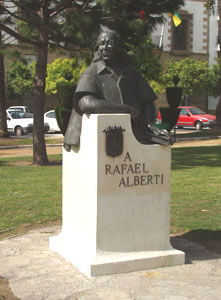
Monument in El Puerto de Santa María

Lees verder “Rafael Alberti, Pierre Lachambeaudie, V.S. Pritchett, Mary Russell Mitford, Olavo Bilac”

Ingo Schulze, Klaus Rifbjerg, Jan Greshoff, Simone van der Vlugt, Edna O’Brien

De Duitse schrijver Ingo Schulze werd geboren in Dresden op 15 december 1962. Zie ook mijn blog van 15 december 2008 en ook mijn blog van 15 december 2009 en ook mijn blog van 15 december 2010.


Uit: 33 Augenblicke des Glücks

“Ich will es Ihnen erklären: Vor einem Jahr erfüllte ich mir einen langgehegten Wunsch und fuhr mit der Bahn nach Petersburg. Ich teilte das Abteil mit einer frisch frisierten Russin, ihrem Mann und einem Deutschen namens Hofmann. Die Russen sahen in uns ein Paar, und Hofmann, als der Übersetzer ihrer Fragen und meiner Antworten, ließ sie wohl in diesem Glauben. Ich weiß nicht, was er ihnen noch alles erzählt hat. Sie lachten unentwegt, und die Frau tätschelte meine Wange.
Auch in der Nacht blieb es schwül, die Hemden der Schaffner waren fleckig vor Schweiß, die Fenster beschlagen, schmutzig und im Abteil nicht zu öffnen – angeblich gab es eine Klimaanlage –, und wenn es nicht nach Desinfektionsmitteln stank, dann nach Klo und Zigaretten. Stahlbleche, wie Zugbrücken zwischen den Waggons herabgelassen, schlugen tarrara-tarrara-bsching, tarrara-tarrara-bsching aufeinander, wechselten beim Abbremsen zu tarrara-bsching-bschong, tarrara-bsching-bschong, bis die Puffer aufeinander prallten – unberechenbare, unablässige Stöße, so daß ich nicht schlafen konnte und auch am folgenden Tag, als die Hitze nachließ, wach lag. Wenn Hofmann nicht mit den Russen sprach, blickte er, den Kopf ins Kissen gedrückt, zum Fenster hinaus, wo sich zwischen sumpfigem Brachland und wüsten Wäldern hin und wieder Häuschen zeigten, blau und grün und schief in die Erde gedrü ckt, und aufgestapelte Scheite hell hinter abgebrannten Wiesen und getünchten Zäunen leuchteten. Von den gelben Fähnchen der Schrankenwä rter war oft nur der Holzstab zum Salutieren übriggeblieben.
Am zweiten Abend, bereits in Litauen, lud mich Hofmann plö tzlich in den Speisewagen ein. Wie er mir gegenübersaß, dunkelblond, fast grauäugig, mit einer Narbe unterm Kinn, wirkte er selbstsicher. Er bestellte ohne Speisekarte und putzte sein Besteck an den roten Gardinen. Auf die Frage jedoch, wie ein deutscher Geschäftsmann, für den er sich ausgab, dazu komme, mit der Bahn zu reisen, verlor er einen Moment lang alle Leichtigkeit. Er lächelte angestrengt und fixierte mich. Statt zu antworten, begann er weitschweifig von seiner Arbeit für eine Zeitung zu sprechen. Vor allem aber sei er, neben seiner Leidenschaft fü r den Karaokegesang, ein Literaturliebhaber.”


Ingo Schulze (Dresden, 15 december 1962)

Lees verder “Ingo Schulze, Klaus Rifbjerg, Jan Greshoff, Simone van der Vlugt, Edna O’Brien”