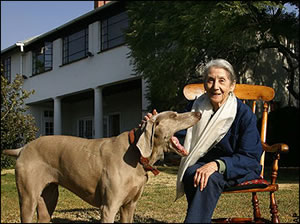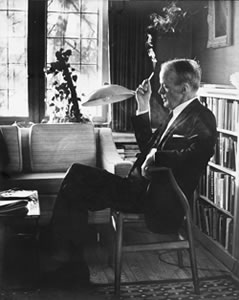
Isaac Bashevis Singer, Marilyn French, Margriet de Moor, Veza Canetti, Freya North

De Amerikaans-Poolse schrijver Isaac Bashevis Singer werd geboren op 21 november 1904 als Isaac Hertz Singer in Radzymin, Polen. Zie ook mijn blog van 21 november 2006 en ook mijn blog van 21 november 2007 en ook mijn blog van 21 november 2008 en ook mijn blog van 21 november 2009.

Uit: Fool’s Paradise


„Somewhere, sometime, there lived a rich man whose name was Kadish. He had an only son who was called Atzel. In the household of Kadish there lived a distant relative, an orphan girl, called Aksah. Atzel was a tall boy with black hair and black eyes. Aksah was somewhat shorter than Atzel, and she had blue eyes and golden hair. Both were about the same age. As children, they ate together, studied together, played together. Atzel played the husband; Aksah, his wife. It was taken for granted that when they grew up they would really marry.

But when they had grown up, Atzel suddenly became ill. It was a sickness no one had ever heard of before: Atzel imagined that he was dead.

How did such an idea come to him? It seems it came from listening to stories about paradise. He had had an old nurse who had constantly described the place to him. She had told him that in paradise it was not necessary to work or to study or make any effort whatsoever. In paradise one ate the meat of wild oxen and the flesh of whales; one drank the wine that the Lord reserved for the just; one slept late into the day; and one had no duties.

Atzel was lazy by nature. He hated to get up early in the morning and to study languages and science. He knew that one day he would have to take over his father’s business and he did not want to.

Since his old nurse had told Atzel that the only way to get to paradise was to die, he had made up his mind to do just that as quickly as possible. He thought and brooded about it so much that soon he began to imagine that he was dead.

Of course his parents became terribly worried when theysaw what was happening to Atzel. Aksah cried in secret. The family did everything possible to try to convince Atzel that he was alive, but he refused to believe them. He would say, “Why don’t you bury me? You see that I am dead. Because of you I cannot get to paradise.”

Many doctors were called in to examine Atzel, and all tried to convince the boy that he was alive. They pointed out that he was talking, eating, and sleeping. But before long Atzel began to eat less and he rarely spoke. His family feared that he would die.“
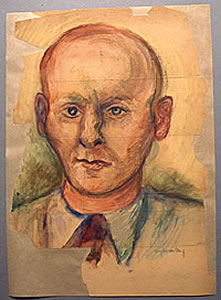


 Isaac Bashevis Singer (21 november 1904 – 24 juli 1991)

 Portret door Sylvia Ary, 1935


Lees verder “Isaac Bashevis Singer, Marilyn French, Margriet de Moor, Veza Canetti, Freya North”
Arthur Quiller-Couch, Wilhelm Waiblinger, Voltaire, Franz Hessel

De Engelse schrijver en crticus Sir Arthur Thomas Quiller-Couch werd geboren op 21 november 1863 in Bodmin, Cornwall. Zie ook mijn blog van 21 november 2008 en ook mijn blog van 21 november 2009.

Uit: The Astonishing History of Troy Town

“Any news to-night?” asked Admiral Buzza, leading a trump.

“Hush, my love,” interposed his wife timidly, with a glance at the Vicar.  She liked to sit at her husband’s left, and laid her small cards before him as so many tributes to his greatness.

“I will not hush, Emily.  I repeat, is there any news to-night?”

Miss Limpenny, his hostess and vis-a-vis, finding the Admiral’s eye fierce upon her, coughed modestly and announced that twins had just arrived to the postmistress.  Her manner, as she said this, implied

that, for aught she knew, they had come with the letters.

The Vicar took the trick and gathered it up in silence.  He was a portly, antique gentleman, with a fine taste for scandal in its proper place, but disliked conversation during a rubber.

“Twins, eh?” growled the Admiral.  “Just what I expected.  She always was a wasteful woman.”

“My love!” expostulated his wife.  Miss Limpenny blushed.

“They’ll come to the workhouse,” he went on, “and serve him right for making such a marriage.”

“I have heard that his heart is in the right place,” pleaded Miss Limpenny, “but he used–“

“Eh, ma’am?”

“It’s of no consequence,” said Miss Limpenny, with becoming bashfulness.  “It’s only that he always used, in sorting his cards, to sit upon his trumps–that always seemed to me–“

“Just so,” replied the Admiral, “and now it’s twins.  Bless the man! what next?”


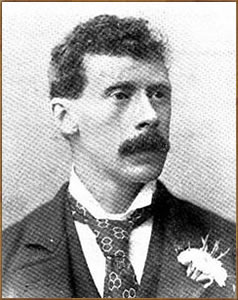
Arthur Quiller-Couch (21 november 1863 – 12 mei 1944)


Lees verder “Arthur Quiller-Couch, Wilhelm Waiblinger, Voltaire, Franz Hessel”

Kerstin Preiwuß

De Duitse dichteres en schrijfster Kerstin Preiwuß werd geboren op 21 november 1980 in Lübz en groeide op in Plau am See en Rostock. Zie ook mijn blog van 14 juli 2009 en ook mijn blog van 14 juli 2010.


einmal sind von anatomischen tischen

einmal sind von anatomischen tischen
die apokalyptischen reiter durch mein gesicht gezogen
nun ist es verbogen
habe es abgenommen und in eine hand gelegt
kann’s kaum verwinden
dass sie ein stillleben trägt

warte, bis mir ein neues wächst
die reiter warten mit mir mit
ihr rückzug steht fest
dann hab ich zwei schalen, eine waage
in die ich mein leben werfen kann
soweit zum wiedergang


najade (na ja)

wasserweib nur meerschaum weiß
davon: woher ich komm
wohin ich ging: vorhin
war ich noch viel zu schwer
jetzt bekleidet mich das meer


Kerstin Preiwuß (Lübz, 21 november 1980)

Nadine Gordimer, Don DeLillo, Thomas Chatterton, Sheema Kalbasi

De Zuidafrikaanse schrijfster Nadine Gordimer werd geboren op 20 november 1923 in Springs. Zie ook alle tags voor Nadine Gordimer op dit blog.

Uit: Beethoven was One-Sixteenth Black

“GREGOR

Anyone who is a reader knows that what you have read has influenced your life. By ‘reader’ I mean one from the time you began to pick out the printed words, for yourself, in the bedtime story. (Another presumption: you became literate in some era before the bedtime story was replaced by the half-hour before the Box.) Adolescence is the crucial period when the poet and the fiction writer intervene in formation of the sense of self in sexual relation to others, suggesting – excitingly, sometimes scarily – that what adult authority has told or implied is the order of such relations, is not all. Back in the Forties, I was given to understand: first, you will meet a man, both will fall in love, and you will marry; there is an order of emotions that goes with this packaged process. That is what love is.

For me, who came along first was Marcel Proust. The strange but ineluctable disorder of Charles Swann’s agonising love for a woman who wasn’t his type (and this really no fault of her own, he fell in love with her as what she was, eh?); the jealousy of the Narrator tormentedly following a trail of Albertine’s evasions.

Swept away was the confetti. I now had different expectations of what experience might have to take on. My appren­ticeship to sexual love changed; for life. Like it or not, this is what love is. Terrible. Glorious.

But what happens if something from a fiction is not interiorised, but materialises? Takes on independent exist­ence?

It has just happened to me. Every year I re-read some of the books I don’t want to die without having read again. This year one of these is Kafka’s Diaries, and I am about halfway through. It’s night-time reading of a wonderfully harrowing sort.

A few mornings ago when I sat down at this typewriter as I do now, not waiting for Lorca’s duende but getting to work, I saw under the narrow strip of window which displays words electronically as I convey them, a roach. A smallish roach about the size and roach-shape of the nail of my third finger – medium-sized hand. To tell that I couldn’t believe it is understatement. But my immediate thought was practical: it was undoubtedly there, how did it get in. I tapped the glass at the place beneath which it appeared. It confirmed its existence, not by moving the body but wavering this way and that two whiskers, antennae so thin and pale I had not discerned them.”


Nadine Gordimer (Springs. 20 november 1923)

Lees verder “Nadine Gordimer, Don DeLillo, Thomas Chatterton, Sheema Kalbasi”

Selma Lagerlöf, Yevgenia Ginzburg, A.L. Snijders

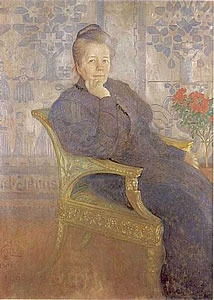
De Zweedse schrijfster Selma Lagerlöf werd geboren op 20 november 1858 in Östra Emterwik in Zweden. Zie ook alle tags voor Selma Lagerlöf op dit blog.

Uit: Niels Holgersson’s wonderbare reis (Vertaald door Margaretha Meijboom) 

“Maar Vader en Moeder verheugden zich in ’t geheel niet; integendeel, ze waren heel bedroefd. Hij was een arme keuterboer, en hun hoeve was niet veel grooter dan een tuintje. Toen ze er in ’t begin kwamen wonen, konden zij daar niet meer dan een varken en een paar kippen houden; maar ze waren bizonder vlijtige en knappe menschen, en nu hadden ze èn koeien, èn ganzen. Het was hun buitengewoon goed gegaan, en ze zouden tevreden en blij naar de kerk zijn gewandeld, als ze

niet over hun zoon hadden hoeven denken. De vader klaagde er over, dat hij traag en lui was. In school had hij niets willen leeren, en hij was zoo onbruikbaar, dat men hem ternauwernood de ganzen kon laten hoeden. En Moeder kon niet ontkennen, dat dit waar was, maar zij was het meest bedroefd, omdat hij zoo wild en akelig was,–hard tegen de dieren en boosaardig tegenover de menschen.

“God moge zijn boozen wil breken, en hem een ander hart geven,” zei ze. “Anders wordt hij een ongeluk voor zichzelf en de onzen.”

De jongen stond er lang over na te denken of hij de preek zou lezen of niet. Toen was hij met zichzelf overeengekomen, dat het ’t beste was dezen keer gehoorzaam te zijn. Hij ging in den grooten leuningstoel zitten, en begon te lezen. Maar toen hij een poosje lang de woorden halfluid opgerabbeld had, was het alsof hij slaap kreeg van dat gerabbel, en hij merkte, dat hij knikkebolde.“


Selma Lagerlöf (20 november 1858 – 16 maart 1940)
Portret door Carl Larsson, 1908

Lees verder “Selma Lagerlöf, Yevgenia Ginzburg, A.L. Snijders”

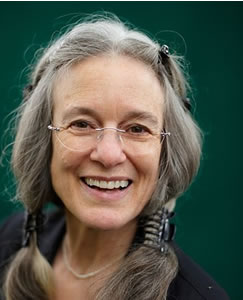
Sharon Olds, Mark Harris, Christoph Wilhelm Aigner, Anna Seghers

De Amerikaanse dichteres Sharon Olds werd geboren op 19 november 1942 in San Francisco. Zie ook alle tags voor Sharon Olds op dit blog.


A Week Later 


A week later, I said to a friend: I don’t

think I could ever write about it.

Maybe in a year I could write something.

There is something in me maybe someday

to be written; now it is folded, and folded,

and folded, like a note in school. And in my dream

someone was playing jacks, and in the air there was a

huge, thrown, tilted jack

on fire. And when I woke up, I found myself

counting the days since I had last seen

my husband-only two years, and some weeks,

and hours. We had signed the papers and come down to the

ground floor of the Chrysler Building,

the intact beauty of its lobby around us

like a king’s tomb, on the ceiling the little

painted plane, in the mural, flying. And it

entered my strictured heart, this morning,

slightly, shyly as if warily,

untamed, a greater sense of the sweetness

and plenty of his ongoing life,

unknown to me, unseen by me,

unheard, untouched-but known, seen,

heard, touched. And it came to me,

for moments at a time, moment after moment,

to be glad for him that he is with the one

he feels was meant for him. And I thought of my

mother, minutes from her death, eighty-five

years from her birth, the almost warbler

bones of her shoulder under my hand, the

eggshell skull, as she lay in some peace

in the clean sheets, and I could tell her the best

of my poor, partial love, I could sing her

out with it, I saw the luck

and luxury of that hour.


The Unborn 


Sometimes I can almost see, around our heads,

Like gnats around a streetlight in summer,

The children we could have,

The glimmer of them.


Sometimes I feel them waiting, dozing

In some antechamber – servants, half-

Listening for the bell.


Sometimes I see them lying like love letters

In the Dead Letter Office


And sometimes, like tonight, by some black

Second sight I can feel just one of them

Standing on the edge of a cliff by the sea

In the dark, stretching its arms out

Desperately to me.


Sharon Olds (San Francisco, 19 november 1942)


Lees verder “Sharon Olds, Mark Harris, Christoph Wilhelm Aigner, Anna Seghers”

Allen Tate, Girolamo de Rada, Veronika Aydin

De Amerikaanse dichter Alan Tate werd geboren op 19 november 1899 in de buurt van Winchester, Kentucky. Zie ook alle tags voor Alan Tate op dit blog.


Light

Last night I fled until I came
To streets where leaking casements dripped
Stale lamplight from the corpse of flame;
A nervous window bled.

The moon swagged in the air.
Out of the mist a girl tossed
Spittle of song; a hoarse light
Spattered the fog with heavy hair.

Damp bells in a remote tower
Sharply released the throat of God,
I leaned to the erect night
Dead as stiff turf in winter sod.

Then with the careless energy
Of a dream, the forward curse
Of a cold particular eye
In the headlong hearse.


The Cross

There is a place that some men know,
I cannot see the whole of it
Nor how I came there. Long ago
Flame burst out of a secret pit
Crushing the world with such a light
The day-sky fell to moonless black,
The kingly sun to hateful night
For those, once seeing, turning back:
For love so hates mortality
Which is the providence of life
She will not let it blessed be
But curses it with mortal strife,
Until beside the blinding rood
Within that world-destroying pit
-Like young wolves that have tasted blood,
Of death, men taste no more of it.
So blind, in so severe a place
(All life before in the black grave)
The last alternatives they face
Of life, without the life to save,
Being from all salvation weaned-
A stag charged both at heel and head:
Who would come back is turned a fiend
Instructed by the fiery dead.


Allen Tate (19 november 1899 – 9 februari 1979)


Lees verder “Allen Tate, Girolamo de Rada, Veronika Aydin”

Joost Zwagerman, Toon Tellegen, Klaus Mann, Seán Mac Falls, Richard Dehmel

De Nederlandse dichter en schrijver Joost Zwagerman werd geboren in Alkmaar op 18 november 1963. Zie ook mijn blog van 18 november 2006 en ook mijn blog van 18 november 2007 en ook mijn blog van 18 november 2008 en ook mijn blog van 18 november 2009.


Uit: Chaos en Rumoer 


„Nadat Otto Vallei zich zes maanden lang iedere dag in zijn werkkamer had opgesloten om aan een roman te werken, biechtte hij zijn vrouw Karin op dat hij nauwelijks vorderingen had gemaakt. En zelfs dat was een zonnige voorstelling van zaken. In zekere zin was hij niet eens aan die roman begonnen.
Karin reageerde tamelijk laconiek op Otto’s bekentenis, wat hem eerst verbaasde, daarna opluchtte en uiteindelijk zachtjes kwetste. Hij kon natuurlijk niet van haar verlangen dat ze net als hij diep ontgoocheld was, maar een minimum van solidaire somberheid had hij toch wel van haar verwacht. In plaats daarvan was ze alleen maar nieuwsgierig. Waarschijnlijk kon ze het zich niet goed voorstellen dat iemand in zes maanden tijd zó weinig kon uitvoeren. Zelf kon Otto
het zich achteraf ook niet goed voorstellen.
‘Heb je echt niets op papier gekregen?’ vroeg ze. ‘Niet eens één zin, zoals Jack Nicholson in
The Shining
?’
Hij gaf haar tien a-viertjes waarop hij die ochtend iets schamels had uitgeprint. Hij had de computer het aantal woorden, regels en zelfs lettertekens laten berekenen.
‘Zesduizendwoordenennogiets.Vijfhonderdeenentwintigregels. Een gruwelijke oogst na een halfjaar. Vind je niet?’
De dagen na zijn bekentenis klaagde Otto dat hij niet aan het werk kwam, omdat hij allerlei verplichtingen had: lezingen, recensies schrijven, dat soort dingen. Bovendien ging iedere dag wel een paar keer de telefoon. Hij had geen leven zo.
De telefoon was sinds jaar en dag een van zijn ergste vijanden. Niets was funester voor het heilig vuur dan het ijzingwekkende gerinkel. Iedere keer dat de telefoon ging, trof het geluid hem als een
goed doordachte poging hem in een hoek te drijvenwaaruit niet viel te ontsnappen. Niet opnemen was onmogelijk; hoe langer het gerinkel aanhield, hoe meer dwang erin doorklonk. Je moest opnemen. Je móest. Anders was je slap en laf. Slap en laf en bang. Dus nam je op.“


Joost Zwagerman (Alkmaar, 18 november 1963)

Lees verder “Joost Zwagerman, Toon Tellegen, Klaus Mann, Seán Mac Falls, Richard Dehmel”

Eugenio Montejo, Jaap Meijer, Margaret Atwood, William Gilbert, Hans Reimann, Mireille Cottenjé

De  Venezolaanse dichter en schrijver Eugenio Montejo werd geboren in Caracas op 18 november 1938. Zie ook mijn blog van 18 november 2008 en ook mijn blog van 18 november 2009.


The earth turned to bring us closer


The earth turned to bring us closer,
it spun on itself and within us,
and finally joined us together in this dream
as written in the Symposium.
Nights passed by, snowfalls and solstices;
time passed in minutes and millennia.
An ox cart that was on its way to Nineveh
arrived in Nebraska.
A rooster was singing some distance from the world,
in one of the thousand pre-lives of our fathers.
The earth was spinning with its music
carrying us on board;
it didn’t stop turning a single moment
as if so much love, so much that’s miraculous
was only an adagio written long ago
in the Symposium’s score.


Life

To Vicente Gerbasi


Life boards planes and heads off into the distance;
by day, by night, at every instant
it¹s leaving for some remote airport.


Life goes away, disappears, comes back later on.
It¹s hard to follow life:
it keeps secretive unpredictable hours,
changes itinerary, sleeps right through the trip,
goes on flying.


Life could be arriving now, we don¹t know,
it might be in Nebraska or Istambul
or maybe it¹s that woman asleep opposite us
in the transit lounge.


Life¹s the unknown on the board of destinations,
the travellers who leave or return,
fear, adventure, weeping,
the clouds that wait for us beyond the good-byes
and the pure planes that lift
towards the high winds of desire.


Vertaald door Peter Boyle


Eugenio Montejo (18 november 1938 – 5 juni 2008)


Lees verder “Eugenio Montejo, Jaap Meijer, Margaret Atwood, William Gilbert, Hans Reimann, Mireille Cottenjé”

Auberon Waugh, Dahlia Ravikovitch, Rebecca Walker

De Britse schrijver journalist en polemist Auberon Alexander Waugh werd geboren op 17 november 1939 in Dulverton, Somerset. Hij is bekend geworden door zijn satirische essays en om zijn conservatieve opvattingen over politiek en religie. Met zijn provocerende snobisme keerde hij zich tegen de veramerikanisering van het Verenigd Koninkrijk en in het bijzonder tegen de gevaren van de hamburger. Auberon Waugh (bijnaam “Bron”) was het tweede kind en de oudste zoon van Evelyn Waugh en zijn tweede vrouw. Hij werd opgeleid aan het Benedictijner college van Downside en aan Christ Church (Oxford), waar hij zonder diploma vertrok om zijn heil te zoeken in de journalistiek en de literatuur. Zijn eerste roman, The Foxglove Saga, verscheen in 1960, toen hij net 20 jaar was geworden. Hij begon als verslaggever van de Daily Telegraph en in de lange en vruchtbare carrière die volgde schreef hij voor The Spectator, New Statesman en andere bladen, zoals de Daily Mirror, Daily Mail, de Evening Standard en The Independent. Van 1981 tot 1990 bekleedde hij een belangrijke post in de Sunday Telegraph. Zijn vaste column in Private Eye, vanaf het begin van de jaren 1970 tot 1986, maakte van hem een beroemdheid. Van 1986 tot aan zijn dood was hij redacteur van de Literary Review en stelde hij mede de Bad Sex in Fiction Award in om elk jaar de slechtste seksscène van de hedendaagse literaire fictie te belonen.

Uit: Will This Do? An Autobiography

„On one occasion, just after the war, every child in Britain was to be allowed one banana each from the first consignment to arrive here for years.
Neither I, nor Teresa, nor my sister Margaret who was born in 1942, had ever eaten a banana but we had heard all about them as the most delicious taste in the world.
The great day arrived when my mother came home with three bananas. All three were put on my father’s plate and, before the anguished eyes of his children, he poured on cream and sugar, which was heavily rationed, and ate all three.
It would be absurd to say that I never forgave him, but he was permanently marked down in my estimation from that moment in ways which no amount of sexual transgression would have achieved.
In light of our inability to amuse him, it was thought better that we should be sent away as much as possible.
My fate was to be left in a boarding school on January 28, 1946, two months after my sixth birthday.
During my first term there, when I was still very nervous, he played one of his best practical jokes on me.
He told me he proposed to change our family name and that, when he had done so, the headmaster would summon the school together and say: “Boys, the person you have hitherto called Waugh will in future be called Stinkbottom.”
I understood perfectly well that he was joking, but one never knew how far he would be prepared to go with his jokes.
Every morning at school assembly, I felt a slight tightening of the chest as the headmaster came forward to make his daily announcements.
Teresa was also at boarding school and my father’s undisguised glee at the prospect of getting rid of his children was apparent at the end-of-holiday dinner parties which became a rigid institution.
On these occasions, Papa would dress in white tie and tails with his military medals glittering on his chest – in a gallant war seeing action in four theatres and spending months behind enemy lines in Yugoslavia, he had acquired a fair display of them.
His speech was always some variation on the theme of how delighted he was that we were going back to school.


Auberon Waugh (17 november 1939 -16 januari 2001)


Lees verder “Auberon Waugh, Dahlia Ravikovitch, Rebecca Walker”