Pedro Mir, Detlev von Liliencron, Friederike Brun, Eugène Van Oye, Carlo Michelstaedter, Otto Erich Hartleben, Philippe Quinault

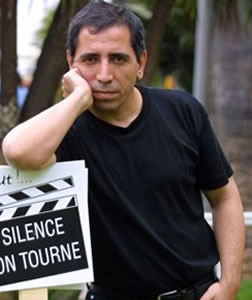
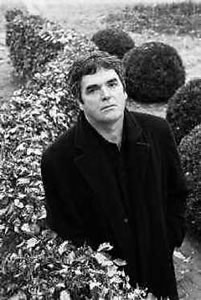
De Domicaanse dichter en schrijver Pedro Mir werd op 3 juni 1913 in San Pedro de Macorís geboren. Zie ook mijn blog van 3 juni 2009.


Uit: Countersong to Walt Whitman (Vertaald door Jonathan Cohen)


9


For

         what has a great undeniable poet been

                but a crystal-clear pool

                       where a people discover their perfect

                              likeness?

What has he been

                              but a deep garden

                                     where all men recognize themselves

                                            through language?

And what

                 but the chord of a boundless guitar

                        where the fingers of the people play

                               their simple, their own, their strong and

                                      true, innumerable song?

For that’s why you, numerous Walt Whitman, who saw and ranted

just the right word for singing your people,

who in the middle of the night said

                                                         I

and the fisherman understood himself in his slicker

and the hunter heard himself in the midst of his gunshot

and the woodcutter recognized himself in his axe

and the farmer in his freshly sown field and the gold

panner in his yellow reflection on the water

and the maiden in her future town

                                                       growing and maturing

under her skirt

and the prostitute in her fountain of gaiety

and the miner of darkness in his steps beneath his homeland . . .

When the tall preacher, bowing his head

between his two long hands, said

                                                         I

and found himself united with the foundryman and the salesman

with the obscure traveler in a soft cloud of dust

with the dreamer and the climber,

with the earthy mason resembling a stone slab,

with the farmer and the weaver,

with the sailor in white resembling a handkerchief . . .

And all the people saw themselves

when they heard the word

                                          I

and all the people heard themselves in your song

when they heard the word

                                          I, Walt Whitman, a kosmos,

                                          of Manhattan the son . . . !

Because you were the people, you were I,

and I was Democracy, the people’s family name,

and I was also Walt Whitman, a kosmos,

of Manhattan the son . . . !


Pedro_Mir

Pedro Mir (3 juni 1913 – 11 juli 2000)


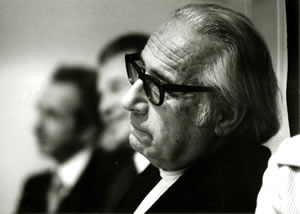
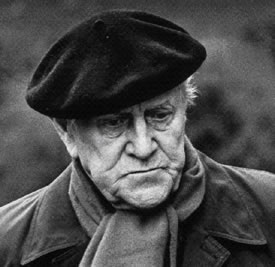
De Duitse dichter Detlev von Liliencron werd op 3 juni 1875 in Kiel geboren. Zie ook mijn blog van 3 juni 2007 en ook mijn blog van 3 juni 2008 en ook mijn blog van 3 juni 2009.


Italienische Nacht


I

                Weit fort, im südlichen Italien war es. –

Du schautest vom Altane in den Garten

Auf weiterhellte, festbelebte Wege.

Dann hob dein Auge sich, und deine Seele

Verlor sich in das Schweigen ferner Landschaft:

    Im Meer des Mondenlichtes liegen still

    Die weißen Schlösser, Schiffen gleich, vor Anker.

    Es dunkeln, Inseln, die Zypressenhaine,

    Wo Liebesworte und Gitarrenklang

    Im gleichen Fall der Brunnen sich vermischen.

Wie lange willst du träumen, deutsche Frau,

Von glutdurchtränkter Nacht des Romeo?

Weckt dir Erinnerung nicht liebe Bilder

Aus unbarmherzig strenger Winternacht,

Die mit gesenktem Augenlid umdämmert

Die Hünengräber deines rauhen Strandes?


II

 Im Nebelnorden, an der Ostseeküste,

Abseits der Städte und der großen Straßen,

Schläft einsam und vergessen, halb verweht

Im Schnee, von harten Stürmen oft gezaust,

Ein kleines Gut. Zwei ungeschlachte Riesen,

Uralte Tannen, strecken ihre Arme

Wie Speere vor zum Schutz des Herrenhauses.

Unhörbar, drinnen auf dem Smyrnateppich,

Geht eine junge Dame auf und nieder.

Bisweilen bleibt sie stehn, schraubt an der Lampe,

Schiebt auf dem Bechstein an das Notenpult

Die schweren Bronzekandelaber näher,

Zupft im Vorübergehen an der Decke

Des Sofatisches, horcht, und wandert, horcht,

Die grauen Augen auf die Tür gerichtet.

Bis endlich ihre schwere Stirn ein Schwarm

Von Sommervögeln lustig überflattert.

Nun schreitet langsam auf dem warmen Teppich

Ein Pärchen, angeschmiedet, auf und nieder.

Behaglichkeit, das Kätzchen, schnurrt im Zimmer,

Indessen draußen in der Winternacht,

Ein Abglanz von den Schilden Schlachterschlagner,

Die fleißig in Walhall den Humpen schwingen,

Die blassen Strahlenbündel eines Nordlichts

Am strengen Himmel Odins sich ergießen.

Und auf der toten Heide bellt der Fuchs.


Liliencron

Detlev von Liliencron (3 juni 1875 – 22 juli 1909)
Portret door  Arthur Illies, 1913


De Deense dichteres Friederike Brun werd geboren op 3 juni 1765 in Gräfentonna, Thüringen. Zie ook mijn blog van 3 juni 2007 en ook mijn blog van 3 juni 2009.

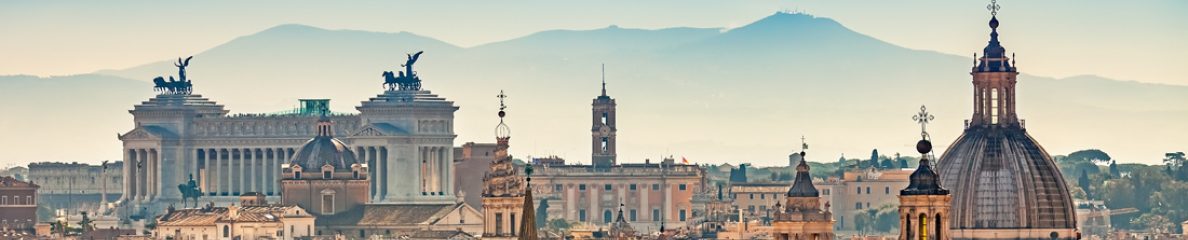
Zuruf an die Gegend von Rom

Sey mit stürzenden Thränen der Freude gegrüßt,
Was auch fern vor der Seele mir stand,
Wo sich kühner der Keim der Gedanken erschließt,
O du altes Saturnisches Land,
Wo die heilige Höh’ und die wallende Fluth
Mir entzünden und kühlen die sehnende Gluth,
Die nach dir ich im Busen empfand.

Wem im Busen das Herz, in dem Herzen der Geist
Sich erhebet zum höheren Seyn;
Wem sich tiefer der Quell der Gedanken ergeußt,
O wie fröhlich kann der hier gedeih’n!
Stürzt die WeIt auch in stäubende Trümmer dahin,
Im Unendlichen schwebet der geistige Sinn,
Und verschmäht den betrüglichen Schein!

Was da war, was noch ist, und was werden einst kann.
Das erscheinet dem sinnenden Blick!
Wenn sich löset der vielfach umkreisende Bann,
Und einst Nemesis kehret zurück!
Mit der Rechten schwingt sie die Geißel empor,
Treibt aus finsterer Nacht die Verbrecher hervor,
Und befreit das gefesselte Glück!


Brun

Friederike Brun (3 juni 1765 – 25 maart 1835)


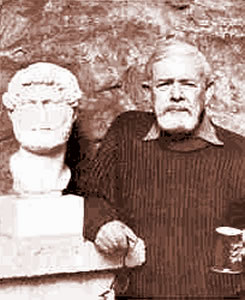
De Vlaamse arts, dichter en toneelschrijver Eugène Van Oye werd geboren in Torhout op 3 juni 1840. Zie ook mijn blog van 1 mei 2007 en ook mijn blog van 3 juni 2007 en ook mijn blog van 3 juni 2009.


Vriendenzoen

(Voor Eugène van Oye)


Waar zaat gij dan

gestoken, gij,

verduisterd en

verdoken, gij,

o vriendenhert:

dor vriendenhand,

zoo waandet ge, in

uw onverstand,

gekwetst en afgewezen?

‘k En hadde u nooit

vergeten, ik,

geen weêrstand u

verweten, ik;

geen stroo u in

den weg geleid,

geen werk gedaan,

geen woord gezeid,

dat kwetsende u kon wezen.


Nog meer als ik,

zijt gij, misschien,

een vriendenherte

en mij, misschien,

spijts al hetgeen,

tot beider leed,

ons beider liefde

in stukken smeet,

een ware vriend gebleven?

Dat vriendschap is

moet sterker zijn,

moet, sterk alzoo

de kerken, zijn

gesteund op vast-

en dieper grond

als vriendenhand

en vriendenmond,

zoo nu, zoo na dit leven.


‘t Is dit alleen,

dat scheiden ons

zoo bitterlijk,

dat beiden ons

kon drijven, om,

gij hier, ik daar,

verre af en zoo

nabij malkaar,

te porren en te pogen

aan ‘t gene ik wist,

of waande, dat

het was; en gij

hieldt staande dat

het niet en was:

niet anders als

een ijdel woord,

een vuil en valsch,

eene opgesmukte logen.


Zoo ziet men ‘t gene,

op dezen dag,

nog ijzervast

gevezen lag,

verworteld en

verwassen, eer

‘t ooit morgen is,

met éénen keer,

ter stede, in stukken vliegen;

zoo komt men eere

en trouw vaneen,

zoo komt men man

en vrouw vaneen,

zoo vriendenherte

en vriendenhand,

zoo onderdaan

en vaderland

en volk intween te liegen.


‘k Herbiede u dan

de vriendenhand,

het vriendenhert,

den vriendenband,

die, spannende en

weêrspannig aan

ons beider bede,

is losgegaan,

nu weêr aaneen te binden.

‘k Herbiede u hulpe

en bijstand, in

den strijde, om weêr

den vijand in

te stormen; en

dat ongekleed,

dat edel wicht,

dat Waarheid heet,

te zoeken en te vinden.


Guido Gezelle


VanOye

Eugène Van Oye (3 juni 1840 – 4 juni 1926)
Standbeeld in Gistel


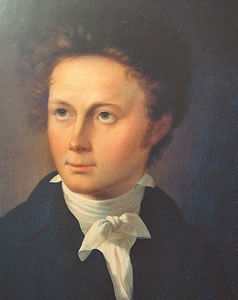
De Italiaanse dichter, filosoof en schilder Carlo Michelstaedter werd geboren op 3 juni 1887 in Gorizia. Zie ook mijn blog van 3 juni 2009.


Uit: Persuasion and Rhetoric (Vertaald dsoor Russell Scott Valentino)


„Nor is any life ever satisfied to live in any present, for insofar as it is life it continues, and it continues into the future to the degree that it lacks life. If it were to possess itself completely here and now and be in want of nothing-if it awaited nothing in the future-it would not continue: it would cease to be life.

So many things attract us in the future, but in vain do we want to possess them in the present.

I climb to a mountaintop: its height calls me, I want to have it, and I ascend and dominate it. But how can I possess the mountain? I am truly high above the plain and sea, and I see the wide horizon from the mountain. But none of that is mine: What I see is not within me, nor does seeing more ever mean, “I have seen”: the sight, I don’t possess it. The sea shines bright in the distance-that will be mine in a different manner. I shall descend to the coast. I’ll hear its voice, sail along its back and … be content. But now on the sea, “the ear cannot be filled with hearing,” the boat rides ever new waves, and “an equal thirst takes hold of me.” I may plunge into it, feel a wave across my body, but where I am the sea is not. If I want to go where the water is and have it, the waves make way before the swimming man. I may drink in the saltiness, exult like a porpoise, drown myself, but I still won’t possess the sea: I am alone and distinct in its midst.

Nor can a man seeking refuge in the persona he loves satisfy his hunger: neither kisses nor embraces nor any other demonstrations invented by love can interpenetrate one with the other: they will always be two, each alone and distinct. Men lament this solitude, but if they find it lamentable it is because being with themselves they feel alone: they feel themselves to be with no one, in want of everything.“


Carlo_Michelstaedter

Carlo Michelstaedter (3 juni 1887  – 17 oktober 1910)


De Duitse dichter en schrijver Otto Erich Hartleben werd geboren op 3 juni 1864 in Clausthal. Zie ook mijn blog van 3 juni 2009.


Der Sünder


Wenn ich den Wellenschlag des Meeres höre,

eintönig rauschend, Nachts, in dunkler Stunde,

aufblutet des Gewissens alte Wunde,

so stark ich auch mich wider mich empöre.


Ich seh ein Weib, gehüllt in Trauerflöre,

das murmelt dumpf mit todesblassem Munde,

was mich vor Graun erbeben macht, die Kunde,

dass sie der Schande Fluch im Grabe störe.


Weh meinem fiebergluth-durchlohten Hirne!

Ich seh sie winken mir mit schmalen Händen –

und kalte Tropfen perlen von der Stirne.


Der Rache Faust seh ich auf mich sie wenden,

weil sie durch mich erniedrigt ward zur Dirne –

in Qualen fühl ich meine Nächte enden.


Wir hattens einst so gut verstanden


Wir hattens einst so gut verstanden,

zu küssen uns zu rechter Stund,

eh wir es selber ganz empfanden,

gefunden hatte Mund den Mund.


Ein einiger Gedanke schwebte,

war weder mir noch dir bewusst,

und plötzlich Lipp an Lippe bebte

und plötzlich bebte Brust an Brust.


Dann haben wirs vergessen müssen,

verleugnet ward die Kinderzeit,

wir trugen, statt uns froh zu küssen,

ehrbar und dumm das Heuchlerkleid.


Doch als ich heut nach langen Tagen,

dich still geliebte wiedersah –

wir hattens gar zu schwer getragen –

war Kuss und Kindheit wieder da!


hartleben

Otto Erich Hartleben (3 juni 1864 – 11 februari 1905)


De Franse dichter, schrijver en librettist Philippe Quinault werd geboren in Parijs op 3 juni 1635. Zie ook mijn blog van 3 juni 2009.


Poème sur l’hérésie (Fragment)

 TABLEAU DE LA CHUTE DE L’HÉRÉSIE


Je n’ai que trop chanté les jeux et les Amours.

Sur un ton plus sublime il faut me faire entendre ;

Je vous dis adieu, Muse tendre,

Je vous dis adieu pour toujours.

C’est à des actions d’éternelle mémoire

Que je dois consacrer mes vers,

Je ne veux désormais célébrer que la gloire

Du plus grand Roy de l’Univers.

Quelle multitude innombrable

D’héroïques vertus et d’étonnants exploits !

Est-ce la valeur indomptable

Ou la sagesse impénétrable

Pour qui je dois d’abord faire éclater ma Voix ?

Chanterai-je la guerre où ce Roy redoutable

De tant de Rois ligués a triomphé cent fois ?

Chanterai-je la paix encore plus mémorable

Dont en Maistre du Monde il imposa les loix ?

Mais un nouveau triomphe à qui tout autre cède

M’engage à l’annoncer sur les tons les plus forts :

Loin de moy, profanes transports,

Un transport divin me possède.

Avec étonnement j’observe un si grand Roy,

J’ay peine à soutenir tout l’éclat de sa gloire

Pour exprimer ce que je voy !

L’avenir pourra-t-il m’en croire ?


Philippe Quinault

Philippe Quinault (3 juni 1635 – 26 november 1688)
Standbeeld in de gevel van het l’Hôtel de ville in Parijs


Patrick Besson, John Masefield, Ferdinand Raimund, Peter de Mendelssohn, Colleen McCullough, Macedonio Fernández, Dennis Gaens, Jeroen Theunissen

De Franse schrijver en journalist Patrick Besson werd geboren op 1 juni 1956 in Montreuil. Zie ook mijn blog van 1 juni 2007 en ook mijn blog van 1 juni 2008 en ook mijn blog van 1 juni 2009.


Uit: Mais le fleuve tuera l’homme blanc


« Je la reconnus dans la file d’attente du contrôle des passeports, bien que l’unique photo d’elle jamais parue dans la presse datât de 1985. Elle était habillée en homme comme lors de son arrestation au siècle dernier. Ses cheveux courts étaient désormais gris. Derrière les lunettes rondes à monture d’acier de Trotsky que portaient toutes les filles myopes de sa génération – elles avaient arrêté, pourquoi pas elle ? –, on trouvait les mêmes grands yeux vides, apeurés, actifs. Sa file avançait plus vite que la mienne. Elle avait dû décrypter les vêtements, le comportement, les bagages à main et le visage de chaque personne attendant de passer la douane. Evaluer les chances que chacun avait, ou non, de retenir l’attention du douanier. Puis faire un rapide calcul mental et choisir la bonne file. Ce petit travail lui avait permis de gagner quelques minutes sur moi. Ces minutes qui vous sauvent parfois la vie. Je la perdis de vue, la retrouvai dans le lounge. Elle voyageait en classe affaires, comme moi. Moi, j’étais dans le pétrole. Dans quoi était-elle à présent ?
Quand je compris que nous prenions le même avion, je me dis que nous serions peut-être assis côte à côte. Elle aurait alors le regard vague et plaintif de toute personne célèbre se demandant si on sait qui elle est. Dans le cas d’une gloire négative due à un fait divers infect, à un acte politique odieux ou à une opération militaire catastrophique, cette question muette se teinte de honte, de crainte. Le personnel de bord nous indiqua, hélas ! deux travées différentes. Pourquoi hélas ?“


BESSON

Patrick Besson (Montreuil, 1 juni 1956)


De Engelse dichter en schrijver John Edward Masefield  werd geboren op 1 juni 1878 in Ledbury, in Herefordshire.


A Ballad of John Silver 


We were schooner-rigged and rakish,

with a long and lissome hull,

And we flew the pretty colours of the crossbones and the skull;

We’d a big black Jolly Roger flapping grimly at the fore,

And we sailed the Spanish Water in the happy days of yore.


We’d a long brass gun amidships, like a well-conducted ship,

We had each a brace of pistols and a cutlass at the hip;

It’s a point which tells against us, and a fact to be deplored,

But we chased the goodly merchant-men and laid their ships aboard.


Then the dead men fouled the scuppers and the wounded filled the chains,

And the paint-work all was spatter dashed with other peoples brains,

She was boarded, she was looted, she was scuttled till she sank.

And the pale survivors left us by the medium of the plank.


O! then it was (while standing by the taffrail on the poop)

We could hear the drowning folk lament the absent chicken coop;

Then, having washed the blood away, we’d little else to do

Than to dance a quiet hornpipe as the old salts taught us to.


O! the fiddle on the fo’c’sle, and the slapping naked soles,

And the genial “Down the middle, Jake, and curtsey when she rolls!”

With the silver seas around us and the pale moon overhead,

And the look-out not a-looking and his pipe-bowl glowing red.


Ah! the pig-tailed, quidding pirates and the pretty pranks we played,

All have since been put a stop to by the naughty Board of Trade;

The schooners and the merry crews are laid away to rest,

A little south the sunset in the islands of the Blest.


Masefield

John Edward Masefield (1 juni 1878 – 12 mei 1967) 


De Oostenrijkse schrijver Ferdinand Raimund werd geboren op 1 juni 1790 in Wenen.


Uit: Der Bauer als Millionär

“Großer Feensaal, mit magischen Lampen von verschiedenen Farben hell beleuchtet, welche, auf Kandelabern angebracht, die Kulissen zieren. Im Hintergrunde die Öffnung eines großen Bogentores, welches durch einen schalartigen, mit Gold verbrämten Vorhang verdeckt ist.

In der Mitte des Theaters spielen zwei Furien, ein Triton und der kleine Borax ein Quartett von zwei Violinen, Viola und Violoncello. Die Stimmen des Quartetts wechseln mit Solo. Die Instrumente sind von Gold, die Pulte ideal. Im Kreise sitzen: Bustorius, Zenobius, Antimonia, Selima, Zulma, Lira, der Morgen, die Nacht, der Abend, der Blödsinn und mehrere andere allegorische Personen, Zauberer und Feen, die von Zeit zu Zeit von vier Genien, welche als geflügelte Livreebediente gekleidet sind, auf silbernen Tassen mit Konfekturen bedienet werden. Das Ganze wird von folgendem Chor begleitet.

Chor.
Welch ein herrliches Konzert,
Wo sich hoch die Kunst bewährt.
Was ist Amphions Geklimper?
Selbst Apollo ist ein Stümper,
Wenn man solche Künstler hört.
Bravo! Bravo! O vortrefflich!
Bravo! Bravo! (Verhallend.) Bravo – Bravo –

(Allgemeiner Applaus. – Alles erhebt sich von den Sitzen, die Spielenden legen ihre Instrumente weg und verneigen sich).

Zenobius.
Bravissimo, meine Herren! das haben Sie gut gemacht, (zu dem Triton) besonders Sie.

Bustorius(tritt vor, einen Csakan in der Hand, im ungarischen Dialekt).
Isten utzék! ist das schönes Quartett, von wem ist das komponiert?

Zenobius.
Das Adagio ist von einem Delphin.


 raimund

Ferdinand Raimund (1 juni 1790 – 5 september 1836) 

Monument bij het Weense Volkstheater


Zie voor de twee bovenstaande schrijvers ook mijn blog van 1 juni 2006 en ook mijn blog van 1 juni 2007 en ook mijn blog van 1 juni 2008 en ook mijn blog van 1 juni 2009.


De Duitse schrijver, essayist, journalist, biograaf en uitgever Peter de Mendelssohn werd op 1 juni 1908 in München.


Uit: Thomas Mann: Tagebücher


„15.05.1936

Schönster Früh-Sommertag. Freude an dieser Jahreszeit, die schon die meiner Geburt.-Geschäfte, Korrespondenz. Den Vortrag mit Bermann. Haarwaschung. Mit K. um den Weiher. Russische Bücher [1] kamen, die Emigrantenzeitschriften und das interessante Buch eines Ex-Hitlermannes und erbitterten Wegbereiters: “Ich kann nicht schweigen”. Nachmittags geschlafen. An Reisiger, Fiedler [2] u.a. geschrieben Endlose Briefdiktate u.a. an Knopf und v. Pick (Budapest) [3] in der Frage unserer Wohnung (Hatvanyi). – Exposee von Golo über die Humaniora [4] für Budapest [5]durchgearbeitet. – Bibi bestand mit Auszeichnung sein Lehrexamen, geigerisch; in den theoretischen Nebenfächern schnitt er schlecht ab. Abends keines Fest für ihn in Gegenwart des jungen Kayser, mit Champagner-Getränk. Hörten wieder die “Symphonie in blue”, begabtes Stück von 1920, nach dem nichts mehr kam. Müde. Spät zu Bette.“


spiel_Mendelssohn

Peter de Mendelssohn (1 juni 1908 – 10 augustus 1982) 

Hier samen met de Oostenrijkse schrijfster Hilde Spiel


De Australische schrijfster Colleen McCullough werd geboren op 1 juni 1937 in Wellington.


Uit: The Thorn Birds


„Yet over the ensuing months her yearning after Agnes contained nothing of hope; Meggie didn’t own a doll and had no idea little girls and dolls belonged together. She played happily with the whistles and slingshots and battered soldiers her brothers discarded, got her hands dirty and her boots muddy to play with. Stroking the bright pink folds of the dress, grander than any she had ever seen on a human woman, she picked Agnes uptenderly. The doll had jointed arms and legs which could be moved anywhere; even her neck and tiny, shapely waist were jointed. Her golden hair was exquisitely dressed in a high pompadour studded with pearls, her pale bosom peeped out of a foaming fichu. of cream lace fastened with a pearl pin. The finely painted bone china face was beautiful, left unglazed to give the delicately tinted skin a natural matte texture. Astonishingly lifelike blue eyes shone between lashes of real hair, their irises streaked and circled with a darker blue; fascinated, Meggie discovered that when Agnes lay back far enough, her eyes closed. High on one faintly Bushed cheek she had a black beauty mark, and her dusky mouth was parted slightly to show tiny white teeth. Meggie put the doll gently on her lap, crossed her feet under her comfortably, and sat just looking.

She was still sitting behind the gorse bush when Jack and Hughie came rustling through the grass where it was too close to the fence to feel a scythe. Her hair was the typical Cleary beacon, all the Cleary children save Frank being martyred by a thatch some shade of red; Jack nudged his brother and pointed gleefully. They separated, grinning at each other, and pretended they were troopers after a Maori renegade. Meggie would not have heard them anyway, so engrossed was she in Agnes, humming softly to herself.

“What’s that you’ve got, Meggie?” Jack shouted, pouncing. “Show us!”

“Yes, show us!” Hughie giggled, outflanking her.

She clasped the doll against her chest and shook her head. “No, she’s mine! I got her for my birthday!”

“Show us, go on! We just want to have a look.”

Pride and joy won out. She held the doll so her brothers could see. “Look, isn’t she beautiful? Her name is Agnes.”

“Agnes? Agnes?” Jack gagged realistically. “What a soppy name! Why don’t you call her Margaret or Betty?”

“Because she’s Agnes!”


colleen_mccullough

Colleen McCullough (Wellington, 1 juni 1937)


Zie voor de twee bovenstaande schrijvers ook mijn blog van 1 juni 2007en ook mijn blog van 1 juni 2009.


De Argentijnse schrijver Macedonio Fernández werd geboren op 1 juni 1874 in Buenos Aires. Zie ook mijn blog van 1 juni 2009.


Uit:From The Museum of Eterna’s Novel (Vertaald door Margaret Schwartz)


“After Chapter V of the Novel we can be sure that it isn’t because of NK (the Nonexistent Knight) that Sweetheart’s existence is saddened today.” “This evening, the Novel will send its soloist orchestra—six guitars—to execute various obsequious polyphonies for the orchestras of the bars Ideal, Sibarita, and Real, so that they can listen to music for a change. The Polygraph of Silence will explain the reasons for this with erudite gestures, and he will circulate the bottomless collection plate of gratitude among the personnel of the orchestras, which will make the music of thanks as coin strikes against coin. The public will also serve as a harmony of contentment, as the listening orchestra, momentarily laying aside its instruments for calling-the-waiter in favor of its instruments of applause.”

This is a novel that was, and will be, futuristic until it’s written, just as its author is futuristic—until today he had yet to write a single future page—although he has left futurism until the future, as a proof of his enthusiasm, and doing so brilliantly from there on—without falling into the trap of being a consecutive futurist, like those who have adopted futurism, without understanding it, in the present. And, for that reason, they have declared much to come for the novelist, who has everything in front of him, including his own genial sense of haste, which arises from having thought that, given the speed of progress, posterity has been left behind; each day comes quicker, almost completely forgotten, a series of contemporaneous events that exist in the last journalistic edition of the day it appears and that’s it. We all die already judged immediately, book and author are made classics or corpses in a day, and meanwhile they recommend us to posterity and complain about the present. And today, all of this is done with sufficient justice in 24 hours.“


fernandez

Macedonio Fernández (1 juni 1874 – 10 februari 1952) 


Onafhankelijk van geboortedata:

De Nederlandse dichter Dennis Gaens werd geboren in Susteren in 1982. Zie ook mijn blog van 1 juni 2009.

de overburen leunen

de overburen leunen langzaam
mijn studentenkamer naar binnen
elke avond iets verder voorover

het fatsoen om verrekijkers of telescopen
te gebruiken is hen vreemd

ze rennen tegen de ruiten
totdat de muren zich uitrekken
richting mijn raam
– zelfs hun kat klauwt mee –
hun ogen op groot
en een bouwlamp in de aanslag

in hun badjassen rennen ze
met hun oren hard tegen het glas gedrukt
soms rennen ze zo hard
dat ze hun gezichten pletten
en ik me afvraag of ze er blijvende schade
aan overhouden

niet lang meer
dan slaat hun adem
condens op de buitenkant
van mijn raam

ik moet gordijnen kopen
en een baksteen klaarleggen


Gaens

Dennis Gaens (Susteren, 1982)  


De Vlaamse dichter en schrijver Jeroen Theunissen werd geboren in Gent in 1977. Zie ook mijn blog van 1 juni 2009.


Het huis


Het huis is helemaal geen huis
het is een gedachte je had er evengoed
kunnen breien of je bril vergeten.


Je had er wel willen wonen
op een verloren pianodag in september
maar het viel in de bladeren stil vroeg.


Met je lila haren je potloodogen
je eeuwige zalige handen
die geen handen zijn maar veeleer een gedachte
lik je de vensters aan scherven.


Toen het huis nog een huis was
heb je er lange nachten gedroomd
maar eigenlijk toen al was het
geen huis
als nu een gedachte.


 theunissen

Jeroen Theunissen (Gent, 1977)


Walt Whitman, Frank Goosen, Gabriel Barylli, Gerd Hergen Lübben, Serge Brussolo

De Amerikaanse dichter Walt Whitman werd geboren op 31 mei 1819 in Westhills, Long Island, New York. Zie ook mijn blog van 31 mei 2009 en ook mijn blog van 31 mei 2008  en ook mijn blog van 31 mei 2007 en ook mijn blog van 31 mei 2006


Uit: Calamus Poems


4.


These I, singing in spring, collect for lovers,
(For who but I should understand lovers, and all their sorrow and joy?
And who but I should be the poet of comrades?)
Collecting, I traverse the garden, the world — but soon I pass the gates,
Now along the pond-side — now wading in a little, fearing not the wet,
Now by the post-and-rail fences, where the old stones thrown there, picked from the fields, have accumulated,
Wild-flowers and vines and weeds come up through the stones, and partly cover them — Beyond these I pass,
Far, far in the forest, before I think where I get,
Solitary, smelling the earthly smell, stopping now and then in silence,
Alone I had thought — yet soon a silent troop gathers around me,
Some walk by my side, and some behind, and some embrace my arms or neck,
They, the spirits of friends, dead or alive — thicker they come, a great crowd, and I in the middle,
Collecting, dispensing, singing in spring, there I wander with them,
Plucking something for tokens — something for these, till I hit upon a theme — tossing toward whoever is near me,


Here! lilac, with a branch of pine,
Here, out of my pocket, some moss which I pulled off a live-oak in Florida, as it hung trailing down,
Here, some pinks and laurel leaves, and a handful of sage,
And here what I now draw from the water, wading in the pond-side,
(O here I last saw him that tenderly loves me — and returns again, never to separate from me,
And this, O this shall henceforth be the token of comrades — this calamus-root shall,
Interchange it, youths, with each other! Let none render it back!)
And twigs of maple, and a bunch of wild orange, and chestnut,
And stems of currents, and plum-blows, and the aromatic cedar;
These I, compassed around by a thick cloud of spirits,
Wandering, point to, or touch as I pass, or throw them loosely from me,
Indicating to each one what he shall have — giving something to each,
But what I drew from the water by the pond-side, that I reserve,
I will give of it — but only them that love, as I myself am capable of loving.


7.


Of the terrible question of appearances,
Of the doubts, the uncertainties after all,
That may-be reliance and hope are but speculations after all,
That may-be identity beyond the grave is a beautiful fable only,
May-be the things I perceive — the animals, plants, men, hills, shining and flowing waters,

The skies of day and night — colors, densities, forms — May-be these are, (as doubtless they are,) only apparitions, and the real something has yet to be known,
(How often they dart out of themselves, as if to confound me and mock me!
How often I think neither I know, nor any man knows, aught of them;)
May-be they only seem to me what they are, (as doubtless they indeed but seem,) as from my present point of view — And might prove, (as of course they would,) naught of what they appear, or naught any how, from entirely changed points of view;
To me, these, and the like of these, are curiously answered by my lovers, my dear friends;
When he whom I love travels with me, or sits a long while holding me by the hand,
When the subtle air, the impalpable, the sense that words and reason hold not, surround us and pervade us,
Then I am charged with untold and untellable wisdom — I am silent — I require nothing further,
I cannot answer the question of appearances, or that of identity beyond the grave,
But I walk or sit indifferent — I am satisfied,
He ahold of my hand has completely satisfied me.


Whitman

Walt Whitman (31 mei 1819 – 26 maart 1893)
Standbeeld in Bear Mountain Park, New York


De Duitse schrijver en cabaretier Frank Goosen werd geboren op 31 mei 1966 in Bochum. Zie ook mijn blog van 31 mei 2007 en ook mijn blog van 31 mei 2008 en ook mijn blog van 31 mei 2009


Uit: Radio Heimat


An lauen Sommerabenden stehe ich gern auf der Eisenbahnbrücke am Lohring in Bochum und schaue auf meine Stadt. Ich sehe das Mercedes-Hochhaus am Bahnhof, die Fiege-Brauerei, das neue Hochhaus der Stadtwerke (das ein bisschen aussieht wie der Monolith aus ‚2001’), die Türme von Propstei- und Christuskirche, und ganz rechts erkenne ich sogar noch den Förderturm des Bergbau-Museums. Und dann denke ich: Boah! Schön ist das nicht!

Wenn sie nicht im Haushaltskittel daherkamen, trugen diese Frauen Tantenpullover. Unifarbene Strickpullis mit V-Ausschnitt, die sich über einen unglaublichen Atomvorbau spannten. So was wird ja heute gar nicht mehr gebaut. Die Mieder, die das stützen mussten, waren Meisterleistungen der Ingenieursplanung, höchstens noch vergleichbar mit Bauwerken wie der Fehmarn-Sund-Brücke. Diese Pullis saßen so eng, das war praktisch gehäkeltes Neopren. Man fragte sich spontan: Wie kommt die Tante da überhaupt rein? Vermutlich wie der Christbaum ins Netz kommt: Im Altersheim stand auf dem Gang eine durchgeschnittene Tonne, da kam vorne der Pullover drauf, und hinten schoben zwei Zivis. Die alten Männer hörte man oft schon, bevor man sie sah. Ihnen ging ein abgehacktes Donnern voraus, und da wusste man gleich, da kommt wieder einer um die Ecke, der hat dreißig Jahre lang kaum das Sonnenlicht gesehen und hustet jetzt seine schleimigen Lungenreste auf den Bürgersteig hinaus. Und manchmal sah das, was da raus kam, aus, als würde es noch leben. Hackendes Lungendonnern – der Soundtrack einer Kindheit im Ruhrgebiet.“


Goosen

Frank Goosen (Bochum, 31 mei 1966)


De Oostenrijkse schrijver, toneelspeler en regisseur Gabriel Barylli werd geboren op 31 mei 1957 in Wenen. Zie ook mijn blog van 31 mei 2007 en ook mijn blog van 31 mei 2008 en ook mijn blog van 31 mei 2009


Uit: Echtzeit


„Ich habe dich immer bewundert, wie du das aushalten konntest! Kannst, muss ich sagen. Ich glaube, dass er immer noch Zigarren raucht. Habe ich recht?!
Du kannst es mir ja schreiben. Mit einer E-Mail. Oder anrufen. Oder einfach vorbeischauen und wir reden über den Geschmack von Zigarren auf Männerlippen. Ich bleibe so lange an dem Thema hängen, weil ich unlängst von einem Mann geküsst wurde, der zuvor eine Zigarre geraucht hatte. Eigentlich hat er auch zwischen unseren Küssen weitergeraucht und das fand ich sehr seltsam. Aber du weißt ja, wie Frauen sind. Sie sehen so lange über die Fehler ihrer großen Liebe hinweg, bis sie stören… die Fehler. Und manchmal beendet das eine große Liebe. Ein einzelner Fehler kann da genügen. Nur einer. Dein Stefan hat ja gar keine Fehler. Also fast keine Fehler.

(…)


Deine Seele hat zu mir gesprochen. Damals. In dem Café “Glockenspiel”. Auf dem bordeauxroten Sofa mit der etwas abgewetzten Rückenlehne. Als du mir gesagt hast, dass ich mich zu dir setzten soll. Irgendetwas in mir hat geflüstert: “Vorsicht, Vorsicht, diese Frau sieht aus wie ein Engel… Vorsicht… vielleicht ist sie einer!!” Kleiner Scherz. Aber der Teil in meiner Seele, der gewusst hat, dass ich durch dich viel erleiden werde, um viel zu lernen – dieser Teil hat gesagt: “Los, setz dich zu ihr, schieb das Eis rein und schau dir an, welcher Film da laufen soll.“


Barylli

Gabriel Barylli (Wenen, 31 mei 1957)


De Duitse dichter en schrijver Gerd Hergen Lübben werd geboren op 31 mei 1937 in Sillenstede. Zie ook mijn blog van 31 mei 2009


VOM ROLANDSYSTEM  (Fragment)


5.


einzelteile des

feuersystems roland

nicht kontrolliert werden

sollen zutaten

verzweifelter zeit für

die transatlantischen

paladine

···

wer immer frieden sucht

in niederlagen

siegen die legenden

sagen
comandante

rolando verlies

brain-finish galaxy

sei bei uns der ist auf

einmal auf der flucht

shut up my desert-storm

(···)

alles was aus rolands

sinn verschwunden war in

sein herz wieder heim

bringt und diese treue

hochzeitet mit ihrem

liebsten roland und

ist sein leid zu ende

vergessen vergossen

des morgens drachen

blut durch den bogen fliesst

vom auge gottes aus

tag und nacht zu sehn

und die freude beginnt


luebben

Gerd Hergen Lübben (Sillenstede, 31 mei 1937)


De Franse schrijver Serge Brussolo werd geboren op 31 mei 1951 in Parijs. Zie ook mijn blog van 31 mei 2009


Uit: Dortoir Interdit


„Paddy Mulloney avait soixante-dix ans et aimait par-dessus tout se donner des airs d’Irlandais de bande dessinée. Il lui arrivait de s’exhiber avec l’un de ces chapeaux melons verts dont on s’affuble lors du défilé de la Saint Patrick, ou de bretelles ornées de trèfles à quatre feuilles. Il n’avait jamais pu s’acclimater à la Californie ; la pluie lui manquait. A l’agence 13, il avait le grade de chef accessoiriste. En cinquante ans d’immobilier, il avait tout vu. C’était un catalogue ambulant des aberrations humaines. Il dégorgeait les anecdotes comme d’autres les gouttes de sueur pendant une traversée du désert Mojave. A certains moments il me saoulait à tel point que je n’avais d’autre recours que d’utiliser l’autohypnose pour éviter la crise de nerfs. Pour lui, j’étais ” la gosse “, ” la fille “, ” la gamine “, jamais il ne lui serait venu à l’idée d’utiliser mon nom. Pas antipathique au demeurant. Non, un fossile bougon, riant de ses propres plaisanteries, essayant désespérément de me faire rougir en débitant des blagues salées d’un autre âge et qui, aujourd’hui, auraient fait hausser les épaules à une fillette de onze ans. Je ne l’ai jamais vu qu’habillé d’une salopette ; sale les jours de semaine, propre le dimanche.

Tout de même, je l’aimais bien. Peut-être parce que j’ai été privée d’une vraie famille et que je n’ai jamais connu mes grands-parents. Enfin, un psy dirait sûrement ce genre de truc puisque ça ne mange pas de pain.

Mais la jovialité de Paddy s’éteignait dès qu’il s’agissait de se rendre au magasin d’accessoires. Là, d’un coup, son visage s’assombrissait et il ne desserrait plus les dents de tout le voyage. Devereaux me l’avait collé dans les pattes dès mon contrat d’embauche signé.

— Mulloney vous fera visiter nos installations, m’avait-il expliqué. Nous disposons d’un matériel de récupération étonnant, dont vous saurez tirer parti. Il ne s’agit pas de vulgaire brocante, mais de pièces de mobilier que nous ont abandonnées les propriétaires des appartements dont je vous ai parlés. Certaines sont de grandes valeur, mais nécessitent des restaurations. Vous estimerez cela sur place. Dressez un catalogue et voyez ce vous pouvez réutiliser.“


brussolo

Serge Brussolo (Parijs, 31 mei 1951)


Zie voor nog meer schrijvers van de 31e mei ook
mijn vorige blog van vandaag.

Konstantin Paustovski, Saint-John Perse, Georg Herwegh, Ludwig Tieck

De Russische schrijver Konstantin Paustovski werd geboren op 31 mei 1892 in Moskou. Zie ook mijn blog van 31 mei 2009

Uit: Verre Jaren (Vertaald door Wim Hartog)


Veel te vroeg, in mijn jeugd al, kwam in mij de neiging boven om me met herinneringen bezig te houden. Van tijd tot tijd gaf ik er mij aan over als aan een spel. Ik riep het verloop van mijn leven niet stap voor stap in mijn herinnering op, maar, als men het zo mag noemen, ik zocht naar ogenblikken met een bepaalde gelijkenis.

(. . .)


Mijn voorliefde voor zulk soort herinneringen was niet eens zo zinloos, als ik aanvankelijk gedacht had. Wanneer ik bijvoorbeeld de logementen in mijn herinnering opriep, dan dacht ik tegelijkertijd aan alle daarmee samenhangende bijzonderheden: de kleur van de versleten lopers in de gangen, het patroon op het behang, de geur van de keukens en de oleografieën, de gezichten van de kamermeisjes en hun manier van spreken, de versleten, doorgezakte meubels, aan alles, tot aan de uit Oeralsteen gemaakte inktpot toe, die een kleur had als van vochtige suiker, en waar nooit inkt in zat, maar enkel een paar uitgedroogde dode vliegen.

Ik probeerde me dit alles steeds weer levendig voor de geest te halen. En pas veel later, toen ik nl. met schrijven begon, begreep ik dat deze herinneringen mij veel bij mijn werk hielpen. Op deze manier oefende ik mijn geheugen om mijn belevenissen duidelijk en concreet vast te houden, en was op elk willekeurig ogenblik in staat, alles nog eens opnieuw te beleven in mijn geest. Zo verzamelde ik een grote hoeveelheid kleine feiten, waaruit ik dan later kon kiezen wat ik nodig had.“


paustovskij

Konstantin Paustovski (31 mei 1892 – 14 juli 1968)


De Franse dichter en diplomaat Saint-John Perse (eigenlijk Marie-René-Alexis Saint-Léger) werd geboren op 31 mei 1887 in Saint-Léger-les-Feuilles op Guadeloupe. Zie ook mijn blog van 31 mei 2007 en ook mijn blog van 31 mei 2008 en ook mijn blog van 31 mei 2009


Uit: Winds (Fragment)


All to be done again. All to be told again. And the scything glance to be swept across all man’s heritage.

A man came who laughed at the Librarians’ stone galleries. — Basilica of the Tome!… A man on the sardonyx stairs, beneath the prerogatives of bronze and alabaster. Man of little renown.

Who was he, who was he not?

And the walls are of agate where the lamps gain lustre, the man, bare-headed, with smooth hands, in the yellow marble quarries – where the tomes are in the seraglio, where the tomes are in their niches, like stuffed animals under wrappings, long ago, in their jars within the closed rooms of great Temples – the tomes, innumerable an
d sad, in high cretaceous strata carrying credence
and sediment through the ascent of time…

And the walls are of agate where the lamps take lustre. Tall walls polished by silence and by science, and by the night of the lamps. Silence and silent rituals. Priests and priesthood. Serapeum!


At what rites of green Spring must we cleanse this fi nger, soiled with the dust of archives – in this bloom

of age, in all this powder of dead Queens and fl amens – as though from deposits of holy cities, cities of white pottery, dead from too much attrition, too much moon?

Ha! let all this loess be aired out! Ha! let all this delusion be aired out. Fraud and sterility of altars…

The tomes, innumerable and sad, on their pale chalk edges…

And what is all this talc again to my fi nger of bone, talc of wear and wisdom, and all that dusty touch of scholarship? like powder and dust of pollen at the season’s end, spores and sporules of lichens, a crumbling of wings of the Pieridae, of fl aking volvas of the lactaries… all things scaling off toward nothingness, deposits of the depths over their faeces, slime and dregs at the very bottom of silt –

ashes and scales of the spirit.


Vertaald door Hugh Chisholm


saint-john-perse

Saint-John Perse (31 mei 1887 – 20 september 1975)


De Duitse dichter Georg Herwegh werd geboren in Stuttgart op 31 mei 1817. Zie ook mijn blog van 31 mei 2007 en ook mijn blog van 31 mei 2008 en ook mijn blog van 31 mei 2009


Dem deutschen Volk


Deutschland, o zerrissen Herz,

Das zu Ende bald geschlagen,

Nur um dich noch will ich klagen,

Und in einer Brust von Erz

Schweigend meinen kleine
n Schmerz,

Meinen kleinen Jammer tragen,

Vaterland, um dich nur klagen.


Lustig grünt dein Nadelholz,

Lustig rauschen deine Eichen;

In den neununddreißig Reichen

Fehlt ein einzig Körnchen Golds:

Freier Bürger hoher Stolz

Fehlt im Lande sondergleichen,

In den neununddreißig Reichen.


Wenn ein Sänger für dich focht,

Wenn ein Mann ein Schwert geschwungen,

Hast du scheu nur mitgesungen,

Hast du schüchtern mitgepocht;

Und man hat dich unterjocht,

Hat dich in den Staub gezwungen,

Weil du gar so still gesungen.


Ihr beweinet’s und bereut’s –

Und das nennt ihr deutsche Treue?

Laßt die Tränen, laßt die Reue,

Soll nicht einst der Enkel Teuts

Sterben an der Zwietracht Kreuz,

Kämpf’ und handle, Volk, aufs neue,

Denn der Teufel ist die Reue!


Tritt in deiner Fürsten Reihn!

Sprich: die neununddreißig Lappen

Sollen wieder besser klappen

Und ein Heldenpurpur sein;

Ein Reich, wie ein Sonnenschein!

Ein Herz, ein Volk und ein Wappen!

Helf’ uns Gott – so soll es klappen!


Herwegh

Georg Herwegh (31 mei 1817 – 7 april 1875)


De Duitse dichter en schrijver Ludwig Tieck werd op 31 mei 1773 geboren in Berlijn. Zie ook mijn blog van 28 april 2006 en ook mijn blog van 31 mei 2007 en ook mijn blog van 31 mei 2008 en ook mijn blog van 31 mei 2009


Uit: Der gestiefelte Kater

Lorenz: Ich glaube, daß nach dem Ableben unsers Vaters unser kleines Vermögen sich bald wird einteilen lassen. Ihr wißt, daß der selige Mann nur drei Stück von Belang zurückgelassen hat: ein Pferd, einen Ochsen und jenen Kater dort. Ich, als der Älteste, nehme das Pferd, Barthel, der nächste nach mir, bekömmt den Ochsen, und so bleibt denn natürlicherweise für unsern jüngsten der Kater übrig.

Leutner, im Parterre: Um Gottes willen! hat man schon eine solche Exposition gesehn! Man sehe doch, wie tief die dramatische Kunst gesunken ist!

Müller: Aber ich habe doch alles recht gut verstanden.

Leutner: Das ist ja eben der Fehler, man muß es dem Zuschauer so verstohlenerweise unter den Fuß geben, ihm aber nicht so geradezu in den Bart werfen.

Müller: Aber man weiß doch nun, woran man ist.

Leutner: Das muß man ja durchaus nicht so geschwind wissen; daß man so nach und nach hineinkömmt, ist ja eben der beste Spaß.

Schlosser: Die Illusion leidet darunter, das ist ausgemacht.

Barthel: Ich glaube, Bruder Gottlieb, du wirst auch mit der Einteilung zufrieden sein, du bist leider der jüngste, und da mußt du uns einige Vorrechte lassen.

Gottlieb: Freilich wohl.

Schlosser: Aber warum mischt sich denn das Pupillenkollegium nicht in die Erbschaft? das sind ja Unwahrscheinlichkeiten, die unbegreiflich bleiben!

Lorenz: So wollen wir denn nur gehn, lieber Gottlieb, lebe wohl, laß dir die Zeit nicht lang werden.

Gottlieb: Adieu.


tieck

Ludwig Tieck (31 mei 1773 – 28 april 1853)
Portret door Joseph Stieler, 1838

Elizabeth Alexander, Countee Cullen, Randolph Bourne, Alfred Austin, Emmanuel Hiel, Henri François Rikken

De Amerikaanse dichteres en schrijfster Elizabeth Alexander werd geboren op 30 mei 1962 in New York. Zie ook mijn blog van 30 mei 2008 en ook mijn blog van 30 mei 2009.


Blues    


I am lazy, the laziest

girl in the world. I sleep during

the day when I want to, ’til

my face is creased and swollen,

’til my lips are dry and hot. I

eat as I please: cookies and milk

after lunch, butter and sour cream

on my baked potato, foods that

slothful people eat, that turn

yellow and opaque beneath the skin.

Sometimes come dinnertime Sunday

I am still in my nightgown, the one

with the lace trim listing because

I have not mended it. Many days

I do not exercise, only

consider it, then rub my curdy

belly and lie down. Even

my poems are lazy. I use

syllabics instead of iambs,

prefer slant to the gong of full rhyme,

write briefly while others go

for pages. And yesterday,

for example, I did not work at all!

I got in my car and I drove

to factory outlet stores, purchased

stockings and panties and socks

with my father’s money.


To think, in childhood I missed only

one day of school per year. I went

to ballet class four days a week

at fou
r-forty-five and on

Saturdays, beginning always

with plie, ending with curtsy.

To think, I knew only industry,

the industry of my race

and of immigrants, the radio

tuned always to the station

that said, Line up your summer

job months in advance. Work hard

and do not shame your family,

who worked hard to give you what you have.

There is no sin but sloth. Burn

to a wick and keep moving.


I avoided sleep for years,

up at night replaying

evening news stories about

nearby jailbreaks, fat people

who ate fried chicken and woke up

dead. In sleep I am looking

for poems in the shape of open

V’s of birds flying in formation,

or open arms saying, I forgive you, all.


alexander

Elizabeth Alexander (New York, 30 mei 1962)


De Afro-Amerikaanse dichter Countee Cullen werd geboren als Countee LeRoy Porter op 30 mei 1903. Zie ook mijn blog van 30 mei 2007 en ook mijn blog van 30 mei 2008 en ook mijn blog van 30 mei 2009.


Yet Do I Marvel

I doubt not God is good, well-meaning,
kind,
And did He stoop to quibble could tell why
The little buried mole continues blind,
Why flesh that mirrors
Him must some day die,
Make plain the reason tortured
Tantalus Is baited by the fickle fruit,
declare
If merely brute caprice dooms Sisyphus
To struggle up a never-ending stair.


Inscrutable His ways are, and immune
To catechism by a mind too strewn
With petty cares to slightly understand
What awful brain compels His awful hand.
Yet do I marvel at this curious thing:
To make a poet black, and bid him sing!


countee_cullen

Countee Cullen (30 mei 1903 – 9 januari 1946)


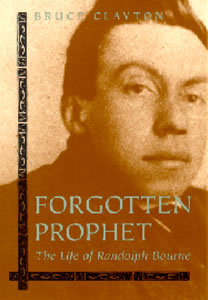
De Amerikaanse schrijver en essayist Randolph Bourne werd geboren op 30 mei 1886 in Bloomfield, New Jersey. Hij studeerde aan de Columbia University. Tijdens WO I stonden twee groepen van progressieve intellectuelen tegenover elkaar. De twee facties die ontstonden waren de pro-oorlog factie, geleid door de educatieve theoreticus John Dewey en de anti-oorlogsbeweging factie, waarvan zowel Bourne en andere beroemde progressieven als Jane Addams deel uitmaakten. Bourne was een leerling van Dewey in Columbia, maar hij was het oneens met het idee Dewey’s van het gebruik van de oorlog als een instrument om de democratie te verspreiden. Hij vond dat Dewey zijn democratische idealen verraden had door zich uitsluitend te richten op de facade van een democratische regering in plaats van op de ideeën achter de democratie, waarvan Dewey ooit beweerd had die te respecteren. Bourne werd sterk beïnvloed door Horace Kallens essay Democracy Versus the Melting-Pot,” uit 1915 en voerde, net als Kallen, dat Amerikanisme niet geassocieerd mocht worden met Anglo-Saxisme. In zijn artikel uit 1916 “Trans-National America,”  voerde Bourne aangevoerd aan dat de VS allochtone culturen moest verwelkomen in een “kosmopolitisch Amerika, ” in plaats van gedwongen te assimileren aan de anglofiele cultuur.


Uit: The State


“To most Americans of the classes which consider themselves significant the war brought a sense of the sanctity of the State which, if they had had time to think about it, would have seemed a sudden and surprising alteration in their habits of thought. In times of peace, we usually ignore the State in favour of partisan political controversies, or personal struggles for office, or the pursuit of party policies. It is the Government rather than the State with which the politically minded are concerned. The State is reduced to a shadowy emblem which comes to consciousness only on occasions of patriotic holiday.

Government is obviously composed of common and unsanctified men, and is thus a legitimate object of criticism and even contempt. If your own party is in power, things may be assumed to be moving safely enough; but if the opposition is in, then clearly all safety and honor have fled the State. Yet you do not put it to yourself in quite that way. What you think is only that there are rascals to be turned out of a very practical machinery of offices and functions which you take for granted. When we say that Americans are lawless, we usually mean that they are less conscious than other peoples of the august majesty of the institution of the State as it stands behind the objective government of men and laws which we see.”


RBourne

Randolph Bourne (30 mei 1886 – 22 december 1918)


De Engelse dichter Alfred Austin werd geboren in Headingley, Leeds, op 30 mei 1835. Alfred Austin was de zoon van een koopman in Leeds. Zijn moeder was een zuster van ingenieur en parlementslid Joseph Locke. Hij werd opgeleid aan Stonyhurst College in Clitheroe, Lancashire, en aan de Universiteit van Londen, waar hij in 1853 afstudeerde. In 1857 werd hij advocaat, maar besloot zich na korte tijd volledig te richten op het schrijven. Austen schreef in het mede door hem opgerichte blad National Review en in The Standard. Na de dood van Tennyson werd geen van de toen actieve dichters geschikt bevonden voor het ambt van Poet Laureate, dat daarop vier jaar lang onvervuld bleef. Austin aanvaardde de functie in 1896, na een weigering van William Morris.


Any Poet At Any Time 


Time, thou supreme inexorable Judge,

Whom none can bribe, and none can overawe,

Who unto party rancour, private grudge,

Calmly opposeth equitable law,

Before whom advocacy vainly strives

To make the better cause to seem the worse,

To thy Tribunal, when our jangling lives

Are husht, I leave the verdict on my verse.

Irrevocably then wilt thou proclaim

What should have been, what now must ever be,

If in oblivion perish should my name,

Or shine aloft in mighty company.

I to my kind proffering of my poor best,

Remit to Time’s arbitrament the rest.


An April Love 


Nay, be not June, nor yet December, dear,

But April always, as I find thee now:

A constant freshness unto me be thou,

And not the ripeness that must soon be sere.

Why should I be Time’s dupe, and wish more near

The sobering harvest of thy vernal vow?

I am content, so still across thy brow

Returning smile chase transitory tear.

Then scatter thy April heart in sunny showers;

I crave nor Summer drouth nor Winter sleet:

As Spring be fickle, so thou be as sweet;

With half-kept promise tantalise the hours;

And let Love’s frolic hands and woodland feet

Fill high the lap of Life with wilding flowers.


alfred_austin

Alfred Austin (30 mei 1835 – 2 juni 1913)


De Vlaamse dichter en schrijver Emmanuel Hiel werd geboren in Sint-Gillis-bij-Dendermonde op 30 mei 1834. Zie ook mijn blog van 30 mei 2006 en ook mijn blog van 30 mei 2007 en ook mijn blog van 30 mei 2008 en ook mijn blog van 30 mei 2009.


Is het waken, is het dromen


Is het waken, is hert dromen
Heimlijk zuchten, vurig minnen,
Dwaas de driftenstrijd des levens
Alle stond te herbeginnen?
Bang te blikken als een weekling
Naar de wenken heurer ogen,
Of te dwalen, droef te peinzen:
Word, ach, word ik niet bedrogen?

Is het waken, is het dromen,
In de roes der vlammenkussen,
’t Manlijk handlen, ’t krachtig denken
Neer te drukken, uit te blussen?
Bij het golven van haar boezem
Als een jongling teer te smachten,
Die, voor de eerste maal des levens,
Voelt der driften toverkrachten?


’t Is geen waken, of geen dromen,
Ook geen lijden of geen strijden;
Maar een laf, nietswaardig trachten
Naar verjongen, naar verblijden!
Koele schaduw moest ik zoeken,
Waar het koortsig vuur des harten
Laafnis vond en tevens voedsel
Ter genezing warer smarten.


EmmanuelHiel

Emmanuel Hiel (30 mei 1834 – 27 augustus 1899)
Borstbeeld in Schaarbeek


De Surinaamse schrijver Henri François Rikken werd geboren in Paramaribo op 30 mei 1863. Zie ook mijn blog van 30 mei 2008 en ook mijn blog van 30 mei 2009.


Uit: Codjo, de brandstichter


“In het jaar 1832, den tijd waarin ons verhaal een aanvang neemt, was de Combé nog slechts schaars bewoond en tengevolge van de moerassen en de slechte loozing der gronden daarenboven zeer ongezond.

Combé was de naam van een neger, de eerste, die deze buitengronden bewoonde en naar wien men toen iederen tuin en iedere buitenwoning Combé noemde.

Eerst sedert 1799 werd Combé, ook wel de voorstad Zeelandia genoemd, bebouwd; ofschoon reeds in 1780 door gouverneur Wichers, om den voortdurenden aanwas der bevolking tegemoet te komen, de grond voor deze voorstad of buitenwijk gelegd was.

De Oostersche Brug overgaande, benoorden het fort Zeelandia, vond men rechts het nu nog bestaande, doch als koeliedepôt gebruikte magazijn van levensmiddelen, links de smederij en andere werkplaatsen van het garnizoen. Een weinig verder ter linkerzijde was een zeer lange slavenloods voor de, bij de bevolking onder den naam van soestè-ningre bekende slaven, die voor de reinheid en het onderhoud der straten gebruikt werden. Deze benaming was waarschijnlijk een verbastering van Sociëteits-negers, die bij de opheffing der ‘Geoctroyeerde-Sociëteit’ in 1795 en later, na de afschaffing van den slavenhandel op 1 Jan. 1808, ter sluik ingevoerde en den lande vervallen slaven waren en toen in een staat, die het midden hield tusschen vrijheid en slavernij, openbaren arbeid moesten verrichten. Slechts hier en daar stond langs de elkander rechthoekig snijdende straten, tusschen het geboomte en het wied verscholen, een huisje, dat een vrijgegevene of ook wel een der samenleving ontvluchte melaatsche tot woonplaats verstrekte.

De in het wild groeiende boomen en struiken op de onbebouwde gronden en erven, door moerassen en poelen van elkander gescheiden, boden op hun hooge kruinen of tusschen het dicht gebladerte den vogelen, slangen en allerlei ongedierte een ongestoorde, veilige schuilplaats. Halverwege de tweede dwarsstraat was een ruime, doch nimmer bezochte marktplaats, waarop een groote, overdekte put in wied en onkruid verscholen lag.“


Rikken

Henri François Rikken (30 mei 1863 – 17 mei 1908)


Zie voor nog meer schrijvers van de 30e mei ook mijn vorige blog van vandaag.


André Brink, G. K. Chesterton, Eduard Escoffet, Leah Goldberg, Mohsen Makhmalbāf, Hans Weigel, T. H. White

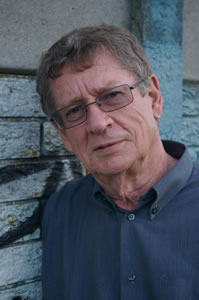
De Zuid-Afrikaanse schrijver André Brink werd geboren op 29 mei 1935 in Vrede. Zie ook mijn blog van 29 mei 2007 en ook mijn blog van 29 mei 2008.en ook mijn blog van 29 mei 2009.


Uit: A Fork in the Road


“It is now more than forty years since Ingrid Jonker died, yet, through her poetry, there may be more people to whom she is a living presence than she was during her short lifetime. In other respects she may be more remote than ever. She was drowned in the night of 19 July, 1965 when she walked into the fiercely cold Atlantic Ocean at Three Anchor Bay in Cape Town, and moved straight into myth. The myth of the maligned, rejected, abused, misunderstood nymph of sea and sun who had foretold her death in her poetry since she’d been a teenager, finally canonised when Nelson Mandela read her poem ‘The Child’ at his inauguration in parliament in May 1994. How little could we, could anybody, have expected this life after death in that dark time when she opted out of the world?

Until recently, I have chosen not to be drawn into discussions or evocations of her life, notably in documentary films, some unforgivably bad. But precisely because of these I have begun to believe that perhaps I owe it to her at last to unfold, without drama or melodrama, some of the things I have kept to myself. Not the icon but the person. The woman I loved. And who nearly drove me mad. In some respects, it should be done to set the record straight; in others, simply to remember. To hold on.

There is a photo of that sad, obscene funeral, four days after her death, with family massed in a dour black bank on one side of the grave and windswept friends on the other. Her long-time lover Jack Cope tried to jump into the grave like a latter-day Laertes, and everything threatened to implode in low drama. What strikes me when I look at it today, is the realisation that almost everyone in that photo, in fact, everyone involved with Ingrid in one way or another, is now dead. Her father, the arrogant loser, followed her to the grave within a few months. Jack, who knew, as I did, the agony of being with her and constantly losing her, and who faced, long before I had to, the dread of growing old, is dead. Uys Krige, the perennial golden boy of South African letters and the one who averted the most vulgar of explosions on the day of the funeral, is dead too – unbelievable as it still seems to all of us who have heard him reciting poetry or talking non-stop in five languages. Jan Rabie, beachcomber and romantic, the first modern writer of Afrikaans fiction, is dead.”


Brink

André Brink (Vrede, 29 mei 1935)


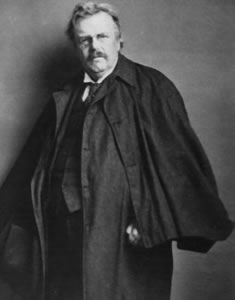
De Engelse letterkundige, schrijver en journalist Gilbert Keith Chesterton werd geboren in Londen op 29 mei 1874. Zie ook mijn blog van 29 mei 2007 en ook mijn blog van 29 mei 2008 en ook mijn blog van 29 mei 2009.


Uit: The Wisdom of Father Brown


„The consulting-rooms of Dr Orion Hood, th
e eminent criminologist and specialist in certain moral disorders, lay along the sea-front at Scarborough, in a series of very large and well-lighted french windows, which showed the North Sea like one endless outer wall of blue-green marble. In such a place the sea had something of the monotony of a blue-green dado: for the chambers themselves were ruled throughout by a terrible tidiness not unlike the terrible tidiness of the sea. It must not be supposed that Dr Hood’s apartments excluded luxury, or even poetry. These things were there, in their place; but one felt that they were never allowed out of their place. Luxury was there: there stood upon a special table eight or ten boxes of the best cigars; but they were built upon a plan so that the strongest were always nearest the wall and the mildest nearest the window. A tantalum containing three kinds of spirit, all of a liqueur excellence, stood always on this table of luxury; but the fanciful have asserted that the whisky, brandy, and rum seemed always to stand at the same level. Poetry was there: the left-hand corner of the room was lined with as complete a set of English classics as the right hand could show of English and foreign physiologists. But if one took a volume of Chaucer or Shelley from that rank, its absence irritated the mind like a gap in a man’s front teeth. One could not say the books were never read; probably they were, but there was a sense of their being chained to their places, like the Bibles in the old churches. Dr Hood treated his private book-shelf as if it were a public library. And if this strict scientific intangibility steeped even the shelves laden with lyrics and ballads and the tables laden with drink and tobacco, it goes without saying that yet more of such heathen holiness protected the other shelves that held the specialist’s library, and the other tables that sustained the frail and even fairylike instruments of chemistry or mechanics.

Dr Hood paced the length of his string of apartments, bounded– as the boys’ geographies say–on the east by the North Sea and on the west by the serried ranks of his sociological and criminologist library. He was clad in an artist’s velvet, but with none of an artist’s negligence; his hair was heavily shot with grey, but growing thick and healthy; his face was lean, but sanguine and expectant. Everything about him and his room indicated something at once rigid and restless, like that great northern sea by which (on pure principles of hygiene) he had built his home.“


chesterton

G. K. Chesterton (29 mei 1874 – 14 juli 1936)


De Catalaanse dichter, schrijver en vertaler Eduard Escoffet werd geboren op 29 mei 1979 in Barcelona in 1979. Zie ook mijn blog van 11 juni 2009.

tag der unschuldigen kinder

nur noch ein halber übrig ist und das geschirr in der spüle stehen bleibt.
immer noch in der spüle: hast du denn nicht gesehen, dass das geschirr
auf deine hände wartet und darauf, dass du es gleiten lässt in
seifenschaum und sauberkeit? das schon, die liebe rührt nicht mal der liebe
gott an. nur das ganze jahr lang der pausenlose nieselregen:
schmeicheleien und hochgezogene schultern, geheilt durch ein wenig
distanz. flüsse hinter den fensterläden. hast du die liebe gewonnen,
versüßen dir die wurmigsten würmer mit verachtung dein gärtchen. und
das, aber immerhin, ist schon alles.


Vertaald door Roger Friedlein

escofet

Eduard Escoffet (Barcelona, 29 mei 1979)


De Hebreeuwse dichteres, schrijfster en letterkundige Leah Goldberg werd geboren in Königsberg (Pruisen) op 29 mei 1911. Zie ook mijn blog van 29 mei 2007 en ook mijn blog van 29 mei 2008 en ook mijn blog van 29 mei 2009.


Un pin


Ici je n’entendrai plus le chant du coucou.

Ici l’arbre ne se couvrira pas d’un manteau de neige,

Et pourtant c’est à l’ombre de ces pins

que mon enfance a ressuscité


au son des aiguilles: il était une fois…

J’appellerai patrie l’étendue des neiges,

la glace verdâtre entourant le cours d’eau

la langue du poème dans un pays étranger.


Peut-être que seuls les oiseaux migrateurs connaissent

lorsqu’ils sont suspendus entre ciel et terre

la douleur de deux patries


avec vous j’ai été plantée deux fois

avec vous les pins j’ai poussé

et mes racines, dans deux paysages différents.


Vertaald door Esther Orner


A Night Song


All the stars were hidden away
The moon is wrapped in black
From the North to Yemen in the South
There is no ray of light


The morning is a faithful widower
On its hips it wears a grey bag
From the North to Yemen in the South


There is no ray of light


Please light a white candle in my heart’s black tent
From the North to Yemen in the South
The light will shine


LeaGoldberg_stamp

Leah Goldberg (29 mei 1911 –  15 januari 1970)


De Iraanse filmregisseur en schrijver Mohsen Makhmalbāf werd geboren op 29 mei 1957 in Teheran. Zijn familie was arm en tussen zijn 8e en zijn 17e levensjaar had Moshen al 13 verschillende baantjes gehad. In 1974 werd hij gearresteerd omdat hij geprobeerd had een politieagent te ontwapenen. Pas na de revolutie van 1979 werd hij vrijgelaten. Hij bemoeide zich niet meer met de politiek en begon boeken te schrijven en films te maken. Sindsdien heeft hij zevenentwintig boeken gepubliceerd. Zijn films zijn in meer dan veetig landen vertoond. In Iran zijn diverse films echter verboden.


Uit: Limbs of no body (Artikel in The Iranian, 20 juni 2001)


„Afghanistan is a country with no images, for various reasons. Afghan women are faceless which means 10 million out of the 20 million population don’t get a chance to be seen. A nation, half of which is not even seen by its own women, is a nation without an image.

During the last few years there has been no television broadcasting. There are only a few two-page newspapers by the names of Shariat, Heevad and Anise that have only text and no pictures. This is the sum total of the media in Afghanistan. Painting and photography have also been prohibited in the name of religion. In addition, no journalists are allowed to enter Afghanistan, let alone take pictures.

In the dawn of the 21st century there are no film productions or movie theatres in Afghanistan. Previously there were 14 cinemas that showed Indian movies and film studios had small productions imitating Indian movies but that too has vanished.

In the world of cinema where thousands of films are made every year, nothing is forthcoming from Afghanistan. Hollywood, however, produced “Rambo” about war in Afghanistan. The whole movie was filmed in Hollywood and not one Afghan was included. The only authentic scene was Rambo’s presence in Peshawar, Pakistan, thanks to the art of back projection! It was merely employed for action sequences and creating excitement. Is this Hollywood’s image of a country where 10 percent of the people have been decimated and 30 percent have become refugees and where currently one million are dying of hunger?

The Russians produced two films concerning the memoirs of Russian soldiers during the occupation of Afghanistan. The Mujahedin made a few films after the Russian retreat, which are essentially propaganda movies and not a real image of the situation of the past or present-day Afghanistan. They are basically a heroic picture of a few Afghans fighting in the deserts.

Two feature films have been produced in Iran on the situation of Afghan immigrants, “Friday” and “Rain”. I made two films “The Cyclist” and “Kandahar”. This is the entire catalogue of images about Afghans in the Iranian and world media. Even in TV productions worldwide there are a limited number of documentaries. Perhaps, it is an external and internal conspiracy or universal ignorance that maintains Afghanistan as a country without an image.“


Makhmalbaf

Mohsen Makhmalbāf (Teheran, 29 mei 1957)


De Oostenrijkse schrijver en theatercriticus Hans Weigel werd geboren op 29 mei 1908 in Wenen. Zie ook mijn blog van 29 mei 2009.


Uit: Sympathieadresse ans Volk der Hirten (Bespreking van “Lern dieses Volk der Hirten kennen” door Walter Widmer in Die Zeit)


“Was hülfe es diesen Unbelehrbaren, wenn sie erführen, daß in der Schweiz die Bundesräte, also die Minister, mit der Straßenbahn fahren, daß ein Kompetenzstreit der Minister um die Größe eines Standers ein gesamtschweizerisches Gelächter auslösen würde? Was sagt es deutschen Juristen, wenn sie hören, daß ein hochgeachteter, sehr beliebter Gerichtspräsident zurücktreten mußte, weil er aus Versehen ein Päckchen Zigaretten eingesteckt hatte und die Verkäuferin — freilich eine Pfundskuh! — ihn des Diebstahls bezichtigte? Was hilft es zu wissen, daß ein Nationalrat und Chefredakteur einer großen Zeitung unbarmherzig ins Kittchen flog, weil er in angeheitertem Zustand einen Verkehrsunfall verursachte, sich dann auf seinen Titel und Stand berief und den Polizisten frech kam?

Ich fürchte, unser — der Schweizer — Verhältnis zum Staat wird bei deutschen Lesern mancherorts auf Unverständnis stoßen, obschon Hans Weigel es trefflich formuliert hat: „Die Schweizer sehen den Staat nicht als ein dräuendes Feindseliges irgendwo oben. Wenn sie sich, mit ihm auseinandersetzen, dann auf gleicher Ebene, sofern sie nicht auf ihn hinabsehen, ganz echt, aus Überzeugung. Der Staat, nämlich seine legislativen und exekutiven Organe, das ist nur ein notwendiges Übel, nicht ein Moloch, der sie beherrscht, sondern ihr Untertan. Die Schweizer haben keinen Respekt vor den Repräsentanten des Staats. Solche muß es geben, aber das ist kein Grund, ihnen zu huldigen, sie zu verehren oder Angst vor ihnen zu empfinden.” Oder: „Demokratie besteht nicht im Vermeiden, sondern im fairen Austragen von Konflikten und Skandalen.. Die Demokratie ist nicht unvollkommen, wenn etwas passiert, sondern erst dann, wenn -daraus nicht die entsprechenden Konsequenzen gezogen werden.” Es ist keine Kapuzinerpredigt, sondern eine nüchterne Bilanz der Fakten, die in der Schweiz gelten.”


weigel

Hans Weigel (29 mei 1908 – 12 augustus 1991)


De Engelse schrijver Terence Hanbury White werd geboren op 29 mei 1906 in Bombay (Mombai). Zie ook mijn blog van 29 mei 2009.


Uit: The Sword in the Stone


“How does one get hold of a sword?” he continued. “Where can I steal one? Could I waylay some knight, even if I am mounted on an ambling pad, and take his weapons by force? There must be some swordsmith or armorer in a great town like this, whose shop would still be open.”

He turned his mount and cantered off along the street.

There was a quiet churchyard at the end of it, with a kind of square in front of the church door. In the middle of the square there was a heavy stone with an anvil on it, and a fine new sword was struck through the anvil.

“Well,” said the Wart, “I suppose it’s some sort of war memorial, but it will have to do. I am quite sure nobody would grudge Kay a war memorial, if they knew his desperate straits.”

He tied his reins round a post of the lych-gate, strode up the gravel path, and took hold of the sword.

“Come, sword,” he said. “I must cry your mercy and take you for a better cause.”

“This is extraordinary,” said the Wart. “I feel queer when I have hold of this sword, and I notice everything much more clearly. Look at the beautiful gargoyles of this church, and of the monastery which it belongs to. See how splendidly all the famous banners in the aisle are waving. How nobly that yew holds up the red flakes of its timbers to worship God. How clean the snow is. I can smell smothing like fetherfew and sweet briar – and is that music that I hear?”

It was music, whether or pan-pipes or of recorders, and the light in the churchyard was so clear, without being dazzling, that you could have picked a pin out twenty yards away.

“There is something in this place,” said the Wart. “There are people here. Oh, people, what do you want?”

Nobody answered him, but the music was loud and the light beautiful.”


white2

T. H. White (29 mei 1906 – 17 januari 1964)


Zie voor nog meer schrijvers van de 29e mei ook
mijn vorige blog van vandaag.


Bernard Clavel, Max Brand, Anne d’Orléans de Montpensier, Alfonsina Storni, Reinout Verbeke, Till Mairhofer

De Franse schrijver Bernard Charles Henri Clavel werd geboren op 29 mei 1923 in Lons-le-Saunier. Zie ook mijn blog van 29 mei 2009.


Uit: L’Ouvrier de la nuit


« Mon cher Jacques,
J’ai sur ma table, depuis trois jours, le seul exemplaire de « L’Ouvrier de la Nuit » que je possède ici. La couverture a bruni au soleil de quelque vitrine, elle est toute piquetée de cette neige couleur brou de noix qui est la rouille du papier et dont l’humidité jaspe les vieux livres.
Il est vrai, ce récit est déjà un vieux livre.
Si le bas de cette couverture demeure plus propre, c’est qu’il porte la trace de la bande dont vous aviez eu l’idée, Pierre Javet et toi-même, pour compléter le titre par cette formule qui était presque une question : « …ou le malheur d’être écrivain ».
La bande a disparu, mais ces mots ont pesé sur moi durant des années. Ils m’ont poursuivi comme un mauvais présage, comme ces phrases que les vieux paysans prononcent pour accueillir sur cette terre un enfant dont la naissance leur parait étrange. La bande a disparu, ce qu’elle disait a cessé de me poursuivre, amis il me reste du temps où j’écrivais ce livre, le souvenir précis, à la fois très proche et infiniment lointain. (…) notre amitié est étroitement liée à notre travail, à ce que nous voulons tirer de ce qu’il y a en nous de meilleur et de pire. Car nous avons en commun cet attachement à notre jeunesse et aux années les plus dures de notre vie (…) Au fond il suffit que le lecteur soit averti que ce livre est un cri, jeté sur le papier en quelques jours et en quelques nuits de fièvres. On peut retoucher une œuvre construite, on ne retouche pas un cri.(…) Si je fais aujourd’hui le compte de la douleur, de la peine, des nuits de veille, des déceptions, des sarcasmes encaissés, des jalousies sordides, des pièges de toutes sortes, des épreuves, des trahisons subies, des privations que j’ai imposées aussi aux miens, je suis tenté de dire que c’est, en effet, un très grand malheur que d’être atteint par le virus indestructible de l’écriture.”


bernard-clavel

Bernard Clavel (Lons-le-Saunier, 29 mei 1923)


De Amerikaanse schrijver Max Brand (eig. Frederick Schiller Faust) werd geboren op 29 mei 1892 in Seattle. Hij schreef voornamelijk onder pseudoniemen als Max Brand, , David Manning en Frederick Frost. In de jaren 1910 en 1920 schreef hij vooral verhalen voor pulpmahazines als Western Story Magazine. In 1938 keerde hij uit Europa terug naar de VS en vestigde hij zich in Hollywood. Daar groeide hij uit tot een van de best betaalde (script) schrijvers van zijn tijd. Ook voor zijn verhalen over Dr. Kildare ontving hij veel geld door de verfilming ervan door MGM. Faust relaiveerde zelf zijn succes en gebruikte zijn echte naam alleen voor publicatie van poëzie, zijn echte roeping.


Uit: Alcatraz


“The west wind came over the Eagles, gathered purity from the evergreen slopes of the mountains, blew across the foothills and league wide fields, and came at length to the stallion with a touch of coolness and enchanting scents of far-off things. Just as his head went up, just as the breeze lifted mane and tail, Marianne Jordan halted her pony and drew in her breath with pleasure. For she had caught from the chestnut in the corral one flash of perfection and those far-seeing eyes called to mind the Arab belief.

Says the Sheik: “I have raised my mare from a foal, and out of love for me she will lay down her life; but when I come out to her in the morning, when I feed her and give her water, she still looks beyond me and across the desert. She is waiting for the coming of a real man, she is waiting for the coming of a true master out of t
he horizon!”

Marianne had known thoroughbreds since she was a child and after coming West she had become acquainted with mere “hoss-flesh,” but today for the first time she felt that the horse is not meant by nature to be the servant of man but that its speed is meant to ensure it sacred freedom.

A moment later she was wondering how the thought had come to her. That glimpse of equine perfection had been an illusion built of spirit and attitude; when the head of the stallion fell she saw the daylight truth: that this was either the wreck of a young horse or the sad ruin of a fine animal now grown old.”


Maxbrand

Max Brand (29 mei 1892 – 12 mei 1944)


De Franse schrijfster Anne Marie Louise d’Orléans, hertogin van Montpensier, werd geboren op 29 mei 1627 in Parijs. Zie ook mijn blog van 29 mei 2007 en ook mijn blog van 29 mei 2009.


Uit: Memoires de Mademoiselle de Montpensier


« La reine, ma grand’mère, Marie de Médicis, m’aimoit extrêmement, et témoignoit, à ce que j’ai ouï dire, beaucoup plus de tendresse pour moi qu’elle n’avoit jamais fait pour ses propres enfants ; et comme Monsieur en avoit toujours été le plus chéri, cette considération, jointe à l’estime et à l’affection qu’elle avoit eues pour ma mère, fait qu’on ne doit pas s’étonner de l’amitié qu’elle avoit pour moi. Néanmoins j’ai malheureusement été privée d’en recevoir les effets par la disgrâce qui la fit sortir de France, parce que j’étois encore si jeune alors, que je ne me souviens pas seulement de l’avoir vue. Ce fut une perte qui me fut pas moins importante que celle que je fis à ma naissance, puisque je devois ; selon toutes les apparences, rencontrer en cette grande reine ce que j’avais perdue par la mort de ma mère. Ce n’est pas que madame de Saint-Georges, ma gouvernante, ne possédât, pour se bien acquitter de cette charge, toutes les qualités qu’on sauroit souhaiter. Quoique la capacité, la bonne conduite et la naissance se trouvent souvent dans les personnes qu’on met à cette place, celles de ma condition craignent si rarement celles qui sont au-dessous d’elles, quelque jeunes qu’elles soient, qu’il est comme nécessaire qu’une autorité supérieure seconde les soins de ceux qui les gouvernent : ce qui me fait oser dire que, s’il paroît en mois quelques bonnes qualités, elles y sont naturelles, et que l’on n’en doit rien attribuer à l’éducation, quoique très-bonne ; car je n’ai jamais eu l’appréhension du moindre châtiment. Ajoutez à cela qu’il est très-ordinaire de voir les enfants que l’on respecte, et à qui l’on ne parle que de leur grande naissance et de leurs grands biens, prendre les sentiments d’une mauvaise gloire. J’avois si souvent à mes oreilles des gens qui ne me parlaient que de l’un et de l’autre, que je n’eus pas de peine à me le persuader, et je demeurai dans un esprit de vanité fort incommode, jusqu’à ce que la raison m’eût fait connoître qu’il est de la grandeur d’une princesse bien née de ne pas s’arrêter à celle dont dont l’on m’avoit si souvent et si longtemps flattée. La naïveté avec laquelle je veux parler de tout ce que je vais raconter, me fait remarquer ici un trait de mon enfance. Quand l’on me parloit de madame de Guise, ma grand’mère,8 je disois : « Elle est ma grand’maman de loin ; elle n’est pas reine. »


Orleon

Anne d’Orléans de Montpensier (29 mei 1627 – 5 april 1693)
Standbeeld in de Jardin du Luxembourg.


Rectificatie

De Argentijnse dichteres Alfonsina Storni werd geboren in Sala Capriasca, Zwitserland op 29 mei 1892. Zie ook mijn blog van 22 mei 2007 en ook mijn mijn blog van 22 mei 2008 en ook mijn blog van 22 mei 2009.

To Eros

I caught you by the neck
on the shore of the sea, while you shot
arrows from your quiver to wound me
and on the ground I saw your flowered crown.

I disemboweled your stomach like a doll’s
and examined your deceitful wheels,
and deeply hidden in your golden pulleys
I found a trapdoor that said: sex.

On the beach I held you, now a sad heap,
up to the sun, accomplice of your deeds,
before a chorus of frightened sirens.
Your deceitful godmother, the moon
was climbing through the crest of the dawn,
and I threw you into the mouth of the waves.


To My Lady of Poetry

I throw myself here at your feet, sinful,
my dark face against your blue earth,
you the virgin among armies of palm trees
that never grow old as humans do.

I don’t dare look at your pure eyes
or dare touch your miraculous hand:
I look behind me and a river of rashness
urges me guiltlessly on against you.

With a promise to mend my ways through your
divine grace, I humbly place on your
hem a little green branch,
for I couldn’t have possibly lived
cut off from your shadow, since you blinded me
at birth with your fierce branding iron.

alfonsina-storni

Alfonsina Storni (29 mei 1892 – 25 oktober 1938)


Onafhankelijk van geboortedata:

De Vlaamse dichter Reinout Verbeke werd geboren in 1981. Zie ook mijn blog van 29 mei 2009.

Vroegwoord

wat
als je handen voegwoorden zijn
en al te vroeg binden, terwijl mijn
zin nog koud is?

hoe
wij dan toch
over veel vertelde tijd
taal ophangen aan vingers en
ze uit haar voegen wrijven

tot
ze barst.

zoals
betekenis nu dichter
bij letters kruipt

zo ook wij

zo

verbeke

Reinout Verbeke (1981)


Zie voor onderstaande schrijver ook mijn blog van 29 mei 2009.


De Oostenrijkse dichter, schrijver en uitgever Till Mairhofer werd geboren op 29 mei 1958 in Steyr. Zie ook mijn blog van 29 mei 2008.

Leo Pleysier, Frank Schätzing, Maeve Binchy, K. Satchidanandan, Thomas Moore, Sjoerd Leiker, Walker Percy, Patrick White, Fritz Hochwälder

De Belgische schrijver Leo Pleysier werd geboren in Rijkevorsel op 28 mei 1945.


Uit: De Latino’s


‘Een mooi plan, een goed plan, een stout plan, een sympathiek plan, een aantrekkelijk plan. Daar niet van. Alleen is er nog altijd niets van terechtgekomen tot nu toe. De realiteit zit dwars en de werkelijkheid wil niet mee. Hoe lang nog? Het ziet er voor Anna en Toon allemaal niet zo best uit nee. Hun lang gekoesterde ambitie, hun grote toekomstproject dreigt alleen maar een fictie te blijven. Een hersenschim. Een fantasie. Een misrekening. Een fiasco. Daar ziet het hoe langer hoe meer naar uit. Teleurstelling en ontgoocheling loeren al om de hoek.’

(…)


‘Het allermooiste kindje wordt vervolgens begraven op een kleine, terrasvormige met stenen ommuurde hoogte die zich boven Calistos verheft. […] Zo erg. Zo onrechtvaardig. Zo schrijnend. Zo triest. En toch. Wat had het een fraaie en bekoorlijke beelden kunnen opleveren als een buitenstaander op het idee was gekomen om met een camera achter deze begrafenisstoet aan te lopen om deze teraardebestelling op film vast te leggen. Want het is toch werkelijk prachtig: het majestueuze Andelandschap met daarin een minuscuul bergdorp vanwaar een kleurrijke stoet indianen zich langs een smal pad naar de hogerop gelegen begraafplaats begeeft.’


pleysier

Leo Pleysier (Rijkevorsel, 28 mei 1945)


De Duitse schrijver Frank Schätzing werd geboren in Keulen op 28 mei 1957.


Uit: Limit


“Jericho hatte die erste Maschine abgewürgt. Dieses Modell war neu und gegenüber dem Vorgänger stark verändert. Die Kontrollen erstrahlten auf einer Benutzeroberfläche, es gab keine mechanischen Elemente mehr. Er rutschte aus dem Sattel, sprang auf das zweite, laufende Airbike und tastete sich über den Touchscreen. Diesmal hatte er mehr Glück. Die Maschine reagierte, allerdings mit der Heftigkeit eines angestochenen Bullen, bockte und versuchte ihn abzuwerfen. Seine Hände umspannten die Griffe. Frü­her hatten sie waagerecht gestanden, jetzt bogen sie sich aufwärts und ließen sich in alle Richtungen drehen. Das Bike geriet in heftige Kreiselbewegung. Wie bei einem Spielautomaten blinkten die Anzeigen. Auf gut Glück berührte Jericho zwei davon, und die Karussellfahrt endete, dafür wurde er auf die Vorderfront der Zentrale zugetragen, verlagerte unmittelbar vor der Kollision sein Körpergewicht und flog eine ausgedehnte 180-Grad-Kurve. Sein Blick suchte die Umgebung ab.

Von Yoyo oder Zhao keine Spur.

Allmählich glaubte er den Bogen rauszuhaben. Er ließ die Maschine steigen, wobei er versäumte, die Dü­sen synchron zu schwenken, was ihn gleich wieder in die Bredouille brachte, weil sich das Bike nun raketengleich in den Himmel schraubte. Unaufhaltsam fühlte er sich aus dem Sattel rutschen, mühte sich mit fliegenden Fingern, den Fehler zu korrigieren, erlangte die Kontrolle zurück, flog eine weitere Kurve, den Hochofen im Auge.

Da waren sie!”


frank-sc

Frank Schätzing (Keulen, 28 mei 1957)


De Ierse schrijfster en columniste Maeve Binchy werd geboren op 28 mei 1940 in Dalkey.


Uit: Quentins


“When Maggie did so well in her Leaving Certificate her father said it was something that called for a Serious Celebration. The Nolan family were going out to have dinner in a hotel.

This had never happened before.

They had never even been in an ordinary restaurant let alone a hotel restaurant. Other people went to the Chinese or the Italian. It was the end of the Sixties, Ireland was coming on.

But not the Nolans. There was never the money to spare. There was so much to pay for.

And so many calls on their time. Mrs Nolan’s Mam lived with them for one thing and Mr Nolan’s Dad had to have his dinner cooked for him and brought over to his flat every day.

Maggie was the eldest of five.

Mr Nolan worked in charge of the bacon counter at one of those old-fashioned grocery stores that people said were on the way out. He was very happy and well respected there but of course if the store really were on the way out it would be hard for Mr Nolan to get another job.

Mrs Nolan worked as a cleaner in the hospital. She was very popular with the nurses and the patients, but the work was long and tiring, her veins were bad and she hoped she would be able to continue until all the children were accounted for.

Maggie was the eldest of five. The others were all boys who wanted to play for English soccer teams. They had no interest in their studies and were utterly amazed that their big sister had got enough marks in exams to make people talk seriously about her going to University. They were even more amazed that their father was going to take them to the big posh hotel where nobody they knew had even been inside the door.

But he kept saying Maggie’s marks would mean nothing unless there was a Serious Celebration.

“Will it be just the three of you – Mam, Dad and Maggie?” they wanted to know.

“A family celebration,” he insisted.”


binchy

Maeve Binchy (Dalkey, 28 mei 1940)


Zie voor alle bovenstaande schrijvers ook mijn blog van 28 mei 2007 en ook mijn blog van 28 mei 2008 en ook mijn blog van 28 mei 2009.


De Indiaase dichter, vertaler en literatuurwetenschapper K. Satchidanandan werd geboren op 28 mei 1946 in centraal Kerala. Zie ook mijn blog van 28 mei 2009. 


The Mad

The mad have no caste
or religion. They transcend
gender, live outside
ideologies.
We do not deserve
their innocence.

Their language is not of dreams
but of another reality. Their love
is moonlight. It overflows
on the full-moon day.

Looking up they see
gods we have never heard of. They are
shaking their wings
when we fancy they are
shrugging their shoulders. They hold
that even flies have souls
and the green god of grasshoppers
leaps up on thin legs.

At times they see trees bleed, hear
lions roaring from the streets. At times
they watch Heaven gleaming
in a kitten’s eyes, just as
we do. But they alone can hear
ants sing in a chorus.

While patting the air
they are taming a cyclone
over the Mediterranean. With
their heavy tread, they stop
a volcano from erupting.

They have another measure
of time. Our century is
their second. Twenty seconds,
and they reach Christ; six more,
they are with the Buddha.

In a single day, they reach
the big bang at the beginning.

They go on walking restless, for
their earth is boiling still.

The mad are not
mad like us.


Door de dichter zelf uit het Malayalam vertaald


K Satchidanandan

K. Satchidanandan (Kerala, 28 mei 1946)


De Ierse dichter en songwriter Thomas Moore werd geboren op 28 mei 1779 in Dublin. Zie ook mijn blog van 28 mei 2009. en ook mijn blog van 28 mei 2008. en ook mijn blog van 28 mei 2007 en ook mijn blog van 28 mei 2006.


Alone in Crowds to Wander On 


Alone in crowds to wander on,

And feel that all the charm is gone

Which voices dear and eyes beloved

Shed round us once, where’er we roved —

This, this the doom must be

Of all who’ve loved, and loved to see

The few bright things they thought would stay

For ever near them, die away.


Though fairer forms around us throng,

Their smiles to others all belong,

And want that charm which dwells alone

Round those the fond heart calls its own,

Where, where the sunny brow?

The long-known voice — where are they now?

Thus ask I still, nor ask in vain,

The silence answers all too plain.


Oh, what is Fancy’s magic worth,

If all her art cannot call forth

One bliss like those we felt of old

From lips now mute, and eyes now cold?

No, no — her spell in vain —

As soon could she bring back again

Those eyes themselves from out the grave,

As wake again one bliss they gave. 


More

Thomas Moore (28 mei 1779 – 25 februari 1852)
Portret door Martin Archer Shee, ca.1817


De Amerikaanse schrijver Walker Percy werd geboren op 28 mei 1916 in Birmingham, Alabama. Zie ook mijn blog van 28 mei 2009. 


Uit: Walker Percy: A Life (Door Patrick H. Samway, S.J.)


It is said that anyone who grows up in the Mississippi Delta knows the anecdotal histories of 1,200 people, and indeed many Southerners pride themselves on their ability to trace quickly some fairly complicated family trees. Although Walker Percy rarely spoke about his family history (see the Appendix), he knew that it was both long and complicated. His sense of it was deeply embedded in his consciousness, because certain prominent last names were often repeated as first or middle names in subsequent generations of Percys–a common feature of Southern nomenclature.

Such naming guaranteed that the ghostly presence of an ancestor would haunt the person carrying it. For example, his grandfather was named Walker Percy, his great-grandfather’s brother was John Walker Percy, and his great-great-grandfather’s wife’s brother-in-law, John Williams Walker, had a son, LeRoy Pope Walker, who was Secretary of War under Confederate President Jefferson Davis and a brigadier general in the Confederate Army. (Walker Percy once wrote his friend Shelby Foote that he took the name of John when he converted to Catholicism because he had “two Southern surnames for a name, even if one of them was that of a distinguished Confederate Sec’y of State.” Foote corrected him about Secretary Walker–“he wasn’t distinguished” and he was Secretary of War.) In reverse irony, LeRoy Walker’s brother was Percy Walker–a name fans often misused for Walker Percy (if they were not miscalling him Perry Walters). In addition, family names seem to be constantly recycled, sometimes in a curiously asexual manner. Walker Percy’s brother, Billups Phinizy (“Phin”) Percy, for example, has a daughter, Melissa Phinizy Percy, who is married to a second cousin, Bolling Phinizy Spalding, and their son is named Phinizy Percy Spalding. Indicative of Walker’s own awareness of his ancestry, one of his daughters, Mary Pratt Percy Lobdell, is named after her great-grandmother Mary Pratt DeBardeleben Percy, a key figure in the Percy family history. (In one draft of the novel The Thanatos Syndrome, Percy has a character named Alice Pratt, in this case a young woman from Montgomery, Alabama.) Since he spent his formative years in Birmingham (Alabama), Athens (Georgia), and Greenville (Mississippi), he willy-nilly learned his family history from Percy, Debardeleben, and Phinizy relatives.“


percy

Walker Percy (28 mei 1916 – 10 mei 1990)


De Australische schrijver Patrick White werd geboren in Londen op 28 mei 1912. Zie ook mijn blog van 28 mei 2009. 


Uit: Voss


‘Sanderson was a man of a certain culture, which his passionate search for truth had rid of intellectual ostentation. In another age the landowner might have become a monk, and from there gone on to become a hermit. In the mid nineteenth century, an English gentleman and a devoted husband did not behave in such a manner, so he renounced Belgravia for New South Wales, and learned to mortify himself in other ways. Because he was rich and among the first to arrive, he had acquired a goodish slice of land. After this victory of world pride, almost unavoidable perhaps in anyone in his class, humility had set in. He did live most simply, together with his modest wife. They were seldom idle, unless the reading of books, after the candles were lit, be considered idleness. This was the one thing people held against the Sandersons, and it certainly did seem vain and peculiar. They had whole rows of books, bound in leather, and were forever devouring them. They would pick out passages for each other as if they had been tidbits of tender meat, and afterwards shine with almost physical pleasure. Beyond this, there was nothing to which a man might take exception. Sanderson tended his flocks and herds like any other Christian. If he was more prosperous than most, one did not notice it unduly, and both he and his wife would wash their servants’ feet in many thoughtful and imperceptible ways.

‘We are how many miles now from your property?’ Voss would ask on and off.

And Sanderson would tell.

‘I am most anxious to see it,’ Voss said invari
ably.

Places yet unvisited can become an obsession, promising final peace, all goodness. So the fallible man in Voss was yearning after Rhine Towers, investing it with those graces which one hopes to find at the heart of every mirage, entering its mythical buildings, kindling a great fire in the expectant hearth Its name glittered for him, as he rode repeating it to himself.’


patrick_white

Patrick White (28 mei 1912 – 30 september 1990)


De Nederlandse schrijver en dichter Sjoerd Leiker werd geboren in Drachten op 28 mei 1914. Zie ook mijn blog van 28 mei 2009. 


Uit: Piet Calis. De vrienden van weleer. Schrijvers en tijdschriften tussen 1945 en 1948


“Tijdens de gesprekken tussen Leiker en Lubberhuizen kwam ook de gedachte op om het tijdschrift voor zowel oudere als jongere schrijvers open te stellen. Hoe dat in het vat gegoten moest worden, bleef nog vaag. Wel werd met het idee gespeeld daartoe twee zelfstandige redacties aan te stellen.

Leiker vertelde in 1983 over het tijdschrift: ‘Voor dat blad heb ik de naam Voorpost bedacht. Als oud-militair vond ik dat een geschikte naam voor een literair tijdschrift.’2 Denkbaar is overigens dat Leiker ook op dat idee gebracht werd door een blad onder de naam Voorpost dat de jonge schrijvers A. Marja en Hanno van Wagenvoorde al in 1940 hadden willen oprichten en waarbij ook Anna Blaman betrokken was geweest.

Leiker vertelde verder: ‘Geert Lubberhuizen met zijn grote liefde voor het mooi verzorgde boek vond dat Voorpost in een portefeuille moest worden uitgegeven. Dus losse rijmprenten op klein formaat en een novelle in fraai gebonden vorm. Daar is ook materiaal voor verzameld. Mijn voorstel was om helemaal geen schuilnamen meer te gebruiken, maar om die prenten en die boekjes die dan in zo’n portefeuille zouden zitten, anoniem te  publiceren. Voorpost zou dus een verzameling losse teksten en boekjes worden.’

Afgesproken werd een werkgroep te vormen, die de publicatie van het blad voorbereiden zou. Leiker ging daartoe allereerst op zoek in eigen kring.”

Leiker

Sjoerd Leiker (28 mei 1914 – 15 december 1988)


De Oostenrijkse schrijver Fritz Hochwälder werd geboren op 28 mei 1911 in Wenen. Zie ook mijn blog van 28 mei 2009. 


Uit: F. Hale: Fritz Hochwälders Das Heilige Experiment


„Das heilige Experiment gave Hochwälder his breakthrough as a renowned playwright. He began to do serious research on the Jesuit enterprise in South America at the Central Library in Zürich, where he also read Dostoevsky’s The brothers Karamazov and The demons. In fact, however, Hochwälder’s first serious exposure to the history of the Society of Jesus had come two years before his departure from Austria when he read René Fülöp-Miller’s Macht und Geheimnis der Jesuiten.5 When interviewed after the Second World War about the etiology of Das heilige Experiment, he attributed it in part to this work, in which both the accomplishments and the darker sides of the history of the Society of Jesus are emphasised. “From then on I had a theme working inside me, but not anchored yet to any dramatic structure,” Hochwälder recalled. The National Socialist takeover of Austria and German expansion elsewhere in Europe provided that framework. Upon reading The demons, he was struck by Dostoevsky’s prediction of “the danger of a faithless socialism which in its very materialistic faithlessness will acquire a religious tinge. Suddenly I felt the play focus inside me.” This inspiration prompted Hochwälder to request a two-month leave of absence from the refugee labour camp in the canton of Ticino where he was then residing. This was granted late in 1941. Armed with a pencil and a

modest amount of paper, the young Austrian went to the balcony of a house overlooking Ascona. Hochwälder initially hoped to use this period to work out the philosophical problems inherent in the play germinating in his mind, but his creativity accelerated to a level unprecedented in his brief career. At the end of his furlough, most of the manuscript was thus complete, albeit in a rudimentary and never published form titled Die Jesuiten in Paraguay.6 This proto-text took less than three weeks to write in December 1941.


hochwälder

Fritz Hochwälder (28 mei 1911 – 20 oktober 1986)

Zie voor nog meer schrijvers van de 28e mei ook mijn vorige blog van vandaag.

Ian Fleming, Henri-Pierre Roché, Maximilian Voloshin, Maria Müller-Gögler, B. S. Ingemann, J. D. Wyss, C. H. von Ayrenhoff, Xin Qiji

De Britse schrijver Ian Fleming werd geboren op 28 mei 1908 in Londen. Zie ook mijn blog van 28 mei 2007 en ook mijn blog van 28 mei 2009.


Uit:  Live and Let Die


‘You’re very welcome, Mr Bond.’ Halloran smiled and offered him a cigarette from a fresh pack of Luckies. ‘We want to make your stay comfortable. Anything you want, just say so and it’s yours. You’ve got some good friends in Washington. I don’t myself know why you’re here but it seems the authorities are keen that you should be a privileged guest of the Government. It’s my job to see you get to your hotel as quickly and as comfortably as possible and then I’ll hand over and be on my way. May I have your passport a moment, please.’

Bond gave it to him. Halloran opened a briefcase on the seat beside him and took out a heavy metal stamp. He turned the pages of Bond’s passport until he came to the US Visa, stamped it, scribbled his signature over the dark blue circle of the Department of Justice cypher and gave it back to him. Then he took out his pocket-book and extracted a thick white envelope which he gave to Bond.

‘There’s a thousand dollars in there, Mr Bond.’ He held up his hand as Bond started to speak. ‘And it’s Communist money we took in the Schmidt-Kinaski haul. We’re using it back at them and you are asked to co-operate and spend this in any way you like on your present assignment. I am advised that it will be considered a very unfriendly act if you refuse. Let’s please say no more about it and,’ he added, as Bond continued to hold the envelope dubiously in his hand, ‘I am also to say that the disposal of this money through your hands has the knowledge and approval of your own Chief.’

Bond eyed him narrowly and then grinned. He put the envelope away in his notecase.

‘All right,’ he said. ‘And thanks. I’ll try and spend it where it does most harm. I’m glad to have some working capital. It’s certainly good to know it’s been provided by the opposition.’

‘Fine,’ said Halloran; ‘and now, if you’ll forgive me, I’ll just write up my notes for the report I’ll have to put in. Have to remember to get a letter of thanks sent to Immigration and Customs and so forth for their co-operation. Routine.’


connery-fleming

Ian Fleming (28 mei 1908 – 12 augustus 1964)
Fleming hier met Sean Connery (l)


De Franse schrijver, journalist en verzamelaar Henri-Pierre Roché werd op 28 mei 1879 geboren te Parijs. Zie ook mijn blog van 28 mei 2009.


Uit: Jules et Jim


-Vous avez aimé, Jim. Pour de bon, Jim. Cela se sent. Pourquoi ne l’avez-vous pas épousée?
-Cela n’est pas arrivé.
-Où est-elle ?
-En France
Comment est-elle ?
-Pure, elle aussi.
Jim sentit une pression du bras de Lucie.
-Vous l’aimez encore, et elle vous aime ?
-Oui, mais nous nous
voyons peu, bien que nous soyons libres.

-Ne faites pas souffrir, Jim…
-Et puis, il y a du nouveau.
-Lequel ?
-Je vous admire, Lucie. J’ai pris gout à vous voir. Je crains d’oublier Jules.
-Il ne faut pas l’oublier, il faut le prévenir.
[…]
L’été tourna vite. Jules fit sa demande à Lucie, ajoutant que, quelle que fût sa réponse, il resterait toujours à sa merci. Lucie lui dit qu’elle était touchée, qu’elle ne pourrait probablement jamais l’épouser, et qu’elle souhaitait que leur grande amitié n’en souffrît pas.
Jules, qui s’y attendait pourtant, devint blanc, lui baisa les mains, et vint trouver Jim.
-Jim, dit-il, Lucie ne veut pas de moi. J’ai la terreur de la perdre et qu’elle sorte tout à fait de ma vie. Jim, aimez-la, épousez-la, et laissez-moi la voir. Je veux dire : si vous l’aimez, cessez de penser que je suis un obstacle.


jules_et_jim

Henri-Pierre Roché (28 mei 1879 – 9 april 1959)
Scene uit de film Jules et Jim van François Truffaut


De Russische dichter, schrijver en schilder Maximilian Voloshin werd geboren op 28 mei 1877 in Kiev. Zie ook mijn blog van 28 mei 2009.


Koktebel


As in the tiny shell – the Ocean

With mighty breathing hums, concealed inside,

As flesh of her is flickering and burns

With silver shimmer of the air of foggy,

And curvatures of her reiterate

Their look in movements and in curls of waves, –

So in your harbors my entire soul,

Oh Cimmerian country dark of mine,

Is captivated and transfigured truly.


Since being adolescent by the silent

The solemn, godforsaken shores

I woke up – my soul opened widely,

And thought was grown up and shaped, and sculptured

On folds of rocks, on curvatures of hills,

The fire of the depths and rainy moisture

With double chisel your appearance built –

Monotonous formation of the hills

And strain of Kara-Dag’s intensive pathos.


Indented concentration of the rocks

Along with prairies and flickering expances

Gave freedom to my verse and measure to my thought.

Since then are saturated with my dreams

Heroic reveries of drowsing foothills

And stone mane of wistful Koktebel;

His wormwood’s getting drunken with my pang,

My verse is singing in the surging ocean,

And on the rock, enclosing rippled harbor,

By fate and wind is sculptured my profile.


Vertaald door I. Larkov


voloshin

Maximilian Voloshin (28 mei 1877 – 11 augustus 1932)
Buste in de studeerkamer van Voloshins huis in Koktebel


De Duitse dichteres en schrijfster Maria Müller-Gögler werd geboren op 28 mei 1900 in Leutkirch im Allgäu. Zie ook mijn blog van 28 mei 2009.


Willkommen


Die Liebe hat dich hergerufen,

und Liebe gibt dir das Geleit.

Sie stützt dich auf den ersten Stufen

des schweren Weges durch die Lebenszeit,

bleibt später auch an deiner Seite,

stärkt dich noch mehr als Milch und Brot.

Auch in der ungeschützten Weite

hilft sie bestehen, was dich fremd umdroht.


Du bist in eine Zeit geboren,

vor deren Zeichen manchem bangt,

der seine Zuversicht verloren,

weil er im Glauben an die Liebe wankt.

Er ängstigt sich vielleicht gleich scheuen,

verfolgten Tieren in der Nacht.

Du fürchtest nichts, du darfst dich freuen,

weil deiner Eltern Liebe dich bewacht.


leutkirch_martinskirche_pulverturm

Maria Müller-Gögler (28 mei 1900 – 23 september 1987)
Leutkirch im Allgäu (Geen portret beschikbaar)


De Deense dichter en schrijver Bernhard Severin Ingemann werd geboren op 28 mei 1789 in Thorkildstrup op het eiland Falster. Zie ook mijn blog van 28 mei 2009.


Uit: The Sealed Room


„Madame Wolff had in vain endeavored to avoid using the great hall at all, for the foolish old legend of the sealed chamber aroused a certain superstitious dread in her heart, and she rarely if ever entered the hall herself.  But merry Miss Elizabeth, her pretty young daughter, was passionately fond of dancing, and her mother had promised that she should have a ball on her wedding day.  Her betrothed, Secretary Winther, was also a good dancer, and the two young people combated the mother’s prejudice against the hall and laughed at her fear of the sealed room.  They

thought it would be wiser to appear to ignore the stupid legend altogether, and thus to force the world to forget it.  In spite of secret misgivings Madame Wolff yielded to their arguments.  And for

the first time in many years the merry strains of dance music were heard in the great hall that lay next the mysterious sealed chamber.

The bridal couple, as well as the wedding guests, were in the gayest mood, and the ball was an undoubted success.  The dancing was interrupted for an hour while supper was served in an adjoining

room.  After the repast the guests returned to the hall, and it was several hours more before the last dance was called.  The season was early autumn and the weather still balmy.  The windows had been

opened to freshen the air.  But the walls retained their dampness and suddenly the dancers noticed that the old wall paper which covered the partition wall between the hall and the sealed chamber

had been loosened through the jarring of the building, and had fallen away from the sealed door with its mysterious inscription.“


Bernhard_Severin_Ingemann_1822_AIKoop

Bernhard Severin Ingemann (28 mei 1789 – 24 februari 1862)
Portret door A. I. Koop, 1822


De Zwitserse schrijver Johann David Wyss werd geboren op 28 mei 1743 in Bern. Zie ook mijn blog van 28 mei 2009.


Uit: The Swiss Family Robinson

“Amid the roar of the thundering waves I suddenly heard the cry of “Land, land!” while at the same instant the ship struck with a frightful shock, which threw everyone to the deck and seemed to threaten her immediate destruction.
Dreadful sounds betokened the breaking up of the ship, and the roaring waters poured in on all sides:
Then the voice of the captain was heard above the tumult shouting, “Lower away the boats! We are lost!”
“Lost!” I exclaimed, and the word went like a dagger to my heart; but seeing my children’s terror renewed, I composed myself, calling out cheerfully, “Take courage, my boys! We are all above water yet. There is the land not far off; let us do our best to reach it. You know God helps those that help themselves!” With that, I left them and went on deck. What was my horror when through the foam and spray I beheld the only remaining boat leave the ship, the last of the seamen spring into her and push off, regardless of my cries and entreaties that we might be allowed to share their slender chance of preserving their lives. My voice was drowned in the howling of the blast; and even had the crew wished it, the return of the boat was impossible.
Casting my eyes despairingly around, I became gradually aware that our position was by no means hopeless, inasmuch as the stern of the ship containing our cabin was jammed between two high rocks, and was partly raised from among the breakers which dashed the fore part to pieces. As the clouds of mist and rain drove past, I could make out, through rents in the vaporous curtain, a line of rocky coast, and rugged as it was, my heart bounded toward it as a sign of help in the hour of need. Yet the sense of our lonely and forsaken condition weighed heavily upon me as I returned to my family, constraining myself to say with a smile, “Courage, dear ones! Although our good ship will never sail more, she is so placed that our cabin will remain above water, and tomorrow, if the wind and waves abate, I see no reason why we should not be able to get ashore.”


Wyss

Johann David Wyss (28 mei 1743 – 11 januari 1818)
Een van de uitgaven van The Swiss Family Robinson


De Oostenrijkse schrijver Cornelius Hermann von Ayrenhoff werd geboren op 28 mei 1733 in Wenen. Zie ook mijn blog van 28 mei 2009.


Uit: Virginia oder das abgeschaffte Decemvirat


MARCUS.

Bald, Lucius, entweicht mir die Geduld.

So lange weilt kein Flamen in dem Tempel

wie dieses Mädchen.

LUCIUS.

Wahr! – Nun schließe, Freund,

von Deiner Ungeduld auf die, die jetzt

des Appius Erwartung spannt! Sein Herz

scheint ein Vulkan entflammter Leidenschaft.

Kaum war es Mitternacht, so ließ er schon

mich rufen, daß ich ja dich früh genug

zur That ermahnte, früh genug ihm dann

vom Ausschlag Nachricht brächte.

MARCUS.

Sollte denn

Verhaftung eines Weibs, noch beynah Kinds,

ein Werk von ungewissem Ausschlag seyn?

LUCIUS.

Selbst diese Furcht des Allgewaltigen

verräth die Stärke seiner Leidenschaft.

Doch Marcus – oft vernahm ich von dir selbst,

in deiner Lälia getreuen Brust

herrsch’ Eifersucht mit unzähmbarer Macht:

wird sie wohl ruhig sehn, daß du das schönste

von allen Mädchen Roms nach Hause bringest?


wiener-altstadt

Cornelius Hermann von Ayrenhoff (28 mei 1733 – 15 augustus 1819)
Wenen (Geen portret beschikbaar)


De Chinese dichter Xin Qiji werd geboren op 28 mei 1140 in Jinan, in de provicie Shandong. Zie ook mijn blog van 28 mei 2009.


Lines Written on a Wall of Dongliu Village


Wild pear blossoms start falling again,

so soon, the Qingming festival over.

The cruel eastern wind, for no reason,

interrupts a traveler’s dream.

I awake, the brocade curtain

devastatingly cold. Once,

she held the drink to me

on the winding river bank,

and we
bade farewell to each other

under a weeping willow tree

with my horse tethered to it.

Now, the pavilion deserted,

there is no trace of her,

only the swallows twittering about bygones.


She’s been seen, people say,

east of the bustling thoroughfare,

behind the curtain, still as graceful

as the new moon. Old regrets

run like the endless spring water. New griefs

pile up like the clouds over the mountains.

If we were going to meet again,

at a banquet, to tell her all this

would be impossible

as to pluck the flower from a mirror.

She would say, perhaps,

“How white your hair has grown!”


Vertaald door Qiu Xiaolong

XinQiji

Xin Qiji (28 mei 1140 – 1207)

Louis-Ferdinand Céline, Jan Blokker, Niels ’t Hooft, Kaur Kender, Said, Adriaan Venema, John Barth

De Franse schrijver Louis-Ferdinand Céline (pseudoniem van Louis Ferdinand Destouches) werd geboren in Courbevoie op 27 mei 1894. Zie ook alle tags voor Louis-Ferdinand Céline op dit blog.


Uit: Reis naar het einde van de nacht (Vertaald door E.Y. Kummer)


“Dat was het eind van deze dialoog, want ik herinner me goed dat hij nog net tijd had om te zeggen: ‘En ’t brood?’ En toen niets meer. Daarna, alleen maar een vlam, met lawaai erbij. Maar dan een lawaai zoals je nooit zou geloven dat het bestond. M’n ogen, oren, neus en mond waren opeens zo vol lawaai dat ik werkelijk dacht dat dit het eind betekende, dat ik zelf vuur en lawaai was geworden.

Maar nee, de vlam verdween, het lawaai bleef lang in m’n hoofd hangen, en m’n armen en benen beefden alsof iemand ze van achteren heen en weer schudde. ’t Leek of mijn ledematen ervandoor gingen, maar ze bleven toch bij me. In de rook, die nog lang daarna in m’n ogen prikte, bleef de scherpe geur van kruit en zwavel hangen, alsof men de luizen en vlooien van de hele wereld wilde verdelgen.

Onmiddellijk daarop dacht ik aan wachtmeester Barousse, die zo juist uit elkaar gespat was, zoals de andere knaap ons verteld had. Dat was goed nieuws. ‘Prachtig!’ dacht ik meteen. ‘Dat is een hele grote ploert minder in het regiment!’ Hij had me voor de krijgsraad willen slepen voor een blik conserven. ‘Ieder z’n privé-oorlogje!’ zei ik bij mezelf. Van die kant bekeken, scheen de oorlog zo nu en dan wel z’n nut te hebben, dat moest ik toegeven! Ik kende nog wel drie of vier rotschoften in het regiment die ik, net als Barousse, graag aan een granaat had geholpen. Wat de kolonel betrof, die wenste ik geen kwaad toe. Toch was hij ook dood. Ik zag hem eerst niet meer. Dat kwam omdat hij door de ontploffing op het talud was geslingerd, languit op z’n zij, in de armen van de cavalerist te voet, de boodschapper, die ook dood was. Ze omhelsden elkaar, die twee, nu en voor eeuwig, maar de cavalerist had geen hoofd meer, je zag alleen een opening boven in z’n hals, met bloed erin dat klokkend sudderde, zoals jam in een pan. De buik van de kolonel was opengereten, z’n gezicht was afschuwelijk vertrokken. ’t Had hem beslist pijn gedaan, toen het gebeurde. Z’n eigen schuld! Als hij bij de eerste kogels weg was gegaan, was hem dit niet overkomen.”


Celine

Louis-Ferdinand Céline (27 mei 1894 – 1 juli 1961)


De Nederlandse schrijver, journalist en columnist Jan Blokker werd geboren in Amsterdam op 27 mei 1927. Zie ook alle tags voor Jan Blokker op dit blog.


Uit: Serven aan de Schelde


‘Hollanders’, zegt Louis Seynaeve in Het verdriet van België tegen zijn vriendin, ‘Hollanders verstaan geen kloten, Constance. Zij interesseren zich helemaal niet aan België.’

Maar het land ligt wel bij ons om de hoek, ze spreken er voor de helft een taal die op de onze lijkt, ze hebben een federale minister-president die in vergelijking met Balkenende nog heel wat lijkt omdat hij in drie jaar nog pas twee kabinetten heeft verklungeld, maar daar staat tegenover dat hij in die tijd al drie keer naar z’n koning terug moest omdat hij geen formatie rondkreeg, en dat hij het verschil niet kent tussen de Brabançonne en de Marseillaise. In het 1-uur-nieuws van de VRT vroegen ze aan de voorzitster van de Vlaamse socialisten of de geboren christen-democraat Leterme nog kans zal zien om Leterme II een doorstart te bezorgen. De voorzitster lachte vriendelijk, en zei: ‘Ach, Leterme. Daar is geen depanneren aan.’

We kunnen veel herkennen, maar niettemin: geen belangstelling. Toen vorige week de Vlaamse liberalen onaangekondigd met hun regering braken, had ons Journaal daar een itempje van twintig seconden voor over, in sommige avondkranten was het nieuws als kortje op een economiepagina terechtgekomen, en de volgende ochtend las ik de column van iemand die toegaf dat hij niets van dat BHV-gedoe begreep, maar uit wiens toon je kon afleiden dat hij er eigenlijk heel trots op was dat die onzin hem boven de pet ging. Wel columns schrijven, maar te lui om het nieuws van de buren bij te houden.“


Blokker

Jan Blokker (Amsterdam, 27 mei 1927)
Getekend door Peter van Straaten


De Nederlandse schrijver, journalist, blogger en gamedeskundige Niels ’t Hooft werd geboren in Leiderdorp op 27 mei 1980. Zie ook alle tags voor Niels ‘t Hooft op dit blog.


Uit: Toiletten


Je zei: ‘Er zijn cafés in de straat, laten we daar eens naar toe gaan.’
Het was een onbekende buurt in een stad waar ik wel eens in winkels had geneusd. Mijn moeder op zoek naar mooie kleren die toch goedkoop zijn en ik naar plekken waar ze videogames verkopen.
We liepen langs spiegels, voorbij het grofvuil. We zagen de reflectie van onze eigen benen en dat was tof. Het kon zo in een videoclip. Ik keek om me heen en probeerde de indrukken zo goed mogelijk in me op te nemen en vast te leggen, als het beste fototoestel van Nederland.
Dit was het dan. Mijn nieuwe leven was begonnen.
Als ik mijn Game Boy bij me had gedragen, dan had ik hem nonchalant achter me gegooid, want ik had hem niet meer nodig. Ik zag het grijze ding kletteren: het Dit Matrix scherm schoot los, zoals het van ouderdom vanzelf losging, het ketste tegen de straat en vloog omhoog, de klep van de batterijen vloog eraf, en de batterijen zelf, die doken erachteraan. Ik sprong erop. Krak, net als Mario dat doet om met zijn opponenten af te rekenen. In een flits was de kapotte Game Boy een blauwe schildpad met stekels; ik stelde me voor hoe ik erop landde, hoe de stekels zich een weg baanden door mijn schoenzolen en hoe ik het leven liet. Je moet het een keer meegemaakt hebben voordat je ze de volgende keer kunt ontwijken. Je kunt dan rustig een andere strategie bedenken. Zo sterk zien die beesten er niet uit, er moet een manier zijn om met ze af te rekenen zonder stekels in je zolen te krijgen. Het denkbeeldig gebroken plastic liet ik achter me.
Ik probeerde je hand te pakken, maar dat stond je niet toe. Je vond dat stom, meer iets voor kinderen, of voor moeders met kinderen. Ik tuurde om me heen, hield onder mijn linkerarm een grote doos. Daar zat een Super Nintendo in. Die was anders dan de gameboy. Dierbaar, kostbaar, het nieuwste van het nieuwste o
f toch zeker pas drie jaar oud, iets om nog wat beter over na te denken voor ie zonder pardon in de goot werd geworpen of in de gracht, tussen de brokken piepschuim en de half gezonken boten.”


Niels 't Hooft

Niels ’t Hooft (Leiderdorp, 27 mei 1980)


De Estse schrijver Kaur Kender werd geboren op 27 mei 1971 in Estland. Zie ook alle tags voor Kaur Kender op dit blog.


Uit: Through Peaceful Eyes (Vertaald door Jurgen Kaljuvee)


„Every time you think of me the bells are singing somewhere. I am lying down, my body is in heat. Every part of me you touched hums. I am lying in the bed, the window is open, you are everywhere and you are getting increasingly closer to me. Your voice is sounding in the clatter of trams, in the rumble of the cars, your look is in the neon lights, in traffic lights, in street lights, your hair is waving in the trees, your pride is in the church towers and tall buildings. You are everywhere: your hurry is in the hourly radio news, people shaking in trolleys and trams feel your solitude, your tenderness and care is in the children marching across the street, your secrets are behind the dark windows of the the abnormally parked jeeps, your impatience is in the people waiting behind the traffic lights, your indifference is in the smiling tourists, your contempt is in the large street adverstisments. Your peace is in the morning mist and your search is in the car lights gleaming through the mist, your existence, your presence is in the parking tickets, your memories are in the Toompea viewing platforms, your past and the future are at this graveyard reachable by the noise of cars, and sometimes a thought about you rests there as well. All the flower shop vases are full of your smiles, every café is full of your leisurely moments, some have many, some very few. Your sudden appearance is in all the the ringing mobile phones, every plane taking flight is your desire to leave, each plane landing your delight of arrival, every passing train has an unused opportunity of yours, every train passing the bridge has your superstition and out there by the sea, there, on those rocks, at the sunset is your faith, your decision, your strength. Your love … Look at me through your peaceful eyes. Love is in your eyes.“


Kender

Kaur Kender (Estland, 27 mei 1971)


De Duits-Iraanse dichter en schrijver Said werd geboren op 27 mei 1947 in Teheran. Zie ook alle tags voor Said op dit blog.


Für mich
riechen deine Hände nach Muskat
und Kindertagen.

Für mich
ist dein Mund ein sanftes Ufer,
nahgespült und unbewacht.

Für mich
hat sich das Blau deiner Augen
zurückgezogen zu meinen Schiffen.
Wir schlafen auf dem Flußbrett.
Fische von damals kommen
und küssen uns die Zehen.


Die Farbe der Liebe ist blau,
ich weiß.
Nur,
daß diese Erde –
genarbt von unseren Küssen –
mit ihren gebrochenen Farben
auf uns lastet.
Der Fesselballon
trägt die Wurzeln in der Hosentasche.
Ich habe dich
mit einer Wolke verwechselt.


said

Said (Teheran, 27 mei 1947) (Teheran, 27 mei 1947)


De Nederlandse journalist, schrijver en kunsthandelaar Adriaan Harrie Venema werd geboren in Heiloo op 27 mei 1941. Zie ook alle tags voor Adriaan Venema op dit blog.


Uit: Schrijvers, uitgevers en hun collaboratie. Deel 3B S. Vestdijk


Overigens had Vestdijk op 5 september al in Het Parool een artikel gepubliceerd, getiteld ‘Wel Duitsch op school’. Vestdijk nam hierin duidelijk stelling tegen hen die vonden dat het Duits als leervak op middelbare scholen niet gehandhaafd moest worden. Vrij Nederland behoorde tot de tegenstanders van het Duits als leervak. Het blad poneerde een mening die niet was mis te verstaan: ‘Afschaffing van het Duitsch als leervak is een waardig, scherp en blijvend protest van het geheele Nederlandsche volk tegen de gebeurtenissen van 10 Mei 1940 tot 7 Mei 1945. Afschaffing van het Duitsch als leervak ontlast het overladen onderwijsprogramma en maakt tijd vrij, veel beter te besteden aan andere vakken als Nederlandsch, vaderlandsche geschiedenis, Engelsch en Fransch. Door afschaffing van het Duitsch als leervak beschermt het Nederlandsche volk zich tegen een naburigen haard van geestelijke besmetting, welks gevaarlijkheid nog vergroot wordt door de nauwe verwantschap van beide talen en door de geestesgesteldheid van zeer velen, wier moedertaal het Duitsch is.

Handhaving van het verplichte onderwijs in het Duitsch beteekent ernstige en onnodige verzwakking van de positie der Nederlandsche beschaving, dus van Nederland, tegenover een gevaarlijken buur.’

We kunnen ons de geestelijke benauwenis die in de eerste naoorlogse jaren heerste en die mensen tot dit soort opinies bracht nauwelijks meer voorstellen. De afschaffing van het Duits als leervak, alleen omdat de nationaal-socialisten deze taal spraken en schreven, is al even benepen als, bijvoorbeeld, het taboe dat in het hedendaagse Israël rust op de muziek van Wagner, enkel en alleen omdat de nationaal-socialisten in die muziek, die ze zonder twijfel niet begrepen, wat van hun waanideeën terugvonden.

Vestdijk intussen had van een dergelijke benepenheid geen last. Hij was vóór het leervak Duits. ‘Men las wel eens, dat het hier ging om een “waardig protest” tegen… ja, tegen wien of wat eigenlijk?’ schreef hij. ‘Tegen Duitschland? Nederland heeft vijf jaar lang met voldoende waardigheid tegen de Duitsche overheersching geprotesteerd om dit eenigszins holle gebaar er niet aan toe te voegen. Men krijgt trouwens den indruk dat hier minder de behoefte aan “protest” in het spel is dan wel de zucht naar wraak.’


nol-gregoor-en-simon-vestdijk

Adriaan Venema (27 mei 1941 – 31 oktober 1993)
Vestdijk en zijn biograaf Nol Gregoor


De Amerikaanse schrijver John Barth werd geboren op 27 mei 1930 in Cambridge, Maryland. Zie ook alle tags voor John Barth op dit blog.


Uit: Coming Soon!!!


„Call me ditsy, call me whatchadurn please; just an old-fart Chesapeake progger’s what I am, with more orneriness than good sense — else I wouldn’t be sitting here a-hunting and a-pecking on “Big Bitsy’s” ergonomic keyboard whilst the black wind roars and the black water rises and the power flickers and the cabin shakes. I’d’ve hauled my bony butt across Backwater Strait to high ground over in Crassfield whilst the hauling was still doable, before the storm-surge from Zulu Two (stay tuned) puts Hick Fen Island* eight fingerforking feet under Backwater Sound.

“Whoa ho there, Dits,” my mind’s ear hears the gentle reader gently interpose: “Where’s Hick Fen I.? Where’re Backwater Sound and ditto Strait and mainland Crassfield? Who’s Zulu Two, and whaddafug’s a progger, and who’s thissere EARL character, that you haven’t even mentioned yet?”

All in good time, mon semblable et cet, which Yrs Truly don’t happen to have a whole skif?oad of just now. Anyhow, old Ditsy-Belle’s a gal that likes her stories straight up, if you read me: Get things going, says I, then cut to the chase, or old Dits’ll chase to the cut. Once upon a time’s about as far as we’ll go in the way of wind-up for your pitch. You say It was a dark and stormy night? We copy, mate: now on with the story, ess vee pee.

Ditsy-Belle, Ditsy-Boy: I’ve done time in my time as mainly male and ditto feem; have attained the age where what’s between my legs matters less to either of us than what’s between my ears or just twixt you and me. Which is to say, a certain high-density disk-in-the-hand that I progged from the bush this morning after Zulu One (a dark and stormy night forsooth) in the westmost marshes of B.E.W.A.R.(E.), the Backwater Estuarine Wetlands Area Reserve (East): a double-sided disk triple-zipped in a ZiplocTM baggie inside another inside another and hence bone-dry enough, as bones go hereabouts, that I could read its blot-free label through all three bags in the mucky marshgut whither it’d wended from wherethefuckever.“


barth-john

John Barth (Cambridge, 27 mei 1930)


 Zie voor nog meer schrijvers van de 27e mei ook mijn vorige blog van vandaag.