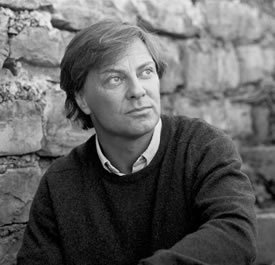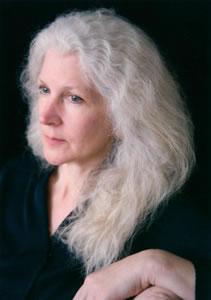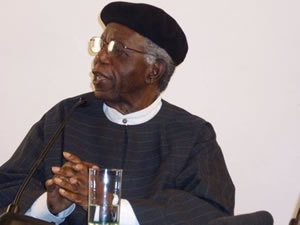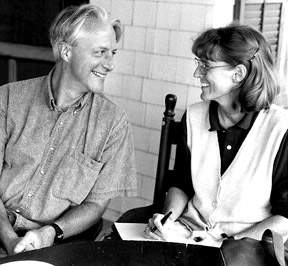
Sharon Olds, Anna Seghers, Allen Tate, Christoph Wilhelm Aigner, Veronika Aydin, Girolamo de Rada

De Amerikaanse dichteres Sharon Olds werd geboren op 19 november 1942 in San Francisco. Zie ook alle tags voor Sharon Olds op dit blog.


1954


Then dirt scared me, because of the dirt

he had put on her face. And her training bra

scared me—the newspapers, morning and evening,

kept saying it, training bra,

as if the cups of it had been calling

the breasts up—he buried her in it,

perhaps he had never bothered to take it

off. They found her underpants

in a garbage can. And I feared the word

eczema, like my acne and like

the X in the paper which marked her body,

as if he had killed her for not being flawless.

I feared his name, Burton Abbott,

the first name that was a last name,

as if he were not someone specific.

It was nothing one could learn from his face.

His face was dull and ordinary,

it took away what I’d thought I could count on

about evil. He looked thin and lonely,

it was horrifying, he looked almost humble.

I felt awe that dirt was so impersonal,

and pity for the training bra,

pity and terror of eczema.

And I could not sit on my mother’s electric

blanket anymore, I began to have a

fear of electricity—

the good people, the parents, were going to

fry him to death. This was what

his parents had been telling us:

Burton Abbott, Burton Abbott,

death to the person, death to the home planet.

The worst thing was to think of her,

of what it had been to be her, alive,

to be walked, alive, into that cabin,

to look into those eyes, and see the human


olds

Sharon Olds (San Francisco, 19 november 1942)


De Duitse schrijfster Anna Seghers werd op 19 november 1900 geboren in Mainz als Anna Reiling. Zie ook alle tags voor Anna Seghers op dit blog.


Uit: Transit


“Sie können sich gar nicht vorstellen, was dieser Mensch mir für Unannehmlichkeiten bereitet hat! Er kam am 15. gegen Abend, als die Deutschen schon einzogen. Ich hatte mein Hotel nicht geschlossen, ich war geblieben. Im Krieg, hat mein Vater gesagt, geht man nicht weg, sonst wird einem alles versaut und gestohlen. Was soll ich mich auch vor den Deutschen fürchten? Die sind mir lieber als die Roten. Die tippen mir nicht an mein Konto. Herr Weidel kommt also an und zittert. Ich finde es komisch, wenn einer vor seinen eigenen Landsleuten zittert. Ich war aber froh für einen Mieter. Ich war ja damals allein im ganzen Quartier. Doch wie ich ihm meinen Anmeldezettel bringe, da bat er mich, ihn nicht anzumelden. Herr Langeron, wie Sie ja wissen, der Herr Polizeipräsident besteht streng weiter auf Anmeldung aller Fremden; es muß ja auch Ordnung bleiben, nicht wahr?”
“Ich weiß nicht genau”, erwiderte ich, “die Nazisoldaten sind ja auch alle Fremde, Unangemeldete.” “Nun, dieser Herr Weidel jedenfalls machte Chichi mit seiner Anmeldung. Er habe sein Zimmer in Auteuil nicht aufgegeben, er sei ja auch dort noch angemeldet. Mir gefiel das gar nicht. Herr Weidel hat schon mal früher bei mir gewohnt mit seiner Frau. Eine schöne Frau, nur hat sie zu wenig auf sich gehalten und öfters geweint. Ich versichere Ihnen, der Mensch hat überall Unannehmlichkeiten gemacht. Ich ließ ihn also in Gottes Namen unangemeldet. Nur diese eine Nacht, sagte ich. Er zahlte im voraus. Am nächsten Morgen kommt mir der Mann nicht herunter. Ich will es kurz machen. Ich öffne mit meinem Nachschlüssel. Ich öffne auch den Riegel. Ich habe mir mal so ein Ding anfertigen lassen, womit man Riegel zurückschiebt.” – Sie öffnete eine Schublade, zeigte mir das Ding, einen schlau ausgeknobelten Haken. – “Der Mensch liegt angekleidet auf seinem Bett, ein Glasröhrchen leer auf dem Nachttisch. Wenn das Röhrchen vorher voll war, dann hat er eine Portion im Bauch gehabt, mit der man alle Katzen unseres Quartiers hätte umbringen können.
Nun habe ich ja zum Glück einen guten Bekannten bei der Polizei, Saint Sulpice. Der hat mir die Sache ins Reine gebracht. Wir haben ihn vordatiert angemeldet, den Herrn WeideI. Dann haben wir ihn sterben lassen. Dann wurde er beerdigt. Dieser Mensch hat mir wirklich mehr Verdruß gemacht als der Einmarsch der Deutschen.”
“Immerhin, er ist tot”, sagte ich. Ich stand auf. Die Geschichte langweilte mich. Ich hatte zuviel vertrackte Sterbefälle mitangesehen. Da sagte die Frau: “Sie müssen nicht glauben, daß darum die Unannehmlichkeiten für mich zu
Ende sind. Dieser Mensch bringt es wirklich fertig, einem bis über das Grab hinaus Unannehmlichkeiten zu bereiten.” Ich setzte mich noch einmal. “Er hat einen Handkoffer hinterlassen. Was soll ich nur mit dem Handkoffer tun? Er stand hier im Büro, als die Sache passierte. Ich vergaß ihn.
Jetzt will ich doch nicht bei der Polizei noch einmal alles aufwärmen.” “Na, schmeißen Sie ihn doch in die Seine”, sagte ich, “oder verbrennen Sie ihn in Ihrer Zentralheizung.” “Das ist unmöglich”, sagte die Frau, “ich würde das nie riskieren.”
“Na, hören Sie mal, Sie haben sich schließlich die Leiche vom Hals geschafft, da werden Sie doch mit dem Handkoffer fertig werden.” “Das ist etwas ganz anderes. Der Mann ist jetzt tot. Das steht amtlich fest. Der Handkoffer aber, das weiß ich, ist ein juristischer Gegenstand, das ist ein Sachwert, das kann geerbt werden, es können Anwärter kommen.”
Ich war der Sache schon überdrüssig, ich sagte: “Ich nehme das Ding gern an mich, das macht mir nichts aus. Ich kenne jemand, der mit dem Toten befreundet war, der kann den Handkoffer zu der Frau bringen.” Die Wirtin war überaus erleichtert. Sie bat mich nur, ihr einem Empfangsschein auszustellen. Ich schrieb einen falschen Namen auf einen Zettel, den sie datierte und quittierte. Sie drückte mir herzlich die Hand, ich aber zog eilig mit dem Handkoffer ab. Denn mein Gefallen an dieser Patronin war ganz vergangen, so hübsch sie mir auch zuerst erschienen war. Ich sah auf einmal in ihrem schlauen langen Kopf nur den Schädel, auf den man schwarze Löckchen gesetzt hatte.“


seghers

Anna Seghers (19 november 1900 – 1 juni 1983)


De Amerikaanse dichter Alan Tate werd geboren op 19 november 1899 in de buurt van Winchester, Kentucky. Zie ook alle tags voor Alan Tate op dit blog.


Ode to the Confederate Dead


Row after row with strict impunity

The headstones yield their names to the element,

The wind whirrs without recollection;

In the riven troughs the splayed leaves

Pile up, of nature the casual sacrament

To the seasonal eternity of death;

Then driven by the fierce scrutiny

Of heaven to their election in the vast breath,

They sough the rumour of mortality.


Autumn is desolation in the plot

Of a thousand acres where these memories grow

From the inexhaustible bodies that are not

Dead, but feed the grass row after rich row.

Think of the autumns that have come and gone!–

Ambitious November with the humors of the year,

With a particular zeal for every slab,

Staining the uncomfortable angels that rot

On the slabs, a wing chipped here, an arm there:

The brute curiosity of an angel’s stare

Turns you, like them, to stone,

Transforms the heaving air

Till plunged to a heavier world below

You shift your sea-space blindly

Heaving, turning like the blind crab.


Dazed by the wind, only the wind

The leaves flying, plunge


You know who have waited by the wall

The twilight certainty of an animal,

Those midnight restitutions of the blood

You know–the immitigable pines, the smoky frieze

Of the sky, the sudden call: you know the rage,

The cold pool left by the mounting flood,

Of muted Zeno and Parmenides.

You who have waited for the angry resolution

Of those desires that should be yours tomorrow,

You know the unimportant shrift of death

And praise the vision

And praise the arrogant circumstance

Of those who fall

Rank upon rank, hurried beyond decision–

Here by the sagging gate, stopped by the wall.


Seeing, seeing only the leaves

Flying, plunge and expire


Turn your eyes to the immoderate past,

Turn to the inscrutable infantry rising

Demons out of the earth they will not last.

Stonewall, Stonewall, and the sunken fields of hemp,

Shiloh, Antietam, Malvern Hill, Bull Run.

Lost in that orient of the thick and fast

You will curse the setting sun.


Cursing only the leaves crying

Like an old man in a storm


You hear the shout, the crazy hemlocks point

With troubled fingers to the silence which

Smothers you, a mummy, in time.


The hound bitch

Toothless and dying, in a musty cellar

Hears the wind only.


Now that the salt of their blood

Stiffens the saltier oblivion of the sea,

Seals the malignant purity of the flood,

What shall we who count our days and bow

Our heads with a commemorial woe

In the ribboned coats of grim felicity,

What shall we say of the bones, unclean,

Whose verdurous anonymity will grow?

The ragged arms, the ragged heads and eyes

Lost in these acres of the insane green?

The gray lean spiders come, they come and go;

In a tangle of willows without light

The singular screech-owl’s tight

Invisible lyric seeds the mind

With the furious murmur of their chivalry.


We shall say only the leaves

Flying, plunge and expire


We shall say only the leaves whispering

In the improbable mist of nightfall

That flies on multiple wing:

Night is the beginning and the end

And in between the ends of distraction

Waits mute speculation, the patient curse

That stones the eyes, or like the jaguar leaps

For his own image in a jungle pool, his victim.


What shall we say who have knowledge

Carried to the heart?Shall we take the act

To the grave?Shall we, more hopeful, set up the grave

In the house?The ravenous grave?


Leave now

The shut gate and the decomposing wall:

The gentle serpent, green in the mulberry bush,

Riots with his tongue through the hush–

Sentinel of the grave who counts us all!


Allen_Tate
Allen Tate (19 november 1899 – 9 februari 1979)


Nagekomen bericht


 De Oostenrijkse dichter, schrijver en vertaler Christoph Wilhelm Aigner werd geboren op 18 november 1954 in Wels. Hij leefde gedurende zijn kinderjaren kang in Grödig. Hij bezocht het gymnasium en studeerde daarna in Salzburg germanistiek, communicatiewetenschappen en sportwetenschappen. Hij werkte eerst als journalist, bij de ORF en werd redacteur bij het Salzburger Tagblatt. Zijn studie betaalde hij door te voetballen. Sinds 1985 is hij zelfstandig schrijver en
uitgever van de Salzburger AV Edition. Hij woont afwisselend in Toscana, Rome en Salzburg.


Nach langer Abwesenheit


Als ich ankam unter Fauchen
und Kratzen der Sonne waren die beiden
Katzen dünn wie Dachziegel

Ein winziger Sprühregen mühte sich durch
die Hitze wir hatten für Minuten
schimmernde Läuse im Pelz

Uns knurrten die Mägen. Bis zum Morgen
saßen wir im Gras im Garten
starrten einander an


Die Sehnsucht


Ein Bussard unter meinen Rippen

der hinpfeift auf der blanken Fläche

zwischen glasierten Wolken überm

gefrorenen Feld. Aufgebrochen

als hätten Gestalten Trüffeln gesucht


Steig kreuz und quer im Wind


Der Regen bürstet das Land


Könntest du aus der Erde springen

wie Musik und hauchst mir ins Ohr


Nach dem Winter


Nichts hat sich ereignet

Hab Holz gehackt und das Holz

redete von Glut

zweiundzwanzig Briefe geschrieben zwei erhalten

dem Regen zugesehn

wie er vom Wind auf Händen

getragen wurde und doch fiel

Ein anderer bin ich jetzt


cw-aigner
Christoph Wilhelm Aigner (Wels, 18 november 1954)


Onafhankelijk van geboortedata


De Duitse schrijfster Veronika Aydin werd in 1961 in Emmerich geboren. Na Antalya en Manillawoont zij nu in Wiesnaden. Sinds 2003 publiceert korte verhalen en korte detectives zij in tijdschriften en bloemlezingen. In 2005 ontving zij de  Kulturpreis für den Kreis Kleve.


Uit: Trapi trapu

Tropen, Garten, Mondenschein.
Eine Party.
„Abschied nehmen ist nie leicht“, wirft Marie ganz leicht in die Runde.
Der Saxophonspieler unterstreicht ihren Satz mit einem langgezogenen Jammerton.
Die Leute nicken, nehmen erneut vom Salat und sind in Gedanken bei ihren Gedanken.
„Was leicht ist, ist nichts wert“, wirft sie hinterher, mitten in die Buttersoße – aber so leise, dass der kleine Platsch untergeht im Schmelz der Musik.
Egal, denkt Marie.
Sie schiebt ihre nackten Füße durch das Gras, streift dabei ihre Schuhe, die unter dem Tisch stehen, und genießt das Pieksen der frisch gekürzten Grashalme.
„Nicht jede Wiese ist weich“, sagt sie.
„Wie bitte?“, fragt die Frau rechts neben ihr. Sie lächelt, ein bisschen Mayonnaise klebt im Mundwinkel und Marie mag sie eigentlich gut leiden. Beverly heißt sie und so sieht sie auch aus. Aber jetzt lehnt Marie sich zurück und wirft einen Blick auf Beverlys Füße. Gepflegte Zehen in einer reizenden Sandalette schicken lackierte Grüße zur Tischkante hoch.
“Schon gut“, sagt Marie und lächelt.
Sie greift zu ihrem Besteck und spießt den rohen Fisch auf. Rosafarben ist er mit leicht grauen Rändern. Marie tunkt ihn in das kleine Töpfchen mit der Soße und dem Meerettich. Braune Soße und grüner Meerettich. Sie schließt die Augen und schiebt den Fisch in den Mund. Kaut. Schluckt. Wartet auf die Sensation, sich etwas Unverdorbenes einzuverleiben.
Wartet.
Sie öffnet die Augen und sieht den Soßenfleck auf ihrem roten Kleid. Wieder mal gekleckert. Auf das Kleid für den Mann, der auch heute nicht gekommen ist. Macht nichts, denkt Marie. Irgendwann, irgendwo wird er auftauchen. Sie wird ihn schon erkennen, wenn er auf den Tisch springt mit seinem verwegen geöffneten Hemd und den Nur-Du-Augen. Ihm sind Flecken egal. Na ja, denkt Marie, hoffentlich landet er nicht in der Buttersoße.
“Trapi trapu“, sagt der Mann gegenüber und sein Nachbar nickt und lacht. Manchmal hat Marie es mit den Ohren.
„Zickelismus, Pickelismus“, zwitschert seine Gefährtin auf der anderen Seite.
 

veronika-aydin

Veronika Aydin (Emmerich, 1961)


Zie voor onderstaande schrijver ook mijn blog van 19 november 2008.

De Italiaanse-Albanese dichter en schrijver Girolamo de Rada werd geboren op 19 november 1814 in Macchia Albanese.


Joost Zwagerman, Toon Tellegen, Klaus Mann, Seán Mac Falls, Richard Dehmel, Eugenio Montejo, Christoph Wilhelm Aigner, Mireille Cottenjé, Jaap Meijer, Margaret Atwood, William Gilbert

De Nederlandse dichter en schrijver Joost Zwagerman werd geboren in Alkmaar op 18 november 1963. Zie ook mijn blog van 18 november 2006 en ook mijn blog van 18 november 2007 en ook mijn blog van 18 november 2008.

Uit: De Buitenvrouw

“Het gezin Rafferty was niet echt vermogend maar had toch genoeg geld om een au pair in huis te nemen. Zij kwam uit Nederland en heette Adriënne. Meneer en mevrouw Rafferty vonden haar soms wat onhandig en verward. Twee welwillende maar onnozele Oostenrijkse meisjes waren haar voorgegaan, zodat de Rafferty’s Adriënne’s kleine tekortkomingen voor lief namen.
Haar ijver en vooral haar oprechte genegenheid voor de dochtertjes Rafferty wogen ruimschoots op tegen dat kleine beetje verwarring en onhandigheid. Bovendien deelde Adriënne tot mevrouw Rafferty’s vreugde twee van haar meest dierbare liefhebberijen:lezen en spelletjes doen.

(…)


Voor Adriënne was niets vanzelfsprekend, dus ook de werkelijkheid niet. Zou ze een goede fotografe kunnen worden? Ze had geen zin meer om te luisteren. ‘De foto als metafoor.’ Ha! Zijn het niet juist metaforen – die grillige, onbeheersbare diabolo’s waarmee schrijvers, schilders en smachtende pubers lopen te goochelen- die almaar verhullen en redeloze vragen oproepen? Nee, aan Adriënne’s lijf geen kunstenmakerspolonaise. Wat ze wilde was eenvoudig: als Londen dan niet te veroveren viel kon ze nog altijd infiltreren, en de pocketcamera was haar handzaam excuus.
De cursusleider wees naar buiten.
‘Die muur daar,’ zei hij, ‘die heeft iets te zeggen. De topfotograaf ís de muur, zoals hij alles is wat hem omringt. Maar jij, meisje, jij moet om te beginnen een hele goeie vertolker, een monnik worden, a monk with a camera.’

(…)


Onwaarachtig? Ingmar Booys vertrek onwaarachtig? –
Welnu, zo verliefde mensen al werkelijk leven en zich niet bezighouden met het verlangen het bestaan van de andere voor eigen rekening te nemen, dan toch níét vlak voor en tijdens het vertrek van een van hen. Immers, beiden zijn dan enkel en alleen geconcentreerd op de ophanden zijnde scheiding; niet wordt er zoiets obligaats en terzelfder tijd onmogelijks volbracht als ‘het genieten van de laatst gedeelde momenten’, nee, iedere blik op de ander wordt geworpen om te onderzoeken. En: onderzocht wordt dan niet de pijn die rondtrekt in de ogen van andere, maar veeleer het eigen toekomstige verdriet. Ja, ook Ingmar Booy en Adriënne moesten eraan geloven; ze hadden niet langer oog voor elkaar, maar waren in plaats daarvan gespitst op de eigen, de afzonderlijke, de moedwillig afgezonderde tragiek.
Slachtoffers waren ze, en als slachtoffers gedroegen ze zich:in zichzelf gekeerd, onwaarachtig en soms bijna autistisch.“


ZWAGERMAN

Joost Zwagerman (Alkmaar, 18 november 1963)


De Nederlandse dichter Toon Tellegen werd geboren op 18 november 1941 te Brielle. Zie ook  Zie ook mijn blog van 18 november 2006 en ook mijn blog van 18 november 2007 en ook mijn blog van 18 november 2008.
 

Het leven


Ik kijk naar mijn leven:
het wordt kleiner

ik houd mijn ogen er vlakbij:
ik kan al niet meer onderscheiden
tussen goed en onwaarschijnlijk, tussen zien en ontwijken
tussen mij en iedereen…

wat zeg ik nu weer…

mijn leven groeit, woekert, grijpt om zich heen
en ik kan alles onderscheiden:
onraad, wansmaak en zelfs de kleinste wangedachten

ik doe mijn ogen dicht.


Mijn vader sloeg planken mis


Mijn vader
sloeg planken mis

mijn broers glimlachten,
schreven elke misslag in een schrift,
mijn moeder deed de was
of lakte haar nagels

mijn vader
die zich in leven hield met schaamte, spijt en ongemak,
die zich dagelijks gewonnen gaf,
die hijgde
en onwerkzaam en achterstallig was,
die niemand iets te vertellen had,
die een spin was zonder web en zonder lente,
die piepte en kraakte, als een ijzeren haan

op een dag sloeg hij raak
en gooiden mijn broers hem weg.


tellegen

Toon Tellegen (Brielle, 18 november 1941)


De Duitse schrijver Klaus Mann werd op 18 november 1906 geboren als oudste zoon van Thomas en Katia Mann. In München. Zie ook mijn blog van 18 november 2006 en ook mijn blog van 18 november 2007. Zie ook mijn blog van 9 november 2009 en ook mijn blog van 18 november 2008.

Uit: In the Shadow of the Magic Mountain. The Erika and Klaus Mann Story (biografie door Andrea Weiss)

„Thomas and Katia got their wish for a son one year later. The boy’s christening as “Klaus Heinrich Thomas Mann” sealed his literary fate. The names Klaus and Heinrich represented Katia’s and Thomas’s closest brothers, but together the name Klaus Heinrich is also that of the prince in Royal Highness, the novel Thomas was deep in the middle of writing at the time of his son’s birth. Young Erika kindly chose for her baby brother the less burdensome sobriquet of “Eissi” (the toddler’s mispronunciation of “Klausi”), and henceforth, within the family, Eissi he would remain.

Whether or not his literary forebears had anything to do with it, Klaus seems to have been born a writer. He started writing before he could even hold a pen properly; his earliest pieces he dictated to Erika. No one, not even Klaus, was glad to learn that he had a literary bent. His family tried in vain to discourage him from writing, and he himself referred to it as the family curse. Decades after his death, Erika reflected sadly, Klaus was a dreamer. Klaus was a poet from the very beginning. And this of course was not at all what my father would have wished for his son. First of all, he knew that any child of his, if he wanted to write, would have a very hard time of it. But for Klaus, writing was as essential as breathing. Without writing Klaus simply couldn’t live.


Thomas Mann’s disappointment at the arrival of Erika and his joy at the arrival of Klaus were false starts—emotions totally at odds with the relationship he would soon forge with each. Klaus would be the source of continual disappointment to him, while Erika was the source of his greatest joy. Despite his initial preference for a son, and his declaration that “a girl is not to be taken seriously,” Thomas’s eldest and youngest daughters, Erika and Elisabeth, became his two obvious favorites, to the chagrin of the others. “When a man has six children, he can’t love them all equally,” would be his defense.

But this was a flimsy excuse for his erratic, often cruel behavior toward the remaining four. Monika, the middle daughter, claimed never to have had an intimate conversation with her father, or even to have had the feeling that she existed for him in his mind. Michael, the youngest son, recalled being beaten with a walking stick and other harsh punishments that prevented him from being able to forgive his father throughout his adult life. He was allowed to listen in on the stories his father read to his sister Elisabeth, but it was made clear that they were not meant for him. And Golo, the middle son, who grew up to become one of Germany’s most prominent essayists and historians, had not one compassionate or affectionate word for his father in his entire autobiography. In the midst of his large family Golo often felt awkward and lonely. Klaus’s callous treatment by his father was by no means unique to him.“


klaus_mann

Klaus Mann (18 november 1906 – 21 mei 1949)


De Iers-Amerikaanse dichter Seán Mac Falls werd geboren op 18 november 1957 in Boston. Zie ook mijn blog van 18 november 2006 en ook mijn blog van 18 november 2008.


I Hear All The Outlawed World


I


I hear all the outlawed world in harmony,

The marshling stalks the green and gaunt

Destroyers who heed not sparkling deserts

Charged to the gill, nor candles pitching down

Like doom. I note the scale of fossils

In cloud covered peaks, record

The seemly count of bodies by square root

And irrational number, I am witness

Bound to bounty to all who blaze in gray

And shallow grooves seeding their ends

In strikes on the ripe and smoldering fields.


II


I see all the outlawed world in harmony,

Barking wood bracing by the bud,

Where runs of blue, bury in vain

Down slash of mountain forest, cascading

Into august, rising after the fall,

As do kind-killers blasting from shells

To die as snails creeping under flower,

Who saw the past wasting away

In filed futures, slipping by blades in neck

Of wood, sightless as gallows of trees

Try murder each time they make their leaves.


III


I know all the outlawed world in harmony,

By seamless song of stuttering gulls,

As in conches, waves of providence,

Cell from the center, beating musseled shoals,

Where wailing ghosts and wing-tips point

Printed nails to the silent capes,

And bumble hairs comb round the broken yokes

Stirring streams of babble baited

By flowering psalms, engaging arms to prey

On tales told by the rood and drown

In eyes turning like sands on the sea.


MaccFalls

Seán Mac Falls (Boston, 18 november 1957)


De Duitse dichter Richard Dehmel werd geboren op 18 november 1863 in Wendisch-Hermsdorf. Zie ook mijn blog van 18 november 2006 en ook mijn blog van 18 november 2008.


Die stille Stadt


Liegt eine Stadt im Tale,
ein blasser Tag vergeht;
es wird nicht lange dauern mehr,
bis weder Mond noch Sterne;
nur Nacht am Himmel steht.

Von allen Bergen drücken
Nebel auf die Stadt;
es dringt kein Dach, nicht Hof noch Haus,
kein Laut aus ihrem Rauch heraus, Kaum Türme noch und Brücken,

Doch als den Wandrer graute,
da ging ein Lichtlein auf im Grund;
und durch den Rauch und Nebel
begann ein leiser Lobgesang,
aus Kindermund.


Wollust
Nach Shakespeare


In wüster Schmach Vergeudung heiliger Glut
ist Wollust, wenn sie praßt; und eh sie praßt,
roh, schamlos, tierisch, aller Welt zur Last,
meineidig, tückisch, voller Gier nach Blut.

Gesättigt kaum, von Ekel schon gehetzt;
sinnlose Lüsternheit und, kaum verraucht,
sinnlose Düsterkeit, in Wut getaucht,
als hätt ein Tollwurm die Vernunft zerfetzt.

Wahnwitz im Rausch, Wahnwitz in Wunsch und Wahl,
maßlos im Taumel vor, nach, in der Brunst,
erdürstet Überglück, genossen Dunst,
verzückt vor Wonne, dann erdrückt von Qual –

Ach! Jeder kennt und Jeder geht den Weg:
zu dieser Hölle diesen Himmelssteg.


Hans_Baluschek_Bildnis_Richard_Dehmel

Richard Dehmel (18 november 1863 – 9 februari 1920)
Getekend door Hans Baluschek


De  Venezolaanse dichter en schrijver Eugenio Montejo werd geboren in Caracas op 18 november 1938. Zie ook mijn blog van 18 november 2008.


Left Behind


Down these streets my funeral has just passed
with its pathetic speeches.
Lightly they lifted my body
among unrecognizable relatives.


As the procession passed
a woman stopped and gazed
with flirtatious embarrassment.
Later I realized she was a shadow
already shouldering centuries under earth.


Above the clouds continued their monologues,
a slow plane barely moved in its flight;
below mourners cough, polite gestures of the crowd,
the usual phrases.


Asleep and with no sense of where I was,
I was going on the last journey.
It was my farewell to this world,
the first time that I was going to die.


Towards the end of the millennium
suddenly I found myself outside of the group,
left behind, contemplating the trees.
The funeral, without me, continued on its course
through the shady half-light of suburban streets.

I walk slowly following it now from far off
down the passage of the years
Vertaald door Peter Boyle

Eugenio Montejo, 29 julio, 2008

Eugenio Montejo (18 november 1938 – 5 juni 2008)


De Oostenrijkse dichter, schrijver en vertaler Christoph Wilhelm Aigner werd geboren op 18 november 1954 in Wels.


Landsolo


Langsamer Wind
Getreidefeld
Wimpern am schläfrigen Sommer
Alleinsein mit wem


aigner

Christoph Wilhelm Aigner (Wels, 18 november 1954)


Zie voor onderstaande schrijvers ook mijn blog van 18 november 2008.


De Belgische schrijfster Mireille Robertine Cottenjé werd geboren in Moeskroen op 18 november 1933.


De dichter en historicus Jakob (Jaap) Meijer werd geboren in Winschoten op 18 november 1912.


De Canadese schrijfster Margaret Atwood werd geboren in Ottawa op 18 november 1939.


De Engelse toneelschrijver, librettist en illustrato Sir William Schwenck Gilbert werd geboren in Londen op 18 november 1836.

Dahlia Ravikovitch, Joost van den Vondel, Christopher Paolini, Pierre Véry, Max Barthel

De Israëlische dichteres en schrijfster Dahlia Ravikovitch werd geboren op 17 november 1936 in een voorstad van Tel Aviv. Zie ook mijn blog van 17 november 2006 en ook mijn blog van 17 november 2007 en ook mijn blog van 17 november 2008.


The Roar of Waters


A bird twittered like a madwoman
Until it was spent
And then it wept.
I sank in a cloud of tenderness,
I sank
I dissolved.
But no, I was drowned in the ocean,
There a man loved me
Didn’t leave me a fingernail.
His hand grasped my hair,
In the hammering ocean
I was set to be wrecked.
His hand pulled at my hair
In the swarms of the ocean
I no longer remember a thing.


The Love of an Orange


An orange did love   

The man who ate it.  

A feast for the eyes  

Is a fine repast;  

Its heart held fast  

His greedy gaze.  


A citron did scold:  

I am wiser than thou.  

A cedar condoled:  

Indeed thou shalt die!  

And who can revive  

A withered bough?  


The citron did urge:  

O fool, be wise.  

The cedar did rage:  

Slander and sin!  

Repent of thy ways  

For a fool I despise.  


An orange did love  

With life and limb  

The man who ate it,  

The man who flayed it.  


An orange did love  

The man who ate it,  

To its flayer it brought  

Flesh for the teeth.  


An orange, consumed  

By the man who ate it,  

Invaded his skin  

To the flesh beneath.


Vertaald door Chana Bloch and Chana Kronfeld


ravikovitch

Dahlia Ravikovitch (17 november 1936 – 21 augustus 2005)
Hier met haar zoon


De Nederlandse dichter en schrijver Joost van den Vondel werd geboren op 17 november 1587 in Keulen. Zie ook mijn blog van 17 november 2006 en ook mijn blog van 17 november 2008.


Uit: Gysbreght van Aemstel


Het hemelsche gerecht heeft zich ten lange lesten

Erbarremt over my, en mijn benaeuwde vesten,

En arme burgery; en op mijn volx gebed,

En dagelix geschrey, de bange stad ontzet.

De vyand, zonder dat wy uitkomst durfden hopen,

Is, zonder slagh of stoot, van zelf het veld verlopen.

Mijn broeder
jaeght hem na, zy neemen vast de wijck,

En vlughten haestigh langs den Haerelemmer dijck.

Zoo stuift de zee voor wind met haer gedreve golven.

Zoo zaghmen menighmael een kudde wreede wolven,

En felle tigers vlien, voor ’t ysselijck geschreeuw

Van aller dieren vorst, den hongerigen leeuw,

Om niet al te levendigh en versch te zijn verslonden

Van hem, die op zijn jaght geen aes en had gevonden.

Hoe snel, hoe onverziens is deze kans gedraeit?

Alhier, daer ’t leger lagh, is ’t veld alsins bezaeit

Met wapens en geweer, verbaest van ’t lijf gereten,

Van ingebeelden schrick, en uit der hand gesmeeten,

Om zonder hindernis te vlieden langs den wegh.

Ja op ’t verjaeren zelf van ’t jaerige belegh

Word d’afgestrede muur van ’t lang belegh ontslaegen.

Hoe zal het gansche land van ons verlossing waegen.

De Kermerlander had met Waterlander dier

Gezworen duizendwerf, dat hy met zwaerd en vier

Vernielen zou eerlang de menschen en de daecken,

En tot een kerreckhof en asch en puinhoop maecken

Mijn oud mijn wettigh erf, en delven  al mijn eer

In eenen poel , tot wraeck van Floris hunnen heer:

Om wiens vervloeckte dood ick lijde zoo onschuldigh,

Als yemant lijden magh, doch draegh mijn kruis geduldigh:

Of zoo ick schuldigh ben, en heeft het my gemist,

’t Is uit onnozelheid, en zonder argh of list.


vondel

Joost van den Vondel (17 november 1587 – 5 februari 1679)


De Amerikaanse schrijver Christopher Paolini in Los Angeles County, California, op 17 november 1983. Zie ook mijn blog van 17 november 2008.


Uit: Eldest


The Council of Elders
Saphira’s breathing quickened, and she opened her eyes, yawning expansively. Good morning, little one.
Is it? He looked down and leaned on his hands, compressing the mattress. It’s terrible . . . Murtagh and Ajihad . . . Why didn’t sentries in the tunnels warn us of the Urgals? They shouldn’t have been able to trail Ajihad’s group without being noticed. . . . Arya was right, it doesn’t make sense.
We may never know the truth, said Saphira gently. She stood, wings brushing the ceiling. You need to eat, then we must discover what the Varden are planning. We can’t waste time; a new leader could be chosen within hours.
Eragon agreed, thinking of how they had left everyone yesterday: Orik rushing off to give King Hrothgar the tidings, Jörmundur taking Ajihad’s body to a place where it would rest until the funeral, and Arya, who stood alone and watched the goings-on.
Eragon rose and strapped on Zar’roc and his bow, then bent and lifted Snowfire’s saddle. A line of pain sheared through his torso, driving him to the floor, where he writhed, scrabbling at his back. It felt like he was being sawed in half. Saphira growled as the ripping sensation reached her. She tried to soothe him with her own mind but was unable to alleviate his suffering. Her tail instinctually lifted, as if to fight.
It took minutes before the fit subsided and the last throb faded away, leaving Eragon gasping. Sweat drenched his face, making his hair stick and his eyes sting. He reached back and gingerly fingered the top of his scar. It was hot and inflamed and sensitive to touch. Saphira lowered her nose and touched him on the arm. Oh, little one. . . .
It was worse this time, he said, staggering upright. She let him lean against her as he wiped away the sweat with a rag, then he tentatively stepped for the door.
Are you strong enough to go?
We have to. We’re obliged as dragon and Rider to make a public choice regarding the next head of the Varden, and perhaps even influence the selection. I won’t ignore the strength of our position; we now wield great authority written the Varden. At least the Twins aren’t here to grab the position for themselves. That’s the only good in the situation.
Very well, but Durza should suffer a thousand years of torture for what he did to you.
He grunted. Just stay close to me.
Together they made their way through Tronjheim, toward the nearest kitchen. In the corridors and hallways, people stopped and bowed to them, murmuring, “Argetlam,” or “Shadeslayer.” Even dwarves made the motions, though not as often. Eragon was struck by the somber, haunted expressions of the humans and the dark clothing they wore to display their sadness. Many women dressed entirely in black, lace veils covering their faces.”


Paolini

Christopher Paolini (California, 17 november 1983)


De Franse schrijver Pierre Véry werd op 17 november 1900 in Bellon geboren. Zijn bekendste roman is waarschijnlijk Goupi-Mains rouges waarvan tijdens de bezetting van Frankrijk tijdens WO II een zeer succesvolle film gemaakt werd.  Na Conde-sur-Noireau en Angoulême bezocht hij in 1913 de school van Sainte-Marie de Meaux, waar hij het geheime genootschap van Chiche-Capon oprichtte en waar hij zal deel uitmaakte van de Disparus de Saint-Agil.  Na diverse baantjes en een aantal wielerwedstrijden en pogingen de wereld rond te reizen met zijn vriend Pierre Bearn opende Pierre Véry in 1924 de Galerie du Zodiaque,, een tweedehands boekwinkel, 52 rue Monsieur le Prince,  in Parijs. Tot 1932, toen hij de boekwinkel verkocht aan Peter Beam, ontmoette hij er vele schrijvers, met name vrienden van boekhandel Shakespeare and Company: Andre Gide, Valery Larbaud . Hij schreef voor Journal littéraire et Paris Journal en bleef ook schrijven voor zichzelf. In 1930 ontving hij de eerste prijs voor de beste roman voor Le Testament de Basil Crookes. In 1938, ontdekte het grote publiek hem via de bioscoop door de verfilming van Disparus de Saint-Agil.


Uit: Signé Alouette


« J N Q P T T J C M F… Le panneau mystérieux avait disparu. Mais Dominique avait eu le temps de noter les lettres. Ce fut un jeu pour lui de déchiffrer ce cryptogramme, rédigé selon un code d’ailleurs enfantin. Il suffisait tout bêtement de remplacer chaque lettre par la lettre qui la précède directement dans l’alphabet. Cela donnait : I M P O S S I B L E Le panneau reparut. C’était l’autre face que l’on montrait à présent. B W B O U T B N F E J Le rideau retomba. – « Avant samedi », traduisit Dominique. Impossible avant samedi… Qu’est-ce que ça veut dire ? Qu’est-ce qu’il va se passer dans le coin, samedi ? Il se frappa le front. – La bijouterie. J’aurais dû m’en douter tout de suite. Le faux aveugle n’est pas un policier, ni un espion. C’est un gangster. Il fait partie d’une bande qui prépare un hold-up. Et ils ont un complice dans la maison d’en face. Groslier objecta que c’était une curieuse façon, de la part du faux aveugle, de tourner le dos à la bijouterie pour recevoir des messages. – Et les lunettes noires, qu’est-ce que tu en fais ? Il y a un des verres qui est une glace : il fait rétroviseur, répliqua Dominique. Au sortir du cours, il se hasarda dans la maison d’en face et, sans être vu du concierge, grimpa au premier. Dans un couloir, une porte non fermée à clef ouvrait sur un débarras où étaient rangés des instruments de ménage : balai, pelle, seau, une cireuse, un aspirateur. Une fenêtre donnait sur la rue. Il écarta le rideau. Les camarades aux aguets sur le trottoir opposé firent signe qu’il s’agissait bien de cette fenêtre. Minutieusement, Dominique inspecta le débarras en s’inspirant des méthodes chères à Sherlock Holmes. Il ne recueillit aucun indice qui pût révéler l’identité de l’auteur des messages.
Tout ce qu’il trouva, ce fut, dans le tiroir d’une petite table boiteuse, un fusain à dessin. Il avait servi à rédiger le message, évidemment. Question : le fusain garde-t-il les empreintes digitales ? C’était peu probable. Néanmoins Dominique, à tout hasard, emporta le fusain enveloppé dans son mouchoir – comme l’on doit faire, ainsi qu’il l’avait lu dans un traité de technique criminelle. Puis il rejoignit ses camarades. Impossible avant samedi. Samedi : cambriolage de la bijouterie ! « Si l’on pouvait assister au cambriolage, c’est ça qui serait… qui serait… » La cervelle de Dominique, ce chasseur-né, était en ébullition. – Si l’on pouvait capturer un des bandits ? Alors, là, ce serait… ce serait… – Tu es fou, Grand Chef ! jeta Baba au Rhum, terrifié. Le gangster aurait vite fait de t’expédier un « pruneau ». Ou de te démolir d’un seul coup de poing ! Ce qu’il faut, c’est aller au commissariat de police. – Tu me prends pour un indicateur ? – Non, bien sûr, Grand Chef. Moi, je disais ça…, bafouilla Baba au Rhum.“


Pierre-Very-terrasse

Pierre Véry (17 november 1900  –  12 oktober 1960)


Zie voor onderstaande schrijver ook mijn blog van 17 november 2008.

De Duitse dichter en schrijver Max Barthel werd geboren in Dresden-Loschwitz op 17 november 1893.


Renate Rubinstein, José Saramago, Danny Wallace, Craig Arnold, Anton Koolhaas

De Nederlandse schrijfster en journaliste Renate Rubinstein werd geboren op 16 november 1929 in Berlijn. Zie ook mijn blog van 16 november 2006 en ook mijn blog van 16 november 2007 en ook mijn blog van 16 november 2008.


Uit: Links en rechts in de politiek en in het leven


“De ondergang van het avondland hebben we nu in elk geval gehad. Het maoisme in China is bezweken. Feminisme en communisme hebben elkaar in Nederland uitgeschakeld, dat ruimt dus aardig op.

Onopgelost blijft alleen het vraagstuk van de oriëntatie die we zoeken omdat we die kwijt zijn. Persoonlijk zou ik de wereld waarin wij leven niet zozeer bezeten noemen als wel onoverzichtelijk. Om de knoop door te hakken en het overzicht dan maar te forceren, verdelen we de wereld in links en rechts. En bedoelen daarmee goed en kwaad, want de dingen moeten op hun plek vallen. Maar de wereld werkt niet mee en we zijn daarom gedwongen onze progressieve idealen in steeds andere Heilige landen onder te brengen. Cuba, Vietnam, China – je noemt ze en beseft onze sof. Al die landen en hun bevrijdingsbewegingen en volksrevolutie stonden ons als een voorbeeld voor ogen en menigeen die die verre paradijzen bezocht keerde er nog enthousiaster van terug dan hij vantevoren al verwacht had te zijn. Sindsdien werd ons druppelsgewijs de werkelijkheid gewaar: de concentratiekampen in al die landen, de vervolging van kunstenaars, homoseksuelen en revolutionairen die de Sovjetlijn niet wilden volgen, de massale vlucht als er even een kans was (Cuba) en zelfs als er nauwelijks kans op overleven was (Vietnam), en de dood van miljoenen slachtoffers van de culturele revolutie in China die thans op een Bende van Vier afgewenteld wordt. Het treurigste lot van allen trof misschien de Viet Cong, die pluriforme bevrijdingsbeweging, die hartelijker en langduriger dan wie ook onze sympathie genoten had en die nu, na de zege van Noord-Vietnam, tegen alle afspraken en verwachtingen in, om zeep gebracht werd in naam van het doel waarvoor zij streden: de bevrijding van Zuid-Vietnam. Ons recentste idool was de bevrijdingsbeweging in El Salvador, een land dat echter weer terugviel in de onbekendheid waar het zojuist even uitgehaald was, toen de beklagenswaardige bevolking daar niet links bleek of rechts, maar slechts, erg onideologisch, gemotiveerd door de behoefte om in leven te blijven. En zelfs de plo blijkt achteraf, in al die jaren hadden we daar geen idee van, een beweging te zijn die, meer nog dan in Israël, gehaat en gevreesd was in Libanon. We wisten dat niet, want de kranten meldden dat niet omdat het alleen maar dagelijks leven was en dus niet paste in de grootscheepse ideologische verdeling die wij voor de wereld relevant achten. Vroeger hadden we de godsdienstoorlogen, maar die blijven in onze ideologische eeuw strikt voorbehouden aan de Ierse en Islamitische delen van de onderontwikkelde wereld. Turks of paaps, paaps of geus, daar zijn we tolerant over. Onze godsdienst heet links of rechts en we kopen de catechismus alleen bij geloofsgenoten. Onze wegwijzers zijn de linkse intellectuelen. Die houden voor ons bij wat mag en niet mag.“


Rubinstein

Renate Rubinstein (16 november 1929 – 23 november 1990)


De Portugese schrijver José Saramago werd geboren op 16 november 1922 in het dorpje Azinhaga in de provincie Ribatejo. Zie ook mijn blog van 16 november 2006 en ook mijn blog van 16 november 2008.


Uit: Baltasar and Blimunda

 Now they are ready to leave. Padre Bartolomeu Lourenço contemplates the clear blue expanse above, cloudless and with a sun as brilliant as a glittering monstrance, then he looks at Baltasar, who is holding the rope with which they will close the sails, and then at Blimunda, and he dearly wishes that she could divine what the future holds for them, Let us commend ourselves to God, if there is a God, he murmured to himself, and then in strangled tones he said, Pull, Baltasar, but Baltasar did not react at once, for his hand was trembling, besides, this was like saying Fiat, no sooner said than done, one pull and we end up who knows where. Blimunda drew near and placed her two hands over that of Baltasar and, with a concerted gesture, as if this were the only way it could be done, both of them pulled the rope. The sail veered to one side, allowing the sun to shine directly on the amber balls, and now what will happen to us. The machine shuddered, then swayed as if trying to regain its balance, there was a loud creaking from the metal plates and the entwined canes, and suddenly, as if it were being sucked in by a luminous vortex, it went up making two complete turns, and no sooner had it risen above the walls of the coach-house than it recovered its balance, raised its head like a seagull, and soared like an arrow straight up into the sky. Shaken by those rapid spins, Baltasar and Blimunda found themselves lying on the wooden deck of the machine, but Padre Bartolomeu Lourenço had grabbed one of the plummets that supported the sails, which allowed him to see the earth shrink at the most incredible speed, the estate was now barely visible, then lost amid the hills, and what’s that yonder in the distance, Lisbon, of course, and the river, ah, the sea, that sea which I, Bartolomeu Lourenço de Gusmão, sailed twice from Brazil, that sea which I sailed to Holland, to how many more continents on land and in the air will you transport me, Passarola, the wind roars in my ears, and no bird ever soared so high, if only the King could see me now, if only that Tomás Pinto Brandão who mocked me in verse could see me now, if only the Holy Office of the Inquisition could see me now, they would all recognise that I am the chosen son of God, yes, I, Padre Bartolomeu Lourenço, who am soaring through the skies aided by my genius, aided, too, by Blimunda’s eyes, if there are such eyes in heaven, and also assisted by Baltasar’s right hand, Here I bring you God, one who also has a left hand missing, Blimunda, Baltasar, come and look, get up from there, don’t be afraid.“


jose-saramago

José Saramago (Azinhaga, 16 november 1922)


De Schotse schrijver, humorist, radio-en televisie presentator Daniel Frederick Wallace werd geboren op 16 november 1976 in Dundee. Zie ook mijn blog van 16 november 2008.


Uit:  Danny Wallace and the Centre of the Universe


There are two things you can see very clearly from my window right now.
One is the sky. A huge, dark blue sky. And the other is London. Not all of it. Just bits of it. Bits like the Dome. Or the skyscrapers around Docklands. Or this one weird tower, far away. A weird tower that they light up at night, which just sits there – all bright and white, on top of a hill.
For years, I had no idea what that tower was. All I knew was, even on a mucky, cloudy night you could see it, like someone had drawn it on your window in Tipp-Ex.
And then one day I found myself standing right next to that tower. I hadn’t meant to. I was up on a hill, miles from home, trying to spot where I lived in the distance. I could see all of London. Well, not all of it. Just bits of it. Bits like the Dome. Or the skyscrapers around Docklands. But I couldn’t see that one weird tower, far away. That weird tower they light up at night. The one that just sits there, all bright and white, on top of a hill.
And that was when I looked around.
It turns out I’m in Greenwich.
Well, I say ’turns out’. I know I am in Greenwich, to be honest. I’ve gone there on purpose, after all. I’ve gone there for a number of reasons, in fact. To see a friend. To have a
pint. To have a laugh. And now here I am, next to that big tower, with a sign that I can now read for the very first time. The Royal Observatory. Home to the seventh biggest telescope in the world, pointed deep into space. And home also of one of the most famous lines in the world. The line that divides the planet into east and west. The line that tells you you’re standing on the very Centre of the Earth.
There are tourists everywhere, jumping over the line and back again. Laughing, and taking pictures of each other. I suppose it’s a picture you just have to take, like if you’re in front of the Eiffel Tower, or the Great Wall of China, or a sea monster. The problem is, a small line on a concrete floor in the middle of a park doesn’t look quite as grand. I feel sorry for the tourists who try and impress their friends with their holiday snaps when they get home.
‘Look!’ they’ll say. ‘Here I am standing at the Centre of the Earth!’
They will probably tap the photo excitedly at this point.
‘Oh,’ their friends will say.
‘Because it looks like you’re just standing near a park.’
I lean against a wall, shaking my head at this thought and studying the tourists with pity.
And then I get one of them to take my picture kneeling at the Centre of the Earth.
And I go home, very happy indeed.“


Wallace

Danny Wallace (Dundee, 16 november 1976)


De Amerikaanse dichter Craig Arnold werd geboren op 16 november 1967 in Temple,Californië. Zie ook mijn blog van 16 november 2008.


The Invisible Birds of Central America


For Alicia


The bird who creaks like a rusty playground swing

the bird who sharpens the knife         the bird who blows

on the mouths of milk bottles         the bird who bawls like a cat

like a cartoon baby         the bird who rubs the wineglass

the bird who curlicues         the bird who quacks like a duck

but is not a duck         the bird who pinks on a jeweller’s hammer

They hide behind the sunlight scattered throughout the canopy

At the thud of your feet they fall thoughtful and quiet

coming to life again only when you have passed

Perhaps they are not multiple         but one

a many-mooded trickster         whose voice is rich

and infinitely various         whose feathers

liquify the rainbow         rippling scarlet

emerald indigo         whose streaming tail

is rare as a comet’s         a single glimpse of which

is all that you could wish for         the one thing

missing         to make your eyes at last feel full

to meet this wild need of yours         for wonder


Uncouplings


There is no I in teamwork

but there is a two maker


there is no I in together

but there is a got three

a get to her


the I in relationship

is the heart I slip on

a lithe prison


in all communication

we count on a mimic

(I am not uncomic)


our listening skills

are silent killings


there is no we in marriage

but a grim area


there is an I in family

also my fail


craig-arnold1

Craig Arnold (Temple, 16 november 1967)


De Nederlandse schrijver Anton Koolhaas werd op 16 november 1912 in Utrecht. Zie ook mijn blog van 17 november 2006

Uit: Een pak slaag

“Slieps’ vader was smid geweest, net als zijn grootvader. Maar hij zelf niet meer.’Ik heb mijn vader nog met zijn eigen handen…’ zei hij vaak en hij toonde de zijne, zodat je die man voor je zag, ‘een boerenkar in elkaar zien hengsten.’ Van boerenkarren was thans geen sprake meer. Kinderwagens worden er nu gemaakt en een kind moet al in een erg onderontwikkeld gebied ter wereld komen, wil het niet in een karrertje van Slieps rondgereden worden. Hoe komt zoiets?

Ijver natuurlijk. Doorzettingsvermogen. Onkreukbaar is goed voor de huldiging. En uitkijken natuurlijk. Goed uitkijken. Bij Slieps zat dat in de vering. Een soort knipschaarbeweging en het kind lag op rozen. Geen last met drempels en wat voor soort bestrating. Voor iedere moeder is het een genot om het kind ongeschokt althans door de eerste jaren heen te krijgen en er toch hindernissen mee te nemen en wat de kinderen zelf betreft: die zullen hun heimwee naar die zoete wagens houden tot ze in een rolstoel zitten. Oók van Slieps. Van achterblijvertjes zeggen ze wel, dat die een Sliepscomplex hebben en heimwee naar de wagen inplaats van naar de schoot, zoals de meer ondernemenden. De aandelen noteren ze te New York. Veertig vestigingen heeft Slieps, over de hele wereld.

Ze maken ook kogellagers en serveerboys en zulke dingen. Alles wat lekker moet rijden en door mankracht bewogen.

Hein Slotter is nu president directeur.

Hij is getrouwd met Ans Slieps en hij heeft grootvader Slieps nog gekend. De smid. De Sliepsen heten Kees. Kees I; de stichter van de fabriek en de vader van Ans, Kees II en diens zoon Kees III. Het was natuurlijk nogal wat,  toen het om de opvolging van Kees II ging en Hein Slotter het werd, inplaats van Kees III. Kees III is een beetje vaag. En deftig. Hij is wat jonger dan Hein en hij zit natuurlijk wel in de ondernemening. Mogelijk komt hij nog wel aan bod, als er eens iets met Hein gebeurt; mischien ook bepaalt Kees II er iets over in zijn testament.

Kees II is nu kinds.Af en toe loopt hij de deur uit, als ze even niet opletten en tegen de avond wordt hij dan doorgaans door iemand thuisgebracht, die hem dwalende heeft aangetroffen. Een arbeider die naar huis gaat, bijvoorbeeld en die mijnheer op de hei zag lopen, of zomaar op een drukke verkeersweg, als overstekend wild. Toch heeft hij zijn heldere dagen.Dan kan hij ineens nog met een advies voor de dag komen. Dat niemand zijn oren gelooft.”

Koolhaas

Anthon Koolhaas (16 november 1912 – 16 december 1992)


Zie voor nog meer schrijvers van de 16e november ook mijn vorige blog van vandaag.

Andrea Barrett, Chinua Achebe, Hugo Dittberner, Birgitta Arens, Henri Charrière, Jónas Hallgrímsson, Max Zimmering

De Amerikaanse schrijfster Andrea Barrett werd geboren in Cape Cod, Massachusetts op 16 november 1954. Zie ook mijn blog van 16 november 2008.


Uit: The Air We Breathe


The nurse who’d admitted him to Tamarack State was right: he needed more clothes, and he came to miss the heat he’d so hated when he arrived. The leaves turned color, far earlier than he expected; the rain and wind poured through the long windows, kept open day and night; he was constantly cold, he was freezing. Some of us had relatives who arrived on visiting days with extra clothes or treats, but he had no one, and nothing he’d brought was right. He learned to be grateful for the worn but heavy garments grudgingly doled out to the indigent patients — which, he learned, included him. What he couldn’t learn, despite being chided again and again, was to stay still. He spoke to anyone near him, tossed, turned, sneaked out of bed to pick up a magazine he saw on a table at the end of the ward, and then read it, surreptitiously, beneath the covers. The nurses barked at him and Dr. Petrie came to speak to him.

“Why can’t you behave?” our assistant director said. “Don’t you understand how sick you are?”

“I hate this,” Leo said passionately, glaring at the doctor’s small figure. With his crisp dark hair and pointed beard and small oval spectacles, Dr. Petrie resembled the inventor Charles Steinmetz, minus the hunchback. Not quite five feet tall, Leo guessed. No doubt with problems of his own. He yielded his left wrist to Dr. Petrie’s thumb and first two fingers.

“Your lungs,” Dr. Petrie said, his gaze averted while he counted the beats of Leo’s heart, “have little pockets of infection scattered through them, which your body is trying to wall off. Right now the scar tissue around each pocket of germs is fragile, like a spider’s web.” He dropped Leo’s hand. “If you move suddenly, or take a deep breath or stretch your arm — like you just did, when you reached for your pillow: don’t do that — you break the scar tissue and let the germs escape. And then they make new spots of disease, and we have to start all over again. You seem like an intelligent man. Can’t you understand that?”

“Of course I can,” Leo said, “but until now no one’s bothered to explain the point of lying here like a corpse.”

With half a smile, Dr. Petrie said, “We’ll try to keep you better informed.”

By mid-September his temperature was down, his cough had improved, he’d gained six pounds, and the nurses let him walk to the bathroom and sit, for a little longer each day, on a cure chair on the infirmary’s porch. Not since first running away from home had he been so alone, for so long. One day an orderly took him in a wheelchair down the lift, through a tunnel, and into the X-ray facility beneath the dining hall. In the gloom he stood stripped to the waist, bending and turning as the technician instructed, holding his breath and then exhaling, perfectly aware what an X-ray was from his studies in Odessa, but unfamiliar with this particular apparatus. That the technician was a woman struck him as odd, as did the purple glove on her left hand and the angry sores on her right.


Andrea_Barrett

Andrea Barrett (Cape Cod, 16 november 1954)


De Nigeriaanse dichter en schrijver Chinua Achebe werd geboren op 16 november 1930 in Ogidi. Zie ook mijn blog van 16 november 2006 en ook mijn blog van 16 november 2008.


Vultures

In the greyness
and drizzle of one despondent
dawn unstirred by harbingers
of sunbreak a vulture
perching high on broken
bones of a dead tree
nestled close to his
mate his smooth
bashed-in head, a pebble
on a stem rooted in
a dump of gross
feathers, inclined affectionately
to hers. Yesterday they picked
the eyes of a swollen
corpse in a water-logged
trench and ate the
things in its bowel. Full
gorged they chose their roost
keeping the hollowed remnant
in easy range of cold
telescopic eyes…

Strange
indeed how love in other
ways so particular
will pick a corner
in that charnel-house
tidy it and coil up there, perhaps
even fall asleep – her face
turned to the wall!

…Thus the Commandant at Belsen
Camp going home for
the day with fumes of
human roast clinging
rebelliously to his hairy
nostrils will stop
at the wayside sweet-shop
and pick up a chocolate
for his tender offspring
waiting at home for Daddy’s
return…

Praise bounteous
providence if you will
that grants even an ogre
a tiny glow-worm
tenderness encapsulated
in icy caverns of a cruel
heart or else despair
for in the very germ
of that kindred love is
lodged the perpetuity
of evil.

Chinua Achebe

Chinua Achebe (Ogidi, 16 november 1930)


De Duitse schrijver, dichter en essayist Hugo Dittberner werd geboren op 16 november 1944 in Gieboldehausen. Zie ook mijn blog van 16 november 2006 en ook mijn blog van 16 november 2008.


Uit: Einige Zusammenhänge

SIND NOCH SCHWALBEN DA?
Zwischen hier und dem roten
Nebeldach flitzt es

Kann jemand die Elster
aus der Baumkrone schießen?
Damit Frieden ist

Stimmen der Natur-
gedichte hört man so gern
von alten Zeugen

Schon tritt das Nebel-
kleid aus seinem Vers hierher
und nimmt die Birke

Die Lust auf Schönschrift
Hinter der Scheibe der Herbst
als buntes Füllsel

Das Wort „emsig“ tönt
im Ohr mir aus früheren
Zeiten und Fluren

Das Glück zu gehen
Im Studio ist alles
getan Oder nichts

Das Fell der Pferde
wächst im Gegenlicht Der Hauch
vor ihren Nüstern.

Einige Zusammenhänge

In den siebziger Jahren hatten mich, zuerst in Nach­barschaft zu den Studien für meine Erzählung „Der rechte Weg“ die Acht-und Vierzeiler der chine­sischen Dichter­weisen und die japanische Haiku-Dichtung angezogen, und ich begann eher beiläufig und gar nicht zielstrebig Drei- und Vierzeiler, vor allem aber Achtzeiler zu schreiben, die ich unter den Titeln „Der Tisch unter den Wolken“ (1986/94), „Die Wörter, der Wind“ (1988) und „Das letzte fliegende Weiß“ (1992/94) veröffentlichte. Es folgten die Sammlung mit Haiku „Vor den Pferdeweiden“ (1999) und, daran anknüpfend mit Haiku, Haiku-Ketten und Notat-Gedichten, „Morgenübungen“ (2000), sowie die Vier­zeiler-Zyklen „Heimat Nachkrieg“ (2004) und „Und die Alleebäume“ (2006).

In „Morgenübungen“ steht das abge­druckte Gedicht „Sind noch Schwal­ben da?“ Es ist gut zehn Jahre alt, und ich kann es vorzeigen, ohne daß mir allzu viele programmatische Vorstellungen vom Gedicht in die Quere kommen. Denn ich glaube, es ist poetologisch produktiver, zu sehen was sich in der Übung des eigenen Gedicht­schreibens als inspirierend heraus­stellt oder als Regel bewährt. Von wo aus also es weitergehen könnte.

In den sechziger und siebziger Jahren hatte ich, neben den über­wiegenden Tages- und Aufzeichnungs­gedichten in eigen­rhythmischer Zeilen­brechung, auch gereimt und Sonnette, Gedichte zu schreiben versucht wie ich sie auswendig gelernt hatte: von Goethe, Hölderlin, Storm, Rilke, Benn.

Brecht war eigentlich der erste Dichter, für den mir diese Form der Aneignung und Anverwandlung nicht ganz geeignet schien, er wollte nicht inhaliert – und dann wieder nach außen (auswendig) gebracht werden; sondern es gab diesen zusätzlichen, distanznehmenden Reiz der Formulierung, der das Gedicht dort, wo es zu lesen oder zu hören ist, läßt, um von dort das eine Wort, eine Wendung, eine Formel, ja die Pause hervorspringen oder einem nachgehen (gar nachtanzen) zu lassen.“

Dittberner

Hugo Dittberner (Gieboldehausen, 16 november 1944)


Zie voor onderstaande schrijvers ook mijn blog van 16 november 2008.


De Duitse schrijfster Birgitta Arens werd geboren op 16 november 1948 in Oeventrop.


De Franse schrijver Henri Charrière werd geboren op 16 november 1906 in Saint-Étienne-de-Lugdarès.


De IJslandse dichter en natuurwetenschapper Jónas Hallgrímsson werd geboren op 16 november 1807 in Öxnadalur.


Zie voor onderstaande schrijver ook mijn blog van 16 november 2006. 


De Duitse dichter en schrijver Max Zimmering werd geboren op 16 november 1909 in Pirna (Sachsen).


Wolf Biermann, Gerhard Hauptmann, Elizabeth Arthur, Heinz Piontek, J. G. Ballard, Liane Dirks, Antoni Słonimski, Carlo Emilio Gadda

De Duitse zanger, dichter en schrijver Wolf Biermann werd geboren op 15 november 1936 in Hamburg. Zie ook alle tags voor Wolf Biermann op dit blog.


Das 66. Sonett

Müd müd von all dem schrei ich nach dem Schlaf im Tod
Weil ich ja seh: Verdienst geht betteln hier im Staat
Seh Nichtigkeit getrimmt auf Frohsinn in der Not
Und reinster Glaube landet elend im Verrat

Und Ehre ist ein goldnes Wort, das nichts mehr gilt
Und einer Jungfrau Tugend wird verkauft wie’n Schwein
Und weil Vollkommenheit man einen Krüppel schilt
Und weil die Kraft dahinkriecht auf dem Humpelbein

Gelehrte Narrn bestimmen, was als Weisheit gilt
Und Kunst seh ich geknebelt von der Obrigkeit
Und simple Wahrheit, die man simpel Einfalt schilt
Und Güte, die in Ketten unterm Stiefel schreit

Von all dem müde, wär ich lieber tot, ließ ich
In dieser Welt dabei mein Liebchen nicht im Stich


Wolkenbilder über Hamburg

Die Wolken wildern weiß im Blau
Der Wind schiebt Bilder durch die Himmel
Der Wind malt mir ‘ne Monsterschau
ein nazigrüner Kohlenklau
ein Wolf im Schafgewimmel

Ein Phönix federwölket zart
schon fingert Licht durch die Kulissen
groß bellt ein Gott mir Zickenbart
ein Hundekopf auf blauer Fahrt
hat mir mein Herz zerbissen

Wenn bloß kein Regen runterfällt,
kein kein kernkraftwerkekranker Regen
der Tod fährt lustig um die Welt
im Wolkenschiff am Himmelszelt
und wirft in Hamburg Anker

Und weißt Du was, auf einmal sah
ich oben in den Wolkenfratzen
Dein liebes Bild so schrecklich klar
Dann weinte ich, ich weiß es ja
kein Tod kann mich noch kratzen.


Biermann

Wolf Biermann (Hamburg, 15 november 1936)


De Duitse dichter en schrijver Gerhart Hauptmann werd geboren in Obersalzbrunn (Neder-Silezië) op 15 november 1862. Zie ook alle tags voor Gerhart Hauptmann op dit blog.

Uit: Before Daybreak (Vor Sonnenaufgang)

MRS. KRAUSE appears, dreadfully overdressed. Lost of shiny silk and expensive jewelry. Both bearing and garb betray callous arrogance, absurd vanity, and the pride born of stupidity.

HOFFMANN. Ah, there you are, Mother! Permit me to introduce my friend, Dr. Loth.

MRS. KRAUSE. (Improvises a grotesque curtsey.) Pleased-t’meetcha. (After a short pause.) Now first, Doctor, I gotta ask ya not to have no hard feelin’s toward me, ’n I’m properly sorry, so ‘scuse me, will ya? – ‘Scuse me on account o’ the way I acted afore. (The longer she speaks, the faster she speaks.) Y’know, y’unnerstan’, we got a whoppin’ big bunch o’ bums comes bummin’ their way in ’n outa these parts. … Ya wouldn’ believe the kind o’ trouble we got with them moochers. Bunch o’ magpies’ll swipe anythin’ ain’t nailed down. An’ it ain’t ‘zackly ’s if we was tight, ya know. A penny one way or t’other don’t mean nothin’ to us . . . or a Mark neither. Not on yer life! Now, you take Ludwig Krause’s ol’ lady, she’s ’s cheap ’s they come; wouldn’ give ya th’ time o’ day. Her ol’ man dropped dead in a fit o’ rage ‘cause he lost a lousy two thousan’ playin’ cards. Well, we ain’t that sort, ya know. See that buffet over there? Set me back two hunnert – ’n that don’t even include the shippin’ costs. Baron Klinkow himself ain’t got nothin’ better.

MRS. SPILLER has also entered, shortly after Mrs. Krause. She is small, somewhat deformed, and decked out in Mrs. Krause’s hand-me-downs. While Mrs. Krause speaks, she looks up at her with a kind of admiration. She is about fifty-five. Her breath is accompanied by a quiet little moan when she exhales; it is regularly audible, even when she speaks, as a soft “nnngg.”

MRS. SPILLER. (In an obsequious, affectedly melancholic, minor-key tone. Very softly.) His Lordship the Baron has the exact same buffet – nnngg – .

HELEN. (To Mrs. Krause.) Mother, don’t you think we should sit down before we . . .

MRS. KRAUSE. (With a lightning fast turn to Helen, and a scathing look; brusquely and imperiously.) Izzat fittin’ ’n proper? (She is just about to sit down when she remembers that grace has not been said. Mechanically she folds her hands without, however, managing to suppress her meanness.)

MRS. SPILLER. (Intoning.) Come, Lord Jesus, be our guest. May thy bounty to us be blessed. A-men. They take their seats noisily. With all the passing and taking of the many dishes, which occupies no mean amount of time, they manage to get over the awkwardness of the previous interchange.

HOFFMANN. (To Loth.) Help yourself, Alfred. How about some oysters?

LOTH. I’ll give them a try. First time for me.

MRS. KRAUSE. (Who has just slurped one down noisily and speaks with freshly restuffed mouth.) Ya mean this season?

LOTH. I mean ever. Mrs. Krause and Mrs. Spiller exchange glances.

HOFFMANN. (To Kahl, who is squeezing the juice from a lemon with his teeth.) Haven’t seen you for two days, Mr. Kahl. Been busy shooting up the fieldmice?

KAHL. Aw, g-g-go on.

HOFFMANN. (To Loth.) You see, Mr. Kahl is passionately devoted to hunting.

KAHL. F-f-fieldmice is inf-f-famous amph-ph-phibians!

HELEN. (Bursts out laughing.) That’s just too absurd. Wild or domestic, tame or game, he can’t see anything that moves without shooting it!

KAHL. L-las’ night, I g-g-gunned down our ol’ s-s-sow.

LOTH. Seems that shooting is your primary occupation.”


gerhard_hauptmann

Gerhard Hauptmann (15 november 1862 – 6 juni 1946)


De Amerikaanse schrijfster Elizabeth Arthur werd geboren op 15 november 1953 in New York. In 1973 stopte zij met haar studie om te gaan doceren aan de National Outdoor Leadership School in Wyoming. Nadat zij in 1974 getrouwd was trokken zij en haar man naar Brits Columbia waar zij tot 1979 bleven. In 1978 studeerde Arthur alsnog af in Engels. In 1982 hertrouwde zij met de schrijver Steve Bauer en verhuisde zij uiteindelijk naar Indiana. Met een beurs kon zij in 1983 (Beyond the mountain) en in 1986 (Bad Guys) haar eerste twee romans schrijven.


Uit: Bring Deeps


„That afternoon, we both stayed angry; we could not stop, although we wished to. Language had led us to a place from which we could not wake at will to fly from it. How could this be? I think perhaps because our bodies spoke so well we failed to notice that our mouths spoke different dialects. We failed to notice, then or after, that our words could turn to stones, or were like ropes we had drawn forth and then become entangled in. And though our conversation needed to be untied as much as any dream in Gilgamesh, it never was, and there’s no magic which can change the evil consequence. We drove to Kirkwall, checked into the house where Bastian always roomed when he was there, and then, since it was three o’clock by then, had early tea, down in the parlor. We said few words until Sebastian said, ‘I have to get my mail. I have to work today.’

And I said, ‘Fine. You do that. I’ll take a walk and see this ugly town you’ve brought me to.’

‘Go see St Magnus,’ said Sebastian. ‘I’ve been there one too many times. I’ve had it up to here, in any case, with Viking savages. They went on the Crusades and slaughtered everyone in sight, then on their way back home, stopped by in Orkney to break in through the roof of the best Stone Age tomb in all of Europe. When that was not enough, they scrawled runes on its walls, claiming they had removed the chambers’ ’treasures”. Liars. There was no treasure.’

‘I know,’ I said, as short with him as he had ever been with me. ‘I know a lot that you don’t think I know.’

‘I’ll see you later, then,’ he said, and he was gone, and I was left enraged and desolate.

I pulled myself together. I felt a total fool, but put on a down vest, canvas jacket, boots, a woolen hat, before I went out walking, and that was good, because that way I wasn’t cut in half by the cold wind that gathered at each corner. Kirkwall wasn’t ugly, as I’d said. But neither was it like the rest of what I’d seen of Orkney — clear and cold and high and bright and welcoming. It was complex, with taut stone streets, and towered, tiered walls of stone, which seemed to have their windows peering darkly through them. Nor was it true, I n
oticed, that, as Bastian might imply, I felt the cold here more than other people.
The day was August 4th, and from each chimney that I passed, smoke rose, although it was high summer in the Orkneys.“


Arthur

Elizabeth Arthur (New York, 15 november 1953)
Elizabeth Arthur met haar man Steven Bauer


De Duitse dichter en  schrijver Heinz Piontek werd geboren op 15 november 1925 Kreuzburg (Opper-Silezië). Bekend werd hij verrassend snel met de dichtbundels „Die Furt“ (1952) en „Die Rauchfahne“ (1953). In 1955 verscheen zijn eerste bundel met proza „Vor Augen“. In 1967 publiceerde hij de met de Münchner Literaturpreis bekroonde roman „Die mittleren Jahre“. In 1984 verscheen zijn sterk autobiografische roman „Zeit meines Lebens“,  waarin hij over zijn kinderjaren en zijn jeugd in Opper-Silezië vertelde, twee jaar later gevolgd door “Stunde der Überlebenden“. Piontek maakte zich ook verdienstelijk als schrijver van hoorspelen, bloemlezer, vertaler (John Keats) en uitgever. Piontek moest in 1943 zo van de schoolbanken het leger in. In 1945 werd hij Amerikaans krijgsgevangene in Beieren. Hij  werd vrijgelaten, maakte het gymnasium af en studeerde germanistiek. Vanaf 1948 was hij zelfstandig schrijver.


Die Furt


Schlinggewächs legt sich um Wade und Knie,
Dort ist die seichteste Stelle.
Wolken im Wasser, wie nahe sind sie!
Zögernder lispelt die Welle.


Waten und spähen – die Strömung bespült
Höher hinauf mir den Schenkel.
Nie hab ich so meinen Herzschlag gefühlt.
Sirrendes Mückengeplänkel.


Kaulquappenrudel zerstieben erschreckt,
Grundgeröll unter den Zehen.
Wie hier die Luft nach Verwesendem schmeckt!
Flutlichter kommen und gehen.


Endlose Furt, durch die Fährnis gelegt –
Werd ich das Ufer gewinnen?
Strauchelnd und zaudernd, vom Springfisch erregt
Such ich der Angst zu entrinnen.


Fischerhütte


Harte, wetterfarbne Planken

und die Tür im Sommer offen.

Auf der Eschenschwelle st
eh ich,

von der Finsternis betroffen.


Netze, eine Bootslaterne,

Wasserstiefel, Angelhaken,

der Südwester hängt am Nagel,

Strohsackkoje ohne Laken.


Hinterm Herd der Kienholzstapel,

warm und dünstig ist die Enge –

und im Dunkel die Geschichten

wunderbarer Fänge.


Piontek

Heinz Piontek (15 november 1925 – 26 oktober 2003)


De Britse dichter en schrijver James Graham Ballard werd geboren in Shanghai op 15 november 1930. Zie ook alle tags voor J. G. Ballard op dit blog.


Crash (Fragment)


All the while I stared at those parts of Gabrielle’s body

Reflected in this nightmare technology of cripple controls.

I watched her thighs shifting against each other

The jut of her left breast under the strap of her spinal harness

The angular bowl of her pelvis

The hard pressure of her hand on my arm

She gazed back at me through the windshield

Playing with the chromium clutch treadle

As if hoping that something obscene might happen


It was I who first made love to her

In the rear seat of her small car

Surrounded by the bizarre geometry of the invalid controls

As I explored her body

Feeling my way among the braces and straps of her underwear

The unfamiliar planes of her legs and hips

Steered me into unique cul de sacs

Strange declensions of skin and musculature


Each of her deformities became a potent metaphor

For the excitements of a new violence

Her body with its angular contours

Its unexpected junctions of mucus membrane and hairline

Detrusor muscle and erectile tissue

Was a ripening anthology of perverse possibilies


As I sat with her by the airport fence in her darkened car

Her white breast in my hand lit by the ascending airliners

The shape and tenderness of her nipple seemed to rape my fingers

Her sexual acts were exploratory ordeals


jg_ballard

J. G. Ballard (Shanghai, 15 november 1930)


De Duitse dichteres en schrijfster Liane Dirks werd geboren op 15 november 1965 in Hamburg. Zie ook alle tags voor Liane Dirks op dit blog.


Uit: Der Koch der Königin


„Das Mädchen allerdings brauchte er auch aus einem anderen Grund. Lange hatte er suchen müssen, viel hatte er erleben müssen, und noch meh rhatte er anderen angetan, bis er es fand. Es war etwas sehr Schlichtes, dem er in tausend Trug- und Zerrbildern nachgelaufen war. Hier erst hatte er es entdeckt, hier erst hatte er begriffen, hier, in diesem Land.
Es konnte eine Mango sein, oder eine sich rot öffnende Bananenblüte, es konnte ein schillernder, frisch aus dem Meer gezogener Snapper sein, der kraftvoll auf den Tisch schlug und in der LUft nach Wasser schnappte. Es konnte das Meer selber sein oder eine Handvoll Sand, der Anblick des Vulkans vor dem Abendhimmel oder das Gesicht eines Bettlers, der keineswegs blind war, s
ondern Sterne trug, wo andere ihre Augen haben.
Andres hatte nichts Geringeres als die Schönheit entdeckt, den Kern der Schönheit, die Essenz. Sie war es, nach der er sich sein Leben lang gesehnt hatte.
Das Mangel hatte ihn süchtig gemacht, die Fülle riss ihm zu sehr am Herzen. Es war das Maß, auf das es ankam, endlich hatte er es verstanden. Und das Mädchen hatte es. Es hatte genau das richtige Maß.“


LianeDirks

Liane Dirks (Hamburg, 15 november 1965)


De Poolse dichter en schrijver Antoni Słonimski werd geboren op 15 november 1895 in Warschau. Hij groeide op als kind uit een joodse familie maar trad later toe tot de katholieke kerk. In 1919 richtte hij samen met Julian Tuwim en Jarosław Iwaszkiewicz de Skamander groep op, een groep van experimentele dichters. In 1939 ging hij in ballingschap, in 1940 vluchtte hij naar Londen. In 1951 keerde hij naar Polen terug en engageerde hij zich tegen het stalinisme en voor politieke liberalisering. Behalve gedichten schreef Słonimski ook theaterkritieken, feullietons en absurde verhalen.


Lyrics

I know, I’ll go on foot from the, station,
Even if it happened on a dark evening,
Can’t lose the way: along the track
Then left from the two acacia trees.


Tobacco flower fragrant in the darkness,
A sweetish scent of the horse manure
And somewhere a distant locomotive whistle
Long, melancholic, dolefully waning.


As it sometimes has been in my dreams,
I’ll recognize your voice when you ask: “Who’s there?”
And it will painfully grab me by the throat
The fear, the despair and the bliss of return.


“Who’s there?” – you will ask. I’ll say: “It’s me – Antoni
I am here.” One more step, one half – step.
And a trembling hand I’ll feel on my temple
And will hear the heart beat in the darkness.


“Did not think I’ll frighten you so!
Do not turn the lights on, let’s stay in the darkness,
Why look in the eyes, eyes no longer ours
When the hearts like in our youth are pounding?”


“Why you came back? It’s not good here.”
“I knew, but there was no solace for me,
I left here everything I possessed:
The common dreams of our young years.”


Vertaald door Stefan Golston


Antoni_Slonimski

Antoni Słonimski (15 november 1895 – 4 juli 1976)


De Italiaanse schrijver Carlo Emilio Gadda werd geboren op 15 november 1893 in Milaan. Zie ook mijn blog van 15 november 2008.


Uit: That Awful Mess on the via Merulana (Vertaald door William Weaver)


When they reached Via Merulana: the crowd. Outside the entrance, the black of the crowd, with its wreath of bicycle wheels. “Make way there. Police.” Everybody stood aside. The door was closed. A policeman was on guard: with two traffic cops and two carabinieri. The women were questioning them: the cops were saying to the women: “Stand aside.” The women wanted to know. Three or four, already, could be heard talking of the lottery numbers: they agreed on 17, all right, but they were having a spat over 13.

The two men went up to the Balducci home, the hospitable home that Ingravallo knew, you might say, in his heart. On the stairway, a parleying of shadows, the whispers of the women of the building. A baby cried. In the entrance hall . . . nothing especially noticeable (the usual odor of wax, the usual neatness) except for two policemen, silent, awaiting instructions. On a chair, a young man with his lead in his hands. He stood up. It was Doctor Valdarena. Then the concierge appeared, emerging, grim and pudgy, from the shadow of the hall. Nothing remarkable, you would have said: but as soon as they had entered the dining room, on the parquet floor, between the table and the little sideboard, on the floor . . . that horrible thing.

The body of the poor signora was lying in an infamous position, supine, the gray wool skirt and a white petticoat thrown back, almost to her breast: as if someone had wanted to uncover the fascinating whiteness of that dessous, or inquire into its state of cleanliness. She was wearing white underpants, of elegant jersey, very fine, which ended halfway down the thighs with a delicate edging. Between the edging and the stockings, which were a light-shaded silk, the extreme whiteness of the flesh lay naked, of a chlorotic pallor: those two thighs, slightly parted, on which the garters-a lilac hue-seemed to confer a distinction of rank, had lost their tepid sense, were already becoming used to the chill: to the chill of the sarcophagus and of man’s taciturn, final abode. The precise work of the knitting, to the eyes of those men used to frequenting maidservants, shaped uselessly the weary proposals of a voluptuousness whose ardor, whose shudder, seemed to have barely been exhaled from the gentle softness of that hill, from that central line, the carnal mark of the mystery … the one that Michelangelo (Don Ciccio mentally saw again his great work, at San Lorenzo) had thought it wisest to omit. Details! Skip it!”


gadda

Carlo Emilio Gadda (15 november 1893 – 21 mei 1973)


Zie voor nog meer schrijvers van de 15e november ook mijn vorige blog van vandaag.

Marianne Moore, Clemens J. Setz, Emmy von Rhode, Madeleine de Scudéry, Janus Secundus, José de Lizardi, Richmal Crompton

De Amerikaanse dichteres Marianne Moore werd geboren op 15 november 1887 in Kirkwood, Missouri. Zie ook alle tags voor Marianne Moore op dit blog.


The Past is the Present

If external action is effete
and rhyme is outmoded,
I shall revert to you,
Habakkuk, as when in a Bible class
the teacher was speaking of unrhymed verse.
He said – and I think I repeat his exact words –
“Hebrew poetry is prose
with a sort of heightened consciousness.” Ecstasy affords
the occasion and expediency determines the form.


A Grave

Man looking into the sea,
taking the view from those who have as much right to it as
you have to it yourself,
it is human nature to stand in the middle of a thing,
but you cannot stand in the middle of this;
the sea has nothing to give but a well excavated grave.
The firs stand in a procession, each with an emerald turkey-
foot at the top,
reserved as their contours, saying nothing;
repression, however, is not the most obvious characteristic of
the sea;
the sea is a collector, quick to return a rapacious look.
There are others besides you who have worn that look —
whose expression is no longer a protest; the fish no longer
investigate them
for their bones have not lasted:
men lower nets, unconscious of the fact that they are
desecrating a grave,
and row quickly away — the blades of the oars
moving together like the feet of water-spiders as if there were
no such thing as death.
The wrinkles progress among themselves in a phalanx — beautiful
under networks of foam,
and fade breathlessly while the sea rustles in and out of the
seaweed;
the birds swim throught the air at top speed, emitting cat-calls
as heretofore —
the tortoise-shell scourges about the feet of the cliffs, in motion
beneath them;
and the ocean, under the pulsation of lighthouses and noise of
bell-buoys,
advances as usual, looking as if it were not that ocean in which
dropped things are bound to sink —
in which if they turn and twist, it is neither with volition nor
consciousness.


Moore

Marianne Moore (15 november 1887 – 5 februari 1972)


De Oostenrijkse schrijver en vertaler Clemens J. Setz werd op 15 november 1982 in Graz geboren. In 2001 begon hij aan een opleiding tot leraar wiskunde en Duits aan de Karl-Franzens-Universiteit in Graz. Naast zijn studie werkte hij als vertaler en publiceerde hij gedichten en verhalen in tijdschriften en bloemlezingen. Zijn debuutroman Söhne und Planeten uit 2007 haalde de shortlist van de aspekte-Literaturpreis. In 2008 werd hij uitgenodigd voor de Ingeborg-Bachmann-Preis en won hij met de novelle Die Waage de Ernst-Willner-Preis. Zijn tweede roman Die Frequenzen werd genomineerd voor de Deutsche Buchpreis en haalde de finale van de zes beste romans.


Uit: Die Frequenzen


„Die Zugfahrt

Gerade als er eine passende Formulierung für seine Begrüßung gefunden hatte, wurde der junge Mann am Zugfenster von einem Tunnel überrascht, dessen unvermittelt einsetzende Finsternis ihm wie zur Verhöhnung sein bleiches Gesicht in der zitternden Fensterscheibe vorhielt. Sein Gesichtausdruck, der halb offen stehende Mund und die quecksilbrig über sein Spiegelbild wandernden Regentropfen gaben ihm für einen Augenblick das Gefühl, in eine Falle getappt zu sein.

Er schüttelte den Kopf über seine Schreckhaftigkeit, griff in die Mantelinnentasche und berührte die kleine, scharfkantige Fahrkarte, nur um sich zu versichern, dass alles in Ordnung war. Dabei streifte er an sein Hemd. Es war schweißnass.

Nach kurzem tauchte der Zug wieder aus dem Tunnel, zurück ins trübe Tageslicht. Der grau gefleckte Oktoberhimmel hing immer noch schwermütig und tief über der Landschaft. Wenn man lange genug schaute, wirkte er sogar ein wenig durchhängend, als befände man sich unter einer Matratze in einer riesigen Schlafkoje.

Der junge Mann stellte verärgert fest, dass er seine Begrüßung wieder vergessen hatte, und versuchte sich zu erinnern, aber das Einzige, was ihm in den Sinn kam, war die verschwommene Endlosschleife der vorübersausenden Vegetation am Rand der Bahnstrecke, vor dem Tunnel, als er aus dem Fenster gestarrt hatte. Während er nachdachte, legte sich ein Knöchel seiner linken Hand auf seine Oberlippe und wanderte langsam Richtung Nasenspitze.“


Clemens_J__Setz

Clemens J. Setz (Graz, 15 november 1982)


De Duitse schrijfster Emmy von Rhoden (eig. Emilie Auguste Karoline Henriette Friedrich geb. Kühne)  werd geboren op 15 november 1829 in Magdeburg. Toen haar man Friedrich Friedrich in 1867 naar Berlijn ging om er te gaan werken als hoofdredacteur van de Berliner Gerichtszeitung volgde ze hem naar de hoofdstad. Later woonde zij in Eisenach, Leipzig en Dresden. Haar werk bestaat uit verhalen die verschenen in het  „Familienbuch des österreichischen Lloyd“ en in het tijdschrift Victoria. Daarnaast ontstond na lang onderzoekswerk de roman Der Trotzkopf, een pensionaatsgeschiedenis voor oudere meisjes. Het boek verscheen enkele weken na haar dood en werd een groot succes. Het  behoorde generaties lang als zogenaamde bakvisroman tot de standaard lectuur van jonge meisjes en is ook tegenwoordig nog bekend. In het Nederlands verscheen dit boek onder de titel  Stijfkopje op school. Haar dochter Else Wildhagen schreef twee vervolg deeltjes: Trotzkopsf Brautzeit (Stijfkopje verloofd) en Aus Trotzkopfs Ehe (Stijfkopje getrouwd).

Uit: Der Trotzkopf


»Papa, Diana hat Junge!«

Mit diesen Worten trat ungestüm ein junges, schlankes Mädchen von fünfzehn Jahren in das Zimmer, in dem sich außer dem Angeredeten, seiner Frau und dem Pfarrer noch Besuch aus der Nachbarschaft, ein Herr von Schäffer mit Gattin und Sohn, befanden.

Alles lachte und wandte sich dem Mädchen zu, das ohne jede Verlegenheit auf seinen Vater zueilte und ausführlich über das wichtige Ereignis berichtete.

»Es sind vier Stück, Papa«, erzählte sie lebhaft, »und sie sind braun, genau wie Diana. Komm, sieh dir sie an, es sind reizende Tierchen! Vorn an den Pfötchen haben sie weiße Flecke. Ich habe gleich einen Korb geholt und mein Kopfkissen hineingelegt; sie müssen doch warm liegen, die kleinen Dinger!«

Gutsbesitzer Oberamtmann Macket legte den Arm um Ilses Schultern und strich ihr das wirre Lockenhaar aus dem erhitzten Gesicht. Er sah sein Kind mit wohlgefälligen Blicken an, wenn auch Ilses Aufzug durchaus nicht geeignet war, Wohlgefallen zu erregen, besonders jetzt nicht, da fremde Augen ihn musterten. Das abgetragene dunkelblaue Waschkleid, blusenartig gemacht und mit einem Ledergürtel gehalten, mochte wohl recht bequem sein, aber kleidsam war es nicht, und einige Flecke und Risse darin dienten ebenfalls nicht dazu, sein Aussehen zu heben. Die hohen, plumpen Lederstiefel, die unter dem kurzen Kleid hervorblickten, waren voll Staub und eher grau als schwarz. Aber Herrn Macket störte dieser Aufzug nicht; er sah in die fröhlichen braunen Augen seines Lieblings, die so wenig vorteilhafte Kleidung bemerkte er nicht.

Er war im Begriff, sich zu erheben, um den Wunsch seines Kindes zu erfüllen, als ihm seine Gattin, eine vornehme Erscheinung von ruhigem, aber energischem Wesen, zuvorkam. Sie stand auf und trat auf Ilse zu. »Liebe Ilse«, sagte sie freundlich und nahm das Mädchen bei der Hand, »ich möchte dir etwas sagen. Willst du mir auf einen Augenblick in mein Zimmer folgen?«

Ruhig, aber bestimmt waren die Worte gesprochen, und Ilse fühlte, daß ein Widerstand vergeblich sein würde. Ungern folgte sie der Mutter in den anstoßenden Raum.

»Was willst du mir sagen, Mama?« fragte sie und sah Frau Macket trotzig an.

»Nichts weiter, mein Kind, als daß du sofort auf dein Zimmer gehen und dich umkleiden sollst. Du wußtest wohl nicht, daß wir Gäste erwarten?«


emmy

Emmy von Rhode 15 november 1829 – 7 april 1885)


De Franse schrijfster Madeleine de Scudéry werd geboren op 15 november 1607 in Le Havre. Zie ook mijn blog van 15 november 2008.


Uit: Correspondance choisie

„Mademoiselle de Scudéry à Monsieur Chapelain. Marseille, 31 janvier 1645.

Monsieur,

Bien que tout ce qui part de Mlle Robineau me soit extrêmement cher, et que, selon mes sentiments, elle augmente le prix des plus précieuses choses du monde lorsqu’elles passent par ses mains, il est toutefois certain que votre lettre m’auroit donné plus de joie si je l’eusse reçue comme une simple marque de votre souvenir, que comme une preuve de votre obéissance pour elle, et je lui suis déjà si redevable de ses propres bien faits, que j’aurois volontiers souhaité qu’elle n’eut point eu de part aux vôtres. Ce commandement que vous dites qu’elle vous a fait de m’écrire, marque si clairement l’absolu pouvoir qu’elle a sur vous et le peu que j’y en ai, que, si je voulois, j’aurois quasi autant de sujet de me plaindre de l’honneur que vous m’avez fait, que de vous en remercier; car enfin, une personne à qui vous devez la connoissance de Mlle Robineau ne devoit point lui devoir la grâce que vous m’avez fait de m’écrire. Je sais qu’elle a plus de mérite que moi, et qu’ainsi vous la devez plus estimer; mais cela n’empêche pas qu’il n’y ait quelque injustice que vous ne vous souveniez de moi que lorsqu’elle vous le commande. Enfin, Monsieur, lorsque vous me voudrez faire cet honneur, écoutez votre inclination, et n’écoutez plus Mlle Robineau; donnez-moi vos sentiments tout purs sans les mêler avec les siens, et souvenez-vous de moi pour l’amour de moi et non pour l’amour d’elle. Vous trouverez peut-être que j’ai beaucoup d’orgueil pour avoir si peu de mérite; mais souvenez-vous que l’amitié a ses délicatesses et ses jalousies aussi bien que l’amour, et que celle que j’ai pour vous est trop noble et trop généreuse pour recevoir vos civilités d’une autre main que de la vôtre, et pour prendre part à des choses où elle n’en a point . Je ne m’étonne pas, toutefois, si vous aviez tant de peine à vous résoudre de m’écrire; car puisque mes amis vous montrent toutes mes lettres, vous avez raison de craindre d’en recevoir de semblables. Je leur voudrois un grand mal d’en user ainsi, si ce n’étoit que sachant bien qu’elles ne le font ni par manque de connoissance ni par malice, il faut de nécessité que la seule amitié les aveugle, et que, parce qu’elles prennent plaisir que je leur dise que je les aime, elles se laissent persuader que je le leur dis de bonne grâce. Pour vous, Monsieur, qui n’avez pas cet aveuglement qui m’est si avantageux, vous avez voulu vous défendre de recevoir de mes lettres autant que vous avez pu; mais, pour me venger de vous, je vous déclare que quand même Mlle Robineau me le défendroit, je ne laisserois pas de vous écrire et de vous assurer qu’elle n’est pas tant votre servante que je le suis. »


Scudery2

Madeleine de Scudéry (15 november 1607 – 2 juni 1701)


De Nederlandse humanistische dichter Janus Secundus, voluit Janus Secundus Nicolai Hagiensis, (eigenlijk Jan Everaerts) werd geboren in werd geboren in Den Haag op 15 november 1511. Zijn bijnaam Secundus kreeg hij omdat 15 november een feestdag was voor de martelaar Secundus. Johannes Secundus was één van achttien kinderen, van wie een aantal vroeg gestorven is. Ondanks zijn korte leven laat Secundus een grote en uiteenlopende hoeveelheid aan werken na. Secundus dankt zijn roem aan zijn liefdesgedichten. Het meest bekend tegenwoordig zijn zijn Basia, ‘Kusgedichten’. Dit boek bestaat uit negentien relatief korte gedichtjes over het kussen, waarin Secundus kuspartijen met zijn Spaanse geliefde Neaera beschrijft. Bij het lezen van de Basia denkt men meteen aan de klassieke liefdesdichter Catullus, aan wie Secundus zijn inspiratie voor deze kusjesbundel ontleende. Minstens even vermaard zijn Secundus’ drie boeken elegieën. Secundus dichtte voornamelijk in het Latijn, maar er verschenen ook Nederlandse vertalingen van zijn werk.


Het eerste kvsken


Vertaald door Janus Douza

Naer dat vrou Venus had gevoert opt hooch Cythere

Ascanius haer neef, heeft hem, tot rust ter neere,

Int groene gras gestreckt, een Beddeken van kruijt

En bloemkens versch gespreijt, oick al zyn leekens teere

Rontsom met rooskens wit welruijckende besnuijwt;

En vollend’ all de plaetz met geuren zoet, vernuijwt,

Deurt aenzien zynder ieucht, int hart de lieve gangen

Van Cynareius brandt, welck noch niet wel gevuijt

Te deghen was. Och God, met wat een groot verlangen,

Hoe dickmael wilde zij haers neefkens hals omvangen;

Hoe dick men hoorden heur: Zulck was Adoon; opheven!

Dan zorgh, van heur nieuw lief te steuren vuyt zyn rust,

Zulx haer te doen verboodt: Minn’, en vreet tzamen keven.

Diez zij de Rooskens koel, in plaets van hem gekust

Heeft duijst, en duyzentmael. Ziet, deez terstont te leven

Bestonden deurt gezoen van Venus, oick een lust

Te krijgen in zulck spel, niet zonder reuck, en smaicken

Als deur de koele locht van Zephyrus gevoet:

Welck met een geil geruijsch hem zelven ghingh vermaicken

In Venus lusthof ient. diez zo veel Rooskens goet,

Als met haer oochskens zij, oft mont had kunnen
raicken;

 Zo veel men Kuskens zach (wat kan de Liefd niet maicken)

 Dair eijling spruyten voort, en lesschen haeren gloeyt.


Janus_Secundus

Janus Secundus (15 november 1511 – 1536)


 Zie voor onderstaande schrijvers ook ook mijn blog van 15 november 2008.


De Mexicaanse dichter en schrijver José Joaquín Fernández de Lizardi werd geboren in Mexico-stad op 15 november 1776.


De Engelse schrijfster Richmal Crompton Lamburn werd geboren op 15 november 1890 in Lancashire.

Astrid Lindgren, P.J. O’Rourke, Jonathan van het Reve, Karla Schneider, Jurga Ivanauskaitė, Taha Hussein, Aleardo Aleardi, Adam Oehlenschläger, Herbert Zand, Jakob Schaffner

De Zweedse schrijfster Astrid Lindgren werd als Astrid Ericsson geboren op 14 november 1907 en groeide op op de boerderij Näs in Vimmerby in Småland. Zie ook mijn blog van 14 november 2006 en ook mijn blog van 14 november 2007 en ook mijn blog van 14 november 2008.


Uit: Michiel van de Hazelhoeve (Vertaald door R. Tornqvist-Verschuur)


In Bovenbergen in Zuid-Zweden woonde eens een jongen die Michiel heette, Michiel van de Hazelhoeve. Hij was een echte wildebras, en koppig was hij ook. Lang niet zo aardig als jij. Maar hij zag er wel aardig uit, ja, dat toch wel. Als hij tenminste geen keel opzette. Hij had ronde, blauwe ogen, een rond gezicht met appelwangen, en blond, wollig haar. Dat alles maakte zo’n lief kereltje van hem dat je bijna zou denken dat Michiel een engel was. Maar dan had je het mis. Vijfjaar was hij en sterk als een jonge os, en hij woonde op de Hazelhoeve in Bovenbergen. Als hij zijn pet kwijt was, dan riep hij heel hard: Wie zet er m’n pet op m’n kop?” Dan moest iedereen ogenblikkelijk helpen zoeken naar een onooglijk blauw petje met een grote zwarte klep, dat Michiels vader eens in een onbewaakt ogenblik voor zijn zoontje in de stad gekocht had. Michiel was heel erg aan zijn pet gehecht, en als hij ’s avonds naar bed ging, dan zei hij tegen zijn moeder: ‘Zet mijn pet op m’n kop!’ Zijn moeder wilde eigenlijk helemaal niet dat Michiel met zijn pet sliep. Zij vond dat een pet op een plankje in de vestibule thuishoorde. Maar las ze dat zei, ging Michiel als een razende tekeer. Tot aan de andere kant van Bovenbergen kon je hem horen schreeuwen: ‘Zet m’n pet op m’n kop!’


lindgren

Astrid Lindgren (14 november 1907 –  28 januari 2002)


De Amerikaanse journalist en schrijver P.J. O’Rourke werd geboren op 14 november 1947 in Toledo, Ohio. Zie ook mijn blog van 14 november 2006 en ook mijn blog van 14 november 2008.

Uit: Eat The Rich

„So You Die.  Things Still Cost What They Cost.

     It’s no use trying to fix prices.  To do so, you must have a product that can’t be replaced, and you must have complete agreement among all the people who control that product.  They’re greedy or they wouldn’t have gotten into the agreement, and they’re greedy so they sneak out of it.  This is what was wrong with Paul Samuelso
n’s idea about crop restrictions in Chapter 1, and this is why the members of OPEC are still wandering around in their bathrobes, pestering camels.

     Any good drug dealer can tell you that to ensure a monopoly, you need force.  To ensure a large monopoly, you need the kind of force only a government usually has.  And it still doesn’t work. …

     The government of Cuba, with force aplenty at its disposal, decided that beef cost too much. The price of beef was fixed at a very low level, and all the beef disappeared from the government ration stores.  The people of Cuba had to hassle tourists to get dollars to buy beef on the black market, where the price of beef turned out to be what beef costs.

     When the price of something is fixed below market level, that something disappears from the legal market.  And when the price of something is fixed above market level, the opposite occurs.  Say the customers at suburban Wheat Depot won’t pay enough for wheat.  The U.S. government may decide to buy that wheat at higher prices.  Suddenly there’s wheat everywhere.  It turns out that people have bushels of it in the attic.  The government is up to its dull, gaping mouth in wheat.  The wheat has to be given away.  The recipients of free wheat in the Inner City Wheatfare Program hawk the wheat at traffic lights, and what they get for it is exactly what people are willing to give.“

PJ O'Rourke

P. J. O’Rourke (Toledo, Ohio,  14 november 1947)


De Nederlandse schrijver Jonathan van het Reve werd geboren op 14 november 1983 in Amsterdam. Zie ook mijn blog van 14 november 2008.


Uit: De boot en het meisje


‘Ik pak een glas whisky en loop naar het raam. Rosa staat nog op de tramhalte. Misschien kijkt ze straks wel omhoog. Als ik er een sigaret bij pak en een hoed opzet moet ze lachen. Maar dat durf ik niet, want waarschijnlijk zit Philip beneden ook voor zijn raam naar de tramhalte te kijken. Dat zou een beetje veel worden.
Rosa doet iets met haar telefoon. Ik loop naar de gang en pak de mijn uit mijn jas. Geen bericht. Ik doe het licht uit en loop weer naar het raam. Ze heeft hem alweer weggestopt.’


Reve

Jonathan van het Reve (Amsterdam, 14 november 1983)


De Duitse schrijfster Karla Schneider werd op 14 november 1938 geboren in Dresden. Zie ook mijn blog van 14 november 2008.


Uit: Malwida sammelt


»Neun Jahre sind ein gutes Alter, um mit der ersten Sammlung zu beginnen«, hatte Herr Holtei Malwida ermuntert. Malwida Meisenbug war zufällig gerade neun.Um genau zu sein: neun Jahre und sieben Monate. Obwohl der alte Herr Holtei in derselben Gasse wohnte wie die Meisenbugs, hatte Malwida ihn nur vom Sehen gekannt. Dann hatten sie plötzlich angefangen, miteinander zu reden.

Es war am ersten Rollstrumpftag im Jahr gewesen.

Malwida hatte ihre langen braunen Strümpfe bis zu den Knöcheln heruntergerollt. Die Strumpfhalter am Leibchen baumelten lose unter ihrem Rock und die Luft strich ihr um die nackten Beine, ein großartiges Gefühl.Was machte es da schon, dass ihre Großmutter ihr hinterherrief: »Aber nach fünf rollst du sie wieder hoch! Wir haben schließlich erst April,vergiss das nicht.«

Sie standen beide Schlange, Malwida und Herr Holtei, im Hof hinterm Gasthaus »Zum Erbgericht«

und rückten alle paar Minuten einen kleinen Schritt vor.

»Interessantes altes Haus, in dem ihr wohnt«, hatte Herr Holtei das Gespräch eröffnet.

»Hm, ja. Ich glaub, es ist zweihundert Jahre alt oder so. Jedenfalls war es schon alt, als der Vater von meinem Opa es gekauft hat«, gab Malwida Auskunft. Sie fühlte sich geehrt. Bei den Meisenbugs wurde das Haus nie anders genannt als »die Bruchbude«.

»Da lebe ich nun bloß einen Steinwurf entfernt von euch und habe das Haus noch nie von innen gesehen «, setzte Herr Holtei das Gespräch fort. »Habt ihr noch die originalen alten Türen?«

Malwida nickte, etwas unsicher. »Glaub schon.«

»Und wie steht’s mit den … Türklinken?«

Malwida wunderte sich, weshalb die Augen von Herrn Holtei auf einmal so glitzerten. »Klar haben

wir auch Türklinken. Sonst könnte man die Türen ja nicht auf- und zumachen.«

Sie war enttäuscht. Der alte Holtei war wohl doch schon etwas hepphepp. Oder er gehörte zur Sorte

dieser blöden Witzbolde, die dauernd Kinder vergackeiern müssen.

Aber dann ließ Herr Holtei die Katze aus dem Sack: »Du musst wissen, ich bin Sammler. Ich sammle

Türklinken aller Formen, aller Zeitalter und aller Materialien. Ich bin sogar deswegen in den Trümmern

herumgeklettert. Streng verboten, weil natürlich sehr gefährlich. Für jede Türklinke, die ich erbeutete,

hab ich quasi mein Leben aufs Spiel gesetzt.

Aber um die Leidenschaft eines Sammlers zu verstehen, muss man selbst Sammler sein.«


Schneider

Karla Schneider (Dresden, 14 november 1938)


De Litouwse schrijfster Jurga Ivanauskaitė werd geboren in Vilnius op 14 november 1961. Zie ook mijn blog van 14 november 2008.


Uit: Placebo (Vertaald door Markus Roduner)


Am Anfang ein blendend weißer Blitz. Dann ein langer Fall. Ein dumpfer Ton beim Aufprall auf etwas Hartes. Auf den Boden? Doch von wo? Aus dem Himmel? Was war geschehen? Ein Flugzeugabsturz? Wenn ja, wohin ging der Flug und warum hatte sie ihn unternommen? Sie vermochte sich nicht zu erinnern. Tod? Nein, sie dachte, also lebte sie. Aber was waren diese Gedanken schon wert? Von all den in ihrem Leben angehäuften Eindrücken schwirrte nur eine einzige Szene in ihrem Kopf herum. Die Geschichte einer Frau, die den Absturz einer Linienmaschine in der sibirischen Taiga überlebt hatte und einige Tage lang durch den festgeklemmten Sicherheitsgurt an den Sitz gefesselt inmitten von Flugzeugteilen, zerfetzten Bäumen und verwesenden Leichen auf ihre Retter wartete.
Auch Julija saß in einem Sessel. Ihre Knochen fühlten sich an, als wären sie gebrochen, ihr Körper wie aus Gummi. Sie öffnete die Augen. Sie befand sich in einem geschlossenen Raum. Wo war sie? In der Nacht hatte sie einen Tunnel geträumt, so wie ihn nach eigener Aussage die ins Leben zurückgeholten Sterbenden gesehen hatten. Der Traum wirkte absolut real. Julija flog durch einen schmalen, von Dunkelheit erfüllten Korridor, an dessen Ende, wie ein Punkt, wie ein Stern, wie die Sonne, wie eine für alle Ewigkeit angehaltene Atomexplosion, ein Licht strahlte. Julija schoss durch die Spiralwindungen wie eine Kugel durch den Lauf, und bevor sie auf das Ziel aufprallte, auf den gleißenden Lichtschein, erstarrte sie für einen Augenblick.
Das war die ultimative Grenze. Das Seil des Akrobaten. Die Klinge. Hinter ihr breitete sich das undurchdringliche, ohrenbetäubende Dunkel aus, vor ihr gleißte ein überirdisches Licht. Ihr wurde schwindlig. Sie versuchte das Gleichgewicht zu halten, streckte wie eine Seiltänzerin beide Hände aus. Doch wohin hätte sie von hier aus noch stürzen können?
Dann sauste mit wahnwitziger Geschwindigkeit ihr ganzes Leben vor Julijas Augen vorbei, von der ersten Minute, als sie aus ihrer Mutter heraustauchte, bis zum letzten Augenblick gestern, vor dem Einschlafen. Sie war ganz verblüfft darüber, dass so viele Ereignisse, Fakten, Bilder, Menschen, Tiere, Dinge und kleinste Kleinigkeiten in eine Tausendstelsekunde passten.
Sie entsann sich auch eines Geräusches, einem Donnergrollen ähnlich, doch sie wusste nicht, ob es noch vor ihrem Eintauchen in den Tiefschlaf ertönt war oder schon den Anfang des Traums gebildet hatte. Dieses Grollen hatte einen Widerhall in ihrem Kopf ausgelöst wie eine Explosion im Tempel, nach der die Kuppel herabstürzt und alle Betenden unter sich begräbt.
Bis neun Uhr, der Zeit, zu der Julija normalerweise aufstand, blieb noch eine ganze Weile. Deshalb entschloss sie sich, zu duschen, sich zu entkleiden und zu Bett zu gehen. Sie stand auf und streckte sich. Die grellen Farben der Dinge in der trüben Dunkelheit irritierten sie nicht mehr. Sie kontrollierte, ob das Feuer im Kamin wirklich erloschen war. Die Asche verströmte noch Wärme. Sie nahm ein leeres Glas, roch daran, doch sie konnte nicht sagen, was gestern darin gewesen war, Wasser oder Wein.“
 

Jurga

Jurga Ivanauskaitė (14 november 1961 – 17 februari 2007)


De Egyptische schrijver Taha Hussein werd geboren in Al Minya in Egypte op 14 november 1889. Zie ook mijn blog van 14 november 2006 en ook mijn blog van 14 november 2008.


Uit: An Egyptian Childhood


“So it was in the heart of our friend. He would be a Sufi and practise magic, all the while believing that he was pleasing God and getting our of life the best of its pleasures.

Among the stories brought by the book-pedlars, which were often in the hands of the lads, was one which was an excerpt from The Arabian Nights, and known as the story of Hassan of Basra. This story contained an account of the adventures of a Magician who turned brass into gold, and also an account of that castle which stood behind the mountain on lofty pillars in the air, where-in resided the seven daughters of the Jinn, and whither Hassan of Basra repaired. Then again came the adventures of this man Hassan, telling how he made a long and difficult journey to the abodes of the Jinn. Now among these adventures there was something that filled the lad with admiration, and that was the account of the rod given to this Hassan on one of his journeys, one of the special properties of which was that, if you struck the ground with it, the earth split open and there came forth nine persons to carry out the behests of the possessor of the rod. They were of course Jinn, all-powerful and ethereal, who flew, ran, carried heavy burdens, removed mountains and worked wonders without limit.

The lad was fascinated by this wand, and so greatly desired to get possession of it that he was sleepless at night and perturbed by day. So he began to read books on magic and Sufism and sought among magicians and Sufis for a means of getting hold of it.”


TahaHussein

Taha Hussein (14 november 1889 – 28 oktober 1973)
Buste door beeldhouwer Farouk Ibrahim


De Italiaanse dichter Aleardo Aleardi werd geboren op 14 november 1812 in Verona. Zie ook mijn blog van 14 november 2006 en ook mijn blog van 14 november 2008.


The Death Of The Year


Ere yet upon the unhappy Arctic lands,

In dying autumn, Erebus descends

With the night’s thousand hours, along the verge

Of the horizon, like a fugitive,

Through the long days wanders the weary sun;

And when at last under the wave is quenched

The last gleam of its golden countenance,

Interminable twilight land and sea

Discolors, and the north wind covers deep

All things in snow, as in their sepulchres

The dead are buried. In the distances

The shock of warring Cyclades of ice

Makes music as of wild and strange lament;

And up in heaven now tardily are lit

The solitary polar star and seven

Lamps of the bear. And now the warlike race

Of swans gather their hosts upon the breast

Of some far gulf, and, bidding their farewell

To the white cliffs and slender junipers,

And sea-weed bridal-beds, intone the song

Of parting, and a sad metallic clang

Send through the mists. Upon their southward way

They greet the beryl-tinted icebergs; greet

Flamy volcanoes and the seething founts

Of geysers, and the melancholy yellow

Of the Icelandic fields; and, wearying

Their lily wings amid the boreal lights,

Journey away unto the joyous shores

Of morning.


Aleardo_Aleardi

Aleardo Aleardi (14 november 1812 – 17 juli 1878)


De Deense dichter en schrijver Adam Gottlob Oehlenschläger werd geboren op 14 november 1779 in Vesterbro, Kopenhagen. Hij woonde een groot deel van zijn jeugd op Frederiksberg Slot, waar zijn vader organist was in de slotkerk en later slotbeheerder en waar de koninklijke familie de zomer doorbracht. Na afronding van zijn schoolopleiding in 1796 probeerde hij een carriere als toneelspeler, maar zonder groot succes. Hierna ging hij rechten studeren aan de universiteit van Kopenhagen.

Van 1805 tot 1810 ondernam hij een lange reis door Europa, gesubsidieerd door de Deense koning.

In 1810 werd Oehlenschläger door de koning benoemd tot professor in de esthetiek aan de universiteit van Kopenhagen. Eindelijk had hij een vast inkomen. De winters werden gebruikt om voordrachten te houden op de universiteit, ‘s zomers werd er geschreven. Oehlenschläger debuteerde in december 1802 met een bundel gedichten met de titel: Digte (1803). Met deze bundel kwam de romantiek binnen in de Deense literatuur. Oehlenschläger werd tot deze gedichten geïnspireerd door de Deense  natuurwetenschapper en filosoof Henrik Steffens, die op zijn beurt weer was geïnspireerd door de Duitse romantiek met namen als Fichte, Schelling en de broers Schlegel


Uit: Hakon Jarl


Hakon:

Der Ziel ist nah! Der Tag wird aber grau,

Die Wurzel biegt sich unterm Abendthau.

(Wie Eiwin Skaldaspilders Lied uns sagt.)

Mein schwarzes Haar wird häufig schon gemischt

Mit weifien Locken. Gib mir deine Hand!

Sonst drückt’ ich so, dafi aus den Nägelwurzeln

Das Blut heraussprang wie der Saft aus Birnen.

Sag mir aufrichtig, hast du es gefiihlt?

Thorer:

Der stärkste Händedruck darf keinen Mann

Zum Aechzen zwingen.

Hakon:

Meiner war nicht stark.

Das sagst du nur, urn mich zu trosten. Siehst du?

Wie meine Stirn’ von Runzeln durchgepflügt?

Thorer:

Männliche Runzeln sind des Helden Zier.

Hakon:

Doch Norwegs Mädchen mogen sie nicht leiden.

Kurz Freund! ich werde alt, und drum will ich

Die Abendstunde noch geniefien. Klar

Soll meine Sonne sinken. Weh der Wolke

Die ihren Purpurglanz verdunkeln will!


Oehlenschlager

Adam Oehlenschläger (14 november 1779 – 20 januari 1850)
Portret door J. C. Lund


Zie voor onderstaande schrijvers ook mijn blog van 14 november 2008.


De Zwitserse schrijver Jakob Schaffner werd geboren op 14 november 1875 in Basel.


De Oostenrijkse dichter, schrijver, essayist en vertaler Herbert Zand werd geboren op 14 november 1923 in Knoppen.


Peter Härtling, José Carlos Somoza, Nico Scheepmaker, Inez van Dullemen, Stanisław Barańczak, Dacia Maraini, Gérald Godin, Robert Louis Stevenson, Humayun Ahmed, Esaias Tegnér

De Duitse dichter en schrijver Peter Härtling is geboren op 13 november 1933 in Chemnitz. Zie ook mijn blog van 13 november 2006 en ook mijn blog van 13 november 2008.


Uit: Nachgetragene Liebe


Mein Vater hinterließ mir eine Nickelbrille, eine goldene Taschenuhr und ein Notizbuch, das er aus grauem Papier gefaltet und in das er nichts eingetragen hatte als ein Gedicht Eichendorffs, ein paar bissige Bemerkungen Nestroys und die Adressen von zwei mir Unbekannten. Er hinterließ mich mit einer Geschichte, die ich seit dreißig Jahren nicht zu Ende schreiben kann. Ich habe über ihn geschrieben, doch nie von ihm sprechen können.

Ich bin fünf und aufgebrochen zu einer großen Reise. Ich habe ein Ziel, wie ich es von den Erwachsenen kenne, die verreisen und schon wissen, wo sie ankommen werden. Sonst, wenn ich mit dem Dreirad unterwegs bin, folge ich Geräuschen, entdecke Gärten, Wege und Höfe, lasse mich von einem streunenden Hund führen und vergesse manchmal mein Vehikel, zwänge mich durch eine Hecke oder klettere über einen Zaun, um einen Truthahn zu reizen oder ein angepflocktes Lamm im Kreis zu treiben. Jetzt weiß ich, wohin ich will: Mit dem Dreirad nach Burgstädt, auf der Straße, die an unserem Haus vorbeiführt und von Pappeln gesäumt ist, die, so weit ich sehen kann und sie schon ausprobiert habe, gerade wie ein Lineal auf Burgstädt zeigt, das bei klarem Wetter am Horizont sichtbar wird, vielleicht auch nur, weil ich weiß, daß es dort sein soll, wie ein Name, den Tante Ella, die sich überall auskennt, an den Himmelsrand gesteckt hat. Ich sorge vor, stopfe eine Semmel und einen Apfel in die Provianttasche, hänge sie mir um und fahre mit dem Dreirad los. Kein Ruf hält mich auf. Mutter ist nicht da.

Es ist heiß. Die Straße wird zur Straße, wirft Buckel gegen die Räder, droht mit Löchern und Rinnen, wehrt sich mit Staub, kein leuchtendes Band mehr, sondern eine kahle, schrundige Landschaft, viel zu breit und immer zu nah. Der Staub verklebt die Nase, kitzelt im Hals. Wenn ein Auto mich überholt, halte ich an, stehe auf, hebe das Dreirad zwischen den gespreizten Beinen, weiche mit ein paar Schritten bis an den Rand des Straßengrabens aus, kneife die Augen, presse die Lippen zu, und wenn ich wieder atme, bäckt sich der Staub am Gaumen fest. Er schmeckt nicht nach Erde und nicht nach Luft. Ich schaue zu den Wipfeln der Pappeln hoch, wo der Wind die Blätter rauft, und wundere mich, daß hier unten sich nichts bewegt, der Wind nicht überall ist.

Bis zu der Abzweigung zum Gutshof und dem Ententeich in der Mulde sind wir an einem Sonntag zu Fuß gegangen, und es war mir schon zuviel gewesen. Hier könnte ich noch umkehren und auf der andern Straßenseite heimfahren.“


Haertling

Peter Härtling (Chemnitz, 13 november 1933)


De Spaanse schrijver José Carlos Somoza werd geboren in Havana, Cuba op 13 november 1959. Zie ook mijn blog van 13 november 2008.

Uit: The Athenian Murders (Vertaald door Sonia Soto)


The corpse lay on a fragile birch-wood litter. The torso and belly were a confusion of splits and tears crusted with congealed blood and dried mud, but the head and arms appeared unblemished. A soldier pulled aside the corpse’s robes for Aschilos to examine it. Onlookers gathered, slowly at first, then in great numbers, forming a circle around the macabre remains. A cold shiver ran over Night’s blue skin, and the golden manes of the torches, the dark edges of the chlamyses, and the thick horsehair crests on the soldiers’ helmets waved in the Boreas. Silence had open eyes: All gazes followed Aschilos’s movements as he performed the terrible examination. As gently as a midwife, he parted the lips of the wounds, then probed the horrific cavities with meticulous attention, like a reader sliding his finger over inscriptions on papyrus. His slave held a lamp over him, shielding it from the buffeting wind with his hand. All were silent save old Candaulus. When the soldiers had appeared with the corpse, he had started shouting in the middle of the street, waking the neighborhood, and there now remained a faint echo of his earlier raving. He limped around the circle of onlookers, apparently unaffected by the cold, though nearly naked, dragging his withered left foot ? a blackened satyr’s hoof. He held out reedy, emaciated arms, leaning on the others’ shoulders, crying, “Look at him! He must be a god! This is how the gods descend from Olympus! Don’t touch him! Didn’t you hear me? He’s a god . . . Swear your allegiance, Callimachus! You, too, Euphorbus!”

A great mane of white hair grew untidily on his angular head like an expression of his madness. It waved in the wind, half-covering his face. But the crowd paid him little attention ? people preferring to look upon the corpse rather than at the madman.

The captain of the border guard emerged with two of his men from the nearest house, replacing his long-maned helmet: He believed it appropriate that he should display his military insignia in public. He peered through his dark visor at the gathered crowd. Noticing Candaulus, he gestured dismissively, as if brushing away a bothersome fly.

“Silence him, by Zeus,” he said, not addressing any of the soldiers in particular.

One of them approached the old man and, raising his lance, with a single horizontal blow, struck the wrinkled papyrus of his abdomen. Candaulus gasped midsentence and doubled up soundlessly, like hair flattened in the wind. He lay writhing and whimpering on the ground. The crowd was grateful for the sudden quiet.“


jose-carlos-somoza

José Carlos Somoza (Havana, 13 november 1959)


De Nederlandse dichter, journalist en columnist Nico Scheepmaker werd geboren in Amsterdam op 13 november 1930. Zie ook mijn blog van 13 november 2006 en ook mijn blog van 13 november 2007 en ook mijn blog van 13 november 2008.


Ik ben het moe een mens te zijn


Ik ben het moe een mens te zijn.
Hoeveel eenvoudiger leeft steen,
of aarzelloos de tarwebloem,
ook zonder tranen, geloof ik.

De tarwebloem is nooit verliefd
op ’t onweer of de dageraad;
zij kent alleen het leven sec
en denkt er nauwelijks over na.

Kan iemand zo gelukkig zijn?
Ben je gelukkig, tarwebloem?
Je huilt niet, maar ik vraag me af
waar je het lachen hebt verleerd.

Misschien zijn tarwebloemen doof
en horen zo de nachtbij niet
die als een minnaar in haar slaap
en angst en vreugdevuur verwekt.

Misschien zijn tarwebloemen blind
en zien zij niet hoe schaamteloos
de wind in ’t volle licht der zon
haar rokken opwaait tot de bron…

Ik ben het moe een mens te zijn,
maar ook een steen is niet je dat,
en wat de tarwebloem betreft:
zij lapt de liefde aan haar laars

en staat rechtop alleen te zijn
ook als het warm is in april
en iedereen liever liggen wil.
Een bloem is niet mobiel genoeg…

Ik zoek iets met en zonder pijn:
een meisje om samen mens te zijn.


Scheepmaker

Nico Scheepmaker (13 november 1930 – 5 april 1990)


De Nederlandse schrijfster  Inez van Dullemen werd op 13 november 1925 geboren en groeide op in Amsterdam. Zie ook mijn blog van 13 november 2006 en ook mijn blog van 13 november 2008.


Uit: Leven bloeit toch steeds weer op

 „Als schrijver steel je eigenlijk alles. Je steelt uit het leven, uit boeken, uit de natuur: overal haal je het vandaan. Dat gaat vervolgens allemaal die pot in, dat brein, waar het zich soms ook vermengt waardoor je niet precies meer weet waar je wat vandaan hebt gehaald. Ik heb het gevoel dat al die dingen een soort humuslaag vormen en dat daar tenslotte een eigen stem uit tevoorschijn komt. Men zegt dat ik van meet af aan herkenbaar ben geweest, al was ik vroeger overdadiger. Ik herinner me dat Greshoff in zijn recensie van mijn debuut schreef dat ik eens een bad Elsschot moest nemen. Ik ben opgegroeid met Couperus, Van Schendel. D.H. Lawrence was een van mijn grote leermeesters. Ik heb een tijd bij een van zijn minnaressen in Engeland gewoond, ze gaf mij alles van die man te lezen. Ik was zelf net begonnen met mijn eerste boek en dacht: ’Jee, die man gaat nóg verder, nóg dieper’. Niet zo aan de oppervlakte blijven, Van Dullemen! Dieper graven. Maar het zou belachelijk zijn te zeggen dat ik hem heb nageaapt; daarvoor was zijn talent veel te groot. Misschien heb ik iets van zijn bloemrijke stijl, die überschwänglichkeit, overgenomen, maar dat past ook in die tijd. Er werd, toen ik begon, nog niet zo kaal geschreven. Ik had bijzonder romantische gedachten over mijn toekomst als schrijfster.”


aui_dullemen_i_32396

Inez van Dullemen (Amsterdam, 13 november 1925)


De Poolse dichter, vertaler en literatuurwetenschapper Stanisław Barańczak werd geboren op 13 november 1946 in Poznań. Zie ook mijn blog van 13 november 2008.


Uit: Garden Of Amzing Delights


AT first sight, Czeslaw Milosz’s most recent collection seems to be a poet’s scrapbook rather than a book of poems. It reminds one of the silva rerum, a ”forest of things,” the 17th-century term for a fascicle containing loosely arranged notes, occasional poems, copies of letters and memorable quotations. In the same way, ”Unattainable Earth” consists only in part of Mr. Milosz’s own poems. The rest of the volume is filled with his prose notes or aphorisms, letters from his friends and what he calls ”inscripts” – fragments from sources as diverse as ”Corpus Hermeticum,” Casanova’s memoirs, Zen philosophy, the Russian emigre philosopher Lev Shestov, the poet Oscar Milosz and the French philosopher Simone Weil. There are even several poems by Walt Whitman and D. H. Lawrence, translated by the author into Polish in the book’s original edition and here restored to their English versions and included as ”an homage to tutelary spirits.”

A veritable mosaic, then; yet its diversity is carefully arranged. Unlike Mr. Milosz’s three previous collections in English, each of which offered a mix of his older and more recent poems, ”Unattainable Earth” is a faithful replica of his latest Polish book, published in 1984. A few minor omissions and additions are all that distinguish the translation (a splendid job done by Mr. Milosz himself with the help of one of his steady collaborators, the poet Robert Hass) from the original. This fact alone indicates that Mr. Milosz’s forest of things is not as wild as it seems to be; that, as the author’s preface puts it, ”under the surface of somewhat odd multiformity, the reader will recognize a deeper unity.”

What provides this unity is, first and foremost, Mr. Milosz’s basic philosophical problem, compressed in the two words that form the book’s title. In its Polish version, the meaning of the title is, more precisely, ”earth too huge to be grasped.” This notion is, indeed, the key to Mr. Milosz’s poetic philosophy. On the one hand, his is a poetry obsessed with the very fact of the world’s being. ”What use are you? In your writings there is nothing except immense amazement,” he addresses himself in one of his prose notes. Despite the ironic tone, there is much truth in this. Mr. Milosz’s constant, perpetually renewed ”amazement” with the richness of ”The Garden of Earthly Delights” (as he calls the world in a poem that borrows its title from Hieronymus Bosch’s triptych) can often reach the heights of an ecstatic hymn of praise and thankfulness: ”You watch what is, though it fades away, / And are grateful every moment for your being.”


baranczak

Stanisław Barańczak (Poznań, 13 november 1946)


De Italiaanse schrijfster Dacia Maraini werd geboren op 13 november 1936 in Fiesole. Zie ook mijn blog van 13 november 2008.

Uit: Die stumme Herzogin (Vertaald door Eva-Maria Wagner)

Filas Hände dort im Spiegel entwirren mit plumpen und raschen Bewegungen die Masse von Mariannas Haar. Die Herzogin beobachtet die Finger ihrer jungen Dienerin, die mit dem elfenbeinernen Kamm hantieren, als sei er ein Pflug. Bei jedem Knäuel ein Riß, bei jedem Widerstand ein Ziepen. Etwas Wütendes und Grausames liegt in diesen Fingerballen, die in ihre Haare fahren, als wollten sie Nester zerrupfen und Unkraut ausreißen.

Ganz plötzlich reißt die Herrin dem Mädchen das Instrument aus der Hand und zerbricht es in 2 Stücke; diese wirft sie aus dem Fenster. Die Dienerin steht da und sieht sie bestürzt an. Noch nie hat sie ihre Herrin so wütend gesehen. Zwar weiß sie, daß sie seit dem Tod ihres jüngsten Kindes oft die Geduld verliert, aber jetzt scheint sie es zu übertreiben: Was kann sie dafür, daß diese Haare so struppig und verfilzt sind?

Die Herrin betrachtet ihr eigenes verkrampftes Gesicht neben dem betroffenen der Magd. Mit einem Gurgeln, das aus tiefer Kehle kommt, scheint sich ein Wort aus ihrem zusammengeschrumpften Gedächtnis befreien zu wollen: Der Mund geht auf, doch die Zunge bleibt untätig, sie vibriert nicht, klingt nicht. Aus der verkrampften Kehle löst sich endlich ein schriller Schrei, der sich zum Fürchten anhört. Fila fährt sichtlich zusammen, und Marianna bedeutet ihr, sich zu entfernen.

Nun ist sie alleinund hebt den Blick zum Spiegel. Ein nacktes, ausgebranntes Gesicht mit verzweifelten Augen sieht sie aus dem Silberglas an. Soll sie das sein, diese von Verzweiflung getrübte Frau mit der Falte, die wie ein senkrechter Säbelhieb die großflächige Stirn durchschneidet? Wo ist die Sanftheit geblieben, in die sich der Intermassini verliebte? Wo die runde Weichheit der Wangen, die sanfte Farbe ihrer Augen, das ansteckende Lächeln?“


DACIA_MARAINI

Dacia Maraini (Fiesole, 13 november 1936)


 De Frans-Canadese dichter en politicus Gérald Godin werd geboren op 13 november 1938 in Trois-Rivières, Quebec. Zie ook mijn blog van 13 november 2008.

Ses mots


Quand je veux délasser mon

esprit, ce n’est pas l’honneur

que je cherche, c’est la liberté.


La langue de ma mère

a des mots pour tout


dans la grande famille des mots

je m’en choisis pour passer l’hiver

des mots en laine du pays

cette année j’ai choisi le mot guérison

le mot liberté

des mots qui tiennent bien au chaud


Pays


J’ai vu le soleil se lever

dans tant et tant de pays

je ne savais plus lequel

était le mien

le jour oscillait

lampe incertaine dans ma nuit

le rif le souk le môle

la vallée millénaire

bergers de l’Atlas

boutre coutre Seychelles

je l’ai vu se coucher

le jour passait comme une flèche

et chaque soir me frappait en plein coeur

comme le dernier


Godin,Gerald

Gérald Godin (13 november 1938 – 12 okrober 1994)


De Schotse schrijver Robert Louis Stevenson werd geboren in het Schotse Edinburgh op 13 november 1850. Zie ook mijn blog van 13 november 2006 en ook mijn blog van 13 november 2008.

Uit: The Strange Case of Dr Jekyll and Mr Hyde

 „MR. UTTERSON the lawyer was a man of a rugged countenance that was never lighted by a smile; cold, scanty and embarrassed in discourse; backward in sentiment; lean, long, dusty, dreary and yet somehow lovable. At friendly meetings, and when the wine was to his taste, something eminently human beaconed from his eye; something indeed which never found its way into his talk, but which spoke not only in these silent symbols of the after-dinner face, but more often and loudly in the acts of his life. He was austere with himself; drank gin when he was alone, to mortify a taste for vintages; and though he enjoyed the theater, had not crossed the doors of one for twenty years. But he had an approved tolerance for others; sometimes wondering, almost with envy, at the high pressure of spirits involved in their misdeeds; and in any extremity inclined to help rather than to reprove. “I incline to Cain’s heresy,” he used to say quaintly: “I let my brother go to the devil in his own way.” In this character, it was frequently his fortune to be the last reputable acquaintance and the last good influence in the lives of downgoing men. And to such as these, so long as they came about his chambers, he never marked a shade of change in his demeanour.
No doubt the feat was easy to Mr. Utterson; for he was undemonstrative at the best, and even his friendship seemed to be founded in a similar catholicity of good-nature. It is the mark of a modest man to accept his friendly circle ready-made from the hands of opportunity; and that was the lawyer’s way. His friends were those of his own blood or those whom he had known the longest; his affections, like ivy, were the growth of time, they implied no aptness in the object. Hence, no doubt, the bond that united him to Mr. Richard Enfield, his distant kinsman, the well-known man about town. It was a nut to crack for many, what these two could see in each other, or what subject they could find in common. It was reported by those who encountered them in their Sunday walks, that they said nothing, looked singularly dull, and would hail with obvious relief the appearance of a friend. For all that, the two men put the greatest store by these excursions, counted them the chief jewel of each week, and not only set aside occasions of pleasure, but even resisted the calls of business, that they might enjoy them uninterrupted.“


Robert_louis_stevenson

Robert Louis Stevenson (13 november 1850 – 3 december 1894)
Portret door Graaf Girolamo Nerli


Zie voor onderstaande schrijvers ook mijn blog van 13 november 2008.


De Bengaalse schrijver Humayun Ahmed werd geboren op 13 november 1948 in Kutubpur in het toenmalige Oost-Pakistan, nu Bangladesh.


De Zweedse dichter Esaias Tegnér werd geboren op 13 november 1782 in Kyrkerud.


Daniël Dee, Johnny van Doorn, Cristina Peri Rossi, Naomi Wolf, Michael Ende, Hans Werner Richter, Roland Barthes, Juana Inés de la Cruz, Oskar Panizza, Jacobus Bellamy

De Nederlandse dichter Daniël Dee werd geboren op 12 november 1975 in Empangeni, Zuid-Afrika. Zie ook mijn blog van 12 november 2007 en ook mijn blog van 12 november 2008.


Mijn rug is recht en zal niet breken


mijn rug is recht en zal niet breken

jij bent niet de enige met een goddelijke ambitie


zo vaak heb ik gewankeld op mijn benen onderschat

me niet fladder als een vlinder steek als een bij


zo vaak heb ik een bloedneus te verduren gekregen

de smaak van oxiderend ijzer in mijn mondholte


ik zal voor elke druppel dampend bloed

een klinkende zilverling innen


ik zal zijden pakken dragen een gleufhoed en een marmeren wandelstok

aan elke arm een onweerstaanbaar sexy model met nylonkousen


ik zal dollartekens op mijn kont hebben getatoeëerd

die jij mag kussen


er moet nog zoveel gebeuren voor ik weer

langs jouw deur zal paraderen


mijn bombayé bombayé toekomstserenade


deze situatie heeft wel wat van een bokswedstrijd

alleen zijn er geen touwen geen rondemissen geen gong

geen scheidsrechter en ben ik niet van plan mijn handdoek

in de ring te werpen


mijn koude hersentjes werken traag een gletsjer die het verleden

langzaam en onverbiddelijk bedekt met tonnen ijs in dit paleis bewust

zonder trui kachel en jammerlijk jou waar leven een overlevingsslag

expeditie robinson in het pleistoceen is geworden het moet zijn want


misschien was het niet veel maar ik gaf je alles

wat ik bezat toen jij siebert de huiler was ik de knuppel

sloeg ik je uit het ijs wenste jij gered je vacht geföhnd

ik blies een cycloon gaf je ijsjes ik was je stijve captain iglo

die je in driedelig pinguïnpak de gouden visstickstaven

op zilveren schalen bracht en hoewel ik jouw tegenpool was

vond ik niet wat jij vond dat ons samenzijn schots en scheef

trok verlangde ik enkel jouw glanzende huid in mijn villa

kakelbont zocht jij de rest van de wereld met jeugdig ongeduld

vertrok jij en belandde alweer snel in het duister onder het ijs

mis ik de warmte van je vacht zie ik enkel je starende lodderogen


de wolfshonden zijn weggelopen de arrenslee vertrapt door ongelikte

ijsberen worstel ik in eigen ijstijd tot het eind want zo moet het zijn


Psychopretpark aflevering dertien

de achtbaan met dodelijke val


goederen die ik thans misselijkmakend verlang

zijn niet verkrijgbaar in de betere boetieks

de geur van jouw verse zweet in dat minieme

zomerjurkje de afdruk in het gras waar je lag


goederen die ik thans misselijkmakend verafschuw

zijn voor de graai in ieder afgestemd warenhuis

alhier in het centrum of elk ander centrum te halen

met name die scherpe koopjesschaar waarmee ik jou


zullen we nu net alsof doen dat het weer zomer

jij net wakker ik de koffie al gezet en wij zo naar

het park dan is het net alsof de zon nooit onder

ik even niet en jij niet


de hond snurkt zuchtend in zijn mand ik ga

naast hem liggen en een perverse gedachte

schiet door mijn met jouw lijf gevulde kop


Dee

Daniël Dee (Empangeni, 12 november 1975)


De Nederlandse dichter Johnny van Doorn (The Selfkicker) werd geboren op 12 november 1944 in Beekbergen en groeide op in Arnhem. Zie mijn blog van 12 november 2008.


Uit: Nico Keuning: Oorlog en pap, het bezeten leven van Johnny van Doorn


Radiofragment: […] ‘Ik stond op het balkonnetje, opeens zag ik de dichter Hans Verhagen, probeerde mij te vinden, geloei van de wind, ik roep “Hans, Hans”, hij riep iets terug, “OEOEOE” tegen de wind, gebaren… komt aan met zijn vrouw Conny en zijn zoontje Norman. Ze komen buiten adem binnen, praten over boeken, literatuur, Slauerhoff, we hebben ’t over de negentiende eeuw, over romantiek, zakelijkheid, sigaretje erbij, sherry, glaasje bier, vriendinnen, gezelschapje, met Hans aan het raam aan die zee. Hans kent de zee van Vlissingen, hij kent mij als een bosduivel, dat hele verband, 1 februari in de storm, zo tijdloos en onvergetelijk. Er gebeurde eigenlijk niets, mensen die aan een tafel zitten, achter het raam die bulderende storm, niemand te zien, zout en zilt en schuimkoppen en briesende golven, lawaai van brullende leeuwen en gegier van spoken, OEÔÔÔHH, leven, gieren om het huis van heb ik jou daar…zo moet Norman, een voortreffelijke naam in dat stormachtige geweld, dat gezien hebben, ooms die er bovenheen brommen BABBELBABBELDEBÔBBELÔBÔH, en dat licht buiten, een visioen, een moment in de tijd, een fotografisch moment.’ En wat blijft er van de bevlogen improvisatie over op papier? Bijna niets; één zinnetje, dat luidt: ‘Tijdens het imponerende natuurgeweld krijgen mijn verloofde en ik bezoek van vrienden.’ En van het tijdloze, fotografische moment met het beeldrijm in flashback van Norman naar de jeugdige Van Doorn, resteert in het boek slechts dit: ‘De gezelligheid van vrienden-onder-elkaar, waar ik me in stort, geeft enige uren afleiding.’ Keuning: ‘Terwijl je zoals hij het vertelt helemaal het beeld krijgt van het jongetje Johnny. Associërend op de aanwezigheid van de zoon van Verhagen verplaatst Van Doorn zich terug in de tijd, terug naar de jaren vijftig, toen hij zelf zo’n jongen was in de huiskamer in Arnhem tijdens een verjaardag, luisterend naar de stemmen van zijn ouders, ooms en tantes.’

Johnny_van_Doorn

Johnny van Doorn (12 november 1944 – 26 januari 1991)


De Uruguayaanse schrijfster, vertaalster en journaliste Cristina Peri Rossi werd geboren op 12 november 1941 in Montevideo. Zie mijn blog van 12 november 2008.

Uit: Solitaire of Love  (Vertaald door Robert S. Rudder)


Aida complains about anonymous telephone calls; a clandestine caller who does not dare give his name, or speak, or suggest a rendezvous, who accepts her angry “Hello” and then listens passively to a string of filthy words.

    “How do you know it’s a man?” I ask with feigned indifference.

    “Women are braver,” says Aida.

    She doesn’t know that I could be that anonymous caller; trembling, I too could dial her number, and anxiously await the sound of her voice. And to avoid the harsh “Hello” of an irritated Aida (to avoid her filthy words when confronted by a timid silence), I would call her at different hours; then, unguarded, Aida’s “Hello” would not be harsh or furious, it would be a spontaneous “Hello,” with resonance, coins and a fish in water.

    “Sometimes he taps softly on the receiver, perhaps with his fingernails, as though drumming out a phrase that I have to decipher,” adds Aida.

    Aida doesn’t know Morse code. The anonymous caller does not know that Aida has no knowledge of Morse, and that possibility may excite him: what he doesn’t say with his voice, he expresses with small coded taps. Bold or unexpected encounters: “At five o’clock, in Havana: I’ll be wearing a dark suit and a white shirt, there will be a lilac handkerchief in my coat pocket, I’d like you to have on sandals.”

    With the dawn, I pass the time thinking about all the frustrated trysts of the anonymous caller.

    “Surely, there’s nothing lyrical about what he’s suggesting to me,”says Aida, who cannot believe in anyone’s lyricism. Not even mine. So, I am condemned to bear it alone.

    Sometimes, unintentionally, I defend the anonymous caller.

    “Only lyricism is secret, it can’t be confessed,” I tell Aida. Kiosks filled with magazines, pictures with large sex organs like the throats of bestial, primal, antediluvian animals. “Obscenity is public,” I add, “it doesn’t create excitement or surprise these days,”

    Only a madman, a solitary lyricist, would be capable of proposing a rendezvous with Aida at the conservatory of the Ciudadela, a walk along the seaside steps, a visit to the museum of zoology. On the other hand, Aida turns down several invitations to intimate parties where people exhibit themselves, nude, and where there are sexual exchanges. Proposals from men and women.

    “I don’t think anything is so sinful that it can’t be spoken aloud,” I declare. (And yet, Aida, some of my fantasies cannot be confessed. I would be ashamed, not that I have those thoughts, b
ut to confess them to you.)

    “I don’t know what that man wants,” says Aida, and for an instant I blush: did she, unintentionally, mean those words for me?

    “You’d better leave, I don’t want the child to find you here when he wakes.”


Rossi

Cristina Peri Rossi (Montevideo, 12 november 1941)


De Amerikaanse, feministische schrijfster Naomi Wolf werd geboren in San Francisco op 12 november 1962. Zie ook mijn blog van 12 november 2008.


Uit: The Beauty Myth


“Overall, though, audiences (more publicly than privately) seemed to feel that questioning beauty ideals was not only unfeminine but almost un-American. For a reader in the twenty-first century this may be hard to believe, but way back in 1991, it was considered quite heretical to challenge or call into question the ideal of beauty that was, at that time, very rigid. We were just coming out of what I have called “The Evil Eighties,” a time when intense conservatism had become allied with strong antifeminism in our culture, making arguments about feminine ideals seem ill-mannered, even freakish. Reagan had just had his long run of power, the Equal Rights Amendment had run out of steam, women’s activists were in retreat, women were being told they couldn’t “have it all.” As Susan Faludi so aptly showed in her book Backlash, which was published at about the same time as The Beauty Myth, Newsweek was telling women that they had a greater chance of being killed by terrorists than of marrying in mid-career. Feminism had become “the f-word.” Women who complained about the beauty myth were assumed to have a personal shortcoming themselves: they must be fat, ugly, incapable of satisfying a man, “feminazis,” or — horrors — lesbians. The ideal of the time — a gaunt, yet full-breasted Caucasian, not often found in nature — was assumed by the mass media, and often by magazine readers and movie watchers as well, to be eternal, transcendent. It seemed important beyond question to try somehow to live up to that ideal.

When I talked to audiences about the epidemic of eating disorders, for instance, or about the dangers of silicone breast implants, I was often given a response straight out of Plato’s Symposium, the famous dialogue about eternal and unchanging ideals: something like, “Women have always suffered for beauty.” In short, it was not commonly understood at that time that ideals didn’t simply descend from heaven, that they actually came from somewhere and that they served a purpose. That purpose, as I would then explain, was often a financial one, namely to increase the profits of those advertisers whose ad dollars actually drove the media that, in turn, created the ideals. The ideal, I argued, also served a political end. The stronger women were becoming politically, the heavier the ideals of beauty would bear down upon them, mostly in order to distract their energy and undermine their progress.

Some ten years later, what has changed? Where is the beauty myth today? It has mutated a bit and, thus, it bears looking at with fresh eyes.“


wolf

Naomi Wolf (San Francisco, 12 november 1962)


De Duitse schrijver Michael Ende werd geboren in Garmisch-Partenkirchen op 12 november 1929. Zie ook mijn blog van 12 november 2008.


Uit: Der Spiegel im Spiegel


“Verzeih mir, ich kann nicht lauter sprechen.

Ich weiß nicht, wann du mich hören wirst, du, zu dem ich rede.

Und wirst du mich überhaupt hören?

Mein Name ist Hor.

Ich bitte dich, lege dein Ohr dicht an meinen Mund, wie fern du mir auch sein magst, jetzt noch oder immer. Anders kann ich mich dir nicht verständlich machen. Und selbst wenn du dich herbeilassen wirst, meine Bitte zu erfüllen, es wird genügend Verschwiegenes bleiben, was du aus dir ergänzen mußt. Ich brauche deine Stimme, wo meine versagt.

Diese Schwäche erklärt sich vielleicht aus der Art, wie Hor haust. Er bewohnt nämlich, soweit er sich zurückbesinnen kann, ein riesenhaftes, vollkommen leeres Gebäude, in welchem jedes laut gesprochene Wort ein schier nicht mehr endendes Echo auslöst. Soweit ich mich zurückbesinnen kann. Was will das besagen?

Auf seinen täglichen Wanderungen durch die Säle und Korridore begegnet Hor mitunter noch immer einem umherirrenden Nachhall irgendeines Rufes, den er vor Zeiten unbedacht ausgestoßen hat. Es bereitet ihm große Pein, auf diese Weise mit seiner Vergangenheit zusammenzutreffen, zumal das damals entflohene Wort inzwischen Form und Gehalt bis zur Unkenntlichkeit eingebüßt hat. Diesem idiotischen Gelall setzt Hor sich nun nicht mehr aus.

Er hat sich daran gewöhnt, seine Stimme — wenn überhaupt — nur unterhalb jener schwankenden Grenze zu gebrauchen, von der an sie ein Echo erzeugen könnte. Diese Grenze liegt nur wenig über der völligen Stille, denn dieses Haus ist auf grausame Art hellhörig.

Ich weiß, daß ich viel verlange, aber du wirst sogar den Atem anhalten müssen, falls dir daran liegt, Hors Worte zu vernehmen. Seine Sprachorgane sind durch das viele Verschweigen geschwunden — sie haben sich umgebildet.

Hor wird nicht mit größerer Deutlichkeit zu dir reden können, als sie jenen Stimmen eigen ist, die du kurz vor dem Einschlafen hörst. Und du wirst auf dem schmalen Grat zwischen Schlafen und Wachen das Gleichgewicht halten müssen — oder schweben wie die, denen oben und unten das gleiche bedeutet.

Mein Name ist Hor.

Besser wäre es zu sagen: Ich nenne mich Hor. Denn wer außer mir selbst ruft mich bei meinem Namen?“


ende

Michael Ende (12 november 1929 – 28 augustus 1995)


De Duitse dichter en schrijver Hans Werner Richter werd geboren op 12 november 1908 in Bansin op het eiland Usedom. Zie ook mijn blog van 12 november 2006 en ook mijn blog van 12 november 2008.


Uit: Spuren im Sand


Als ich geboren wurde, machte der Kaiser noch seine Nord­landfahrten, trugen die Männer des Dorfes, in dem ich den ersten Schrei ausstieß. den Es-ist-erreicht-Schnurrbart, gab es noch die klingenden Taler und das goldene Zwanzigmark­stück. Der Ort war ein aufblühendes Seebad, und wenn der Kaiser Ende August, nicht weit davon entfernt, von seiner kai­serlichen Jacht an Land stieg (damals stieg man noch an Land), versäumte er es nie, unseren Ort zu besuchen und sich huldvoll seinen Untertanen zu zeigen. »Der Kaiser kommt!« hieß es dann, und alles lief auf die Straße. »Ta-tü-tata«, schrie die kaiserliche Autohupe, wobei »ta« »der«, »tü« »Kaiser« und »tata« »kommt« hieß.
Damals stand meine Mutter noch an einem Waschzuber und wusch Tag für Tag die feine Leinenwäsche der adligen Gäste unseres Ortes; mein Vater war Bademeister und rettete in jedem Sommer ein oder zwei leichtsinnige Personen, meist weiblichen Geschlechts, vor dem Tod des Ertrinkens. Der Tod des Ertrinkens war die einzige Art des Todes, die ich damals kennenlernte, und jahrelang schien es mir so, als könne man nur ertrinkend ums Leben kommen Zwar jagte mein Vater mich immer davon, wenn er gerade wieder einen Halbtoten an den Strand zog; aber es gelang mir fast immer, zwischen seine Beine zu kriechen, um von dort aus einen Blick auf das grün und blau angeschwollene Gesicht des Halbertrunkenen in werfen.
Mein Vater hatte bei den Ulanen in Prenzlau gestanden,  und auch er trug den wachsgezwirbelten kaiserlichen Schnurrbart, dessen zitternde Spitzen bis an die Augenwinkel reichten. Er hielt sich stramm, wie sich alle damals strammhielten, mit durchgedrücktem Kreuz und stolzem, geradeaus gerichte­tem Blick. Etwas von dem Stolz und der Macht des Kaiser­reichs war um ihn. Er konnte nicht schwimmen und war doch Bademeister – aber was machte das schon, angesichts von so­viel Haltung und Würde, die damals überall zum Ausdruck kam. Mit aufgekrempelten Hosen stand er barfuß auf der Treppe der Badeanstalt, eine Art Autohupe in der linken Hand, und sah aufs Meer hinaus. Wenn jemand zu weit hin­ausschwamm, führte er die Hupe an den Schnurrbart, plu­sterte die Backen auf und gab einen schauerlichen Ton von sich. Mir erschien es dann, als beruhige sich das Meer unter diesem gewaltsamen, herrischen Ton meines Vaters augen­blicklich.“


hans_werner_richter_oil_1988

Hans Werner Richter (12 november 1908 – 23 maart 1993)
Portret door Nils Burwitz


Zie voor onderstaande schrijvers ook mijn blog van 12 november 2008.


De Franse schrijver en filosoof  Roland Barthes werd geboren op 12 november 1915 in Cherbourg. Zie ook mijn blog van 12 november 2006.


De Mexicaanse dichteres en moniaal. Juana Inés de la Cruz de Asbaje y Ramírez, ook bekend als Sor Juana, werd geboren in San Miguel Nepantla op 12 november 1648 of 1651. Zie ook mijn blog van 12 november 2006.


De Duitse schrijver en satiricus Oskar Panizza werd geboren op 12 november 1853 in Kissingen.

De Nederlandse dichter Jacobus Bellamy werd geboren in Vlissingen op 12 november 1757.