Dolce far niente, James Whitcomb Riley, Marguerite Yourcenar, Nino Haratischwili, Jaroslav Rudiš, Marie Howe, Frank Keizer

Dolce far niente


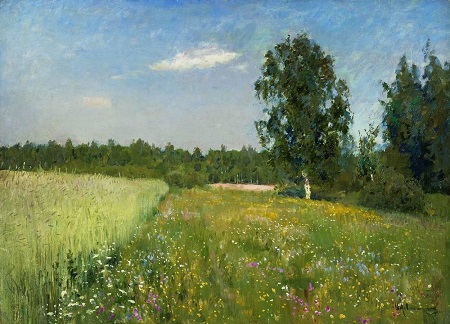
Een dag in juni door Isaac Levitan, ca. 1895


Knee-Deep In June

Tell you what I like the best —
‘Long about knee-deep in June,
‘Bout the time strawberries melts
On the vine, — some afternoon
Like to jes’ git out and rest,
And not work at nothin’ else!

Orchard’s where I’d ruther be —
Needn’t fence it in fer me! —
Jes’ the whole sky overhead,
And the whole airth underneath —
Sort o’ so’s a man kin breathe
Like he ort, and kind o’ has
Elbow-room to keerlessly
Sprawl out len’thways on the grass
Where the shadders thick and soft
As the kivvers on the bed
Mother fixes in the loft
Allus, when they’s company!

Jes’ a-sort o’ lazin there –
S’lazy, ‘at you peek and peer
Through the wavin’ leaves above,
Like a feller ‘ats in love
And don’t know it, ner don’t keer!
Ever’thing you hear and see
Got some sort o’ interest –
Maybe find a bluebird’s nest
Tucked up there conveenently
Fer the boy ‘at’s ap’ to be
Up some other apple tree!
Watch the swallers skootin’ past
Bout as peert as you could ast;
Er the Bob-white raise and whiz
Where some other’s whistle is.

Ketch a shadder down below,
And look up to find the crow —
Er a hawk, – away up there,
‘Pearantly froze in the air! —
Hear the old hen squawk, and squat
Over ever’ chick she’s got,
Suddent-like! – and she knows where
That-air hawk is, well as you! —
You jes’ bet yer life she do! —
Eyes a-glitterin’ like glass,
Waitin’ till he makes a pass!

Pee-wees wingin’, to express
My opinion, ’s second-class,
Yit you’ll hear ‘em more er less;
Sapsucks gittin’ down to biz,
Weedin’ out the lonesomeness;
Mr. Bluejay, full o’ sass,
In them baseball clothes o’ his,
Sportin’ round the orchad jes’
Like he owned the premises!
Sun out in the fields kin sizz,
But flat on yer back, I guess,
In the shade’s where glory is!
That’s jes’ what I’d like to do
Stiddy fer a year er two!

Plague! Ef they ain’t somepin’ in
Work ‘at kind o’ goes ag’in’
My convictions! – ‘long about
Here in June especially! —
Under some ole apple tree,
Jes’ a-restin through and through,
I could git along without
Nothin’ else at all to do
Only jes’ a-wishin’ you
Wuz a-gittin’ there like me,
And June wuz eternity!

Lay out there and try to see
Jes’ how lazy you kin be! —
Tumble round and souse yer head
In the clover-bloom, er pull
Yer straw hat acrost yer eyes
And peek through it at the skies,
Thinkin’ of old chums ‘ats dead,
Maybe, smilin’ back at you
In betwixt the beautiful
Clouds o’gold and white and blue! —
Month a man kin railly love —
June, you know, I’m talkin’ of!

March ain’t never nothin’ new! —
April’s altogether too
Brash fer me! and May — I jes’
‘Bominate its promises, —
Little hints o’ sunshine and
Green around the timber-land —
A few blossoms, and a few
Chip-birds, and a sprout er two, —
Drap asleep, and it turns in
Fore daylight and snows ag’in! —
But when June comes – Clear my th’oat
With wild honey! — Rench my hair
In the dew! And hold my coat!
Whoop out loud! And th’ow my hat! —
June wants me, and I’m to spare!
Spread them shadders anywhere,
I’ll get down and waller there,
And obleeged to you at that!

 

James Whitcomb Riley (7 oktober 1849 – 22 juli 1916)
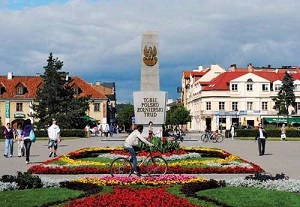
Greenfield, Indiana, de geboorteplaats van James Whitcomb Riley


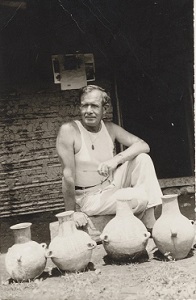
De Belgisch-Amerikaanse, Franstalige schrijfster Marguerite Yourcenar werd geboren in Brussel op 8 juni 1903. Zie ook alle tags voor Marguerite Yourcenar op dit blog.

Uit: Memoirs of Hadrian (Vertaald door Grace Frick, in samenwerking met de schrijfster)

“His mind, however, was not wholly uncultivated; after his death they found in his house a trunk full of mathematical instruments and books untouched by him for twenty years.
He was learned in his way, with a knowledge half scientific, half peasant, that same mixture of narrow prejudice and ancient wisdom which characterized the elder Cato. But Cato was a man of the Roman Senate all his life, and of the war with- Carthage, a true representative of the stern Rome of the
Republic. The almost impenetrable hardness of Marullinus came from farther back, and from more ancient times.
He was a man of the tribe, the incarnation of a sacred and awe-inspiring world of which I have sometimes found vestiges among our Etruscan soothsayers. He always went bareheaded, as I was criticized for doing later on; his horny feet spurned all use of sandals, and his everyday clothing was hardly distinguishable from that of the aged beggars, or of the grave tenant farmers whom I used to see squatting in the sun. They said that he was a wizard, and the village folk tried to avoid his glance. But over animals he had singular powers. I have watched his grizzled head approaching cautiously, though in friendly wise, a nest of adders, and before a lizard have seen his gnarled fingers execute a kind of dance.
On summer nights he took me with him to study the sky from the top of a barren hill. I used to fall asleep in a furrow, tired out from counting meteors. He would stay sitting, gazing upward and turning imperceptibly with the stars. He must have known the systems of Philolaus and of Hipparchus, and that of Aristarchus of Samos which was my choice in later years, but these speculations had ceased to interest him. For him the stars were fiery points in the heavens, objects akin to the stones and slow-moving insects from which he also drew portents, constituent parts of a magic universe in which were
combined the will of the gods, the influence of daemons, and the lot apportioned to men. He had cast my horoscope. One night (I was eleven years old at the time) he came and shook me from my sleep and announced, with the same grumbling laconism that he would have employed to predict a good
harvest to his tenants, that I should rule the world. Then, seized with mistrust, he went to fetch a brand from a small fire of root ends kept going to warm us through the colder hours, held it over my hand, and read in my solid, childish palm I know not what confirmation of lines written in the sky.”
Marguerite Yourcenar (8 juni 1903 – 17 december 1987)
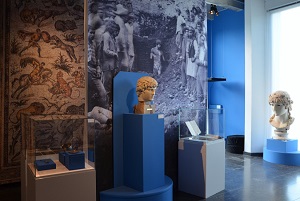
Tentoonstelling Marguerite Yourcenar en Hadrianus in Bavay, 2016


De Georgische schrijfster en regisseuse Nino Haratischwili werd geboren op 8 juni 1983 in Tbilisi. Zie ook alle tags voor Nino Haratischwili op dit blog.

Uit: Het achtste leven (Vertaald door Elly Schippers en Jantsje Post) 

“Op de avond dat Aman zei dat hij met mij ‘normaal wilde worden; ging Brilka, de dochter van mijn dode zus en mijn enige nichtje, naar Wenen, naar een plaats die ze zich had voorgesteld als haar tweede thuis, als haar persoon-lijke utopie, en dat allemaal uit een gevoel van verbondenheid met een dode vrouw. Van die dode vrouw, mijn oudtante en dus Brilkis overoudtante, had ze in haar fan-tasie haar heldin gemaakt. Ze wilde in Wenen de rechten op de liederen van haar overoudtante zien te krijgen. En door de sporen van die geest te volgen hoopte ze ver-lossing te vinden en een definitief antwoord op de gapen-de leegte in zichzelf. Maar daar had ik toen nog geen idee van. Nadat ik op de bank was gaan zitten en mijn gezicht in mijn handen had verborgen, nadat ik mijn ogen had uitgewreven en Amans blik zo lang mogelijk had ontweken, wist ik dat ik weer zou moeten huilen, maar niet nu, niet op het moment dat Brilka door het raam van de trein het oude, nieuwe Europa voorbij zag glijden en voor het eerst sinds haar aankomst op het continent van de onverschil-ligheid glimlachte. Ik weet niet waar ze bij het verlaten van de stad met die kleine bruggetjes om moest glim-lachen, maar dat doet er niet meer toe. Het belangrijkste is dat ze glimlachte. Ik zou moeten huilen, dacht ik precies op dat moment. Om het niet te doen draaide ik me om, liep naar de slaap-kamer en ging op bed liggen. Lang hoefde ik niet op Aman te wachten; een verdriet als het zijne is heel snel te gene-zen als je ter genezing je lichaam aanbiedt — vooral als de zieke zevenentwintig is. Ik kuste mezelf wakker uit mijn doornroosjesslaap. En toen Aman zijn hoofd op mijn buik legde, verliet mijn twaalfjarige nichtje Nederland en passeerde ze in haar naar blikbier en eenzaamheid stinkende coupé de Duitse grens, terwijl haar nietsvermoedende tante hon-derden kilometers verderop liefde veinsde voor een zevenentwintigjarige schim. Ze doorkruiste Duitsland in de hoop verder te komen.”
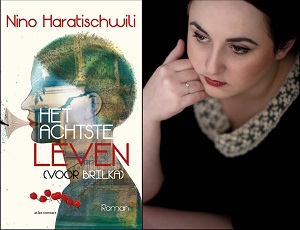
Nino Haratischwili (Tbilisi, 8 juni 1983)


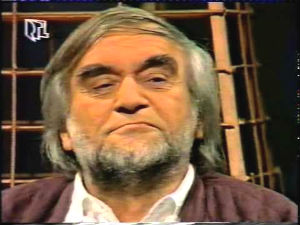
De Tsjechische schrijver, journalist en muzikant Jaroslav Rudiš werd geboren in Turnov op 8 juni 1972. Zie ook alle tags voor Jaroslav Rudiš op dit blog.

Uit: Die Stille in Prag (Vertaald door Eva Profousová)

»Wie fühlt sich das an?«
»Deine Brüste zu küssen?«
»An meinem Herzen zu horchen!«
»Lang.«
»Wie: lang?«
»Wie ein unendlich langer, fließender Song.«
»Kein Techno?«
»Genau die Art Song, die du haben willst.«
»Ich will es auch mal hören.«
Er streichelt sie.
Oben. In der Mitte. Unten.
Eine Weile lässt sie es zu.
Sie stöhnt. Noch einmal. Als er nach ihrer Pobacke fasst, bewegt sie das Becken. Dann aber schiebt sie seine Hand auf die Bettdecke zurück.
»Schluss.«
»Woher weißt du, dass ich was wollte?«
»Wir kennen das Spiel. Die Frau wird nur benutzt. Und ausgenutzt.«
»Das musst ausgerechnet du sagen.«
Vanda steht auf und geht zu dem beleuchteten Aquarium, das auf einem niedrigen Tisch steht, auf den in anderen Wohnungen eher der Fernseher gestellt wird. Sie klopft an die Glasscheibe, um den kleinen dicken Fisch zu begrüßen, der auf sie zugeschwommen kommt, und setzt sich auf den Parkettfußboden. Sie ist nackt, und die beleuchteten Pflanzen und Wasserbläschen im Aquarium werfen gelbe zitternde Lichtstreifen auf sie. Vanda sieht aus wie ein kleines Wasserzebra, das sich im tiefen, dunklen Ozean verlaufen hat. Sie ist nicht mehr die traurige, patzige junge Frau mit den schwarz gefärbten Haaren und der frischen Schultertätowierung, die Petr vor ein paar Stunden kennengelernt hat. Aus dem Nebenzimmer kommt Malmö und stupst sie gähnend mit der Schnauze an. Vanda krault sie zwischen den Ohren und Malmö streckt sich neben ihr aus.“
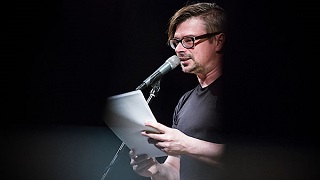
Jaroslav Rudiš (Turnov, 8 juni 1972)


Onafhankelijk van geboortedata

De Amerikaanse dichteres Marie Howe werd geboren in 1950 in Rochester, New York. Zie ook alle tags voor Marie Howe op dit blog.

What the Angels Left

At first, the scissors seemed perfectly harmless.
They lay on the kitchen table in the blue light.

Then I began to notice them all over the house,
at night in the pantry, or filling up bowls in the cellar

where there should have been apples. They appeared under rugs,
lumpy places where one would usually settle before the fire,

or suddenly shining in the sink at the bottom of soupy water.
Once, I found a pair in the garden, stuck in turned dirt

among the new bulbs, and one night, under my pillow,
I felt something like a cool long tooth and pulled them out

to lie next to me in the dark. Soon after that I began
to collect them, filling boxes, old shopping bags,

every suitcase I owned. I grew slightly uncomfortable
when company came. What if someone noticed them

when looking for forks or replacing dried dishes? I longed
to throw them out, but how could I get rid of something

that felt oddly like grace? It occurred to me finally
that I was meant to use them, and I resisted a growing compulsion

to cut my hair, although in moments of great distraction,
I thought it was my eyes they wanted, or my soft belly

—exhausted, in winter, I laid them out on the lawn.
The snow fell quite as usual, without any apparent hesitation

or discomfort. In spring, as expected, they were gone.
In their place, a slight metallic smell, and the dear muddy earth.


The Copper Beech

Immense, entirely itself,
it wore that yard like a dress,

with limbs low enough for me to enter it
and climb the crooked ladder to where

I could lean against the trunk and practice being alone.

One day, I heard the sound before I saw it, rain fell
darkening the sidewalk.

Sitting close to the center, not very high in the branches,
I heard it hitting the high leaves, and I was happy,

watching it happen without it happening to me.
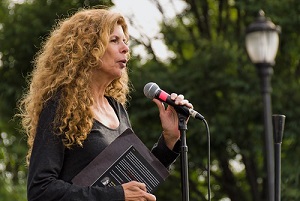
Marie Howe (Rochester, 1950)


De Nederlandse dichter en schrijver Frank Keizer werd geboren in Leeuwarden in 1987. Zie ook alle tags voor Frank Keizer op dit blog.

Uit: lief slecht ding

iedereen wil wel naar huis, zei je. er wordt gekookt voor
activisten, seks is er lekker lui, je bent er vrij van de krachten
van de markt en zo. ik weet wat je denkt, de revolutie heeft
haar kinderen verminkt

en we praten er niet meer over. fluisterend misschien. over
wat er de afgelopen tijd gebeurd is. de anderen, alles wat na
het opsommen komt. niemand zou een enzovoort moeten zijn.
daarom zijn we allemaal gebroken. ook het huis is ingestort,
en dat noemen we nieuwbouw. zo verstild klinkt dit 
individualisme, dat de luidruchtigste band met de productieve
wereld het innigste is. als je luistert, hoor je haar zingen,
het is een parodie en gaat van huisje, boompje, weesje

ik dacht: er is een leer die taai geworden is. ik kauwde erop, 
vroeg me af wie het werkgezin vormden, wat we tegenover
de familie zetten die aan tafel zat, de ethiek van de arbeid, 
het professionele knechtschap, de vaderpolitiek

zaten we niet scheef, jij en ik, in deze geschiedenis. wie gingen
ons voor. en hoe konden we ze leren kennen door de waas
van onze isolatie
Frank Keizer (Leeuwarden, 1987)


Zie voor nog meer schrijvers van de 8e juni ook mijn blog van 8 juni 2018 en eveneens mijn blog van 8 juni 2017.
Orhan Pamuk, Monika Mann, Nikki Giovanni, Harry Crews, Louise Erdrich, Mascha Kaléko, Jan Engelman, Gwendolyn Brooks, Elizabeth Bowen

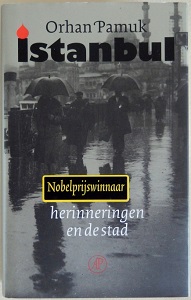
De Turkse schrijver Orhan Pamuk werd geboren op 7 juni 1952 in Istanbul. Zie ook alle tags voor Orhan Pamuk op dit blog.

Uit: Istanbul. Herinneringen en de stad (Vertaald door Hanneke van der Heijden)

“Terwijl ik luisterde naar de verhalen van mijn vader, die hij soms onderbrak om me te wijzen op een mooi uitzicht, of op mooie vrouwen die over het trottoir liepen, en naar zijn wijze raad over het leven, die hij er terloops en ontspannen tussendoor vlocht, keek ik op die loodgrijze winterochtenden naar de Istanbulse beelden die aan de voorruit voorbijtrokken. Ik keek naar de voertuigen die over de Galatabrug reden, de achterbuurten, toen nog omgeven door houten huizen die later gesloopt zouden worden, de smalle steegjes, de drommen mensen onderweg naar een voetbalwedstrijd of een sleepboot met een iele schoorsteen die met kolen beladen sloepen over de Bosporus voorttrok, terwijl ik ondertussen aandachtig luisterde naar de wijze levenslessen van mijn vader, naar zijn woorden, die bijvoorbeeld suggereerden dat je je eigen intuïtie, preoccupaties en obsessies nauwlettend moet volgen, of dat het leven in feite heel snel voorbijgaat en dat het goed is te weten wat je wilt, of dat je eigenlijk alleen door schijven of tekenen een bepaalde diepte in het leven kunt bewerkstelligen, en ik voelde hoe die woorden zich in mijn  hoofd met de beelden verenigden. Na een tijdje gebeurde het dan dat de muziek waar ik naar luisterde, de Istanbulse beelden die aan de voorruit voorbijtrokken, de sfeer van sommige met straatkeien geplaveide stoepen en steegjes, waarvan mijn vader vroeg of we die in zouden slaan terwijl hij de auto er al glimlachend indraaide, zich allemaal in mijn hoofd samenvoegden en me lieten voelen dat we nooit een antwoord zullen krijgen op onze levensvragen, maar dat het goed is om ze toch te stellen, dat het doel en het geluk in het leven op plekken liggen die wij niet precies kunnen onderscheiden, of die we gewoon niet willen zien, maar dat er nog iets anders is dat minstens even belangrijk is als al deze zorgen, namelijk de beelden die we door de ramen van de auto, het huis of de boot zien als we over deze bekommernissen piekeren of als we in het leven genot of diepte najagen want in de loop van de tijd zal het leven net als muziek, tekeningen of verhalen met dalingen en stijgingen ten einde komen, maar de beelden van de stad die aan onze ogen voorbijtrekken zullen ons zelfs jaren later nog als uit dromen afkomstige herinneringen blijven vergezellen.”

Orhan Pamuk (Istanbul, 7 juni 1952)


De Duitse schrijfster Monika Mann werd als vierde kind van Thomas Mann geboren op 7 juni 1910 in München. Zie ook alle tags voor Monika Mann op dit blog.

Uit: Das fahrende Haus

„Wenn man auf eine kurze Frage eine lange Antwort gibt, so ist das verdächtig oder zumindest sonderbar. Frägt man dich, wie du heißt, so ist die Antwort ein Name, sonst nichts. Man frägt mich, welcher Nationalität ich bin, und ich antworte – ich bin amerikanischer, ursprünglich deutscher, zwischenhinein auch tschechischer und ungarischer und demnächst wohl wieder deutscher Nationalität. – Es ist eine viel zu lange Antwort, als daß sie einen nicht verwundert, ja argwöhnisch lassen sollte. Und wirklich, man schaut mich mit großen Augen an, als wolle man sagen – Teufel, dahinter muß eine Geschichte stehen! – Mit Gott, hier ist sie denn! Das heißt, eine Geschichte ist es eigentlich nicht, sonderneine persönliche Erfahrung, entsprungen dem Geist der Zeit – pointenlos in ihrer Wirrheit und Verworrenheit, Traurigkeit und dennoch gut, ja strahlend. Einst ließ man ein Wort ins Gebet einfließen für das Vaterland, daß es erhalten bleiben möge im Kriege zwischen den Völkern: Heute läßt man ein Wort ins Gebet einfließen für die Welt, daß sie erhalten bleiben möge im Kriege gegen sich selbst. Unsere Gedanken, Träume und Gebete, mögen sie intim sein, sind heute mondial gefärbt. Einst war der Gipfel von Scherz, seinen Hund, angetan miteinem karierten Mäntelchen und Federhut, in einen Fesselballon zu setzen, mochten Gebell und Gewinsel den blauen Äther entzücken! Heute setzt man seinen Hund, mit allerlei sphärischen Schinken ausstaffiert, in einen Sputnik und gibt ihn der Frau Erde auf ihrer Rundreise als Begleiter mit. Möchte mein Hündchen mir dann erzählen, wie der Mond von hinten aussieht, ich sehe immer nur sein unheimlich Gesicht! So scherzt sich’s also in unserer Zeit, und es vergeht einem fast das Lachen. Man schämt sich fast vor seinem Hund, dem kosmischen Haustier.“

Monika Mann (7 juni 1910 – 17 maart 1992)


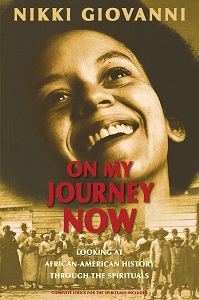
De Amerikaanse dichteres en schrijfster Nikki Giovanni werd geboren op 7 juni 1943 in Knoxville, Tennessee. Zie ook alle tags voor Nikki Giovanni op dit blog.

Uit: On My Journey Now

“When swimming pools were segregated, that made it harder for African Americans to learn to swim. But of course Africans could swim; many lived near the Atlantic Ocean, and they would swim. In some cases when they jumped overboard, they were shot in the back and wounded and they died, and in other cases they made it. Most ended up in the belly of a shark. The sharks, too, changed their patterns. They began to follow the ships west, feeding on the bodies of the dead or dying Africans.
So the slavers waited, got to that fourth and fifth day, and then there was a calm among the Africans, and they talked about that. There was a calm because they could look out, and although they couldn’t see the land, they could see the heat coming off the land. They could see that shimmer, and it’s the most fantastic thing to travel to Africa by boat, because you see the heat before you see the land.
And so, by that sixth or seventh day, or maybe around the eighth day, they could no longer see the land or the heat, and so there is going to be a restlessness, because people are beginning to feel lost, because now they’re thinking, “Well, this is farther out.” So now we have the Africans in a position of not really being able to see anything familiar. But of course they followed the clouds, and we do know that clouds above land are different from clouds over water, so they could see that land had to be that way. And so we’re going to have a serious problem somewhere around the tenth day. And those who study this – I’m just a poet, but the people who study slavery – say that those ships’ captains knew that this was going to be the day that, I don’t want to say all hell is going to break loose, but the day they really have to tighten up, because now the people realize they will not know how to get home.

Fare you well, fare you well, fare you well, everybody.
Fare you well, fare you well, whenever I do get a-home.

What those captured people had – which is why I so admire those people – was a tone, a voice, a moan. They made a decision, because they had to decide: Do we shut ourselves down, or do we continue forward?”

Nikki Giovanni (Knoxville, 7 juni 1943)
Cover


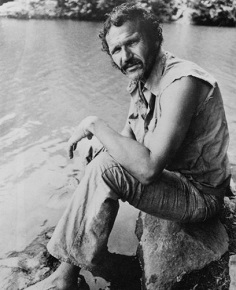
De Amerikaanse schrijver Harry Crews werd geboren op 7 juni 1935 in Bacon County, Georgia. Zie ook alle tags voor Harry Crews op dit blog.

Uit: Classic Crews: A Harry Crews Reader

“And you thought the rain would hurt you if you walked home in it?” “It’s raining, Dad,” he said, exasperated now. “I’ll tell you what,” I said. “You go out there and stand in it and we’ll see how bad it hurts you.” He walked out into the rain and stood looking at me. “How long do I have to stand here?” “Only until we see if it hurts you. Don’t worry, I’ll tell you when you are about to get hurt.” I went back inside. So far, pretty shitty, but it gets worse. When I went back inside, I sat down in a recliner, meaning to stay there only a minute. But I hadn’t reckoned with the liquor and the rain on the roof. I woke with a start and looked at my watch. It was a quarter of nine. I went outside and there the boy stood, his blond hair plastered and every thread on him soaked. He didn’t look at all sad or forlorn; what he did look was severely pissed. “Come on in,” I said. And then: “Where do you want to eat?” “I don’t want to eat.” “How do you feel?” I asked. He glared at me. “Well, I’m not hurt.” We sat there on the top of Springer Mountain and looked at each other with the rain falling around us. I’d forgotten entirely about my feet and the tent and the fire. My throat felt like it was closing up and I had to speak to keep breathing. “I wanted to apologize, but I had done such a sorry-asked thing that I couldn’t bring myself to do it. But at the time, it didn’t seem like it’d do any good.” “It probably wouldn’t have,” he said. “Then.” “Well, I’m sorry. I was wrong. I should have said so, but… ,” I’d run out of words. He said, “I know. And I was only down the block. I’ve thought about it. I could have called. But, shit, I was only a little kid.”

Harry Crews (7 juni 1935 – 28 maart 2012)


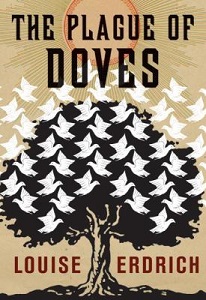
De Amerikaanse dichteres en schrijfster Louise Erdrich werd geboren op 7 juni 1954 in Little Falls, Minnesota. Zie ook alle tags voor Louise Erdrich op dit blog.

Uit: The Plague of Doves

“The out-house drama, always the first in the momentous day, was filled with the sort of detail that my brother and I found interesting. The out-house, well-known to us although we now had plumbing, and the horror of the birds’ death by excrement, as well as other features of the story’s beginning, gripped our attention. Mooshum was our favorite indoor entertainment, next to the television. But our father had removed the television’s knobs and hidden them. Although we made constant efforts, we never found the knobs and came to believe that he carried them upon his person at all times. So we listened to our Mooshum instead. While he talked, we sat on kitchen chairs and twisted our hair. Our mother had given him a red coffee can for spitting snoose. He wore soft, worn, green Sears work clothes, a pair of battered brown lace-up boots, and a twill cap, even in the house. His eyes shone from slits cut deep into his face. The upper half of his left ear was missing, giving him a lopsided look. He was hunched and dried out, with random wisps of white hair down his ears and neck. From time to time, as he spoke, we glimpsed the murky scraggle of his teeth. Still, such was his conviction in the telling of this story that it wasn’t hard at all to imagine him at twelve.
His big brother put on his vestments, the best he had, hand-me-downs from a Minneapolis parish. As real incense was impossible to obtain, he prepared the censer by stuffing it with dry sage rolled up in balls. There was an iron hand pump and a sink in the cabin, and Mooshum’s brother, or half brother, Father Severine Milk, wet a comb and slicked back his hair and then his little brother’s hair. The church was a large cabin just across the yard, and wagons had been pulling up for the last hour or so. Now the people were in the church and the yard was full of the parked wagons, each with a dog or two tied in the box to keep the birds and their droppings off the piled hay where people would sit. The constant movement of the birds made some of the horses skittish. Many wore blinders and were further . . .”

Louise Erdrich (Little Falls, 7 juni 1954)
Cover


De Duitstalige dichteres Mascha Kaléko (eig. Golda Malka Aufen) werd geboren op 7 juni 1907 in Krenau of Schidlow in Galicië in het toenmalige Oostenrijk-Hongarije, nu Polen. Zie ook alle tags voor Mascha Kaléko op dit blog.

Rezept

Jage die Ängste fort
Und die Angst vor den Ängsten.
Für die paar Jahre
Wird wohl alles noch reichen.
Das Brot im Kasten
Und der Anzug im Schrank.

Sage nicht mein.
Es ist dir alles geliehen.
Lebe auf Zeit und sieh,
Wie wenig du brauchst.
Richte dich ein.
Und halte den Koffer bereit.

Es ist wahr, was sie sagen:
Was kommen muß, kommt.
Geh dem Leid nicht entgegen.
Und ist es da,
Sieh ihm still ins Gesicht.
Es ist vergänglich wie Glück.

Erwarte nichts.
Und hüte besorgt dein Geheimnis.
Auch der Bruder verrät,
Geht es um dich oder ihn.
Den eignen Schatten nimm
Zum Weggefährten.

Feg deine Stube wohl.
Und tausche den Gruß mit dem Nachbarn.
Flicke heiter den Zaun
Und auch die Glocke am Tor.
Die Wunde in dir halte wach
Unter dem Dach im Einstweilen.

Zerreiß deine Pläne. Sei klug
Und halte dich an Wunder.
Sie sind lang schon verzeichnet
Im grossen Plan.
Jage die Ängste fort
Und die Angst vor den Ängsten.

Mascha Kaléko (7 juni 1907 – 21 januari 1975)
Cover


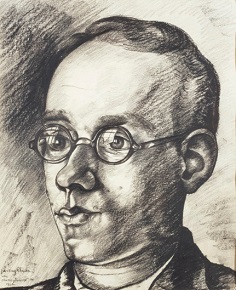
De Nederlandse dichter Johannes Aloysius Antonius Engelman werd geboren in Utrecht op 7 juni 1900. Zie ook alle tags voor Jan Engelman op dit blog.

Over het gras

Over het gras en over het water
dwaal ik achter de beminde
die ik vroeg en die ik later,
die ik nimmer, nimmer vinde.

Smalle schelpen zijn haar handen
om een eeuwge zee te horen,
in zijn wieg en broze wanden
zingt haar hart mijn wee verloren.

Handen die mijn hoofd niet koelen
met hun sneeuw, de lichte, zachte.
Hartklop die ik niet zal voelen
onder stergoud, al de nachten.

Over het gras en over het water
dwaal ik achter de beminde,
tot ik aanzie – later, later,
in een licht dat mij hervinde.


Bij de rozen

‘Zij zijn voor sterven en vergaan geboren,’
zo dacht ik vluchtig toen ik bij de rozen was.
Maar schrok, en hoorde dreunen in mijn oren:
wat is u zelve, ijdel mens, beschoren,
zo kort als gij hier wandelt bij de rozen op het gras?

Jan Engelman (Utrecht 7 juni 1900 ;Amsterdam 20 maart 1972)
Portret door Charley Toorop, 1936


De Amerikaanse dichteres Gwendolyn Brooks werd geboren op 7 juni 1917 in Topeka, Kansas. Zie ook alle tags voor Gwendolyn Brooks op dit blog.

The Rites For Cousin Vit

Carried her unprotesting out the door.
Kicked back the casket-stand. But it can’t hold her,
That stuff and satin aiming to enfold her,
The lid’s contrition nor the bolts before.
Oh oh. Too much. Too much. Even now, surmise,
She rises in the sunshine. There she goes,
Back to the bars she knew and the repose
In love-rooms and the things in people’s eyes.
Too vital and too squeaking. Must emerge.
Even now she does the snake-hips with a hiss,
Slops the bad wine across her shantung, talks
Of pregnancy, guitars and bridgework, walks
In parks or alleys, comes haply on the verge
Of happiness, haply hysterics. Is.


Boy Breaking Glass

To Marc Crawford
from whom the commission
Whose broken window is a cry of art
(success, that winks aware
as elegance, as a treasonable faith)
is raw: is sonic: is old-eyed première.
Our beautiful flaw and terrible ornament.
Our barbarous and metal little man.

“I shall create! If not a note, a hole.
If not an overture, a desecration.”

Full of pepper and light
and Salt and night and cargoes.

“Don’t go down the plank
if you see there’s no extension.
Each to his grief, each to
his loneliness and fidgety revenge.
Nobody knew where I was and now I am no longer there.”

The only sanity is a cup of tea.
The music is in minors.

Each one other
is having different weather.

“It was you, it was you who threw away my name!
And this is everything I have for me.”

Who has not Congress, lobster, love, luau,
the Regency Room, the Statue of Liberty,
runs. A sloppy amalgamation.
A mistake.
A cliff.
A hymn, a snare, and an exceeding sun.

Gwendolyn Brooks (7 juni 1917 – 3 december 2000)
Standbeeld in Chicago


De Ierse schrijfster Elizabeth Bowen werd geboren op 7 juni 1899 in Dublin. Zie ook alle tags voor Elizabeth Bowen op dit blog.

Uit: Friends and Relations

“Janet, the bride’s younger sister, knew that Cousin Richard would be certain, sooner or later, to say ‘Pass along the car, please.’ She supposed that one did not mind? She supposed that someone was bound to be humorous at a wedding? Might not her Wolf Cubs be better? She proffered two. Several had been already allotted to laying down duck-boards or directing cars round the corner where they could park. But Mrs Studdart thought no, on the whole. The little boys’ boots … Besides, one did not want friends to feel like traffic, in any way `directed’. Also one could not disappoint Cousin Richard, who had Janet said: ‘Just as you think, of course.’ Young Mr and Mrs Tilney, between her train and the lilies, with a background of pleasant outdoor sunshine, now stood waiting for their photograph by the world to be taken, for the curtain to rise. In the hall, first guests from the church could be heard arriving; Lady Elfrida Tilney tittering in the porch. Their two heads turned, rather beautifully apprehensive; they had an instant for conversation. Edward: ‘This morning, I wanted to ring you up.’ Out of her bride’s formality, fall of tulle and lace, came the gay little scoffing laugh. ‘Oho!’ she remarked. `But mother kept saying, “Now I expect you will ring up Laurel?” So I went out and bought some labels.’ `Labels?’ `For my things.’ `Oh, labels. Well, that’s one conversation we’ll never have.’ They’re coming —’ `No, that’s the ices going round to the marquee. Edward …’ But his emotions were quite at a standstill. He had at any time more address than an occasion required. Edward was determined that his wedding, like the execution of Julien Sorel, should go off simply, suitably, without any affectation on his part. Laurel went on: ‘I suppose we can’t possibly …’ But at this point Lady Elfrida brought in the Daubeneys; remarking with the keenest sense of effect: ‘My daughter-in-law.’ Laurel amazed the Daubeneys with a lovely, composed smile. After the Daubeneys, guests began to come through on a strong current. Edward remained throughout wonderfully self-possessed; perhaps because of this he did not make an entirely good impression. Lady Elfrida, in claret-coloured georgette, also overacted a little. Besides being a divorcée, which should but does not subdue, she was the bridegroom’s mother — and one apt to play always a little too gracefully a losing game. The Tilney connection (here to shower on Edward for his marriage as well as his mother a loving depreciation), bright woof to a sober warp, shuttled their way to and fro through the Studdart connection. Impervious to strangers, signalling, smiling, these bright friends distinguished each other; where two or three met intimacies flowered and branched.”

Elizabeth Bowen (7 juni 1899 – 22 februari 1973)
Cover


Zie voor nog meer schrijvers van de 7e juni ook mijn blog van 7 juni 2015 deel 2.

Thomas Mann, Aleksandr Poesjkin, Sarah Dessen, Jean Cayrol, Pierre Corneille, Hendrik van Teylingen, V. C. Andrews, Frank Gericke

De Duitse schrijver Thomas Mann werd geboren in Lübeck op 6 juni 1875. Zie ook alle tags voor Thomas Mann op dit blog.

Uit: Buddenbrooks

„Die Feder eilte weiter, glatt, behende, und indem sie hie und da einen kaufmännischen Schnörkel ausführte, und redete Zeile für Zeile zu Gott. Zwei Seiten weiter hieß es: »Ich habe meiner jüngsten Tochter eine Police von 150 Courant-Thalern ausgeschrieben. Führe du sie, ach Herr! auf deinen Wegen, und schenke du ihr ein reines Herz, auf daß sie einstmals eingehe in die Wohnungen des ewigen Friedens. Denn wir wissen wohl, wie schwer es sei, von ganzer Seele zu glauben, daß der ganze liebe süße Jesus mein sei, weil unser irdisches kleines schwaches Herz …« Nach drei Seiten schrieb der Konsul ein »Amen«, allein die Feder glitt weiter, sie glitt mit feinem Geräusch noch über manches Blatt, sie schrieb von der köstlichen Quelle, die den müden Wandersmann labt, von des Seligmachers heiligen, bluttriefenden Wunden, vom engen und vom breiten Wege und von Gottes großer Herrlichkeit. Es kann nicht geleugnet werden, daß der Konsul nach diesem oder jenem Satze die Neigung verspürte, es nun genug sein zu lassen, die Feder fortzulegen, hinein zu seiner Gattin zu gehen oder sich ins Comptoir zu begeben. Wie aber! Wurde er es so bald müde, sich mit seinem Schöpfer und Erhalter zu bereden? Welch ein Raub an Ihm, dem Herrn, schon jetzt einzuhalten mit Schreiben … Nein, nein, als Züchtigung gerade für sein unfrommes Gelüste, citierte er noch längere Abschnitte aus den heiligen Schriften, betete für seine Eltern, seine Frau, seine Kinder und sich selbst, betete auch für seinen Bruder Gotthold, – und endlich, nach einem letzten Bibelspruch und einem letzten, dreimaligen Amen, streute er Goldsand auf die Schrift und lehnte sich aufatmend zurück. Ein Bein über das andere geschlagen, blätterte er langsam in dem Hefte zurück, um hie und da einen Abschnitt der Daten und Betrachtungen zu lesen, die sich von seiner Hand dort vorfanden, und sich wieder einmal dankbar der Erkenntnis zu freuen, wie immer und in aller Gefahr Gottes Hand ihn sichtbar gesegnet.

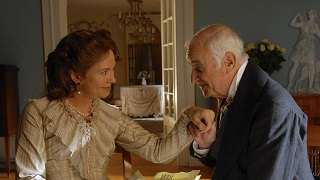
Iris Berben als Konsulin Bethsy Buddenbrook en Armin Mueller-Stahl als Konsul Jean Buddenbrook. Scene uit de verfilming van „Buddenbrooks“ uit 2008.

Er hatte die Pocken gehabt so stark, daß alle Leute ihm das Leben absprachen, aber er war gerettet worden. Einmal – er war noch ein Knabe – hatte er den Vorbereitungen zu einer Hochzeit beigewohnt, wobei viel Bier gebraut wurde (denn es bestand die alte Sitte, das Bier im Hause zu brauen), und zu diesem Ende stand ein großes Brau-Küben vor der Thüre aufgerichtet. Nun, dasselbe schlug nieder und die Bodenseite auf den Knaben, mit solchem Knall und solcher Gewalt, daß die Nachbarn vor die Thüre kamen und ihrer sechs genug zu thun hatten, es wieder aufzurichten. Sein Kopf ward gequetscht, und das Blut rann heftig über alle seine Gliedmaßen. Er wurde in einen Laden getragen, und da noch ein wenig Leben in ihm war, ward zum Doktor und zum Wundarzt geschickt. Dem Vater aber sprach man zu, er möge sich in Gottes Willen schicken, es sei unmöglich, daß der Knabe am Leben bliebe … Und nun höre: Gott der Allmächtige segnete die Mittel und half ihm wieder zur vollkommenen Gesundheit! – Als der Konsul diesen Unglücksfall im Geiste aufs neue erlebt hatte, ergriff er noch einmal die Feder und schrieb hinter sein letztes Amen: »Ja, Herr, ich will dich loben ewiglich!« -Ein anderes Mal, als er, ein ganz junger Mensch noch, nach Bergen gekommen war, hatte Gott ihn aus großer Wassersgefahr errettet. »Indem wir«, stand dort, »in der Stromzeit, wenn die Nordfahrer angekommen sind, sehr viel arbeiten mußten, durch die Jagden zu kommen und zu unserer Brücke zu gelangen, so ging es mir dabei so, daß ich auf dem Rande der Schute stand, die Füße gegen die Dollen und den Rücken gegen die Jagd gestützt, um die Schute immer näher zu bringen; zu meinem Unglück brechen die eichnen Dollen, wogegen ich die Füße gesetzt hatte, und ich falle über Kopf ins Wasser.“


Thomas Mann (6 juni 1875 – 12 augustus 1955)
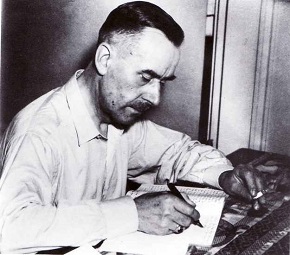
Rond 1939


De Russische dichter en schrijver Aleksandr Poesjkin werd geboren in Moskou op 6 juni 1799. Zie ook alle tags voor Aleksandr Poesjkin op dit blog.

Uit: Evgeny Onegin (Vertaald door G. R. Ledger)

IV

Tatyana, (to her heart’s core a Russian,
Herself not knowing the reason why),
With all their cold and frigid beauty,
Loved Russian winters with great passion:
The sun-lit hoar-frost on frozen days,
Sledge rides, and from the sunset’s glow
The rosy radiance on the snow;
The foggy nights of Epiphany,
Evenings which, by ancient rule,
They celebrated in the old time ways:
The servants from the house and yard
All told the fortunes of their mistresses,
Each year they gave them the blissful word:
An army husband and a trip abroad.

V.

Tatyana implicitly believed the tales
Of the simple country folk of old;
Dreams, fortune by cards, the cold
Predictions which the moon reveals.
All omens used to make her shudder,
All objects spoke mysteriously,
Pronouncing one thing or another,
Forebodings crowded her anxiously.
The curious cat, on the stove shelf sitting,
Purrs and washes its paws with its tongue:
A sure sign to her that guests would come;
Then suddenly, seeing up above,
The face of the two-horned waxing moon,
On the left hand side, almost in a swoon,

VI.

She shook and grew pale as any waif.
And, whenever a falling star
Through the sky’s darkness cut a path,
And then dispersed, — then in utter fear
Tatyana hastened, in confusion,
(And while the star was still on fire)
To whisper to it her heart’s desire.
Whenever it happened, in her delusion,
That she met a black monk, or in the fields,
A racing hare would suddenly
Strike across her way, and run obliquely,
Then in very fear not knowing what remedy
To take, and full of sad expectation
She sensed bad fortune in anticipation.


Aleksandr Poesjkin (6 juni 1799- 10 februari 1837)
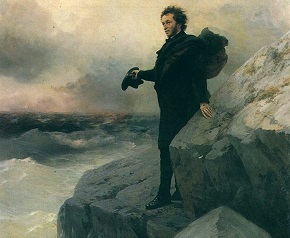
Poesjkin Afscheid van de Zee door Ivan Aivazovsky en Ilya Repin, 1877


De Amerikaanse schrijfster Sarah Dessen werd geboren op 6 juni 1970 in Evanston, Illinois. Zie ook alle tags voor Sarah Dessen nop dit blog.

Uit: The Rest of the Story

“The wedding was over. But the party had just begun.
“It’s just so romantic,” my best friend Bridget said, picking up the little glass jar of candy from her place setting and staring at it dreamily. “Like a fairy tale.”
“You think everything is like a fairy tale,” my other best friend Ryan told her, wincing as she reached down yet again to rub her sore feet. None of us were used to dressing up very much, especially in heels. “All those days of playing Princess when we were kids ruined you.”
“I seem to remember someone who had a Belle fixation,” Bridget said, putting the candy down with a clank. She tucked her short, choppy dark bob behind her ears. “Back before you decided that being cynical and depressed was much cooler.”
“I was the one who liked Belle,” I reminded her. We all had our roles: they were always bickering about our shared history, while I was the one who remembered all the details. It had been like this since we’d met on the playground in second grade. “Ryan was all about Jasmine.”
“She’s right,” Ryan said. “And I’ll remind you again that I’m not cynical or depressed, I’m realistic. We can’t all see the world as rainbows and unicorns.”
“I don’t even like rainbows and unicorns,” Bridget muttered. “They’re so overdone.”
“The truth is,” Ryan continued, “even with cute candy favors, the divorce rate in this country is over fifty percent.”
“Oh, my God. Ryan!” Bridget looked horrified. Ryan was right about one thing: she was the biggest optimist I knew. “That is a horrible thing to say at Emma’s dad’s wedding.”
“Seriously,” I added. “Way to jinx my future. Was my past not bleak enough for you?”
Ryan looked at me, worried. “Oh, crap. Sorry.”
“I’m kidding,” I told her.
“And I hate your humor,” she replied. “Have I mentioned that lately?”
She had not. But she didn’t need to. Everyone seemed to have a problem with what I found funny. “Despite the statistics,” I said, “I really do feel Dad and Tracy will make it.”


Sarah Dessen (Evanston, 6 juni 1970)


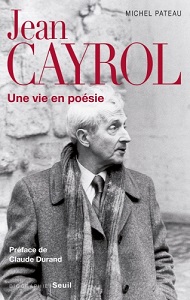
De Franse dichter en schrijver Jean Cayrol werd geboren op 6 juni 1911 in Bordeaux. Zie ook alle tags voor Jean Cayrol op dit blog.


Marguerite…

Marguerite, tu me réponds :
je ris trop dans le couchant
quand le vent
se plaint de mon comportement.
Avec mes pétales
un p’tit coin de bal
j’ai le sentiment.

Marguerite,
mon rire blanc,
choisie pour des rites
jamais décevants.

Marguerite des champs
connais-tu celle des villes,
la marguerite qui file
l’amour entre les dents ?

Toutes les marguerites sont reines
en plein été ;
les rosières se déchaînent,
au corsage est leur secret.

Marguerite
tu donnes la paix
aux hommes sans gîte

la marguerite est la clef
soleil quand tu m’invites.


Jean Cayrol (6 juni 1911 – 10 februari 2005)
Cover


De Franse dichter en schrijver Pierre Corneille werd geboren in Rouen op 6 juni 1606. Zie ook alle tags voor Pierre Corneille op dit blog.


Amourettes de jeune homme

J’ai fait autrefois de la bête,
J’avais des Philis à la tête,
J’épiais les occasions,
J’épiloguais mes passions,
Je paraphrasais un visage.
Je me mettais à tout usage,
Debout, tête nue, à genoux,
Triste, gaillard, rêveur, jaloux,
Je courais, je faisais la grue
Tout un jour au bout d’une rue.
Soleil, flambeaux, attraits, appas,
Pleurs, désespoir, tourment, trépas,
Tout ce petit meuble de bouche
Dont un amoureux s’escarmouche,
Je savais bien m’en escrimer.
Par là je m’appris à rimer,
Par là je fis, sans autre chose,
Un sot en vers d’un sot en prose.


Chagrin

Usez moins avec moi du droit de tout charmer ;
Vous me perdrez bientôt si vous n’y prenez garde.
J’aime bien a vous voir, quoi qu’enfin j’y hasarde ;
Mais je n’aime pas bien qu’on me force d’aimer.

Cependant mon repos a de quoi s’alarmer ;
Je sens je ne sais quoi dès que je vous regarde ;
Je souffre avec chagrin tout ce qui m’en retarde,
Et c’est déjà sans doute un peu plus qu’estimer.

Ne vous y trompez pas, l’honneur de ma défaite
N’assure point d’esclave à la main qui l’a faite,
Je sais l’art d’échapper aux charmes les plus forts,

Et quand ils m’ont réduit à ne plus me défendre,
Savez-vous, belle Iris, ce que je fais alors ?
Je m’enfuis de peur de me rendre.


Espérance

D’un accueil si flatteur, et qui veut que j’espère,
Vous payez ma visite alors que je vous vois,
Que souvent à l’erreur j’abandonne ma foi,
Et croîs seul avoir droit d’aspirer à vous plaire.

Mais si j’y trouve alors de quoi me satisfaire,
Ces charmes attirants, ces doux je ne sais quoi,
Sont des biens pour tout autre aussi bien que pour moi,
Et c’est dont un beau feu ne se contente guère.

D’une ardeur réciproque il veut d’autres témoins,
Un mutuel échange et de vœux et de soins,
Un transport de tendresse à nul autre semblable.

C’est là ce qui remplit un cœur fort amoureux :
Le mien le sent pour vous ; le vôtre en est capable.
Hélas ! si vous vouliez, que je serais heureux !


Pierre Corneille (6 juni 1606 – 1 oktober 1684)
Musée Pierre Corneille in Rouan


De Nederlandse dichter en vertaler Hendrik van Teylingen werd geboren op 6 juni 1938 in IJmuiden. Zie ook alle tags voor Hendrik van Teylingen op ditt blog.


Had ik nooit een vers gelezen

Had ik nooit een vers gelezen,
Mocht ik nu geen dichter wezen:
Had ik van het geitenweitje
Met zijn klaaglijk krijtend geitje

In mijn jonkheid niet vernomen.
Was het er niet van gekomen
Dat het beieren der rijmen
Me nu schreiend doet bezwijmen

Van een huiverend genieten
Dat ik in elk vers wil gieten
Opdat in betraande horden
Al mijn lezers dichter worden.


Ceder

Een zilte windbazuin
blies uw bladerkruin
heen en weer weder.

Een zilvergrijze vrouw
knielde neer in rouw,
krakend als leder,

en klom in u omhoog.
Boven keek haar oog
nog even neder.

Ze hing zich in u op
– sluier werd tot strop –
en deinde teder.

Nu wiegt ge weer alleen.
Haar last woei van u heen,
licht als een veder.


Hendrik van Teylingen (6 juni 1938 – 25 december 1998)


De Amerikaanse schrijfster V. C. Andrews (eig. Cleo Virginia Andrews) werd geboren in Portsmouth op 6 juni 1923. Zie ook alle tags voor V. C. Andrews op dit blog.

Uit: Seeds of Yesterday

“And so it came to pass the summer when I was fifty-two and Chris was fifty-four that our mother’s promise of riches, made long ago when I was twelve and Chris was fourteen, was at last realized. We both stood and stared at that huge, intimidating house I’d never expected to see again. Even though it was not an exact duplicate of the original Foxworth Hall, still I quivered inside. What a price both Chris and I had paid to stand where we were now, temporary rulers over this mammoth house that should have been left in charred ruins. Once, long ago, I’d believed he and I would live in this house like a princess and prince, and between us we’d have the golden touch of King Midas, only with more control. I no longer believed in fairy tales. As vividly as if it had happened only yesterday, I remembered that chill summer night full of mystical moonlight and magical stars in a black velvet sky when we’d first approached this place, expecting only the best to happen. We had found only the worst. At that time Chris and I had been so young, innocent, and trusting, believing in our mother, loving her, believing as she led us and our five-year-old twin brother and sister through the dark and somehow scary night, to that huge house called Foxworth Hall, that all our future days would be colored green for wealth and yellow for happiness.
What blind faith we’d had when we tagged along behind. Locked away in that dim and dreary upstairs room, playing in that dusty, musty attic, we’d sustained ourselves by our belief in our mother’s promises that someday Foxworth Hall and all its fabulous riches would be ours. However, despite all her promises, a cruel and heartless old grandfather with a bad but tenacious heart refused to stop beating in order to let four young and hopeful hearts live, and so we’d waited, and waited, until more than three long-long years passed, and Momma failed to keep her promise.”


V. C. Andrews (6 juni 1923 – 19 december 1986
James Maslow (Bart), Sammi Hanratty (Cindy), Jason Lewis (Christopher) en Rachael Carpani (Cathy) in de film “Seeds of Yesterday” uit 2015


De Nederlandse dichter en publicist Frank Gericke (pseudoniem van Derk Gerhardus Hoek) werd geboren in Hoogvliet op 6 juni 1887. Zie ook alle tags voor Frank Gericke op dit blog.
 

Hei

Kleintjes, duistertjes
Groeit op de hei,
Aan den blinkenden grindweg,
Een pijnboomrij.

De wolkjes schuiven,
De vogeltjes slaan,
En ik zie er een eenzaam
Boerinnetje gaan.

Aan de wijkende blauwte drijft
Helder en ijl,
Op het briesje gestuwd, een
Zonnewit zeil.

Het licht is zoo glanzend,
Mijn hart zoo blij,
Want ik min de heide
En de heide mij!


Magnolia

Hoe wektet Gij Uw leven
In ’t levenlooze hout!
Nauw deed Uw glimlach even
Hun tengre luchters beven
Of, de open kelk geheven,
Ontploken ze in Uw goud.

En dekt, geslecht, geslagen,
Hun glanzend weefsel ’t pad,
Nog ronden, onder ’t vragen
Naar Uw begeerd behagen,
Hun schelpen zich en dragen
D’ Onwelkbre in ’t welkend blad.


Frank Gericke (6 juni 1887 − 14 december 1976)


Zie voor nog meer schrijvers van de 6e juni ook mijn blog van 6 juni 2015 deel 2.

Federico García Lorca, Adriaan Morriën, Ken Follett, Paul Farley, Geoff Dyer, Margo Lanagan, Carel Peeters, Robert Franquinet, Margaret Drabble

De Spaanse dichter en toneelschrijver Federico Garcia Lorca werd geboren op 5 juni 1898 in Fuente Vaqueros, Granada. Zie ook alle tags voor Federico Garcia Lorca op dit blog.

Lament for the Death of Ignacio Sánchez Mejías

1. Goring And Death

At five in the afternoon.
It was five sharp in the afternoon.
A boy brought the white sheet
at five in the afternoon.
A basket of lime already set
at five in the afternoon.
The rest was death and only death
at five in the afternoon.

The wind swept away the cotton
at five in the afternoon.
And rust planted crystal and nickel
at five in the afternoon.
Now the struggle of leopard and dove
at five in the afternoon.
And a thigh with a desolate horn
at five in the afternoon.
And so began the bass notes
at five in the afternoon.
The arsenic bells and the smoke
at five in the afternoon.

On the corners groups of silence
at five in the afternoon.
And the bull alone with heart on high
at five in the afternoon.
When the sweat of snow arrived
at five in the afternoon,
when the bullring filled with iodine
at five in the afternoon,
death laid eggs in the wound
at five in the afternoon.
At five in the afternoon.
At five sharp in the afternoon.

The bed is a coffin on wheels
at five in the afternoon.
Bones and flutes blow in his ear
at five in the afternoon.
The bull bellowed on his brow
at five in the afternoon.
The room iridescent with agony
at five in the afternoon.
Gangrene comes in the distance
at five in the afternoon.
Trumpet of lilies on green groins
at five in the afternoon.
The wounds burned like suns
at five in the afternoon,
and the rabble broke the windows
at five in the afternoon.
Oh, what a terrible five in the afternoon!
It was five on all the clocks.
It was five in shadow of the afternoon.


2. Spilled Blood

I don’t want to see it!
Tell the moon to come.
I don’t want to see
Ignacio’s blood on the sand.

I don’t want to see it!

The moon fully open,
a horse of quiet clouds
and the gray bullring of sleep
with willows over the barricades.

I don’t want to see it!
My memory burns.
Warn the jasmine
to cover its whiteness!

I don’t want to see it!

The cow of the old world
stroked a snout of blood
with its sorrowful tongue
and the bulls of Guisando
almost death and almost stone
bellowed like two centuries
tired of walking the land.
No.

I don’t want to see it.

Up the bleachers goes Ignacio
with death on his shoulders.
He looks for dawn
and it isn’t dawn.
He looks for his sensible profile
and sleep confuses him.
He looks for his beautiful body
and finds his open blood.
Don’t ask me to see it!
I don’t want to feel the spurt
growing weaker by the moment,
the spurt that illumines
the seats and spills
on the hide of the thirsty crowd.
Who orders me to look!
Don’t make me see it!

His eyes didn’t close
when he saw the horns approach,
but the terrible mothers
raised their heads
and all through the cattle ranches
there was an air of secret orders
thrown to celestial bulls
by the foremen of pale mists.
There wasn’t a prince in Seville
who could compare,
no sword like his sword
nor a heart so real.
His strength was a river of lions,
his prudence a torso of marble.
An air of Andalusian Rome
gilded his head
where his smile was a rose
of salt and intelligence.
The great fighter of bulls!
The good mountaineer of the mountain!
How soft with the wheat stalk!
How hard with his spurs!
How tender with the dew!
How dazzling in the fair!
How grand with the last
banderillas of dusk!

But now he sleeps forever.
Now the grass and the moss
open with sure fingers
the flower of his skull.
And his blood comes singing:
singing through marshes and prairies,
sliding down shivering horns,
wandering soulless in fog,
stumbling on thousands of hoofs
like a long, dark, sorrowful tongue
to form a puddle of agony
by the Guadalquivir of the stars.
Oh white wall of Spain!
Oh black bull of sorrow!
Oh hard blood of Ignacio!
Oh nightingale of his veins!
No.
I don’t want to see it!
There is no chalice to hold it.
There are no swallows that drink it,
no frost of light to cool it,
no song or deluge of lilies,
no crystal to bathe it in silver.
No.
I don’t want to see it!

Vertaald door Pablo Medina

Federico García Lorca (5 juni 1898 – 19 augustus 1936)
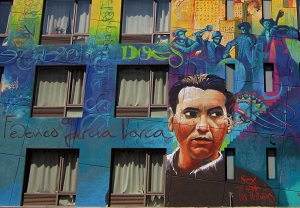
Muurschildering in New York


De Nederlandse dichter en schrijver Adriaan Morriën werd geboren op 5 juni 1912 in Amsterdam. Zie ook alle tags voor Adriaan Morriën op dit blog.

Lectuur

Ik kan niet genoeg krijgen van je huid.
Als een blinde lees ik met mijn vingers
het stille verhaal van je oppervlak.
In je ogen dreig ik te verzinken.
Op je huid bewandel ik alle wegen
zonder mij van jou te verwijderen.

Soms keer je je behulpzaam op je buik.
Je rug is een lang hoofdstuk uit een boek.
Ik spel je tepels, herlees je oren.
Ik laat je tenen op elkander rijmen.
Ik lees tussen de regels van je benen
en blader in de atlas van je hals.

Het is mij of mijn eigen vingers
je lichaam hebben uitgeschreven.
Eerst viel het mij als klank te binnen,
toen lag het als een beeldspraak op mijn tong
en nu herhaal ik wat ik heb gestameld
in vloeiende bewoordingen.


Schilderij

Twee doode kreeften met gebroken scharen
Rood op de witheid van het tafellaken;
Een gele wijn, die fonkelt in het glas,
Maar niet gedronken wordt; gemorste asch,
En tusschen appelen en eierschalen
Een houten kruisbeeld met de pijn en zegen
Van zijn doorboorde handen. In den regen,
Achter het raam, dat uitziet in de straat,
Het grijs gelaat van een bedroefde vrouw,
Die in den rouw van hare kleeren staat,
Verwonderd en afwijzend en naijvrig
En ongetemd: haar wilde armen slaan,
Als in een dwaas verweer langs ’t vensterraam.
En verder in een kleinen, kalen tuin
Van een der huizen aan den overkant,
Zacht neergevlijd als een vermoeide hand,
Een laatst verzet in ’t wijkend perspectief,
De weemoed van een omgewaaiden boom.

Adriaan Morriën (5 juni 1912 – 7 juni 2002) 


De Engelse schrijver Ken Follett werd geboren op 5 juni 1949 in Cardiff, Wales. Zie ook alle tags voor Ken Follett op dit blog.

Uit:Het eeuwige vuur(Vertaald door Joost van der Meer en William Oostendorp)

“Te midden van een sneeuwstorm kwam Ned Willard thuis in Kingsbridge.
In de hut van een trage schuit, geladen met stoffen uit Antwerpen en wijn uit Bordeaux, voer hij stroomopwaarts vanuit Combe Harbour.
Toen hij vermoedde dat de boot eindelijk Kingsbridge naderde sloeg hij zijn Franse mantel strakker om zijn schouders; hij trok de capuchon over zijn oren, stapte het open dek op en tuurde in de verte.
Aanvankelijk werd hij teleurgesteld: vallende sneeuw was het enige wat hij zag. Maar zijn verlangen om een glimp van de stad op te vangen was als een pijn, en vol hoop staarde hij in de sneeuwvlagen. Na een poosje werd zijn wens vervuld, de storm begon zich terug te trekken. Er verscheen een verrassend stukje blauw aan de hemel. Starend over de toppen van de omringende bomen zag hij de toren van de kathedraal, honderddrieentwintigenhalve meter hoog, zoals iedere leerling in Kingsbridge
wist. De stenen engel die vanaf de torenspits over de stad waakte had vandaag sneeuw op haar vleugels liggen, waardoor haar duifgrijze vleugeltoppen nu helderwit waren. Even viel er een zonnestraal op het beeld, die als een zegen van de sneeuw af fonkelde; daarna sloot de storm haar weer in en werd ze aan het zicht onttrokken.
Een poosje zag hij niets anders dan bomen, maar zijn verbeelding liep over. Hij stond op het punt om na een afwezigheid van een jaar met zijn moeder te worden herenigd. Hij zou haar niet vertellen hoezeer hij haar had gemist, want een man diende op zijn achttiende onafhankelijk te zijn.
Maar bovenal had hij Margery gemist. Hij was op een rampzalig moment voor haar gevallen: een paar weken voor zijn vertrek uit Kingsbridge om een jaar door te brengen in Calais, de door Engelsen bestuurde havenstad aan de Franse noordkust. Hij kende en mocht de ondeugende, intelligente dochter van sir Reginald Fitzgerald al sinds zijn kindertijd.
Toen ze opgroeide had haar schalksheid een nieuwe verleidelijkheid gekregen, waardoor hij merkte dat hij in de kerk met een droge mond en oppervlakkige ademhaling naar haar staarde. Hij had geaarzeld om meer te doen dan alleen staren, want ze was drie jaar jonger dan hij, maar zij kende zulke remmingen niet. Op het kerkhof van Kingsbridge, achter de grote graftombe van prior Philip, de monnik die vier eeuwen eerder de opdracht voor de bouw van de kathedraal had gegeven, hadden ze elkaar gekust. Er was niets kinderachtigs geweest aan hun lange, gepassioneerde zoen; daarna had ze gelachen en was ze weggerend.”

Ken Follett (Cardiff, 5 juni 1949)


De Britse dichter en schrijver Paul Farley werd geboren op 5 juni 1965 in Liverpool. Zie ook alle tags voor Paul Farley op dit blog.

Ports

1

I want you to imagine, in your late capitalist’s mind’s eye,
a stagnant fly-blown lake under an African sun,
the smell of the sea just beyond (this at least should come easy
being the universal saltwater of all your childhoods).
Armies of ants on parade in the poor weeds and grey sludge
of the ages, dismantling the scene in their own time-lapse movie,
skeletal cats picking over spoil, boneyard mongrels
marking their range by the water’s edge before moving on.
I want you to imagine all this, because once I was Carthage
and still am in name, though like some poisoned inland sea
my horizons have shrunk to a port that handles zero tonnage,
an import and export that evens the scales up at nil,
not counting the old rope and plastic bottles that come knocking
with the tides, not counting the rusted tins that drift in,
not counting the ants shifting clay forms and Carrera marble
from my ruins, or the guide who conducts his own private dig
for unscrupulous tourists who think nothing of removing
a coin from its context (if money ever has such set contexts),
of taking a Roman penny with an obverse of Augustus
out of the country, to reach the cold northern latitudes
in the holds of Lufthansa or Aeroflot, in a fraction
of the time it once took under oar and Ursa Major.
I was Carthage, but nothing much comes or goes in this afterwards;
all that’s left of a thousand years of dockyards and shipsheds
are a few shapes the soft earth has found indigestible,
for the tourist to squint at, consider, weigh up, reconstruct
imaginatively, as I am asking you, listener.
From this silted salt lake I once pulled the strings of the known world.
Lovers looked out from my sea walls into powerful distance
that bound them knowing that I was a true centre.
They pulled tight their merchant purses. They drank from clay pitchers –
under glass now in nearby museums. A museum will go some way
to help in your excavations, but what stories lead on from
the razors and combs and amphora and ostrich egg masks
are the details of millions who passed through, then into the ground.
Standing over a scale model in its sea of flat glass
acts out a dominion of your time over mine, looking down on
my circular dockyard apotheosis; looking down
as from a great height, in a way I can never have known.
A map might be easier in helping you build on my wasteland:
my trade routes once lit up the coastlines in thousands of oil lamps,
a Phoenician outline of Africa in the antique night,
spreading westward and hugging the shore, a luminous tracing
that brought in and foundered sea creatures, signalling for their mates.
I can still taste the distant metals like blood in my harbour mouth,
the tin and the iron and the copper which don’t come here now
but leech down the well-furrowed sea lanes, my phantom nerve endings.
Carthaginian and Roman and Vandal are blinks in my brine eye,
In each of their eternities: to me they rise and fall
as sea swell. Credit me, listener, with such a long memory,
as more than the sum of my parts, more than archaeology
and soft sump, more than ground fought over. Aeneas stood here once
with a mind to call it quits and cut loose, so the story goes,
my port in his storm to his girl in every port.
The jets tilt and bank heading north for their carrier hubs
in Frankfurt and Moscow, without so much as a second thought
for me in my modern darkness, their starboard wing lights
blinking in an element I knew nothing about.
Some things have endured: the peaks of Cap Bon across the bay
form a backdrop to nothing much doing these days; the stars rise
to guide nobody from my mouth and on course for the Pillars
of Hercules – but these things give me a sense of myself,
as the winds do, strong at the turns in the year, which remind me
of cargoes and freights in their seasons, gross tonnes that passed through
as sand through an hour glass, until history,
like the idea of magnetic north so long in the discovering,
moved slowly away from here, like a great ship embarking
out onto the future’s broad main, and this is the fate
of all ports, even yours, listener. Listen to me. I was Carthage.

Paul Farley (Liverpool,. 5 juni 1965)


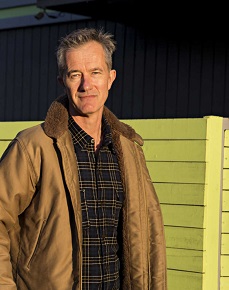
De Engelse schrijver Geoff Dyer werd op geboren 5 juni 1958 in Cheltenham. Zie ook alle tags voor Geoff Dyer op dit blog.

Uit:Broadsword Calling Danny Boy

“Meanwhile, at dusk—even allowing for the fact that it’s winter, the day has been stunningly short—the Eagles sneak across the snowy railroad tracks, in the wake of a freight train whose role will not extend beyond this cameo appearance (a sad decline from the recent glory years of Von Ryan’s Express [1965], starring Frank Sinatra, and The Train [1964], with Burt Lancaster). They let themselves into a storage unit where Eastwood and Burton strip off their parkas and pull out greatcoats and caps from their small but apparently bottomless rucksacks. They have not packed lightly, these two; they have enough clothes and equipment to keep the Sherpas on an inter-war Everest expedition employed for much of the climbing season. Working within the confines of a smaller costume budget, the others do what they can, reversing their par­kas from snowy-white to wintery camouflage. Thus arrayed, like any bunch of lads on a stag weekend, they head into the village of Werfen for a bit of the old après-ski (minus the skiing), a little apprehensive, naturally, this being their first night out on the streets of the resort. The pitched roofs are laden with snow, the streets are bustling with troops and vehicles, and there’s so much parping of horns it sounds like an Alpine equivalent of Cairo.
They choose a tavern at random—we’ll try this one behind us, says Burton, though as with most things he says he’s not saying but ordering. He tells them to keep their ears open for anything about General Carnaby, but it seems a lame excuse for that which needs no excuse, namely getting into the bar and getting a few down them. It’s a cosy place with foam­ing steins, a really festive Bavarian atmosphere and no obviously anti-Semitic conversation. You can’t help thinking what fun it would be to attend a fancy-dress party like this in real life, even though you’d catch hell from the tabloids, especially since the guests include none other than the blond beast Von Hapen, in his medal-bedecked Gestapo costume. For once Burton is not the one doing the ordering; it’s Eastwood who orders drinks at the bar, thereby raising the possibility that, for all his swagger, command and much-publicized love of drink and his will­ingness to splash out vast sums of money on diamonds, Burton might be that lowest, most treacherous form of British life: a round-dodger, a conscientious-drink-buying-objector and all-round round-shirker. Even this suspicion only slightly clouds the rest of the group’s belief that this is surely the best of all Second World War mission-capers, way better than scaling the cliffs of Navarone, sweating your malarial bollocks off on that ghastly bridge over the River Kwai or waiting for Telly Savalas to flip his sicko lid in The Dirty Dozen. A top night seems guaranteed as long as they can keep up their German and not be tricked into letting their conversational guard down, as fatally happened, six years earlier, to Gordon Jackson as he boarded a bus in The Great Escape (before enjoying extended small-screen resurrections in
Upstairs Downstairs and The Professionals).”

Geoff Dyer (Cheltenham, 5 juni 1958)


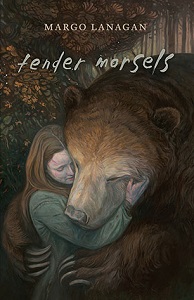
De Australische schrijfster Margo Lanagan werd geboren op 5 juni 1960 in Waratah, New South Wales. Zie ook alle tags voor Margo Lanagan op dit blog.

Uit: Tender Morsels

“Has the chimney fallen in? Or what is it?” She wanted to step farther out and look.
But he sprang over the logs and ran at her. She was too surprised to fight him, and her insides were too delicate. The icicled edge of the thatch swept down across the heavy sky, and she was on the floor, the door slammed closed above her. It was dark after the snow-glare, the air thick with the billowing smoke. Outside, he shouted—she could not hear the words—and hurled his logs one by one at the door.
She pressed her nose and mouth into the crook of her elbow, but she had already gulped smoke. It sank through to her deepest insides, and there it clasped its thin black hands, all knuckles and nerves, and wrung them, and wrung them.
Time stretched and shrank. She seemed to stretch and shrink. The pain pressed her flat, the crashing of the wood. Da muttered out there, muttered forever; his muttering had begun before her thirteen years had, and she would never hear the end of it; she must simply be here while it rose from blackness and sank again like a great fish into a lake, like a great water snake. Then Liga’s belly tightened again, and all was gone except the red fireworks inside her. The smoke boiled against her eyes and fought in her throat.
The pains resolved themselves into a movement, of innards wanting to force out. When she next could, she crawled to the door and threw her fists, her shoulder, against it. Was he out there anymore? Had he run off and left her imprisoned? “Let me out or I will shit on the floor of your house!”
There was some activity out there, scraping of logs, thuds of them farther from the door. White light sliced into the smoke. Out Liga blazed, in a dirty smoke-cloud, clambering over the tumbled wood, pushing past him, pushing past his eager face.”

Margo Lanagan (Waratah, 5 juni 1960)
Cover


De Nederlandse literair criticus Carel Peeters werd geboren in Nijmegen op 5 juni 1944. Zie ook alle tags voor Carel Peeters op dit blog.

Uit: Het eigenwijze potlood

“Of het nu om mensen of dieren ging, Peter Vos was in zijn tekeningen voortdurend aan het vermommen, om-draaien, transformeren en verkleden: dieren die menselijke din-gen doen, mensen die dierendingen doen, mensen die in vogels veranderen, wezens die half dier, half mens zijn, mensen die in een satirisch beestenkarakter veranderen (klavierleeuw, kloothom-mel). Hij was een Pulcinel, de komische bediende uit de commedia dell’arte die aan alles een fantasierijke wending moest geven. Met een handtekening in de vorm van een Pulcinel ondertekende hij vaak zijn brieven. Eind jaren vijftig sorteerde de toenmalige uitgever van De Arbei-derspers Theo Sontrop nog brieven op het postkantoor van Amster-dam. Op een dag herkende hij een met vogels versierde envelop als afkomstig van Peter Vos, net als hij oud-leerling van het St. Boni-fatiuslyceum in Utrecht Peter Vos was inmiddels student aan de Rijksakademie, Sontrop zat in de redactie van het studentenweek-blad Propria Cures. Hij vond dat Propria Cures wel een vaardig en geestig tekenaar als Peter Vos kon gebruiken. Dat dacht Rinus Ferdinandusse ook toen hij als redacteur van Propria Cures was over-gestapt naar Vrij Nederland (VN) en Vos vroeg mee te gaan. In het begin maakte Vos getekende grappen voor de rubriek ‘Vrij Blijvend’, die later ‘Terzijde’ zou gaan heten. De rubriek bestond nog uit pasti-ches en parodieën geschreven door Ferdinandusse en Hugo Brandt Corstius, en niet uit de volle kolom oneliners van Toon Verhoeven waarmee de rubriek later vermaard zou worden. vn-lezers lazen hem altijd als eerste (‘Als je van lezen houdt is de Tros een goede omroep’). In die verzuilde tijd kon een tekening van Peter Vos nog voor de nodige commotie en ingezonden brieven zorgen. Zoals de tekening in het kerstnummer van het jaar 1960. Het is kerstavond en we zien Jozef op het moment dat een engel hem laat weten dat er een kindje is geboren. ”t Is een jongen!’ juicht de engel. En toen in 1964 de aflevering ‘Beeldreligie’ van het satirische televisieprogramma Zo is het toevallig ook nog eens een keer zo veel verontwaardiging had ge-wekt, maakte Peter Vos de tekening van de man die voor de televisie zit en zijn vrouw roept ‘Mien, kom. Het is weer kwetsen.’ Zijn bijdrage aan ‘Terzijde’ bestond uit het tekenen van de weke-lijkse leeuw. Die werd zo’n vaste verschijning dat je hem bijna over het hoofd zag. Maar wie dat niet liet gebeuren, zag de mens ver-momd als leeuw elke week vechten tegen de aanvallen van het leven. Hij nam in de loop der tijd elke denkbare manhaftige pose aan. De leeuw werd met alles geconfronteerd, elke ochtend al meteen met zichzelf in de spiegel, en verder in de loop van de dag met allerhande tegenstanders die hij niet zelden met een zwaard te lijf ging, tot hij zich bedacht. “

Carel Peeters (Nijmegen, 5 juni 1944)


De Nederlandse dichter, schrijver en schilder Robert Marie Philmain Joseph Franquinet werd geboren in Amby (bij Maastricht) op 5 juni 1915. zie ook alle tags voor Robert Franquinet op dit blog.

Gedicht

Ik weet het wee van zoveel scherpe klippen.
Ik weet het lied dat druipt van wrange wijn.
Ik weet veraders aan uw fijngekorven lippen
die mij een smart van lang-verduren zijn;
want wist gij hoe ik heb gebeden
om niet meer droef uw roekloosheid te denken,
hoe ‘k u wou bedden, heel schuldeloos en rein
en hoe ‘k het snijdend woord voor u steeds heb vermeden
om zacht en heelend en ook goed te zijn.

Hoe ik de eenzaamheden
geregen heb tot kostbre snoeren rond uw lijf,
hoe ik het licht bevangen heb vermeden
en hoe ik stil bij ’t graf van een herinnering blijf.
En hoe de stilte werd tot een ondraaglijk tarten
te weten dat er is een véélvergulden schijn!
Die kerft zijn wond in al te wilde harten
die niet bevrijd, te snel verbeten zijn…

Weet gij dat wij toch grenzeloos herleven
van dit vergift, nog zoeter dan jasmijn?
dat alles nieuw, het hunkren en het streven
en ’t worstelen, ongekend, rebels en wreed zal zijn.

Robert Franquinet (5 juni 1915 – 30 mei 1979)


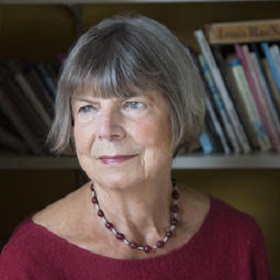
De Engelse schrijfster Margaret Drabble werd geboren op 5 juni 1939 in Sheffield, Yorkshire. Zie ook alle tags voor Margaret Drabble op dit blog.

Uit: The Garrick Year

“While I was watching the advertisements on television last night, I saw Sophy Brent. I have not set eyes on her for some months, and the sight of her filled me with a curious warm mixture of nostalgia and amusement. She was, typically enough, eating: she was advertising a new kind of chocolate cake, and the picture showed her in a shining kitchen gazing in rapture at this cake, then cutting a slice and raising it to her moist, curved, delightful lips. There the picture ended. It would not have done to show the public the crumbs and the chewing. I was very excited by this fleeting glimpse, as I always am by the news of old friends, and it aroused in me a whole flood of recollections, recollections of Sophy herself, and of all that strange season, that Garrick year, as I shall always think of it, which proved to me to be such a turning point, though from what to what I would hardly like to say.
Poor old Sophy, I allowed myself to say, thinking that she would not much like being on a cake advertisement; and then I remembered the last time I had said Poor old Sophy, and that in any case, she would have earned a lot of money from that tantalizing moment. There is perhaps something finally unpitiable in Sophy, just as there is in me. We are both in our ways excellent examples of resilience, though I seem obliged to pass through many degrees of meanness on my way, whereas she just smiles and wriggles and exclaims and with a little charming confusion gets by. I like Sophy. I cannot help liking Sophy. And if there is a defensive note to be detected in that assertion, I am not in the least surprised.
That chocolate cake vision made me think back, as I said, over the whole lot, right back to the very beginning, to the occasion when I first realized that David was really intending to go to Hereford. I had just finished putting Flora to bed, and I came downstairs, splashed and bedraggled from her bath, to find David nursing the new baby and drinking a glass of beer. He had poured some stout for me, which was the only thing he would let me drink. When I appeared he handed the baby over quickly, and as I sat down and prepared to feed him, wondering if I would ever get him to wake at a less exhausting time, Dave spoke.”

Margaret Drabble (Sheffield, 5 juni 1939)


Zie voor nog meer schrijvers van de 5e juni ook mijn blog van 5 juni 2017 deel 1 en eveneens deel 2.

Mark Jarman

De Amerikaanse dichter en criticus Mark F. Jarman werd geboren op 5 juni 1952 in Mount Sterling, Kentucky. Zijn ouders verhuisden in 1954 terug naar Californië en vestigden zich in Santa Maria, waar zijn vader voorging in de First Christian Church. In 1958 verhuisde Marks vader, zijn vrouw Bo Dee, zijn zoon en dochter Katie, naar Schotland waar hij aangesteld was aan een ​​kleine kerk in Kirkcaldy, nabij Edinburgh. De drie jaar die hij daar doorbracht, waren vormend voor de dichter. De familie keerde terug naar Californië in 1961, naar Redondo Beach. In 1970 ging Jarman naar de universiteit van Californië in Santa Cruz en hij behaalde een B.A. cum laude in de Engelse literatuur in 1974. Daar ontmoette hij ook zijn vrouw, de sopraan Amy Kane Jarman en zijn vriend en oud-medewerker, Robert McDowell. Aan de U.C.S.C. studeerde hij o.a. samen met George Hitchcock (dichter) en de schrijver Raymond Carver. In 1974 ging Jarman naar de Iowa Writers ‘Workshop en behaalde hij een M.F.A. In 1976 werd hij aangenomen om creatief schrijven te doceren aan de Indiana State University in Evansville. In 1978 kon hij dankzij een beurs van de National Endowment for the Arts zijn baan opzeggen en in Italië gaan wonen, waar Amy zang studeerde aan de universiteit van Perugia. Terugkeerd naar Californië in 1979, werd hij ingehuurd als gastschrijver aan de universiteit van Californië in Irvine. Mark en Amy’s oudste dochter werd geboren in Mission Viejo in 1980. Datzelfde jaar begon Jarman creatief schrijven te doceren aan de Murray State University in Kentucky. In 1983 verliet hij Murray State om les te geven aan de Vanderbilt University, waar hij sindsdien is blijven werken. Sinds 2007 is Jarman Centennial Professor of English aan Vanderbilt en tot 2013 was hij directeur Creative Writing. Jarman is de auteur van elf dichtbundels, drie essaybundels en een essayboek samen met co-auteur Robert McDowell. Hij co-redigeerde de bloemlezing “Rebel Angels: 25 Poets of the New Formalism” met David Mason. Jarman ontving diverse prijzen.

Transfiguration

They were talking to him about resurrection, about law,
about the suffering ahead.
They were talking as if to remind him who he was and
who they were. He was not
Like his three friends watching a little way off, not like
the crowd
At the foot of the hill. A gray-green thunderhead massed
from the sea
And God spoke from it and said he was his. They were
talking
About how the body, broken or burned, could live again,
remade.
Only the fiery text of the thunderhead could explain it.
And they were talking
About pain and the need for judgement and how he would
make himself
A law of pain, both its spirit and its letter in his own flesh,
and then break it,
That is, transcend it. His clothes flared like magnesium,
as they talked.


My Parents Have Come Home Laughing

My parents have come home laughing
From the feast for Robert Burns, late, on foot;
They have leaned against graveyard walls,
Have bent double in the glittering frost,
Their bladders heavy with tea and ginger.
Burns, suspended in a drop, is flicked away
As they wipe their eyes, and is not offended.

What could offend him?Not the squeaking bagpipe
Nor the haggis which, when it was sliced, collapsed
In a meal of blood and oats
Nor the man who read a poem by Scott
As the audience hissed embarrassment
Nor the principal speaker whose topic,
“Burns’ View of Crop Rotation,” was intended
For farmers, who were not present,
Nor his attempt to cover this error, reciting
The only Burns poem all evening,
“Nine Inch Will Please a Lady,” to thickening silence.

They drop their coats in the hall,
Mother first to the toilet, then Father,
And then stand giggling at the phone,
Debating a call to the States, decide no,
And the strength to keep laughing breaks
In a sigh.I hear, as their tired ribs
Press together, their bedroom door not close
And hear also a weeping from both of them
That seems not to be pain, and it comforts me.

Mark Jarman (Mount Sterling, 5 juni 1952)


Ralf Thenior, Marie Ndiaye, Erasmus Schöfer, Buddy Wakefield, Yaak Karsunke, Charles Dickinson, Dana Bönisch, Elizabeth Jolley, Frieda Jung

De Duitse dichter en schrijver Ralf Thenior werd geboren op 4 juni 1945 in Bad Kudowa. Zie ook alle tags voor Ralf Thenior op dit blog.

Ansichtskarte aus Valetta

Von den Barracca Garders aus
sehen wir ein Fischerboot quer
über den Grand Harbour mitten
in die Fahrtrichtung eines Ozeanriesen
tuckern (»Is’ der wahnsinnig?«),
um dann (schluck!) direkt
vor dem haushohen Bug
durchzuflutschen.

Ein Fischer in seinem Boot,
von einem Dämon getrieben. –

Schafft es der Fischer,
bevor ihn der Bug erwischt,
auf die andere Seite zu gelangen,
knallt der ihn jagende Dämon
gegen die Schiffswand,
wird ohnmächtig
und ersäuft.

So löst man das Problem
auf Malta.


Unsere Urlaubsreise

Die Dämonen sind schlau.
Sie werfen uns keine Knallkörper
vor die Reifen, sie versetzen
die Schilder nur um ein paar Meter.
»Nächste nach Brügge!«
»Schrei doch nicht so!«
Schonstehen wir im Stau,
weil eire Hebebrücke sich gehoben hat,
da fährt ein Schiff nach links.
Die Dämonen laden sich schlapp.

Die Hebebrücke kommt nieder,
wieder fahren wir über schwarze Wasser,
Teer und Schmer, nur keinen Blick
nach unten wagen, schau nach vom
und fahr durch die Wallonie Flanderns,
und fahr durch Finsterlande,
immer gradaus in Richtung Sint Niklas –
»Warum kommen wir schon zum vierten Mal
durch diesen Tunnel hier?«

Ralf Thenior (Bad Kudowa, 4 juni 1945)


De Franse schrijfster Marie Ndiaye werd geboren op 4 juni 1967 in Pithiviers. Zie ook alle tags voor Marie Ndiaye op dit blog.

Uit: My Heart Hemmed In (Vertaald door Jordan Stump)

“I back away into the dark living room, self-conscious, convinced I’m being watched. I tug the curtains closed. I’m sweating. I think I saw the rain coming harder now, pounding the windows—I see it, but I can’t hear it, my mind associates it with a familiarsound but I can’t make out that sound, as if the apartment had suddenly been fitted with some sort of impregnable insulation. And I still don’t dare turn on the lamps or spell out the frightening but indistinct thought floating to the surface of my consciousness, pressing me to concede that I have no idea what would happen, what I would see, if I let light fill the living room, where my furniture, my cherished, handsome, expensive furniture, delighted to be deceiving me, might be hiding worrisome strangers, bloodthirsty guardians. That neighbor, I tell myself, might have been sent solely to distract me from what is in fact being fomented right here in my living room, the last place I’d ever suspect. I stand frozen in place. My ear vigilant despite my feeling I’ve been swathed in cotton, I think I hear breathing. Mine? No, someone else’s, it’s coming from further away. I firmly cross my arms to keep my hands from clasping my cheeks and heightening my fear. I very slowly back away toward the bedroom. I thendistinctly hear Ange’s breathing—was that him I was hearing? Was it both of us together?Inside the bedroom, I close the door and pull the little latch. Then, beleaguered, I sit down on the bed as gently as I can, taking care not to wake Ange. But shouldn’t he be stirring anyway? Is it normal, is it healthy to sleep so much? Deep down, I realize, I don’t want to wake him just yet, because I’m not sure I’ll recognize him, I’m afraid he might say strange things to me, I don’t want him seeing me in the near terror the ambiguities of my living room have plunged me into. Little by little I get hold of myself, I begin to fight back at my imagination. Stand up, go into the other room, turn on all the lights, I whisper, and see for yourself that nothing has changed.But I don’t. The heavy darkness surrounds me. Even Ange’s presence seems charged with danger, with unknowable perils. As long as he’s asleep, the menace is quiet. And so, taking pains not to look at him, my own husband, the man I once felt so at one with, I stay perfectly still. I stare at the little latch on the door. I would certainly feel a heartfelt horror if I were to see that little latch move and burst open, succumbing to a mighty force applied from the living room, but I’ve so thoroughly convinced myself it’s going to happen that I’m almost exasperated to see it not happening. At least, I say to myself, at least let me know what or who I’m facing. But even if the door did suddenly burst open, would I know? Would I be capable of understanding whatI saw before me? And would I see anything before me at all? Those questions torment me.”

 Marie Ndiaye (Pithiviers, 4 juni 1967)


De Duitse schrijver Erasmus Schöfer werd geboren op 4 juni 1931 in Altlandsberg bij Berlijn. Zie ook alle tags voor Erasmus Schöfer op dit blog.

Uit: Sonnenflucht

Also Viktor, Vik, lieber Freund, ich versuch mal, dir von Sotiria zu erzählen, was du noch nicht weißt. Wird schon klappen mit diesem Ding. Was sollen wir anders machen, wenn die Ärzte mich nicht zu dir lassen. Meiner Mutter hab ich manchmal solche Berichte nach Kreta geschickt, statt Briefen, weil sie nicht gut lesen kann. Ein Radio mit Kassettenspieler hat heut fast jede Familie bei uns. Wird sicher jetzt noch einfacher sein, das Erzählen, wo ich dich wirklich sehe. Also technisch ist es kein Problem, ich meine nur – vielleicht wird alles ein bisschen durcheinandergehn, verstehst du? Aber wenigstens hörst du dann meine Stimme. Eine Art Gruß von draußen an dein Bett.
Es gab ja vieles, aus den letzten Tagen mit Sissu. Zum Beispiel dieser Morgen in Poulithra, eh wir nach Athen zurückgefahren sind. Ich glaube, es war der wichtigste Tag unserer Ferien. Bestimmt der schönste. Fing schon in der Nacht an. Verschlafen hab ich noch im Bett gesessen, im Rücken die kühlen Eisenstäbe, ein Doppelbett, ein altes Bauernbett aus dem vorigen Jahrhundert mit einem Eisengestell wie ein Baldachin für das Moskitonetz, das Kopfende geschmiedet, sehr einfach, vom Dorfschmied, aber schön, gibts heute kaum noch, ich fühl die Stangen an meinen Wirbeln wie gestern, wollte aufwachen. Mein Kopf noch ganz leer, so plötzlich war ich hochgeschreckt, und Sotiria huscht im Zimmer herum, barfuß auf den Dielen, lautlos, hat eine Kerze angezündet, kämmt sich die Haare. Langsam dämmert es mir – Abfahrtstag, ja, Reise, packen, der Bus – aber jetzt schon? Müssen wir wirklich schon los? Wie spät ist es?

 Erasmus Schöfer (Altlandsberg, 4 juni 1931)
Cover


De Amerikaanse (slam) dichter Buddy Wakefield werd geboren op 4 juni 1974 in Shreveport, Louisiana. Zie ook alle tags voor Buddy Wakefield op dit blog.

In Landscape (Fragment)

There is a chance
you will show up laughing
made of fortified fan blades and Ferris wheel lights
true of heart and best foot forward
our long-awaited love made easy,
remember for sure no doubt these things:
The joy,
we are a point of complete.
This life,
standing guard over your solitude.
My eyes
are monsters for most things approaching.
I’m probably gonna need a hand with that.
This heart.
This sleeve.
Neither one of them things is all that clean.
But the rain,
my lucky number,
been doin’ her part to make things right
for the light bulbs
and the bruises.
Hiding holy water was not my forte this life.
Forte
is French
for blanket fort.

I have trusted my corners to revolving doors
but am fluent in getting better.
We are fluent in bouncing back,
lifting quickly,
learning fast.
Our courage
is a natural habitat.
Ya know we’re gonna build a body to keep the wolves out.
Hold my house
you humble barbarian,
this door only opens for the remarkable now.
So we will both show up remarkable.

 Buddy Wakefield (Shreveport, 4 juni 1974)


De Duitse dichter en schrijver Yaak Karsunke werd geboren op 4 juni 1934 in Berlijn. Zie ook alle tags voor Yaak Karsunke op dit blog.

elderly couple
(after Sebald Beham)

for Ingrid

in an engraving from 1543
as big as the palm of your hand
you see them standing
a woman & a man
not so slim no longer young
the inventors of love

the tapping of the fig tree’s leaves
rubbing against one another
kept Eve awake
& when Adam took the apple he saw
her breasts with new
eyes before his
parting lips

(soon after both were
much moved by knowledge)

the snake darts
out of paradise & glides
smoothly towards you & me –
let’s go into the garden
& adorn
its altar with pomegranates

Vertaald door Nicholas Grindell


berlin encounter

who ist stepping up to me from the twilight?
with half a voice in the half-night
asks the question (extremely inconvinient):
what his state had turned you into?

not so, distorted image, not with this trick
– the victim versus perpetrator net won’t take me here –
don’t keep on lying to yourself any longer!
but my murky shadow protests:

we here in the east, you in the free west,
we’ve now learned what’s trend-setting:
we in the huts, you in the palaces –
but not as far-away as you think.

leave the mirror, brother, I am frightened,
when I discover my image in you.

Vertaald door Marc Falkenberg

 Yaak Karsunke (Berlijn, 4 juni 1934)


De Amerikaanse schrijver Charles Dickinson werd geboren op 4 juni 1951 in Detroit, Michigan. Zie ook alle tags voor Charles Dickinson op dit blog.

Uit: A Family in Time

“In this version, my daughter does not exist. The principal of Euclid Heights High School tells me what I already know: “We have no record of a Penelope Winkler. No birth certificate. No Social Security number. No inoculation records. No grades—at any academic level. If you are able to provide any of that documentation, we will be happy to enroll your daughter.” “Penny was an excellent student,” I say. “At this school. She had friends at this school. She shouldn’t be punished for something I did.” “Mr. Winkler,” the principal says, “we’re all familiar with—” He glances at his colleagues, three men and a woman. “Your story. I personally don’t believe it. But I understand that at this particular time, you’re news. Which makes us—or our decision regarding your purported daughter—news. We’re being watched. We have to follow the rules to the letter.”
“Not that we don’t anyway,” the woman interjects. “Mr. Winkler,” the principal continues, “we base our enrollment decisions on the evidence presented to us.” “She has nowhere else to go,” I say. “Where is Penelope now?” the woman asks. “I’m not sure. She’s mad at me.” “Is she, you know, in this time? Now?” the principal asks.
“Yes,” I nod. At least I think she is. “You could home-school her.” “That would require she come home.” The principal says, “Mr. Winkler. When you…” He pauses and makes a back and forth motion with his hands. I want to be helpful. “Travel through time?” I say. He nods, almost reluctantly. “What happens?” he asks never exactly happens.” The mood is souring. It always does. I stand and ask the principal: “Is there a back door?” A janitor leads me through empty halls. “You’re the time guy,” he says. “You must be cashing in big-time.” I could use some cashing-in schemes. “How?” He thinks for a moment, as short of ideas as I am. “You could endorse a watch or something,” he says, and then switches to his announcer voice. ” ‘When the time guy goes into the future he keeps track of where he is on a Timex whatever.’ “
We reach a door. “This leads west,” he says. “Which way you headed?” “West is good.” “Where to?” “Home,” I say. “Hopefully.” “Really?” He’s disappointed. “You come back when school starts and the kids are here—I’ll pay you to take me back to right now.”

Charles Dickinson (Detroit, 4 juni 1951)
Cover


De Duitse schrijfster Dana Bönisch werd geboren op 4 juni 1982 in Frechen. Zie ook alle tags voor Dana Bönisch op dit blog.

Uit: Rocktage

„Rocktage konnten auch traurig und still sein; vielleicht waren sogar die meisten traurigen und stillen und auch die verzweifelten Tage Rocktage. Auch die Tage, an denen man seinen Job verlor. Oder beim Skaten eine kleine Spitzmaus überfuhr. Und anschließend mit einem Feuerzeug ein Grab für sie buddelte. Und der Tag ein paar Tage später, an dem man von Weitem mitansehen musste, wie sie, die tote Spitzmaus, von einem Hund wieder ausgebuddelt und unwürdigst behandelt wurde. Das alles hinterließ ein unsicheres, schmerzendes Gefühl im Bauch; ein Gefühl, das nachts verdrängt wurde von warmen, unwissenden, sorglosen Sommerträumen, das aber im Land zwischen Traum und Erwachen wieder auftauchte und sich in Pucks Bauch schlich. Dann blieben ihm noch ein paar Sekunden, in denen das schlechte Gefühl nicht definiert war, nur am Rande von Sonnenwelt und Gänsehaut auf Mädchenbeinen existierte. Und dann fiel ihm alles wieder ein. Der ganze. Scheiß. Platschte. Mit Voller. Wucht. Auf. Ihn. Runter, und er wollte nichts als wieder einschlafen, für immer zurück in die Welt, die nicht Leben war. Und meistens stand er dann doch auf. Und begab sich in die andere, die eine, deren Kühlschränke leer waren, und unaufgeräumt und kalt war es, und er war allein. Es gab traurige Musik, Akustikversionen von Radiohead oder etwas in der Richtung. Auch diese Tage waren Rocktage, denn er lebte oder versuchte es zumindest, und von Zeit zu Zeit berührte ihn die Sehnsucht. Schlechte Tage aber waren Tage, an denen man das Leben nicht spüren konnte. Gummispülhandschuhtage.
Puck vergrub die Hände in den Taschen, es war kühl, der Uni-Trampelpfad voller Früh-Frühlingsregenpfützen. »Ich kehre in mich selbst zurück und finde eine Welt«, sagte Johann Wolfgang neben ihm, und Puck sah ihn ungläubig an. In seinen Taschen fand er neben Krümeln, Blättchen und Kaugummipapier einen Flyer. Er sah ihn sich an: Semesteranfangsuniparty, siehstumal. Das hatte er vergessen. Aber er würde auch nicht hingehen. BWLer-Scheiße.
Die Zugvögel kamen wieder und unterhielten sich am Himmel in formierten Schwärmen.“

 Dana Bönisch (Frechen, 4 juni 1982)


De Australische schrijfster Elizabeth Jolley werd geboren op 4 juni 1923 in Birmingham, Engeland. Zie ook alle tags voor Elizabeth Jolley op dit blog.

Uit: The Newspaper of Claremont Street

“No one knew or cared where the Newspaper of Claremont Street went in her spare time. Newspaper, or Weekly, as she was called by those who knew her, earned her living by cleaning other people’s houses. Every day she was in someone else’s place cleaning. While she worked she sang,
`…the bells of hell go ting a ling a ling for you and not for me…’ She liked hymns best and knew a great many. `Well, and ‘ow are we?’ she called out, arriving with great noise, filling untidy kitchens with her presence, one kitchen after another, for she worked steadily all day, every day, one house after another. She would start by throwing open the windows and, while the sink overflowed with boiling water, she would pull the stove to pieces. She knew everything about the people she cleaned for and she never missed anything that was going on. `Who’s getting married Weekly?’ they asked her, and ‘Who’s moved into the corner house Weekly?’ She told them everything they wanted to know, and when they asked more questions than she would answer, she said, ‘If yo’ know people is living, what else is there to know?’ But she did know other things, deep hidden wishes for possessions and for money to get them; and hidden wishes for possessions and for money to get them; and there were wishes for those things which cannot be bought with money. `I think that word should be clay. C.L.A.Y.’ She leaned over old Mr Kingston’s chair, ‘Let’s see, what was that clue again?’ She read it aloud,
`Universal building material which does not endure forever.
You and yor intelleckshall crorsswords!’ Mr Kingston smiled shyly down at the paper. CLAY, he pencilled in the letters. The word fitted. For some years now Weekly had taken part in one of his few remaining interests. On purpose, he did not finish the puzzle before her arrival. He took pleasure in the discovery that he shared with this uneducated woman a background of long Sunday afternoons devoted to getting by heart passages from the Bible. `Don’t you remember,’ Weekly said, ‘let me see now,’ she looked up at the ceiling, ‘now let me see,’ she muttered to herself, `something like this,’ she said.”

 Elizabeth Jolley (4 juni 1923 – 13 februari 2007)
Cover


De Duitse dichteres en schrijfster Frieda Jung werd geboren op 4 juni 1865 in Kiaulkehmen bij Nemmersdorf. Zie ook alle tags voor Frieda Jung op dit blog.

Ohne Liebe

Was wißt ihr, wie es tut
wenn einem die Myrte im Haare ruht,
und die Leute kommen einem entgegen,
und junge Tannen stehn an den Wegen;
die Schwestern gehn überströmten Gesichts, –
vom Turme läuten die Glocken, –
und das Herz weiß von nichts.

O Leben, rühre mich leise an:
ich träume ja noch!
Mein Herz ist voll Licht und Waldesruh,
greif nicht so hart, nicht so eisig zu –
ich träume ja noch!

So aus dem Licht in die Nacht,
aus dem Lenz in den Schnee,
das hat schon manchen blind gemacht,
das tut so weh!

O rühre mit deinem Flügelschlag
mich leise an,
daß erst allmählich in meiner Brust
die zage Hoffnung, das bißchen Lust
verdämmern kann!

Frieda Jung (4 juni 1865 – 14 december 1929)


Zie voor nog meer schrijvers van de 4e juni ook mijn blog van 4 juni 2018 en ook mijn blog van 4 juni 2017 deel 2.

Allen Ginsberg, Philippe Djian, Maarten van Buuren, Solomonica de Winter, Monika Maron, Larry McMurtry, Norbert Gstrein, Wolfgang Cordan, Gerhard Zwerenz

De Amerikaanse dichter Irwin Allen Ginsberg werd geboren in Newark, New Jersey, op 3 juni 1926. Zie ook alle tags voor Allen Ginsberg op dit blog

Uit: Howl (Fragment)

“…and the last fantastic book flung out of the tenement window, and the last door closed at 4 a.m. and the last telephone slammed at the wall in reply and the last furnished room emptied down to the last piece of mental furniture, a yellow paper rose twisted on a wire hanger in the closet, and even that imaginary, nothing but a hopeful little bit of hallucination–
ah, Carl, while you are not safe I am not safe, and now you’re really in the total animal soup of time–
and who therefore ran through the icy streets obsessed with a sudden flash of the alchemy of the use of the ellipse the catalog the meter & the vibrating plane, who dreamt and made incarnate gaps in Time & Space through images juxtaposed, and trapped the archangel of the soul between 2 visual images and joined the elemental verbs and set the noun and dash of consciousness together jumping with sensation of Pater Omnipotens Aeterna Deus to recreate the syntax and measure of poor human prose and stand before you speechless and intelligent and shaking with shame, rejected yet confessing out the soul to conform to the rhythm of thought in his naked and endless head, the madman bum and angel beat in Time, unknown, yet putting down here what might be left to say in time come after death, and rose reincarnate in the ghostly clothes of jazz in the goldhorn shadow of the band and blew the suffering of America’s naked mind for love into an eli eli lamma lamma sabacthani saxophone cry that shivered the cities down to the last radio with the absolute heart of the poem butchered out of their own bodies good to eat a thousand years.”

Allen Ginsberg (3 juni 1926 – 6 april 1997)
In 1955


De Franse schrijver Philippe Djian werd geboren in Parijs op 3 juni 1949. Zie ook alle tags voor Phiippe Dijan op dit blog.

Uit: Les Inéquitables

« Mais il voulait qu’ elle enlève ses mains. qu’elle cesse de le toucher, qu’elle s’écarte. disparaisse. il essayait de lui dire de ficher le camp. de rentrer, mais il avait la bouche pleine de sang et elle refusait de le lâcher. Prends mon mouchoir. dit-elle. Il la repoussa brusquement. Elle trébucha, fit quelques pas en amère et s’immobilisa dans le halo du lampadaire qui éclairait la nie encore mouillée. Il la fixa durant quelques secondes et la trouva si belle qu’il en oublia un instant la douleur, le feu qui courait sur son visage. Diana approchait de la cinquantaine. Parfois. il n’en croyait pas ses yeux. Elle était plus belle que toutes les femmes qu’il avait connues. Il baissa la tête. La plupart de leurs sorties se terminaient par des coups de poing dans la gueule, il y avait toujours un type qui la voulait, un type qui devenait fou après avoir posé le regard sur elle. Pour finir, il se laissa choir sur le siège du passager et boucla sa ceinture. Me touche pas s’il te plaît. dit-il. Conduis.
La route sinuait. longeant l’océan — la lune filait sur la crête des vagues, en contrebas —, ce qui n’empêchait pas Nana de tendre une main pour lui caresser la joue dans un virage ou de l’interroger du regard en mordant sur le bas-côté. Il ouvrit son carreau pour cracher. Du bout de la langue, il sentait sa dent qui bougeait. Ma couronne est foutue, je crois. Elle poussa un soupir. On va regarder ça. Il dit je suis fatigué. Elle dit je vais te donner un truc pour la nuit. Elle gara la voiture devant la maison. Il déclara qu’il n’avait pas besoin de son aide pour monter à l’apparu ment. Elle le fit tout de même passer par le cabinet, se rincer la bouche. Elle l’installa sur le fauteuil. enfila des gants de latex et put constater que la prémolaire de Marc effectivement branlait. Bon, ça peut attendre demain. décida-t-elle. Je te pren-drai en urgence. Il vida son gobelet de plastique et cracha un jet de sang mêlé à du bleu au parfum mentholé. Dehors le vent souf-flait, ronflait derrière les vitres. Elle éteignit sa lampe frontale. jeta ses gants dans une corbeille. Tu aurais pu éviter ça. dit-elle. Ce n’était pas néces-saire. monta à l’appartement, puis dans sa chambre. 11 avait mal partout, il grimaçait, était d’une humeur de chien, il avait sous-estimé la carrure du gars en raison de la pénombre et il n’avait dù la vie qu’à l’intervention de Diana qui les avait séparés après qu’il s’était pris une méchante droite, un vrai missile qui l’avait gelé sur place.”

Philippe Djian (Parijs, 3 juni 1949)
Cover


De Nederlandse schrijver en letterkundige Maarten van Buuren werd geboren op 3 juni 1948 in Maassluis. Zie ook alle tags voor Maarten van Buuren op dit blog.

Uit: Rijdt het paard van Sinterklaas nog wel over het dak?

“Door de week werd er maar één kachel gestookt, meestal de achterkamerkachel, want dit was de eetkamer waar, na het eten, spelletjes werden gedaan. De kachel moest elke ochtend worden aangemaakt. Daartoe moest eerst het middelste deurtje worden geopend en as uit de kachel in de asla worden geschud. Sintels die te groot waren moesten van het rooster worden gepakt en in de asla gelegd. Daar was een knijper voor, maar in de praktijk gebeurde dat met de hand. Als de asla geleegd was en in de kachel teruggezet, werden op het rooster proppen krantenpapier gelegd. Daaroverheen kwam een laagje houtjes (afkomstig van een sinaasappelkistje, of van takken, het deed er niet toe, als het maar droog en hout was), desnoods besprenkeld met wat petroleum uit de vierkante petroleumbus uit de bijkeuken, tenslotte werd er kolengruis gestrooid over het hout, dan ging de fik erin en als het geheel goed brandde, schudde vader voorzichtig een beetje antraciet op het vuur.
De kolenkit moest regelmatig worden gevuld. Achterin de schuur waar ook de fietsen stonden had vader een kolenkist getimmerd die aan de onderkant uitliep in een soort trog waar de antraciet in stroomde. In de lange keten van handelingen waaruit het stoken van een kachel bestaat, was dit de enige schakel die aan mij werd toevertrouwd. ‘Kolen scheppen’ betekende dat ik ‘s avonds door de tuin naar de schuur moest lopen en me een weg moest banen langs de vijf fietsen die een aaneengesloten versperring vormden. Ik deed dat duwend en schoppend, het was toch donker, maar schopte ook weer niet zo hard dat spatborden of kettingkasten werden ontzet. De trog was precies breed en diep genoeg om er de kolenkit doorheen te halen die, als ik het goed deed, in een keer vol was.
Onze kolen werden aan huis bezorgd door kolenboer Jan Van Heyst. Hij had zijn opslagplaats aan de Haven. In de jaren vijftig leverde hij de bestellingen af met een hondenkar, dat was een handkar, voortgetrokken door een enorme zwarte hond waar ik als de dood voor was, ook al zat hij stevig gevangen in een leidsel onder de kar. Het gebruik van hondenkarren was verboden, maar Van Heyst stoorde zich daar blijkbaar niet aan.
In de jaren zestig kocht Van Heyst een bestelauto. Hij maakte handig gebruik van deze wagen door op de maandag wasmachines rond te brengen. Hij had een stuk of dertig wasmachines gekocht die hij in Maassluis en omgeving verhuurde. Op maandag leverde hij ze in alle vroegte af; aan het begin van de avond haalde hij ze weer op. ‘s Maandagsmorgens wachtte mijn moeder ongeduldig tot Van Heyst de wasmachine naar boven had gesjouwd.”

 Maarten van Buuren (Maassluis, 3 juni 1948)


De Nederlandse schrijfster Solomonica de Winter werd geboren op 3 juni 1997 in Bloemendaal. Zie ook alle tags voor Solomonica de Winter op dit blog.

Uit: Die Geschichte von Blue (Vertaald door Anna-Nina Kroll)

„Als wir am Hotel ankamen, ließ Daisy mein Handgelenk los. Ein großes Schild mit der Aufschrift palace hotel hieß uns willkommen. Ich musste vorgehen, wie immer. Daisy hatte Angst, ich würde kehrtmachen und weglaufen, wenn sie einen Raum oder ein Gebäude vor mir betrat. Der Teppichboden war sandfarben. Der dicke Mann hinter der braunen Rezeptionstheke sah nicht auf. Als wir näher kamen, hob er langsam den Blick. Ich wusste, dass er keine Lust hatte. Ich sah es. »McGregor, ich habe angerufen«, sagte Daisy. Der Mann kratzte sich am Kinn und fragte: »Wie?« »McGregor.« Er überflog eine Liste, dann nickte er leicht. »Alles klar«, sagte er. »Macht zweihundertfünfzig.« »Am Telefon haben Sie zweihundert gesagt.« »Sie wollten ein Zimmer mit Bad. Das macht fünfzig extra.« »Muss ich sofort bezahlen?« »Ja. Nur Barzahlung. Hotelrichtlinien.« »Das war es dann wohl mit dem Essen für diese Woche«, murmelte Daisy, während sie die Scheine einzeln aus ihrer Tasche zog. Er holte einen Schlüssel vom Schlüsselbrett. »Nummer achtundzwanzig. Treppe hoch, Ende des Gangs. Paar Regeln: Machen Sie nicht alles kaputt. Bringen Sie niemanden um und verstecken die Leiche hinterm Duschvorhang. Wenn mit dem Zimmer was nicht in Ordnung ist, melden Sie sich bei mir. Verstanden?« Ich sah Daisy an. Ich las in ihren Augen, dass sie nicht wusste, wie sie reagieren sollte, aber dann sagte sie einfach »okay« und nahm ihre Koffer, ehe dem Mann noch mehr einfallen konnte. Ich ging hinter ihr her nach oben und den Gang entlang. Die niedrigen Decken schienen näher zu kommen, und die Lampen hingen so tief, dass mich ihr Licht blendete. Daisy setzte ihre Koffer ab und schloss die Tür auf. Der Teppich war hier oben genauso sandfarben wie unten. Die Wände waren weiß. An eine Wand geschoben, stand eine schmale Couch. Ich stellte meinen Koffer ab und ließ den fremden, stillen Raum auf mich wirken. Die rosa Badewanne gefiel mir besonders. Der Spiegel war von gelben Glühbirnen umrahmt wie in den glamourösen Fünfzigern. Hinter dem Duschvorhang lag keine Leiche. Ich ging zum Fenster und sah auf die Straße hinaus. Dann setzte ich mich auf die Couch und starrte ins Nichts. Wie ein Kätzchen drückte ich mein Buch fest an die Brust. Mein Buch.“

Solomonica de Winter (Bloemendaal, 3 juni 1997)
Cover


De Duitse schrijfster Monika Maron werd geboren op 3 juni 1941 in Berlijn. Zie ook alle tags voor Monika Maron op dit blog.

Uit: Munin oder Chaos im Kopf

„Sie war eine robuste, man könnte auch sagen derbe Person von schwer schätzbarem Alter, aber auf keinen Fall jung, mit einem ihrer Erscheinung unangemessenen Hang zu divenhaften Auftritten, zu denen, da große Bühnen ihr offenbar verwehrt geblieben waren, ihr nun ein höchstens zwei Quadratmeter großer Balkon dienen musste, den sie mit künstlichen Blumen, Schleierfetzen, einem pinkfarbenen Luftballon und allerlei Firlefanz ausgeschmückt hatte. Sobald ihr irgendein Straßengeräusch die Anwesenheit von Publikum signalisierte, und sei es nur ein einsamer Spaziergänger mit seinem Hund, betrat sie mit durchgedrücktem Kreuz und gerecktem Kinn den Balkon, führte einen Arm schwungvoll von der Brust seitwärts in die Luft und begann, lauthals Töne aneinanderzureihen, deren harmonischer oder auch disharmonischer Zusammenhang ihr Geheimnis war. Einmal habe ich gesehen, wie ein Hund stehen blieb und interessiert zu ihr aufsah, was der Sängerin, die, wie ich erfuhr, Hunde eigentlich hasste, ein glückliches Lächeln abrang. Es rührte mich. Das war zu Beginn des vorletzten Sommers, und damals sah ich in der Sängerin noch eine wundersame und erheiternde Episode. Als ich einige Tage später an ihrem Haus vorbeikam und sie gerade etwas sang, was ich entfernt als eine Melodie aus dem Weißen Rössl identifizierte, machte ich es wie der Hund. Ich blieb stehen und sah zu ihr hoch. Ich lächelte sogar, was sie ermutigte, das Einzige, was sie zum Gesang befähigte, ihr überaus leistungsstarkes Stimmorgan, mit voller Kraft einzusetzen. Danach lief ich nur noch mit gesenktem Kopf durch die Straße, sobald sie sich auf dem Balkon blicken ließ. Obwohl ich schon über zehn Jahre in dieser Straße wohnte, kannte ich außer den Bewohnern meines Hauses die meisten Menschen nur vom Sehen, grüßte mich mit einigen, kannte aber weder ihre Namen noch ihre Berufe. Manchen allerdings hatte ich Berufe zugeordnet, von denen ich meinte, dass sie zu ihnen passten. Nur mit Frau Wedemeyer aus dem Nachbarhaus sprach ich manchmal, weil ihre blonde, hochbeinige Mischlingshündin, animiert durch ein Fleischpaket in meiner Hand, mich einmal mit ihren regennassen, sandigen Pfoten angesprungen und dabei meine weißen Jeans gründlich eingesaut hatte.“

Monika Maron (Berlijn, 3 juni 1941)


De Amerikaanse schrijver Larry Jeff McMurtry werd geboren op 3 juni 1936 in Wichita Falls, Texas. Zie ook alle tags voor Larry McMurtry op dit blog.

Uit: The Last Kind Words Saloon

“Just then they heard a faint sound from the empty plains to the south of town. “There’s supposed to be a herd coming in today from Texas—I ‘spect that’s it,” Doc said. “Where’s your six-shooter?” “It might be behind the bar,” Wyatt said. “It’s too heavy to carry around. If I see trouble springing up I can usually borrow a weapon from Wells Fargo or somebody.” “Bat Masterson claims you’re the best pistol shot in the West,” Doc said. “He says you can hit a coyote at four hundred yards.” “Hell, I couldn’t even see a dang coyote if it was that far away, unless they painted it red,” Wyatt said. “Bat should let me do my own bragging, if he can’t manage to be credible.” “All right then, what’s the farthest distance you could hit a fat man?” Doc persisted, determined to get at least the elements of conversation out of the taciturn Wyatt, who ignored the question. In the distance it was just possible to see mounted figures, urging their horses at a dead run toward Long Grass. “Those cowboys have probably been on the drive thirty or forty days,” Doc said. “They’re gonna want whiskey and whores, and want them quick.” Just then there was a piercing whistle, followed moments later by a train from the east; the train had many empty boxcars and two passenger cars and a caboose. As soon as it came to a complete stop a skinny young man got off, carrying a satchel. “There stands a dude, of sorts,” Doc said. “I wonder what the state of his molars might be.” “Now, Doc, don’t be yanking teeth out of tourists,” Wyatt said, turning pale again at the mere suggestion of dentistry. The rumble to the south had diminished; for a time it faded altogether. “The cattle smelled the water—they’re over at the river, filling up,” Doc said. “The whores can sleep a little longer.” “If you had twenty pearls would you give at least one or two to Jessie?” Doc inquired. Wyatt ignored the question. His wife’s taste for finery was none of Doc’s business, that he could see. One of the passenger cars was considerably fancier than the other. It was painted a royal purple. The skinny young dude took a moment to get his bearings and then came resolutely up the street. “I wonder who’s in that blue car,” Doc said. “You don’t often see a car that fancy in these parts.” He happened to glance to the south, where he saw two riders approaching. Wyatt noticed the same thing. “Uh-oh,” Doc said. “It’s that damn Charlie Goodnight and his nigger.” “You’re right—he was in that fracas in Mobetie,” Wyatt said. “They say that nigger is the best hand in the West at turning stampedes —it’s a rare skill.” Just then Doc Featherston, owner of the bouncing bowler, walked out of the Orchid and fell flat on his face in the street. “I guess San Saba likes the Doc,” Wyatt said. “Women sure are odd.”

Larry McMurtry (Wichita Falls, 3 juni 1936)


De Oostenrijkse schrijver Norbert Gstrein werd geboren op 3 juni 1961 in Mils bei Imst, Tirol. Zie ook alle tags voor Norbert Gstrein op dit blog.

Uit: Die kommenden Jahre

„Wir wurden immer nach Grenzwerten gefragt, soundso viele Grad wärmer bedeuteten soundso viele Zentimeter Anstieg der Ozeane, natürlich eine Vereinfachung, aber sobald die Journalisten dazukamen, malte sich aus schierer Angstlust einer aus, was passierte, wenn das Eis an den Polen ganz abschmelzen würde, und welche Gebäude etwa in Manhattan dann überhaupt noch ab dem wievielten Stockwerk aus der grenzenlos sich ausbreitenden Wasserwüste ragten. Dabei war das mit den Zahlen so eine Sache, und Tim hatte sich einmal in Schwierigkeiten gebracht, als er sagte, dass man über die wirklich wichtigen Parameter, von denen alles abhänge, viel zu wenig spreche. Er hatte auf die Frage eines Interviewers, was er global für die zwei wichtigsten Maßnahmen im Umweltschutz halte, durchaus ernst, wenn auch flapsig geantwortet, die Erdbevölkerung drastisch zu verringern und bei dem dann übrigbleibenden Haufen den durchschnittlichen Intelligenzquotienten ebenso drastisch zu erhöhen, und war dadurch ins Visier von Studenten seiner Universität geraten, die ihm Zynismus vorwarfen, mit Transparenten vor seinem Institut aufmarschierten und eine öffentliche Entschuldigung verlangten. Ich hatte Tim Anfang der neunziger Jahre des vergangenen Jahrhunderts bei dem großen Forschungsprojekt auf dem Juneau-Eisfeld in Alaska kennengelernt. Wir waren zwei junge Wissenschaftler gewesen, beide bei unserem ersten internationalen Feldeinsatz, und die gemeinsam auf dem Eis verbrachten Sommerwochen, Hitze und Kälte schweißten und froren uns bleibend zusammen. Man muss nicht soweit gehen zu sagen, dass diese Art Arbeit einen bestimmten Menschenschlag anzieht, aber in der Isolation der Wildnis, in der Gleichförmigkeit der Tage ohne die Annehmlichkeiten oder auch nur Ablenkungen einer Stadt wird doch jeder zum Charakter. Für Tim, der manchmal Wochen allein in den Bergen verbrachte, aber unter Leuten dann nichts davon ausstrahlte und sich bis zur Selbstverleugnung umgänglich gab, galt das doppelt. Hinter ihm auf Skiern auf den fernen Horizont zuzulaufen, der bloß durch ein paar aus der schier endlosen weißen Fläche ragende weiße Spitzen markiert war, ließ einen ahnen, dass es ihn über den letzten sichtbaren Punkt hinauszog und nur die Vorgaben der Arbeit ihn daran hinderten, weiter und weiter zu gehen.“

Norbert Gstrein (Mils, 3 juni 1961)


De Duitse dichter, schrijver, vertaler, antropoloog en verzetsstrijder Wolfgang Cordan (pseudoniem van Heinrich Wolfgang Horn) werd geboren op 3 juni 1909 in Berlijn. Zie ook alle tags voor Wolfgang Cordan op dit blog.

Uit: Popol Vuh. Das Buch des Rates

„Ximenez hat den Text getreulich kopiert, doppelspaltig schreibend, indem er dem links erscheinenden Quiché-Wortlaut rechtsspaltig seine spanische Übersetzung beigibt. Danach reichte er das Original den Besitzern zurück. Wir haben Anlaß, sein Vorhandensein in den Händen einer altadligen Quiché-Familie noch heute zu vermuten.
Die Rückgabe dieses dämonischen Textes, der in die Hände der Inquisition gehört hätte, wirft ein helles Licht auf die moralische Qualität des Padre.
Was seine Übersetzung betrifft, so kann ich der seither erhobenen Kritik nicht beipflichten. Er stand, ein Geisteskind des beginnendenden XVIII. Jahrhunderts, ohne die Hilfsmittel moderner Reigionswissenschaft und moderner Linguistik gegenüber einem fremdartigen, vielschichtigen Mythos. Er kannte nicht einmal das Wort und den Begriff Mythos — er kannte ja nur »die Wahrheit«. Aber er sprach besser Quiché als irgendeiner von uns allen nach ihm, und er hatte die Liebe. Er hat sich immer und immer wieder um den Stoff bemüht, und ich gestehe, daß ich nicht ohne Rührung auf seine Korrekturen der ersten Reinschrift blickte, die auf dem Bildschirm der Bibliothek in Guatemala groß und deutlich erschienen. Ximenez hat seine erste Niederschrift durchaus im Bewußtsein dessen, was er tat, zu Papier gebracht. In Großbuchstaben steht auf der ersten Seite:
 
EMPIEZAN LAS HIS
TORIAS DEL ORIGEN DE LOS INDIOS DE
ESTA PROVINCIA DE GUATEMALA . . .
 
(Es beginnen die Geschichten vom Ursprung der Indios in dieser Provinz Guatemala etc.)

Nach einem kurzen »Prologo« folgen fünf »Salutaciones« in Quiché-Sprache, jedenfalls vom Padre verfaßt.
Und dann beginnt die »Präambel« des indianischen Erzählers mit den seither berühmt gewordenen Worten, wiederum in Majuskeln:

ARE V XE OHER
tzih . . .
(Das ist die alte Überlieferung)“

Wolfgang Cordan (3 juni 1909 – 29 januari 1966)
Hier in Mexico


De Duitse schrijver en essayist Gerhard Zwerenz werd geboren op 3 juni 1925 in Crimmitschau in Saksen. Zie ook alle tags voor Gerhard Zwerenz op dit blog.

Uit: Die Verteidigung Sachsens und warum Karl May die Indianer liebte

„Als sich 2004 die Todesanzeigen für im 2. Weltkrieg Gefallene in der Presse häuften, verwunderte mich das nicht nur wegen der oft peinlichen nationalen Sprüche unserer Späthinterbliebenen. Im Jahr 2005 eskalierten die Trauerbekundungen, einer zeigte gar seinen toten Verwandten aus dem 1. Weltkrieg an. Wer wollte da mit neunzigjähriger Verspätung wen informieren? Wenn dahinter der noch nicht überwundene Schmerz als Antriebskraft steckte, warum blieb er nicht individuell und nutzte den Totensonntag oder Volkstrauertag? Weshalb die teure Veröffentlichung? Spielt Schuld, vielleicht verdrängte, eine Rolle? Ist die kollektive öffentliche Trauer nicht selbst eine schiere Verdrängung? Wird sie der Kirche und dem Staat per Ritual überlassen, statt dem Tod den Versuch rationaler Reflexion oder das Licht der Vernunft entgegenzusetzen?
In der Zeitschrift Ossietzky, der ich mich schon wegen des Namens eng verbunden fühle, ließ ich meinen Protest gegen die neudeutschen Zustände einrücken. Unter der Titelzeile Deutsche Opfer. Neue Nachrufe hieß es: Sie fielen für den Staat, steht da zu lesen. Er opferte sein Leben für sein Vaterland. Das Vaterland jedoch achtet sein Opfer nicht. Wer aber opferte sich da für welchen Staat? Für welches Vaterland? Hier werden Tote für die Politik von heute benutzt. Der Krieg geht weiter als Schlacht um die Erinnerung. Der Fisch beginnt am klugen Kopf zu stinken. Immerhin wurde das Eiserne Todeskreuz vom Hakenkreuz befreit, auf das die toten Soldaten ihren Eid leisteten, als sie noch lebten. Welch ein Fortschritt. Wir dürfen hoffen. Freilich – noch fehlt die stolze Trauer, mit der von 39 bis 45 der Tod angezeigt wurde. Immerhin sind wir schon beim Bekennermut angelangt.

 Gerhard Zwerenz (3 juni 1925 –13 juli 2015)


Zie voor nog meer schrijvers van de 3e juni ook mijn blog van 3 juni 2018 en ook mijn blog van 3 juni 2018 deel 2.

James Ephraim McGirt

Onafhankelijk van geboortedata

De Amerikaanse dichter, schrijver, uitgever en zakenman James Ephraim McGirt werd geboren in 1874 in Robeson County in North Carolina. McGirt werkte op de boerderij van zijn familie en volgde de Allen Private School voor Afro-Amerikanen en later de openbare scholen in Greensboro. In 1895 behaalde hij een BA van Bennett College. McGirt werkte tot 1903 als handarbeider tot hij naar Philadelphia verhuisde en McGirt’s Magazine lanceerde. Als redacteur en uitgever publiceerde McGirt zijn eigen proza ​​en poëzie samen met geschriften van vooraanstaande Afro-Amerikanen.” Na zes succesvolle jaren daalde de maandelijkse oplage en McGirt stopte met de uitgave in 1909. In 1910 keerde hij terug naar Greensboro en vestigde de succesvolle Star Hair Grower Manufacturing Company. McGirt stierf aan nefritis na geworsteld te hebben met alcoholisme. Tot McGirt’s poëziebundels behoren ”Avenging the Maine” (1899), “Some Simple Songs” (1901) en “For Your Sweet Sake” (1906). Hij schreef honderden gedichten over onderwerpen, variërend van de Spaans-Amerikaanse oorlog tot slavernij, discriminatie, liefde, natuur en jongensjaren. McGirt schreef ook dialectvers en gedichten die formeel waren beïnvloed door Britse en Amerikaanse poëzie uit de 18e en 19e eeuw. In 2004 werd McGirt door het North Carolina Writers ‘Network opgenomen in de Literary Hall of Fame. Hoewel hij tijdens zijn leven zelf geen literaire erkenning kreeg had McGirt een belangrijke publicatiemogelijkheid voor andere Afrikaanse schrijvers uit de vroege 20e eeuw in het leven geroepen..

Born Like the Pines

Born like the pines to sing,
The harp and song in m’ breast,
Though far and near,
There’s none to hear,
I’ll sing as th’ winds request.

To tell the trend of m’ lay,
Is not for th’ harp or me;
I’m only to know,
From the winds that blow,
What th’ theme of m’ song shall be.

Born like the pines to sing,
The harp and th’ song in m’ breast,
As th’ winds sweep by,
I’ll laugh or cry,
In th’ winds I cannot rest.


A Slothful Youth

Beside the road in youth I sat in slumber,
The passers hailed and told me it was day;
‘But, ah!’ said I, ‘my days are great in number.’
And soundly slept, regardless of their say.

Now, here I sit; the night has come upon me;
I fain would go, but darkness hides my way.
I’d turn toGod that He would look upon me;
I’ve now forgot the prayer I used to pray.

Yet, while I sit and vainly wait, the morning,
I yearn to tell, but ah! it is too late.
That he who sleeps at day and fails the warning,
Shall wake at night, the dreadful ultimate.

James Ephraim McGirt (1874 – 3 juni 1930)


Jim Knipfel, Marcel Reich-Ranicki, Sibylle Berg, Carol Shields, Jean Nelissen, Thomas Hardy

De Amerikaanse schrijver Jim Knipfel werd geboren op 2 juni 1965 in Green Bay, Wisconsin. Zie ook alle tags voor Jim Knipfel op dit blog.

Uit: The Blow-off

“Why do you suppose they call that one the Black Hole?” Annie shouted into his ear in an effort to be heard over the tedious, thumping rhythms of the ride’s soundtrack—some insipid pop tune or another—blasting at jet engine levels. The “ride” itself appeared to be nothing more than a small wooden shack capable of holding no more than five or six people at a time, so long as none of those people moved. Yet there was a line of ticket holders twenty or thirty long, eagerly awaiting a chance to step inside. “You’d be surprised,” he shouted back. The Saturday night crowd was a swamp of hairy arms and soiled logo T-shirts, wailing children, haggard sundresses, droop-ing bellies, body odor, and cigar smoke. “What’s with you, you hit your head on something?” Annie asked once the noise had faded to tolerable levels. She’d noticed his face and it worried her. At first she thought he might be having a stroke. “What’s wrong?” “You’re smiling.” Hank stopped walking to assess what his face was up to, exam-ining it with his free hand. She was right. The smile dropped away. “Sorry,” he said. He looked around. “C’mon, let’s find a beer stand. Maybe that Chinaman who was here last year’s still around someplace.” She twisted the flesh of his upper arm again. She wasn’t fooling around. “Ow! Christ,” he yelped, yanking his arm away and rubbing the point of assault. “Why do you keep doing that?” “Don’t use that word in public.” Her whisper was fierce. “Take a look around you. You shouldn’t even use it at home.” “What word? That’s the fourth time tonight and I don’t even know what I’m saying.”
Despite the repeated attacks, Henry (“Hank”) Kalabander was in his element. It might have been his second or third element in terms of priorities, but it was without question one of the top five. He brought Annie to the Meadowlands Fair every year. Be-fore Annie, he’d brought his first wife. And before his first wife, he brought whoever was handy. Or he came alone. Annie had caught him smiling the first year he’d brought her here, too. It was the first time she’d seen him do that in public. “But you hate crowds,” she’d pointed out back then. “Yes . . . yes I do. But I live in New York.” “And you hate New York. So why do you like it here? It’s more crowded than Midtown, and you haven’t been to Midtown in sev-enteen years.” “I’m not so inflexible that there can’t be exceptions to the rule.” “Bullshit.” “Okay then, I’m not so inflexible that there can’t be this one single exception to the rule. More going on here than in goddamn Times Square.” “I might almost accept that,” she finally conceded. That was some seven or eight years back. He knew in his heart it wasn’t a real explanation, that nothing had been settled, and that he’d be back the following year and the year after that (as he had been ever since), trying to figure out the answer for himself. “Where’s that fuckin’ Chinaman?” He was swinging his head from side to side, peering through the crowds, the rides, the game booths with each futile pass in search of a beer shack. Annie refrained from pinching him this time, afraid she might do some real damage. “Hank, we talked about this a few months ago, remember? It was on the news. They don’t sell beer here any-more. Some kind of statute—like they did in the city with the street fairs.”


Jim Knipfel (Green Bay, 2 juni 1965)


De Duitse schrijver en literatuurcriticus Marcel Reich-Ranicki werd geboren op 2 juni 1920 in Włocławek, Polen. Zie ook alle tags voor Marcel Reich-Ranicki op dit blog.

Uit: Meine Geschichte der deutschen Literatur

„Und weil das Herz, wie man schon im Mittelalter zu wissen glaubte, eben verschließbar ist, kann es gewisse Schwierigkeiten und auch Möglichkeiten geben – nämlich mit dem Schlüssel. In einem der ältesten und schönsten deutschen Liebesgedichte, in jenem, das aus nur sechs Versen besteht und mit den Worten beginnt: »Du bist min, ich bin din: /Des solt du gewis sin«, ist die oder der Geliebte im Herzen verschlossen, zu dem es ein Schlüsselein gibt; aber es ist abhanden gekommen, und so muss sie oder er immer darin, im Herzen also, bleiben.
Es gibt kaum ein Substantiv, das die Menschen, jedenfalls in Europa, so häufig und in so vielen Verbindungen gebrauchen wie dieses eine: das Herz. Es gibt auch kaum ein Eigenschaftswort, das man nicht früher oder später mit der Vokabel »Herz« gekoppelt hätte. Ein Herz kann warm und weich sein, treu und traurig, klein und kalt, heiß und hart, gütig und großzügig, stolz und steinern. Kurz: Es kann alles sein. Groß ist auch die Zahl der deutschen Adjektive, die aus dem Wort »Herz« gebildet wurden. Wir sprechen von barmherzigen, engherzigen und hartherzigen, von herzlichen und herzhaften, von herzlosen und herzgläubigen Menschen.
Mehr noch: Das Herz, ein Körperteil, kann seinerseits, so wollen es manche Dichter, und nicht die schlechtesten, ebenfalls Körperteile haben, zumindest Knie. Jedenfalls schrieb Kleist am 24. Januar 1808 an Goethe, dem er das erste Heft des »Phoebus« zuschickte: »Es ist auf den ›Knien meines Herzens‹, daß ich damit vor Ihnen erscheine.« Allerdings hat Kleist die Wendung »Knien meines Herzens« mit Anführungszeichen versehen.
Woher stammen diese Worte? Wir wissen es nicht, doch wurde vermutet, er habe jenen Autor zitiert, den die Schriftsteller am liebsten zitieren – nämlich sich selbst. Denn in seiner »Penthesilea« heißt es: »O du, /Vor der mein Herz auf Knien niederfällt …« Es kann aber auch sein, dass Kleist – fleißige Germanisten haben es nachgewiesen – artigerweise seinen Adressaten zitiert hat, dem diese Wendung schon in frühen Jahren unterlaufen ist. Nur hat auch Goethe die »Knie des Herzens« keineswegs erfunden, es gab sie schon bei Petrarca. Und auch dieser hat sie entliehen, nämlich aus der Bibel.“


 Marcel Reich-Ranicki (2 juni 1920 – 18 september 2013)
Włocławek, Polen


De Duitse schrijfster Sibylle Berg werd geboren in Weimar op 2 juni 1962. Zie ook alle tags voor Sibylle Berg op dit blog.

Uit: Ein paar Leute suchen das Glück und lachen sich tot (Tom geht weg)

„Vera und Helge sind verheiratet. Schon lange. Wissen sie eigentlich gar nicht, warum. Sie sitzen draußen, auf dem Balkon. Es ist ein Sommerabend. Die Luft fleischwarm und macht im Menschen das Gefühl, daß er etwas unternehmen müßte, in dieser Nacht, das ihr gerecht wird, in der Aufregung, die sie verursacht. Was kann ich machen, mit so einer schönen Nacht, denkt sich Vera und weiß keine Antwort. Und eigentlich auch keine Frage. So eine Nacht ist eben eine Nacht. Die will gar nichts gemacht kriegen. Vera sieht Helge an. Der sitzt neben ihr und ist tausend Gedanken entfernt. Sie würde gerne rübergehen, zu ihm. Aber sie weiß nicht wie. Sie schaut in den Himmel und sucht dort den Satz. Der alles ändert. Ein Satz nur. Himmel, schenk mir einen. Der Himmel bleibt stumm und schön, und Wunder gibt es eben nicht. Wunder muß es aber geben, denkt Vera und guckt stur in den Himmel. Und dann guckt sie zu Helge rüber und der guckt geradeaus. Helge trinkt Bier. »Helge …« Helge trinkt Bier. »Ein schöner Abend.« Helge bleibt stumm, und Vera könnte gut tot umfallen. So leer fühlt sie sich an und weiß gar nicht, warum sie noch hier sitzen soll, oder aufstehen, oder weiterleben. Der Himmel ist ein Verräter, und einen Gott gibt es nicht. Vera nimmt ihre Hand und legt sie auf die von Helge. Da liegt sie dann so. Helges Hand bewegt sich nicht. Sie fühlt, daß ihre Hand weglaufen möchte. Sie mag das schwitzige Ding nicht anfassen müssen. Nichts ist peinlicher als eine Hand, die man anfaßt und die sich nicht bewegt, denkt Veras Hand, sondern nur atmet. Vor lauter Widerwillen laut atmet. Das denkt sich Veras Hand so, und Vera selbst schämt sich und nimmt ihre Hand weg, um sich eine Strähne aus dem Gesicht zu wischen. Sie steht auf und geht in die Küche. Der Abwasch steht noch da. Vera bindet sich die Schürze um. Sie wäscht ab und überlegt sich, was sie morgen ins Büro anziehen soll. Dann fällt ihr ein, daß Nora bald Geburtstag hat, und sie schüttelt den Kopf. Es gibt doch wirklich wichtigere Sachen als so einen blöden, warmen Abend und eine Hand, die nicht von ihr angefaßt werden will.“


 Sibylle Berg (Weimar, 2 juni 1962)
Cover


De Canadese schrijfster Carol Shields werd op 2 juni 1935 in Oak Park, Chicago, geboren als Carol Warner. Zie ook alle tags voor Carol Shields op dit blog.

Uit: The Stone Diaries

“Only bread seems to ease her malaise, buttered bread, enormous slabs of it, what she’s heard people in this village refer to as doorsteps. She eats it fresh from the oven, slice after slice, sometimes not bothering with the knife, just tearing it off in handfuls. One day, alone in this kitchen, she consumed an entire loaf between noon and supper. (one of the loaves burned, she explained to her husband, anxious to account for the missing bread—as though a man of my father’s dreamy disposition would notice so small an item, as though any man would notice such a thing.) Frequently she sprinkles sugar on top of the buttered bread. The surface winks with brilliance, its crystals working between her teeth, giving her strength. She imagines the soft dough entering the bin of her stomach, lining that bitter bloated vessel with a cottony warmth that absorbs and neutralizes the poisons of her own body. Her inability to feel love has poisoned her, swallowed down along with the abasement of sugar, yeast, lard, and flour; she knows this for a fact. She tries, she pretends pleasure, as women are encouraged to do, but her efforts are punished by a hunger that attacks her when she’s alone, as she is on this hot July day, hidden away in a dusty, landlocked Manitoba village (half a dozen unpaved streets, a store, a hotel, a Methodist Church, the Canadian Pacific Railway Station, and a boarding house on the corner of Bishop Road for the unmarried men). She seems always to be waiting for something fresh to happen, but her view of this “something” is obscured by ignorance and the puffiness of her bodily tissue. At night, embarrassed, she gathers her nightdress close around her. She never knows when she blows out the lamp what to expect or what to make of her husband’s cries, which are, thankfully, muffled by the walls of the wood-framed company house where she and my father live. Two rooms up, two down, a privy out back. She knows only that she stands apart from any coherent history, separated from the ordinary consolation of blood ties, and covered over and over again these last two years by Cuyler Goodwill’s immense, unfathomable ardor. Niagara in all its force is what she’s reminded of as he climbs on top of her each evening, a thundering let loose against the folded interior walls of her body. It’s then she feels most profoundly buried, as though she, Mercy Goodwill, is no more than a beating of blood inside the vault of her flesh, her wide face, her thick doughy neck, her great loose breasts and solid boulder of a stomach. Standing in her back kitchen, my mother’s thighs, like soft white meat (veal or chicken or fatty pork come to mind) rub together under her cotton drawers—which are wet, she suddenly realizes, soaked through and through. There are double and triple ruffles of fat around her ankles and wrists, and these ridged extremities are slick with perspiration. Her large swollen fingers press into the boards of the kitchen table, and her left hand, her wedding ring buried there in soft flesh, is throbbing with poison.”


Carol Shields (2 juni 1935 – 16 juli 2003)
Cover


De Nederlandse sportjournalist en schrijver Jean Nelissen werd geboren in Geleen op 2 juni 1936. Zie ook alle tags voor Jean Nelissen op dit blog.

Uit: De Bijbel van 100 jaar Tour

“Ik heb Joop gevraagd of hij met mij wil rijden. ‘Ik kom: belooft hij. De gentlemankoers is een heuse happening. een manie van topsporters. de mediawereld en de coureurs Martijn Lindenberg en ik besluiten om een dag eerder naar Hummelo af te reizen. Dan zijn we tenminste op tijd en fit voor de race. We huren een kamer in De Gouden Karper. En besluiten ėen afzakkertje te nemen en dan vroeg te gaan slapen- En dan geschiedt het ongeluk: we komen Wim Oorlog tegen. directeur van Vredestein en sponsor van de yentlemankoers ‘Ha. de mannen, kom ik schenk een borrel!’ Hij gaat ons voor en giet pure whisky in limonadeglazen van Hero Het wordt laat en ik heb het idee dat ik pas een halfuur in bed lig als Joop op de deur bonst. Hij is om drie uur in de nacht uit Parijs vertrokken en roept ‘Opstaan. warmrijden” Ik kom half overeind en roep ‘Die vervloekte Oorlog.’ Joop haalt zwarte koffie In het restaurant. Ik neem een koude douche en trek mijn koerskleding aan. Joop vraagt. ‘Hoe gaan we rijden?”’


Jean Nelissen (2 juni 1936 – 1 september 2010)


De Engels romanschrijver en dichter Thomas Hardy werd op 2 juni 1840 geboren in Higher Bockhampton, bij Dorchester. Zie ook alle tags voor Thomas Hardy op dit blog.

Uit: Far from the Madding Crowd

“What possessed her to indulge in such a performance in the sight of the sparrows, blackbirds, and unperceived farmer who were alone its spectators,–whether the smile began as a factitious one, to test her capacity in that art,–nobody knows; it ended certainly in a real smile. She blushed at herself, and seeing her reflection blush, blushed the more.
The change from the customary spot and necessary occasion of such an act–from the dressing hour in a bedroom to a time of travelling out of doors–lent to the idle deed a novelty it did not intrinsically possess. The picture was a delicate one. Woman’s prescriptive infirmity had stalked into the sunlight, which had clothed it in the freshness of an originality. A cynical inference was irresistible by Gabriel Oak as he regarded the scene, generous though he fain would have been. There was no necessity whatever for her looking in the glass. She did not adjust her hat, or pat her hair, or press a dimple into shape, or do one thing to signify that any such intention had been her motive in taking up the glass. She simply observed herself as a fair product of Nature in the feminine kind, her thoughts seeming to glide into far-off though likely dramas in which men would play a part–vistas of probable triumphs–the smiles being of a phase suggesting that hearts were imagined as lost and won. Still, this was but conjecture, and the whole series of actions was so idly put forth as to make it rash to assert that intention had any part in them at all.
The waggoner’s steps were heard returning. She put the glass in the paper, and the whole again into its place.
When the waggon had passed on, Gabriel withdrew from his point of espial, and descending into the road, followed the vehicle to the turnpike-gate some way beyond the bottom of the hill, where the object of his contemplation now halted for the payment of toll. About twenty steps still remained between him and the gate, when he heard a dispute. It was a difference concerning twopence between the persons with the waggon and the man at the toll-bar.
“Mis’ess’s niece is upon the top of the things, and she says that’s enough that I’ve offered ye, you great miser, and she won’t pay any more.” These were the waggoner’s words.
“Very well; then mis’ess’s niece can’t pass,” said the turnpike-keeper, closing the gate.
Oak looked from one to the other of the disputants, and fell into a reverie. There was something in the tone of twopence remarkably insignificant. Threepence had a definite value as money–it was an appreciable infringement on a day’s wages, and, as such, a higgling matter; but twopence–“Here,” he said, stepping forward and handing twopence to the gatekeeper; “let the young woman pass.” He looked up at her then; she heard his words, and looked down.”


Thomas Hardy (2 juni 1840 – 11 januari 1928)
Cover


Zie voor nog meer schrijvers van de 2e juni ook mijn blog van 2 juni 2018 deel 2.

Jesus Loves Me (John R. Rice)

Bij de 7e zondag van Pasen

In The Arms Of His Love door Greg Olsen, 2012

Jesus Loves Me

Jesus is such a Saviour,
Jesus is such a Friend.
Never forsakes nor leaves me,
Nor fails my needs to send.
Jesus who died to save me,
Jesus who sought for me,
Now with His love surrounds me,
Oh, what a Friend Is He.

Now in His love I glory,
Rest and rejoice in Him.
Blood-bought and dear to Jesus,
My Joy is full within.
Nothing then, I’m persuaded,
Can take me from His hand,
Nor height nor depth, nor powers,
Satan, nor self, nor man.

Why should you slight the Saviour?
Why turn from Him away?
Where will you find forgiveness,
Loving care, night and day
Nobody else could save you,
Nobody else could pay
Sin’s debt for poor, lost sinners,
He would be yours today.

What can I do for Jesus?
NOW may I Him repay?
Oh, to tell all the story,
Of His salvation’s way.
Never a theme for singing,
Never a truth for praise
As Jesus’ love for sinners,
I’ll sing it all my days.

Jesus loves me,
Yes, Jesus loves me;
For me He died,
And the crimson tide
Proves that He loves me,
That Jesus loves me;
So sing it again,
That Jesus loves me

Marysville Baptist Church in Cooke County,
de geboorteplaats van
John R. Rice

Zie voor de schrijvers van de 2e juni ook mijn volgende blog van vandaag.