Alles ligt klaar voor de wandelaar De beek langs de weg, het seinhuis het te smalle trottoir als gedachten die je ontmoet en dan de jouwe noemt, ook zonder kaart liggen ze daar en wie de deur uitgaat ziet ze haast voor ze ons omhelzen en wij denken dat wij het doen terwijl de bomen minzaam zwaaien. En wij doen het soms maar meestal denkt het landschap ons en daar ga je
Hoekwachters
Ze wachten op minstens 2 trams tegelijk de hakkenlichters die tussen twee wallen hun zwaargeestige momenten staan te kauwen, op minstens 2 trams die in vereiste richting met de bel mee gaan. Ze wachten als doodgetrapte ballonnen deze pikstekige vrouwspersonen en de mannen aan toonder, even onbedaarlijk als schaamteloos staan ze daar in de beklemming van hun natte jas weg te raken. In portieken gedrukt tegen de regen vraagt hun ongeduld toch verhuld om uitstel van bestemming: met lege tas willen de hoekwachters liever de tram niet in. Wat doe ik ik hun plastic zak? – een föhn die kastanjegeur blaast een brilmontuur van konijnebout een schubje zeemeermin en een nieuw papiertje voor maart (de weekends uitgezonderd), een spijker een mes en een touwtje een vies vloekblaadje een stukje zuidelijk halfrond en een eigen houtje voor het bijten. Een 45- strippenkaart voor lijn 1 t/m 100.
Uit: Memoirs of Hadrian (Vertaald door Grace Frick, in samenwerking met de schrijfster)
“When I consider my life, I am appalled to find it a shapeless mass. A hero’s existence, such as is described to us, is simple; it goes straight to the mark, like an arrow. Most men like to reduce their lives to a formula, whether in boast or lament, but almost always in recrimination; their memories oblingingly construct for them a clear and comprehensible past. My life has contours less firm. As is commonly the case, it is what I have not been which defines me, perhaps, most aptly: a good soldier, but not a great warrior; a lover of art, but not the artist which Nero thought himself to be at his death; capable of crime, but not laden with it. I have come to think that great men are characterized precisely by the extreme position which they take, and that their heroism consists in holding to that extremity throughout their lives. They are our poles, or our antipodes. I have occupied each of the extremes in turn, but have not kept to any one of them; life has always drawn me away. And nevertheless neither can I boast, like some plowman or worthy carter, of a middle-of-the-road existence. The landscape of my days appears to be composed, like mountainous regions, of varied materials heaped up pell-mell. There I see my nature, itself composite, made up of equal parts of instinct and training. Here and there protrude the granite peaks of the inevitable, but all about is rubble from the landslips of chance. I strive to retrace my life to find in it some plan, following a vein of lead, or of gold, or the course of some subterranean stream, but such devices are only tricks of perspective in the memory. From time to time, in an encounter or an omen, or in a particular series of happenings, I think that I recognize the working of fate, but too many paths lead nowhere at all, and too many sums add up to nothing. To be sure, I perceive in this diversity and disorder the presence of a person; but his form seems nearly always to be shaped by the pressure of circumstances; his features are blurred, like a face reflected in water. I am not of those who say that their actions bear no resemblance to them. Indeed, actions must do so, since they alone give my measure, and are the sole means of engraving me upon the memory of men, or even upon my own memory (and since perhaps the very possibility of continuing to express and modify oneself by action may constitute the real difference between the state of the living and of the dead). But there is between me and these acts which compose me an indefinable hiatus, and the proof of this separation is that I feel constantly the necessity of weighing and explaining what I do, and of giving account of it to myself. In such an evaluation certain works of short duration are surely negligible; yet occupations which have extended over a whole lifetime signify just as little. For example, it seems to me as I write this hardly important to have been emperor.”
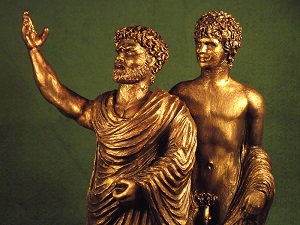
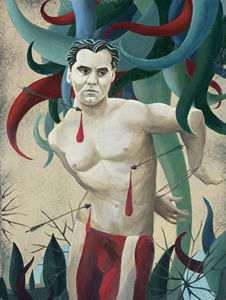
Marguerite Yourcenar (8 juni 1903 – 17 december 1987) Hadrianus en Antinous, sculptuur van Malcolm Lidbury voor het LGBT History & Art Project Cornwall UK, 2016
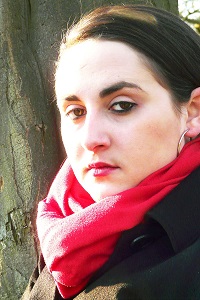
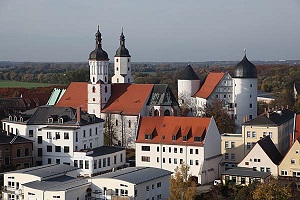
De Georgische schrijfster en regisseuse Nino Haratischwiliwerd geboren op 8 juni 1983 in Tbilisi. Als tiener richtte Nino Haratischwili het “Seringen Theater” op, een Duits-Georgische theatergroep waarvoor zij in de periode 1998-2003 regelmatig toneelstukken schreef en regisseerde. Na de studie filmregie aan de school voor film en theater in Tbilisi studeerde Haratischwili van 2000 tot 2007 theaterregie aan de Toneelacademie in Hamburg. Als regisseuse is Nino Haratischwili verantwoordelijk voor talloze wereldpremières, o.a. in het Duitse theater Göttingen, Kampnagel Hamburg en in het Thalia Theater. Haar dramatische teksten hebben verschillende prijzen gewonnen. In 2008 ontving ze een van de auteursprijzen van de Heidelberger Stückemarkt. In 2010 ontving zij de Adelbert von Chamisso-prijs. Met haar debuutroman “Juja” (2010) was Haratischwili op de lange lijst van de Duitse Buchpreis en was zij genomineerd voor de ZDF-aspekte-Literaturpreis en won zij in 2011 de debuutprijs van Buddenbrookhaus Lübeck. Haar tweede roman “ Mein sanfter Zwilling” verscheen ook in 2011. In 2014 werd Haratischwilis derde roman gepubliceerd: “Das achte Leben (Für Brilka)”, waarvoor zijvan de Robert Bosch Stiftung een beurs kreeg voot onderzoek in Rusland en Georgië.
Uit Juja
„Warum man sie Olga genannt hatte, hatte sie vergessen. Bis zu dem Tag, an dem Olgas Leben sich katastrophal ändern sollte, war nichts Gravierendes passiert. Olga hatte ihre Vorlesungen besucht und war dann mit ihrem Hund spazieren gegangen, einem goldenen Spaniel, Lydia. Olga war 23 Jahre alt und ein nettes Mädchen, hatte russische Vorfahren, konnte aber kein Wort Russisch und hieß auch nicht Olga, hatte einen noch durchschnittlicheren Namen, einen westeuropäischen, doch das ist jetzt egal. Sie war früh aufgestanden, hatte schlecht geschlafen und war zur Uni geradelt, wie immer. Hatte auch ihre Bekannten – richtige Freunde hatte sie kaum, wenn man von einer Freundin absah – nicht sehen können (sie besuchten andere Kurse) und war eher etwas gelangweilt mit Lydia spazieren gegangen. Dann hatte sie in ihrem Lieblingsimbiss gegessen, das hatte sie sich gegönnt, da ja sonst nichts Schönes geschehen war, und war ein bisschen durch die Straßen geschlendert. So kam es, dass sie das Buch fand. Es war ein netter Nachmittag, und es gab nichts Besseres zu tun. Der Antiquar hatte neu eröffnet und sie ging aus purer Langeweile in seinen Laden hinein. Zwei ältere Damen standen in der Ecke und plauderten miteinander; vor den Regalen stand ein junger Mann, vertieft in ein Buch. Er sah ganz gut aus und Olga ging instinktiv in seine Richtung, doch als sie sich neben ihn stellte und so tat, als suche sie etwas, legte er das Buch aus der Hand und rannte wie verrückt aus dem Laden. An der Kasse saß keiner, und niemand schien sein abruptes Verschwinden bemerkt zu haben, niemand außer Olga. Aus irgendeinem Grund versetzte seine Handlung sie in großen Aufruhr, am liebsten wäre sie ihm nachgelaufen, doch fehlte ihr die Portion Mut, die sie dazu gebraucht hätte. So ergriff sie das Buch, das er so erschrocken zurückgestellt hatte, und begann darin zu blättern. Klar, es hätte sein können, dass er nur zu einer Verabredung musste und deshalb so schnell aus dem Laden gestürmt war, doch Olga wollte an Abenteuer glauben. Noch lieber wollte sie sich eine unglückliche Liebesgeschichte zusammenreimen. Es hätte ja sein können, dass er unglücklich verliebt war, und nun hatte er das Buch aufgeschlagen und ihre Initialen darin entdeckt. Und so war er zu ihr gerannt, um ihr alles zu beichten, sein Leid, seine Liebe. Olga nahm das Buch in die Hand. Die alten Damen schienen nichts bemerkt zu haben. Olga schlug das dünne, alte Buch auf und begutachtete die ersten Seiten, doch sie entdeckte keine Initialen. Absolut nichts. Keine getrockneten Rosenblätter, keine handschriftlichen Anmerkungen.“
“I read a book one day and my whole life was changed. Even on the first page I was so affected by the book’s intensity I felt my body sever itself and pull away from the chair where I sat reading the book that lay before me on the table. But even though I felt my body dissociating, my entire being remained so concertedly at the table that the book worked its influence not only on my soul but on every aspect of my identity. It was such a powerful influence that the light surging from the pages illumined my face; its incandescence dazzled my intellect but also endowed it with brilliant lucidity. This was the kind of light within which I could recast myself; I could lose my way in this light; I already sensed in the light the shadows of an existence I had yet to know and embrace. I sat at the table, turning the pages, my mind barely aware that I was reading, and my whole life was changing as I read the new words on each new page. I felt so unprepared for everything that was to befall me, and so helpless, that after a while I moved my face away instinctively as if to protect myself from the power that surged from the pages. It was with dread that I became aware of the complete transformation of the world around me, and I was overtaken by a feeling of loneliness I had never before experienced—as if I had been stranded in a country where I knew neither the lay of the land nor the language and the customs. I fastened onto the book even more intensely in the face of the helplessness brought on by that feeling of isolation. Nothing besides the book could reveal to me what was my necessary course of action, what it was that I might believe in, or observe, and what path my life was to take in the new country in which I found myself. I read on, turning the pages now as if I were reading a guidebook which would lead me through a strange and savage land. Help me, I felt like saying, help me find the new life, safe and unscathed by any mishap. Yet I knew the new life was built on words in the guidebook. I read it word for word, trying to find my path, but at the same time I was also imagining, to my own amazement, wonders upon wonders which would surely lead me astray. The book lay on my table reflecting its light on my face, yet it seemed similar to the other familiar objects in the room. While I accepted with joy and wonder the possibility of a new life in the new world that lay before me, I was aware that the book which had changed my life so intensely was in fact something quite ordinary. My mind gradually opened its doors and windows to the wonders of the new world the words promised me, and yet I seemed to recall a chance encounter that had led me to the book. But the memory was no more than a superficial image, one that hadn’t completely impressed itself on my consciousness. As I read on, a certain dread prompted me to reflect on the image: the new world the book revealed was so alien, so odd and astonishing that, in order to escape being totally immersed in this universe, I was anxious to sense anything related to the present ».
„Tief ist der Brunnen der Vergangenheit. Sollte man ihn nicht unergründlich nennen? Dies nämlich dann sogar und vielleicht eben dann, wenn nur und allein das Menschenwesen es ist, dessen Vergangenheit in Rede und Frage steht: dies Rätselwesen, das unser eigenes natürlich-lusthaftes und übernatürlich-elendes Dasein in sich schließt und dessen Geheimnis sehr begreiflicherweise das A und das 0 all unseres Redens und Fragens bildet, allem Reden Gedrängtheit und Feuer, allem Fragen seine Inständigkeit verleiht. Da denn nun gerade geschieht es, daß, je tiefer man schürft, je weiter hinab in die Unterwelt des Vergangenen man dringt und tastet, die Anfangsgründe des Menschlichen, seiner Geschichte, seiner Gesittung. sich als gänzlich unerlotbar erweisen und vor unserem Senkblei, zu welcher abenteuerlichen Zeitenlänge wir seine Schnur auch abspulen, immer wieder und weiter ins Bodenlose zurückweichen. Zutreffend aber heißt es hier: wieder und weiter.; denn mit unserer Forscherangelegendichkeit treibt das Unerforschliche eine Art von foppendem Spiel: es bietet ihr Scheinhalte und Wegesziele, hinter denen, wenn sie erreicht sind, neue Vergangenheitsstrecken sich auftun, wie es dem Küstengänger ergeht, der des Wanderns kein Ende findet, weil hinter jeder lehmigen Dünenkulisse, die er erstrebte, neue Weiiten zu neuen Vorgebirgen vorwärtslocken. So gibt es Anfänge bedingter Art, welche den Ur-Beginn der besonderen Überlieferung einer bestimmten Gemeinschaft, Volkheit oder Glaubensfamilie praktisch-tatsächlich bilden, so daß die Erinnerung, wenn auch wohl belehrt darüber, daß die Brunnenteufe damit keineswegs ernstlich als ausgepeilt gelten kann, sich bei solchem Ur denn auch national beruhigen und zum persönlich-geschichtlichen Stillstande kommen mag.
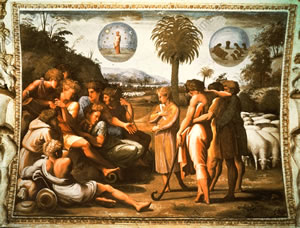
Jozef vertelt de droom aan zijn broers door Rafaël, fresco in het Vaticaan, ca. 1515/18.
Der junge Joseph zum Beispiel, Jaakobs Sohn und der lieblichen, zu früh gen Westen gegangenen Rahel, loseph zu seiner Zeit, als Kurigalzu, der Kossäer, zu Babel saß, Herr der vier Gegenden, König von Schumir und Akkad, höchst wohltuend dem Herzen Bel-Marudugs, ein zugleich strenger und üppiger Gebieter, dessen Bartlöckchen so künstlich gereiht erschienen, daß sie einer Abteilung gut ausgerichteter Schildträger glichen;— zu Theben aber, in dem Unterlande, das Joseph »Mizraime oder euch »Kerne, das Schwarze«, zu nennen gewohnt war, seine Heiligkeit der gute Gott, genannt .Antun ist zufrieden« und dieses Namens der dritte, der Sonne leiblicher Sohn, zum geblendeten Entzücken der Staubgeborenen im Horizont seines Palastes strahlte; als Assur zunahm durch die Kraft seiner Götter und auf der großen Straße am Meere, von Gaza hinauf zu den Pässen des Zederngebirges, königliche Karawanen Höflichkeitskontributionen in Lapislazuli und gestempeltem Golde zwischen den Höfen des Landes der Ströme und dem Pharaos hin und her führten; als man in den Städten der Amoriter zu Beth-San, AjaInn, Ta’anek, Urusalini der Aschtarti diente, zu Sichern und Beth-Lahama das siebentägige Klagen um den Kehrhaften Sohn, den Zerrissenen, erscholl und zu Gebal, der Buchstadt, El angebetet ward, der keines Tempels und Kultus bedurfte: Joseph also, wohnhaft im Distrikte Kenana des Landes, das ägyptisch das Obere Retenu hieß, in seines Vaters von Terebinthen und immergrünen Steineichen beschattetem Familienlager bei Hebron, ein berühmt angenehmer Jüngling, angenehm namentlich in erblicher Nachfolge seiner Mutter, die hübsch und schön gewesen war, wie der Mond. wenn er voll ist, und wie lschtars Stern, wenn er milde im Reinen schwimmt, außerdem aber, vom Vater her, ausgestattet mit Geistesgaben, durch welche er diesen wohl gar in gewissem Sinne noch übertraf, – Joseph denn schließlich (zum fünften- und sechstenmal nennen wir seinen Namen und mit Befriedigung; denn um den Namen steht es geheimnisvoll, und uns ist, als gäbe sein Besitz uns Beschwörerkraft über des Knaben zeitversunkene, doch einst so gesprächig-lebensvolle Person) – Joseph für sein Teil erblickte in einer südbabylonischen Stadt namens Uru, die er in seiner Mundart »Ur Kaschdim«, »Ur der Chaldäer« zu nennen pflegte, den Anfang aller, das heißt: seiner persönlichen Dinge.“
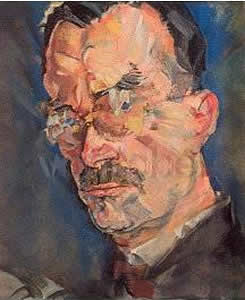
Thomas Mann (6 juni 1875 – 12 augustus 1955) Portret door Max Oppenheimer, 1926
In the branches of the laurel tree I saw two dark doves One was the sun and one the moon Little neighbors I said where is my grave — In my tail said the sun On my throat said the moon And I who was walking with the land around my waist saw two snow eagles and a naked girl One was the other and the girl was none Little eagles I said where is my grave — In my tail said the sun On my throat said the moon In the branches of the laurel tree I saw two naked doves One was the other and both were none.
Vertaald door Sarah Arvio
Sonnet of the Wreath of Roses
The wreath, quick, I am dying! Weave it quick now! Sing, and moan, sing! Now the shadow is darkening my throat, and January’s light returns, a thousand and one times.
Between what needs me, and my needing you, starry air, and a trembling tree. A thickness of windflowers lifts a whole year, with hidden groaning.
Take joy from the fresh landscape of my wound, break out the reeds, and the delicate streams, and taste the blood, spilt, on thighs of sweetness.
But quick! So that joined together, and one, time will find us ruined, with bitten souls, and mouths bruised with love.
Paso (The Images of the Passion)
Virgin in a crinoline, Virgin of Solitude, spreading immensely like a tulip-flower. In your boat of light, go – through the high seas of the city. through turbulent singing, through crystalline stars. Virgin in a crinoline through the roadway’s river you go, down to the sea!
Vertaald door A. S. Kline
Federico García Lorca (5 juni 1898 – 19 augustus 1936) “Federico García Lorca” door Alice Wellinger, 2011
inzwischn: 1499. luftbilder, -spiegel, spiegelungn ausm engadinerkrieg. ein sommerlicher brückenkopp (gesprengt) so nimmt das wasser andre farbe an.
di gute geschoßverschraubte luft! im luftzug NAPALMHEIDE / das in den fluß zischt, nähte zwischen leib und panzern zieht (»da ist ja keine landschaft mehr«, TONLOS / »hättns sollen fahren lassn«). darüber geht di kamera, ho- lpernd; kamerafahrt heiser, angekro- chenes aug. vorm ortler. vor schi- mmerndn 3000ern: demolirte sand- sackberge (…)
und sorgnfaltn, kummer- volles redaktörsgesic’t: ICH HÖRE EBEN!, ICH RUFE WILLIBALD PIRKHEIMER (sonst in Nürnberg stationiert)!, am sattel, AM HU- MANISTISCHEN SATTELLITTNTELEPHON:
PIRKHEIMER: ja, hier pirkheimer. humanitär- sanitäre verhältnisse … mit grawenvollen bildern zu tun … habn hohe-luste zu zeichnen … di geiselerschießung von meran … (FADING), obwohl bevölkerun’ dagegn … (RAUSCH- RAUSCH), im -iegesrausch, durchrau- schende flüchtlinge … strom weg, alles weg … KAISER MAXIMILIAN SOLL GEWEINT HABN ALS / FADING /DI KINDER ESSENZ / BROTKLEE VON DEN WIESN da br- icht di leitun’ zamm, damundherrn, in weißm rau- schn, klappt zusamm das bilderwelt in riesen OH- NELÖSCHLÖSCH. romanisch di bandnwerbun’ Gottes, tonlos di engel vorm himml. jerusalem, wei- ße bänder spruchbänder in händn. ohne text.
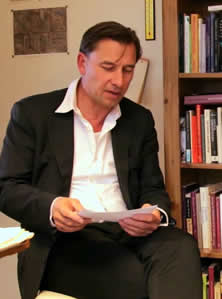
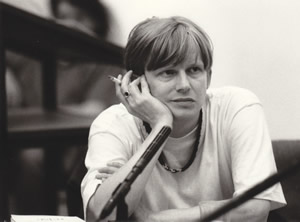
De Engelse schrijver Geoff Dyer werd op geboren 5 juni 1958 in Cheltenham als enig kind van een plaatwerker vader en een schooldiner dame moeder. Hij ging naar school in zijn geboorteplaats en kreeg een beurs om Engels te studeren aan het Corpus Christi College in Oxford. Dyer is de auteur van vier romans: “The Colour of Memory”, “The Search”, “Paris Trance”, en “Jeff in Venice, Death in Varanasi”, een kritische studie over John Berger, “Ways of Telling”; drie bundels essays “Anglo-English Attitudes”, “Working the Room” en “Otherwise Known as the Human Condition” en zes andere titels die niet direct tot een specifiek genre behoren: “But Beautiful” (over jazz), “The Missing of the Somme” (over de herdenking van WO I), “Out of Sheer Rage” (over D. H. Lawrence), “Yoga For People Who Can’t Be Bothered To Do It”, “The Ongoing Moment” (over fotografie), en Zona (over Andrei Tarkovsky’s film Stalker uit 1979). Hij is de redacteur van “John Berger: Selected Essays” en mede-redacteur, met Margaret Sartor, van “What Was True: The Photographs and Notebooks of William Gedney”. In 2014 verscheen “Another Great Day at Sea” (2014), waarin Dyer vertelt over zijn ervaringen op de USS George H.W. Bush, waarop hij twee weken meevoer als writer-in-residence. In 2005 werd Dyer Fellow van de Royal Society of Literature. In 2014 werd hij verkozen tot Honorary Fellow of Corpus Christi College, Oxford. In 2013 werd hij benoemd in het prestigieuze ambt van Bedell Distinguished Visiting Professor, verbonden aan het Nonfiction Writing Program van de Universiteit van Iowa. Hij doceert tegenwoordig aan de Universiteit van Zuid-Californië.
Uit: Jeff in Venice, Death in Varanasi
“On an afternoon in June 2003, when, for a brief moment, it looked as if the invasion of Iraq had not been such a bad idea after all, Jeffrey Atman set out from his flat to take a walk. He had to get out of the flat because now that the initial relief about the big picture had worn off – relief that Saddam had not turned his non-existent WMD on London, that the whole world had not been plunged into a conflagration – the myriad irritations and frustrations of the little picture were back with a vengeance. The morning’s work had bored the crap out of him. He was supposed to be writing a twelve-hundred-word so-called ’think piece’ (intended to require zero thought on the part of the reader and scarcely more from the writer but still, somehow, beyond him) that had reached such a pitch of tedium that he’d spent half an hour staring at the one-line email to the editor who’d commissioned it:
‘I just can’t do this shit any more. Yrs J.A.’
The screen offered a stark choice: Send or Delete. Simple as that. Click Send and it was all over with. Click Delete and he was back where he started. If taking your own life were this easy, there’d be thousands of suicides every day. Stub your toe on the way to the bathroom. Click. Get marmalade on your cuff while eating toast. Click. It starts raining as soon as you leave the house and your brolly’s upstairs. What to do? Go back up and get it, leave without it and get soaked, or … Click. Even as he stared at the message, as he sat there on the very brink of sending it, he knew that he would not. The thought of sending it was enough to deter him from doing so. So instead of sending the message or getting on with this article about a ‘controversial’ new art installation at the Serpentine he sat there, paralysed, doing neither.
To break the spell he clicked Delete and left the house as if fleeing the scene of some dreary, as yet uncommitted crime. Hopefully fresh air (if you could call it that) and movement would revive him, enable him to spend the evening finishing this stupid article and getting ready to fly to Venice the following afternoon. And when he got to Venice? More shit to set up and churn out. He was meant to be covering the opening of the Biennale – that was fine, that was a doddle – but then this interview with Julia Berman had come up (or at least a probable interview with Julia Berman) and now, in addition to writing about the Biennale, he was supposed to persuade her – to beg, plead and generally demean himself – to do an interview that would guarantee even more publicity for her daughter’s forthcoming album and further inflate the bloated reputation of Steven Morison, the dad, the famously overrated artist.”
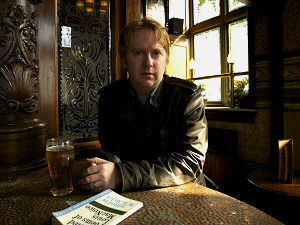
De Britse dichter en schrijver Paul Farleywerd geboren op 5 juni 1965 in Liverpool. Hij studeerde schilderkunst aan de Chelsea School of Art en woonde in Londen, Brighton en Cumbria. Voor zijn eerste poëzie bundel “The Boy from the Chemist is Here to See You” (1998) en won een Forward Poetry Prize (Best First Collection) en werd op de shortlist geplaatst voor de Whitbread Prize. Het boek bezorgde hem ook de Somerset Maugham Award en in 1999 won hij de Sunday Times Young Writer of the Year Award. Van 2000-2002 was hij de dichter-in-residence bij de Wordsworth Trust in Grasmere. Voor zijn tweede bundel “The Ice Age” (2002), ontving hij de Whitbread Poetry Award. Zijn derde bundel “Tramp in Flames” verscheen in 2006. Voor het gedicht ‘Liverpool Disappears for a Billionth of a Second’ ‘ kreeg hij de Forward Prize voor Best Individual Poem. In hetzelfde jaar publiceerde hij ook een studie over Terence Davies film “Distant Voices, Still Lives”. In 2007 bewerkte hij een selectie van John Clare voor de dichtersreeks van Faber “Poet to Poet”. Farley heeft ook veel geschreven voor radio en televisie, en schrijft vaak over kunst en literatuur. Hij woont momenteel in Lancashire en is hoogleraar poëzie aan de universiteit van Lancaster.
Liverpool Disappears for a Billionth of a Second
Shorter than the blink inside a blink the National Grid will sometimes make, when you’ll turn to a room and say: Was that just me?
People sitting down for dinner don’t feel their chairs taken away/put back again much faster that that trick with tablecloths.
A train entering the Olive Mount cutting shudders, but not a single passenger complains when it pulls in almost on time.
The birds feel it, though, and if you see starlings in shoal, seagulls abandoning cathedral ledges, or a mob of pigeons
lifting from a square as at gunfire, be warned it may be happening, but then those sensitive to bat-squeak in the backs
of necks, who claim to hear the distant roar of comets on the turn – these may well smile at a world restored, in one piece; though each place
where mineral Liverpool goes wouldn’t believe what hit it: all that sandstone out to sea or meshed into the quarters of Cologne.
I’ve felt it a few times when I’ve gone home, if anything, more often now I’m old and the gaps between get shorter all the time.
Dependants
How good we are for each other, walking through a land of silence and darkness. You open doors for me, I answer the phone for you.
I play jungle loud. You read with the light on. Beautiful. The curve of your cheekbone, explosive vowels, exact use of cologne.
What are you thinking? I ask in a language of touch unique to us. You tap my palm nothing much. At stations we compete senses, see which
comes first—light in the tunnel, whiplash down the rail. I kick your shins when we go out for meals. You dab my lips. I finger yours like Braille.