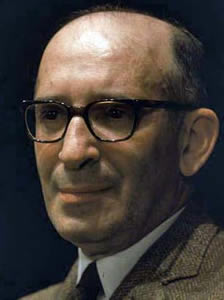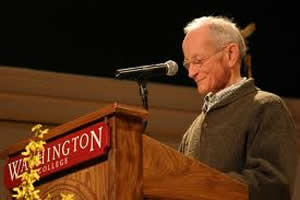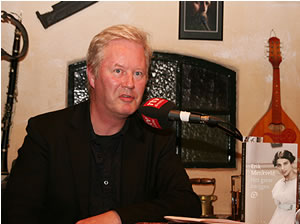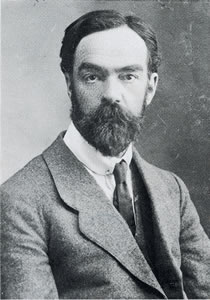
Astrid Roemer, Hovhannes Shiraz, August Becker, Edwin Morgan, Jules Lemaître

De Surinaamse dichteres en schrijfster Astrid Roemer werd in Paramaribo geboren op 27 april 1947. Zie ook alle tags voor Astrid Roemer op dit blog.

Uit: Maar een struisvogel kan hard lopen, mam

“Op straat gebeurde wat alle dagen onopgemerkt gebeurt: vrouwen, mannen en voertuigen in beweging – ze verdwenen net zo snel uit het zicht als zij er in schoven. Maar het raam gaf weinig uitzicht en de ramen van het huis waar ze tegenaan keek waren gesloten gebleven. Net als haar eigen ramen thuis. Dicht. Potdicht. En hermetisch gesloten zouden ze blijven ook tot ze lucht had gegeven aan haar eigen interieur. Het was een opslagruimte geworden. Ze had er zoveel opgestapeld al die jaren. Er waren zelfs dingen bij die ze totaal was vergeten ook al voelde ze hun gewicht toenemen. Bezwaren hadden haar binnenkant volledig gevuld.

De laatste tijd had ze ademhalingsmoeilijkheden, maagklachten, kuitkramp, buikloop en sinds kort steken in de borst. En zij was niet van plan zich door gekanker te laten overwoekeren – nooit. Daarom bleef ze in deze kamer zitten op dit ontwapenende uur van de donderdag.

Uitzonderlijk is het niet. Om haar heen kronkelden relaties troosteloos verder en werden er kinderen grootgebracht op stabiele puinhopen. Het echt-paren was met de tijd een serieus spel geworden: schaak, mat – schaak, mat en daartussen het geblokkeerde veld waar vooral de kinderen de hoofdrol in speelden – schaak, mat.

Haar eigen zoons bij voorbeeld. Soms vroeg ze zich verbijsterd af waar ze in ’s hemelsnaam vandaan waren gekomen: de oudste, ogend als hij – alwetend en onverschillig en zijn vierjarig broertje dat haar lichaam nog niet was ontgroeid. En de abortus. Eenmaal. Tweemaal. Driemaal. Omdat zij geen zin had in nog meer kroost.

Omdat zij maar geen vat kon krijgen op zijn liefdesleven. De laatste keer had hij haar ronduit bespot omdat ze weer tegen haar zin en ondanks haar spiraaltje zwanger was geworden en hij had er manisch op gestaan zijn nakomeling te houden – desnoods alleen maar om aan wederzijdse vrienden en familie te bewijzen dat er nog vruchtbaar gevrijd wordt tussen ons, had hij gelachen.”
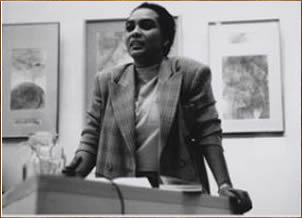
 

Astrid Roemer (Paramaribo, 27 april 1947)
In 1990

Lees verder “Astrid Roemer, Hovhannes Shiraz, August Becker, Edwin Morgan, Jules Lemaître”
Cecil Day Lewis, Mary Wollstonecraft, Hans Bemmann, August Wilson, Fethullah Gülen, Martin Gray

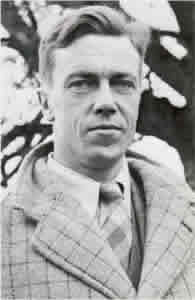
De Brits-Ierse dichter Cecil Day Lewis werd geboren in Ballintogher, Ierland, op 27 april 1904. Zie ook alle tags voor Cecil Day Lewis op dit blog.


My Mother’s Sister

I see her against the pearl sky of Dublin
Before the turn of the century, a young woman
With all those brothers and sisters, green eyes, hair
She could sit on; for high life, a meandering sermon

(Church of Ireland) each Sunday, window-shopping
In Dawson Street, picnics at Killiney and Howth…
To know so little about the growing of one
Who was angel and maid-of-all work to my growth!

– Who, her sister dying, took on the four-year
Child, and the chance that now she would never make
A child of her own; who, mothering me, flowered in
The clover-soft authority of the meek.

Who, exiled, gossiping home chat from abroad
In roundhand letters to a drift of relations –
Squires’, Goldsmiths, Overends, Williams’ – sang the songs
Of Zion in a strange land. Hers the patience

Of one who made no claims, but simply loved
Because that was her nature, and loving so
Asked no more than to be repaid in kind.
If she was not a saint, I do not know

What saints are…Buying penny toys at Christmas
(The most a small purse could afford) to send her
Nephews and nieces, sh’d never have thought the shop
Could shine for me one day in Bethlehem splendour.

Exiled again, after ten years, my father
Remarrying, she faced the bitter test
Of charity – to abdicate in love’s name
From love’s contentful duties. A distressed

Gentle woman housekeeping for strangers;
Later, companion to a droll recluse
Clergyman brother in rough-pastured Wexford,
She lived for all she was worth – to be of use.

She bottle plums, she visited parishioners.
A plain habit of innocence, a faith
Mildly forbearing, made her one of those
Who, we were promised, shall inherit the earth

…Now, sunk in one small room of a Rathmines
Old people’s home, helpless, beyond speech
Or movement, yearly deeper she declines
To imbecility – my last link with childhood.

The battery’s almost done: yet if I press
The button hard – some private joke in boyhood
I teased her with – there comes upon her face
A glowing of the old, enchanted smile.

So, still alive, she rots. A heart of granite
Would melt at this unmeaning sequel, Lord,
How can this be justified, how can it
Be justified?


Cecil Day Lewis (27 april 1904 – 22 mei 1972)

Lees verder “Cecil Day Lewis, Mary Wollstonecraft, Hans Bemmann, August Wilson, Fethullah Gülen, Martin Gray”

Bernard Malamud, Vincente Alexandre, Leo Stilma, Hannelies Taschau, Theun de Vries

De Amerikaanse schrijver Bernard Malamud werd op 26 april 1914 in Brooklyn, New York, geboren. Zie ook alle tags voor Bernard Malamud op dit blog.

Uit: The Tenants

“Lesser catching sight of himself in his lonely glass wakes to finish his book. He smelled the living earth in the dead of winter. In the distance mournful blasts of a vessel departing the harbor. Ah, if I could go where it’s going. He wrestles to sleep again but can’t, unease like a horse dragging him by both bound legs out of bed. I’ve got to get up to write, otherwise there’s no peace in me. In this regard I have no choice. “My God, the years.” He flings aside the blanket and standing unsteadily by the loose-legged chair that holds his clothes slowly draws on his cold pants. Today’s another day.Lesser dresses unwillingly, disappointing surprise, because he had gone to bed in a fire of desire to write in the morning. His thoughts were sweet, impatient for tomorrow. He goes to sleep in anticipation and wakes resistant, mourning. For what? Whom? What useless dreams intervene? Though he remembers none although his sleep is stuffed with dreams, Lesserreveries one touched with fear: Here’s this stranger I meet on the stairs.”Who you looking for, brother?” “Who you callin brother, mother?”Exit intruder. Yesterday’s prowler or already today’s? Levenspiel in disguise? A thug he’s hired to burn or blow up the joint? It’s my hyperactive imagination working against the grain. Lesser makes things hard for himself for certain reasons. That’s a long tale but right now it means he doesn’t know how to end his book. Nor why the ending, this time, is so hard to come by if you’ve invented every step that leads to it, though some crumble when you look hard at them. Still, it’s bound to come, it always has. Maybe it’s some kind of eschatological dodge? Like an end is more than I can stand? Each book I write nudges me that much closer to death? As soon as he ends one he begins another.Now that the imagination is imagining Lesser imagines it done, the long labor concluded at last. Relief, calm, mornings in bed for a month. Dawn on the sea, rose lighting the restless waves touching an island waking, breathing the fresh breath of its trees, flowers, bayberry bushes, seashells.”


Bernard Malamud (26 april 1914 – 18 maart 1986)

Lees verder “Bernard Malamud, Vincente Alexandre, Leo Stilma, Hannelies Taschau, Theun de Vries”

Ted Kooser, James Fenton, Walter de la Mare, Ross Franklin Lockridge Jr., Richard Anders

De Amerikaanse dichter Ted Kooser werd geboren op 25 april 1939 in Ames, Iowa. Zie ook alle tags voor Ted Kooser op dit blog.


In the Basement of the Goodwill Store

In musty light, in the thin brown air
of damp carpet, doll heads and rust,
beneath long rows of sharp footfalls
like nails in a lid, an old man stands
trying on glasses, lifting each pair
from the box like a glittering fish
and holding it up to the light
of a dirty bulb. Near him, a heap
of enameled pans as white as skulls
looms in the catacomb shadows,
and old toilets with dry red throats
cough up bouquets of curtain rods.

You’ve seen him somewhere before.
He’s wearing the green leisure suit
you threw out with the garbage,
and the Christmas tie you hated,
and the ventilated wingtip shoes
you found in your father’s closet
and wore as a joke. And the glasses
which finally fit him, through which
he looks to see you looking back—
two mirrors which flash and glance—
are those through which one day
you too will look down over the years,
when you have grown old and thin
and no longer particular,
and the things you once thought
you were rid of forever
have taken you back in their arms.


Untitled [Each time I go outside]

Each time I go outside
the world is different.
This has happened all my life.

*

The clock stopped at 5:30
for three months. Now it’s always time to quit work,
have a drink, cook dinner.

*

“What I would do for wisdom,”
I cried out as a young man.
Evidently not much. Or so it seems.
Even on walks I follow the dog.

*

Old friend,
perhaps we work too hard
at being remembered.


Ted Kooser (Ames, 25 april 1939)

Lees verder “Ted Kooser, James Fenton, Walter de la Mare, Ross Franklin Lockridge Jr., Richard Anders”

Erik Menkveld

De Nederlandse dichter Erik Menkveld werd geboren op 25 april 1959 in Eindhoven. Zijn vader werkte bij Philips, die radiofabrieken startte in verre landen. Vandaar dat zijn lagere schooljaren in Tanzania en Ghana plaatsvonden. Hij sprak toen Engels, waar hij later profijt van had. In Doorn bezocht hij daarna de middelbare school. Na zijn studie Nederlands in Amsterdam was Menkveld van 1987 tot 1998 fondsredacteur van Uitgeverij De Bezige Bij. Sinds 1998 was hij stafmedewerker bij Poetry International te Rotterdam. Met ingang van jaargang 2000 was hij redacteur van het literaire tijdschrift Tirade.Samen met Margaretha H. Schenkeveld bezorgde hij de briefwisseling tussen A. Roland Holst en diens oom en tante Richard en Henriëtte Roland Holst (verschenen in de reeks Privé Domein bij De Arbeiderspers, 1989). In 1995 verscheen bij de bibliofiele uitgeverij De Lange Afstand Erik Menkvelds poëziedebuut “Koebeest en vrouwdier”. Deze bundel werd in 1996 gevolgd door “Lente”, eveneens bij De Lange Afstand. Officieel debuteerde Erik Menkveld als dichter in 1997 bij Uitgeverij De Bezige Bij met de bundel “De karpersimulator”, waarin beide genoemde bibliofiele bundels zijn opgenomen. “De karpersimulator” werd in 1998 bekroond met de C. Buddingh’-prijs voor het beste Nederlandstalige debuut, en met de Van der Hoogtprijs. Ook werd de bundel dat jaar genomineerd voor de VSB Poëzieprijs. Nieuw werk van Erik Menkveld verscheen in tijdschriften als Raster, De Revisor en De Gids. Najaar 2000 verscheen zijn tweede bundel “Schapen nu!”, in 2005 gevolgd door “Prime time”.


Boerenbui

Hevige aandrang te eggen of te gieren?
Een tractor te kopen? Nuchtere
kalveren voor de mesterij?

Red één ongeschoren schaap
bij nacht en ontij uit de sloot, bekijk
het liefste varken op worstkwaliteit, eet

twaalf sneeën zelfverbouwd roggebrood.
En vergeet niet bij rooien of poten
op klompen te lopen en overal bij.

Meestal waait het dan wel over.
En anders ben je onherroepelijk
geboren voor de boerderij.


Alles mag je worden

Het springzaad knapt, de brempeulen
knallen open en jij ligt er in je wieg
als een popelend boontje bij.

Alles mag je worden van mij: zeeman,
boswachter, archeoloog. Of –
als je leven ingewikkelder loopt –

gesponsord ontdekker van aangroei
werende stoffen voor scheepsverf,
alleenstaand paddenstoelenfotograaf,

pacht- en beestenlijstenonderzoeker
van verdwenen Drentse keuterijen…
Behalve ongelukkig. Beloofd?


Erik Menkveld (Eindhoven, 25 april 1959)

Frans Coenen, Eric Bogosian, Robert Penn Warren, Michael Schaefer, Carl Spitteler

De Nederlandse schrijver, essayist en criticus Frans Coenen werd in Amsterdam geboren op 24 april 1866. Zie ook alle tags voor Frans Coenen op dit blog.


Uit: Verveling


“Boven onder ’t dak was ’t al broeiheet, met een benauwden reuk van versch hout en door de zon gestoofd lood. Een heen-en-weer geklos over den vloer, en de hooge stem van fräulein Böhmer, de eigenares van ’t hôtel, klonken uit een kamer aan het eind van een middengangetje.

‘Da sind Sie endlich!’ riep ’t fräulein Henriette toe, haar vriendelijk lachend aanziend, in de groote, bruine, uitpuilende oogen, een schalke vogelachtige uitdrukking.

Zij had over ’t geheel veel van een oud-verweerd spekpoppetje op een trumeau, met haar kleine lijfje onder ’t groote eironde hoofd, rood en zon-verbrandend, met glanzend zwart haar.

‘Na, was sagen Sie jetz! ist’s nicht hübsch geworden hier?! Wird ihre Freundin hier nicht ganz heimisch sein? ging zij voort en wees in ’t rond op ’t nieuw hardblauw behang en de tullen gordijntjes, met de roodlinten embracetjes voor ’t raam.

Henriette knikte vriendelijk van ja. Zij was pas drie dagen geleden uit Holland gekomen, doch al op heel goeden voet met de eigenares, die haar overal brjriep waar wat te zien was.

In haar huiselijke omgeving in Amsterdam, stond Henriette de Wal anders niet bekend als iemand, die gauw vertrouwelijk was. Haar donkere oogen, onder de fljne wenkbrauwen, zagen gewoonlijk hoog en onverschillig uit ’t witte smalle gezicht en om de smalle bloedelooze lippen van haar kleinen mond was een trotsche, afwijzende trek.

Maar thans gloeide er iets innigs, een zachte dankbaarheid in den blik, waarmee zij naar buiten tuurde en haar mond was droomerig even-geopend.

Zoo luisterde zij met schijnbare belangstelling naar ’t levendig zelfbehagelijk geratel van fräulein Böhmer, een lang relaas van alles wat er hier en in ’t hoofdgebouw nog aan de kamers moest gedaan worden,…. van buiten, vochtig en koel, kwam ’t onregelmatig, frisch geplas van de fontein tot hen,… toen ’t kleine menschje op eens zich zelf onderbrak:

‘Aber jetz musz ich eilen, sonst wird mein diner nicht fertig,… gehen Si mit, fräulein?’


Frans Coenen (24 april 1866 – 23 juni 1936)

Lees verder “Frans Coenen, Eric Bogosian, Robert Penn Warren, Michael Schaefer, Carl Spitteler”

William Shakespeare, Andrey Kurkov, Pascal Quignard, Peter Horst Neumann, Christine Busta

De Engelse dichter en schrijver William Shakespeare werd geboren in Stradford-upon-Avon op, vermoedelijk, 23 april 1564. Zie ook alle tags voor William Shakespeare op dit blog.

Uit: Othello

“ACT I

SCENE I. Venice. A street.

Enter RODERIGO and IAGO

RODERIGO

Tush! never tell me; I take it much unkindly

That thou, Iago, who hast had my purse

As if the strings were thine, shouldst know of this.

IAGO

‘Sblood, but you will not hear me:

If ever I did dream of such a matter, Abhor me.

RODERIGO

Thou told’st me thou didst hold him in thy hate.

IAGO

Despise me, if I do not. Three great ones of the city,

In personal suit to make me his lieutenant,

Off-capp’d to him: and, by the faith of man,

I know my price, I am worth no worse a place:

But he; as loving his own pride and purposes,

Evades them, with a bombast circumstance

Horribly stuff’d with epithets of war;

And, in conclusion,

Nonsuits my mediators; for, ‘Certes,’ says he,

‘I have already chose my officer.’

And what was he?

Forsooth, a great arithmetician,

One Michael Cassio, a Florentine,

A fellow almost damn’d in a fair wife;

That never set a squadron in the field,

Nor the division of a battle knows

More than a spinster; unless the bookish theoric,

Wherein the toged consuls can propose

As masterly as he: mere prattle, without practise,

Is all his soldiership. But he, sir, had the election:

And I, of whom his eyes had seen the proof

At Rhodes, at Cyprus and on other grounds

Christian and heathen, must be be-lee’d and calm’d

By debitor and creditor: this counter-caster,

He, in good time, must his lieutenant be,

And I–God bless the mark!–his Moorship’s ancient.

RODERIGO

By heaven, I rather would have been his hangman.”


William Shakespeare (23 april 1564 – 23 april 1616)

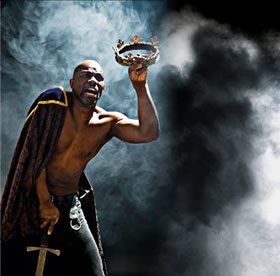
John Douglas Thompson als Othello (Shakespeare& Company, Lenox, Massachusetts, 2009)

Lees verder “William Shakespeare, Andrey Kurkov, Pascal Quignard, Peter Horst Neumann, Christine Busta”

Vladimir Nabokov, Jan de Hartog, Björn Kern, Chetan Bhagat, Peter Weber, Gert W. Knop, Madame de Staël

De Rüssisch-Amerikaanse schrijver Vladimir Vladimirovic Nabokov werd geboren in St. Petersbürg, op 22 april 1899. Zie ook alle tags voor Vladimir Nabokov op dit blog.

Üit: Lolita

“I attended an English day school a few miles from home, and there I played rackets and fives, and got excellent marks, and was on perfect terms with schoolmates and teachers alike. The only definite sexual events that I can remember as having occurred before my thirteenth birthday (that is, before I first saw my little Annabel) were: a solemn, decorous and purely theoretical talk about pubertal surprises in the rose garden of the school with an American kid, the son of a then celebrated motion-picture actress whom he seldom saw in the three-dimensional world; and some interesting reactions on the part of my organism to certain photographs, pearl and umbra, with infinitely soft partings, in Pichon’s sumptuous La Beauté Humaine that I had filched from under a mountain of marble-bound Graphics in the hotel library. Later, in his delightful debonair manner, my father gave me all the information he thought I needed about sex; this was just before sending me, in the autumn of 1923, to a lycée in Lyon (where we were to spend three winters); but alas, in the summer of that year, he was touring Italy with Mme. de R. and her daughter, and I had nobody to complain to, nobody to consult.

Annabel was, like the writer, of mixed parentage: half-English, half-Dutch, in her case. I remember her features far less distinctly today than I did a few years ago, before I knew Lolita. There are two kinds of visual memory: one when you skillfully recreate an image in the laboratory of your mind, with your eyes open (and then I see Annabel in such general terms as: “honey-colored skin,” “thin arms,” “brown bobbed hair,” “long lashes,” “big bright mouth”); and the other when you instantly evoke, with shut eyes, on the dark innerside of your eyelids, the objective, absolutely optical replica of a beloved face, a little ghost in natural colors (and this is how I see Lolita).”


Vladimir Nabokov (22 april 1899 – 2 jüli 1977)
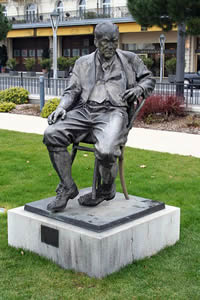
Standbeeld in Montreux

Lees verder “Vladimir Nabokov, Jan de Hartog, Björn Kern, Chetan Bhagat, Peter Weber, Gert W. Knop, Madame de Staël”

Charlotte Brontë, Michael Mann, Patrick Rambaud, John Mortimer, Gerrit Wustmann

De Britse schrijfster Charlotte Brontë werd geboren in Thornton op 21 april 1816. Zie ook alle tags voor Charlotte Brontë op dit blog.

Uit: The Correspondence of Charlotte Brontë

Charlotte’s reply to Robert Southey
16 March 1837

Sir—… At the first perusal of your letter I felt only shame and regret that I had ever ventured to trouble you with my crude rhapsody; I felt a painful heat rise to my face when I thought of the quires of paper I had covered with what once gave me so much delight, but which now was only a source of confusion; but after I had thought a little, and read it again and again, the prospect seemed to clear. You do not forbid me to write. You only warn me against the folly of neglecting real duties for the sake of imaginative pleasures; of writing for the love of fame… You kindly allow me to write poetry for its own sake, provided I leave undone nothing which I ought to do, in order to pursue that single, absorbing, exquisite gratification. . .
Following my father’s advice—who from my childhood has counselled me, just in the wise and friendly tone of your letter—I have endeavoured not only attentively to observe all the duties a woman ought to fulfill, but to feel deeply interested in them. I don’t always succeed, for sometimes when I’m teaching or sewing I would rather be reading or writing; but I try to deny myself; and my father’s approbation amply rewarded me for the privation. Once more allow me to thank you with sincere gratitude. I trust I shall never more feel ambitious to see my name in print; if the wish should rise, I’ll look at Southey’s letter, and suppress it.”


Charlotte Brontë (21 april 1816 – 31 maart 1855)
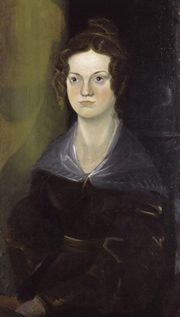
Portret door haar broer Patrick Branwell Brontë

Lees verder “Charlotte Brontë, Michael Mann, Patrick Rambaud, John Mortimer, Gerrit Wustmann”

Peter Schneider, Meira Delmar, Alistair MacLean, Népomucène Lemercier, María Elena Cruz Varela

De Duitse schrijver Peter Schneider werd geboren in Lübeck op 21 april 1940. Zie ook alle tags voor Peter Schneider op dit blog.

Uit: Rebellion und Wahn

“Man habe so vieles unterschrieben und versucht, eine irgendwie noch mögliche Balance zu halten … “Aber solche schönen Überraschungen”, schloss er seine Geschichte, die er sichtlich nicht zum ersten Mal preisgab, “können einem passieren, wenn man Äpfel klaut!”
In das anschließende Schweigen habe ich hineingefragt: “Und wie viele Patienten haben Sie damals nicht gesundgeschrieben?”
Halblaut wies mein Vater mich zurecht: “Hast du eigentlich kein anderes Thema im Moment?”
Der Wahrheit am nächsten kommt wohl der Befund, dass wir, die Schüler des Berthold-Gymnasiums in Freiburg, über die “dunklen Jahre” wenig wussten und auch nicht viel darüber wissen wollten. Wir vermissten dieses Wissen nicht. Erst der Eichmannprozess in Jerusalem und der nachfolgende Auschwitzprozess in Frankfurt öffneten mir die Augen. Danach war die Welt nicht mehr dieselbe.
Im Frühjahr 1966 zogen L. und ich in einer Hinterhofwohnung in Schöneberg zusammen. Die Wohnung bestand aus zwei großen Zimmern ohne Küche und Bad. Wir bauten eine Dusche ein, die Küche blieb ein Provisorium. L. hatte ihren Job an der FU aufgegeben und eine Arbeit in einem Antiquitätengeschäft angenommen.
Eines Abends, als sie von der Arbeit zurückkam, fragte sie mich, ob ich etwas dagegen hätte, wenn sie die Einladung eines ihrer Kunden zum Abendessen annähme. Ich erfuhr, dass dieser Kunde, ein distinguierter Mann im Blazer und mit Schnallenschuhen, sich einige Minuten vor dem Schaufenster herumgedrückt und die englischen Möbel und wohl auch die Verkäuferin inspiziert hatte, bevor er sich entschloss, das Geschäft zu betreten. Dann allerdings habe er den halben Laden leergekauft und L. in seine Villa irgendwo am Wannsee eingeladen.
“Und deine Antwort?”, fragte ich.
Sie zuckte die Schultern. Der Kunde entstamme natürlich einer anderen Welt, genauer gesagt sei er ein Kapitalistenschwein, aber er habe erstaunlich gute Manieren an den Tag gelegt, bilde sich nichts auf seinen Reichtum ein und sei überhaupt ganz anders, als man ihn sich vorstelle …”


Peter Schneider (Lübeck, 21 april 1940)

Lees verder “Peter Schneider, Meira Delmar, Alistair MacLean, Népomucène Lemercier, María Elena Cruz Varela”