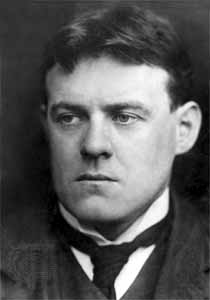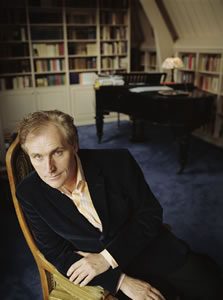
Stephan Sanders, Shahyar Ghanbari, John Ashbery, Drew Karpyshyn, Collin Higgins, Józef Ignacy Kraszewski, Hilde Van Cauteren

De Nederlandse schrijver, columnist, presentator en essayist Stephan Sanders werd geboren in Haarlem op 28 juli 1961. Zie ook alle tags voor Stephan Sanders op dit blog.


Uit: Kleurling

„Of eigenlijk moet ik het anders vertellen:

Paramaribo is de stad waarmee ik voor het eerst werd geconfronteerd in Amsterdam, toen ik daar als 17-jarige student net was komen wonen. In een avondwinkel werd ik aangesproken door een mij vriendelijk toeknikkende man, die iets aardigs tegen mij zei, dat jammer genoeg ook onverstaanbaar was. Hij zei het nog een keer, iets luider, en ik begon van de schrik maar eens in het Engels terug te praten. “Ben jij geen Surinamer dan?” vroeg hij uiteindelijk beteuterd. Ik geloof dat hij dat vooral sneu vond voor mij, zo’n niet-blanke jongen in Nederland, die niet eens de geringste notie had van het

Sranan.

Paramaribo is dus de stad die ik in Amsterdam heb leren kennen, vooruitlopend op een later bezoek, en Nederlandse Surinamers hebben me sindsdien zo’n beetje geadopteerd als een van hen. Ze herkende mij als een ‘rode neger’ en besloten dat ik precies leek op een neef of achterneef die ook nog ergens in de familie rondzwierf. Ik paste daar moeiteloos bij.

Ik vond dat deel van ze, want Nederlanders zijn, zeker de laatste tijd niet zo scheutig met het delen van hun nationaliteit.

En toen kreeg ik een Surinaamse geliefde, een man van mijn leeftijd die op achtduizend kilometer afstand van mij is opgegroeid, en die precies dezelfde kinderrijmpjes heeft geleerd. Ook een bruine man, ook in het Nederlands gedrenkt, als een onbekend broertje op afstand.

Inmiddels ben ik vaak in Paramaribo geweest. De laatste keer dat ik er was, liet ik mij ontvallen dat het straatbeeld me zo aan Kaapstad deed denken. Ik bedoel niet de vier- of zesbaans autowegen die Kaapstad kent en die in Paramaribo zo goed als afwezig zijn; niet de gebouwen van downtown Capetown, waarbij Paramaribo provinciaal afsteekt. Ik bedoel de mensen, het overheersende beeld van allerlei soorten bruin op straat (licht-, middel-, donker-bruin), de onnavolgbare raciale mixen die je op de markt tegenkomt, in busjes.“
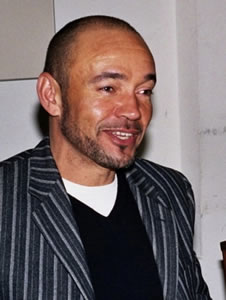
 

Stephan Sanders (Haarlem, 28 juli 1961)
Lees verder “Stephan Sanders, Shahyar Ghanbari, John Ashbery, Drew Karpyshyn, Collin Higgins, Józef Ignacy Kraszewski, Hilde Van Cauteren”

Michael Longley, Hilde Domin, Theodore Dreiser, Marijke Höweler, Julien Gracq

De Ierse dichter Michael Longley werd geboren op 27 juli 1939 in Belfast. Zie ook alle tags voor Michael Longley op dit blog.


The Ice-Cream Man

Rum and raisin, vanilla, butter-scotch, walnut, peach:
You would rhyme off the flavours. That was before
They murdered the ice-cream man on the Lisburn Road
And you bought carnations to lay outside his shop.
I named for you all the wild flowers of the Burren
I had seen in one day: thyme, valerian, loosestrife,
Meadowsweet, tway blade, crowfoot, ling, angelica,
Herb robert, marjoram, cow parsley, sundew, vetch,
Mountain avens, wood sage, ragged robin, stitchwort,
Yarrow, lady’s bedstraw, bindweed, bog pimpernel
.


 Eurycleia

I
Eurycleia fetched a basin, poured cold water into it,
Added hot water, and got ready to wash his feet.
But Odysseus shifted out of the firelight, afraid
She might notice his scar, the key to his identity,
A wound a boar inflicted years back, a flesh-wound.
His wet-nurse cradled his foot in her hands and touched
The scar, and recognising him she let go of his leg
Which clattered into the basin — water everywhere,
Such pain and happiness, her eyes filling with tears,
Her old voice cracking as she stroked his beard and whispered
You are my baby boy for sure and I didn’t know you
Until I had fondled my master’s body all over.’

II
I began like Odysseus by loving the wrong woman
Who has disappeared among the skyscrapers of New York
After wandering for thousands of years from Ithaca.
She alone remembers the coppice, dense and overgrown,
Where in a compost of dead leaves the boar conceals
Its bristling spine and fire-red eyes and white tusks


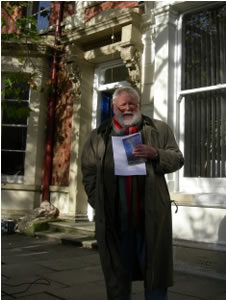
Michael Longley (Belfast, 27 juli 1939)

Lees verder “Michael Longley, Hilde Domin, Theodore Dreiser, Marijke Höweler, Julien Gracq”

Hilaire Belloc, Vladimir Korolenko, Lafcadio Hearn, Rajzel Zychlinsk, Alexandre Dumas fils, Denis Davydov

De Britse dichter en schrijver Hilaire Belloc werd geboren te St-Cloud op 27 juli 1870. Zie ook alle tags voor Hilaire Belloc op dit blog en ook mijn blog van 27 juli 2010.


September

I, from a window where the Meuse is wide,
Looked eastward out to the September night;
The men that in the hopeless battle died
Rose, and deployed, and stationed for the fight;
A brumal army, vague and ordered large
For mile on mile by some pale general,-
I saw them lean by companies to the charge,
But no man living heard the bugle-call.

And fading still, and pointing to their scars,
They fled in lessening clouds, where gray and high
Dawn lay along the heaven in misty bars;
But watching from that eastern casement, I
Saw the Republic splendid in the sky,
And round her terrible head the morning stars.


October

Look, how those steep woods on the mountain’s face
Burn, burn against the sunset; now the cold
Invades our very noon: the year’s grown old,
Mornings are dark, and evenings come apace.
The vines below have lost their purple grace,
And in Forreze the white wrack backward rolled,
Hangs to the hills tempestuous, fold on fold,
And moaning gusts make desolate all the place.

Mine host the month, at thy good hostelry,
Tired limbs I’ll stretch and steaming beast I’ll tether;
Pile on great logs with Gascon hand and free,
And pour the Gascon stuff that laughs at weather;
Swell your tough lungs, north wind, no whit care we,
Singing old songs and drinking wine together.


Hilaire Belloc (27 juli 1870. – 16 juli 1953)

Lees verder “Hilaire Belloc, Vladimir Korolenko, Lafcadio Hearn, Rajzel Zychlinsk, Alexandre Dumas fils, Denis Davydov”

Arthur Japin, Anne Provoost, Yves Petry, Aldous Huxley, Nicholas Evans, Chairil Anwar

De Nederlandse schrijver Arthur Japin werd geboren in Haarlem op 26 juli 1956. Zie ook alle tags voor Arthur Japin op dit blog.


Uit: Een schitterend gebrek

„Zo word ik het minst opgemerkt. Ik kan hen echter op mijn gemak bestuderen. Dat deed ik ook die avond, deels voor mijn plezier, deels met het oog op mijn professie.
In de bocht van de Herengracht vielen mij twee heren op. De een was Jan Rijgerbos, een handelaar aan de beurs, die voor mij geen vreemde was. Het is een vriendelijke, welopgevoede weduwnaar, fris en goedgebouwd en niet veeleisend. Zijn metgezel kende ik niet. Die had een donker voorkomen met een opvallend profiel. Het was dat laatste dat mij onmiddellijk trok. Zijn aanblik raakte mij zonder dat ik begreep waarom. Ik vroeg de bootsman sneller te roeien, zodat wij het stel nog even bij konden houden. Ik bestudeerde de onbekende. Hij had een ovaal gelaat en droeg een blonde pruik, die het beter liet uitkomen. Hij was niet bijzonder knap maar wekte dadelijk mijn lust, op een manier die ik van mijzelf niet kende.
Dit ergerde mij.
Ik ben gewend degene te zijn die de lusten wekt.
Hij was me toch te mager, besloot ik. Bovendien ging hij volgens de laatste Parijse mode gekleed in een kniebroek van gele zijde, die zijn kousen bloot liet, wat hem in dit gure weer potsierlijk stond. Ik verloor mijn interesse en keek alweer rond naar andere wandelaars. Terwijl we onder de Leidsebrug door voeren, staken Rijgerbos en zijn vriend die juist over en ik ving alsnog een flard op van hun gesprek. Zij spraken in het Frans, de een moeizaam, de ander vloeiend. De stem van die Fransman stond me aan. Ik liet de bootsman stilhouden onder de bogen van de brug. Daar wachtten wij in de schaduw tot het stel uit het zicht was.
Het is dat mijn decolleté onverantwoord diep was uitgesneden; het is dat ik bepaald niet zonder zonden ben; het is dat mijn gedachten die avond verre van verheven waren; het is dat ik niet het soort vrouw ben aan wie een hogere macht ook maar een kwartiertje van zijn tijd zou verdoen, anders zou je nog denken dat God zelf of anders de duivel voor zijn vermaak in de hele opzet een handje heeft gehad. Een samenloop als deze! Hoe zelden is ons een glimp vergund op het grotere verband waarbinnen de voorvallen uit ons leven een plaats krijgen? „


Arthur Japin (Haarlem, 26 juli 1956)

Lees verder “Arthur Japin, Anne Provoost, Yves Petry, Aldous Huxley, Nicholas Evans, Chairil Anwar”

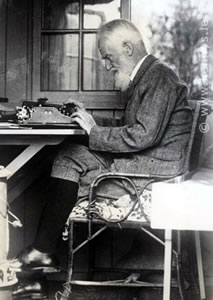
George Bernard Shaw, Claude Esteban, Antonio Machado, Anré Maurois, Paul Gallico, Hans Bergel

De Ierse toneelschrijver, socialist en theatercriticus George Bernard Shaw werd geboren in Dublin op 26 juli 1856. Zie ook alle tags voor George Bernard Shaw op dit blog.


Uit: Lilith

 
„LILITH. They have accepted the burden of eternal life. They have taken the agony from birth; and their life does not fail them even in the hour of their destruction. Their breasts are without milk: Their bowels are gone: the very shapes of them are only ornaments for their children to admire and caress without understanding. Is this enough; or shall I labor again? Shall I bring forth something that will sweep them away and make an end of them as they have swept away the beasts of the garden, and made an end of the crawling things and the flying things and of all them that refuse to live for ever? I had patience with them for many ages: they tried me very sorely. They did terrible things: I stood amazed at the malice and destructiveness of the things I had made: Mars blushed as he looked down on the shame of his sister planet: cruelty and hypocrisy became so hideous that the face of the earth was pitted with the graves of little children among which living skeletons crawled in search of horrible food. The pangs of another birth were already upon me when one man repented and lived three hundred years; and I waited to see what would come of that. And so much came of it that the horrors of that time seem now but an evil dream. They have redeemed themselves from their vileness, and turned away from their sins. Best of all, they are still not satisfied: the impulse I gave them in that day when I sundered myself in twain and launched Man and Woman on the earth still urges them: after passing a million goals they press on to the goal of redemption from the flesh, to the vortex freed from matter, to the whirlpool in pure intelligence that, when the world began, was a whirlpool in pure force. And though all that they have done seems but the first hour of the infinite work of creation, yet I will not supersede them until they have forded this last stream that lies between flesh and spirit, and disentangled their life from the matter that has always mocked it. I can wait: waiting and patience mean nothing to the eternal. I gave the woman the greatest of gifts: curiosity. By that her seed has been saved from my wrath; for I also am curious; and I have waited always to see what they will do tomorrow.“


George Bernard Shaw (26 juli 1856 – 2 november 1950)

Lees verder “George Bernard Shaw, Claude Esteban, Antonio Machado, Anré Maurois, Paul Gallico, Hans Bergel”

Elias Canetti, Max Dauthendey, Jovica Tasevski – Eternijan, Annette Pehnt

De Duitstalige schrijver Elias Canetti werd geboren op 25 juli 1905 in Russe in Bulgarije. Zie ook alle tags voor Elias Canetti op dit blog.

Uit: Die gerettete Zunge

„Sie las mir einen Satz Deutsch vor und ließ mich ihn wiederholen. Da ihr meine Aussprache missfiel, wiederholte ich ihn ein paar Mal, bis er ihr erträglich schien. Das geschah aber nicht oft, denn sie verhöhnte mich für meine Aussprache, und da ich um nichts in der Welt ihren Hohn ertrug, gab ich mir Mühe und sprach es bald richtig. Dann erst sagte sie mir, was der Satz auf englisch bedeute. Das aber wiederholte sie nie, das musste ich mir sofort ein für allemal merken. … Sie entließ mich, sagte: “Wiederhole dir das für dich. Morgen machen wir weiter.” Sie behielt das Buch, und ich war ratlos mir selber überlassen. … Wenn sie besonders ungeduldig wurde, schlug sie die Hände über dem Kopf zusammen und rief: “Ich habe einen Idioten zum Sohn!” … oder “Dein Vater hat doch auch deutsch gekonnt, was würde dein Vater dazu sagen!” … Sie achtete nicht darauf, dass ich vor Kummer wenig aß. Den Terror, in dem ich lebte, hielt sie für pädagogisch.“

(…)

„Ob wir es wahrhaben wollten oder nicht, solange wir zusammenlebten, waren wir einander Rechenschaft schuldig. Jeder wusste nicht nur, was der andere tat, jeder spürte auch die Gedanken des anderen, und was das Glück und die Dichte dieses Verständnisses ausmachte, war auch seine Tyrannei.“


Elias Canetti (25 juli 1905 – 14 augustus 1994)

Lees verder “Elias Canetti, Max Dauthendey, Jovica Tasevski – Eternijan, Annette Pehnt”

Ottokar Kernstock, Sytze van der Zee, Albert Knapp, Kazim Ali, Louise Boege

De Oostenrijkse dichter, priester en Augustijner Koorheer Ottokar Kernstock werd geboren op 25 juli 1848 in Marburg an der Drau. Zie ook alle tags voor Ottckar Kernstock op dit blog.


Im Dichterheim

Es wanderten durch den rauschenden Tann
Drei Mädel, flink wie die Wiesel,
Den Bergpfad zur ragenden Feste hinan
Die Ilse, die Gretel, die Lisel.

Sie rasteten unter dem Lindengeäst,
Durchs Burgtor sind sie gezogen.
Sie fanden des Singvogels heimliches Nest,
Doch der Sänger war ausgeflogen.

Ihr lieblichen Wanderer macht euch nichts draus,
Weil heute im Hause ich fehle!
In meinen Liedern bin ich zu Haus,
Im Sange wohnt meine Seele.

Dort habt ihr manch trauliches Stündlein geweilt
Beim Dichter, dem Bringer des Schönen.
Habt Wonne und Wehmut mit mir geteilt,
Mein Lächeln und meine Tränen.

Ergründet habt ihr mein innerstes Sein
Und meine Sendung gesegnet –
So wurde ich euer, so wurdet ihr mein,
Obgleich wir uns niemals begegnet.

Und kommt jetzt das Herbsten und kommt das Verblüh’n,
Ich weiß doch, trotz Blättergeriesel
Bleibt mir ein herziges Kleeblatt grün:
Die Ilse, die Gretel, die Lisel.


Ottokar Kernstock (25 juli 1848 – 5 november 1928)
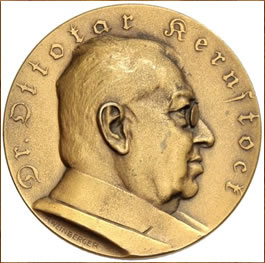
Bronzen medaille uit 1928

Lees verder “Ottokar Kernstock, Sytze van der Zee, Albert Knapp, Kazim Ali, Louise Boege”

Robert Graves, Johan Andreas der Mouw, Banana Yoshimoto, Rosemarie Schuder

De Engelse dichter en schrijver Robert Graves werd geboren in Londen (Wimbledon) op 24 juli 1895. Zie ook alle tags voor Robert Graves op dit blog.


The Naked And The Nude

For me, the naked and the nude
(By lexicographers construed
As synonyms that should express
The same deficiency of dress
Or shelter) stand as wide apart
As love from lies, or truth from art.

Lovers without reproach will gaze
On bodies naked and ablaze;
The Hippocratic eye will see
In nakedness, anatomy;
And naked shines the Goddess when
She mounts her lion among men.

The nude are bold, the nude are sly
To hold each treasonable eye.
While draping by a showman’s trick
Their dishabille in rhetoric,
They grin a mock-religious grin
Of scorn at those of naked skin.

The naked, therefore, who compete
Against the nude may know defeat;
Yet when they both together tread
The briary pastures of the dead,
By Gorgons with long whips pursued,
How naked go the sometime nude!


Symptoms of Love

Love is universal migraine,
A bright stain on the vision
Blotting out reason.

Symptoms of true love
Are leanness, jealousy,
Laggard dawns;

Are omens and nightmares –
Listening for a knock,
Waiting for a sign:

For a touch of her fingers
In a darkened room,
For a searching look.

Take courage, lover!
Could you endure such pain
At any hand but hers?


Smoke-Rings

BOY

Most venerable and learned sir,
Tall and true Philosopher,
These rings of smoke you blow all day
With such deep thought, what sense have they?

PHILOSOPHER

Small friend, with prayer and meditation
I make an image of Creation.
And if your mind is working nimble
Straightway you’ll recognize a symbol
Of the endless and eternal ring
Of God, who girdles everything—
God, who in His own form and plan
Moulds the fugitive life of man.
These vaporous toys you watch me make,
That shoot ahead, pause, turn and break—
Some glide far out like sailing ships,
Some weak ones fail me at my lips.
He who ringed His awe in smoke,
When He led forth His captive folk,
In like manner, East, West, North, and South,
Blows us ring-wise from His mouth.


Robert Graves (24 juli 1895 – 7 december 1985)

Lees verder “Robert Graves, Johan Andreas der Mouw, Banana Yoshimoto, Rosemarie Schuder”

Katia Mann, Junichirō Tanizaki, Frank Wedekind, Hermann Kasack

De Duitse schrijversvrouw Katia Mann, steun en toeverlaat van de Duitse schrijver Thomas Mann, werd geboren als Katharina Pringsheim op 24 juli 1883 in Feldafing. Zie ook alle tags voor Katia Mann op dit blog.

Uit: Katia Mann: Meine ungeschriebenen Memoiren

“Der Boykott der Nazis war schon 1930 offenkundig, und seine Unbeliebtheit in diesen Kreisen hatte Thomas Mann schon damals augenscheinlich dokumentiert bekommen.
Er hielt im Oktober 1930 im Berliner Beethovensaal einen Vortrag namens “Deutsche Ansprache. Ein Appell an die Vernunft”. Er war eigens hingefahren, um auf dieser Veranstaltng vor den Nazis zu warnen und gegen sie aufzutreten. Der Abend ist mir, mit all dem Aufruhr und all der Aufregung, die er beschwor, unvergeßlich. Von einem wohlmeinenden Publikum war der Saal halb ausverkauft, oben auf der Galerie jedoch saß Herr Arnolt Bronnen mit einigen anderen Gesinnungsgenossen, Pro-Nazi, aggressiv, und sie hätten am liebsten die Ansprache gesprengt. Sie haben furchtbaren Krach gemacht, Thomas Mann immer wieder unterbrochen und: Unsinn! Schluß! und ähnliches von der Galerie gerufen, daß mein Mann für eine Weile zu sprechen aufhören mußte. Es herrschte große Aufregung im Saal.
Da drehte sich das gesamte Publikum gegen die Galerie und rief: Wir wollen Thomas Mann hören. Ruhe da oben!
Es ging daraufhin ziemlich ungestört weiter. Ich saß in der ersten Reihe, auf dem Podium saß Frau Fischer, und Frau Fischer flüsterte immer: Recht bald Schluß machen. Möglichst bald Schluß machen! Aber mein Mann ließ sich gar nicht stören und führte den Vortrag vollständig zu Ende.
Dann kam Bruno Walter zu uns in das Künstlerzimmer und sagte: Wissen Sie, ich würde jetzt nicht die Haupttreppe hinuntergehen. Da kann man nicht wissen, was passiert. Ich bin ja hier zu Hause, im Beethovensaal. Ich führe Sie auf der Hintertreppe hinunter. So geschah es denn auch. Über die Hintertreppe und einige Verbindungsgänge gelangten wir ins Freie, und Bruno Walter führte uns zu seinem Wagen, den er in einem Hof abgestellt hatte, und brachte uns sicher fort.”


Katia Mann (24 juli 1883 – 25 april 1980)
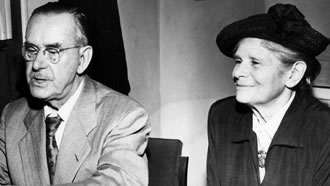
Thomas en Katia Mann
Lees verder “Katia Mann, Junichirō Tanizaki, Frank Wedekind, Hermann Kasack”

Alexandre Dumas père, E. F. Benson, Betje Wolff, Willie Verhegghe

De Franse dramaturg en schrijver Alexandre Dumas père werd geboren in (Villers-Cotterêts (Aisne) op 24 juli 1802. Zie ook alle tags voor Alexandre Dumas père op dit blog.

Uit: The Three Musketeers (Vertaald doorWilliam Barrow)

“In those times panics were common, and few days passed without some city or other registering in its archives an event of this kind. There were nobles, who made war against each other; there was the king, who made war against the cardinal; there was Spain, which made war against the king. Then, in addition to these concealed or public, secret or open wars, there were robbers, mendicants, Huguenots, wolves, and scoundrels, who made war upon everybody. The citizens always took up arms readily against thieves, wolves or scoundrels, often against nobles or Huguenots, sometimes against the king, but never against cardinal or Spain. It resulted, then, from this habit that on the said first Monday of April, 1625, the citizens, on hearing the clamor, and seeing neither the red-and-yellow standard nor the livery of the Duc de Richelieu, rushed toward the hostel of the Jolly Miller. When arrived there, the cause of the hubbub was apparent to all.

A young man–we can sketch his portrait at a dash. Imagine to yourself a Don Quixote of eighteen; a Don Quixote without his corselet, without his coat of mail, without his cuisses; a Don Quixote clothed in a woolen doublet, the blue color of which had faded into a nameless shade between lees of wine and a heavenly azure; face long and brown; high cheek bones, a sign of sagacity; the maxillary muscles enormously developed, an infallible sign by which a Gascon may always be detected, even without his cap–and our young man wore a cap set off with a sort of feather; the eye open and intelligent; the nose hooked, but finely chiseled. Too big for a youth, too small for a grown man, an experienced eye might have taken him for a farmer’s son upon a journey had it not been for the long sword which, dangling from a leather baldric, hit against the calves of its owner as he walked, and against the rough side of his steed when he was on horseback.”


lexandre Dumas père (24 juli 1802 – 5 december 1870)
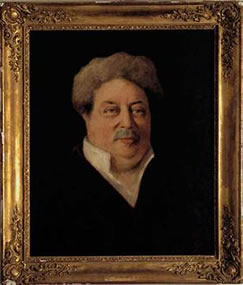
Portret door Ernestine Philippain
Lees verder “Alexandre Dumas père, E. F. Benson, Betje Wolff, Willie Verhegghe”