Philip Weiss

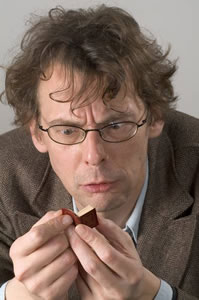
De Oostenrijkse schrijver Philip Weiss werd geboren op 5 februari 1982 in Wenen. Philip Weiss studeerde Germanistik, filosofie en Duits als vreemde taal aan de Universiteit van Wenen. Als een master’s thesis schreef hij een essay over deconstructivist Peter Handke’s A Sorrow Beyond Dreams. Na zijn afstuderen, in 2008, doceerde hij aan de universiteit van Bakoe, Azerbeidzjan. Zijn theatertekst “Egon”verscheen in 2008 bij Passagen Verlagen werd in het ​​Leopold Museum in Wenen gepresenteerd als een geënsceneerde lezing en performance. Weiss nam met zijn tekst “Blätterliebe” deel aan de Ingeborg Bachmann-prijs in 2009 en verraste met het feit dat hij aan het einde van de lezing een pagina van zijn tekst op at.

Uit: Blätterliebe

„Ich schreibe mit der linken Hand und streiche mit der rechten durch. Manchmal ist es anders. Ich schreibe dann mit der rechten Hand, die linke dient mir dazu durchzustreichen. An seltenen Tagen schreibe ich beidhändig, streiche beidhändig durch. Weshalb ich beinahe nur durchgestrichene Worte, Texte, Geschichten geschrieben habe, ich mir also eine ständig wachsende Sammlung ausgestellt unhaltbarer Sätze zugelegt habe. Nur in seltenen Fällen, wenn eine der Hände müde wird durch die Arbeit des ständigen Streichens, erschlafft, zuerst nachhinkt, zunehmend erlahmt, schließlich daliegt, auf dem Schreibtisch, und der Stift unberührt daneben, ungeöffnet, ebenso daliegt, sodass die andere, die schreibende Hand, in einer plötzlichen Freiheit, Improvisation, sich über das Papier zu bewegen beginnt, alle Vorsicht ablegt, sich überbietet in Unsinnigkeiten, Verrücktheiten, übermütig wird, immer weiter, wilder, so lange, bis die andere, die ihre Streicharbeit vernachlässigende Hand, sich notgedrungen wieder regt, widerständig wird und eingreift, diesem Spiel ein Ende zu machen versucht, den Füller ergreift, ihn zwischen Daumen und Zeigefinger öffnet und schließlich durchzustreichen beginnt, nur in diesen seltenen Fällen, diesem Fallen des Körpers also entstehen meine Texte. In dieser Nachlässigkeit, dieser Blöße des Körpers entstehen meine Texte. In dieser Reglosigkeit, Starre, nur in diesem Geschlampe des Körpers, in diesem Körpertheater entstehen meine Texte.“
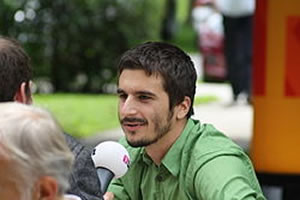
Philip Weiss (Wenen, 5 februari 1982)
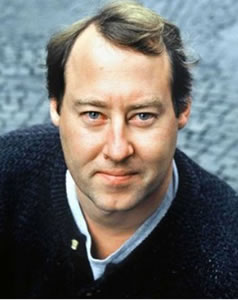
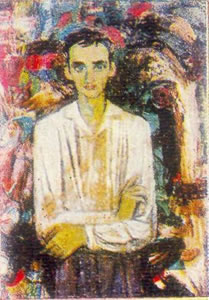
Stewart O’Nan, Louis Ferron, Robert Coover, Werner Schwab, E. J. Pratt, Norman Ohler

De Amerikaanse schrijver Stewart O’Nan werd geboren op 4 februari 1961 in Pittsburgh, Pennsylvania. Zie ook alle tags voor Stewart O’Nan op dit blog.

Uit: The speed queen

“I love you,” he said, still gasping. He didn’t even say my name.
And what was I supposed to say? That I felt sick, that I wished I hadn’t let him?
I said it back.
“Are you okay?” he said.
I knew there would be blood but not so much. I wiped my thighs with the blanket and folded it over.
“I’m okay,” I said. “I just need to clean up.”
“I’ve got Kleenex,” he said, and reached through the back window of the cab and handed me the box. He knelt there staring at me.
“Watch the movie,” I said.
I stuffed some up there, but I still felt sick, so I put on my top and my old underwear and my shorts and found my clogs. Monty wouldn’t leave me alone. “I’m okay,” I kept telling him. “I just need to use the bathroom.” He wanted to come with me, but I finally shouted at him, and he let me go.
I jumped down from the tailgate and almost fell. My legs were shaky and my stomach was churning like a washing machine. Everything down there stung. I stumbled over the dusty mounds toward the red flourescents outlining the snack bar. It was circular and shaped like a witches hat, the projector in the top part. You could see the movie scissoring through the air. We were in the back, like a mile away. The last hundred feet were deserted. A green light burned on each unused speaker like an eye. Halfway there, I knew I wasn’t going to make it. I stopped and leaned against a speaker pole and heaved up everything I’d eaten–the Champale and the mustard fries, the nachos and the Dots–all of it splashing hot over my Dr. Scholl’s. I spit to clean my mouth and kicked dust over everything and went on.
My thighs were sticky, and getting sick made me cry, so my face was a mess. I knew the bathrooms were by the front, so I walked around the outside and slipped in, hoping no one would see me.“


Stewart O’Nan (Pittsburgh,  4 februari 1961)

Lees verder “Stewart O’Nan, Louis Ferron, Robert Coover, Werner Schwab, E. J. Pratt, Norman Ohler”

Grigore Vieru, Georg Brandes, Alfred Andersch, Jacques Prévert, Jean Richepin, Carl Michael Bellman

De Moldavische dichter en schrijver Grigore Vieru werd geboren in Pereita op 4 februari 1935. Zie ook alle tags voor Grigore Vieru op dit blog.


When

When I die
bury me
in the light of your eyes.
The people
coming to my grave
will always bend their knees
in front of you.
Lest anyone
Should stamp their feet on my tomb,
Lest I should be laid, like my ancestors,
under grass and ground–
bury me in the light
of your eyes,
my last woman,
my first woman.


My dear one

What is falling – unperceived –
From the branches
Are our leaves.
What about the apple?
The golden apple?

What is sounding – far away –
In a song
Are our words.
What about that song?
And its celebrations?

What is running – clearly –
To the sea
Are our water springs.
What about the sea?
And its free wideness?

Whose is the sky?
And its silence?
When the stars are falling
They are our stars
In deep sorrow falling.

Broken is lying the looking-glass
Of the days when
amazed – I discovered
Your peerless face,
The Love.

It’s your eyes and my eyes
That are in sorrow closed
Towards silence now.
Silence
Falling down on silence one can only hear.
My dear one!


Vertaald door Camelia en Constantin Manea 


Grigore Vieru (4 februari 1935 – 18 januari 2009)
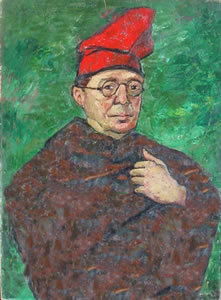
Portret door Igor Vieru


Lees verder “Grigore Vieru, Georg Brandes, Alfred Andersch, Jacques Prévert, Jean Richepin, Carl Michael Bellman”

Georg Trakl, Gertrude Stein, Ferdinand Schmatz, Michael Scharang

De Oostenrijkse dichter Georg Trakl werd op 3 februari 1887 in Salzburg geboren. Zie ook alle tags voor Georg Trakl op dit blog.


Ballade

Ein schwüler Garten stand die Nacht.
Wir verschwiegen uns, was uns grauend erfaßt.
Davon sind unsre Herzen erwacht
Und erlagen unter des Schweigens Last.

Es blühte kein Stern in jener Nacht
Und niemand war, der für uns bat.
Ein Dämon nur hat im Dunkel gelacht.
Seid alle verflucht! Da ward die Tat.


Passion

Wenn Orpheus silbern die Laute rührt,
Beklagend ein Totes im Abendgarten,
Wer bist du Ruhendes unter hohen Bäumen?
Es rauscht die Klage das herbstliche Rohr,
Der blaue Teich,
Hinsterbend unter grünenden Bäumen
Und folgend dem Schatten der Schwester;
Dunkle Liebe
Eines wilden Geschlechts,
Dem auf goldenen Rädern der Tag davonrauscht.
Stille Nacht.

Unter finsteren Tannen
Mischten zwei Wölfe ihr Blut
In steinerner Umarmung; ein Goldnes
Verlor sich die Wolke über dem Steg,
Geduld und Schweigen der Kindheit.
Wieder begegnet der zarte Leichnam
Am Tritonsteich
Schlummernd in seinem hyazinthenen Haar.
Daß endlich zerbräche das kühle Haupt!

Denn immer folgt, ein blaues Wild,
Ein Äugendes unter dämmernden Bäumen,
Dieser dunkleren Pfaden
Wachend und bewegt von nächtigem Wohllaut,
Sanftem Wahnsinn;
Oder es tönte dunkler Verzückung
Voll das Saitenspiel
Zu den kühlen Füßen der Büßerin
In der steinernen Stadt.


Elis

1

Volmaakt is de stilte van deze gouden dag.
Onder oude eiken
Verschijn jij, Elis, een rustende met ronde ogen.

Hun blauwte spiegelt de sluimer der geliefden.
Op je mond
Verstomden hun rozige vruchten.

’s Avonds haalde de visser de zware netten in.
Een goede herder
Leidt zijn kudde langs de bosrand.
O! hoe rechtvaardig zijn, Elis, al je dagen.

Zachtjes zinkt
Tegen kale muren de blauwe stilte van de olijfboom,
Sterft het donkere gezang van een grijsaard weg.

Een gouden bootje
Schommelt, Elis, je hart aan de eenzame hemel.


Vertaald door Frans Roumen


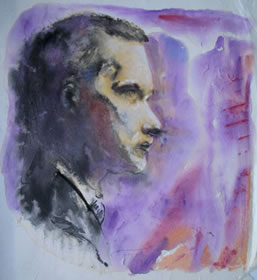
Georg Trakl (3 februari 1887 – 4 november 1914)

Aquarel door Christoph M Frisch


Lees verder “Georg Trakl, Gertrude Stein, Ferdinand Schmatz, Michael Scharang”

Paul Auster, Johannes Kühn, Andrzej Szczypiorski, Lao She, Henning Mankell

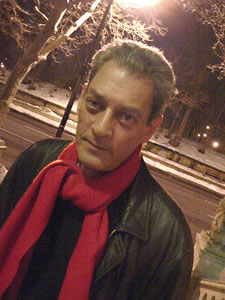
De Amerikaanse dichter, schrijver en essayist Paul Auster werd geboren op 3 februari 1947 in Newark, New Jersey. Zie ook alle tags voor Paul Auster op dit blog.


Uit: Sunset Park


For almost a year now, he has been taking photographs of abandoned things. There are at least two jobs every day, sometimes as many as six or seven, and each time he and his cohorts enter another house, they are confronted by the things, the innumerable cast-off things left behind by the departed families. The absent people have all fled in haste, in shame, in confusion, and it is certain that wherever they are living now (if they have found a place to live and are not camped out in the streets) their new dwellings are smaller than the houses they have lost. Each house is a story of failure—of bankruptcy and default, of debt and foreclosure—and he has taken it upon himself to document the last, lingering traces of those scattered lives in order to prove that the vanished families were once here, that the ghosts of people he will never see and never know are still present in the discarded things strewn about their empty houses.

The work is called trashing out, and he belongs to a four-man crew employed by the Dunbar Realty Corporation, which subcontracts its “home preservation” services to the local banks that now own the properties in question. The sprawling flatlands of south Florida are filled with these orphaned structures, and because it is in the interest of the banks to resell them as quickly as possible, the vacated houses must be cleaned, repaired, and made ready to be shown to prospective buyers. In a collapsing world of economic ruin and relentless, ever-expanding hardship, trashing out is one of the few thriving businesses in the area. No doubt he is lucky to have found this job. He doesn’t know how much longer he can bear it, but the pay is decent, and in a land of fewer and fewer jobs, it is nothing if not a good job.“


Paul Auster (Newark, 3 februari 1947)


Lees verder “Paul Auster, Johannes Kühn, Andrzej Szczypiorski, Lao She, Henning Mankell”

Richard Yates, Sarah Kane, James A. Michener, Annette Kolb, Ernst von Wildenbruch

De Amerikaanse schrijver Richard Yates werd geboren op 3 februari 1926 in Yonkers, New York. Zie ook alle tags voor Richard Yates op dit blog.


Uit: Revolutionary Road 


“See you tomorrow!” they called, as happy as children, and riding home under the moon they found they could roll down the windows of their cars and let the air in, with its health-giving smells of loam and young flowers. It was the first time many of the Laurel Players had allowed themselves to acknowledge the coming of spring.

The year was 1955 and the place was a part of western Connecticut where three swollen villages had lately been merged by a wide and clamorous highway called Route Twelve. The Laurel Players were an amateur company, but a costly and very serious one, carefully recruited from among the younger adults of all three towns, and this was to be their maiden production. All winter, gathering in one anther’s living rooms for excited talks about Ibsen and Shaw and O’Neill, and then for the show of hands in which a common-sense majority chose The Petrified Forest, and then for preliminary casting, they had felt their dedication growing stronger every week.


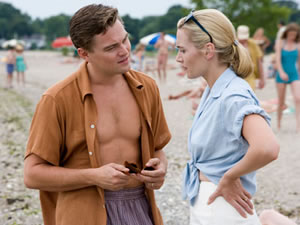
Scene uit de film met Kate Winslet en Leonardo DiCaprio


They might privately consider their director a funny little man (and he was, in a way: he seemed incapable of any but a very earnest manner of speaking, and would often conclude his remarks with a little shake of the head that caused his cheeks to wobble) but they liked and respected him, and they fully believed in most of the things he said. “Any play deserves the best that any actor has to give,” he’d told them once, and another time: “Remember this. We’re not just putting on a play here. We’re establishing a community theater, and that’s a pretty important thing to be doing.”

The trouble was that from the very beginning they had been afraid they would end by making fools of themselves, and they had compounded that fear by being afraid to admit it. At first their rehearsals had been held on Saturdays–always, it seemed, on the kind of windless February or March afternoon when the sky is white, the trees are black, and the brown fields and hummocks of the earth lie naked and tender between curds of shriveled snow.“


Richard Yates (3 februari 1926 – 7 november 1992)


Lees verder “Richard Yates, Sarah Kane, James A. Michener, Annette Kolb, Ernst von Wildenbruch”

Kees Torn

De Nederlandse dichter, tekstschrijver en cabaretier Kees Torn werd geboren in Oostburg op 2 februari 1967, maar groeide op in Maassluis. Na zijn middelbare school studeerde hij twee jaar piano aan het conservatorium. Na een afgebroken marketingstudie bezichtTorn enkele jaren de Rotterdamse Academie voor Beeldende Kunsten en werkte hij voor het stripblad Barwoel, dat later zou opgaan in Zone 5300. Op de kunstacademie werd hij uitgedaagd om teksten te schrijven voor een programma. In 1994 won hij in zijn eentje het Leids Cabaret Festival, nadat hij door twee vrienden ongevraagd was ingeschreven. Ruim een jaar later maakt hij zijn officiële solo-debuut met het programma ‘Laat maar laaien’. In 1999 won Kees Torn de Annie M.G. Schmidt-prijs voor het beste theaterlied van 1998 voor zijn lied ‘Streepjescode’. In november 2007 volgde de VSCD Poelifinario voor het indrukwekkendste theaterprogramma van het seizoen 2006-2007: ‘Dood en Verderf’,

Misgreep

Ober, ik heb niks aan u
Oesters, mosselen en slakken-
U zou toch de dagkaart pakken?
Dit is meer een weekmenu!


Tand Door M’n Lip

Ik kwam altijd thuis met een tand door m’n lip
Ik viel van de schommel, ik viel van de wip
Ik viel van de glijbaan en brak elke keer
Een knieschijf, een wervel, een kaak of een rib

Ik schoot in m’n oog met een speelgoedgeweer
Ik stak in m’n huig met een rubberen speer
Ik raakte op straat met m’n step in de slip
En eens ben ik bijna gestikt in m’n beer

Nu ben ik zo suf en onhandig niet meer
Behalve als ik me niet concentreer
Dan kan het, terwijl ik m’n teennagels knip
Dat ik een of twee van m’n tepels bezeer

Of dat ik vernis op m’n boterham smeer
Een tangetje aan m’n soldeerbout soldeer
De as van m’n peuk in m’n whiskyglas tip
Of diep in m’n kuit snij terwijl ik me scheer

Ik val uit m’n bed als ik ergens logeer
Ik val uit m’n slaapzak wanneer ik kampeer
En stoot, als ik wild aan m’n whiskyglas nip
M’n tand door m’n lip, want die is nogal teer

Als straks in de wind aan de rand van een klip
Ik over mijn eigen bananeschil glip
En later als olifant reincarneer
Herkent u me vast aan een tand door m’n lip


Kees Torn (Oostburg, 2 februari 1967)

Hella Haasse, James Joyce, Eriek Verpale, Monica Camuglia, Michel Marc Bouchard

De Nederlandse schrijfster Hella Haasse werd geboren op 2 februari 1918 in Batavia. Zie ook mijn blog van 2 februari 2007 en ook mijn blog van 2 februari 2008 en ook mijn blog van 2 februari 2009 en ook mijn blog van 2 februari 2010.

Uit: De scharlaken stad

„Hij wist nauwelijks hoeveel maanden er waren voorbijgegaan sinds zijn terugkeer in Florence. Hij had zich ingegraven in het werk, zoals een mol zich ingraaft in zijn onderaardse koker. Hij was blind en doof voor de buitenwereld. Toen hij, in Rome, onder het vaderlijk knikken en aanmoedigend gesticuleren van paus Clemens, tenslotte zijn handtekening zette onder het nieuwe contract met de heren Della Rovere, had hij beseft dat hij zichzelf onherroepelijk veroordeelde tot dwangarbeid. Hij was bereid slaaf te zijn, niets dan slaaf, verbeten te zwoegen aan zijn taak. Hij wist wel dat hij zich nooit bevrijd zou voelen van schuld vóór die taak beëindigd was. Maar waarom werd hem niet de genade gegund ongestoord te volbrengen wat hij zijn plicht achtte, ongestoord te boeten voor een oud verzuim? In een slotwoord, vóór de audiëntie beëindigd werd, had de paus het vonnis over hem uitgesproken, luid: ‘Het grafmonument wordt voltooid, heren, dat staat nu vast, onze waarde kunstenaar hier heeft het zojuist zwart op wit bevestigd, nu is deze onaangename kwestie wel uit de wereld hopen wij,’ en, fluisterend, alleen voor hém verstaanbaar: ‘maar vergeet intussen het werk aan de Medici-kapel niet, ik reken erop dat u zich ook houdt aan het contract dat u met mij gesloten hebt.’

Sindsdien weer die innerlijke verscheurdheid waarbij ieder ander leed in het niet verzonk. In zijn dromen rees Julius’ mausoleum voor hem op, gezwollen tot geweldige afmetingen, een groep van gestalten reikend tot in de wolken, Mozes, Paulus, Rachel en Lea, giganten van marmer, omhoog gestoten door de aarde zelf, zoals gebergten ontstaan. Langs de plooien van hun gewaden, reusachtige stenen riffen, trachtte hij omhoog te klimmen. een mier, een pover zwak wezen op trillende poten, hoger, hoger, tot waar de personificaties van hemel en aarde de sarcofaag hieven waarin zijn kwelgeest sliep, Julius, wiens hoogmoed hem dit had aangedaan. De macht van die paus-veroveraar verheerlijken, meer dan tien jaren na diens dood, op een tijdstip dat het pauselijk gezag een aanfluiting was en de veroverde gebieden beefden voor de komst van een nog gevreesder vijand – dat scheen hem méér dan dwaasheid, een smaad, een leugen.“


Hella Haasse (Batavia, 2 februari 1918)


Lees verder “Hella Haasse, James Joyce, Eriek Verpale, Monica Camuglia, Michel Marc Bouchard”

James Dickey, Santa Montefiore, Xuân Diệu, Ayn Rand

De Amerikaanse dichter en schrijver James Dickey werd geboren op 2 februari 1923 in Atlanta, Georgia. Zie ook mijn blog van 2 februari 2007 en ook mijn blog van 2 februari 2008 en ook mijn blog van 2 februari 2009 en ook mijn blog van 2 februari 2010. 


Uit: Deliverance (Boek)


“We were moving toward the white, light water and were very close to it when I saw Drew’s body backed up between the rocks and looking straight at us … I looked at Drew’s hand floating palm-up with the guitar calluses puckered white and his college class ring on it, and I wondered if his wife might not like to have the ring. But no; I couldn’t even do that; it would mean having to explain. I touched the callus on the middle finger of his left hand, and my eyes blinded with tears. I lay with him in my arms for a moment weeping river-water, going with him. I could have cried as long as the river ran, but there was no time. ‘You were the best of us, Drew,’ I said loud enough for Bobby to hear; I wanted him to hear. ‘The only decent one; the only sane one.’


Uit: Deliveranc (Dialoog film)


“Lewis: What are we gonna do with him?

Drew: There’s not but one thing to do. Take the body down to Aintry. Turn it over to the Highway Patrol. Tell ‘em what happened.

Lewis: Tell ‘em what exactly?

Drew: Just what happened. This is justifiable homicide if anything is. They were sexually assaulting two members of our party at gunpoint. Like you said, there was nothin’ else we could do.

Ed: Is he alive?

Lewis: Not now. Well, let’s get our heads together. [To vengeful Bobby] Come on now, let’s not do anything foolish. Does anybody know anything about the law?

Drew: Look, I-I was on jury duty once. It wasn’t a murder trial.

Lewis: A murder trial? Well, I don’t know the technical word for it, Drew, but I know this. You take this man down out of the mountains and turn him over to the Sheriff, there’s gonna be a trial all right, a trial by jury.

Drew: So what?

Lewis: We killed a man, Drew. Shot him in the back – a mountain man, a cracker. It gives us somethin’ to consider.”


James Dickey (2 februari 1923 – 19 januari 1997)

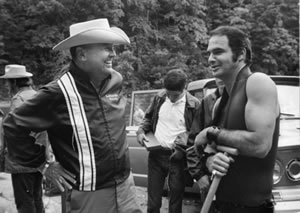
Dickey met de acteur Burt Reynolds (rechts)


Lees verder “James Dickey, Santa Montefiore, Xuân Diệu, Ayn Rand”

William Rose Benét, Gostan Zarian, Ludwig Eichrodt, Johann Ch. Gottsched, Michael Öchsner

De Amerikaanse dichter en uitgever William Rose Benét werd geboren op 2 febrari 1886 in Fort Hamilton, Brooklyn, New York. Zie ook mijn blog van 2 februari 2009 en ook mijn blog van 2 februari 2010.


The Horse Thief (Fragment)

There he moved, cropping the grass at the purple canyon’s lip.
His mane was mixed with the moonlight that silvered his snow-white side,
For the moon sailed out of a cloud with the wake of a spectral ship.
I crouched and I crawled on my belly, my lariat coil looped wide.


Dimly and dark the mesas broke on the starry sky.
A pall covered every color of their gorgeous glory at noon.
I smelt the yucca and mesquite, and stifled my heart’s quick cry,
And wormed and crawled on my belly to where he moved against the moon!


Some Moorish barb was that mustang’s sire. His lines were beyond all wonder.
From the prick of his ears to the flow of his tail he ached in my throat and eyes.
Steel and velvet grace! As the prophet says, God had “clothed his neck with thunder.”
Oh, marvelous with the drifting cloud he drifted across the skies!


And then I was near at hand—crouched, and balanced, and cast the coil;
And the moon was smothered in cloud, and the rope through my hands with a rip!
But somehow I gripped and clung, with the blood in my brain aboil,—
With a turn round the rugged tree-stump there on the purple canyon’s lip.


Right into the stars he reared aloft, his red eye rolling and raging.
He whirled and sunfished and lashed, and rocked the earth to thunder and flame.
He squealed like a regular devil horse. I was haggard and spent and aging—
Roped clean, but almost storming clear, his fury too fierce to tame.


William Rose Benét (2 februari 1886 – 4 mei 1950)

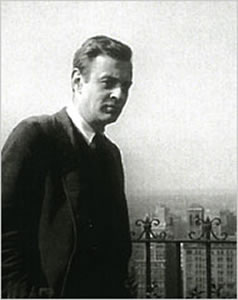
Portret door Luis Quintanilla


Lees verder “William Rose Benét, Gostan Zarian, Ludwig Eichrodt, Johann Ch. Gottsched, Michael Öchsner”