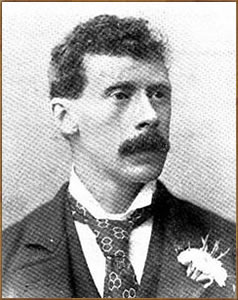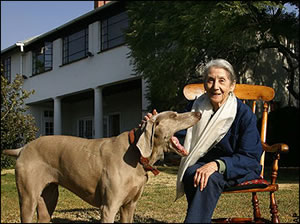
Paul Celan, Marcel Beyer, Jennifer Michael Hecht

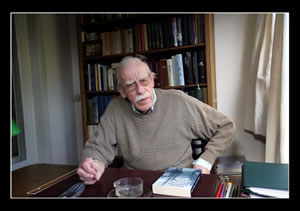
De Duits-Roemeense dichter Paul Celan werd onder de naam Paul Antschel op 23 november 1920 geboren in Czernowitz, toentertijd de hoofdstad van de Roemeense Boekovina, nu behorend bij de Oekraïne. Zie ook alle tags voor Paul Celan op dit blog.


Sprich auch du

Sprich auch du,
sprich als letzter,
sag deinen Spruch.

Sprich –
Doch scheide das Nein nicht vom Ja.
Gib deinem Spruch auch den Sinn:
gib ihm den Schatten.

Gib ihm Schatten genug,
gib ihm so viel,
als du um dich verteilt weißt zwischen
Mittnacht und Mittag und Mittnacht.

Blicke umher:
sieh, wie’s lebendig wird rings –
Beim Tode! Lebendig!
Wahr spricht, wer Schatten spricht.

Nun aber schrumpft der Ort, wo du stehst:
Wohin jetzt, Schattenentblößter, wohin?
Steige. Taste empor.
Dünner wirst du, unkenntlicher, feiner!
Feiner: ein Faden,
an dem er herabwill, der Stern:
um unten zu schwimmen, unten,
wo er sich schimmern sieht: in der Dünung
wandernder Worte


Harnischstriemen

Harnischstriemen, Faltenachsen,
Durchstich-
punkte:
dein Gelände.

An beiden Polen
der Kluftrose, lesbar:
dein geächtetes Wort.
Nordwahr. Südhell.


Met wisselende sleutel

Met wisselende sleutel
ontsluit je het huis, waarin
de sneeuw van ’t verzwegene woedt.
Naar gelang het bloed opwelt
uit je oog of je mond of je oor
wisselt je sleutel.

Wisselt je sleutel, wisselt het woord
dat woeden mag met de vlokken.
Naar gelang de wind die jou wegstoot,
balt om het woord zich de sneeuw.


 Vertaald door Frans Roumen
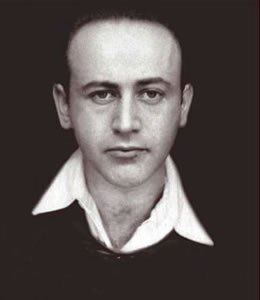
 

Paul Celan (23 november 1920 – 20 april 1970)

Lees verder “Paul Celan, Marcel Beyer, Jennifer Michael Hecht”
Sait Faik Abasıyanık, Guy Davenport, Nigel Tranter, Marieluise Fleißer, Nirad C. Chaudhuri

De Turkse schrijver Sait Faik Abasıyanık werd geboren op 23 november 1906 in Adapazarı. Zie ook alle tags voor Sait Faik Abasıyanık op dit blog.

 Uit: Hisht, Hisht!… (Vertaald door Ufuk Özdağ)

„Maybe it’s a bird. Maybe it’s a tortoise. Maybe a hedgehog. Or maybe a fish, a monster, calling out from the sea nearby. Maybe a cormorant. Maybe a mihaliki1 bird.
Or better still, why don’t I, myself, start a “hisht hisht.” Right at that instant, I began murmuring a sound, not at all resembling the hisht hisht sound that was going on . . . a sound, though I wrestled, that would not resemble the sound I had been hearing.
All of a sudden, a man and a woman appeared ahead of me. They asked for the road to Kalpazankaya.2 “You’re right on it,” I replied. It seemed as though the road moved . . . as though they didn’t walk. They became distant to me in a matter of steps. I noticed the priest’s son lying facedown among the sheep. From his face rose a creature, silly and like a freckled rooster. He wiped saliva from his mouth. He grabbed the lamb by its legs. He fell with the lamb. He kissed the lamb on its nose. He stared about with an ugly, silly, jerk-off’s face. Now I was in a flower field. It was, no doubt, some kind of bird that kept saying “hisht hisht” to me. Y’see, there certainly are birds like that. They do not go “chirp chirp”; they go “hisht hisht.” A bird it was, a bird.
A man was spading the ground. He was stepping on the metal of the spade, and was tilling the soil, reddish in color, upside down.
“Hello there, my fellow friend!” he said.“


Sait Faik Abasıyanık (23 november 1906 – 11 mei 1954)

Lees verder “Sait Faik Abasıyanık, Guy Davenport, Nigel Tranter, Marieluise Fleißer, Nirad C. Chaudhuri”

Sipko Melissen

De Nederlandse dichter en schrijver Sipko Melissen werd geboren in Scheveningen op 23 november 1944. Melissen debuteerde in 1985 met de dichtbundel Gezicht op Sloten. In 1997 ontving hij voor zijn roman Jonge mannen aan zee de Anton Wachterprijs (voor het beste debuut). In 2000 verscheen De huid van Michelangelo en in 2003 De vendelzwaaier. Ook heeft Melissen een dichtbundel gepubliceerd in 1985, Gezicht op Sloten. In zijn romans spelen zelfonderzoek, de zoektocht naar inzicht en vriendschap tussen al dan niet homoseksuele mannen een belangrijke rol.


Buitenhuis

De appelboom staat al weer klaar
de bloesems komen dit voorjaar
laat maar zij komen niettemin

want in de takken huist geduld
een winter lang zijn zij vervuld
van niets dan breekt voor ons de knop

de bloei gebeurt in lichte tint
dan komen vlinders en de wind
de blaadjes worden losgerukt

en in de zomer als wij komen
hangen de appels aan de bomen
eten wij appels uit de hand

de takken raken leeggeplukt
ik overdenk het kort geluk
tussen bloesem en appelmoes

de appelboom is een parabel
die vrucht afwerpt in menig fabel
en aan mijn houten keukentafel

Sipko Melissen (Scheveningen, 23 november 1944)

In Memoriam Guillaume van der Graft

In Memoriam Guillaume van der Graft


In zijn woonplaats Utrecht is afgelopen zondag, 21 november, op 90-jarige leeftijd de Nederlandse dichter, schrijver en theoloog Guillaume van der Graft overleden. Guillaume van der Graft werd op 15 augustus 1920 geboren in Rotterdam. Zie ook mijn blog van 15 augustus 2007 en ook mijn blog van 15 augustus 2008 en eveneens mijn blog van 15 augustus 2009 en mijn blog van 15 augustus 2010.


Met de mensen mee

Met de vogels mee om vermoeidheidsredenen
reed ik de berg af, zij volgden mij,
enkelen rolden een groot rond ei
tussen zich in, sommigen deden

driftige ave’s met hun vleugels;
gaandeweg werd de weg steenachtiger,
een reiger hijgde als een tachtiger,
allerlei onbewoonde geheugens

lagen verspreid in de groene kommen,
huppelend liepen de kleinsten naast mij,
veerkrachtig de arenden, zonder haast
de pienteren en kwaadsprekend de dommen.

Waarom? vroeg ik mij eensklaps af;
vogels zijn vlammen, ze slaan naar boven,
ze kunnen staan in een vurige oven,
maar mensen zijn as in een koud graf.


Guillaume van der Graft (15 augustus 1920 – 21 november 2010)


André Gide, George Eliot, Viktor Pelevin, Suresh en Jyoti Guptara

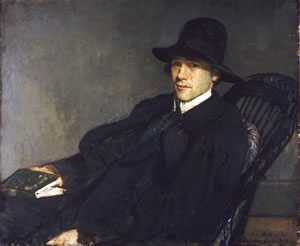
De Franse schrijver André Gide werd geboren op 22 november 1869 in Parijs. Zie ook alle tags voor André Gide op dit blog.

Uit: La symphonie pastorale

Mais je crois inutile de noter ici tous les échelons premiers de cette instruction qui, sans doute, se retrouvent dans l’instruction de tous les aveugles. C’est ainsi que, pour chacun d’eux, je pense, la question des couleurs a plongé chaque maître dans un même embarras. (Et à ce sujet je fus appelé à remarquer qu’il n’est nulle part question de couleurs dans l’Évangile.) Je ne sais comment s’y sont pris les autres ; pour ma part je commençai par lui nommer les couleurs du prisme dans l’ordre où l’arc-en-ciel nous les présente ; mais aussitôt s’établit une confusion dans son esprit entre couleur et clarté ; et je me rendais compte que son imagination ne parvenait à faire aucune distinction entre la qualité de la nuance et ce que les peintres appellent, je crois, « la valeur ». Elle avait le plus grand mal à comprendre que chaque couleur à son tour pût être plus ou moins foncée, et qu’elles pussent à l’infini se mélanger entre elles. Rien ne l’intriguait davantage et elle revenait sans cesse là-dessus.
Cependant il me fut donné de l’emmener à Neuchâtel où je pus lui faire entendre un concert. Le rôle de chaque instrument dans la symphonie me permit de revenir sur cette question des couleurs. Je fis remarquer à Gertrude les sonorités différentes des cuivres, des instruments à cordes et des bois, et que chacun d’eux à sa manière est susceptible d’offrir, avec plus ou moins d’intensité, toute l’échelle des sons, des plus graves aux plus aigus. Je l’invitai à se représenter de même, dans la nature, les colorations rouges et orangées analogues aux sonorités des cors et des trombones, les jaunes et les verts à celles des violons, des violoncelles et des basses ; les violets et les bleus rappelés ici par les flûtes, les clarinettes et les hautbois. Une sorte de ravissement intérieur vint dès lors remplacer ses doutes :
– Que cela doit être beau ! répétait-elle.
Puis, tout à coup :
– Mais alors : le blanc ? Je ne comprends plus à quoi ressemble le blanc…
Et il m’apparut aussitôt combien ma comparaison était précaire. – Le blanc, essayai-je pourtant de lui dire, est la limite aiguë où tous les tons se confondent, comme le noir en est la limite sombre. – Mais ceci ne me satisfit pas plus qu’elle, qui me fit aussitôt remarquer que les bois, les cuivres et les violons restent distincts les uns des autres dans le plus grave aussi bien que dans le plus aigu. Que de fois, comme alors, je dus demeurer d’abord silencieux, perplexe et cherchant à quelle comparaison je pourrais faire appel.”


André Gide (22 november 1869 – 19 februari 1951)
Portret door Jacques Emile Blanche, 1912

Lees verder “André Gide, George Eliot, Viktor Pelevin, Suresh en Jyoti Guptara”

Endre Ady, William Kotzwinkle, George Robert Gissing, Elisabeth Maria Post

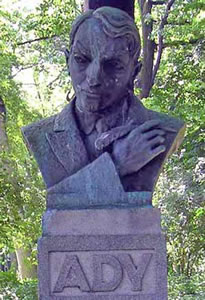
De Hongaarse dichter Endre Ady werd geboren op 22 november 1877 in het huidige Adyfalva. Zie ook mijn blog van 22 november 2008 en ook mijn blog van 22 november 2009.


Benediction from a Train

The express is hurtling at full speed,
the sun explodes into the sea,
my memories flash a millisecond,
and I bless you.

“May God bless
all your goodness,
your unresponsiveness,
and all your wickedness.
May your words of torment
return to you in benediction.
May your coldness
leap into flames.
All is at an end.
I have a thousand cares,
and for my folly
the bier is spread.
Well, I bless you,
and meanwhile
kiss me softly,
in silence and peace.
I wish to leave you
with a memory and a kiss
to freeze for warmth,
to be alone,
to feel alone,
to die alone.
May God bless you.”

The express is hurtling at full speed,
the sun explodes into the sea,
my memories flash a millisecond,
and I bless you.


Vertaald door Gábor Lendvai


Endre Ady (22 november 1877 – 27 januari 1919)
Buste in de Hungarian Cultural Gardens, Cleveland, Ohio

Lees verder “Endre Ady, William Kotzwinkle, George Robert Gissing, Elisabeth Maria Post”

Isaac Bashevis Singer, Marilyn French, Margriet de Moor, Veza Canetti, Freya North

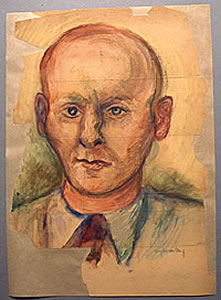
De Amerikaans-Poolse schrijver Isaac Bashevis Singer werd geboren op 21 november 1904 als Isaac Hertz Singer in Radzymin, Polen. Zie ook mijn blog van 21 november 2006 en ook mijn blog van 21 november 2007 en ook mijn blog van 21 november 2008 en ook mijn blog van 21 november 2009.

Uit: Fool’s Paradise


„Somewhere, sometime, there lived a rich man whose name was Kadish. He had an only son who was called Atzel. In the household of Kadish there lived a distant relative, an orphan girl, called Aksah. Atzel was a tall boy with black hair and black eyes. Aksah was somewhat shorter than Atzel, and she had blue eyes and golden hair. Both were about the same age. As children, they ate together, studied together, played together. Atzel played the husband; Aksah, his wife. It was taken for granted that when they grew up they would really marry.

But when they had grown up, Atzel suddenly became ill. It was a sickness no one had ever heard of before: Atzel imagined that he was dead.

How did such an idea come to him? It seems it came from listening to stories about paradise. He had had an old nurse who had constantly described the place to him. She had told him that in paradise it was not necessary to work or to study or make any effort whatsoever. In paradise one ate the meat of wild oxen and the flesh of whales; one drank the wine that the Lord reserved for the just; one slept late into the day; and one had no duties.

Atzel was lazy by nature. He hated to get up early in the morning and to study languages and science. He knew that one day he would have to take over his father’s business and he did not want to.

Since his old nurse had told Atzel that the only way to get to paradise was to die, he had made up his mind to do just that as quickly as possible. He thought and brooded about it so much that soon he began to imagine that he was dead.

Of course his parents became terribly worried when theysaw what was happening to Atzel. Aksah cried in secret. The family did everything possible to try to convince Atzel that he was alive, but he refused to believe them. He would say, “Why don’t you bury me? You see that I am dead. Because of you I cannot get to paradise.”

Many doctors were called in to examine Atzel, and all tried to convince the boy that he was alive. They pointed out that he was talking, eating, and sleeping. But before long Atzel began to eat less and he rarely spoke. His family feared that he would die.“


 Isaac Bashevis Singer (21 november 1904 – 24 juli 1991)

 Portret door Sylvia Ary, 1935


Lees verder “Isaac Bashevis Singer, Marilyn French, Margriet de Moor, Veza Canetti, Freya North”

Arthur Quiller-Couch, Wilhelm Waiblinger, Voltaire, Franz Hessel

De Engelse schrijver en crticus Sir Arthur Thomas Quiller-Couch werd geboren op 21 november 1863 in Bodmin, Cornwall. Zie ook mijn blog van 21 november 2008 en ook mijn blog van 21 november 2009.

Uit: The Astonishing History of Troy Town

“Any news to-night?” asked Admiral Buzza, leading a trump.

“Hush, my love,” interposed his wife timidly, with a glance at the Vicar.  She liked to sit at her husband’s left, and laid her small cards before him as so many tributes to his greatness.

“I will not hush, Emily.  I repeat, is there any news to-night?”

Miss Limpenny, his hostess and vis-a-vis, finding the Admiral’s eye fierce upon her, coughed modestly and announced that twins had just arrived to the postmistress.  Her manner, as she said this, implied

that, for aught she knew, they had come with the letters.

The Vicar took the trick and gathered it up in silence.  He was a portly, antique gentleman, with a fine taste for scandal in its proper place, but disliked conversation during a rubber.

“Twins, eh?” growled the Admiral.  “Just what I expected.  She always was a wasteful woman.”

“My love!” expostulated his wife.  Miss Limpenny blushed.

“They’ll come to the workhouse,” he went on, “and serve him right for making such a marriage.”

“I have heard that his heart is in the right place,” pleaded Miss Limpenny, “but he used–“

“Eh, ma’am?”

“It’s of no consequence,” said Miss Limpenny, with becoming bashfulness.  “It’s only that he always used, in sorting his cards, to sit upon his trumps–that always seemed to me–“

“Just so,” replied the Admiral, “and now it’s twins.  Bless the man! what next?”


Arthur Quiller-Couch (21 november 1863 – 12 mei 1944)


Lees verder “Arthur Quiller-Couch, Wilhelm Waiblinger, Voltaire, Franz Hessel”

Kerstin Preiwuß

De Duitse dichteres en schrijfster Kerstin Preiwuß werd geboren op 21 november 1980 in Lübz en groeide op in Plau am See en Rostock. Zie ook mijn blog van 14 juli 2009 en ook mijn blog van 14 juli 2010.


einmal sind von anatomischen tischen

einmal sind von anatomischen tischen
die apokalyptischen reiter durch mein gesicht gezogen
nun ist es verbogen
habe es abgenommen und in eine hand gelegt
kann’s kaum verwinden
dass sie ein stillleben trägt

warte, bis mir ein neues wächst
die reiter warten mit mir mit
ihr rückzug steht fest
dann hab ich zwei schalen, eine waage
in die ich mein leben werfen kann
soweit zum wiedergang


najade (na ja)

wasserweib nur meerschaum weiß
davon: woher ich komm
wohin ich ging: vorhin
war ich noch viel zu schwer
jetzt bekleidet mich das meer


Kerstin Preiwuß (Lübz, 21 november 1980)

Nadine Gordimer, Don DeLillo, Thomas Chatterton, Sheema Kalbasi

De Zuidafrikaanse schrijfster Nadine Gordimer werd geboren op 20 november 1923 in Springs. Zie ook alle tags voor Nadine Gordimer op dit blog.

Uit: Beethoven was One-Sixteenth Black

“GREGOR

Anyone who is a reader knows that what you have read has influenced your life. By ‘reader’ I mean one from the time you began to pick out the printed words, for yourself, in the bedtime story. (Another presumption: you became literate in some era before the bedtime story was replaced by the half-hour before the Box.) Adolescence is the crucial period when the poet and the fiction writer intervene in formation of the sense of self in sexual relation to others, suggesting – excitingly, sometimes scarily – that what adult authority has told or implied is the order of such relations, is not all. Back in the Forties, I was given to understand: first, you will meet a man, both will fall in love, and you will marry; there is an order of emotions that goes with this packaged process. That is what love is.

For me, who came along first was Marcel Proust. The strange but ineluctable disorder of Charles Swann’s agonising love for a woman who wasn’t his type (and this really no fault of her own, he fell in love with her as what she was, eh?); the jealousy of the Narrator tormentedly following a trail of Albertine’s evasions.

Swept away was the confetti. I now had different expectations of what experience might have to take on. My appren­ticeship to sexual love changed; for life. Like it or not, this is what love is. Terrible. Glorious.

But what happens if something from a fiction is not interiorised, but materialises? Takes on independent exist­ence?

It has just happened to me. Every year I re-read some of the books I don’t want to die without having read again. This year one of these is Kafka’s Diaries, and I am about halfway through. It’s night-time reading of a wonderfully harrowing sort.

A few mornings ago when I sat down at this typewriter as I do now, not waiting for Lorca’s duende but getting to work, I saw under the narrow strip of window which displays words electronically as I convey them, a roach. A smallish roach about the size and roach-shape of the nail of my third finger – medium-sized hand. To tell that I couldn’t believe it is understatement. But my immediate thought was practical: it was undoubtedly there, how did it get in. I tapped the glass at the place beneath which it appeared. It confirmed its existence, not by moving the body but wavering this way and that two whiskers, antennae so thin and pale I had not discerned them.”


Nadine Gordimer (Springs. 20 november 1923)

Lees verder “Nadine Gordimer, Don DeLillo, Thomas Chatterton, Sheema Kalbasi”