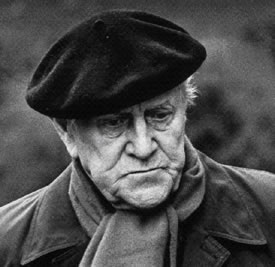
90 Jaar Marcel Reich-Ranicki, Jim Knipfel, Sibylle Berg, Carol Shields, Max Aub


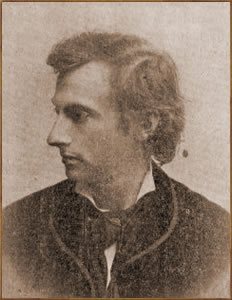
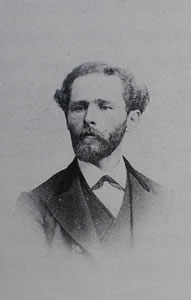
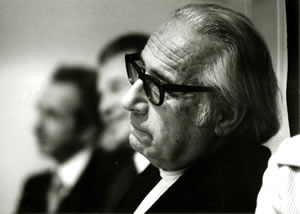
De Duitse schrijver en literatuurcriticus Marcel Reich-Ranicki werd geboren op 2 juni 1920 in Włocławek, Polen. Zie ook alle tags voor Marcel Reich-Ranicki op dit blog.


Uit: Für alle Fragen offen


„Was halten Sie von Gustave Flaubert und Madame Bovary?


Gustave Flaubert war beides – ein Poet und ein Protokollant, ein Romantiker und ein Realist, ein Visionär und ein Berichterstatter, stets leidenschaftlich und pedantisch zugleich. Er war Frankreichs sachlichster Dichter und zärtlichster Chronist, wahrscheinlich der neben den Russen Tolstoi und Dostojewski größte Prosaschriftsteller des neunzehnten Jahrhunderts. Sein Hauptwerk, der Roman Madame Bovary, hat längst die Grenzen gesprengt: Er wurde in alle Sprachen der zivilisierten Welt übersetzt, man hat ihn mehrfach verfilmt und auch vertont und für die Bühne bearbeitet. Und natürlich wurde er zahllose Male kommentiert.

Woran geht eigentlich Emma Bovary, deren Geschichte Flaubert erzählt, zugrunde? An der unglücklichen Ehe mit einem biederen und langweiligen Landarzt? An ihrer bornierten, kleinbürgerlichen Umgebung? An der Monotonie des Alltags in einem französischen Provinznest? An dem Konflikt zwischen Traum und Leben, zwischen Phantasie und Realität, also an der Scheinwelt, in der sie Zuflucht sucht? Sind es die überspannten Wünsche und die romantischen Vorstellungen, die ihr zum Verhängnis werden? Oder scheitert sie an der Liebe, genauer: an der Sehnsucht nach Liebe?

So viele Fragen es auch sind, die der Roman aufwirft – die Zahl der Antworten ist ungleich größer. Denn jeder Leser versteht diese Geschichte auf seine Weise. Millionen haben sich in ihr wieder gefunden – vielleicht deshalb, weil wir hier von einem Menschen hören, dem kein Preis zu hoch war, um zu leben, statt zu vegetieren. Es gibt nicht viele Romane, von denen man sagen kann: Wer sie nicht gelesen hat, sollte wissen, dass er keine Ahnung hat, was die Weltliteratur leisten kann. Madame Bovary ist ein solcher Roman.“


marcel-reich-ranicki

Marcel Reich-Ranicki (Włocławek, 2 juni 1920)


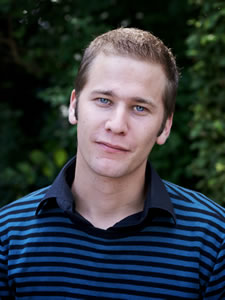
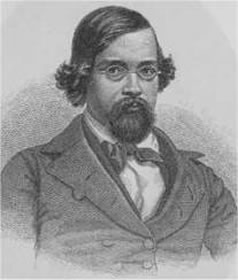
De Amerikaanse schrijver Jim Knipfel werd geboren op 2 juni 1965 in Green Bay, Wisconsin. Zie ook alle tags voor Jim Knipfel op dit blog.


Uit: Slackjaw: A Memoir


“”Suicide hotline?” the chipper young woman on the other end of the phone seemed to ask me when she answered.

When I dialed the phone, I had no idea what I was going to say. I hadn’t thought that far ahead. What: “I’m about to open my veins. Now what the hell are you going to do about it?” That wouldn’t do. I get into trouble when I don’t think about things beforehand. I’ve never been a good improviser. So instead of saying something moronic, I opted to say nothing at all.

“Hello?” the voice at the other end returned. “Anyone there?”

All the Nietzsche I had been immersed in went right out the window.

“Hello?” she asked again. “I can hear you breeaathing!”

“Shut up,” I snapped. I was tempted to say, “That’s it, you blew it,” and hang up, but I wasn’t that cruel, yet.

“So what’s going on?”

Oh, what do you think? That I just called to chat?

“I meant, what are you planning?” She meant business.

“Razors. I guess. At least that’s what I have in front of me.”

“Razors rarely work, you know.”

Terrific. I call for help, and I get someone who critiques my style.

“Got any better suggestions? I can’t afford a gun.”

“That’s not what I’m here for. I’m here to help.”

“Well, you’re doing a bang-up job of it.”

“Hey,” she said, “we got off on the wrong foot.” I could hear the exasperation in her voice. “Let’s start again. What’s your name?”

“Name doesn’t matter.”

“Okay,” she said. “Why don’t you tell me why you want to kill yourself?”

“A man has to have a reason? I didn’t break up with a girlfriend, I didn’t lose a job, and I wasn’t just told that I have Hodgkin’s disease. Nothing that simple.”


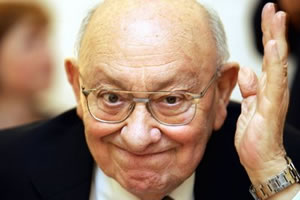
Jim_Knipfel

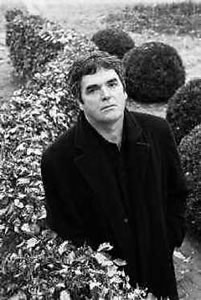
Jim Knipfel (Green Bay, 2 juni 1965)


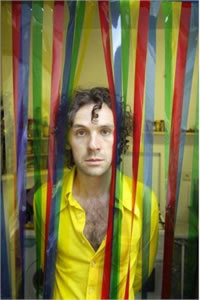
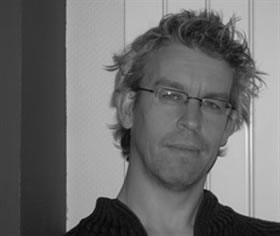
De Duitse schrijfster Sibylle Berg werd geboren in Weimar op 2 juni 1962. Zie ook alle tags voor Sibylle Berg op dit blog.

Uit: Der Mann schläft


Damals.

Im Winter. Vor vier Monaten.

Draußen war ein Winter gewesen, der den Bildern, die wir früher vom Winter gehabt haben, nicht einmal entfernt glich. Saubere, tiefgekühlte Dezember mit Reif und kleinen Häusern, in denen gepflegte Familien vor Bratäpfeln saßen, gab es schon lange nicht mehr. Kein Schnee verdeckte die Unattraktivität der Welt, nur dunkelgrau war sie, klamm und verwaschen. Während drei langer Monate würde das Licht sich kaum verändern; dem Winter würde ein verregneter Frühling folgen, der in einen trüben Sommer überging.

Nebel lag auf der Stadt, die noch nicht einmal eine Stadt war, und der Mensch hielt Winterschlaf. Die es sich leisten konnten, verließen ihre Häuser nicht, sie schlurften in Pyjamas herum, Speisereste im Haar, leere Pizzaschachteln unter dem Bett, und Spinnen mit neurotischen Gesichtern spannen ihre Netze zwischen den Läufen der Personen. Die wenigen, die man auf öffentlichem Gelände sah, waren kaum dazu geeignet, einen mit kleinen, fröhlichen Sprüngen das Leben feiern zu lassen.

Ich war auf der Straße gewesen, hatte in hoffnungslose Gesichter gesehen und mich einen Moment lang gefühlt, als sei ich wieder eine von ihnen, die doch so warteten, dass etwas eintreten werde, durch das sie sich endlich wieder lebendig fühlten. Ich hatte mich an jenem Morgen so stark an das Gefühl erinnert, bei aberwitzigem Wetter alleine zu sein, dass mir übel geworden war, für Sekunden, in denen ich aus der Wirklichkeit gefallen war. Ich hatte eine Zeitung kaufen wollen, und als ich, die Augen vor dem Elend halbverschlossen, das einzige im Winter geöffnete Café passierte, vermeinte ich darin Gespenster aus der Vergangenheit wahrzunehmen. Eine füllige Frau mit Armprothese saß neben einem Mann, an den ich mich nur erinnerte, weil er so übertrieben unscheinbar wirkte wie eine Karikatur.“


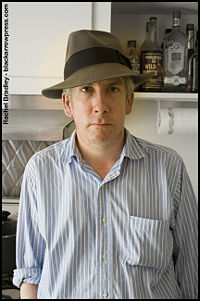
SibylleBerg

Sibylle Berg (Weimar, 2 juni 1962)


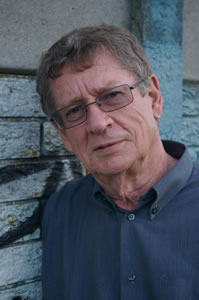
De Canadese schrijfster Carol Shields werd op 2 juni 1935 in Oak Park, Chicago, geboren als Carol Warner. Zie ook alle tags voor Carol Shields op dit blog.


Uit: Small Ceremonies


„September

Sunday night. And the thought strikes me that I ought to be happier than I am.

We have high tea on Sunday, very Englishy, the four of us gathered in the dining ell of our cream-coloured living room at half-past five for cold pressed ham, a platter of tomatoes and sliced radishes. Slivers of hardboiled egg. A plate of pickles.

The salad vegetables vary with the season. In the summer they”re larger and more varied, cut into thick peasant slices and drenched with vinegar and oil. And in the winter, in the pale Ontario winter, they are thin, watery, and tasteless, though their exotic pallor gives them a patrician presence. Now, since it is September, we are eating tomatoes from our own suburban garden, brilliant red under a scatter of parsley. Delicious, we all agree.

“Don”t we have any mustard?” my husband Martin asks. He is an affectionate a
nd forgetful man, and on weekends made awkward by leisure.

“We”re all out,” I tell him, “but there”s chutney. And a little of that green relish.”

“Never mind, Judith. It doesn”t matter.”

“I”ll get the chutney for you,” Meredith offers.

“No, really. It doesn”t matter.”

“Well, I”d like some,” Richard says.

“In that case you can just go and get it yourself,” Meredith tells him. She is sixteen; he is twelve. The bitterness between them is variable but always present.

Meredith makes a sweep for the basket in the middle of the table. “Oh,” she says happily, “fresh rolls.”

“I like garlic bread better,” Richard says. He is sour with love and cannot, will not, be civil.“
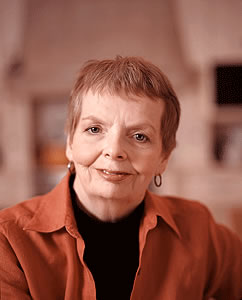


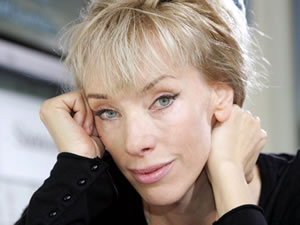
shields

Carol Shields (Chicago, 2 juni 1935 – 16 juli 2003)


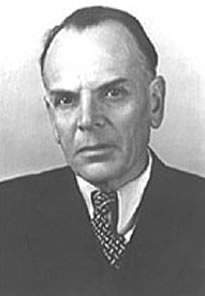
De Spaanse schrijver Max Aub werd geboren op 2 juni 1903 in Parijs. Zie ook alle tags voor Max Aub op dit blog. 


Uit: Crimes exemplaires (Vertaald door Jean Paul Guibbert)


„Il ronflait. On pardonne au ronfleur s’il est de votre famille.

Celui-là je ne le connaissais même pas de vue. Ses ronflements traversaient les murs. Je suis allé chez le propriétaire : il s’est moqué de moi. Je suis allé voir l’auteur de bruits si monstrueux ; il m’a pratiquement mis à la porte :

– Ça n’est pas ma faute. Je ne ronfle pas. Et si c’est moi, que voulez-vous que j’y fasse ? J’ai le droit. Achetez-vous du coton hydrophile…

Je ne pouvais pas dormir : s’il ronflait, à cause du bruit ; et en l’attendant, s’il ne ronflait pas. Quand je donnais des coups sur la cloison il se taisait un moment… mais recommençait ensuite. Vous n’avez pas idée de ce que c’est que d’être une sentinelle du bruit. Une cataracte, un formidable volume d’air,

un fauve pris au piège, le râle de cent moribonds, me déchiraient les entrailles, empoisonnaient mes oreilles et je ne pouvais jamais dormir, jamais. Et je ne pouvais même pas changer de maison. Où aurais-je été, où payer aussi peu ? Le coup qu’il a pris, c’est avec la carabine de mon neveu.

Je ne puis supporter le contact du velours. J’ai une allergie au velours. En ce moment même ma peau se hérisse au seul fait d’en parler. J’ignore comment tout ceci est arrivé dans la conversation. Cet homme, si raffiné, ne croyait à rien d’autre qu’à la satisfaction de ses fantaisies. J’ignore d’où il a sorti un morceau de ce maudit velours qu’il a commencé à me promener sur les joues, sur la nuque et les narines ; mais c’es
t bien la dernière fois qu’il l’a fait.

J’avais raison ! Ma théorie était irréfutable. Et ce vieux gâteux niait tout avec son sourire imperturbable comme s’il était Cassandre et investi par charisme de sa divine infaillibilité. Mes arguments étaient absolument parfaits, indiscutables. Et cet imbécile décrépit à la barbe sale, édenté, couvert de tous ses doctorats honoris causa, les mettait en doute et s’obstinait dans des théories démodées qui n’étaient vivantes que dans son esprit ankylosé et ses livres que personne ne lit plus. Vieillard putréfié.“
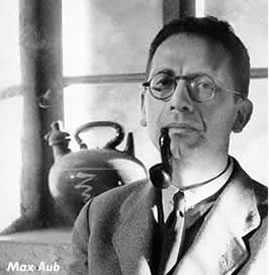


maxaub

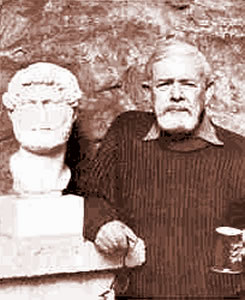
Max Aub (2 juni 1903 – 22 juli 1972)


Zie voor nog meer schrijvers van de 2e juni ook
mijn vorige blog van vandaag.
 

Thomas Hardy, Markies De Sade, Karl Gjellerup, Barbara Pym, Dorothy West

De Engels romanschrijver en dichter Thomas Hardy werd op 2 juni 1840 geboren in Higher Bockhampton, bij Dorchester. Zie ook alle tags voor Thomas Hardy op dit blog.

 Uit: Far from the Madding Crowd


When Farmer Oak smiled, the corners of his mouth spread till they were within an unimportant distance of his ears, his eyes were reduced to chinks, and diverging wrinkles appeared round them, extending upon his countenance like the rays in a rudimentary sketch of the rising sun.
His Christian name was Gabriel,and on working days he was a young man of sound judgment, easy motions, proper dress, and general good character. On Sundays he was a man of misty views, rather given to postponing, and hampered by his best clothes and umbrella: upon the whole, one who felt himself to occupy morally that vast middle space of Laodicean neutrality which lay between the Communion people of the parish and the drunken section,—that is, he went to church, but yawned privately by the time the congregation reached the Nicene creed, and thought of what there would be for dinner when he meant to be listening to the sermon. Or, to state his character as it stood in the scale of public opinion, when his friends and critics were in tantrums, he was considered rather a bad man; when they were pleased, he was rather a good man; when they were neither, he was a man whose moral colour was a kind of pepper-and-salt mixture.
Since he lived six times as many working-days as Sundays, Oak’s appearance in his old clothes was most peculiarly his own—the mental picture formed by his neighbours in imagining him being always dressed in that way. He wore a low-crowned felt hat, spread out at the base by tight jamming upon the head for security in high winds, and a coat like Dr. Johnson’s,4 his lower extremities being encased in ordinary leather leggings and boots emphatically large, affording to each foot a roomy apartment so constructed that any wearer might stand in a river all day long and know nothing of damp—their maker being a conscientious man who endeavoured to compensate for any weakness in his cut by unstinted dimension and solidity.
Mr. Oak carried about him, by way of watch, what may be called a small silver clock; in other words, it was a watch as to shape and intention, and a small clock as to size. This instrument being several years older than Oak’s grandfather, had the peculiarity of going either too fast or not at all. The smaller of its hands, too, occasionally slipped round on the pivot, and thus, though the minutes were told with precision, nobody could be quite certain of the hour they belonged to.“


hardy

Thomas Hardy (2 juni 1840 – 11 januari 1928)


De Franse schrijver Donatien Alphonse François, Markies de Sade werd geboren op 2 juni 1740 in Parijs. Zie ook alle tags voor Markies de Sade op dit blog.

Uit: Les infortunes de la vertu


Mme la comtesse de Lorsange était une de ces prêtresses de Vénus, dont la fortune est l’ouvrage d’une figure enchanteresse, de beaucoup d’inconduite et de fourberie, et dont les titres quelque pompeux qu’ils soient ne se trouvent que dans les archives de Cythère, forgés par l’impertinence qui les prend et soutenus par la sotte crédulité qui les donne.
Brune, fort vive, une belle taille, des yeux noirs d’une expression prodigieuse, de l’esprit et surtout cette incrédulité de mode qui, prêtant un sel de plus aux passions, fait rechercher avec bien plus de soin la femme en qui l’on la soupçonne ; elle avait reçu néanmoins la plus brillante éducation possible ; fille d’un très gros commerçant de la rue Saint-Honoré, elle avait été élevée avec une soeur plus jeune qu’elle de trois ans dans un des meilleurs couvents de Paris, où jusqu’à l’âge de quinze ans, aucun conseil, aucun maître, aucun bon livre, aucun talent ne lui avait été refusé. A cette époque fatale pour la vertu d’une jeune fille, tout lui manqua dans un seul jour. Une banqueroute affreuse précipita son père dans une situation si cruelle que tout ce qu’il put faire pour échapper au sort le plus sinistre fut de passer promptement en Angleterre, laissant ses filles à sa femme qui mourut de chagrin huit jours après le départ de son mari. Un ou deux parents qui restaient au plus délibérèrent sur ce qu’ils feraient des filles, et leur part faite se montant à environ cent écus chacune, la résolution fut de leur ouvrir la porte, de leur donner ce qui leur revenait et de les rendre maîtresses de leurs actions. Mme de Lorsange qui se nommait alors Juliette et dont le caractère et l’esprit étaient à fort peu de chose près aussi formés qu’à l’âge de trente ans, époque où elle était lors de l’anecdote que nous racontons, ne parut sensible qu’au plaisir d’être libre, sans réfléchir un instant aux cruels revers qui brisaient ses chaînes. Pour Justine, sa soeur, venant d’atteindre sa douzième année, d’un caractère sombre et mélancolique, douée d’une tendresse, d’une sensibilité surprenantes, n’ayant au lieu de l’art et de la finesse de sa soeur, qu’une ingénuité, une candeur, une bonne foi qui devaient la faire tomber dans bien des pièges, elle sentit toute l’horreur de sa position.“


DeSade

Markies De Sade (2 juni 1740  –  2 december 1814)
De acteur Geoffrey Rush als De Sade in de film Quills uit het jaar 2000


De Deense schrijver Karl Adolph Gjellerup werd geboren op 2 juni 1857 in Roholte. Zie ook alle tags voor Karl Gjellerup op dit blog.


Uit: Der Pilger Kamanita


Einst wanderte der Buddha im Lande Magadha von Ort zu Ort und kam nach Rajagaha. Der Tag ging schon zur Neige, als der Erhabene sich der Stadt der fünf Hügel näherte. Gleich dem Abglanz einer segnenden Götterhand breiteten sich die milden Strahlen der Sonne über die weite, mit grünen Reisfeldern und Wiesen bedeckte Ebene. Hier und dort zeigten kleine an der Erde hinkriechende Wölkchen, wie aus reinstem Goldstaube, daß Menschen und Ochsen von der Feldarbeit heimkehrten; und die langgestreckten Schatten der Baumgruppen waren wie von einer regenbogenfarbigen Glorie umgeben. Aus dem Kranze der blühenden Gärten glänzten die Torzinnen, Terrassen, Kuppeln und Türme der Hauptstadt hervor, und in unvergleichlichem Farbenschmelz, als wären sie aus Topasen, Amethysten und Opalen gebildet, lag die Reihe der Felsenhügel da.

Von diesem Anblick ergriffen, blieb der Erhabene stehen. Mit Freuden begrüsste er jene vertrauten Formen, die so manche Erinnerungen für ihn bargen: das graue Horn, das breite Joch, den Seherfelsen und den Geierkulm, “dessen schöner Gipfel die andern wie ein Dach überragt”;–vor allen aber Vibhara, den Berg der heissen Quellen, der mit seiner Höhle des Sattapannibaumes dem Heimatlosen eine erste Heimat bereitet hatte–die erste Rast auf dem letzten Wege vom Sansara ins Nirvana.

Denn als er damals “noch in frischer Blüte, mit glänzendem, dunklem Haar, im Genusse glücklicher Jugend, im ersten Mannesalter, gegen den Wunsch seiner weinenden und klagenden Eltern” das fürstliche Vaterhaus im nördlichen Lande der Sakyer verlassen und seine Schritte nach dem Gangatal gerichtet hatte, da gönnte er sich erst dort einen längeren Aufenthalt, indem er jeden Morgen um Almosenspeise nach Rajagaha ging.“


Gjellerup

Karl Gjellerup (2 juni 1857 – 11 oktober 1919)


De Engelse schrijfster Barbara Pym werd geboren op 2 juni 1913 in Oswestry, Shropshire. Zie ook alle tags voor Barbara Pym op dit blog.


Uit: Felicity and Barbara Pym (Biografie door Harrison Solow)


„However, I suspect you feel you would like to, and that is the basis of your irritation with silly men, mousy women, tea, religion, and quotations. Is this worthy of the august company of Dante, Proust, Dostoyevsky? It may interest you to know that Barbara Pym felt as you do, when she was about your age ― reading Aldous Huxley, and imagining herself in a more glittering, a more significant, world. And so to protect herself from an unbearable exclusion from that world, she wrote a novel, Young Men in Fancy Dress, in hope, her biographer says, of becoming part of it.

Her irritation with silly men was no different from yours, or mine, or anyone’s really, you see. The only difference is what each of us regards as ‘silly.’ Literature, or at least, books (I will not presume to add
Pym to the Masters, as you call them ― although surely there are degrees of literature) offer a way out ― out of a time, a space, a life, a status, a level of experience that is unsatisfactory to the reader. Not by virtue of escape, but by metamorphosis, via instruction. As you are being offered a way out of literary exile by the recommended guide ― books, maps, and in the end, one hopes, transportation to the inherited literary land of Barbara Pym. And although you may not now want to arrive in such a place, you have chosen it as your destination. But I suppose you must. After all, it does not make sense that you should have chosen to enter a fictional world you find irritating (though you may realise that it is possible to learn something from it). „


Pym

Barbara Pym (2 juni 1913 – 11 januari 1980)


De Amerikaanse schrijfster Dorothy West werd geboren op 2 juni 1907 in Boston. Zie ook alle tags voor Dorothy West op dit blog.


Uit: Elizabeth Benedict “A Matter of Color”  (Washington Post 8 Jan. 1995)


„After her return to the United States, West became the founding editor of The Challenge, a magazine devoted to publishing the best writing by African Americans. When the publication failed, West founded and edited The New Challenge, maintaining her commitment to publishing new writing by African Americans. Both publishing efforts suffered from financial trouble and were eventually abandoned. West ultimately left Harlem and moved to Martha’s Vineyard, where she lived until her death in 1998.

In much of West’s writing, “white racism finds echoes in black society’s obsession of gradations of skin color and the possibility of ‘passing.’”1 Her 1948 semi-autobiographical novel, The Living Is Easy, explores racism and class-consciousness among the African-American bourgeoisie in Boston. Though some critics have argued that West ignores many problems African Americans face as a result of racism, some suggest that she incorporates an element of social commentary in the book through her criticism of the values and ethics of the African-American middle class. A second novel, The Wedding, was started in the 1960s but West didn’t complete it until the 1990s. Her editor for this book, her Martha’s Vineyard neighbor Jacqueline Kennedy Onassis, read West’s work in the island’s local paper and encouraged her to complete the novel. Similar to her earlier novel and to many of her short stories, The Wedding examines issues of race and class among upper-middle class African Americans, this time in the Martha’s Vineyard community, Oak Bluffs. After its publication, the novel was adapted for television by Oprah Winfrey; it starred Halle Berry.“


Dorothy West (2 juni 1907 – 16 augustus 1998)

Patrick Besson, John Masefield, Ferdinand Raimund, Peter de Mendelssohn, Colleen McCullough, Macedonio Fernández, Dennis Gaens, Jeroen Theunissen

De Franse schrijver en journalist Patrick Besson werd geboren op 1 juni 1956 in Montreuil. Zie ook mijn blog van 1 juni 2007 en ook mijn blog van 1 juni 2008 en ook mijn blog van 1 juni 2009.


Uit: Mais le fleuve tuera l’homme blanc


« Je la reconnus dans la file d’attente du contrôle des passeports, bien que l’unique photo d’elle jamais parue dans la presse datât de 1985. Elle était habillée en homme comme lors de son arrestation au siècle dernier. Ses cheveux courts étaient désormais gris. Derrière les lunettes rondes à monture d’acier de Trotsky que portaient toutes les filles myopes de sa génération – elles avaient arrêté, pourquoi pas elle ? –, on trouvait les mêmes grands yeux vides, apeurés, actifs. Sa file avançait plus vite que la mienne. Elle avait dû décrypter les vêtements, le comportement, les bagages à main et le visage de chaque personne attendant de passer la douane. Evaluer les chances que chacun avait, ou non, de retenir l’attention du douanier. Puis faire un rapide calcul mental et choisir la bonne file. Ce petit travail lui avait permis de gagner quelques minutes sur moi. Ces minutes qui vous sauvent parfois la vie. Je la perdis de vue, la retrouvai dans le lounge. Elle voyageait en classe affaires, comme moi. Moi, j’étais dans le pétrole. Dans quoi était-elle à présent ?
Quand je compris que nous prenions le même avion, je me dis que nous serions peut-être assis côte à côte. Elle aurait alors le regard vague et plaintif de toute personne célèbre se demandant si on sait qui elle est. Dans le cas d’une gloire négative due à un fait divers infect, à un acte politique odieux ou à une opération militaire catastrophique, cette question muette se teinte de honte, de crainte. Le personnel de bord nous indiqua, hélas ! deux travées différentes. Pourquoi hélas ?“


BESSON

Patrick Besson (Montreuil, 1 juni 1956)


De Engelse dichter en schrijver John Edward Masefield  werd geboren op 1 juni 1878 in Ledbury, in Herefordshire.


A Ballad of John Silver 


We were schooner-rigged and rakish,

with a long and lissome hull,

And we flew the pretty colours of the crossbones and the skull;

We’d a big black Jolly Roger flapping grimly at the fore,

And we sailed the Spanish Water in the happy days of yore.


We’d a long brass gun amidships, like a well-conducted ship,

We had each a brace of pistols and a cutlass at the hip;

It’s a point which tells against us, and a fact to be deplored,

But we chased the goodly merchant-men and laid their ships aboard.


Then the dead men fouled the scuppers and the wounded filled the chains,

And the paint-work all was spatter dashed with other peoples brains,

She was boarded, she was looted, she was scuttled till she sank.

And the pale survivors left us by the medium of the plank.


O! then it was (while standing by the taffrail on the poop)

We could hear the drowning folk lament the absent chicken coop;

Then, having washed the blood away, we’d little else to do

Than to dance a quiet hornpipe as the old salts taught us to.


O! the fiddle on the fo’c’sle, and the slapping naked soles,

And the genial “Down the middle, Jake, and curtsey when she rolls!”

With the silver seas around us and the pale moon overhead,

And the look-out not a-looking and his pipe-bowl glowing red.


Ah! the pig-tailed, quidding pirates and the pretty pranks we played,

All have since been put a stop to by the naughty Board of Trade;

The schooners and the merry crews are laid away to rest,

A little south the sunset in the islands of the Blest.


Masefield

John Edward Masefield (1 juni 1878 – 12 mei 1967) 


De Oostenrijkse schrijver Ferdinand Raimund werd geboren op 1 juni 1790 in Wenen.


Uit: Der Bauer als Millionär

“Großer Feensaal, mit magischen Lampen von verschiedenen Farben hell beleuchtet, welche, auf Kandelabern angebracht, die Kulissen zieren. Im Hintergrunde die Öffnung eines großen Bogentores, welches durch einen schalartigen, mit Gold verbrämten Vorhang verdeckt ist.

In der Mitte des Theaters spielen zwei Furien, ein Triton und der kleine Borax ein Quartett von zwei Violinen, Viola und Violoncello. Die Stimmen des Quartetts wechseln mit Solo. Die Instrumente sind von Gold, die Pulte ideal. Im Kreise sitzen: Bustorius, Zenobius, Antimonia, Selima, Zulma, Lira, der Morgen, die Nacht, der Abend, der Blödsinn und mehrere andere allegorische Personen, Zauberer und Feen, die von Zeit zu Zeit von vier Genien, welche als geflügelte Livreebediente gekleidet sind, auf silbernen Tassen mit Konfekturen bedienet werden. Das Ganze wird von folgendem Chor begleitet.

Chor.
Welch ein herrliches Konzert,
Wo sich hoch die Kunst bewährt.
Was ist Amphions Geklimper?
Selbst Apollo ist ein Stümper,
Wenn man solche Künstler hört.
Bravo! Bravo! O vortrefflich!
Bravo! Bravo! (Verhallend.) Bravo – Bravo –

(Allgemeiner Applaus. – Alles erhebt sich von den Sitzen, die Spielenden legen ihre Instrumente weg und verneigen sich).

Zenobius.
Bravissimo, meine Herren! das haben Sie gut gemacht, (zu dem Triton) besonders Sie.

Bustorius(tritt vor, einen Csakan in der Hand, im ungarischen Dialekt).
Isten utzék! ist das schönes Quartett, von wem ist das komponiert?

Zenobius.
Das Adagio ist von einem Delphin.


 raimund

Ferdinand Raimund (1 juni 1790 – 5 september 1836) 

Monument bij het Weense Volkstheater


Zie voor de twee bovenstaande schrijvers ook mijn blog van 1 juni 2006 en ook mijn blog van 1 juni 2007 en ook mijn blog van 1 juni 2008 en ook mijn blog van 1 juni 2009.


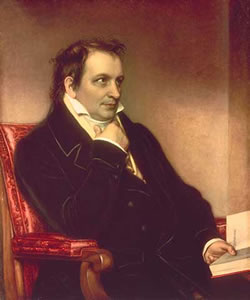
De Duitse schrijver, essayist, journalist, biograaf en uitgever Peter de Mendelssohn werd op 1 juni 1908 in München.


Uit: Thomas Mann: Tagebücher


„15.05.1936

Schönster Früh-Sommertag. Freude an dieser Jahreszeit, die schon die meiner Geburt.-Geschäfte, Korrespondenz. Den Vortrag mit Bermann. Haarwaschung. Mit K. um den Weiher. Russische Bücher [1] kamen, die Emigrantenzeitschriften und das interessante Buch eines Ex-Hitlermannes und erbitterten Wegbereiters: “Ich kann nicht schweigen”. Nachmittags geschlafen. An Reisiger, Fiedler [2] u.a. geschrieben Endlose Briefdiktate u.a. an Knopf und v. Pick (Budapest) [3] in der Frage unserer Wohnung (Hatvanyi). – Exposee von Golo über die Humaniora [4] für Budapest [5]durchgearbeitet. – Bibi bestand mit Auszeichnung sein Lehrexamen, geigerisch; in den theoretischen Nebenfächern schnitt er schlecht ab. Abends keines Fest für ihn in Gegenwart des jungen Kayser, mit Champagner-Getränk. Hörten wieder die “Symphonie in blue”, begabtes Stück von 1920, nach dem nichts mehr kam. Müde. Spät zu Bette.“


spiel_Mendelssohn

Peter de Mendelssohn (1 juni 1908 – 10 augustus 1982) 

Hier samen met de Oostenrijkse schrijfster Hilde Spiel


De Australische schrijfster Colleen McCullough werd geboren op 1 juni 1937 in Wellington.


Uit: The Thorn Birds


„Yet over the ensuing months her yearning after Agnes contained nothing of hope; Meggie didn’t own a doll and had no idea little girls and dolls belonged together. She played happily with the whistles and slingshots and battered soldiers her brothers discarded, got her hands dirty and her boots muddy to play with. Stroking the bright pink folds of the dress, grander than any she had ever seen on a human woman, she picked Agnes uptenderly. The doll had jointed arms and legs which could be moved anywhere; even her neck and tiny, shapely waist were jointed. Her golden hair was exquisitely dressed in a high pompadour studded with pearls, her pale bosom peeped out of a foaming fichu. of cream lace fastened with a pearl pin. The finely painted bone china face was beautiful, left unglazed to give the delicately tinted skin a natural matte texture. Astonishingly lifelike blue eyes shone between lashes of real hair, their irises streaked and circled with a darker blue; fascinated, Meggie discovered that when Agnes lay back far enough, her eyes closed. High on one faintly Bushed cheek she had a black beauty mark, and her dusky mouth was parted slightly to show tiny white teeth. Meggie put the doll gently on her lap, crossed her feet under her comfortably, and sat just looking.

She was still sitting behind the gorse bush when Jack and Hughie came rustling through the grass where it was too close to the fence to feel a scythe. Her hair was the typical Cleary beacon, all the Cleary children save Frank being martyred by a thatch some shade of red; Jack nudged his brother and pointed gleefully. They separated, grinning at each other, and pretended they were troopers after a Maori renegade. Meggie would not have heard them anyway, so engrossed was she in Agnes, humming softly to herself.

“What’s that you’ve got, Meggie?” Jack shouted, pouncing. “Show us!”

“Yes, show us!” Hughie giggled, outflanking her.

She clasped the doll against her chest and shook her head. “No, she’s mine! I got her for my birthday!”

“Show us, go on! We just want to have a look.”

Pride and joy won out. She held the doll so her brothers could see. “Look, isn’t she beautiful? Her name is Agnes.”

“Agnes? Agnes?” Jack gagged realistically. “What a soppy name! Why don’t you call her Margaret or Betty?”

“Because she’s Agnes!”


colleen_mccullough

Colleen McCullough (Wellington, 1 juni 1937)


Zie voor de twee bovenstaande schrijvers ook mijn blog van 1 juni 2007en ook mijn blog van 1 juni 2009.


De Argentijnse schrijver Macedonio Fernández werd geboren op 1 juni 1874 in Buenos Aires. Zie ook mijn blog van 1 juni 2009.


Uit:From The Museum of Eterna’s Novel (Vertaald door Margaret Schwartz)


“After Chapter V of the Novel we can be sure that it isn’t because of NK (the Nonexistent Knight) that Sweetheart’s existence is saddened today.” “This evening, the Novel will send its soloist orchestra—six guitars—to execute various obsequious polyphonies for the orchestras of the bars Ideal, Sibarita, and Real, so that they can listen to music for a change. The Polygraph of Silence will explain the reasons for this with erudite gestures, and he will circulate the bottomless collection plate of gratitude among the personnel of the orchestras, which will make the music of thanks as coin strikes against coin. The public will also serve as a harmony of contentment, as the listening orchestra, momentarily laying aside its instruments for calling-the-waiter in favor of its instruments of applause.”

This is a novel that was, and will be, futuristic until it’s written, just as its author is futuristic—until today he had yet to write a single future page—although he has left futurism until the future, as a proof of his enthusiasm, and doing so brilliantly from there on—without falling into the trap of being a consecutive futurist, like those who have adopted futurism, without understanding it, in the present. And, for that reason, they have declared much to come for the novelist, who has everything in front of him, including his own genial sense of haste, which arises from having thought that, given the speed of progress, posterity has been left behind; each day comes quicker, almost completely forgotten, a series of contemporaneous events that exist in the last journalistic edition of the day it appears and that’s it. We all die already judged immediately, book and author are made classics or corpses in a day, and meanwhile they recommend us to posterity and complain about the present. And today, all of this is done with sufficient justice in 24 hours.“


fernandez

Macedonio Fernández (1 juni 1874 – 10 februari 1952) 


Onafhankelijk van geboortedata:

De Nederlandse dichter Dennis Gaens werd geboren in Susteren in 1982. Zie ook mijn blog van 1 juni 2009.

de overburen leunen

de overburen leunen langzaam
mijn studentenkamer naar binnen
elke avond iets verder voorover

het fatsoen om verrekijkers of telescopen
te gebruiken is hen vreemd

ze rennen tegen de ruiten
totdat de muren zich uitrekken
richting mijn raam
– zelfs hun kat klauwt mee –
hun ogen op groot
en een bouwlamp in de aanslag

in hun badjassen rennen ze
met hun oren hard tegen het glas gedrukt
soms rennen ze zo hard
dat ze hun gezichten pletten
en ik me afvraag of ze er blijvende schade
aan overhouden

niet lang meer
dan slaat hun adem
condens op de buitenkant
van mijn raam

ik moet gordijnen kopen
en een baksteen klaarleggen


Gaens

Dennis Gaens (Susteren, 1982)  


De Vlaamse dichter en schrijver Jeroen Theunissen werd geboren in Gent in 1977. Zie ook mijn blog van 1 juni 2009.


Het huis


Het huis is helemaal geen huis
het is een gedachte je had er evengoed
kunnen breien of je bril vergeten.


Je had er wel willen wonen
op een verloren pianodag in september
maar het viel in de bladeren stil vroeg.


Met je lila haren je potloodogen
je eeuwige zalige handen
die geen handen zijn maar veeleer een gedachte
lik je de vensters aan scherven.


Toen het huis nog een huis was
heb je er lange nachten gedroomd
maar eigenlijk toen al was het
geen huis
als nu een gedachte.


 theunissen

Jeroen Theunissen (Gent, 1977)


Walt Whitman, Frank Goosen, Gabriel Barylli, Gerd Hergen Lübben, Serge Brussolo

De Amerikaanse dichter Walt Whitman werd geboren op 31 mei 1819 in Westhills, Long Island, New York. Zie ook mijn blog van 31 mei 2009 en ook mijn blog van 31 mei 2008  en ook mijn blog van 31 mei 2007 en ook mijn blog van 31 mei 2006


Uit: Calamus Poems


4.


These I, singing in spring, collect for lovers,
(For who but I should understand lovers, and all their sorrow and joy?
And who but I should be the poet of comrades?)
Collecting, I traverse the garden, the world — but soon I pass the gates,
Now along the pond-side — now wading in a little, fearing not the wet,
Now by the post-and-rail fences, where the old stones thrown there, picked from the fields, have accumulated,
Wild-flowers and vines and weeds come up through the stones, and partly cover them — Beyond these I pass,
Far, far in the forest, before I think where I get,
Solitary, smelling the earthly smell, stopping now and then in silence,
Alone I had thought — yet soon a silent troop gathers around me,
Some walk by my side, and some behind, and some embrace my arms or neck,
They, the spirits of friends, dead or alive — thicker they come, a great crowd, and I in the middle,
Collecting, dispensing, singing in spring, there I wander with them,
Plucking something for tokens — something for these, till I hit upon a theme — tossing toward whoever is near me,


Here! lilac, with a branch of pine,
Here, out of my pocket, some moss which I pulled off a live-oak in Florida, as it hung trailing down,
Here, some pinks and laurel leaves, and a handful of sage,
And here what I now draw from the water, wading in the pond-side,
(O here I last saw him that tenderly loves me — and returns again, never to separate from me,
And this, O this shall henceforth be the token of comrades — this calamus-root shall,
Interchange it, youths, with each other! Let none render it back!)
And twigs of maple, and a bunch of wild orange, and chestnut,
And stems of currents, and plum-blows, and the aromatic cedar;
These I, compassed around by a thick cloud of spirits,
Wandering, point to, or touch as I pass, or throw them loosely from me,
Indicating to each one what he shall have — giving something to each,
But what I drew from the water by the pond-side, that I reserve,
I will give of it — but only them that love, as I myself am capable of loving.


7.


Of the terrible question of appearances,
Of the doubts, the uncertainties after all,
That may-be reliance and hope are but speculations after all,
That may-be identity beyond the grave is a beautiful fable only,
May-be the things I perceive — the animals, plants, men, hills, shining and flowing waters,

The skies of day and night — colors, densities, forms — May-be these are, (as doubtless they are,) only apparitions, and the real something has yet to be known,
(How often they dart out of themselves, as if to confound me and mock me!
How often I think neither I know, nor any man knows, aught of them;)
May-be they only seem to me what they are, (as doubtless they indeed but seem,) as from my present point of view — And might prove, (as of course they would,) naught of what they appear, or naught any how, from entirely changed points of view;
To me, these, and the like of these, are curiously answered by my lovers, my dear friends;
When he whom I love travels with me, or sits a long while holding me by the hand,
When the subtle air, the impalpable, the sense that words and reason hold not, surround us and pervade us,
Then I am charged with untold and untellable wisdom — I am silent — I require nothing further,
I cannot answer the question of appearances, or that of identity beyond the grave,
But I walk or sit indifferent — I am satisfied,
He ahold of my hand has completely satisfied me.


Whitman

Walt Whitman (31 mei 1819 – 26 maart 1893)
Standbeeld in Bear Mountain Park, New York


De Duitse schrijver en cabaretier Frank Goosen werd geboren op 31 mei 1966 in Bochum. Zie ook mijn blog van 31 mei 2007 en ook mijn blog van 31 mei 2008 en ook mijn blog van 31 mei 2009


Uit: Radio Heimat


An lauen Sommerabenden stehe ich gern auf der Eisenbahnbrücke am Lohring in Bochum und schaue auf meine Stadt. Ich sehe das Mercedes-Hochhaus am Bahnhof, die Fiege-Brauerei, das neue Hochhaus der Stadtwerke (das ein bisschen aussieht wie der Monolith aus ‚2001’), die Türme von Propstei- und Christuskirche, und ganz rechts erkenne ich sogar noch den Förderturm des Bergbau-Museums. Und dann denke ich: Boah! Schön ist das nicht!

Wenn sie nicht im Haushaltskittel daherkamen, trugen diese Frauen Tantenpullover. Unifarbene Strickpullis mit V-Ausschnitt, die sich über einen unglaublichen Atomvorbau spannten. So was wird ja heute gar nicht mehr gebaut. Die Mieder, die das stützen mussten, waren Meisterleistungen der Ingenieursplanung, höchstens noch vergleichbar mit Bauwerken wie der Fehmarn-Sund-Brücke. Diese Pullis saßen so eng, das war praktisch gehäkeltes Neopren. Man fragte sich spontan: Wie kommt die Tante da überhaupt rein? Vermutlich wie der Christbaum ins Netz kommt: Im Altersheim stand auf dem Gang eine durchgeschnittene Tonne, da kam vorne der Pullover drauf, und hinten schoben zwei Zivis. Die alten Männer hörte man oft schon, bevor man sie sah. Ihnen ging ein abgehacktes Donnern voraus, und da wusste man gleich, da kommt wieder einer um die Ecke, der hat dreißig Jahre lang kaum das Sonnenlicht gesehen und hustet jetzt seine schleimigen Lungenreste auf den Bürgersteig hinaus. Und manchmal sah das, was da raus kam, aus, als würde es noch leben. Hackendes Lungendonnern – der Soundtrack einer Kindheit im Ruhrgebiet.“


Goosen

Frank Goosen (Bochum, 31 mei 1966)


De Oostenrijkse schrijver, toneelspeler en regisseur Gabriel Barylli werd geboren op 31 mei 1957 in Wenen. Zie ook mijn blog van 31 mei 2007 en ook mijn blog van 31 mei 2008 en ook mijn blog van 31 mei 2009


Uit: Echtzeit


„Ich habe dich immer bewundert, wie du das aushalten konntest! Kannst, muss ich sagen. Ich glaube, dass er immer noch Zigarren raucht. Habe ich recht?!
Du kannst es mir ja schreiben. Mit einer E-Mail. Oder anrufen. Oder einfach vorbeischauen und wir reden über den Geschmack von Zigarren auf Männerlippen. Ich bleibe so lange an dem Thema hängen, weil ich unlängst von einem Mann geküsst wurde, der zuvor eine Zigarre geraucht hatte. Eigentlich hat er auch zwischen unseren Küssen weitergeraucht und das fand ich sehr seltsam. Aber du weißt ja, wie Frauen sind. Sie sehen so lange über die Fehler ihrer großen Liebe hinweg, bis sie stören… die Fehler. Und manchmal beendet das eine große Liebe. Ein einzelner Fehler kann da genügen. Nur einer. Dein Stefan hat ja gar keine Fehler. Also fast keine Fehler.

(…)


Deine Seele hat zu mir gesprochen. Damals. In dem Café “Glockenspiel”. Auf dem bordeauxroten Sofa mit der etwas abgewetzten Rückenlehne. Als du mir gesagt hast, dass ich mich zu dir setzten soll. Irgendetwas in mir hat geflüstert: “Vorsicht, Vorsicht, diese Frau sieht aus wie ein Engel… Vorsicht… vielleicht ist sie einer!!” Kleiner Scherz. Aber der Teil in meiner Seele, der gewusst hat, dass ich durch dich viel erleiden werde, um viel zu lernen – dieser Teil hat gesagt: “Los, setz dich zu ihr, schieb das Eis rein und schau dir an, welcher Film da laufen soll.“


Barylli

Gabriel Barylli (Wenen, 31 mei 1957)


De Duitse dichter en schrijver Gerd Hergen Lübben werd geboren op 31 mei 1937 in Sillenstede. Zie ook mijn blog van 31 mei 2009


VOM ROLANDSYSTEM  (Fragment)


5.


einzelteile des

feuersystems roland

nicht kontrolliert werden

sollen zutaten

verzweifelter zeit für

die transatlantischen

paladine

···

wer immer frieden sucht

in niederlagen

siegen die legenden

sagen
comandante

rolando verlies

brain-finish galaxy

sei bei uns der ist auf

einmal auf der flucht

shut up my desert-storm

(···)

alles was aus rolands

sinn verschwunden war in

sein herz wieder heim

bringt und diese treue

hochzeitet mit ihrem

liebsten roland und

ist sein leid zu ende

vergessen vergossen

des morgens drachen

blut durch den bogen fliesst

vom auge gottes aus

tag und nacht zu sehn

und die freude beginnt


luebben

Gerd Hergen Lübben (Sillenstede, 31 mei 1937)


De Franse schrijver Serge Brussolo werd geboren op 31 mei 1951 in Parijs. Zie ook mijn blog van 31 mei 2009


Uit: Dortoir Interdit


„Paddy Mulloney avait soixante-dix ans et aimait par-dessus tout se donner des airs d’Irlandais de bande dessinée. Il lui arrivait de s’exhiber avec l’un de ces chapeaux melons verts dont on s’affuble lors du défilé de la Saint Patrick, ou de bretelles ornées de trèfles à quatre feuilles. Il n’avait jamais pu s’acclimater à la Californie ; la pluie lui manquait. A l’agence 13, il avait le grade de chef accessoiriste. En cinquante ans d’immobilier, il avait tout vu. C’était un catalogue ambulant des aberrations humaines. Il dégorgeait les anecdotes comme d’autres les gouttes de sueur pendant une traversée du désert Mojave. A certains moments il me saoulait à tel point que je n’avais d’autre recours que d’utiliser l’autohypnose pour éviter la crise de nerfs. Pour lui, j’étais ” la gosse “, ” la fille “, ” la gamine “, jamais il ne lui serait venu à l’idée d’utiliser mon nom. Pas antipathique au demeurant. Non, un fossile bougon, riant de ses propres plaisanteries, essayant désespérément de me faire rougir en débitant des blagues salées d’un autre âge et qui, aujourd’hui, auraient fait hausser les épaules à une fillette de onze ans. Je ne l’ai jamais vu qu’habillé d’une salopette ; sale les jours de semaine, propre le dimanche.

Tout de même, je l’aimais bien. Peut-être parce que j’ai été privée d’une vraie famille et que je n’ai jamais connu mes grands-parents. Enfin, un psy dirait sûrement ce genre de truc puisque ça ne mange pas de pain.

Mais la jovialité de Paddy s’éteignait dès qu’il s’agissait de se rendre au magasin d’accessoires. Là, d’un coup, son visage s’assombrissait et il ne desserrait plus les dents de tout le voyage. Devereaux me l’avait collé dans les pattes dès mon contrat d’embauche signé.

— Mulloney vous fera visiter nos installations, m’avait-il expliqué. Nous disposons d’un matériel de récupération étonnant, dont vous saurez tirer parti. Il ne s’agit pas de vulgaire brocante, mais de pièces de mobilier que nous ont abandonnées les propriétaires des appartements dont je vous ai parlés. Certaines sont de grandes valeur, mais nécessitent des restaurations. Vous estimerez cela sur place. Dressez un catalogue et voyez ce vous pouvez réutiliser.“


brussolo

Serge Brussolo (Parijs, 31 mei 1951)


Zie voor nog meer schrijvers van de 31e mei ook
mijn vorige blog van vandaag.
Konstantin Paustovski, Saint-John Perse, Georg Herwegh, Ludwig Tieck

De Russische schrijver Konstantin Paustovski werd geboren op 31 mei 1892 in Moskou. Zie ook mijn blog van 31 mei 2009

Uit: Verre Jaren (Vertaald door Wim Hartog)


Veel te vroeg, in mijn jeugd al, kwam in mij de neiging boven om me met herinneringen bezig te houden. Van tijd tot tijd gaf ik er mij aan over als aan een spel. Ik riep het verloop van mijn leven niet stap voor stap in mijn herinnering op, maar, als men het zo mag noemen, ik zocht naar ogenblikken met een bepaalde gelijkenis.

(. . .)


Mijn voorliefde voor zulk soort herinneringen was niet eens zo zinloos, als ik aanvankelijk gedacht had. Wanneer ik bijvoorbeeld de logementen in mijn herinnering opriep, dan dacht ik tegelijkertijd aan alle daarmee samenhangende bijzonderheden: de kleur van de versleten lopers in de gangen, het patroon op het behang, de geur van de keukens en de oleografieën, de gezichten van de kamermeisjes en hun manier van spreken, de versleten, doorgezakte meubels, aan alles, tot aan de uit Oeralsteen gemaakte inktpot toe, die een kleur had als van vochtige suiker, en waar nooit inkt in zat, maar enkel een paar uitgedroogde dode vliegen.

Ik probeerde me dit alles steeds weer levendig voor de geest te halen. En pas veel later, toen ik nl. met schrijven begon, begreep ik dat deze herinneringen mij veel bij mijn werk hielpen. Op deze manier oefende ik mijn geheugen om mijn belevenissen duidelijk en concreet vast te houden, en was op elk willekeurig ogenblik in staat, alles nog eens opnieuw te beleven in mijn geest. Zo verzamelde ik een grote hoeveelheid kleine feiten, waaruit ik dan later kon kiezen wat ik nodig had.“


paustovskij

Konstantin Paustovski (31 mei 1892 – 14 juli 1968)


De Franse dichter en diplomaat Saint-John Perse (eigenlijk Marie-René-Alexis Saint-Léger) werd geboren op 31 mei 1887 in Saint-Léger-les-Feuilles op Guadeloupe. Zie ook mijn blog van 31 mei 2007 en ook mijn blog van 31 mei 2008 en ook mijn blog van 31 mei 2009


Uit: Winds (Fragment)


All to be done again. All to be told again. And the scything glance to be swept across all man’s heritage.

A man came who laughed at the Librarians’ stone galleries. — Basilica of the Tome!… A man on the sardonyx stairs, beneath the prerogatives of bronze and alabaster. Man of little renown.

Who was he, who was he not?

And the walls are of agate where the lamps gain lustre, the man, bare-headed, with smooth hands, in the yellow marble quarries – where the tomes are in the seraglio, where the tomes are in their niches, like stuffed animals under wrappings, long ago, in their jars within the closed rooms of great Temples – the tomes, innumerable an
d sad, in high cretaceous strata carrying credence
and sediment through the ascent of time…

And the walls are of agate where the lamps take lustre. Tall walls polished by silence and by science, and by the night of the lamps. Silence and silent rituals. Priests and priesthood. Serapeum!


At what rites of green Spring must we cleanse this fi nger, soiled with the dust of archives – in this bloom

of age, in all this powder of dead Queens and fl amens – as though from deposits of holy cities, cities of white pottery, dead from too much attrition, too much moon?

Ha! let all this loess be aired out! Ha! let all this delusion be aired out. Fraud and sterility of altars…

The tomes, innumerable and sad, on their pale chalk edges…

And what is all this talc again to my fi nger of bone, talc of wear and wisdom, and all that dusty touch of scholarship? like powder and dust of pollen at the season’s end, spores and sporules of lichens, a crumbling of wings of the Pieridae, of fl aking volvas of the lactaries… all things scaling off toward nothingness, deposits of the depths over their faeces, slime and dregs at the very bottom of silt –

ashes and scales of the spirit.


Vertaald door Hugh Chisholm


saint-john-perse

Saint-John Perse (31 mei 1887 – 20 september 1975)


De Duitse dichter Georg Herwegh werd geboren in Stuttgart op 31 mei 1817. Zie ook mijn blog van 31 mei 2007 en ook mijn blog van 31 mei 2008 en ook mijn blog van 31 mei 2009


Dem deutschen Volk


Deutschland, o zerrissen Herz,

Das zu Ende bald geschlagen,

Nur um dich noch will ich klagen,

Und in einer Brust von Erz

Schweigend meinen kleine
n Schmerz,

Meinen kleinen Jammer tragen,

Vaterland, um dich nur klagen.


Lustig grünt dein Nadelholz,

Lustig rauschen deine Eichen;

In den neununddreißig Reichen

Fehlt ein einzig Körnchen Golds:

Freier Bürger hoher Stolz

Fehlt im Lande sondergleichen,

In den neununddreißig Reichen.


Wenn ein Sänger für dich focht,

Wenn ein Mann ein Schwert geschwungen,

Hast du scheu nur mitgesungen,

Hast du schüchtern mitgepocht;

Und man hat dich unterjocht,

Hat dich in den Staub gezwungen,

Weil du gar so still gesungen.


Ihr beweinet’s und bereut’s –

Und das nennt ihr deutsche Treue?

Laßt die Tränen, laßt die Reue,

Soll nicht einst der Enkel Teuts

Sterben an der Zwietracht Kreuz,

Kämpf’ und handle, Volk, aufs neue,

Denn der Teufel ist die Reue!


Tritt in deiner Fürsten Reihn!

Sprich: die neununddreißig Lappen

Sollen wieder besser klappen

Und ein Heldenpurpur sein;

Ein Reich, wie ein Sonnenschein!

Ein Herz, ein Volk und ein Wappen!

Helf’ uns Gott – so soll es klappen!


Herwegh

Georg Herwegh (31 mei 1817 – 7 april 1875)


De Duitse dichter en schrijver Ludwig Tieck werd op 31 mei 1773 geboren in Berlijn. Zie ook mijn blog van 28 april 2006 en ook mijn blog van 31 mei 2007 en ook mijn blog van 31 mei 2008 en ook mijn blog van 31 mei 2009


Uit: Der gestiefelte Kater

Lorenz: Ich glaube, daß nach dem Ableben unsers Vaters unser kleines Vermögen sich bald wird einteilen lassen. Ihr wißt, daß der selige Mann nur drei Stück von Belang zurückgelassen hat: ein Pferd, einen Ochsen und jenen Kater dort. Ich, als der Älteste, nehme das Pferd, Barthel, der nächste nach mir, bekömmt den Ochsen, und so bleibt denn natürlicherweise für unsern jüngsten der Kater übrig.

Leutner, im Parterre: Um Gottes willen! hat man schon eine solche Exposition gesehn! Man sehe doch, wie tief die dramatische Kunst gesunken ist!

Müller: Aber ich habe doch alles recht gut verstanden.

Leutner: Das ist ja eben der Fehler, man muß es dem Zuschauer so verstohlenerweise unter den Fuß geben, ihm aber nicht so geradezu in den Bart werfen.

Müller: Aber man weiß doch nun, woran man ist.

Leutner: Das muß man ja durchaus nicht so geschwind wissen; daß man so nach und nach hineinkömmt, ist ja eben der beste Spaß.

Schlosser: Die Illusion leidet darunter, das ist ausgemacht.

Barthel: Ich glaube, Bruder Gottlieb, du wirst auch mit der Einteilung zufrieden sein, du bist leider der jüngste, und da mußt du uns einige Vorrechte lassen.

Gottlieb: Freilich wohl.

Schlosser: Aber warum mischt sich denn das Pupillenkollegium nicht in die Erbschaft? das sind ja Unwahrscheinlichkeiten, die unbegreiflich bleiben!

Lorenz: So wollen wir denn nur gehn, lieber Gottlieb, lebe wohl, laß dir die Zeit nicht lang werden.

Gottlieb: Adieu.


tieck

Ludwig Tieck (31 mei 1773 – 28 april 1853)
Portret door Joseph Stieler, 1838

Elizabeth Alexander, Countee Cullen, Randolph Bourne, Alfred Austin, Emmanuel Hiel, Henri François Rikken

De Amerikaanse dichteres en schrijfster Elizabeth Alexander werd geboren op 30 mei 1962 in New York. Zie ook mijn blog van 30 mei 2008 en ook mijn blog van 30 mei 2009.


Blues    


I am lazy, the laziest

girl in the world. I sleep during

the day when I want to, ’til

my face is creased and swollen,

’til my lips are dry and hot. I

eat as I please: cookies and milk

after lunch, butter and sour cream

on my baked potato, foods that

slothful people eat, that turn

yellow and opaque beneath the skin.

Sometimes come dinnertime Sunday

I am still in my nightgown, the one

with the lace trim listing because

I have not mended it. Many days

I do not exercise, only

consider it, then rub my curdy

belly and lie down. Even

my poems are lazy. I use

syllabics instead of iambs,

prefer slant to the gong of full rhyme,

write briefly while others go

for pages. And yesterday,

for example, I did not work at all!

I got in my car and I drove

to factory outlet stores, purchased

stockings and panties and socks

with my father’s money.


To think, in childhood I missed only

one day of school per year. I went

to ballet class four days a week

at fou
r-forty-five and on

Saturdays, beginning always

with plie, ending with curtsy.

To think, I knew only industry,

the industry of my race

and of immigrants, the radio

tuned always to the station

that said, Line up your summer

job months in advance. Work hard

and do not shame your family,

who worked hard to give you what you have.

There is no sin but sloth. Burn

to a wick and keep moving.


I avoided sleep for years,

up at night replaying

evening news stories about

nearby jailbreaks, fat people

who ate fried chicken and woke up

dead. In sleep I am looking

for poems in the shape of open

V’s of birds flying in formation,

or open arms saying, I forgive you, all.


alexander

Elizabeth Alexander (New York, 30 mei 1962)


De Afro-Amerikaanse dichter Countee Cullen werd geboren als Countee LeRoy Porter op 30 mei 1903. Zie ook mijn blog van 30 mei 2007 en ook mijn blog van 30 mei 2008 en ook mijn blog van 30 mei 2009.


Yet Do I Marvel

I doubt not God is good, well-meaning,
kind,
And did He stoop to quibble could tell why
The little buried mole continues blind,
Why flesh that mirrors
Him must some day die,
Make plain the reason tortured
Tantalus Is baited by the fickle fruit,
declare
If merely brute caprice dooms Sisyphus
To struggle up a never-ending stair.


Inscrutable His ways are, and immune
To catechism by a mind too strewn
With petty cares to slightly understand
What awful brain compels His awful hand.
Yet do I marvel at this curious thing:
To make a poet black, and bid him sing!


countee_cullen

Countee Cullen (30 mei 1903 – 9 januari 1946)


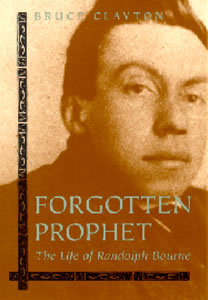
De Amerikaanse schrijver en essayist Randolph Bourne werd geboren op 30 mei 1886 in Bloomfield, New Jersey. Hij studeerde aan de Columbia University. Tijdens WO I stonden twee groepen van progressieve intellectuelen tegenover elkaar. De twee facties die ontstonden waren de pro-oorlog factie, geleid door de educatieve theoreticus John Dewey en de anti-oorlogsbeweging factie, waarvan zowel Bourne en andere beroemde progressieven als Jane Addams deel uitmaakten. Bourne was een leerling van Dewey in Columbia, maar hij was het oneens met het idee Dewey’s van het gebruik van de oorlog als een instrument om de democratie te verspreiden. Hij vond dat Dewey zijn democratische idealen verraden had door zich uitsluitend te richten op de facade van een democratische regering in plaats van op de ideeën achter de democratie, waarvan Dewey ooit beweerd had die te respecteren. Bourne werd sterk beïnvloed door Horace Kallens essay Democracy Versus the Melting-Pot,” uit 1915 en voerde, net als Kallen, dat Amerikanisme niet geassocieerd mocht worden met Anglo-Saxisme. In zijn artikel uit 1916 “Trans-National America,”  voerde Bourne aangevoerd aan dat de VS allochtone culturen moest verwelkomen in een “kosmopolitisch Amerika, ” in plaats van gedwongen te assimileren aan de anglofiele cultuur.


Uit: The State


“To most Americans of the classes which consider themselves significant the war brought a sense of the sanctity of the State which, if they had had time to think about it, would have seemed a sudden and surprising alteration in their habits of thought. In times of peace, we usually ignore the State in favour of partisan political controversies, or personal struggles for office, or the pursuit of party policies. It is the Government rather than the State with which the politically minded are concerned. The State is reduced to a shadowy emblem which comes to consciousness only on occasions of patriotic holiday.

Government is obviously composed of common and unsanctified men, and is thus a legitimate object of criticism and even contempt. If your own party is in power, things may be assumed to be moving safely enough; but if the opposition is in, then clearly all safety and honor have fled the State. Yet you do not put it to yourself in quite that way. What you think is only that there are rascals to be turned out of a very practical machinery of offices and functions which you take for granted. When we say that Americans are lawless, we usually mean that they are less conscious than other peoples of the august majesty of the institution of the State as it stands behind the objective government of men and laws which we see.”


RBourne

Randolph Bourne (30 mei 1886 – 22 december 1918)


De Engelse dichter Alfred Austin werd geboren in Headingley, Leeds, op 30 mei 1835. Alfred Austin was de zoon van een koopman in Leeds. Zijn moeder was een zuster van ingenieur en parlementslid Joseph Locke. Hij werd opgeleid aan Stonyhurst College in Clitheroe, Lancashire, en aan de Universiteit van Londen, waar hij in 1853 afstudeerde. In 1857 werd hij advocaat, maar besloot zich na korte tijd volledig te richten op het schrijven. Austen schreef in het mede door hem opgerichte blad National Review en in The Standard. Na de dood van Tennyson werd geen van de toen actieve dichters geschikt bevonden voor het ambt van Poet Laureate, dat daarop vier jaar lang onvervuld bleef. Austin aanvaardde de functie in 1896, na een weigering van William Morris.


Any Poet At Any Time 


Time, thou supreme inexorable Judge,

Whom none can bribe, and none can overawe,

Who unto party rancour, private grudge,

Calmly opposeth equitable law,

Before whom advocacy vainly strives

To make the better cause to seem the worse,

To thy Tribunal, when our jangling lives

Are husht, I leave the verdict on my verse.

Irrevocably then wilt thou proclaim

What should have been, what now must ever be,

If in oblivion perish should my name,

Or shine aloft in mighty company.

I to my kind proffering of my poor best,

Remit to Time’s arbitrament the rest.


An April Love 


Nay, be not June, nor yet December, dear,

But April always, as I find thee now:

A constant freshness unto me be thou,

And not the ripeness that must soon be sere.

Why should I be Time’s dupe, and wish more near

The sobering harvest of thy vernal vow?

I am content, so still across thy brow

Returning smile chase transitory tear.

Then scatter thy April heart in sunny showers;

I crave nor Summer drouth nor Winter sleet:

As Spring be fickle, so thou be as sweet;

With half-kept promise tantalise the hours;

And let Love’s frolic hands and woodland feet

Fill high the lap of Life with wilding flowers.


alfred_austin

Alfred Austin (30 mei 1835 – 2 juni 1913)


De Vlaamse dichter en schrijver Emmanuel Hiel werd geboren in Sint-Gillis-bij-Dendermonde op 30 mei 1834. Zie ook mijn blog van 30 mei 2006 en ook mijn blog van 30 mei 2007 en ook mijn blog van 30 mei 2008 en ook mijn blog van 30 mei 2009.


Is het waken, is het dromen


Is het waken, is hert dromen
Heimlijk zuchten, vurig minnen,
Dwaas de driftenstrijd des levens
Alle stond te herbeginnen?
Bang te blikken als een weekling
Naar de wenken heurer ogen,
Of te dwalen, droef te peinzen:
Word, ach, word ik niet bedrogen?

Is het waken, is het dromen,
In de roes der vlammenkussen,
’t Manlijk handlen, ’t krachtig denken
Neer te drukken, uit te blussen?
Bij het golven van haar boezem
Als een jongling teer te smachten,
Die, voor de eerste maal des levens,
Voelt der driften toverkrachten?


’t Is geen waken, of geen dromen,
Ook geen lijden of geen strijden;
Maar een laf, nietswaardig trachten
Naar verjongen, naar verblijden!
Koele schaduw moest ik zoeken,
Waar het koortsig vuur des harten
Laafnis vond en tevens voedsel
Ter genezing warer smarten.


EmmanuelHiel

Emmanuel Hiel (30 mei 1834 – 27 augustus 1899)
Borstbeeld in Schaarbeek


De Surinaamse schrijver Henri François Rikken werd geboren in Paramaribo op 30 mei 1863. Zie ook mijn blog van 30 mei 2008 en ook mijn blog van 30 mei 2009.


Uit: Codjo, de brandstichter


“In het jaar 1832, den tijd waarin ons verhaal een aanvang neemt, was de Combé nog slechts schaars bewoond en tengevolge van de moerassen en de slechte loozing der gronden daarenboven zeer ongezond.

Combé was de naam van een neger, de eerste, die deze buitengronden bewoonde en naar wien men toen iederen tuin en iedere buitenwoning Combé noemde.

Eerst sedert 1799 werd Combé, ook wel de voorstad Zeelandia genoemd, bebouwd; ofschoon reeds in 1780 door gouverneur Wichers, om den voortdurenden aanwas der bevolking tegemoet te komen, de grond voor deze voorstad of buitenwijk gelegd was.

De Oostersche Brug overgaande, benoorden het fort Zeelandia, vond men rechts het nu nog bestaande, doch als koeliedepôt gebruikte magazijn van levensmiddelen, links de smederij en andere werkplaatsen van het garnizoen. Een weinig verder ter linkerzijde was een zeer lange slavenloods voor de, bij de bevolking onder den naam van soestè-ningre bekende slaven, die voor de reinheid en het onderhoud der straten gebruikt werden. Deze benaming was waarschijnlijk een verbastering van Sociëteits-negers, die bij de opheffing der ‘Geoctroyeerde-Sociëteit’ in 1795 en later, na de afschaffing van den slavenhandel op 1 Jan. 1808, ter sluik ingevoerde en den lande vervallen slaven waren en toen in een staat, die het midden hield tusschen vrijheid en slavernij, openbaren arbeid moesten verrichten. Slechts hier en daar stond langs de elkander rechthoekig snijdende straten, tusschen het geboomte en het wied verscholen, een huisje, dat een vrijgegevene of ook wel een der samenleving ontvluchte melaatsche tot woonplaats verstrekte.

De in het wild groeiende boomen en struiken op de onbebouwde gronden en erven, door moerassen en poelen van elkander gescheiden, boden op hun hooge kruinen of tusschen het dicht gebladerte den vogelen, slangen en allerlei ongedierte een ongestoorde, veilige schuilplaats. Halverwege de tweede dwarsstraat was een ruime, doch nimmer bezochte marktplaats, waarop een groote, overdekte put in wied en onkruid verscholen lag.“


Rikken

Henri François Rikken (30 mei 1863 – 17 mei 1908)


Zie voor nog meer schrijvers van de 30e mei ook mijn vorige blog van vandaag.


Michail Bakoenin, Georg Schaumberg, Félix Arnaudin, Robert Prutz, Jan Geerts, David van Reybrouck, Pita Amor, Eddy Bruma

De Russische schrijver en anarchist Michail Alexandrowitsj Bakoenin werd geboren in Prjamuchino op 30 mei 1814. Op zijn veertiende vertrok hij naar Sint-Petersburg waar hij een militaire opleiding volgde bij de Universiteit van de Artillerie. Na zijn opleiding ging hij werken in de Keizerlijke Garde, maar in 1835 diende hij zijn ontslag in, omdat hij zich niet kon verenigen met het despotisme tegen de Polen dat hij moest aanschouwen. Vervolgens werkte Bakoenin in Moskou en Sint-Petersburg aan vertalingen van werken van auteurs als Fichte en Georg Hegel. In 1842 vertrok hij naar Duitsland om Hegel te bestuderen. Hier kwam hij in aanraking met Duitse socialisten, en reisde hij naar Parijs waar hij Pierre-Joseph Proudhon en George Sand ontmoette. Hij nam deel aan de opstand in Dresden (1849) wat zorgde voor een arrestatie en een terdoodveroordeling. Deze werd echter omgezet in levenslange opsluiting; Bakoenin werd uitgeleverd aan Rusland en naar Siberië gestuurd. In 1861 wist Bakoenin te ontsnappen en via Japan en de Verenigde Staten West-Europa te bereiken. Bakoenin was een anarchist die regerende machten in alle hoedanigheden verwierp: van God tot aan menselijke autoriteit, zoals de staat. Tevens was hij voor gelijkwaardigheid, waarmee hij het idee van een bevoorrechtte klasse afwees.


Uit: God and the State


“Who is right, the idealists or the materialists? The question, once stated in this way, hesitation becomes impossible. Undoubtedly the idealists are wrong and the materialists right. Yes, facts are before ideas; yes, the ideal, as Proudhon said, is but a flower, whose root lies in the material conditions of existence. Yes, the whole history of humanity, intellectual and moral, political and social, is but a reflection of its economic history.

All branches of modem science, of true and disinterested science, concur in proclaiming this grand truth, fundamental and decisive: The social world, properly speaking, the human world – in short, humanity – is nothing other than the last and supreme development – at least on our planet and as far as we know – the highest manifestation of animality. But as every development necessarily implies a negation, that of its base or point of departure, humanity is at the same time and essentially the deliberate and gradual negation of the animal element in man; and it is precisely this negation, as rational as it is natural, and rational only because natural – at once historical and logical, as inevitable as the development and realization of all the natural laws in the world – that constitutes and creates the ideal, the world of intellectual and moral convictions, ideas.

Yes, our first ancestors, our Adams and our Eves, were, if not gorillas, very near relatives of gorillas, omnivorous, intelligent and ferocious beasts, endowed in a higher degree than the animals of another species with two precious faculties – the power to think and the desire to rebel.”


Bakunin_selfportrait

Michail Bakoenin (30 mei 1814 – 13 juni 1876)
Zelfportret uit 1838


De Duitse dichter en schrijver Georg Schaumberg werd geboren op 30 mei 1855 in Ansbach. Zie ook mijn blog van 30 mei 2009.


Redoutenlied – Tragödie


Beim ersten Walzer, da sahen wir uns:
“Ich kenne dich, reizende Dame”
Sie neigte das Haupt und sprach verschämt:
Längst steht ja im ´Kürschner´ mein Name.”

Die Polka gab uns Gelegenheit
Zur literarischen Enquete.
Sie sprach: “Sie wache im Ibsen auf
Und ginge mit Nietsche zu Bette.”

Beim Schottisch dann: “Trotz Mann un dKind
fühle nimmer sie sich gebunden,
Denn ihre Rente sei hoch und fest.”
Da hatten wir schnell uns gefunden.

Und als der zweite Walzer enklang
Hörte sie seufzend mein Werben:
“Auf ewig, Liebster, bin ich nun dein,
Und in Schönheit laß uns einst sterben.”

Kaum schwur ich´s beim Mumm, da folgte schon
Dem Freudenrausch lähmende Stille…
Warum verlorst du den falschen Zopf,
O Weib, schon bei der Quadrille!


schaumberg

Georg Schaumberg (30 mei 1855 – 2 maart 1931)
Leden van de Gesellschaft für modernes Leben: vlnr: Otto Julius Bierbaum, Georg Schaumberg, Oskar Panizza (rond 1893).


De Franse dichter, schrijver en fotograaf Félix Arnaudin werd geboren op 30 mei 1844 in Labouheyre in het departement Les Landes. Hij was de eerste die de Haute-Lande en de oorspronkelijke bewoners ervan onder de aandacht bracht. Arnaudin was zowel taalkundige, folklorist, historicus, antropoloog, fotograaf en schrijver. Zijn werk richtte zich op het verzamelen van verhalen en liedjes in de Gascogne, op de fotografie van landschappen, bewoners, herders en boeren. Zijn geboortehuis is nu in plaats van lopende fototentoonstellingen door de gemeente Labouheyre.


Uit: Chants populaires de la Grande Lande


« Que de choses aimées dont chaque jour emporte un lambeau ou qui ont déjà disparu et ne sont plus qu’un souvenir ! La lande elle-même, par-dessus tout, où flottait, lointaine, à demi éteinte, d’autant plus grande dans son silence, la lente complainte du pâtre ou du bouvier perdus au vague de l’espace, et aussi, tant douce à ouïr au voisinage des parcs taciturnes, la fraîche cantilène des coupeuses de bruyère, vibrant dans la torpeur de ses pâles vesprées d’arrière-saison ; la lande infinie abandonnée sans partage à la vie pastorale, et endormie -à jamais, semblait-il, mais des temps nouveaux sont venus brutalement briser le charme- dans son vieux rêve d’immensité et de solitude… Maintenant, la lande n’existe plus. Au désert magnifique, enchantement des aïeux, déroulant sous le désert du ciel sa nudité des premiers âges, à l’étendue plane, sans limites, où l’oeil avait le perpétuel éblouissement du vide, où l’âme, élargie, enivrée, tantôt débordait de joies neuves et enfantines, tantôt s’abîmait dans d’ineffables et si chères tristesses, a succédé la forêt, -la forêt industrielle ! avec toutes ses laideurs (…), dont l’étouffant rideau, partout étendu où régnait tant de sereine et radieuse clarté, borne implacablement la vue, hébète la pensée, en abolit tout essor ».


arnaudin

Félix Arnaudin (30 mei 1844 – 6 december 1921)


De Duitse dichter en schrijver Robert Eduard Prutz werd geboren op 30 mei 1816 in Stettin. Zie ook mijn blog van 30 mei 2009.


Gesetz der Liebe

Wenn du dein Herz der Liebe willst ergeben,
So acht’ auf Eins: daß es sich völlig giebt
Und ungetheilt; es lebt nur, wer da liebt,
Drum klingt so ähnlich lieben auch und leben.

Drum wenn du liebst, so habe nichts daneben,
Woran dein Herz noch hängt; die Welt zerstiebt
Der Seele, die sich innigst weiß geliebt,
Und welche selbst in Liebe will verschweben.

Wer aber unter des Geliebten Küssen
Noch ängstlich seitwärts nach den Leuten schielt,
Was sie wol meinen, denken, sagen müssen,

Der ist, wie fromm er sich auch sonst verhielt,
Rebell zuwider göttlichen Beschlüssen,
Und eitel Täuschung ist, was er erzielt


prutz

Robert Prutz (30 mei 1816 – 21 juni 1872)


Onafhankelijk van geboortedata:


De Vlaamse dichter Jan Geerts werd geboren in Hoogstraten in 1972. Geerts is schrijfdocent en dichter. Hij publiceerde verscheidene gedichten in diverse tijdschriften, tot hij in 2004 bij Uitgeverij P debuteerde met de bundel Tijdverdriet en andere seizoenen. In 2005 volgde Een volle maan met onze handen ernaast.


Een vogel

Een vogel is een vis die niet kan vliegen.

Een vogel is een vis die niet zonder water kan
en op het droge snakt naar lucht.

Een vogel is een vis die hoog moet
omdat hij lijdt aan dieptezucht.

Een vogel moet landloos balanceren
op de horizon tussen verlangen en vlucht.

Een vogel is een vis die tegen de hemel
kleeft, een beest dat zijn lot lipleest.

Maar een vogel is en blijft een vis.


Geerts

Jan Geerts (Hoogstraten, 1972)


De Vlaamse dichter, schrijver en wetenschapper David Van Reybrouck werd geboren in Brugge in 1971. Zie ook mijn blog van 30 mei 2009.


Witloof


Zoals witloof,

niet de wortel die men breekt

en keert in de ast, maar de koele

kwetsbaarheid van het tere blad


zoals het donkerte wil om wit te zijn

en kilte zoekt om bitter te worden

en breekbaar blijft en bleek –

een bundel ongebroken verlangen


zoals het roerloos groeit,

een leger van stilte,

en opflakkert bij het licht van een lamp

een korte groet uit hun grot van roest


zoals volmaakte vlammen

van een ondergronds branden


vanreybrouck

David van Reybrouck (Brugge, 1971)


Zie voor onderstaande schrijvers ook mijn blog van 30 mei 2009.


De Mexicaanse dichteres Pita Amor (pseudoniem van Guadalupe Teresa Amor Schmidtlein) werd geboren op 30 mei 1918 in Mexico-Stad. Zie ook mijn blog van 30 mei 2007.


De Surinaamse jurist, schrijver en politicus Eduard Johan (Eddy) Bruma werd in Paramaribo geboren op 30 mei 1925. Zie ook mijn blog van 30 mei 2008.


André Brink, G. K. Chesterton, Eduard Escoffet, Leah Goldberg, Mohsen Makhmalbāf, Hans Weigel, T. H. White

De Zuid-Afrikaanse schrijver André Brink werd geboren op 29 mei 1935 in Vrede. Zie ook mijn blog van 29 mei 2007 en ook mijn blog van 29 mei 2008.en ook mijn blog van 29 mei 2009.


Uit: A Fork in the Road


“It is now more than forty years since Ingrid Jonker died, yet, through her poetry, there may be more people to whom she is a living presence than she was during her short lifetime. In other respects she may be more remote than ever. She was drowned in the night of 19 July, 1965 when she walked into the fiercely cold Atlantic Ocean at Three Anchor Bay in Cape Town, and moved straight into myth. The myth of the maligned, rejected, abused, misunderstood nymph of sea and sun who had foretold her death in her poetry since she’d been a teenager, finally canonised when Nelson Mandela read her poem ‘The Child’ at his inauguration in parliament in May 1994. How little could we, could anybody, have expected this life after death in that dark time when she opted out of the world?

Until recently, I have chosen not to be drawn into discussions or evocations of her life, notably in documentary films, some unforgivably bad. But precisely because of these I have begun to believe that perhaps I owe it to her at last to unfold, without drama or melodrama, some of the things I have kept to myself. Not the icon but the person. The woman I loved. And who nearly drove me mad. In some respects, it should be done to set the record straight; in others, simply to remember. To hold on.

There is a photo of that sad, obscene funeral, four days after her death, with family massed in a dour black bank on one side of the grave and windswept friends on the other. Her long-time lover Jack Cope tried to jump into the grave like a latter-day Laertes, and everything threatened to implode in low drama. What strikes me when I look at it today, is the realisation that almost everyone in that photo, in fact, everyone involved with Ingrid in one way or another, is now dead. Her father, the arrogant loser, followed her to the grave within a few months. Jack, who knew, as I did, the agony of being with her and constantly losing her, and who faced, long before I had to, the dread of growing old, is dead. Uys Krige, the perennial golden boy of South African letters and the one who averted the most vulgar of explosions on the day of the funeral, is dead too – unbelievable as it still seems to all of us who have heard him reciting poetry or talking non-stop in five languages. Jan Rabie, beachcomber and romantic, the first modern writer of Afrikaans fiction, is dead.”


Brink

André Brink (Vrede, 29 mei 1935)


De Engelse letterkundige, schrijver en journalist Gilbert Keith Chesterton werd geboren in Londen op 29 mei 1874. Zie ook mijn blog van 29 mei 2007 en ook mijn blog van 29 mei 2008 en ook mijn blog van 29 mei 2009.


Uit: The Wisdom of Father Brown


„The consulting-rooms of Dr Orion Hood, th
e eminent criminologist and specialist in certain moral disorders, lay along the sea-front at Scarborough, in a series of very large and well-lighted french windows, which showed the North Sea like one endless outer wall of blue-green marble. In such a place the sea had something of the monotony of a blue-green dado: for the chambers themselves were ruled throughout by a terrible tidiness not unlike the terrible tidiness of the sea. It must not be supposed that Dr Hood’s apartments excluded luxury, or even poetry. These things were there, in their place; but one felt that they were never allowed out of their place. Luxury was there: there stood upon a special table eight or ten boxes of the best cigars; but they were built upon a plan so that the strongest were always nearest the wall and the mildest nearest the window. A tantalum containing three kinds of spirit, all of a liqueur excellence, stood always on this table of luxury; but the fanciful have asserted that the whisky, brandy, and rum seemed always to stand at the same level. Poetry was there: the left-hand corner of the room was lined with as complete a set of English classics as the right hand could show of English and foreign physiologists. But if one took a volume of Chaucer or Shelley from that rank, its absence irritated the mind like a gap in a man’s front teeth. One could not say the books were never read; probably they were, but there was a sense of their being chained to their places, like the Bibles in the old churches. Dr Hood treated his private book-shelf as if it were a public library. And if this strict scientific intangibility steeped even the shelves laden with lyrics and ballads and the tables laden with drink and tobacco, it goes without saying that yet more of such heathen holiness protected the other shelves that held the specialist’s library, and the other tables that sustained the frail and even fairylike instruments of chemistry or mechanics.

Dr Hood paced the length of his string of apartments, bounded– as the boys’ geographies say–on the east by the North Sea and on the west by the serried ranks of his sociological and criminologist library. He was clad in an artist’s velvet, but with none of an artist’s negligence; his hair was heavily shot with grey, but growing thick and healthy; his face was lean, but sanguine and expectant. Everything about him and his room indicated something at once rigid and restless, like that great northern sea by which (on pure principles of hygiene) he had built his home.“


chesterton

G. K. Chesterton (29 mei 1874 – 14 juli 1936)


De Catalaanse dichter, schrijver en vertaler Eduard Escoffet werd geboren op 29 mei 1979 in Barcelona in 1979. Zie ook mijn blog van 11 juni 2009.

tag der unschuldigen kinder

nur noch ein halber übrig ist und das geschirr in der spüle stehen bleibt.
immer noch in der spüle: hast du denn nicht gesehen, dass das geschirr
auf deine hände wartet und darauf, dass du es gleiten lässt in
seifenschaum und sauberkeit? das schon, die liebe rührt nicht mal der liebe
gott an. nur das ganze jahr lang der pausenlose nieselregen:
schmeicheleien und hochgezogene schultern, geheilt durch ein wenig
distanz. flüsse hinter den fensterläden. hast du die liebe gewonnen,
versüßen dir die wurmigsten würmer mit verachtung dein gärtchen. und
das, aber immerhin, ist schon alles.


Vertaald door Roger Friedlein

escofet

Eduard Escoffet (Barcelona, 29 mei 1979)


De Hebreeuwse dichteres, schrijfster en letterkundige Leah Goldberg werd geboren in Königsberg (Pruisen) op 29 mei 1911. Zie ook mijn blog van 29 mei 2007 en ook mijn blog van 29 mei 2008 en ook mijn blog van 29 mei 2009.


Un pin


Ici je n’entendrai plus le chant du coucou.

Ici l’arbre ne se couvrira pas d’un manteau de neige,

Et pourtant c’est à l’ombre de ces pins

que mon enfance a ressuscité


au son des aiguilles: il était une fois…

J’appellerai patrie l’étendue des neiges,

la glace verdâtre entourant le cours d’eau

la langue du poème dans un pays étranger.


Peut-être que seuls les oiseaux migrateurs connaissent

lorsqu’ils sont suspendus entre ciel et terre

la douleur de deux patries


avec vous j’ai été plantée deux fois

avec vous les pins j’ai poussé

et mes racines, dans deux paysages différents.


Vertaald door Esther Orner


A Night Song


All the stars were hidden away
The moon is wrapped in black
From the North to Yemen in the South
There is no ray of light


The morning is a faithful widower
On its hips it wears a grey bag
From the North to Yemen in the South


There is no ray of light


Please light a white candle in my heart’s black tent
From the North to Yemen in the South
The light will shine


LeaGoldberg_stamp

Leah Goldberg (29 mei 1911 –  15 januari 1970)


De Iraanse filmregisseur en schrijver Mohsen Makhmalbāf werd geboren op 29 mei 1957 in Teheran. Zijn familie was arm en tussen zijn 8e en zijn 17e levensjaar had Moshen al 13 verschillende baantjes gehad. In 1974 werd hij gearresteerd omdat hij geprobeerd had een politieagent te ontwapenen. Pas na de revolutie van 1979 werd hij vrijgelaten. Hij bemoeide zich niet meer met de politiek en begon boeken te schrijven en films te maken. Sindsdien heeft hij zevenentwintig boeken gepubliceerd. Zijn films zijn in meer dan veetig landen vertoond. In Iran zijn diverse films echter verboden.


Uit: Limbs of no body (Artikel in The Iranian, 20 juni 2001)


„Afghanistan is a country with no images, for various reasons. Afghan women are faceless which means 10 million out of the 20 million population don’t get a chance to be seen. A nation, half of which is not even seen by its own women, is a nation without an image.

During the last few years there has been no television broadcasting. There are only a few two-page newspapers by the names of Shariat, Heevad and Anise that have only text and no pictures. This is the sum total of the media in Afghanistan. Painting and photography have also been prohibited in the name of religion. In addition, no journalists are allowed to enter Afghanistan, let alone take pictures.

In the dawn of the 21st century there are no film productions or movie theatres in Afghanistan. Previously there were 14 cinemas that showed Indian movies and film studios had small productions imitating Indian movies but that too has vanished.

In the world of cinema where thousands of films are made every year, nothing is forthcoming from Afghanistan. Hollywood, however, produced “Rambo” about war in Afghanistan. The whole movie was filmed in Hollywood and not one Afghan was included. The only authentic scene was Rambo’s presence in Peshawar, Pakistan, thanks to the art of back projection! It was merely employed for action sequences and creating excitement. Is this Hollywood’s image of a country where 10 percent of the people have been decimated and 30 percent have become refugees and where currently one million are dying of hunger?

The Russians produced two films concerning the memoirs of Russian soldiers during the occupation of Afghanistan. The Mujahedin made a few films after the Russian retreat, which are essentially propaganda movies and not a real image of the situation of the past or present-day Afghanistan. They are basically a heroic picture of a few Afghans fighting in the deserts.

Two feature films have been produced in Iran on the situation of Afghan immigrants, “Friday” and “Rain”. I made two films “The Cyclist” and “Kandahar”. This is the entire catalogue of images about Afghans in the Iranian and world media. Even in TV productions worldwide there are a limited number of documentaries. Perhaps, it is an external and internal conspiracy or universal ignorance that maintains Afghanistan as a country without an image.“


Makhmalbaf

Mohsen Makhmalbāf (Teheran, 29 mei 1957)


De Oostenrijkse schrijver en theatercriticus Hans Weigel werd geboren op 29 mei 1908 in Wenen. Zie ook mijn blog van 29 mei 2009.


Uit: Sympathieadresse ans Volk der Hirten (Bespreking van “Lern dieses Volk der Hirten kennen” door Walter Widmer in Die Zeit)


“Was hülfe es diesen Unbelehrbaren, wenn sie erführen, daß in der Schweiz die Bundesräte, also die Minister, mit der Straßenbahn fahren, daß ein Kompetenzstreit der Minister um die Größe eines Standers ein gesamtschweizerisches Gelächter auslösen würde? Was sagt es deutschen Juristen, wenn sie hören, daß ein hochgeachteter, sehr beliebter Gerichtspräsident zurücktreten mußte, weil er aus Versehen ein Päckchen Zigaretten eingesteckt hatte und die Verkäuferin — freilich eine Pfundskuh! — ihn des Diebstahls bezichtigte? Was hilft es zu wissen, daß ein Nationalrat und Chefredakteur einer großen Zeitung unbarmherzig ins Kittchen flog, weil er in angeheitertem Zustand einen Verkehrsunfall verursachte, sich dann auf seinen Titel und Stand berief und den Polizisten frech kam?

Ich fürchte, unser — der Schweizer — Verhältnis zum Staat wird bei deutschen Lesern mancherorts auf Unverständnis stoßen, obschon Hans Weigel es trefflich formuliert hat: „Die Schweizer sehen den Staat nicht als ein dräuendes Feindseliges irgendwo oben. Wenn sie sich, mit ihm auseinandersetzen, dann auf gleicher Ebene, sofern sie nicht auf ihn hinabsehen, ganz echt, aus Überzeugung. Der Staat, nämlich seine legislativen und exekutiven Organe, das ist nur ein notwendiges Übel, nicht ein Moloch, der sie beherrscht, sondern ihr Untertan. Die Schweizer haben keinen Respekt vor den Repräsentanten des Staats. Solche muß es geben, aber das ist kein Grund, ihnen zu huldigen, sie zu verehren oder Angst vor ihnen zu empfinden.” Oder: „Demokratie besteht nicht im Vermeiden, sondern im fairen Austragen von Konflikten und Skandalen.. Die Demokratie ist nicht unvollkommen, wenn etwas passiert, sondern erst dann, wenn -daraus nicht die entsprechenden Konsequenzen gezogen werden.” Es ist keine Kapuzinerpredigt, sondern eine nüchterne Bilanz der Fakten, die in der Schweiz gelten.”


weigel

Hans Weigel (29 mei 1908 – 12 augustus 1991)


De Engelse schrijver Terence Hanbury White werd geboren op 29 mei 1906 in Bombay (Mombai). Zie ook mijn blog van 29 mei 2009.


Uit: The Sword in the Stone


“How does one get hold of a sword?” he continued. “Where can I steal one? Could I waylay some knight, even if I am mounted on an ambling pad, and take his weapons by force? There must be some swordsmith or armorer in a great town like this, whose shop would still be open.”

He turned his mount and cantered off along the street.

There was a quiet churchyard at the end of it, with a kind of square in front of the church door. In the middle of the square there was a heavy stone with an anvil on it, and a fine new sword was struck through the anvil.

“Well,” said the Wart, “I suppose it’s some sort of war memorial, but it will have to do. I am quite sure nobody would grudge Kay a war memorial, if they knew his desperate straits.”

He tied his reins round a post of the lych-gate, strode up the gravel path, and took hold of the sword.

“Come, sword,” he said. “I must cry your mercy and take you for a better cause.”

“This is extraordinary,” said the Wart. “I feel queer when I have hold of this sword, and I notice everything much more clearly. Look at the beautiful gargoyles of this church, and of the monastery which it belongs to. See how splendidly all the famous banners in the aisle are waving. How nobly that yew holds up the red flakes of its timbers to worship God. How clean the snow is. I can smell smothing like fetherfew and sweet briar – and is that music that I hear?”

It was music, whether or pan-pipes or of recorders, and the light in the churchyard was so clear, without being dazzling, that you could have picked a pin out twenty yards away.

“There is something in this place,” said the Wart. “There are people here. Oh, people, what do you want?”

Nobody answered him, but the music was loud and the light beautiful.”


white2

T. H. White (29 mei 1906 – 17 januari 1964)


Zie voor nog meer schrijvers van de 29e mei ook
mijn vorige blog van vandaag.


Bernard Clavel, Max Brand, Anne d’Orléans de Montpensier, Alfonsina Storni, Reinout Verbeke, Till Mairhofer

De Franse schrijver Bernard Charles Henri Clavel werd geboren op 29 mei 1923 in Lons-le-Saunier. Zie ook mijn blog van 29 mei 2009.


Uit: L’Ouvrier de la nuit


« Mon cher Jacques,
J’ai sur ma table, depuis trois jours, le seul exemplaire de « L’Ouvrier de la Nuit » que je possède ici. La couverture a bruni au soleil de quelque vitrine, elle est toute piquetée de cette neige couleur brou de noix qui est la rouille du papier et dont l’humidité jaspe les vieux livres.
Il est vrai, ce récit est déjà un vieux livre.
Si le bas de cette couverture demeure plus propre, c’est qu’il porte la trace de la bande dont vous aviez eu l’idée, Pierre Javet et toi-même, pour compléter le titre par cette formule qui était presque une question : « …ou le malheur d’être écrivain ».
La bande a disparu, mais ces mots ont pesé sur moi durant des années. Ils m’ont poursuivi comme un mauvais présage, comme ces phrases que les vieux paysans prononcent pour accueillir sur cette terre un enfant dont la naissance leur parait étrange. La bande a disparu, ce qu’elle disait a cessé de me poursuivre, amis il me reste du temps où j’écrivais ce livre, le souvenir précis, à la fois très proche et infiniment lointain. (…) notre amitié est étroitement liée à notre travail, à ce que nous voulons tirer de ce qu’il y a en nous de meilleur et de pire. Car nous avons en commun cet attachement à notre jeunesse et aux années les plus dures de notre vie (…) Au fond il suffit que le lecteur soit averti que ce livre est un cri, jeté sur le papier en quelques jours et en quelques nuits de fièvres. On peut retoucher une œuvre construite, on ne retouche pas un cri.(…) Si je fais aujourd’hui le compte de la douleur, de la peine, des nuits de veille, des déceptions, des sarcasmes encaissés, des jalousies sordides, des pièges de toutes sortes, des épreuves, des trahisons subies, des privations que j’ai imposées aussi aux miens, je suis tenté de dire que c’est, en effet, un très grand malheur que d’être atteint par le virus indestructible de l’écriture.”


bernard-clavel

Bernard Clavel (Lons-le-Saunier, 29 mei 1923)


De Amerikaanse schrijver Max Brand (eig. Frederick Schiller Faust) werd geboren op 29 mei 1892 in Seattle. Hij schreef voornamelijk onder pseudoniemen als Max Brand, , David Manning en Frederick Frost. In de jaren 1910 en 1920 schreef hij vooral verhalen voor pulpmahazines als Western Story Magazine. In 1938 keerde hij uit Europa terug naar de VS en vestigde hij zich in Hollywood. Daar groeide hij uit tot een van de best betaalde (script) schrijvers van zijn tijd. Ook voor zijn verhalen over Dr. Kildare ontving hij veel geld door de verfilming ervan door MGM. Faust relaiveerde zelf zijn succes en gebruikte zijn echte naam alleen voor publicatie van poëzie, zijn echte roeping.


Uit: Alcatraz


“The west wind came over the Eagles, gathered purity from the evergreen slopes of the mountains, blew across the foothills and league wide fields, and came at length to the stallion with a touch of coolness and enchanting scents of far-off things. Just as his head went up, just as the breeze lifted mane and tail, Marianne Jordan halted her pony and drew in her breath with pleasure. For she had caught from the chestnut in the corral one flash of perfection and those far-seeing eyes called to mind the Arab belief.

Says the Sheik: “I have raised my mare from a foal, and out of love for me she will lay down her life; but when I come out to her in the morning, when I feed her and give her water, she still looks beyond me and across the desert. She is waiting for the coming of a real man, she is waiting for the coming of a true master out of t
he horizon!”

Marianne had known thoroughbreds since she was a child and after coming West she had become acquainted with mere “hoss-flesh,” but today for the first time she felt that the horse is not meant by nature to be the servant of man but that its speed is meant to ensure it sacred freedom.

A moment later she was wondering how the thought had come to her. That glimpse of equine perfection had been an illusion built of spirit and attitude; when the head of the stallion fell she saw the daylight truth: that this was either the wreck of a young horse or the sad ruin of a fine animal now grown old.”


Maxbrand

Max Brand (29 mei 1892 – 12 mei 1944)


De Franse schrijfster Anne Marie Louise d’Orléans, hertogin van Montpensier, werd geboren op 29 mei 1627 in Parijs. Zie ook mijn blog van 29 mei 2007 en ook mijn blog van 29 mei 2009.


Uit: Memoires de Mademoiselle de Montpensier


« La reine, ma grand’mère, Marie de Médicis, m’aimoit extrêmement, et témoignoit, à ce que j’ai ouï dire, beaucoup plus de tendresse pour moi qu’elle n’avoit jamais fait pour ses propres enfants ; et comme Monsieur en avoit toujours été le plus chéri, cette considération, jointe à l’estime et à l’affection qu’elle avoit eues pour ma mère, fait qu’on ne doit pas s’étonner de l’amitié qu’elle avoit pour moi. Néanmoins j’ai malheureusement été privée d’en recevoir les effets par la disgrâce qui la fit sortir de France, parce que j’étois encore si jeune alors, que je ne me souviens pas seulement de l’avoir vue. Ce fut une perte qui me fut pas moins importante que celle que je fis à ma naissance, puisque je devois ; selon toutes les apparences, rencontrer en cette grande reine ce que j’avais perdue par la mort de ma mère. Ce n’est pas que madame de Saint-Georges, ma gouvernante, ne possédât, pour se bien acquitter de cette charge, toutes les qualités qu’on sauroit souhaiter. Quoique la capacité, la bonne conduite et la naissance se trouvent souvent dans les personnes qu’on met à cette place, celles de ma condition craignent si rarement celles qui sont au-dessous d’elles, quelque jeunes qu’elles soient, qu’il est comme nécessaire qu’une autorité supérieure seconde les soins de ceux qui les gouvernent : ce qui me fait oser dire que, s’il paroît en mois quelques bonnes qualités, elles y sont naturelles, et que l’on n’en doit rien attribuer à l’éducation, quoique très-bonne ; car je n’ai jamais eu l’appréhension du moindre châtiment. Ajoutez à cela qu’il est très-ordinaire de voir les enfants que l’on respecte, et à qui l’on ne parle que de leur grande naissance et de leurs grands biens, prendre les sentiments d’une mauvaise gloire. J’avois si souvent à mes oreilles des gens qui ne me parlaient que de l’un et de l’autre, que je n’eus pas de peine à me le persuader, et je demeurai dans un esprit de vanité fort incommode, jusqu’à ce que la raison m’eût fait connoître qu’il est de la grandeur d’une princesse bien née de ne pas s’arrêter à celle dont dont l’on m’avoit si souvent et si longtemps flattée. La naïveté avec laquelle je veux parler de tout ce que je vais raconter, me fait remarquer ici un trait de mon enfance. Quand l’on me parloit de madame de Guise, ma grand’mère,8 je disois : « Elle est ma grand’maman de loin ; elle n’est pas reine. »


Orleon

Anne d’Orléans de Montpensier (29 mei 1627 – 5 april 1693)
Standbeeld in de Jardin du Luxembourg.


Rectificatie

De Argentijnse dichteres Alfonsina Storni werd geboren in Sala Capriasca, Zwitserland op 29 mei 1892. Zie ook mijn blog van 22 mei 2007 en ook mijn mijn blog van 22 mei 2008 en ook mijn blog van 22 mei 2009.

To Eros

I caught you by the neck
on the shore of the sea, while you shot
arrows from your quiver to wound me
and on the ground I saw your flowered crown.

I disemboweled your stomach like a doll’s
and examined your deceitful wheels,
and deeply hidden in your golden pulleys
I found a trapdoor that said: sex.

On the beach I held you, now a sad heap,
up to the sun, accomplice of your deeds,
before a chorus of frightened sirens.
Your deceitful godmother, the moon
was climbing through the crest of the dawn,
and I threw you into the mouth of the waves.


To My Lady of Poetry

I throw myself here at your feet, sinful,
my dark face against your blue earth,
you the virgin among armies of palm trees
that never grow old as humans do.

I don’t dare look at your pure eyes
or dare touch your miraculous hand:
I look behind me and a river of rashness
urges me guiltlessly on against you.

With a promise to mend my ways through your
divine grace, I humbly place on your
hem a little green branch,
for I couldn’t have possibly lived
cut off from your shadow, since you blinded me
at birth with your fierce branding iron.

alfonsina-storni

Alfonsina Storni (29 mei 1892 – 25 oktober 1938)


Onafhankelijk van geboortedata:

De Vlaamse dichter Reinout Verbeke werd geboren in 1981. Zie ook mijn blog van 29 mei 2009.

Vroegwoord

wat
als je handen voegwoorden zijn
en al te vroeg binden, terwijl mijn
zin nog koud is?

hoe
wij dan toch
over veel vertelde tijd
taal ophangen aan vingers en
ze uit haar voegen wrijven

tot
ze barst.

zoals
betekenis nu dichter
bij letters kruipt

zo ook wij

zo

verbeke

Reinout Verbeke (1981)


Zie voor onderstaande schrijver ook mijn blog van 29 mei 2009.


De Oostenrijkse dichter, schrijver en uitgever Till Mairhofer werd geboren op 29 mei 1958 in Steyr. Zie ook mijn blog van 29 mei 2008.

Leo Pleysier, Frank Schätzing, Maeve Binchy, K. Satchidanandan, Thomas Moore, Sjoerd Leiker, Walker Percy, Patrick White, Fritz Hochwälder

De Belgische schrijver Leo Pleysier werd geboren in Rijkevorsel op 28 mei 1945.


Uit: De Latino’s


‘Een mooi plan, een goed plan, een stout plan, een sympathiek plan, een aantrekkelijk plan. Daar niet van. Alleen is er nog altijd niets van terechtgekomen tot nu toe. De realiteit zit dwars en de werkelijkheid wil niet mee. Hoe lang nog? Het ziet er voor Anna en Toon allemaal niet zo best uit nee. Hun lang gekoesterde ambitie, hun grote toekomstproject dreigt alleen maar een fictie te blijven. Een hersenschim. Een fantasie. Een misrekening. Een fiasco. Daar ziet het hoe langer hoe meer naar uit. Teleurstelling en ontgoocheling loeren al om de hoek.’

(…)


‘Het allermooiste kindje wordt vervolgens begraven op een kleine, terrasvormige met stenen ommuurde hoogte die zich boven Calistos verheft. […] Zo erg. Zo onrechtvaardig. Zo schrijnend. Zo triest. En toch. Wat had het een fraaie en bekoorlijke beelden kunnen opleveren als een buitenstaander op het idee was gekomen om met een camera achter deze begrafenisstoet aan te lopen om deze teraardebestelling op film vast te leggen. Want het is toch werkelijk prachtig: het majestueuze Andelandschap met daarin een minuscuul bergdorp vanwaar een kleurrijke stoet indianen zich langs een smal pad naar de hogerop gelegen begraafplaats begeeft.’


pleysier

Leo Pleysier (Rijkevorsel, 28 mei 1945)


De Duitse schrijver Frank Schätzing werd geboren in Keulen op 28 mei 1957.


Uit: Limit


“Jericho hatte die erste Maschine abgewürgt. Dieses Modell war neu und gegenüber dem Vorgänger stark verändert. Die Kontrollen erstrahlten auf einer Benutzeroberfläche, es gab keine mechanischen Elemente mehr. Er rutschte aus dem Sattel, sprang auf das zweite, laufende Airbike und tastete sich über den Touchscreen. Diesmal hatte er mehr Glück. Die Maschine reagierte, allerdings mit der Heftigkeit eines angestochenen Bullen, bockte und versuchte ihn abzuwerfen. Seine Hände umspannten die Griffe. Frü­her hatten sie waagerecht gestanden, jetzt bogen sie sich aufwärts und ließen sich in alle Richtungen drehen. Das Bike geriet in heftige Kreiselbewegung. Wie bei einem Spielautomaten blinkten die Anzeigen. Auf gut Glück berührte Jericho zwei davon, und die Karussellfahrt endete, dafür wurde er auf die Vorderfront der Zentrale zugetragen, verlagerte unmittelbar vor der Kollision sein Körpergewicht und flog eine ausgedehnte 180-Grad-Kurve. Sein Blick suchte die Umgebung ab.

Von Yoyo oder Zhao keine Spur.

Allmählich glaubte er den Bogen rauszuhaben. Er ließ die Maschine steigen, wobei er versäumte, die Dü­sen synchron zu schwenken, was ihn gleich wieder in die Bredouille brachte, weil sich das Bike nun raketengleich in den Himmel schraubte. Unaufhaltsam fühlte er sich aus dem Sattel rutschen, mühte sich mit fliegenden Fingern, den Fehler zu korrigieren, erlangte die Kontrolle zurück, flog eine weitere Kurve, den Hochofen im Auge.

Da waren sie!”


frank-sc

Frank Schätzing (Keulen, 28 mei 1957)


De Ierse schrijfster en columniste Maeve Binchy werd geboren op 28 mei 1940 in Dalkey.


Uit: Quentins


“When Maggie did so well in her Leaving Certificate her father said it was something that called for a Serious Celebration. The Nolan family were going out to have dinner in a hotel.

This had never happened before.

They had never even been in an ordinary restaurant let alone a hotel restaurant. Other people went to the Chinese or the Italian. It was the end of the Sixties, Ireland was coming on.

But not the Nolans. There was never the money to spare. There was so much to pay for.

And so many calls on their time. Mrs Nolan’s Mam lived with them for one thing and Mr Nolan’s Dad had to have his dinner cooked for him and brought over to his flat every day.

Maggie was the eldest of five.

Mr Nolan worked in charge of the bacon counter at one of those old-fashioned grocery stores that people said were on the way out. He was very happy and well respected there but of course if the store really were on the way out it would be hard for Mr Nolan to get another job.

Mrs Nolan worked as a cleaner in the hospital. She was very popular with the nurses and the patients, but the work was long and tiring, her veins were bad and she hoped she would be able to continue until all the children were accounted for.

Maggie was the eldest of five. The others were all boys who wanted to play for English soccer teams. They had no interest in their studies and were utterly amazed that their big sister had got enough marks in exams to make people talk seriously about her going to University. They were even more amazed that their father was going to take them to the big posh hotel where nobody they knew had even been inside the door.

But he kept saying Maggie’s marks would mean nothing unless there was a Serious Celebration.

“Will it be just the three of you – Mam, Dad and Maggie?” they wanted to know.

“A family celebration,” he insisted.”


binchy

Maeve Binchy (Dalkey, 28 mei 1940)


Zie voor alle bovenstaande schrijvers ook mijn blog van 28 mei 2007 en ook mijn blog van 28 mei 2008 en ook mijn blog van 28 mei 2009.


De Indiaase dichter, vertaler en literatuurwetenschapper K. Satchidanandan werd geboren op 28 mei 1946 in centraal Kerala. Zie ook mijn blog van 28 mei 2009. 


The Mad

The mad have no caste
or religion. They transcend
gender, live outside
ideologies.
We do not deserve
their innocence.

Their language is not of dreams
but of another reality. Their love
is moonlight. It overflows
on the full-moon day.

Looking up they see
gods we have never heard of. They are
shaking their wings
when we fancy they are
shrugging their shoulders. They hold
that even flies have souls
and the green god of grasshoppers
leaps up on thin legs.

At times they see trees bleed, hear
lions roaring from the streets. At times
they watch Heaven gleaming
in a kitten’s eyes, just as
we do. But they alone can hear
ants sing in a chorus.

While patting the air
they are taming a cyclone
over the Mediterranean. With
their heavy tread, they stop
a volcano from erupting.

They have another measure
of time. Our century is
their second. Twenty seconds,
and they reach Christ; six more,
they are with the Buddha.

In a single day, they reach
the big bang at the beginning.

They go on walking restless, for
their earth is boiling still.

The mad are not
mad like us.


Door de dichter zelf uit het Malayalam vertaald


K Satchidanandan

K. Satchidanandan (Kerala, 28 mei 1946)


De Ierse dichter en songwriter Thomas Moore werd geboren op 28 mei 1779 in Dublin. Zie ook mijn blog van 28 mei 2009. en ook mijn blog van 28 mei 2008. en ook mijn blog van 28 mei 2007 en ook mijn blog van 28 mei 2006.


Alone in Crowds to Wander On 


Alone in crowds to wander on,

And feel that all the charm is gone

Which voices dear and eyes beloved

Shed round us once, where’er we roved —

This, this the doom must be

Of all who’ve loved, and loved to see

The few bright things they thought would stay

For ever near them, die away.


Though fairer forms around us throng,

Their smiles to others all belong,

And want that charm which dwells alone

Round those the fond heart calls its own,

Where, where the sunny brow?

The long-known voice — where are they now?

Thus ask I still, nor ask in vain,

The silence answers all too plain.


Oh, what is Fancy’s magic worth,

If all her art cannot call forth

One bliss like those we felt of old

From lips now mute, and eyes now cold?

No, no — her spell in vain —

As soon could she bring back again

Those eyes themselves from out the grave,

As wake again one bliss they gave. 


More

Thomas Moore (28 mei 1779 – 25 februari 1852)
Portret door Martin Archer Shee, ca.1817


De Amerikaanse schrijver Walker Percy werd geboren op 28 mei 1916 in Birmingham, Alabama. Zie ook mijn blog van 28 mei 2009. 


Uit: Walker Percy: A Life (Door Patrick H. Samway, S.J.)


It is said that anyone who grows up in the Mississippi Delta knows the anecdotal histories of 1,200 people, and indeed many Southerners pride themselves on their ability to trace quickly some fairly complicated family trees. Although Walker Percy rarely spoke about his family history (see the Appendix), he knew that it was both long and complicated. His sense of it was deeply embedded in his consciousness, because certain prominent last names were often repeated as first or middle names in subsequent generations of Percys–a common feature of Southern nomenclature.

Such naming guaranteed that the ghostly presence of an ancestor would haunt the person carrying it. For example, his grandfather was named Walker Percy, his great-grandfather’s brother was John Walker Percy, and his great-great-grandfather’s wife’s brother-in-law, John Williams Walker, had a son, LeRoy Pope Walker, who was Secretary of War under Confederate President Jefferson Davis and a brigadier general in the Confederate Army. (Walker Percy once wrote his friend Shelby Foote that he took the name of John when he converted to Catholicism because he had “two Southern surnames for a name, even if one of them was that of a distinguished Confederate Sec’y of State.” Foote corrected him about Secretary Walker–“he wasn’t distinguished” and he was Secretary of War.) In reverse irony, LeRoy Walker’s brother was Percy Walker–a name fans often misused for Walker Percy (if they were not miscalling him Perry Walters). In addition, family names seem to be constantly recycled, sometimes in a curiously asexual manner. Walker Percy’s brother, Billups Phinizy (“Phin”) Percy, for example, has a daughter, Melissa Phinizy Percy, who is married to a second cousin, Bolling Phinizy Spalding, and their son is named Phinizy Percy Spalding. Indicative of Walker’s own awareness of his ancestry, one of his daughters, Mary Pratt Percy Lobdell, is named after her great-grandmother Mary Pratt DeBardeleben Percy, a key figure in the Percy family history. (In one draft of the novel The Thanatos Syndrome, Percy has a character named Alice Pratt, in this case a young woman from Montgomery, Alabama.) Since he spent his formative years in Birmingham (Alabama), Athens (Georgia), and Greenville (Mississippi), he willy-nilly learned his family history from Percy, Debardeleben, and Phinizy relatives.“


percy

Walker Percy (28 mei 1916 – 10 mei 1990)


De Australische schrijver Patrick White werd geboren in Londen op 28 mei 1912. Zie ook mijn blog van 28 mei 2009. 


Uit: Voss


‘Sanderson was a man of a certain culture, which his passionate search for truth had rid of intellectual ostentation. In another age the landowner might have become a monk, and from there gone on to become a hermit. In the mid nineteenth century, an English gentleman and a devoted husband did not behave in such a manner, so he renounced Belgravia for New South Wales, and learned to mortify himself in other ways. Because he was rich and among the first to arrive, he had acquired a goodish slice of land. After this victory of world pride, almost unavoidable perhaps in anyone in his class, humility had set in. He did live most simply, together with his modest wife. They were seldom idle, unless the reading of books, after the candles were lit, be considered idleness. This was the one thing people held against the Sandersons, and it certainly did seem vain and peculiar. They had whole rows of books, bound in leather, and were forever devouring them. They would pick out passages for each other as if they had been tidbits of tender meat, and afterwards shine with almost physical pleasure. Beyond this, there was nothing to which a man might take exception. Sanderson tended his flocks and herds like any other Christian. If he was more prosperous than most, one did not notice it unduly, and both he and his wife would wash their servants’ feet in many thoughtful and imperceptible ways.

‘We are how many miles now from your property?’ Voss would ask on and off.

And Sanderson would tell.

‘I am most anxious to see it,’ Voss said invari
ably.

Places yet unvisited can become an obsession, promising final peace, all goodness. So the fallible man in Voss was yearning after Rhine Towers, investing it with those graces which one hopes to find at the heart of every mirage, entering its mythical buildings, kindling a great fire in the expectant hearth Its name glittered for him, as he rode repeating it to himself.’


patrick_white

Patrick White (28 mei 1912 – 30 september 1990)


De Nederlandse schrijver en dichter Sjoerd Leiker werd geboren in Drachten op 28 mei 1914. Zie ook mijn blog van 28 mei 2009. 


Uit: Piet Calis. De vrienden van weleer. Schrijvers en tijdschriften tussen 1945 en 1948


“Tijdens de gesprekken tussen Leiker en Lubberhuizen kwam ook de gedachte op om het tijdschrift voor zowel oudere als jongere schrijvers open te stellen. Hoe dat in het vat gegoten moest worden, bleef nog vaag. Wel werd met het idee gespeeld daartoe twee zelfstandige redacties aan te stellen.
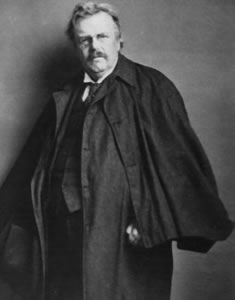
Leiker vertelde in 1983 over het tijdschrift: ‘Voor dat blad heb ik de naam Voorpost bedacht. Als oud-militair vond ik dat een geschikte naam voor een literair tijdschrift.’2 Denkbaar is overigens dat Leiker ook op dat idee gebracht werd door een blad onder de naam Voorpost dat de jonge schrijvers A. Marja en Hanno van Wagenvoorde al in 1940 hadden willen oprichten en waarbij ook Anna Blaman betrokken was geweest.

Leiker vertelde verder: ‘Geert Lubberhuizen met zijn grote liefde voor het mooi verzorgde boek vond dat Voorpost in een portefeuille moest worden uitgegeven. Dus losse rijmprenten op klein formaat en een novelle in fraai gebonden vorm. Daar is ook materiaal voor verzameld. Mijn voorstel was om helemaal geen schuilnamen meer te gebruiken, maar om die prenten en die boekjes die dan in zo’n portefeuille zouden zitten, anoniem te  publiceren. Voorpost zou dus een verzameling losse teksten en boekjes worden.’

Afgesproken werd een werkgroep te vormen, die de publicatie van het blad voorbereiden zou. Leiker ging daartoe allereerst op zoek in eigen kring.”

Leiker

Sjoerd Leiker (28 mei 1914 – 15 december 1988)


De Oostenrijkse schrijver Fritz Hochwälder werd geboren op 28 mei 1911 in Wenen. Zie ook mijn blog van 28 mei 2009. 


Uit: F. Hale: Fritz Hochwälders Das Heilige Experiment


„Das heilige Experiment gave Hochwälder his breakthrough as a renowned playwright. He began to do serious research on the Jesuit enterprise in South America at the Central Library in Zürich, where he also read Dostoevsky’s The brothers Karamazov and The demons. In fact, however, Hochwälder’s first serious exposure to the history of the Society of Jesus had come two years before his departure from Austria when he read René Fülöp-Miller’s Macht und Geheimnis der Jesuiten.5 When interviewed after the Second World War about the etiology of Das heilige Experiment, he attributed it in part to this work, in which both the accomplishments and the darker sides of the history of the Society of Jesus are emphasised. “From then on I had a theme working inside me, but not anchored yet to any dramatic structure,” Hochwälder recalled. The National Socialist takeover of Austria and German expansion elsewhere in Europe provided that framework. Upon reading The demons, he was struck by Dostoevsky’s prediction of “the danger of a faithless socialism which in its very materialistic faithlessness will acquire a religious tinge. Suddenly I felt the play focus inside me.” This inspiration prompted Hochwälder to request a two-month leave of absence from the refugee labour camp in the canton of Ticino where he was then residing. This was granted late in 1941. Armed with a pencil and a
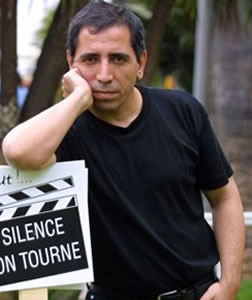
modest amount of paper, the young Austrian went to the balcony of a house overlooking Ascona. Hochwälder initially hoped to use this period to work out the philosophical problems inherent in the play germinating in his mind, but his creativity accelerated to a level unprecedented in his brief career. At the end of his furlough, most of the manuscript was thus complete, albeit in a rudimentary and never published form titled Die Jesuiten in Paraguay.6 This proto-text took less than three weeks to write in December 1941.


hochwälder

Fritz Hochwälder (28 mei 1911 – 20 oktober 1986)

Zie voor nog meer schrijvers van de 28e mei ook mijn vorige blog van vandaag.