Frank Lima, Emily Brontë, Patrick Modiano, Maja Lunde, Aly Freije, Martijn Simons, Dolce far niente

Dolce far niente


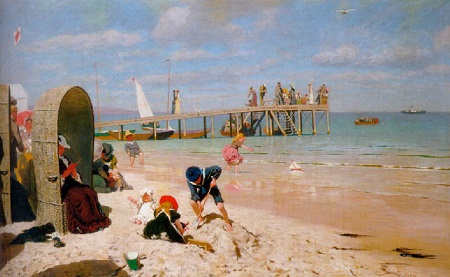
Summer Day At The Beach door Wilhelm Simmler, 1900


Summer (a love poem)

I wanted to be sure this was our island
so we could walk between the long stars by the sea
though your hips are slight and caught in the air
like a moth at the end of a river around my arms
I am unable to understand the sun your dizzy spells
when you form a hand around me on the sand

I offer you my terrible sanity
the eternal voice that keeps me from reaching you
though we are close to each other every autumn
I feel the desperation of a giant freezing in cement
when I touch the door you’re pressed against
the color of your letter that reminds me of flamingos

isn’t that what you mean?
the pleasure of hands and
lips wetter than the ocean
or the brilliant pain of
breathless teeth in a
turbulent dream on a roof
while I thought of nothing
else except you against
the sky as I unfolded you
like my very life a liquid
signal of enormous love we
invented like a comet that
splits the air between us!

the earth looks shiny wrapped in steam and ermine
tired of us perspiring at every chance on the floor
below I bring you an ash tray out of love for the
ice palace because it is the end of summer the end
of the sun because you are in season like a blue
rug you are my favorite violin when you sit and
peel my eyes with your great surfaces seem intimate
when we merely touch the thread of life and kiss

Frank Lima (1939 – 21 oktober 2013)
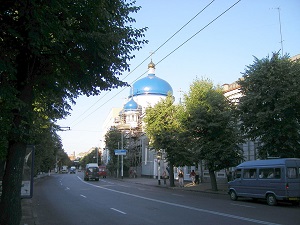
Harlem, New York, de geboorteplaats van Frank Lima


De Engelse dichteres en schrijfster Emily Brontë werd geboren in Thornton in Yorkshire op 30 juli 1818. Zie ook alle tags voor Emily Brontë op dit blog.

Come, Walk With Me

Come, walk with me,
There’s only thee
To bless my spirit now –
We used to love on winter nights
To wander through the snow;
Can we not woo back old delights?
The clouds rush dark and wild
They fleck with shade our mountain heights
The same as long ago
And on the horizon rest at last
In looming masses piled;
While moonbeams flash and fly so fast
We scarce can say they smiled –

Come walk with me, come walk with me;
We were not once so few
But Death has stolen our company
As sunshine steals the dew –
He took them one by one and we
Are left the only two;
So closer would my feelings twine
Because they have no stay but thine –

‘Nay call me not – it may not be
Is human love so true?
Can Friendship’s flower droop on for years
And then revive anew?
No, though the soil be wet with tears,
How fair soe’er it grew
The vital sap once perished
Will never flow again
And surer than that dwelling dread,
The narrow dungeon of the dead
Time parts the hearts of men -‘
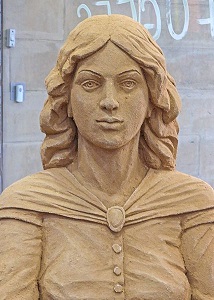
Emily Brontë (30 juli 1818 – 19 december 1848)
Borstbeeld in Bradford


De Franse schrijver Patrick Modiano werd geboren in Boulogne-Billancourt op 30 juli 1945. Zie ook alle tags voor Patrick Mondiano op dit blog.

Uit: The Search Warrant (Vertaald door Joanna Kilmartin)

“Like many writers before me, I believe in coincidence and, sometimes, in the novelist’s gift for clairvoyance — the word “gift” not being the right one, for it implies a kind of superiority. Clairvoyance is simply part of the profession: the essential leaps of imagination, the need to fix one’s mind on detail — to the point of obsession, in fact — so as not to lose the thread and give in to one’s natural laziness. All this tension, this cerebral exercise, may well lead in the long run to “flashes of intuition concerning events past and future”, as defined by Larousse dictionary under “clairvoyance”.
In December 1988, after reading the announcement of the search for Dora in the Paris Soir of December 1941, I had thought about it incessantly for months. The precision of certain details haunted me: “41 Boulevard Ornano, 1.55m, oval-shaped face, grey-brown eyes, grey sports jacket, maroon pullover, navy-blue skirt and hat, brown gym shoes.” And all enveloped in night, ignorance, forgetfulnes, oblivion. It seemed impossible to me that I should ever find the faintest trace of Dora Bruder. At the time, the emptiness I felt prompted me to write a novel, Honeymoon, it being as good a way as any of continuing to fix my attention on Dora Bruder, and perhaps, I told myself, of elucidating or divining something about her, a place where she had been, a detail of her life. I knew nothing about her parents, about the circumstances of her flight. All I had to go on was this: I had seen her name, BRUDER, DORA — nothing else, no date or place of birth — above that of her father — BRUDER, ERNEST, 21.5.99, Vienna. Stateless. — on the list of those who left on the convoy of 18 September 1942 for Auschwitz.
In writing Honeymoon, I had had in mind certain women I knew in the 1960s: Anne B, Bella D — the same age as Dora, in one case almost to the month — who could have shared her fate, having been in a similar situation during the Occupation, and whom she may have resembled. Today, it occurs to me that I had had to write 200 pages before I captured, unconsciously, a vague gleam of the truth.
It was a matter of a few lines: “The train had stopped at Nation. The line didn’t go any farther. Rigaud and Ingris had gone past Bastille, where they ought to have changed for the Porte Dorée. They came out of the métro into a big snowfield. [ … ] The sledge cut through several little streets to get back to the Boulevard Soult.”
These back streets lay behind the Rue de Picus and the Holy Heart of Mary, the convent from which Dora Bruder made her escape, one December evening when it had probably been snowing in Paris.
This was the only moment in the book when, without knowing it, I came close to her in time and space.”

Patrick Modiano (Boulogne-Billancourt, 30 juli 1945)


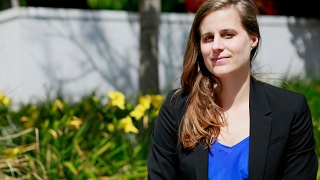
De Noorse schrijfster en scenariste Maja Lunde werd geboren in Oslo op 30 juli 1975. Zie ook alle tags voor Maja Lunde op dit blog. Zie ook alle tags voor Maja Lunde op dit blog.

Uit: The History of Bees (Vertaald door Diane Oatley)

“The tin box was empty before I was full. I stood up and put it back in the return basket from the Trade Commission. Then I jogged in place. My legs were tired, but nonetheless stiff from standing still in locked positions up there in the trees. My blood tingled; I couldn’t stand still. But it didn’t help. I took a quick look around me. Nobody from management was paying attention. I quickly lay down on the ground, just to stretch out my back. It was aching after having been bent over in the same position for a long time. I closed my eyes for a moment, tried to shut out the conversation of the other women of the crew, instead listening to how the chatter rose and fell in volume. This need to talk, all of them at the same time, where did it come from? The other women had started when they were little girls. Hour after hour of group conversations where the subject was always of the lowest common denominator and one could never really go into depth about anything. Perhaps with the exception of when the one being talked about wasn’t there. Personally I preferred one-on-one conversations. Or my own company, for that matter. At work, often the latter. At home I had Kuan, my husband. Not that we had the longest conversations, either, conversation wasn’t what held us together. Kuan’s references were here and now, he was concrete, didn’t crave knowledge, something more. But in his arms I found peace. And then we had Wei-Wen, our three-year-old. Him we could talk about.
Just as the cacophony had almost sung me to sleep, it suddenly fell silent. Everyone was quiet. I sat up. The others on the crew were facing the road. The entourage was walking down the tire ruts and towards us. They were no more than eight or nine years old. I recognized several of them from Wei-Wen’s school. All of them had been given identical work clothes, the same synthetic beige uniforms that we were wearing, and they walked towards us as quickly as their short legs could carry them. Two adult leaders kept them in line. One in front, one behind. Both of them were equipped with powerful voices that corrected the children without cease, but they did not reprimand them, giving instructions with warmth and compassion, because even though the children had not yet fully taken in where they were headed, the adults knew. The children walked hand in hand, in mismatched pairs, the tallest with the shortest, the older children taking care of the younger. An uneven gait, disorganized, but the hands held on tight as if they were glued together. Perhaps they had been given strict instructions not to let go.”

Maja Lunde (Oslo, 30 juli 1975)


De Nederlandse dichteres Aly Freije werd geboren in Veelerveen op 30 juli 1944. Zie ook alle tags voor Aly Freije op dit blog.

Kreuzberg Berlijn

Hun graffiti trekt huizenblokken op
schopt tegen monumentale deuren
-Zwangsräumung blockieren-

ze gooien spuitbussen weg, tappen ander bier
hangen een nacht een beest uit
fabeldieren spreken
draak, griffioen, misschien een sabeltijger

ze schaffen fijne kwasten aan, bestuderen
spierbundels, haarinplant van vachten
gevorkte veren, ingekeepte snavels
de kwetsbaarheid van ogen wit

in één nacht is op een blinde muur
tot boven aan de nok
een voorstelling neergezet

bungelend aan één poot
een edelhert, een ooievaar, een haas
uitvergroot
hun spreken.


Het mist

I
Ze kreeg een bouwdoos, zette vier palen
in een gatenplaat, schoof langs de gleuven
voor- en achtergevel op hun plaats
dit was haar huis

schuren geurden met ingedikte
tractorolie en oogstverhalen
schoffels hingen schuin
tegen de zomerwind

deurklinken gingen in verzet
planken opgebroken, opengezette hokken
ze wiste de witte plekken op behang
zwakte het gissen af
naar een waarom en hoe
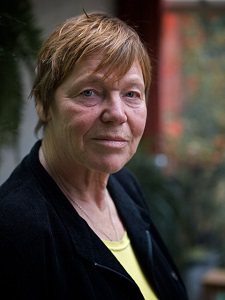
Aly Freije (Veelerveen, 30 juli 1944)


Onafhankelijk van geboortedata

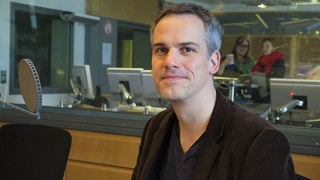
De Nederlandse schrijver Martijn Simons werd geboren in 1985 en groeide op in Woerden. Zie ook alle tags voor Marijn Simons op dit blog.

Uit: Ik heet Julius

“Nog altijd dat zenuwachtige gekietel. Een warme, vochtige adem. Ik kneep mijn ogen stijf dicht om de beelden van vannacht te verdrijven, van de meisjes, en deed mijn best zo stil mogelijk te blijven liggen. Ze kietelde me echt, Nore, ze deed wat ze ’s ochtends zo vaak deed, gaf kleine likjes, speldenprikjes in mijn oorschelp, en als ik me niet zo… niet zó voelde, had ik er alles aan gedaan om het moment te rekken. Want, jongen, ik hield ervan, die sluimerende seconden tussen slapen en waken, het eiland en de rest van de wereld op veilige afstand. Ik wist waar ze mee bezig was en hoe het zou eindigen, haar warme adem en het geluid van haar lippen, zo dichtbij. Ze gaf me een por tussen mijn ribben als ze vond dat het lang genoeg geduurd had, als ik in actie moest komen. Dan draaide ik me langzaam op mijn zij, als een oud beest, mijn ogen nog altijd dicht, kuste haar en kwam overeind. Klom boven op haar. Hoe ze daar lag, haar ogen nog klein van de nacht, maar al warm en schitterend. Ik drukte mijn neus in haar haar en snoof, kuste haar nog eens, hield mijn ogen open terwijl zij die van haar traag sloot.
Speelse Nore, vrolijke pup. Hoe erg vond ik het als ze het juist níet deed en gewoon opstond, de kamer verliet en ging zitten op de veranda die over de heuvel uitkeek, met een kop thee en een stuk fruit, en de dag langzaam over zich heen liet komen, de geluiden uit de struiken absorbeerde en bedacht wat er gedaan moest worden, om vervolgens tot de heerlijke conclusie te komen dat er die dag niets was wat haar onmiddellijke aandacht vroeg. Want iemand als Nore had nog geen verplichtingen. Niets behalve school, niets behalve ouders die al hun energie staken in het uitbaten van het luxueuze vakantieresort dat zijn naam dankte aan die voddenbalen van vogels die af en toe neerstreken in de branding of op het strand, en waarvan het logo een goedlachse en met klare lijn getekende stripversie van deze vis verslindende vogelsoort was. Pelican was een ordinaire toeristenfuik, waar die hele Jan Thielbaai mee was volgegooid en die week in, week uit, elke maand van het jaar, vol zat met Hollanders en de laatste jaren steeds vaker met Russen.”
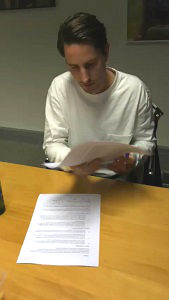
Martijn Simons (Woerden, 1985)


Zie voor meer schrijvers van de 30e juli ook mijn blog van 30 juli 2017 en ook mijn blog van 30 juli 2016 deel 1 en eveneens deel 2.

Frank Lima

Onafhankelijk van geboortedata

De Amerikaanse dichter Frank Lima werd geboren in 1939 in het Spaanse Harlem, New York City. Lima was het enige Latino lid van de New York School tijdens zijn historische hoogtijdagen. Na een moeilijke en gewelddadige jeugd te hebben doorstaan, ontdekte hij poëzie als gedetineerde van een jeugdcentrum voor drugsbehandeling onder toezicht van de schilder, Sherman Drexler, die hem aan zijn dichtersvrienden introduceerde. Na zijn poëziedebuut in de Evergreen Review in 1962, verscheen Lima in de belangrijkste bloemlezingen van de New York School en publiceerde hij twee volledige eigen bundels. Aan het einde van de jaren zeventig verliet Lima de poëziewereld om een succesvolle carrière als chef-kok na te streven, hoewel hij met tussenpozen terugkeerde tot de poëzie en tot aan zijn dood een gedicht per dag bleef schrijven. Hij gaf les aan de New York Restaurant School en was assistent-chef in het Witte Huis tijdens de John Fitzgerald Kennedy-administratie. Lima behaalde zijn MFA aan de Columbia University, waar hij studeerde onder andere Kenneth Koch en Stanley Kunitz. Tot zijn gepubliceerde bundels behoren; “Inventory” (1964), “Underground with the Oriole” (1971), “Angel, New Poems” (1976), “Inventory: New & Selected Poems” (1997) en “The Beatitudes” (2000). Lima werd afgebeeld in het bekende tweeluik van Wynn Chamberlain “Poets Dressed and Undressed”, dat het kwartet van Joe Brainard, Frank O’Hara, Joe LeSueur en Lima portretteert in opeenvolgende panelen, gekleed en vervolgens naakt.

This Is a Poem About My Life

the grapes
remind me of the whales
gathering salt for the ocean

this is a poem about my life

you’ve interrupted
my life and death schedule
which gives me that poetic look each day

this is a poem about my life

where was I before I met you?
I was eroding on my way to work
and slept a lot
deep in the subways

this is a poem about my life

then I met your lips
on that windy day
I stopped poisoning my life
on Monday mornings

this is a poem about my life

when I met you
you were undressed
like a stone in the rain
I swam after utterly naked

this is a poem about my life

before you leave me to heal
I will find you someone to love
who will be shaped like a box

this is a poem about my life

before you leave me to heal
I will become an apple
and hide in a clock

this is a poem about my life

I will plant these wild lines
they will grow into honey
and weep in the spring
for you


Juarez

These empty words are so remote. They are stories someone wants
To believe at the end of the century. Everyone gathers their sea of telluric
Pain to greet the beginning of the new world.

Cars stop and watch the deck chairs limp across the street to await
The coming of the new year. It is the end of summer and autumn and
Winters and springs, and panzer infatuation.

After four hundred eighty-one years, I cannot pull out the Spanish arrow
In my eye. Suddenly everything I knew was inhuman:
The oceans, the tadpoles in their new cars. The clams became
Cheerleaders. The palm trees, strippers, and everyone forgot,
Deer are the shapes of God.

His official language became Latin, when he ceased to be a Jew,
Biting his nails and collecting cans like a cheap minister with sunny gold teeth.
The tender years that once wore oysters would never speak to Him again.

The female spider became a lesbian, devouring our new long legs,
That would never again climb the toy steps our fathers left us. Although
Our legs are hairy and the lilies of a theater, the gentle lips of
Our pyramids rest on our souls like a lover’s fingers.

How many aspirins will we take to reach the surface of truth?
My existence is for sale. The dawn is learning English.
The waves of the sea are unionizing.

The stones that were once our troubled hearts are eating chocolate.
I come to sell you fish, the bread in my blood and my existence.

Frank Lima (1939 – 21 oktober 2013)
Cover


Carl Sandburg, Harry Mulisch, Chang-Rae Lee, J. Neil C. Garcia, Dolce far niente


Dolce far niente


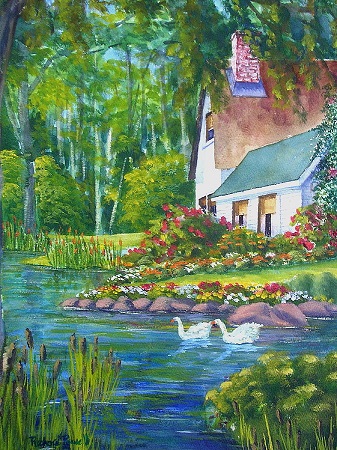
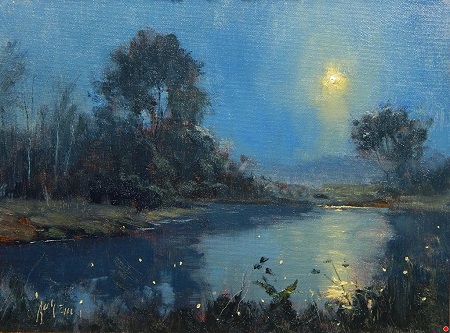
Summer Night At The Pond door Paul Bachem


Summer Stars

Bend low again, night of summer stars.
So near you are, sky of summer stars,
So near, a long-arm man can pick off stars,
Pick off what he wants in the sky bowl,
So near you are, summer stars,
So near, strumming, strumming,
So lazy and hum-strumming.


Carl Sandburg (6 januari 1878 – 22 juli 1967)
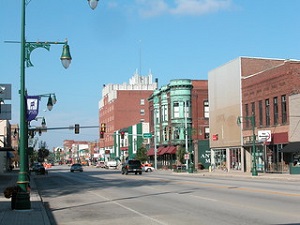
Main St., Galesburg, de geboorteplaats van Carl Sandburg


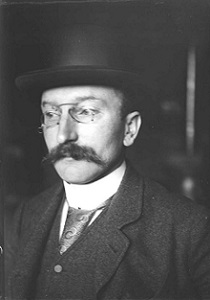
De Nederlandse schrijver Harry Mulisch werd geboren op 29 juli 1927 in Haarlem. Zie ook alle tags voor Harry Mulisch op dit blog.

Uit: De ontdekking van de hemel

“Waarop hij, Onno, hem vroeg of hij misschien niet goed bij zijn hoofd was om zo over zijn gasten te spreken, en of hij misschien wilde dat zijn schedel werd ingeslagen met een hollandse klomp. Iedereen sprakeloos. Hij kon fins praten! Na drie weken! Een oegrische taal! En toen hij het perplexe gezicht van zijn vader zag, dacht hij: — Ik ben je de baas, excellentie. `Ben je een zoon van die Quist?’ vroeg Max verrast. ‘Ja, die Quist.’ ‘Was hij voor de oorlog niet premier of zoiets?’ `Zou je misschien wat minder losjes over mijn vader willen spreken, Delius Max? De vier jaren van het kabinet-Quist behoren tot de donkerste van de menselijke beschaving. Het nederlandse volk zuchtte onder het theocratische schrikbewind van meneer mijn vader, — over wie ik geen kwaad woord wil horen, — en zeker niet uit de mond van iemand met zo’n ridicule automobiel.’ `Hij heeft ons in elk geval thuisgebracht,’ zei Max en stopte. ‘Zelf kun jij helemaal niet autorijden, als je het mij vraagt.’ `Natuurlijk niet! Waar zie je mij voor aan? Voor een chauffeur? Er zijn dingen die je niet mag kunnen. Wat je bij voorbeeld ook niet mag kunnen, is eten opscheppen met een vork en een lepel tussen de vingers van één hand, want dan ben je een ober. Dat kan jij natuurlijk ook, maar een heer als ik is niet gewend om zelf op te scheppen. Een heer als ik doet dat heel klungelig met twee handen en dan nog laat ik de helft op het tafellaken vallen, want zo hoort het.’ Bij het licht van de lantarens in de smalle straat konden zij elkaar nu beter zien. Onno vond, dat Max er eigenlijk veel te verzorgd uitzag om serieus genomen te kunnen worden; hij droeg het soort angelsaksische bourgeois outfit, met blazer en ruitjeshemd, dat hem ook bij zijn broers en zwagers zo tegenstond. Max, op zijn beurt, vond dat Onno geen slecht figuur zou slaan als orgeldraaier; ook zaten bij zijn oren en onder zijn kin verscheidene plekken, die hij bij het scheren had overgeslagen. Misschien was hij bijziend, kippig geworden van het turen naar ideogrammen. Onno stelde voor, naar Max’ huis te rijden; dan liep hij wel terug. Tevreden constateerden zij, dat er nog mensen op straat waren en dat overal in de huizen nog licht brandde, terwijl in Den Haag alle leven volledig was uitgewist. Bij het hoge hek langs het park sloot Max zijn auto af en trok zijn jas aan; Onno zag dat hij ook nog bruine peau de suède schoenen droeg. Hij wilde afscheid nemen, maar nu was het Max die zei: ‘Kom, ik loop een eind met je op.’ Uit de richting van het Leidseplein klonken politiesirenes: er was weer iets gaande, misschien de naweeën van een demonstratie tegen de Amerikanen in Vietnam.”
‘Ben jij ook eredoctor aan de universiteit van Uppsala?’ informeerde Onno. ‘Zoals ik?’ `Zo ver heb ik het nog niet gebracht.’ ‘Jij bent geen eredoctor aan de universiteit van Uppsala?’ riep Onno ontzet en bleef staan. ‘Kan iemand als ik dan eigenlijk wel met jou praten?’ Plotseling veranderde hij van toon, terwijl hij Max bleef aankijken. ‘Weet je dat jouw gezicht helemaal niet klopt? Je hebt staalharde, uiterst onsympathieke blauwe ogen, maar tegelijk een belachelijk weke mond, waarmee ik mij niet graag zou vertonen.’ Max keek naar hem op.”


Harry Mulisch (29 juli 1927 – 30 oktober 2010)
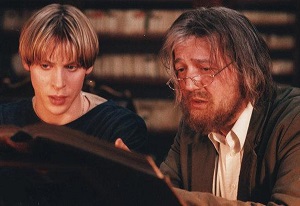
Neil Newbon (Quinten Quist) en Jeroen Krabbé (Aartsengel Gabriël) in de verfilming uit 2001


De Koreaans-Amerikaanse schrijver Chang-Rae Lee werd geboren op 29 juli 1965 in Seoel. Zie ook alle tags voor Chang-Rae Lee op dit blog.

Uit: Native Speaker

„For a long time I was able to resist the idea of considering the list as a cheap parting shot, a last-ditch lob between our spoiling trenches. I took it instead as one long message, broken into parts, terse communiqués from her moments of despair. For this reason, I never considered the thing mean. In fact, I even appreciated its count, the clean cadence. And just as I was nearly ready to forget the whole idea of it, maybe even forgive it completely, like the Christ that my mother and father always wished I would know, I found a scrap of paper beneath our bed while I was cleaning. Her signature, again: False speaker of language.
Before she left I had started a new assignment, nothing itself terribly significant but I will say now it was the sort of thing that can clinch a person’s career. It’s the one you spend all your energy on, it bears the fullness of your thoughts until done, the kind of job that if you mess up you’ve got only one more chance to redeem.
I thought I was keeping my work secret from her, an effort that was getting easier all the time. Or so it seemed. We were hardly talking then, sitting down to our evening meal like boarders in a rooming house, reciting the usual, drawn-out exchanges of familiar news, bits of the day. When she asked after my latest assignment I answered that it was sensitive and evolving but going well, and after a pause Lelia said down to her cold plate, Oh good, it’s the Henryspeak.
By then she had long known what I was. For the first few years she thought I worked for companies with security problems. Stolen industrial secrets, patents, worker theft. I let her think that I and my colleagues went to a company and covertly observed a warehouse or laboratory orretail floor, then exposed all the cheats and criminals.
But I wasn’t to be found anywhere near corporate or industrial sites, then or ever. Rather, my work was entirely personal. I was always assigned to an individual, someone I didn’t know or care the first stitch for on a given day but who in a matter of weeks could be as bound up with me as a brother or sister or wife.
I lied to Lelia. For as long as I could I lied. I will speak the evidence now. My father, a Confucian of high order, would commend me for finally honoring that which is wholly evident. For him, all of life was a rigid matter of family. I know all about that fine and terrible ordering, how it variously casts you as the golden child, the slave-son or -daughter, the venerable father, the long-dead god. But I know, too, of the basic comfort in this familial precision, where the relation abides no argument, no questions or quarrels. The truth, finally, is who can tell it.
And yet you may know me. I am an amiable man. I can be most personable, if not charming, and whatever I possess in this life is more or less the result of a talent I have for making you feel good about yourself when you are with me. In this sense I am not a seducer. I am hardly seen. I won’t speak untruths to you, I won’t pass easy compliments or odious offerings of flattery. I make do with on-hand materials, what I can chip out of you, your natural ore. Then I fuel the fire of your most secret vanity.”


Chang-Rae Lee (Seoel, 29 juli 1965)


Onafhankelijk van geboortedata

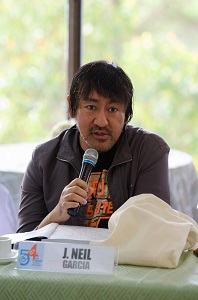
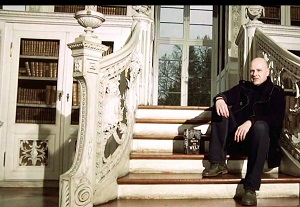
De Filipijnse dichter en letterkundige J. Neil C. Garcia werd geboren in 1969 in Manilla. Zie ook alle tags voor J. Neil C. Garcia op dit blog.

Uit: Poems from Amsterdam (Fragment)

XXXV
Of course, I know the strategy:
to enfold the moment in sound,
earmark it with rhythm, file it
into the mind with the textures,

syncopations, and airs of a song.
Julius, visiting the lovely De Krijtberg
and its goldleafed nave and altarpiece,
its stained glass, the saints poised delicately

under tiered canopies carved into the walls,
the woodsy scent of incense, tapers softly lit
at the foot of a smiling Madonna and Child—
made sure his iPod played a tune

with which to brand the experience
dark against his memory’s milky skin.
Thus tethered, it can thereafter
be summoned at the merest whim:

nostalgia triggered by the mood
deliberately chosen noise calls forth.
He’s since recurred to his adopted Canberra
where, he writes, it’s bitterly cold these days.

I can almost see him plugging into his machine,
to bask in vicarious, melodic warmth.
Astonishingly enough, here, with me,
it’s no different. Late-night TV in this city

is a redundancy of “quick sex” commercials:
Red-Light women moaning lekker,
an all-purpose Dutch word, it would appear,
for anything nice, delicious, tempting, or great,

in between puckering up, licking a fat dildo,
stroking their breasts with pink-tipped fingers,
and rearing their scantily clad haunches
up at the camera’s snoopy gaze.

It was interesting the first few seconds, but
not much after that. Luckily, a music channel
called The Box plays purely “classic” stuff.
A veritable box of found memories:

videos dusted off from the eighties
by singers and bands with overblown hair,
silly repeating lyrics, and outlandish makeup,
especially around the fiery lips and eyes—

the sights and sounds of my own salad days.
Which is to say: high school, arguably
the best episode, thus far, in my uneventful life,
steeped in brash fun with like-minded friends.


J. Neil C. Garcia (Manilla, 1969)


Zie voor nog meer schrijvers van de 29e juli ook mijn blog van 29 juli 2018 en ook mijn blog van 29 juli 2017 deel 1 en ook deel 2.
Chaim Nahman Bialik, Remco Campert, Herman Stevens, Stephan Sanders, Claudia Gabler, Sarah Schulman, Dolce far niente

Dolce far niente


A Quiet Summer Day door Richard Powell, 2010


On A Summer’s Day

When high noon on a summer’s day
makes the sky a fiery furnace
and the heart seeks a quiet corner for dreams,
then come to me, my weary friend.

A shady carob grows in my garden –
green, remote from the city’s crowds –
whose foliage whispers secrets of God.
Good my brother, let’s take refuge.

Pleasure and tenderness let us share
in the sweet hidden prime of noon,
and the mystery golden rays reveal
when sunlight pierces the rich shade.

When the black cold of a winter’s night
bruises you with its icy pinch
and frost sticks knives in your shivering flesh,
then come to me, blessed of God.

My dwelling is modest, lacking splendour,
but warm and bright and open to strangers.
A fire’s in the grate, on the table a candle –
my lost brother, stay and get warm.

When we hear a cry in the howling storm
we will think of the destitute starving outside.
We will weep for them – honest pitiful tears.
Good friend, my brother, let us embrace.

But when autumn approaches with rain and cloud
and the roof leaks and there’s moth in the heart
and the desolate world sinks, sullen, in mire,
then merciful brother, leave me alone.

I would be alone in the barren time
when the heart withers in slow decay.
Unseen. Unknown. No stranger understands.
Let me grieve alone in my silent pain.

Chaim Nahman Bialik (9 januari 1873 – 4 juli 1934)
Kerk St. Michael in Zhytomyr, de geboorteplaats van Chaim Nahman Bialik


90 Jaar Remco Campert

De Nederlandse dichter en schrijver Remco Campert werd op 28 juli 1929 in Den Haag geboren. Remco Campert  viert vandaag zijn 90e verjaardag. Zie ook alle tags voor Remco Campert op dit blog.

Uit: Het leven is vurrukkulluk

`Ik weet het niet,’ zei een meisje tegen een wildvreemde man. ‘Maar al die feesten. Dit is nu al het zesde deze zomer — ik word er zo moe van. Weet je hoe het komt dat er zoveel feesten zijn dit jaar?’ `Nee.’ `Omdat niemand met vakantie is gegaan. Het raakt uit de mode om met vakantie te gaan. Iedereen is overal al geweest. Het komt nu in de mode om thuis te blijven. Maar ja, al die feesten. Je rust er niet echt van uit. Begrijp je wat ik bedoel?’

Dat kun je niet maken bij die chick, jongen.’ ‘O nee?’ `Nee jongen, dat kan ik misschien maken, maar dat kun jij niet maken.’ `0 nee?’ `Nee, jongen, die chick is toevallig een hele jofele chick. En daarom kan een square als jij dat niet maken.’ ‘O nee?’

……………..

Ernst-Jan zat in de voorkamer te slapen. Etta pakte een vol glas cola van tafel en gooide het in zijn gezicht. `Heb ik een minnaar? Heb ik een minnaar?!’ Ernst-Jan stond moeizaam op en gaf haar een harde zet. Ze viel op de grond. Ze bleef even liggen, werd toen door een van de gasten overeind geholpen, terwijl een ander Ernst-Jan in bedwang hield. Die mensen houden van elkaar, dat zie je zo.’ Etta begon te huilen. Ze rukte zich los, pakte de tafel bij de poten en wierp hem om. Daarna pakte ze een grote vaas, die in een hoek op de vloer stond, en gooide die tegen de muur in scherven.

`Als jij kunst zo’n onzin vindt, dan vraag ik me af waarom je in godsnaam schildert.’ ‘Ik schilder niet in godsnaam.’ `Kunst is het mooiste dat er is, als je dat maar weet, en als jij kunst zo’n onzin vindt, dan kun je beter ophouden met schilderen.’ `Kunst is onzin.’

`Mees! Die meid van Zoon. Ze slaat de hele rotzooi kort en klein. Je moet er iets aan doen. Ze is gevaarlijk!’ ‘Ze heeft toch een man. Laat die er iets aan doen.’ Die is zo dronken dat hij geen stap kan doen. Hij staat er gewoon bij te kijken. Hij merkt het niet eens, geloof ik.’ `Laat mij maar,’ zei Boelie. ‘Ik ga er wel naar toe.’

`Je zou kunnen zeggen dat de stichting de belangen behartigt.’ Welke belangen?’ ‘De belangen van de stichting.’

`Kom maar,’ zei Boelie tegen Etta en hij nam haar mee de kamer uit. Ernst-Jan zakte in zijn stoel terug en viel weer in slaap. Iemand haalde een bezem uit de keuken om de scherven bij elkaar te vegen. ‘Ik kan niet zo goed lopen,’ zei Etta. `Jawel, het gaat best,’ zei Boelie. ‘Twee trappen maar, dan zijn we er. Ik help je wel.’

Remco Campert (Den Haag, 28 juli 1929)


De Nederlandse schrijver, literair criticus en columnist Herman Stevens werd geboren in Rotterdam op 28 juli 1955. Zie ook alle tags voor Herman Stevens op dit blog.

Uit: Vestdijk in de jungle

“In mijn studietijd las ik alle romans van Vestdijk, die in die tijd voor het opscheppen lagen bij De Slegte. Elke zomer gaf ik mezelf een vakantiebaantje door voor duizend gulden een lang essay te schrijven voor tijdschriften als De Revisor of Maatstaf, vier keer over romans van Vestdijk. Een uitgever schreef of ik er een boek van wilde maken, maar toen was ik al aan mijn eerste roman begonnen. Wat ik toen aan Vestdijk aflas, was dat een schrijver soms een minder boek schreef om daarna een beter boek te schrijven. Zo werkt dat.
Vestdijks Remington
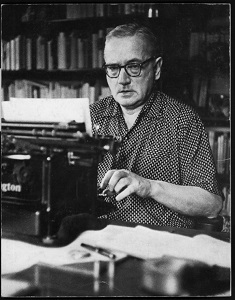
Maar wat vooral indruk op mij had gemaakt lag al veel eerder, in mijn middelbare schooltijd. Een leraar Nederlands had laten zien hoe Vestdijks manuscripten eruitzagen, met eindeloze aanvullingen en verbeteringen die in ballonnetjes aan de tekst ontsnapten. Ik zag een foto van de schrijver achter zijn tank van een Remington. Hij had er een legerhelm bij kunnen opzetten. Vestdijk was een commando in de jungle. Toen ik van school af was en op een etage in een afbraakbuurt ging wonen, kocht ik bij een legerdumpzaak ook zo’n tank.
Het is nu al twintig, vijfentwintig jaar bon ton om te zeggen dat niemand nog Vestdijk leest. Pieter Steinz begon daarmee, in een tijd dat er zo’n vijf à tien Vestdijkromans waren die door scholieren en volwassen werden gelezen. We zouden dat nu fake news noemen. Ina Damman, De koperen tuin, De kellner en de levenden, Ierse nachten, Pastorale 1943, zijn allemaal nu ook nog volop verkrijgbaar. Bijna vijftig jaar na de dood van de auteur in kwestie, in het land van Zand Erover, is dat een fenomenale prestatie. Als dat ‘niet meer gelezen’ is zou elke schrijver daar voor passen.
Nobelprijs
Duivelskunstenaar. Kluizenaar van Doorn. Dat waren de mythen waarachter Vestdijk zich graag verschool. Schrijvers lieten zich toen nog niet voor elk nieuw boek interviewen. Dat was ook onbegonnen werk geweest, want Vestdijk publiceerde elk jaar (gemiddeld) twee à drie boeken. Hij was niet alleen onze Nobelprijs-kandidaat, maar ook de ultieme broodschrijver, en ik bedoel dat in positieve zin.”

Herman Stevens (Rotterdam, 28 juli 1955)
Simon Vestdijk achter zijn Remington


De Nederlandse schrijver, columnist, presentator en essayist Stephan Sanders werd geboren in Haarlem op 28 juli 1961. Zie ook alle tags voor Stephan Sanders op dit blog.

Uit: Iets meer dan een seizoen

“Het was Anil opgevallen dat ik ‘open en bewogen’ over etnische verhoudingen schreef, hij was een trouw lezer van mijn artikelen en die konden zijn goedkeuring wegdragen.
Tot tweemaal toe legde ik die brandbrieven op een stapel, want ik houd er niet van zo alarmerend toegesproken te worden, en bovendien kleefde mij ook toen al de zonde van de gemakzucht aan – de hoofdzonde der acedia. Die ontmoeting zou nooit hebben plaatsgevonden, als Anil mij niet op de redactie van De Groene had gebeld: eerst overviel hij mij met een onbetamelijke hoeveelheid lof, daarna trok hij de kaart van het gerichte schuldgevoel – ‘zijn beide zendingen niet aangekomen, ik kan me dat haast niet voorstellen’ –, zodat ik al snel begon te stotteren en subiet een afspraak maakte.
Ik kende het auteursportretje van achter op het boek. Een jonge, Surinaamse man. Geen neger – veel beter was ik toen niet ingevoerd in de Surinaamse verhoudingen. Ik zou hem dus gemakkelijk kunnen herkennen in dat café aan de Keizersgracht, toen hip en postmodern – daar deden gekleurde Nederlanders nog niet zo aan. Ik sprak er vaker af. Hem had ik precieze coördinaten moeten geven. (Notitie in het achterhoofd: ‘Man die Walem niet kent.’)
Hij was kleiner dan ik, dat gebeurt me niet vaak, en vanaf het moment dat we elkaar begroetten kreeg ik een waterval over me heen.
Hij riep bijvoorbeeld meteen: ‘Maar jij bent ook bruin’, en dat was niet minder dan een hartenkreet, een constatering die alles verklaarde, maar die mij enkel deed blozen.
Er stonden toen nog geen foto’s van redacteuren in dag- of weekbladen. Je was wat je schreef, en niet zoals je eruitzag. Ik wist mij geen houding te geven, Anil wist mij wel een houding te geven, een bruine houding moest het zijn, en nadat hij wat navraag had gedaan naar mijn afkomst (‘geadopteerd, bio moeder blank, bio vader donker, waarschijnlijk Jamaicaans, maar is niet zeker’) werd ik ogenblikkelijk zijn Caribische broeder, en was er nog maar één vraag over die beantwoord moest worden: hoe kon het gebeuren dat wij elkaar zo lang niet hadden gezien? Welke wrede god had ons al die tijd uit elkaar gehouden?”

Stephan Sanders (Haarlem, 28 juli 1961)


De Duitse dichteres Claudia Gabler werd op 28 juli 1970 geboren in Lörrach. Zie ook alle tags voor Claudia Gabler op dit blog.

Liebst du die mikroskopischen Dosen von Sprühwasser

Liebst du die mikroskopischen Dosen von Sprühwasser, 
die aus den Blüten der Städte ziehen,
die domestizieren
und uns von bukolischen Landschaften berichten,
die sie auf ihren Mobbingtouren gestreift haben werden,
die sich ausbreiten
in unseren Wannen voll Glück?
–––
Wir aber sind schon lang in die Gärten gezogen,
wo früher Mönche grasten, 
artgerecht und hungrig in ihrem Gesang.
Wir einst gewesenen Metro–Polneure.
Wenn wir Menschenkinder jetzt Schuhe anziehen,
finden wir manchmal Blasen darin. 
–––
Lieben sagst du,
sei die falsche Vokabel.


Die heimischen Gärten hatten uns abgewiesen

Die heimischen Gärten hatten uns abgewiesen,
auch die Blumen als unsere bisherigen Freunde waren jetzt abgetaucht.
Also entschieden wir uns für andere Städte,
maßgeblich waren dafür allein ihre Soundqualitäten.
–––
Die neuen Pools löschten kurzfristig unseren Duschwasserdurst,
doch vor Insekten schützte die grüne Grenze nicht.
Auch nicht vor wilderen Tieren.
Die Nachbarn waren echte Gefühlsterroristen.
–––
Wir selbst klagten über Bärengeräusche
und wurden ganz nebenbei zu unseren ärgsten Feinden.
Unser frühzeitiges Summen lag jetzt über den neuen Gärten wie eine Provinzsymphonie.
Doch wieder einmal war es das Wasser, das Rettung bot.
–––
Thermalquellen und die in ihnen zelebrierte, irgendwie zarische Lebenslust
verhinderten Schußwaffengebrauch. Ganz plötzlich waren wir heiter.
Wenn uns auch Pelzwaren umzäumten und wir deutlich wußten:
Hier bellt ein sibirischer Hund.

Claudia Gabler (Lörrach, 28 juli 1970)
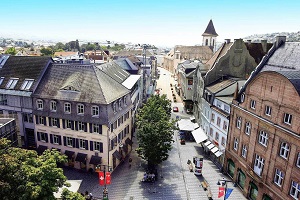
Lörrach, Alter Marktplatz


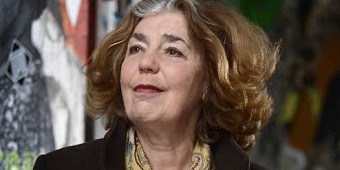
De Amerikaanse schrijfster, historica en activiste Sarah Miriam Schulman werd geboren op 28 juli 1958 in New York City. Zie ook alle tags voor Sarah Schulman op dit blog.

Uit: The Gentrification of the Mind: Witness to a Lost Imagination

“Truth is replaced by falsity, the false claim that the dominant cultural writer does not have profound structural advantages, replaces the truth that being out in one’s work, sexually honest, and truthful about the lived homosexual experience, guarantees that one’s work will never be seen for its actual merit. The Gentrified Mind becomes unable to see lived experience because it is being bombarded by false stories replacing truth. Even we- the practitioners cannot understand the truthful positioning of our literature. In short, that to be acceptable, that literature cannot be sexually authentic. And, that even though this is a requirement for approval, we look at the highly conditional and restricted approval as a sign of success instead of the failure that it actually is.
In my own experience, the equation of queer literature with pornography is undeniable. Yes, this includes the banning of condom ads on television. Of course, in gay time, “recent” quickly disappears because so many participants are dead, and others have been silenced. It’s hard to have collective memory when so many who were “there” are not “here” to say what happened. Once the recent past is remembered, then the Amazon “glitch” becomes all too consistent. So, here is just one example exhumed from memory.
In 1994, a coalition of Feminists and right-wing politicians in Canada passed a Tariff Code called “Butler” that was designed to restrict pornographic production. Instead, it was applied in such a way that it allowed officials at Canada Customs to systematically detain and destroy gay and lesbian materials at the border. A gay bookstore in Vancouver, Little Sisters, had so much of its product seized at the border, that it could no longer operate. As a result, Little Sisters decided to sue the Canadian government.
My friend, John Preston, had just died of AIDS. He was the author of some iconic leather and S/M novels, many with literary bent. His novel Mister Benson had been serialized in Drummer Magazine, and created a subcultural phenomenon. Men would wear t-shirts asking Mister Benson? Or asserting Mister Benson!. While he had a less explicit series called Franny, The Queen of Provincetown, John was perhaps best known for his book I Once Had A Master. Since he was newly dead, I was asked by the Little Sisters legal team to come to Vancouver and testify on John’s behalf. And because I was very clear in my opposition to state repression of gay materials, I had no problem agreeing.”

Sarah Schulman (New York, 28 juli 1958)


Zie voor de schrijvers van de 28e juli ook mijn blog van 28 juli 2017 en ook mijn blog van 28 juli 2011 deel 2.
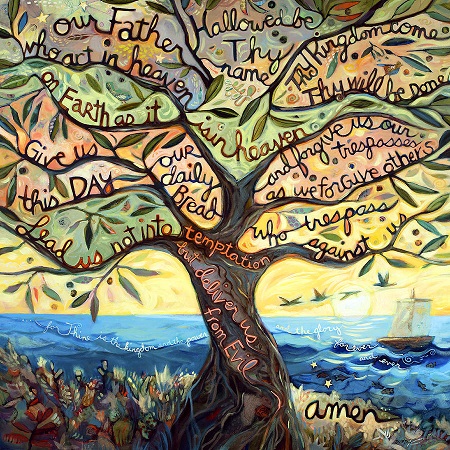
Our Father (Malcolm Guite)

Bij de 17e zondag door het jaar


Onze Vader door Jen Norton, z.j.


Our Father

I heard him call you his beloved son
And saw his Spirit lighten like a dove,
I thought his words must be for you alone,
Knowing myself unworthy of his love.
You pray in close communion with your Father,
So close you say the two of you are one,
I feel myself to be receding further,
Fallen away and outcast and alone.

And so I come and ask you how to pray,
Seeking a distant supplicant’s petition,
Only to find you give your words away,
As though I stood with you in your position,
As though your Father were my Father too,
As though I found his ‘welcome home’ in you.

Malcolm Guite (Ibanda, 12 november 1957)
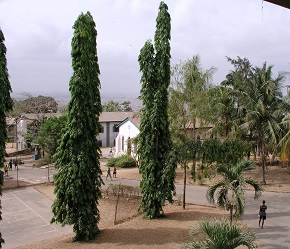
Oke Are Minor seminary compound, Ibanda


Zie voor de schrijvers van de 28e juli ook mijn volgende blog van vandaag.

Summer Storm (Sara Teasdale)

Dolce far niente


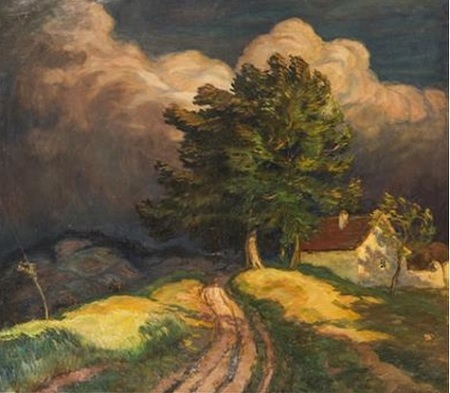
Een zomerstorm door Ota Bubenicek, z.j.


Summer Storm

The panther wind
Leaps out of the night,
The snake of lightning
Is twisting and white,
The lion of thunder
Roars—and we
Sit still and content
Under a tree—
We have met fate together
And love and pain,
Why should we fear
The wrath of the rain!


Sara Teasdale (8 augustus 1884 – 29 januari 1933)
St. Louis, Missouri, de geboorteplaats van Sara Teasdale


Zie voor de schrijvers van de 27e juli ook mijn blog van 27 juli 2018 en eveneens mijn blog van 27 juli 2017 en ook mijn blog van 27 juli 2011 deel 2.
The Swimming Pool (Conor O’Callaghan), Dolce far niente

Dolce far niente


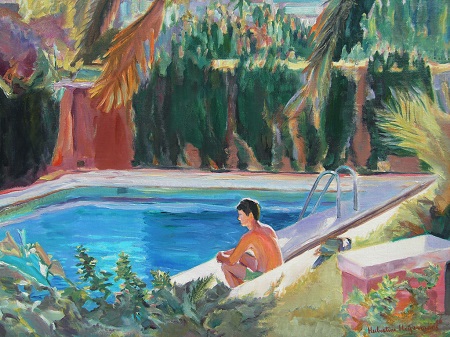
Swimming pool at the Costa Blanca and Benidorm door Hubertine Heijermans, 1997


The Swimming Pool

It goes under, the cursor, whenever I place my finger
on the space bar and hold it like this for a minute.
The blue screen shimmers the way a pool’s sunlit
floor moves after the splash of a lone swimmer.

As long as this minute lasts, the season is somewhere
between July and dawn: the soundless underwater
of sandals left out overnight and garden furniture,
that will end, but could just as easily go on forever.

I could be forgiven for forgetting that it was ever there.
The pool is only still again when I take away my finger.
Unthinking, and unable to hold its breath any longer,
as much as two pages further, it comes up for air.


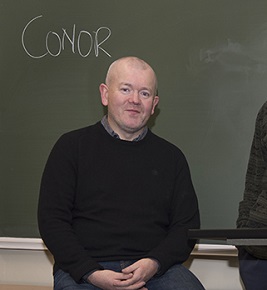
Conor O’Callaghan (Newry, 1968)
Collage van Newry


Zie voor de schrijvers van de 25e juli ook mijn blog van 25 juli 2018 en eveneens mijn blog van 25 juli 2017.

Conor O’Callaghan

Onafhankelijk van geboortedata

 De Ierse dichter Conor O’Callaghan werd geboren in 1968 in Newry. Hij heeft vijf dichtbundels gepubliceerd: “The History of Rain” (1993; Patrick Kavanagh Poetry Award), “Seatown” (1999), “Fiction” (2005), “The Sun King “(2013) en “Live Streaming “(2017). Hij is ook de auteur van “Red Mist: Roy Keane en de Football Civil War” (2004), een verslag van Roy Keane’s vertrek uit de FIFA World Cup-ploeg uit 2002 en de nasleep daarvan. O’Callaghan is een voormalig directeur van het Dún Laoghaire – Rathdown Poetry Now Festival en werd genomineerd voor de Poetry Now Award 2005. Hij is ook voormalig mede-houder van de Heimbold-leerstoel Irish Studies aan de Villanova University. Hij geeft momenteel lezingen aan de Sheffield Hallam University in het VK en afstandsonderwijs aan de Lancaster University. Hij ontving de Bess Hokin-prijs 2007 van het tijdschrift Poetry. O’Callaghan’s eerste roman “Nothing on Earth” werd in 2016 geprezen en stond op de shortlist voor de Ierse roman van het jaar van de Kerry Group.

Three Six Five Zero

I called up tech and got the voicemail code.
It’s taken me this long to find my feet.
Since last we spoke that evening it has snowed.

Fifty-four new messages. Most are old
and blinking into a future months complete.
I contacted tech to get my voicemail code

to hear your voice, not some bozo on the road
the week of Thanksgiving dubbing me his sweet
and breaking up and bleating how it snowed

the Nashville side of Chattanooga and slowed
the beltway to a standstill. The radio said sleet.
The kid in tech sent on my voicemail code.

I blew a night on lightening the system’s load,
woke to white enveloping the trees, the street
that’s blanked out by my leaving. It had snowed.

Lately others’ pasts will turn me cold.
I heard out every message, pressed delete.
I’d happily forget my voice, the mail, its code.
We spoke at last that evening. Then it snowed.


Game Night

Love not
being in the loop.

Grant the spruces’ wish,
the golf compound
graying out of use,
suvs in the it lot,
power outage,
a chorus from the quad.

Bless the elsewhere
where others are
not here or you.

And rain
after midnight . . .
Ask yourself,
is that rain or bells?

Conor O’Callaghan (Newry, 1968)


Pierre Kemp, Robert Graves, Johan Andreas der Mouw, Banana Yoshimoto, John Newton, Dolce far niente

Dolce far niente


Prague heatwave 2004 door Caroline Evans
 

Hittegolf

Soms kan het zo stil zijn in de stad
en ligt de brug haast verlaten.
Het gerucht van de schoenen en wielen – wat
is dat? – dempt op de straat.
Hitte regeert, er roert zich geen blad.
Twee mannen op het brugbeton
kijken omhoog. ‘Hoor je dat?
Pierre Kemp schiet weer op de zon!’


Pierre Kemp (1 december 1886 – 21 juli 1967)
Het Vrijthof in Maastricht, de geboorteplaats van Pierre Kemp


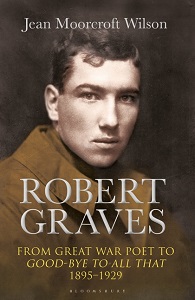
De Engelse dichter en schrijver Robert Graves werd geboren in Londen (Wimbledon) op 24 juli 1895. Zie ook alle tags voor Robert Graves op dit blog.

Morning Phœnix

In my body lives a flame,
Flame that burns me all the day;
When a fierce sun does the same,
I am charred away.

Who could keep a smiling wit,
Roasted so in heart and hide,
Turning on the sun’s red spit,
Scorched by love inside?

Caves I long for and cold rocks,
Minnow-peopled country brooks,
Blundering gales of Equinox,
Sunless valley-nooks,

Daily so I might restore
Calcined heart and shrivelled skin,
A morning phœnix with proud roar
Kindled new within.


The God Called Poetry

Now I begin to know at last,
These nights when I sit down to rhyme,
The form and measure of that vast
God we call Poetry, he who stoops
And leaps me through his paper hoops
A little higher every time.

Tempts me to think I’ll grow a proper
Singing cricket or grass-hopper
Making prodigious jumps in air
While shaken crowds about me stare
Aghast, and I sing, growing bolder
To fly up on my master’s shoulder
Rustling the thick strands of his hair.

He is older than the seas,
Older than the plains and hills,
And older than the light that spills
From the sun’s hot wheel on these.
He wakes the gale that tears your trees,
He sings to you from window sills.

At you he roars, or he will coo,
He shouts and screams when hell is hot,
Riding on the shell and shot.
He smites you down, he succours you,
And where you seek him, he is not.

To-day I see he has two heads
Like Janus–calm, benignant, this;
That, grim and scowling: his beard spreads
From chin to chin’ this god has power
Immeasurable at every hour:
He first taught lovers how to kiss,
He brings down sunshine after shower,
Thunder and hate are his also,
He is YES and he is NO.

The black beard spoke and said to me,
‘Human frailty though you be,
Yet shout and crack your whip, be harsh!
They’ll obey you in the end:
Hill and field, river and marsh
Shall obey you, hop and skip
At the terrour of your whip,
To your gales of anger bend.’

The pale beard spoke and said in turn
‘True: a prize goes to the stern,
But sing and laugh and easily run
Through the wide airs of my plain,
Bathe in my waters, drink my sun,
And draw my creatures with soft song;
They shall follow you along
Graciously with no doubt or pain.’

Then speaking from his double head
The glorious fearful monster said
‘I am YES and I am NO,
Black as pitch and white as snow,
Love me, hate me, reconcile
Hate with love, perfect with vile,
So equal justice shall be done
And life shared between moon and sun.
Nature for you shall curse or smile:
A poet you shall be, my son.

Robert Graves (24 juli 1895 – 7 december 1985)
Cover


De Nederlandse dichter Johan Andreas dèr Mouw (Adwaita) werd geboren op 24 juli 1863 in Westervoort. Zie ook alle tags voor Johan Andreas dèr Mouw op dit blog.

’t Jonge, lelijke eendje

Dan las ik weer van ’t jonge, lelijke eendje:
eerst zwom hij blij door ’t groene licht op ’t water;
toen joegen ze hem weg met kwaad gesnater,
en gooide een jongen naar hem met een steentje;

toen plaste hij rond met één bevroren beentje
’s nachts in een kolk; en toen ontmoette hij, later,
bij de oue vrouw, die deft’ge, wijze kater
en kipje Kortpoot met ’t verbrande teentje!

En stilletjes werd ’t kleine eendje groot;
en vloog eens in een meer. Daar kwamen aan,
drie zwanen, en hij zei: ‘Pik me maar dood!’
en boog naar ’t water; en hij zag een zwaan.

En ‘k had altijd, wanneer ik ’t sprookje las,
een vreemd gevoel, dat ‘k zelf zo’n zwaantje was.


Orpheus

Waar ’t strandgebergt’ duiz’lend de hemel bijt
Met gletscherkaak, die dreunt van ’t golvenbranden –
Langblauwe zaag, prikken zich vast de tanden,
Tot waar wegwaast zilv’rige oneindigheid;

Wolken trekken, tot slagorden gerijd,
Vol sperengoud langs ’t midden van de wanden,
Afwerend de overmoed, die aan mocht randen
De stille toppen en hun heiligheid;

Brandingen stuiven, nieuwe bergen deinen,
Aantorsend, wit, in evenwijd’ge lijnen
Hun lange donder op brekende rug;

En, tweede brandingstreep, slingert naar onder
Het wakend wolkenvolk zijn lange donder
Op dubbel-echoënd strand en zee terug.


Violenbed

Het heele perk was vol: je zag geen zand.
De paarsen leken ernstige oude heertjes,
De bruinen glanzend-moll’ge, goed’ge beertjes,
De gelen pluimen van een goudfazant;

En massa’s witten stonden om de rand,
Zoo wit als vlinders of als duiveveertjes,
Net roomsche kindertjes in Pinksterkleertjes,
Die om iets heiligs heen staan, hand in hand.

Verwilderd is ’t, deels plat, deels uitgeschoten,
Zoodat ik – ‘k zie ze nog – die mooie grooten
In de verschrompelden nauw’lijks herken;

Maar even lang als toen sta ik te kijken:
Ze deden goed hun best; ’t mag nu niet lijken,
Alsof ‘k voor ’t vroeger moois ondankbaar ben.

Johan Andreas dèr Mouw (24 juli 1863 – 8 juli 1919)
Cover biografie


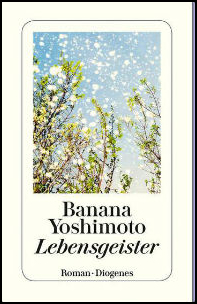
De Japanse schrijfster Banana Yoshimoto werd geboren op 24 juli 1964 inTokyo. Zie ook alle tags voor Banana Yoshimoto op dit blog.

Uit: Lebensgeister (Vertaald door Thomas Eggenberg)

„Als ich die Eisenstange bemerkte, wie sie da in meinem Bauch steckte, dachte ich: Verdammt, das sieht nicht gut aus … Ich werde sterben.
Was mich nicht weniger beunruhigte, war der Rost an der Stange. Verrückt. Sollte es in einer solchen Situation nicht vollkommen egal sein, ob die Stange rostig war oder glänzte wie Edelstahl?
Ein hef tiger Widerwille packte mich. Wie gebannt starrte ich auf das rostige Ding.
Damals war ich achtundzwanzig und lebte in dem Gefühl, noch eine Ewigkeit vor mir zu haben.
Aus dem Nichts wurde ich mit der elementaren Lebenswirklichkeit konfrontiert, dass der Tod tatsächlich unser ständiger Begleiter ist. Ah, da ist er also!, dachte ich ungläubig.
Irgendwann war die Stange dann zwar weg, doch ich spürte sie noch lange Zeit in mir.
Der Unfall geschah auf dem Heimweg zum Wohnatelier meines Freundes Yōichi, er saß am Steuer. Yōichi lebte im Kamigamo-Viertel von Kyōto, ich in Tōkyō, Hunderte Kilometer weit entfernt.
Es war Spätsommer. In Kurama* hatten wir uns ein heißes Quellenbad gegönnt, waren dann nach Kibune gefahren, um uns im Schatten von üppigfeuchtem Grün ein wenig abzukühlen, und von da aus zurück nach Kyōto. Bis sich die herrlich weite Flusslandschaft des Kamo vor uns ausbreiten würde, war es nur noch ein kleines Stück.
Den kanadischen Sänger und Songwriter Leonard Cohen bewunderte Yōichi über alles. Er liebte seine Musik und hörte sie oft. Auch damals im Auto erklang Cohens tiefe, wundervolle Stimme –
eine Liveaufnahme von Lover Lover Lover.
Wie schon tausend Mal zuvor, ganz alltäglich, selbstverständlich.
Wir ließen uns gegenseitig viel Freiheit, und wir genossen das beide sehr. Es war mir selbst ein Rätsel, wie ein solcher Raum an Freiheit zwischen Mann und Frau überhaupt möglich war. Ganz langsam, behutsam, mit viel Liebe und Geduld wuchs er heran. Es fühlte sich an wie ein Souf flé oder wie ein frisches, noch warmes Brötchen.
Plötzlich sahen wir ein Auto direkt auf uns zukommen. Der Fahrer musste eingenickt sein.
Yōichi versuchte auszuweichen. Vergeblich. Ein heftiger Aufprall, unser Auto schoss über die Uferböschung und überschlug sich.
Mein Kopf schlug irgendwo auf, Blut spritzte in die Augen, färbte alles rot. Und dann spürte ich auf einmal die Stange, die sich in meinen Bauch gebohrt hatte. Yōichi hatte sich gleich mehrere davon für eine Kunstinstallation besorgt.“

Banana Yoshimoto (Tokyo, 24 juli 1964)
Cover


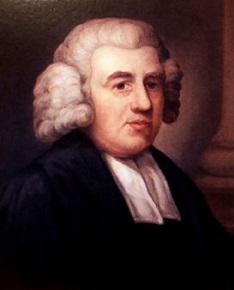
De Britse dichter en Anglicaans priester John Henry Newton werd geboren in Londen op 24 juli 1725. Zie ook alle tags voor John Newton op dit blog.

Harvest

See! the corn again in ear!
How the fields and valleys smile!
Harvest now is drawing near
To repay the farmer’s toil:
Gracious Lord, secure the crop,
Satisfy the poor with food;
In thy mercy is our hope,
We have sinned but thou art good.

While I view the plenteous grain
As it ripens on the stalk;
May I not instruction gain,
Helpful, to my daily walk?
All this plenty of the field
Was produced from foreign seeds;
For the earth itself would yield
Only crops of useless weeds.

Though, when newly sawn, it lay
Hid awhile beneath the ground,
Some might think it thrown away
Now a large increase is found:
Though concealed, it was not lost,
Though it died, it lives again;
Eastern storms, and nipping frosts
Have opposed its growth in vain.

Let the praise be all the Lord’s,
As the benefit is ours!
He, in seasons, still affords
Kindly heat, and gentle flow’rs:
By his care the produce thrives
Waving o’er the furrowed lands;
And when harvest-time arrives,
Ready for the reaper stands.

Thus in barren hearts he sows
Precious seeds of heav’nly joy;
Sin, and hell, in vain oppose,
None can grace’s crop destroy:
Threatened oft, yet still it blooms,
After many changes past,
Death, the reaper, when he comes,
Finds it fully ripe at last.

John Newton (24 juli 1725 – 21 december 1807)


Zie voor nog meer schrijvers van de 24e juli ook mijn blog van 24 juli 2018 en ook mijn blog van 24 juli 2017 en eveneens mijn blog van 24 juli 2016 deel 2.

John M. Ridland, Lauren Groff, Mohsin Hamid, Stephan Thome, Frans Erens, Kai Meyer, Irina Liebmann, Dolce far niente

Dolce far niente


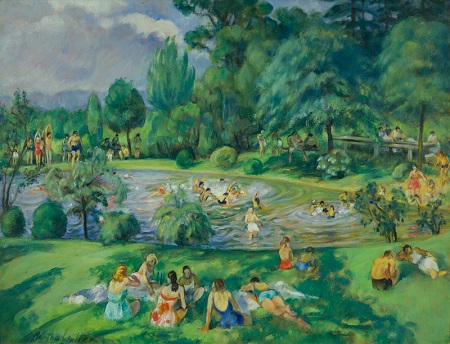
The Swimming Pool door Martha Walter, 1935-1940


Swimming For Jeni

Today I took my body in its skin
And walked it to the noon-hour swimming pool.
I whirled its arms about and tossed it in,
The air being colder than the water’s cool.

Then for so many a hundred—thousand—yards
I churned it unrelenting back and forth,
While others on both sides of me as hard
Churned unrelenting also south and north.

We’d catch the air and hold it for a stroke
Or two or three—four, maybe five at most,—
Folding the water under like a cloak,
Wrapped in the health of which we drily boast.

We swam above deep water without fear,
Peering down through it where we could not go
Unless we took the water in for air
And who’d do that? Nobody there I know.

Meanwhile up north I know a teen-aged girl
Who’s being admitted for another sort
Of exercise in which the churn and whirl
Are nimbly done in earnest, not in sport,

With icy knives that few of us have seen
But all would welcome for their cheery pain
If only they could cut the tumor clean
And scoop it out and make her whole again.

Dear kni, through that blinding habitat,
Maybe the light will meet you as you rise
And pull you out to breathe the air at that
Cold moment when the first star strikes your eyes,

And maybe not, in which case I will put
My body in its skin and swim for you.
And swim for you again, wrapped hand and foot,
There being nothing else that it can do.


John M. Ridland (Londen, 4 juli 1933)
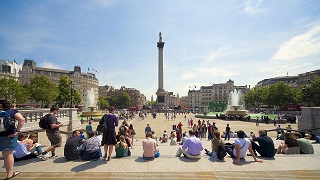
Trafalgar Square, Londen, de geboorteplaatsvan John M. Ridland


De Amerikaanse schrijfster Lauren Groff werd geboren op 23 juli 1978 in Cooperstown, New York. Zie ook alle tags voor Lauren Groff op dit blog.

Uit: Arcadia (City of Sun)

Bit is already moving when he wakes. It is February, still dark. He is five years old. His father is zipping Bit within his own jacket where it is warmest, and Abe’s heart beats a drum against Bit’s ear. The boy drowses as they climb down from the Bread Truck, where they live, and over the frosted ground of Ersatz Arcadia. The trucks and buses and lean-tos are black heaps against the night, their home until they can finish Arcadia House in the vague someday.
The gong is calling them to Sunday Morning Meeting, somewhere. A river of people flows in the dark. He smells the bread of his mother, feels the wind carrying the cold from the Great Lake to the north, hears the rustling as the forest wakes. In the air there is excitement and low, loving greetings; there is small snow, the smoke from someone’s joint, a woman’s voice, indistinct.
When Bit’s eyes open again, the world is softened with first light. The tufts of the hayfield push up from under trampled snow. They are in the Sheep’s Meadow and he feels the bodies closer now, massing. Handy’s voice rises from behind Bit and up toward all of Arcadia, the seven dozen true believers in the winter morning. Bit twists to see Handy sitting among the maroon curls of the early skunk cabbage at the lip of the forest. He turns back, pressing his cheek against the pulse in his father’s neck.
Bit is tiny, a mote of a boy. He is often scooped up, carried. He doesn’t mind. From against the comforting strength of adults, he is undetected. He can watch from there, he can listen.
Over Abe’s shoulder, far atop the hill, the heaped brick shadow of Arcadia House looms. In the wind, the tarps over the rotted roof suck against the beams and blow out, a beast’s panting belly. The half-glassed windows are open mouths, the full-glassed are eyes fixed on Bit. He looks away. Behind Abe sits the old man in his wheelchair, Midge’s father, who likes to rocket down the hill at the children, scattering them. The terror washes over Bit again, the loom and creak, the flash of a toothless mouth and the hammer-and-sickle flag as it flaps in passing. The Dartful Codger, Hannah calls the old man, with a twist to her mouth. The Zionist, others call him, because this is what he shouts for after sundown: Zion, milk and honey, land of plenty, a place for his people to rest. One night, listening, Bit said, Doesn’t the Dartful Codger know where he is? and Abe looked down at Bit among his wooden toys, bemused, saying, Where is he? and Bit said, Arcadia, meaning the word the way Handy always said it, with his round Buddha face, building the community with smooth sentences until the others can also see the fields bursting with fruits and grains, the sunshine and music, the people taking care of one another in love.”

Lauren Groff (Cooperstown, 23 juli 1978)


De Brits-Pakistaanse schrijver Mohsin Hamid werd geboren op 23 juli 1971 in Lahore, Pakistan. Zie ook alle tags voor Moshin Hamid op dit blog.

Uit: Exit West

“The next day, at work, Saeed found himself unable to stop thinking of Nadia. Saeed’s employer was an agency that specialized in the placement of outdoor advertising. They owned billboards all around the city, rented others, and struck deals for further space with the likes of bus lines, sports stadiums, and proprietors of tall buildings.
The agency occupied both floors of a converted townhouse and had over a dozen employees. Saeed was among the most junior, but his boss liked him and had tasked him with turning around a pitch to a local soap company that had to go out by email before five. Normally Saeed tried to do copious amounts of online research and customize his presentations as much as possible. “It’s not a story if it doesn’t have an audience,” his boss was fond of saying, and for Saeed this meant trying to show a client that his firm truly understood their business, could really get under their skin and see things from their point of view.
But today, even though the pitch was important—every pitch was important: the economy was sluggish from mounting unrest and one of the first costs clients seemed to want to cut was outdoor advertising—Saeed couldn’t focus. A large tree, overgrown and untrimmed, reared up from the tiny back lawn of his firm’s townhouse, blocking out the sunlight in such a manner that the back lawn had been reduced mostly to dirt and a few wisps of grass, interspersed with a morning’s worth of cigarette butts, for his boss had banned people from smoking indoors, and atop this tree Saeed had spotted a hawk constructing its nest. It worked tirelessly. Sometimes it floated at eye level, almost stationary in the wind, and then, with the tiniest movement of a wing, or even of the upturned feathers at one wingtip, it veered.
Saeed thought of Nadia and watched the hawk.
When he was at last running out of time he scrambled to prepare the pitch, copying and pasting from others he had done before. Only a smattering of the images he selected had anything particularly to do with soap. He took a draft to his boss and suppressed a wince while sliding it over.
But his boss seemed preoccupied and didn’t notice. He just jotted some minor edits on the printout, handed it back to Saeed with a wistful smile, and said, “Send it out.”
Something about his expression made Saeed feel sorry for him. He wished he had done a better job”.

Mohsin Hamid (Lahore, 23 juli 1971)
Cover


De Duitse schrijver en filosoof Stephan Thome werd geboren op 23 juli 1972 in Biedenkopf, Hessen, als Stephan Schmidt. Zie ook alle tags voor Stephan Thome op dit blog.

Uit: Gott der Barbaren

„Niemand weiß etwas über sie. Manche nennen sie langhaarige Banditen, andere die Gottesanbeter, aber warum rasieren sie sich die Stirn nicht, und welchen Gott beten sie an?Zuerst sollen sie in der Provinz Guangxi aufgetaucht sein, in einer abgelegenen Gegend namens Distdbeg wo die Menschen so arm sind dass sie schwanen Reis essen und in Hütten mit undichten Dächern leben. Zugezogene Bauern vom Volk der liakka, die von den Alteingesessenen verachtet werden. Einer meiner Kollegen hat sie Erdfresser aus dem Süden genannt, die nur darauf gewartet hätten, dass jemand kommt und sie mit aufwieglerischen Reden verwirrt In diesem Fall ein gescheiterter Prüfungskandidat von denen es bei uns so viele gibt. Dreimal durchgefallen und danach verrückt geworden, sagen die Leute aber stimmt es auch? kh bin selbst einmal bei den Prüfungen gescheitert und weiß, wie es sich anffthlt, wenn der große Traum platzt. Dornen hat man sich in die Schuhe gesteckt, um nicht über den Büchern einzuschlafen, und dann war alles umsonst?
Nicht wenige glauben, dass es mit den ausländischen Teufeln zu tun hat. Auch von ihnen weiß niemand, wer sie sind Eines Tages kamen sie über den Ozean und ließen sich an unserer Küste nieder, als wäre es ihre Sie handeln mit Opium. stellen Forderungen und drohen mit Krieg. wenn sie nicht erfüllt wer-den. Dem Himmel missfallt ihre Anwesenheit doch leider ist unser Reich nicht mehr so stark wiefrüher. Gegen die Barba-ren an unseren Grenzen kämpfen wir seit jeher, aber nie hat-ten sie Kanonen von solcher Feuerkraft Im südlichen Meer haben die Fremden eine Insel besetzt, um noch mehr Opium zu schmuggeln und ihren fremden Gott anzubeten. Shang Di, der Herrscher in der Höhe, angeblich ist es derselbe, den auch die Langhaarigen verehren Als ihr Anfuhrer zum dritten Mal durch die Prüfung fiel, sollen die ausländischen Teufel ihm ein Buch gegeben haben, um ihn zu verhexen. Nach der Rückkehr in sein Dorf wurde er prompt krank, und als er fiebernd im Bett lag träumte er davon. dass Shang Di ihn zu sich in den Himmel rief, ihm ein Schwert gab und ihm befahl, die Dämonen zu töten. So hat es begonnen, heißt es. Ein Traum platzt und ein anderer beginnt Seitdem hält er sich für Gottes Sohn und Dämonen all jene, die den Zopf tragen und dem Kaiser in der Hauptstadt dienen – so wie ich.
Hat das Auftauchen der Fremden die kosmische Ordnung zerstört? Inzwischen besitzen die Rebellen ihre eigene Hauptstadt in der einst die Kaiser der Ming residierten und die nun Himmlische Hauptstadt genannt wird. Als junger Mann habe ich ihre prächtigen Gärten und Straßen bewundert und sehnsüchtig auf die Blumenboote am Qinhuai-Fluss geblickt Wenn eine solche Stadt erobert wird hat es etwas zu bedeuten, aber was? Wie können arme, ungebildete Bauern Gebiete besetzen, die größer sind als ihre Heimatprovinz? Ihren Anführer verehren sie als Himmlischen König und ich kann nicht aufhören, mich über sie zu wundern.“

Stephan Thome (Biedenkopf, 23 juli 1972)


De Nederlandse schrijver Frans Erens werd geboren op 23 juli 1857 in Schaesberg. Zie ook alle tags voor Frans Erens op dit blog.

Uit: Uit de Pyreneën

“Is het niet een droom te zitten in een afgelegen dorp der Pyreneën, tusschen hooge bergen, met bosschen behangen? Daar in dat dorp te wandelen langs de bruisende en schuimende wateren, van alle zijden dalende en glijdende in heldere doorzichtigheid naast uwen voet? Die droom is te verwezenlijken door eenigen tijd zich op te houden in de badplaats Barèges.
Wanneer gij het kleine spoortje neemt dat van Lourdes over Argèlès naar Pierrefitte gaat, moet gij daar uitstappen en vindt gij er een electrische tram, die u langs een pracht van beboschte hellingen naar Luz brengt. In de diepte stroomt met donderend geluid de Gave de Pau. Van Luz uit moet Barèges worden bereikt. Doch alvorens met een omnibus, een rijtuig of te voet naar die badplaats te klimmen, is het zeker de moeite waard een paar uren in het vriendelijke Pyreneën-stadje rond te dwalen. Groot is het niet, het heeft nog geen twee duizend inwoners. In onze meer bevolkte streken zou men dat een dorp noemen. Doch Luz is oud en heeft wel het recht verkregen om stad te worden genoemd. Vier valleien monden naar het plaatsje toe. Men heeft er een paar aardige cafés en hotels. Luz is het vereenigingspunt der dorpen in die valleien gelegen. Daar zijn allerlei markten. Van heinde en ver gaat men er heen en het is een groot genot al die verschillende costumes der bewoners dier bergdorpen te zien. Daar ontmoeten zij hun vrienden, die even als zij in de stilte der dalen hun leven doorbrengen. Doch daar ontplooit zich ook hun ziel en worden zij vroolijk, zij die in stroeve denkingen gewoon zijn naar hun smalle luchtstrooken te turen. Luz, ja daar is een oogenblik licht bij aankomst uit het donkere dal.
De eerbiedwaardige steenen van de aloude église des Templiers vertellen de geschiedenis van vele eeuwen. Als een vesting verheft zij zich daar op een stille plek. Boven bij het dak eenige kleine vensters, geen andere verlichting. Een toren, waarin een klok zichtbaar is. Zij is omgeven door een gekanteelden muur, waarop een vierkante toren. De stilte is volkomen. Het gras groeit er op het pleintje en een enkel winterkoninkje of bastaardnachtegaaltje zoekt er in de spleten zijn maal van den dag.
In het begin van den herfst wordt op de berghellingen rondom Luz het gras door de herders verbrand, opdat er in het volgende jaar een beter gras zou mogen opschieten. En het is een fantastische aanblik in den avond tegen de in het gezicht komende sterren de vuren te zien op de hooge bergen, geheimzinnig en ver, als stilstaande meteoren. De wandelaar, die van Luz naar Barèges gaat op een zachten herfstavond, voelt eene verinniging met het landschap, eene blijdschap, die hem kracht geeft en opheft bij het klimmen van den weg, terwijl de wateren, die aan zijn zij vallen van diepte tot diepte, zingen het lied van den zuidelijken nacht. En moedig stijgt hij langs het frissche groen door de geurige lucht.”

Frans Erens (23 juli 1857 – 5 december 1936)


De Duitse schrijver Kai Meyer werd geboren op 23 juli 1969 in Lübeck. Zie ook alle tags voor Kai Meyer op dit blog.

Uit: Die Spur der Bücher

„Sie wünschte sich den Geruch der Geschichten zurück, die Behaglichkeit der engen Buchläden ihrer Kindheit. Das Gefühl der Einbände unter ihren Fingerspitzen, wenn sie an den Regalreihen vorüberstrich. Die Gewissheit, dass ein einziger Griff genügte, um in eine andere, eine sichere Welt zu entfl iehen. Aber Mercy Amberdale war eine Gefangene, und der einzige Buchgeruch an diesem Ort ging von ihrem Körper aus. Sie war eine Bibliomantin und ganz allein verantwortlich für ihre missliche Lage. »Wer bist du?«, rief Madame Xu in den Schacht hinab. »Und vor allem, was bist du?« »Keine Ahnung, was Sie meinen«, erwiderte Mercy aus der feuchtkalten Dunkelheit. »Hast du einen Namen?« »Clara«, sagte Mercy. »Clara Plumpton.« »Ich kann spüren, wenn du mich belügst.« »Deshalb sag ich ja die Wahrheit.« Der Trick war natürlich, mit jedem einzelnen Satz zu lügen, dann gab es kein verräterisches Zaudern. Mercy hatte während dieses Gesprächs noch kein einziges Mal die Wahrheit gesagt. Sie spielte auf Zeit. Zeit, die sie ihren Freunden verschaffte. Nur darauf kam es jetzt an. Madame Xu hatte die Hände hinter ihrem Rücken verschränkt, während sie um den runden Schacht wanderte und aus pechschwarzen Augenschlitzen auf ihre Gefangene blickte. Die alte Chinesin schien die Füße nicht zu heben, während sie sich um das Loch bewegte; sie glitt im Kreis wie eine Aufziehfi gur auf einer Spieldose. Dabei strich der Saum ihres goldbestickten Gewandes an der Kante entlang und funkelte im Schein einer Gaslaterne. Mercy war siebzehn und schon seit drei Jahren Trägerin ihres Seelenbuchs. Sie stand auf dem Grund des Schachts und drehte sich auf der Stelle, um Madame Xu nicht aus den Augen zu verlieren. Immer wieder wischte sie dunkelrote Strähnen aus ihrem Gesicht, die Haare klebten auf ihrer schweißnassen Haut. Das Loch, in das sie gestürzt war, musste an die zwei Mannslängen tief sein. Die Wände waren glatt, nur ganz oben, außerhalb ihrer Reichweite, ragte das Ende eines rostigen Eisenrohrs aus dem Gestein. Zähe Tropfen aus dunklem Schlamm hingen daran. Immer, wenn die Chinesin das Rohr passierte, löste sich einer davon und fi el zu Mercy in den Schacht. »Wer hat dich geschickt?« »Niemand.« »Du magst noch jung sein, aber bist du wirklich so dumm, auf eigene Faust bei mir einzudringen?« »Ich stecke in Ihrer Falle fest. Entscheiden Sie.« Madame Xus trockenes Lachen klang wie das Knirschen von Sand zwischen Glasscheiben. Über ihr wölbte sich ein Ziegeldach, kupfergolden beschienen von der zuckenden Flamme der Gaslaterne. »Du bist in ein Loch gefallen, das ist richtig.“

Kai Meyer (Lübeck, 23 juli 1969)


De Duitse dichteres en schrijfster Irina Liebmann werd geboren op 23 juli 1943 in Moskou. Zie ook alle tags voor Irina Liebmann op dit blog.

Uit: Drei Schritte nach Russland

„Zwei Frauen in Moskau. Denn sie wird dort bleiben, sie lebt dort, es ist ihr Land, und sie will auch kein anderes, und ich weiß für alles eine andere Variante: Einen besseren Küchentisch, einen besseren Abwaschschrank, der Kiosk da draußen müsste gestrichen werden – zwei Planeten sind wir, die sich
schon lange nicht mehr berühren, sehr lange schon.
Der Leser kann es nicht wissen und ich hatte es vergessen, aber ich bin einmal ein sowjetisches Kind gewesen. Ein Moskauer Kind. Nur kurz, ganz am Anfang des Lebens nur, aber der Anfang ist wichtig bei jeder Geschichte, und mein Anfang war eben dort, dort im Sowjetreich, in seiner Hauptstadt sogar, und so was vergisst man nicht.
Ganz im Gegenteil. Sei stolz darauf, hieß es öfter, sag nichts davon, hieß es auch, das kannst du vergessen, so hieß es zuletzt, und das sagte ich mir dann selber – vergiss es.
Es bedeutet nichts. Gar nichts. Es ist nur ein Wort: geboren in Moskau. Na und?
Die Geschichte, die dahintersteht, ist die Geschichte meiner Eltern. Meine Geschichte dagegen hat dort nur begonnen, nichts weiter.
Allerdings gehört es zu dieser Geschichte, dass ich Russisch sprechen konnte und russische Kinderbücher geschenkt bekam und dass mir Schleifen ins Haar gebunden wurden von meiner
Mutter, die ich auf Russisch, mit russischem Klang eben, Mama nannte.
Es gehört auch dazu, dass meine Mutter mit mir und meiner Schwester wochenlang durch die Sowjetunion fuhr, um ihre eigene Mutter zu besuchen und die eigene Schwester.“

Irina Liebmann (Moskou, 23 juli 1943)


Zie voor nog meer schrijvers van de 23e juli ook mijn blog van 23 juli 2018 en ook mijn blog van 23 juli 2017 deel 2.