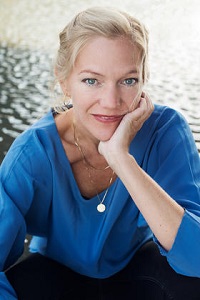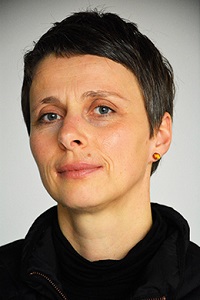
Jill McDonough


Onafhankelijk van geboortedata

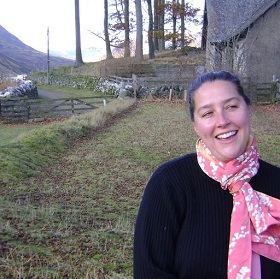
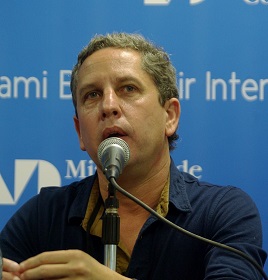
De Amerikaanse dichteres Jill McDonough werd geboren in Hartford, Connecticut in 1972 en groeide op in North Carolina. Ze behaalde haar Bachelor of Arts in het Engels aan Stamford University en een MA in creatief schrijven aan Boston University. Ze is getrouwd met barman en muzikant Josey Packard. Ze heeft over haar huwelijk geschreven in een essay getiteld “A Natural History of my Marriage”. Jill McDonough publiceerde o.a. de bundels “Habeas Corpus” (2008), “Where You Live” (2012), “Reaper” (2017), “Here All Night” en meerdere chapbooks, waaronder “Oh, James!” (2012). Zij ontving beurzen van de National Endowment for the Arts, het Fine Arts Work Centre, de New York Public Library, de Library of Congress, de Lannan Foundation en Stanford’s Wallace Stegner-programma. Ook gaf zij 13 jaar lang les aan gedetineerde studenten via het gevangenisonderwijs van de Boston University. Haar werk is verschenen in Poetry, Slate, the Nation, Threepenny Review en Best American Poetry. Ze leidt het MFA-programma op UMass-Boston en 24PearlStreet, het Fine Arts Work Centre online.


Three a.m.

Our cabdriver tells us how Somalia is better
than here because in Islam we execute murderers.
So, fewer murders. But isn’t there civil war
there now? Aren’t there a lot of murders?
Yes, but in general it’s better. Not
now, but most of the time. He tells us about how
smart the system is, how it’s hard to bear
false witness. We nod. We’re learning a lot.
I say—once we are close to the house—I say, What
about us? Two women, married to each other.
Don’t be offended, he says, gravely. But a man
with a man, a woman with a woman: it would be
a public execution. We nod. A little silence along
the Southeast Corridor. Then I say, Yeah,
I love my country. This makes him laugh; we all laugh.
We aren’t offended, says Josey. We love you. Sometimes
I feel like we’re proselytizing, spreading the Word of Gay.
The cab is shaking with laughter, the poor man
relieved we’re not mad he sort of wants us dead.
The two of us soothing him, wanting him comfortable,
wanting him to laugh. We love our country,
we tell him. And Josey tips him. She tips him well.


Twelve-Hour Shifts

A drone pilot works a twelve-hour shift, then goes home
to real life.  Showers, eats supper, plays video games.
Twelve hours later he comes back, high-fives, takes over the
drone

from other pilots, who watch Homeland, do dishes, hope they
don’t
dream in all screens, bad kills, all slo-mo freeze-frame.
A drone pilot works a twelve-hour shift, then goes home.

A small room, a pilot’s chair, the mic and headphones
crowd his mind, take him somewhere else.  Another day
another dollar: hover and shift, twelve hours over strangers’
homes.

Stop by the store, its Muzak, pick up the Cheerios,
get to the gym if you’re lucky.  Get back to your babies, play
Barbies, play blocks. Twelve hours later, come back.  Take over
the drone.

Smell of burned coffee in the lounge, the shifting kill zone.
Last-minute abort mission, and the major who forgets your
name.
A drone pilot works a twelve-hour shift, then goes home.

It’s done in our names, but we don’t have to know.  Our own
lives, shifts, hours, bounced off screens all day.
A drone pilot works a twelve-hour shift, then goes home;
fresh from twelve hours off, another comes in, takes over our
drone.


Jill McDonough (Hartford, Connecticut, 1972)

Dolce far niente, Anna Enquist, Cees Nooteboom


Dolce far niente


Jan_van_der_Heyden_-_View_of_Oudezijds_Voorburgwal_with_the_Oude_Kerk_in_Amsterdam
De Oudezijds Voorburgwal en de Oude Kerk te Amsterdam
door Jan van der Heyden en Adriaen van de Velde, ca. 1670 


Oude Kerk

Het is een kerk maar dat geeft niet, zij is
oud, zij is een olifant opgesloten in een haag
van gevels, haar beieren heeft geen betekenis.
Zij kan geen kwaad, heeft geen macht, zij heet
naar de waterheilige die niet bestaat en de angst
van de bouwers is al eeuwen vervlogen.
O, de hevigheid daarbinnen: zieken, hoeren
en weeskinderen met hun wanhoop in stoffig
licht. De arme organist speelt een lied, snikt
om zijn ontijdig einde, een vergooid jong leven.
Het geeft niet. We bewonderen haar huid, haar
ingewanden, haar geheugen, met beschaafde
belangstelling. Mijn vriend begroef een beeld
in de grond, teer en glanzend. We weten zeker
dat haar reuzenpoot het niet pletten zal. Zeker.


Anna Enquist (Amsterdam, 19 juli 1945)
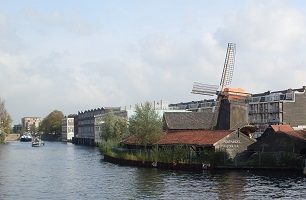
Amsterdam, molen De Otter aan de Kostverlorenvaart


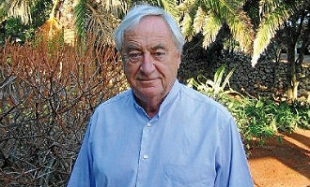
De Nederlandse dichter en schrijver Cees Nooteboom werd geboren in Den Haag op 31 juli 1933. Zie ook alle tags voor Cees Nooteboom op dit blog.


Getijde

I
Er is geen volgorde aan mijn gedachten
als ik de kathedraal af heb maak ik de symphonie
daarna leer ik en martel
ik stuur de regimenten en ontwerp de brug.

Chinees schrijf ik ook, en ik demp het moeras
dan schilder ik de appel op de duizend manieren
maar hoe vaak ik ook met je slaap
de tijd blijft onzichtbaar

hij is er en hij is er niet.

Nu eet ik.
Ik eet en ik drink
van mijzelf
en het wordt niet minder
maar meer
om te verdelgen
of te vergaan

II
Andere verschrikkingen onder de orgelbogen.
Het gebeente, verblind door zijn eigen onzienlijke glans
wrokt en klaagt over meer en beter
en in de ruimte die de tijd is
ga ik van hier naar daar
over de paden van de klok
maar alleen ik verander.

Als het eens anders was?

De wezel in het veld die niet weet
dat hij een wezel is
maar een wezel is
tot hij geen wezel meer is.

Als het eens anders was?

III
In dit getij leer ik mijzelf kennen.
Steeds minder:
ik had duizend levens
en ik nam er maar één!

Langzaam zweef ik op de spiegels af
waarin ik ga smelten
Pas als ik me raak ontplof ik zachtjes –
twee die er één zijn
wordt er geen.

Dan heb ik zelfs deze woorden niet geschreven.
Hoe komt het dan dat jij ze kunt lezen?
Hoe groter het oog wordt
des te minder
te zien.


Cees Nooteboom (Den Haag, 31 juli 1933)


Zie voor nog meer schrijvers van de 31e juli ook mijn blog van 31 juli 2017 en ook mijn twee blogs van 31 juli 2016.

Anton Ent, 200 Jaar Emily Brontë, Patrick Modiano, Maja Lunde, Aly Freije, Martijn Simons

Dolce far niente


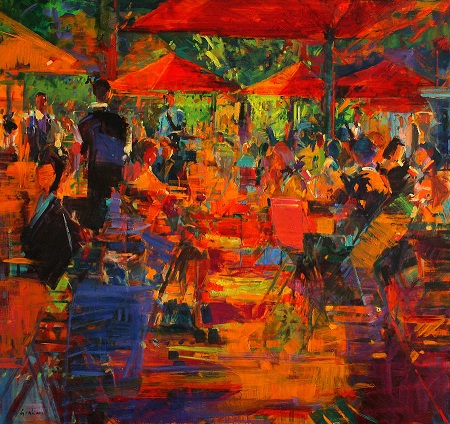
Le Grand Cafe door Peter Graham, 2011


Op het terras

Op het terras. Verschijnt een hagedis in het gras?
En weg! Ze wil niet weten welke soort
Iedere vorm van kennis scoort laag vandaag
Schaamte voor het verlangen naar anonieme
schoonheid een naakte man in de branding

Morgen verlaat ze dit eiland. Wat zij wilden
is voorbij. Duinen geven geen antwoord
het strand stuift, er staat een grijze zee

Over de boeg van de hoop. Ze vraagt benauwd:
hopen waarop? Dat de woorden niet liegen?
Minnaars elkaar niet bedriegen? Zelfmoord
en dood tot hetzelfde taalspel behoren?

De hoop dat het helder wordt zegt hij
Liever filmt ze een sneeuwjacht waarin
een man buiten adem voortgaat, duin op
duin af. Een hagedis in het gras. Is. Was.


Anton Ent (Rotterdam, 20 januari 1939)
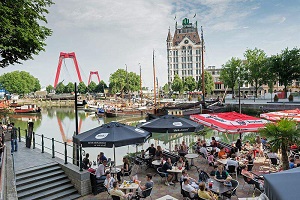
Rotterdam, Oude Haven


Tweehonderd Jaar Emily Brontë

De Engelse dichteres en schrijfster Emily Brontë werd geboren in Thornton in Yorkshire op 30 juli 1818. Dat is vandaag precies 200 jaar geleden. Zie ook alle tags voor Emily Brontë op dit blog.

Why Ask To Know The Date—The Clime? (Fragment)

Why ask to know the date—the clime?
More then mere words they cannot be:
Men knelt to God and worshipped crime,
And crushed the helpless even as we.

But, they had learnt from length of strife—
Of civil war and anarchy
To laugh at death and look on life
With somewhat lighter sympathy.

It was the autumn of the year;
The time to labouring peasants, dear:
Week after week, from noon to noon,
September shone as bright as June.
Still, never hand a sickle held;
The crops were garnered in the field—
Trod out, and ground by horses feet
While every ear was milky sweet;
And kneaded on the threshing floor
With mire of tears and human gore.
Some said, they thought that heaven’s pure rain
Would hardly bless those fields again.
Not so—the all-benignant skies
Rebuked that fear of famished eyes—
July passed on with showers and dew
And August glowed in showerless blue;
No harvest time could be more fair
Had harvest fruits but ripened there.

And I confess that hate of rest,
And thirst for things abandoned now,
Had weaned me from my country’s breast
And brought me to that land of woe.

Enthusiast—in a name delighting,
My alien sword I drew to free
One race, beneath two standards fighting,
For loyalty, and liberty.


Geef dat ik slapen mag

Geef dat ik slapen mag en geen
bewustzijn mij meer plaagt,
dat sneeuw zich legt over mij heen
of regen langs mij vlaagt –
Het is de hemel niet, die het heet
verlangen in mij stilt,
het helse vuur, bij wat ik deed,
bij wat ik wil, wordt mild!

Dit heb ik eens gezegd, dit blijf
ik zeggen, altijd weer:
drie goden, in dit tenger lijf,
gaan dag en nacht tekeer –
Al is de hemel voor hen te klein,
ik draag hen in mij om
en weet: zij zullen in mij zijn
tot ik voorgoed verstom!

Geef dat van hun verwoed tumult
ik eens zal zijn bevrijd,
dat ik door stilte wordt omhuld
en nooit meer, nooit meer lijd!


Vertaald door A. Marja

 
Emily Brontë (30 juli 1818 – 19 december 1848)
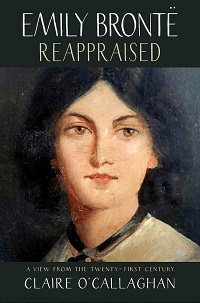
Cover


De Franse schrijver Patrick Modiano werd geboren in Boulogne-Billancourt op 30 juli 1945. Zie ook alle tags voor Patrick Mondiano op dit blog.

Uit: Honeymoon (Voyage deNoce, vertaald door Barbara Wright)

« At Juan-les-Pins, people behaved as if the war didn’t exist. The men wore beach trousers and the women light-coloured pareus. All these people were some twenty years older than Ingrid and Rigaud, but this was barely noticeable. Owing to their suntanned skin and their athletic gait, they still looked young and falsely carefree. They didn’t know the way things would go when the summer was over. At aperitif time, they exchanged addresses. Would they be able to get rooms at Megève this winter? Some preferred the Val-d’Isère, and were already getting ready to book accommodation at the Col de l’Iseran. Others had no intention of leaving the Côte d’Azur. It was possible that they were going to reopen the Altitude 43 in Saint-Tropez, that white hotel which looks like a liner grounded among the pines above the Plage de la Bouillabaisse. They would be safe there. Fleeting signs of anguish could be read on their faces under the suntan: to think that they were going to have to be permanently on the move, searching for a place that the war had spared, and that these oases were going to become rare all the time . . . Rationing was beginning on the Côte. You mustn’t think about anything, so as not to undermine your morale. These idle days sometimes gave you a feeling of being under house arrest. You had to create a vacuum in your head. Let yourself be gently numbed by the sun and the swaying of the palm trees in the breeze . . . Shut your eyes. Ingrid and Rigaud lived the same sort of life as these people who were forgetting the war, but they kept out of their way and avoided speaking to them. At first, everyone had been astonished by their youth. Were they waiting for their parents? Were they on holiday? Rigaud had replied that Ingrid and he “were on honeymoon,” quite simply. And this reply, far from surprising them, had reassured the guests at the Provençal. If young people still went on honeymoon, it meant that the situation wasn’t so tragic as all that and that the earth was still going round.”


Patrick Modiano (Boulogne-Billancourt, 30 juli 1945)
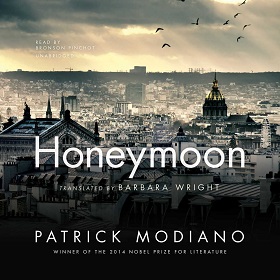
Cover audio boek


De Noorse schrijfster en scenariste Maja Lunde werd geboren in Oslo op 30 juli 1975. Zie ook alle tags voor Maja Lunde op dit blog. Zie ook alle tags voor Maja Lunde op dit blog.

Uit: The History of Bees (Vertaald door Diane Oatley)

“I was assigned to Field 748 today. Out of how many? I didn’t know. My group was one of hundreds. In our beige work uniforms we were just as anonymous as the trees. And just as close together as the flowers. Never alone, always together in a flock, up here in the trees, or wandering down the tire ruts from one field to the next. Only behind the walls of our own small flats could we be alone, a few short hours a day. Our whole lives were out here.
It was quiet. We weren’t allowed to speak while we worked. The only sound to be heard was that of our careful movements in the trees, a faint clearing of the throat, some yawns and the material of our uniforms against the tree trunks. And sometimes the sound we had all learned to dislike—a branch creaking and in the worst case breaking. A broken branch meant less fruit, and yet another reason to dock our pay.
Otherwise only the wind was audible, passing through branches, brushing across the blossoms, slipping through the grass on the ground.
A fly buzzed through the air, a rare sight. It had been several days since I had seen a bird, there were fewer of them as well. They hunted the few insects to be found, and starved, like the rest of the world.
But then an earsplitting sound broke the silence. It was the whistle from the management’s barracks, the signal for the second and final break of the day. I noticed immediately how parched my tongue was.
I climbed down with awkward caution. My workmates and I crept down from the trees to the ground. The other women had already begun chatting, as if their cacophonic prattle was flipped on like a switch the split second they knew that they could.
I said nothing, concentrating on getting down without breaking a branch. I managed it. Pure luck. I was infinitely clumsy, had been working out here long enough to know that I would never be really good at the job.
On the ground beside the tree was a beat-up metal water bottle. I grabbed it and drank quickly. The water was lukewarm and tasted of aluminum, the taste made me drink less than I needed.
Two young boys dressed in white from the Trade Commission rapidly distributed the reusable tin boxes containing the second meal of the day. I sat down by myself with my back against the tree trunk and opened mine. The rice was mixed with corn today.
I ate quickly. As usual, a bit too salty, and seasoned with artificially manufactured chili pepper and soy. It had been a long time since I had tasted meat. Animal feed required too much arable land. And a lot of the traditional animal feed required pollination. The animals weren’t worth our painstaking handiwork.”


Maja Lunde (Oslo, 30 juli 1975)


De Nederlandse dichteres Aly Freije werd geboren in Veelerveen op 30 juli 1944. Zie ook alle tags voor Aly Freije op dit blog.


Spiegels

I
Zij waren ongedurig, wilden helder krijgen
wat voortvluchtig was, de klank van schuren
de tinten geel van gerst
als jonge honden volgden ze een spoor
met kans op terugkaatsing

een paardenhok, het hek hangt los, drie kinderen
in een veenkanaal, een vrouwenroep verwaait
wind raast door halmen gras, slaat
bloempotten aan diggelen, rookpluimen stijgen
uit een veld, vol margrieten en bolderik

deuren sluiten, water stroomt
uit een plafond, de jongen klemt
een vogel in zijn hand, een man spreekt karig
een vrouw loopt achteruit
gesprekken vallen stil

wasem lost op
ze wijken voor de spiegel
de brekingshoek.


II
Ze zoeken opnieuw naar openingen, het hart
van een huis, ontsluiten blinden
in een fauteuil zit moeder, verplaatst
haar schaduw, wenkt hen naderbij

ze willen weer klein rond haar schoot
zij schetst hoefafdrukken, roestig pakdraad
-littekens maken sterk, breken
kun je het leven niet verwijten-

muziek stroomt een piano uit
woorden trekken zich terug, leeg is de stoel
ramen schuiven omhoog een terras verplaatst
hen in de zon, is dit hun plek?


Aly Freije (Veelerveen, 30 juli 1944)


Onafhankelijk van geboortedata

De Nederlandse schrijver Martijn Simons werd geboren in 1985 en groeide op in Woerden. Zie ook alle tags voor Marijn Simons op dit blog.

Uit: Ik heet Julius

“De dag nadat ik Campo Alegre was ontvlucht alsof de boel in lichterlaaie stond en ik het vermoeid en verdoofd op een lopen zette, belde David om me te vertellen dat mijn vader – ónze vader, de man aan wie ik alles te danken had en die het waarschijnlijk weg zou lachen als ik hem rechtstreeks zou confronteren met wat er gebeurd was – dat uitgerekend híj, het lichtend voorbeeld, de zelfbenoemde trots van het gezin Ruysbroek, een beroerte had gekregen in de polder bij Abcoude en nu op de afdeling Neurologie van het AMC plat op zijn rug lag, zijn armen stijf langs zijn lichaam, een slangetje in zijn neus, en dat wij niks anders konden dan afwachten hoe hij eruit zou komen. Als hij er al uit zou komen.
Dat alles wist ik nog niet toen ik wakker werd. Ik hield mijn ogen gesloten tegen de hoofdpijn die zou inslaan zodra ik het overdadige daglicht zou toelaten en wist nog van niks. Niet hoe laat het was, niet welke dag het was, niet waar het noorden zich bevond. Ik reconstrueerde dat ik op Curaçao was, en dat er iets in mijn oor kietelde. Alles om me heen stond stil, pauze, geen geluid, maar het was een beangstigende pauze, ik zweefde door de lucht en kon elk moment op de aarde te pletter storten.
Ik wist zeker dat ik vannacht alleen was thuisgekomen, buiten adem, en er lag niemand naast me toen ik – hoe lang was dat geleden? – trillend onder de plakkerige lakens schoof, bewegingloos op mijn rug lag, luisterend naar de geluiden buiten, het gescharrel van de nachtdieren, het geritsel van de wind door de struiken om het huis.
Mijn lijf was stram en ik probeerde me te herinneren of ik de afstand van het Campo over de onverharde paden naar huis blootsvoets had afgelegd, zo dik en pijnlijk waren mijn voeten. Ik werd door onzichtbare krachten in het matras geperst, mijn adem kon elk moment stokken, maar mijn hart ging tekeer als de snares in de opgefokte muziek die ik altijd hoorde op de autoradio, en mijn ogen waren nog wijd open en staarden in het donker, zochten een punt om zich aan te hechten, maar er was niks, alleen dat eindeloze donker. Uiteindelijk viel ik in slaap, en droomde ik dat wat ik had meegemaakt ook écht niets meer dan een droom was, met vreemde kleuren en figuren die groter werden als je dichterbij kwam, om plotseling te verdwijnen als je een arm naar ze uitstak.”


Martijn Simons (Woerden, 1985)

Zie voor meer schrijvers van de 30e juli ook mijn blog van 30 juli 2017 en ook mijn blog van 30 juli 2016 deel 1 en eveneens deel 2.

Sommer (Otto Julius Bierbaum)


Dolce far niente


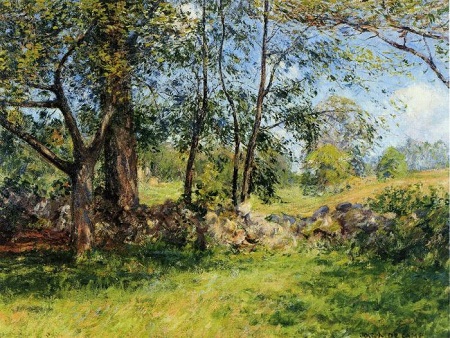
Zomerlandschap door Joseph Decamp, 1893


Sommer

Singe, meine liebe Seele,
Denn der Sommer lacht.
Alle Farben sind voll Feuer,
Alle Wett ist eine Scheuer,
Alle Frucht ist aufgewacht.
Singe, meine liebe Seele,
Denn das Glück ist da.
Zwischen Aehren, welch ein Schreiten!
Flimmernd tanzen alle Weiten,
Gott singt selbst Hallelujah.


Otto Julius Bierbaum (28 juni 1865 – 1 februari 1910)
Grünberg, de geboorteplaats van Otto Julius Bierbaum


Zie voor de schrijvers van de 29e julli ook mijn vorige blog van vandaag.

Logos (Mary Oliver)


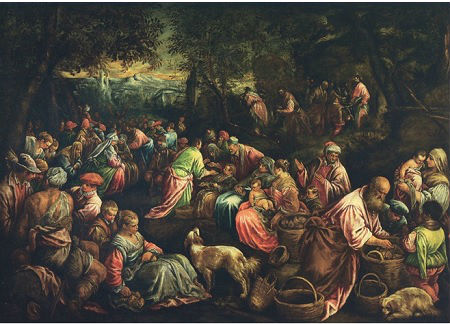
Bij de 17e zondag door het jaar


Het wonder van de broden en de vissen door Jacopo Bassano, ca, 1580


Logos

Why worry about the loaves and fishes?
If you say the right words, the wine expands.
If you say them with love
and the felt ferocity of that love
and the felt necessity of that love,
the fish explode into many.
Imagine him, speaking,
and don’t worry about what is reality,
or what is plain, or what is mysterious.
If you were there, it was all those things.
If you can imagine it, it is all those things.
Eat, drink, be happy.
Accept the miracle.
Accept, too, each spoken word
spoken with love.


Mary Oliver (Maple Heights, 10 september 1935)
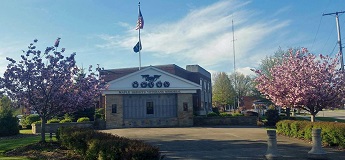
Veteranen Memorial in Maple Heights, de geboorteplaats van Mary Oliver


Zie voor de schrijvers van de 29e julli ook mijn vorige blog van vandaag.


Harry Mulisch, Chang-Rae Lee, Thomas Rosenlöcher, Guillermo Martínez

De Nederlandse schrijver Harry Mulisch werd geboren op 29 juli 1927 in Haarlem. Zie ook alle tags voor Harry Mulisch op dit blog.

Uit: De ontdekking van de hemel

“Alleen al in ons eigen melkwegstelsel zijn er zo’n honderd miljard. Even veel als de mens hersencellen heeft.’ `Speak for yourself.’ `Verder zijn er ook rond honderd miljard extragalactische stelsels bekend, even veel als ik hersencellen heb, dus reken maar uit. Een één met tweeëntwintig nullen. Hoeveel talen zijn er?’ `Een schijntje. Rond tweeënvijftighonderd.’ ‘Kun je ook hiëroglyphen lezen?’ Wat voor hiëroglyphen?’ `Egyptische.’ `Niks aan. Spreken ook. Paut neteroe her resch sep sen ini Asar sa Heroe men ab maa kheroe sa Ast auau Asar. Hetwelk is, overgezet zijnde: «De paut van de goden verblijden zich over de komst van Osiris’ zoon Horus, opgericht in het hart, wiens woord absoluut is, zoon van Isis, erfgenaam van Osiris».’ ‘Toe maar. Wat betekent paut?’ ‘Ja, dat is nu even moeilijk, vervelend dat je dat vraagt. Volgens de meeste kenners slaat het op de oersubstantie, waarvan de goden zijn gemaakt; maar eigenlijk is het nog ingewikkelder, want in het Dodenboek zegt de scheppergod: «Ik bracht mijzelf voort uit de oersubstantie, die ik maakte». Maar laat ik je niet vermoeien met zulke archaïsche paradoxen.’ `Ze komen mij nogal modern voor,’ zei Max. ‘Waar woon je? Dan zet ik je voor de deur af.’ Beiden bleken in het centrum te wonen, niet ver van elkaar. Terwijl zij de stad in reden, vertelde Onno dat hij hiëroglyphen al kon lezen toen hij elf was. Dat had hij zichzelf bijgebracht met een oud engels leerboekje, voor een kwartje gekocht op de markt, zodat hij, met een woordenboek, tegelijk ook engels leerde. Dat was in de laatste oorlogswinter gebeurd, waarin, zei hij, honger en kou hem definitief hadden geknakt, — en meteen vroeg hij zich af, waarom hij zoiets vertelde aan een wildvreemde. Thuis, als jongen, sprak hij niet over zijn taalstudies. Hij dacht dat iedereen dat kon, die even de moeite nam. Zo was dat altijd met talent: een schrijver kon zich ook niet voorstellen, dat iemand niet kon schrijven. Dat het toch niet zo gewoon was, besefte hij pas na de oorlog, toen zij eens op vakantie waren in Finland. Zij zaten in hun hotel in Fbrneenlinna, daar ergens tussen die depressieve meren en naaldbossen, en de avond voor hun vertrek was het eten koud, of juist warm. Zijn vader riep de gerant, die vervolgens deed of hij de ober een uitbrander gaf; maar in werkelijkheid zei hij, dat hij zich maar niets moest aantrekken van die krenterige kaaskoppen, want morgen waren zij toch opgelazerd naar hun stompzinnige tulpen en windmolens.”


Harry Mulisch (29 juli 1927 – 30 oktober 2010)
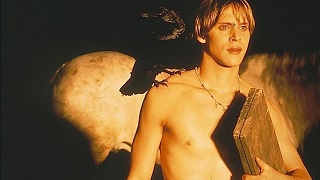
Neil Newbon als de 18-jarige Quinten Quist in de verfilming uit 2001


De Koreaans-Amerikaanse schrijver Chang-Rae Lee werd geboren op 29 juli 1965 in Seoel. Zie ook alle tags voor Chang-Rae Lee op dit blog.

Uit: Native Speaker

“She was traveling heavy. This wasn’t a trip of escape, in that normal sense. She was taking with her what seemed to be hundreds of books and notepapers. Also pads, brushes, tiny pastel-tinted sponges. Too many hats, I thought, which she wore like some dead and famed flyer. A signal white scarf of silk. Nothing I had given her. And maps. Here was a woman of maps. She had dozens of them, in various scales. Topographic, touristical, some schematic—these last handmade. Through the nights she stood like a field general over the kitchen counter, hands perched on those jutting hip bones, smoking with agitation, assessing points of entry and encampment and escape. Her routes, stenciled in thick deep blue, embarked inward, toward an uncharted grave center. A messy bruise of ink. She had already marked out a score of crosses that seemed to say You Are Here. Then, there were indications she was misreading the actual size of the islands. Her lines would have her trek the same patches of rocky earth many times over. Overrunning the land. I thought I could see her kicking at the bleached, known stones; the hard southern light surrendering to her boyish straightness; those clear green eyes, leveling on the rim of the arched sea. Inside the international terminal I couldn’t help her. She took to bearing the heaviest of her bags. But at some point I panicked and embraced her clumsily. “Maybe I’ll come with you this time,” I said. She tried to smile. “You’re just trading islands,” I said, unhelpful as usual.
I asked if she had enough money. She said her savings would take care of her. I thought they were our savings, but the notion didn’t seem to matter at the moment. Her answer was also, of course, a means of renunciation, itself a denial of everything else I wasn’t offering. When they started the call for boarding she gave me the list, squeezing it tight between our hands. “This doesn’t mean what you’ll think,” she said, getting up. “That’s okay.” “You don’t even know what it is.” “It doesn’t matter.” She bit her lip. In a steely voice she told me to read it when I got back to the car. I put it away. I walked with her to the entrance. Her cheek stiffened when I leaned to kiss her. She walked backward for several steps, her movement inertial, tipsy, and then disappeared down the telescoping tunnel. I read through the list twice sitting in our car in the terminal garage. Later I would make three photocopies, one to reside permanently next to my body, in my wallet, as a kind of personal asterisk, I thought, in case of accidental death. Another I saved to show her again sometime, if I wanted pity or else needed some easy ammunition.“


 Chang-Rae Lee
Chang-Rae Lee (Seoel, 29 juli 1965)


De Duitse dichter en schrijver Thomas Rosenlöcher werd geboren op 29 juli 1947 in Dresden. Zie ook alle tags voor Thomas Rosenlöcher op dit blog.

Uit: Die Wiederentdeckung des Gehens beim Wandern. Harzreise

„Auch in den Auslagen herrschte das Signum der Sieger längst vor, und der Chrom ihrer Brotröstmaschinen leuchtete bis zum Ural. Nur hier und da hielt sich im Schaufenster noch ein sozialistischer Hilfspullover, oder eine Planerfüllungslampe brütete gebeugt vor sich hin. “Viel zu teuer”, sagte die Frau, die hier “viel zu teuer” sagte. Auch mir tat es weh, für ein Fünf-Pfennig-Brötchen aus den Zeiten des Zentralkomitees eine halbe Westmark hinlegen zu müssen. “Viel zu teuer”, sagte ein weißhaariger Greis angesichts der Selterswasserflaschen und hob seinen Stock drohend in Richtung Verkäuferin. “Wir machen doch nicht die Preise”, rief die Verkäuferin, und ihre Stimme klang ängstlich, da sich ihr, in Form meiner Person, ein bartverwildertes Wesen mit Rucksack näherte und jene eisenharte Semmel auf die Ladentheke knallte. (…) Das Zentrum der allgemeinen Aufregung war die Sparkassenschlange, die sich den Marktplatz entlang in Dreierreihen erstreckte: Schritt für Schritt, Bauch an Rücken, geschah der Übertritt in die neue Zeit auf die alte Weise: In einer Geschwindigkeit von 12½ Metern die Stunde. (…) Die Männer und Frauen aber, die wieder aus der Sparkasse traten, würdigten die Sparkassenschlange mit keinem Blick. Auf einmal ohne Vordermensch, mit luftigerem Gehensgefühl, zögerten sie kurz und gingen merkwürdig stromlinienförmig über die Gehwegplatten davon: als plötzliche Westgeldbesitzer ihre eigenen Westtanten und -onkel geworden. Nur einige ältere Leute blieben hier und da stehen und hielten ihren Kontoauszug verblüfft in Augenhöhe. (…) Immerhin war ein Teil des Ersparten in Westmark umgetauscht worden, aber der Rest der Jahre gnadenlos abgewertet. Selbst die Wäsche im Hof, wehend unter den vollen Segeln meiner Kindheitserinnerungen, trug auf einmal den Stempel SED-Regime.“


Thomas Rosenlöcher (Dresden, 29 juli 1947)
De Harz


De Argentijnse schrijver en wiskundige Guillermo Martínez werd geboren in Bahía Blanca op 29 juli 1962. Zie ook alle tags voor Guillermo Martinez op dit blog.

Uit: Vast Hell

“Often, when the grocery store is empty and all you can hear is the buzzing of flies, I think of that young man whose name we never knew and whom no one in town ever mentioned again. For some reason that I can’t explain, I always imagine him as we saw him that first time: the dusty clothes, the bristling beard, and especially the long, dishevelled hair that almost covered his eyes. It was the beginning of spring, which is why, when he came into the store, I took him for a camper headed south. He bought a few cans of food and some coffee; as I added up the bill, he looked at his reflection in the window, brushed his hair off his forehead, and asked me if there was a barber in town.
In those days, there were two barbers in Puente Viejo. Now I realize that if he’d gone to Old Melchor’s he might never have met the French Woman, and no one would have gossiped about them. But Melchor’s place was at the other end of town, and I had no reason to anticipate what happened.
The fact is that I sent him to Cerviño’s place, and it seems that while Cerviño was giving him a haircut the French Woman appeared. And the French Woman looked at the boy the way she looked at all men. And that was when the bloody business started, because the boy stayed on in town and we all thought the same thing: that he’d stayed on because of her.
It hadn’t been a year since Cerviño and his wife had settled in Puente Viejo, and we knew very little about them. They didn’t socialize with anyone, as the whole town used to point out angrily. If the truth be told, in poor Cerviño’s case it was little more than shyness, but the French Woman may, in fact, have been quite stuck up. They’d come from the big city the previous summer, at the beginning of the season, and when Cerviño opened his barbershop I remember thinking that he’d soon send Old Melchor under, because he had a hairdresser’s diploma and had won a prize in a crewcutting competition, and he owned a pair of electric clippers, a hair dryer, and a swivel chair, and he would sprinkle vegetable extracts onto your scalp and even spray some lotion on you if you didn’t stop him in time. Also, in Cerviño’s shop the latest sports magazine was always in the rack. And, above all, there was the French Woman. I never actually knew why people called her the French Woman, and I never tried to find out—I’d have been disappointed to discover that the French Woman was born, for instance, in Bahía Blanca, or, even worse, in a small town like this one. Whatever the truth, the fact is that I’d never met a woman quite like her. Maybe it was simply that she didn’t wear a bra: even in winter you could see that she wasn’t wearing a thing under her sweater.”


Guillermo Martínez (Bahía Blanca, 29 juli 1962)


Zie voor nog meer schrijvers van de 29e juli ook mijn blog van 29 juli 2017 deel 1 en ook deel 2.

J. Neil C. Garcia

Onafhankelijk van geboortedata

De Filipijnse dichter en letterkundige J. Neil C. Garcia werd geboren in 1969 in Manilla. Garcia behaalde een AB Journalistiek, magna cum laude, aan de Universiteit van Santo Tomas in 1990; een MA in comparatieve literatuur in 1995, en een PhD in Engelse studies: creatief schrijven in 2003 aan de universiteit van de Filipijnen Diliman. Hij is momenteel hoogleraar Engels, creatief schrijven en vergelijkende literatuur aan het College van Kunsten en Letteren, Universiteit van de Filipijnen Diliman, waar hij ook dient als Associate voor Poëzie aan het Likhaan: U.P. Instituut voor creatief schrijven. Garcia publiceerde talrijke poëziebundels en werken op het gebied van in literaire en culturele kritiek, waaronder “Closet Quivers” (1992), “Our Lady of the Carnival” (1996), “The Sorrows of Water” (2000), “Kaluluwa” (2001), “Slip / pages: Essays in Philippine Gay Criticism” (1998), “The Garden of Wordlessness” (2005), en “Misterios and Other Poems” (2005). Garcia’s baanbrekende studie, “Philippine Gay Culture: The Last Thirty Years” (1996), kreeg in 1996 een National Book Award van de Manila Critics Circle. Garcia heeft meerdere literaire prijzen gewonnen, waaronder de Palanca en de National Book Award van de Manila Critics Circle. Hij heeft ook beurzen ontvangen om lezingen te geven in Taipei, Hawaii, Berkeley, Manchester, Cambridge, Leiden en Bangkok.

Uit: Poems from Amsterdam

XLVI
It reaches my hearing, now and then—
the suavely mouthed proposition

from one of the Red Light sentries,
chiefly of African extraction,

keeping hawkeyed watch on nooks
and along the urine-daubed streets.

They must stand there for hours on end,
seeking out the curious-looking tourist

who’s out for a fine time, good as cash.
But today it was different, for the word

mumbled through thick indigo lips
was supple and ribbed and musk-scented,

enticing in its own gauche way—
Ecstasy, the bespectacled man moaned,

his teeth disarmingly white on his face.
I don’t think he knew what he gave me,

for which I didn’t even need to pay.
In this city, metaphors are for the picking

every time something new calls the eye,
or in this case, the ear. I could’ve told him,

No thanks, I get ecstatic on my own terms.
As in, literally: the words that are my home

here and back in my own prosy city—
words coaxed out of the pullulating air

that rouse and tease and chafe the senses,
clarify the mind so it gleams like a mirror

on which the body can see its own glimmer
once more; an afterglow, we might say.

Nonetheless, there it is: the reckless gift
quickening the heartbeat of my language,

and pushing it back into song. And so,
Mr. Pusher, I end with my thanks, after all.


J. Neil C. Garcia (Manilla, 1969)

Onweer (Rien Vroegindeweij)


Dolce far niente


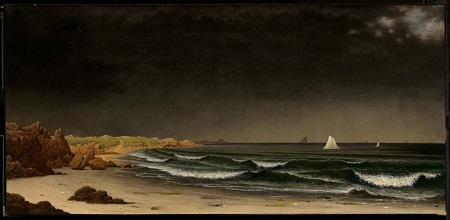
Approaching Storm on Beach near Newport
door Martin Johnson Heade, ca. 1861 – 1862


Onweer

Ik hou van de hete zon
die schittert op de rivier
en ik ben gek op de eerste
kou van de winter. Ik hou

van de zon die ondergaat
en zou, als ik de kans kreeg,
ook genieten van een kort
doch hevig bosbrandje. Ik hou

van mijn moeder die oud is
en na een godvruchtig leven
niet weet wat het worden zal,
de hel of de hemel. Ik lijk

op haar omdat mijn dochter
op haar lijkt. Maar ik maak
haar niet bang met het vuur
dat opstijgt rond de zondaars.

Noch vrolijk ik haar op
met het vooruitzicht op hemels
gezang: als zij mijn hand vast
houdt, durf ik voor het raam

te staan, als zij lacht om mijn
oud geloof dat God in de donder
spreekt, praat zij hem na
en zegt: boemdereboemboemboem.


Rien Vroegindeweij (Middelharnis, 13 juli 1944)
Middelharnis, haven


Zie voor de schrijvers van de 28e juli ook mijn twee blogs van 28 juli 2017 en ook mijn blog van 28 juli 2011 deel 2.  

Claudia Gabler

De Duitse dichteres Claudia Gabler werd op 28 juli 1970 geboren in Lörrach. Zie ook alle tags voor Claudia Gabler op dit blog.


ABOUT NEO RAUCH / Periphere Zuneigung zu New York

Im Moment der kleinen Schritte
ist es fortgeschrittene LIEBE,
sagte der Maler.
–––
Welch Gelegenheit!
Welch Chance,
welch Chance für weltumspannenden Applaus!
–––
Er wolle also, sagte der Maler,
einmal verzichten auf die großen Tore,
die sich öffnen für diese Kosmen von Traum und Gleichzeitigkeit.
–––
Stattdessen Sehschlitze,
Augenausschnitte,
Fragmente von wattierten, von schattigen Welten.
–––
Als Motivlage für Bilder,
die kleiner als üblich ihre Tests machten
in den kühlen Kreisen der Botanik.
–––
Und eigentlich Raum brauchen
für die fatalen Folgen,
die auf sie folgen.


Claudia Gabler (Lörrach, 28 juli 1970)


Louise Glück, Michael Longley, Marijke Höweler, Elizabeth Hardwick, Dan Coman, Hilde Domin, Eimear McBride, Graeme C. Simsion


Dolce far niente


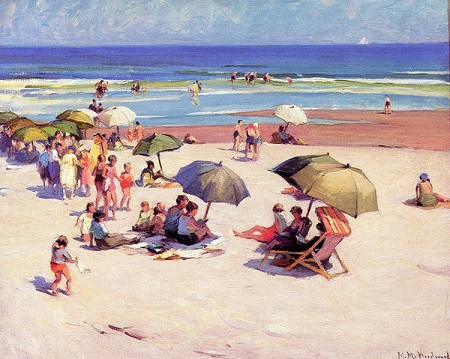
Bathers On A Beach door Mabel May Woodward, ca. 1915–1920


Summer at the Beach

Before we started camp, we went to the beach.

Long days, before the sun was dangerous.
My sister lay on her stomach, reading mysteries.
I sat in the sand, watching the water.

You could use the sand to cover
parts of your body that you didn’t like,
I covered my feet, to make my legs longer;
the sand climbed over my ankles.

I looked down at my body, away from the water.
I was what the magazines told me to be:
coltish. I was a frozen colt.

My sister didn’t bother with these adjustments.
When I told her to cover her feet, she tried a few times,
but she got bored; she didn’t have enough willpower
to sustain a deception.

I watched the sea; I listened to other families.
Babies everywhere: what went on in their heads?
I couldn’t imagine myself as a baby;
I couldn’t picture myself not thinking.

I couldn’t imagine myself as an adult either.
They all had terrible bodies: lax, oily, completely
committed to being male and female.

The days were all the same.
When it rained, we stayed home.
When the sun shone, we went to the beach with my mother.
My sister lay on her stomach, reading her mysteries.
I sat with my legs arranged to resemble
what I saw in my head, what I believed was my true self.

Because it was true: when I didn’t move I was perfect.



Louise Glück (New York, 22 april 1943)
Zomer in New York


De Ierse dichter Michael Longley werd geboren op 27 juli 1939 in Belfast. Zie ook alle tags voor Michael Longley op dit blog.


The Waterfall

If you were to read my poems, all of them, I mean,
My life’s work, at the one sitting, in the one place,
Let it be here by this half-hearted waterfall
That allows each pebbly basin its separate say,
Damp stones and syllables, then, as it grows dark
And you go home past overgrown vineyards and
Chestnut trees, suppliers once of crossbeams, moon-
Shaped nuts, flour, and crackly stuffing for mattresses,
Leave them here, on the page, in your mind’s eye, lit
Like the fireflies at the waterfall, a wall of stars.


Freeze-Up

The freeze-up annexes the sea even,
Putting out over the waves its platform.
Let skies fall, the fox’s belly cave in –
This catastrophic shortlived reform
Directs to our homes the birds of heaven.
They come on farfetched winds to keep us warm.
Romantic
Bribing these with bounty, we would rather
Forget our hopes of thaw when spring will clean
The boughs, dust from our sills snow and feather,
Release to its decay and true decline
The bittern whom this different weather
Cupboarded in ice like a specimen
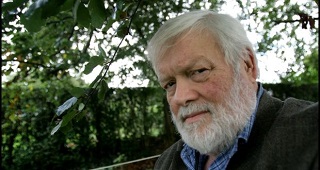


Michael Longley (Belfast, 27 juli 1939)


De Nederlandse schrijfster en psychologe Marijke Höweler werd geboren in Koog aan de Zaan op 27 juli 1938. Zie ook alle tags voor Marijke Höweler op dit blog.

Uit: Zum Wohl, Zum Glück!

“Bovengekomen met de stapel houtblokken waarvoor hij eigenlijk naar beneden was gegaan bleef hij een ogenblik uit het raam staan kijken. Als een verre, vage schemerlamp bescheen de zon het mistige dal. Het was zes uur. Jasper kon zich niet herinneren de laatste jaren ooit zo vroeg te zijn opgestaan. Toch leek hij in het verleden goede ervaringen te hebben opgedaan met dit vroege uur want er maakte zich een gevoel van hem meester alsof hij een onvervreemdbaar deel van de schepping uitmaakte. Dit vervulde hem van hoopvolle verwachting en een soort energie die hij zich ook herinnerde als behorend tot vervlogen dagen. Buiten maakten de vogels – de soort kende hij niet – geluiden alsof ze met een handzaag op een roestige spijker gestuit waren, terwijl de koeien een houten tafel over een stenen vloer leken te schuiven. Ook in de dierenwereld is het niet altijd rozegeur en maneschijn blijkbaar. Gisteren was Jasper zo kinderachtig geweest om direct na aankomst in zijn betrekkelijk nieuwe huis het zwaluwnest onder de dakrand te verwijderen. Met toegeknepen ogen en afgewend gezicht van schaamte had hij hun eengezinswoning met een forse duw van de bezem van zijn fundamenten gestoten. Jasper had zich daarbij de krakersbeweging voor ogen gehouden; en het feit dat de diertjes er de voorkeur aan gegeven hadden buiten het eigen nest, maar langs Jaspers glanzende beits te toiletteren en dus eigenlijk in Jaspers nest, had hem daar bij geholpen.
Wat zou hij nu eens gaan doen behalve wachten tot de bakker langs kwam? Witkalk gaan kopen misschien om z’n zonde ongedaan te maken? Maar Jasper vond dat sneu voor de bakker, die te zamen met zijn treurige dochter dag in dag uit deze negorij bezocht in de hoop dat één van de bewoners uit het rijtje van sterkste schouders die meenden de zwaarste lasten te dragen door de liquide middelen persoonlijk over de grens te tillen, hier zou zijn vandaag. Een kleine impasse dus en Jasper drentelde de voordeur uit en maakte een rondje om zijn huis. De zon had nu de mist uit het dal verdreven en veegde de laatste restjes tussen de bomen weg. Kringelend kwamen zij in de vorm van rookwolkjes uit hun schuilplaatsen te voorschijn. Jasper zou graag de krant zijn gaan lezen op zijn stoepje in de zon. Maar er was geen krant. Ook zou hij graag een praatje gemaakt hebben met een onbekend iemand. Maar er was niemand. Nee, zijn nieuwe huisje voldeed aan al z’n verwachtingen: de koeien, het gras, de beek, de bomen, de zenuwachtige vogeltjes en hij. En daar was de bakker, nee niet de bakker… of toch? Jawel daar was de bakker.”
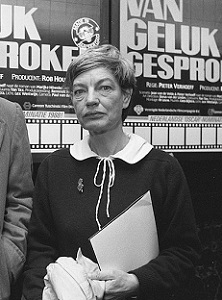


Marijke Höweler (27 juli 1938 – 5 mei 2006)
In 1987


De Amerikaanse schrijfster en literatuurcritica Elizabeth Hardwick werd geboren op 27 juli 1916 in Lexington, Kentucky. Zie ook alle tags voor Elizabeth Hardwick op dit blog.

Uit: Sleepless Nights

“It is june. This is what I have decided to do with my life just now. I will do this work of transformed and even distorted memory and lead this life, the one I am leading today. Every morning the blue clock and the crocheted bedspread with its pink and blue and gray squares and diamonds. How nice it is—this production of a broken old woman in a squalid nursing home. The niceness and the squalor and sorrow in an apathetic battle—that is what I see. More beautiful is the table with the telephone, the books and magazines, the Times at the door, the birdsong of rough, grinding trucks in the street.
If only one knew what to remember or pretend to remember. Make a decision and what you want from the lost things will present itself. You can take it down like a can from a shelf. Perhaps. One can would be marked Rand Avenue in Kentucky and some would recall the address at least as true. Inside the can are the blackening porches of winter, the gas grates, the swarm.
The sunlight blinds me. When I look up I see confusing electricity behind windows. Maybe the shadows will suffice, the light and the shade. Think of yourself as if you were in Apollinaire’s poem:

Here you are in Marseilles, surrounded by watermelons.
Here you are in Coblenz at the Hotel du Geant.
Here you are in Rome sitting under a Japanese medlar tree.
Here you are in Amsterdam…

1954
Dearest M.: Here I am in Boston, on Marlborough Street, number 239. I am looking out on a snowstorm. It fell like a great armistice, bringing all simple struggles to an end. In the extraordinary snow, people are walking about in wonderful costumes—old coats with fur collars, woolen caps, scarves, boots, leather hiking shoes that shine like copper. Under the yellow glow of the streetlights you begin to imagine what it was like forty or fifty years ago. The stillness, the open whiteness—nostalgia and romance in the clear, quiet, white air… More or less settled in this handsome house. Flowered curtains made to measure, rugs cut for the stairs, bookshelves, wood for the fireplace.“
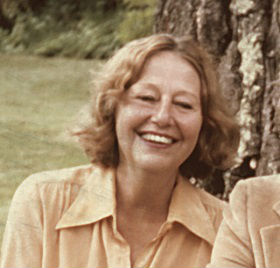


Elizabeth Hardwick (27 juli 1916 – 2 december 2007)


De Roemeense dichter en schrijver Dan Coman werd geboren op 27 juli 1975 in Gersa in de provincie Bistrita-Nasaud. Zie ook alle tags voor Dan Coman op dit blog.


Chicco

i wake up every morning before five
and like this, unwashed without tobacco
like this, in the dark and cold
i get out of bed on all fours
feeling for it.
before five he’s no more than a glass bead
when I touch him whoosh
leaping to some other part of the room.
i pick him up quickly, using only two fingers
roll him only on the carpet
lest he make noise and
wake the girls.
so it’s this way at five on all fours with this sun
this sun in the room rolled for hours on end
until like a snowball it grows quite large
until it begins to brighten begins to warm
though it’s only after growing so large
brighter and warmer
it’s only then that the sweat pours out
the chicco sun sweating likes a grown man
and at eight when the girls wake up
they must open the window
needing nearly an hour to air out the room.


Impossible to move

i’m impossible to move, there is nothing inside me
still I’m impossible to move with the force of only one man.
like a massive piece of living-room furniture.
like anything that means nothing in itself.
but i talk. i talk until the skin of my cheeks bursts.
i never stop talking.
all my force gathers like a spring inside my mouth
and mercilessly beats out sound after sound. phrase after phrase.
nobody ever seems to get tired of understanding nothing of what I say.
nobody seems annoyed because there’s nobody left.
that’s how I was born. straight out of the ground impossible to move
directly with words outside mine. exactly like this.
like anything else that means nothing in itself.

Vertaald door Martin Woodside en Ioana Ieronim
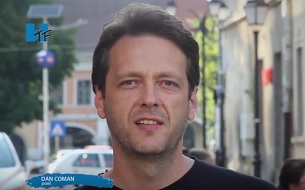


Dan Coman (Gersa, 27 juli 1975)


De Duitse schrijfster, dichteres en vertaalster Hilde Domin werd geboren in Keulen als Hilde Löwenstein op 27 juli 1909. Zie ook alle tags voor Hilde Domin op dit blog.


Älter werden
Antwort an Christa Wolf

Die Sehnsucht
nach Gerechtigkeit
nimmt nicht ab
Aber die Hoffnung

Die Sehnsucht
nach Frieden
nicht
Aber die Hoffnung

Die Sehnsucht nach Sonne
nicht
täglich kann das Licht kommen
durchkommen

Das Licht ist immer da
eine Flugzeugfahrt reicht
zur Gewissheit

Aber die Liebe

der Tode und Auferstehungen fähig
wie wir selbst
und wie wir
der Schonung bedürftig


Herbstaugen

Presse dich eng
an den Boden.

Die Erde
riecht noch nach Sommer,
und der Körper
riecht noch nach Liebe.

Aber das Gras
ist schon gelb über dir.
Der Wind ist kalt
und voll Distelsamen.

Und der Traum, der dir nachstellt,
schattenfüssig,
dein Traum
hat Herbstaugen.
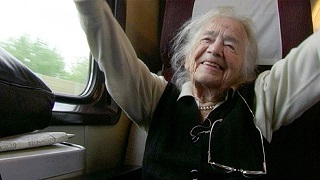


Hilde Domin (27 juli 1909 – 22 februari 2006)


Onafhankelijk van geboortedata

De Iers-Britse schrijfster Eimear McBride werd geboren in 1976 in Liverpool en groeide op in Tubbercurry, County Sligo en in Castlebar, County Mayo. Zie ook alle tags voor Eimear McBride op dit blog.

Uit:  A Girl is a Half-Formed Thing

“For you. You’ll soon. You’ll give her name. In the stitches of her skin she’ll wear your say. Mammy me? Yes you. Bounce the bed, I’d say. I’d say that’s what you did. Then lay you down. They cut you round. Wait and hour and day.
Walking up corridors up the stairs. Are you alright? Will you sit, he says. No. I want she says. I want to see my son. Smell from dettol through her skin. Mops diamond floor tiles all as strong. All the burn your eyes out if you had some. Her heart going pat. Going dum dum dum. Don’t mind me she’s going to your room. See the. Jesus. What have they done? Jesus. Bile for. Tidals burn. Ssssh. All over. Mother. She cries. Oh no. Oh no no no.
I know. The thing wrong. It’s a. It is called. Nosebleeds, head aches. Where you can’t hold. Fall mugs and dinner plates she says clear up. Ah young he says give the child a break. Fall off swings. Can’t or. Grip well. Slipping in the muck. Bang your. Poor head wrapped up white and the blood come through. She feel the sick of that. Little boy head. Shush.
She saw it first when you couldn’t open your eye. Don’t wink so long wind’ll change and you’ll stay that way. I’m not Mammy. It’s got stuck. She pull it open. Hold it up. I can’t it’s all fall down.
And now Holy Family on a Saturday night. He is leaning you are sleeping she the chair me whirlabout. Listen in to doctor chat. We done the best we could. There really wasn’t much. It’s all through his brain like the roots of trees. Sorry. Don’t say. That. He’s running out I’m afraid. I’m afraid he’s running down. You should take him home, enjoy him while you can. He’s not. He is. Can’t you operate again? We can’t. Shush. Something? Chemo then. We’ll have a go at that.
Gethsemane dear Lord hear our prayer our. Please. Intercession. Night in hospital beds. Faces on the candlewick. Lino in the knees. Please don’t God take. Our. Holy Mary mother of all, humbly we beseech thee.”
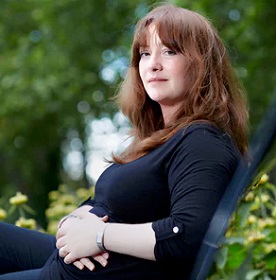


Eimear McBride (Liverpool, 1976)


De Nieuw-Zeelandse schrijver Graeme C. Simsion werd geboren in in Auckland, Australië, in 1956. Zie ook alle tags voor Graeme C. Simsion op dit blog.

Uit: The Rosie Project

“Afterward, Claudia advised me that I should have abandoned the experiment prior to Elizabeth’s leaving. Obviously. But at what point? Where was the signal? These are the subtleties I fail to see. But I also fail to see why heightened sensitivity to obscure cues about ice-cream flavors should be a prerequisite for being someone’s partner. It seems reasonable to assume that some women do not require this. Unfortunately, the process of finding them is impossibly inefficient. The Apricot Ice Cream Disaster had cost a whole evening of my life, compensated for only by the information about simulation algorithms. •  •  • Two lunchtimes were sufficient to research and prepare my lecture on Asperger’s syndrome, without sacrificing nourishment, thanks to the provision of Wi-Fi in the medical library café. I had no previous knowledge of autism spectrum disorders, as they were outside my specialty. The subject was fascinating. It seemed appropriate to focus on the genetic aspects of the syndrome, which might be unfamiliar to my audience. Most diseases have some basis in our DNA, though in many cases we have yet to discover it. My own work focuses on genetic predisposition to cirrhosis of the liver. Much of my working time is devoted to getting mice drunk. Naturally, the books and research papers described the symptoms of Asperger’s syndrome, and I formed a provisional conclusion that most of these were simply variations in human brain function that had been inappropriately medicalized because they did not fit social norms–constructed social norms–that reflected the most common human configurations rather than the full range. The lecture was scheduled for 7:00 p.m. at an inner-suburban school. I estimated the cycle ride at twelve minutes and allowed three minutes to boot my computer and connect it to the projector. I arrived on schedule at 6:57 p.m., having let Eva, the short-skirted cleaner, into my apartment twenty-seven minutes earlier. There were approximately twenty-five people milling around the door and the front of the classroom, but I immediately recognized Julie, the convenor, from Gene’s description: “blonde with big tits.” In fact, her breasts were probably no more than one and a half standard deviations from the mean size for her body weight and hardly a remarkable identifying feature.”
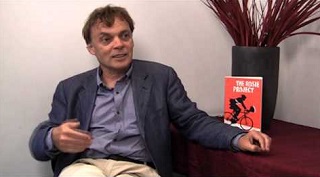


Graeme C. Simsion (Auckland in 1956)


Zie voor nog meer schrijvers van de 27e juli ook mijn blog van 27 juli 2017 en ook mijn blog van 27 juli 2011 deel 2