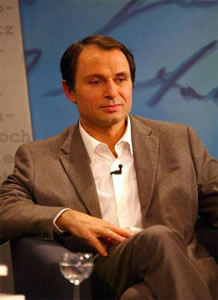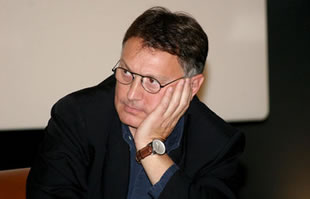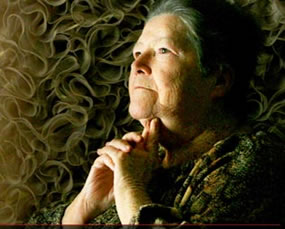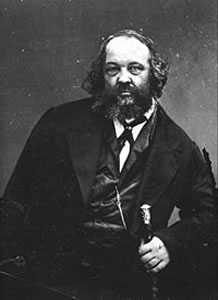
Marie Ndiaye, Ralf Thenior, Erasmus Schöfer, Buddy Wakefield, Yaak Karsunke

De Franse schrijfster Marie Ndiaye werd geboren op 4 juni 1967 in Pithiviers. Zie ook mijn blog van 4 juni 2009 en ook mijn blog van 4 juni 2010.


Uit: Les Grandes Personnes

Eva. – Je donnerais tout cela pour un fils pareil au vôtre, aimant et caressant.

Je retournerais vivre là d’où je viens, je renoncerais à la musique, à la beauté, au gaspillage, pour l’amour d’un vieil enfant qui ne me demanderait pas les comptes de mes erreurs, qui me comblerait d’une tendresse sans conditions et me dirait simplement: Voilà, c’est toi, ma mère.

[…]

Georges. – Quand nous étions encore de pauvres jeunes gens coincés dans leur quartier navrant et que nous luttions en mots et en pensées pour sortir de cet état humiliant, il nous semblait que les enfants viendraient comme des obstacles à cet effort, oh nous n’en voulions pas, jamais.

Pour réussir, nous devions nous affranchir de ce qui faisait le bonheur habituel des riches ou des pauvres sans ambition ni révolte.

Ce que c’est que la vie.

Avec notre fils unique, nous avons végété dans la médiocrité, le manque d’aisance, alors que deux enfants n’ont jamais freiné votre ascension.

Ce que c’est que la vie.

Isabelle. – Moi, je n’envie personne.

Votre argent, qu’est-ce qu’on en ferait?

Notre fils, lui, est resté près de nous, il est maître d’école et il nous aime.

Où est-ce qu’ils ont disparu, vos enfants?

Voilà près de dix-sept ans que vous êtes abandonnés, reniés par ceux que vous avez gâtés, et vous cachez votre affliction et il n’y a que nous, vos plus vieux amis, qui la devinons, mais quand de temps à autre vous nous invitez c’est toujours seuls et nous ne rencontrons personne chez vous, à croire que vous nous dissimulez au reste de vos relations comme vous masquez votre peine, pour ne pas gêner.

Nous risquerions de faire tache.

Mais c’est égal.

On se connaît depuis si longtemps qu’on peut tout se pardonner.

Il y a certainement dans notre attitude des particularités qui vous exaspèrent, des restes de misère, un accent rude, on n’y peut rien et on ne s’entend pas soi-même.

C’est égal.

On s’aimera toujours, vous et nous.
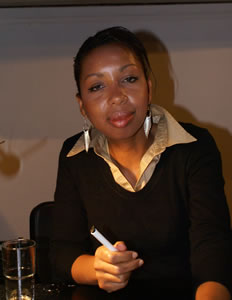
 

Marie Ndiaye (Pithiviers, 4 juni 1967)

Lees verder “Marie Ndiaye, Ralf Thenior, Erasmus Schöfer, Buddy Wakefield, Yaak Karsunke”
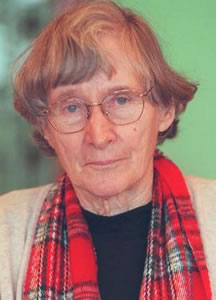
Elizabeth Jolley, Apollon Maykov, Jacques Roumain, Charles Dickinson, Dana Bönisch, Fritz Weber

De Australische schrijfster Elizabeth Jolley werd geboren op 4 juni 1923 in Birmingham, Engeland. Zie ook mijn blog van 4 juni 2007 enook mijn blog van 4 juni 2009 en ook mijn blog van 4 juni 2010.

Uit: Foxy Baby

“Enjoying the delightful feeling of escape she sang tunelessly, something operatic, and nodded her head in time to her own aria. She was on her way to Cheathem East. Occasionally she stopped singing to listen, from habit, with some anxiety to the rattle of her engine. This noise being sustained as usual she let her mind race ahead. She hoped Trinity College would live up to her expectations. She thought about sunflowers. Sunflowers with heads as big as dinner plates, golden sunflowers in the corners of old buildings and by crumbling walls. She hoped they would be growing in Cheatham East.”

(…)

“That’s Mrs. Viggars,” Miss Peycroft said, “the one sitting in the cardboard-box, rather a squeeze but she managed it ultimately. Luckily Miles found something big enough, a console television carton or was it a double-door refrigerator…”

“Whatever is that on her head?” Miss Porch in her curiosity, forgot good manners and interrupted Miss Peycroft, who did not seem to mind.

“Oh that. That’s a cushion,” she said. “It was hilarious. They all wore cushions on their heads and rocked across the courtyard in the boxes. Great fun!”

Elizabeth Jolley (4 juni 1923 – 13 februari 2007)

Lees verder “Elizabeth Jolley, Apollon Maykov, Jacques Roumain, Charles Dickinson, Dana Bönisch, Fritz Weber”

Norbert Gstrein, Gerhard Zwerenz, Kathleen E. Woodiwiss, Carlo Michelstaedter, Eugène Van Oye

De Oostenrijkse schrijver Norbert Gstrein werd geboren op 3 juni 1961 in Mils bei Imst, Tirol. Zie ook mijn blog van 3 juni 2007en ook mijn blog van 3 juni 2008 en ook mijn blog van 3 juni 2009 en ook mijn blog van 3 juni 2010


Uit: Die ganze Wahrheit

Man hat mir abgeraten, darüber zu schreiben, und natürlich kenne ich Dagmar lange genug, um zu wissen, was mich erwartet, wenn nur etwas von dem, was ich über sie in die Welt setze, anfechtbar ist. Ich habe oft genug erlebt, mit welchen Lappalien sie ihren Anwalt betraut hat, den beflissenen Dr. Mrak, um Leute, die sie für ihre Feinde hielt, mundtot zu machen, und gebe mich nicht den geringsten Illusionen hin. Meine Darstellung, da bin ich sicher, wird noch am Tag der Veröffentlichung auf seinem Schreibtisch landen und auf Punkt und Komma überprüft werden, ob sich darin etwas Justitiables findet. Da würde es auch wenig helfen, die Tatsachen zu verdrehen, welche Mühe auch immer ich mir geben mochte, die Spuren zu verwischen, ob den Ort des Geschehens von Wien nach Berlin zu verlegen, ob Dagmar anders zu nennen, ob ihr eine andere Herkunft zuzuschreiben und sie statt aus Kärnten vielleicht aus einem Dorf an der Ostsee stammen zu lassen, ganz vom anderen Rand des Sprachraums, um nicht überhaupt so weit zu gehen, aus der Frau, die sie immerhin ist, einen Mann zu machen.Am Ende sind das Kindereien, und ich würde mir den Vorwurf einer plumpen Täuschung einhandeln, würde mir anhören müssen, ich spräche von einer Kindheit am Meer, spräche von den Nachmittagen am Strand, der Weite und dem Licht des Nordens, und meinte in Wirklichkeit die Beengtheit der Berge, meinte ein abgeschiedenes Karawankental und die schneereichen Winter in den fünfziger Jahren, von denen Dagmar endlos schwärmen konnte.”


Norbert Gstrein (Mils, 3 juni 1961)

Lees verder “Norbert Gstrein, Gerhard Zwerenz, Kathleen E. Woodiwiss, Carlo Michelstaedter, Eugène Van Oye”

Marcel Reich-Ranicki, Jim Knipfel, Sibylle Berg, Carol Shields, Max Aub

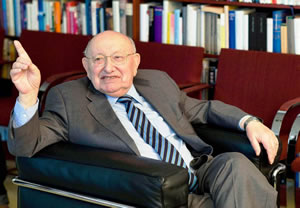
De Duitse schrijver en literatuurcriticus Marcel Reich-Ranicki werd geboren op 2 juni 1920 in Włocławek, Polen. Zie ook alle tags voor Marcel Reich-Ranicki op dit blog.

Uit: Sieben Wegbereiter


Als Arthur Schnitzler sechzig Jahre alt wurde, veröffentlichte die »Neue Rundschau« zusammen mit anderen Geburtstagsartikeln auch einen kurzen Gruß von Thomas Mann. Neben einigen eher konventionellen Wendungen – so über »die Vereinigung von Leidenschaft und Weisheit, Strenge und Güte« – fällt hier der Versuch auf, den Jubilar in die Nähe eines ebenfalls 1862 geborenen Dichters zu rücken, nämlich Gerhart Hauptmanns. Beide seien, meinte Thomas Mann, »in eine ähnlich repräsentative Stellung hineingewachsen«1. Hauptmann und Schnitzler als ebenbürtige Figuren der zeitgenössischen Literatur? Damit deutete Thomas Mann nur an, wie es seiner Ansicht nach sein sollte, nicht aber, wie es tatsächlich war. Denn die Rolle, die Schnitzler damals, 1922, in der Öffentlichkeit spielte, ließ sich mit dem hohen Ansehen, in dem Hauptmann stand, kaum vergleichen.

»Wie ein Baum zieht er seine Säfte aus der schlesischen Erde, aber seine Krone ragt in den Himmel …« – heißt es über Hauptmann in Klabunds populärer Literaturgeschichte.Bei dem Namen Schnitzler dachte man nicht gerade an die Säfte der Erde, sondern eher an das Pflaster der Großstadt; und nicht die Erinnerung an den Himmel rief er wach, sondern an die Dachkammer des süßen Mädels und an das Boudoir der Femme fatale.

Der eine galt als Poet aus dem sagenumwobenen Riesengebirge, der andere nur als Literat aus dem Wiener Kaffee- haus. Hauptmann feierte man als Seher, der tastend und raunend den Weg zu den Müttern suche und zugleich die deutsche Zwietracht mitten ins Herz zu treffen wisse. Schnitzler hingegen hatte den Ruf eines mehr oder weniger charmanten Leichtgewichtlers, ja, eines Erotikers, was in der Vorstellung vieler deutscher Leser gleichbedeutend war mit dem Zug zum Frivolen und der Neigung zum Schlüpfrigen.“


Marcel Reich-Ranicki (Włocławek, 2 juni 1920)

Lees verder “Marcel Reich-Ranicki, Jim Knipfel, Sibylle Berg, Carol Shields, Max Aub”

Patrick Besson, John Masefield, Ferdinand Raimund, Peter de Mendelssohn

De Franse schrijver en journalist Patrick Besson werd geboren op 1 juni 1956 in Montreuil. Zie ook mijn blog van 1 juni 2007 en ook mijn blog van 1 juni 2008 en ook mijn blog van 1 juni 2009. en ook mijn blog van 1 juni 2010.

Uit: Le deuxième couteau

“Gaston Cooper avait une quarantaine d’années. De père américain et de mère française, il était bilingue. Il avait commencé dans l’édition comme lecteur et traducteur. Il lui arrivait aussi de donner des articles littéraires au Paris-Métro. Un héritage lui permit, en 1977, de fonder sa propre maison d’édition, et le succès espéré mais tout de même inattendu, en été 1978, d’un roman-reportage traduit de l’américain lui permit de la garder. En automne de la même année, il engagea Jérôme Bernotte.

Au bout du couloir, dans un cagibi qui tenait lieu de bureau à l’attachée de presse, Cooper, debout, feuilletait un journal. Il portait un costume rose, des mocassins noirs. Il tourna la tête vers Bernotte.

– Alors, ce déjeuner ? demanda-t-il aussitôt.

” Il ne sait rien “, pensa Bernotte. Il se demanda comment c’était possible, puis se souvint que Cooper lui avait dit qu’il mangeait sur les Champs-Elysées en compagnie d’une de ses lectrices qui était également mannequin, assistante de production et sans doute bien d’autres choses encore. Bernotte l’avait aperçue plusieurs fois, rue des Saints-Pères. C’était une grande blonde au regard glacé et dont le visage dans sa perfection exprimait une sorte de haine concentrée contre le monde.

– Il s’est passé une chose épouvantable, dit Bernotte.

– Elle ne veut plus signer ?

Bernotte secoua la tête. La porte de l’appartement s’ouvrit dans son dos et il reconnut Pauline, l’attachée de presse, à son parfum, quelque chose de fort et de poivré qui lui donnait toujours un peu la nausée quand il s’approchait de trop près trop longtemps“.

Patrick Besson (Montreuil, 1 juni 1956)

Lees verder “Patrick Besson, John Masefield, Ferdinand Raimund, Peter de Mendelssohn”

Colleen McCullough, Macedonio Fernández, Dennis Gaens, Daan Doesborgh

De Australische schrijfster Colleen McCullough werd geboren op 1 juni 1937 in Wellington. Zie ook mijn blog van 1 juni 2010 en eveneens alle tags voor Colleen McCulloughop dit blog.


Uit: The Thorn Birds

„Hughie noticed the joint in the doll’s wrist, and whistled. “Hey, Jack, look! It can move its hand!”

“Where? Let’s see.”

“No!” Meggie hugged the doll close again, tears forming. “No, you’ll break herl Oh, Jack, don’t take her away-you’ll break her!”

“Pooh!” His dirty brown hands locked about her wrists, closing tightly. “Want a Chinese bum? And don’t be such a crybaby, or I’ll tell Bob.” He squeezed her skin in opposite directions until it stretched whitely, as Hughie got hold of the doll’s skirts and pulled. “Gimme, or I’ll do it really hard!”

“Nol Don’t, Jack, please don’tl You’ll break her, I know you will! Oh, please leave her alone! Don’t take her, please!” In spite of the cruel grip on her wrists she clung to the doll, sobbing and kicking.

“Got it” Hughie whooped, as the doll slid under Meggie’s crossed forearms.

Jack and Hughie found her just as fascinating as Meggie had; off came the dress, the petticoats and long, frilly drawers. Agnes lay naked while the boys pushed and pulled at her, forcing one foot round the back of her head, making her look down her spine, every possible contortion they could think of. They took no notice of Meggie as she stood crying; it did not occur to her to seek help, for in the Cleary family those who could not fight their own battles got scant aid or sympathy, and that went for girls, too.


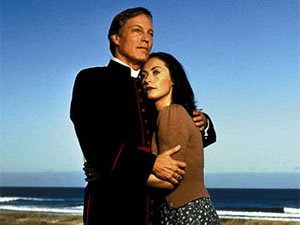
Scene uit de tv-serie met Richard Chamberlain en Rachel Ward, 1983


She clasped the doll against her chest and shook her head. “No, she’s mine! I got her for my birthday!”

“Show us, go on! We just want to have a look.”

Pride and joy won out. She held the doll so her brothers could see. “Look, isn’t she beautiful? Her name is Agnes.”

“Agnes? Agnes?” Jack gagged realistically. “What a soppy name! Why don’t you call her Margaret or Betty?”

“Because she’s Agnes!”

Hughie noticed the joint in the doll’s wrist, and whistled. “Hey, Jack, look! It can move its hand!”

“Where? Let’s see.”


Colleen McCullough (Wellington, 1 juni 1937)

Lees verder “Colleen McCullough, Macedonio Fernández, Dennis Gaens, Daan Doesborgh”

Walt Whitman, Frank Goosen, Gabriel Barylli, Gerd Hergen Lübben, Serge Brussolo

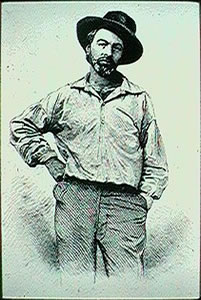
De Amerikaanse dichter Walt Whitman werd geboren op 31 mei 1819 in Westhills, Long Island, New York. Zie ook mijn blog van 31 mei 2010 en eveneens alle tags voor Whalt Whitmanop dit blog.


Mannahatta


I was asking for something specific and perfect for my city,

Whereupon lo! upsprang the aboriginal name.


Now I see what there is in a name, a word, liquid, sane,

unruly, musical, self-sufficient,

I see that the word of my city is that word from of old,

Because I see that word nested in nests of water-bays,

superb,

Rich, hemm’d thick all around with sailships and

steamships, an island sixteen miles long, solid-founded,

Numberless crowded streets, high growths of iron, slender,

strong, light, splendidly uprising toward clear skies,

Tides swift and ample, well-loved by me, toward sundown,

The flowing sea-currents, the little islands, larger adjoining

islands, the heights, the villas,

The countless masts, the white shore-steamers, the lighters,

the ferry-boats, the black sea-steamers well-model’d,

The down-town streets, the jobbers’ houses of business, the

houses of business of the ship-merchants and money-

brokers, the river-streets,

Immigrants arriving, fifteen or twenty thousand in a week,

The carts hauling goods, the manly race of drivers of horses,

the brown-faced sailors,

The summer air, the bright sun shining, and the sailing

clouds aloft,

The winter snows, the sleigh-bells, the broken ice in the

river, passing along up or down with the flood-tide or

ebb-tide,

The mechanics of the city, the masters, well-form’d,

beautiful-faced, looking you straight in the eyes,

Trottoirs throng’d, vehicles, Broadway, the women, the

shops and shows,

A million people–manners free and superb–open voices–

hospitality–the most courageous and friendly young

men,

City of hurried and sparkling waters! city of spires and masts!

City nested in bays! my city!


Among The Multitude


Among the men and women the multitude,

I perceive one picking me out by secret and divine signs,

Acknowledging none else, not parent, wife, husband, brother, child, any nearer than I am,

Some are baffled, but that one is not–that one knows me.

Ah lover and perfect equal,

I meant that you should discover me so by faint indirections,

And I when I meet you mean to discover you by the like in you.


Uit:Calamus Poems


6.


Not heaving from my ribbed breast only,

Not in sighs at night, in rage, dissatisfied with myself,

Not in those lang-drawn, ill-suppressed sighs,

Not in many an oath and promise broken,

Not in my willful and salvage soul’s volition,

Not in the subtle nourishment of the air,

Not in this beating and pounding at my temples and wrists,

Not in the curious systole and diastole within, which will one day cease,

Not in many a hungry wish, told to the skies only,

Not in cries, laughter, defiances, thrown from me when alone, far in the wilds,

Not in husky pantings through clenched teeth,

Not in sounded and resounded words — chattering words, echoes, dead words,

Not in the murmers of my dreams while I sleep,

Nor in the limbs and senses of my body, that take you and dismiss you continually — Not there,

Not in any of all of them, O adhesiveness! O pulse of my life!

Need I that you exist and show yourself, any more than in these songs.


Walt Whitman (31 mei 1819 – 26 maart 1893)


Lees verder “Walt Whitman, Frank Goosen, Gabriel Barylli, Gerd Hergen Lübben, Serge Brussolo”

Konstantin Paustovski, Saint-John Perse, Georg Herwegh, Ludwig Tieck

De Russische schrijver Konstantin Paustovski werd geboren op 31 mei 1892 in Moskou. Zie ook mijn blog van 31 mei 2009 en ook mijn blog van 31 mei 2010


Uit: Verre Jaren (Vertaald door Wim Hartog)


’s Winters kwam tante Dozja altijd uit Gorodisjtsje een paar dagen bij ons op bezoek. Mama vond het heerlijk om haar mee te nemen naar het theater. De nacht ervoor sliep tante Dozja slecht. Al een paar uur voor het zover was, deed zij haar wijde bruinsatijnen jurk met ingeweven gele bloemen en bladeren aan, sloeg de bijpassende stola om haar schouders en verfrommelde zenuwachtig een klein kanten zakdoekje. Vervolgens ging zij, tien jaar jonger en een beetje angstig, in een huurkoetsje met mama op weg naar het theater. Zij knoopte een zwart hoofddoekje met roosjes om, net als de Oekraïense boerenvrouwen. In het theater waren alle ogen op tante Dozja gevestigd maar zij ging zo op in het stuk dat zij hier niets van merkte. Op een keer was tante Dozja midden onder het stuk opgesprongen en had in het Oekraïens tegen de verrader geschreeuwd: ‘Wat doe je daar, smeerlap? Je moest je ogen uit je hoofd schamen!’ Het publiek lachte zich halfdood. Het doek moest neergelaten worden. De hele volgende dag zat tante Dozja te huilen, zo schaamde ze zich; zij vroeg mijn vader om vergiffenis en wij wisten niet hoe we haar tot bedaren moesten brengen.’


Konstantin Paustovski (31 mei 1892 – 14 juli 1968)

Rond 1915

Lees verder “Konstantin Paustovski, Saint-John Perse, Georg Herwegh, Ludwig Tieck”

Elizabeth Alexander, Countee Cullen, Alfred Austin, Emmanuel Hiel

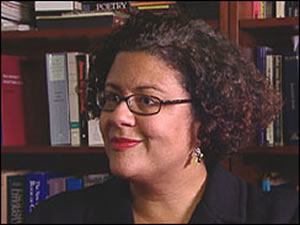
De Amerikaanse dichteres en schrijfster Elizabeth Alexander werd geboren op 30 mei 1962 in New York. Zie ook mijn blog van 30 mei 2008 en ook mijn blog van 30 mei 2009 en ook mijn blog van 30 mei 2010.


Fugue


1. Walking (1963)

after the painting by Charles Alston


You tell me, knees are important, you kiss

your elders’ knees in utmost reverence.


The knees in the painting are what send the people forward.


Once progress felt real and inevitable,

as sure as the taste of licorice or lemons.

The painting was made after marching

in Birmingham, walking


into a light both brilliant and unseen.


2. 1964


In a beige silk sari

my mother danced the frug

to the Peter Duchin Band.


Earlier that day

at Maison Le Pelch

the French ladies twisted


her magnificent hair

into a fat chignon

while mademoiselle watched,


drank sugared, milky tea,

and counted bobby pins

disappearing in the thickness


as the ladies worked

in silence, adornment

so grave, the solemn toilette,


and later, the bath,

and later, red lipstick,

and later, L’Air de Temps.


My mother without glasses.

My mother in beige silk.

My mother with a chignon.

My mother in her youth.


Elizabeth Alexander (New York, 30 mei 1962)

Lees verder “Elizabeth Alexander, Countee Cullen, Alfred Austin, Emmanuel Hiel”

Michail Bakoenin, Georg Schaumberg, Randolph Bourne, Jan Geerts, Henri François Rikken, Robert Prutz, Félix Arnaudin, Pita Amor, Eddy Bruma

De Russische schrijver en anarchist Michail Alexandrowitsj Bakoenin werd geboren in Prjamuchino op 30 mei 1814. Zie ook mijn blog van 30 mei 2010.


Uit: Statism and Anarchy


„The Russian people possess to a great extent two qualities which are in our opinion indispensable preconditions for the Social Revolution … Their sufferings are infinite, but they do not patiently resign themselves to their misery and they react with an intense savage despair which twice in history produced such popular explosions as the revolts of Stenka Razin and Pugachev, and which even today expresses itself in continuous peasant outbreaks.

What then prevents them from making a successful revolution? It is the absence of a conscious common ideal capable of inspiring a genuine popular revolution… . [Fortunately,] there is no need for a profound analysis of the historic conscience of our people in order to define the fundamental traits which characterize the ideal of our people.

The first of these traits is the conviction, held by all the people, that the land rightfully belongs to them. The second trait is the belief that the right to benefit from the soil belongs not to an individual but to the rural community as a whole, to the Mir which assigns the temporary use of the land to the members of the community. The third trait is that even the minimal limitations placed by the State on the Mir’s autonomy arouse hostility on the part of the latter toward the State.“


Michail Bakoenin (30 mei 1814 – 13 juni 1876)

Lees verder “Michail Bakoenin, Georg Schaumberg, Randolph Bourne, Jan Geerts, Henri François Rikken, Robert Prutz, Félix Arnaudin, Pita Amor, Eddy Bruma”