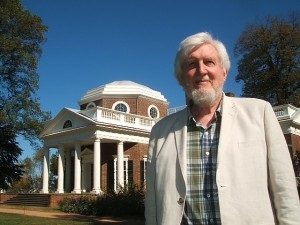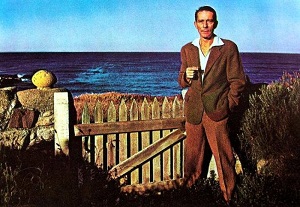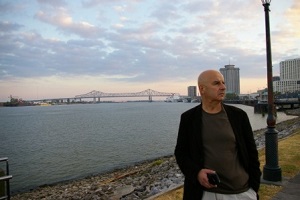
Edmund White, Daniel Kehlmann, Jay McInerney, Lorrie Moore, Jan de Bas, Edgardo Cozarinsky, Mohammad- Ali Jamālzādeh, Clark Ashton Smith

De Amerikaanse schrijver en essayist Edmund White werd geboren op 13 januari 1940 in Cincinnati. Zie ook alle tags voor Edmund White op dit blog.

Uit: The Farewell Symphony

“I’d been afraid I wouldn’t feel anything when Brice finally died-but my body did all the feeling for me. It took over. My knees buckled, I lost my balance, tears spurted from my eyes. I staggered in the sunlight and nearly fell and had to be held up by Laurent and his lover.
Everything I’d lived through in the last five years had changed me-whitened my hair, made me a fat, sleepy old man, matured me, finally, but also emptied me out. I met Brice five years before he died-but I wonder whether I’ll have the courage to tell his story in this book. The French call a love affair a “story,” une histoire, and I see getting to it, putting it down, exploring it, narrating it as a challenge I may well fail. If I do fail, don’t blame me. Understand that even writers, those professional exhibitionists, have their moments of reticence.
Strange that I should be living here, in Paris. Ever since I’d been a child, an imaginary Paris had been the bright planet pulsing at the heart of my mental star map, but the one time I’d gone to Paris I had been dressed in a horrible shiny blazer and everyone in the cafés had laughed at me. I said to a French acquaintance as we left the Flore, “I know I’m being paranoid,” but he said matter-of-factly, “No, they are laughing at you.”
A sign in the tailor shop window off the Boulevard St.-Germain warned that customers would not be allowed more than three fittings after the purchase of a suit and my mind winced at this proof of shameless male vanity, so exotic to an American since Americans equated male vanity with effeminacy or Mafia creepiness. The year was 1968 and stylish young American men back home were wearing fringe and puffy-sleeved pirate shirts, headbands, mirrored vests and winklepicker boots, but the materials were synthetic, the colors garish, the fit very approximate and the mood one of dressing up. Orange and black were popular colors. The long Mardi Gras of that decade in the States was a mockery of traditional good taste, a send-up of adult propriety, the recklessness of a generation that would never settle down long enough to study the fine gradations with which quality, and especially beauty, begin. And if the mood was festive, the festivity seemed more a gesture defying parental drabness than an assertion of a new-born hedonism. A true search for pleasure is an exacting science and is born from a profound interest in raglan versus fitted sleeves and in the precise arc a weighted hem on the bias will describe.”
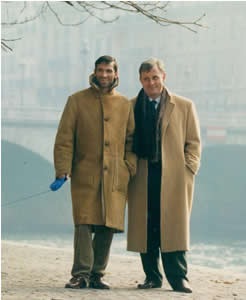


Edmund White (Cincinnati, 13 januari 1940)
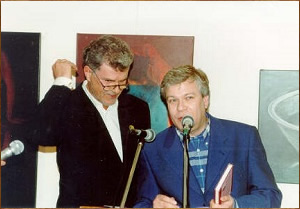
Hier met partner Michael Carroll (links)
Lees verder “Edmund White, Daniel Kehlmann, Jay McInerney, Lorrie Moore, Jan de Bas, Edgardo Cozarinsky, Mohammad- Ali Jamālzādeh, Clark Ashton Smith”

Michael Carroll

Onafhankelijk van geboortedata

De Amerikaanse schrijver Michael Carroll werd geboren in 1965 en groeide op in een wijk van Fort Caroline (nu Jacksonville), Florida. Hij verliet Jacksonville in de vroege jaren ’90 om twee jaar te dienen bij het Peace Corps, eerst in Jemen, toen in de Tsjechische Republiek. Daarna verbleef hij weer een jaar in Jacksonville voordat hij naar Parijs trok om met de schrijver Edmund White, die hij zes maanden eerder op een reis had ontmoet te gaan samen wonen. Een paar jaar later verhuisden ze naar Princeton, New Jersey, daarna naar New York. Nadat ze vanaf 1995 partners waren geweest trouwde het stel in 20013. Carroll debuteerde met de verhalenbundel “Little Reef and Other Stories” in 2014. De bundel werd genomineerd voor de shortlist voor de Lambda Literary Award for Gay Fiction. Zijn korte verhalen zijn ook verschenen in Ontario Review, Boulevard en The New Penguin Book of Gay Short Stories.

Uit: After Memphis (Little Reef and Other Stories)

““My brother Jeff called. I’m not even sure why I answered, seeing on the landline’s display who it was, or at least recognizing the area code and the prefix of the number, though of course I was expecting him to call any day, any week, since I had heard from our mother that he’d broken up with his new girlfriend, after getting cold feet about divorcing his wife Deanne. I had not met the new girlfriend, Terri, now the new ex-girlfriend. Jeff still had a touch of the guilt, I could hear in his voice, but I could also discern a gratifying exasperation with Deanne. She had taken thirty hard years out of Jeff, bankrupted him, and was now daring him to follow through by hiring a second, more aggressive lawyer-whose services he was paying for. To top it off, the case was complicated by the fact that before he could finally be cut loose, my brother first had to settle up with the banks. I didn’t know much else except that he wasn’t expected to pay every cent of debt she’d rung up on the credit cards, just a big chunk of it. No doubt, Deanne’s pride had been hurt, because after all she was the one being left. Oh yes, Jeff said, Deanne was now officially pissed.
“But after the hundred and ten thousand,” he said, “how the fuck could she question it?”
That was new, the f-word. I hadn’t heard that or any other cussing out of Jeff ’5 mouth in thirty years. Of course I sympathized, but I couldn’t let on too strongly, not yet. I’d been highly supportive of their union then the shotgun wedding when we were in high school. But Deanne, really, over time she’d taken the cake. She’d raised and homeschooled three kids, but when you don’t work and your husband’s a firefighter, you really had to rein in the indulgences, and she had been quite indulgent, denying those kids nothing in the way of clothes and gadgets and meals out at Wagon Wheel and TGI Friday’s. I was finishing the cold coffee left in my Grumpy mug from Disneyland Paris and feeling seized upon and getting low on blood sugar as he dived right into all this and told me something none of us had ever known: that he’d always put Deanne in charge of the monthly bill paying. He was still getting to the bottom of how many cards were involved.
“But this,” he said, “I take partial, no, the lion’s share of responsibility for. I was an idiot, so I guess that’s what I get for my willful ignorance. Having to work three jobs to get untangled from responsibilities I take very seriously. I’ll be under the fucking water for a long-ass time.”

 
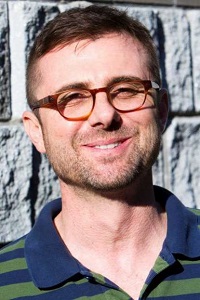
Michael Carroll (Fort Caroline, 1965)

Cees van der Pluijm, David Mitchell, Jacques Hamelink, Kamiel Verwer, Haruki Murakami, Jakob Lenz, Fatos Kongoli

De Nederlandse dichter, schrijver en columnist Cees van der Pluijm werd geboren op 12 januari 1954 te Radio Kootwijk (Gld.). Zie ook alle tags voor Cees van der Pluijm op dit blog.


Uit: Momenten

1960

Je ging er eerst eens met je vader kijken
Naar het gebouw en naar de weg erheen
Je moest per slot maar zien dat je er kwam

Je kreeg een tas, wat geld, een boterham
Je was pas zes, moest haasten, mocht niet wijken
Een hele tippel voor een kind alleen

Je stapte uit de bus en koos je pad
Je wandelde parmantig door de stad

Het leek haast of het vanzelfsprekend was –
Maar eenzaam was het, en een bange reis
De wereld zou nog lang je vijand blijven

Je zou bij juffrouw Broenink leren schrijven
Gekortwiekt keurig zittend in de klas
Voorgoed verdreven uit het paradijs


Uit: Portretsonnetten

2
Hij voelt zich als een lang vergeten jas
Die aan een lege kapstok bleef, alleen
Steeds meer alleen en zelden nog eens beet
Bij ’t sluitingsuur van deez’ of gene tent

De jeugd werd almaar jonger om hem heen
En hij steeds meer een afgeleefd karkas

Hij heeft de barricaden nog gekend
Hij stond er bovenop destijds en streed
De goede strijd; er bleef hem bijna geen
Die weet wat vechten voor je rechten was

Hij rolt er nog maar een en kijkt absent
Met lege ogen naar het volle glas

Ze zeggen, op den duur, dat alles went
Zelfs hangen ja, wanneer je dat maar weet


4

Hij neemt nog steeds haar foto met zich mee
En telkens weer als hij zijn portemonnee
Gebruikt, kijkt zij hem stralend lachend aan:
Beschermengel en eeuwig goede fee

En thuis ziet hij haar oude spullen staan
Hij heeft er nog niet dát van weggedaan
Nog steeds dezelfde bril op de wc
Dat geeft een warm gevoel bij ’t zitten gaan

Zijn vrienden zeggen: “Zet haar van je af
’t Is ongezond, het leven gaat toch door?”
En dat is waar, maar staat hij bij haar graf
Dan klinkt haar stem weer dwingend in zijn oor:

“Mijn jongen laat zijn moeder niet alleen”
Blijf mij nabij staat smekend op haar steen


Cees van der Pluijm (12 januari 1954 – 14 december 2014)
Hier met Robert Long (links), eind jaren 1990

Lees verder “Cees van der Pluijm, David Mitchell, Jacques Hamelink, Kamiel Verwer, Haruki Murakami, Jakob Lenz, Fatos Kongoli”

Jasper Fforde, Katharina Hacker, Nikos Kavvadias, Marc Acito, Mart Smeets, Oswald de Andrade, Eduardo Mendoza

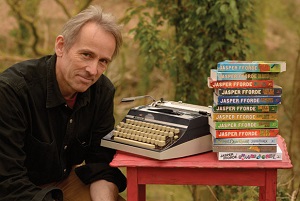
De Britse schrijver en cameraman Jasper Fforde werd geboren op 11 januari 1961 in Londen. Zie ook alle tags voor Jasper Fforde op dit blog.

Uit: Lost in a Good Book

« I didn’t ask to be a celebrity. I never wanted to appear on The Adrian Lush Show. And let’s get one thing straight right now – the world would have to be hurtling towards imminent destruction before I’d agree to anything as dopey as The Thursday Next Workout Video.
The publicity surrounding the successful rebookment of Jane Eyre was fun to begin with but rapidly grew wearisome. I happily posed for photocalls, agreed to newspaper interviews, hesitantly appeared on Desert Island Smells and was thankfully excused the embarrassment of Celebrity Name That Fruit! The public, ever fascinated by celebrity, had wanted to know everything about me following my excursion within the pages of Jane Eyre, and since the Special Operations Network have a PR record on a par with that of Vlad the Impaler, the top brass thought it would be a good wheeze to use me to boost their flagging popularity. I dutifully toured all points of the globe doing signings, library openings, talks and interviews. The same questions, the same SpecOps-approved answers. Supermarket openings, literary dinners, offers of book deals. I even met the actress Lola Vavoom, who said that she would simply adore to play me if there were a film. It was tiring, but more than that – it was dull. For the first time in my career at the Literary Detectives I actually missed authenticating Milton.
I’d taken a week’s leave as soon my tour ended so Landen and I could devote some time to married life. I moved all my stuff to his house, rearranged his furniture, added my books to his and introduced my dodo, Pickwick, to his new home. Landen and I ceremoniously partitioned the bedroom closet space, decided to share the sock drawer, then had an argument over who was to sleep on the wall side of the bed. We had long and wonderfully pointless conversations about nothing in particular, walked Pickwick in the park, went out to dinner, stayed in for dinner, stared at each other a lot and slept in late every morning. It was wonderful.
On the fourth day of my leave, just between lunch with Landen’s mum and Pickwick’s notable first fight with the neighbour’s cat, I got a call from Cordelia Flakk. She was the senior SpecOps PR agent here in Swindon and she told me that Adrian Lush wanted me on his show. I wasn’t mad keen on the idea – or the show. But there was an upside. The Adrian Lush Show went out live and Flakk assured me that this would be a ‘no holds barred’ interview, something that held a great deal of appeal. Despite my many appearances, the true story about Jane Eyre was yet to be told – and I had been wanting to drop the Goliath Corporation in it for quite a while. Flakk’s assurance that this would finally be the end of the press junket clinched my decision. Adrian Lush it would be.”


Jasper Fforde (Londen, 11 januari 1961)

Lees verder “Jasper Fforde, Katharina Hacker, Nikos Kavvadias, Marc Acito, Mart Smeets, Oswald de Andrade, Eduardo Mendoza”

Gustav Falke

De Duitse dichter en schrijver Gustav Falke werd geboren op 11 januari 1853 in Lübeck als zoon van de koopman Johann Friedrich Christian Falke en zijn vrouw Elisabeth Franziska Hoyer. De historicus Johannes Falke en Jacob von Falke waren ooms van vaders kant. Falke volgde hoger voortgezet onderwijs aan het Katharineum in Lübeck en voltooide in 1868 in Hamburg een opleiding tot boekhandelaar. Omdat zijn stiefvader zijn wens om literatuur of muziek te studeren afwees verliet Falke in 1870 Hamburg. In 1870-1877 werkte hij als boekhandelaar in Essen, daarna in Stuttgart en uiteindelijk in Hildburghausen. In 1878 keerde hij terug naar Hamburg, waar hij particulier muziekonderwijs kreeg van Emil Krause. Vervolgens verdiende hij zijn brood als pianoleraar. In 1890 trouwde hij met zijn voormalige pianostudenet Anna Heissel. In de jaren 1890 begon hij zijn eigen literaire werken te publiceren en zo kwam hij zeer snel in contact met de kring van Hamburgse schrijvers rond Otto Ernst, Jacob Lowenberg en Emil von Schoenaich-Carolath. Een gedicht van Falke had de aandacht getrokken van Detlev von Liliencron. met wie in de loop der jaren een intensieve vriendschap ontstond. Gustav Falke begon zijn literaire carrière als impressionistisch dichter. Beïnvloed werd hij vooral door Richard Dehmel, Paul Heyse en Detlev von Liliencron, maar hij zag zich ook in de traditie staan van dichters als Mörike, Eichendorff, Storm en Geibel. Falkes romans, waar veel Hamburg lokale kleur in te vinden is, kunnen gerekend worden tot het gematigde naturalisme. Hij schreef verder ook heldendichten en romans. Een opmerkelijk deel van zijn werk vormen zijn kinderboeken in poëzie en proza, waarmee hij aan het begin van de eeuw veel succes had. Bij het begin van WO I toonde Falke zich een compromisloze nationalist die zijn literaire werk volledig in diens stelde van de Duitse nationale doelstellingen. Muzikale composities bij Gustav Falkes poëzie schreven onder meer Leo Blech, Engelbert Humperdinck, Alma Mahler-Werfel, Max Reger, Paul Scheinpflug, Max von Schillings, Arnold Schönberg, Richard Strauss en Anton Webern. De muziekafdeling van de Koninklijke Bibliotheek in Berlijn telde bij Falkes dood meer dan 480 verschillende composities op teksten van de dichter.

Fromm

Der Mond scheint auf mein Lager.
ich schlafe nicht,
meine gefalteten Hände ruhen
in seinem Licht.

Meine Seele ist still, sie kehrte
von Gott zurück,
und mein Herz hat nur einen Gedanken:
dich und dein Glück.


Einsamkeit

O Einsamkeit, tiefinnere Einsamkeit!
An deinem stillen Feuer wärm’ ich mein Gemüt.
Nur manchmal schrei ich nach Gemeinsamkeit,
ob dort des Lebens rote Rose blüht.
Dann rufst du wieder mich zurück,
o Einsamkeit, zu deinem Glück.
Alleinsamkeit!


Das Birkenwäldchen

Inmitten öder Heide träumt
Ein Birkenwäldchen, sumpfumsäumt.
Die stillen Wasser blinken,
Daraus die Wurzeln trinken.

Hier geht sobald kein Menschenfuß
Und klingt kein Sommervogelgruß,
Hier ist in ihrer Klause
Die Einsamkeit zu Hause.

Und nächtens stellt bei Mondenschein
Ein Wispern sich und Flüstern ein,
Und weiße Schatten heben
Gespenstisch sich ins Leben.

Und mittags, wenn die Sonne glüht,
Dass fast die Heide Funken sprüht,
Scheint dort in kühlen Schauern
Ein Seltsames zu lauern.

Ein Jäger, den die Heideglut
Hintrieb, war einst dort eingeruht,
Ihm träumt’ –; er konnt’s nicht sagen,
Er starb in wenig Tagen.

 
Gustav Falke (11 januari 1853 – 8 februari 1916)
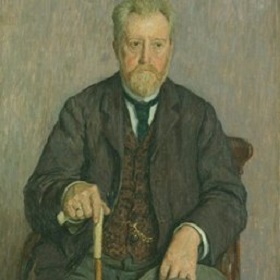
Portret door Ernst Wilhelm Heinrich Eitner, z.j.

Antonio Muñoz Molina, Annette von Droste-Hülshoff, Dennis Cooper, Saskia Stehouwer, Adrian Kasnitz, Mies Bouhuys, Harrie Geelen

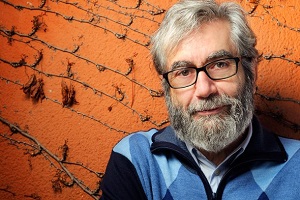
De Spaanse schrijver Antonio Muñoz Molina werd geboren op 10 januari 1956 in Úbeda in de provincie Jaén. Zie ook alle tags voor Antonio Muñoz Molina op dit blog.

Uit: Die Nacht der Erinnerungen (Vertaald doorWilli Zurbrüggen)

„Ich habe ihn immer deutlicher gesehen, wie er aus dem Nichts auftauchte, aus dem Nirgendwo kommend wie aus einem Gedankenblitz heraus, mit dem Koffer in der Hand und ermüdet vom Hinaufeilen der von den schrägen Schatten der Marmorsäulen schraffierten Treppe, benommen von der maßlosen Weite, in die er eintritt und in der rechtzeitig seinen Zug finden zu können er sich nicht ganz sicher ist. Ich habe ihn unter all den anderen erkannt, unter denen er nicht auffällt in seinem dunklen Anzug, dem gleichfalls dunklen Regenmantel und Hut. Seine Kleidung ist europäischen Schnitts und für die Stadt und die Jahreszeit vielleicht etwas zu formell, genau wie der Koffer in seiner Hand, solide und teuer, aus Leder, doch ziemlich abgenutzt schon nach all dem Reisen, mit Aufklebern von Hotels und Reedereien, mit Kreideresten von Zollabfertigungen; ein Koffer, der schwer in seiner vom Umklammern des Tragegriffs schmerzenden Hand hängt und für eine so lange Reise dennoch unzureichend scheint. Mit der Präzision eines Polizeiberichts oder eines Traums nehme ich alle Einzelheiten der Wirklichkeit wahr.
Ich sehe sie in dem Moment vor mir auftauchen und Gestalt annehmen, als Ignacio Abel mitten im Geschiebe der Menge einen Augenblick stehen bleibt und sich umdreht wie einer, der gehört hat, dass man seinen Namen ruft. Vielleicht hat ihn jemand gesehen und sagt oder ruft seinen Namen, um über dem Tumult gehört zu werden, der von Marmorwänden und Eisengewölben widerhallt, über dem tönenden Wirrwarr von Stimmen, Schritten, kreischenden Lokomotiven, vibrierenden Böden, dem blechernen Echo der Lautsprecherdurchsagen und den Rufen der Zeitungsverkäufer, die die Abendblätter feilbieten. Ich erforsche seine Gedanken genauso wie seine Taschen und das Innere seines Koffers. Ignacio Abel betrachtet die Titelseiten der Zeitungen stets in der Erwartung und der Furcht, eine Schlagzeile zu lesen, in der das Wort Spanien, das Wort Krieg oder der Name Madrid auftaucht.“


Antonio Muñoz Molina (Úbeda, 10 januari 1956)

Lees verder “Antonio Muñoz Molina, Annette von Droste-Hülshoff, Dennis Cooper, Saskia Stehouwer, Adrian Kasnitz, Mies Bouhuys, Harrie Geelen”

Jared Carter, Yasmina Khadra, Jutta Treiber, Franz Kain, Philip Levine, Renate Schostack, Ingeborg Drewitz

De Amerikaanse dichter Jared Carter werd geboren op 10 januari 1939 in Elwood, een dorpje in Indiana, VS. Zie ook alle tags voor Jared Carter op dit blog.


Dark Transit

Always the passing of trains in the night,
The sound becoming a part of sleep, unnoticed,
Until one night you hear the call, and know
That a certain train has come for you at last.

The cars illumined with strange empty light,
The dining room with its starched tablecloths,
Its gleaming chairs, the lanterns swinging
In time with the headlong surge of the wheels.

Diesel engine, steam engine, wood-burner,
It does not matter, it is slowing down now,
And it has come for you, already you can see
How it glides to a stop in the empty station.
 
The stationmaster waves his yellow lantern
And confers with the conductor.  It is time.
The train has arrived.  You must go forward.
Passengers peer from the clouded windows.

The conductor folds down the steps, he beckons,
It is time, it is time, the whistle calls, the engine
Lets off steam, steam roiling and billowing
Far down the edge of the long dark platform.


Snow

At every hand there are moments we
cannot quite grasp or understand. Free

to decide, to interpret, we watch rain
streaking down the window, the drain

emptying, leaves blown by a cold wind.
At least we sense a continuity in

such falling away. But not with snow.
It is forgetfulness, what does not know,

has nothing to remember in the first place.
Its purpose is to cover, to leave no trace…


Jared Carter (Elwood, 10 januari 1939)

Lees verder “Jared Carter, Yasmina Khadra, Jutta Treiber, Franz Kain, Philip Levine, Renate Schostack, Ingeborg Drewitz”

Robinson Jeffers, Giselher Werner Hoffmann, Jan H. Eekhout, Vicente Huidobro, Aubrey Thomas de Vere, Alexei Tolstoy

De Amerikaanse dichter en schrijver John Robinson Jeffers werd geboren op 10 januari 1887 in Allegheny, nu Pittsburgh, Pennsylvania. Zie ook ook alle tags voor Robinson Jeffers op dit blog.


Hurt Hawks

I
The broken pillar of the wing jags from the clotted shoulder,
The wing trails like a banner in defeat,

No more to use the sky forever but live with famine
And pain a few days: cat nor coyote
Will shorten the week of waiting for death, there is game without talons.

He stands under the oak-bush and waits
The lame feet of salvation; at night he remembers freedom
And flies in a dream, the dawns ruin it.

He is strong and pain is worse to the strong, incapacity is worse.
The curs of the day come and torment him
At distance, no one but death the redeemer will humble that head,

The intrepid readiness, the terrible eyes.
The wild God of the world is sometimes merciful to those
That ask mercy, not often to the arrogant.

You do not know him, you communal people, or you have forgotten him;
Intemperate and savage, the hawk remembers him;
Beautiful and wild, the hawks, and men that are dying, remember him.

II
I’d sooner, except the penalties, kill a man than a hawk;
but the great redtail
Had nothing left but unable misery
From the bone too shattered for mending, the wing that trailed under his talons when he moved.

We had fed him six weeks, I gave him freedom,
He wandered over the foreland hill and returned in the evening, asking for death,
Not like a beggar, still eyed with the old
Implacable arrogance.

I gave him the lead gift in the twilight.
What fell was relaxed, Owl-downy, soft feminine feathers; but what
Soared: the fierce rush: the night-herons by the flooded river cried fear at its rising

Before it was quite unsheathed from reality.


Robinson Jeffers (10 januari 1887 – 20 januari 1962)
 

Lees verder “Robinson Jeffers, Giselher Werner Hoffmann, Jan H. Eekhout, Vicente Huidobro, Aubrey Thomas de Vere, Alexei Tolstoy”

Bas Heijne, Benjamin Lebert, Wessel te Gussinklo, Simone de Beauvoir, Theodor Holman, Danny Morrison, Kurt Tucholsky

De Nederlandse schrijver, essayist, columnist en vertaler Bas Heijne werd geboren op 9 januari 1960 in Nijmegen. Zie ook alle tags voor Bas Heijne op dit blog.

Uit: Een oord van onderkoelde verschrikking

“Dostojewski en Fitzgerald, verbaasd vinden ze elkaar in het werk van hun nazaat Bret Easton Ellis. Met Dostojewski deelt Ellis een obsessie met de ongrijpbare pathologische inslag van de mens, het duistere binnenste dat een man tussen twee beschaafde zinnen naar een bijl doet grijpen. Met Fitzgerald heeft hij een hartstocht voor wereldsheid gemeen, een hang naar een leven dat enkel en alleen uit glanzende oppervlakten bestaat. Verslaafd is hij aan een cultuur die iedere betekenis heeft afgezworen, die zich volledig aan de roes van het luchtledige heeft overgegeven. Less than zero, American Psycho (zijn meesterwerk), Glamorama, het zijn stuk voor stuk romans geschreven vanuit een obsessie met de wereld als enkel en alleen nog buitenkant. Zijn verslaving uit zich in zijn overvloedige vermelding van de gestroomlijnde glamour van het Amerika van de jonge verwende superrijken, de talloze merken en labels en namen die tezamen een universum van uiterlijkheden vormen.
Dat die verslaving voor misverstanden zou zorgen, was – zeker wanneer je terugkijkt – te verwachten. Less than zero en in mindere mate The rules of attraction waren generatieromans – en generatieromans moeten het altijd hebben van het soort heftige, verdwaasde vereenzelviging waar je op je twintigste behoefte aan hebt. Ellis werd gezien als lid van de Brat Pack, het groepje jonge auteurs dat de gevestigde literaire orde in de jaren tachtig wel even een lesje zou leren. Dat Ellis in die jaren op een hoop werd gegooid met schrijvers als Tama Janowitz en Jay McInerney, het lijkt nu onvoorstelbaar, maar de modieuze kritische oordelen die over deze groep werden geveld, waren onderdeel van hun succes in de media en hun cultstatus bij nieuwe lezers. Zoals iedere verloren generatie – en welke nieuwe generatie is niet voor minstens een paar jaar verloren? – koketteerden ze met de totale zinloosheid en de totale verlorenheid. Ikzelf ergerde me toentertijd juist aan het in mijn ogen al te gemakzuchtige moralisme in Less than zero, de gulzige opeenstapeling van bewijzen van totale gevoelloosheid bij zijn personages, terwijl de schrijver zijn lezers tussen de regels maar bleef porren – of we wel beseften hoe erg het was? Ik hield niet zo van boeken over jongeren die bedoeld waren om ouderen te shockeren. Ellis wilde een generatie laten zien die in verlorenheid alle voorgaande overtrof, en ik vond toen dat hij zich schuldig maakte aan effectbejag – een lijk een vuurtje geven, ja hoor!”


Bas Heijne (Nijmegen, 9 januari 1960)

Lees verder “Bas Heijne, Benjamin Lebert, Wessel te Gussinklo, Simone de Beauvoir, Theodor Holman, Danny Morrison, Kurt Tucholsky”

Pierre Guyotat, Heiner Müller, Pierre Combescot, Gisbert Haefs, Karel Čapek, Klaus Schlesinger, Wilbur Smith

De Franse schrijver Pierre Guyotat werd geboren op 9 januari 1940 in Bourg-Argental. Zie ook alle tags voor Pierre Guyotat op dit blog.

Uit: Coma

“Ou bien, c’est la fusion avec le monde, ma disparition dans tout ce qui me touche, que je vois, et dans tout ce que je ne vois pas encore. Sans doute ne puis-je alors supporter de n’être qu’un seul moi, devant tous ces autres moi et d’être immobile malgré l’effervescence de mes sens, d’être immobile dans cet espace où l’on saute, s’élance, s’envole…
Plutôt mourir (comme peut « mourir » un enfant) que de ne pas être multiple, voire multiple jusqu’à l’infini.
Quelle douleur aussi de ne pouvoir se partager, être, soi, partagé, comme un festin par tout ce qu’on désire manger, par toutes les sensations, par tous les êtres : cette dépouille déchiquetée de petit animal par terre c’est moi… si ce pouvait être moi ! »
(…)

«Malgré mon enjouement –la douleur ou l’avant-douleur provoque toujours en moi une euphorie de verbe et d’empathie-, d’être ainsi marqué, même aux jambes, pris entre l’âge avancé des onze patients et l’obscurité carrelée, vétuste, du lieu dans lequel je vois et sens aussi les espaces du passé : infirmerie de collège, boiseries d’hospice, en quelque sorte mon commencement dans la collectivité humain, j’éprouve –mais à partir de quel « je » déjà ?- et tais à mes proches une sensation, dont j’attends que l’opération me délivre, d’inexistence entre deux vieilleries, de dépouillement, d’échec, d’abandon par la Lumière, d’humiliation froide, d’oubli.”


Pierre Guyotat (Bourg-Argental, 9 januari 1940)

Lees verder “Pierre Guyotat, Heiner Müller, Pierre Combescot, Gisbert Haefs, Karel Čapek, Klaus Schlesinger, Wilbur Smith”