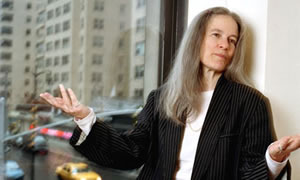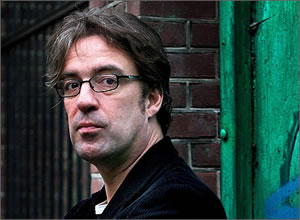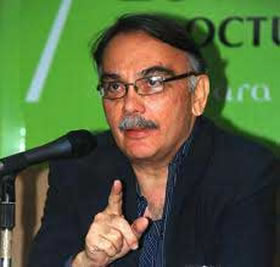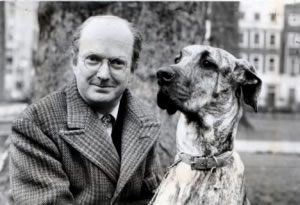
Nadine Gordimer, Viktoria Tokareva, Don DeLillo, Thomas Chatterton

De Zuidafrikaanse schrijfster Nadine Gordimer werd geboren op 20 november 1923 in Springs. Zie ook alle tags voor Nadine Gordimer op dit blog.

Uit: The Moment Before the Gun Went Off

“Marais Van der Vyver shot one of his farm labourers, dead.

An accident. There are accidents with guns every day of the week: children playing a fatal game with a father’s revolver in the cities where guns are domestic objects, and hunting mishaps like this one, in the country. But these won’t be reported all over the world. Van der Vyver knows his will be. He knows that the story of the Afrikaner farmer – a regional Party leader and Commandant of the local security commando – he, shooting a black man who worked for him will fit exactly their version of South Africa. It’s made for them. They’ll be able to use it in their boycott and divestment campaigns. It’ll be another piece of evidence in their truth about the country. The papers at home will quote the story as it has appeared in the overseas press, and in the back-and-forth he and the black man will become those crudely-drawn figures on anti-apartheid banners, units in statistics of white brutality against the blacks quoted at United Nations – he, whom they will gleefully call ‘a leading member’ of the ruling Party.People in the farming community understand how he must feel. Bad enough to have killed a man, without helping the Party’s,the government’s, the country’s enemies, as well.They see the truth of that. They know, reading the Sunday papers, that when Van der Vyver is quoted saying he is ’terribly shocked’, he will ‘look after the wife and children’, none of those Americans and English, and none of those people at home who want to destroy the white man’s power will believe him. And how they will sneer when he even says of the farm boy (according to one paper, if you can trust any of those reporters), ‘He was my friend. I always took him hunting with me: Those city and overseas people don’t know it’s true: farmers usually have one particular black boy they like to take along with them in the lands: you could call it a kind of friend, yes, friends are not only your own white people, like yourself, you take into your house, pray with in church and work with on the Party committee. But how can those others”
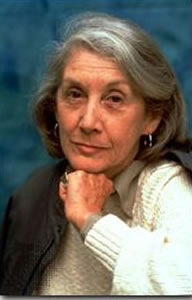
 

Nadine Gordimer (Springs. 20 november 1923)

Lees verder “Nadine Gordimer, Viktoria Tokareva, Don DeLillo, Thomas Chatterton”
Sheema Kalbasi, Ursula Ziebarth, Zinaida Hippius, Selma Lagerlöf

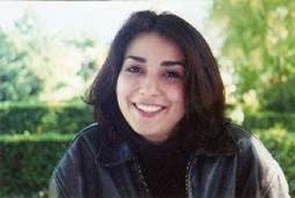
De Iraanse dichteres, vertaalster en mensenrechten-advocate Sheema Kalbasi werd geboren op 20 november 1972 in Teheran. Zie ook alle tags voor Sheema Kalbasi op dit blog.


Lessen one: A patient dies

Today in my morning round,
Another patient died.
Waiting so patiently for Him to arrive
I saw him leave the bed
With no color on his wings
Another angel at his side.
To the so called bridge of death
Distant vista.

Bleating cries within my sad heart.
Me and my body standing cold
the white uniform crying for cure
no light and the sound of secrets.
All the lectures, all the nursing clams.
the grace of death, pointing at the flying waves.

Bleached with sadness, I walked through the hall.
Deeply I cry, not for the first time
Although it is the first I meet Death.

The rest of the day minding every inch of my bones,
My eyes not clear, but filled with trembling fireflies
Softly we come, softly we go,
Mute path? Not too eager?
For the farewell is on our side!


1 and 9

Stars

are shining close

the taste of a summer night…
a quiet night

on the skin
is the light kiss of a fallen leaf

I, barefoot and warm am walking naked.


Sheema Kalbasi (Teheran, 20 november 1972)

Lees verder “Sheema Kalbasi, Ursula Ziebarth, Zinaida Hippius, Selma Lagerlöf”

Sharon Olds, Mark Harris, Christoph Wilhelm Aigner, Anna Seghers

De Amerikaanse dichteres Sharon Olds werd geboren op 19 november 1942 in San Francisco. Zie ook alle tags voor Sharon Olds op dit blog.


The Borders

To say that she came into me,
from another world, is not true.
Nothing comes into the universe
and nothing leaves it.
My mother—I mean my daughter did not
enter me. She began to exist
inside me—she appeared within me.
And my mother did not enter me.
When she lay down, to pray, on me,
she was always ferociously courteous,
fastidious with Puritan fastidiousness,
but the barrier of my skin failed, the barrier of my
body fell, the barrier of my spirit.
She aroused and magnetized my skin, I wanted
ardently to please her, I would say to her
what she wanted to hear, as if I were hers.
I served her willingly, and then
became very much like her, fiercely
out for myself.
When my daughter was in me, I felt I had
a soul in me. But it was born with her.
But when she cried, one night, such pure crying,
I said I will take care of you, I will
put you first. I will not ever
have a daughter the way she had me,
I will not ever swim in you
the way my mother swam in me and I
felt myself swum in. I will never know anyone
again the way I knew my mother,
the gates of the human fallen.


Primitive

I have heard about the civilized,
the marriages run on talk, elegant and honest,

rational. But you and I are
savages. You come in with a bag,
hold it out to me in silence.
I know Moo Shu Pork when I smell it
and understand the message: I have
pleased you greatly last night. We sit
quietly, side by side, to eat,
the long pancakes dangling and spilling,
fragrant sauce dripping out,
and glance at each other askance, wordless,
the corners of our eyes clear as spear points
laid along the sill to show
a friend sits with a friend here.


Sharon Olds (San Francisco, 19 november 1942)

Lees verder “Sharon Olds, Mark Harris, Christoph Wilhelm Aigner, Anna Seghers”

Allen Tate, Girolamo de Rada, Elise Bürger, Veronika Aydin

De Amerikaanse dichter Alan Tate werd geboren op 19 november 1899 in de buurt van Winchester, Kentucky. Zie ook alle tags voor Alan Tate op dit blog.


Aeneas At Washington

I myself saw furious with blood
Neoptolemus, at his side the black Atridae,
Hecuba and the hundred daughters, Priam
Cut down, his filth drenching the holy fires.
In that extremity I bore me well,
A true gentleman, valorous in arms,
Distinterested and honourable. Then fled
That was a time when civilization
Run by the few fell to the many, and
Crashed to the shout of men, the clang of arms:
Cold victualing I seized, I hoisted up
The old man my father upon my back,
In the smoke made by sea for a new world
Saving little—a mind imperishable
If time is, a love of past things tenuous
As the hesitation of receding love.

(To the reduction of uncitied littorals
We brought chiefly the vigor of prophecy,
Our hunger breeding calculation
And fixed triumphs)

I saw the thirsty dove
IN the glowing fields of Troy, hemp ripening
And tawny corn, the thickening Blue Grass
All lying rich forever in the green sun.
I see all things apart, the towers that men
Contrive I too contrived long, long ago.
Now I demand little. The singular passion
Abides its object and consumes desire
In the circling shadow of its appetite.
There was a time when the young eyes were slow,
Their flame steady beyond the firstling fire,

I stood in the rain, far from home at nightfall
By the Potomac, the great Dome lit the water,
The city my blood had built I knew no more
While the screech-owl whistled his new delight
Consecutively dark.

Stuck in the wet mire
Four thousand leagues from the ninth buried city
I thought of Troy, what we had built her for.


Allen Tate (19 november 1899 – 9 februari 1979)

Lees verder “Allen Tate, Girolamo de Rada, Elise Bürger, Veronika Aydin”

Joost Zwagerman, Toon Tellegen, Klaus Mann, Seán Mac Falls, Richard Dehmel

De Nederlandse dichter en schrijver Joost Zwagerman werd geboren in Alkmaar op 18 november 1963. Zie ook alle tags voor Joost Zwagerman op dit blog.


Uit: De houdgreep

Het gezin Rafferty was niet echt vermogend maar had toch genoeg geld om een au pair in huis te nemen. Zij kwam uit Nederland en heette Adriënne. Meneer en mevrouw Rafferty vonden haar soms wat onhandig en verward. Twee welwillende maar onnozele Oostenrijkse meisjes waren haar voorgegaan, zodat de Rafferty’s Adriënne’s kleine tekortkomingen voor lief namen.
Haar ijver en vooral haar oprechte genegenheid voor de dochtertjes Rafferty wogen ruimschoots op tegen dat kleine beetje verwarring en onhandigheid. Bovendien deelde Adriënne tot mevrouw Rafferty’s vreugde twee van haar meest dierbare liefhebberijen:lezen en spelletjes doen.

(…)

Voor Adriënne was niets vanzelfsprekend, dus ook de werkelijkheid niet. Zou ze een goede fotografe kunnen worden? Ze had geen zin meer om te luisteren. ‘De foto als metafoor.’ Ha! Zijn het niet juist metaforen – die grillige, onbeheersbare diabolo’s waarmee schrijvers, schilders en smachtende pubers lopen te goochelen- die almaar verhullen en redeloze vragen oproepen? Nee, aan Adriënne’s lijf geen kunstenmakerspolonaise. Wat ze wilde was eenvoudig: als Londen dan niet te veroveren viel kon ze nog altijd infiltreren, en de pocketcamera was haar handzaam excuus.
De cursusleider wees naar buiten.
‘Die muur daar,’ zei hij, ‘die heeft iets te zeggen. De topfotograaf ís de muur, zoals hij alles is wat hem omringt. Maar jij, meisje, jij moet om te beginnen een hele goeie vertolker, een monnik worden, a monk with a camera.’


Joost Zwagerman (Alkmaar, 18 november 1963)

Lees verder “Joost Zwagerman, Toon Tellegen, Klaus Mann, Seán Mac Falls, Richard Dehmel”

Eugenio Montejo, Jaap Meijer, Margaret Atwood, William Gilbert, Hans Reimann, Mireille Cottenjé

De Venezolaanse dichter en schrijver Eugenio Montejo werd geboren in Caracas op 18 november 1938. Zie ook mijn blog van 18 november 2008 en ook mijn blog van 18 november 2009 en ook mijn blog van 18 november 2010.


Earthdom

To be here a few years on earth
with the clouds that arrive, with the birds
dangling from fragile hours.
On the edge, almost adrift,
closer to Saturn, more distant,
while the sun revolves and drags us with it
and the blood circles once more through the depths of its universe
more sacred than the stars.

To be here on earth; no more distant than a tree,
no more inexplicable;
thin in autumn, laden in summer,
with what we are and are not, with shadow,
memory, longing, until the end
(if there is one) voice to voice,
from house to house,
whoever it may be who carries the earth, if they carry it,
or whoever hopes for it, if they keep watch,
each time dividing our common bread
in two, in three, in four,
without forgetting the share for the ant
who is still travelling from remote stars
to be here on time at our table
even though the crumbs are bitter.


Vertaald door Peter Boyle


Eugenio Montejo (18 november 1938 – 5 juni 2008)

Lees verder “Eugenio Montejo, Jaap Meijer, Margaret Atwood, William Gilbert, Hans Reimann, Mireille Cottenjé”

Auberon Waugh, Dahlia Ravikovitch, Rebecca Walker

De Britse schrijver journalist en polemist Auberon Alexander Waugh werd geboren op 17 november 1939 in Dulverton, Somerset. Zie alle tags voor Auberon Waugh op dit blog.

Uit: Auberon Waugh’s hilarious memories of the family mansion now for sale

“Returning to my home in Wiltshire after lunch with friends on Easter Day 1966, I found a policeman waiting outside the door with a long face.
Was I Auberon Alexander Waugh of this address?
For a terrible moment, I thought that something had happened to the children, left behind with our help Lolita who spoke no English.
It came as a relief when he said that my father, then 62, had died suddenly at Combe Florey House, the Waugh family home in Somerset.
It transpired that after a Latin mass in the parish church at nearby Wiveliscombe, he had failed to turn up at lunch and been found dead of a heart attack in the downstairs lavatory.
When I arrived at Combe Florey towards midnight, the house still smelled strongly of paraldehyde, the foul substance he took as a sleeping draught. In the heightened awareness of the moment, that familiar, revolting smell seemed to have the odour of sanctity.
That night there was a fire in the house. Somebody had left a door of the Aga in the kitchen open and it became hot, setting various things alight.
Firemen tramped through Combe Florey, squirting things, before being given glasses of Guinness and sent away. My mother Laura, the widow Waugh as she became from that moment, remained in her bedroom and did not emerge through all the night’s alarms and excursions.
In the days that followed, my father’s body lay in the library, boxed up in a coffin to await burial and attended in shifts by members of the family.
My feeling of relief on hearing of his death remained an ingredient in the mixture of emotions.
In his last year at Combe Florey, he had many of his teeth drawn, choosing to have it done without anaesthetic, for some impenetrable reason of his own (the vulgar new school of literary biographer attributed it to some strain of sexual masochism, but I am not persuaded by this).
In the event, his teeth seem to have been drawn not only physically but also metaphorically. Where before he had been gloomy, bad tempered and on occasions aggressive, he became benign and affectionate, but still his death lifted a great brooding awareness not only from Combe Florey but from the whole of existence.”


Auberon Waugh (17 november 1939 -16 januari 2001)

Lees verder “Auberon Waugh, Dahlia Ravikovitch, Rebecca Walker”

Joost van den Vondel, Christopher Paolini, Max Barthel, Pierre Véry

De Nederlandse dichter en schrijver Joost van den Vondel werd geboren op 17 november 1587 in Keulen. Zie ook Zie ook alle tags voor Joost van den Vondel op dit blog.


Opp Amstelredam

Het IJ en d’Amstel voeren de hoofdstad van Europe,
Gekroond tot Keizerin, des nabuurs steun en hope,
Amstelredam, die ’t hoofd verheft aan ’s hemels as,
En schiet, op Pluto’s borst, haar wortels door ’t moeras.
Wat waatren worden niet beschaduwd van haar zeilen?
Op welke markten gaat zij niet haar waren weilen?
Wat volken ziet ze niet beschijnen van de maan,
Zij die zelf wetten stelt de ganse Oceaan?
Zij breidt haar vleugels uit, door aanwas veler zielen,
En sleept de wereld in, met overladen kielen.
De welvaart stut haar Staat, zo lang d’aanzienlijkheid
Des Raads gewetens dwang zijn boze wil ontzeit.


Zomermaand

Bedaagde Zomermaand, men laat geen schaap verlegen;
Indien het gaat vermast, zo neem het op uw schoot:
Maar scheert gij ’t om de wol, zo scheer het niet te bloot,
En was het wit als sneeuw, dat u de Hemel zegen’.
Drijf, vroeg en spa, de kudde in ’t veld, en naar het hok:
Zij loont u met haar melk, en spier, en ruige lok.


Klachten des Poëets

Wat ramp, wat ongeluk plaagt nog mijn grijze haren!
Wat schande moet mij nog, eilacy! wedervaren!
Wat droefheid, wat verdriet, wat leed komt mij nog aan,
In dees mijn wintertijd, die haast zou zijn gedaan!
Wanneer ik overdenk èn ’tgeen ik was vóór dezen,
En wat ik, tot mijn smaad, moet tegenwoordig wezen;
Wanneer ik mij bezie in dees mijn hoogste nood,

Mijn lijden is te zwaar, mijn ongeluk te groot.
Maar doch, indien mij ’t leed, indien de hoge stromen
Van zo veel lijdens mij zal moeten overkomen,
Ik lijd ze, zo ik kan, ik wacht ze met geduld,
Ik voeg mij na de tijd, hoe ’t ongeval ook brult.
Maar gij, Mary! en gij, o rei der Heil’ge Maagden!
Die ’t al, èn lijf èn goed, ook voor de Godsdienst waagden,
Ai, ziet mij gunstig aan, hebt achting op mijn druk
Hebt meelij met mijn lot, en dit mijn ongeluk!
U heb ik toevertrouwd, U heb ik, al mijn dagen,
Nadat ik ben verlicht, mijn liefde toegedragen;
’k Heb U mij toegewijd, en U ik mij nog geef
Ai, maakt weer (want gij kunt), dat ’k eeuwig met U leef!


Joost van den Vondel (17 november 1587 – 5 februari 1679)
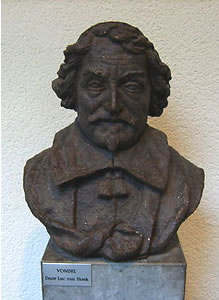
Borstbeeld door Lucas Hoek

Lees verder “Joost van den Vondel, Christopher Paolini, Max Barthel, Pierre Véry”

José Saramago, Craig Arnold, Renate Rubinstein, Danny Wallace

De Portugese schrijver José Saramago werd geboren op 16 november 1922 in het dorpje Azinhaga in de provincie Ribatejo. Zie ook alle tags voor José Saramago op dit blog.


Uit: Die portugiesische Reise (Vertaald door Karin en Nicolai von Schweder-Schreiner)


„Der Grenzbeamte kann sich nicht erinnern, so etwas schon einmal erlebt zu haben. Dieses ist der erste Reisende, der mitten auf dem Weg den Wagen anhält, mit dem Motor schon in Portugal, aber dem Tank noch in Spanien, und auf genau dem Zentimeter aus dem Fenster sieht, auf dem die unsichtbare Grenze verläuft. Und nun hört man über den dunklen, tiefen Wassern, zwischen den hohen Felswänden, die das Echo hin und her werfen, die Stimme des Reisenden, der zu den Fischen im Fluss predigt:

«Kommt her, Fische, ihr vom rechten Ufer, die ihr aus dem Rio Douro stammt, und ihr vom linken Ufer aus dem Rio Duero, kommt alle her und sagt mir: Welche Sprache sprecht ihr, wenn ihr die Unterwassergrenzen kreuzt? Und habt auch ihr dort unten Pass und Stempel? Hier stehe ich

und blicke von der Talsperre hier oben zu euch herab, und ihr hinauf zu mir, die ihr in diesen sich mischenden Wassern lebt und bald auf der einen, bald auf der anderen Seite seid, eine große Bruderschaft von Fischen, die einander fressen, weil sie hungrig sind, und nicht, weil es der Patriotismus verlangt.

Erteilt mir, Fische, eine klare Lektion, auf dass ich sie nicht beim zweiten Schritt, den ich auf dieser meiner Reise nach Portugal tue, vergesse, denn ihr müsst wissen: Von Ort zu Ort will ich darauf achten, was gleich ist und was verschieden, mit der Einschränkung, die nur allzu menschlich und

auch euch Fischen nicht fremd ist, dass auch der Reisende Vorlieben und Sympathien hat und nicht der universellen Liebe verpflichtet ist, welche das auch nicht von ihm verlangt.

Von euch schließlich, Fische, möchte ich mich verabschieden, bis irgendwann einmal, lebt euer Leben, solange die Fischer nicht vorbeikommen, schwimmt glücklich umher und wünscht mir eine gute Reise, auf Wiedersehen, Adieu.»


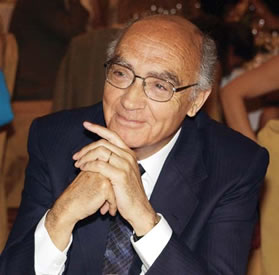
José Saramago (Azinhaga, 16 november 1922)


Lees verder “José Saramago, Craig Arnold, Renate Rubinstein, Danny Wallace”

Anton Koolhaas, Chinua Achebe, Hugo Dittberner, Andrea Barrett, Henri Charrière, Jónas Hallgrímsson, Max Zimmering, Birgitta Arens

De Nederlandse schrijver Anton Koolhaas werd op 16 november 1912 in Utrecht geboren. Zie ook alle tags voor Anton Koolhaas op dit blog.


Uit: Alle dierenverhalen


„Nu greep hij toe en op hetzelfde ogenblik was het water van de rivier van bodem tot oppervlakte in heftige beweging.

Hij greep Strilnok krakend en schurend in een zij, zodat dit beest, als zat het aan een staaldraad die hem zegevierend boven water trok, met een wrikkende beweging van zijn staart zich naar boven stootte. Uit het water schoot recht omhoog een groot deel van het lijf van Strilnok met de muil van Stroenil in de geelachtige flank gebeten. Zo hoog schoot het beest uit het water, dat ook van Stroenil een goed deel boven de oppervlakte verscheen, midden in het wilde golvende en spattende water. Van Stroenil stak echter nog een groter stuk onder water dan van het beest dat hij klem had, zodat hij met een wervelende beweging van zijn staart groter kracht kon zetten dan de ander. Hij boog zich vlug met zijn kop weer naar het water toe en wendde daarbij het lijf van zijn tegenstander met de andere zijkant naar onderen in het water terug en begon nu met zijn kop te schudden om de flank van Strilnok open te scheuren, intussen zijn kaken klemmend met een verschroeiende kracht.

Nu wierp Strilnok zich opnieuw op en hij schudde het lijf om de kaken van Stroenil te verwrikken. Hij kon ineens gebruik maken van het feit dat op die manier de ogen van Stroenil binnen het bereik van zijn voorpoten kwamen. Hij plantte een nagel met zoveel kracht in een oog van Stroenil dat deze nu los moest laten, wilde hij het niet verspelen. Strilnok wendde zich snel en dook omlaag om toe te bijten en nu grepende twee muilen in elkaar en begon een meting van rukken en schudden en bijten en doorklemmen van die beesten, die vervaarlijke kolkingen in de rivier tevoorschijn riep en ineens de hele omgeving met een sissend en daverend lawaai vervulde, alsof er twee brokken gloeiend staal werden gekoeld.“


Anton Koolhaas (16 november 1912 – 16 december 1992)

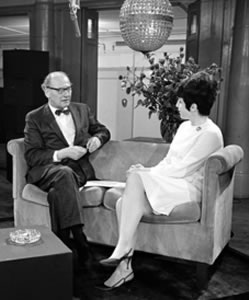
Hier met Mies Bouwman in Mies en scène in 1968

Lees verder “Anton Koolhaas, Chinua Achebe, Hugo Dittberner, Andrea Barrett, Henri Charrière, Jónas Hallgrímsson, Max Zimmering, Birgitta Arens”