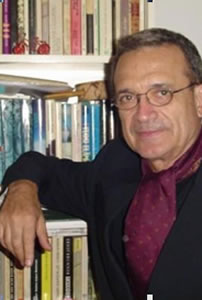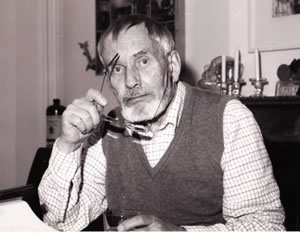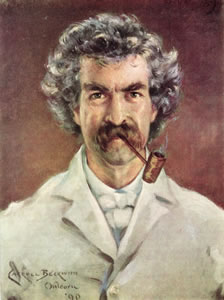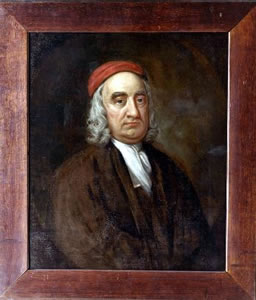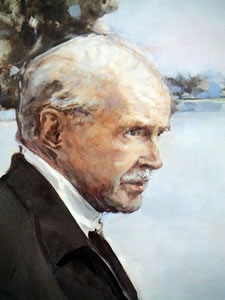
Godfried Bomans, Christina Rossetti, Fjodor Tjoettsjev, Afanasy Fet, Alois Brandstetter, Joan Didion, Hanif Kureishi, Calvin Trillin, Eugenie Marlitt, Josh Malihabadi, Hans Helmut Kirst

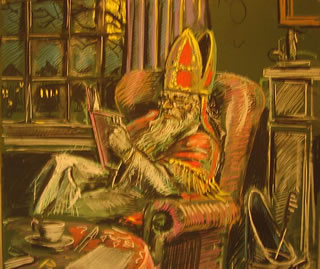
 Uit: De Kleine Catechismus van St. Nicolaas

Vraag: bestaan er meerdere Sinterklazen?
Antwoord: Er bestaat slechts één Sinterklaas, doch in meerdere personen.

Vraag: Wat moeten wij denken van de meening dat er geen Sinterklaas zou bestaan?
Antwoord: De meening dat er geen Sinterklaas zou bestaan, is een afschuwelijke ketterij, die wij met kracht moeten bestrijden.

Vraag: Hoe is het mogelijk dat Sinterklaas met paard en al door den schoorsteen komt?
Antwoord: Dat Sinterklaas met paard en al door den schoorsteen komt, is een mysterie, dat wij kinderlijk moeten aanvaarden.

Vraag: Zal ons dit mysterie ooit worden uitgelegd?
Antwoord: Dit mysterie zal ons in het hiernamaals door Sinterklaas zelf worden uitgelegd.

Vraag: Waarom rijdt Sinterklaas over de daken?Antwoord: Sinterklaas rijdt over de daken om vijf redenen:
1e omdat het een wonder is;
2e omdat daar het minste kwaad gebeurt;
3e omdat daar de meeste schoorstenen staan;
4e uit de macht der gewoonte;
5e omdat Hij boven hoogtevrees staat. 
 

sint


Vraag: Hoe is het te verklaren dat Sinterklaas meer aan rijke dan aan arme kindertjes geeft?
Antwoord: Dat Sinterklaas meer aan rijke dan aan arme kinderen geeft, is wederom een mysterie.

Vraag: Zal ook dit mysterie ons in het hiernamaals verklaard worden?
Antwoord: Neen. Dit mysterie zal ons, naarmate wij ouder worden, reeds op aarde duidelijk worden.

Vraag: Heeft Sinterklaas ook vijanden?
Antwoord: Sinterklaas heeft drie vijanden, te weten: de Paaschhaas, het Kerstmannetje en zij, die weigeren Hem als ernst te beschouwen. Van de eerste twee zegt Hij dat Hij niet gelooft dat ze bestaan, en van de derde dat het niet bestaat dat ze niet gelooven.
sintbomans

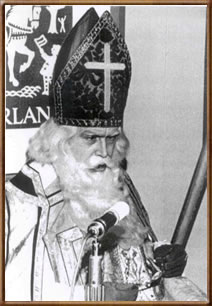
Godfried Bomans (2 maart 1913 – 22 december 1971)


De Engelse dichteres en schrijfster Christina Georgina Rossetti werd geboren in Londen op 5 december 1830. Zie ook alle tags voor Christina Rossetti op dit blog.


A Birthday

My heart is like a singing bird
Whose nest is in a water’d shoot;
My heart is like an apple-tree
Whose boughs are bent with thick-set fruit;
My heart is like a rainbow shell
That paddles in a halcyon sea;
My heart is gladder than all these,
Because my love is come to me.

Raise me a daïs of silk and down;
Hang it with vair and purple dyes;
Carve it in doves and pomegranates,
And peacocks with a hundred eyes;
Work it in gold and silver grapes,
In leaves and silver fleurs-de-lys;
Because the birthday of my life
Is come, my love is come to me.


At Home

When I was dead, my spirit turned
To seek the much-frequented house:
I passed the door, and saw my friends
Feasting beneath green orange boughs;
From hand to hand they pushed the wine,
They sucked the pulp of plum and peach;
They sang, they jested, and they laughed,
For each was loved of each.

I listened to their honest chat:
Said one: ‘To-morrow we shall be
Plod plod along the featureless sands
And coasting miles and miles of sea.’
Said one: ‘Before the turn of tide
We will achieve the eyrie-seat.’
Said one: ‘To-morrow shall be like
To-day, but much more sweet.’

‘To-morrow,’ said they, strong with hope,
And dwelt upon the pleasant way:
‘To-morrow,’ cried they one and all,
While no one spoke of yesterday.
Their life stood full at blessed noon;
I, only I, had passed away:
‘To-morrow and to-day,’ they cried;
I was of yesterday.

I shivered comfortless, but cast
No chill across the tablecloth;
I all-forgotten shivered, sad
To stay and yet to part how loth:
I passed from the familiar room,
I who from love had passed away,
Like the remembrance of a guest
That tarrieth but a day.
 

Rosetti

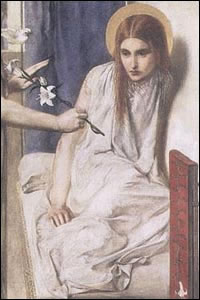
Christina Rossetti (5 december 1830 – 27 december 1894)
Geschilderd door haar broer Dante Gabriel Rossetti


De Russische dichter Fjodor Tjoettsjev werd geboren op 5 december 1803 in Ovstug in het gouvernement Orjol. Zie ook alle tags voor Fjodor Tjoettsjev op dit blog.


Say Not He Loves Me

Say not he loves me as before, as truly, dearly
As once he did… Oh no! My life
He would destroy, he does destroy – though see I clearly
The trembling of the hand that holds the knife.
Resentment, anger, tears, a pain now fierce, now muffled –
I’m wounded, stung, and yet I love… He is
All of my life, but I… I do not live – I suffer…
How bitter is existence such as this!
As to a mortal foe, in dozes scant and meagre
The air I breathe he measures out.. Each breath
I take is painful, yet… I breathe, for fresh air eager…
But life … life slowly ebbs… I cannot ward off death.


Tjoettsjev

Fjodor Tjoettsjev (5 december 1803 – 27 juli 1873)
Portret door Andrej Alexandrovsky


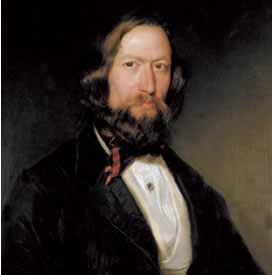
De Russische dichter Afanasy Afanasievich Fet werd geboren op 5 december 1820 nabij Mzensk. Zie ook alle tags voor Afanasy Fet op dit blog.


When you were reading those tormented lines

When you were reading those tormented lines

In which the heart’s resonant flame sends out glowing streams

And passion’s fatal torrents rear up,-

Didn’t you recall a single thing?

I can’t believe it! That night on the steppe

When, in the midnight mist a premature dawn,

Transparent, lovely as a miracle,

Broke in the distance before you

And your unwilling eye was to this beauty drawn

To that majestic glow beyond the realm of darkness,-

How could it be that nothing whispered to you then:

A man has perished in that fire!


Fet

Afanasy Fet (5 december 1820 – 3 december 1892)
Portret door Ilya Repin


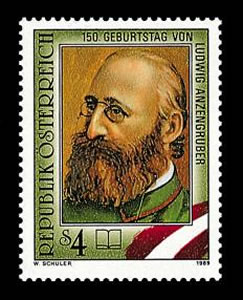
De Oostenrijkse schrijver en taalkundige Alois Brandstetter werd op 5 december 1938 in Aichmühl bei Pichl, Oberösterreich geboren. Zie ook alle tags voor Alois Brandstetter op dit blog.

Uit: Hier kocht der Wirt

»Wegen einem hängt der Wirt den Reif nicht auf. «

Das ist ein altes Sprichwort, das ich gern benutze. Es stammt aus dem Altertum, als es noch keine festen Öffnungszeiten gegeben hat. Damals hat sich ein Wirt also wirklich nach der Nachfrage gerichtet, und das Geschäft ist frei vor sich gegangen. Heute muß jeder Wirt und jeder Geschäftsmann sein Angebot nach der Nachfrage der Behörde ausrichten, der Wirt und die Gäste können dann zusammenkommen, wenn es der Politik paßt und wenn der Wirtschaftsminister den Reif aufhängt. Jetzt kann’s sein, daß der Wirt den Reif wegen einem aufhängen muß und wegen oder trotz zwanzig den Reif nicht aufhängen darf!

Bei mir in Gerlamoos in Oberkärnten schaut die Geschichte natürlich ein bisserl anders aus. Wo kein Kläger ist, da ist kein Richter, heißt ein anderes altes Sprichwort, und Wien ist weit! Was also mich, Peter Glantschnig, Wirt zu Gerlamoos, betrifft, so halte ich mich im eigenen Interesse an die Sperrstunde. Von einer Vorschrift, den ganzen Tag und die halbe Nacht offenhalten zu müssen, weiß ich aber nichts. Und wenn eine Reisegruppe ankommt und die Georgskirche besichtigen will und eine Führung braucht, dann mache ich mein Wirtshaus dicht und hänge dieses Schild da, mit der Aufschrift BIN IN DER KIRCHE, an die Wirtshaustür.

Es wird deswegen schon nicht gleich einer verdursten oder verhungern. Und die paar Gäste, die ich heute noch habe, kennen meinen Hausbrauch auch schon, die setzen sich geduldig auf eine Bank im Gastgarten und warten halt ein bisserl, wenn ich nicht grad eine Aushilf hab.

Am Anfang, wie ich den Schlüssel zur Georgskirche mit den Fresken des Thomas von Villach, den ich aber meistens Thomas oder Meister von Gerlamoos nenne, wie es auch in den älteren Büchern steht, übernommen hab, damals vor ungefähr zwanzig Jahren, da hab ich alles ehrenamtlich gemacht. Ich verlange natürlich auch heute für den Schlüssel nichts, aber nachdem ich auch Erklärungen und Führungen anbiete, wehre ich mich jetzt gegen freiwillige Spenden und kleinere Zuwendungen, die man mir in die Tasche steckt oder in die Hand gibt, keineswegs. Einen Hut habe ich keinen.

Schließlich entstehen mir durch den »Kirchendienst« im Wirtshaus Ausfälle und Unkosten. Heute verdiene ich freilich am Thomas von Villach oft schon mehr als mit dem Villacher Bier. Einmal hat ein Gast aus dem Ort ein bisserl letzmäulig gemeint, ich betreib inzwischen zwei Geschäfte, die Georgskirche und das Wirtshaus, und zwar in dieser Reihenfolge.“

Brandstetter

Alois Brandstetter (Aichmühl , 5 december 1938)


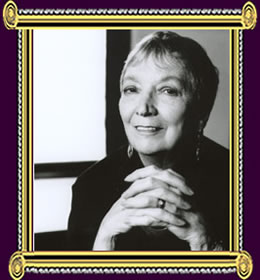
De Amerikaanse schrijfster Joan Didion werd geboren in Sacramento Valley op 5 december 1934. Zie ook alle tags voor Joan Didion op dit blog.


Uit: The Year of Magical Thinking

Life changes fast.
Life changes in the instant.
You sit down to dinner and life as you know it ends.
The question of self-pity.

Those were the first words I wrote after it happened. The computer dating on the Microsoft Word file (“Notes on change.doc”) reads “May 20, 2004, 11:11 p.m.,” but that would have been a case of my opening the file and reflexively pressing save when I closed it. I had made no changes to that file in May. I had made no changes to that file since I wrote the words, in January 2004, a day or two or three after the fact.

For a long time I wrote nothing else.

Life changes in the instant.
The ordinary instant.

At some point, in the interest of remembering what seemed most striking about what had happened, I considered adding those words, “the ordinary instant.” I saw immediately that there would be no need to add the word “ordinary,” because there would be no forgetting it: the word never left my mind. It was in fact the ordinary nature of everything preceding the event that prevented me from truly believing it had happened, absorbing it, incorporating it, getting past it. I recognize now that there was nothing unusual in this: confronted with sudden disaster we all focus on how unremarkable the circumstances were in which the unthinkable occurred, the clear blue sky from which the plane fell, the routine errand that ended on the shoulder with the car in flames, the swings where the children were playing as usual when the rattlesnake struck from the ivy. “He was on his way home from work—happy, successful, healthy—and then, gone,” I read in the account of a psychiatric nurse whose husband was killed in a highway accident. In 1966 I happened to interview many people who had been living in Honolulu on the morning of December 7, 1941; without exception, these people began their accounts of Pearl Harbor by telling me what an “ordinary Sunday morning” it had been. “It was just an ordinary beautiful September day,” people still say when asked to describe the morning in New York when American Airlines 11 and United Airlines 175 got flown into the World Trade towers. Even the report of the 9/11 Commission opened on this insistently premonitory and yet still dumbstruck narrative note: “Tuesday, September 11, 2001, dawned temperate and nearly cloudless in the eastern United States.”

didion

Joan Didion (Sacramento Valley, 5 december 1934)


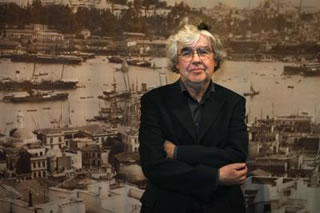
De Britse schrijver en regisseur Hanif Kureishi werd geboren op 5 december 1954 in Bromley, Kent. Zie ook alle tags voor Hanif Kureishi op dit blog.


Uit: Gabriel’s Gift

“School — how was, today?”

“Learning makes me feel ignorant,” said Gabriel. “Has Dad rung?”

As well as the fact he didn’t know where his father was, something strange was happening to the weather in Gabriel’s neighborhood. That morning, when he left for school with Hannah, there was a light spring shower, and it was autumn.

By the time they had reached the school gates, a layer of snow sat on their hats. At lunchtime in the playground, the hot floodlight of the sun — suddenly illuminated like a lamp — had been so bright the kids played in shirtsleeves.

In the late afternoon, when he and Hannah were hurrying home along the edge of the park, Gabriel became certain that the leaves in the park were being plucked from the ground and fluttered back to the trees from which they had fallen, before turning green again.

From the corner of his eye, Gabriel noticed something even odder.

A row of daffodils were lifting their heads and dropping them like bowing ballerinas at the end of a performance. When one of them winked, Gabriel looked around before gripping Hannah’s hairy hand, something he had always been reluctant to do, particularly if a friend might see him. But today was different: the world was losing its mind.

“Has he been in touch?” Gabriel asked.

Hannah was the foreign au pair.

“Who?” she said.

“My father.”

“Certainly no. Gone away! Gone!”

Gabriel’s father had left home, at Mum’s instigation, three months ago. Unusually, it had been several days since he had phoned, and at least two weeks since Gabriel had seen him.

Gabriel determined that as soon as they got back he would make a drawing of thewinking daffodil, to remind him to tell his father about it. Dad loved to sing, or recite poetry. “Fair daffodils, we weep to see / You haste away so soon…” he would chant as they walked.

For Dad the shops, pavements and people were alive like nature, though with more human interest, and as ever-changing as trees, water or the sky.

In contrast, Hannah looked straight ahead, as if she were walking in a cupboard. She understood little English and when Gabriel spoke to her she grimaced and frowned like someone trying to swallow an ashtray. Perhaps they were both amazed that a kid spoke better English than she did.”


kureishi

Hanif Kureishi (Bromley, 5 december 1954)


De Amerikaanse schrijver, journalist en columnist Calvin (Bud) Marshall Trillin werd geboren op 5 december 1935 in Kansas City, Missouri. Zie ook alle tags voor Calvin Trillin op dit blog.

Uit: Feeding a Yen

Not long after the turn of the millennium, I had an extended father-daughter conversation with my older daughter, Abigail, on the way back from a dim sum lunch in Chinatown. Abigail, who was living in San Francisco, had come to New York to present a paper at a conference. As a group of us trooped back toward our house in Greenwich Village, where she’d grown up, Abigail and I happened to be walking together. “Let’s get this straight, Abigail,” I said, after we’d finished off some topic and had gone along in silence for a few yards. “If I can find those gnarly little dark pumpernickel bagels that we used to get at Tanenbaum’s, you’ll move back to New York. Right?”
“Absolutely,” Abigail said.
There’s a great comfort in realizing that a child you’ve helped rear has grown up with her priorities straight.
When I phoned Abigail from the Oakland airport once to ask if she knew of an alternative route to her house in San Francisco–I’d learned of a huge traffic jam on the normal route, toward the Bay Bridge–she said, “Sure. Go south on 880, take 92 west across the bridge to 101, and we’ll meet you at Fook Yuen for lunch.” Fook Yuen is a dim sum restaurant in Millbrae, about five minutes from the San Francisco airport, and its way with a dumpling has persuaded us that flights in and out of San Francisco are best scheduled in the middle of the day.
I report this response to a traffic jam as a way of demonstrating not simply that Abigail always has a fallback career as a taxi dispatcher awaiting her but also that she has the sort of culinary standards that could induce her to switch coasts if the right bagel came along.“

trilling

Calvin Trillin (Kansas City, 5 december 1935)


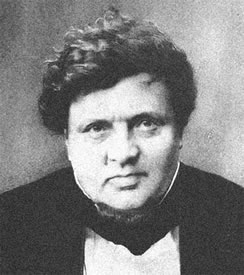
De Duitse dichteres en schrijfster Eugenie Marlitt werd geboren op 5 december 1825 in Arnstadt. Zie ook alle tags voor Eugenie Marlitt op dit blog.

Uit: Reichsgräfin Gisela

Seit dem Tode des Hüttenmeisters waren elf Jahre verflossen… Wäre – wie ein frommer Wahn annimmt – der abgeschiedene, unsterbliche Menschengeist wirklich verurteilt, in ewig beschaulicher Untätigkeit auf die alte irdische Heimat herabzusehen, dann hätte der Verstorbene, dessen Herz so warm und so treu für seine bedürftigen Landsleute geschlagen hatte, die tiefste Genugtuung empfinden müssen beim Anblick des Neuenfelder Tales.

Das weiße Schloß freilich lag noch so unberührt von Zeit und Wetter auf dem grünen Talgrunde, als sei es während der langen elf Jahre von einer konservierenden Glasglocke überwölbt gewesen… Da sprangen die Fontänen unveränderlich bis zu dem wie in den Lüften festgezauberten Gipfelpunkt, und ihr niederfallender Sprühregen ließ die Lichter des Himmels als Gold- und Silberfunken auf der beweglichen Wasserfläche des Bassins noch immer unermüdlich tanzen. Die Boskette, die Lindenalleen, das grüne Gefieder der Rasenplätze verharrte pflichtschuldigst in den Linien, die ihnen die künstlerische Hand des Gärtners vorgeschrieben. Auf den Balkonen leuchtete das unverblichene Federkleid der Papageien – sie schrien und plapperten die alten eingelernten Phrasen –, und im Schlosse flüsterten und huschten die Menschengestalten mit gebogenem Rücken und scheu devotem Fußtritt genau wie vor elf Jahren. Und sie waren wie hineingegossen in ihre Kniehosen und Strümpfe, und auf den blankgeputzten Rockknöpfen prangte das adlige Wappen, das den freigeborenen Menschen zum »Gut« stempelte.

Um alle diese wohlkonservierten Herrlichkeiten aber legte sich das ungeheure Viereck der Schloßgartenmauer, leuchtend weiß, sonder Tadel – es war ein streng behütetes Fleckchen Erde, konservativ, unverrückbar stillstehend in den einmal gegebenen Formen, wie die Adelsprinzipien selbst.“

marlipor

Eugenie Marlitt (5 december 1825 – 22 juni 1887)


Zie voor onderstaande schrijvers ook mijn blog van 5 december 2008.

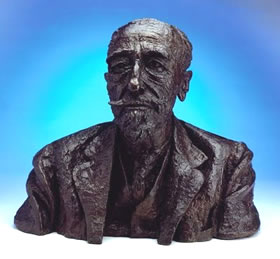
De Duitse schrijver Hans Hellmut Kirst werd geboren op 5 december 1914 te Osterode (voorm. Ost Preussen, nu Polen).

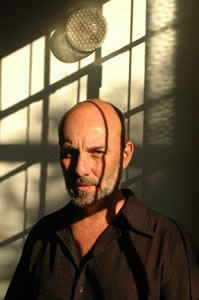
De Indische dichter Josh Malihabadi werd geboren in Malihabad in Brits India op 5 december 1898.
Rainer Maria Rilke, Geert Mak, Nikoloz Baratashvili, Emil Aarestrup, Nikolay Nekrasov, Trudi Guda, René Fallet, Samuel Butler, Thomas Carlyle

De Duitse dichter Rainer Maria Rilke werd als René Karel Wilhelm Johann Josef Maria Rilke op 4 december 1875 in Praag geboren. Zie ook alle tags voor Rainer Maria Rilke op dit blog.


Träume, die in deinen Tiefen wallen

Träume, die in deinen Tiefen wallen,
aus dem Dunkel lass sie alle los.
Wie Fontänen sind sie, und sie fallen
lichter und in Liederintervallen
ihren Schalen wieder in den Schoß.

Und ich weiß jetzt: wie die Kinder werde.
Alle Angst ist nur ein Anbeginn;
aber ohne Ende ist die Erde,
und das Bangen ist nur die Gebärde,
und die Sehnsucht ist ihr Sinn –


Der Engel

Mit einem Neigen seiner Stirne weist
er weit von sich was einschränkt und verpflichtet;
denn durch sein Herz geht riesig aufgerichtet
das ewig Kommende das kreist.

Die tiefen Himmel stehn ihm voll Gestalten,
und jede kann ihm rufen: komm, erkenn -.
Gieb seinen leichten Händen nichts zu halten
aus deinem Lastenden. Sie kämen denn

bei Nacht zu dir, dich ringender zu prüfen,
und gingen wie Erzürnte durch das Haus
und griffen dich als ob sie dich erschüfen
und brächen dich aus deiner Form heraus.


Uit: Die Sonette an Orpheus, Zweiter Teil

Sonett I

Atmen, du unsichtbares Gedicht!
Immerfort um das eigne
Sein rein eingetauschter Weltraum. Gegengewicht,
in dem ich mich rhythmisch ereigne.

Einzige Welle, deren
allmähliches Meer ich bin;
sparsamstes du von allen möglichen Meeren, –
Raumgewinn.

Wieviele von diesen Stellen der Raume waren schon
innen in mir. Manche Winde
sind wie mein Sohn.

Erkennst du mich, Luft, du, voll noch einst meiniger Orte?
Du, einmal glatte Rinde,
Rundung und Blatt meiner Worte.


rainer_maria_rilke

Rainer Maria Rilke (4 december 1875 – 29 december 1926)


De Nederlandse schrijver Geert Mak werd geboren op 4 december 1946 in Vlaardingen. Zie ook alle tags voor Geert Mak op dit blog.

Uit: In Europa

“De ooievaars waren al vertrokken. Hun nesten stonden stil en leeg op de schoorstenen. De zomer gloeide na, de burgemeester maaide zwetend het gemeentegras. Eer was geen mechanisch geluid te horen; alleen stemmen, een hond, een haan, overstekende ganzen, een houten paardenkar die krakend over de weg reed, de zeis van de burgemeester. Later op de middag werden de ovens aangestoken; een dunne sluier blauwe rook trok over de daken. Zo nu en dan krijste een varken.
Het waren de laatste maanden van het millennium, en ik reisde kriskras door Europa, een jaar lang. Ik deed dat in opdracht van mijn krant, NRC Handelsblad, waarvoor ik iedere dag een stukje moest leveren, rechtsonder op de voorpagina. het was een soort eindinspectie: hoe lag het continent erbij, aan het slot van de twintigste eeuw? Tegelijk was het een historische reis: ik volgde, voor zover mogelijk, de loop van de geschiedenis, op zoek naar sporen die waren achtergebleven. En ik had de stille getuigen inderdaad teruggevonden, vele tientallen: een overgroeide kuil bij de Somme, een gemitrailleerde deurpost in de Berlijnse Oranienburger Strasse, een besneeuwd bos bij Vilnius, een krantenarchief in München, een heuvel achter Barcelona, een wit-rood sandaaltje in Auschwitz. Het had bovendien iets met mijzelf te maken, deze reis. Ik wilde eruit, grenzen overschrijden, ervaren wat het inhield, dat mistige begrip ‘Europa’.
Europa is, zo had ik in de loop van dat jaar gemerkt, een continent waar je gemakkelijk heen en weer kunt reizen in de tijd. Alle stadia van de twintigste eeuw worden wel ergens beleefd en herbeleefd. Op de ponten van Istanbul is het altijd 1948. In Lissabon is het 1956. Op het Parijse Gare de Lyon is het 2020. In Budapest hebben jonge mannen de gezichten van onze vaders.
In dit Zuid-Hongaarse dorp Vásárosbéc bleef het almaar 1925. Er leefden zo’n tweehonderd mensen. Zeker een kwart van de bevolking bestond uit zigeuners. De gezinnen kregen een kleine uitkering – zo’n zestig euro per maand – en de vrouwen zeulden langs de deuren met manden en vage koopwaar. Hun huizen verkeerden in een staat van ontbinding, de deuren waren lappen en soms waren zelfs de kozijnen verdwenen, weggestookt tijdens een koude winter.
De geluiden van de zeisen en de paarden waren dan ook de geluiden van de armoede: een liter benzine voor een uurtje motormaaien kostte in Vásárosbéc, omgerekend naar de gemiddelde verdienste van het dorp, al gauw een dagloon. Het leven was hier half zo duur als in West-Europa, maar de mensen verdienden er tien keer zo weinig. Deze Hongaarse dorpelingen warden dus vijf keer zo arm als die in Jorwerd.
De zigeuners waren behoorlijk arm. Nog armer waren de Roemeense zigeuners, die soms met houten woonwagens in het dorp verschenen. En armer dan arm waren de rondtrekkende Albanese zigeuners.
Zij waren ook nog eens de paria’s van alle andere armen, de grootste schlemielen van Europa.“


Geert_Mak

Geert Mak (Vlaardingen, 4 december 1946)


De Georgische schrijver en dichter Nikoloz Baratashvili werd geboren op 4 december 1817 in Tbilisi. Zie ook alle tags voor Nikoloz Baratashvili op dit blog.


Twilight Over Mtatsminda

O Mtatsminda ! Thou Holy Mount ! the sight does haunt
The soul to thought – a place that wilderness has wrought
The dew divine like drops of pearl does grace the site
And, trembling, mingles in delight with soft twilight.
Both solitude and silence rule the place in proud and haughty state!
And from that mount my eyes behold a scene that rapture does create!
Below, the plain with ambrosial flowers is like a heavenly altar spread;
The fragrance like the incense sweet its blessings on the Mount does shed.
I still recall that lovely eve when full of grief
Your paths I trod, O dusky Mount, to seek relief;
My lonely soul in longing clung to twilight fair,
Which sorrow veiled with heaving sighs and beauty rare!
Ah! Nature wove a gentle dream of loveliness and sadness there.
O sky! O sky! You has engraved your image on my heart forever!
And when I gaze upon your blue my thoughts enraptured towards your fly
Alas, they cannot reach your heights, and in the air dissolve and die
Your radiance conceals this fleeting world of woes!
Beyond your realm my soul takes wing to seek repose
From dreary haunts where every cherished hope expires…
But woe! the gods shun man and all his heart’s desires.
In pensive thought entranced I viewed the waning of the heaven’s glow;
Soft twilight wrapt me in her arms and filled with dusk the glens below,
Where rivulets hummed in low response to gentle winds that haunting sighed;
My soul to nature seemed to cleave, and in her bosom’s depth to bide.
O glowing Mount! whose smiles and tears enthrall the breast;
A sight that cheers the heavy heart by cares oppressed.
My grieving soul with gladness now does seem to blend,
And yet, O Mount, your silent mourn’st, my gentle friend.
Deep silence quivered in delight as twilight dimmed the heaven’s dome;
And eve’s sweet star of love and dreams pursued the moon throughout the gloam.
O have you seen a virgin soul, aweary with excess of prayer?
And so the pale and languid moon came floating through the misty air.
Remembrance brings to mind again that eve in May


Baratashvili

Nikoloz Baratashvili (4 december 1817 – 21 oktober 1844)


De Deense dichter Emil Aarestrup werd geboren op 4 december 1800 in Kopenhagen. Zie ook alle tags voor Emil Aarestrup op dit blog.


A sonnet with a twist (1826)


What do they mean, these soft-pressed hands, these glances?

What’s really said by kisses, fond embraces?

Only the heart for such, sweet girl, has phrases:

My foolish one, what head can grasp such fancies?


But when I find my kisses shunned, forbidden,

My eyes, my arms by you so oft eluded,

Mine is the tiresome task, all else excluded,

Of letting wisdom flow from lips unbidden.


Know then: in part a voice may be disarming

And by poetic heart-felt force win over.

Yet that which is most sweet it ne’er advances.


Therefore let lips and arms, with bosom, glances,

– How shall I say it? – melt into each other

To form a single tongue, as mute as charming.


Vertaald door John Irons


Aarestrup

Emil Aarestrup (4 december 1800 – 21 juli 1856)


De Russische dichter Nikolay Nekrasov werd geboren op 4 december 1821 in Nemirovo. Zie ook alle tags voor Nikolay Nekrasov op dit blog.


On The Day Of Gogol’s Death

How blessed’s the good-natured poet,
With little bile and much emotion:
All lovers of the gentle arts
Send him sincerest greetings;

The admiration of the crowd

Sounds in his ear like rippling waves;

He is a stranger to self-doubt-

That torture of creative souls;


Lover of comfort and tranquility,

Shunning audacious satire,

He firmly dominates the crowd

With his peace-loving lyre.


He is not cursed nor driven out

But worshipped for his splendid mind,

While all his countrymen prepare

A monument to him in life.


But fate will show no mercy

To one whose noble genius

Has led him to unmask the crowd,

Expose its passions and mistakes.


His heart abrim with hate

His lips all clad in satire,

He wanders down a thorny path

His wrathful lyre in hand.


He is reviled at every step:

He catches sounds of admiration

Not in sweet murmurings of praise

But in wild cries of enmity.

With disbelief and new belief

In his high calling’s dream,

He preaches love to all

Through venomous denial.


His speech’s every syllable

Engenders for him cruel foes,

And all men, whether smart or dull,

Are quick to vilify him.


They c
urse at him from every side,

And only when they see his corpse

They’ll understand how much he did,

And that in hate, he was yet full of love! 


Kramskoi_Nikolay_Nekrasov_in_the_Period_of_Last_Songs

Nikolay Nekrasov (4 december 1821 – 8 januari 1878)
Geschilderd door Ivan Nikolaevich Kramskoy


Zie voor onderstaande schrijvers ook mijn blog van 4 december 2008.


De Surinaamse dichteres en cultureel antropologe Gertrude (Trudi) Marie Guda werd geboren in Paramaribo op 4 december 1940.


De Franse schrijver René Fallet werd geboren op 4 december 1927 in Villeneuve-Saint-Georges.


De Engelse schrijver, componist, filoloog en schilder Samuel Butler werd geboren op 4 december 1835 in Langar, Nottinghamshire.


De Schotse schrijver Thomas Carlyle werd geboren in Ecclefechan, gelegen in de regio Dumfries and Galloway in Schotland op 4 december 1795.

Joseph Conrad, Hendrik Conscience, Herman Heijermans, Grace Andreacchi, Ugo Riccarelli, Sergio Bizzio, France Prešeren, F. Sionil José, Franz Josef Degenhardt, Jules Claretie, Ludvig Holberg

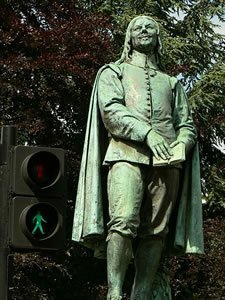
De Brits-Poolse schrijver Joseph Conrad werd geboren op 3 december 1857 in Berdichev, Rusland in een gezin met Poolse ouders. Zie ook alle tags voor Joseph Conrad op dit blog.


Uit: Herz der Finsternis (Heart of Darkness, vertaald door Sophie Zeitz) 


„Die Nellie, eine Hochseejacht, drehte sich ohne ein Flattern der Segel um den Anker und lag still. Die Flut hatte eingesetzt, es wehte kaum ein Wind und auf dem Weg flußabwärts blieb nichts anderes zu tun, als beizudrehen und den Wechsel der Gezeiten abzuwarten.

Der Unterlauf der Themse streckte sich vor uns aus wie der Anfang einer endlosen Wasserstraße. Draußen auf der offenen See verschmolzen Himmel und Meer fugenlos miteinander, und in dem leuchtenden Raum schienen die gegerbten Segel der mit der Flut herauftreibenden Boote in Trauben roten Tuchs stillzustehen, scharfe Spitzen getupft vom Gefunkel der lackierten Spriete. Dunst hing über den niedrigen Ufern, die zum Meer hin flach ausliefen und verschwanden. Über Gravesend war die Luft finster, und noch weiter oben schien sie sich zu einem trostlosen Schatten zu verdichten, der reglos über der größten – und großartigsten – Stadt der Erde brütete.

Der Director of Companies war unser Kapitän und unser Gastgeber. Wir anderen vier betrachteten voll Zuneigung seinen Rücken, während er am Bug stand und seewärts blickte. Auf dem ganzen Fluß war nichts, das auch nur halb so seemännisch wirkte wie er. Er glich einem Lotsen, für jeden Seemann die Personifizierung der Zuverlässigkeit. Es war schwer zu glauben, daß seine Arbeit nicht dort draußen in der leuchtenden Mündung war, sondern hinter ihm, inmitten des brütenden Schattens.

Uns verband, wie ich schon einmal gesagt habe, die See. Ihr Band einte unsere Herzen selbst über längere Trennungszeiten und hatte außerdem den Effekt, uns nachsichtig zu machen gegen eines jeden Hirngespinsten – ja, sogar Überzeugungen.

Der Anwalt, der beste aller Kameraden, hatte wegen seines hohen Alters und seiner vielen Tugenden das einzige Kissen an Bord und lag auf der einzigen Decke. Der Buchhalter hatte bereits einen Dominokasten hervorgeholt und spielte mit den Steinen Architekt. Marlow saß mit übereinandergeschlagenen Beinen rechts achtern gegen den Besanmast gelehnt. Seine Wangen waren eingefallen, das Gesicht war gelb, der Rücken gerade, seine ganze Erscheinung asketisch, und mit den herabhängenden Armen und nach vorn geöffneten Handflächen sah er aus wie ein Götzenbild. Nachdem sich der Director überzeugt hatte, daß der Anker griff, kam er nach achtern und setzte sich zu uns. Träge wechselten wir ein paar Worte. Dann senkte sich Schweigen über das Deck der Jacht. Aus irgendeinem Grund begannen wir nicht mit dem Dominospiel. Wir wollten unseren Gedanken nachhängen und fühlten uns zu nichts anderem in der Lage, als friedlich vor uns hinzustarren.“


conrad

Joseph Conrad (3 december 1857 – 3 augustus 1924)
Buste door Jacob Epstein, museum van Canterbury


De Vlaamse schrijver Henri (Hendrik) Conscience werd geboren in Antwerpen op 3 december 1812. Zie ook alle tags voor Hendrik Conscience op dit blog.


Uit: De Leeuw Van Vlaanderen Of De Slag Der Gulden Sporen

“De rode morgenzon blonk twijfelachtig in het oosten, en was nog met een kleed van nachtwolken omgeven, terwijl haar zevenkleurig beeld zich glinsterend in elke dauwdruppel herhaalde; de blauwe dampen der aarde hingen als een onvatbaar weefsel aan de toppen der bomen, en de kelken der ontwelkende bloemen openden zich met liefde om de jongste straal van het daglicht te ontvangen. De nachtegaal had zijn zoete liederen reeds meermalen gedurende de schemering herhaald, maar nu verdoofde het verwarde geschater van mindere zangers zijn verleidende tonen.
Een hoop ridders rende stilzwijgend door de velden van Roeselare. Het gerammel hunner uitrusting en de zware stappen hunner dravers verschrikten de vreedzame bewoners der wouden; want van tijd tot tijd wierp een hert zich uit het kreupelbos, en vluchtte sneller dan de wind voor dit nakend gevaar.
De kleding en de wapens dezer ridders waren zo kostelijk dat men, bij de eerste oogopslag, Graven en nog hogere heren eronder gissen kon. Een zijden Kolder hing hun met zwierige vouwen om het lichaam, terwijl een verzilverde helm hun het hoofd met purperen en lazuren vederen bekroonde.
Hun handschoenen, met ijzeren schelpen bedekt, en hun met goud doorwrochte knieplaten blonken ook niet weinig bij het morgenlicht. De schuimende en onrustige paarden wrongen het gebit met drift tussen de tanden, en dan bewogen de zilveren knopen en de zijden trossen huns tuigs zich liefelijk.
Alhoewel de uitrusting dezer reizigers niet ten oorloge geschikt was, mits zij geen harnassen droegen, kon men echter genoeg bemerken dat zij zich tegen vijanden voorzien hadden; want de mouwen van hun pantsers kwamen met hun armen door de kolders. Grote slagzwaarden hingen ook aan hun zadels, en de schildknapen voerden grote beukelaars achter hun meesters.
Elke ridder had zijn wapentekenen op de borst geborduurd, in zulker wijze dat men de stam van ieder herkennen mocht.–De koude des morgens had hun de lust tot spreken benomen, de klemmende nachtlucht bezwaarde hun oogleden; zij weerstonden de lastige vaak met moeite en bleven in een sluimerige ongevoeligheid verzonken.
Een jonge man ging te voet voor hen in de baan. Lange golvende haren rolden op zijn brede schouders; blauwe glinsterende ogen stonden vlammend onder zijn blonde wenkbrauwen, en een jonge baard krulde op zijn kin.–Een wollen kolder met een gordel was zijn kleedsel, en een kruismes in een lederen schede zijn wapen. Zichtbaar was het op zijn gelaat dat het gezelschap, aan hetwelk hij ten leidsman diende, hem niet aangenaam was. Er schuilde voorzeker iets geheims in zijn boezem, want hij wendde dikwijls de ogen met linkse blik naar de ridders. Lang van gestalte en buitengewoon sterk van leden, stapte de jongeling zo snel voort, dat de paarden moeite hadden om hem op een tred bij te houden.“


Hendrik_Conscience

Hendrik Conscience (3 december 1812 – 10 september 1883)
Portret door Jan Portaels


De Nederlandse schrijver Herman Heijermans werd geboren op 3 december 1864 in Rotterdam. Zie ook alle tags voor Herman Heijermans op dit blog.


Uit: Interieurs. Bep, die dwaze jongen

“Hooger trok Bep z’n been op, in wrevel beluisterend het geanimeerd spreken der twee. Dadelaar zat met het hoofd leunend op de hand, knikkend in plezierig begrijpen. André, rood-frisch van de straat, blij in zijn herinneringen vertelde tusschen rookdampjes door.
‘…. Heel curieus geval…. Acute Ruggemergsaandoening bij ’n werkman… Verbàzend merkwaardig….’
Hij werd gestoord door de huishoudster.
‘Zal ik opdoen, meneer?’
‘Doe maar op. Doe maar op!’
Luidruchtig vroolijk floot hij ’n wijsje uit de Zigeunerbaron.
Maar dan weer opgeruimd doorpratend….: ‘Wat zeg ik?…. Eén aandoening? Twéé tegelijk, hahaha!…. Bij vader en zoon…. Volkomen zekerheid…. En ’t prachtige is dat ’t eene geval ’t andere zoo heelemaal bevestigt!…. Weet je dat ze voor het nieuwe Viaduct bezig zijn onder water te werken?…. Die twee waren in dezelfde caisson om fundeering te metselen, nog niet eens bij veel atmosfeeren. Ongeveer twee. Allebei léélijk ‘r aan toe’….
‘Hé!’
‘Stel je voor dat de moeder aan bloedvergiftiging geloofde! Stomme menschen. Eerst dacht ik niet aan ’t ergste, niewaar? Bij twee tegelijk èn acúut. De zoon heeft Retentio urinae…. Frappant geval. . De vader volkomen paraplegie… Als ze ’n week vroeger om me gekomen waren, hè?…. De vader geef ‘k geen twee dagen meer.’
‘’k Zou ze naar ’t Gasthuis laten brengen.’
‘Jawel, de zoon. Die kan daar bèter behandeld worden. Natuurlijk heeft-ie al ’n Cystitis – maar de vader transporteer ‘k niet. ‘k Heb ‘m voorloopig ’n strychnine-injectie gegeven.’
‘Ik wil ‘m morgen wel eens zien.’
‘Verbazend-intressant. Als ze niet bij toeval met caissons onder water werken, heb je misschien nóóit gelegenheid zóó’n geval te zien.’


heijermans

Herman Heijermans (3 december 1864 – 22 november 1924)


De Amerikaanse dichteres en schrijfster Grace Andreacchi werd geboren op 3 december 1954 in New York. Zie ook alle tags voor Grace Andreacchi op dit blog.


Uit: Brother and Sister


“When I was eight years old something happened that changed the course of my life forever. My brother and I were skating on the pond in the woods behind our house when the ice cracked beneath us. I managed to roll clear of the hole onto a thicker patch of ice, but my brother drowned. He was only six. I wish I could relate that I made heroic efforts to save him, but in fact I did nothing of the kind. I lay very still on the ice, breathless with terror, and watched while he thrashed helplessly, then disappeared beneath the cold, black water and shards of broken ice.

For a long time after he died I didn’t think about my brother at all. I pretended to myself that I’d never had a brother, and this was made easier by the way every trace of him soon disappeared from our house. Practically overnight his toys were gone, his clothes were gone, his drawings vanished from the refrigerator door and his photograph from the wall, just as his voice vanished from the echo in the stairwell and his footprints from the lawn. Then one day I found a box of toy soldiers that had once belonged to him. He had hidden them in a secret place under the stairs, and no one had thought to look there. I found them by accident one hot, sunny afternoon when I was playing hide-and-seek with my imaginary friend, Gretel. I’d been hiding from Gretel for a while in the cupboard under the stairs, it was cool and dark there, and I was enjoying the respite from the heat and wondering how long it would take her to find me when I slipped my hand up behind the curve of the stairs and felt something. It was a shoebox held closed with rubber bands, and inside were my brother’s soldiers.

These soldiers were his favourite thing in the world. Not really soldiers, but medieval knights in armour, each sumptuously kitted out in individual style, and made of soft, pliable plastic that allowed you to change the angle of lance or plume. Many of them were on horseback, but a few were foot soldiers. The Black Knight, who straddled a black horse and swung a ferocious-looking spiked mace, was of course the villain. The knight with the sky blue plume on his helmet and the blue cross on his breastplate was known as Sir Lancelot and was my brother’s favourite. As I took them out of the box and handled them, one by one, everything about my brother returned to me. I remembered once again the sound of his voice, which was unusually low for a small boy, the way he used to roar at the birds to frighten them and then laugh deliriously as they fluttered away. I remembered his smell, and the colour of his hair, which was light brown and very curly. I took the soldiers back to my room and hid them under the bed.”


andreacchi

Grace Andreacchi (New York, 3 december 1954)


De Italiaanse schrijver Ugo Riccarelli werd geboren op 3 december 1954 in Turijn. Zie ook alle tags voor Ugo Riccarelli op dit blog en ook mijn blog van 3 december 2010.


Uit: Der vollkommene Schmerz (Vertaald door Karin Krieger)


„Unmittelbar bevor sie starb, tauchte Annina, an den Haselnußbaum im Garten gestützt, aus dem Schatten auf, in dem sich ihr Verstand seit vielen Jahren verborgen hatte, und sah in diesen wenigen Augenblicken, die der Tod ihr noch gewährte, wie im Flug das Haus mit der Pinie erneut vor sich und die Mena, die an eine Ecke des Backtrogs gelehnt betete, und gegenüber der Mena sah sie, wie ihre Mutter sie gebar und dabei in einem Schmerz schrie, der ihr vollkommen zu sein schien, und erst zuletzt erblickte sie, beinahe lauernd, ihren eigenen Kopf, der aus dem von der Anstrengung roten und prallen Leib heraustrat, und roch zum letztenmal den Veilchenduft ihres Zwillingsbruders, der sie aus dem Bauch hinaus in die Welt schob.

Es war wie ein Blitz, wie ein Niesen von solcher Heftigkeit, daß Annina sich mit beiden Händen am Haselnußbaum abstützen mußte, um nicht zu fallen, und ihr mit matter, nur noch flüsternder Stimme ein letztes Seufzen entfuhr.

»Nun sieh dir das an …« sagte sie, erstaunt über das verblüffende Schauspiel.

Dann ließ sie es geschehen, daß sich ihr Mund in einem Lächeln entspannte, glitt langsam zum Fuß des Stammes hinab und hielt dort für immer inne. Als der maestro in Colle eintraf, wurden in der Ebene die letzten Bauarbeiten für den Bahnhof ausgeführt, und ringsum entstanden bereits die ersten Häuser der neuen Siedlung. Sie schossen wie Pilze aus dem Boden, und die Leute schienen die Fertigstellung der Bahnstrecke aufgeregt zu begrüßen, würde sie doch die Eisenbahn und den Fortschritt bringen. Noch war das Hauptgebäude nicht fertig, so daß die Passagiere viel weiter hinten, zum Padule Lungo hin, aussteigen mußten und Colle Alto nur erreichten, wenn sie eine der seltenen Kutschen oder die Freundlichkeit eines Bauern abpaßten, der sie auf seinem Ochsenkarren

mitnahm.

Von der Straße aus, die zu dem seit ewigen Zeiten auf dem Berg verschanzten Ort hinaufführte, waren deutlich die von der Bahntrasse durchschnittenen Felder zu erkennen: eine Wunde, die sich vom Padule quer durch die Geometrie der von Gräben und Zypressenreihen begrenzten

Gutshöfe grub. Die Welt wirkte sauber getrennt: zur Linken, entlang dem noch weißen Band des Schotters, eine Fülle von Menschen, Karren und Gerätschaften, ein Gewimmel wie von Ameisen, die zwischen der Eisenbahnstrecke und den im Bau befindlichen Häusern hin und her wuselten. Zur Rechten, kurz hinter dem Bahnhof, auf der Seite, wo die Schienen bereits montiert waren, lag die Welt

dagegen friedlich da, und auf den von der Trasse geteilten Feldern ließ sich höchstens ein schwacher, von einem Pflug verursachter Staubwirbel ausmachen.“


Riccarelli

Ugo Riccarelli (Turijn, 3 december 1954)


De Argentijnse schrijver Sergio Bizzio werd geboren op 3 december 1956 in Villa Ramallo, in de provincie Buenos Aires  Behalve als auteur van romans, korte verhalen en toneelstukken staat Bizzio bekend als scenarioschrijver en als dichter. Zijn korte verhaal ‘Cinismo’ – over een jonge hermafrodiet in de puberteit – werd verfilmd als XXY en won vele prijzen, waaronder vier in Cannes in 2007. Sergio Bizzio  breekt nu ook door in onder meer de Verenigde Staten, Duitsland, Engeland en Frankrijk.


Uit: Rage (Vertaald door André Gabastou)


„L’une des premières choses qui retint son attention fut la netteté avec laquelle les bruits de la rue entraient dans la maison; à certaines heures de la nuit, il pouvait même entendre les griffes d’un chien gratter le trottoir. Au fur et à mesure qu’il découvrait l’intérieur de la maison, il fut surpris parce qu’elle était plus petite qu’il ne l’avait cru en la voyant de l’extérieur. Et non pas parce qu’elle était surchargée de meubles, mais tout simplement parce que, vue de dehors, il pouvait l’embrasser d’un seul regard, chose impossible de l’intérieur.
Il s’était installé tout en haut, dans les combles, où il se
sentait mieux caché. La première nuit, il ne dormit pas. La deuxième, craignant que quelqu’un entre, il dormit sous le lit. La clé était dans la serrure, mais il lui fallut plus d’un jour pour décider qu’il pouvait fermer la porte et l’ôter : si quelqu’un, pour telle ou telle raison, montait dans la pièce et découvrait que la porte était fermée, il penserait à coup sûr qu’une personne de la maison l’avait fermée; on chercherait la clé, ne la trouverait pas, ferait appel à un serrurier et peut-être même renoncerait à entrer. Que pouvait-on aller chercher dans cette pièce? Il n’y avait rien à part un lit avec un matelas et une armoire vide.
Pendant ses premières nuits dans la maison, il eut, toutefois, moins de préventions que Rosa quand elle avait commencé à y travailler. Rosa, bien qu’elle eût été reçue avec un décalogue d’obligations et d’interdictions qui, d’une certaine manière, facilitèrent son service et l’utilisation de son temps libre, s’était sentie perdue, toute petite et effrayée. Mais après avoir appris où étaient la cire ou la jeannette et dans quel tiroir de l’armoire se trouvaient les slips de monsieur et les blouses de madame, elle se sentit plus à l’aise, familiarisée avec le fonctionnement général de la maison.“


sergiobizzio

Sergio Bizzio (Villa Ramallo, 3 december 1956)


De Sloveense dichter en schrijver France Prešeren werd geboren op 3 december 1800 in Vrba. Zie ook mijn blog van 3 december 2006 en ook mijn blog van 3 december 2008.


VERLORENER GLAUBE  


Der Augen sanfter Himmelsschein

Glänzt, so wie früher, klar und rein.

Der Wangen zarte Röte glüht

Und blüht, so wie sie einst geblüht.


So lächelnd ist das Lippenpaar,

Sein Wort so süss, als wie es war.


Der Busen ist so weiss, wie je,

Die Zeit nahm nichts von seinem Schnee.


Es zeigen Leib sich, Fuss und Hand,

Ganz, wie ich ehedem sie fand.


Die Schönheit, Liebenswürdigkeit,

Ist heute, wie zu jener Zeit.


Der Glaube nur ist mir geraubt,

Mit dem ich einst an dich geglaubt.


Die reine Glorie allein,

Die Glaube gibt, ist nicht mehr dein.


Ein Blick, nur einer, hat zerstört,

Was nie mehr wieder dir gehört.


Und wenn du lebtest ewiglich,

Nie wirst du, was du warst, für mich.


Mein Herz, als ein Altar, umfing

Dich, Gottheit einst, jetzt- schönes Ding.


Vertaald door  Lili Novy


preseren_france1

France Prešeren (3 december 1800 – 8 februari 1849)


Zie voor onderstaande schrijvers ook mijn blog van 3 december 2008.


De Filipijnse schrijver F. Sionil José werd geboren op 3 december 1924 in Rosales, Pangasinan.


De Duitse dichter, folkzanger en  jurist Franz Josef Degenhardt werd geboren op 3 december 1931 in Schwelm.


De Franse schrijver, criticus, theaterdirecteur en  journalist Jules Claretie werd geboren op 3 december 1840 in Limoges.


De Noorse schrijver Ludvig Holberg werd geboren in Bergen op 3 december 1684. Zie ook mijn blog van 3 december 2006.

Frédéric Leroy, Botho Strauß, Ann Patchett, George Saunders, T. C. Boyle, Eric L. Harry

De Vlaamse dichter Frédéric Leroy werd geboren op 2 december 1974 in Blankenberge. Zie ook alle tags voor Frédéric Leroy op dit blog.


Poëzie

Overdrijf nu niet – zij is lang
geen heldin met ontblote borst
die over lijken van de vijand stapt
en tirannen onthoofdt, noch de fakkel
van de humanisten, heilige belofte
van gelijkheid en broederschap,
blauwe fee die hout tot vlees maakt,
dan tot duurzaam aluminium, bron
van eeuwige jeugd of miraculeuze brug
over de vuurzee.

Nee, zij is geen fata morgana
maar de vuurzee zelf, lichtekooi
met tuberculose, vulgaire slet
die zwarte nagels in je rug plant,
infecties zaait, de laffe slag
van het ezelskaakbeen, schreeuw
van de vermoorde, geneuzel
van de bronstige sjamaan, lied
over de wereldslang en het ei

dat breken zal.


Schoolplein

Dat ik hier nu weer sta en over de muren

gluur naar het plein en hoe de bel dan gaat,
de hel bevriest, ik mijn vertrapte zelf opraap,
in de rij ga staan, de broek gladstrijk, hoe zij,
nu ook weer hier, het ijle, vlasblonde meisje,
ach, hoe zij dan hap in de appel stapt en hap
door die zure groene bol hapt en naast me
staat met een rake krakende appelhap,
bloedend op het witte vruchtvlees trapt.

Nee. Dat ik nu hier weer sta en zwijgend
naar een keurig ontruimd speelplein staar,
en hoe met z’n rattentanden de kindertijd
schuldig is en ettert als geschaafde knieën,
strijdbaar geurt naar gras en melk en krijt.


Onrust

Over de pijnboomgrens wacht de maan halfvol
en geel als een zuurtje op alarmfase twee
van het nachtelijk rampenplan.
‘Er lijkt wat,’
fluister je, ‘er lijkt wat in het gras te leven.’

maar ook jij weet: dit is geen leven, dit is
het stuiptrekkend sterven van iets jong
en vormloos.
‘Wat dan’’ Noem het
een gedachte, noodlottig in het gras verloren
door dat meisje in haar witte jurk (deze middag,
toen de zon scheen en er gezongen werd).


Jij legt je te slapen, naakt onder de bedsprei,
beeldt je stilte in, ik streel je haren en jij
ontwerpt zelfs een glimlach,

alles lijkt vredig,
terwijl de wind zich door de kieren sleept.


Leroy

Frédéric Leroy (Blankenberge, 2 december 1974)


De Duitse schrijver Botho Strauß werd geboren op 2 december 1944 in Naumburg an der Saale. Zie ook alle tags voor Botho Strauß op dit blog.

Uit: Ithaka

Oberes Gemach der Penelope. Halbverdeckt von der Rückenlehne sitzt die Fürstin auf ihrem Thronsessel. Ihr gegenüber auf einem Schemel Amphinomos, ein junger Freier.


PENELOPE Amphinomos. Du allein weißt nun, wie ich, die Bittere, lebe. Daß mein Gesicht vom Lächeln träumt wie von einer fernen Jugendfreude. Ich sehe, daß du ein Herz besitzt.

Ja, ein Herz. Anstand. Liebenswürdigkeit. Daß du mich achtest und dich nicht scheust, in die schwarze Flamme zu blicken, die ich bin — die mich verzehrt.

AMPHINOMOS Was von Eurem Rätsel ist mir begreiflich’ Was werde ich nie verstehen’

PENELOPE Du hast diesen riesigen Leib. Er zwingt dich, immer aufrecht zu sitzen. Ich halte mich gerade. Damit mir der Bauch nicht ans Kinn stößt. Du mußt dich langsam bewegen, mußt immer langsam gehen, gerade sitzen, gerade lehnen. Aber es gibt Stunden, da möchtest du dich verkriechen. Gar nicht so einfach, irgendwo einen Schlupfwinkel zu finden mit dem Leib, wo du dich verkriechen kannst, wie dir zumute ist.

AMPHINOMOS Die Fürstin könnte sich in eine entfernte Kammer zurückziehen, unerreichbar für die Rufe der Freier.

PENELOPE Dabei wispert’s in mir, drinnen bin ich eine kleine, zarte Person. Draußen fällt Licht auf meine speckige Haut. Ich glänze wie eine schwitzende Stute. Drinnen kauere ich, schleiche wie ein Schatten auf der Mauer… Hat man aber einmal von mir den Koloß gesehen, so wird man nicht mehr nach dem zerbrechlichen Wesen fragen, das da drinnen lebt.

AMPHINOMOS Die Fürstin darf nicht erwarten, daß die Vorstellungskraft eines Menschen ausreicht, um gegen die Leibesfülle, die er vor Augen hat, anzukämpfen und sich ein Bild zu erschaffen von der mageren, der entbehrungsvollen, der wahren Fürstin.  Allein die Hände. Die Finger sind zahlreich mit

Ringen bestückt .. .

PENELOPE Nur um von den feisten Klumpen selber abzulenken!

Die Hände, du siehst es, liegen weit oben, knapp unterhalb der Leistengegend, ein wenig nach innen verdreht, liegen gleich vorn auf den Fleischkissen der Oberschenkel. Meist stehen

die Ellbogen ein wenig ab, wenn ich mich aufstütze. Ich sehe dann aus wie eine Marktfrau, die mit dem richtigen Hintern auf dem richtigen Fleck sitzt. Doch die bin ich nicht.

Amphinomos! Befreie die Gefangene aus der Götzenstatur ihres Leibes! Durchschau, ich bitte, alles Stattliche, Große an mir! Befrei das zarte Geschöpf, dessen Rufe — elende, verzweifelte

— du deutlich vernimmst aus der Tiefe dieses Kolosses!

Auf der Kante des Ölbaumbetts sitzen die Drei fragmentarischen Frauen. Von der einen leuchtet nur das Knie. Von der anderen nur das Handgelenk. Von der Dritten nur im ausgeschnittenen Kleid das linke Schlüsselbein.

AMPHINOMOS Das kann ich nicht.’


Boto_Strauss

Botho Strauß (Naumburg, 2 december 1944)


De Amerikaanse schrijfster Ann Patchett werd geboren in Los Angeles op 2 december 1963. Zie ook alle tags voor Ann Patchett op dit blog.

Uit: Run

Bernadette had been dead two weeks when her sisters showed up in Doyle’s living room asking for the statue back. They had no legal claim to it, of course, she never would have thought of leaving it to them, but the statue had been in their family for four generations, passing down a maternal line from mother to daughter, and it was their intention to hold with tradition. Bernadette had no daughters. In every generation there had been an uncomfortable moment when the mother had to choose between her children as there was only one statue and these Irish Catholic families were large. The rule in the past had always been to give it to the girl who most resembled the statue, and among Bernadette and her siblings, not that the boys ever had a chance, Bernadette was the clear winner: iron rust hair, dark blue eyes, a long, narrow nose. It was frankly unnerving at times how much the carving looked like Bernadette, as if she had at some point modeled in a blue robe with a halo stuck to the back of her head.

‘I can’t give it to you,’ Doyle said. ‘It’s in the little boys’ room, on the dresser. Tip and Teddy say a prayer to it at night.’ He kept his eyes on them steadily. He waited for an apology, some indication of backing down, but instead they just kept staring right at him. He tried again. ‘They believe it’s actually a statue of her.’

‘But since we have daughters,’ Serena said, she was the older of the two, ‘and the statue always passes on to a daughter—’ She didn’t finish her thought because she felt the point had been made. She meant to handle things gracefully.

Doyle was tired. His grief was so fresh he hadn’t begun to see the worst of it yet. He was still expecting his wife to come down the stairs and ask him if he felt like splitting an orange. ‘It has in the past but it isn’t a law. It can go to a son for one generation and everyone will survive.’

They looked at each other. These two women, these aunts, had supported their now dead sister in her limitless quest for children but they knew that Doyle didn’t mean for the family’s one heirloom to pass to Sullivan, his oldest son. He meant for the statue to go to the other ones, the ‘little boys’ as everyone called them. And why should two adopted sons, two black adopted sons, own the statue that was meant to be passed down from redheaded mother to redheaded daughter’’


patchett

Ann Patchett (Los Angeles, 2 december 1963)


De Amerikaanse schrijver George Saunders werd geboren op 2 december 1958 in Chicago. Zie ook alle tags voor George Saunders op dit blog.

Uit: Pastoralia

“This morning I go to the Big Slot and find it goatless. Instead of a goat there’s a note:

Hold on, hold on, it says. The goat’s coming, for crissake. Don’t get all snooty.

The problem is, what am I supposed to do during the time when I’m supposed to be skinning the goat with the flint’ I decide to pretend to be desperately ill. I rock in a corner and moan. This gets old. Skinning the goat with the flint takes the better part of an hour. No way am I rocking and moaning for an hour.

Janet comes in from her Separate Area and her eyebrows go up.

‘No freaking goat’ she says.

I make some guttural sounds and some motions meaning: Big rain come down, and boom, make goats run, goats now away, away in high hills, and as my fear was great, I did not follow.

Janet scratches under her armpit and makes a sound like a monkey, then lights a cigarette.

‘What a bunch of shit,’ she says. ‘Why you insist, I’ll never know. Who’s here’ Do you see anyone here but us’’

I gesture to her to put out the cigarette and make the fire. She gestures to me to kiss her butt.

‘Why am I making a fire’’ she says. ‘A fire in advance of a goat. Is this like a wishful fire’ Like a hopeful fire’ No, sorry, I’ve had it. What would I do in the real world if there was thunder and so on and our goats actually ran away’ Maybe I’d mourn, like cut myself with that flint, or maybe I’d kick your ass for being so stupid as to leave the goats out in the rain. What, they didn’t put it in the Big Slot’’

I scowl at her and shake my head.

‘Well, did you at least check the Little Slot’’ she says. ‘Maybe it was a small goat and they really crammed it in. Maybe for once they gave us a nice quail or something.’

I give her a look, then walk off in a rolling gait to check the Little Slot.

Nothing.

‘Well, freak this,’ she says. ‘I’m going to walk right out of here and see what the hell is up.’

But she won’t. She knows it and I know it. She sits on her log and smokes and together we wait to hear a clunk in the Big Slot.

About lunch we hit the Reserve Crackers. About dinner we again hit the Reserve Crackers.

No heads poke in and there’s no clunk in either the Big or Little Slot.

Then the quality of light changes and she stands at the door of her Separate Area.”


Saunders-George

George Saunders (Chicago, 2 december 1958)


De Amerikaanse schrijver Thomas Coraghessan Boyle werd geboren op 2 december 1948 in Peekskill, New York. Zie ook alle tags voor T. C. Boyle op dit blog.


Uit: Drop City


The morning was a fish in a net, glistening and wriggling at the dead black border of her consciousness, but she’d never caught a fish in a net or on a hook either, so she couldn’t really say if or how or why. The morning was a fish in a net. That was what she told herself over and over, making a little chant of it-a mantra-as she decapitated weeds with the guillotine of her hoe, milked the slit-eyed goats and sat down to somebody’s idea of porridge in the big drafty meeting room, where sixty shimmering communicants sucked at spoons and worked their jaws.
Outside was the California sun, making a statement in the dust and saying something like ten o’clock or ten-thirty to the outbuildings and the trees. There were voices all around her, laughter, morning pleasantries and animadversions, but she was floating still and just opened up a millionkilowatt smile and took her ceramic bowl with the nuts and seeds and raisins and the dollop of pasty oatmeal afloat in goat’s milk and drifted through the door and out into the yard to perch on a stump and feel the hot dust invade the spaces between her toes. Eating wasn’t a private act-nothing was private at Drop City-but there were no dorm mothers here, no social directors or parents or bosses, and for once she felt like doing her own thing. Grooving, right? Wasn’t that what this was all about? The California sun on your face, no games, no plastic society-just freedom and like minds, brothers and sisters all?
Star-Paulette Regina Starr, her name and being shrunk down to four essential letters now-had been at Drop City for something like three weeks. Something like. In truth, she couldn’t have said exactly how long she’d been sleeping on a particular mattress in a particular room with a careless warm slew of non-particular people, nor would she have cared to. She wasn’t counting days or weeks or months-or even years. Or eons either. Big Bang. Who created the universe? God created the universe. The morning is a fish in a net. Wasn’t it a Tuesday when they got here? Tuesday was music night, and today-today was Friday.”


tc-boyle

T. C. Boyle (Peekskill, 2 december 1948)


De Amerikaanse schrijver Eric L. Harry werd geboren op 2 december 1958 in Ocean Springs, Mississippi. Zie ook mijn blog van 2 december 2007.

 Uit: Invasion


Trotz der abendlichen Stunde war die Luft unangenehm. Ein nachmittägliches Gewitter hatte stickige, feuchte Luft zurückgelassen. Captain Jim Hart von den US Army Special Forces kletterte die Leiter zu dem getarnten Hochstand für die Rehjagd hinauf. Mit der Linken umklammerte er die Sprossen der Leiter, mit der Rechten seine H&K Maschinenpistole. Die Gummisohlen seiner Kampfstiefel verursachten keinerlei Geräusch. Oben angekommen, spähte er in den kleinen dunklen Raum, an dessen Wänden Gewehre mit langen Zielfernrohren lehnten. Schwach vernehmbares Schnarchen verriet ihm, wo sich die beiden Männer aufhielten. Sie lagen nebeneinander in offenen Schlafsäcken, deren Reißverschlüsse nicht zugezogen und die oben zurückgeschlagen waren. Offensichtlich wollten sie sich durch die Brise kühlen lassen, die auch in dieser schwülen Nacht herüberwehte.
Hart hängte die MP über seine Schulter und zog sein Messer aus der Scheide. Die fast fünfundzwanzig Zentimeter lange Klinge war von einem dumpfen Schwarz, nur an den Seiten glänzte sie silbrig, da sie an einem an der Scheide befestigten Stein geschliffen worden war.
Vorsichtig kletterte Hart zwischen die beiden Männer in den engen Raum.“


Larry

Eric L. Harry (Ocean Springs, 2 december 1958)

Tahar Ben Jelloun, Daniel Pennac, Pierre Kemp, Mihály Vörösmarty, Valery Bryusov, Ernst Toller

De Marokkaanse romanschrijver, dichter en essayist Tahar Ben Jelloun werd geboren in Fez op 1 december 1944. Zie ook mijn blog van 1 december 2007 en ook mijn blog van 1 december 2008.

Uit: Amours sorcières

En se réveillant, Salem se dit: tout est écrit, alors à quoi bon se lever, sortir, travailler, courir, mentir, espérer, etc.? Son rêve l’a encore troublé. Ce n’est pas la première fois qu’il voit sa femme sur une terrasse blanche, surexposée à la lumière, sans aucun son, étendant des draps de couleur et semblant envoyer des signes à un inconnu. Elle le voit, lui fait signe de s’en aller et de la laisser. Elle lui dit quelque chose qu’il n’entend pas. Il rebrousse chemin, se donne une claque sur la joue et bredouille des mots étranges.

Il lève la tête et lit une publicité qui défile sur un écran suspendu par deux chimpanzés ivres: «Tout est écrit; il n’y a rien à faire; pour vos messages faites confiance à Sony et à la bière Casablanca…» Les mots repassent à l’envers pendant que les singes pleurent de rire. Un cheval peint en vert traverse la rue. Il se réveille les cheveux ébouriffés, la bouche pâteuse et les yeux à moitié ouverts. Ce rêve l’a de nouveau contrarié. Chaque fois qu’il mange des lentilles au dîner, il fait le même rêve. Il ne voit pas le rapport entre les deux choses mais décide de se faire préparer un grand plat de lentilles aux tomates et aux oignons, espérant connaître la fin du rêve.

Sa femme dort encore. Elle est sur le ventre, sa chemise de nuit en satin ne la couvre pas entièrement. Il passe la main droite sur ses fesses nues. Elle ne bouge pas, ne sent rien. Il l’observe encore un moment et rage de ne pas lire dans son sommeil. Peut-être qu’elle fait le même rêve que lui, peut-être qu’elle est dans une chambre avec l’inconnu qui lui caresse les fesses. Il s’approche d’elle, sent sa nuque puis fourre son nez dans sa chevelure épaisse. Il passe son bras sous sa taille et la serre contre lui. Il lèche le lobe de son oreille droite. Elle se dégage doucement de son étreinte, change de position et continue de dormir. Il se persuade qu’elle fait semblant d’être plongée dans le sommeil. Pour en avoir le cœur net, il monte sur elle et glisse son pénis entre ses fesses. Elle pousse un petit cri de plaisir et s’arrange pour qu’il la pénètre en douceur. Elle se laisse faire tout en gardant les yeux fermés. Après l’amour, elle tend la main pour retenir son homme puis s’endort heureuse, un léger sourire sur les lèvres.“


ben-jelloun

Tahar Ben Jelloun (Fez, 1 december 1944)


De Franse schrijver Daniel Pennac werd geboren in Casablanca op 1 december 1944. Zie ook mijn blog van 1 december 2007 en ook mijn blog van 1 december 2008.


Uit: La Fée Carabine


“Ce n’est pas de la distraction, c’est de l’inquiétude.
Mon œil n’est pas vraiment sur l’échiquier. Mon œil épie les grands-pères. Mauvaise heure pour eux, le coucher du soleil. C’est entre chien et loup que le démon de la dope les démange. Leur cervelle réclame
la sale piquouse. Ils ont besoin de leur dose. Pas le moment de les perdre de vue. Les enfants comprennent la situation aussi bien que moi et chacun fait de son mieux pour occuper son grand-père attitré. Clara
demande toujours plus de précisions à Papy-Rognon (ex-boucher à Tlemcen) sur l’épaule d’agneau à la Montalban. Jérémy, qui redouble sa cinquième, prétend vouloir tout connaître de Molière, et le vieux
Risson, son grand-père à lui (un libraire à la retraite) multiplie les indiscrétions biographiques. Maman, immobile dans son fauteuil de femme enceinte, se laisse indéfiniment friser et défriser par Papy-Merlan, l’ancien coiffeur, pendant que le Petit supplie Verdun
(le doyen des quatre grands-pères, 92 berges!) de l’aider à remplir sa page d’écriture.
Chaque soir c’est le même rituel: la main de Verdun tremble comme une feuille, mais, à l’intérieur, celle du Petit la stabilise, et l’aïeul croit dur comme fer qu’il trace ses anglaises aussi joliment qu’avant la Première
Guerre. Il est triste, pourtant, Verdun, il fait écrire au Petit un seul prénom sur son cahier: Camille, Camille, Camille, Camille… sur toute la longueur des lignes.
C’est le prénom de sa fille, morte il y a 67 ans, à l’âge de six ans, juste à la fin de la Der des Ders, fauchée par l’ultime rafale, celle de la grippe espagnole. C’était vers l’image de Camille que Verdun tendait ses mains tremblantes quand il a commencé à se shooter. Il se rêvait, bondissant de sa tranchée, zigzaguant entre les balles, cisaillant les barbelés, déjouant les mines, et courant vers sa Camille, sans fusil, bras ouverts. Il traversait ainsi toute la Grande Guerre et trouvait une
petite Camille morte, momifiée, plus ratatinée à six ans qu’il ne l’est lui-même aujourd’hui. Double dose pour la seringue.
Depuis que je le planque chez nous, Verdun ne se shoote plus. Quand le passé le prend à la gorge, il regarde juste le Petit, les yeux noyés, et mUmlure : « Pourquoi qu’ t’es pas ma p’tite Camille? » Parfois, il
lâche une larme sur le cahier d’écriture, et le Petit dit:
– T’as encore fait un pâté, Verdun…
C’est tellement déchirant que l’ex-séminariste Stojilkovicz, ex-révolutionnaire, ex-vainqueur des armées Vlassov et de l’hydre nazie, que Stojil, présentement conducteur de bus pour touristes CCCP, et pour vieilles dames seules le samedi et le dimanche, que Stojil, dis-je, se racle la gorge et grogne:
– Si Dieu existe, j’espère qu’Il a une excuse valable.”

daniel-pennac

Daniel Pennac (Casablanca, 1 december 1944)


De Nederlandse dichter Pierre Kemp werd geboren in Maastricht op 1 december 1886. Na zijn lagere school was Kemp als plateelschilder werkzaam bij de Société Céramique en daarna tot aan zijn pensioen, als loonadministrateur, bij de steenkoolmijn “Laura en Vereeniging” te Eygelshoven. Pierre Kemp debuteerde als dichter met een sonnet in De Limburger Koerier van 23 maart 1910. In 1914 verscheen, onder aanmoediging van de Jezuïetenpater J. van Well, zijn eerste dichtbundel. Tussen 1915 en 1916 werkte hij als leerling-journalist bij De Tijd in Amsterdam, maar door heimwee keerde hij gauw terug naar Maastricht. In 1918 huwde Kemp Hubertina Catharine Mommers, die hem drie zonen schonk. In 1934 verscheen Stabielen en passanten, de bundel die ‘Kemps tweede debuut’ wordt genoemd, vanwege de lichtere toon en de speelse, bescheiden verzen. Een bijzonder werk verscheen in 1960 toen hij samen met de kunstschilder Willem Hofhuizen Les Folies Maestrichtoises vervaardigde, een gedichtenbundel gebaseerd op de coupletten van François Couperin, Les Folies Françaises, ter ere van de 50e verjaardag van Fernand Lodewick, een bekend neerlandicus die in die tijd de Nederlandse lycea voorzag van leerboeken. Pierre Kemp was naast dichter ook een verdienstelijk kunstschilder. In 1975 vond postuum een expositie plaats in het Bonnefantenmuseum in Maastricht.


Rose madder


Eens komt het eind aan al mijn mooie kleuren,

als nu, en dan de doodsdienst zonder fantasie.

Misschien dat rose en gele bloemen geuren

rond het kadaver van Pierre l’Englouti.

Geen witte, geen in lila, geen in blauw

en zeker geen met geuren van de vrouw.

Kom, kom, ik leef nu nog en ik wil

voor ’t laatst eens kijken door mijn rose bril,

als toen ik mijn eerste boompje tekende

met meer dan rose appels naast een beek en de

kimmen van uit mijn kleine bed

hoorde in muzieken van oranje en violet.

Mijn tijd is om! Als alle wijzen en dwazen

moet ik gaan. Van heel het mensenspel

neem ik afscheid door mijn bril met rose glazen

en wuif ik de Grote Verfdoos Aarde en Zon voorgoed:

‘Vaarwel!’


Fanfare

Ik sta al lang niet meer vooraan,
als er stoeten door de straten gaan.
Ik moet luisteren naar bomen
en niet naar mensen, die komen.
Ze komen, de mensen, en gaan voorbij
in gelederen van dwazen,
maar de élite onder hen, voor mij, zijn zij,
die in koperen buizen blazen.

Kemp

Pierre Kemp (1 december 1886 – 21 juli 1967)


De Hongaarse dichter Mihály Vörösmarty werd geboren op 1 december 1800 in Puszta-Nyék. Zie ook mijn blog van 1 december 2006 en ook mijn blog van 1 december 2008.


Schlechter Wein


Freund, laß uns trinken, eh die Welt verdorrt,

zumal für Dichter, deren Trank das Wort.

Für einen, der einst schrieb das “Fóter Lied”,*

solch ein Gesöff! Seis drum, ihm recht geschieht!

Heda, Schankwirt, Giftmischer, du,

was guckst du? Wein her, immer zu!

Ja, von dem Krätzer bring geschwind,

da wir doch Ungarns Dichter sind.


Ein Jammerwein, den jeder bei uns trinkt,

egal ob schwarz ob grau sein Bartwuchs winkt,

nur nicht der Pfaff, auch nicht der weise Mann,

die haben, was ich nur erdichten kann.

Heda, Schankwirt, Giftmischer, du,

was guckst du? Wein her, immer zu!

Ja, von dem Krätzer bring geschwind,

da wir doch Ungarns Dichter sind.


Man sagt, in Erlau wächst – es kann schon sein,

ich hab ihn nicht probiert – der beste Wein.

Besungen hab ich Wein und Helden dort,

doch keiner bot ein Glas mir an am Ort.

Heda, Schankwirt, Giftmischer, du,

was guckst du? Wein her, immer zu!

Ja, von dem Krätzer bring geschwind,

da wir doch Ungarns Dichter sind.


Wie schön liegt Ménes – mit dem Weinberg gar,

sein Saft ist wie Zigeunermädchenhaar,

so auch das Feuer, das drin glüht und brennt,

und das mir – Kruzitürken! keiner gönnt!

Heda, Schankwirt, Giftmischer, du,

was guckst du? Wein her, immer zu!

Ja, bring vom Ménescher geschwind,

da wir doch Ungarns Dichter sind.


Wer sah schon Wein, wie der Smaragd so grün?

Wie flüssiges Gold – und schluckweis trinkst du ihn.

Somló, Tokaj, hört, schrei ich laut genug?

Warum gebt ihr dem Dichter keinen Schluck!

Heda, Schankwirt, Giftmischer, du,

was guckst du? Wein her, immer zu!

Vom allerbesten bring geschwind,

da wir doch Ungarns Dichter sind.


Genug, genug, der tolle Schädel brummt,

die Augen werden trüb, der Mund verstummt.

Hör, Hunnien, wie dich die Klage trifft:

Poeten tränkst du nur mit Fliegengift!

Heda, Schankwirt, Giftmischer, du,

was guckst du? Wein her, immer zu!

Vom allerbesten bring geschwind,

da wir doch Ungarns Dichter sind.


Vertaald door Géza Engl


Vorosmarty_Mihaly_Bonyhad

Mihály Vörösmarty (1 december 1800 – 19 november 1855)
Standbeeld in Bonyhád


De Russische dichter en schrijver Valery Bryusov werd geboren op 1 december 1873 in Moskou. Zie ook mijn blog van 1 december 2006 en ook mijn blog van 1 december 2008.

To A Young Poet 


Pale youth with burning gaze,

I give you three commandments now:

Follow the first: don’t live by the present,

The future is a poet’s only place.


Second, remember: feel for no one,

Love yourself without bounds.

Safeguard the third: worship art,

Art alone, without thought or goal.


Pale youth with embarrassed gaze!

If you follow my three commandments,

I’ll die in peace, a defeated warrior,

Knowing I leave a poet behind. 


At Home 


It’s all so familiar and clear,

My eye’s accustomed to every turn;

I’m not mistaken- I’m at home;

The wallpaper flowers, the chains of books…


I don’t disturb yesterday’s ashes –

The fire here has long gone cold.

Like a snake surveying its molted skin,

I gaze upon what I was.


Though many hymns remain unsung

And many blessings unbestowed,

I sense the glint of a different world,

A chance for new perfection!


I am called to unknown mountain peaks

By the chorus of spring,

And these letters from a woman

Lie in a cold, lifeless pile!


Dewdrops shine like eyes in the sun,

As if everything were splashed with silver…

My staff awaits me at the door!

I’m coming! I’m coming alone!


bryusov

Valery Bryusov (1 december 1873 – 9 oktober 1924)


De Duitse dichter en schrijver Ernst Toller werd geboren op 1 december 1893 in Samotschin (tegenwoordig Szamocin). Zie ook mijn blog van 1 december 2006 en ook mijn blog van 1 december 2008.


Den Müttern (1917)


 Mütter,

Eure Hoffnung, Eure frohe Bürde,

Liegt in aufgewühlter Erde,

Röchelt zwischen Drahtverhauen,

Irret blind durch gelbes Korn.

Die auf Feldern jubelnd stürmten,

Torkeln eingekerkert, wahnsinnsschwärend,

Blinde Tiere durch die Welt.

Mütter!

Eure Söhne taten das einander.


Grabt Euch tiefer in den Schmerz,

Lasst ihn zerren, ätzen, wühlen,

Recket gramverkrampfte Arme,

Seid Vulkane, glutend Meer:

Schmerz gebäre Tat!


Euer Leid, Millionen Mütter,

Dien als Saat durchpflügter Erde,

Lasse keimen

Menschlichkeit.


Gedicht aus dem “Schwalbenbuch –


Gewachsen 1922. Geschrieben 1923.


Ein Freund starb in der Nacht.
Allein.
Die Gitter hielten Totenwacht.
Ich friere.
Die Welt gerinnt.
Es muß schön sein einzuschlafen jetzt,
Kristall zu werden im zeitlosen Eismeer des Schweigens.
Genosse Tod.
Genosse, Genosse …
Zirizi Zirizi Zirizi
Zizizi
Urrr
Daß man, nahe der dunklen Schwelle,
Solche Melodie vernimmt, so irdischen Jubels, so irdischer Klage trunken …
Träume, meine Seele, träume,
Lerne träumen den Traum der Ewigkeit.
Zirizi Zirizi Zirizi
Zizizi
Urrr


Toller

Ernst Toller (1 december 1893 – 22 mei 1939)

In Memoriam Ramses Shaffy

In Memoriam Ramses Shaffy

Nederlands grootste chansonnier Ramses Shaffy is vandaag op 76-jarige leeftijd overleden.


De Nederlandse chansonnier en acteur Ramses Shaffy werd op 29 augustus 1933 geboren in de Parijse voorstad Neuilly-sur-Seine als zoon van een Egyptische diplomaat en een Poolse gravin van Russische afkomst. Hij groeide op in Cannes bij zijn moeder. Toen deze tuberculose kreeg, kwam Shaffy via een tante in Utrecht en een kindertehuis, in een Leids pleeggezin terecht.  Hij maakte de middelbare school niet af en werd in 1952 aangenomen op de Amsterdamse toneelschool. Vervolgens debuteerde hij in 1955 bij de Nederlandse Comedie. In 1960 reisde hij met zijn partner Joop Admiraal naar Rome in de hoop daar werk te vinden als filmacteur maar onverrichter zake keerden ze weer terug. Er is hier ook een boek over verschenen: “Brieven uit Rome”. In 1964 richtte Shaffy de theatergroep Shaffy Chantant op. Hij werkte langdurig samen met zangeres Liesbeth List en pianist Louis van Dijk. Bekendste song van de groep werd de Shaffy Cantate. Met Liesbeth List zette hij in 1968 onder andere het lied Pastorale op de plaat, een lied dat grote bekendheid zou verwerven.

Shaffy trad vanaf begin jaren tachtig ook weer op als acteur, zowel in films als op de planken (Toneelgroep Amsterdam). Hij oogstte in 1993 succes met zijn vertolking van Don Quichotte in de musical De Man Van La Mancha van het Koninklijk Ballet van Vlaanderen.

In 2002 maakte Pieter Fleury een documentaire over hem: (‘Ramses: Où est mon prince’), die op het Nederlands Filmfestival in Utrecht een Gouden kalf won. In 2003 schreef Bas Steman een belevingsbiografie over Shaffy, getiteld ‘Naakt in de orkaan’.

Shaffy ontving op 31 mei 2006 de eerste Edison Oeuvre Prijs voor Kleinkunst evenals Normaal en Rita Reys. Op 5 mei 2009 werd bekend dat Shaffy aan slokdarmkanker leed. Op 1 december 2009 is hij hieraan overleden


Uit: Zonder bagage


Het is een verbazingwekkend lot, waar men mij mee stoorde
Een verbazingwekkend lot, van wat eens bij mij behoorde
Geen parasieten
Geen gevlij
Geen gestroop meer
Geen gevrij
Geen gelik meer
’t Is voorbij, niets meer te halen
De wereld heeft mij failliet verklaard
Het is een geschenk van God en niet van de maatschappij
Het is een geschenk van God en dit is wat hij zei:
Je moet weer werken
Je moet weer zingen
Je moet weer lachen
Je moet weer spelen
Je moet weer geven
En beleven
Je moet weer stralen
De weg is vrij
De weg is open
De weg is mateloos van mij
Zonder bagage
Kan ik weer lopen
Want ik ben nu vogelvrij
De wereld heeft mij failliet verklaard
Ik ben ontstegen aan het groot krakeel
Ik ben ontslagen aan het maffe oordeel
Ik heb niets meer te verliezen
Ik heb alleen
Te winnen
Te beminnen
Te beginnen
Ik ben niet meer
Te achterhalen


RamsesShaffy

Ramses Shaffy (29 augustus 1933 – 1 december 2009)

Lee Klein, David Nicholls, Sergio Badilla Castillo, David Mamet, Wil Mara, Adeline Yen Mah

De Amerikaanse dichter, schrijver en essayist Lee Klein werd geboren op 30 november 1965 in New York. Zie ook mijn blog van 30 november 2008.

THE  SHOPPPINGTOWN DOWN UNDER


In the diving bell-Boschian eggshell
This shopping mall poet descends-
Into the eucalyptus forest in dream time
So as if to be an under cover parker
In an Oceanic “Shoppingtown”

Donning a blazer,
Sporting pins of pewter
Sculpted to be as a bas-relief of a continent in releaf
Purchased from purveyors of
Plaques and memorabilia
Commemorating the games of the twenty seventh Olympiad
“The Olympic store”

Snorkel in mouth sinking
To the escalator
Driving the hive
Foot traffic converging
During the Olympic fortnight surging
Down on the ground
Grownups dressed as mascots are waving
Swimming through the atrium aquarium
Aqueous torch burning
Green and white of cask
For the flame lit by jet action
And through the microphone
Comes forth
These words

Out in the Outback
The Outbacks’ the Outback
But out of the Outback the Outback’s a steakhouse
And down under they build Westfield Shoppingtowns
from which you may need to backdown

Back out to back down to be out of the Outback
I might as well be back out or back out form the Outback
Well at least I am out -out of the Outback

And that’s life in a shoppingtown
Un hey un bamba and de night
Na na nanna na
Life in a Shoppingtown

Paramatta, Sydney, Western Suburbs, New South Wales
A sliding glass door through a parquet meridian
Of a Thomas Cook branch
Here in the commonwealth
To punch up the numbers
To take you on a round trip
Round trip one-day only
Round trip one-day only round trip
Is the impish man formerly working in a travel agency
Now presently working at another travel agency
This Thomas Cook
He has a chestnut head of hair and sideburns
The latter graying
And as he is saying
But he is having difficulty
With his computer
And so he punches the keys grimacing
Then he is up Walking to the exchange window
To get change from travel fares
He is showing them printed receipts
From downloads on his computer portal
Into the Thomas Cook hub
Wearing yellow and blue
What can he do? Flub!


Lee_klein

Lee Klein (New York,.30 november 1965)


De Engelse schrijver David Nicholls werd geboren op 30 november 1966 in Hampshire. Zie ook mijn blog van 30 november 2008.


Uit: Starter For Ten


“ALL young people worry about things, it’s a natural and inevitable part of growing-up, and at the age of sixteen my greatest anxiety in life was that I’d never again achieve anything as good, or pure, or noble, or true, as my O-level results.

I didn’t make a big deal about them at the time of course; I didn’t frame the certificates or anything weird like that, and I won’t go into the actual grades here, because then it just gets competitive, but I definitely liked having them; Qualifications. Sixteen years-old, and the first time I’d ever felt qualified for anything.

Of course, all that was a long, long time ago. I’m nineteen now, and I like to think I’m a lot wiser and cooler about these things. So my A-levels are, comparatively, no big deal. And besides, the idea that you can somehow quantify intelligence by some ridiculous, antiquated system of written examinations is obviously ridiculous. Having said that, they were Langley Street Comprehensive School’s best A-level results of 1985, the best for fifteen years in fact, 3 As and a B, that’s 19 points – there, I’ve said it now – but I really, honestly don’t believe that’s particularly relevant or impressive or anything, I just mention them in passing, that’s all. And besides, compared to other qualities, like physical courage, or popularity, or grace, or good health, or good looks, or clear skin, or a rich, varied and rewarding sex-life, just knowing loads of stuff isn’t actually that important. Unless of course you don’t have any of those other qualities, in which case you’re frankly just grateful for what you’ve got.

But like Dad used to say, the important thing about an education is the opportunity that it brings, the doors it opens. Because otherwise knowledge, in and of itself, is a blind alley, especially from where I’m sitting, here, on a late September Wednesday afternoon, in a factory that makes toasters.

I’ve spent the holiday working in the despatch department of Ashworth Electricals, which means I’m responsible for putting the toasters in their boxes before they’re sent out to the retailers. Of course, there are only so many ways you can put a toaster in a box, so it’s been a pretty dull couple of months over all, but on the plus side it’s £1.85 an hour, which isn’t bad, as much toast as you can eat of course, and there’s the radio to listen to, and I like to think I’ve got on pretty well with my fellow members of staff.”


david

David Nicholls (Hampshire, 30 november 1966)


De Chileense dichter en schrijver Sergio Badilla Castillo werd geboren in Valparaíso op 30 november 1947. Zie ook mijn blog van 30 november 2008.

Confession on a street corner in Madrid close to O’Donell

Where is the little marchioness of Avila in all the length and breadth of Spain?
when the fire of the night escapes my hands
and in every corner of this green room, a secret loses its intimate words
because there is nobody with the desire to discover us here, inside
in this hotel in Calle O’Donell.
So here we are, my dear Santa Teresa,
with a reality that has driven us crazy for more than a week
and I awake me , and I awake you my marchioness, for telling you
that the city still exists beyond the tired dawn
with its faded petals in this interminable calm.
Madrid winks at us, hiding itself like we
In the autumnal foliage of El Retiro.
the Gate of Alcalá will let us pass like other lovers
before
and behind the Prado museum I will tell you that you are only mine,
regardless the wasps that skilfully move and sting
or the peacocks in the neighbouring botanical garden
shouting their existence.
When the clock heralds the morning the suitcases will compel

departure
and you will accompany me as we turn our backs on the day
to avoid what will come,
you will smile nervously like respectful lady, with a faint tremble
in those my Spanish lips.
We will be happy, dear lady, I will say with a hint of sadness
even in the texture of many dreams,
in the endless happenings in so many other places,
perhaps in another hotel in Calle O’Donell.


BADILLA

Sergio Badilla Castillo (Valparaíso, 30 november 1947)


De Amerikaanse toneelschrijver en filmregisseur David Mamet werd geboren op 30 november 1947 in Chicago. Zie ook mijn blog van 30 november 2008.


The Diary of Anne Frank


​Peter: Goddamned fucking Nazis.

Anne: You want a potato?

Peter: No, I don’t want a potato.

Anne: Take a potato.

Peter: I don’t want a fucking potato.

Anne: Go on, take a potato.

Peter: What do I want with a fucking potato?

Anne: We’re starving.

Peter: (pause) What the hell, I’ll take a potato. (takes potato, eats)

Anne: I kinda like it without salt.

Peter: Salt. That shit’ll kill you.

Anne: Okay.

Peter: I’m trying to make light of a fuckin’ situation here.

Anne: Okay.

Peter: Like when you spilled milk on that cunt’s fur coat.

Anne: That was an accident.

Peter: (Monologue on how there are no accidents)

Anne: Hey, kiss me.

Peter: Why the fuck not?


DavidMamet

David Mamet (Chicago, 30 november 1947)


De Amerikaanse schrijver Wil Mara werd geboren op 30 november 1966 in de buurt van Long Beach Island, New Jersey. Zie ook mijn blog van 30 november 2008.


Uit: The Cut


Barry Sturtz finally ran out of patience.

“T. J.’s numbers for the last two years have been incredible,” he said for the third time. “No one here can debate that. Last year alone—eighty-seven receptions for eleven hundred and forty-four yards and thirteen touchdowns. The best stats for any tight end in the whole damn league!” He pounded his fist on the burnished mahogany table to underscore the last three words.

“No one’s denying his value, Barry,” Palmer responded. “We all know he’s one of the best at his position.” Thirty-six-year-old Chet Palmer had been the Giants’ general manager for the last three seasons. With his thinning hair, dark suit, and tortoiseshell glasses, he looked more like a corporate accountant.

“No, Chet,” Sturtz corrected, almost out of breath, “he is the best at his position.”

“Okay, okay,” Palmer said, hands up defensively. He didn’t have much of a stomach for confrontation. “But we have a contract already, and we expect him to honor it. He’s got one year left. After that, we’ll be happy to discuss a renegotiation.” The third man in the conference room remained silent, as he had throughout most of the meeting.

Sturtz shook his head. “No, we’re discussing it now. T. J. has put up the best stats of any tight end in the league for the last two seasons, and what has he been getting for it? League minimum—this year he’ll make less than five hundred grand. Dinkins, meanwhile, will get two point seven million from the Cardinals, Schaefer will get two point one from Denver, and Barone will get one point eight in Miami. T. J. is performing better than all of them.”

“Barry,” Palmer said calmly, as if his greatest concern during this exercise in organizational thievery was to remain civil, “we took him in the sixth round. We gave him sixth-round money and a sixth-round contract. He didn’t have to take it, but he d—”

“He’s being ripped off!” Sturtz screamed. An icy silence followed, during which the ticking of the wall clock became noticeably louder. Palmer seemed a little nervous now, whereas head coach Alan Gray continued to appear unaffected.“


Mara

Wil Mara (Long Beach Island, 30 november 1966)


De Chinese schrijfster Adeline Yen Mah werd geboren op 30 november 1937 in Tianjin. Zie ook mijn blog van 30 november 2008.


Uit: Chinese Cinderella


AUTUMN 1941
As soon as I got home from school, Aunt Baba noticed the silver medal dangling from the left breast pocket of my uniform.
She was combing her hair in front of the mirror in our room when I rushed in and plopped my schoolbag down onto my bed.
“What’s that hanging on your dress?”
“It’s something special that Mother Agnes gave me in front of the whole class this afternoon.
She called it an award.”
My aunt looked thrilled. “So soon? You only started kindergarten a week ago. What is it for?”
“It’s for leading my class this week. When Mother Agnes pinned it on my dress, she said I could wear it for seven days. Here, this certificate goes with it.” I opened my schoolbag and handed her an envelope as I climbed onto her lap.
She opened the envelope and took out the certificate. “Why, it’s all written in French or English or some other foreign language. How do you expect me to read this, my precious little treasure?” I knew she was pleased because she was smiling as she hugged me. “One day soon,” she continued, “you’ll be able to translate all this into Chinese for me. Until then, we’ll just write today’s date on the envelope and put it away somewhere safe. Go close the door properly and put on the latch so no one will come in.”
I watched her open her closet door and take out her safe-deposit box. She took the key from a gold chain around her neck and placed my certificate underneath her jade bracelet, pearl necklace and diamond watch, as if my award were also some precious jewel impossible to replace.“


adeline_Yen_mah

Adeline Yen Mah (Tianjin, 30 november 1937)


Zie voor nog meer schrijvers van de 30e november ook mijn vorige blog van vandaag.


Jan G. Elburg, Mark Twain, John McCrae, Jonathan Swift, Philip Sidney, John Bunyan, Rudolf Lavant, Winston Churchill, Lucy Maud Montgomery

De Nederlandse dichter en schrijver Jan G. Elburg werd geboren op 30 november 1919 te Wemeldinge. Zie ook mijn blog van 30 november 2006 en ook mijn blog van 30 november 2007 en ook mijn blog van 30 november 2008.


Aubade voor zedelijke normen

En het gaat voort. wij maken het hof aan een vliegveld.
vinden wij. goed goed goed praten zullen wij niet.
het is tijd voor een lief gebed: knieën uit de broek
gekipt en sneeuw bestellen om een oude vaderfabel
voor ongelovige ogen op te voeren.
was u neer? was u gepoot? was u verzekerd
tegen uw eigen gevoel van ongelijk? wat lijkt
u het beste van al die engelen met straalaandrijving?
boog u diep? was u deemoedig? wij maken het hof.
praten moet ik. goed goed. praten moet ik.
op zekere dag waren wij met onze zakken vol

van zekerheden. rookten zij onze woorden als sigaren.
stonden wij voor een muizenfluim besef.
woonden wij. ternauwernood. leidden wij
de dag in met lang opstaan, jankend om zeep
van vergetelheid. om de jeuk van ons voorhoofd
te wassen.

en het gaat voort. wij op trams voor de dromen
vluchtend, voor de ogen van onze scholingsboeken,
voor de verstelde vrouwen en dekens, voor de kolen,
voor het ontbijt, eer de kinderen ons aankijken,
wilden vervellen uit de waarheid, van schaamte
geschoren zijn met gave kaken. men moet leven kunnen
zonder lange tanden van alsem in de mond die praten
moet. stil, wij maken het hof aan een vliegveld.
Een ijver kenmerkt ons om het zaad van onze daden
chloorkalk te ofreren. op vrijersvoeten gaan wij onszelf
becijferen. of wij een verbazend bestaan beëindigen.
of wij zijn opgeleid. had u een moeder? had u te eten?
wij hadden een moeder uit angst voor ons willen.
en het gaat voort.


Heks Heks

Tover jij?
je leeft zo eenvoudig
als duizend anderen
binnen een tent van Frans katoen
met je borsten in twee kleine voorkamers
binnen een huisje van dunne kleren
zo klein zo klein
dat je benen de straat op moeten

je droomt zo bescheiden in je ogen
je werkt zo eenvoudig met je schouders
als duizend en een vrouwen
waarom moet mijn stem dan buigen
of een prinses voorbijkomt?

ik geef mij over
er komt een onmetelijke
vredige luchtvloot over

bekèn het maar je
(heks heks)
doet het, nietwaar, toveren.

elburg

Jan G. Elburg (30 november 1919 – 13 augustus 1992)


De Amerikaanse schrijver Mark Twain (pseudoniem van Samuel Langhorne Clemens) werd geboren op 30 november 1835 te Florida. Zie ook mijn blog van 30 november 2006 en ook mijn blog van 30 november 2008.


Uit: The War Prayer


“It was a time of great and exalting excitement. The country was up in arms, the war was on, in every breast burned the holy fire of patriotism; the drums were beating, the bands playing, the toy pistols popping, the bunched firecrackers hissing and spluttering; on every hand and far down the receding and fading spread of roofs and balconies a fluttering wilderness of flags flashed in the sun; daily the young volunteers marched down the wide avenue gay and fine in their new uniforms, the proud fathers and mothers and sisters and sweethearts cheering them with voices choked with happy emotion as they swung by; nightly the packed mass meetings listened, panting, to patriot oratory which stirred the deepest deeps of their hearts, and which they interrupted at briefest intervals with cyclones of applause, the tears running down their cheeks the while; in the churches the pastors preached devotion to flag and country, and invoked the God of Battles beseeching His aid in our good cause in outpourings of fervid eloquence which moved every listener. It was indeed a glad and gracious time, and the half dozen rash spirits that ventured to disapprove of the war and cast a doubt upon its righteousness straightway got such a stern and angry warning that for their personal safety’s sake they quickly shrank out of sight and offended no more in that way.

Sunday morning came — next day the battalions would leave for the front; the church was filled; the volunteers were there, their young faces alight with martial dreams — visions of the stern advance, the gathering momentum, the rushing charge, the flashing sabers, the flight of the foe, the tumult, the enveloping smoke, the fierce pursuit, the surrender! Then home from the war, bronzed heroes, welcomed, adored, submerged in golden seas of glory! With the volunteers sat their dear ones, proud, happy, and envied by the neighbors and friends who had no sons and brothers to send forth to the field of honor, there to win for the flag, or, failing, die the noblest of noble dea
ths. The service proceeded; a war chapter from the Old Testament was read; the first prayer was said; it was followed by an organ burst that shook the building, and with one impulse the house rose, with glowing eyes and beating hearts, and poured out that tremendous invocation
God the all-terrible! Thou who ordainest! Thunder thy clarion and lightning thy sword!”


mark-twain

Mark Twain (30 november 1835 – 21 april 1910)


De Canadese dichter, schrijver, arts, kunstenaar en militair (Luitenant-kolonel) John Alexander McCrae werd geboren in Guelph (Ontario) op 30 november 1872. Hij heeft zich onderscheiden in de Boerenoorlog (1899-1902) waaraan hij als arts-vrijwilliger deelnam. In 1901 nam hij ontslag uit militaire dienst en wijdde zich aan een medische carrière tot op 4 augustus 1914 de Eerste Wereldoorlog uitbrak en hij zich opnieuw meldde als vrijwilliger. Hij werd benoemd tot arts bij de First Brigade van de Canadian Field Artillery. McCrae schreef met een zekere regelmaat gedichten waarvan ook een aantal in literaire bladen werd geplaatst. Op 22 april 1915 werden de eerste aanvallen met  chloorgas ingezet te Boezinge, de plaats waar McCrae als arts frontdienst verrichtte tijdens de gevechten. Diep onder de indruk van de gebeurtenissen schreef hij op 3 mei het gedicht In Flanders Fields, misschien wel het meest bekende gedicht uit deze oorlog. McCrae is gestorven aan een longontsteking en hersenvliesontsteking, dienstdoend in een veldhospitaal. Hij is 45 jaar oud geworden.


In Flanders Fields


In Flanders fields the poppies blow

Between the crosses, row on row,

That mark our place; and in the sky

The larks, still bravely singing, fly

Scarce heard amid the guns below.


We are the Dead. Short days ago

We lived, felt dawn, saw sunset glow,

Loved and were loved, and now we lie,

In Flanders fields.


Take up our quarrel with the foe:

To you from failing hands we throw

The torch; be yours to hold it high.

If ye break faith with us who die

We shall not sleep, though poppies grow

In Flanders fields.


The Anxious Dead


O guns, fall silent till the dead men hear

Above their heads the legions pressing on:

(These fought their fight in time of bitter fear,

And died not knowing how the day had gone.)


O flashing muzzles, pause, and let them see

The coming dawn that streaks the sky afar;

Then let your mighty chorus witness be

To them, and Caesar, that we still make war.


Tell them, O guns, that we have heard their call,

That we have sworn, and will not turn aside,

That we will onward till we win or fall,

That we will keep the faith for which they died.


Bid them be patient, and some day, anon,

They shall feel earth enwrapt in silence deep;

Shall greet, in wonderment, the quiet dawn,

And in content may turn them to their sleep.


john_mccrae

John McCrae (30 november 1872 – 28 januari 1918)


De Engelse schrijver Jonathan Swift werd op 30 november 1667 in Dublin geboren uit Engelse ouders. Zie ook mijn blog van 30 november 2006 en en ook mijn blog van 30 november 2008.


Uit: Gullivers Reizen (Vertaald door Sem Davids)


Mijn naam is Lemuel Gulliver. In het jaar 1699 was ik scheepsdokter op een groot zeilschip, de Antilope. We voeren van Engeland naar Oost-Indië. Het was gezellig aan boord. Af en toe werd er iemand ziek en dan maakte ik hem weer beter. Maar grote rampen hadden we eigenlijk nog niet meegemaakt. Tot het op een dag, op 5 november 1699, vreselijk hard begon te stormen. Ons schip waaide heen en weer en we waren allemaal erg bang. De matrozen waren de hele tijd aan het jammeren, en de stuurman trok uit alle macht aan het stuur, om ervoor te zorgen dat het schip niet omsloeg. En ik?

Nou ja, het enige wat ik kon doen was mezelf goed vasthouden aan een grote paal. En die paal was mijn redding. Want een grote golf kwam, tilde het schip hoog op, en sloeg het in stukken uiteen op het woeste water. Ik voelde hoe ik in het koude water landde, en bleef mezelf vasthouden aan de paal. In de verte hoorde ik mijn naam schreeuwen: “Gulliver! Gulliver!” Maar al gauw hoorde ik niets meer.

Ik weet niet hoe lang ik in dat water heb gelegen. Maar uiteindelijk zag ik land. Met mijn laatste krachten zwom ik er naartoe. Uitgeput viel ik op het warme zand, en daar moet ik in slaap zijn gevallen.

Toen ik wakker werd, was ik helemaal stijf. Ik moest wel acht uur geslapen hebben. Ik wilde opstaan en mezelf eens lekker uitrekken… maar ik kon me niet bewegen! En toen voelde ik, dat ik met honderden kleine touwtjes vastgebonden zat! Om me heen hoorde ik allemaal stemmetjes. Toen voelde ik iets over mijn lichaam lopen. Met veel moeite tilde ik mijn hoofd op, en ik zag dat het een heel klein mannetje was. Het mannetje was niet groter dan mijn hand. Maar hij was niet alleen. Om mij heen en op mijn lichaam zag ik honderden kleine mensjes. Ze zagen er keurig gekleed uit en liepen opgewonden heen en weer. Ik hoorde heel vaak het woord “Lilliput, Lilliput!” dus ik denk dat ze daarmee bedoelden dat dit het eiland Lilliput was, en dat zij Lilliputters waren. Veel van die Lilliputters hadden een kleine pijl en boog, die ze op mij hadden gericht. Ik probeerde me los te rukken van de touwen, maar de kleine mensen schoten pijlen op me. Die pijlen waren vlijmscherp en deden gemeen zeer. Ik besloot maar rustig te blijven liggen om te zien wat ze van me wilden.

Een mannetje, dat heel deftige kleren aanhad, klom via mijn been omhoog en liep over mijn lichaam naar mijn borst. Daar bleef hij staan en hij begon tegen mij te praten. Maar de taal die hij sprak verstond ik niet. Toen hij uitgepraat was, liet ik met gebaren weten dat ik honger had. Dat begreep hij. Er kwamen ineens honderd Lilliputters aan, met kleine manden vol eten. Er was brood, maar dat was niet groter dan de nagel van mijn duim. En het vlees was niet groter dan de vleugel van een musje. Ik at wel drie stukken vlees tegelijk, en stopte vier broden tegelijk in mijn mond. De mensen keken vol verbazing toe. Toen liet ik merken dat ik graag wilde drinken. De kleine mensjes wisten al wel dat ze met een heel grote beker moesten komen, dus kwamen ze met een grote regenton. Voor mij was het niet groter dan een yoghurtbekertje, maar er waren drie Lilliputters voor nodig om hem te tillen.”


Swift_portrait

Jonathan Swift (30 november 1667 – 19 oktober 1745)
Portret van Swift in Marble Hill House, London


De Engelse schrijver Sir Philip Sidney werd geboren op 30 november 1554 in het  kasteel van Penshurst in het graafschap Kent. Zie ook mijn blog van 30 november 2006 en ook mijn blog van 30 november 2008.


My True Love Hath My Heart, And I Have His 


My true-love hath my heart, and I have his,

By just exchange, one for the other giv’n.

I hold his dear, and mine he cannot miss;

There never was a better bargain driv’n.

His heart in me keeps me and him in one,

My heart in him his thoughts and senses guides;

He loves my heart, for once it was his own;

I cherish his, because in me it bides.

His heart his wound received from my sight:

My heart was wounded with his wounded heart;

For as from me, on him his hurt did light,

So still me thought in me his hurt did smart:

Both equal hurt, in this change sought our bliss:

My true love hath my heart and I have his.


Some Lovers Speak 


Some lovers speak when they their Muses entertain,

Of hopes begot by fear, of wot not what desires:

Of force of heav’nl
y beams, infusing hellish pain:

Of living deaths, dear wounds, fair storms, and freezing fires.


Some one his song in Jove, and Jove’s strange tales attires,

Broidered with bulls and swans, powdered with golden rain;

Another humbler wit to shepherd’s pipe retires,

Yet hiding royal blood full oft in rural vein.


To some a sweetest plaint a sweetest style affords,

While tears pour out his ink, and sighs breathe out his words:

His paper pale despair, and pain his pen doth move.


I can speak what I feel, and feel as much as they,

But think that all the map of my state I display,

When trembling voice brings forth that I do Stella love.


SidneyVAold

Sir Philip Sidney (30 november 1554 – 17 oktober 1586)
Naar een miniatuur van Sir Isaac Oliver


De Engelse dichter en schrijver John Bunyan werd geboren op 30 november 1628 in Harrowden bij Bedford. Zie ook mijn blog van 30 november 2006 en ook mijn blog van 30 november 2008.


Upon The Lord’s Prayer 


Our Father which in heaven art,

Thy name be always hallowed;

Thy kingdom come, thy will be done;

Thy heavenly path be followed

By us on earth as ’tis with thee,

We humbly pray;

And let our bread us given be,

From day to day.

Forgive our debts as we forgive

Those that to us indebted are:

Into temptation lead us not,

But save us from the wicked snare.

The kingdom’s thine, the power too,

We thee adore;

The glory also shall be thine

For evermore.


bunyan

John Bunyan (30 november 1628 – 31 augustus 1688)
Standbeeld in Bedford


De Duitse dichter en schrijver Rudolf Lavant (eig. Richard Cramer) werd geboren op 30 november 1844 in Leipzig. Zie ook mijn blog van 30 november 2008.


In der Vorstadt


(Nach dem Englischen des Francis W. L. Adams)


In finstrer Nacht, durch koterfüllte Gassen,

In dem Kanalgewirr und unter Bäumen

Der dumpfe Taktschritt ungesehner Massen,

Ein stöhnend Atmen wie aus wüsten Träumen!

Gespenstisch alles! Nur ein Lichtlein wacht –

Das ist der Vormarsch der Armee der Nacht!


Die Wunden all, die durch die Nacht Vertierten,

Die da in Höhlen und in Gruben wohnen,

Die Frau’n, die tränenlos ins Dunkel stierten,

Sie ziehen alle mit uns wie Dämonen.

Schließt eure Reihn! Welch blanker Schimmer lacht?

Die Bajonette der Armee der Nacht!


Mann, Weib und Kind, so kommen wir gezogen,

In erzner Säule, schweigend und gewaltsam.

Es drängen sich die Reihn wie Meereswogen,

Düster und feierlich und unaufhaltsam.

Der Dämm’rung zu, die leis im Ost entfacht,

Wälzt sich die drohende Armee der Nacht!


Lavant

Rudolf Lavant (30 november 1844 – 6 december 1915)


De Britse staatsman en schrijver Sir Winston Leonard Spencer Churchill werd geboren in Woodstock op 30 november 1874. Zie ook mijn blog van 30 november 2007 en ook mijn blog van 30 november 2008.


Uit: Speech before Commons (June 4, 1940)


“We are assured that novel methods will be adopted, and when we see the originality, malice and ingenuity of aggression which our enemy displays we may certainly prepare ourselves for every kind of novel stratagem and every kind of brutal and treacherous manoeuvre. I think no idea is so outlandish that it should not be considered and viewed with a watchful, but at the same time steady, eye.

We must never forget the solid assurances of sea power and those which belong to air power if they can be locally exercised. I have myself full confidence that if all do their duty and if the best arrangements are made, as they are being made, we shall prove ourselves once again able to defend our island ho
me, ride out the storms of ware outlive the menace of tyranny, if necessary, for years, if necessary, alone.

At any rate, that is what we are going to try to do. that is the resolve of His Majesty’s Government, every man of them. that is the will of Parliament and the nation. The British Empire and the French Republic, linked together in their cause and their need, will defend to the death their native soils, aiding each other like good comrades to the utmost of their strength, even though a large tract of Europe and many old and famous States have fallen or may fall into the grip of the Gestapo and all the odious apparatus of Nazi rule.

We shall not flag nor fail. We shall go on to the end. We shall fight in France and on the seas and oceans; we shall fight with growing confidence and growing strength in the air. We shall defend our island whatever the cost may be; we shall fight on beaches, landing grounds, in fields, in streets and on the hills. We shall never surrender and even if, which I do not for the moment believe, this island or a large part of it were subjugated and starving, then our empire beyond the seas, armed and guarded by the British Fleet, will carry on the struggle until in God’s good time the New World with all its power and might, sets forth to the liberation and rescue of the Old. .”


churchill

Winston Churchill (30 november 1874 – 24 januari 1965)


De Canadese schrijfster Lucy Maud Montgomery werd geboren in Clifton op 30 november 1874. Zie ook mijn blog van 30 november 2008.


Uit: Anne Of Green Gables


“Mrs. Rachel Lynde lived just where the Avonlea main road dipped down into a little hollow, fringed with alders and ladies’ eardrops and traversed by a brook that had its source away back in the woods of the old Cuthbert place; it was reputed to be an intricate, headlong brook in its earlier course through those woods, with dark secrets of pool and cascade; but by the time it reached Lynde’s Hollow it was a quiet, well-conducted little stream, for not even a brook could run past Mrs. Rachel Lynde’s door without due regard for decency and decorum; it probably was conscious that Mrs. Rachel was sitting at her window, keeping a sharp eye on everything that passed, from brooks and children up, and that if she noticed anything odd or out of place she would never rest until she had ferreted out the whys and wherefores thereof.
There are plenty of people, in Avonlea and out of it, who can attend closely to their neighbors business by dint of neglecting their own; but Mrs. Rachel Lynde was one of those capable creatures who can manage their own concerns and those of other folks into the bargain.
She was a notable housewife; her work was always done and well done; she “ran” the Sewing Circle, helped run the Sunday-school, and was the strongest prop of the, Church Aid Society and Foreign Missions Auxiliary. Yet with all this Mrs. Rachel found abundant time to sit for hours at her kitchen window, knitting “cotton warp” quilts–she had, knitted sixteen of them, as Avonlea housekeepers were wont to tell in awed voices-and keeping a sharp eye on the main road that crossed the hollow and wound up the steep red hill beyond. Since Avonlea occupied a little triangular peninsula jutting out into the Gulf of St. Lawrence, with water on two sides of it, anybody who went out of it or into it had to
pass over that hill road and so run the unseen gauntlet of Mrs. Rachel’s all-seeing eye.”


lucy-maud-montgomery 

Lucy Maud Montgomery (30 november 1874 – 24 april 1942)

Jean-Philippe Toussaint, Mario Petrucci, Carlo Levi, Silvio Rodríguez, C.S. Lewis, Louisa May Alcott

De Belgische schrijver Jean-Philippe Toussaint werd op 29 november 1957 geboren in Brussel. Zie ook mijn blog van 29 november 2006 en ook mijn blog van 29 november 2007 en ook mijn blog van 29 november 2008.


Uit: The Bathroom (Vertaald door Nancy Amphoux en Paul De Angelis)


„1. When I began to spend my afternoons in the bathroom I had no intention of moving into it; no, I would pass some pleasant hours there, meditating in the bathtub, sometimes dressed, other times naked. Edmondsson, who liked to be there with me, said it made me calmer: occasionally I would even say something funny, we would laugh. I would wave my arms as I spoke, explaining that the most practical bathtubs were those with parallel sides, a sloping back, and a straight front, which relieves the user of the need for a footrest.


2. Edmondsson thought there was something desiccating in my refusal to leave the bathroom, but this didn’t stop her from making life easier for me, providing for the needs of the household by working part-time in an art gallery.


3. Around me were cupboards, towel racks, a bidet. The washbasin was white; a narrow shelf projected above it, and on the shelf lay toothbrushes and razors. The wall facing me, studded with lumps, showed cracks, and in places cavities pitted the lifeless paint. One crack seemed to be gaining ground. I spent hours staring at its extremities, vainly trying to surprise it in action. Sometimes I made other experiments. I would scrutinize the surface of my face in a pocket mirror and, at the same time, the movements of the hands on my watch. But my face let nothing show. Ever.


4. One morning I tore down the clothesline. I emptied all the cupboards and took everything off the shelves. After piling all the toilet articles into one large refuse bag, I began moving part of my library. When Edmondsson came home I greeted her book in hand, lying with my feet crossed up on the faucet.“


toussaint

Jean-Philippe Toussaint (Brussel, 29 november 1957)


De Engelse dichter en schrijver Mario Petrucci werd geboren op 29 november 1958 in Londen. Zie ook mijn blog van 29 november 2008.


LATE SEPTEMBER

(after Bertolt Brecht, ‘Spring 1938’)

There’d been dew. Maybe light rain.
And a blot drew my eye to that plot of light
through my kitchen window. Closer. I saw

pincer legs measure out each wire. That
pause of the abdomen before it dipped
to spot-weld each link. I took a chair outside

to stand on. Craned. I wanted to live.
It let me brush a fingertip across the velvet
brown of its back, against the nap, and again

till it froze mid-air, eight legs outstretched,
still as a child roused from a trance of play.
There – the same creature I’d raise my slipper to,

hunt across carpet to end in a smudge.
I wouldn’t have it in my hand. In my hair.
Yet it – she – went to all that length to snare

mosquito and bluebottle, those who’d ruin
a soup, or blood. Hours. For once I took
the time. Saw the target complete, her radii

strung high between window and washing line.
I thought of the twist of cells that can work
such wonder. I thought of poets whose words

don’t reach. Spider just does. Reads angles –
but not this freak thunder, its blown-up tongues
of birds. Everywhere. Birds swooping for spiders.

I feared something might skim, unknowing,
through that hard-earned web. A swift perhaps,
impossibly late. I saw spider prey. Hung there

in her patch of unsafe sky.

Petrucci

Mario Petrucci (Londen, 29 november 1958)


De Italiaanse schrijver, schilder, arts en politicus Carlo Levi werd geboren op 29 november 1902 in Turijn. Zie ook mijn blog van 29 november 2008.


Uit: Fear of Freedom (Vertaald door Adolphe Gourevitch)


Ab Jove principium —everything begins with Jupiter. And we too must begin there, at this non-existent point from which all things are born
. Our Jupiter, however, we need not seek in the skies, but where he is wont to stay, in places most dark and earthly, in the maternal dampness of the deep. He is more akin to the worm than to the eagle; but soon enough, he will find his own heraldic eagles, and extol them above every badge or emblem, for only thus will he avoid being devoured, once and for all, by the true eagles of the heavens.
Beyond metaphors, we cannot grasp anything human, unless we start from the feel of the sacred: the most ambiguous, deep-seated, double-edged of all feelings and senses, worm and eagle alike; a continuous dark denial of freedom and art, and—conversely—a continuous creation of art and freedom. And again, we cannot understand anything social, unless we start from the meanings of religion, this disrespectful heir of things sacred.
What is the process of every religion? To change the sacred into the sacrificial: to deprive it of its main feature—inexpressibility—by transforming it into deeds and words; to create the ritual out of the mythical; to substitute a sacramental bird for a shapeless turgidity, and marriage for desire; to turn sacred suicide into consecrated slaughter. Religion is relation and relegation. Relegation of a god into a web of formulas, conjurations, invocations, prayers, so that he may not, as is his way, elude us. Sacredness, the very appearance of terror, shapes itself into law, in order to escape its own self. Pure anarchy becomes pure tyranny. Man, as a free being, is thus bound by the selfsame bonds of the sacred, and relegated into a common reciprocal nexus before the deity. There is no rabble without a king, there are no masses without God. It may be false to claim that every society grows out of a religious tie; but it is certainly true that every monarchy is religious.”


carlo_levi

Carlo Levi (29 november 1902 – 4 januari 1975)


De Cubaanse dichter en singer-songwriter Silvio Rodríguez Domínguez werd geboren in San Antonio de Los Baños op 29 november 1946. Zie ook mijn blog van 29 november 2008.


La Maza


Time,

Time,

Time, see what’s become of me

While I looked around for my possibilities.


I was so hard to please.

Look around,

Leaves are brown,

And the sky is a hazy shade of winter.


Hear the Salvation Army band.

Down by the riverside’s

Bound to be a better ride

Than what you’ve got planned.


Carry your cup in your hand.

And look around.

Leaves are brown.

And the sky is a hazy shade of winter.


Hang on to your hopes, my friend.

That’s an easy thing to say,

But if your hopes should pass away

Simply pretend that you can build them again.

Look around,

The grass is high,

The fields are ripe,

It’s the springtime of my life.


Seasons change with the scenery;

Weaving time in a tapestry.

Won’t you stop and remember me

At any convenient time?

Funny how my memory skips

Looking over manuscripts

Of unpublished rhyme.


Drinking my vodka and lime,

I look around,

Leaves are brown,

And the sky is a hazy shade of winter.


rodriguez

Silvio Rodríguez (San Antonio de Los Baños, 29 november 1946)


De Ierse schrijver C.S. Lewis werd geboren op 29 november 1898 in Belfast. Zie ook mijn blog van 29 november 2006 en ook mijn blog van 29 november 2008.


Uit: The Screwtape Letters


MY DEAR WORMWOOD,

      I note with grave displeasure that your patient has become a Christian. Do not indulge the hope that you will escape the usual penalties; indeed, in your better moments, I trust you would hardly even wish to do so. In the meantime we must make the best of the situation. There is no need to despair; hundreds of these adult converts have been reclaimed after a I brief sojourn in the Enemy’s camp and are now with us. All the habits of the patient, both mental and bodily, are still in our favour.

      One of our great allies at present is the Church itself. Do not misunderstand me. I do riot mean the Church as we see her spread but through all time and space and rooted in eternity, terrible as an army with banners. That, I confess, is a spectacle which makes I our boldest tempters uneasy. But fortunately it is quite invisible to these humans. All your patient sees is the half-finished, sham Gothic erection on the new building estate. When he goes inside, he sees the local grocer with rather in oily expression on his face bustling up to offer him one shiny little book containing a liturgy which neither of them understands, and one shabby little book containing corrupt texts of a number of religious lyrics, mostly bad, and in very small print. When he gets to his pew and looks round him he sees just that selection of his neighbours whom he has hitherto avoided. You want to
lean pretty heavily on those neighbours. Make his mind flit to and fro between an expression like “the body of Christ” and the actual faces in the next pew. It matters very little, of course, what kind of people that next pew really contains. You may know one of them to be a great warrior on the Enemy’s side. No matter. Your patient, thanks to Our Father below, is a fool. Provided that any of those neighbours sing out of tune, or have boots that squeak, or double chins, or odd clothes, the patient will quite easily believe that their religion must therefore be somehow ridiculous. At his present stage, you see, he has an idea of “Christians” in his mind which he supposes to be spiritual but which, in fact, is largely pictorial. His mind is full of togas and sandals and armour and bare legs and the mere fact that the other people in church wear modern clothes is a real—though of course an unconscious—difficulty to him. Never let it come to the surface; never let him ask what he expected them to look like.
Keep everything hazy in his mind now, and you will have all eternity wherein to amuse yourself by producing in him the peculiar kind of clarity which Hell affords.“ 


Lewis

C.S. Lewis (29 november 1898 – 22 november 1963)


De Amerikaanse schrijfster Louisa May Alcott werd geboren op 29 november 1832 in Germantown, Pennylvania. Zie ook mijn blog van 29 november 2006  en ook mijn blog van 29 november 2008.


Uit: Little women (Onder moedervleugels, vertaling door Almine, Amsterdam 1876)


“Ik geloof niet, dat het beetje, dat wij te besteden hebben, veel zou kunnen uitrichten. We hebben elk een rijksdaalder, en het leger zou er niet veel bij winnen, of wij dien nu al gaven. Ik geef toe, dat ik niets van Moeder of van jou moet verwachten, maar ik zou zoo dol graag “Udine en Sintram” voor mezelf willen koopen, ik heb er al zoo lang naar verlangd,” zei Jo, die een boekworm was.

“Ik was van plan mijn geld te besteden aan nieuwe muziek,” zei Bets met een zuchtje, dat echter door niemand gehoord werd.

“Ik zal een mooi doosje met Faber’s teekenpotlood koopen; die heb ik bepaald noodig,” zei Amy vast besloten.

“Moeder heeft niets gezegd van ons eigen geld, en ze zal toch niet verlangen, dat we alles opgeven. Laten we ieder iets koopen wat we graag willen hebben en wat pret maken; we zwegen heusch hard genoeg om het te verdienen,” riep Jo, terwijl ze de hakken van haar laarzen op jongensmanier bekeek.

“Ik tenminste wel,–die elken dag die gruwelijke kinderen moet leeren, terwijl ik er naar snak prettig thuis te zijn,” begon Meta op klagenden toon.

“Jij hebt het niet half zoo hard als ik,” vond Jo. “Hoe zou jij het vinden, uren lang opgesloten te zijn met een zenuwachtige, zeurige, oude dame, die je al maar heen en weer laat loopen, nooit tevreden

is, en je plaagt, tot je in staat zou zijn het raam uit te springen, of haar een oorveeg te geven?”

“Het is slecht om ontevreden te zijn,–maar ik geloof, dat borden wasschen en alles netjes houden het naarste werk van de wereld is. Het bederft mijn humeur, en mijn handen worden zoo stijf; ik kan haast

niet studeeren.” En Bets keek naar haar ruwe handen met een zucht, die ditmaal heel goed te hooren was.

“En ik geloof niet, dat een van allen het zoo erg heeft als ik,” riep Amy, “want jullie hoeven niet naar school te gaan met nuffen, die iemand plagen, als hij zijn lessen niet kent, of uitlachen om zijn kleeren, en met “étain” op iemands vader neerzien, als hij niet rijk is, en iemand beleedigen, als hij geen mooien neus heeft.”


Alcott

Louisa May Alcott (29 november 1832 – 6 maart 1888)
Boekomslag


Zie voor nog meer schrijvers van de 29e november ook mijn vorige blog van vandaag.


Wilhelm Hauff, Ludwig Anzengruber, Madeleine L’Engle, Franz Stelzhamer, Antanas Škėma, Andrés Bello, Maurice Genevoix

De Duitse dichter en schrijver Wilhelm Hauff werd geboren in Stuttgart op 29 november 1802. Zie ook mijn blog van 29 november 2006 en ook mijn blog van 29 november 2008.


An Emilie

Zum Garten ging ich früh hinaus,

Ob ich vielleicht ein Sträußchen finde?

Nach manchem Blümchen schaut’ ich aus,

Ich wollt’s für dich zum Angebinde;

Umsonst hatt’ ich mich hinbemüht,

Vergebens war mein freudig Hoffen;

Das Veilchen war schon abgeblüht,

Von andern Blümchen keines offen.


Und trauernd späht’ ich her und hin;

Da tönte zu mir leise, leise

Ein Flüstern aus dem Zweige Grün,

Gesang nach sel’ger Geister Weise;

Und lieblich, wie des Morgens Licht

Des Tales Nebelhüllen scheidet,

Ein Röschen aus der Knospe bricht,

Das seine Blätter schnell verbreitet.


“Du suchst ein Blümchen!” spricht’s zu mir,

“So nimm mich hin mit meinen Zweigen,

Bring’ mich zum Angebinde ihr!

Ich bin der wahren Freude Zeichen.

Ob auch mein Glanz vergänglich sei,

Es treibt aus ihrem treuen Schoße

Die Erde meine Knospen neu;

Drum Unvergänglich ist die Rose.


Und wie ein Leben ewig quillt

Und Knosp um Knospe sich erschließet,

Wenn mich die Sonne sanft und mild

mit ihrem Feuerkuß begrüßet,

So deine Freundin ewig blüht,

Beseelt vom Geiste ihrer Lieben;

Denn ob der Rose Schmelz verglüht –

der Rose Leben ist geblieben.


Hauff-Naposta-200

Wilhelm Hauff  (29 november 1802 – 18 november 1827)


De Oostenrijkse schrijver Ludwig Anzengruber werd geboren op 29 november 1839 in Wenen. Zie ook mijn blog van 29 november 2006 en ook mijn blog van 29 november 2008.


Uit: Der Gwissenswurm

III. Akt, 6. Szene

Sechste Szene, Grillhofer und Liesel.


Liesel (kommt vor, frisch). Jo, wir habn schon a Kreuz miteinander…
(Da sie Grillhofer näher ins Auge faßt.) Um Gotteswilln, Bauer, was is der denn?

Grillhofer. Nix, nix, Dirndl, triffst mich grad, wie ich nach meiner neuchen Wohnung ausschau.

Liesel. Gfreut dich dein alte nimmer? (Sieht hinaus.) Wo zu willst denn hinbaun?

Grillhofer (hinausdeutend). Siehst! Siehst! Durt, wo die Kreuzeln herschimmern.

Liesel. Am Freithof? Geh zu, was kümmert dich der Freithof? Dö er angeht, dö wissen nix davon, und dö davon wissen, dö geht er nix an! Schau lieber, wie heunt dö Stern funkeln und ’s Mondschein leucht. Bin hizt durch’n Wald hergfahrn, im Gezweig habn dö Johanneskäferln ihr Gspiel triebn und über der stillen Nacht is der ganze Himmel voll Lichter glegn. Und wann ma so hinaufschaut, wie’s leucht und funkelt über der weiten Welt, da is ein, als ziehet’s ein d’ Seel aus der Brust und reichet dö weit über d’ Erd in sternlichten Himmel h’nein.

Grillhofer. O jo–wohl–wohl–wonn mer holt no a freie Seel hat!

Liesel (ermutigter). No geh, Bauer, tu net so verzagt, dö deine wird a no keiner am Strickl führn; laß dir hizt von meiner Mahm verzähln, daß d’ auf andere Gedanken kimmst!–Denk dir, dö Mahm leidt’s net, daß d’ dein Hof weggibst!

Grillhofer (erstaunt). Dein Mahm, dö alte Horlacherin, leidt’s net? Dös is bsunders! (Steht auf.)

Liesel. Gelt ja!

Grillhofer. Dö leidt’s net! No möcht ich doch wissen…

Liesel. Na siehst, wann d’ es wissen möchst, mußt d’ mich schon anhörn.
–Geh, ich führ dich.

Grillhofer. A na–na–konn schon no selber gehn. (Geht, von Liesel geleitet, zum Sorgenstuhl, setzt sich.) No, so verzähl halt! Hätt net denkt, es verinteressieret mich noch was, aber dös is doch bsunders–ja,ganz bsunders! „


Anzengruber

Ludwig Anzengruber (29 november 1839 – 10 december 1889)


De Amerikaanse schrijfster Madeleine L’Engle werd geboren in New York op 29 november 1918. Zie ook mijn blog van 29 november 2008.


Uit: Camilla


During that week Mother was very quiet and she looked tired and unhappy. Carter told me that the days I went down to Luisa’s after school Mother went out in the afternoon; but the days I came back from school to the apartment with Luisa she was always there waiting for us with hot chocolate and little cakes, and Jacques did not come. But I still had that dead feeling in my heart when I thought about her and when I was with her. My father was very gentle with her, and twice I saw him go up to her and put his arms around her. Oh, Father, I thought. Oh, Father. And I wanted always to keep him from knowing that Mother had talked to Jacques on the telephone.
It’s a funny thing how it takes your emotions much longer than your intellect to realize it when some big change happens in your life. My feeling this new numb way about my parents was the biggest change that had ever happened to me and I couldn’t get used to it. All that week I’d wake up in the morning and know that something was wrong and my mind had to tell my heart that it was because my mother had talked to Jacques on the phone, because my parents were Rose and Rafferty Dickinson instead of just Mother and Father. Then my heart would try to adjust itself to unhappiness, but still it didn’t realize why it was unhappy and it instinctively turned to Mother for comfort, and then my mind would say, “No, you mustn’t do that anymore.” And gradually my heart began to know what my mind had been telling it every day: that everything was changed, that nothing could ever be the same again.”


L'Engle

Madeleine L’Engle (29 november 1918 – 6 september 2007)


De Oostenrijkse dichter en schrijver Franz Stelzhamer werd geboren in Großpiesenham op 29 november 1802. Zie ook mijn blog van 29 november 2008.


Märchen


(31. Mai 1855)


Die Welle kennt nur Wanderlust

Und kann daheim nicht bleiben.

Sie reißt sich von der Mutter Brust

Und strebt hinaus ins Treiben.


Hei, hei, wie ist die Welt so schön,

So grün und so azuren,

Dazwischen, horch das Lentgetön

Unzähliger Kreaturen.


Hei, hei, wie ist so schön die Welt,

Von Sonne, Mond und Sternen,

So süß erwärmt, so hold erhellt,

Fort, fort in alle Fernen.


So sang die Welle, sang und sprang

Keck übers Schwesternköpfchen,

Allein, allein der Sprung mißlang,

Sie fiel ins Blumentöpfchen.


Und dieses Töpfchen war, o Graus,

Der alten Hummel Töpflein,

Die kam auch gleich und trank es aus

Bis auf das letzte Tröpflein.


So gings der Welle und so geht

Es manchem jungen Närrchen.

Drum, wem sein Sinn nach Wandern steht,

Dem sang ich dieses Märchen.


stelzhamer

Franz Stelzhamer (29 november 1802 – 14 juni 1874)
Portret door Josef Danhauser, 1845


De Litouwse dichter en schrijver Antanas Škėma werd op 29 november 1910 geboren in Lodz in Polen. Zie ook mijn blog van 29 november 2008.


FIRST REQUEST

As one star falls, others remain aloft.

They soar and await their fall.

A man dies, and the others say:

“Thank God! It isn’t I.”

A frog croaks in a marsh, her head thrown back

– the dog lowers his own.

(He cannot seize the frog.)

When oranges ripen in the south, the Arctic boulders

feel naked without moss.

And in a glass a woman gazes at herself:

“What color should I dye my hair, now it is gray?”

she asks her wrinkles.

Stars, people, frogs, dogs, oranges, moss, perhaps

you will explain the sense of things to me.


Vertaald door Mariejo Fonsale


Skema

Antanas Škėma (29 november 1910 – 11 augustus 1961)


De Chileens-Venezolaanse dichter, wetgever, filosoof, politicus, diplomaat, wetenschapper, humanist en taalkundige Andrés Bello werd geboren in Caracas, Venezuela,  op 29 november 1781. Zie ook mijn blog van 29 november 2008.


To the Bio-Bio (Al Biobío)


Blest were he, O Bio-Bio!

Who could dwell forevermore

In a deep grove, cool and shady,

Upon thine enchanted shore!


Just a lowly thatched-roofed cottage

Where thy limpid waters are seen

Pouring their calm flood in silence

Amid foliage fresh and green;


Where, instead of shifting changes

In the fickle things of state,

Wind-stirred oaks and maitens murmur,

And the forest peace is great;


Where the bird amid the branches,

In the early dawning gray,

Sings its untaught, artless music,

Greeting thus the new-born day.


In that humble thatched-roof cottage,

Oh, how happy were my lot,

In the peace that nothing troubles,

Envied not and envying not!


This to me in truth were sweeter

Than the Babel wild and loud

Where in chase of a chimera

All are rushing in a crowd;


Where dark treachery and falsehood

Near the quaking altar stay

That the people’s favor raises

To the idols of a day.


Sweet repose, most blissful quiet,

Earthly paradise divine!

Has the palm of war or wisdom

Worth which can outrival thine?


Truth I love, not adulation—

Truth all unadorned and plain,

Not the clamorous applauses

That are raised in Fortune’s train.


Growing old, for that
false treasure

I would cease my soul to fret—

Say “Farewell to disappointments!

The forgetful I forget.


“Others call excitement pleasure,

Madly seeking fame or pelf;

I in earth’s most hidden corner

Wish to live now for myself.”


Vertaald door José Wan Díaz

Andres_Bello

Andrés Bello (29 november 1781 – 10 oktober 1865)


De Franse schrijver Maurice Genevoix werd geboren op 29 november 1890 in Decize (Nièvre). Zie ook mijn blog van 29 november 2008.


Uit: Les Eparges


Un grand balancement de la terre et du ciel à travers le, paupières cuisantes; du froid mouillé; des choses qu’on retrouve dans l’ aube blê
me, les unes après les autres, et toutes; personne de tué dans les ténèbres, personne même d’enseveli malgré l’acharnement des obus: la même terre et les mêmes cadavres; toute la chair qui frémit comme de saccades intérieures, qui danse, profonde et chaude, et fait mal; même plus d’images, cette seule fatigue brûlante que la pluie glace à fleur de peau: et c’est un jour qui revient sur la crête, pendant que toutes les batteries boches continuent de tirer sur elle, sur ce qui reste de nous là-haut, mêlé à la boue, aux cadavres, à la glèbe naguère fertile, souillée maintenant de poisons, de chair morte, inguérissable de notre immonde supplice.
Est-ce qu’ils vont contre-attaquer encore ? Ils ne tirent que sur nous: c’est lâche. Nous savons que le colonel, chaque fois qu’il monte et redescend, téléphone vers le Montgirmont: ” Qu’on relève mes hommes! Ils sont à bout! Si les Boches contre-attaquent encore, ils pourront venir avec des gourdins, avec leurs poings nus… ” C’est ce que nous pensions, nous, l’autre jour. Ce matin, nous le pensons encore ; mais nous ne le croyons plus. Nous sommes très las, c’est vrai; on devrait nous relever, c’est vrai. Nous sommes presque à bout; presque… Et pourtant, ce matin encore, on a entendu cracher les canons-revolvers de Combres et claquer des coups de mauser: une nouvelle contre-attaque, que nous avons repoussée.Il ne faut rien exagérer: au-dessous de nous, de l’autre côté du parados, un caporal de la 8e fait mijoter du cassoulet sur un réchaud d’alcool solidifié. Quelques hommes, de la 8e aussi, sont descendus près de lui; l’un d’eux parle du kiosque de sa soeur, marchande de journaux à Paris: ” pour qu’elle comprenne les trous qu’ils font, explique-t-il, j’lui écrirai qu’on pourrait y loger au moins deux kiosques comme le sien. Et ça s’ra pas bourrage de crâne, hein, c’est-i’ .? vrai ”

genevoix

Maurice Genevoix (29 november 1890 –  8 september 1980