John Steinbeck, Lawrence Durrell, André Roy, Henry Longfellow, James T. Farrell

De Amerikaanse schrijver John Steinbeck werd geboren in Salinas, Californië, op 27 februari 1902. Zie ook alle tags voor John Steinbeck op dit blog.

Uit: East of Eden

“The summer sun drove it underground. It was not a fine river at all, but it was the only one we had and so we boasted about it—how dangerous it was in a wet winter and how dry it was in a dry summer. You can boast about anything if it’s all you have. Maybe the less you have, the more you are required to boast.

The floor of the Salinas Valley, between the ranges and below the foothills, is level because this valley used to be the bottom of a hundred-mile inlet from the sea. The river mouth at Moss Landing was centuries ago the entrance to this long inland water. Once, fifty miles down the valley, my father bored a well. The drill came up first with topsoil and then with gravel and then with white sea sand full of shells and even pieces of whalebone. There were twenty feet of sand and then black earth again, and even a piece of redwood, that imperishable wood that does not rot. Before the inland sea the valley must have been a forest. And those things had happened right under our feet. And it seemed to me sometimes at night that I could feel both the sea and the redwood forest before it.
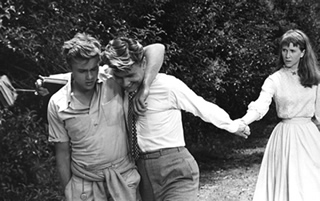
 

James Dean, Richard Davalos en Julie Harris in de film van Elias Kazan, 1955

On the wide level acres of the valley the topsoil lay deep and fertile. It required only a rich winter of rain to make it break forth in grass and flowers. The spring flowers in a wet year were unbelievable. The whole valley floor, and the foothills too, would be carpeted with lupins and poppies. Once a woman told me that colored flowers would seem more bright if you added a few white flowers to give the colors definition. Every petal of blue lupin is edged with white, so that a field of lupins is more blue than you can imagine. And mixed with these were splashes of California poppies. These too are of a burning color—not orange, not gold, but if pure gold were liquid and could raise a cream, that golden cream might be like the color of the poppies. When their season was over the yellow mustard came up and grew to a great height. When my grandfather came into the valley the mustard was so tall that a man on horseback showed only his head above the yellow flowers. On the uplands the grass would be strewn with buttercups, with hen-and-chickens, with black-centered yellow violets. And a little later in the season there would be red and yellow stands of Indian paintbrush. These were the flowers of the open places exposed to the sun.”
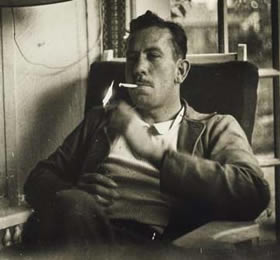
 

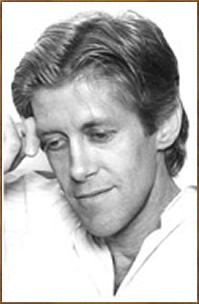
John Steinbeck (27 februari 1902 – 20 december 1968)

Lees verder “John Steinbeck, Lawrence Durrell, André Roy, Henry Longfellow, James T. Farrell”
Michel Houellebecq, Victor Hugo, Adama van Scheltema, George Barker, Antonín Sova

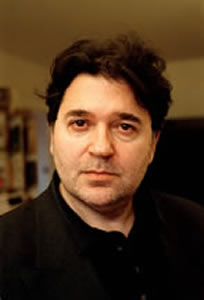
De Franse dichter en schrijver Michel Houellebecq werd geboren in Réunion op 26 februari 1956. Zie ook alle tags voor Michel Houellebecq op dit blog.

Uit: The Elementary Particles (Vertaald door Frank Wynne)

“Young people in France were particularly repressed, a time bomb of resentment under the legacy of Gaullist patriarchy, which, according to Jane, a single spark would be enough to detonate. For some years now, Francesco’s sole pleasure had been to smoke marijuana cigarettes with very young girls attracted by the spiritual aura of the movement and then fuck them among the mandalas and the smell of incense. The girls who arrived at Big Sur were, for the most part, stupid little WASP bitches, at least half of whom were virgins. Toward the end of the sixties the flow began to dwindle and he thought that perhaps it was time to go back to Europe. He found it strange that he thought of it as “going back,” since he had left Italy when he was no more than five years old. If his father had been a militant revolutionary, he was also a cultivated man, an aesthete who loved his mother tongue. This had undoubtedly left its mark on Francesco. In truth, he had always thought of Americans as idiots.
He was still a handsome man, with a tanned, chiseled face and long, thick, wavy hair, but his cells had begun to reproduce in a haphazard fashion, damaging the DNA of neighboring cells and secreting toxins into the body. The specialists he consulted differed on most points, but on one they were agreed: he was dying. The cancer was inoperable and would continue inexorably to metastasize.Overall his consultants were of the opinion that he would die peacefully and, with medication, probably would not suffer any physical pain; and to date he had experienced only a general tiredness. However, he refused to accept the diagnosis; he could not even imagine accepting it. In contemporary Western soiety, death is like white noise to a man in good health; it fills his mind when his dreams and plans fade. With age, the noise becomes increasingly insistent, like a dull roar with the occasional clang. In another age it was the expectant sound of the kingdom of God, it is now an anticipation of death. Such is life.”


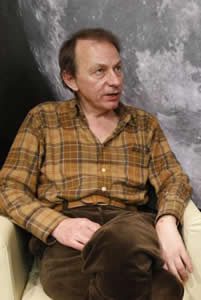
Michel Houellebecq (Réunion, 26 februari 1958)

Lees verder “Michel Houellebecq, Victor Hugo, Adama van Scheltema, George Barker, Antonín Sova”

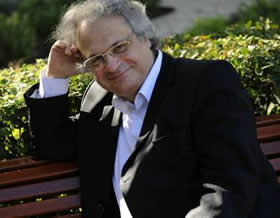
Amin Maalouf, Anthony Burgess, Aldo Busi, Robert Rius, Karl May

De Libanese (Franstalige) schrijver Amin Maalouf werd geboren in Beiroet, Libanon, op 25 februari 1949. Zie ook alle tags voor Amin Maalouf op dit blog.

Uit: Les croisades vues par les arabes

“Il va bientôt devenir le héros d’une épopée célèbre, intitulée précisément la Geste du roi Danishmend, qui décrit la conquête de Malatya, une ville arménienne située au sud-est d’Ankara, et dont la chute est considérée par les auteurs du récit comme le tournant décisif de l’islamisation de la future Turquie. Aux premiers mois de 1097, lorsque l’arrivée à Constantinople d’une nouvelle expédition franque est signalée à Kilij Arslan, la bataille de Malatya est déjà engagée. Danishmend assiège la ville, et le jeune sultan refuse l’idée que ce rival, qui a profité de la mort de son père pour occuper tout le nord-est de l’Anatolie, puisse remporter une victoire aussi prestigieuse. Déterminé à l’en empêcher, il se dirige, à la tête de ses cavaliers, vers les environs de Malatya et installe son camp à proximité de celui de Danishmend pour l’intimider. La tension monte, les escarmouches se multiplient, de plus en plus meurtrières.”

(…)

Ensuite, c’est grâce aux conseils des émirs de l’armée qu’il a pu, par la guerre, par le meurtre ou par la ruse, récupérer une partie de l’héritage paternel. Aujourd’hui, il peut se vanter d’avoir passé plus de temps sur la selle de son cheval que dans son palais. Pourtant, à l’arrivée des Franj, rien n’est encore joué. En Asie Mineure, ses rivaux restent puissants, même si, fort heureusement pour lui, ses cousins seldjoukides de Syrie et de Perse sont absorbés par leurs propres querelles.”


Amin Maalouf (Beiroet, 25 februari 1949)

Lees verder “Amin Maalouf, Anthony Burgess, Aldo Busi, Robert Rius, Karl May”

Leon de Winter, Alain Mabanckou, August Derleth, Keto von Waberer, Yüksel Pazarkaya

De Nederlandse schrijver Leon de Winter werd geboren in ’s-Hertogenbosch op 24 februari 1954. Zie ook alle tags voor Leon de Winter op dit blog.


Uit: Het recht op terugkeer

“Hendrikus had er geen last van. Bram bleef op afstand staan en bewonderde het doorzettingsvermogen van het pezige beest. Hendrikus was hardhorend en na een aanval van een verongelijkte bouvier zes jaar geleden aan één oog blind. Volgens de dierenarts was Hendrikus een van de vijf oudste honden van de stad – Jeffrey was de oudste, een krasse zesentwintigjarige kruising tussen een herder en bullterriër, een ongewoon exemplaar aangezien middelgrote honden meestal jonger stierven dan kleine bastaarden als Hendrikus. Elke ochtend legde Hendrikus een vaste tocht af langs de stille monumenten van Duitse zakelijkheid. Het dier volgde de lijn van een rechthoek waarin zich zes woonblokken bevonden, zijn eigen patroon, snuffelend aan lantaarnpalen, de wielen van
afvalcontainers, autobanden, strategisch geplaatste struiken, zo nu en dan een andere ochtendhond.
Bram had de indruk dat er tien jaar geleden veel meer honden waren. Tel Aviv was een arme stad geworden waarin honden alleen gehouden werden door het handjevol rijken dat de stad nog telde. Dus waren de honden die zij onderweg tegenkwamen op leeftijd, net als Hendrikus, bezadigd en moe geblaft. Jonge hondjes waren een zeldzaamheid en de oude werden door liefhebbende bejaarden gekoesterd alsof ze hun eigen kinderen waren.
Ze stonden op de hoek van een straat die haaks op de strandboulevard lag. Aan het einde van de straat, tweehonderd meter verder in de smalle opening tussen de huizen, was een fractie van een seconde een gevechtshelikopter zichtbaar die geruisloos enkele meters boven het zand naar het zuiden schoot, richting Jaffa. Het was een nieuwe generatie met motoren die niet veel meer geluid maakten dan de vleugels van een roofvogel, de Taiwanezen hadden er twintig geleverd. Dragon Wings xr3, heetten ze, en de gelovigen hadden geëist dat ze werden omgedoopt omdat de draak een monster uit een onjoodse Aziatische mythologie was. In de volksmond heetten ze nu Chicken Wings.”


Leon de Winter (’s-Hertogenbosch, 24 februari 1954)

Lees verder “Leon de Winter, Alain Mabanckou, August Derleth, Keto von Waberer, Yüksel Pazarkaya”

Erich Loest, Jacques Presser, Friedrich Spielhagen, Erich Pawlu, Luc Verbeke, Wilhelm Grimm

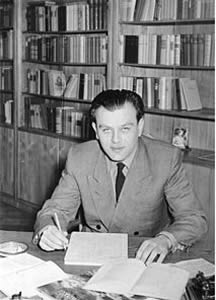
De Duitse schrijver Erich Loest werd geboren op 24 februari 1926 in Mittweida. Zie ook alle tags voor Erich Loest op dit blog.


Uit: Prozesskosten

“Diese Aufgabe löste er mit der linken Hand; in wenigen Monaten würde es damit vorbei sein.

Im Literaturinstitut gratulierte Direktor Alfred Kurella. Er pries dieses wundersame Alter: Mit dreißig habe einer entscheidende Lebensweichen gestellt, jetzt bestünden alle Chancen rasanten Vorwärtsdrängens.

Und das in einer phantastischen Zeit politischen Aufschwungs auf der Seite des Marxismus- Leninismus im Bunde mit der ruhmreichen Sowjetunion, in der jungen Deutschen Demokratischen Republik. Er schenkte L. eine zweibändige Ausgabe des Briefwechsels zwischen Goethe und Schiller.

Fern in Moskau fand in diesen Tagen der XX. Parteitag der Kommunistischen Partei der Sowjetunion statt. Nikita Chruschtschow, der bullige Ukrainer, stand an der Spitze. Neues Deutschland meldete wie gewohnt: »Der Beifall steigerte sich zum Orkan, als N. A. Bulganin, N. S. Chruschtschow, L. M. Kaganowitsch, M. S. Saburow, M. A. Suslow und K. J. Woroschilow im Tagungsgebäude eintrafen«. Das Zentralorgan berichtete in der üblichen langatmigen Weise von Aufbauplänen und Siegen an allen Fronten. Überraschend immerhin: Der italienische Parteiführer Palmiro Togliatti stellte die These auf, unterschiedliche Länder könnten auf verschiedenen Wegen zum Sozialismus kommen, also nicht unbedingt durch Revolution, auch ein parlamentarischer Übergang sei möglich. Roch das nicht verdammt nach Revisionismus? Bot sich vielleicht doch ein deutscher Weg, was Anton Ackermann vermutet und nach harscher Kritik unterdessen weit von sich gewiesen hatte?”


Erich Loest (Mittweida, 24 februari 1926)

In 1955

Lees verder “Erich Loest, Jacques Presser, Friedrich Spielhagen, Erich Pawlu, Luc Verbeke, Wilhelm Grimm”

George Moore, Irène Némirovsky, Vincent Voiture, Rosalía de Castro, Paul Alfred Kleinert, Stanisław Witkiewicz

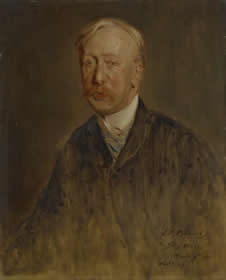
De Ierse schrijver en kunstcriticus George Augustus Moore werd geboren op 24 februari 1852 in Ballyglass. Zie ook alle tags voor George Moore op dit blog.


Uit: Confessions of a Young Man

“My soul, so far as I understand it, has very kindly taken colour and form from the many various modes of life that self-will and an impetuous temperament have forced me to indulge in. Therefore I may say that I am free from original qualities, defects, tastes, etc. What I have I acquire, or, to speak more exactly, chance bestowed, and still bestows, upon me. I came into the world apparently with a nature like a smooth sheet of wax, bearing no impress, but capable of receiving any; of being moulded into all shapes. Nor am I exaggerating when I say I think that I might equally have been a Pharaoh, an ostler, a pimp, an archbishop, and that in the fulfilment of the duties of each a certain measure of success would have been mine. I have felt the goad of many impulses, I have hunted many a trail; when one scent failed another was taken up, and pursued with the pertinacity of an instinct, rather than the fervour of a reasoned conviction. Sometimes, it is true, there came moments of weariness, of despondency, but they were not enduring: a word spoken, a book read, or yielding to the attraction of environment, I was soon off in another direction, forgetful of past failures. Intricate, indeed, was the labyrinth of my desires; all lights were followed with the same ardour, all cries were eagerly responded to: they came from the right, they came from the left, from every side. But one cry was more persistent, and as the years passed I learned to follow it with increasing vigour, and my strayings grew

fewer and the way wider.”


George Moore (24 februari 1852 – 20 januari 1933)

Portret door Jacques-Emile Blanche, 1903

Lees verder “George Moore, Irène Némirovsky, Vincent Voiture, Rosalía de Castro, Paul Alfred Kleinert, Stanisław Witkiewicz”

Robert Gray, César Aira, Sonya Hartnett, Maxim Februari, Toon Kortooms

De Australische dichter Robert Gray werd geboren op 23 februari 1945 in Port Macquarie. Zie ook alle tags voor Robert Gray op dit blog.

The Meatworks

Most of them worked around the slaughtering
out the back, where concrete gutters
crawled off
heavily, and the hot, fertilizer-thick,
sticky stench of blood
sent flies mad,
but I settled for one of the lowest-paid jobs, making mince
right the furthest end from those bellowing,
sloppy yards. Outside, the pigs’ fear
made them mount one another
at the last minute. I stood all day
by a shaking metal box
that had a chute in, and a spout,
snatching steaks from a bin they kept refilling
pushing them through
arm-thick corkscrews, grinding around inside it, meat or not –
chomping, bloody mouth –
using a greasy stick
shaped into a penis.
When I grabbed it the first time
it slipped, slippery as soap, out of my hand,
in the machine
that gnawed it hysterically a few moments
louder and louder, then, shuddering, stopped;
fused every light in the shop.
Too soon to sack me –
it was the first thing I’d done.
For a while, I had to lug gutted pigs
white as swedes
and with straight stick tails
to the ice rooms, hang them by the hooves
on hooks – their dripping
solidified like candle-wax – or pack a long intestine
with sausage meat.
We got to take meat home –
bags of blood;
red plastic with the fat showing through.
We’d wash, then
out on the blue metal
towards town; but after sticking your hands all day
in snail-sheened flesh,
you found, around the nails, there was still blood.
I usually didn’t take the meat.
I’d walk home on
the shiny, white-bruising beach, in mauve light,
past the town.
The beach, and those startling, storm-cloud mountains, high
beyond the furthest fibro houses, I’d come
to be with. (The only work
was at this Works.) – My wife
carried her sandals, in the sand and beach grass,
to meet me. I’d scoop up shell-grit
and scrub my hands,
treading about
through the icy ledges of the surf
as she came along. We said that working with meat was like
burning-off the live bush
and fertilizing with rottenness,
for this frail green money.
There was a flaw to the analogy
you felt, but one
I didn’t look at, then –
the way those pigs stuck there, clinging onto each other.


Robert Gray (Port Macquarie, 23 februari 1945)

Lees verder “Robert Gray, César Aira, Sonya Hartnett, Maxim Februari, Toon Kortooms”

Jef Geeraerts, Erich Kästner, Bernard Cornwell, Elisabeth Langgässer, Samuel Pepys

De Vlaamse schrijver Jef Geeraerts werd geboren op 23 februari 1930 in Antwerpen. Zie ook alle tags voor Jef Geeraerts op dit blog.


Uit: Le Récit de Matsombo (Vertaald door Marie Hooghe)

« J’étais assis dans un de ces fauteuils bas en rotin à la terrasse du Dolar, sans doute le plus fréquenté des bars de Madrid, et buvais un gin-tonic. »

(…)

« “En fait, c’est une longue histoire, docteur, qui commence pendant ces tristes jours de juillet 1960 – nom de Dieu ça fait vraiment déjà quatre ans ? – quand votre collègue Werther a été évacué en toute hâte de Bumba. Pour une raison qui n’en valait même pas la peine d’après moi. Enfin soit, c’était à lui d’en décider et un de mes rares principes est : ne te mêle jamais de la vie privée des autres. »

(…)

« Je dois dire que c’était une justice relativement primitive : les pauvres contre les profiteurs. Une justice basée sur la jalousie et l’envie. Les profiteurs étaient en minorité, ils devaient donc payer les pots cassés. La populace régnait. Les cadavres s’entassaient pêle-mêle contre le mur de la prison. Une puanteur épouvantable. A vous donner la nausée. Parfois, on n’arrivait plus à rien avaler. Un proverbe indigène dit : “L’endroit où pourrit l’éléphant, on le sent de loin.” Simplement ré-pu-gnant. »


Jef Geeraerts (Antwerpen, 23 februari 1930)

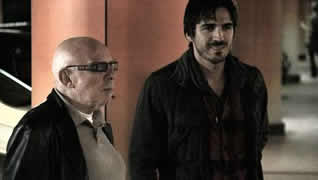
Hier met acteur Blerim Destani

Lees verder “Jef Geeraerts, Erich Kästner, Bernard Cornwell, Elisabeth Langgässer, Samuel Pepys”

Henri Meilhac, B. Traven, Amoene van Haersolte, David Kalisch, Josephin Soulary

De Franse schrijver Henri Meilhac werd geboren op 23 februari 1831 in Parijs. Zie ook alle tags voor Henri Meilhac op dit blog.


Uit : La Belle Hélène

“Scène II

PHILOCOME, CALCHAS.

CALCHAS.

Plus personne… pas de frais inutiles !… (Il éteint un trépied, Philocôme éteint l’autre.) Fais rentrer les offrandes, Philocôme.

PHILOCOME.

Oui, grand augure.

Sur l’ordre de Philocôme, deux esclaves emportent les offrandes dans le temple.

CALCHAS.

De piètres offrandes, en vérité… deux tourterelles, une amphore de laitage, trois petits fromages, des fruits très peu, et des fleurs beaucoup. Toutes ces guirlandes nous encombrent en pure perte… Il est passé, le temps des troupeaux de bœufs et de moutons… Voilà où en sont les sacrifices !… Les dieux s’en vont ! Les dieux s’en vont !

PHILOCOME.

Pas tous, seigneur ! Voyez Vénus…

CALCHAS.

Elle lutte, je ne dis pas le contraire, elle lutte… J’ai lu dans le Moniteur de Cythère le chiffre exact des offrandes du mois dernier… c’est énorme !

PPHILOCOME.

Il doit faire de bonnes affaires, le grand augure de Vénus !

CALCHAS.

Le fait est qu’il n’y en a plus que pour elle, depuis que, grâce au berger Pâris, elle a battu Junon et Pallas dans le concours du mont Ida… tandis que ce pauvre

Jupiter, le père des dieux et des hommes cependant, il est dans une baisse !… Que de fleurs !… que de fleurs !… enfin… tu porteras ce bouquet de roses à la petite Mégara, la joueuse de flûte qui demeure près du temple de Bacchus…”


Henri Meilhac (23 februari 1831 – 6 juli 1897)

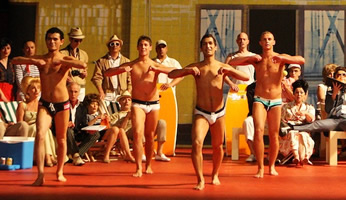
Uitvoering van “La Belle Hélène“ in Bordeaux, Grand-Théâtre, 2011

Lees verder “Henri Meilhac, B. Traven, Amoene van Haersolte, David Kalisch, Josephin Soulary”

Arnon Grunberg, Paul van Ostaijen, Hugo Ball

De Nederlandse schrijver Arnon Grunberg werd geboren in Amsterdam op 22 februari 1971. Zie ook alle tags voor Arnon Grunberg op dit blog.

Uit: De joodse messias

“Hij hield van de mensen

Omdat zijn grootvader met oprecht enthousiasme en veel vertrouwen in de vooruitgang de ss had gediend – de man was niet te beroerd de handen uit de mouwen te steken, niet zo’n slampamper van een opa die achter zijn schrijftafel bleef zitten, af en toe een stempel onder een document zette en zich om vijf uur naar vrouw en kind haastte, nee, een gentleman, die het handwerk van de dood verstond, zonder zijn gezin daarmee lastig te vallen, een man voor wie woorden als ‘eer’ en ‘trouw’ nog iets betekenden, een man met een moraal, met een visie, die trouw bleef aan die visie, ook onder barre omstandigheden, toen veel van zijn makkers hun uniform uitdeden en de benen namen, hij niet, hij zei: ‘een deugdzaam mens kent zijn taak, een deugdzaam mens leeft er niet op los’, en hij schoot de laatste kogels uit zijn geweer – wilde de kleinzoon met enthousiasme en vertrouwen in de vooruitgang een beweging dienen.

De jongen kwam de verdiensten van zijn grootvader bij toeval te weten, toen hij op een zondagmiddag ongevraagd geld leende van zijn moeder en papieren, foto’s en een boek vond, die wat haar betreft nooit gevonden hadden mogen worden. Hij was, ook in de duisternis van de puberteit, een opgeruimd mens met een goed ontwikkeld oog voor de aangename kanten van het leven. De wolken, pasta, baby’s in hun wieg, de geur van wijn, etalages vol mooie kleren, tijdschriften vol prikkelende foto’s, kunst die de tand des tijds had doorstaan, snelle auto’s en mensen, niet te vergeten, benen van mensen, armen, hoofden, haren, neuzen, handen, polsen, van die dunne, blanke polsjes die eerst roze worden in de zon, en dan langzaam rood. De jongen hield van de mensen, en zij van hem.

Het was alweer zo lang vrede in Europa toen hij geboren werd. De oorlog was ver weg, die oorlog in ieder geval, andere oorlogen ook, en tegen de tijd dat hij zich voor de vijanden van het geluk begon te interesseren, hadden deskundigen vastgesteld dat de Tweede Wereldoorlog nu eens en voor altijd een afgesloten hoofdstuk was. Een melancholisch hoofdstuk misschien, maar wel afgesloten. En daarbij, waren niet alle oorlogen melancholisch van aard? Al die slachtoffers, dat zinloze geweld, de daklozen?”


Arnon Grunberg (Amsterdam, 22 februari 1971)

Lees verder “Arnon Grunberg, Paul van Ostaijen, Hugo Ball”