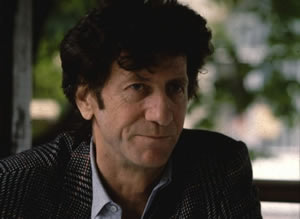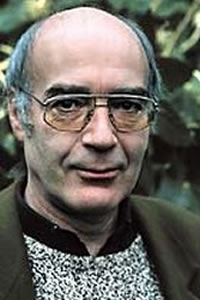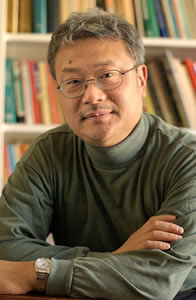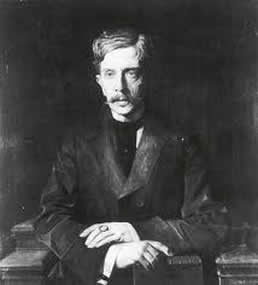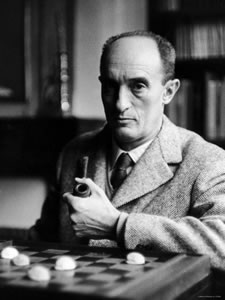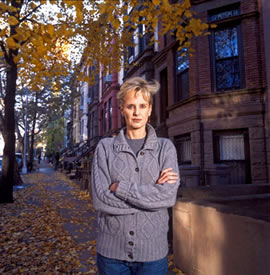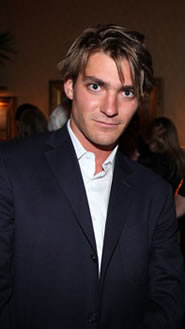
Jef Geeraerts, Erich Kästner, Bernard Cornwell, Elisabeth Langgässer, Samuel Pepys

De Vlaamse schrijver Jef Geeraerts werd geboren op 23 februari 1930 in Antwerpen. Zie ook alle tags voor Jef Geeraerts op dit blog.


Uit:Cro-Magnon

Een donkerblauwe Renault Mégane coupé 2004 met kenteken 482BZ13 vertraagde en sloeg linksaf aan de T van de D4 met de D943 van Gordes naar Apt, in het département Vaucluse. De smalle asfaltweg lag er verlaten bij. De maan hing als een zilveren forel aan de pikzwarte hemel vol sterren. Het was zacht en windstil. De weg liep tussen gemengd loofbos. Hij was bochtig en steeg geleidelijkaan vanaf Apt naar Cadenet in zuidelijke richting naar de vallei van Aiguebrun.
Na ongeveer twaalf kilometer vertraagde de Renault en reed een smal bospad in. Wat verder hield hij stil tussen lage chênes verts. De motor en de koplampen werden uitgezet. De binnenverlichting ging aan. De man achter het stuur, gekleed in een zwart trainingspak, keek even op zijn horloge, haakte een gsm van zijn broekriem, en tikte een nummer.
Het display van de gsm lichtte op. Het was opvallend groot, maar in de plaats van de gewone data verscheen er een digitale, in vierkanten verdeelde ministafkaart met coördinaten. Hij drukte op een knopje tot de cijfers van de coördinaten goed leesbaar werden. Het apparaat leek alleen maar op een gsm. Het was eigenlijk een gps Magellan van Duitse makelij, een peperdure gadget, fel in trek bij de jonge generatie van zogenaamde backpackers, die nooit hadden geleerd met kaart en kompas om te gaan.”
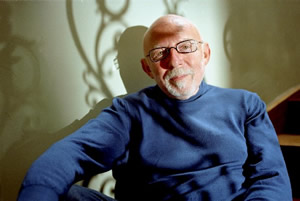
 

Jef Geeraerts (Antwerpen, 23 februari 1930)

Lees verder “Jef Geeraerts, Erich Kästner, Bernard Cornwell, Elisabeth Langgässer, Samuel Pepys”
Arnon Grunberg, Paul van Ostaijen, Hugo Ball, Jane Bowles

De Nederlandse schrijver Arnon Grunberg werd geboren in Amsterdam op 22 februari 1971. Zie ook alle tags voor Arnon Grunberg op dit blog.


Uit: Tirza (Vertaald door Sam Garrett)

„After Ibi began collecting the rent there were fewer complaints about moisture on the wallpaper, radiators that didn’t work, a window that didn’t close well. Her smile took away the complaints, her legs made the sneaking suspicion that one was paying way too much to vanish into thin air. Her eyes compensated for the leaky faucet. Ibi was more important than any defects in the furnished apartment.
And then, one autumn evening, on the first of the month—always the first of the month; when Hofmeester looked back on his life he saw an endless series of paydays—she stayed away for a long time. Hofmeester was reading the evening paper as he listened to one of Elgar’s cello concertos, but when he got to the page with ‘readers’ opinions’, for he read the newspaper from cover to cover, like a book, he became worried. She had been gone for more than half an hour. He read on, but the readers’ opinions no longer sank in. After each sentence he got stuck, and his thoughts wandered to Ibi.
Of course you couldn’t just grab the money and run, sometimes you had to stop and chat a little. He remembered that from when the unwelcome task had been his to fulfill. But half an hour was no chat anymore. That was a conversation, that was half an evening meal.
He had already walked to the door twice to see if she was coming, the way one looks for streetcars that refuse to arrive. The ridiculous assumption that looking made any difference. That a peremptory glance can summon that which apparently will never show up.
She couldn’t have been mugged, she didn’t even have to leave the yard.
It puzzled him, and it kept puzzling him. His wife had gone out to pick up Tirza, who was playing at a friend’s house. Hofmeester had no one with whom to share his anxiety. He turned off the Elgar, went into the garden to look at his apple tree and then peered up through the branches at the windows behind which the tenant was concealed, but could see nothing unusual. The curtains that always hung there and that actually needed washing. No movement. It was a lovely evening for early October. Nothing rustled in the bushes. No screams. Silence. Eternal silence.“


Arnon Grunberg (Amsterdam, 22 februari 1971)

Lees verder “Arnon Grunberg, Paul van Ostaijen, Hugo Ball, Jane Bowles”

Danilo Kiš, Sean O’Faolain, Ishmael Reed

De Servische schrijver Danilo Kiš werd geboren op 22 febrari 1935 in Subotica. Zie ook alle tags voor Danilo Kiš op dit blog.


Uit: Garden, Ashes (Vertaald door William J. Hannaher)

Late in the morning on summer days, my mother would come into the room softly, carrying that tray of hers. The tray was beginning to lose its thin nickelized glaze. Along the edges where its level surface bent upward slightly to form a raised rim, traces of its former splendor were still present in flaky patches of nickel that looked like tin foil pressed out under the fingernails. The narrow, flat rim ended in an oval trough that bent downward and was banged in and misshapen. Tiny decorative protuberances – a whole chain of little metallic grapes – had been impressed on the upper edge of the rim. Anyone holding the tray (usually my mother) was bound to feel at least three or four of these semicylindrical protuberances, like Braille letters, under the flesh of the thumb. Right there, around those grapes, ringlike layers of grease had collected, barely visible, like shadows cast by little cupolas. These small rings, the color of dirt under fingernails were the remnants of coffee grounds, cod-liver oil, honey sherbet. Thin crescents on the smooth, shiny surface of the tray showed where glasses had just been removed. Without opening my eyes, I knew from the crystal tinkling of teaspoons against glasses that my mother had set down the tray for a moment and was moving toward the window, the picture of determination, to push the dark curtain aside. Then the room would come aglow in the dazzling light of the morning, and I would shut my eyes tightly as the spectrum alternated from yellow to blue to red. On her tray, with her jar of honey and her bottle of cod-liver oil, my mother carried to us the amber hues of sunny days, thick concentrates full of intoxicating aromas.“


Danilo Kiš (22 februari 1935 – 15 oktober 1989)

Lees verder “Danilo Kiš, Sean O’Faolain, Ishmael Reed”

Herman de Coninck, Chuck Palahniuk, Hans Andreus, Wystan Hugh Auden, Laure Limongi

De Vlaamse dichter, essayist, journalist en tijdschriftuitgever Herman de Coninck werd geboren in Mechelen op 21 februari 1944. Zie ook alle tags voor Herman de Coninck op dit blog.

Zoals dit eiland van de meeuwen

Zoals dit eiland van de meeuwen
is en de meeuwen van hun krijsen
en hun krijsen van de wind
en de wind van niemand,

zo is dit eiland van de meeuwen
en de meeuwen van hun krijsen
en hun krijsen van de wind
en de wind van niemand.


De lenige liefde (6)

Zoals je binnenkwam en dag zei,
en uit je kleren en je woorden stapte

(het voorlaatste wat je voor me uit-
deed was het woord “lieveling”
en het laatste een glimlach; toen
opende je de haakjes en ik kwam erin
en je sloot ze)

zo ging je ook weer weg, trok
enkel veel te dunne woorden
van afscheid om je heen en rilde.


Parabel van de verloren vader

Zoon wil wereld veranderen.
Vader eigenlijk liever zoon.
Maar hij kan alleen een zin veranderen
tot die niet meer anders wil.

Je zal maar jong zijn en meningen hebben
van anderen, en verder niks,
niet eens een dode vader.

‘Dat eigen leven, begin daar gvd. eens mee,
en kom over tien jaar eens terug met verdriet
in plaats van gelijk, bijvoorbeeld na een vrouw of twee.
Dat ik kan zeggen: je bent dezelfde gebleven.’

Het bovenstaande is tien jaar geleden geschreven.
En aldus is tien jaar later geschied.

Herman de Coninck (21 februari 1944 – 22 mei 1997)

Lees verder “Herman de Coninck, Chuck Palahniuk, Hans Andreus, Wystan Hugh Auden, Laure Limongi”

Ha Jin, Anaïs Nin, Raymond Queneau, David Foster Wallace, Justus van Effen

De Chinees-Amerikaanse schrijver Ha Jin werd geboren op 21 februari 1956 in Jinzhou, China. Zie ook mijn blog van 21 februari 2009 en ook mijn blog van 21 februari 2010 en ook mijn blog van 21 februari 2011.


Uit: War Trash

„Before the Communists came to power in 1949, I was a sophomore at the Huangpu Military Academy, majoring in political education. The school, at that time based in Chengdu, the capital of Szechuan Province, had played a vital part in the Nationalist regime. Chiang Kai-shek had once been its principal, and many of his generals had graduated from it. In some ways, the role of the Huangpu in the Nationalist army was like that of West Point in the American military.
The cadets at the Huangpu had been disgusted with the corruption of the Nationalists, so they readily surrendered to the People’s Liberation Army when the Communists arrived. The new government disbanded our academy and turned it into a part of the Southwestern University of Military and Political Sciences. We were encouraged to continue our studies and prepare ourselves to serve the new China. The Communists promised to treat us fairly, without any discrimination. Unlike most of my fellow students who specialized in military science, however, I dared not raise my hopes very high, because the political courses I had taken in the old academy were of no use to the People’s Liberation Army. I was more likely to be viewed as a backward case, if not a reactionary. At the university, established mainly for reindoctrinating the former Nationalist officers and cadets, we were taught the basic ideas of Marx, Lenin, Stalin, and Mao Zedong, and we had to write out our personal histories, confess our wrongdoings, and engage in self- and mutual criticism. A few stubborn officers from the old army wouldn’t relinquish their former outlook and were punished in the reeducation program-they were imprisoned in a small house at the northeastern corner of our campus. But since I had never resisted the Communists, I felt relatively safe. I didn’t learn much in the new school except for some principles of the proletarian revolution.“


Ha Jin (Jinzhou, 21 februari 1956)

Lees verder “Ha Jin, Anaïs Nin, Raymond Queneau, David Foster Wallace, Justus van Effen”

P. C. Boutens, Ellen Gilchrist, Julia Franck, David Nolens, Georges Bernanos, William Carleton

De Nederlandse dichter Pieter Cornelis Boutens werd geboren in Middelburg op 20 februari 1870. Zie ook alle tags voor P. C. Boutens op dit blog.

Uit: Strofen en andere verzen uit de nalatenschap van Andries de Hoghe

Tweede strofe

Onze vaders hebben ons niet geweten,
wij bleven voor hen als verstooknen;
alleen de blindheid onzer moeders
heeft ons vermoed en liefgehad.

De broêrs en zusters die daar waren,
onze aangewezene gelijken,
zij sloten rond ons donker heimwee
een bond van levenlicht verzet.

Uit onze weêrstandlooze handen
grepen ze ons deel van ’t blinkend speelgoed
eerst met begeertes weiflen glimlach,
dan met het kort gebaar van recht.

Wrevel om deernis niet-te-deren
versmeet het waardeloos begeerde
als onzer oogen roerlooze aandacht
geen schaduw leed van spijt of wrok.

De kussen hunner korte liefden
bestierven op ons koele wangen;
de hartstocht onzer bleeke lippen
ontweek de rozen van hun mond.

Als die niet zijn bestemd te leven,
planten die in den dag verkwijnen,
zoo bloemeloos en bladerdonker
rees onze schaduw naast hun bloei…

O siddrend leed der ver bewusten,
o bitter hachelijke keuze
van ademloos te moeten wachten
op onberekenbaar geluk!:

zich liefdes eigen kindren weten,
en haren vollen dag verbeiden
in donkren schijn van liefdeloozen,

die nimmer zich verraden mag.


Sonnet XXVI

Het stolpend maanlicht huift den winternacht
In wazen plooien van doorzichtigheid.
Geen ster weet helder van de heerlijkheid
Waarin ik treed naar heerlijkheid die wacht…

Hoe ligt de lichte weg naar U gedacht
Recht door den stillen glansverstarden tijd…
Elk oogenblik is kort als eeuwigheid…
Wanneer heb ik deze’ oogst van heil gepacht?

Gij zijt het kloppen van mijn hart, het licht
Dat in mijn oogen is, de boovne maan,
Gij zegent de aarde in mijner voeten val…
De wereld breekt doorzichtig als kristal:
‘k Zie in bevrozen grond het gouden graan,
Ooglampen branden alom uit huizen dicht.


Pieter Cornelis Boutens (20 februari 1870 – 14 maart 1943)

Lees verder “P. C. Boutens, Ellen Gilchrist, Julia Franck, David Nolens, Georges Bernanos, William Carleton”

Pierre Boulle, Ludwig Steub, Johann Heinrich Voß, Johann Fr. Riederer, Cornelis Sweerts

De Franse schrijver Pierre Boulle werd geboren op 20 februari 1912 in Avignon. Zie ook alle tags voor Pierre Boulle op dit blog.

Uit: Le Pont de la rivière Kwaï

“-Voyons, celui-là, par exemple, dit-il s’arrêtant et en s’adressant à un malade. Qu’est ce qui ne va pas, mon garçon ? […]
-Ulcères tropicaux. Je lui ai creusé la jambe, hier…, avec un couteau ; je n’ai pas d’autre instrument. J’ai fait un trou assez gros pour y enfoncer une balle de golf, sir.
– C’est donc cela ; j’ai entendu crier hier soir, marmonna me colonel Nicholson.
– C’était cela. J’espère sauver la jambe…, mais j’en suis pas sur, ajouta-t-il à vois basse. Vous voudriez vraiment que je l’envoie sur le pont, sir ?

(…)

– Ecoutez-moi tous. Vous savez en quoi consiste l’œuvre à laquelle Sa Majesté impériale a bien voulu associer les prisonniers britanniques. Il s’agit de relier les capitales de Thaïlande et de Birmanie, à travers quatre cents milles de jungle, pour permettre le passage des convois nippons et ouvrir la route du Bengale à l’armée qui a libéré ces deux pays de la tyrannie européenne. Le nippon a besoin de cette voie ferrée pour continuer la série de ses victoires, conquérir les Indes et terminer rapidement cette guerre.”


Pierre Boulle (20 februari 1912 – 30 januari 1994)

Lees verder “Pierre Boulle, Ludwig Steub, Johann Heinrich Voß, Johann Fr. Riederer, Cornelis Sweerts”

Siri Hustvedt, Helen Fielding, Jaan Kross, Herbert Rosendorfer

De Amerikaanse schrijfster en essayiste Siri Hustvedt werd geboren op 19 februari 1955 in Northfield, Minnesota. Zie ook alle tags voor Siri Hustvedt op dit blog.


Uit: Die Leiden eines Amerikaners (Vertaald door Uli Aumüller und Gertraude Krueger)

„Meine Schwester nannte es «das Jahr der Geheimnisse», aber wenn ich jetzt zurückblicke, erkenne ich: Das Wichtige war nicht, was da war, sondern was nicht da war. Eine meiner Patientinnen meinte einmal: «In mir wandern Geister herum, aber sie reden nicht immer. Manchmal haben sie nichts zu sagen.» Sarah blinzelte meist oder hielt die Augen ganz geschlossen, weil sie Angst hatte, das Licht würde sie blind machen. Ich glaube, wir haben alle Geister in uns, und es ist besser, wenn sie reden, als wenn sie es nicht tun. Nachdem mein Vater tot war, konnte ich nicht mehr mit ihm persönlich reden, aber in meinem Kopf unterhielt ich mich weiter mit ihm. Ich sah ihn weiter in meinen Träumen, hörte ihn weiter zu mir sprechen. Und trotzdem wurde mein Leben eine Zeitlang von dem beherrscht, was mein Vater nicht gesagt, was er uns nicht erzählt hatte. Wie sich herausstellte, war er nicht der Einzige, der Geheimnisse hütete. Am sechsten Januar, vier Tage nach der Trauerfeier, fanden Inga und ich den Brief in seinem Arbeitszimmer.

Wir waren mit unserer Mutter in Minnesota geblieben und machten uns an das Sichten seiner Papiere. Wir wussten, dass es biografische Aufzeichnungen gab, die er in seinen letzten Lebensjahren verfasst hatte, sowie eine Schachtel mit Briefen an seine Eltern – viele davon aus seiner Zeit als Soldat im Pazifik während des Zweiten Weltkriegs -, aber es fanden sich auch andere Dinge in dem Zimmer, die wir noch nie gesehen hatten. Das Arbeitszimmer meines Vaters hatte einen ganz besonderen Geruch, der sich ein wenig von dem im Haus unterschied. Hier hatte er vierzig Jahre lang Zigaretten geraucht und Kaffee getrunken, und die unzähligen Tassen hatten Ringe auf dem Schreibtisch hinterlassen; ich fragte mich, ob das die Atmosphäre dieses Zimmers geprägt und den unverwechselbaren Geruch hervorgebracht hatte, der mir beim Eintreten entgegenschlug. Das Haus ist inzwischen verkauft. Ein Zahnarzt hat es erworben und umfassend renovieren lassen, aber ich habe das Arbeitszimmer meines Vaters noch vor Augen – die Bücherwand, die Aktenschränke, den langen, selbstgebauten Schreibtisch mit dem Plastikbehälter für Kleinkram darauf. Obwohl dieser Behälter durchsichtig war, klebte auf jedem Fach ein kleines handgeschriebenes Etikett – «Büroklammern», «Batterien für Hörgerät», «Garagenschlüssel», «Radiergummis».


Siri Hustvedt (Northfield, 19 februari 1955)

Lees verder “Siri Hustvedt, Helen Fielding, Jaan Kross, Herbert Rosendorfer”

Amy Tan, Dmitri Lipskerov, Thomas Brasch, Björn Kuhligk

De Amerikaanse schrijfster Amy Tan werd geboren in Oakland, Ohio, op 19 februari 1952. Zie ook alle tags voor Amy Tan op dit blog.


Uit: Two Kinds

„My mother believed you could be anything you wanted to be in America. You could open a restaurant. You could work for the government and get good retirement. You could buy a house with almost no money down. You could become rich. You could become instantly famous.
“Of course, you can be a prodigy, too,” my mother told me when I was nine. “You can be best anything. What does Auntie Lindo know? Her daughter, she is only best tricky.”
America was where all my mother’s hopes lay. She had come to San Francisco in 1949 after losing everything in China: her mother and father, her home, her first husband, and two daughters, twin baby girls. But she never looked back with regret. Things could get better in so many ways.

We didn’t immediately pick the right kind of prodigy. At first my mother thought I could be a Chinese Shirley Temple. We’d watch Shirley’s old movies on TV as though they were training films. My mother would poke my arm and say, “Ni kan.You watch.” And I would see Shirley tapping her feet, or singing a sailor song, or pursing her lips into a very round O while saying “Oh, my goodness.”
Ni kan,” my mother said, as Shirley’s eyes flooded with tears. “You already know how. Don’t need talent for crying!”
Soon after my mother got this idea about Shirley Temple, she took me to the beauty training school in the Mission District and put me in the hands of a student who could barely hold the scissors without shaking. Instead of getting big fat curls, I emerged with an uneven mass of crinkly black fuzz. My mother dragged me off to the bathroom and tried to wet down my hair.
“You look like a Negro Chinese,” she lamented, as if I had done this on purpose.“


Amy Tan (Oakland, 19 februari 1952)

Lees verder “Amy Tan, Dmitri Lipskerov, Thomas Brasch, Björn Kuhligk”

Nick McDonell, Toni Morrison, Bart FM Droog, Huub Beurskens, Elke Erb, Gaston Burssens, Níkos Kazantzákis, Jean M. Auel

De Amerikaanse schrijver Nick McDonell werd geboren op 18 februari 1984 in New York. Zie ook alle tags voor Nick McDonell op dit blog.


Uit: The End of Major Combat Operations


XIX.

What the cook thinks of the press.

6am, surrounded by Iraqis, sixty-six hundred miles from Birmingham, pouring eggs out of a carton, in trailer next to a mortar crater.

Reporter: “You’re the cook huh? That’s a pretty Good job, I guess. So did you want to be the cook, or how do you get that job?”


XXIV.

Everyone had talismans. The story was such a cliché that I came to think of knowing what the soldiers carried for luck as a kind of reporter talisman. A mental rabbit foot, reassurance that you were not part of the circus, that in fact you were standing outside the tent and not responsible, somehow, for the all misunderstandings. As if, because you were not shooting, you were not as important (and therefore unimportant) as every GI. So, get this, I met a guy who carried a page from a little bible in a pocket on every limb.

More likely to save you than your talisman was your body armor, but lot of guys said that if it was up to them they wouldn’t wear the stuff at all. No one could outrun a ball bearing, but the thinking still was that it slowed you down. It was heavy, uncomfortable. Everyone always did wear it, though, and there were a lot of stories about how well it worked. One was about a sergeant who was walking in line through a palm grove when an insurgent popped up, maybe fifteen feet ahead of him and fired off a burst of rounds square into his chest. The sergeant went down, all the air blown out of him, but the armor stopped the rounds. His friends, not far down the road, were still lining the shooter up when the sergeant took out the insurgent from the ground, where he lay on his back. But as one Corporal pointed out to me as we talked about IEDs: no body armor on your legs.“


Nick McDonell (New York, 18 februari 1984)

Lees verder “Nick McDonell, Toni Morrison, Bart FM Droog, Huub Beurskens, Elke Erb, Gaston Burssens, Níkos Kazantzákis, Jean M. Auel”