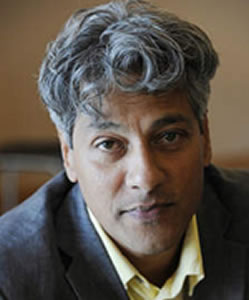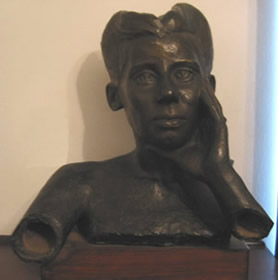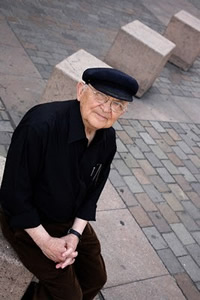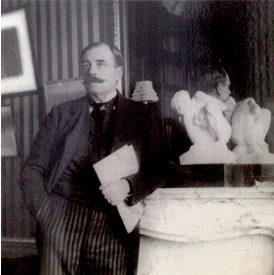
Shahrnush Parsipur, Sadegh Hedayat, Mo Yan,Yevgeni Grishkovetz

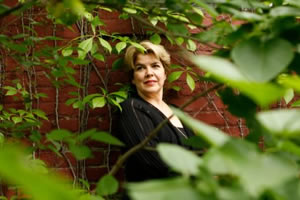
De Iraanse schrijfster Shahrnush Parsipur werd geboren op 17 februari 1946 in Teheran. Zie ook alle tags voor Shahrnush Parsipur op dit blog.


Uit: The Gentlemen (Vertaald door Farzin Yazdanfar)

„There were three gentlemen: Mr. Tahmooresi, Mr. Habibi, and Mr. Nemati. They were sitting on a patio covered with an old rug. The evening was rather long and the sun was on the edge of the roof. Mr. Tahmooresi, half-drunk, was looking at the rain spots on the wall and at the sun which was setting on the ledge. Mr. Nemati, cheerful, was whispering a popular song.

Mr. Habibi: She has a good heart. Yes, she’s very sincere.

Mr. Nemati: There’s something attractive in her voice. A strain of sadness! Her voice is unusually sad.

Mr. Habibi: They say that she has had a tragic life, too. Her aunt raised her after she had tragically lost her parents.

Mr. Nemati: How strange!

Mr. Tahmooresi: You guys are talking too much.

“So what do you want us to do?” The other gentlemen asked.

Mr. Tahmooresi: Keep quiet for a moment and look at the beauties of nature.

Mr. Nemati and Mr. Habibi looked at what Mr. Tahmooresi had called nature: An incongruous polygonal pond with two rectangular flower- beds on each side. The violets had withered, and Mrs. Tahmooresi had not gotten a chance to plant summer flowers. They had sprinkled water on the mosaic tiles, and steam rising from the wet tiles had made the air in the backyard swelter.

Mr. Nemati: What do you mean ‘nature’, Tahmooresi?

Mr. Tahmooresi: Don’t try to split hairs. This is nature. Isn’t this?”

Mr. Habibi: Of course! You told us to look at nature and we would like to know what you mean by nature.

Mr. Nemati: I know. He means this pine tree, these violets, this blackberry tree. Am I right Tahmooresi?

Mr. Tahmooresi: I think you don’t understand what I’m saying. I mean something different. Perhaps the word ‘nature’ isn’t quite the right word. I should look for a different word. Look around carefully. This is what I meant: you shouldn’t talk too much; you should look instead.“
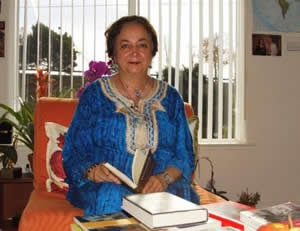
 

Shahrnush Parsipur (Teheran, 17 februari 1946)

Lees verder “Shahrnush Parsipur, Sadegh Hedayat, Mo Yan,Yevgeni Grishkovetz”
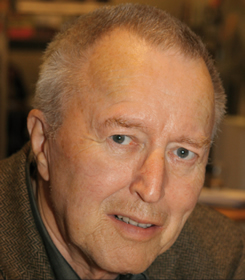
Frederik Hetmann, Emmy Hennings, Chaim Potok, Mori Ōgai

De Duitse schrijver Frederik Hetmann (eig. Hans-Christian Kirsch) werd geboren op 17 februari 1934 in Breslau. Zie ook mijn blog van 17 februari 2010 en ook mijn blog van 17 februari 2011.


Uit: Dichter leben (Über Christoffel von Grimmelshausen)

“Der Weg ins Paradies

Der Junge mochte zwölf, dreizehn Jahre alt sein. Vor ihm stand eine große Trommel und neben ihm einer von den Kaiserlichen, ein Mann in einer abgerissenen Uniform, mit einem fuchsfarbenen Schnauzbart und mit von zersprungenen Adern durchzogenen Wangen.

»Wenn die erste Linie vorrückt«, erklärte er dem Jungen, »trommelst du langsam drei Schläge, die ihrem Schritt angepasst sind. Dann einen Schlag lang Pause. Das ist, damit sie aufmerken und nicht einfach stur vorangehen. Gleich darauf werden schon ziemlich viele ins Gras beißen. Nun kommt die zweite Linie. Jene brauchen schon etwas mehr Anstachelung.

Also schlägst du jetzt rasch, wiederum drei Schläge, machst eine Pause und fügst noch einmal drei Schläge hinzu. Unterdessen wird auch die zweite Linie ziemlich viele Lücken aufweisen. Die Männer sind jetzt eingeschüchtert, weil sie ständig über die toten und verwundeten Kameraden stolpern. Deswegen musst du sie mit deinem Schlag aufmuntern.

Er sollte nicht mehr so dumpf klingen wie zu Anfang. Er sollte rasch kommen wie für die zweite Linie, aber noch etwas spritziger. Er muss denen, die in der dritten Linie voranrücken, Mut geben. Deshalb schlägst du nun, wenn du drei rasche Schläge getrommelt hast, einmal mit dem Stecken auf den Trommelrand. Das ist das Geräusch, von dem man sagt, dass es einen den Tod vergessen lässt. Hast du das verstanden?«

Der Junge nickte lebhaft.

»Gut, dann nimm dir jetzt die Trommel und geh dort hinten in das Wäldchen und übe. Du darfst beim üben nicht mit voller Kraft schlagen, sondern ein wenig leiser, gedämpfter als morgen in der Schlacht. Aber dass du mir wenigstens eine halbe Stunde übst.”


Frederik Hetmann (17 februari 1934 – 1 juni 2006)

Lees verder “Frederik Hetmann, Emmy Hennings, Chaim Potok, Mori Ōgai”

In Memoriam Anil Ramdas

In Memoriam Anil Ramdas

De Nederlandse schrijver, journalist en programmamaker Anil Ramdas is gisteren op zijn verjaardag op 54-jarige leeftijd overleden. Anil Ramdas werd geboren in Paramaribo op 16 februari 1958. Zie ook alle tags voor Anil Randas op dit blog. Schokkend nieuws zo kort na het memoreren van zijn geboortedag.

Uit: Badal

„Eén keer had hij de aanvechting gehad naar huis terug te keren. Hij was sober, dat wilde hij ze bewijzen. Op het perron aarzelde hij bij de kaartautomaat, toen hij een doffe klap achter zich hoorde. Een grote jongen met een zware bril en aankomend baardje lag languit op de grond. De twee jongens die hem vergezelden keken hem aan, en keken daarna naar de omgeving, alsof ze niet echt bij elkaar hoorden, of alsof ze hulp zochten maar niemand zagen.
Schuin naast Badal stond een Engelssprekend stel van in de dertig, hij blank, zij zwart. Hij had de neiging zwarte mensen op te merken. Tot nu toe was hij maar één zwarte jongen tegengekomen in Zandvoort, in een rolstoel. Een gehandicapte zwarte; als het allemaal figuranten waren, was het goed gevonden. En nu dus deze mooie zwarte vrouw, met de Engelse man die niet reageerde op de jongen op de grond. Dat de zwarte vrouw ook niet reageerde viel hem niet op. Blanken horen blanken te helpen.
Aarzelend liep Badal naar de jongen op de grond en vroeg, eerst in krakkemikkig Duits en daarna gewoon in Engels, of er iets was. Hij haalde zijn mobiele telefoon al uit zijn zak toen de jongen zijn zware bril goed op zijn neus zette en riep: ‘No, no, everything okay, everything is okay.’
‘Are you sure?’ vroeg Badal.
‘Yes, yes, sure.’
Badal liep terug naar de kaartautomaat en bleef het tafereel in de gaten houden. Pas toen de jongen overeind krabbelde en wankelend de hoge stenen trappen naar de stationsuitgang op wilde, greep de Engelsman in: ‘Doe dat maar niet,’ zei hij in het Duits. De jongen liet zich zakken op de eerste trede.
‘Hebben jullie iets zoets bij je,’ vroeg hij aan de twee vrienden, die nog altijd verdwaasd keken. Nee, niets zoets.
‘Ga naar boven en haal iets uit een automaat, chocola, of ijs, geeft niet wat.’
De Engelsman liep terug naar zijn vriendin en zei: ‘Die halfgare jongeren, komen uit Duitsland om zich hier suf te blowen en om te vallen.’
Blowen, dacht Badal, als hij niet meer dronk kon hij toch wel blowen? De gedachte maakte dat hij de kaartautomaat met rust liet en naar boven ging: Badal, jij bent nog lang niet hersteld.“

Anil Ramdas (16 februari 1958 – 16 februari 2012)

Elisabeth Eybers, Anil Ramdas, Ingmar Heytze, Iain Banks, Iris Kammerer, Alfred Kolleritsch

De Zuidafrikaanse dichteres Elisabeth Eybers werd geboren op 16 februari 1915 in Klerksdorp. Zie ook alle tags voor Elisabeth Eybers op dit blog.


Opsomming

Tot dusver kom dit eenvoudig hierop neer:
jy het verduur wat jy geprogrammeer
was om vanaf die aanvang te deurstaan
en benader nou die einde van jou baan.
’n Skroothoop nietighede skep ballas,
daarmee sou jy ’n hele koffer vol
kon stop om sonder omkyk te verkas,
met rym – indien moontlik – steeds in ’n verfraaiende rol.


Poet as Housewife

Always a broom leaned against a wall,
meals never on time, if they come at all.
Days without dates through which she moves
empty and stubborn, slightly confused.
Ironing hung dejectedly over a chair,
gestures that come from who-knows-where.
Old letters unanswered, piled together,
papers and pills stuffed deep in a drawer.
Thankful to be part of your heart’s great whole
yet devoted to the limits of her own small skull.
O orderly biped, take heed,
leave her alone—let her read.


Vertaald door Jacquelyn Pope


The prayer of stiffening souls

Make us immortal for one single hour,
grant us the folly of one mindless deed!
The eye that for no lasting goal would scour
but, feverish and wide, would only heed
what’s caught in a pale face – the instant’s flare –
not mourning for the ashes when it’s spent,
a scream that hangs there in the listless air
like blood-red rose held in a haze of scent!
Our hearts have never been so still, so bare…
The darkness like a wall begins to tower,
dividing us from life-and-death, and there
we talk of it as late-night hours recede…
Make us immortal for one single hour,
grant us the folly of one mindless deed!


Vertaald door John Irons


Elisabeth Eybers (16 februari 1915 – 1 december 2007)
Buste door Elsa Dziomba, 1944

Lees verder “Elisabeth Eybers, Anil Ramdas, Ingmar Heytze, Iain Banks, Iris Kammerer, Alfred Kolleritsch”

Aharon Appelfeld, Annie van Gansewinkel, Richard Ford, Karl Otto Mühl, Wiebke Lorenz, Vyacheslav Ivanov

De Israëlische schrijver Aharon Appelfeld werd geboren op 16 februari 1932 in Sadhora in de Oekraïne. Zie ook alle tags voor Aharon Appelfeld op dit blog.

Uit: Until the Dawn’s Light

„They moved from train to train, sped past little stations, stopped at level crossings, and set out again with a rush across broad, flat expanses. It all transpired quickly and with frightening precision, as though they were no longer their own masters but in the hands of the railways, which treated them mercifully and moved them from place to place, almost without pain.
Otto was already four, and his mother regarded him as a big boy. She spoke to him and explained things to him that he certainly couldn’t understand. Her long and convoluted sentences perplexed him, but Blanca was sure he grasped her intention, and she would go on and burden him with more words. True, Otto asked pertinent questions, not because he understood what was happening, but because he was frightfully logical. Blanca, who was proud of his consistent thinking, was afraid now that he would trip her up. To distract him, she told him about things that never were, toyed with his limited memory, and promised him that before long they would get to a magical place.
“Where are we going, Mama?” he kept asking.
“To the north.”
“Is it far from here?”
“Not very.”
“Is the north in the country or in the city?”
“The north is up above, my dear.”
In her heart she knew she mustn’t lie; the boy was sensitive to contradictions. Still, she deceived him, distracted him, and concealed information. Even worse: she made him promises she couldn’t keep. Thus she became the accomplice of the speeding trains: together they confused him.“

Aharon Appelfeld (Sadhora, 16 februari 1932)

Lees verder “Aharon Appelfeld, Annie van Gansewinkel, Richard Ford, Karl Otto Mühl, Wiebke Lorenz, Vyacheslav Ivanov”

Octave Mirbeau, Joseph von Scheffel, Luigi Meneghello, Nikolaj Leskov, Hubert van Herreweghen, Marie Noël

De Franse schrijver, journalist, pamfletschrijver, kunstcriticus en toneelschrijver Octave Henri Marie Mirbeau werd geboren in Trévières (Calvados) op 16 februari 1848. Zie ook alle tags voor Octave Mirbeau op dit blog.

Uit: Le Calvaire

„Je suis né, un soir d’octobre, à Saint-Michel-les-Hêtres, petit bourg du département de l’Orne, et je fus aussitôt baptisé aux noms de Jean-François-Marie Mintié. Pour fêter, comme il convenait, cette entrée dans le monde, mon parrain, qui était mon oncle, distribua beaucoup de bonbons, jeta beaucoup de sous et de liards aux gamins du pays, réunis sur les marches de l’église. L’un d’eux, en se battant avec ses camarades, tomba sur le coupant d’une pierre, si malheureusement qu’il se fendit le crâne et mourut le lendemain. Quant à mon oncle, rentré chez lui, il prit la fièvre typhoïde et trépassa quelques semaines après. Ma bonne, la vieille Marie, m’a souvent conté ces incidents, avec orgueil et admiration.

Saint-Michel-les-Hêtres est situé à l’orée d’une grande forêt de l’État, la forêt de Tourouvre. Bien qu’il compte quinze cents habitants, il ne fait pas plus de bruit que n’en font, dans la campagne, par une calme journée, les arbres, les herbes et les blés. Une futaie de hêtres géants, qui s’empourprent à l’automne, l’abrite contre les vents du Nord, et les maisons, aux toits de tuile, vont, descendant la pente du coteau, gagner la vallée large et toujours verte, où l’on voit errer les bœufs, par troupeaux. La rivière d’Huisne, brillante sous le soleil, festonne et se tord capricieusement dans les prairies, que séparent l’une de l’autre des rangées de hauts peupliers. De pauvres tanneries, de petits moulins s’échelonnent sur son cours, clairs, parmi les bouquets d’aulnes. De l’autre côté de la vallée, ce sont les champs, avec les lignes géométriques de leurs haies et leurs pommiers qui vagabondent. L’horizon s’égaie de petites fermes roses, de petits villages qu’on aperçoit, de-ci, de-là, à travers des verdures presque noires. En toutes saisons, dans le ciel, à cause de la proximité de la forêt, vont et viennent les corbeaux et les choucas au bec jaune.“


Octave Mirbeau (16 februari 1848 – 16 februari 1917)

Lees verder “Octave Mirbeau, Joseph von Scheffel, Luigi Meneghello, Nikolaj Leskov, Hubert van Herreweghen, Marie Noël”

Chrystine Brouillet, Hans Kruppa, Douglas Hofstadter, Elke Heidenreich, Demetrius Vikelas

De Canadese schrijfster Chrystine Brouillet werd geboren op 15 februari 1958 in Loretteville, Quebec. Zie ook alle tags voor Chrystine Brouillet op dit blog.

Uit: Chère voisine

„Louise était déjà réveillée quand le réveil sonna. Puisque c’était lundi. Le lundi, le mercredi, le jeudi, le vendredi et le dimanche, ses chats la réveillaient vers six heures et demie. Juste avant la sonnerie. Les chats devaient probablement la réveiller les autres jours, mais elle se rendormait aussitôt sachant qu’elle n’allait pas travailler. C’était agréable comme première sensation dans une journée que la caresse d’une patte de velours sur sa joue; Mozart s’étirait, s’étirait sur le bord du lit, lui touchait le visage ou le bras. Louise laissait souvent pendre un bras hors des couvertures. Le chat s’exécutait sous l’oeil attentif de Tia Maria ou Rose ou Minette; elle n’avait pas encore choisi définitivement le nom de la chatte. Ils miaulaient en choeur. Leur maîtresse se levait, trébuchait souvent sur le tapis ou sur le téléphone, se dirigeait au radar dans la cuisine où, même si l’odeur l’écoeurait, elle ouvrait une boîte de nourriture pour chats. Au moins, à Noël, elle avait reçu en cadeau un ouvre-boîte électrique, c’était moins déprimant que de se battre avec un ouvre-boîte manuel qui n’ouvrait même pas tout compte fait. Elle écartait les chats du bout de ses pieds nus; le même drame avait lieu chaque matin, ils se précipitaient comme si ça faisait vingt-cinq mille jours qu’ils n’avaient pas mangé. C’était assez impatientant. Puis Louise allait se recoucher dix minutes. Jouissant et désespérant à la fois de ces derniers instants de som­meil. Pas de vrai sommeil, de rêve plutôt. Il faisait tou­jours beau dans ses rêves.“


Chrystine Brouillet (Loretteville, 15 februari 1958)

Lees verder “Chrystine Brouillet, Hans Kruppa, Douglas Hofstadter, Elke Heidenreich, Demetrius Vikelas”

Jelena Bonner, Wilhelm Jensen, Jens Baggesen, Wilhelm Heinse, Tobias Amslinger, Dieter Lattmann

De Turkmeens / Russische schrijfster, dissidente en kinderarts Jelena Georgievna Bonner werd geboren in Merv op 15 februari 1923. Zie ook alle tags voor Jelena Bonner op dit blog.

Uit: I Want A House

„I want a house. My dream – my own house – is unattainable for my husband and myself, as unattainable as heaven on earth. But, I want a house. If not for me, then for my son and his family in America. My son and I plan to buy one. And, I am learning many new things. The house should be near good schools. My Granddaughter is three, and schooling is not far off in the future. It should be in the suburbs – vacations are short, and a child should not have to grow up in a polluted city. It should be close to work – both parents have jobs and there is only one car. It should have a foundation and basement. I have never known such considerations to exist. It should have three bedrooms so my mother can be with them, or at least visit. And, it should have a studio. My Son, Alyosha, needs a workroom for his mathematics.

A house is a symbol of independence, both spiritual and physical. Some own a tiny house, like a toy cottage with only the soil in their flower boxes. Others have lots of bedrooms, baths, and extensive lawns. The American feeling about his house expresses the main traits of Americans – the desire for independence and privacy. But that attitude gives rise to a third trait; “My house is my pride and joy.”

And from that comes, “My city, my state, and my country is my pride and joy.” It is an attitude that is open, kind, and caring, both toward the house and everything it stands for – the soil in the flower boxes and the lovingly tended lawn, even if it’s only three yards square. And I say, this shows that Americans care about the land in general, and about the whole world.

I want, I want, I want. More than the children, I want a house. But, it’s time for me to pack my bags. The children live here, I live over there. What difference does it make if Gorbachev and Reagan meet in June, or any other month? Americans don’t want war, they want a house. I don’t want war, I want a House.“


Jelena Bonner (15 februari 1923 – 18 juni 2011)

Lees verder “Jelena Bonner, Wilhelm Jensen, Jens Baggesen, Wilhelm Heinse, Tobias Amslinger, Dieter Lattmann”

Richard Blanco

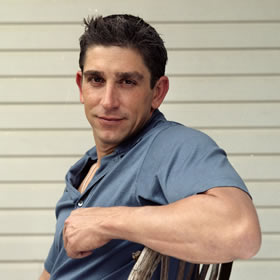
De Amerikaanse dichter Richard Blanco werd geboren op 15 februari 1968 in Madrid. Hij emigreerde naar Miami met zijn Cubaanse familie in ballingschap en werd daar opgevoed en opgeleid. Hij behaalde een bachelorgraad aan de Florida International University in de Civiele Techniek in 1991 en zijn Master in Fine Arts in Creative Writing in 1997. De laatste studie volgde hij samen met de dichter Campbell McGrath. Vanaf 1999 reisde hij en leefde hij in Guatemala en Brazilië. Hij doceerde aan de Universiteit van Georgetown,aan de American University en de Central Connecticut State University. Hij onderzocht zijn Cubaanse erfgoed in zijn vroege werken en zijn rol als homoseksuele man in de Cubaans-Amerikaanse cultuur in “Looking for the Gulf Motel.” Zijn werk is verschenen in The Nation, Ploughshares, de Indiana Review, Michigan Quarterly Review, TriQuarterly Review, New England Review en Zuid-Amerika Review. Blanco is lid van de online Letras Latinas Oral History Project archieven.


Looking for The Gulf Motel

Marco Island, Florida

There should be nothing here I don’t remember . . .

The Gulf Motel with mermaid lampposts
and ship’s wheel in the lobby should still be
rising out of the sand like a cake decoration.
My brother and I should still be pretending
we don’t know our parents, embarrassing us
as they roll the luggage cart past the front desk
loaded with our scruffy suitcases, two-dozen
loaves of Cuban bread, brown bags bulging
with enough mangos to last the entire week,
our espresso pot, the pressure cooker—and
a pork roast reeking garlic through the lobby.
All because we can’t afford to eat out, not even
on vacation, only two hours from our home
in Miami, but far enough away to be thrilled
by whiter sands on the west coast of Florida,
where I should still be for the first time watching
the sun set instead of rise over the ocean.

There should be nothing here I don’t remember . . .

My mother should still be in the kitchenette
of The Gulf Motel, her daisy sandals from Kmart
squeaking across the linoleum, still gorgeous
in her teal swimsuit and amber earrings
stirring a pot of arroz-con-pollo, adding sprinkles
of onion powder and dollops of tomato sauce.
My father should still be in a terrycloth jacket
smoking, clinking a glass of amber whiskey
in the sunset at the Gulf Motel, watching us
dive into the pool, two boys he’ll never see
grow into men who will be proud of him.

There should be nothing here I don’t remember . . .

My brother and I should still be playing Parcheesi,
my father should still be alive, slow dancing
with my mother on the sliding-glass balcony
of The Gulf Motel. No music, only the waves
keeping time, a song only their minds hear
ten-thousand nights back to their life in Cuba.
My mother’s face should still be resting against
his bare chest like the moon resting on the sea,
the stars should still be turning around them.

There should be nothing here I don’t remember . . .

My brother should still be thirteen, sneaking
rum in the bathroom, sculpting naked women
from sand. I should still be eight years old
dazzled by seashells and how many seconds
I hold my breath underwater—but I’m not.
I am thirty-eight, driving up Collier Boulevard,
looking for The Gulf Motel, for everything
that should still be, but isn’t. I want to blame
the condos, their shadows for ruining the beach
and my past, I want to chase the snowbirds away
with their tacky mansions and yachts, I want
to turn the golf courses back into mangroves,
I want to find The Gulf Motel exactly as it was
and pretend for a moment, nothing lost is lost.

Richard Blanco (Madrid, 15 februari 1968)

Ischa Meijer, Alexander Kluge, Piet Paaltjens, Robert Shea, Frederick Philip Grove

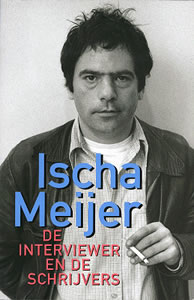
De Nederlandse journalist, schrijver, dichter, filmacteur en televisiepresentator Ischa Meijer werd geboren in Amsterdam op 14 februari 1943. Zie ook alle tags voor Ischa Meijer op dit blog.


Uit: De interviewer en de schrijvers (Godfried Bomans)

„Achter grote ramen ligt de zandkleurige tuin, een kolossaal stuk duin beneemt het uitzicht op het bos daarachter. We drinken gescheiden een kopje thee. Bomans in de keuken, ik in de kamer. Dan staat hij plotseling naast me. Het is tien uur in de morgen. We kijken peinzend door de ruiten. Bomans belooft me een wandeling. Maar eerst de trap op, een nauwe gang door, naar zijn werkkamer.

Bomans: ‘Heb jij ooit gehoord van een jongen die op zijn achttiende sprookjes schreef? Dat is toch belachelijk, eigenlijk. We zochten allemaal ons klooster. Ik las maar, en ik las maar. Alles was beter dan dat huis… En toch, dat is zo vreemd… geen van de kinderen zal het ooit willen toegeven, ik zou het niet eens tegen ze durven zeggen. Twintig jaar ben ik ziek geweest, psychisch een wrak, ik heb twintig jaar in bed gelegen. Nu moet ik volwassen worden. Ik ben een nabloeier… ’t Kost tijd. Maar ik ga vooruit… Dat vind ik zo merkwaardig… Jij zit hier volkomen ontspannen tegenover me, je luistert naar me, stelt me een vraag. Maar dat zou ik indertijd nooit gedurfd hebben. Zomaar op bezoek bij een schrijver. Ik zou bloedrood en stuntelig op diezelfde bank hebben gezeten. Ik was zover nog niet… ik moest genezen.

Ik voel me benauwd, laten we een wandelingetje maken.’

Hij loopt voor me uit, een beetje gebogen, terwijl hij praat. Door de natte bladeren het heuveltje op. We kijken uit over het bos.

Bomans: ‘Maar ik ga vooruit. Wat ik gistermiddag op de televisie deed… zomaar in debat gaan over een actueel onderwerp… ’t Was niet goed, dat weet ik wel… maar ik deed het. Ik schrijf nu in de Volkskrant elke zaterdag een stukje, dat zou ik vijf jaar geleden niet gedurfd hebben. Over gewone alledaagse dingen zomaar je mening geven. ’t Gaat zo langzaam, weet je…’

We staan voor een gigantische, volkomen verlaten villa, gluren door de ruitjes, praten met de tuinman. Lopen daarna de weg op, het dorp Bloemendaal in.“


Ischa Meijer (14 februari 1943 – 14 februari 1995)

Lees verder “Ischa Meijer, Alexander Kluge, Piet Paaltjens, Robert Shea, Frederick Philip Grove”