Libris Literatuurprijs voor Bernard Dewulf, Ida Gerhardt, Camilo José Cela, Rose Ausländer

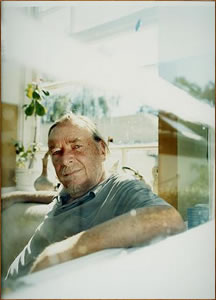
Libris Literatuurprijs voor Bernard Dewulf

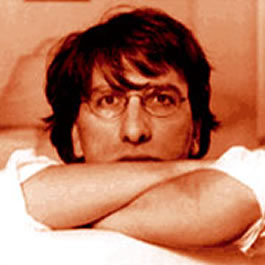
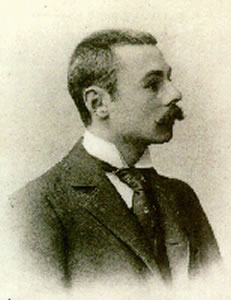
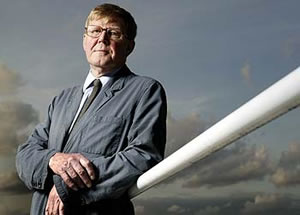
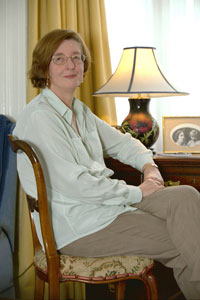
De Vlaamse dichter, schrijver en columnist Bernard Dewulf heeft de Libris Literatuurprijs 2010 gewonnen met zijn novelle Kleine dagen. Juryvoorzitter Hans Wijers maakte dat maandagavond bekend in het Amstel Hotel in Amsterdam. Aan de prijs is een bedrag van 50.000 euro verbonden. Kleine dagen bestaat uit een een reeks columnachtige stukken waarin de schrijver zijn eigen dagelijkse omgeving, zijn vrouw, zijn kinderen, zijn huis en zijn tuin beschrijft. Bernard Dewulf werd geboren op 30 januari 1960 in Brussel. Zie ook mijn blog van 30 januari 2009.

Uit: Kleine dagen

“Er groeit een vrouw in mijn huis. Een-twee-drie is ze vijf geworden. Op een ochtend kwam ze de keuken binnen. Ze zei dag en het was anders. Ze gaf een zoen en hij verschilde. Haar haar hing los, ze had een rokje aan en daaronder lange kousen. Daarin waren haar benen gestegen en ze stapte, ik zocht in verwarring het woord, pront. Parmantig. Koket. Er was iets opgeschoven in haar. Samen met de lengte van haar benen. Ik stond ernaar te kijken: zo dus groeit er een vrouw in mijn huis. Later zal ik misschien zeggen: ik heb jou zien worden. Ik heb jou uit de grond van een vrouw zien komen. Op een dag kwam je de keuken binnen, toen zag ik het beginnen.”

(…)

„De tram wiegt ons door een onbegrijpelijk mooie dag. Dag meisje in de tram met het ijsje in de lente. En de beentjes bengelend in het niets van het geluk. Zullen we vragen of hij doorrijdt en eindeloos rondjes maakt in vandaag? De gekke tram van 3 april 2005, die maar bleef rijden met dat meisje en die man aan boord. Morgen in de krant.“

Dewulf

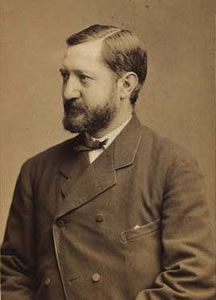
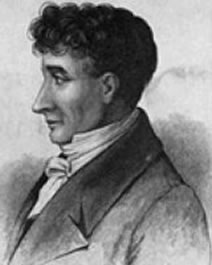
Bernard Dewulf (Brussel, 30 januari 1960)


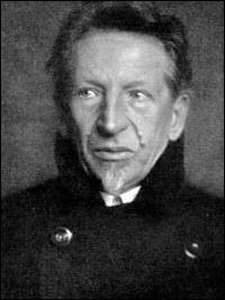
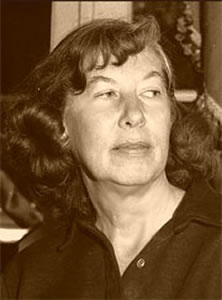
De Nederlandse dichteres Ida Gerhardt werd geboren in Gorinchem op 11 mei 1905. Zie ook mijn blog van 11 mei 2009. en mijn blog van 11 mei 2008 en ook mijn blog van 11 mei 2007, mijn blog van 11 mei 2006 en mijn blog van 4 mei 2006.

Kwatrijn I

’s Nachts wakker in het uitgestorven huis
hoorde ik het bezig water van de sluis.
Toen riep men mij met name – twee, drie maal.
Een slaan van luiken en een groot geruis.


Christus als hovenier

Zij dacht dat het de hovenier was. Joh. 20:15

Eén Rembrandt kende als kind ik goed:
de Christus met de grote hoed
wandelend in de ochtendstond.
En, naar erbij geschreven stond:
Hij was de hovenier.

En nòg laat ik mijn tranen gaan
als in de gaarde ik Hem zie staan,
en – wat terzijde – in stille schrik
die éne, zij die dacht als ik:
Het was de hovenier.

O kinderdroom van groen en goud —
géén die ontnam wat ik behoud.
De laatste hoven naderen schier
en ijler wordt de ochtend hier.

Hij is de hovenier.


Vernomen tijdens een onweer

Vijf vuurstenen gaf ik u in de hand:
een harde jeugd, die ziel en ribben treft,
een sterk talent, in eenzaamheid beseft:
aanstoot blijft het voor vrienden en verwant.
Het ongeëerd zijn in uw eigen land.
Dat zich de minste boven u verheft.

Vijf oerstenen: vijf kansen die ik gaf.
Mijn wet is: kwarts of kwarts en hard op hard.
Vuur schuilt in stenen, van de schepping af.
Het slaapt tot het wakker wordt getart.

Gerhardt

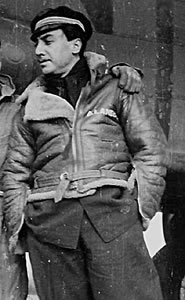
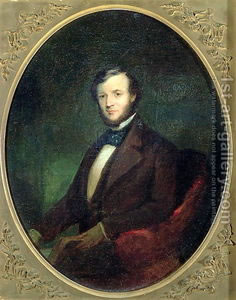
Ida Gerhardt (11 mei 1905 – 15 augustus 1997)


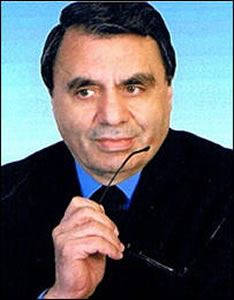
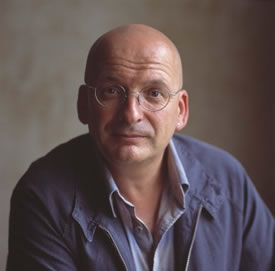
De Spaanse schrijver Camilo José Cela werd geboren op 11 mei 1916 in Iria Flavia. Zie ook mijn blog van 11 mei 2007 en ook mijn blog van 11 mei 2008 en ook mijn blog van 11 mei 2009.

Uit: The Family of Pascual Duarte (Vertaald door Anthony Kerrigan)

I AM NOT, sir, a bad person, though in all truth I am not lacking in reasons for being one. We are all born naked, and yet, as we begin to grow up, it pleases Destiny to vary us, as if we were made of wax. Then, we are all sent down various paths to the same end: death. Some men are ordered down a path lined with flowers, others are asked to advance along a road sown with thistles and prickly pears. The first gaze about serenely and in the aroma of their joyfulness they smile the smile of the innocent, while the latter writhe under the violent sun of the plain and knit their brows like varmints at bay. There is a world of difference between adorning one’s flesh with rouge and eau-de-cologne and doing it with tattoos that later will never wear off . . .

 I was born a great many years ago, a good fifty-five at least, in a small village lost in the province of Badajoz. It lay, that village, some two leagues from Almendralejo, squatting athwart a road as empty and endless as a day without bread, as empty and endless — an emptiness and endlessness that you, luckily for you, cannot even imagine — as the days of a man condemned to death.

 It was a hot and sunlit village, rich enough in olive trees, and (begging your pardon) hogs, its houses so bright with whitewash that the memory of them still makes me blink, a plaza all paved with cobblestone, and a fine three-spouted fountain in the middle of the plaza. No water had flowed from the three mouths of the fountain for some years before I left the village, and yet it was elegant, and a proud symbol in our eyes; its crest was topped with the figure of a naked boy, and the basin was scalloped around the edges like the shells of the pilgrims from Santiago de Compostela. The town hall stood at one side of the plaza; it was shaped like a cigar box, with a tower in the middle, and a clock in the tower; the face of the clock was as white as the Host raised during Mass, and its hands were stopped forever at nine o’clock, as if the town had no need of its services but only wanted it for decoration.”

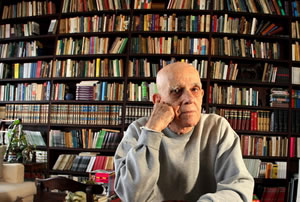
cela

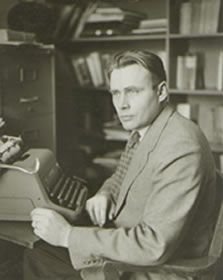
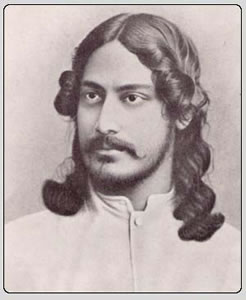
Camilo José Cela (11 mei 1916 – 17 januari 2002)
Standbeeld in Padrón, Spanje


De Oostenrijks-Roemeens-joods-Amerikaanse dichteres Rose Ausländer werd geboren in Czernowitz op 11 mei 1901. Zie ook mijn blog van 11 mei 2007 en ook mijn blog van 11 mei 2008 en ook mijn blog van 11 mei 2009.


Sprache


Halt mich in deinem Dienst

lebenslang

in dir will ich atmen


Ich dürste nach dir

trinke dich Wort für Wort

mein Quell


Dein zorniges Funkeln

Winterwort


Fliederfein

blühst du in mir

Frühlingswort


Ich folge dir

bis in den Schlaf

buchstabieren deine Träume


Wir verstehn uns aufs Wort


wir lieben einander


Prag


Immer träume ich nach Prag

immer kam etwas dazwischen

Zeitnot Krankheit Krieg


Kafka stand

vor dem Hradschin

verirrter Himmelsbote


Ich schwöre

beim heiligen Franz

ich kann die Mauern

nicht durchbrechen

die Zauberkünste schlafen


Dort träumen Dichter

ihre Wunder

Gut mit ihnen

Kirschen essen


Trauert Prag

um meinen Traum?

Mein Traum

trauert um Prag


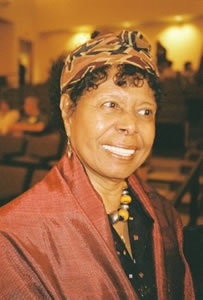
auslaender-rose

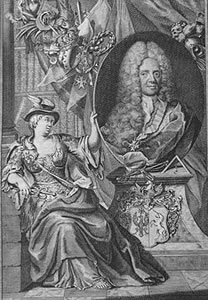
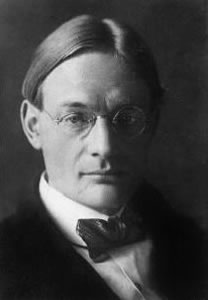
Rose Ausländer (11 mei 1901 – 3 januari 1988)


Zie voor nog meer schrijvers van de 11e mei ook mijn vorige blog van vandaag.


Henning Boëtius, Carl Hauptmann, Latīf Nāzemī, Rubem Fonseca, Ethel Lilian Voynich, Leopoldo de Luis, Rachel Billington


De Duitse schrijver Henning Boëtius werd geboren op 11 mei 1939 in Langen, Hessen. Zie ook mijn blog van 11 mei 2007 en ook mijn blog van 11 mei 2009.


Uit: Der Strandläufer


Ich weiß nichts von Marconi. Ich weiß nur, dass er entscheidend zur Entwicklung der drahtlosen Telegraphie beigetragen hat. Ein Erfinder war er, besser gesagt, ein Entdecker neuer Welten, in der die unsichtbaren Wogen eines elektromagnetischen Meeres die kleinen Papierschiffchen und Flaschenpostbotschaften des Lebens von Ufer zu Ufer tragen. Er, Guglielmo Marconi, war der Columbus dieses unsichtbaren Meeres, dessen Wellen immer noch steigen und steigen und uns umspülen, bis die Gefahr besteht, dass wir in ihm untergehen. Er wagte sich als Erster auf diesen rätselvollen Ozean hinaus. Er besaß die Kühnheit und den Erfindungsreichtum, ihn zu durchqueren mit seinen Frittern, Funkeninduktoren und Radioröhren, um schließlich einen Kontinent zu erreichen, den es auf keiner Weltkarte gibt und der doch inzwischen die Wirklichkeit beherrscht: den achten Kontinent, den Kontinent der Information.
Ich weiß nichts von Marconi, höchstens, wann er geboren wurde und wann er starb. Ich habe mich lange gescheut, seine Lebensdaten in einem Lexikon nachzuschlagen. Warum?, frage ich mich. Vielleicht aus Angst, den Mythos dieses Entdeckers zu zerstören, ihm zu nahe zu kommen, so, wie ich Angst habe, mir selbst, meiner eigenen Lebensgeschichte zu nahe zu kommen? Ich traue mich nur ungern in den verwilderten Garten meiner Vergangenheit hinein, aus Furcht, Personen zu begegnen, die einst über die Macht verfügten, zu entscheiden, was Unkraut sei, was ausgerottet werden müsse oder was es wert sei, gepflegt und geerntet zu werden.“


boetius
Henning Boëtius (Langen, 11 mei 1939)


De Duitse dichter en schrijver Carl Ferdinand Max Hauptmann werd geboren op 11 mei 1858 in Obersalzbrunn. Zie ook mijn blog van 11 mei 2007 en ook mijn blog van 11 mei 2009.


An Vaters Sterbebett


Ich saß an meines Vaters Sterbebett

und sah sein stilles bleiches Angesicht.

Im Zimmer dunkelte die Mitternacht.

Ein schwacher Schimmer kam vom kleinen Licht.

Den Blick nach oben und die Lider zu,

so röchelte, der da im Bette lag,

und bleich und groß und hehr schien das Gesicht,

und einsam, totenstumm war das Gemach.

Und ich – ich grub im Rätselgrund:

“Wer ist es, der hier stöhnt? – Was schwindet hin?

Wer ist, der um den letzten Atem ringt?”

Und rang, umnachtet von dem Rätselsinn,

Und Tausend – Ungezählte sah’n mich an

aus fremden Zügen, die ich Vater nannte,

ein ewiger Zug war’s, der gestorben war,

ewig der eine doch, der herzverwandte.

Der Vater und des Vaters Vater war’s,

der noch im Bilde blickte von der Wand.

Und jeder hatte einmal so erschaudernd

gegriffen nach des Vaters Sterbehand;

und einmal auch im Leben hatte jeder

die Hand nach seines Sohnes Liebe ausgestreckt;

und alle stummen Trauertränen hatten

den finstern Gast, den Tod nicht fortgeschreckt.

Du warst es ewig, du, der Ich sich nannte,

und der doch immer nur der eine ist,

der ewig ruhelos in die Ewigkeit verbannte,

und den der Todmann sanft zur Ruhe küßt,

damit er fort und fort im Staube schreite,

am Rätsel löse und am Schauen webe.

Damit er allen Erdentiefen Sinn,

damit er tiefsten Gottesgrund erlebe -.

Ich bin es, der hier stöhnt und der hier sinnt,

ich reiche selbst im Leid mir Liebe zu,

ich schloß die Augen längst, – immer weiter

führt mich mein Rätsel weg aus ew’ger Ruh’.


carlhauptmann
Carl Hauptmann (11 mei 1858 – 4 februari 1921)


De Afghaanse dichter, schrijver en criticus Latif Nazemi werd geboren op 11 mei 1947 in Herat. Zie ook mijn blog van 11 mei 2009.


Die Flucht


Weißer Schnee, fällt wie Schwanenfeder
auf die nackten Häupter alter Bäume
Der Angsteinflößende nächtliche Wind
hat die Lichter der Stadt erloschen

Ich stehe hier, allein am Fenster
im mir die Ruhe tausend alter Bäume
außer das Jaulen des Windes
hört man im Dorf keine Stimme mehr

Mit einer alten Lampen in der Hand
kommt Mutter des Weges
Ihre Augen spiegeln den Trauer
Ihre blicke leer und Herz zerbrechend:

“Wie lange willst du noch in diesen dunklen Nächten
schlaflos an sie denkend, wie ein Geist umher wandern ?
Nehme Abschied von dieser hoffnungslosen Liebe mein Sohn
eine liebe, die du selbst wie ein leeres Glas zerbrochen hast”

Weißer Schnee fällt wie Schwanenfeder
auf die nackten Köper der Bäume unseres Gartens
Mutter sitzt immer noch traurig in der dunkeln Ecke und weint

“Mutter sage nichts was mein Herz betrübt
Mutter suche nicht sanfte Worte der Vernunft
Mutter willst du das im Schutze der Nacht
sich zwei Schatten auf die Flucht machen?


Vertaald door Framorz Nazemi


latif-nazemi
Latīf N
āzemī (Herat, 11 mei 1947)


De Braziliaanse schrijver José Rubem Fonseca werd geboren op 11 mei 1925 in Juiz de Fora. Zie ook mijn blog van 11 mei 2009.


Uit: Vast Emotions and Imperfect Thoughts (Vertaald door Clifford E.Landers)


Dietrich struck me as a serious type. When I had received the letter from Germany I hadn’t attached much importance to his project, even though I was anxious to get back to film-making. But after our interview the proposal had taken on new significance.

    I shut myself up in my apartment, reading and re-reading Babel and making notes. At first I was motivated merely by the desire to get back to film-making after two years away from it directing commercials for TV. But as I re-read Babel’s stories my interest grew.

    I was working on the part of the script that describes the death of Dolguchov, to get an idea of the potential of Babel’s text, when my brother Jose, the television evangelist, phoned. He wanted to talk about the film I was doing for his weekly TV program. He called daily with suggestions.

    `I have to reach the hearts of the faithful. You do good work,’ he said, `but I think I ought to be more direct, like the Americans, say that I need money for the day-care centers, the nursing home …’

    A hateful conversation. I agreed to go to his house in Ipanema at nine pm.

    I went back to the death of Dolguchov. Babel doesn’t say how the Cossack Afonka applies the coup de grace to Dolguchov. The scene was described by Babel in this way: `They spoke briefly. I did not hear a word. Dolguchov held out his papers to the sergeant and Afonka secreted them in his boot and shot Dolguchov in the mouth.’ This was much better than the scene I had written. The reader didn’t need to know exactly how Afonka shot Dolguchov in the mouth, needed no details to see and feel, to imagine what was happening. The reader wasn’t told what Afonka’s face looked like, or Dolguchov’s, at the moment the shot was fired, but he or she knew everything that mattered at that instant. In the film I could, for example, place the camera so that it framed Liutov and the coup de grace could be audible only, but that would take away from the power of the narrative. Or I could show the landscape, the sky or whatever, as the shot was heard.“


rubem-fonseca
Rubem Fonseca (Juiz de Fora, 11 mei 1925)


De Engelse schrijfster, vertaalst
er en componiste
Ethel Lilian Voynich werd geboren op 11 mei 1864 in County Cork, Ierland.
Zie ook mijn blog van 11 mei 2007 en ook mijn blog van 11 mei 2009.


Uit: The Gadfly


“Is that really it? What should I do without you, Arthur? I should always be losing my things. No, I am not going to write any more now. Come out into the garden, and I will help you with your work. What is the bit you couldn’t understand?”

They went out into the still, shadowy cloister garden. The seminary occupied the buildings of an old Dominican monastery, and two hundred years ago the square courtyard had been stiff and trim, and the rosemary and lavender had grown in close-cut bushes between the straight box edgings. Now the white-robed monks who had tended them were laid away and forgotten; but the scented herbs flowered still in the gracious mid-summer evening, though no man gathered their blossoms for simples any more. Tufts of wild parsley and columbine filled the cracks between the flagged footways, and the well in the middle of the courtyard was given up to ferns and matted stone-crop. The roses had run wild, and their straggling suckers trailed across the paths; in the box borders flared great red poppies; tall foxgloves drooped above the tangled grasses; and the old vine, untrained and barren of fruit, swayed from the branches of the neglected medlar-tree, shaking a leafy head with slow and sad persistence.

In one corner stood a huge summer-flowering magnolia, a tower of dark foliage, splashed here and there with milk-white blossoms. A rough wooden bench had been placed against the trunk; and on this Montanelli sat down. Arthur was studying philosophy at the university; and, coming to a difficulty with a book, had applied to “the Padre” for an explanation of the point. Montanelli was a universal encyclopaedia to him, though he had never been a pupil of the seminary.

“I had better go now,” he said when the passage had been cleared up; “unless you want me for anything.”

“I don’t want to work any more, but I should like you to stay a bit if you have time.”

“Oh, yes!” He leaned back against the tree-trunk and looked up through the dusky branches at the first faint stars glimmering in a quiet sky. The dreamy, mystical eyes, deep blue under black lashes, were an inheritance from his Cornish mother, and Montanelli turned his head away, that he might not see them.

You are looking tired, carino,” he said.

“I can’t help it.” There was a weary sound in Arthur’s voice, and the Padre noticed it at once.“


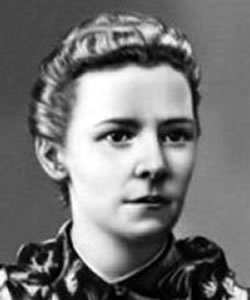
Voynich
Ethel Lilian Voynich (11 mei 1864 – 28 juli 1960)


Zie voor onderstaande schrijvers ook mijn blog van 11 mei 2007.


De Spaanse dichter Leopoldo de Luis werd gebor
en op 11 mei 1918 in Córdoba.


Zie voor onderstaande schrijver ook mijn blog van 11 mei 2009.


De Britse schrijfster Rachel Billington werd geboren op 11 mei 1942 in Londen.


J.C. Bloem, Herman Leenders, Jeremy Gable, Petra Hammesfahr, Roberto Cotroneo, Jayne Cortez, Ralf Rothmann

De Nederlandse dichter J. C. Bloem werd geboren op 10 mei 1887 in Oudshoorn. Zie ook mijn blog van 10 mei 2009 en ook mijn blog van 10 mei 2008en ook mijn blog van 10 mei 2007 en mijn blog van 22 maart 2006.

Het voorjaar

De lente, en ’t scheemren voor de duizlende ogen
Als bij de knapen, en vanaf de straat
De luidere geruchten, en ’t gedogen
Van alles, wat het voorjaar lijden laat.

O hart, in ’t eeuwig keren der seizoenen
Verlatener dan de eerste avondster,
En nòg begerig als een boom te groenen,
Maar steeds geknakt, en altijd eenzamer.


Daaglijksheid

Niet hunner is het reddeloost gemis,
Die aan vervreemde omhelzingen ontkomen,
Wanneer het venster, waar de dag gaat domen,
Als lucht, weerkaatst in heimlijk water is.

Zij kunnen, als hen aanvuurt wat hen schiep,
Elkander met hun huiden toch bereiken,
Terwijl de harten van elkander wijken
Naar paradijzen in hun eigen diep.

Maar het ontwaken, zich wassen en kleden,
Het zitten aan ’t gezamenlijk ontbijt,
Driehonderdvijfenzestig maal in ’t jaar –

Dit maakt dat zij, die boven daaglijksheden
Elkaar voor immer dachten toegewijd,
Hoewel in tranen, scheiden van elkaar.


Rotterdam

Hoe vreemd ligt deze stad nu open,
Hoe is zij wonderlijk en licht:
De huizenlooze straten loopen
Van niets naar niets – toch niet ontwricht.

De hemel straalt als nooit te voren
Op waar der eeuwen bouw verdween –
De zomer heeft geen glans verloren,
De zon schijnt zooals ze altijd scheen.

Men gaat in innerlijke afzondering,
Herdenken hoe het is geweest,
En vindt zichzelf tot zijn verwondring
Geschokt veel minder dan bedeesd.

Klaag niet. Steeds bloesemen de tuinen
Boven verganklijkheid en wee
Een herder rust thans op de puinen
Van Babylon en Niniveh.

bloem
J.C. Bloem (10 mei 1887 – 10 augustus 1966)


De Vlaamse dichter en schrijver  Herman Leenders werd geboren te Brugge op 10 mei 1960. Zie ook mijn blog van 10 mei 2007 en ook mijn blog van 10 mei 2008 en ook mijn blog van 10 mei 2009.

Mei

In de lente is er moed nodig om te leven.
Schaduwen zijn zwaar om te dragen.
Het regent gras en bladeren
en boven het zaailand hangt

een kraai aan een draad.
Een luchtballon! Een parel. Een druppel weemoed.
De geur van deeg rijst op uit de aarde.
Een dorstige vlieg verdrinkt in een glas water.


Deemoed is een deugd

Deemoed is een deugd
van lage deuren
en van boer Bral. Hij loopt gebogen
zoals een dak verzakt van het dragen.

Zoals bomen naar het oosten groeien
met diepe kloven in hun schors
en ogen als verse wonden
in het uitgedroogde hout.

Leenders
Herman Leenders (Brugge, 10 mei 1960)


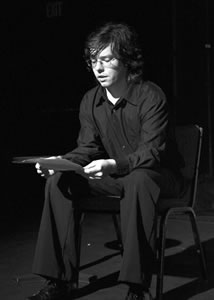
De Amerikaanse toneelschrijver Jeremy Gablewerd geboren op 10 mei 1982 in Lakenheath, Suffolk, in Engeland.  Het volgdende fragment komt uit een script dat hij geheel (interactief) op Twitter heeft gepubliceerd. (Het moet dan ook van beneden naar boven worden gelezen) Lees het geheel op Twitter: http://twitter.com/twit_play  Zie ook mijn blog van 10 mei 2009.

Uit: The 15th Line

9:16 PM Mar 25th via web
Reply Retweet ANGELA: I just wish I knew what that was.
9:16 PM Mar 25th via web
Reply Retweet ANGELA: It feels like everything’s gone off the rails in the past two months. But now I feel ready for the next part of my life.
9:15 PM Mar 25th via web
Reply Retweet SETH: Not a coward, not a hero, not a lover, not a friend. What does that make me? That’s not a riddle, I’m genuinely confused.
8:52 PM Mar 25th via web
Reply Retweet DUSTIN: This must be the final stage of grief. Acceptance. Now if only it felt more accepting.
8:23 PM Mar 25th via web
Reply Retweet DUSTIN: @angiannini89 No worries. I wish you nothing but the best of luck.
8:13 PM Mar 25th via web

Reply Retweet ANGELA: @turnbullseth No. No, it’s not.
6:59 PM Mar 25th via web
Reply Retweet SETH: @angiannini89 That’s okay. You’re still the Pepper Potts to my Tony Stark. That was the lamest thing I’ve ever said.
5:57 PM Mar 25th via web
Reply Retweet ANGELA: @dustykinder Hey, I think I’m cool sticking with Dr. Wheeler. But I’m grateful for everything that you’ve done to help.
5:03 PM Mar 25th via web
Reply Retweet ANGELA: @turnbullseth I can’t do the Peace Corps right now. I’m sorry.
5:03 PM Mar 25th via web
Reply Retweet ANGELA: It’s time to Etch-A-Sketch all of this.“

gable

Jeremy Gable (Lakenheath, 10 mei 1982)


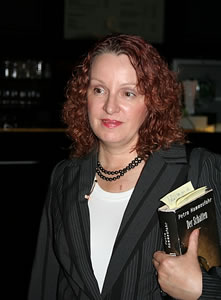
De Duitse schrijfster Petra Hammesfahr werd geboren in Immerrath op 10 mei 1951.

Uit: Der gläserne Himmel 

“Tage wie dieser erinnern mich an einen Traum. Im Geist gehe ich noch einmal an der weißen Mauer entlang. Glasscherben auf ihrer Krone glitzern im Licht. Ich höre eine Frau singen und komme fast um vor Sehnsucht. Ich weiß, hinter der Mau­er ist alles, was ich vom Leben erhoffen kann.
Es ist sechs Jahre her, ich war gerade nach Kirchfelden gekom­men, da träumte ich das oft. Im Traum sprang ich. Erreichte nach vielen vergeblichen Versuchen die Mauerkrone. Die Scherben zerschnitten meine Hände, bohrten sich in meine Schenkel. Und hinter der Mauer war nichts. Eine öde weiße Fläche – wie ein unbeschriebenes Blatt, durch eine Lupe be­trachtet.
Inzwischen kenne ich die Bedeutung dieses Traumes. Ich soll­te vorbereitet werden auf einen Moment wie diesen. Ich sollte begreifen, was es heißt, einen Menschen ausgelöscht zu ha­ben. Ich sollte endlich gestehen: »Ich habe getötet!«

An Tagen wie diesem wird aus Zweifel Gewissheit. Der Him­mel ist bewölkt; der heraufziehende Abend lässt ihn dunkel werden. Am Nachmittag hat es geregnet. Man sieht nichts mehr davon. Der Wind hat die Steinplatten im Hof längst wie­der getrocknet. Nun treibt er sein Spiel mit den letzten Wolken und bringt den Geruch feuchter Erde ins Zimmer.
Ein würziger Geruch. Ich liebe ihn. In den sechs Jahren hier war er ein Teil meines Lebens. Er gehört zum Sommer und zum Frühherbst, wie Sina zu mir gehörte. Sie liebte ich auch, liebe sie immer noch. Der Gedanke, dass sie mich betrog, machte mich rasend. Der Gedanke, dass ich sie verloren habe, bringt mich um den Verstand. Ich habe Angst.“

petra_hammesfahr
Petra Hammesfahr (Immerrath, 10 mei 1951)


De Italiaanse schrijver Roberto Cotroneo werd op 10 mei 1961 geboren in Alessandria.

Uit: Diese Liebe (Vertaald door Karin Krieger)

„Was war die Liebe zuvor gewesen?”, sinniert Anna, “Wo war sie mir begegnet? Diese Frage hatte sich die meiste Zeit meines Lebens nicht oft gestellt. Ich denke nicht, dass die Liebe an und für sich existiert, ich glaube, sie ist ein Kleid, das man sich auf den Leib schneidert, und dies über einen Zeitraum, der lange währen kann. Hin und wieder ein Nadelstich, und gelegentlich vielleicht sogar die eine oder andere aufgetrennte Naht, die in Ordnung gebracht werden muss. (…) vielleicht liegt das Ewige gerade in der Fähigkeit, einen flüchtigen Horizont lebendig zu halten und darauf zu warten, dass er noch einmal erscheint.”

(…)

“Vielleicht ist es an uns, in den Dingen der Welt eine Spur des Paradieses wiederzufinden. Wie Archäologen, die ihre Fundstücke mit einem Pinsel säubern. / Ich wusste immer, dass unsere Buchhandlung das Paradies ist, eine Kabbala aus Sätzen; Kombinationen, die es zu finden gilt, Glückssplitter in Buchstabenform. Starkes Licht von Bedeutung.”

cotroneo
Roberto Cotroneo (Alessandria, 10 mei 1961)


De Duitse dichter en schrijver Ralf Rothmann werd op 10 mei 1953 geboren in Schleswig.

Restherz

Kein Geld für Pleiten,
kaum Zeit für Glück,
          ich lebe so panisch gern.
Verdunkeln mich auch die Motoren der Sonne,
scheint auch der Mond auf Bullen und Blut:
aushalten. Das Ende vor Augen
Anfänge machen,
gepanzert mit Verwundbarkeit,
bis an die Zähne bewaffnet mit Angst.

rothmann

Ralf Rothmann (Schleswig, 10 mei 1953)


Zie voor de drie bovenstaande schrijvers ook mijn blog van 10 mei 2008 en ook mijn blog van 10 mei 2009.

De Amerikaanse dichteres en performster Jayne Cortez werd geboren op 10 mei 1936 in Fort Huachuca, Arizona. Zie ook mijn blog van 10 mei 2009.

There It Is


And if we don’t fight
if we don’t resist
if we don’t organize and unify and
get the power to control our own lives
Then we will wear
the exaggerated look of captivity
the stylized look of submission
the bizarre look of suicide
the dehumanized look of fear
and the decomposed look of repression
forever and ever and ever
And there it is


Rose Solitude


“I am essence of Rose Solitude
my cheeks are laced with cognac
my hips sealed with five satin nails
i carry dreams and romance of new fools and old
flames
between the musk of fat
and the side pocket of my mink tongue.”


Jayne Cortez
Jayne Cortez (Fort Huachuca, 10 mei 1936)


Zie voor nog meer schrijvers van de 10e mei ook mijn vorige blog van vandaag.

Barbara Taylor, Benito Pérez Galdós, Johann Peter Hebel, Antonine Maillet, Ivan Cankar, Martin Boelitz, Ariel Durant, Leonard Buys, Fritz von Unruh

De Engelse schrijfster Barbara Taylor Bradford werd geboren in Leeds, West Yorkshire op 10 mei 1933.


Uit: Where You Belong


„The three of us sat in a small copse situated at the far end of the village, taking shelter from the blistering heat. It was bosky and cool on this scorching summer’s day.
The jeep was parked out on the road nearby, and I peered toward it, frowning slightly, wondering what had happened to Ajet, our adviser, guide, and driver. He had gone on foot to the village, having several days before arranged to meet an old school friend there, who in turn would take us to see the leaders of the K.L.A. According to Ajet, the Kosovo Liberation Army had their main training camp in the vicinity of the village, and Ajet had assured us in Pec, and then again on the drive here, that the leaders would be in the camp, and that they would be more than willing to have their photographs taken for transmission to newspapers and magazines around the world. “Everyone should know the truth, should know about our cause, our just and rightful cause,” Ajet had said to us time and again.
When he had left the copse ages ago, he had been smiling cheerfully, happy at the idea of meeting his old friend, and I had watched him step out jauntily as he walked down the dusty road in a determined and purposeful manner. But that had been over three hours ago, and he had still not returned, and this disturbed me. I could not help wondering if something unforeseen, something bad, had happened to the friendly young Kosovar who had been so helpful to us.

I rose and walked through the trees, shading my eyes with my hand and looking down the dirt road. There was no sign of Ajet, and, in fact, there was very little activity at all. But I waited for a short while longer, hoping he would appear at any moment.“


barbara_taylor_bradford

Barbara Taylor Bradford (Leeds, 10 mei 1933)


De Spaanse schrijver Benito Pérez Galdós werd geboren in Las Palmas op 10 mei 1843.


Uit: Our friend Manso (Vertaald door Robert Russell)


„AND I WAS thirty-five years old when that business happened. And  if I add that it happened recently and that many of the occurrences  included in this true story happened in less than one year’s time, that  should satisfy even those readers who are most demanding in matters of  chronology. I must disappoint the sentimentalists right from the outset by  informing them that I have two Doctor’s degrees and hold a professorship in  the Institute, a post I earned in open competition. The subject I teach is a  most important one but I choose not to mention it by name. I have dedicated  my small intelligence and my time totally to philosophical studies, for in  them I have found the purest joys of my life. I don’t see how most people can  profess to find this delightful study dry; it’s always old and yet always new,  this mistress of all wisdom who governs human existence, visibly or invisibly.

Perhaps those who reject philosophy have done so out of a failure to  study her methodically, for that is the only fashion in which to navigate her  tortuous secrets. Or perhaps in superficial study they have seen only her  extern
al harshness, and never gone deep enough to taste the remarkable  sweetness and gentleness of what she holds within. As a special gift in my  nature, I showed from early childhood a particular fondness for speculative  labors, and for the investigation of truth and the exercise of reason. To this  privilege was added, by great good fortune, that of coming under the tutelage  of a skillful teacher, who from the very beginning put me on the right path.
How true it is that the happy achievement of difficult undertakings results  from a good start; and that a first step, correctly taken, leads to the swift and  sure completion of a long journey. „


galdos

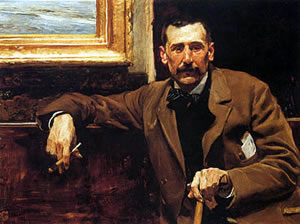
Benito Pérez Galdós (10 mei 1843 – 4 januari 1920)
Portret door Joaquin Sorolla Bastida


De Duitse dichter,schrijver, pedagoog en theoloog  Johann Peter Hebel werd geboren op 10 mei 1760 in Basel.


Uit: Das wohlfeile Mittagessen


„Es ist ein altes Sprichwort: Wer andern eine Grube gräbt, fällt selber darein. – Aber der Löwenwirt in einem gewissen Städtlein war schon vorher darin. Zu diesem kam ein wohlgekleideter Gast. Kurz und trotzig verlangte er für sein Geld eine gute Fleischsuppe. Hierauf forderte er auch ein Stück Rindfleisch und ein Gemüs für sein Geld. Der Wirt fragte ganz höflich: ob ihm nicht auch ein Glas Wein beliebe? “O freilich ja!” erwiderte der Gast, “wenn ich etwas Gutes haben kann für mein Geld.” Nachdem er sich alles wohl hatte schmecken lassen, zog er einen abgeschliffenen Sechser aus der Tasche und sagte: “Hier, Herr Wirt, ist mein Geld.” Der Wirt sagte: “Was soll das heißen? Seid Ihr mir nicht einen Taler schuldig?” Der Gast erwiderte: “Ich habe für keinen Taler Speise von Euch verlangt, sondern für mein Geld. Hier ist mein Geld. Mehr hab’ ich nicht. Habt Ihr mir zu viel dafür gegeben, so ist’s Eure Schuld.” – Dieser Einfall war eigentlich nicht weit her. Es gehörte nur Unverschämtheit dazu und ein unbekümmertes Gemüt, wie es am Ende ablaufen werde. Aber das Beste kommt noch. “Ihr seid ein durchtriebener Schalk”, erwiderte der Wirt, “und hättet wohl etwas anders verdient. Aber ich schenke Euch das Mittagessen und hier noch ein Vierundzwanzigkrenzerstück dazu. Nur seid stille zur Sache und geht zu meinem Nachbarn, dem Bärenwirt, und macht es ihm ebenso!” Das sagte er, weil er mit seinem Nachbarn, dem Bärenwirt, aus Brotneid in Unfrieden lebte und einer dem andern jeglichen Tort und Schimpf gerne antat und erwiderte. Aber der schlaue Gast griff lächelnd mit der einen Hand nach dem angebotenen Geld, mit der andern vorsichtig nach der Türe, wünschte dem Wirt einen guten Abend und sagte: “Bei Eurem Nachbarn, dem Herrn Bärenwirt, bin ich schon gewesen, und eben der hat mich zu Euch geschickt und kein anderer.”


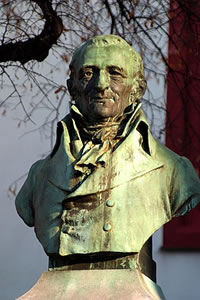
Basel_Hebeldenkmal

Johann Peter Hebel (10 mei 1760 – 22 september 1826)
Monument in Basel


Zie voor de drie bovenstaande schrijvers ook mijn blog van 10 mei 2008 en ook mijn blog van 10 mei 2009.


De Canadese schrijfster Antonine Maillet werd geboren op 10 mei 1929 in Bouctouche, New Brunswick. Zie ook mijn blog van 10 mei 2009.


Uit: Gapi and Sullivan  (Vertaald door Luis De Céspedes)


« SULLIVAN: No need to step on each other’s toes when there’s enough room fer everybody. It’s a large world, Gapi. A big round globe. Some spots are kind o’ rocky, but others are as smooth as moss. And it turns, like a merry-go-round. And once you’re on it, you just let yourself go. You perch yourself on top o’ the world and you let it carry you to the islands, on water, ’n to brand new lands… / GAPI:…where no man ever set foot before you. / SULLIVAN: So you don’t believe me when I tell you I’ve seen the world. Then what is it I’ve been doing all these years, according to you? »


antoninemaillet

Antonine Maillet (Bouctouche, 10 mei 1929)


De Sloveense schrijver, dichter en toneelschrijver. Ivan Cankar werd geboren in Vrhnika op 10 mei 1876. Zie en ook mijn blog van 10 mei 2009.


Uit: Aus fremdem Leben (Vertaald door Erwin Köstler)


… Die dritte Nacht stellten wir den Käfig in den Hof, vor den Stall. Wir gaben der Eule Fleisch auf die Streu, damit sie nicht einging. Die ganze Nacht hallte es, wie Weinen und Gelächter, wie Schmerz und Spott, es flatterte um die Kirche, verfing sich im Geäst; die Frühlingsnacht war nicht mehr unser; etwas Fremdes, Schwarzes hatte hineingegriffen, aus einer anderen, jenseitigen Nacht… Noch vor dem ersten Morgenlicht wurde plötzlich alles still, als hätte man hineingeschlagen. Eine entsetzliche Stille legte sich auf meine Brust und ich schlief müde ein …


ivan_cankar

Ivan Cankar (10 mei 1876 – 11 december 1918)
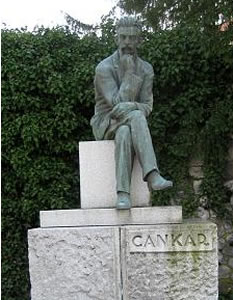
Monument voor Ivan Cankar in Vrhnika


De Duitse dichter Martin Boelitz werd geboren op 10 mei 1874 in Wesel. Vanaf 1902 leidde hij de uitgeverij Nieter in Nürnberg. Zie ook mijn blog van 10 mei 2009.


Letzte Stunde


Und als du starbst, da träumte dir,

Du schrittest durch ein selig Land,

Du gingst an deines Liebsten Hand

Durch Gottes lichte Gnadentür.

Still fiel das goldne Gitter zu –

Ach, wer auch sterben könnt’ wie du!


wesel_berliner_tor

Martin Boelitz (10 mei 1874 – 5 december 1918)
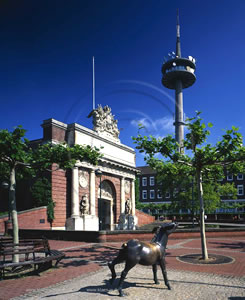
Wesel, Berliner Tor (Geen portret beschikbaar)


De Amerikaanse schrijfster Ariel Durant (eig, Chaya Kaufman) werd geboren op 10 mei 1898 in Proskoeriv, tegenwoordig Chmelnytsky in de Oekraïne. Zie ook mijn blog van 10 mei 2008  en ook mijn blog van 10 mei 2009.


Uit: The Phy
siocrats


„In an apartment at Versailles, under the rooms and the favoring eye of Mme. De Pompadour, that economic theory took form which was to stir and mold the Revolution, and shape the capitalism of the nineteenth century.

The French economy had been struggling to grow despite the swaddling clothes of regulations — by guilds and Colbert — and the Midas myth of a mercantilism that mistook gold for wealth. To increase exports, diminish imports, and take the “favorable balance” in silver and gold as a prop of political and military power, France and England had subjected their national economies to a mesh of rules and restraints helpful to economic order but harming production by hampering innovation, enterprise, and

competition. All this — said men like Gournay, Quesnay, Mirabeau pere, Du Pont de Nemours, and Turgot — was quite contrary to nature; man is by nature acquisitive and competitive; and if his nature is freed from unnecessary trammels he will astonish the world with the quantity, variety and excellence of his products. So, said these “physiocrats,” let nature (in Greek, physis) rule (kratein); let men invent, manufacture, and trade according to their natural instincts; or, as Gournay is said to have said, laissez

faire—”let him do” as he himself thinks best. The famous phrase was already old, for about 1664, when Colbert asked businessman Legendre, “What should we [the government] do to help you?” he answered, “Nous laisser faire — let us do it, let us alone.”


WADurant

Ariel Durant (10 mei 1898 – 25 oktober 1981)
Will en Ariel Durant


Zie voor onderstaande schrijver ook mijn blog van 10 mei 2007.

De Vlaamse schrijver en dichter Leonard Buyst (ook wel Léonard) werd geboren in Lokeren op 10 mei 1847.


Zie voor onderstaande schrijver ook mijn blog van 10 mei 2009.


De Duitse schrijver Fritz von Unruh werd geboren op 10 mei 1885 in Koblenz.

Didi de Paris

De Vlaamse dichter Didi de Paris werd geboren op 10 mei 1957 in Leuven. Gedichten van hem verschenen o.a. in de bloemlezingen Double Talk en Sprong naar de sterren en in tijdschriften als ‘MillenniuM’, ‘De Rottend Staal Nieuwsbrief’ en ‘De Brakke Hond’. Hij was medewerker aan het Vlaamse glossy undergroundtijdschrift ‘Gonzo Circus’ en heeft regelmatig columns op Vlaamse radio- en televisiestations. 

De liefdesbrief

’n Electronic handshake gelijk
als het werk van jouw hand
verglijdt in de mijne : alles vloeit –
handwerk. Ik zie je, ik zie je niet

en toch raakt heel mijn lijf en ziel
vervuld van jou. Je bent een blad
dat trilt in de nerf van mijn hand,
(de linker), terwijl de rechter vaardig

kneedt en perst, de witte inkt pomp
uit mijn diepste en onverteerbare ik
en jou in een mum van tijd, ongezien
en ongehoord, dien van wederwoord.

Ik, jouw lijfeigene valsemunter, pleeg
schurftig schriftvervalsing, vermaak
jouw handschrift van dein tot mijn,
tot het woekert als een miniatuur,
een hologram, Delftsch blauw
dat tintelt door mijn aderen.

Ik streel stuntelig je huid, je haar, en alles
verwordt tot perkament, een palimpsest,
gelooid in tijd, door ruimte verschroeid.

Didi de Paris (Leuven, 10 mei 1957)

Jotie T’Hooft, Charles Simic, Pieter Boskma, Jan Drees, Bulat Okudzhava, Leopold Andrian

De Vlaamse dichter en schrijver Jotie T’Hooft werd geboren in Oudenaarde op 9 mei 1956. Zie ook alle tags voor Jotie T’Hooft op dit blog.


In het Gedicht

De wanden zijn wit en de psychiaters
verdacht vriendelijk. Er is hoop
op genezing, maar ik heb nog niemand
zien weggaan, of hij kwam weer terug.

Dagen dat ik op weg naar mijn eigen kamer
verdwaal wisselen zich met dagen
waarop ik de wereld doorschouw als een kristal.

Soms word ik krijsend wakker.
Soms word ik afgevoerd en verdoofd,
soms vastgebonden.

Er zijn momenten waarop ik eeuwenlang
mijmerend volmaakt gelukkig ben:
wanneer ik mijn handen op de aarde leg
zijn het kleine handen.


O, al de balzalen

O, al de balzalen van mijn jeugd
zijn nu bestoft en verlaten.
De vrienden die er bleven zijn mij vreemd,
maken geluid door de barst in hun gelaten.

Onder de slingers en het licht van weleer
zetten zij de polka verder van de dromen,
de quick-step van het verjaarde zeer
cirkels dansend om nooit aan te komen.

Dancings waarin spreken spasme wordt
vriendschap sjacheren met moederkoren
en waar mijn hart toen is verdord
want de zachtheid ging erin verloren

aan mijn dorst naar geilheid en glamour.
Ik ben vrucht en kan slechts vallen;
gij roept mij toe: ‘l’amour, toujours l’amour’
maar ik zie u: likkebaarden, lallen.


tHooft

Jotie T’Hooft (9 mei 1956 – 6 oktober 1977)


De Amerikaanse dichter Charles Simic werd geboren in Belgrado op 9 mei 1938. Zie ook alle tags voor Charles Simic op dit blog.


Against Winter 


The truth is dark under your eyelids.

What are you going to do about it?

The birds are silent; there’s no one to ask.

All day long you’ll squint at the gray sky.

When the wind blows you’ll shiver like straw.


A meek little lamb you grew your wool

Till they came after you with huge shears.

Flies hovered over open mouth,

Then they, too, flew off like the leaves,

The bare branches reached after them in vain.


Winter coming. Like the last heroic soldier

Of a defeated army, you’ll stay at your post,

Head bared to the first snow flake.

Till a neighbor comes to yell at you,

You’re crazier than the weather, Charlie.


Private Eye 


To find clues where there are none,

That’s my job now, I said to the

Dictionary on my desk. The world beyond

My window has grown illegible,

And so has the clock on the wall.

I may strike a match to orient myself


In the meantime, there’s the heart

Stopping hush as the building

Empties, the elevators stop running,

The grains of dust stay put.

Hours of quiescent sleuthing

Before the Madonna with the mop


Shuffles down the long corridor

Trying doorknobs, turning mine.

That’s just little old me sweating

In the customer’s chair, I’ll say.

Keep your nose out of it.

I’m not closing up till he breaks. 


simic

Charles Simic (Belgrado, 9 mei 1938)


De Nederlandse dichter en schrijver Pieter Boskma werd geboren in Leeuwarden op 9 mei 1956. Zie ook alle tags voor Pieter Boskma op dit blog.


In de stralend gouden avondgloed

In de stralend gouden avondgloed van Aelbert Cuyp
dromen de koeien als antieke goden. De spiegel
van het bergmeer opent het binnenste zien.
De hemel en de aarde rusten in elkander uit.

Men zou wel willen lopen over het gele water
en zo de wolken raken en nooit meer ontwaken.
Zeilen ruisen uit de verte als een meisjesstem,
of zijn het nevelen, en is de stem van Hem?

Waar na dit landschap nog naar toe te gaan?
en rode boom ontbrandt tegen weidskobalt.

Oranje sterren regenen door de spasmes van
zijn takken. Er is geen rust in het heelal.

slechts in tere deining van blauw en grijs en roze,
verzoent Piet Mondriaan de geest met de natuur.


Oude Hamlet

De klepgrage cabaretier en de konkelzieke columnist
houzee houzee zij vieren feest in de clicheerfabriek
het feest van wie het dunste woord weet te chiqueren
de neutraalste druppels in chimerische vermommingen

Waren wij een platvis wij zwommen in royale scholen
op naar de burelen van de fopneus en de klapsigaar
maar helaas wij zijn de vierdimensionale ruggengraat
die zich gratis dwars liet zetten tussen as en zode

Er is reeds een hard gelach aan witte rots ontsprongen
voor men raakt gehecht aan een zin die waarlijk bloedt
Slechts het pikachtig bindmiddel sijpelt uit de van mest
en turf geperste briketten der lekkerbekkende letters:

‘Een papenkop maakt de grond niet heilig of gewijd’
maar levert een zachte verzilting aan het goedgelovig oog
Laat dromen de diepere tonen laat triomferen de cortex
vannacht zullen keren de kansen morgen de wijzers op hun loop


boskma

Pieter Boskma (Leeuwarden, 9 mei 1956)
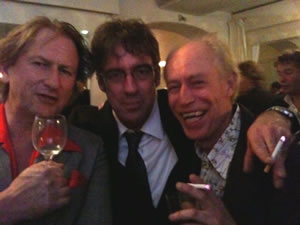
Hier rechts met kunstenaar Harald Vlugt (l) en schrijver Joost Zwagerman (m)


De Duitse schrijver Jan Drees werd geboren op 9 mei 1979 in Haan. Zie ook alle tags voor Jan Drees op dit blog.


Uit: Staring At The Sun


Es gibt nur wenige Institutionen in Deutschland, die Menschen wie mir das Gefühl geben, nicht komplett irre und desorientiert zu sein, weil sie, nun ja, wesentlich schwerwiegendere „Problemcluster” (so heißt das heute) sind: natürlich die Deutsche Bahn, die Telekom und, glaubt man den Medienseiten großer Tageszeitungen: auch Thomas Gottschalk.
Momentan funktioniert mein Modem nicht, es hat Aussetzer und meine WLAN-Karte findet das Netz immer seltener, heute beispielsweise: überhaupt nicht. Irgendwo habe ich zwar ein altes Ersatzmodem versteckt, aber ich weiß beim besten Willen nicht, wo es liegen könnte. Anyway.
Wer in einem Telekom-Callcenter anruft, verliert nach wenigen Minuten alle Ängste, man erkennt, wie überschätzt das Thema „Telekommunikation” ist, man taucht in Zen-Wahrheiten ein und deshalb wähle ich oft die 0800-3301000, wo ich im T-Online-Kundendienst lande und alsbald in einen atemraubenden Strudel gerissen werde, der Poseidons mythologischen Wellenwirbeln Hohn spricht.
Zuerst werde ich durch eine affige Ansage geleitet. Immer läuft in diesem Saftladen etwas anderes schief. Momentan ist „wegen Produktionsengpässen das T-Online-Gerät Speedport 200 nicht verfügbar. Wir rechnen mit einer Auslieferung in der 48. Kalenderwoche”. Ich denke an die DDR, aber nur wenige Sekunden, denn es folgt ein weiterer Text vom Band: „Herzlich Willkommen im Kundencenter von T-Online. Zur Zeit befinden sich alle Berater in einem Gespräch. Wir bitten sie, zu warten. Um die Wartezeit zu verkürzen, bitten wir Sie, ihre Telefonnummer nach dem Signalton aufs Band zu sprechen.” Das verstehe ich ja nie – selbst mein billiges Aldiphone zeigt die Nummer jedes x-beliebigen Gesprächspartners an. Aber egal! Ich tippe, drücke die Raute-Taste, gedulde mich weiter.
Ich habe nun Zeit, um den ersten Schwung meines lästigen Tagesabwaschs zu erledigen (manchmal mit Abtrocknen). Denn erst nach 12 bis 15 Minuten meldet sich eine ungelernte Kraft mit Dresdner Akzent: „Gu-ten Tag, mein Name ist … Was darf ich für sie tun?”
Wer das bis dahin nicht vergessen hat, kann irgendeinen Fehlercode seines Rechners weitergeben und um Hilfe bitten. Immer, wirklich immer heißt es: „Warten Sie bitte, ich verbinde Sie da mal mit unserer Technikabteilung.”


drees

Jan Drees (Haan, 9 mei 1979)


De Russische schrijver, dichter en zanger Bulat Shalvovich Okudzhava werd geboren in Moskou op 9 mei 1924. Zie ook alle tags voor Bulat Okudzhava op dit blog.


You’re not drunkards, you’re not vagrants


You’re not drunkards, you’re not vagrants,

round the table of seven seas,

sing the praises, sing the praises

to my woman, if you please!


Look at her as if she were

your salvation in sea storms,

you compare her, you compare her

with a shore that’s very close.


We are earthly, don’t you tell us

Tales of gods, they’re are not for us!

We just carry on wings of ours

what you carry in your arms.


You just ought to put your trust in

the blue lighthouse on the rock,

then the shore, all over sudden,

will emerge out of the fog.


Here we stand, in desperation


Here we stand, in desperation,

folding our arms in pride,

on the brink of separation,

at the threshold of a plight


where clocks with measured paces

stick precisely to their course,

and we keep our smiling faces

under lock and key, like doors.


Days of reckoning are close, and

time has driven us to bay…

We are nailed to our crossroads

in a careless, slipshod way. 


Okudzhava

Bulat Okudzhava (9 mei 1924 – 12 juni 1997)


De Oostenrijkse dichter, schrijver en diplomaat Leopold Andrian werd op 9 mei 1875 in Berlijn geboren. Zie ook alle tags voor Leopold Andrian op dit blog.


Den Brüdern

An Leopold Andrian


Als unsre schnelle jugend noch nicht wählte

Im edlen preisen und verwerfen gleich

War unsre liebe für das viel geschmälte

Für unser: euer sieches Oesterreich.


Wir – wie ihr – zeigten glücklichen barbaren

Dass höchster stolz ein schönes sterben sei..

Bis wir bemerkt wie sehr wir lebend waren

Da schlossen wir uns stärkern trieben bei.


Vernahmen vor uns reiche fülle kreisen

Und frische wünsche traten uns zunächst..

Da wollten wir euch freundlich an uns reissen

Mit dem was auch in euch noch keimt und wächst.


Denn dazu lieben wir zu sehr euch brüder

Um zu geniessen nur als spiel und klang

An euch die schwanke schönheit grabes-müder

An euch den farbenvollen untergang.


Stephan George


andrian

Leopold Andrian (9 mei 1875 – 19 november 1951)


Zie voor nog meer schrijvers van de 9e mei ook mijn vorige blog van vandaag.


Alan Bennett, Lucian Blaga, Mona Van Duyn, Gamal al-Ghitani, Richard Adams, James Barrie, Pitigrilli

De Britse schrijver en acteur Alan Bennett werd geboren op 9 mei 1934 in Armley in Leeds, Yorkshire. Zie ook alle tags voor Alan Benett op dit blog.

Uit: Kafka’s Dick


KAFKA:  (In a small, awe-stricken voice)  Shit.
SYDNEY:  He’s taking it very badly.
BROD:  Don’t worry.  He’ll be all over me in a minute.  But who else would treat fame like this, eh?  Chekov?  He’d be round at the estate agents, looking at a little place in the country with paddock and mature fruit trees attatched.  Zola would be installing a jacuzzi.  Even T.S. Eliot’d have people round for drinks.  But what does Kafka do?
SYDNEY:  Finds the whole thing a trial.
BROD:  Exactly.  The humility of the man.  I tell you, if I were Jesus Christ I’d be looking over my shoulder.
KAFKA:  Judas!
SYDNEY:  He’s made you one of the biggest names in twentieth-century literature.
LINDA:  Even I’ve heard of you.
KAFKA:  (With exaggerated patience)  I didn’t want a big name.  I wanted a small name.  I shrank my name.  I pared it down to nothing.  I’d have been happy with no name at all.
SYDNEY:  But that’s the secret of your success.  You’ve got a name for anonymity.  The Trial: a nameless man’s search for justice in a faceless bureaucracy.  When Eastern Europe went communist this was the book that told you about it before it happened.  In so many words…
KAFKA:  That’s it.  That’s it.  So many words.  I’ve added so many words to the world I’ve made it heavier.”


alanbennet

Alan Bennett (Armley, 9 mei 1934)


De Roemeense dichter, schrijver en filosoof Lucian Blaga werd geboren op 9 mei 1895 in Lancrăm, bij Alba Iulia. Zie ook alle tags voor Lucian Blaga op dit blog.


The light of yesterday

I’m searching, I don’t know what it is that I search. I’m searching

for a sky from the past, for a twilight that passed. How lower

is the forehead meant for the heights of yore!


I’m searching, I don’t know what it is that I search. I’m searching

for auroras that have been, gushing, lighted

fountains – today with waters tied and defeated.


I’m searching, I don’t know what it is that I search. I’m searching

for a big hour that’s remained in me without life

like marks of a mouth on a long dead carafe.


I’m searching, I don’t know what it is that I search. Under yesterday’s stars

under the passed, I’m searching

for the extinguished light that I’ve always been preaching.


Vertaald door Lori Tiron-Pandit


blaga

Lucian Blaga (9 mei 1895 – 6 mei 1961)
Buste in Sebes, Roemenië


De Amerikaanse dichteres Mona Van Duyn werd geboren op 9 mei 1921 in Waterloo, Iowa. Zie ook alle tags voor Mona Van Duyn op dit blog.


A Kind of Music

When consciousness begins to add diversity to its intensity,
its value is no longer absolute and inexpressible. The felt variations
in its tone are attached to the observed movement of
its objects; in these objects its values are embedded. A world
loaded with dramatic values may thus aris
e in imagination;
terrible and delightful presences may chase one another
across the void; life will be a kind of music made by all the
senses together. Many animals probably have this kind of
experience.
–Santayana

Irrelevance characterizes the behavior of our puppy.
In the middle of the night he decides that he wants to play,
runs off when he’s called, when petted is liable to pee,
cowers at a twig and barks at his shadow or a tree,
grins at intruders and bites us in the leg suddenly.

No justification we humans have been able to see
applies to his actions. While we go by the time of day,
or the rules, or the notion of purpose or consistency,
he follows from moment to moment a sensuous medley
that keeps him both totally subject and totally free.

I’ll have to admit, though, we’ve never been tempted to say
that he jumps up to greet us or puts his head on our knee
or licks us or lies at our feet irrelevantly.
When it comes to loving, we find ourselves forced to agree
all responses are reasons and no reason is necessary.


van-duyn

Mona Van Duyn (Waterloo, 9 mei 1921)


De Egyptische schrijver Gamal al-Ghitani werd geboren op 9 mei 1945 in Guhaina, maar groeide op in Caïro. Zie ook alle tags Gamal al-Ghitani op dit blog.


Uit: Das Buch der Schicksale (Vertaald door Doris Kilias)


“Er und in einem Hotel arbeiten? Hätte man ihm diese Frage als Student gestellt, wäre ein verächtlicher Blick die Antwort gewesen. Er war Jahrgang 1956, und als während der Sueskrise die Dreieraggression auf die Stadt Port Said stattfand, die in jener, nunmehr in Vergessenheit geratenen Zeit die ‘Ewige’ oder ‘Standhafte’ genannt wurde, da ruhte er, unser junger Mann, noch drei Wochen im Mutterleib, bevor er ins Leben eintreten durfte. Seine Mutter konnte sich noch gut an diese Zeit erinnern. Ihr Mann verbrachte aufgrund des Ausnahmezustands die Nächte im Büro, und so war sie allein mit dem Glück, das Kind zu spüren. Es drehte und streckte sich, gerade so, als strebte es danach, vorzeitig das Licht der Welt zu erblicken. In jenen Nächten, in denen Ausgangssperre verhängt worden war, saß sie aufrecht im Bett, den Rücken an ein Kissen gelehnt, und fragte sich, was es wohl werden würde: ein Junge oder ein Mädchen?” …


Gamalal-Ghitani

Gamal al-Ghitani (Guhaina, 9 mei 1945)


De Engelse schrijver Richard Adams werd geboren in Newbury op 9 mei 1920. Zie ook alle tags voor Richard Adams op dit blog.


Uit  Watership Down


„At the top of the bank, close to the wild cherry where the blackbird sang, was a little group of holes almost hidden by brambles. In the green half-light, at the mouth of one of these holes, two rabbits were sitting together side by side. At length, the larger of the two came out, slipped along the bank under cover of the brambles and so down into the ditch and up into the field. A few moments later the other followed.

The first rabbit stopped in a sunny patch and scratched his ear with rapid movements of his hind leg. Although he was a yearling and still below fall weight, he had not the harassed look of most “outskirters”‘ — that is, the rank and file of ordinary rabbits in their first year who, lacking either aristocratic parentage or unusual size and strength, get sat on by their elders and live as best they can — often in the open — on the edge of their warren. He looked as though he knew how to take care of himself. There was a shrewd, buoyant air about him as he sat up, looked around and rubbed both front paws over his nose. As soon as he was satisfied that all was well, he laid back his ears and set to work on the grass.

His companion seemed less at ease. He was small, with wide, staring eyes and a way of raising and turning his head which suggested not so much caution as a kind of ceaseless, nervous tension. His nose moved continually, and when a bumblebee flew humming to a thistle bloom behind him, he jumped and spun round with a start that sent two nearby rabbits scurrying for holes before the nearest, a buck with black-tipped ears, recognized him and returned to feeding.

“Oh, it’s only Fiver,” said the black-tipped rabbit, “jumping at bluebottles again. Come on, Buckthorn, what were you telling me?”

“Fiver?” said the other rabbit. “Why’s he called that?”


adams

Richard Adams (Newbury, 9 mei 1920)


De Schotse schrijver James Barrie werd op 9 mei 1860 in Kirriemuir nabij Dundee geborenZie ook alle tags voor James Barrie op dit blog.


Uit: Peter Pan


Mrs. Darling quivered and went to the window. It was securely fastened. She looked out, and the night was peppered with stars. They were crowding round the house, as if curious to see what was to take place there, but she did not notice this, nor that one or two of the smaller ones winked at her. Yet a nameless fear clutched at her heart and made her cry, “Oh, how I wish that I wasn’t going to a party to-night!”
Even Michael, already half asleep, knew that she was perturbed, and he asked, “Can anything harm us, mother, after the night- lights are lit?”
“Nothing, precious,” she said; “they are the eyes a mother leaves behind her to guard her children.”
She went from bed to bed singing enchantments over them, and little Michael flung his arms round her. “Mother,” he cried, “I’m glad of you.” They were the last words she was to hear from him for a long time.
No. 27 was only a few yards distant, but there had been a slight fall of snow, and Father and Mother Darling picked their way over it deftly not to soil their shoes. They were already the only persons in the street, and all the stars were watching them. Stars are beautiful, but they may not take an active part in anything, they must just look on for ever. It is a punishment put on them for something they did so long ago that no star now knows what it was. So the older ones have become glassy-eyed and seldom speak (winking is the star language), but the little ones still wonder. They are not really friendly to Peter, who had a mischievous way of stealing up behind them and trying to blow them out; but they are so fond of fun that they were on his side to-night, and anxious to get the grown-ups out of the way. So as soon as the door of 27 closed on Mr. and Mrs. Darling there was a commotion in the firmament, and the smallest of all the stars in the Milky Way screamed out:
“Now, Peter!”


Barrie

James Barrie (9 mei 1860 – 19 juni 1937)


Zie voor onderstaande schrijver ook mijn blog van 9 mei 2009.

De Italiaanse schrijver Pitigrilli (pseudoniem voor Dino Serge) werd geboren te Turijn op 9 mei 1893. Zie ook mijn blog van 9 mei 2007


Thomas Pynchon, Roddy Doyle, Gertrud Fussenegger, Pat Barker, Gary Snyder, Romain Gary, Edmund Wilson, Peter Benchley

De Amerikaanse schrijver Thomas Pynchon werd op 8 mei 1937 geboren in Glen Cove, Long Island, New York.


Uit: V


Christmas Eve, 1955, Benny Profane, wearing black levis, suede jacket, sneakers and big cowboy hat, happened to pass through Norfolk, Virginia. Given to sentimental impulses, he thought he’d look in on the Sailor’s Grave, his old tin can’s tavern on East Main Street. He got there by way of the Arcade, at the East Main end of which sat an old street singer with a guitar and an empty Sterno can for donations. Out in the street a chief yeoman was trying to urinate in the gas tank of a ’54 Packard Patrician and five or six seamen apprentice were standing around giving encouragement. The old man was singing, in a fine, firm baritone:


Every night is Christmas Eve on old East Main,
Sailors and their sweethearts all agree.
Neon signs of red and green
Shine upon the friendly scene,
Welcoming you in from off the sea.
Santa’s bag is filled with all your dreams come true:
Nickel beers that sparkle like champagne,
Barmaids who all love to screw,
All of them reminding you
It’s Christmas Eve on old East Main.


“Yay chief,” yelled a seaman deuce. Profane rounded the corner. With its usual lack of warning, East Main was on him.

Since his discharge from the Navy Profane had been roadlaboring and when there wasn’t work just traveling, up and down the east coast like a yo-yo; and this had been going on for maybe a year and a half. After that long of more named pavements than he’d care to count, Profane had grown a little leery of streets, especially streets likethis. They had in fact all fused into a single abstracted Street, which come the full moon he would have nightmares about. East Main, a ghetto for Drunken Sailors nobody knew what to Do With, sprang on your nerves with all the abruptness of a normal night’s dream turning to nightmare. “


Pynchon_Cover

Thomas Pynchon (Glen Cove, 8 mei 1937)
Boekomslag “V”


De Ierse schrijver Roddy Doyle werd geboren in Dublin op 8 mei 1958.


Uit: A Star Called Henry


My mother looked up at the stars. There were plenty of them up there. She lifted her hand. It swayed as she chose one. Her finger pointed.
— There”s my little Henry up there. Look it.
I looked, her other little Henry sitting beside her on the step. I looked up and hated him. She held me but she looked up at her twinkling boy. Poor me beside her, pale and red-eyed, held together by rashes and sores. A stomach crying to be filled, bare feet aching like an old, old man”s. Me, a shocking substitute for the little Henry who”d been too good for this world, the Henry God had wanted for himself. Poor me.
And poor Mother. She sat on that step and other crumbling steps and watched her other babies joining Henry. Little Gracie, Lil, Victor, another little Victor. The ones I remember. There were others, and early others sent to Limbo; they came and went before t
hey could be named. God took them all. He needed them all up there to light the night. He left her plenty, though. The ugly ones, the noisy ones, the ones He didn”t want — the ones that would never stay fed.
Poor Mother. She wasn”t much more than twenty when she gazed up at little twinkling Henry but she was already old, already decomposing, ruined beyond repair, good for some more babies, then finished.
Poor Mammy. Her own mother was a leathery old witch, but was probably less than forty. She poked me, as if to prove that I was there.
— You”re big, she said.
She was accusing me, weighing me, planning to take some of me back. Always wrapped in her black shawl, she always smelt of rotten meat and herrings — it was a sweat on her. Always with a book under the shawl, the complete works of Shakespeare or something by Tolstoy. Nash was her name but I don”t know what she called herself before she married her dead husband.“


roddy_doyle

Roddy Doyle (Dublin, 8 mei 1958)


De Amerikaanse dichter Gary Snyder werd geboren op 8 mei 1930 in San Francisco.

How Poetry Comes to Me

It comes blundering over the
Boulders at night, it stays
Frightened outside the
Range of my campfire
I go to meet it at the
Edge of the light


For All

Ah to be alive
on a mid-September morn
fording a stream
barefoot, pants rolled up,
holding boots, pack on,
sunshine, ice in the shallows,
northern rockies.

Rustle and shimmer of icy creek waters
stones turn underfoot, small and hard as toes
cold nose dripping
singing inside
creek music, heart music,
smell of sun on gravel.

I pledge allegiance

I pledge allegiance to the soil
of Turtle Island,
and to the beings who thereon dwell
one ecosystem
in diversity
under the sun
With joyful interpenetration for all.


snyder

Gary Snyder (San Francisco, 8 mei 1930)


De Oostenrijkse schrijfster Gertrud Fussenegger werd geboren op 8 mei 1912 in Pilsen. Gertrud Fussenegger overleed op 19 maart van dit jaar op 96-jarige leeftijd.


Uit: Die Brüder von Lasawa


„Mit Zdenko sprach er, obwohl sie fast den ganzen Tag miteinander verbrachten, sehr wenig. Er hatte es in jener ersten Stunde, da er ihn beim Ballspiel getroffen, nicht über sich gebracht, dem Endlich-Gefundenen zu gestehen, wie lange er ihn gesucht, wie viele Wege er um seinetwillen gemacht hatte, ja, daß er nur seinetwegen, um den Bruder zu gewinnen, den Perwög-Namen ausgeschlagen, das Muttererbe fortgeworfen, die Heimat verlassen habe. Er gab auf Zdenkos Frage, wieso er hieher nach Wien gekommen sei, eine beiläufige Antwort, als hätte ihn Abenteuerei und Laune und vielleicht noch ein Auftrutzen gegen die großväterliche Herrschaft zu dieser Wanderung verführt. Auch hatte er nicht gesagt, daß er in Lasawa gewesen, und schließlich auch die Fahrt mit dem wahnsinnigen Mädchen verschwiegen. Zdenko drang auch nicht mit Fragen in ihn. Nur sein Blick ruhte oft, verstohlen forschend, auf dem jüngeren Bruder. Hie und da erkundigte er sich nach dem Handel, nach den Bräuchen der Landleute und Bürger in Tirol. Er war auf einer Fahrt einmal durch das Inntal gekommen, hatte sogar in Hall gerastet und daran gedacht, daß sein Vater hier eine zweite Frau genommen habe. “Und du bist nicht zu uns gekommen?” fragte Christof.“


Fussenegger

Gertrud Fussenegger (8 mei 1912 – 19 maart 2009)


De Engelse  schrijfster Pat Barker werd geboren in Thornaby-on-Tees op 8 mei 1943.


Uit: Another World


Cars queue bumper to bumper, edge forward, stop, edge forward again. Resting his bare arm along the open window, Nick drums his fingers. The Bigg Market on a Friday night. Litter of chip cartons, crushed lager cans, a gang of lads with stubble heads and tattooed arms looking for trouble — and this is early, it hasn’t got going yet. Two girls stroll past, one wearing a thin, almost transparent white cotton dress. At every stride her nipples show, dark circles beneath the cloth, fish rising. One of the lads calls her name: `Julie!’ She turns, and the two of them fall into each other’s arms.

    Nick watches, pretending not to.


What is love’s highest aim?
Four buttocks on a stem.


Can’t remember who said that — some poor sod made cynical by thwarted lust. Nothing wrong with the aim, as far as Nick can see — just doesn’t seem much hope of achieving it any more. And neither will these two, or not yet. The boy’s mates crowd round, grab him by the belt, haul him off her. `Jackie-no-balls
,’ the other girl jeers. The boy thrusts his pelvis forward, makes wanking movements with his fist.

    Lights still red. Oh, come on. He’s going to be late, and he doesn’t want to leave Miranda waiting at the station. This is the first visit to the new house. Fran wanted to put it off, but then Barbara went into hospital and that settled it. Miranda had to come, and probably for the whole summer. Well, he was pleased, anyway.


pat-barker

Pat Barker (Thornaby-on-Tees, op 8 mei 1943)


De Franse schrijver, vertaler regisseur en diplomaat Romain Gary werd geboren op 8 mei 1914 in Vilnius, Litouwen.

Uit: Romain Gary, le caméléon (Biografie door Myriam Anissimov)

„Une partie de la famille Owczynski était établie dans la capitale polonaise et y vivait plutôt bourgeoisement. Mina avait à Varsovie son frère, Abraham Borukh, celui qui s’appelait Boleslaw, et exerçait la profession d’avocat malgré le numerus clausus. Il avait fait ses études à la faculté de Varsovie, où les étudiants juifs se faisaient rosser par leurs condisciples chrétiens et étaient parqués sur des bancs réservés. C’est lui que Gary désigne sous le prénom de Boris, au dos de la photo datée de 1949 prise quelques mois avant sa mort.
Borukh-Abraham avait épousé à vingt-deux ans sa cousine Myriam (Maria) Owczynska, la fille de solomon Owczynski, agée de dix-sept ans, originaire de Sweciany. Les jeunes gens s’étaient unis sous la khoupa le 22 avril 1912 à Wilno devant le rabbin Rubinstein qui avait déjà marié Mina et Arieh-Leïb

(…)

L’avocat de Jean Seberg avait réussi à la convaincre qu’un procès aux Etats-Unis n’avait aucune chance d’aboutir car, selon le droit anglo-saxon, elle devait apporter la preuve au juge que la mort de sa fille avait été causée par deux lignes mensongères de l’article paru dans . Au contraire, en France, Me Cournot et le bâtonnier Paul Arrighi, les conseils de Gary et Seberg, pouvaient l’emporter en invoquant l’atteinte à la vie privée. Le 25 octobre, la XVIIe chambre correctionnelle, présidée par M. Bracquemond, rejeta leur demande d’affirmer que la mort de Nina était imputable à l’article de Newsweek, mais leur donna raison sur le second motif, ‘le viol de la vie privée’. Le magazine américain avait accusé Romain Gary de diffamation pour son article publié dans France-Soir. Il fut acquitté eu égard aux circonstances.“


gary

Romain Gary (9 mei 1914 – 2 december 1980)


De Amerikaanse schrijver en criticus Edmund Wilson werd geboren op 8 mei 1895 in Red Bank, New Jersey.


Uit: Edmund Wilson: A Life in Literature (Biografie door Lewis M. Dabney)


On a brisk afternoon in September 1922, a conservatively dressed young man with red hair sat on the upper deck of a Fifth Avenue bus in Manhattan, engrossed in a manuscript. A friend at the literary magazine The Dial had put a long poem into his hands. The Dial was interested in publishing it, and the editors hoped that the young man—Edmund Wilson—would write an essay to elucidate the poem. By the time he reached Greenwich Village, Wilson had completed a first reading of T. S. Eliot’s The Waste Land. Decades later he would recall being “bowled over,” and his essay called the poem “simply one triumph after another.” This recognition of Eliot followed Wilson’s account, in The New Republic, of Joyce’s Ulysses as a masterpiece fusing naturalism and symbolism, re-creating the mind “straining always to perpetuate and perfect itself” and the body “always laboring and throbbing to throw up some beauty from its darkness.” He believed the general reader could absorb these works that challenged existing literary forms and commandeered in new ways the powers of language. Both Eliot and Joyce, he thought, occasionally tried one’s patience, but he was committed to making them more accessible.
Edmund Wilson was twenty-seven. He was fortunate to come on the scene as a critic when he did, but he had trained for this moment. At fifteen he had been sure of hisliterary vocation, and he absorbed all that liberal education had to offer both at the Hill School and at Princeton, where extraordinary teachers encouraged his curiosity and enthusiasm for books and about ideas. He emerged from his parents’ uncongenial marriage with emotional scars, but his confidence in his abilities was strong, and he was seasoned by a year as a hospital orderly in France during World War I. Though he hated the suffering he saw, he liked being on a footing of relative equality with Americans of diverse backgrounds, and returned to his country skeptical of institutions and of rank and social privilege. He joined Vanity Fair as an editorial assistant, immediately became its managing editor, and began publishing criticism there as well as in other magazines.“


wilson2

Edmund Wilson (8 mei 1895 – 14 juni 1972)


Zie voor alle bovenstaande schrijvers ook mijn blog van 8 mei 2007 en ook mijn blog van 8 mei 2008 en ook mijn blog van 8 mei 2009.


De Amerikaanse schrijver Peter Benchley werd geboren in New York City op 8 mei 1940.  Benchley studeerde in 1961 af aan de Harvard-universiteit, met als hoofdvak Engels. Hij is met name bekend geworden door zijn roman Jaws over een zeer gevaarlijke witte haai waar ook een eveneens bekende, gelijknamige speelfilm over is gemaakt. Later in zijn leven betreurde Benchley het dat hij witte haaien in zijn boeken als moorddadige beesten had afgeschilderd en zette hij zich in voor natuurbehoud.


Uit: Jaws


‘The boat was sinking. The stern was completely submerged, and the bow was rising.
The fish rolled off the stern and slid beneath the waves. The rope, attached to the dart Quint had stuck into the fish, followed.
Suddenly, Quint lost his footing and fell backward into the water. “The knife!” he cried, lifting his left leg above the surface, and Brody saw the rope coiled around Quint’s foot.
(….)
The fish came closer. It was only a few feet away, and Brody could see the conical snout. He screamed, an ejaculation of hopelessness, and closed his eyes, waiting for an agony he could not imagine.
Nothing happened. He opened his eyes. The fish was nearly touching him, only a foot or two away, but it had stopped. And then, as Brody watched, the steelgray body began to recede downward into the gloom. It seemed to fall away, an apparition evanescing into darkness.
Brody put his face into the water and opened his eyes. Through the stinging saltwater mist he saw the fish sink in a slow and peaceful spiral, trailing behind it the body of Quint – arms out to the sides, head thrown back, mouth open in a mute protest’


peter_benchley

Peter Benchley (8 mei 1940  – 11 februari 2006)


Zie voor nog meer schrijvers van de 8e mei ook
mijn vorige blog van vandaag.


Sloan Wilson, J. Meade Falkner, Alain-René Lesage, Johann von Besser, Sophus Schandorph, Otto Zierer

De Amerikaanse schrijver Sloan Wilson werd geboren op 8 mei 1920 in Norwalk, Connecticut. Zie ook alle tags voor Sloan Wilson op dit blog.


Uit: A Summer Place


“The most junior officer was usually given the graveyard watch, as it was called, lasting from midnight to four in the morning. In March of 1943, on only the third night that he had stood his own watch, a heavy gale was blowing. The convoy consisted of a dozen naval tankers taking gasoline to bases in Britain. Heavy-laden, they were smothered in foam by the Arctic combers, and the convoy speed had to be reduced to four knots. There were no moon and stars that night, and Bart’s ship had not yet been given radar. Depending on eyesight and echo sounding devices alone, Bart’s destroyer and three others tried to keep close to the unlighted vessels without running into them. It was bitter cold, with the spray freezing on deck and on the portholes of the pilothouse…It was eighteen minutes after two in the morning when a star shell suddenly burst over the convoy, turning the raging sea white. A wolf pack of five black submarines, almost invisible in the night, came charging arrogantly in on the surface with their deck guns stabbing the fat-bellied tankers. It hadn’t been necessary for the submarines to send up another star shell, for in the few seconds that the first one hung blazing in the sky, a gas tanker exploded, sending a column of fire a thousand feet into the air.”


wilson

Sloan Wilson (8 mei 1920 – 25 mei 2003)


De Engelse dichter en schrijver John Meade Falkner werd geboren op 8 mei 1858 in Manningford Bruce, Wiltshire. Zie ook mijn blog van 8 mei 2009.


Uit: The Nebuly Coat


„The Hand of God stood on the highest point in all the borough, and Mr. Westray’s apartments were in the third story. From the window of his sitting-room he could look out over the houses on to Cullerne Flat, the great tract of salt-meadows
that separated the town from the sea. In the foreground was a broad expanse of red-tiled roofs; in the middle distance St. Sepulchre’s Church, with its tower and soaring ridges, stood out so enormous that it seemed as if every house in the place could have been packed within its walls ; in the background was the blue sea. In summer the purple haze hangs over the mouth of the estuary, and through the shimmer of the heat off the marsh, can be seen the silver windings of the Cull as it makes its way out to sea, and snow-white flocks of geese, and here and there the gleaming sail of a pleasure-boat. But in autumn, as Westray saw it for the first time, the rank grass is of a deeper green, and the face of the salt-meadows is seamed with irregular clay-brown channels, which at high- tide show out like crows’-feet on an ancient countenance, but at the ebb dwindle to little gullies with greasy-looking banks and a dribble of iridescent water in the bottom. It is in the autumn that the moles heap up meanders of miniature barrows, built of the softest brown loam ; and in the turbaries the turf-cutters pile larger and darker stacks of peat. Once upon a time there was another feature in the view, for there could have been seen the masts and yards of many stately ships, of timber vessels in the Baltic trade, of tea- clippers, and Indiamen, and emigrant ships, and now and then the raking spars of a privateer owned by Cullerae adventurers.“


Falkner

J. Meade Falkner (8 mei 1858 – 22 juli 1932)
Falkner in 1883


De Franse schrijver Alain-René Lesage werd geboren op 8 mei 1668 in Sarzeau. Zie ook mijn blog van 8 mei 2009.


Uit: Le diable boiteux


Le dramaturge prétentieux : « Tous mes ouvrages, a-t-il continué sans façon, sont marqués au bon coin : aussi, quand je les lis, il faut voir comme on les applaudit ; je marrête à chaque vers pour recevoir des louanges. »
Le barbaresque esclavagiste : « Aby Ali me dit en langue castillane : Modérez votre affliction : consolez-vous dêtre tombée dans lesclavage ; ce malheur était inévitable pour vous ; mais que dis-je, ce malheur ? cest un avantage dont vous devez vous applaudir. Vous êtes trop belle pour vous borner aux hommages des chrétiens. Le ciel ne vous a point fait naître pour ces misérables mortels ; vous méritez les tous premiers hommes du monde : les seuls musulmans sont dignes de vous posséder. »

(…)


« Les femmes ne saiment point. Jen suppose deux parfaitement unies ; je veux même quelles ne disent pas le moindre mal lune de lautre en leur absence, tant elles sont amies ; vous les voyez toutes deux ; vous penchez dun côté, la rage se met de lautre ; ce nest pas que lenragée vous aime ; mais elle voulait la préférence. Tel est le caractère des femmes : elles sont trop jalouses les unes des autres pour être capables damitié. »


Lesage

Alain-René Lesage (8 mei 1668 – 17 november 1747)


De Duitse dichter Johann von Besser werd geboren op 8 mei 1654 in Frauenburg (tegenwoordig Saldus in Letland). Zie ook mijn blog van 8 mei 2009.


An die auff Doris brust verwelckte rose.

Wie hastu rose / voller pracht /
Auff Doris brust zu sterben wissen?
Hat dich ihr schnee beschämt gemacht /
Daß du davor erbleichen müssen?
Ja freylich blumen-königin /
Dein purpur weichet dem jeßmin /
Den dieser schöne kreiß läst spüren.
Doch sorge nicht ob dem verlust /
Du stirbst auff meiner Doris brust /
Du solst dadurch gar nichts verlieren,
Ich werde nun dein welckes blat /
In meynung Doris brust zu küssen /
An meinen mund zu drücken wissen /
Und wünschen / daß an deiner statt
Ich für dich hätte sterben müssen.


Johann_von_Besser02

Johann von Besser (8 mei 1654 – 10 februari 1729)


De Deense schrijver Sophus Schandorph werd geboren op 8 mei 1836 in Ringstedt. Zie ook mijn blog van 8 mei 2007 en ook mijn blog van 8 mei 2009.


Uit: Stina Becomes a Farmer’s Wife  (vertaald door Sally Ryan)


„She never stopped or quickened her steps, but kept an even pace with unchanging calmness, walking along with her feet apart, like a sturdy, broadgaged wagon, while the thick, heavy soles of her leather shoes made goodly tracks on the ground. Drops of perspiration trickled from her white forehead down her ruddy, freckled nose, but this was the only movement in her big, sun-burned face. She did not even blink in the sun. Her mouth was slightly open, displaying a remarkably strong and beautiful row of upper teeth. From time~ to time she ran the tip of her tongue over her lips, without, however, changing their position.

Stina had need to arm herself with patience; she had already walked two miles from the town where she was in service, and had fully four miles more to go before reaching the village of her destination. Her mistress, the widow of the late dean, had given her a whole day’s leave. This occurred twice a year, once at Shrovetide, and once after the summer holidays, when the two sons of the house had returned to their studies at the University in Copenhagen.

Stina always took advantage of these two free days to visit her eight-year-old daughter. With some help from the parish, this child–unfortunately born out of wedlock–had been placed in the care of a cottager and his wife in Stina’s native village. The father had worked on the same farm with Stina when she was twenty-two years old, but, upon learning that she was “in trouble,” he had hastily left for America.

Stina’s progress along the dusty road was very slow, just barely noticeable. One or two vehicles passed her. The first was a light cabriolet, on the back seat of which a fat country gentleman was sprawling, pulling at his cigar. On the front seat the coachman cracked his whip as the carriage whizzed by. Stina came near being struck by the tip of the lash. She even blinked a little at the threatening possibility. The dust stirred up by the wheels whirled around her like the steam from an engine and made her sneeze. Although there was plenty of room in the carriage, it would never occur to a “gentleman farmer” to give a peasant girl a lift, nor would she ever ask him to do so.“


Sophus_Schandorph

Sophus Schandorph (8 mei 1836 – 1 januari 1901)


Zie voor onderstaande schrijver ook mijn blog van 8 mei 2009.

 De Duitse schrijver Otto Zierer werd geboren op 8 mei 1909 in Bamberg.

Willem Elsschot, Robert Browning, Archibald MacLeish, Rabindranath Tagore, Stanisław Przybyszewski, Joseph Joubert, Karl Gustav Vollmõller, A. E. W. Mason, Therese Huber


De Vlaamse schrijver en dichter  Willem Elsschot werd in Antwerpen geboren op 7 mei 1882. Zie ook alle tags voor Willem Elschot op dit blog.


Uit: Lijmen / Het been

‘Het kopen is makkelijk genoeg,’ fluisterde Boorman, ‘maar hoe raak ik dat papier kwijt, want ik zou het liever niet versjouwen. Het beste zal zijn het dadelijk aan een van de concurrerende bieders over te doen. Hou ze dus goed in de gaten, zodat je ze kent, dan zal ik er een aanklampen bij ’t verlaten van de zaal. Zij krijgen het desnoods gratis.’
‘Ongeveer vierduizendvijfhonderd kilogram papier,’ riep de notaris. En uit een tas kreeg hij een exemplaar van ons Wereldtijdschrift, dat hij openvouwde als om te bewijzen dat het ook van binnen vol echt papier zat. Pas op dat moment zag ik op de eerste rij het been zitten.
‘De gehele voorraad bestaat uit exemplaren van dit zelfde tijdschrift,’ lichtte hij toe. ‘Het is glanzend papier van goede kwaliteit.’ Dat was dan ook alles wat er van gezegd kon worden.
Een algemene stilte viel in, als voelde niemand zich geroepen om de vijandelijkheden te openen., tot eindelijk een zware man, die al die tijd voor mij een smid was geweest, schuchter ‘honderd frank’ loste.
De papierliefhebbers tekenden zich nu af door opstaan, door het aannemen van een strakkere houding, door het onderbreken van een handeling. Zo liet ook mijn buurvrouw de vellen van haar vierde banaan afhangen, zonder de laatste hap te doen.
‘Honderdvijftig,’ sprak iemand achter ons, waarop de eerste ‘tweehonderd’ zei. Om beurten opbiedend waagde de zware man zich tot tweehonderdtachtig en toen zette zijn concurrent de laatste tien franc er bovenop. Die tweehonderdnegentig frank gingen het winnen, toen mijn buurvrouwtje, dat de hele morgen gegeten en gezwegen had, haar onttakelde banaan in de hoogte stak om de aandacht van de notaris te trekken en rustig driehonderdvijftig bood.
En zij was zo zeker dat niemand op dat reuzenbod zou durven reageren, dat zij zich dadelijk de mond vol stopte met haar laatste stuk en de schil tussen haar benen door onder de stoelen zwierde. De man die ’t eerste bod gedaan had, keerde zich om en lachte haar welgevallig toe, als voelde hij zich vereerd door haar verpletterd te worden.”


Elsschot

Willem Elsschot (7 mei 1882 – 31 mei 1960)
Standbeeld in Antwerpen


De Engelse dichter en schrijver Robert Browning werd geboren op 7 mei 1812 in Londen. Zie ook alle tags voor Robert Browning op dit blog.


The Guardian-Angel


A PICTURE AT FANO.


I.


Dear and great Angel, wouldst thou only leave

That child, when thou hast done with him, for me!

Let me sit all the day here, that when eve

Shall find performed thy special ministry,

And time come for departure, thou, suspending

Thy flight, mayst see another child for tending,

Another still, to quiet and retrieve.


II.


Then I shall feel thee step one step, no more,

From where thou standest now, to where I gaze,

—And suddenly my head is covered o’er

With those wings, white above the child who prays

Now on that tomb—and I shall feel thee guarding

Me, out of all the world; for me, discarding

Yon heaven thy home, that waits and opes its door.


III.


I would not look up thither past thy head

Because the door opes, like that child, I know,

For I should have thy gracious face instead,

Thou bird of God! And wilt thou bend me low

Like him, and lay, like his, my hands together,

And lift them up to pray, and gently tether

Me, as thy lamb there, with thy garment’s spread?


IV.


If this was ever granted, I would rest

My bead beneath thine, while thy healing hands

Close-covered both my eyes beside thy breast,

Pressing the brain, which too much thought expands,

Back to its proper size again, and smoothing

Distortion down till every nerve had soothing,

And all lay quiet, happy and suppressed.


V.


How soon all worldly wrong would be repaired!

I think how I should view the earth and skies

And sea, when once again my brow was bared

After thy healing, with such different eyes.

O world, as God has made it! All is beauty:

And knowing this, is love, and love is duty.

What further may be sought for or declared?


VI.


Guercino drew this angel I saw teach

(Alfred, dear friend!)—that little child to pray,

Holding the little hands up, each to each

Pressed gently,—with his own head turned away

Over the earth where so much lay before him

Of work to do, though heaven was opening o’er him,

And he was left at Fano by the beach.


VII.


We were at Fano, and three times we went

To sit and see him in his chapel there,

And drink his beauty to our soul’s content

—My angel with me too: and since I care

For dear Guercino’s fame (to which in power

And glory comes this picture for a dower,

Fraught with a pathos so magnificent)—


VIII.


And since he did not work thus earnestly

At all times, and has else endured some wrong—

I took one thought his picture struck from me,

And spread it out, translating it to song.

My love is here. Where are you, dear old friend?

How rolls the Wairoa at your world’s far end?

This is Ancona, yonder is the sea.


Browning

Robert Browning (7 mei 1812 – 12 december 1889)
Portret door Thomas Buchanan Read, 1853


De Amerikaanse dichter en politicus Archibald MacLeish werd geboren op 7 mei 1892 in Glencoe, Illinois. Zie ook alle tags voor Archibald MacLeish op dit blog.


Before March 


THE gull’s image and the gull

Meet upon the water

All day I have thought of her

There is nothing left of that year

(There is sere-grass

Salt colored)

We have annulled it with

Salt

We have galled it clean to the clay with that one autumn

The hedge-rows keep the rubbish and the leaves

There is nothing left of that year in our lives but the leaves of it

As though it had not been at all

As though the love the love and the life altered

Even ourselves are as strangers in these thoughts

Why should I weep for this?

What have I brought her?

Of sorrow of sorrow of sorrow her heart full

The gull

Meets with his image on the winter water.


Broken Promise 


THAT was by the door

Leafy evening in the apple trees

And you would not forget this anymore

And even if you died there would be these

Touchings remembered

and you would return

From any bourne from any shore

To find the evening in these leaves

To find my arms beside this door…

I think O my not now Ophelia

There are not always (like a moon)

Rememberings afterward

(I think there are

Sometimes a few strange stars upon the sky.)


MacLeish

Archibald MacLeish (7 mei 1892 – 20 april 1982)


De Bengaalse dichter en schrijver Rabindranath Tagore werd op 7 mei 1861 in Calcutta (tegenwoordig: Kolkata) geboren. Zie ook alle tags voor Rabindranath Tagore op dit blog.


De banden zijn weerspannig


De banden zijn weerspannig,

maar mijn hart doet pijn als ik hen tracht te breken.

Vrijheid is al wat ik begeer,

maar ik schaam mij naar haar uit te zien.

Ik weet zeker dat Gij onschatbare weelde hebt,

dat Gij mijn beste Vriend zijt, en toch heb ik het hart niet

de rommel weg te vagen die mijn kamer vult.

De wade die mij dekt is een wade van stof en dood;

ik haat haar en toch omklem ik haar tederlijk.

Mijn schulden zijn vele, mijn dwalingen groot,

mijn schande is heimelijk en zwaar;

en toch, als ik kom vragen om wat er goed aan mij is,

dan beef ik van vrees dat mijn bede zal worden verhoord.


Baby’s World 


I wish I could take a quiet corner in the heart of my baby’s very

own world.

I know it has stars that talk to him, and a sky that stoops

down to his face to amuse him with its silly clouds and rainbows.

Those who make believe to be dumb, and look as if they never

could move, come creeping to his window with their stories and with

trays crowded with bright toys.

I wish I could travel by the road that crosses baby’s mind,

and out beyond all bounds;

Where messengers run errands for no cause between the kingdoms

of kings of no history;

Where Reason makes kites of her laws and flies them, the Truth

sets Fact free from its fetters.


tagore

Rabindranath Tagore (7 mei 1861 – 7 augustus 1941)


De Poolse dichter en schrijver Stanisław Przybyszewski werd geboren op 7 mei 1868 in Łojewo. Zie ook alle tags voor Stanisław Przybyszewski op dit blog.


Uit: Totenmesse


Einen von den Unbekannten, von den im Dunklen und in Vergessenheit lebenden »Certains« führe ich hier vor.

Er ist Einer von denen, die auf dem Wege hinknicken, wie kranke Blumen, – Einer von dem aristokratischen Geschlechte des neuen Geistes, die an übermäßiger Verfeinerung und allzu üppiger Gehirnentwicklung zu Grunde gehen.

Wie ich in der Serie »Zur Psychologie des Individuums« durchaus keine Kritiken schreiben wollte, sondern einzig und allein die jüngste Evolutionsphase des menschlichen Gehirnes zu untersuchen beabsichtigte, ihre feinen und feinsten Wurzelfasern zu beschreiben, ihre Zusammensetzung zu analysieren, ein Totalitätsbild dessen zu geben, was noch unklar und verschwommen, nichtsdestoweniger immer energischer in den verschiedensten Äußerungen des modernen Lebens sich kundgibt: so auch in dieser Erzählung.

Es sind zumeist nur feine Spuren, die sich bis jetzt verfolgen lassen, zumeist nur Schattenstreifen, die eine Monomanie, eine Psychose in die Zukunft wirft; aber das sind die geknickten Zweige in der finsteren Wildnis, die zur vorläufigen Orientierung genügen.

Man erschrecke nicht vor den Neurosen, die am Ende doch den Weg bezeichnen, den die fortschreitende Entwicklung des menschlichen Geistes einzuschlagen scheint. In der Medizin hat man sich schon längst abgewöhnt, beispielshalber die Neurasthenie als eine Krankheit zu betrachten; sie scheint vielmehr die neueste und absolut notwendige Evolutionsphase zu sein, in der das Gehirn leistungsfähiger und vermöge der weit größeren Empfindlichkeit viel ausgiebiger wird.

Wenn auch die Neurose vorläufig noch tief den Organismus schädigt, so ist das weiter nicht schlimm. Gegen das Gehirn ist die sonstige körperliche Entwicklung zurückgeblieben, aber es dauert nicht lange: der Körper wird sich anpassen, das wunderbare Selbststeuerungsgesetz wird in Funktion treten, und was heute neurasthenisch heißt, wird sich morgen die höchste Gesundheit nennen.“
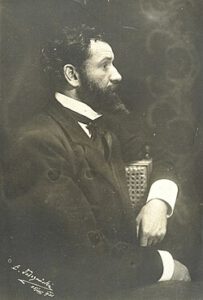


Stanisław Przybyszewski (7 mei 1868 – 23 november 1927)


De Duitse schrijver Karl Gustav Vollmõller werd geboren op 7 mei 1878 in Stuttgart. . Zie ook alle tags voor Karl Gustav Vollmöller op dit blog.


ZWIEGESPRÄCH (Fragment)


I

Ur-Nacht, die alles gebar,
Ur-Ding, das keiner erschaut,
Ur-Nichts, das blinzelnd liegt,

Hinter allem was wird und was war,
Vor dem selbst den Ewigen graut:
Ur-Dummheit, die alles besiegt.

Denkt der Mensch oder wird er gedacht –
Sind wir Stoff, der zu Geist sich versann,
Sind wir Geist, der zu Stoff sich verleibt,
Sind wir Herrn oder Sklaven der Macht,
Die uns peitscht und uns peinigt und treibt

Und uns paart und gepaart uns verlacht,
Weil, was einzeln in Schmerzen begann
Und schmerzlich in Schmerzen zerrann,
So als ewiges Erbe verbleibt,
Schmerz-Erbteil Aller verbleibt…

Ja wer ists der dies Spiel mit uns spielt,
Wo als Preis doch Vernichtung nur winkt:
Ekles Spiel um geliehene Zeit,
Niedres Würfeln um kärgliche Zeit,

Da schon Tod in die Karten uns schielt,
Da schon draußen das Henkerbeil blinkt —
Und die Karten sind alle gezinkt,
Alle Würfel sind falsch und gebleit.


Vollmöller

Karl Gustav Vollmõller (7 mei 1878 – 18 okrober 1948)


De Britse schrijver Alfred Edward Woodley Mason werd geboren op 7 mei 1865 in Londen. Zie ook alle tags voor A. E. W. Mason op dit blog.


Uit: The Four Feathers


„Yes,” said Sutch. “She had imagination. Her thoughts could people them.”

General Feversham glanced at his companion as though he hardly understood. But he asked no questions. What he did not understand he habitually let slip from his mind as not worth comprehension. He spoke at once upon a different topic.

“There will be a leaf out of our table to-night.”

“Yes. Collins, Barberton, and Vaughan went this winter. Well, we are all permanently shelved upon the world’s half-pay list as it is. The obituary column is just the last formality which gazettes us out of the Service altogether,” and Sutch stretched out and eased his crippled leg, which fourteen years ago that day had been crushed and twisted in the fall of a scaling-ladder.

“I am glad that you came before the others,” continued Feversham. “I would like to take your opinion. This day is more to me than the anniversary of our attack upon the Redan. At the very moment when we were standing under arms in the dark — ”

“To the west of the quarries, I remember,” interrupted Sutch, with a deep breath. “How should one forget?”

“At that very moment Harry was born in this house. I thought, therefore, that if you did not object he might join us to-night. He happens to be at home. He will, of course, enter the service, and he might learn something, perhaps, which afterwards will be of use — one never knows.”

“By all means,” said Sutch, with alacrity. For since his visits to General Feversham were limited to the occasion of these anniversary dinners, he had never yet seen Harry Feversham.

Sutch had for many years been puzzled as to the qualities in General Feversham which had attracted Muriel Graham, a woman as remarkable for the refinement of her intellect as for the beauty of her person; and he could never find an explanation. He had to be content with his knowledge that for some mysterious reason she had married this man so much older than herself, and so unlike to her in character. Personal courage and an indomitable self-confidence were the chief, indeed the only qualities which sprang to light in General Feversham. Lieutenant Sutch went back in thought over twenty years as he sat on his garden-chair to a time before he had taken part, as an officer of the Naval Brigade, in that unsuccessful onslaught on the Redan.“


Mason

A. E. W. Mason (7 mei 1865 – 22 november 1948)


De Franse schrijver en essayist Joseph Joubert werd geboren in Montignac op 7 mei 1754. Zie ook alle tags voor Joseph Joubert op dit blog.


Uit: Le repos dans la lumière


“Été 1783

«Qui m’expliquera (dit Mercier) pourquoi toutes les personnes appliquées spécialement à guérir les plaies, à soigner les maladies et qui vivent avec les êtres souffrants, ont pour les plaisirs des sens un penchant beaucoup plus vif que celui qui anime les autres hommes ?»


Août 1783.

On voit par le bas de leurs jambes qu’elles aimeraient à montrer tout ce qu’elles ont de beau. Et ce plaisir de montrer sa beauté est naturel surtout aux femmes dont les formes sont plus belles que le visage. Etc.


Une fille qui se montre nue aux yeux de son amant ne blesse pourtant en cela la pudeur publique.


1. Un effet infaillible du secret et du mystère est dans ce cas d’inspirer de la retenue même à l’imagination de son amant, si son amant a le coeur délicat.


2. Il ne se dira ni dans ce moment, ni dans les moments qui suivront : «C’est ainsi que les autres sont faites.» Ce serait, en quelque sorte, donner des témoins à des plaisirs dont la solitude augmente le prix, se distraire d’une volupté qui exige le recueillement, et trahir la confiance de sa maîtresse en la traduisant ainsi dans son esprit devant tout son sexe, etc.”


Joubert

Joseph Joubert (7 mei 1754 – 4 mei 1824)


De Duitse schrijfster Therese Huber werd geboren als Marie Therese Heyne op 7 mei 1764 in Göttingen. Zie ook alle tags voor Therese Huber op dit blog.


Uit: Die Familie Seldorf


Im Frühling des Jahres 1784. kam zu Saumür in der ehemaligen Provinz Poitou, ein ältlicher Mann an, der, nach seiner Kleidung zu urtheilen, ein Seeoffizier von ansehnlichem Rang seyn mußte. Er war von seinen Kindern begleitet: einem Sohn und einer Tochter von neun bis dreyzehn Jahren, und einer zweiten Tochter, die noch in der frühesten Kindheit war. Die Kinder trugen tiefe Trauer um ihre vor kurzem verstorbene Mutter, aber weiter konnte die Neugier der Wirthsleute in dem wenig besuchten Gasthofe anfangs nichts erfahren; denn die beiden Bedienten des Fremden, ein junger Bursche aus der Gegend von Saumür selbst, der zufällig ganz kurze Zeit vorher nach Paris gewandert war, um dort Dienste zu suchen, und eine Kinderwärterin, waren nur gerade vor der[2] Abreise des Fremden aus der Hauptstadt von ihm angenommen worden, und wußten wenig mehr von ihrem neuen Herrn, als daß er seinem Namen nach zu urtheilen – er hieß Seldorf – kein geborner Franzos seyn müßte, im amerikanischen Kriege gedient hätte, und mit einem zerschmetterten Arm zurükgekommen wäre. Er äusserte indessen bald, daß er sich einige Zeit in der Stadt aufzuhalten gedächte; und sobald er seinen Kindern, für welche er die gröste Sorgsamkeit zu haben schien, alle Bequemlichkeit
en verschafft hatte, die bei der Beschaffenheit des Hauses zu erlangen waren, erkundigte er sich bei dem Wirth, ob in diesem Strich nicht irgend ein gut gelegenes Landgut, von mässigem Umfang, zu kaufen seyn sollte. Es fand sich, daß dieser durch einen kleinen Weinhandel mit mehrern Herrschaften in Verbindung stand, und Leute in der Stadt kannte, die mit Aufträgen zu dergleichen Geschäften [3] versehen waren. Seldorf nahm auf den folgenden Tag Abrede mit ihm, einige Gänge zu diesen Leuten zu thun, und kehrte hierauf zu seinen Kindern zurük.

Er fand Sara, seine Aelteste, ein sanftes Geschöpf von neun Jahren, neben der Kinderwärterin knieen, und ihr Schwesterchen, das ein heftiges Fieber zu haben schien, liebkosend trösten, indeß der Knabe an einem Fenster stand, und mit grossen ernsten Augen auf die Gruppe blikte.”


Huber

Therese Huber (7 mei 1764 – 15 juni 1829)
Scherenschnitt door Luise Duttenhofer


Zie voor nog meer schrijvers van de 7e mei ook mijn tweede blog van 7 mei 2009