Atemloser August (Max Dauthendey)

Dolce far niente


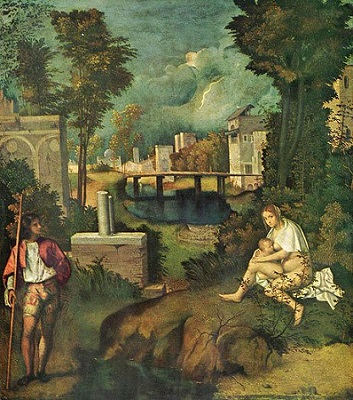
Het Onweer door Giorgione, ca. 1508


Atemloser August

Sommermonde machen Stroh aus Erde,
Die Kastanienblätter wurden ungeheuer von Gebärde,
Und die kühnen Bäume stehen nicht mehr auf dem Boden,
Drehen sich in Lüften her gleich den grünen Drachen.
Blumen nahen sich mit großen Köpfen, und scharlachen,
Blau und grün und gelb ist das Gartenbeet, hell zum Greifen,
Als ob grell mit Pfauenschweifen ein Komet vorüberweht.
Und mein Blut, das atemlos bei den sieben Farbenstreifen stille steht,
Fragt sich: wenn die Blum’, Baum und Felder sich verschieben,
Ob zwei Menschen, wenn die Welt vergeht,
Zweie, die sich lieben, nicht von allen Wundern übrig blieben.


Max Dauthendey (25 juli 1867 – 29 augustus 1918)
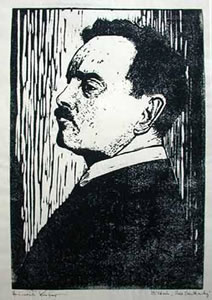
Portret door Heinrich Kiefer, z.j.


Zie voor de schrijvers van de 31e augustus ook mijn blog van 31 augustus 2013.

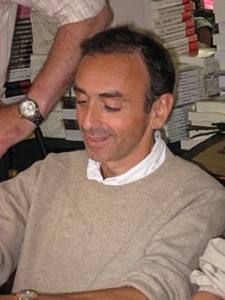
Éric Zemmour

De Franse schrijver en journalist Éric Zemmour werd geboren op 31 augustus 1958 in Montreuil-sous-Bois, vlakbij Parijs. Na zijn afstuderen aan het Institut d’etudes politiques de Paris deed Zemmour twee mislukte pogingen om te worden toegelaten tot de École nationale d’administration. Vervolgens werkte hij bij Le Quotidien de Paris. Later kwam hij naar Info-Matin en schreef hij voor Globe Hebdo, een weekblad. Hij werd politiek columnist voor Le Figaro in 1996. Zemmour schreef ook de biografieën van Jacques Chirac en Edouard Balladur en enkele politieke essays. Zemmour zorgde met uitlatingen over de Arabische en zwarte immigranten vooral in Frankrijk voor de nodige ophef. In februari 2011 werd hij in Parijs voor het aanzetten tot rassenhaat veroordeeld tot een boete. De reden was niet zijn opmerking dat immigranten vaak door de politie worden gecontroleerd, omdat de “meerderheid der drugsdealers Zwart of Arabieren” waren. Op dezelfde dag had hij op de radio verklaard dat, naar zijn mening, werkgevers “het recht hadden om Arabieren of zwarte mensen niet aan te nemen. Dat zou naar het oordeel van het Hof “een onwettige discriminerende praktijk rechtvaardigen”. Zemmour werkt als redacteur bij de krant Le Figaro.

Uit Petit frère

« Je n’étais pas très attentif à l’éloge convenu de la victime. Je captai pourtant une sentence que l’orateur avait tiré du Talmud: “Celui qui fait preuve de miséricorde envers le cruel se conduira bientôt avec cruauté avec le miséricordieux.”
Je tardais à en saisir le sens; mais finis par me sentir visé. Comme d’habitude, aurait brocardé Clotilde, ton narcissisme nourrit ta paranoïa. Je traduisis ainsi l’ellipse talmudique: vous avez été laxiste au nom d’un humanisme dévoyé; vous avez fait l’éloge du multiculturalisme, du métissage, du dialogue des civilisations, vous avez paradé sur les plateaux de télévision, puis vous êtes retournés dans vos ghettos dorés et protégés, tandis que ceux qui étaient condamné à vivre ensemble, ou plutôt côte à côte, enfermés dans leurs identités séculaires, s’étripaient, s’entre-égorgeaient. Des innocents payaient le prix du sang à votre place. Regardez vos mains.
(…)

Je n’abolis pas l’Édit de Nantes et je n’envoie pas les protestants faire la fortune de l’Angleterre et de la Prusse; je n’épouse pas Marie-Antoinette; je n’envoie pas la Grande Armée se perdre en Espagne et en Russie; je l’emporte à Waterloo, Grouchy a arrêté Blücher avant qu’il ne sauve Wellington; je ne trouve pas assez de taxis sur Paris; j’écoute les conseils stratégiques du colonel de Gaulle et je contiens l’offensive d’Hitler avec mes blindés; je donne la victoire aux sudistes américains dans la guerre de Sécession; j’arrête Lenine dans son wagon plombé avant qu’il n’entre en Russie; j’assassine Hitler en 1938; je tue Churchill la même année et l’Angleterre s’allie à l’Allemagne; je suis Kennedy père, je deviens président des États-Unis à la place de Roosevelt et l’Amérique soutiens les nazis…”

 
Éric Zemmour (Montreuil-sous-Bois, 31 augustus 1958)

Charles Reznikoff, Jiři Orten, François Cheng, Libuše Moníková, Gisela von Arnim, Mary Wollstonecraft Shelley, Adam Kuckhoff

De Amerikaanse dichter Charles Reznikoff werd op 30 augustus 1894 in New York geboren. Zie ook mijn blog van 30 augustus 2010 en alle tags voor Charles Reznikoff op dit blog.

Uit: Jerusalem the Golden


The Hebrew of

The Hebrew of your poets, Zion,
is like oil upon a burn,
cool as oil;
after work,
the smell in the street at night
of the hedge in flower.
Like Solomon,
I have married and married the speech of strangers;
none are like you, Shulamite.


Hellenist

As I, barbarian, at last, although slowly, could read Greek,
at “blue-eyed Athena”
I greeted her picture that had long been on the wall:
the head slightly bent forward under the heavy helmet,
as if to listen; the beautiful lips slightly scornful.


The moon shines

The moon shines in the summer night;
now I begin to understand the Hebrews
who could forget the Lord, throw kisses at the moon,
until the archers came against Israel
and bronze chariots from the north
rolled into the cities of Judah and the streets of Jerusalem.
What then must happen, you Jeremiahs,
to me who look at moon and stars and trees?

 
Charles Reznikoff (30 augustus 1894 – 22 januari 1976)

Lees verder “Charles Reznikoff, Jiři Orten, François Cheng, Libuše Moníková, Gisela von Arnim, Mary Wollstonecraft Shelley, Adam Kuckhoff”

Hugo Brandt Corstius, Elma van Haren, Maurice Maeterlinck, Thom Gunn, Lukas Hartmann, Hermann Löns

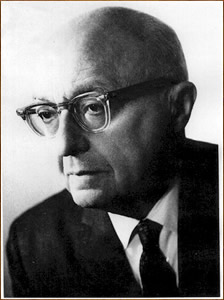
De Nederlandse schrijver en wetenschapper Hugo Brandt Corstius werd geboren in Eindhoven op 29 augustus 1935. Zie ook alle tags voor Hugo Brandt Cortius op dit blog.

Uit: Alcohol en longkanker

“Het volkomen apocriefe verhaal waarin Galilei kleine en grote stenen van de toren van Pisa laat vallen staat niet in het NRC-stuk zelf, maar een grote foto van die toren met een (vallende?) vaas ernaast, als enige illustratie bij het artikel, doet ons het ergste vrezen. De valtheorie van Aristoteles (zware dingen vallen harder dan lichte) werd door Galilei niet verworpen door experimenteren, maar door een elegante redenering in de Discorsi, die nog steeds lezenswaard is. (Als het waar is dat een zware steen harder valt, hoe hard valt dan een zware steen vastgebonden aan een lichte? Enerzijds nog harder, omdat het geheel zwaarder is geworden. Anderzijds langzamer omdat de lichte steen remmend werkt. Een duidelijke contradictie dus.) Tot die conclusie kan men komen in de kelder van de Pisaanse toren, en het is een schandaal dat Aristoteles het niet bedacht heeft.
Galilei’s terecht beroemde principe dat een bal na de eerste trap, als er verder geen krachten op werken, niet, zoals Aristoteles zegt, tot stilstand komt, maar altijd door blijft rollen, kan hij ook moeilijk met experimenteren ontdekt hebben. In Brechts volksdrama Galilei ziet men de held voortdurend zwetend met gewichten aan het werk, maar in werkelijkheid is er praktisch geen sprake van mechanica-experimenten, en als ze beschreven worden is het onwaarschijnlijk dat ze echt gedaan werden (zo beweert hij gezien te hebben dat lichte voorwerpen in het begin harder vallen dan zware teneinde tegelijkertijd op de grond aan te kunnen komen). Ik heb de grootste verering voor Galileo Galilei, maar het moet gezegd dat zijn valtheorie nog behoorlijk fout was.
Newton vond, alweer zonder jarenlang dingen te laten vallen (die appel lijkt me meer van bijbelse oorsprong), een gravitatietheorie die het eeuwenlang goed deed. Is het nu zo dat Einstein door experimenten vond dat Newtons wetten niet helemaal klopten, en maakte hij daarom een nieuwe theorie? Nee, net andersom: hij maakte een nieuwe theorie en baseerde daarop een enkele proef. De voorspelde buiging van lichtstralen was niet zozeer een bevestiging van zijn theorie als een mislukte verwerping. Maar de rol van experimenten (die nog steeds onontbeerlijk zijn) komt ter sprake in Hoe Het Wel Is.”


Hugo Brandt Corstius (29 augustus 1935– 28 februari 2014)

Bewaren

Lees verder “Hugo Brandt Corstius, Elma van Haren, Maurice Maeterlinck, Thom Gunn, Lukas Hartmann, Hermann Löns”

Johann Wolfgang von Goethe, A. Moonen, Maria Barnas, C. J. Kelk, Frederick Kesner

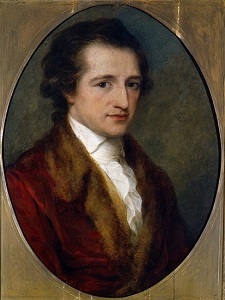
De Duitse dichter en schrijver Johann Wolfgang von Goethe werd geboren op 28 augustus 1749 in Frankfurt am Main. Zie ook mijn blog van 28 augustus 2010 en eveneens alle tags voor Johann Wolfgang von Goethe op dit blog.

Uit: Die Wahlverwandtschaften

„Eduard – so nennen wir einen reichen Baron im besten Mannesalter – Eduard hatte in seiner Baumschule die schönste Stunde eines Aprilnachmittags zugebracht, um frisch erhaltene Pfropfreiser auf junge Stämme zu bringen.
Sein Geschäft war eben vollendet; er legte die Gerätschaften in das Futteral zusammen und betrachtete seine Arbeit mit Vergnügen, als der Gärtner hinzutrat und sich an dem teilnehmenden Fleiße des Herrn ergetzte.
»Hast du meine Frau nicht gesehen?« fragte Eduard, indem er sich weiterzugehen anschickte.
»Drüben in den neuen Anlagen«, versetzte der Gärtner.
»Die Mooshütte wird heute fertig, die sie an der Felswand, dem Schlosse gegenüber, gebaut hat.
Alles ist recht schön geworden und muß Euer Gnaden gefallen.
Man hat einen vortrefflichen Anblick: unten das Dorf, ein wenig rechter Hand die Kirche, über deren Turmspitze man fast hinwegsieht, gegenüber das Schloß und die Gärten«.
»Ganz recht«, versetzte Eduard; »einige Schritte von hier konnte ich die Leute arbeiten sehen«.
»Dann«, fuhr der Gärtner fort, »öffnet sich rechts das Tal, und man sieht über die reichen Baumwiesen in eine heitere Ferne.
Der Stieg die Felsen hinauf ist gar hübsch angelegt.
Die gnädige Frau versteht es; man arbeitet unter ihr mit Vergnügen«.
»Geh zu ihr«, sagte Eduard, »und ersuche sie, auf mich zu warten.
Sage ihr, ich wünsche die neue Schöpfung zu sehen und mich daran zu erfreuen«.
Der Gärtner entfernte sich eilig, und Eduard folgte bald.
Dieser stieg nun die Terrassen hinunter, musterte im Vorbeigehen Gewächshäuser und Treibebeete, bis er ans Wasser, dann über einen Steg an den Ort kam, wo sich der Pfad nach den neuen Anlagen in zwei Arme teilte.
Den einen, der über den Kirchhof ziemlich gerade nach der Felswand hinging, ließ er liegen, um den andern einzuschlagen, der sich links etwas weiter durch anmutiges Gebüsch sachte hinaufwand; da, wo beide zusammentrafen, setzte er sich für einen Augenblick auf einer wohlangebrachten Bank nieder, betrat sodann den eigentlichen Stieg und sah sich durch allerlei Treppen und Absätze auf dem schmalen, bald mehr bald weniger steilen Wege endlich zur Mooshütte geleitet.“

 
Johann Wolfgang von Goethe (28 augustus 1749 – 22 maart 1832)
Portret door Angelica Kauffmann, 1787 / 88

Lees verder “Johann Wolfgang von Goethe, A. Moonen, Maria Barnas, C. J. Kelk, Frederick Kesner”

Tom Lanoye, Jeanette Winterson, Lolita Pille, Lernert Engelberts, Kristien Hemmerechts, David Rowbotham

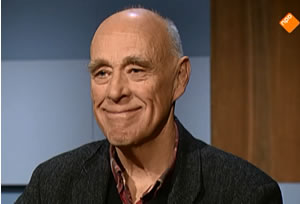
De Belgische dichter, schrijver en vertaler Tom Lanoye werd geboren te Sint-Niklaas op 27 augustus 1958. Zie ook alle tags voor Tom Lanoye op dit blog.


Het is een magere troost

Het is een magere troost
dat alles moet verdwijnen

en ik je hoe dan ook op een keer
toch zou moeten missen, bij voorbeeld

door de dood. Ik hou van je, al
kunnen we waarschijnlijk niet meer
worden wat we vroeger waren of dachten
te zijn. Geen verhalen over afkeer,

over waanzin of grote trouw: ik
verlang naar toen terwijl
ik ouder word. Ik denk
nog veel aan jou.


In the mood

Daarnet, twee uur in de nacht alweer,
floepte de TV aan en daar stond ik,
in Madison Square Garden, tien jaar
jonger en goochelend als geeneen.

Door een onzichtbare massa opgezweept,
cirkelzaagde ik mijn assistente rats
in twee, de wekker die ik stuksloeg
werd niet heel en de konijnen vluchtten
naar de concurrentie. Het werd ze allemaal
teveel.

‘Kop op, ouwe jongen!’ Mijn hoofd
schoot door het scherm. ‘Zo zie je maar:
tien jaar geleden ging je ook al naar
de kloten. Encore, mijn beste, het kan er
alleen maar op verbeteren. Encore!’

Showmuziek werd ingezet, warm applaus, en
goedgebouwde vrienden die ik lang vergeten was,
dansten en swingden on the floor, als gek.

‘Welcome back, crazy Jack.
Welcome back.’


Kurma (schildpad)

Hoewel er geen bewijzen zijn. Misschien
als ik slaap, maar bij het minste geluid
verdwijnen zijn geschubde pootjes langs mijn
oren en mijn ogen, ze worden als het ware

in een schild gezogen. Zijn magere kop
raspt soms over mijn tong, en praat maar
zo vertraagd dat men het nauwelijks

verstaat: hij noemt mijn klieren
liefde en ik hou van hem. Ik ben

blij dat hij bestaat.
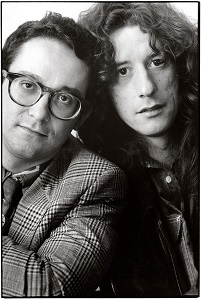


Tom Lanoye (Sint-Niklaas, 27 augustus 1958)
Hier met Herman Brusselmans (rechts) in 1989

Lees verder “Tom Lanoye, Jeanette Winterson, Lolita Pille, Lernert Engelberts, Kristien Hemmerechts, David Rowbotham”

Christopher Isherwood, Joachim Helfer, Guillaume Apollinaire, Jules Romains, Julio Cortázar

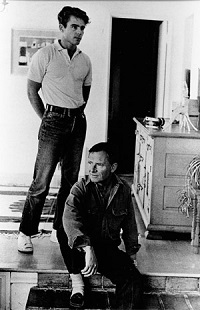
De Brits-Amerikaanse schrijver Christopher Isherwood werd geboren op 26 augustus 1904 in Disley in het graafschap Cheshire in Engeland. Zie ook mijn blog van 26 augustus 2010 en eveneens alle tags voor Christopher Isherwood op dit blog.

Uit: Mr Norris Changes Trains

“Mr Norris had two front doors to his flat. They stood side by side. Both had little round peep-holes in the centre panel and brightly polished knobs and brass nameplates. On the left-hand plate was engraved: Arthur Norris . Private. And on the right hand: Arthur Norris . Export and Import . […] I noticed immediately I was inside, [that] the Private side of the entrance hall was divided from the Export side only by a thick hanging curtain. “
(…)

“’Do you know what time we arrive at the frontier?’Looking back on the conversation, this question does not seem to me to have been particularly unusual. It is true that I had no interest in the answer; I wanted merely to ask something which might start us chatting, and which wasn’t, at the same time, inquisitive or impertinent. Its effect on the stranger was remarkable. I had certainly succeeded in arousing his interest. He gave me a long, odd glance, his features seemed to stiffen a little. It was the glance of a poker-player who guesses suddenly that his opponent hold a straight flush and that he had better be careful. At length he answered, speaking slowly and with caution:‘I’m afraid I couldn’t tell you exactly. In about an hour’s time, I believe. ‘His glance, now vacant for a moment, was clouded again. An unpleasant thought seemed to tease him like a wasp; he moved his head slightly to avoid it.”
(…)

“I must say that I have always felt that, in the deepest sense, we are all brothers. Class distinctions have never meant anything to me; and hatred of tyranny is in my blood. Even as a small child I could never bear injustice of any kind. It offends my sense of the beautiful. It is so stupid and unaesthetic. I remember my feelings when I was first unjustly punished by my nurse. It wasn’t the punishment itself which I resented; it was the clumsiness, the lack of imagination behind it. That, I remember, pained me very deeply.”

 
Christopher Isherwood (26 augustus 1904 – 4 januari 1986)
Hier met partner Don Bachardy (l) in 1962

Lees verder “Christopher Isherwood, Joachim Helfer, Guillaume Apollinaire, Jules Romains, Julio Cortázar”

Martin Amis, Charles Wright, Maxim Biller, Frederick Forsyth, Jògvan Isaksen, Johann Gottfried von Herder, Thea Astley

De Engelse schrijver Martin Amis werd geboren op 25 augustus 1949 in Cardiff, South Wales. Zie ook alle tags voor Martin Amis op dit blog.

Uit: Money

“I’d better give you the lowdown on Selina — and quick. That hot bitch, what am I letting her do to me?
Like many girls (I reckon), and especially those of the small, supple, swervy, bendy, bed-smart variety, Selina lives her life in hardened fear of assault, molestation and rape. The world has ravished her often enough in the past, and she thinks the world wants to ravish her again. Lying between the sheets, or propped at my side during long and anxious journeys in the Fiasco, or seated across the table in the deep lees of high-tab dinners, Selina has frequently refreshed me with tales of insult and violation from her childhood and teenage years — a musk-breathing, toffee-offering sicko on the common, the toolshed interrogations of sweat-soaked parkies, some lumbering retard in the alley or the lane, right up to the narcissist photographers and priapic prop-boys who used to cruise her at work, and now the scowling punks, soccer trogs and bus-stop boogies malevolently lining the streets and more or less constantly pinching her ass or flicking her tits and generally making no bones about the things they need to do… It must be tiring knowledge, the realization that half the members of the planet, one on one, can do what the hell they like with you.
And it must be extra tough on a girl like Selina, whose appearance, after many hours at the mirror, is a fifty—fifty compromise between the primly juvenile and the grossly provocative. Her tastes are strictly High Street too, with frank promise of brothelly knowhow and top-dollar underwear. I’ve followed Selina down the strip, when we’re shopping, say, and she strolls on ahead, wearing sawn-off jeans and a wash-withered T-shirt, or a frilly frock measuring the brink of her russety thighs, or a transparent coating of gossamer, like a condom, or an abbreviated school uniform … The men wince and watch, wince and watch. They buckle and half turn away. They shut their eyes and clutch their nuts. And sometimes, when they see me cruise up behind my little friend and slip an arm around her trim and muscular waist, they look at me as if to say — Do something about it, will you ? Don’t let her go about the place looking like that. Come on, it’s your responsibility.»


Martin Amis (Cardiff, 25 augustus 1949)

Lees verder “Martin Amis, Charles Wright, Maxim Biller, Frederick Forsyth, Jògvan Isaksen, Johann Gottfried von Herder, Thea Astley”

John Green, Drs. P, Marion Bloem, Stephen Fry, Jorge Luis Borges, A. S. Byatt

De Amerikaanse schrijver John Green werd geboren in Indianapolis, Indiana, op 24 augustus 1977. Zie ook alle tags voor John Green op dit blog.

Uit: An Abundance of Katherines

“The morning after noted child prodigy Colin Singleton graduated from high school and got dumped for the 19th time by a girl named Katherine, he took a bath. Colin had always preferred baths; one of his general policies in life was never to do anything standing up that could just as easily be done lying down. He climbed into the tub as soon as the water got hot, and he sat and watched with a curiously blank look on his face as the water overtook him. The water inched up his legs, which were crossed and folded into the tub. He did recognize, albeit faintly, that he was too long, and too big, for this bathtub—he looked like a mostly grown person playing at being a kid.
As the water began to splash over his skinny but unmuscled stomach, he thought of Archimedes. When Colin was about four, he read a book about Archimedes, the Greek philosopher who’d discovered you could measure volume by water displacement when he sat down in the bathtub. Upon making this discovery, Archimedes supposedly shouted “Eureka! ” and then ran naked through the streets. The book said that many important discoveries contained a “Eureka moment.” And even then, Colin very much wanted to have some important discoveries, so he asked his mom about it when she got home that evening.
“Mommy, am I ever going to have a Eureka moment?”
“Oh, sweetie,” she said, taking his hand. “What’s wrong?”
“I wanna have a Eureka Moment,” he said, the way another kid might have expressed longing for a teenage mutant ninja turtle.
She pressed the back of her hand to his cheek and smiled, her face so close to his that he could smell coffee and make-up. “Of course, Colin baby. Of course you will.” But mothers lie. It’s in the job description.
Colin took a deep breath and slid down, immersing his head. I am crying, he thought, opening his eyes to stare through the soapy, stinging water. I feel like crying so I must be crying, but it’s impossible to tell because I’m underwater. But he wasn’t crying. Curiously, he felt too depressed to cry. Too hurt. It felt as if she’d taken the part that cried from him.”

 
John Green (Indianapolis, 24 augustus 1977)

Lees verder “John Green, Drs. P, Marion Bloem, Stephen Fry, Jorge Luis Borges, A. S. Byatt”

Sascha Anderson, Linton Kwesi Johnson, Johan Fabricius, Paulo Coelho, Arthur West, Alexander McCall Smith

De Duitse dichter en schrijver Sascha Anderson werd geboren op 24 augustus 1953 in WeimarZie ook mijn blog van 24 augustus 2010 en eveneens alle tags voor Sascha Anderson op dit blog.


Eine Harzreise

gebettet in bulgarische tanzmusik
durchraste ich acht tode
floh nackt und leicht und pass pardon

für ungestellte fragen
erfand ich salomon nochmal
und leerte meinen magen
am nächsten morgen im zugigen klo
kotzte ich pfefferminz pur

unter die harzbahn auf die gleise
in die deutsche natur
was treibt mich immer wieder fort
aus mir und an die grenzen
das denken ist ein schwarzes loch

in meinen existenzen
so halt ich das thema und dieses den leib
am orte dem provinziellen
komposthaufen für das glück
das idiomaterielle

saatgut für den grossen vergleich
wer ist der schönste im grab
wer hat nach dieser nabelschnur
den endlich sichersten sarg
in eiche ulme stahlbeton

als asche in die vier winde
ein abdruck deiner 3. zähne
in einer verschimmelten rinde
ein fingerabdruck in der kartei
der kaffeesatz in der tasse

das bleibt ach ach ich geh komm mit
wenn ich uns jetzt verlasse
zwischen den dörfern elend und sorge
vergällts mir die dichterei ganz
die wirklichen grenzen bewirken nur

einen hängenden schwanz
erhebend ist die deutsche geschichte
so ineinandergekrallt
die grenze ein erleuchtendes zeichen
für den fliehenden wald

die da paarweise im sperrgebiet hocken
sich belauern beschützen bewahren
den heiligen familien winken
die sonntags harzquerbahn fahren
Was ist der Mensch? ein dudelsack

für den dialektischen marsch
der mit dem kopf nur wackeln kann
und brüllen mit dem arsch
die gleise fliehen südwärts den harz
da flieh ich mit ganz vorn

in nordhausen gibts einen guten schnaps
nordhäuser doppelkorn

 
Sascha Anderson (Weimar, 24 augustus 1953)

Lees verder “Sascha Anderson, Linton Kwesi Johnson, Johan Fabricius, Paulo Coelho, Arthur West, Alexander McCall Smith”