Herman de Coninck, Tom van Deel, Jonathan Safran Foer, Hans Andreus, David Avidan, Chuck Palahniuk, Wystan Hugh Auden, Laure Limongi, Justus van Effen

De Vlaamse dichter, essayist, journalist en tijdschriftuitgever Herman de Coninck werd geboren in Mechelen op 21 februari 1944. Zie ook alle tags voor Herman de Coninck op dit blog.


Kleurenstudie

En de zwarte kraai kwam
van over de zeven bergen gevlogen en
bracht een brief in z’n bek:

een zwarte omslag met een zwart
kaartje er in waarop in witte
letters het woord ‘zwart’.

Zo donker is de nacht van de dood
en zo wit is onze schrik.


Om echt te lezen

Om echt te lezen
moet je alle lichten uit doen,
woorden houden van duisterheid
zoals het beeld houdt van de donkere kamer.
Onder hen beiden zouden ze zonder geluid
te maken de wereld kunnen vervangen.


Alles deed pijn

Alles deed pijn. Twee uur lang in kleren
gehesen worden deed pijn. Zijn vrouw zijn
deed pijn, lachen deed pijn, grijnzen al minder,
moed niet. Moed wordt ervan gemaakt

zoals een vuist van vijf vingers.
En verdriet is die vuist weer opendoen.

Sterven doe je alleen.
Niet sterven ook.

Dood zijn doe je met twee
Achterblijven ook.
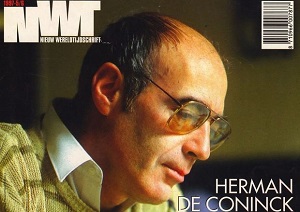


Herman de Coninck (21 februari 1944 – 22 mei 1997)
Cover
Lees verder “Herman de Coninck, Tom van Deel, Jonathan Safran Foer, Hans Andreus, David Avidan, Chuck Palahniuk, Wystan Hugh Auden, Laure Limongi, Justus van Effen”

P. C. Boutens, David Nolens, Ellen Gilchrist, Julia Franck, Georges Bernanos, William Carleton, Cornelis Sweerts, Johann Heinrich Voß, Pierre Boulle

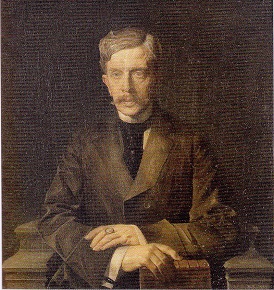
De Nederlandse dichter Pieter Cornelis Boutens werd geboren in Middelburg op 20 februari 1870. Zie ook alle tags voor P. C. Boutens op dit blog.


Sonnet II

Hemel, eindloos blauw lokkend zieleweiland, –
Zee, die in zon- en maanstilte of wolkdonderen
Aandrijft de veelheid der wereldsche wonderen
Wier vrije vlotte vloot bij ieder tij landt,
Zie ons, bleek menschdom, uit ons eng afzonderen
Op dit uw zielenvol dagegroen eiland,
Als slaven naar hun overzeesch en vrij land,
Wringen ons handen van vervoerings vlonderen:

Diep in een ouden droom die altijd weêrkomt,
Ligt opgetrokken aan den havenkant
Vleugelen boot waarmeê we eens zijn geland
Als zon en maan en sneeuw en regen neêrkomt, –
Tot laten einddroom wanneer ge openbreidt:
Windbreede vaart naar alle oneindigheid.


Sonnet VIII

Kom: ik ben enkel lust en lieflijkheid,
Een zilvervolle hof altijdig ooft,
Waar knop en bloesem eeuwge vrucht belooft,
Een levend maal op ieder uur bereid.

En waar het hart der stilte welft en spreidt,
Aardkoele woon doorluchtig overloofd,
Houdt zon en maan om Uw hoog-heerlijk hoofd
Haar gulde’ afspraken tot in eeuwigheid.

O kom: geen weet het enge steile pad
Dat door de bergen naar den wijngaard leidt,
Dan Gij alleen en die den hof geplant heeft:
God, die eens zeker komt te Zijner tijd
En streng-rechtvaardig U de tienden schat
Van vele aardsche oogsten die Hij U verpand heeft.


Uit: Strofen en andere verzen uit de nalatenschap van Andries de Hoghe

Negende strofe

Daar is niet éen die eenzaam gaat als ik,
en geen der andren draagt zijn harts geheim –
dit donker zaad dat zwelt naar lichten bloei,
dit stomme leed dat hijgt naar luid geluk –
in zulk een klem van onverbreekbaar zwijgen.
Want als een kind, in vroegste jeugd verdoold
naar een ver land, moeder en moedertaal
alleen nog weet als felbewust gemis,
ergens achter den bleeken horizon
een lang verloren onbereikbren schat;
en als zijn hart in druk van smart of vreugd
zich uit moet spreken aan een ander hart,
keert het vreemd woord in ledige echo weder,
ijdel en dood zoodra zijn mond het sprak -:
zóo, waar ik door de lichte volten dwaal
van dit ontelbaar levendschoone volk,
wenken van de overzij der dubble stilte
oogen alzijds mijn oogen als gelijken,
en mijn hart bonst in luideloozen zang;
maar als mijn schuwe groet hun nadertreedt,
en van hun lippen ruischt het helder antwoord,
dan voel ik hoe ik nimmer halen zal
den simplen aanslag van dien heemschen toon,
en ’t teedre lied blijft op mijn lippen stom…
En andren onderwijl, als duistre schimmen,
met oogen achter schaduwmom versmeuld,
sluipen en duiken door het dichtst gewoel,
en vaak benadert mij hun half gebaar
als een dof grijnzen: ‘gij zijt éen van ons’ –
en van hun lippen valt een heesch gefluister,
een taal waarin geen schepsel zingen kan,
maar waarvan iedre klank mijn hart doorpriemt
en ieder woord mijn diepste wezen schokt,
en tranen wellen, die mijn oogen branden…
O daar is geen die eenzaam gaat als ik!


Pieter Cornelis Boutens (20 februari 1870 – 14 maart 1943)
Portret door Willem van Konijnenburg, 1914

Lees verder “P. C. Boutens, David Nolens, Ellen Gilchrist, Julia Franck, Georges Bernanos, William Carleton, Cornelis Sweerts, Johann Heinrich Voß, Pierre Boulle”

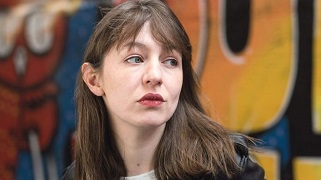
Sally Rooney

De Ierse schrijfster Sally Rooney werd geboren op 20 februari 1991 in Castlebar. Haar vader werkte voor Telecom Éireann, terwijl haar moeder een kunstencentrum runde; ze heeft ook een oudere broer en een jongere zus. Rooney studeerde Engels aan het Trinity College in Dublin. Ze begon later aan een Masters in politicologie aan dezelfde universiteit, maar voltooide deze niet en behaalde in plaats daarvan een graad in Amerikaanse literatuur. Ze was de beste spreker op de Europese universitaire debatkampioenschappen in 2013. Voordat ze schrijver werd werkte ze voor een restaurant. Rooney schreef haar eerste roman op 15-jarige leeftijd, maar had daar later geen goed woord voorover. Ze voltooide haar debuutroman, “Conversations with Friends”, terwijl ze nog studeerde voor haar Masters in Amerikaanse literatuur. Ze schreef de 100.000 woorden van het boek in 3 maanden tijd. Rechten voor het boek werden uiteindelijk verkocht naar 12 landen. Het boek werd genomineerd voor de 2018 Swansea University International Dylan Thomas Prize, en de Folio Prize van 2018. In maart 2017 werd haar korte verhaal “Mr Salary” genomineerd voor de Sunday Times EFG Private Bank Short Story Award. Haar tweede roman, “Normal People”, werd gepubliceerd in 2018. In juli 2018 stond het op de longlist voor de Man Booker Prize van dat jaar en won de “Irish Novel of the Year” bij de Irish Book Awards.

Uit: Conversations With Friends

“Bobbi and I first met Melissa at a poetry night in town, where we were performing together. Melissa took our photograph outside, with Bobbi smoking and me self-consciously holding my left wrist in my right hand, as if I was afraid the wrist was going to get away from me. Melissa used a big professional camera and kept lots of different lenses in a special camera pouch. She chatted and smoked while taking the pictures. She talked about our performance and we talked about her work, which we’d come across on the internet. Around midnight the bar closed. It was starting to rain then, and Melissa told us we were welcome to come back to her house for a drink.
We all got into the back of a taxi together and started fixing up our seat belts. Bobbi sat in the middle, with her head turned to speak to Melissa, so I could see the back of her neck and her little spoon-like ear. Melissa gave the driver an address in Monkstown and I turned to look out the window. A voice came on the radio to say the words: eighties . . . pop. . . classics. Then a jingle played. I felt excited, ready for the challenge of visiting a stranger’s home, already preparing compliments and certain facial expressions to make myself seem charming.
The house was a semi-detached red-brick, with a sycamore tree outside. Under the streetlight the leaves looked orange and artificial. I was a big fan of seeing the insides of other people’s houses, especially people who were slightly famous like Melissa. Right away I decided to remember everything about her home, so I could describe it to our other friends later and Bobbi could agree.
When Melissa let us in, a little red spaniel came racing up the hall and started barking at us. The hallway was warm and the lights were on. Next to the door was a low table where someone had left a stack of change, a hairbrush and an open tube of lipstick. There was a Modigliani print hanging over the staircase, a nude woman reclining. I thought: this is a whole house. A family could live here.
We have guests, Melissa called down the corridor. No one appeared so we followed her into the kitchen. I remember seeing a dark wooden bowl filled with ripe fruit, and noticing the glass conservatory. Rich people, I thought. I was always thinking about rich people then. The dog had followed us to the kitchen and was snuffling around at our feet, but Melissa didn’t mention the dog so neither did we.

 
Sally Rooney (Castlebar, 20 februari 1991)

Michiel Stroink, Siri Hustvedt, Helen Fielding, Jaan Kross, Helene Hegemann, Björn Kuhligk, Thomas Brasch, Dmitri Lipskerov, Wolfgang Fritz

De Nederlandse schrijver Michiel Stroink werd geboren in Oss op 19 februari 1981. Zie ook alle tags voor Michiel Stroink op dit blog.

Uit: De notaris en het meisje

“Voor Anna was het de vijfde keer dat ze het begrafenisritueel aanschouwde. Bij de vorige processie mocht ze voor het eerst met de vrouwen meelopen. Ze droeg toen een zwarte overrok die ze bij iedere stap tot aan haar enkels de kleigrond in trapte. Nu zat ze gehurkt achter de kruiwagen met het zware gevoel in haar keel en kon ze zich niet eens meer voorstellen hoe licht het leven was toen ze met de kinderen mee mocht huppelen, achter de bellen en de fakkels aan.
De stoet trok langs het ondiep en zou nog eenmaal in de richting van het dorp komen voor hij afboog naar het droogveld. De dikke mist die over het laagland dreef, leek er altijd te zijn als er dingen gebeurden die God niet mocht zien. Nu zorgde Hij ervoor dat Anna alleen de kop, het midden en de staart van de meanderende rouwstoet zag.
‘Het lijkt op een aal.’ De krassende mannenstem kwam van achteren, naast de schuur. ‘Hij kronkelt het moeras in.’ De man was niet van het laagland. Hij droeg een zwarte overjas over een donker pak, en onder de hoed die tot aan zijn wenkbrauwen over zijn voorhoofd was getrokken, staarden twee kraalogen haar onafgebroken aan. Onder zijn linkeroog liep een litteken, als een traan, langs zijn neus tot aan zijn mondhoek.
Het duurde even voor Anna de man vanuit hurkzit durfde aan te spreken.
‘Wie bent u, meneer? Bent u soms familie?’ Anna stond op en wilde een stap naar achteren zetten, maar stootte tegen de kruiwagen aan.
‘Je bent mooi. Geen kleikop, je hebt een fijn gezicht. Hoe oud ben je, meisje?’
‘Ik ben zeventien, bijna achttien. Ik heet Anna. Wie bent u?’
De glimlach van de man drukte het litteken schuin omhoog.
‘Bijna achttien, toe maar. Waar zijn je ouders, meisje?’
‘Mijn vader en moeder lopen mee. Ze lopen naar het droogveld.
Ze zijn pas rond de middag weer terug.’
‘Werkt je vader aan het veen of op het veld?’


Michiel Stroink (Oss, 19 februari 1981)

Lees verder “Michiel Stroink, Siri Hustvedt, Helen Fielding, Jaan Kross, Helene Hegemann, Björn Kuhligk, Thomas Brasch, Dmitri Lipskerov, Wolfgang Fritz”

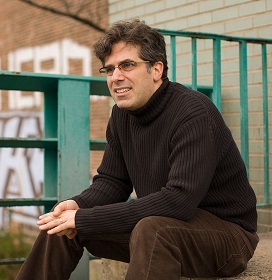
Jonathan Lethem

De Amerikaanse schrijver Jonathan Allen Lethem werd geboren op 19 februari 1964 in Brooklyn, New York. Lethem groeide aanvankelijk op in Kansas City, vervolgens in Brooklyn. Zijn vader Richard Brown Lethem is beeldend kunstenaar, zijn moeder Judith stierf aan kanker toen hij nog een tiener was. Een paar semesters studeerde Lethem met Bret Easton Ellis aan het Bennington College in Vermont voordat hij naar Californië verhuisde en begon te schrijven. Eind jaren tachtig publiceerde hij zijn eerste korte verhalen, maar pas met zijn romans trok hij in de jaren negentig internationaal de aandacht. Met zijn roman „Gun, with Occasional Music“, een futuristische detective verhaal in de stijl van Raymond Chandler won hij in 1995 de Locus Award in de categorie “Best First Novel” van Locus Magazine. Na het uitbrengen van zijn vroege verhalen in één bunde,l “The Wall of the Sky, the wall of the Eye”, verscheen in 1996 Lethem’s roman “As She Climbed Across the Table”. In 1997 ontving hij de World Fantasy Award voor “The Wall of the Sky, the wall of the Eye”. Eind jaren negentig verhuisde Lethem van de Bay Area terug naar Brooklyn. Zijn volgende boek na deze verhuizing was “Girl in Landscape“ (1998). In 1999 verscheen “Motherless Brooklyn”. Voor deze roman ontving Lethem de National Book Critics Circle Award, de Macallan Gold Dagger Awards for crime fiction, de Salon.com Book Prize en was het Esquire Book of the Year. In 2003 publiceerde Lethem de autobiografisch geïnspireerde educatieve roman “The Fortress of Solitude” Zijn tweede verhalenbundel: “Mannen Cartoons” verscheen in 2004. Weer een roman “You do not love me yet” verscheen in 2007. In 1987 trouwde Jonathan Lethem met schrijfster Shelley Jackson, maar ze gingen in 1998 weer uit elkaar. Lethem woonde tot 2010 in Brooklyn toen hij vanwege familiale redenen naar Claremont, Californië verhuisde. Daar doceert hij creatief schrijven aan het Pomona College.

Uit: Motherless Brooklyn

“Maufishful,” said Gilbert Coney in response to my outburst, not even turning his head. I could barely make out the words–“My mouth is full”–both truthful and a joke, lame. Accustomed to my verbal ticcing, he didn’t usually bother to comment. Now he nudged the bag of White Castles in my direction on the car seat, crinkling the paper. “Stuffinyahole.”
Coney didn’t rate any special consideration from me. “Eatmeeatmeeatme,” I shrieked again, letting off more of the pressure in my head. Then I was able to concentrate. I helped myself to one of the tiny burgers. Unwrapping it, I lifted the top of the bun to examine the grid of holes in the patty, the slime of glistening cubed onions. This was another compulsion. I always had to look inside a White Castle, to appreciate the contrast of machine-tooled burger and nubbin of fried goo. kaos and control. Then I did more or less as Gilbert had suggested–pushed it into my mouth whole. The ancient slogan Buy ‘em by the sack humming deep in my head, jaw working to grind the slider into swallowable chunks, I turned back to stare out the window at the house.
Food really mellows me out.
We were putting a stakeout on 109 East Eighty-fourth Street, a lone town house pinned between giant doorman apartment buildings, in and out of the foyers of which bicycle deliverymen with bags of hot Chinese flitted like tired moths in the fading November light. It was dinner hour in Yorktown. Gilbert Coney and I had done our part to join the feast, detouring up into Spanish Harlem for the burgers. There’s only one White Castle left in Manhattan, on East 103rd. It’s not as good as some of the suburban outlets. You can’t watch them prepare your order anymore, and to tell the truth I’ve begun to wonder if they’re microwaving the buns instead of steaming them. Alas. Taking our boodle of thusly compromised sliders and fries back downtown, we double-parked in front of the target address until a spot opened up. It only took a couple of minutes, though by that time the doormen on either side had made us–made us as out-of-place and nosy anyway. We were driving the Lincoln, which didn’t have the “T”-series license plates or stickers or anything else to identify it as a Car Service vehicle. And we were large men, me and Gilbert. They probably thought we were cops. It didn’t matter. We chowed and watched.”


Jonathan Lethem (New York, 19 februari 1964)

De verzoeking in de woestijn (Nicolaas Beets)

Bij de eerste zondag van de vasten


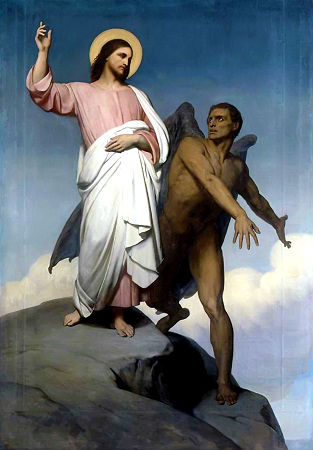
De verzoeking van Christus door Ary Scheffer, 1854


De verzoeking in de woestijn
Matth. IV. v. 1-11.

I.
De booze.
Hoe? Is des Boozen euvelmoed
Zoo groot, dat niets hem vreezen doet,
Dat hij den Reinen aan durft blikken
En tarten tot zijn worstelperk?
Durft hij, door list en lagen sterk,
Den Heilgen lokken in zijn strikken?

Vernam hij, in de afzichtbre hel,
Van Gods genade ’t grootsch bestel,
Zoo is de tijd zijns wroks gekomen;
Want de aarde, ’t voorwerp van zijn wensch,
Met den door hem gevallen mensch,
Zijn roof, zijn buit wordt hem ontnomen.

Verborgen voor zijns volks gezicht,
Bereidt zich Jezus tot den plicht,
Waarop hij ’t oog des geestes vestte,
En toeft in ’t hart der woestenij.
Reeds veertig dagen vastte hij,
Maar nu, nu hongert hem ten leste.

Daar treedt, geoefend op verraad,
Met vriendlijk oog en heusch gelaat,
De Satan voor des Heilands oogen:
‘Hoe? Lijdt Gods zoon hier hongersnood?
Hij vordre van dees rotsen brood;
Wat zou Zijn almacht niet vermogen?’

Naar ’s Tempels tinnen voert hij hem.
‘Welnu,’ klinkt des Verzoekers stem,
‘Werp, werp u af! Gij moogt het wagen.
Zijt Gij Gods Zoon, voor u geen nood!
Daar de Englen Gods Gods Gunstgenoot,
Op hunne handen zullen dragen.’

Hij voert hem op een hoogen berg,
Dat hij zijn hart met eerzucht terg:
‘Ziehier al ’s werelds vorstendommen!
Indien gij neervalt aan mijn kniên,
Zult gij ze in Uwe handen zien,
Ten top van grootheid opgeklommen.’

De Heilige blijft onverlokt;
Geen list des Satans, die hem schokt
Of in zijn hart den lust kan wekken;
Hij keert de pijlen, die hij spilt,
Op ’t godlijk woord als op een schild,
En dwingt hem schaamrood af te trekken.


Nicolaas Beets (13 september 1814 – 13 maart 1903)
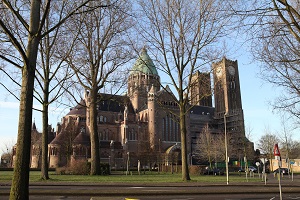
Sint Bavo kathedraal in Haarlem, de geboortestad van Nicolaas Beets


Zie voor de schrijvers van de 18e februari ook mijn vorige twee blogs van vandaag.


Nick McDonell, Robbert Welagen, Bart FM Droog, Maarten Mourik, Huub Beurskens, Gaston Burssens, Toni Morrison, Elke Erb, Charlotte Van den Broeck

De Amerikaanse schrijver Nick McDonell werd geboren op 18 februari 1984 in New York. Zie ook alle tags voor Nick McDonell op dit blog.

Uit: The Third Brother

“When dinner started, the children would go to the playroom and eat with the nannies. They lounged on heavy couches, watching movies until they fell asleep and the nannies went outside for cigarettes. Lyle especially loved these dinners and made a point of talking to everybody, lingering in the dining room rather than watching movies with the other children. He loved listening to adults talk. So did Mike, but he knew he didn’t understand the way his older brother did. The adults sat and drank wine and laughed and smiled at one another in the fall candlelight. Many of them had started families late or had been married once before and had only recently started new ones. Jobs were interesting; there was much travel. There was a lot to talk about, and the subtext was that they were lucky to have the lives they had. Mike remembered everyone being very happy.
Before one of these dinners, Lyle decided that he and Mike would be spies. Lyle had gotten a small tape recorder, only a toy really, for his birthday earlier that fall. Their plan was to hide it in the dining room to record the dinner conversation. While the servants were setting up, and Mike’s mother was upstairs dressing, and Mike’s father was out walking along the ocean, Lyle and Mike secured the tape recorder under the table with duct tape. As the guests arrived and had drinks, the boys slid between them and crawled under the table and switched on the recorder. They were very excited all through dinner, but they didn’t tell any of the other children what they were up to. By dessert, Mike couldn’t wait any longer. He wanted to go get the recorder. No, said Lyle, they’ll be there for a long time. Let’s just look. When they peeked around the dining room door, Elliot Analect saw them and held up the tape recorder, which he must have found much earlier, maybe when he first sat down. Analect wasn’t a regular guest at these dinners. He was usually abroad somewhere. At this point he was a correspondent in East Asia, and Mike’s father was especially glad to have him for Thanksgiving. Mike’s mother didn’t like Analect. Mike didn’t know this the way Lyle did, but he had a sense of it too. When Analect held up the recorder Mike knew instantly they would be in trouble. He saw the way the adults laughed but didn’t think it was funny. One of them, drunker than the rest and not a very good friend of Mike’s parents, was even a little angry. Mike remembered that he worked for one of the networks. Their mother was embarrassed and that always made her cross as well. Mike’s father called the boys over and tried to set things right by giving them a talk in front of the table that was both funny and serious. Analect removed the tape from the recorder and put it in his pocket.


Nick McDonell (New York, 18 februari 1984)

Lees verder “Nick McDonell, Robbert Welagen, Bart FM Droog, Maarten Mourik, Huub Beurskens, Gaston Burssens, Toni Morrison, Elke Erb, Charlotte Van den Broeck”

Níkos Kazantzákis, Jean M. Auel, Audre Lorde, Mór Jókai, Hedwig Courths-Mahler, Alexander Kielland, Wallace Stegner, Leone Battista Alberti

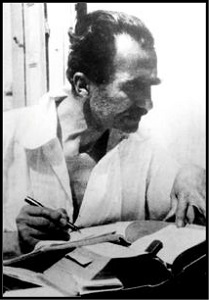
 De Griekse dichter en schrijver Níkos Kazantzákis werd geboren in Heraklion op 18 februari 1883. Zie ook alle tags voor Níkos Kazantzákis op dit blog.

Uit: The Odyssey (Vertaald door Kimon Friar)

Snatch prudence from me, God, burst my brows wide, fling far
the trap doors of my mind, let the world breathe awhile.
Ho, workers, peasants, you ant-swarms, carters of grain,
I fling red poppies down, may the world burst in flames!
Maidens, with wild doves fluttering in your soothing breasts,
brave lads, with your black-hilted swords thrust in belts,
no matter how you strive, earth’s but a barren tree,
but I, ahoy, with my salt songs shall force the flower!
Fold up your aprons, craftsmen, cast your tools away,
fling off Necessity’s firm yoke, for Freedom calls.
Freedom, my lads, is neither wine nor a sweet maid,
not goods stacked in vast cellars, no, nor sons in cradles,
it’s but a scornful, lonely song the wind has takenŠ
Come, drink of Lethe’s brackish spring to cleanse your minds,
forget your cares, your poisons, your ignoble profits,
and make your hearts as babes, unburdened, pure and light.
.
O brain, be flowers that nightingales may come to sing!
Old men, howl all you can to bring your white teeth back,
to make your hair crow-black, your youthful wits go wild,
for by our Lady Moon and our Lord Sun, I swear
old age is a false dream and Death but fantasy,
all playthings of the brain and the soul’s affectations,
all but a mistral’s blast that blows the temples wide;
the dream was lightly dreamt and thus the earth was made;
let’s take possession of the earth with song, my lads!
Aye, fellow craftsmen, seize your oars, the Captain comes;
and mothers, give your sweet babes suck to stop their wailing!
Ahoy, cast wretched sorrow out, prick up your ears-
I sing the sufferings and torments of renowned Odysseus!


Níkos Kazantzákis (18 februari 1883 – 26 oktober 1957)

Lees verder “Níkos Kazantzákis, Jean M. Auel, Audre Lorde, Mór Jókai, Hedwig Courths-Mahler, Alexander Kielland, Wallace Stegner, Leone Battista Alberti”

Rudolf Kögel

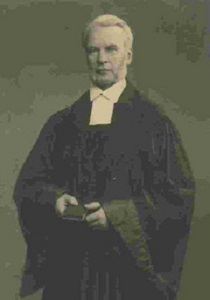
De Duitse dichter, theoloog en predikant Johannes Theodor Rudolf Kögel werd geboren op 18 februari 1829 in Birnbaum als zoon van pastor Gottfried Kögel en diens echtgenote Florentine. Rudolf Kögel studeerde in de periode 1847-1852 in Halle en Berlijn theologie en filologie en maakte tijdens zijn studententijd reizen naar Frankrijk, Spanje, Oostenrijk, Zwitserland en Italië. Van 1852-1854 werkte hij als godsdientsleraar aan het Vitzthumschen Gymnasium in Dresden, vervolgens als leraar op het seminarium voor stadsscholen in Berlijn. Van 1854 tot 1857 was hij predikant in Nakel bij Bromberg en vervolgens tot 1863 predikant van de Duits-protestantse gemeenschap in Den Haag (Nederland). Van daaruit werd hij door Wilhelm I als predikant naar Berlijn gehaald en ook benoemd tot lid van de kerkenraad van Brandenburg en tot raadheer in het ministerie van cultuur beoemd. In 1868 verleende de Rheinische Friedrich-Wilhelms-Universität Bonn hem een ​​eredoctoraat. Het kerkelijk beleid van Adalbert Falk en Emil Herrmann vocht Kögel door zijn invloed bij de keizer met groeiend succes aan. Door toedoen van Falk werd Kögel bij het ministerie van onderwijs ontslagen, maar in 1878 werd Kögel wel benoemd tot lid van de oud-Pruisische protestantse Oberkirchenrat en in 1880 werd hij algemeen inspecteur van de Kurmark. Hij werd beschreven als een uitstekend predikant. Veel van zijn preken werden gebundeld.. Ook schreef hij talloze kerkelijke liederen. Hij publiceerde ook verschillende kleinere geschriften over de sociale kwestie. Hij trouwde in 1855 in Halle met Marie Müller. Het echtpaar had vier zonen en drie dochters, waaronder Julius die hoogleraar theologie in Kiel zou worden. Na de dood van zijn vrouw Marie in 1884 hertrouwde hij met Karoline von Bodelschwingh.

Heimat für Heimatlose

So nah dem Strand ein stiller Raum,
Ein eingehegter Garten:
Will man bei Sturm und Wogenschaum
Hier noch der Blumen warten?
Ich trete ein. Zwei Gräberreih’n
In Heidekraut und Moose.
Es sagt der Schrift erloschner Schein:
“Heimat für Heimatlose!”

Die mitleidslos das Meer geraubt
Und die das Meer gab wieder,
Hier legten sie ihr bleiches Haupt
Von Wellen triefend nieder.
Schiffbrüchige — man kennt sie nicht,
Ob Schiffsherrn, ob Matrosen,
Nun träumen von der Heimat Acht
Die armen Heimatlosen.

Du Fremdling mit dem flüchtigen Sinn,
Zieh lachend nicht von hinnen,
Auf dein Woher, auf dein Wohin
Sollst du dich hier besinnen.
Noch eh’ der Abend niedersinkt,
Zerflattert Ruh und Rose,
Weh dem, dem nicht beim Scheiden winkt
Heimat für Heimatlose.

Du andrer Gast mit müdem Fuß,
Voll Schwermut und voll Sorgen,
Denk’ nicht bei diesem Kirchhofsgruß:
“Hier wär’ ich wohlgeborgen!
Was treib’ ich noch von Ort zu Ort,
Ein Blatt im Sturmgetose?”
Ist wirklich Tod ein Ruheport,
Heimat für Heimatlose?

Wir sind ein Volk, vom Strom der Zeit
Gespült zum Erdeneiland,
Voll Unfall und voll Herzeleid,
Bis heim uns holt der Heiland.
Das Vaterhaus ist immer nah,
Wie wechselnd auch die Lose —
Es ist das Kreuz von Golgatha
Heimat für Heimatlose.

 
Rudolf Kögel (18 februari 1829 – 2 juli 1896)


Shahrnush Parsipur, Willem Thies, Sadegh Hedayat, Yevgeni Grishkovetz, Albert Kuyle, Jaroslav Vrchlický, Chaim Potok, Mo Yan, Frederik Hetmann

De Iraanse schrijfster Shahrnush Parsipur werd geboren op 17 februari 1946 in Teheran. Zie ook alle tags voor Shahrnush Parsipur op dit blog.

Uit: Touba and the Meaning of Night (Vertaald door Kamran Talattof and Havva Houshmand)

“Haji Adib thought, “I am old.” His heart sank. There was not much time left to spend on the subject of becoming and metamorphosis, or the spirit of dust in part and whole, or to contemplate the trees as a whole or the minute parts making up the whole. He thought that probably each in its own minute society had a few Haji Adibs and Moshir O’Dolehs and Englishmen who fought each other. He laughed and imagined that probably Asdolah their local butcher chopped their meat for them. And then he laughed loudly again.
Suddenly the rhythmic sound of the shuttle comb stopped in the basement. Haji Adib could no longer hear the soft conversations of the women. The sun had not yet reached the middle of the sky. Haji Adib still sat on the edge of the octagonal pool, his fist under his chin. He turned his head around and, through the sharp angle that formed between his head and his arm, looked in the direction of the basement. The women had gathered by the basement window staring in his direction and were whispering. He had a feeling that they were talking about him. He remembered that just a few seconds ago he had laughed, loud and without inhibition, in a manner that was not appropriate to his position, and that the women had never seen such behavior in him. As he slowly tapped his foot on the ground, he thought, “They think. Unfortunately, they think. Not like the ants nor like the minute parts of the tree, nor like the particles of dust, but more or less as I do.” But, he was certain that they would never have thoughts about Mullah Sadra.
Suddenly he was shaken again, for of course they could think about Mullah Sadra as well. Had that not been the case with that rebellious and audacious woman who lived in their town when he was a child, who created all that uproar and sensation? People said that she was a prostitute, but they also said that she was learned. How much talking there was about her! He remembered someone telling his father that she was the messiah. The women were laughing behind the basement window. Haji thought disparagingly that they were behaving with typical women’s foolishness. One pushed and the others burst out laughing; one was tickled while the other tried to get away. If there had not been a man in the house, their laughter would probably have been heard all over. Undoubtedly some of them were going crazy for not having a husband, but it was not possible to find husbands for them. They were dependent on Haji Adib, and there was not a man available at the moment who was rich enough to take one of them. Besides, if they did get married who would then weave the carpets? For that, he couldn’t bring strange women into the house. They might then participate in some perverse activities with one another.”


Shahrnush Parsipur (Teheran, 17 februari 1946)
Cover

Lees verder “Shahrnush Parsipur, Willem Thies, Sadegh Hedayat, Yevgeni Grishkovetz, Albert Kuyle, Jaroslav Vrchlický, Chaim Potok, Mo Yan, Frederik Hetmann”