Amin Maalouf, Aldo Busi, Gabriël Smit, Anthony Burgess, Robert Rius, Karl May, Lesja Oekrajinka, Karel Toman, Vittoria Colonna

De Libanese (Franstalige) schrijver Amin Maalouf werd geboren in Beiroet, Libanon, op 25 februari 1949. Zie ook alle tags voor Amin Maalouf op dit blog.

Uit: De rots van Tanios (Vertaald door Eef Gratama)

“In het dorp waar ik ben geboren hebben de rotsen een naam. Je hebt er het Schip, de Berekop, de Hinderlaag, de Muur en de Tweelingen, ook wel de Boezem van de Vampier genoemd. En vooral niet te vergeten de Soldatensteen; daar stond men vroeger op de uitkijk wanneer de achtervolging op rebellen werd ingezet; geen enkele plek wordt meer geëerd, is zwaarder beladen met legenden. Maar toch, als het landschap van mijn jeugd in mijn dromen opnieuw aan mij voorbijtrekt, zie ik een andere rots voor me. Hij ziet eruit als een vorstelijke zetel, uitgehold en als het ware ingesleten op het zitvlak, met een hoge, rechte rugleuning, die aan weerszijden als het ware met armsteunen afloopt — het is, geloof ik, de enige rots die de naam van een mens draagt, de Rots van Tanios. Ik heb deze stenen troon lange tijd aanschouwd zonder erop te durven klimmen. Het was niet uit angst voor gevaar; de rotsen bij het dorp waren ons geliefde speelterrein en reeds als kind had ik de gewoonte om grotere jongens tot de gevaarlijkste beklimmingen uit te dagen; onze blote handen en voeten vormden onze enige uitrusting, maar onze huid wist zich aan de huid van de steen vast te hechten en geen kolos kon ons weerstaan. Nee, het was niet de angst om te vallen die mij tegenhield. Het was een geloof, en het was een eed. Afgedwongen door mijn grootvader, enkele maanden voor zijn dood. ‘Alle rotsen, maar nooit die!’ De andere jongens bleven net als ik op afstand, uit dezelfde bijgelovige vrees. Ook zij hadden dat moeten beloven, met hun hand op het donzige haar van hun snor. En ook zij hadden dezelfde uitleg gekregen: ‘Zijn bijnaam was Tanios-kichk. Hij was op die rots gaan zitten. Daarna is hij nooit meer teruggezien.’
Men had mij vaak verteld over deze figuur, held van talloze plaatselijke verzinsels, en telkens weer had zijn naam mij geïntrigeerd. Tanios, dat begreep ik goed, was een van de vele plaatselijke varianten van Anton, net als Antoun, Antonios, Mtanios, Tanos of Tannous … Maar waarom die spottende bijnaam lichk’? Dat had mijn grootvader me niet willen vertellen. Hij heeft alleen maar gezegd wat hij tegen een kind meende te kunnen zeggen: Tanios was de zoon van Lamia. Je hebt vast en zeker van haar gehoord. Het was heel lang geleden,”
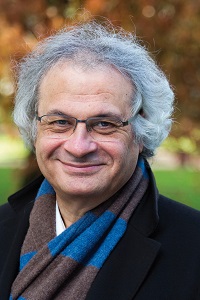


Amin Maalouf (Beiroet, 25 februari 1949)
Lees verder “Amin Maalouf, Aldo Busi, Gabriël Smit, Anthony Burgess, Robert Rius, Karl May, Lesja Oekrajinka, Karel Toman, Vittoria Colonna”

Franz Xaver Kroetz, Gérard Bessette, Mary Chase, Carlo Goldoni, Karl Wilhelm Ramler, Friedrich von Spee, Quirinus Kuhlmann

 De Duitse dichter, schrijver, regisseur en acteur Franz Xaver Kroetz werd geboren op 25 februari 1946 in München. Zie ook alle tags voor Franz Xaver Kroetz op dit blog.


Kirchberg

Da Dot is a schdada Hund.
As Bebi schreit.

As Bebi schreit, und da Dot
muaß wartn.

Da Dot is a schdada Hund,
der mogs ned laud.

Etzan laßtase in insam
Dorf nimma seng,
seit erm insa Bebi vadreibt.

A da Nachbarin ihra Dochta
kriagt ihra Bebi, a wenn da
Herr Arzt vum Trostberga
Grangahaus zu ihra gsogd hod,
wenns moing ned zim ausgrazn kemma,
nachat laft erna hoit da Baz
iwamoing iwa de Fiaß owe.

Sogor de kloa Katz
bracht a ganze Stund zin Dedn
vun oana schwarzn Feidmaus
drausd auf da Deraßn.

Da Dot is a schdada Hund,
vapfiffa isa worn aus insam Dorf.
Nicht daß es hier
nichts zu berichten gäbe.

Weiche sonnblaue Tage
im Mai.

Ich schüttete
sechs Liter
braunes Bier
in mich hinein.

Hellweiche Tage
im Wonnemonat Mai.

Ich möchte
im Birnbaum hängen
er blüht am schönsten.

Nicht daß es
hier nichts
zu berichten gäbe.

Meine anderthalb
jährige Tochter
sagt »heiß«.

Und heute
kam sie
und sagte
»papa heiß aua«.


Franz Xaver Kroetz (München, 25 februari 1946)

Lees verder “Franz Xaver Kroetz, Gérard Bessette, Mary Chase, Carlo Goldoni, Karl Wilhelm Ramler, Friedrich von Spee, Quirinus Kuhlmann”

Gerald Murnane

De Australische schrijver Gerald Murnane werd geboren op 25 februari 1939 in Coburg, Victoria, een voorstad van Melbourne, en heeft de staat Victoria bijna nooit verlaten. Delen van zijn jeugd werden doorgebracht in Bendigo en de Western District. In 1956 studeerde hij af aan het De La Salle College in Malvern. Murnane studeerde daarna kort voor het rooms-katholieke priesterschap. Hij verliet dit pad echter en werd leraar op basisscholen (van 1960 tot 1968) en in de Apprentice Jockeys ‘School van de Victoria Racing Club. Hij behaalde in 1969 een Bachelor of Arts aan de University of Melbourne en werkte vervolgens tot 1973 in de Victorian Education Department. Vanaf 1980 begon hij creatief schrijven te doceren aan verschillende instellingen voor hoger onderwijs. De eerste twee boeken van Murnane, “Tamarisk Row” (1974) en “A Lifetime on Clouds” (1976), lijken semi-autobiografische verslagen te zijn van zijn kindertijd en adolescentie. Beide zijn grotendeels samengesteld uit zeer lange maar grammaticale zinnen. In 1982 bereikte hij zijn volwassen stijl met “The Plains”, een korte roman over een naamloze filmmaker die naar ‘Inner Australia’ reist, waar hij de vlaktes probeert te filmen onder het beschermheerschap van rijke landeigenaren. “The Plains” werd gevolgd door: “Landscape With Landscape” (1985), “Inland” (1988), “Velvet Waters” (1990) en “Emerald Blue” (1995). Een essaybundel, “Invisible Yet Enduring Lilacs”, verscheen in 2005. Deze boeken houden zich allemaal bezig met de relatie tussen geheugen, beeld en landschap, en vaak met de relatie tussen fictie en non-fictie. In 2009 verscheen, na meer dan een decennium, pas weer opnieuw fictioneel werk van Murnane: “Barley Patch”, gevolgd door “A History of Books” in 2012 en “A Million Windows” in 2014.

Uit: Invisible Yet Enduring Lilacs

On the road to Bendigo: Kerouac’s Australian life
Like other children of my time and place, I watched films from Hollywood in the first years after World War II, although I believe I watched fewer than most children. I watched perhaps twenty double-feature programs from 1946 to 1948. The films were mostly cowboy films, in black and white, and I watched them on Saturday afternoons in the Lyric Theatre, Bendigo, of which I remember only that the floor was quite level, so that the screen always seemed high above me and remote. The films I watched made me discontented. Scene after scene disappeared from the screen before I had properly appreciated it; the characters moved and spoke much too fast. I hardly ever got the hang of a film, as my brother would say afterwards when I asked him to explain what I had missed. What I looked for in films was what I called pure scenery. I thought of pure scenery as the places safely behind the action: the places where nothing seemed to happen. Occasionally I glimpsed the kind of scenery I wanted. Behind the men on horses or the encampment of wagons was a broad tract of tall grass leading back to a line of hills. When I saw any such banal arrangement of grassy middle distance and hilly background, I tried to do to it something for which the simplest word I could have found was swallow. I wanted to feel that waving grass and that line of hills somewhere inside me. I wanted grass and hills fixed inside the space that began, as I thought, behind my eyes. I was not so literal-minded that I was troubled by cartoon images of a greedy boy with his cheeks swollen by a segment of landscape-pie. Yet the word swallow was not inapt. Getting the scenery from outside to inside seemed to engage me in some kind of bodily effort. And if I did not actually think of mouth or stomach, I could still see myself crouching over scenery made somehow conve-niently tiny; the scenery brought so close to my face that the familiar became blurred, and strange details filled my eyes; some crucial moment arriving for which I had no words; and finally the scenery safely mine, a piece of plain with a rim of hills floating inside my private space, and rather higher than lower, as though my space was a sort of appropriate that an early Australian poet should have put on racing silks and ridden at Flemington and Coleraine. The racecourse must have seemed sometimes to Gordon his landscape of last resort. A man who had been born in Ballarat in the 1890s once told me that he had heard from a former jockey who rode with Gordon. At the barrier before a steeplechase one day at Dowling Forest, Gordon announced that this would be his last race. When he urged his horse like a madman at the first jump, the other riders knew what he had meant. That was the last they saw of him — in racing parlance. He won that day by a great space.


Gerald Murnane (Coburg, 25 februari 1939)

Leon de Winter, Alain Mabanckou, George Moore, Erich Loest, Herman Maas, Luc Verbeke, Wilhelm Grimm, Friedrich Spielhagen, Jacques Presser

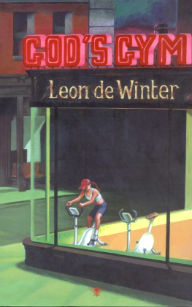
De Nederlandse schrijver Leon de Winter werd geboren in ’s-Hertogenbosch op 24 februari 1954. Zie ook alle tags voor Leon de Winter op dit blog.

Uit: God’s gym

“Opnieuw knikte de man, met gebogen hoofd nu. Maar hij was zo lang dat Joop nog steeds onbelemmerd zijn gezicht kon zien. `Waar wacht je op! Weg! Wil je dat ik de politie bel!’ `Het mag niet zo blijven,’ zei de man terwijl hij naar zijn handen keek. ‘Als mensen sterven hebben ze recht op een ritueel. Mirjam moet een graf krijgen. Ik bemoei me nergens mee, maar u reageert niet. U neemt de telefoon niet op. U haalt de post niet uit uw brievenbus. Ik moest iets doen. Ik zei maar dat ik namens u handelde. Doet u het dan alstublieft zelf. Doe ’t voor haar. Ze heeft er recht op. Mister Koepm’n, ze heeft nog steeds rechten!’ Het gezicht van de grote man trok opeens in een kramp en zijn ogen stroomden vol. Terwijl hij in zijn handen kneep, perste hij zijn lippen op elkaar en probeerde zijn tranen in te slikken. Maar de tranen bleven stromen en met diepe uithalen stond de man voor zijn deur te huilen. Zijn schouders schokten en hij opende zijn mond en haalde diep adem om de pijnscheuten van verdriet te kunnen weerstaan. De aanblik van de man was niet te verdragen. Joop deed een stap opzij en zocht steun bij de muur naast de kapstok, met zijn schouder tegen het rugzakje, en onttrok zich aan het uitzicht door het raam. Gedempt hoorde hij het gesnik van de man. De man had de motor bestuurd. Zijn dochter was gestorven, maar de man was ongedeerd, stond hier nu te janken alsof het zijn eigen kind was geweest. Hij had geen recht op medelijden. Niet van Joop. Niet hier. Joop wachtte tot er geen gesnik meer door de deur klonk. Na een paar minuten leek de man zijn huilende lijf onder controle te krijgen. Het gesnik stopte en Joop hoorde dat de man zijn neus snoot. `Mister Koepm’n, sir?’ hoorde Joop vervolgens. ‘Mister Koepm’n? Luistert u even naar me? Ik weet dat u me hoort. Mister Koepm’n, ik heb gisteren m’n zaak verkocht! U bent er geweest, pas geleden nog! Ik moet daar les blijven geven, maar ik heb het verkocht en ik heb er geld aan overgehouden! Real money! Mister Koepm’n, ik wil een gedenkteken voor haar oprichten! Een tempel, sir! Een beeld in een Griekse tempel met zuilen! Zoiets als de tempel van Artemis in Ephesus! Iets wat er eeuwig zal staan! Ik betaal alles, sir!”


Leon de Winter (’s-Hertogenbosch, 24 februari 1954)
Cover

Lees verder “Leon de Winter, Alain Mabanckou, George Moore, Erich Loest, Herman Maas, Luc Verbeke, Wilhelm Grimm, Friedrich Spielhagen, Jacques Presser”

August Derleth, Keto von Waberer, Yüksel Pazarkaya, Erich Pawlu, Irène Némirovsky, Vincent Voiture, Rosalía de Castro, Paul Alfred Kleinert, Stanisław Witkiewicz

De Amerikaanse schrijver en uitgever August William Derleth werd geboren op 24 februari 1909 in Sauk City, Wisconsin. Zie ook alle tags voor August Derleth op dit blog.

Uit: The Shuttered Room

“At dusk, the wild, lonely country guarding the approaches to the village of Dunwich in north central Massachusetts seems more desolate and forbidding than it ever does by day. Twilight lends the barren fields and domed hills a strangeness that sets them apart from the country around that area; it brings to every-thing a kind of sentient, watchful animosity—to the ancient trees, to the brier-bordered stone walls pressing close upon the dusty road, to the low marshes with their myriads of fireflies and their incessantly calling whippoorwills vying with the muttering of frogs and the shrill songs of toads, to the sinuous windings of the upper reaches of the Miskatonic flowing among the dark hills seaward, all of which seem to close in upon the traveller as if intent upon holding him fast, be-yond all escape. On his way to Dunwich, Abner Whateley felt all this again, as once in childhood he had felt it and run screaming in terror to beg his mother to take him away from Dunwich and Grandfather Luther Whateley. So many years ago! He had lost count of them. It was cu-rious that the country should affect him so, pushing through all the years he had lived since then—the years at the Sorbonne, in Cairo, in London—pushing through all the learning he had assimilated since those early visits to grim old Grandfather Whateley in his ancient house attached to the mill along the Miskatonic, the country of his childhood, coming back now out of the mists of time as were it but yesterday that he had visited his kinfolk. They were all gone now—Mother, Grandfather Whateley, Aunt Sarey, whom he had never seen but only knew to be living some-where in that old house—the loathsome cousin Wilbur and his terri-ble twin brother few had ever known before his frightful death on top of Sentinel Hill.”


August Derleth (24 februari 1909 – 4 juli 1971)

Lees verder “August Derleth, Keto von Waberer, Yüksel Pazarkaya, Erich Pawlu, Irène Némirovsky, Vincent Voiture, Rosalía de Castro, Paul Alfred Kleinert, Stanisław Witkiewicz”

César Aira, Robert Gray, Jef Geeraerts, Bernard Cornwell, Ljoedmila Oelitskaja, Toon Kortooms, Jo Ypma, Sonya Hartnett, Maxim Februari

De Argentijnse schrijver en vertaler César Aira werd geboren op 23 februari 1949 in Coronel Pringles. Zie ook alle tags voor César Aira op dit blog.

Uit:An Episode in the Life of a Landscape Painter (Vertaald door Chris Andrews)

“The horse did indeed rise to its feet, bristling and monu-mental, obscuring halfthe mesh oflightning, his giraffe-like legs contorted by wayward steps; he turned his head, hear-ing the call of madness … and took off … But Rugendas went with him! He could not understand, nor did he want to—it was too monstrous. He could feel himself being pulled, stretching (the electricity had made him elastic), almost levitating, like a satellite in thrall to a dangerous star.The pace quickened, and off he went in tow, bouncing, bewildered … What he did not realize was that his foot was caught in the stirrup, a classic riding accident, which still occurs now and then, even afterso many repetitions.The generation of electricity ceased as suddenly as it had begun, which was a pity, because a well-aimed lightning bolt, stopping the creature in its flight, might have spared the painter no end of trouble. But the current withdrew into the clouds, the wind began to blow, rain fell … It was never known how farthe horse galloped, nor did it really matter.Whateverthe distance,shortorlong,thedisas-ter had occurred. Itwas not until the morning ofthe follow-ing day that Krause and the old guide discovered them.The horse had found his clover, and was grazing sleepily, with a bloody bundle trailing from one stirrup. After a whole night spent looking for his friend, poor Krause, at his wits’ end, had more or less given him up for dead. Finding him was not entirely a relief: there he was, at last, but prone and motionless.They hurried on and, as they approached, saw him move yet remain face down, as if kissing the earth; the flicker of hope this aroused was quenched when they real-ized that he was not moving himself, but being dragged by the horse’s blithe little browsing steps. They dismounted, took his foot from the stirrup and turned him over …The horror struck them dumb. Rugendas’s face was a swollen, bloodymass;theboneofhisforehead wasexposed and strips of skin hung over his eyes. The distinctive aquiline form of hisAugsburg nosewas unrecognizable,and his lips,splitand spread apart, revealed his teeth, all miraculously intact. The first thing was to see if he was breathing. He was. This gave an edge of urgency to what followed. They put him on the horse’s back and set off. The guide, who had re-covered hisguiding skills,rememberedsomeranchesnearby and pointed the way. They arrived half way through the morning, bearing a gift that could not have been more dis-concerting for the poor, isolated farmers who lived there. It was, at least, an opportunity to give Rugendas some simple treatment and take stock of the situation.They washed his face and tried to put it back together, manipulating the pieces with their fingertips; they applied witch hazel dress-ings to speed the healing and checked that there were no broken bones.“


César Aira (Coronel Pringles, 23 februari 1949)

Lees verder “César Aira, Robert Gray, Jef Geeraerts, Bernard Cornwell, Ljoedmila Oelitskaja, Toon Kortooms, Jo Ypma, Sonya Hartnett, Maxim Februari”

Lavinia Braniște

De Roemeense schrijfster en vertaalster Lavinia Braniște werd geboren op 23 februari 1983 in Brăila. Zij is in 2006 afgestudeerd aan de letterenfaculteit van de Babeș-Bolyaiuniversiteit in Cluj-Napoca, Zij behaalde een Master in het vertalen van literaire (Franse) literatuur aan de universiteit van Boekarest, en promoveerde in 2007 met een proefschrift over voetnoten in de literaire vertaling. Ook behaalde zij een Europese Master voor de opleiding van conferentietolken, universiteit van Boekarest, specialisatie Engels-Frans (2010-2012). Zij werkte als redacteur (o.a. Cluj, ART, Boekarest). Zij vertaalde boeken naar het Roemeens van o.a. Henry Miller, “A Devil in Paradise”; A.A. Milne – “When We Were Very Young; Now We Are Six”; Kate DiCamillo – T”he Miraculous Journey of Edward Tulane”; Ruth Stiles Gannett – “My Father’s Dragon”; Kate DiCamillo – “Flora and Ulysses”; Luis Sepulveda – “Historia de una gaviota y del gato que le enseñó a volar”; V.S. Naipaul – “Magic Seeds” etc. Gepubliceerd werk: Escapada (short stories), 2014; “Vijf minuten per dag” (“Cinci minute pe zi” – korte proza), 2011; “Verhalen bij mij” (Poveşti cu mine“ – gedichten), 2006. In 2016 verscheen haar eerste roman “Interior zero”.

Uit: Interior Zero (Vertaald door Alistair Ian Blyth)

« Mother has been working in Spain for so long that it seems like forever. She works in tourism, at the seaside, and comes home once a year, out of season. She arranges it so that she will catch the winter holidays. For years and years, she hasn’t seen Romania in leaf or in bloom, she always comes when it’s muddy, when people are grey and muffled up, and she gets the impression that the country is a depressing place. Sometimes she’ll be here when it snows and it makes her as happy as a small child, her woolly hat slips down over her eyes and she blows her nose and she shovels the snow out of the yard. And after that she tells the people in Spain that it was snowing here and they are amazed and they always say that they ought to come to visit Romania at least once.
When she comes to my house in Bucharest, I always draw up a plan for where we can go and what we can do to have fun, so that we won’t sit in my one room flat and get bored.

We’ve set aside a whole day to do a tour of Berceni and the new housing blocks. So that we can see what they’re like, because I’ve been sending her links about the new blocks, and if I decide to take out a loan, she’ll give me the deposit.
There’s a little bit of sun in the morning, but by the time we leave the house, we’ve missed it. The day turns grey again, like it was yesterday and the day before yesterday. We get on the metro, change at Victoriei and then sit next to each other during the long journey to Dimitrie Leonida.
I tell her that the new metro trains are built in Spain. And that the woman who announces the stations has taken Metrorex to court, because they didn’t pay her. I don’t know what else to tell her about Romania.
“But isn’t she from the time of Ceausescu ?”
“No, it’s a young woman. An actress.”
The Dimitrie Leonida metro station is a time capsule and Mother likes it. But when we come outside onto the boulevard she doesn’t like it.
“Oh dear.”
We turn left at random and the asphalt immediately peters out. Here and there between the new housing blocks you can see a rustic yard, which has survived the real estate invasion.
A cowpat, a horse neighing, a cockerel. I think it’s nice. Far from the madness of the city. And this is the only area where a one room flat costs twenty thousand.
“Where are the drains ?” wonders Mother.
“I read on the chat rooms that the ones that are farther from the main road don’t have drains. They have septic tanks.”
“What’s a septic tank ?”

 
Lavinia Braniște (Brăila, 23 februari 1983)

Arnon Grunberg, Rob Schouten, Ruben van Gogh, Paul van Ostaijen, Hugo Ball, Danilo Kis, Sean O’Faolain, Ishmael Reed, Edna St. Vincent Millay

De Nederlandse schrijver Arnon Grunberg werd geboren in Amsterdam op 22 februari 1971. Zie ook alle tags voor Arnon Grunberg op dit blog.

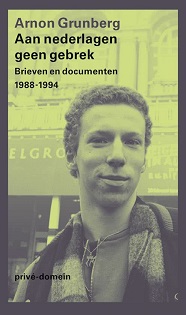
Uit: Aan nederlagen geen gebrek

„Aan Jan Ritsema Amsterdam, 25 februari 1991
Geachte heer Jan Ritsema,
Ons gesprek van verleden week in Scheltema heeft mij met de neus op de feiten gedrukt, of was althans de katalysator daarvoor. Dat mijn tekstjes emotionele interrupties zouden zijn gaat nog niet ver genoeg, afscheidingen van een zieke zijn het. En was die ziekte nog maar iets verhevens, maar het is de meest triviale, banale ziekte die een mens zich kan indenken. Als tussen de mieren de handen waren, die mij langdurig zouden verdoven, die mij uiteen zouden rijten, geloof me, ik zou dat armzalige geploeter laten voor wat het is en tussen de mieren gaan wonen. Hierbij een kort tekstje van mij, niet naar jou gestuurd in enige functie of hoedanigheid. Meer om als wij elkaar weer eens ontmoeten in smoezelige cafés, braakliggende etablissementen, wij naast de belangrijke dingen van het leven ’t een en ander de revue kunnen laten passeren. Intussen hoop ik dat de helse depressiviteit, die zo ik weet, ook jouw megalomane stemmingen met een satanisch genoegen afbreekt en doet omslaan in walging en nog eens walging, uit is gebleven.
Morgen reis ik weer af naar Rotterdam en ’s avonds zal ik in café Scheltema Johanna ter Steegem treffen. Of ik daar dan werkelijk gewichtig moet doen over een of andere monoloog die ik nog moet gaan schrijven of bij gebrek aan iets beters Baudelaire zal citeren (dronken moet je zijn, dronken van de poëzie, het leven, de liefde, maar dronken moet je zijn) weet ik nog niet. Het zal wel weer bij een hoop grote woorden blijven.
Ik houd je op de hoogte, een groet en sterkte,
Arnon


Arnon Grunberg (Amsterdam, 22 februari 1971)
Cover

Lees verder “Arnon Grunberg, Rob Schouten, Ruben van Gogh, Paul van Ostaijen, Hugo Ball, Danilo Kis, Sean O’Faolain, Ishmael Reed, Edna St. Vincent Millay”

Philip Kerr

De Britse schrijver Philip Ballantyne Kerr werd geboren in Edinburgh op 22 februari 1956. Kerr studeerde rechten en juridische filosofie aan de universiteit van Birmingham en werkte daarna in een reclamebureau. 1989, zijn eerste roman, “March Violets”, die speelt in de jaren 1930 in Berlijn, een mix van historische roman en thriller die internationale erkenning ontving en waaraan in Frankrijk de Prix du Roman d’Aventures en de Prix Mystère de la critique werd toegekend. Vanuit het debuut ontwikkelde zich de misdaadtrilogie “Berlin Noir” over de privédetective en voormalige hoofdinspecteur Bernhard Gunther. Verschillende bijfiguren zijn niet fictief, zoals Ernst Gennat (destijds politiecommissaris van Berlijn), Reinhard Heydrich, Bernhard Weiß (een Joods politicus), Arthur Nebe, Adolf Eichmann, Horst Carlos Fuldner (een nazi-agent in Argentinië) en Joseph Mengele. Zijn romans en thrillers schreef hij onder zijn eigen naam en zijn kinderboekenserie “Children of the Lamp” als P.B. Kerr.

Uit: The Other Side of Silence

„Yesterday I tried to kill myself.
It wasn’t that I wanted to die as much as the fact that I wanted the pain to stop. Elisabeth, my wife, left me a while ago and I’d been missing her a lot. That was one source of pain, and a pretty major one, I have to admit. Even after a war in which more than four million German soldiers died, German wives are hard to come by. But another serious pain in my life was the war itself of course, and what happened to me back then, and in the Soviet POW camps afterwards. Which perhaps made my decision to commit suicide odd considering how hard it was not to die in Russia; but staying alive was always more of a habit for me than an active choice. For years under the Nazis I stayed alive out of sheer bloody mindedness. So I asked myself, early one Spring morning, why not kill yourself? To a Goethe-loving Prussian like me the pure reason of a question like that was almost unassailable. Besides, it wasn’t as if life was so great anymore, although in truth I’m not sure it ever was. Tomorrow and the long, long empty year to come after that isn’t something of much interest to me, especially down here on the French Riviera. I was on my own, pushing sixty and working in a hotel job that I could do in my sleep, not that I got much of that these days. Most of the time I was miserable. I was living somewhere I didn’t belong and it felt like a cold corner in hell, so it wasn’t as if I believed anyone who enjoys a sunny day would miss the dark cloud that was my face.
There was all that for choosing to die, plus the arrival of a guest at the hotel. A guest I recognized and wished I hadn’t. But I’ll come to him in a moment. Before that I have to explain why I’m still here.
I went into the garage underneath my small apartment in Villefranche, closed the door, and waited in the car with the engine turning over. Carbon monoxide poisoning isn’t so bad. You just close your eyes and go to sleep. If the car hadn’t stalled or perhaps just run out of gas I wouldn’t be here now. I thought I might try it again another time, if things didn’t improve and if I bought a more reliable motor car. On the other hand, I could have returned to Berlin, like my poor wife, which might have achieved the same result. Even today it’s just as easy to get yourself killed there as it ever was and if I were to go back to the former German capital, I don’t think it would be very long before someone was kind enough to organize my sudden death. One side or the other has got it in for me, and with good reason. When I was living in Berlin and being a cop or an ex-cop, I managed to offend almost everyone, with the possible exception of the British.”

 
Philip Kerr (Edinburgh, 22 februari 1956)

J.M.A. Biesheuvelprijs voor Annelies Verbeke

J.M.A. Biesheuvelprijs voor Annelies Verbeke

De Vlaamse schrijfster Annelies Verbeke krijgt de J.M.A. Biesheuvelprijs voor de beste Nederlandstalige korteverhalenbundel voor haar boek “Halleluja”. De Biesheuvelprijs wordt volledig gefinancierd met crowdfunding en de hoogte hangt daar ook van af. Aan de prijs is deze keer een geldbedrag verbonden van 7336 euro. De prijs wordt voor de vierde keer uitgereikt. In 2015 won Rob van Essen, in 2016 Marente de Moor, in 2017 Maarten ’t Hart. Annelies Verbeke werd geboren op 6 februari 1976 in Dendermonde. Zie ook alle tags voor Annelies Verbeke op dit blog.

Uit: Halleluja (De beer)

“De auteur is een beer geworden. Een oude, bruine beer.
Van het mannelijke geslacht maar impotent, zo meent hij te ontdekken, voorzichtig tastend met zijn kromme klauw.
Omdat hij vindt dat hij over zoiets open kaart moet spelen, vertelt hij het meteen aan de partner van de auteur, naast hem in bed. De partner draait zich slapend om en verstrengelt zich blindelings met de beer, zijn mond om diens rechtertepel. De beer gromt zacht en fronst.
Wankel en houterig loopt hij de trap af. Onderweg naar het toilet bemerkt hij harde, schilferige stukken huid op zijn knieën. Op zijn ellebogen eveneens. Alsof hij door zijn vacht is gebarsten. Eczeem misschien, denkt de beer, of schurft. Spierpijn heeft hij ook, en diarree. Een oude, zieke beer.
Of hij een bruine beer is, weet hij niet zeker, mogelijk is hij een kleine grizzly. Hij bestudeert zichzelf voor de badkamerspiegel: geen haar op zijn neus, geen bult op zijn rug. De voetafdruk die hij na een stap op de natte badkamermat achterlaat toont tenen die uit elkaar staan. Op vier poten bevindt zijn achterste zich hoger dan zijn schouders. Heel zeker een bruine beer. Geen grizzly. Ach, wat kan het me ook bommen, denkt de beer.
‘Gelukkig ben ik geen ijsbeer, het is een warme lente.’ Hij probeert positief te blijven. Het lukt niet. Waarom net deze metamorfose? Beter als beer ontwaken dan als insect? De beer heeft daar sterk zijn twijfels over. Hij herinnert zich een film die de auteur ooit zag, eentje uit de jaren tachtig, hij kan
niet op de titel komen, iets met een randpersonage dat een berenpak droeg na een verkrachting. Dat was hier niet het geval, tenzij de verkrachting metaforisch moest worden opgevat, maar de kop van de beer staat nu absoluut niet naar metaforen. Hij draagt ook geen berenpak, er valt niets uit te trekken.
Dat de auteur de voorbije maanden steeds grotere hoeveelheden honing had gegeten had een waarschuwing moeten zijn. Hoewel de weegschaal het tegensprak, had ze zich steeds zwaarder gevoeld. Het was onvoorstelbaar hoeveel ze in korte tijd was verloren, wat er buiten haar wil of inbreng om was opgeheven, afgerond en opgeblazen.”

 
Annelies Verbeke (Dendermonde, 6 februari 1976)