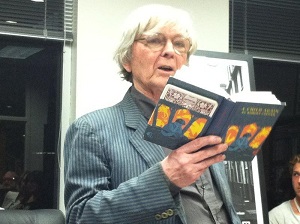
Johan Harstad, Åsne Seierstad, Marjolijn van Heemstra, Derek Otte, Jac. van Hattum, Simone Trieder, Bertolt Brecht, Boris Pasternak, Carry-Ann Tjong-Ayong

De Noorse schrijver Johan Harstad werd geboren op 10 februari 1979 in Stavanger. Zie ook alle tags voor Johan Harstad op dit blog.

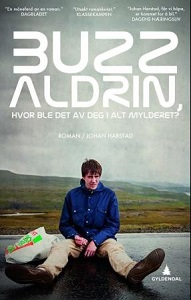
Uit: Buzz Aldrin, what happened to you in all the confusion? (Vertaald door Deborah Dawkin & Erik Skuggevik)

It is a Tuesday. There can be no doubt. I see it in the light, the traffic outside the windows will continue to stream all day, slowly, disinterestedly, people driving back and forth from habit, rather than necessity. Tuesday. The week’s most superfluous day. A day that almost nobody notices amongst all the other days. I read somewhere, I don’t remember where, that statistics showed there were 34% fewer appointments made on an average Tuesday than on any other day. On a worldwide basis. That’s how it is. On the other hand a considerably greater number of funerals are held on Tuesdays than during the rest of the week. They sort of bunch up, you never get on top of it.”
****

I had a friend.
And had this not been so, I would never have ended up with a large sum of money in my inside pocket, and been almost run over, I would never have rescued a person from the sea or been thrown out of various bars. I would not have come centimetres from jumping eleven hundred metres down from a mountain, I would never have tried building a boat, and last, but not least, I might never have disappeared.
But I had a friend.
Jørn.
Jørn played in a band.
And I’d said yes. It was some weeks ago now. He’d asked me one evening, as we sat in his flat in Storhaug. Jørn and Roar were going over with his band, Perkleiva, at the end of July, together with another Norwegian band, The Kulta Beats from Trondheim, they were going to play at some festival over there, on the Faeroe Isles, a gig they’d been offered through the Stavanger Council, so far as I understood. Stavanger and Tórshavn were twinned towns, and Stavanger wanted to do its bit for the Faeroese National Day, Olsok. Some Danish band, whose name I never remember, were invited too, as well as all the Faeroese artists. That was what I’d been told. More or less. And that I was going with them in the guise of being their soundman. Although it was probably just Jørn’s way of trying to drag me along, drag me out, show me that it could be good doing concerts, playing in a band, he’d never totally abandoned the idea of us two playing together, of me singing. He really wanted me to sing. But I’d kept my mouth shut. Officially, for the organisers, the reason for my coming was Claus. Claus was Perkleiva’s producer, but he and his girlfriend were expecting a baby, it could arrive any minute, so he’d cancelled, understandably, more preoccupied with ultrasound than the sound of guitars. And I was, well yes, I needed a holiday, and sure, I’d always enjoyed travelling, and no, I had no other plans.”


Johan Harstad (Stavanger, 10 februari 1979)
Cover Noorse uitgave
Lees verder “Johan Harstad, Åsne Seierstad, Marjolijn van Heemstra, Derek Otte, Jac. van Hattum, Simone Trieder, Bertolt Brecht, Boris Pasternak, Carry-Ann Tjong-Ayong”

Giuseppe Ungaretti, Fleur Adcock, Joseph Kessel, Charles Lamb, Margarete Hannsmann, Eugène Rellum, Daniel Triller, Thomas Platter de oudere

De Italiaanse dichter en schrijver Giuseppe Ungaretti werd geboren op 10 februari 1888 in Alexandrië, Egypte. Zie ook alle tags voor Giuseppee Ungaretti op dit blog.


Pleasure
Versa, February 18, 1917

I feel the fever
of this
burst of light

I pluck this
day like
a fruit that ripens

Tonight
my regret
will be like
a howl
lost
in the desert


Oh night

The trees unshrouded
By the embrace of dawn’s elan.

Painful wakings.
Leaves, sister leaves,
I hear your plaint.

Autumns,
Dying pleasures.

0 youth,
Barely gone’s the hour of parting.

Youth’s soaring heights,
Unfettered rush.

And I’m already barren.

Lost in this enfolding melancholy.

But night dispels all distances.

Oceans of silence,
Celestial nests of illusions,

0 night.


Vertaald door Diego Bastianutti


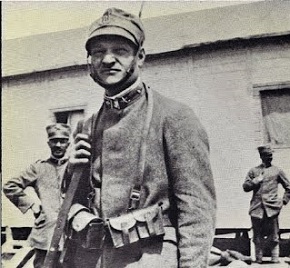
Giuseppe Ungaretti (10 februari 1888 – 2 juni 1970)
Tijdens WO I

Lees verder “Giuseppe Ungaretti, Fleur Adcock, Joseph Kessel, Charles Lamb, Margarete Hannsmann, Eugène Rellum, Daniel Triller, Thomas Platter de oudere”

John Coetzee, Thomas Bernhard, Kees Verheul, Brendan Behan, Geerten Gossaert, Herman Pieter de Boer, Alice Walker, Jacques Schreurs, Maurits Sabbe

De Zuidafrikaanse schrijver John Maxwell Coetzee werd geboren op 9 februari 1940 in Kaapstad. Zie ook alle tags voor John Coetzee op dit blog.

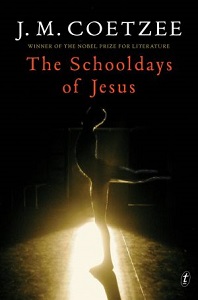
Uit: The Schooldays of Jesus

“He was expecting Estrella to be bigger. On the map it shows up as a dot of the same size as Novilla. But whereas Novilla was a city, Estrella is no more than a sprawling provincial town set in a countryside of hills and fields and orchards, with a sluggish river meandering through it. Will a new life be possible in Estrella? In Novilla he had been able to rely on the Office of Relocations to arrange accommoda-tion. Will lie and Ines and the boy be able to find a home here? The Office of Relocations is beneficent, it is the very embodiment of beneficence of an impersonal variety; but will its beneficence extend to fugitives from the law? Juan, the hitchhiker who joined them on the road to Estrella, has suggested that they find work on one of the farms. Farmers always need farmhands, he says.The larger farms even have dor-mitories for seasonal workers. If it isn’t orange season it is apple season; if it isn’t apple season it is grape season. Estrella and its surrounds are a veritable cornucopia. He can direct them, if they wish, to a farm where friends of his once worked. He exchanges looks with Ines. Should they follow Juan’s advice? Money is not a consideration, he has plenty of money in his pocket, they could easily stay at a hotel. But if the authorities from Novilla are really pursuing them, then perhaps they would be better off among the nameless transients. ‘Yes,’ says Ines:Let us go to this farm.We have been cooped up in the car long enough. Bolivar needs a run: ‘I feel the same way,’ says he, SimOn.’However, a farm is not a holiday camp. Are you ready, Ines, to spend all day picking fruit under a hot sun?’ ‘I will do my share, says Ines:Neither less nor more.’ ‘Can I pick fruit too?’ asks the boy ‘Unfortunately no, not you, says Juan.’That would be against the law.That would be child labour: ‘I don’t mind being child labour, says the boy. ‘I am sure the farmer will let you pick fruit, says he, Simon. ‘But not too much. Not enough to turn it into labour: They drive through Estrella, following the main street. Juan points out the marketplace, the administrative buildings, the mod-est museum and art gallery. They cross a bridge, leave the town behind, and follow the course of the river until they come in sight of an imposing house on the hillside. ‘That is the farm I had in mind, says uan.`That is where my friends found work.The refugio is at the back. It looks dreary, but it’s actually quite comfortable. The trfitgio is made up of two long galvanized-iron sheds linked by a covered passage; to one side is an ablution block. He parks the car. No one emerges to greet them save a grizzled, stiff-legged / dog who, from the limit of his chain, growls at them, baring yellowed fangs.”


John Coetzee (Kaapstad, 9 februari 1940)
Cover

Lees verder “John Coetzee, Thomas Bernhard, Kees Verheul, Brendan Behan, Geerten Gossaert, Herman Pieter de Boer, Alice Walker, Jacques Schreurs, Maurits Sabbe”

John Grisham, Robin Block, Elizabeth Bishop, Neal Cassady, Henry Roth, Eva Strittmatter, Gert Jonke, Jules Verne, Kate Chopin

De Amerikaanse schrijver John Grisham werd geboren in Jonesboro, Arkansas, op 8 februari 1955. Zie ook alle tags voor John Grisham op dit blog.

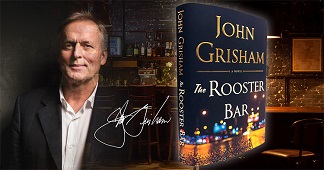
Uit: The Rooster Bar

“The end of the year brought the usual holiday festivities, though around the Frazier house there was little to cheer. Mrs. Frazier went through the motions of decorating a small tree and wrapping a few cheap gifts and baking cookies no one really wanted, and, as always, she kept The Nutcracker running nonstop on the stereo as she gamely hummed along in the kitchen as though the season was merry.
Things were anything but merry. Mr. Frazier had moved out three years earlier, and he wasn’t missed as much as he was despised. In no time, he had moved in with his young secretary, who, as things developed, was already pregnant. Mrs. Frazier, jilted, humiliated, broke, and depressed, was still struggling.
Louie, her younger son, was under house arrest, sort of free on bail, and facing a rough year ahead with the drug charges and all. He made no effort to buy his mom anything in the way of a gift. His excuse was that he couldn’t leave the house because of the court-ordered monitor attached to his ankle. But even without it, no one expected Louie to go to the trouble of buying gifts. The year before and the year before that both of his ankles had been unburdened and he hadn’t bothered to shop.
Mark, the older son, was home from the horrors of law school, and, though even poorer than his brother, had managed to buy his mother some perfume. He was scheduled to graduate in May, sit for the bar exam in July, and begin working with a D.C. firm in September, which, as it so happened, was the same month Louie’s trial was on the docket. But Louie’s case would not go to trial for two very good reasons. First, the undercover boys had caught him in the act of selling ten bags of crack—there was even a video—and, second, neither Louie nor his mother could afford a decent lawyer to handle the mess. Throughout the holidays, both Louie and Mrs. Frazier dropped hints that Mark should rush in and volunteer to defend his brother. Wouldn’t it be easy to stall matters until later in the year when Mark was properly admitted to the bar—he was practically there anyway—and once he had his license wouldn’t it be a simple matter of finding one of those technicalities you read about to get the charges dismissed?”


John Grisham (Jonesboro, 8 februari 1955)

Lees verder “John Grisham, Robin Block, Elizabeth Bishop, Neal Cassady, Henry Roth, Eva Strittmatter, Gert Jonke, Jules Verne, Kate Chopin”

Rachel Cusk

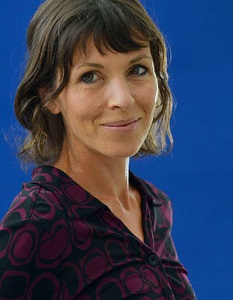
De Canadese  schrijfster Rachel Cusk werd geboren op 8 februari 1967 in Saskatoon. Zij bracht echter een groot deel van haar vroege jeugd door in Los Angeles. Op negenjarige leeftijd verhuisde ze met haar familie naar het Verenigd Koninkrijk. Daar studeerde ze Engels aan New College, Oxford University. Later werkte ze voor een literair bureau in Londen en toerde ze door Spanje en Midden-Amerika. Zij is getrouwd met de kunstenaar Siemon Scamell-Katz. Cusk heeft acht romans en drie non-fictieboeken geschreven. Zij debuteerde in 1993 met “Saving Agnes”. Daarna volgden o.a. “The Country Life” (1997), “The Lucky Ones” (2003), “In the Fold” (2005), “Arlington Park” (2006), “The Bradshaw Variations” (2009), “Outline” (2014) en “Transit” (2016).Cusk heeft een aantal prijzen gewonnen en op de shortlist gestaan: haar roman 2014, “Outline”, was genomineerd voor de Folioprijs, de Goldsmiths Prize en de Baileys-prijs. In 2003 werd Cusk genomineerd door Granta Magazine als een van de 20 ‘Best of Young British Novelists’.

Uit: Outline

“Before the flight I was invited for lunch at a London club with a billionaire I’d been promised had liberal credentials. He talked in his open-necked shirt about the new software he was developing, that could help organisations identify the employees most likely to rob and betray them in the future. We were meant to be discussing a literary magazine he was thinking of starting up: unfortunately I had to leave before we arrived at that subject. He insisted on paying for a taxi to the airport, which was useful since I was late and had a heavy suitcase.
The billionaire had been keen to give me the outline of his life story, which had begun unprepossessingly and ended – obviously – with him being the relaxed, well-heeled man who sat across the table from me today. I wondered whether in fact what he wanted now was to be a writer, with the literary magazine as his entrée. A lot of people want to be writers: there was no reason to think you couldn’t buy your way into it. This man had bought himself in, and out, of a great many things. He mentioned a scheme he was working on, to eradicate lawyers from people’s personal lives. He was also developing a blueprint for a floating wind farm big enough to accommodate the entire community of people needed to service and run it: the gigantic platform could be located far out to sea, thus removing the unsightly turbines from the stretch of coast where he was hoping to pilot the proposal and where, incidentally, he owned a house.
On Sundays he played drums in a rock band, just for fun. He was expecting his eleventh child, which wasn’t as bad as it sounded when you considered that he and his wife had once adopted quadruplets from Guatemala. I was finding it difficult to assimilate everything I was being told. The waitresses kept bringing more things, oysters, relishes, special wines. He was easily distracted, like a child with too many Christmas presents. But when he put me in the taxi he said, enjoy yourself in Athens, though I didn’t remember telling him that was where I was going.
On the tarmac at Heathrow the planeful of people waited silently to be taken into the air. The air hostess stood in the aisle and mimed with her props as the recording played. We were strapped into our seats, a field of strangers, in a silence like the silence of a congregation while the liturgy is read. She showed us the life jacket with its little pipe, the emergency exits, the oxygen mask dangling from a length of clear tubing. She led us through the possibility of death and disaster, as the priest leads the congregation through the details of purgatory and hell; and no one jumped up to escape while there was still time.“

 
Rachel Cusk (Saskatoon, 8 februari 1967)

Charles Dickens, Gay Talese, Christine Angot, Pjeroo Roobjee, Emma McLaughlin, A. den Doolaard, Lioba Happel, Rhijnvis Feith, Alban Nikolai Herbst

De Engelse schrijver Charles Dickens werd geboren op 7 februari 1812 in Landport. Zie ook alle tags voor Charles Dickens op dit blog.

Uit:The Life and Adventures of Nicholas Nickleby

“There once lived, in a sequestered part of the county of Devonshire, one Mr. Godfrey Nickleby: a worthy gentleman, who, taking it into his head rather late in life that he must get married, and not being young enough or rich enough to aspire to the hand of a lady of fortune, had wedded an old flame out of mere attachment, who in her turn had taken him for the same reason. Thus two people who cannot afford to play cards for money, sometimes sit down to a quiet game for love.
Some ill-conditioned persons who sneer at the life-matrimonial, may perhaps suggest, in this place, that the good couple would be better likened to two principals in a sparring match, who, when fortune is low and backers scarce, will chivalrously set to, for the mere pleasure of the buffeting; and in one respect indeed this comparison would hold good; for, as the adventurous pair of the Fives’ Court will afterwards send round a hat, and trust to the bounty of the lookers-on for the means of regaling themselves, so Mr. Godfrey Nickleby and his partner, the honeymoon being over, looked out wistfully into the world, relying in no inconsiderable degree upon chance for the improvement of their means. Mr. Nickleby’s income, at the period of his marriage, fluctuated between sixty and eighty pounds per annum.
There are people enough in the world, Heaven knows! and even in London (where Mr. Nickleby dwelt in those days) but few complaints prevail, of the population being scanty. It is extraordinary how long a man may look among the crowd without discovering the face of a friend, but it is no less true. Mr. Nickleby looked, and looked, till his eyes became sore as his heart, but no friend appeared; and when, growing tired of the search, he turned his eyes homeward, he saw very little there to relieve his weary vision. A painter who has gazed too long upon some glaring colour, refreshes his dazzled sight by looking upon a darker and more sombre tint; but everything that met Mr. Nickleby’s gaze wore so black and gloomy a hue, that he would have been beyond description refreshed by the very reverse of the contrast.
At length, after five years, when Mrs. Nickleby had presented her husband with a couple of sons, and that embarrassed gentleman, impressed with the necessity of making some provision for his family, was seriously revolving in his mind a little commercial speculation of insuring his life next quarter-day, and then falling from the top of the Monument by accident, there came, one morning, by the general post, a black-bordered letter to inform him how his uncle, Mr. Ralph Nickleby, was dead, and had left him the bulk of his little property, amounting in all to five thousand pounds sterling.”

 
Charles Dickens (7 februari 1812 – 9 juni 1870)
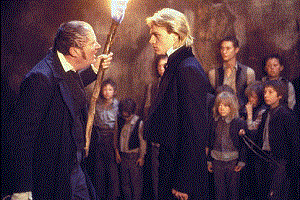
Scene uit de film “Nicholas Nickleby” uit 2002 met Jim Broadbent (Wackford Squeers) en Charlie Hunnam (Nicholas Nickleby)

Lees verder “Charles Dickens, Gay Talese, Christine Angot, Pjeroo Roobjee, Emma McLaughlin, A. den Doolaard, Lioba Happel, Rhijnvis Feith, Alban Nikolai Herbst”

Annelies Verbeke, Thomas von Steinaecker, Dermot Bolger, Felix Mitterer, Heinz Kahlau, Pramoedya Ananta Toer, John Henry Mackay, Ernst Wilhelm Lotz, Irmgard Keun

De Vlaamse schrijfster Annelies Verbeke werd geboren op 6 februari 1976 in Dendermonde. Zie ook alle tags voor Annelies Verbeke op dit blog.

Uit 30 Dagen

“Hij tilt de bak met sponzen, doeken, rollers en borstels uit de laadruimte en kiest een van de potten verf die hij heeft klaargezet. Pick Nick, uit de Joie de Vivre-collectie, voor de grootste keukenmuur, zijn suggestie, hun goedkeuring.
‘Alphonse!’ hoort hij wanneer hij langs de platte stenen in het korte gras naar de voordeur van een van de huizen wandelt.
Het is de vrouw die hier woont, een mooie vrouw met een zelfzekere stem, die hij heeft ontmoet op de avond dat ze de kleuren kozen. Haar sportkleren zien er nieuw uit, de stoffen tonen geen sporen van inspanning, het zweet parelt enkel op haar slapen, in een rand langs haar in een staart gebonden haren, ze wuift onwennig. Hij zet de verfpot neer zodat hij haar de hand kan drukken.
‘Je was hier toch nog niet lang?’ vraagt ze. ‘Mijn man is onze dochter naar school gaan brengen en ik dacht dat ik nog wel even kon gaan lopen, maar toen stond een stuk van het parcours onder water en raakte ik de weg kwijt.’
‘Ik ben er net’, zegt hij.
Hij zal hun keuken en woonkamer herschilderen, heeft op drie dagen gerekend, maar vermoedt nu dat het sneller kan: ze hebben zich zorgvuldig voorbereid. De gordijnen en de afdekplaatjes van de stopcontacten zijn al verwijderd. De meubels zijn naar het midden van de kamer geschoven en met lakens bedekt, het lange aanrecht is leeg.
Een zwarte hond rent buiten zinnen op hem af, glijdt uit, beukt met zijn kop tegen een tafelpoot, zet zijn tocht niet minder wervelend verder.
‘Björn!’ roept de vrouw.
‘Dag Björn’, zegt hij. Kwispelend besnuffelt de hond zijn uitgestoken hand, laat dan een wind en draait zich er geschrokken naar om.
De vrouw lacht met hem mee, tot Björn weer in razernij ontsteekt en zij het dier bij de halsband naar de aanpalende kamer sleurt, waar ze hem opsluit. ‘Ik denk dat hij een meervoudige persoonlijkheid heeft!’ schreeuwt ze over het radeloze gehuil achter de deur heen. ‘En hij mist de kat! Benny! Benny en Björn! Zoals bij ABBA?!’
Het uiterlijk van de hond doet meer denken aan hardrockers uit de late jaren zeventig, vindt Alphonse.”

 
Annelies Verbeke (Dendermonde, 6 februari 1976)

Lees verder “Annelies Verbeke, Thomas von Steinaecker, Dermot Bolger, Felix Mitterer, Heinz Kahlau, Pramoedya Ananta Toer, John Henry Mackay, Ernst Wilhelm Lotz, Irmgard Keun”

Geert Buelens, Ruth Lasters, Jan Prins, William S. Burroughs, Joris-Karl Huysmans, Terézia Mora, Philip Weiss, Rikkert Zuiderveld, Laurens Hoevenaren

De Vlaamse dichter, essayist en columnist Geert Buelens werd geboren in Duffel op 5 februari 1971. Zie ook alle tags voor Geert Buelens op dit blog.


Kwartet

Het omslaande blad bevat
de kern: het achteloze diepe
waarin de schacht het zoekt
resoneert
in het verhaal
het is

het buisworden van de geest een
stilgehouden uitrekken
van tamme vezels die zich dan
opwerpen

als een dam
een gespannen vlak
met vier man
op de uitkijk

wat ze samenbrengt
is
een toon.


Wetten

Er is een droom van duizeligheid die breekt
voor nodig om op het punt
te komen
het recht op nummer staan
op te geven en het gaan

naar wie daar loopt te vragen
aan te vangen. Die opent je
de mond en de slagschaduw valt binnen
bereik. Handen en degens kruisen

tot zich de wending aan-
dient, het vliegwiel los
draait en het vlakke
kraakt. Geslepen

buigt het mes zich in de wand waar
het wacht

tot de dag dat de vos
heerst
als de stilte
onder een tol.


Geert Buelens (Duffel, 5 februari 1971)

Lees verder “Geert Buelens, Ruth Lasters, Jan Prins, William S. Burroughs, Joris-Karl Huysmans, Terézia Mora, Philip Weiss, Rikkert Zuiderveld, Laurens Hoevenaren”

Am fünften Sonntage nach Heilige Drei Könige (Annette von Droste-Hülshoff)


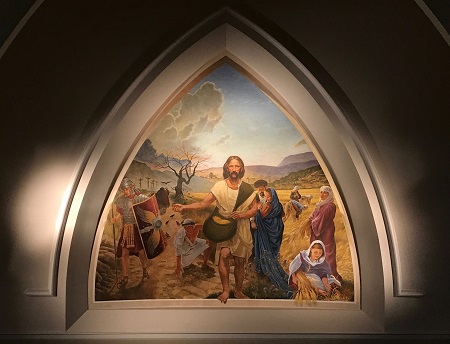
The Parable of the Sower door Gerald Steinmeyer, 2004
Gordon-Conwell Theological Seminary in Charlotte, North Carolina


Am fünften Sonntage nach Heilige Drei Könige
Evang.: Vom Samen, so unter die Dornen fiel

In die Dornen ist dein Wort gefallen,
In die Dornen, die mein Herz zerrissen;
Du, mein Gott, nur du allein kannst wissen,
Wie sie schmerzlich sind vor andern allen;
In die Dornen meiner bittern Reue,
Die noch keine Tröstung will empfangen;
So verbarg ich es in finstrer Scheue,
Und so ist es trübe aufgegangen.

Und so wächst es auf in bittrer Wonne,
Und die Dornen lassen es gedeihen;
Ach! mein Boden ist zu hart, im Freien
Leckt den Tau vom Felsen ihm die Sonne.
Kann es gleich nur langsam sich entfalten,
Schirmen sie es treulich doch vor Stürmen
Und dem Hauch der Luft, dem todeskalten,
Und wenn sich des Zweifels Wolken türmen.

In die Dornen ist dein Wort gefallen,
Und sie werden blut’ge Rosen tragen;
Soll ich einst dir zu vertrauen wagen,
Darf ich nur in ihrem Kranze wallen.
Wenn er recht erstrahlt im Feuerglanze
Und das Haupt mir sengt mit tiefen Wunden,
Dann gedeiht die zarte Gottespflanze,
Muß an seinem Schmerzenstrahl gesunden.

In Entsagung schwinden muß mein Leben,
In Betrachtung meine Zeit ersterben,
So nur kann ich um das Höchste werben;
Meine Augen darf ich nicht erheben.
Ach! ich habe sie mißbraucht zu Sünden
Und verscherzt des Aufblicks reine Freude;
Dann nur kann ich noch den Himmel finden,
So ich ihn in Scham zu schauen meide.

Wenn ich blicke in die milden Mienen
O, wie schmerzlich muß es mich betrüben,
Denen noch das teure Recht geblieben
Ihrem Gott in Freudigkeit zu dienen!
Muß an seinem Schmerzenstrahl gesunden.
Muß erglühend sie zur Erde schlagen;
In ein reines Auge sie zu senken,
Kann ich nimmer sonder Frevel wagen.

Und wie tief neig’ ich die Stirn, die trübe,
Wenn die Sünde rauscht an mir vorüber,
Meinen Manche, daß mich Abscheu triebe,
Und gewinnen lieber mich und lieber,
Ist es oft nur mein vergangnes Leben,
Grauenhaft zum zweitenmal geboren;
Ach! und oft empfind’ ich gar mit Beben,
Wie der Finstre noch kein Spiel verloren!

Aber, was er auch für Tücke hege,
Kämpfen will ich um des Himmels Grenzen;
Meine Augen sollen freudig glänzen,
Wenn ich mich in meine Dornen lege,
Daß die Welt nicht meinen Kampf darf rügen,
Oder gar mit eitelm Lob geleiten:
Wohl, ich kann durch Gottes Wunder siegen,
Aber nimmer mit zwei Feinden streiten.

Ob ein Tag mir steigen wird auf Erden,
Wo ich frei mich zu den Deinen zähle?
Wo kein Schwert mehr fährt durch meine Seele,
Wenn mir deine Hände sichtbar werden?
Herr, und soll der Tag mir nimmer scheinen,
Dürft’ ich ihn in Ewigkeit nicht hoffen,
Dennoch muß ich meine Schulden weinen,
O, der Sünder hat sich selbst getroffen!


Annette von Droste-Hülshoff (10 januari 1797 – 24 mei 1848)
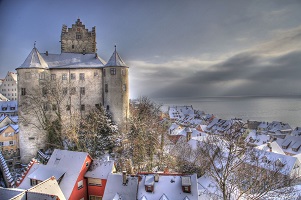
De Meersburg aan de Bodensee waar de dichteres van 1841 tot 1848 woonde.


Zie voor de schrijvers van de 4e februari ook mijn twee vorige blogs van vandaag.

Robert Coover, Stewart O’Nan, Louis Ferron, Werner Schwab, Norman Ohler, Luuk Imhann, Else Kemps

De Amerikaanse schrijver Robert Coover werd geboren op 4 februari 1932 in Charles City, Iowa. Zie ook alle tags voor Robert Coover op dit blog.

Uit: White-Bread Jesus

“When that bully Cavanaugh rises in the middle of the opening prayer like a self-righteous Sadducee, shouldered round by all his fawning scribes and elders, to silence Reverend Wesley Edwards (was he shouting? of course he was shouting, God is deaf as a stump), neither he nor Jesus is surprised. In fact, they welcome it. Such persecutions are to be expected when what is hidden is revealed, and indeed stand as validation of it. What else is the Easter story about — for Christ’s sake? Who concurs: As they persecuted me, they’ll persecute you. A prophet in his own country, and all that, my son. But rejoice and be glad, your reward is great. His immediate reward is to have to sit beside the pulpit, biting his tongue, staring out on the sad blank faces of his First Presbyterian congregation, while the banker, having skipped ahead in the proceedings to the tithes and offerings, money being all he knows (and power, Cavanaugh knows power), speaks of the general good health of the church finances, its immediate needs (an assistant minister, for example — urgently!), and Easter as a loving family occasion. No, no, you idiot! It is a time of rejection of family, indeed of all earthly connections! Have you no ears? If anyone comes to me and does not hate his own father and mother and wife and children and brothers and sisters, yes, and even his own life, he cannot be my disciple! Leave everything — everything! — and follow me! You ignorant fool! Listen to your own son Tommy’s scripture reading: “But who do you say that I am?” Do you not know? It’s all Wesley can do to stop another noisy eruption from coming on. The indwelling Christ, too, is aboil with indignation, cursing traders and moneychangers and all their abominable progeny. A den of robbers! They are polluting the temple! Drive them out! He’s in a state, they’re both in a state.
It has been a trying couple of weeks. The Passion of Wesley Edwards. He’s not kidding, he’s endured it all in this Passiontide fortnight, from the deathly silence of God and the collapse of his faith, through all the upheavals at home and a plunge into harrowing desolation, a veritable descent into hell, to — finally — a kind of weird convulsive redemption that has left him rattled and confused and not completely in control of himself.”


Robert Coover (Charles City, 4 februari 1932)

Lees verder “Robert Coover, Stewart O’Nan, Louis Ferron, Werner Schwab, Norman Ohler, Luuk Imhann, Else Kemps”