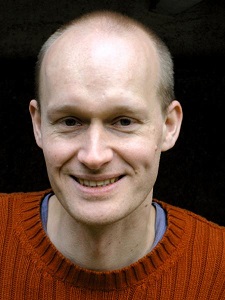
Michael Longley, Marijke Höweler, Theodore Dreiser, Hilde Domin, Julien Gracq, Hilaire Belloc, Vladimir Korolenko, Eimear McBride, Graeme C. Simsion

De Ierse dichter Michael Longley werd geboren op 27 juli 1939 in Belfast. Zie ook alle tags voor Michael Longley op dit blog.


Saint Francis To The Birds

And, summing up, I think of when
With cloud and cloudburst you confer,
By God’s sheer genius lifted there,
Lighthearted starling, nervous wren.
It is perfection you rehearse –
God placed the limpet on a rock,
He dressed the primrose in its frock
upside down with its leg showing
And closed the chestnut in its purse:
Creating one more precedent,
With no less forethought, no less care
He gave you feathers and the air
To migrate to his best intent.
To useful angles well aligned,
At proper heights compelled to tilt,
Across kind landscapes yearly spilt –
Birds, you are always on his mind.
Quick emblems of his long estate,
It’s good to have you overhead
Who understand when all is said,
When all is done, and it is late.
May my sermon, like your customs,
Reach suddenly beyond dispute –
Oh, birds entire and absolute,
Last birds above our broken homes.


Cloudberries

You give me cloudberry jam from Lapland,
Bog amber, snow-line titbits, scrumptious
Cloudberries sweetened slowly by the cold,
And costly enough for cloudberry wars
(Diplomatic wars, my dear).
Imagine us
Among the harvesters, keeping our distance
In sphagnum fields on the longest day
When dawn and dusk like frustrated lovers
Can kiss, legend has it, once a year. Ah,
Kisses at our age, cloudberry kisses.


Michael Longley (Belfast, 27 juli 1939)
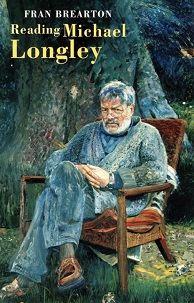
Cover

Lees verder “Michael Longley, Marijke Höweler, Theodore Dreiser, Hilde Domin, Julien Gracq, Hilaire Belloc, Vladimir Korolenko, Eimear McBride, Graeme C. Simsion”

Dan Coman

De Roemeense dichter en schrijver Dan Coman werd geboren op 27 juli 1975 in Gersa in de provincie Bistrita-Nasaud. Coman debuteerde in 1993 in het Minerva-magazine. Hij studeerde filosofie in Cluj (afgestudeerd in 1999). Hij publiceerde poëzie in de meeste van de belangrijke literaire tijdschriften in Roemenië. Voor zijn eerste bundel “Het jaar van de gele moedervlek” (Engels: “The Year of the Yellow Mole: , ontving hij de “Mihai Eminescu” Nationale Poëzieprijs en de Debuutprijs van de Roemeense Schrijversunie.In 2007 hield hij een gedichtenlezing, in het Frans vertaald door Linda Maria Baros, in Parijs, en in 2009 nam hij deel aan een poëzie- en vertaalworkshop in Zweden. In 2010 ontving hij een studiebeurs voor literatuur uitgereikt door Akademie Schloss Solitude. Coman heeft ook enkele goed ontvangen prozawerken gepubliceerd: “Irezistibil” (“Onweerstaanbaar”, 2010); “Parohia” (“De parochie”, 2012); en “Căsnicie” (“Huwelijk”, 2015). Zijn gedichten zijn vertaald en gepubliceerd in anthologieën en tijdschriften in Roemenië, Zweden, Frankrijk, de VS, Servië, Hongarije, Slovenië en Canada.


The New Mornings

several times a week there are new mornings
mornings that seem as good as any other
if they don’t quite reach a meter’s height

some educational cubes for children under one

coffee no longer fits in
tobacco no longer leaves the mouth and
our love sits close between us like a cow
shedding its hair

mara walks here
walks all sorts of small bodies
for whom the air is just a toy
to push quickly-quickly in the nose

these are new mornings
powdered milk rolls all over the length of them
a chicco sun ticks endlessy over their width

these are new mornings

a meter above them
our large bodies float already belly-up


Biscuits with apple sauce

i stay with mara at the window.
a beautiful winter’s day
it snows as we eat biscuits with apple sauce
not saying a thing.
each with the whole winter morning before us.
sometimes we stop eating and
press our noses to the glass
we stay that way without saying a thing
breath warms my face slowly
and slowly-slowly mara’s breath
spreads warmth throughout the park


Vertaald door Martin Woodside en Ioana Ieronim

 
Dan Coman (Gersa, 27 juli 1975)

Elizabeth Hardwick

De Amerikaanse schrijfster en literatuurcritica Elizabeth Hardwick werd geboren op 27 juli 1916 in Lexington, Kentucky, in een strikt protestantse familie. Ze studeerde af aan de Universiteit van Kentucky in 1939. In 1947 verwierf zij een Guggenheim Fellowship. In 1959 publiceerde Hardwick in Harper’s, “The Decline of Book Reviewing”, een over het algemeen harde en zelfs vernietigende kritiek op boekrecensies die in Amerikaanse tijdschriften van die tijd werden gepubliceerd. De krantenstaking uit 1962 in New York City heeft Hardwick, Robert Lowell, Jason Epstein, Barbara Epstein en Robert B. Silvers geïnspireerd om “The New York Review of Books” op te richten, een publicatie die voor veel lezers net zo gewoon werd als The New York Times Book Review die Hardwick in haar essay in 1959 aan flarden had gescheurd. In de jaren zeventig en het begin van de jaren tachtig gaf Hardwick lezingen aan het Barnard College en aan Columbia University’s School of the Arts, Writing Division. Zij leverde openhartig kritiek op het schrijven van de studenten, maar was een mentor voor studenten die zij als veelbelovend beschouwde. Van 1949 tot 1972 was zij getrouwd met de dichter Robert Lowell, met wie zij een dochter kreeg. Zij werd gekozen tot Fellow van de Amerikaanse Academie van Kunsten en Wetenschappen in 1996. In 2008 selecteerde The Library of America het verhaal van Hardwick over de misdaden van Caryl Chessman voor opname in een retrospectief over twee eeuwen schrijven over American True Crime. Hardwick schreef drie romans: “The Ghostly Lover” (1945), “The Simple Truth” (1955) en “Sleepless Nights” (1979). Een bundel met korte verhalen, “The New York Stories van Elizabeth Hardwick”, werd in 2010 gepubliceerd. Ze publiceerde ook vier boeken met kritieken: “A View of My Own” (1962), “Seduction and Betrayal” (1974), “Bartleby in Manhattan” (1983) en “Sight-Readings” (1998). In 1961 stelde zij “The Selected Letters of William James” samen en in 2000 publiceerde ze een korte biografie, “Herman Melville”, in de Penguin Lives-serie van Viking Press

Uit: Seduction and Beayal

“For his own part the Reverend Brontë disowned claims to flamboyance and said: “I do not deny that I am somewhat eccentric…. Only don’t set me on in my fury to burning hearthrugs, sawing the backs off chairs and tearing my wife’s silk gowns.” There were five daughters and one son in the Bronte fam-ily, and the father unluckily placed his hopes in his son, Branwell. It is only by accident that we know about people like Branwell who seemed destined for the arts, unable to work at anything else, and yet have not the talent, the tenac-ity, or the discipline to make any kind of sustained creative effort. With great hopes and at bitter financial sacrifice, Bran-well was sent up to London to study painting at the Academy Schools. The experience was wretched for him and he seemed to have sensed his lack of preparation, his uncertain dedi-cation, his faltering will. He never went to the school, did not present his letters of introduction, and spent his money in taverns drinking gin. It finally became necessary to return home in humiliation and to pretend that he had been robbed. One story has poor Branwell visiting the National Gallery and, in the presence of the great paintings there, despairing of his own talents. This is hard to credit, since the example of the great is seldom a deterrent to the mediocre. In any case, nothing leads us to think Branwell lacked vanity or expansive ideas of his own importance. Also, the deterrent of Branwell’s own nature made any further impediments unnecessary. His nature was hysterical, addictive, self-indulgent. Very early he fell under the spell of alcohol and opium; his ravings and mis-eries destroyed the family peace, absorbed their energies, and depressed their spirits. He had to be talked to, watched over, soothed, and protected—and nothing really availed. Branwell destroyed his life with drugs and drink, and died of a bronchial infection at the age of thirty-one. Perhaps the true legacy Branwell left the world is to be found in the extraordinary violence of feeling, the elaborate language of bitterness and frustration in Wuthering Heights. It is not unreasonable to see the origin of some of Heathcliff’s raging disappointment and disgust in Branwell’s own excited sense of injury and betrayal. Emily Brontë took toward her brother an attitude of stoical pity and protectiveness. Char-lotte was, on the other hand, in despair at his deterioration, troubled by his weaknesses, and condemning of the pain he brought to the household. It is significant that Charlotte insisted Branwell did not know of the publication of his sisters’ poems, nor of the composition of Wuthering Heights, Jane Eyre, and Agnes Grey.”
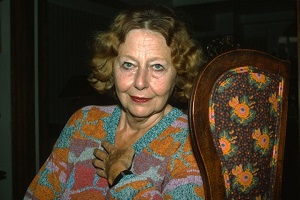
 
Elizabeth Hardwick (27 juli 1916 – 2 december 2007)
Arthur Japin, Gregoire Delacourt, Anne Provoost, Yves Petry, Aldous Huxley, Nicholas Evans, Chairil Anwar, George Bernard Shaw, Hanya Yanagihara

De Nederlandse schrijver Arthur Japin werd geboren in Haarlem op 26 juli 1956. Zie ook alle tags voor Arthur Japin op dit blog.

Uit: Vaslav

“En ik heb mevrouw nog zo gewaarschuwd. Maanden geleden al, begin oktober, meteen toen ik het aan zag komen. Kan best zijn dat ik toen te voorzichtig ben geweest, niet hard genoeg, gewoon omdat ik niet goed durfde. Het was ook een ijzingwekkende boodschap, verschrikkelijk! Haar zoiets te moeten zeggen over de man op wie ze haar hele ziel heeft ingezet, voor wie ze haar lijf heeft afgebeuld tot haar spieren ervan scheurden en het bloed in haar schoenen stond. Het ijzer in die wil! Ze heeft voor hem gestreden als een straatmeid en hem veroverd als een strateeg.
En nou dit.
Hoe kun je iemand die liefheeft voor zoiets de ogen openen?
Natuurlijk, het hoort niet dat een man als ik over zoiets begint, maar iemand moest het toch zeker doen? Ik heb het zo rustig mogelijk gebracht. Zakelijk bijna, zoals ik meld dat het bad klaarstaat of dat er aanmaakhout moet komen. Het laatste wat ik wilde was haar aan het schrikken maken, maar mij doet het evengoed pijn het te moeten aanzien. Ons allemaal hier in huis, maar mij misschien nog net iets meer. Ik, die dag in dag uit zoveel uren met hem optrek, had ik het dan zomaar stilletjes moeten laten gebeuren, terwijl ik zie wat er gaat komen? Ik weet als geen ander wat ons vandaag te wachten staat. Ik verzin het niet, ik heb het allemaal al eens eerder zien gebeuren, vroeger in Sils Maria. Niet nog een keer, dacht ik, niet nog een keer!
Ik heb het haar gezegd, maar ze wilde het niet horen. Wat had ik dan moeten doen, zwijgen? Ik herkende het gevaar. Ik zag het toch in zijn ogen. Het was mijn plicht daarop te wijzen. Dat is me niet in dank afgenomen. Marie en Lise vielen me nog bij, maar er was er maar één de kwaaie pier, dat voelde je. Die kilte. En later heeft ze dat gezegd ook, dat ik mijn plaats moest weten en dat als ik die niet kende, zij mij weg zou sturen. En desondanks ben ik er nog een keer op teruggekomen – ik moest toch wel!
Nog geen maand later, zodra het vrede was, begon ze brieven te schrijven. Twee, drie keer op een dag stuurde ze me naar de post. Geadresseerd aan theaters in Parijs, Londen en Monte Carlo, aan impresario’s en intendanten. Ook zag ik de namen van al die mensen over wie ze het altijd heeft, allemaal kunstenaars, sommigen zo beroemd dat wíj er in dit dal zelfs van gehoord hebben, zogenaamde oude vrienden, al heb ik ze hier nog nooit een voet zien zetten, op wie ze al haar hoop heeft gezet.”


Arthur Japin (Haarlem, 26 juli 1956)
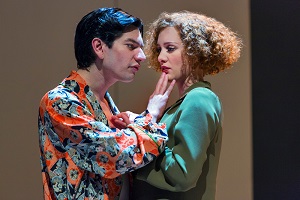
Maarten Heijmans (Vaslav) en Noortje Herlaar (Romola) in de toneelbewerking, Amsterdam, 2014

Lees verder “Arthur Japin, Gregoire Delacourt, Anne Provoost, Yves Petry, Aldous Huxley, Nicholas Evans, Chairil Anwar, George Bernard Shaw, Hanya Yanagihara”

Lieke Marsman, Sytze van der Zee, Elias Canetti, Max Dauthendey, Jovica Tasevski – Eternijan, Annette Pehnt, Ottokar Kernstock, Albert Knapp, Louise Boege

De Nederlandse dichteres Lieke Marsman werd op 25 juli 1990 geboren te Den Bosch. Zie ook alle tags voor Lieke Marsman op dit blog.

Uit:Het tegenovergestelde van een mens

„Als kind hield ik ervan om te fantaseren dat ik een komkommer was. ’s Avonds lag ik met mijn armen langs mijn lichaam onder mijn dinosaurussendekbed, soms kaarsrecht, soms met mijn benen licht kromgetrokken, en probeerde voor heel even de gestalte van mijn lievelingsgroente aan te nemen. Ben een komkommer, ben een komkommer, ben een komkommer, fluisterde ik tegen mijn achtjarige zelf, totdat ik bedacht dat komkommers niet kunnen fluisteren. Vervolgens zei ik mijn mantra op in mijn hoofd, totdat me te binnen schoot dat komkommers ook niet in zichzelf kunnen praten. Maar doorgaans was ik tegen die tijd al in een zoete, diepe slaap gevallen. Nota bene: dit was in de tijd dat mindfulness nog niet bestond en ook meditatie nog iets zo exotisch was dat de meeste mensen er alleen maar van in paniek raakten.
Ik woonde met mijn ouders en mijn broer Carl in een Vinexwijk aan de rand van een middelgrote provinciestad. De huizen in onze straat waren gemaakt van witte bakstenen met lichtgrijs cement ertussen. De meeste bewoners hadden hun kozijnen blauw, rood of geel geverfd: primaire kleuren die fel afstaken bij het wit van de stenen. Er woonden veel kinderen in de wijk en daarom mochten de auto’s niet harder dan 30 kilometer per uur. Als logge beesten bewogen de gezinswagens zich voort naar school en werk, grazende bizons op een steppe van rechte stoepranden en basketbalpleintjes. Alleen ’s avonds laat hoorde je wel eens een auto snel optrekken. Zo nu en dan zelfs een scooter.
Van hun vakantiegeld kochten de mensen uit de straat een nieuwe parasol of een nieuwe hogedrukspuit. Of een vakantie natuurlijk. De meeste buren gingen net als wij op vakantie in eigen land, naar een bungalowpark op de Veluwe of een camping aan de Noordzeekust, maar zo nu en dan reed er eind augustus een zongebruinde familie de straat in die met caravan en partytent drie weken lang op een Spaans grasveldje had gestaan. Zij zouden op de buurtbarbecue die ieder jaar in het eerste weekend van september gehouden werd hoge ogen gooien.”


Lieke Marsman (Den Bosch, 25 juli 1990)

Lees verder “Lieke Marsman, Sytze van der Zee, Elias Canetti, Max Dauthendey, Jovica Tasevski – Eternijan, Annette Pehnt, Ottokar Kernstock, Albert Knapp, Louise Boege”

Robyn Carr

De Amerikaanse schrijfster Robyn Carr werd geboren op 25 juli 1951 in Minnesota. Carr was nooit van plan schrijver te worden. Zij studeerde verpleegkunde op de universiteit. Zij trouwde al op de middelbare school vlak voordat haar man naar de US Air Force vertrok als helikopterpiloot tijdens de Vietnam-oorlog. Carr volgde haar man van basis naar basis, en omdat ze niet lang op één plaats verbleven, was ze niet in staat om haar carrière als verpleegster voort te zetten. Toen ze door een moeilijke zwangerschap in bed moest blijven begon zij romans te lezen om zichzelf af te leiden. Ze besloot al snel om haar eigen romans te schrijven. Carr debuteerde in 1978, maar het zou dertig jaar duren voor ze de eerste plek zou bemachtigen in de New York Times Bestsellerlijst. Dat gebeurde in 2007 met het eerste deel uit haar wereldberoemde Virgin River-serie. Sindsdien publiceert Carr een paar boeken per jaar, in totaal verschenen er inmiddels twintig romans die zich afspelen in het kleine stadje Virgin River. Bovendien startte Carr een nieuwe reeks, “Thunder Point”, die net zo populair lijkt te worden. Hoewel haar verhalen echte goodreads zijn, staan er altijd sterke vrouwelijke karakters centraal en gaat ze onderwerpen als huiselijk geweld en gezondheidsproblemen niet uit de weg.

Uit:What We Find

“Maggie had no idea how long Sully had been up when she finally rolled out of bed at seven-thirty….on about four hours of sleep. She stumbled to the bathroom and purposely didn’t look in the mirror, a little afraid she’d she Cal’s brand on her. She started the shower and got in while it was still cold.
Holy mother of pearl, what a night that was. He was an amazing lover. But also, he was such a sweet, smart, funny man. Of course he had to be some strange duck who was taking six months off to do odd jobs and camp. He couldn’t be some ordinary, stable, reliable person, like a truck driver or forest ranger. But then, what type of man did she think she could have a comfortable fit with? Sergei, the Ukrainian artist, had been a disaster. Andrew, the doctor, should’ve worked — they had so many things in common — and it had been a worse disaster.
Even running her own hands over her body as she sudsed up in the shower brought delicious tinglings from the night before, little shudders of aftershocks.
When she was out of the shower she braved it, looked in the mirror. Her cheeks were either flushed or chafed from his beard. Her lips were rosy from hours of kissing, sometimes so wildly she could hardly catch her breath. She lost control more times than she could count and she was pretty sure she bit him once. His fault, really. He could drive her so far into ecstasy she lost her bearings and became nothing more than a writhing body responding to a powerful body and lost all sense. She wondered if she just rocked and wailed in that little pop-up all the damn night. For all she knew the other campers brought their folding chairs and fires over to Cal’s site and created an audience. At least it had been Sunday night, the weekend warriors gone, population down.
She put lotion on her face and some lip gloss, blew out her hair and got dressed. She was going to have to think of what to say to Sully. She’d never faced that before — worry over explaining to her father. She’d had a fling or six at the crossing, and there was Andrew — she’d never explained him. She had just said they were seeing each other and they’d be staying in one of the cabins. Something about this was different. It was probably because he’d had a heart attack, she thought. Or it could be because she hardly knew Calvin, the handsome, good natured bum and princess molester. Better go easy on Sully.”

 
Robyn Carr (Minnesota, 25 juli 1951)

Robert Graves, Johan Andreas der Mouw, Banana Yoshimoto, Rosemarie Schuder, Katia Mann, Junichirō Tanizaki, Frank Wedekind, Alexandre Dumas père, Betje Wolff

De Engelse dichter en schrijver Robert Graves werd geboren in Londen (Wimbledon) op 24 juli 1895. Zie ook alle tags voor Robert Graves op dit blog.

Uit: I, Claudius

This is a confidential history. But who, it may be asked, are my confidants?
My answer is: it is addressed to posterity. I do not mean my great-grandchildren, or my great-great- grandchildren: I mean an extremely remote posterity.
Yet my hope is that you, my eventual readers of a hundred generations ahead, or more, will feel yourselves directly spoken to, as if by a contemporary: as often Herodotus and Thucydides, long dead, seem to speak to me. And why do I specify so extremely remote a posterity as that? I shall explain.
I went to Cumae, in Campania, a little less than eighteen years ago, and visited the Sibyl in her cliff cavern on Mount Gaurus. There is always a Sibyl at Cumae, for when one dies her novice-attendant succeeds; but they are not all equally famous. Some of them are never granted a prophecy by Apollo in all the long years of their service. Others prophesy, indeed, but seem more inspired by Bacchus than by Apollo, the drunken nonsense they deliver; which has brought the oracle into discredit. Before the succession of Deiphobe, whom Augustus often consulted, and Amalthea, who is still alive and most famous, there had been a run of very poor Sibyls for nearly three hundred years. The cavern lies behind a pretty little Greek temple sacred to Apollo and Artemis–Cumae was an Aeolian Greek colony. There is an ancient gilt frieze above the portico ascribed to Daedalus, though this is patently absurd, for it is no older than five hundred years, if as old as that, and Daedalus lived at least eleven hundred years ago; it represents the story of Theseus and the Minotaur whom he killed in the Labyrinth of Crete. Before being permitted to visit the Sibyl I had to sacrifice a bullock and a ewe there, to Apollo and Artemis respectively. It was cold December weather.
The cavern was a terrifying place, hollowed out from the solid rock, the approach steep, tortuous, pitch-dark and full or bats. I went disguised, but the Sibyl knew me. It must have been my stammer that betrayed me. I stammered badly as a child and though, by following the advice of specialists in elocution, I gradually learned to control my speech on set public occasions, yet on private and unpremeditated ones, I am still, though less so than formerly, liable every now and then to trip nervously over my own tongue: which is what happened to me at Cumae.”


Robert Graves (24 juli 1895 – 7 december 1985)
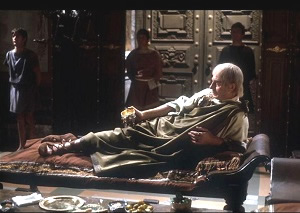
Derek Jacobi als Claudius in de BBC-serie uit 1976

Lees verder “Robert Graves, Johan Andreas der Mouw, Banana Yoshimoto, Rosemarie Schuder, Katia Mann, Junichirō Tanizaki, Frank Wedekind, Alexandre Dumas père, Betje Wolff”

Wilfried de Jong, Mohsin Hamid, Lauren Groff, Frans Erens, Kai Meyer, Thea Dorn, Irina Liebmann


Bij (het slot van) de Tour de France


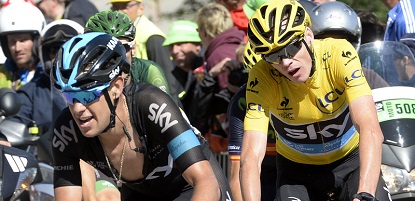
 Wout Poels en Chris Froome op de Alpe d’Huez in 2015


Uit: Froome en Poels (Column)

Ze reden ze samen het Critérium du Dauphiné, Froome en Poels. De Sky-kopman met zijn Hollandse meesterknecht. Dit was een meerdaagse wedstrijd over een parcours dat al een beetje rook naar de Tour de France.
Wout Poels is de lange lerp voor wie het geluk in de bergen ligt. Geef de Noord-Limburgse klimmer een paar meter stijgend asfalt en zie hoe sierlijk en rustig hij op zijn fiets blijft zitten.
In het voorjaar had hij pech. Wout brak een stuk van zijn schouder. En in 2012 was hij betrokken bij een ernstige valpartij in de Tour. Hij brak drie ribben, scheurde nier en milt en kneusde zijn longen. Poels lag achterover in het gras te kermen maar besloot toch op de fiets te stappen.
Ik wil er niet aan denken hoe dat voelde.
In deze Dauphiné zag ik een herboren Poels. Hij reed tijdens de bergetappes in dienst van Froome. Onverstoorbaar trappen op tempo. Stille rug, malende benen. Alleen de wijd opengesperde mond van Wout verraadde de pijn.
Wout reed zich leeg op de laatste helling, keek om, ten teken dat zijn kopman ten aanval kon.
Na de klassieke fietsbewegingen van Poels, zag ik Froome vol in beeld. De in Kenia geboren Brit trapte als een wezenloze. Hij hield zijn hoofd naar beneden, zijn ellebogen staken lelijk naar buiten.
Zijn gezicht werd steeds bleker; alsof de rode bloedlichaampjes in nood hadden geroepen: “Baas, wij blijven hier even beneden, in je kuiten.”
Pierlala op een zadel.
Zijn stijl is geen lelijke stijl te noemen. Nee, het is erger; het ís geen stijl. Het gaat alleen verschrikkelijk hard.


Wilfried de Jong (Rotterdam, 30 september 1957)
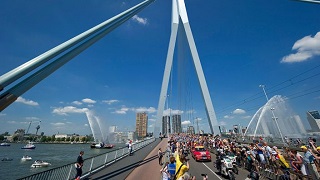
De Tour de France in Rotterdam, 2015

Lees verder “Wilfried de Jong, Mohsin Hamid, Lauren Groff, Frans Erens, Kai Meyer, Thea Dorn, Irina Liebmann”

Lisa Alther, Hubert Selby jr., Raymond Chandler, Matthias Spiegel, Tim Reus

De Amerikaanse schrijfster Lisa Alther werd geboren op 23 juli 1944 in Kingsport, Tennessee. Zie ook alle tags voor Lisa Alther op dit blog.

Uit: About Women: Conversations Between a Writer and a Painter (Met Francoise Gilot)

“LA: Although we were born of different generations an ocean apart, both our childhoods were impacted by war—­yours by World Wars I and II, and mine by World War II, the Cold War, Korea, and Vietnam. We read a lot about the effect of war on the combatants but not that much about its effect on civilians. Can you say something about how war affected you as a child?
FG: My maternal grandmother had five children, two of whom died when they were quite young, leaving two sons and my mother, the youngest. The child my grandmother loved best was named André. He was wounded at the front and died on November 1, 1918, from a shrapnel wound to the liver. The armistice occurred on November 11, 1918. Just when my grandmother thought that her two sons had escaped the war, she learned the tragic news. André was only twenty-­three years old. She had had a special relationship with him, so for her it was as if life ended right then and there.
On the third floor of her home in Neuilly, there was a small room where her sons, my uncles, both of them officers, had collected all sorts of paraphernalia from the different phases of the war. Many photographs were pinned to the walls, as well as warmaps with little flags on pins for the various events. This room was left as it had been when André died. On the walls, one could see all these black-­and-­white photographs, some taken from the sky, of destroyed villages and cathedrals and bridges, charredforests, trenches. It was a room entirely full of destruction.
LA: Why did your uncles do this?
FG: I think they were so involved in the fight that destruction had grown inside them. They had had to withstand so much horror, and perhaps it was a catharsis to objectify their feelings on the walls of that room.
Years later, when I entered it for the first time, it felt very strange. I was five years old. It was quite frightening. There were also some half-­exploded bombshells that looked like dark and ghostly flowers. My grandmother called that room the War Room.I thought it was the Death Room.”


Lisa Alther (Kingsport, 23 juli 1944)

Lees verder “Lisa Alther, Hubert Selby jr., Raymond Chandler, Matthias Spiegel, Tim Reus”

Arno Geiger, Susan Hinton, Manu Joseph, Stephen Vincent Benét, Tom Robbins

De Oostenrijkse schrijver Arno Geiger werd geboren op 22 juli 1968 in Bregenz, Vorarlberg. Zie ook alle tags voor Arno Geiger op dit blog.

Uit: Zelfportret met nijlpaard (Vertaald door W. Hansen)

“Een paar dagen geleden kwam Judith op de eerste hulp, met een oehoe. Het was onze eerste ontmoeting in bijna tien jaar, en ik herkende haar niet, al had ik haar wel moeten herkennen. Dat lag slechts voor een deel aan haar korte haar, ik werd afgeleid door de oehoe, mdat ik bij de eerste blik al dacht dat het een verloren zaak was. En plotseling zei de vrouw: ‘We kennen elkaar. Ik ben het!’
Ik keek haar aan en herkende haar. Mijn handen trilden, terwijl ik de oehoe onderzocht om me ervan te verzekeren dat mijn eerste indruk juist was geweest. Die valt in een duister gat, hem vangt niemand op. En tegen Judith zei ik: ‘Nou, Judith, er is niets meer aan te doen.’
‘Daar was ik al bang voor,’ zei ze. En alsof er een licht verwijt tussen ons beiden hing, voegde ze er hoofdschuddend aan toe: ‘Hij is niet van mij, ik heb hem bij mijn huis gevonden.’
Ze sloeg haar ogen neer, een ongemakkelijke situatie. De oranje-gele ogen van de oehoe met de zwarte pupillen waren enorm en staarden met een vreselijke uitdrukking in het niets.
Terwijl ik voorbereidingen trof om het dier te doden, wisten we beiden niet wat te zeggen. Vroeger had ik Judith nooit verlegen gezien, ze had altijd gestraald, een en al beweging, het prototype van de ongecompliceerde vrouw, de vrouw die in contactadvertenties wordt gezocht als maatje voor het leven. Ze keek afwisselend naar de grond en opzij.
Ik dacht: nee, we kennen elkaar niet, we hebben elkaar gekend, nu niet meer, nu zijn we een raadsel voor elkaar.
Die vervreemding was verrassend snel gekomen, parallel aan het verdwijnen van de openhartigheid. Op de dag nadat we uit elkaar waren gegaan had ik zo goed als niets meer gemerkt van de normale vertrouwdheid, en dat bleef zo bij elk weerzien. We wisten niet eens meer hoe we elkaar moesten groeten.”


Arno Geiger (Bregenz, 22 juli 1968)

Lees verder “Arno Geiger, Susan Hinton, Manu Joseph, Stephen Vincent Benét, Tom Robbins”