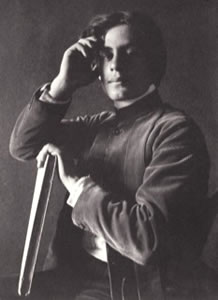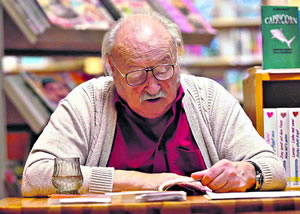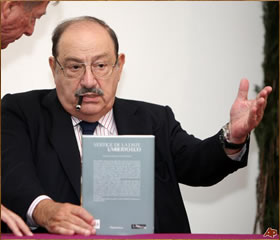
Anne Rivers Siddons, Giovanni Papini, Lascelles Abercrombie, Pierre Garnier, Thomas Warton

De Amerikaanse schrijfster Anne Rivers Siddons werd geboren op 9 januari 1936 in Atlanta, Georgia. Zie ook alle tags voor Anne River Siddons op dit blog.


Uit: Low Country


„I think I’ll go over to the island for a few days,” I said to my husband at breakfast, and then, when he did not respond, I said, “The light’s beautiful. It can’t last. I hate to waste it. We won’t get this pure gold again until this time next year.”

Clay smiled, but he did not put down his newspaper, and he did not speak. The smile made my stomach dip and rise again, as it has for the past twenty-five years. Clay’s smile is wonderful, slow and unstinting and a bit crooked, and gains much of its power from the surrounding austerity of his sharp, thin face. Over the years I have seen it disarm a legion of people, from two-year-olds in mid-tantrum to Arab sheiks in same. Even though I knew that this smile was little more than a twitch, and with no more perception behind it, I felt my own mouth smiling back. I wondered, as I often do, how he could do that, smile as though you had absolutely delighted him when he had not heard a word you said.

“There is a rabid armadillo approaching you from behind,” I said. “It’s so close I can see the froth. It’s not a pretty sight.”

“I heard you,” he said. “You want to go over to the island because the light’s good. It can’t last.”

I waited, but he did not speak again, or raise his eyes.

Finally I said, “So? Is that okay with you?”

This time he did look up.

“Why do you ask? You don’t need my permission to go over to the island. When did I ever stop you?”
His voice was level and reasonable; it is seldom anything else. I knew that he did not like me to go over to the island alone, though, for a number of reasons that we had discussed and one that we had not, yet.“
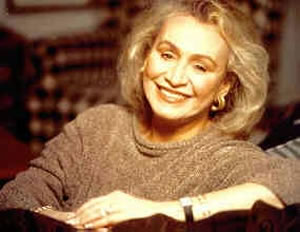


Anne Rivers Siddons (Atlanta, 9 januari 1936)
 

Lees verder “Anne Rivers Siddons, Giovanni Papini, Lascelles Abercrombie, Pierre Garnier, Thomas Warton”

Juan Marsé, Waldtraut Lewin, Gaston Miron, Ko Un, Béla Zsolt

De Catalaanse schrijver Juan Marsé werd geboren op 8 januari 1933 in Barcelona. Zie ook alle tags voor Juan Marsé op mijn blog.


Uit: Last evenings with Teresa 


„Mount Carmel is a naked, barren hill located northwest of the city. Their invisible strings managed by the expert hands of children, you will often see brightly-coloured kites in the blue of the sky, shuddering in the wind, hovering above the summit like coats of arms announcing a warrior dream. In those grey postwar years, when empty stomachs and body lice required a dream a day to make reality more bearable, Mount Carmel was the favourite and fabulous field of adventure for the scruffy children from the neighbourhoods of Casa Baró, Guinardó and La Salud. They climbed to the top where the wind whistles to launch crude home-made kites constructed with flour paste, cane, rags and newspaper: for a long time there trembled and flapped fiercely in the city sky photos and news of the German advance on the fronts of Europe, death and destruction reigned, the weekly ration of Spaniards, misery and hunger. Now, in the summer of 1956, Carmel’s kites no longer bear news or photos, nor are they made of newspapers, but rather of fine tissue paper bought in some shop, and their are colours garish, shocking. But despite this improvement in their appearance, many are still home-made, their frames coarse and heavy, and they gain height with difficulty: still the neighborhood’s warrior banner.“


Juan Marsé (Barcelona, 8 januari 1933)

In 1975


Lees verder “Juan Marsé, Waldtraut Lewin, Gaston Miron, Ko Un, Béla Zsolt”

Claudia Grehn, Leonardo Sciascia, Alfred Tomlinson, Francico Bocanegra, Baltasar Gracián y Morales, Roland Moed, Vasyl Stus

De Duitse (toneel)schrijfster Claudia Grehn werd geboren op 8 januari 1982 in Wiesbaden. Zie ook alle tags voor Claudia Grehn op dit blog.


Uit: Heimlich bestialisch  I can’t wait to love in heaven


„HÄHNCHENESSEN 1

IRMGARD

fürs hähnchenessen sind meine eltern perfekt

papa mag die keule mama brust und flügel ich

bin wie papa keule schnell fahrn: sausen, lässig

aber konzentriert handeln im notfall,

sportler papa klärt mich über die frauen auf:

brünette sind ihm lieber ungeschminkte

blonde müssen sich schminken um zu wirken ich

bin froh dass ich ein kind bin mama macht alles

falsch sie ist blond hysterisch meckert liest

konsaliksimmel kapiert gar nichts von literatur

raucht die alte fümöse und trifft sich mit

freundinnen um dallas zu gucken

macht doch mal etwas rentables, ihr könnt doch

stricken oder töpfern, seidenmalerei, sagt

papa, was dazu verdienen, fähigkeiten ausbilden

meine schwester schreit immer wenn ich die

fusel zwischen ihren fingern rauspule und sie

ihr ins nasenloch stecke – dann muss sie endlich

mal den schnuller ausspucken…“


Claudia Grehn (Wiesbaden, 8 januari 1982)


Lees verder “Claudia Grehn, Leonardo Sciascia, Alfred Tomlinson, Francico Bocanegra, Baltasar Gracián y Morales, Roland Moed, Vasyl Stus”

Frans Kellendonk, Dionne Brand, Henk van Zuiden, Nicholson Baker, Marie Desplechin

De Nederlandse schrijver en vertaler Frans Kellendonk werd geboren in Nijmegen op 7 januari 1951. Zie ook mijn blog van 25 februari 2007 en ook mijn blog van 7 januari 2008 en ook mijn blog van 7 januari 2009 en ook mijn blog van 7 januari 2010.

Uit: Mystiek Lichaam 

„Wees gegroet, zuster, vol van nijd, niemandsbruid […]. Je bent de gesjochtenste onder de vrouwen en gesjochten is ook de foet in je schoot. Maar je nijd is genade, je zelfzucht schepping, je buik de wieg der geschiedenis. Daarom, nijdige Magda, moeder van een hoerenkind, wend ik me tot jou, nu, in dit uur van mijn levenslange dood. Moeder modder, mater materia, heerseres over het rijk van geboorte, copulatie en dood, gegroet! Tot jou roep ik, eens kind van een vrouw, toen deserteur uit de vrouwendienst, nu balling, tot jou zucht ik, klaag ik, ween ik, vanuit mijn barre mannenwereld. Kwaadspreekster, kromspreekster, wees mijn voorspreekster. Die schele ogen van jou, sla ze op mij neer. Dochter van de Doornenhof, toren van vlees, toren van het vlees dat altijd het laatste woord heeft, voor jou buig ik.
(…)

Ze is wel zes meter hoog, die maagd, en ze is van vlees en bloed. Achter haar, door een doksaalboog, zie je twee engelen zingen, theologische schepselen, die toch niet groter zijn dan mensen. Ook achter haar, in een nis, staat een madonna van aardewerk, een kunstmaagd van mensenwerk, stukken kleiner dan levensgroot, die in het niet zinkt bij de toren van vlees ervoor. Dwaze pottenbakker! Uit het leem waaruit hij zelf gevormd is vormt hij broze beelden, nietige goden, en zijn hart wordt enkel as, zijn hoop geringer dan zand, zijn leven waardelozer dan het leem dat hij kneedt. Steen buigt voor vlees. De hoge ogiefbogen voegen zich naar de rondingen van het maagdenvlees. De kerk is dun en plooibaar, en zit het maagdenlichaam als gegoten.“


Frans Kellendonk (7 januari 1951 – 15 februari 1990)


Lees verder “Frans Kellendonk, Dionne Brand, Henk van Zuiden, Nicholson Baker, Marie Desplechin”

Shobhaa Dé, Pierre Gripari, Roland Topor, Charles Péguy

De Indiase schrijfster en columniste Shobhaa Dé werd geboren op 7 januari 1947 in Maharashtra. Zie ook mijn blog van 7 januari 2009.


Uit: Sandhya`s secret


„One day Sandhya ran straight into Akshi in the hospital corridor. He was the handsome cricket captain of the boy’s school nearby. Every girl had a massive crush on him.

“Hi,” Akshi smiled, “aren’t you at St. Anne’s?” Sandhya nodded dumbly. Akshi held out his right hand saying, “I’m Akshay, St. Peter’s next door to your school.” Shaking his hand limply, Sandhya stuttered, “I’m S…S… Sandy.”

Introducing herself as Sandhya was unthinkable! Sandhya asked in a calm voice that belied her jelly-like insides, “So what are you doing here?” He smiled, “Same thing as you are I suppose — visiting a sick relative?”

“My nanaji,” Sandhya mumbled, flushed with embarrassment, her hand going straight to her hair. Oh God! She had to be wearing that bright pink scrunchy on her ponytail just today!!

“Your hair looks really good when you don’t tie it up,” Akshi commented. “Really?” Sandhya asked with an incredulous note in her voice. “Yes, really,” Akshi answered.”Oh… cool. Er… I thought you played really well in the inter-school cricket match last week,” Sandhya stuttered. “Okay… not bad…84 runs. Next time, I’ll aim for a century,” Akshi grinned. Suddenly, glancing at his watch, he exclaimed, “Oh, I’d better be going! My masi’s waiting for this soup I’m carrying. Listen, why don’t we exchange cell numbers? It might be useful considering both our folks are admitted to the same hospital.”

Sandhya nodded, struggling hard to contain her excitement.

Then, cell numbers exchanged, they stood in the corridor in silence for a few seconds. “Okay, see you,” Sandhya trailed off uncertainly. “Sure… and… your hair… no ponytail,” Akshi teased before walking away! Sandhya was too excited to even wish Nani and Nana when she entered the room. Instead, she rushed to the bathroom to stare at herself.“


Shobhaa Dé (Maharashtra, 7 januari 1947)


Lees verder “Shobhaa Dé, Pierre Gripari, Roland Topor, Charles Péguy”

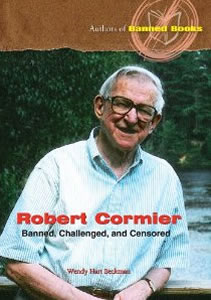
Robert Cormier, Max Gallo, Ludovic Massé, Zora Neale Hurston, Helen Darville

De Amerikaanse schrijver Robert Cormier werd geboren in Leominster, Massachusetts, op 7 januari 1925. Zie ook mijn blog van 7 januari 2009 en ook mijn blog van 7 januari 2010.


Uit: I Am the Cheese


„I am riding the bicycle and I am on Route 31 in Monument, Massachusetts, on my way to Rutterburg, Vermont, and I’m pedaling furiously because this is an old-fashioned bike, no speeds, no fenders, only the warped tires and the brakes that don’t always work and the handlebars with cracked rubber grips to steer with. A plain bike – the kind my father rode as a kid years ago. It’s cold as I pedal along, the wind like a snake slithering up my sleeves and into my jacket and my pants legs, too. But I keep pedaling, I keep pedaling.
This is Mechanic Street in Monument, and to my right, high above on a hill, there’s a hospital and I glance up at the place and I think of my father in Rutterburg, Vermont, and my pedaling accelerates. It’s ten o’clock in the morning and it is October, not a Thomas Wolfe October of burning leaves and ghost winds but a rotten October, dreary, cold, damp with little sun and no warmth at all. Nobody reads Thomas Wolfe anymore, I guess, except my father and me. I did a book report on The Web and the Rock and Mr. Parker in English II regarded me with suspicion and gave me a B- instead of the usual A. But Mr. Parker and the school and all of that are behind me now and I pedal. Your legs do all the work on an old bike like this, but my legs feel good, strong, with staying power. I pass by a house with a white picket fence and I spot a little kid who’s standing on the sidewalk and he watches me go by and I wave to him because he looks lonesome and he waves back.“


Robert Cormier (7 januari 1925 – 2 november 2000)


Lees verder “Robert Cormier, Max Gallo, Ludovic Massé, Zora Neale Hurston, Helen Darville”

Khalil Gibran, Hester Knibbe, Romain Sardou, Jens Johler, E. L. Doctorow, Carl Sandburg

De Libanese dichter en romanschrijver Khalil Gibran werd geboren op 6 januari 1883 in Bischarri. Zie ook alle tags voor Khalil Gibran op dit blog.


Uit: Spiegels van de ziel 


Als je staat aan het begin van je kennen,

sta je aan het begin van je voelen.

Wie alleen kan zien wat het licht onthult

en alleen kan horen wat het geluid verkondigt,

ziet en hoort eigenlijk niets.


De werkelijkheid van iemand anders

is niet gelegen in het feit wat hij je onthult

maar in wat hij je niet kan onthullen.

Als je hem dus wilt begrijpen

luister dan niet naar wat hij zegt,

maar veel meer naar wat hij niet zegt.


Jij en ik blijven vreemden voor het leven,

voor elkaar en voor onszelf,

tot de dag waarop jij spreekt en ik luister

omdat ik meen dat jouw stem mijn eigen stem is

en ik, wanneer ik voor je sta,

meen dat ik mezelf zie staan voor een spiegel.


Khalil Gibran (6 januari 1883– 10 april 1931)


Lees verder “Khalil Gibran, Hester Knibbe, Romain Sardou, Jens Johler, E. L. Doctorow, Carl Sandburg”

Joachim Specht, Astrid Gehlhoff-Claes, Günter Görlich, Anja Meulenbelt, Ivan Olbracht, Idris Davies

De Duitse schrijver Joachim Specht werd geboren op 6 januari 1931 in Weinböhla/Kreis Meißen. Zie ook alle tags voor Joachim Specht op dit blog.


Uit: Das Engelchen über mir


„Wenn ich mein Leben Revue passieren lasse, dann muss ich feststellen: Es hat gewiss Erlebnisse gegeben, die alles andere als erheiternd klingen. Wie leicht hätte da mal was schief ausgehen können. 1987 hat mich Heinz Szillat, der Dessauer Maler, gemalt: mit verschränkten Armen, vollem Haar, den Blick in die Ferne gerichtet, in einem knallroten Hemd mit Armen, die einem Bodybuilder zur Ehre gereicht hätten. Ich ein kraftstrotzender, wagemutiger Kerl? Also – nicht die Hälfte stimmt. Im Bitterfelder Chemiekombinat, wo ich als Autor viele Lesungen absolvierte, habe ich mir mein Asthma zugezogen, nach drei Treppen greife ich heute zum Pumpspray. Natürlich versuche ich die Luftknappheit zu überspielen. Aber das klappt längst nicht immer.
Es war einfach Leichtsinn, auch Neugierde, die mich manchmal haben handeln lassen. Und vermutlich habe ich es einem Engelchen zu danken, meinem Engelchen, das mich vor dem Schlimmsten bewahrte.
Blättern wir mal zurück: Mittwoch, 13. Februar 1945, 22.00 Uhr in Dresden. Der Rotkreuzmelder Specht begibt sich nach erfolgtem Voralarm von seinem Internat zur Einsatzstelle. Er hat es nicht eilig, in dieser Gegend ist noch nie viel passiert. Minuten später rennt er um sein Leben.
Mit verbrannten Schuhsohlen, stinkender HJ-Kluft und einer üblen Rauchgasvergiftung landet er in einem Behelfslazarett. Später – in „Stippvisite“ – habe ich darüber geschrieben.

Am nächsten Tag fuhr ich nach Mickten, dort endete die Straßenbahn, man ging zu Fuß weiter. Die meisten Leute suchten jemanden, ich auch. Mein Weg führte durch die Steinwüste vom Neumarkt, ich balancierte über das Gerippe der Augustusbrücke und stieß hinter dem Postplatz auf die ersten Leichenberge. Die Mariannenstraße war nur ausgebrannt, der Dippoldiswalder Platz glich einer Spuklandschaft, dahinter war die Welt vermauert.“


Joachim Specht (Weinböhla, 6 januari 1931)


Lees verder “Joachim Specht, Astrid Gehlhoff-Claes, Günter Görlich, Anja Meulenbelt, Ivan Olbracht, Idris Davies”

Journey Of The Magi (T. S. Eliot)

Bij het feest van Driekoningen


burne-jones<
Star of Bethlehem, David Burne-Jones, 1890


Journey Of The Magi

‘A cold coming we had of it,
Just the worst time of the year
For a journey, and such a journey:
The ways deep and the weather sharp,
The very dead of winter.’
And the camels galled, sore-footed,
refractory,
Lying down in the melting snow.
There were times we regretted
The summer palaces on slopes, the
terraces,
And the silken girls bringing sherbet.

Then the camel men cursing and
grumbling
And running away, and wanting their
liquor and women,
And the night-fires going out, and the
lack of shelters,
And the cities hostile and the towns
unfriendly
And the villages dirty and charging high
prices:
A hard time we had of it.
At the end we preferred to travel all
night,
Sleeping in snatches,
With the voices singing in our ears,
saying
That this was all folly.

Then at dawn we came down to a
temperate valley,
Wet, below the snow line, smelling of
vegetation;
With a running stream and a water-mill
beating the darkness,
And three trees on the low sky,
And an old white horse galloped in
away in the meadow.
Then we came to a tavern with
vine-leaves over the lintel,
Six hands at an open door dicing for
pieces of silver,
And feet kicking the empty wine-skins.
But there was no imformation, and so
we continued
And arrived at evening, not a moment
too soon
Finding the place; it was (you may say)
satisfactory.

All this was a long time ago, I
remember,
And I would do it again, but set down
This set down
This: were we led all that way for
Birth or Death? There was a Birth,
certainly,
We had evidence and no doubt. I had
seen birth and death,
But had thought they were different;
this Birth was
Hard and bitter agony for us, like
Death, our death.
We returned to our places, these
Kingdoms,
But no longer at ease here, in the old
dispensation,
With an alien people clutching their
gods.
I should be glad of another death.


T. S. Eliot (26 september 1888 – 4 januari 1965)

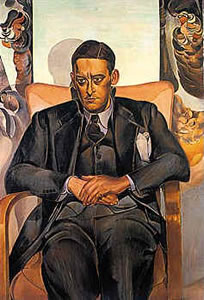
 Portret door Wyndham Lewis, 1938


Zie voor de schrijvers van de 6e januari ook mijn volgende blog van vandaag.


Umberto Eco, Friedrich Dürrenmatt, Ngũgĩ wa Thiong’o, Paul Ingendaay, László Krasznahorkai, Terenci Moix

De Italiaanse schrijver Umberto Eco werd geboren op 5 januari 1932 in Allasandria. Zie ook alle tags voor Umberto Eco op dit blog.


Uit: Die Geschichte der Häßlichkeit (Vertaald door Friederike Hausmann, Petra Kaiser, Sigrid Vagt) 


„Von der griechischen Welt hegen wir gewöhnlich das stereotype Bild, das von der Idealisierung des Griechentums durch den Klassizismus herrührt. Wir bewundern an den blendend weißen Marmorstatuen von Aphrodite und Apollo in unseren Museen eine idealisierte Schönheit. Im 4. vorchristlichen Jahrhundert hatte Polyklet eine später als Kanon bezeichnete Figur geschaffen, in der alle Regeln für die idealen Proportionen verwirklicht waren. Im 1. Jahrhundert v. Chr. legte Vitruv die richtigen Proportionen als Teile des ganzen Körpers fest: Das Gesicht sollte ein Zehntel der Größe ausmachen, der Kopf ein Achtel, der Oberkörper ein Viertel usw. Im Lichte dieses Schönheitsideals wurden alle Menschen, die nicht diesen Proportionen entsprachen, als häßlich betrachtet. Hat die Antike die Schönheit idealisiert, so hat der Klassizismus die Antike idealisiert und dabei vergessen, daß sie (vom Orient beeinflußt) der abendländischen Tradition auch Bilder von Gestalten hinterlassen hat, in denen sich die Unproportioniertheit, die Negation jedes Kanons verkörpert.

Das griechische Ideal war im Begriff der kalokagathía enthalten, der Verbindung von kalós (normalerweise als »schön« übersetzt) und agathos (meist als „gut“ übersetzt, umfaßt aber eine ganze Reihe von positiven Werten).Man hat behauptet, daß kalos und agathos zu sein in etwa das bezeichnete, was man unter einem Gentleman versteht, eine Person von würdigem Aussehen, Mut, Stil, Gewandtheit und sportlichen, militärischen und moralischen Tugenden. Ausgehend von diesem Ideal haben die Griechen zahlreiche Werke über den Zusammenhang von körperlicher und moralischer Häßlichkeit verfaßt.“


Umberto Eco (Allasandria, 5 januari 1932)


Lees verder “Umberto Eco, Friedrich Dürrenmatt, Ngũgĩ wa Thiong’o, Paul Ingendaay, László Krasznahorkai, Terenci Moix”