David Avidan

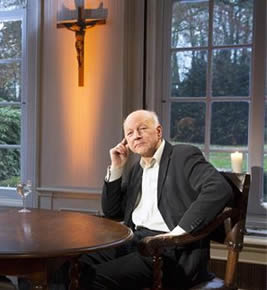
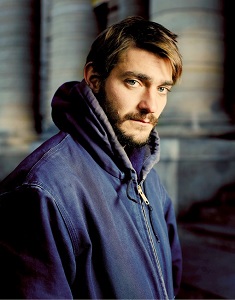
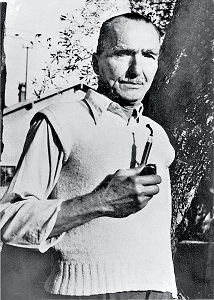
De Israëlische dichter, schrijver, schilder en filmmaker David Avidan werd geboren op 21 februari 1934 in Tel Aviv. Avidan studeerde korte tijd literatuur en filosofie aan de Hebreeuwse Universiteit. Hij schreef meestal in het Hebreeuws en was zijn hele leven een avant-garde kunstenaar. Hij vertaalde veel van zijn eigen gedichten in het Engels en ontving verschillende onderscheidingen, als dichter en ook als vertaler. Hij was zijn hele leven niet erg populair bij de meeste critici of het grote publiek, vaak bekritiseerd als egocentrisch, chauvinistisch en technocratisch. Zijn eerste boek, “Lipless Faucets” (1954), werd aangevallen door bijna alle poëzierecritici; de eerste gunstige beoordeling was van Gabriel Moked, hoofdredacteur van het literaire tijdschrift Akhshav, die later een van de beste vrienden van Avidan zou worden. In de laatste jaren van zij leven kon hij amper zijn brood verdienen en was ook zijn mentale toestand slecht. Na zijn dood is de reputatie van Avidan zowel in literaire kringen alsbij het grote publiek aan een opmars begonnen, en wordt hij gezien als een van de kerndichters van de Israëlische canon. Een bundel geselecteerde gedichten van Avidan, “Futureman”, vertaald door Tsipi Keller, werd in 2017 uitgegeven. In 1993 ontving Avidan samen met Amalia Kahana-Carmon de Bialik-prijs voor Hebreeuwse literatuur. In 1981 schreef en regisseerde Avidan de film “Message from the Future”, waarin hij ook zelf speelde. Het is een science fiction-film in het Engels over toekomstige mensen die het hedendaagse Israël bezoeken.

A Few Plans For The Future

Let me be a mummy.
Wake me
once every thousand years with a shot of undiluted adrenalin, and then
I’ll burn Rome again, report on the event
with a pale face and a pounding heart, first I’ll castrate
all the barbarian warriors who conquered the city, possess
all their young women, so there’ll be
things to burn and men to castrate
in another thousand years. I have
patience for long-run missions.


A heart-to-heart prayer

Lord our god lord you knew
we didn’t know a thing
make us a miracle now so we’ll know what you knew
everything you’ll know everything you’ll think everything you’ll feel
make us a miracle now so we can make miracles
for ourselves and for others and for the lord our god
and don’t limit our possibilities lord our god
more than you limited your own possibilities
and give us our own little world
that we’ll create in six days and won’t rest
on the seventh day more than a seventh of a day
and don’t pity us lord our god
have pity on the little ones and the fools
pity on the foolish of nations
and give us the strength to be ourselves
lord our god the one who knew, didn’t you
lord our god the one who heard, didn’t you
lord our god you are the one, aren’t you
and the lord our god is the lord our god
so give us the strength not to give up
and not to arouse pity unless needed
and even if needed lord because there is no need
lord our god who had no pity, did you
lord our god who won’t be pitied, will you
give us a strong heart and an open mind
and don’t think about us too much
blessed are you lord creator-of-humankind
you won’t rest and you won’t sleep my lord of hosts
blessed are you lord ever vigilant
blessed are you lord creator of humankind in his image
blessed are you my lord blessed of the blest
and the blessed mouth will bless and say amen


Vertaald door Lisa Katz
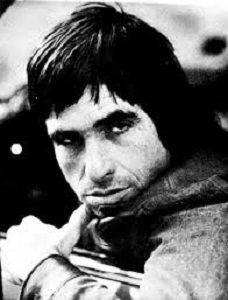
 
David Avidan (21 februari 1934 – 11 mei 1995)
P. C. Boutens, David Nolens, Ellen Gilchrist, Julia Franck, Georges Bernanos, William Carleton, Cornelis Sweerts, Johann Heinrich Voß

De Nederlandse dichter Pieter Cornelis Boutens werd geboren in Middelburg op 20 februari 1870. Zie ook alle tags voor P. C. Boutens op dit blog.


De ruchtige belijders van een naam

De ruchtige belijders van een naam
Zijn grif ook tot verloochenen bekwaam.
Die `t onuitspreeklijke niet leert verzwijgen,
Verslingert tussen ijdel woordgekraam.


Leeuwerik

Blijft gij nooit één blanke uchtend,
Leeuwrik, zingen hier beneên,
Die uw nachtlijk nest ontvluchtend
Door de zilvren neevlen heen

Vleuglings vindt de gouden wegen
Waar uw aadmen juichen wordt,
Tot uw zang in vuren regen
Naar de koele vore stort;

Zingt gij nooit de rode smarten
Van de duistre aardenacht,
Wordt het bloeden onzer harten
Wel gestelpt, maar nooit verklacht?…

In het ijle blauw verloren
Volgt mijn oog niet meer uw vlucht,
Maar uw antwoord dwaast mijn oren
Met zijn zaligend gerucht:

Steeds, uit vreugd of smart gerezen,
Heeft de ziel uw vreugd verstaan,
En tot uwe vreugd genezen,
Ons gemeen geheim geraên:

Alle smart omhooggedragen
Meerdert vreugdes gouden schat:
Slechts de vleuglen die ons schragen,
Zijn van aardes tranen nat.


Uit: Strofen en andere verzen uit de nalatenschap van Andries de Hoghe

Achtste strofe

Soms als de nachten zonder sterren zijn,
zwelt door het donker voor mijn slaaplooze oogen
een groote trage hartstochtsombre maan
en schijnt de stille wereld schemerleêg
met lichteloozen violetten gloed
en drenkt mijn weerloos hart in zwoele wanhoop
van namelooze pijnen. Want ik voel
in elken nieuwen straal die mij bestelpt,
den blik van telkens andre lang vergeten
oogen die eens vergeefs mijn liefde vroegen,
en ademkorte ontmoetingen nooit herdacht
doen éen voor éen als sombre bloemen open
haar onvergeetlijke beteekenis…
Zóo in den vollen beker van geluk
mengt liefde voor het hart dat haar belijdt
als soeverein, zijn onontkoombaar deel
van levens bitterheid, leed zoo ondraaglijk
als peilloos schoon en goddelijk noodwendig,
en leidt het binnen in haar groot heelal,
de wereld van haar onverklaard geheim
waar in de duizellichte oneindigheid
hoogheerelijke willekeur bestelt
volkomen, ondoorgrondlijk evenwicht,
en ieder onverminderd schuldig blijft
ook wat hij anderen onthouden moet.


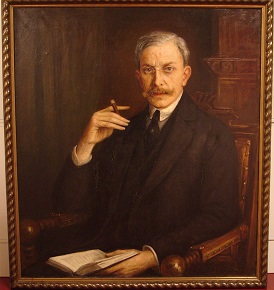
Pieter Cornelis Boutens (20 februari 1870 – 14 maart 1943)
Portert door door Max von Seydewitz, 1923

Lees verder “P. C. Boutens, David Nolens, Ellen Gilchrist, Julia Franck, Georges Bernanos, William Carleton, Cornelis Sweerts, Johann Heinrich Voß”

J.M.A. Biesheuvelprijs voor Maarten ’t Hart

De Nederlandse schrijver Maarten ’t Hart heeft de J.M.A. Biesheuvelprijs gewonnen voor de beste bundel korte verhalen. Hij ontvangt de prijs voor ‘De moeder van Ikabod’. Aan de prijs is een geldbedrag verbonden dat volledig door crowdfunding bij elkaar is gebracht. Dit jaar gaat het om 5105 euro en 70 cent. De prijs werd zondag voor de derde keer uitgereikt. In 2015 won Rob van Essen, in 2016 Marente de Moor. Maarten ’t Hart werd geboren op 25 november 1944 in Maassluis. Zie ook alle tags voor Maarten ’t Hart op dit blog en voor M. ’t Hart evenals mijn blogs van 25 november 2010 en eerder.

Uit: De moeder van Ikabod

 ‘En stipt om één minuut over half drie reed onze bakker Stoof Schelvisvanger, psalmzingend de straat in. Hij was van onze kerk. Bij alle gereformeerden bezorgde hij aan huis brood en banket. In onze straat bediende hij nog één ander gereformeerd gezin. Bij ons belde hij het eerst aan en slofte dan neuriënd terug naar zijn kar en haalde daar een melkwit en een vloerbruin. Wij kregen dat aangereikt (‘zaterdag betalen’) en vervolgens reed hij door naar de familie Marchand. Daar leverde hij acht regeringswit af.’
(…)

‘Ik was daar nog net op tijd voor iets wat ik niet graag gemist zou hebben. Op het moment namelijk dat ik de deur opende, greep de transpirerende dominee met beide handen vlak achter haar schouders haar toga op twee plaatsen vast en trok hem toen met één vloeiende beweging over haar hoofd. Ze had het vaker gedaan, dat was duidelijk, want het ging zo snel, zo behendig, ik keek mijn ogen uit. (…) . En toen stond ze daar, die Ilonka de Priester, in een lichtblauw mouwloos hemdje en een zwart kokerrokje, waaronder lange gebruinde, van zweet vochtig glinsterende benen afdaalden naar sandaaltjes die voornamelijk uit dunne riempjes waren opgetrokken.’

 
Maarten ’t Hart (Maassluis, 25 november 1944)

Siri Hustvedt, Helen Fielding, Jaan Kross, Helene Hegemann, Björn Kuhligk, Thomas Brasch, Dmitri Lipskerov, Wolfgang Fritz, Herbert Rosendorfer

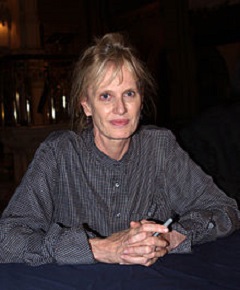
De Amerikaanse schrijfster en essayiste Siri Hustvedt werd geboren op 19 februari 1955 in Northfield, Minnesota. Zie ook alle tags voor Siri Hustvedt op dit blog.

Uit:What I Loved

« Yesterday, I found Violets letters to Bill. They were hidden between the pages of one of his books and came tumbling out and fell to the floor. I had known about the letters for years, but neither Bill nor Violet had ever told me what was in them. What they did tell me was that minutes after reading the fifth and last letter, Bill changed his mind about his marriage to Lucille, walked out the door of the building on Greene Street, and headed straight for Violet’s apartment in the East Village. When I held the letters in my hands, I felt they had the uncanny weight of things enchanted bystories that are told and retold and then told again. My eyes are bad now, and it took me a long time to read them, but in the end I managed to make out every word. When I put the letters down, I knew that I would start writing this book today.
“While I was lying on the floor in the studio,” she wrote in the fourth letter, “I watched you while you painted me. I looked at your arms and your shoulders and especially at your hands while you worked on the canvas. I wanted you to turn around and walk over to me and rub my skin the way you rubbed the painting. I wanted you to press hard on me with your thumb the way you pressed on the picture, and I thought that if you didn’t, I would go crazy, but I didn’t go crazy, and you never touched me then, not once. You didn’t even shake my hand.”
I first saw the painting Violet was writing about twenty-five years ago in a gallery on Prince Street in SoHo. I didn’t know either Bill or Violet at the time. Most of the canvases in the group show were thin minimalist works that didn’t interest me. Bill’s painting hung alone on a wall. It was a large picture, about six feet high and eight feet long, that showed a young woman lying on the floor in an empty room. She was propped up on one elbow, and she seemed to be looking at something beyond the edge of the painting. Brilliant light streamed into the room from that side of the canvas and illuminated her face and chest.”


Siri Hustvedt (Northfield, 19 februari 1955)

Lees verder “Siri Hustvedt, Helen Fielding, Jaan Kross, Helene Hegemann, Björn Kuhligk, Thomas Brasch, Dmitri Lipskerov, Wolfgang Fritz, Herbert Rosendorfer”

Carson McCullers, Alfredo Bryce Echenique, Kay Boyle, Yuri Olesha, André Breton, Paul Zech, Mark Prager Lindo, Heinrich L. Wagner

De Amerikaanse schrijfster Carson McCullers werd geboren als Lula Carson Smith 19 februari 1917 in Columbus, Georgia. Zie ook alle tags voor Carson McCullers op dit blog.

Uit: The Heart is a Lonely Hunter

“They shared the upstairs of a small house near the business section of the town. There were two rooms. On the oil stove inthe kitchen Antonapoulos cooked all of their meals. There were straight, plain kitchen chairs for Singer and an overstuffed sofa for Antonapoulos. The bedroom was furnished mainly with a large double bed covered with an eiderdown comforter for the big Greek and a narrow iron cot for Singer.
Dinner always took a long time, because Antonapoulos loved food and he was very slow. After they had eaten, the big Greek would lie back on his sofa and slowly lick over each one of his teeth with his tongue, either from a certain delicacy or because he did not wish to lose the savor of the meal — while Singer washed the dishes.
Sometimes in the evening the mutes would play chess. Singer had always greatly enjoyed this game, and years before he had tried to teach it to Antonapoulos. At first his friend could not be interested in the reasons for moving the various pieces about on the board. Then Singer began to keep a bottle of something good under the table to be taken out after each lesson. The Greek never got on to the erratic movements of the knights and the sweeping mobility of the queens, but he learned to make a few set, opening moves. He preferred the white pieces and would not play if the black men were given him. After the first moves Singer worked out the game by himself while his friend looked on drowsily. If Singer made brilliant attacks on his own men so that in the end the black king was killed, Antonapoulos was always very proud and pleased.”


Carson McCullers (19 februari 1917 – 29 september 1967)
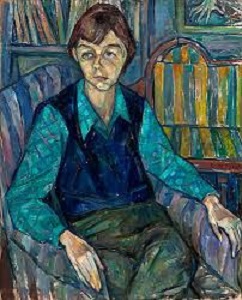
Portret door Emanuel Romano, ca. 1949

Lees verder “Carson McCullers, Alfredo Bryce Echenique, Kay Boyle, Yuri Olesha, André Breton, Paul Zech, Mark Prager Lindo, Heinrich L. Wagner”

Michiel Stroink

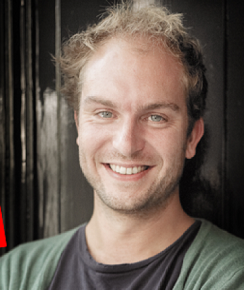
De Nederlandse schrijver Michiel Stroink werd geboren in Oss op 19 februari 1981. Hij studeerde journalistiek en literatuurwetenschappen in Utrecht. Stroink debuteerde in 2012 met de roman ‘Of ik gek ben’. Het boek werd in 2016 verfilmt door Frank Lammers. In 2013 verscheen zijn tweede roman: ‘Tilt’. Het boek werd genomineerd voor de Dioraphte literatuurprijs 2014 en won de publieksprijs. In 2015 schreef Stroink “Exit”, dat opnieuw erg positief werd ontvangen. “De notaris en het meisje” (2017) is zijn nieuwste roman

Uit: Tilt

“De wc-vloer van het Gran Casino is niet de beste plek om bij te komen. Mannelijke gokkers plassen haastig en ongericht. Ze willen snel weer tussen de neonlampen, het rumoer en de andere zenuwachtig zwetende mensen staan. De laatste druppels urine raken dan ook altijd verdeeld tussen de bril, de vloer en hun oudemannenslips. Het maakt de vloer kleverig en ranzig, maar je bewustzijn verliezen gebeurt meestal niet op een plek die je zelf uitkiest.
Max heeft de toiletpot nodig om overeind te komen. Met moeite gaat hij op de bril zitten en wurmt zijn rechterhand in zijn broekzak om de sleutel van zijn appartement te pakken. Met de sleutel zoekt hij in een klein wit envelopje naar wat laatste restjes coke. Snuifgeluiden zijn niet uitzonderlijk op deze wc’s. Hij maakt de sleutel schoon in zijn mond en voelt de drug in zijn tandvlees branden. Bij de wasbak vindt hij zijn whisky-cola en daarmee slikt hij drie paracetamols door.Wat een onzin dit; even doorzetten nog.
‘Waar bleef je?’vraagt Sven als Max terugkeert bij de pokertafel. ‘Ze wilden je stoel bijna aan een spleetoog geven.’ Sven is geen vriend, maar eerder een collega. Net als Max hoort hij bij het meubilair van de vier vaste pokertafels van het Gran Casino. Dit is de beste plek in Europa. De hoge blinds trekken spelers aan die snel rijk willen worden, en juist die spelers zijn interessant voor de professionals.
‘Ik kwam een oude vriend tegen,’ zegt Max. ‘En hou maar op met je gefakete interesse. Heb ik veel gemist?’
‘Niks. Hetis een Chinees feestje hier.’
Sinds een paar jaar lijkt er een Chinese invasie plaats te vinden in de Europese casino’s. Mahjong is uit, poker is in. Ze spelen voorspelbaar en zonder risico. Een tafel vol Chinezen is saaier dan een bejaardentehuis tijdens Lingo, maar hun aanwezigheid is handig als je de tafel wilt controleren. Ze brengen rust. Daar begint het spel eigenlijk al. Een goede pokerspeler bestudeert de tafels, kiest zijn veld en kiest zijn spelers. De enige variabele factor zijn de kaarten die hij krijgt, maar die doen er eigenlijk niet toe, dat weet zelfs de twaalfjarige internetspeler: poker speel je met mensen en niet met kaarten.
Dat is ook precies de reden dat een pokerprofessional altijd alles en iedereen moet kunnen zien. Alleen amateurs en eikels gaan vrijwillig naast de dealer zitten. Stoel drie en stoel zes hebben het beste uitzicht. En vanaf die plek is het vervolgens een kwestie van wachten. De professional speelt alleen maar de beste combinaties van kaarten, en die krijgt hij statistisch gezien een op de vijf keer.”

 
Michiel Stroink (Oss, 19 februari 1981)

Nick McDonell, Robbert Welagen, Bart FM Droog, Maarten Mourik, Huub Beurskens, Gaston Burssens, Toni Morrison, Elke Erb, Charlotte Van den Broeck

De Amerikaanse schrijver Nick McDonell werd geboren op 18 februari 1984 in New York. Zie ook alle tags voor Nick McDonell op dit blog.

Uit: The Third Brother

“Mike tries to decode this and can’t. Analect tells him again to stay out of trouble and that Bishop will take care of him. It seems to Mike that Bishop is pleased to have the help, but that there is more to it. When they are leaving the office, Analect tells Mike to wait for a moment, and when they are alone, he tells Mike that Dorr had been a friend of Mike’s father, years ago. That they had all been good friends, actually, the three of them practically brothers, and that Mike’s father would be glad for news of Dorr.
Mike looks out the window. He notices for the first time how really extraordinary the view from Analect’s office is. Mike can see the whole city, enormous and smogged and throbbing. For a moment he can’t believe the sound of it doesn’t blow in the windows. But Analect’s office sits quietly above it all, humming coolly. Mike is suddenly uneasy, with only the inch of glass between the two of them and the loud, empty space above the city. He looks back at Analect, who is frowning.
“Dorr and your father were sparring partners, when they boxed back in college,” says Analect.
Mike looks back out over the city. He knew about the boxing, but his father had never mentioned Dorr. It all surprises him, but maybe it’s just seeing his own features reflected in the glass, and the long drop to Hong Kong from fifty stories up.
When Mike was a small boy, his parents often entertained. In New York City in their world, they were famous for the dinners they gave in their big beach house at the end of Long Island, especially Thanksgiving. Mike remembered the candlelight and gluey cranberry sauce, which he would wipe off his hands into his hair. His older brother, Lyle, remembered the same things. There were servants, who disciplined Mike when his parents did not. One Filipino lady in particular boxed his ears. When he was older he remembered how it hurt but not her name. Their parents gave these dinners several years in a row. There were mostly the same guests, adults who would tousle Mike’s fine but cranberried hair, and their children, a crew of beautiful, spoiled playmates whom Mike assumed he would know forever. He still saw some of them, at parties and dinners of their own on school breaks. At hearing that one or two of them had slid into addiction, Mike would remember chasing them through his mother’s busy kitchen. His mother was never in the kitchen, of course, but it was definitely hers. Small paintings of vegetables and an antique mirror hung on its walls.”


Nick McDonell (New York, 18 februari 1984)

Lees verder “Nick McDonell, Robbert Welagen, Bart FM Droog, Maarten Mourik, Huub Beurskens, Gaston Burssens, Toni Morrison, Elke Erb, Charlotte Van den Broeck”

Níkos Kazantzákis, Jean M. Auel, Mór Jókai, Hedwig Courths-Mahler, Alexander Kielland, Audre Lorde, Wallace Stegner, Leone Battista Alberti

De Griekse dichter en schrijver Níkos Kazantzákis werd geboren in Heraklion op 18 februari 1883. Zie ook alle tags voor Níkos Kazantzákis op dit blog.

Uit: The Odyssey (Vertaald door Kimon Friar)

O Sun, my quick coquetting eye, my red-haired hound,
sniff out all quarries that I love, give them swift chase,
tell me all that you’ve seen on earth, all that you’ve heard,
and I shall pass them through my entrails’ secret forge
till slowly, with profound caresses, play and laughter,
stones, water, fire, and earth shall be transformed to spirit,
and the mud-winged and heavy soul, freed of its flesh,
shall like a flame serene ascend and fade in sun.

You’ve eaten and drunk well, my lads, on festive shores,
until the feast within you turned to dance and laughter,
love-bites and idle chatter that dissolved in flesh;
but in myself the meat turned monstrous, thewine rose,
a sea-chant leapt within me, rushed to knock me down,
until I longed to sing this song- make way, my brothers!
Oho, the festival lasts long, the place is small;
make way, let me have air, give me a ring to stretch in,
a place to spread my shinbones, kick up my heels,
so that my giddiness won’t wound your wives and children.
As soon as I let my words loose along the shore
to hunt all mankind down, I know they’ll choke my throat,
and when my full neck smothers and my pain grows vast
I shall rise up- make way!- to dance on raging shores.

 
Níkos Kazantzákis (18 februari 1883 – 26 oktober 1957)

Lees verder “Níkos Kazantzákis, Jean M. Auel, Mór Jókai, Hedwig Courths-Mahler, Alexander Kielland, Audre Lorde, Wallace Stegner, Leone Battista Alberti”

Shahrnush Parsipur, Willem Thies, Sadegh Hedayat, Yevgeni Grishkovetz, Albert Kuyle

De Iraanse schrijfster Shahrnush Parsipur werd geboren op 17 februari 1946 in Teheran. Zie ook alle tags voor Shahrnush Parsipur op dit blog.

Uit: Frauen ohne Männer (Vertaald door Jutta Himmch)

„Der Garten, von Mauern aus Lehmstroh umgeben, saftig grün, lag jenseits des Dorfes, am Fluß, der das Grundstück begrenzte. Es war ein Kirschgarten, mit sauren und süßen Kirschen.
Auf dem Grundstück stand ein Wohngebäude, halb Land-, halb Stadthaus, mit drei Zimmern. Vor dem Haus befand sich ein Wasserbecken, voller Algen und Frösche. Rings um das Bassin war Kies gestreut, und unweit standen vereinzelte Weidenbäume. Nachmittags lag das dunkle Grün des Wassers mit dem hellen Grün der sich spiegelnden Weiden immer in lautlosem Wettstreit. Mahdokhtstimmte dasjedesmaltraurig,weilsieStreiterei überhaupt nicht mochte. Einfach und unkompliziert wie sie war,wünschte sie, alle und alles sollten sich miteinander vertragen, selbst die Myriaden von Grüntönen dieser Welt. So ruhige Farben, gewiß, und doch . . ., dachte sie.
Unter einem der Bäume stand, mit zweien ihrer vier Beine auf der Einfassung des Beckenrands, eine Bank, die auf dem glitschigen Untergrund jederzeit ins Wasser rutschen konnte. Auf dieser Bank saß Mahdokht und betrachtete das Wasser, die Spiegelbilder der Weiden in ihrem Streit, und das Blau des Himmels, das sich meist nachmittags machtvoll über diesem grünen Reigen erhob und Mahdokht wie der höchste Richter vorkam.
Wenn Mahdokht im Winter strickte oder erwog, Französisch zu lernen oder die Welt zu bereisen, dann deshalb, weil man in der Kälte gesunde Luft atmen konnte. Im Sommer hingegen war’s damit vorbei. Denn der Sommer war voller Rauch und Dunst und Staub, und es wimmelte von Autos und Menschen. Dazu diese großen, traurigen Fensterscheiben, die die stechende Sonne hereinließen.
Warum, zum Teufel, begreifen sie nicht, daß solche Fenster in unserem Land nichts taugen?
Das fragte sich Mahdokht und war auch deshalb schlecht gelaunt, weil sie der Einladung ihres älteren Bruders Huschang Khan notgedrungen gefolgt und hierher in den Garten gekommen war, wo ihr nun nichts anderes übrigblieb, als den Lärm der Kinder zuertragen,die den lieben langen Tag Geschrei machten, sich die Bäuche mit Kirschen vollschlugen, allabendlich Durchfall bekamen und nächtelang Joghurt aßen.
»Das ist Joghurt aus dem Dorf.«
»Ausgezeichnet, ja.«

 
Shahrnush Parsipur (Teheran, 17 februari 1946)

Lees verder “Shahrnush Parsipur, Willem Thies, Sadegh Hedayat, Yevgeni Grishkovetz, Albert Kuyle”

Chaim Potok, Mo Yan, Frederik Hetmann, Emmy Hennings, Mori Ōgai

De Amerikaanse schrijver Chaim Potok werd geboren in New York City op 17 februari 1929. Zie ook alle tags voor Chaim Potok op dit blog.

Uit: The Chosen

“On a Sunday afternoon in early June, the fifteen members of my team met with our gym instructor in the play yard of our school. It was a warm day, and the sun was bright on the asphalt floor of the yard. The gym instructor was a short, chunky man in his early thirties who taught in the mornings in a nearby public high school and supplemented his income by teaching in our yeshiva during the afternoons. He wore a white polo shirt, white pants, and white sweater, and from the awkward way the little black skullcap sat perched on his round, balding head, it was clearly apparent that he was not accustomed to wearing it with any sort of regularity. When he talked he frequently thumped his right fist into his left palm to emphasize a point. He walked on the balls of his feet, almost in imitation of a boxer’s ring stance, and he was fanatically addicted to professional baseball. He had nursed our softball team along for two years, and by a mixture of patience, luck, shrewd manipulations during some tight ball games, and hard, fist-thumping harangues calculated to shove us into a patriotic awareness of the importance of athletics and physical fitness for the war effort, he was able to mold our original team of fifteen awkward fumblers into the top team of our league. His name was Mr. Galanter, and all of us wondered why he was not off somewhere fighting in the war.
During my two years with the team, I had become quite adept at second base and had also developed a swift underhand pitch that would tempt a batter into a swing but would drop into a curve at the last moment and slide just below the flaying bat for a strike. Mr. Galanter always began a ball game by putting me at second base and would use me as a pitcher only in very tight moments, because, as he put it once, “My baseball philosophy is grounded on the defensive solidarity of the infield.”
That afternoon we were scheduled to play the winning team of another neighborhood league, a team with a reputation for wild, offensive slugging and poor fielding. Mr. Galanter said he was counting upon our infield to act as a solid defensive front. Throughout the warm-up period, with only our team in the yard, he kept thumping his right fist into his left palm and shouting at us to be a solid defensive front.”

 
Chaim Potok (17 februari 1929 – 23 juli 2002)

Lees verder “Chaim Potok, Mo Yan, Frederik Hetmann, Emmy Hennings, Mori Ōgai”