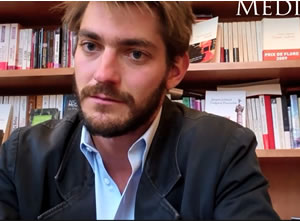
Tom van Deel

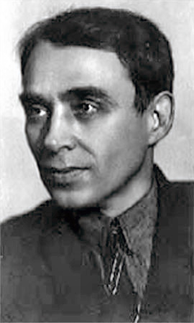
De Nederlandse dichter en literatuurcriticus Tom van Deel werd geboren in Apeldoorn op 21 februari 1945. In 1967 publiceerde bij onder de pseudoniemen G. en Gerrit Vogel gedichten in Pharetra, studentenblad van de Vrije Universiteit Amsterdam. Hij was van 1969 tot 2008 recensent van het dagblad Trouw.In de beginjaren was hij daarnaast leraar op een middelbare school. Van Deel geeft nu les in moderne Nederlandse literatuur aan de Universiteit van Amsterdam. Hij debuteerde in 1969 met de dichtbundel “Strafwerk”, in 1971 gevolgd door “Recht onder de merels”. Zijn boekbesprekingen bundelde hij in “Recensies” (1980). In 1987 ontving hij de Jan Campertprijs voor de bundel “Achter de waterval“ (1986). Van Deels interesse voor de combinatie beeldende kunst en poëzie blijkt uit de bundel “Gedichten kijken” (1987), een bloemlezing beeldgedichten, en “Ik heb het Rood van ’t Joodse bruidje lief” (1988), gedichten over beeldende kunst. In 1992 verscheen zijn verzameling essays over dit onderwerp: “Als ik tekenen kon”. Van Deel verzorgde veel tekstuitgaven van nagelaten werk van Simon Vestdijk. Over de poëzie van Vestdijk publiceerde hij “Veel lied’ren zijn gezongen” (1987).

Dit moment

Er is niets voor te stellen mooier dan
een vrouw die in het strijkend avondlicht
een tuin inloopt, het waait, het blad van
de kastanje gaat tekeer, ze zoekt naar
bloemen, snoeiend, alles als weleer.
Daar bukt ze, rustig buiten elke tijd,
verbonden met haar wereld, ook de mijne.
Ik zie het aan in dit moment en wens
dat ondanks ons verstrijken het beklijft.


Fabel

Vlinder ziet een speld staan
vindt hem mooi want streng
niet doelloos doch standvastig.
Zij wil hem aan zich binden
dit eenzaam puntig wezen
en zegt me zoete aandrang
‘doe ik mijn vleugels dicht
bekijk mij dan van voren
ben ik een speld op poten.’
Bang om zich te bezeren
aan zoiets kleurig breekbaars
met ogen fijn dooraderd
volhardt de speld in staren
blijft stijf gesloten staan
‘als ik hier niet vandaan raak
grijpt het ons beiden aan.’
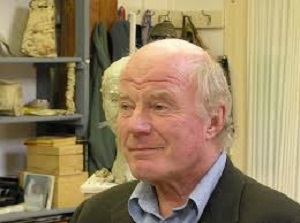
 
Tom van Deel (Apeldoorn, 21 februari 1945)
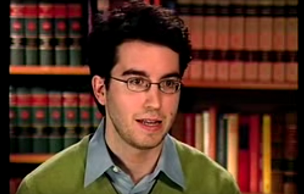
Jonathan Safran Foer

De Amerikaanse schrijver Jonathan Safran Foer werd geboren in Washington D.C. op 21 februari 1977. Foer is de middelste zoon uit een Joodse familie; zijn oudere broer, Franklin, is een voormalig redacteur van The New Republic en zijn jongere broer, Joshua, is de oprichter van Atlas Obscura. Foer bezocht de Georgetown Day School en reisde in 1994 naar Israël met andere Noord-Amerikaanse joodse tieners, gesponsord door de Bronfman youth fellowships. In 1995, als eerstejaarsstudent aan Princeton University, nam hij deel aan een inleidende cursus met schrijfster Joyce Carol Oates. Zijn eerste roman, “Everything is Illuminated” (Alles is verlicht), werd uitgegeven in 2002. Het verscheen al snel in de internationale bestsellerslijsten en won verschillende literaire prijzen, waaronder de National Jewish Book Award en de Guardian First Book Award. Een eerdere versie van het boek (The Very Rigid Search, The New Yorker, 18 juni 2001) werd verfilmd door Liev Schreiber in 2005. Foers tweede roman, “Extremely Loud and Incredibly Close” (Extreem luid & ongelooflijk dichtbij) werd uitgegeven in 2005. Foers derde boek,” Eating Animals” (Dieren eten) werd gepubliceerd in 2009. Het is geen roman zoals zijn overige boeken, maar een non-fictie-boek. Toen Foer op het punt stond vader te worden, begon hij zich af te vragen waar het voedsel vandaan komt dat hij zelf at en dat ook zijn zoon zou gaan eten. Zijn vragen brachten een zoektocht naar antwoorden met zich mee. Na zijn onderzoek heeft hij besloten om vegetariër te worden.

Uit:Everything Is Illuminated

“My legal name is Alexander Perchov. But all of my many friends dub me Alex, because that is a more flaccid-to-utter version of my legal name. Mother dubs me Alexi-stop-spleening-me!, because I am always spleening her. If you want to know why I am always spleening her, it is because I am always elsewhere with friends, and disseminating so much currency, and performing so many things that can spleen a mother. Father used to dub me Shapka, for the fur hat I would don even in the summer month. He ceased dubbing me that because I ordered him to cease dubbing me that. It sounded boyish to me, and I have always thought of myself as very potent and generative. I have many many girls, believe me, and they all have a different name for me. One dubs me Baby, not because I am a baby, but because she attends to me. Another dubs me All Night. Do you want to know why? I have a girl who dubs me Currency, because I disseminate so much currency around her. She licks my chops for it. I have a miniature brother who dubs me Alli. I do not dig this name very much, but I dig him very much, so OK, I permit him to dub me Alli. As for his name, it is Little Igor, but Father dubs him Clumsy One, because he is always promenading into things. It was only four days previous that he made his eye blue from a mismanagement with a brick wall. If you’re wondering what my bitch’s name is, it is Sammy Davis, Junior, Junior. She has this name because Sammy Davis, Junior was Grandfather’s beloved singer, and the bitch is his, not mine, because I am not the one who thinks he is blind.
As for me, I was sired in 1977, the same year as the hero of this story. In truth, my life has been very ordinary. As I mentioned before, I do many good things with myself and others, but they are ordinary things. I dig American movies. I dig Negroes, particularly Michael Jackson. I dig to disseminate very much currency at famous nightclubs in Odessa. Lamborghini Countaches are excellent, and so are cappuccinos. Many girls want to be carnal with me in many good arrangements, notwithstanding the Inebriated Kangaroo, the Gorky Tickle, and the Unyielding Zookeeper. If you want to know why so many girls want to be with me, it is because I am a very premium person to be with. I am homely, and also severely funny, and these are winning things. But nonetheless, I know many people who dig rapid cars and famous discotheques. There are so many who perform the Sputnik Bosom Dalliance—which is always terminated with a slimy underface—that I cannot tally them on all of my hands. There are even many people named Alex. (Three in my house alone!) That is why I was so effervescent to go to Lutsk and translate for Jonathan Safran Foer. It would be unordinary.”

 
Jonathan Safran Foer (Washington, 21 februari 1977)

Aleksej Kroetsjonych

De Russische schrijver en dichter Aleksej Jelisejevitsj Kroetsjonych werd geboren op 21 februari 1886 in Olevsk.Kroetsjonych raakte kort voor de Eerste Wereldoorlog als spoorwegarbeider in Tblisi, door deelname aan literaire disputen, verzeild in avant-gardistische kringen. Hij verwierf naam als meest radicale dichter onder de Russische futuristen en geldt als de belangrijkste theoreticus onder hen. In 1913 introduceerde hij in zijn artikel “De nieuwe wegen van het woord” het begrip ‘zaoem’, waarin hij stelt dat de taal zich boven of achter het verstand bevindt en niet rationeel maar alleen maar intuïtief te begrijpen valt. Belangrijk is het woord als zodanig, als vormelement. Waar dichters vroeger uitgingen van gedachten en deze in woorden probeerden uit te drukken, is voor Kroetsjonych niet de gedachte maar het woord zelf primair. Als Adam geeft hij aan alle dingen een nieuwe naam. Zo vindt hij een lelie prachtig, maar het woord ‘lelie’ beduimeld en ‘verkracht’; daarom noemt hij een lelie liever ‘heoejie’, waarmee volgens hem de oorspronkelijke schoonheid wordt hersteld. Een nieuwe taal zorgt volgens Kroetsjonych voor een nieuwe perceptie van de werkelijkheid. Kroetsjenychs poëzie volgt een eigen transrationele taal.

Despair

to dig from under the earth
to steal from the finger
to jump above the head
sitting walk
standing run
where to bury the ring
hang in the noose
swinging quietly


Rus’

in labor and in swinishness slovenlying
you grow up and become stronger my dear
like the proverbial girl who saved herself
burying her lower half in mud to the waist

crawl forward on knees in darkness and may
your voluntary neighbor light the way ahead


Vertaald door Alex Cigale

 
Aleksej Kroetsjonych (21 februari 1886 – 17 juni 1968)

P. C. Boutens, Ellen Gilchrist, Julia Franck, David Nolens, Georges Bernanos

De Nederlandse dichter Pieter Cornelis Boutens werd geboren in Middelburg op 20 februari 1870. Zie ook alle tags voor P. C. Boutens op dit blog.


Sonnet LXIV

Waar tijd en eeuwigheid elkaar beroeren,
Worden de sterren in de nacht geboren,
Vuurbloemen die de rijzendranke roeren
Van donkre aardtochten naar Gods ooglicht boren.

En waar de heemlen van voor Hem vervloeren
Tot glazen glansbaan eindelozer koren,
Lijnen der stelslen weemlende contouren
Door ’t klaar kristal donkervermoede voren:

Door weêrzijds-open venstren als door ogen
Schijnen de heemlen in elkaar en de aarde:
Liefde met liefde wisslen wondre waarden,
Aarddonker tegen Godslicht opgewogen…
In evenwicht van gulden ruil geheven
Wandelt de wereld vleugelloos te zweven.


Kussen van uw lippen en uw ogen

Kussen van uw lippen en uw ogen,
Zachte daden uwer handen,
Zoals koele wateren getogen
Door de tuinen dezer landen,

Drenken in onmiddellijk bevloeien
’s Harten diepste wortelcellen,
En naar een oneindig openbloeien
Gaat de siddrende aandrift zwellen, –

Een geluk als nieuwe wijn geschonken,
Waar de schijnen dood en leven
Schaduwloos in liggen wegbezonken,
En daar is alleen gebleven

Aandacht waar al donkere geruchten,
Aller namen duizendtallen,
Welke blaadren en onrijpe vruchten,
Tot verglansde stilte vallen.


Uit: Strofen en andere verzen uit de nalatenschap van Andries de Hoghe

Zevende strofe
voor Lionardo’s Johannes

Daar heb ik stilst en diepst geweend,
o tranen heller dan de heugenis
van jonkheids eerst-bewusten morgenlach –
want voor mijn oogen steeg in zilvren nevel
van goddelijkste droefenis
de doode lieflijkheid van zoo veel jaren
in strengen dienst en liefdes kuischen deemoed
doorwaakt tot al hun weedom zich verdichtte
tot dezen droom van éenen oogenblik:
onder den effen spiegel van uw glimlach
dees dood- en leven-overscheemrende’ afgrond…
 
Daar voelde ik achter mij den naakten glans
van witste zon, de maan van liefdes nachten,
en door de levenzoele sluieren
van onze tranen brak haar helle vuur
op donkren wereldwand in paarlen snoeren
van bleeken amethysten regenboog.


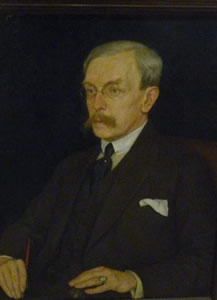
Pieter Cornelis Boutens (20 februari 1870 – 14 maart 1943)
Portret door Willem Adriaan van Konijnenburg, z.j.

Lees verder “P. C. Boutens, Ellen Gilchrist, Julia Franck, David Nolens, Georges Bernanos”

William Carleton, Cornelis Sweerts, Johann Heinrich Voß, Pierre Boulle, Ludwig Steub, Johann Fr. Riederer

De Ierse schrijver William Carleton werd geboren op 20 februari 1794 in Glogher, in het graafschap Tyrone. Zie ook alle tags voor William Carleton op dit blog.

Uit: The Midnight Mass

“At the time in which the incidents contained in this sketch took place, the peasantry of Ireland, being less encumbered with heavy rents, and more buoyant in spirits than the decay of national prosperity has of late permitted them to be, indulged more frequently, and to a greater stretch, in those rural sports and festivities so suitable to their natural love of humor and amusement. Dances, wakes, and weddings, were then held according to the most extravagant forms of ancient usage; the people were easier in their circumstances, and consequently indulged in them with lighter hearts, and a stronger relish for enjoyment. When any of the great festivals of their religion approached, the popular mind, unrepressed by poverty and national dissension, gradually elevated itself to a species of wild and reckless mirth, productive of incidents irresistibly ludicrous, and remarkably characteristic of Irish manners. It is not, however, to be expected, that a people whose love of fighting is so innate a principle in their disposition, should celebrate these festive seasons without an occasional crime, which threw its deep shadow over the mirthful character of their customs. Many such occurred; but they were looked upon then with a degree of horror and detestation of which we can form but a very inadequate idea at present.
It was upon the advent of one of those festivals–Christmas–which the family of M’Kenna, like every other family in the neighborhood, were making preparations to celebrate with the usual hilarity. They cleared out their barn in order to have a dance on Christmas-eve; and for this purpose, the two sons and the servant-man wrought with that kind of industry produced by the cheerful prospect of some happy event. For a week or fortnight before the evening on which the dance was appointed to be held, due notice of it had been given to the neighbors, and, of course, there was no doubt but that it would be numerously attended.”


William Carleton (20 februari 1794 – 30 januari 1869)
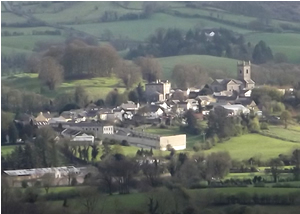
Glogher

Lees verder “William Carleton, Cornelis Sweerts, Johann Heinrich Voß, Pierre Boulle, Ludwig Steub, Johann Fr. Riederer”

In Memoriam Umberto Eco

In Memoriam Umberto Eco

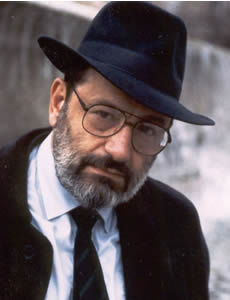
De Italiaanse schrijver Umberto Eco is vrijdagavond op 84-jarige leeftijd overleden. Zijn familie heeft dat vrijdagnacht bekend gemaakt. Umberto Eco werd geboren op 5 januari 1932 in Allasandria. Zie ook alle tags voor Umberto Eco op dit blog.

Uit: In de naam van de roos (Vertaald door Jenny Tuin en Pietha de Voogd)

“En terwijl ik mijn gefascineerde blik van die raadselachtige polyfonie van heilige ledematen en helse spierbundels afwendde, zag ik aan de zijkanten van het portaal, en onder het diepe gewelf van de bogen, soms gebeeldhouwd op de steunmuren in de ruimte tussen de ranke zuilen die ze schraagden en versierden, en verder op de dichte haag van hun kapitelen van waaruit ze zich vertakten naar het woudachtige gewelf van de talrijke bogen, nog meer visioenen, verschrikkelijk om te zien en op die plek alleen gerechtvaardigd door hun parabolische en allegorische kracht of om de zedelijke lering die ervan uitging: en ik zag een wellustige, naakte vrouw met een ontvleesd lichaam, aangevreten door smerige padden, leeggezogen door slangen, gepaard met een dikbuikige sater met ruige griffioens poten en een liederlijk opengesperde keel die zijn verdoemenis uitschreeuwde; en ik zag een vrek, verstijfd in de starheid van de dood op zijn protserige hemelbed, tot weerloze prooi geworden van een horde duivels, van wie één hem de ziel in de vorm van een zuigeling (die helaas nimmer meer tot het eeuwige leven geboren zou worden) uit zijn reutelende mond rukte, en ik zag een hoogmoedige op wiens schouders een duivel neerstreek en hem zijn klauwen in de ogen stak, terwijl elders twee vraatzuchtigen elkaar in een weerzinwekkende worsteling in stukken reten, en nog meer wezens, met bokkenpoten, leeuwenmanen en pantermuilen, gevangen in een woud van vlammen waarvan men de schroeilucht bijna kon ruiken. En rondom hen, tussen hen in, boven hen en onder hun voeten, nog meer gezichten en nog meer ledematen, een man en een vrouw die elkaar bij de haren grepen, twee adders die de ogen van een verdoemde uitzogen, een hoonlachende man die met zijn haakvormige handen de muil van een hydra opensperde, en alle andere dieren van satans bestiarium, in vergadering bijeen en als bewakers en erewacht geschaard om de troon tegenover hen, om met hun nederlaag Zijn lof te zingen, faunen, tweeslachtige wezens, beestmensen met zes vingers aan elke hand, sirenen, centauren, gorgonen, harpijen, maren, dracontopoden, minotauren, lynxen, pardels, climaeren, draken met hondenkoppen die uit hun neusgater vuur spuwden, getande reuzenhagedissen, veelstaartige monsters, harige slangen, salamanders, hoornadders, waterschildpadden, ringslangen, tweekoppige adelaars met tanden op hun rug, hyena’s, otters, kraaien, krokedillen, zeemonsters met zaagvormige hoorns, kikkers, griffioenen, apen, bavianen, leeuw-hyena’s, mantichora’s, gieren, rendieren, wezels, draken, hoppen, steenuilen, basilisken, hypnalissen, praesters, schorpioenen, sauriërs, walvissen, rolslangen, ringelaars, pijlslangen, dispassen, smaragdhagedissen, zuigvissen, poliepen, murenen en schildpadden. De gehele bevolking van het dodenrijk scheen zich te hebben verzameld om, duister woud en troosteloze vlakte van uitgestotenen, als voorhal te dienen voor de verschijning op het timpaan van Hem die was gezeten, voor Zijn gelaat vol belofte en dreiging, zij, de verslagenen van Armageddon, voor het aangezicht van Hem die komen zal om voorgoed de levenden van de doden te scheiden.” 

 
Umberto Eco (5 januari 1932 – 19 februari 2016)

Siri Hustvedt, Helen Fielding, Jaan Kross, Helene Hegemann, Björn Kuhligk, Dmitri Lipskerov, Wolfgang Fritz

De Amerikaanse schrijfster en essayiste Siri Hustvedt werd geboren op 19 februari 1955 in Northfield, Minnesota. Zie ook alle tags voor Siri Hustvedt op dit blog.

Uit: The Summer Without Men

“Sometime after he said the word pause,I went mad and landed in the hospital. He did not say I don’t ever want to see you again or It’s over, but after thirty years of marriage pause was enough to turn me into a lunatic whose thoughts burst, ricocheted, and careened into one another like popcorn kernels in a microwave bag. I made this sorry observation as I lay on my bed in the South Unit, so heavy with Haldol I hated to move. The nasty rhythmical voices had grown softer, but they hadn’t disappeared, and when I closed my eyes I saw cartoon characters racing across pink hills and disappearing into blue forests. In the end, Dr. P. diagnosed me with Brief Psychotic Disorder, also known as Brief Reactive Psychosis, which means that you are genuinely crazy but not for long. If it goes on for more than one month, you need another label. Apparently, there’s often a trigger or, in psychiatric parlance, “a stressor,” for this particular form of derangement. In my case, it was Boris or, rather, the fact that there was no Boris, that Boris was having his pause. They kept me locked up for a week and a half, and then they let me go. I was an outpatient for a while before I found Dr. S., with her low musical voice, restrained smile, and good ear for poetry. She propped me up—still props me up, in fact.
I don’t like to remember the madwoman. She shamed me. For a long time, I was reluctant to look at what she had written in a black-and- white notebook during her stay on the ward. I knew what was scrawled on the outside in handwriting that looked nothing like mine, Brain shards, but I wouldn’t open it. I was afraid of her, you see. When my girl came to visit, Daisy hid her unease. I don’t know exactly what she saw, but I can guess: a woman gaunt from not eating, still confused, her body wooden from drugs, a person who couldn’t respond appropriately to her daughter’s words, who couldn’t hold her own child. And then, when she left, I heard her moan to the nurse, the noise of a sob in her throat: “It’s like it’s not my mom.” I was lost to myself then, but to recall that sentence now is an agony. I do not forgive myself.
The Pause was French with limp but shiny brown hair. She had signifcant breasts that were real, not manufactured, narrow rect- angular glasses, and an excellent mind. She was young, of course, twenty years younger than I was, and my suspicion is that Boris had lusted after his colleague for some time before he lunged at her signi?cant regions. I have pictured it over and over. Boris, snow-white locks falling onto his forehead as he grips the bosom of said Pause near the cages of genetically modifed rats. I always see it in the lab, although this is probably wrong. The two of them were rarely alone there, and the “team” would have noticed noisy grappling in their midst. Perhaps they took refuge in a toilet stall, my Boris pounding away at his fellow scientist, his eyes moving upward in their sockets as he neared explosion.”


Siri Hustvedt (Northfield, 19 februari 1955)

Lees verder “Siri Hustvedt, Helen Fielding, Jaan Kross, Helene Hegemann, Björn Kuhligk, Dmitri Lipskerov, Wolfgang Fritz”

In Memoriam Harper Lee

In Memoriam Harper Lee

De Amerikaanse schrijfster Nelle Harper Lee, de schrijfster van het boek ‘To Kill a Mockingbird’ is op 89-jarige leeftijd overleden. Dat heeft haar uitgever Random House vrijdag bevestigd. Nelle Harper Lee werd geboren in Monroeville op 28 april 1926. Zie ook alle tags voor Harper Lee op dit blog.

Uit: To Kill a Mockingbird

“Boo’s transition from the basement to back home was nebulous in Jem’s memory. Miss Stephanie Crawford said some of the town council told Mr. Radley that if he didn’t take Boo back, Boo would die of mold from the damp. Besides, Boo could not live forever on the bounty of the county.
Nobody knew what form of intimidation Mr. Radley employed to keep Boo out of sight, but Jem figured that Mr. Radley kept him chained to the bed most of the time. Atticus said no, it wasn’t that sort of thing, that there were other ways of making people into ghosts.
My memory came alive to see Mrs. Radley occasionally open the front door, walk to the edge of the porch, and pour water on her cannas. But every day Jem and I would see Mr. Radley walking to and from town. He was a thin leathery man with colorless eyes, so colorless they did not reflect light. His cheekbones were sharp and his mouth was wide, with a thin upper lip and a full lower lip. Miss Stephanie Crawford said he was so upright he took the word of God as his only law, and we believed her, because Mr. Radley’s posture was ramrod straight.
He never spoke to us. When he passed we would look at the ground and say, “Good morning, sir,” and he would cough in reply. Mr. Radley’s elder son lived in Pensacola; he came home at Christmas, and he was one of the few persons we ever saw enter or leave the place. From the day Mr. Radley took Arthur home, people said the house died.
But there came a day when Atticus told us he’d wear us out if we made any noise in the yard and commissioned Calpurnia to serve in his absence if she heard a sound out of us. Mr. Radley was dying.
He took his time about it. Wooden sawhorses blocked the road at each end of the Radley lot, straw was put down on the sidewalk, traffic was diverted to the back street. Dr. Reynolds parked his car in front of our house and walked to the Radley’s every time he called. Jem and I crept around the yard for days. At last the sawhorses were taken away, and we stood watching from the front porch when Mr. Radley made his final journey past our house.”

 
Harper Lee (28 april 1926 – 19 februari 2016)

Nick McDonell, Robbert Welagen, Bart FM Droog, Maarten Mourik, Huub Beurskens, Gaston Burssens, Charlotte Van den Broeck

De Amerikaanse schrijver Nick McDonell werd geboren op 18 februari 1984 in New York. Zie ook alle tags voor Nick McDonell op dit blog.

Uit: The End of Major Combat Operations

“Ricky was an interpreter who chain-smoked and always carried several packs of cigarettes. He was generous with his smokes, would shake one out for you each time you reached for your pack. His hands shook when he offered you one, though; Ricky seemed sometimes like he wanted something back. The guys he rode with liked him. He was a source of fun because of his nerves, but he played along with the jokes.
The strangest thing about Ricky was the way he perspired. The guys in the truck agreed that they had never seen anything like it. Ricky dripped. His hair was always damp. When he turned his head quickly, the saltwater sprayed off him. The canvas of his seat in the MRAP was always stained.
Ricky, like most terps, rotated between his company’s platoons, but recently everyone in the 1-12’s Bull company had been seeing more of him than usual. He had moved onto the FOB full time. In fact, he was living on a cot outside one of the lieutenant’s rooms. This particular LT, Drew Masone, was a broad twenty-three-year-old from Levittown, Long Island, distinguished most clearly by his tolerant nature. He only shook his head about Ricky, didn’t say that he was stinking up the hallway even though he was, lying on his cot in his undershirt whenever he wasn’t standing outside, smoking, saying hello too many times.
Most terps went home every couple of weeks. There was, sometimes, joking between them and the soldiers about how the terps could go home and get laid and have a beer up in Kurdistan. The platoons rotated the fortnightly “terp drop,” a boring and simple mission. The terps left their camo behind and piled into the back of the MRAP, often with a small refrigerator or television set or bag of clothes that they had procured in the previous two weeks of patrols. Then the patrol mounted up and drove north to a deserted stretch of road in Kurdistan where a couple of beat-up sedans idled. The terps would quickly dismount and load their stuff into the sedans and speed off down the road. Terp drop was easy and tedious for the GIs, but for the terps it was more important than almost anything else. It was transit between worlds. What if the wrong person saw them? What if they were followed? What if they brought the mayhem and killing back home?”


Nick McDonell (New York, 18 februari 1984)

Lees verder “Nick McDonell, Robbert Welagen, Bart FM Droog, Maarten Mourik, Huub Beurskens, Gaston Burssens, Charlotte Van den Broeck”

Yevgeni Grishkovetz, Chaim Potok, Mo Yan, Frederik Hetmann, Shahrnush Parsipur, Emmy Hennings

De Russische schrijver, regisseur en acteur Yevgeni Grishkovetz werd geboren op 17 februari 1969 in Kemerovo. Zie ook alle tags voor Yevgeni Grishkovetz op dit blog.

Uit:How I Ate the Dog

“They got out at every station and walked around the platform with an old cassette player, glancing to the sides, meaning – Are they looking at us or not?  Aha…they’re looking!  Very good!  I was surprised at the time by how their sailor hats stayed on the back of their heads, it was obvious that they should have fallen off, but they stayed on, all the same…. Without any sense of idiotic metaphor, they hung like haloes….  I only found out later, how they stayed on… sailor hats.  And that there’s no secret, they simply stay on, and that’s it.
The sailors were entertaining….  We came up to them with questions about how it is, and they gladly told us how…: “Well, we went through La Pérouse Strait, then we went to Cam Ranh, we stopped there…, then we went to New Zealand and they didn’t let us come ashore, but in Australia they let us come ashore, but only the officers went and…”
And I was thinking: “Geeeeee whiz… After all I studied English in school…  Why?”  Well, there were countries where they speak this language, there was Europe, well somewhere there… Paris, London, you know, Amsterdam, there were those, and leave it at all that.  What’s it to me?  They sometimes vaguely disturbed you in that they nevertheless kind of existed…, but they didn’t draw out any concrete desire.  The world was huge, like in a book….
And these sailors had been, my God, in Australia, New Zealand….  And the same awaits me, just put me in that same uniform….  And little by little, already quickly, the train takes us to Vladivostok, and there is still a little left – and some sort of sea, some sort of countries….  Reluctance!!!!  Because even though I didn’t know anything concrete, I suspected that, well, of course, it wasn’t quite that simple, Australia, New Zealand, and still some other place like that, the essential of what I didn’t want to know, of what I was afraid, of what I was very afraid  and what would very soon come up… without fail….“

 
Yevgeni Grishkovetz (Kemerovo, 17 februari 1969)

Lees verder “Yevgeni Grishkovetz, Chaim Potok, Mo Yan, Frederik Hetmann, Shahrnush Parsipur, Emmy Hennings”