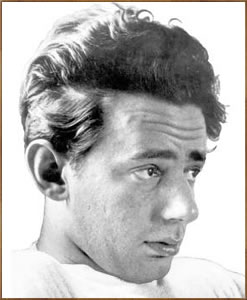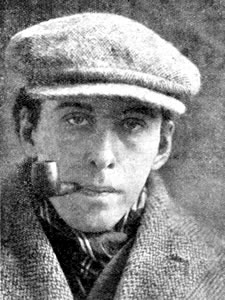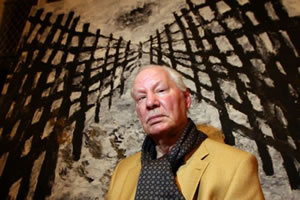
Olga Tokarczuk, Germaine Greer, Mirjam Müntefering, Serap Çileli, Gert Hofmann

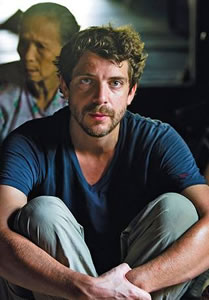
De Poolse schrijfster Olga Tokarczuk is in Sulechów, dichtbij Zielona Góra, geboren op 29 januari 1962. Zie ook mijn blog van 28 januari 2007 en ook mijn blog van 29 januari 2008 en ook mijn blog van 29 januari 2009 en ook mijn blog van 29 januari 2010.


Uit: Runners (Vertaald door Jennifer Croft)


“They’re standing next to each other in the kitchen. Kunicki is dicing up parsley. He doesn’t really want to get into it again, but he can’t restrain himself.  He can feel the words swelling up in his throat, and he can’t quite swallow them back down. Meaning the old “Well then what did happen?” yet again.

She says in a tired voice, pointing out in a tone of I’m-reciting-this-yet-again that he’s being boring, that he’s making things difficult, “Here you go, one more time: I didn’t feel well, I think I had food poisoning, I told you.”

But he doesn’t give up so easily. “You didn’t feel sick when you went off,” he says.

“Right, but then I got sick, I got sick,” she repeats, with pleasure. “And I guess I passed out for a minute, and then the baby started crying, and that brought me to again. He was scared, and I was scared, too. We started toward the car, but just because of everything we ended up going the wrong way.”

“Which way? Into town? Toward Vis?”

“Yes, toward Vis. No, I mean, I don’t know, whether toward Vis or not, how was I supposed to know, if I had known, I would have come back, I’ve told you this a thousand times.” She raises her voice. “When I figured out I had gotten us lost, we just sat down in this little grove, and the baby fell asleep. I was still feeling weak…”

Kunicki knows she’s lying. He dices the parsley up and says in a sepulchral voice, not raising his eyes from the cutting board, “There was no grove.”

She just about screams, “Of course there was!”

“No, there wasn’t. All there was were individual olive trees and vineyards. What grove?”

There’s a silence, and then she suddenly says with deadly seriousness, “Okay. You’ve cracked it. Good job. We were carried off by a flying saucer. They did experiments on us. They implanted chips in us, here,” and she lifts up her hair to reveal the nape of her neck. Her gaze is icy.”
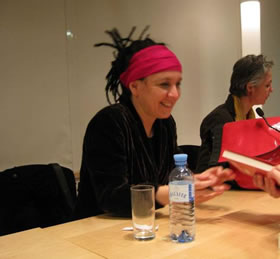


Olga Tokarczuk (Sulechów, 29 januari 1962)


Lees verder “Olga Tokarczuk, Germaine Greer, Mirjam Müntefering, Serap Çileli, Gert Hofmann”
Hubert K. Poot, Muna Lee, Johann Seume, Vicente Blasco Ibáñez

De Nederlandse dichter Hubert Kornelisz. Poot werd geboren in Abtswoude op 29 januari 1689. Zie ook mijn blog van 29 januari 2009 en ook mijn blog van 29 januari 2010.


Klagt


Een abel Nimfelyn, dat d’eêlsteschoonheit tart,

(Als dragende in een lyf, waerop natuur magh bogen,

De fierheit van Diane en Venus minvermogen)

Houdt in den doolhof van haer schoonheit my verwart.

Zoekt iemant ’t Godendom, of waer het woont en mart;

Welsprekende Merkuur is in haer’ mont gevlogen:

Minerva in haer brein: Kupido in haere oogen:

De strafheit in haer borst, tot myn verdriet en smart.

Wat schept myn zuchten dies aen doove rotsen, steenen,

Al ooren! welk een tal van monden, die myn weenen

Nabauwen, daer zy bet versteent blyft dan een rots!

‘k Zou zelf de dartle Min myn schreien naer zien rechten,

Omdat noit schichten op haer hart hart kunnen hechten,

Waer ’t onverboôn door ’t lot en in de magt eens Godts.


Hubert K. Poot (29 januari 1689 – 31 december 1733)


Lees verder “Hubert K. Poot, Muna Lee, Johann Seume, Vicente Blasco Ibáñez”

Ramsey Nasr, Peter Verhelst, Maik Lippert, Ismail Kadare

De Palestijns-Nederlandse dichter, schrijver en acteur Ramsey Nasr werd geboren in Rotterdam op 28 januari 1974. Zie ook mijn blog van 28 januari 2007 en ook mijn blog van 28 januari 2008 en ook mijn blog van 28 januari 2009 en ook mijn blog van 28 januari 2010.

Richtingwijzers

Je moet onthouden
Dat oude meisjes soms een bel
Onder hun losgekomen vel
Opblazen. Alsof wereldbollen
Onder mijn handen doorrolden
Kwamen hun gladde lijven langs.
Der gladheid egels vol van angst.

Je moet onthouden
Hoe stiekem een nijlpaard stond
Te huilen aan de Vlaamse Kaai.
Zijn hoedje was hem afgewaaid.
Zijn bek lag heel lang op de grond.
Van suiker hield hij zeker niet.
Ik dacht niet dat hij me verstond.

Je moet onthouden
Dat iemands oude ogen breken
Als oud glazuur. Het bleken
Haar wimpers zelf die toeklapten
Vastkleefden en haar uitpakte.
Ik ben de weg kwijt en ik weet
Niet waar op ik mijn pijlen schiet.


I – hudson’s shortcut

in wezen lagen jullie in de weg
wij kwamen meegevaren op de droom
van een malloot: die hudson had gezegd
dat hij een shortcut kende naar den oost

immer gerade aus langs de noordpool
dan kwam je snel in indië terecht
en wij geloofden deze vent, we volgden
zelfs toen hij ijskoud polste: ‘of naar west…?’

kapitein hudson was al eens ontslagen
en toen hij aan een vreemde baai bezwoer
dat we om in azië te raken slechts nog
dwars door amerika heen moesten varen
toen voeren we al niet meer – rotsvast geklemd
van kop tot kont in ’t nieuwe continent


II – nieuw amsterdam

de baai lag als een uitgestrekte vinger
vanaf het vaderland op ons te wachten
wij gingen er op pad, we stampten rond
wegwijzend in een leeg maar vruchtbaar gat

wellicht dat enkel uit ons lijf, dat nimmer
één volk, één god voor zich had kunnen winnen
dat zelf oprees uit schuim van minderheden
een babelstad als dit zich kon ontspinnen

wie leerde u hier het ware smelten? wie
zei: handel vrij, wees anders, wees gelijken
dat dromen zich als aandelen verspreiden?
de wereldkampioen in immigreren
dat waren wij, een verre vonk van vrijheid
amerika een holland in het klein


Ramsey Nasr (Rotterdam, 28 januari 1974)


Lees verder “Ramsey Nasr, Peter Verhelst, Maik Lippert, Ismail Kadare”

Miguel Barnet, José Martí, Hermann Kesten, David Lodge, Wies Moens

De Cubaanse dichter en schrijver Miguel Barnet werd geboren op 28 januari 1940 in Havanna. Zie ook mijn blog van 28 januari 2007 en ook mijn blog van 28 januari 2008 en ook mijn blog van 28 januari 2009 en ook mijn blog van 28 januari 2010.


Uit: The Language We Speak


Our Cuban variant of the Spanish language is a spicy potato dish in which, among others the Spanish, the indo-West Indian, and the African of Yoruba, Bantu or Carabali origin have combined, just to mention only three African linguistic sources, in view of which we should also assume an objective position, not an embarrassing or discriminatory one. The world “chévere”, very Cuban, is used today in many countries in the Americas, where it arrived by way of Cuban music; however, it’s barely used in Cuba now. “Asere” and “ecobio”, also of African roots, have expanded as ways of addressing people, particularly the first one, among our youngsters since the 1960’s. Today, their use is common in Cuban vocabulary and not necessarily poor Cubans. They’re contributions from other languages that have been gradually incorporated into the Cuban Spanish and that are part of our culture. Words coming from religious systems or fraternity and mutual help societies like the Abakuá Society, but that have acquired a new semantic value, according to the persons using them and the intention with which they do. 

Between all of us, we have gradually elaborated this rich spicy dish throughout the long cooking process identifying us as the Cuban linguistic community. We’re not defending the use or abuse of vernacular words, because “Cuban” means not only what is popular, picturesque, and vulgar; that’s not only a very narrow conception, but a wrong one. Cuban is also what is educated, more elaborate.” 


Miguel Barnet (Havanna, 28 januari 1940)


Lees verder “Miguel Barnet, José Martí, Hermann Kesten, David Lodge, Wies Moens”

Manfred Jendryschik, Mo Rocca, Hermann Peter Piwitt, Colette, Christian Felix Weiße

De Duitse dichter en schrijver en uitgever Manfred Jendryschik werd geboren op 28 januari 1943 in Dessau. Zie ook mijn blog van 28 januari 2009 en ook mijn blog van 28 januari 2010.

Vom Wasser

Manchmal, scheint’s tröstlich, gehen auch die Könige
baden, siehe der zweite Ludwig, soeben
war er noch da, nun sucht er Atlantis. Die Immunität
von Pinochet wurde zu spät aufgehoben, Franco
starb friedlich im Bett wie Stalin, der Mörder
von Luther King sollte nie gefunden werden. Warum
nur, fragt sich der kleine Mann in der Wanne (und sei’s drum:
Müller-Lüdenscheidt) etabliert sich das Unrecht
so weltweit und immer wieder, ganz sentimental-
faschistoid-heimatliebend, Mr. President? Usedoms
genannte Kaiserbäder sagen ein Herzliches
Willkommen wie auch den Diktatoren
der Kontinente, aber die waschen sich, hört man, anderswo
in aller Unschuld das Blut von den Fingernägeln.
Und es hilft ja auch nichts,
regelmäßig die Kurtaxe zu zahlen.


Manfred Jendryschik (Dessau, 28 januari 1943)

Dessau 


Lees verder “Manfred Jendryschik, Mo Rocca, Hermann Peter Piwitt, Colette, Christian Felix Weiße”

James Grippando, Benjamin von Stuckrad-Barre, Lewis Carroll, Eliette Abécassis, Alexander Stuart

De Amerikaanse schrijver James Grippando werd geboren op 27 januari 1958 in Waukegan, Illinois. Zie ook mijn blog van 27 januari 2008 en ook mijn blog van 27 januari 2009 en ook mijn blog van 27 januari 2010.


Uit: The Abduction


„Allison could feel her heart pounding. Her lungs burned as she fought forair. The treadmill’s digital display told her she was passing the two-milemark. She punched the speed button to slow the pace and catch her breath.Perspiration soaked her, pasting the nylon sweat pants and extra-large T-shirtto her trim forty-eight-year-old body. It was her favorite T-shirt, whitewith bright red and blue lettering.

It read, “Leahy for President–A New Millennium.”

After nearly four years as the United States attorney general, Allison wasjust fifteen days away from the historic date on which voters would decidewhether the nation’s “top cop” would become its first woman president.The race was wide-open and without an incumbent, as her boss–DemocraticPresident Charlie Sires–was at the end of his second and final four-yearterm. Allison was his second-term attorney general, part of the president’sshake-up of his own cabinet upon reelection in 1996. Eight months ago, Allisondidn’t consider herself a serious presidential contender. But when the Republicansnominated Lincoln Howe, the nation’s most beloved black man, the polls madeit clear that the only Democrat who could beat him was a charismatic whitewoman.

Ironically, thirty minutes of walking in place on the treadmill had actuallyput Allison thirty miles closer to her afternoon rally in Philadelphia.She was on the last leg of a two-day bus tour through Pennsylvania, a criticalswing state with twenty-four electoral college votes. Her campaign bus hadlogged nearly ten thousand miles in the past six months.”


James Grippando (Waukegan, 27 januari 1958)   


Lees verder “James Grippando, Benjamin von Stuckrad-Barre, Lewis Carroll, Eliette Abécassis, Alexander Stuart”

Mordecai Richler, Ethan Mordden, Guy Vaes, Leopold von Sacher-Masoch, Bernd Jentzsch

De Canadese schrijver Mordecai Richler werd geboren op 27 januari 1931 in Montreal. Zie ook mijn blog van 27 januari 2007 en ook mijn blog van 27 januari 2008 en ook mijn blog van 27 januari 2009 en ook mijn blog van 27 januari 2010.

Uit: Mordecai Richler Was Here: Selected Writings

 “And who came rank one, may I ask?”
Mrs. Klinger’s boy, alas. Already the phone was ringing. “Yes, yes,” my mother said to Mrs. Klinger, “congratulations, and what does the eye doctor say about Riva, poor kid, to have a complex at her age, will they be able to straighten them….”
Parochial school was a mixed pleasure. The old, underpaid men who taught us Hebrew tended to be surly, impatient. Ear-twisters and knuckle-rappers. They didn’t like children. But the girls who handled the English-language part of our studies were charming, bracingly modern, and concerned about our future. They told us about El Campesino, how John Steinbeck wrote the truth, and read Sacco’s speech to the court aloud to us. If one of the younger, unmarried teachers started out the morning looking weary, we assured each other that she had done it the night before. Maybe with a soldier. Bareback.
From parochial school, I went on to a place I call Fletcher’s Field High in the stories and memoirs that follow. Fletcher’s Field High was under the jurisdiction of the Montreal Protestant School Board, but had a student body that was nevertheless almost a hundred percent Jewish. The school became something of a legend in our area. Everybody, it seemed, had passed through FFHS: Canada’s most famous gambler. An atom bomb spy. Boys who went off to fight in the Spanish Civil War. Miracle-making doctors and silver-tongued lawyers. Boxers. Fighters for Israel. All of whom were instructed, as I was, to be staunch and bold, to play the man, and, above all, to

Strive hard and work
    With your heart in the doing.
    Up play the game,
    As you learnt it at Fletcher’s.

Again and again we led Quebec province in the junior matriculation results. This was galling to the communists among us, who held we were the same as everyone else, but to the many more who knew that for all seasons there was nothing like a Yiddish boy, it was an annual cause for celebration.”


Mordecai Richler (27 januari 1931 – 3 juli 2001)

Richler in de jaren 1950


Lees verder “Mordecai Richler, Ethan Mordden, Guy Vaes, Leopold von Sacher-Masoch, Bernd Jentzsch”

Ilja Ehrenburg, Mikhail Saltykov-Shchedrin, Neel Doff, Rudolf Geel, Balduin Möllhausen

De Russische dichter en schrijver Ilja Ehrenburg werd geboren op 27 januari 1891 in Kiev. Zie ook mijn blog van 27 januari 2007 en ook mijn blog van 27 januari 2009 en ook mijn blog van 27 januari 2010.


Uit: Kill


“They take some Russians home, mistreat them, make them lose their wits by hunger, to the point that they eat grass and worms, and then a repulsive German with a stinking cigar can philosophise: “Are these perhaps human beings?” We know everything. We remember everything. We have understood: Germans are not human beings. Henceforth the word German means to us the most terrible curse. From now on the word German will trigger your rifle. We shall not speak any more. We shall not get excited. We shall kill. If you have not killed at least one German a day, you have wasted that day. If you think that instead of you, the man next to you will kill him, you have not understood the threat. If you do not kill the German, he will kill you. If you cannot kill your German with a bullet, kill him with your bayonet. If there is calm on your part of the front, if you are waiting for the fighting, kill a German before combat. If you leave a German alive, the German will hang a Russian and rape a Russian woman. If you kill one German, kill another – there is nothing more amusing for us than a heap of German corpses. Do not count days; do not count miles. Count only the number of Germans you have killed. Kill the German – this is your old mother’s prayer. Kill the German – this is what your children beseech you to do. Kill the German – this is the cry of your Russian earth. Do not waver. Do not let up. Kill.”


Ilja Ehrenburg (27 januari 1891 – 31 augustus 1967)

In 1925


Lees verder “Ilja Ehrenburg, Mikhail Saltykov-Shchedrin, Neel Doff, Rudolf Geel, Balduin Möllhausen”

VSB Poëzieprijs 2011 voor Armando


VSB Poëzieprijs 2011 voor Armando


De Nederlandse dichter en kunstenaar Armando is de winnaar van de VSB Poëzieprijs 2011. Hij krijgt de jaarlijkse prijs voor Nederlandstalige poëzie voor zijn dichtbundel “Gedichten 2009”. Dat maakte de organisatie woensdag bekend tijdens de prijsuitreiking in het stadhuis van Utrecht. Armando ontving een geldbedrag van 25.000 euro en een glaskunstwerk van kunstenares Maria Roosen. Zie ook mijn blog van 18 september 2006.en ook mijn blog van 18 september 2009 en ook mijn blog van 18 september 2010.


Voorzichtig


Ze liepen voorzichtig,
en lieten het landschap binnenkomen,
ze merkten dat hun tred bewonderd werd.
Heel voorzichtig gingen ze door de deuren,
langs het lusteloze strand, bezichtigden de bomen,
ze dachten dat de struiken ontvlambaar waren
en de hemel onder handbereik.
Zie, ze houden zich voorzichtig vast.


Nooit meer

Nergens is de lente.
Onverschrokken de helden van weleer.
Nooit meer. Nooit meer.

Geen geestverwanten, geen drempel van de oogst.
Je denkt toch niet dat sneeuw nog smelt.
Met z’n hoevelen waren ze.


Armando (Amsterdam, 18 september 1929)


Turing Nationale Gedichtenwedstrijd 2011 gewonnen door Henk van Loenen

Henk van Loenen wint Turing Nationale Gedichtenwedstrijd

 De Nederlandse dichter Henk van Loenen die onder het pseudoniem Juliën Holtrigter vier dichtbundels heeft gepubliceerd, heeft met het gedicht ‘Onder de sterren’ de tweede editie van de Turing Nationale Gedichtenwedstrijd gewonnen. De prijs werd gisteren in de Amsterdamse Stadsschouwburg aan hem uitgereikt. Aan de prijs is een bedrag van 10.000 euro verbonden. Henk van Loenen (Hilversum, 1946), publiceerde al in 1969 in het tijdschrift Kentering. Hij debuteerde in 2001 met de bundel Omwegen bij uitgeverij Mozaïek. In 2004 verscheen Het verlangen te verdwalen en in 2006 Het stilteregister, beide bij uitgeverij De Harmonie. In april komt zijn vierde bundel uit met als werktitel De onaanraakbaarheid van de ruimte. Hij was werkzaam in het onderwijs als tekendocent, maar is altijd blijven schrijven.

Onder de sterren

Onder de sterren geslapen. Lang in de tijd
liggen kijken, in de ijlende, krijsende ruimte.
De vreemde vreugde die dat ondenkbare schept.

Ik zag een foto die iemand vanuit een kuil had genomen.
Uitzicht vanuit een graf, stond eronder. Je zag
een stuk van de hemel en de dunne kruinen van bomen.

Ik denk aan mijn vader, heel ver van huis, niet meer
bij machte terug te keren.
En aan mijn ex die ik plots bij mijn tandarts aantrof
boven mijn wijdopen mond, mooier en harder dan ooit,
met een slang in haar hand om het gruis en het vocht
weg te zuigen. Daar lag ik.

Ik zou zo graag licht willen reizen, met in mijn rugzak
niet meer dan wat kleren, een veldfles, een pen
en papier 


Henk van Loenen (Hilversum, 1946)