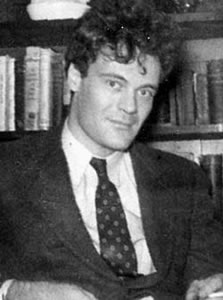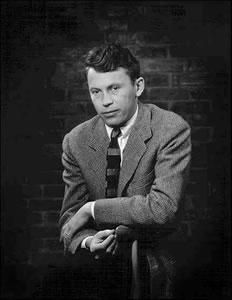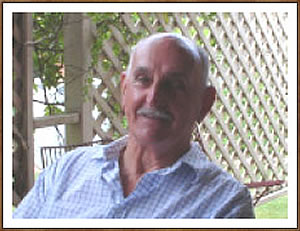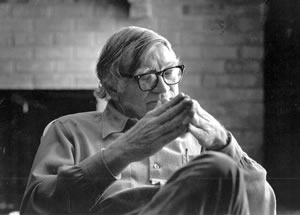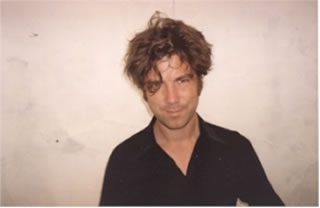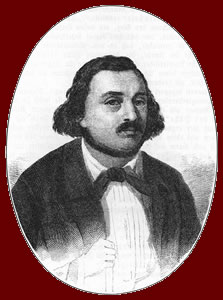
Godfried Bomans, Multatuli, Thom Wolfe, John Irving, Michael Salinger

De Nederlandse schrijver Godfried Bomans werd geboren in Den Haag op 2 maart 1913. Zie ook alle tags voor Godfried Bomans op dit blog.


Uit: Spookjes (De bramenplukker)


“En zij trokken een donker woud door, zwommen twee rivieren over, sprongen over sloten en heggen, en waren bij de bramenplukker. “Bramenplukker!” riep de reiziger, “hier zijn we!” “Wat aardig!” riep de bramenplukker, “u laat er geen gras over groeien, dat moet ik zeggen. Hemeltje lief, wat hebt u daar een mensen bij u! Het zijn er wel een paar duizend! Wat gaat u daarmee beginnen?” “Wij komen de parels halen,” sprak de burgemeester, naar voren tredend, “en wij gaan in het paleis wonen waar de zoldering van beweegbaar mozaïek is en de zuilen van groen smaragd. Wij komen luisteren naar de muziek en de spiegels moeten we ook hebben.” “Wel, dat is heerlijk!” riep de bramenplukker, hem omhelzend, “ik ben zo blij dat jullie het ook waarderen! Dat jullie inziet hoe mooi dat alles is! Welkom, welkom! Ontbijtkoek heb ik niet zoveel, maar wel goed brood en fris water.”

“Wij moeten geen ontbijtkoek,” sprak de burgemeester langzaam, “wij moeten parels.” “Die krijgen jullie!” riep de bramenplukker, “zoveel als je dragen kunt. Wacht tot morgen!” “Kan het niet vanavond?” vroeg de burgemeester bezorgd, “tijd is geld!” “Nee,” hernam de bramenplukker hoofdschuddend, “nu is het donker. En in het donker ziet men de parels niet. Maar morgenochtend vroeg zult u eens wat zien! Gaan jullie nu wat slapen, we hebben alle tijd.” “Goed,” sprak de burgemeester, “slapen, mannen! We hebben alle tijd!”
De volgende morgen lagen de velden glinsterend en flikkerend onder de rode hemel; aan elke grashalm, ook de kleinste, hingen prachtige, zilveren diamanten, en toen de zon opging, veranderden deze in topazen, smaragden en blauwe saffieren, stralend van licht, flonkerend van zuiverheid, schitterender dan aardse juwelen. En daartussen stonden de mensen en spraken over de parels die nu weldra gevonden zouden worden, hele grasvelden vol. Werd nu de bramenplukker maar wakker; zij hielden de ogen strak gevestigd op de kleine deur.
Eindelijk ging zij open; de bramenplukker trad naar buiten en schouwde zwijgend over de velden; zijn ogen stonden vol tranen. “Jullie treffen het wel,” sprak hij zachtjes. “Wat zegt ie?” mompelde de burgemeester. “Ik zeg: jullie treffen het wel,” hernam de bramenplukker glimlachend, “zoveel parels liggen er anders nooit.” “Ik zie geen parels,” sprak de burgemeester. “Zien jullie geen parels?” vroeg de bramenplukker verbaasd. “Wij zien niets,” riepen de mensen, “wij zien helemaal niets.”


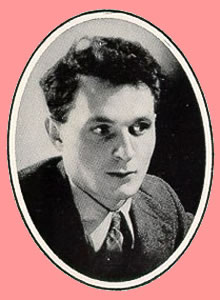
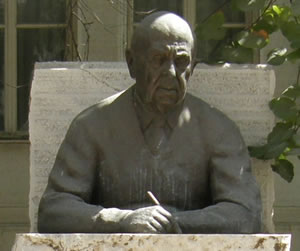
Sculptuur_Godfried_Bomans

Godfried Bomans (2 maart 1913 – 22 december 1971)
Sculptuur van Wim Jonker in de Janstraat te Haarlem


De Nederlandse schrijver Multatuli (pseudoniem van Eduard Douwes Dekker) werd geboren in Amsterdam op 2 maart 1820. Zie ook alle tags voor Multatuli op dit blog.


Uit: Ideën I


Wees door de Natuur bedeeld met zucht naar kennis… maak van ’t streven naar waarheid uw hoofddoel, uw eenig doel… offer alles op aan dat streven… verwaarloos alle belangen om dat ééne belang… betaal de geringe kans op slagen met uw rust, met uwe gezondheid, met uw welvaart, met alles wat een mensch offeren kàn… verlaat vrouw en kind, zeggende: Vrouwe, wat heb ik met u te doen? Kind, wat heb ik met u te doen? Ik zoek de waarheid… ziedaar myne vrouw, ziedaar het kind van m’n hart.

Trek naar de woestyn… sla u een kemelhuid om de lenden… omgord u met lederen riem… voed u met sprinkhanen en wilde honig.

Denk, peins, overweeg… twyfel… overweeg nogmaals, en weder, en nogeens… altyd door, altyd op-nieuw.

Rek uw begrip tot de uiterste grens der mogelykheid van kennen, kunnen, weten, en begrypen.

Schroef uw denkvermogen op tot de hoogste mate van bevatting.

Span uwe gedachten voor de logge vracht van alle onopgeloste vraagstukken… zweep ze voort met de kracht van uwen wil, tot raders en zeelen kraken…

Hebt ge dit alles gedaan?

Als ge dit zult gedaan hebben tot uwe ziel vermoeid is, tot uw vleesch zich afscheidt van ’t gebeente…

Als ge dan eindelyk meent iets te hebben geleerd, iets te weten, iets te begrypen…

Keer dan terug uit de woestyn. Volg de inspraak van uw hart dat aandryft tot meedeeling, en zeg:

– Broeders, ik geloof deze zaak is alzoo.

– Dan zal er afscheiding zyn tusschen wie u hooren.

Een gedeelte zal roepen:

– Deze mensch is slecht.

Dit zeggen zy die nadachten over de onderwerpen welke u bezighielden, maar die niet nadachten als gy in de woestyn. Zy noemen u slecht, wyl ze vreezen dat het volk offer zal schatten boven gebrek aan offer, en inspanning nemen tot maatstaf om ’t slagen te meten.

Antwoord denzulken door te wyzen op uw versleten kleed van kemelvel.

En een ander gedeelte zal bestaan uit hen die nooit hoorden van de dingen die ge overdacht, uit lieden die zich bezighielden met niets, al den tyd dien gy sleet in zoo zwaren arbeid.

En weder zullen dezen zich verdeelen.

Het eerste deel zal zeggen:

– M’nheer, net m’n idee.”


multatuli

Multatuli (2 maart 1820 – 19 februari 1887)


De Amerikaanse schrijver en journalist Tom Wolfe werd geboren op 2 maart 1930 in Richmond, Virginia. Zie ook alle tags voor Thomas Wolfe op dit blog.


Uit: The Painted Word


All these years, along with countless kindred souls, I am certain, I had made my way into the galleries of Upper Madison and Lower Soho and the Art Gildo Midway of Fifty-seventh Street, and into the museums, into the Modern, the Whitney, and the Guggenheim, the Bastard Bauhaus, the New Brutalist, and the Fountainhead Baroque, into the lowliest storefront churches and grandest Robber Baronial temples of Modernism. All these years I, like so many others, had stood in front of a thousand, two thousand, God-knows-how-many thousand Pollocks, de Koonings, Newmans, Nolands, Rothkos, Rauschenbergs, Judds, Johnses, Olitskis, Louises, Stills, Franz Klines, Frankenthalers, Kellys, and Frank Stellas, now squinting, now popping the eye sockets open, now drawing back, now moving closer–waiting, waiting, forever waiting for . . . it . . . for it to come into focus, namely, the visual reward (for so much effort) which must be there, which everyone (tout le monde) knew to be there–waiting for something to radiate directly from the paintings on these invariably pure white walls, in this room, in this moment, into my own optic chiasma. All these years, in short, I had assumed that in art, if nowhere else, seeing is believing. Well–how very shortsighted! Now, at last, on April 28, 1974, I could see. I had gotten it backward all along. Not “seeing is believing,” you ninny, but “believing is seeing,” for Modern Art has become completely literary: the paintings and other works exist only to illustrate the text.

Like most sudden revelations, this one left me dizzy. How could such a thing be? How could Modern Art be literary? As every art-history student is told, the Modern movement began about 1900 with a complete rejection of the literary nature of academic art, meaning the sort of realistic art which originated in the Renaissance and which the various national academies still held up as the last word.


tomwolfe

Thom Wolfe (Richmond, 2 maart 1930)


De Amerikaanse schrijver John Irving werd geboren op 2 maart 1942 in Exeter, New Hampshire. Zie ook alle tags voor John Irving op dit blog.


Uit: Last Night in Twisted River


„The young canadian, who could not have been more than fifteen, had hesitated too long. For a frozen moment, his feet had stopped moving on the floating logs in the basin above the river bend; he’d slipped entirely underwater before anyone could grab his outstretched hand. One of the loggers had reached for the youth’s long hair — the older man’s fingers groped around in the frigid water, which was thick, almost
soupy, with sloughed-off slabs of bark. Then two logs collided hard on the would-be rescuer’s arm, breaking his wrist. The carpet of moving logs had completely closed over the young Canadian, who never surfaced; not even a hand or one of his boots broke out of the brown water.

Out on a logjam, once the key log was pried loose, the river drivers had to move quickly and continually; if they paused for even a second or two, they would be pitched into the torrent. In a river drive, death among moving logs could occur from a crushing injury, before you had a chance to drown — but drowning was more common.

From the riverbank, where the cook and his twelve-year-old son could hear the cursing of the logger whose wrist had been broken, it was immediately apparent that someone was in more serious trouble than the would-be rescuer, who’d freed his injured arm and had managed to regain his footing on the flowing logs. His fellow river drivers ignored him; they moved with small, rapid steps toward shore, calling out the lost boy’s name. The loggers ceaselessly prodded with their pike poles, directing the floating logs ahead of them. The rivermen were, for the most part, picking the safest way ashore, but to the cook’s hopeful son it seemed that they might have been trying to create a gap of sufficient width for the young Canadian to emerge. In truth, there were now only intermittent gaps between the logs. The boy who’d told them his name was “Angel Pope, from Toronto,” was that quickly gone.

“Is it Angel?” the twelve-year-old asked his father. This boy, with his dark-brown eyes and intensely serious expression, could have been mistaken for Angel’s younger brother, but there was no mistaking the family resemblance that the twelve-year-old bore to his ever-watchful father. The cook had an aura of controlled apprehension about him, as if he routinely anticipated the most unforeseen disasters, and there was something about his son’s seriousness that reflected this; in fact, the boy looked so much like his father that several of the woodsmen had expressed their surprise that the son didn’t also walk with his dad’s pronounced limp.“


Irving

John Irving (Exeter, 2 maart 1942)


De Amerikaanse dichter en performer Michael Salinger werd geboren op 2 maart 1962 in Cleveland, Ohio. Zie ook alle tags voor Michael Salinger op dit blog.


Stingray (Fragment)


The young man believed

he had hooked an angel

shark

line ripping from his bait casting real

drag click whizzing away

a New Year’s Eve noisemaker

attached to an electric drill

the rest of the anglers

at his end of the pier

grabbing their gear

clearing way

to watch this fight

big fish

big fish


big fish on

passes

tide steady

down 600 foot fishing pier

as tackle lay abandoned

on wheather cured panks

so that the owners

could  catch this show

50 pound test line

stretching tight

gutteral cvat howling

like an out of tune violin

while the young man

repels down a mountainside

back leaning with all his weight

gaining three feet

giving up

two

towed from one rough hewn railing

to the other

for three tortuous quarters of an hour

before we even see

the fish


Salinger

Michael Salinger (Cleveland, 2 maart 1962)


Zie voor nog meer schrijvers van de 2e maart ook mijn vorige blog van vandaag.


Pascal Rannou, János Arany, Jevgeni Baratynski, Sholom Aleichem, Olivia Manning, Gerhard von Halem

De Franse schrijver en  letterkundige Pascal Rannou werd geboren op 2 maart 1958 in Laval. Zie ook mijn blog van 2 maart 2009.


Uit: Noire la neige


«Lavaida !… Non, Alvaida !… Zut, Valaida !…» Trois frimousses pouffent de rire et se cachent derrière leurs pupitres relevés. Maîtresse n’en peut plus. «Bon sang ! A-t-on idée de donner à trois soeurs des prénoms si semblables ! Je m’y perds, moi ! Lavaida !» Le pupitre se baisse et l’aînée apparaît, joli visage long et bien dessiné, petit nez mutin et tresses bouclées.
«Oui, m’dame !
– Viens donc me faire cette division, que les autres comprennent !»
Le groupe se tait, car Lavaida est la plus avancée, et son intelligence impose le respect. L’école est une baraque de planches et de tôles, située dans les bas quartiers de Chicounago, faubourg de Chattanooga. C’est même curieux qu’il y ait une école. Quand elle a ouvert, les blancs du coin ont haussé les épaules : «Une école pour nègres ! Ça sert à rien, sont incapables d’apprendre à lire… tout juste bons à tapiner et à brailler leur damné blues», a éructé Jim Crow. Sûr que si les blancs avaient dû cracher au bassinet, il y aurait eu des manifs, et même des lynchages. Mais l’école est financée par un couple de philanthropes, des blancs, Mr et Mrs Lawson, un pasteur presbytérien et sa femme qui se sont un peu enrichis en étant les premiers, dans le Tennessee, à proposer des spectacles de cinéma ambulant. Le public se rassemble dans ces granges qu’on appelle Odeon Nickel, puisqu’on y entre pour quelques sous, et assiste le plus souvent debout aux projections. Les plus chanceux s’asseyent sur des bottes de paille, les enfants s’accroupissent au premier rang. Vers 1910, le cinéma est encore balbutiant, mais le public en raffole. Le pasteur noir, Mr Cooke, et parfois aussi Ma’, quand les tournées familiales lui en laissent le temps, accompagnent au piano les images muettes : films burlesques ou sentimentaux, actualités ou dessins animés. Quand Ma’ joue, on a le droit d’y aller. On est accroupies auprès d’elle, et le rythme sautillant des ragtimes nous ravit.“


Rannou

Pascal Rannou (Laval, 2 maart 1958)


De Hongaarse dichter János Arany werd geboren op 2 maart 1817 in Nagyszalonta. Zie ook mijn blog van 2 maart 2007 en ook mijn blog van 2 maart 2009.


Auf dem Friedhof

Hier ist das stille Gräberfeld,
wo Pietät die Wache hält,
sie schützt den Schlaf der Toten.
Die Hügel grünen in der Au,
die Nachwelt zahlt den Zoll genau
auf wohlbestelltem Boden.

Wohl ein Jahrhundert ist es jetzt,
seitdem man hier die Bäumchen setzt,
die mit den Blütenkerzen.
Grabkreuze werden aus dem Wald,
sie mehren sich erstaunlich bald,
so wie gebrochne Herzen.
Vertaald door Géza Engl


Dieses Leben

Ein Gelage ist dies Leben:
Auch du mußt dein Glas erheben,
Freud und Leid gilt es zu grüßen,
sei’s vom Sauren, sei’s vom Süßen.

Trinke wie aus tiefster Brust,
Lust folgt Leid und Leid folgt Lust.
Viele schlürften wild das Naß,
wenige wie ich mit Maß.

Die mit mir beim Wein gesessen,
liegen drunten schon indessen,
ich, der stets den Rausch vermieden,
halt den Platz, der mir beschieden.

Blick ich auf die Trümmerreste,
scheinen öd mir solche Feste!
Trank ich denn nicht zur Genüge,
daß ich nicht dort unten liege?
Vertaald door Annemarie Bostroem

Arany

János Arany (2 maart 1817 – 22 oktober 1882)
Standbeeld in Boedapest


De Russische dichter Jevgeni Baratynski werd geboren op 2 maart 1800 in Sint Petersburg. Zie ook mijn blog van 2 maart 2007 en ook mijn blog van 2 maart 2009.


The Skull


Departed brother, who has disturbed your sleep

And trampled on the sanctity of the tomb?

Into your house, all dug up, I stepped down —

I took your skull in my hands, dusty and yellow.


The remnants of your hair — it wore them still.

I saw the slow course of decay upon it.

Horrible sight! How powerfully it struck

The sensible inheritor of that ruin.


Along with me a crowd of mindless youths

Above the open pit laughed mindlessly.

If only then, if only in my hands

Your head had burst forth into prophecy!


If only it had taught us — rash, in bloom,

And menaced hourly by the hour of death —

The truths that lie within the ken of tombs,

Uttering them in its impassive voice!


What am I saying? A hundred times is blessed

That law which has embalmed its lips in silence.

And righteous is that custom which demands

Respect for the solemn sleep of the departed.


Let the living live! Let the dead decay in peace!

O man, worthless creation of the Almighty,

Recognize finally that you were made

Neither for wisdom nor for omniscience!


We need our passions as we need our dreams.

They are the law and nourishment of our being:

You will not bring under the selfsame laws

The noise of the world and the silence of the graveyard.


Wise men will not extinguish natural feelings.

The answer they search for no grave shall supply.

Let life bestow its joys upon the living —

And death itself will teach them how to die.


Vertaald door Ilya Bernstein


Baratynski

Jevgeni Baratynski (2 maart 1800 – 11 juli 1844)


De Russisch-joodse  schrijver Sholom Aleichem werd geboren in Pereyslav bij Kiev op 2 maart 1859. Zie ook mijn blog van 2 maart 2009.


Uit: Wandering Stars (Vertaald door Aliza Shevrin)


After the meal, and after Sholom-Meyer’s little speech, and after the cantor’s wife had cleared the table and the cantor said grace, the director felt it was time to get to the matter for which they had come. First he lifted his top hat, revealing a large bald pate, smoothed his fringe of pomaded hair, and wiped the sweat from his forehead. Then he began speaking. By nature he was a man of few words, but once he got going, it was hard for him to stop himself. His tongue would carry him off God knew where, so that he often ended up saying things he didn’t intend. Sholom-Meyer, his right-hand man, knowing his weakness, would try to take over, but the director would persist in speaking in his own style.

“You must understand, dear cantor,” Shchupak began, “that this is the way it is. Listen, I myself was once a cantor’s chorister. Actually I carried the slop pot. I mean I sang. I had a true soprano voice and caught more than a few slaps — I helped out on the pulpit. Then I went out on my own, sang at weddings, circumcisions, and pidyon habens chanting a kol m’koydesh that I had actually composed by myself. You should see this book full of my songs with my portrait on the cover. My kol m’koydesh goes like this, just listen.”


He began to warble:


Kol m’koydesh [Tzipkele my wife],

Sh’vii [may the devil take you],

K’rui lo [this very night!]


Albert Shchupak was into his role. He was preparing to sing kol m’koydesh in another key when Sholom-Meyer signaled him with a kick under the table that the sooner he stopped the better. Then Sholom-Meyer began explaining in plain words to the cantor exactly why they had come.“


Sholem_Aleichem_Kiev

Sholom Aleichem (2 maart 1859 – 13 mei 1916)
Standbeeld in Kiev


De Britse schrijfster Olivia Manning werd geboren op 2 maart 1908 in Portsmouth. Zie ook mijn blog van 2 maart 2009.


Uit: The Balkan Trilogy (The spoilt city)


„„One morning, while the city quivered like a mirage in the August heat, Harriet came face to face with Bella in the Calea Victoriei. Bella gave a smile and hurried into a shop. So she had not gone to Sinai after all, but had remained here, like everyone else, the prisoner of uncertainty and fear.

The Rome Conference had broken down. This time no one imagined that that was the end of the matter. There would be another conference. When it was announced, there was no stir and no more talk of defiance. The new Cabinet had announced complete fealty to the Führer and the Führer required a peaceful settlement. A settlement of any kind could only mean Rumania’s loss. Around the cafés and bars this fact was beginning to be accepted with a half-humorous resignation. What else was there to do? Yakimov, inspired by the tenor of conversation about him, had thought up a little joke. “Quel débâcle!” he said whenever opportunity arose: “As you walk cracks appear on the pavement,” and even Hadjimoscos had not the heart to snub him.

The young men still stood with their banners on the palace pavement, supported now by an admiring crowd. As for the King, having made his speech, his declaration of constancy, he had retired into silence, and a song was being sung which David did his best to put into English verse:


“They can have Bes
sarabia. We don’t like corn.

The best wheaten bread’s the stuff in our New Dawn.

Let them have the Dobrudja. Ma’s palace, anyway,

Has been sold to the nation for a million million lei.


Who wants Transylvania? Give it ’em on a plate.

Let them take what they damn well like. I’ll not abdicate”

The last phrase “Eu nu abdic” was the slogan of the moment. Jokes were told and the point was “Eu nu abdic”. Riddles were asked and the answer was always “Eu nu abdic”. However recondite, it was the smartest retort to any request or inquiry. It always raised a laugh.“


Olivia_manning

Olivia Manning (2 maart 1908 – 23 juli 1980)


De Duitse dichter en schrijver Gerhard Anton von Halem werd geboren op 2 maart 1752 in Oldenburg. Zie ook mijn blog van 2 maart 2009.

Eifersucht


Du, Eifersucht, wärst Amors Kind?
So sei von mir bewundert.
Dein Vater, sagt man, ist blind;
Du hast der Augen hundert.


Von Halem

Gerhard Anton von Halem (2 maart 1752 – 4 januari 1819)


Jan Eijkelboom, Franzobel, Jim Crace, Franz Hohler, Jacques Chessex, Lytton Strachey, Ryūnosuke Akutagawa

De Nederlandse dichter, vertaler en journalist Jan Eijkelboom werd op 1 maart 1926 in Ridderkerk geboren. Zie ook mijn blog van 1 maart 2008 en ook mijn blog van 28 februari 2008 en ook mijn blog van 1 maart 2009. 


Sluitertijd


Zie de afbladderende dichter.

Heb ik het goed? Kijkt hij

vanuit die plooien, de gelaagdheid

van aanzicht en overjas

nog steeds de lens tegemoet?


Zal ik hem vertellen hoe het

eindtraject moet worden afgelegd?

Ach, je gelooft je ogen niet

en wat hij zegt of prevelt

gaat ook al op de prent verloren –


De plek heeft hij zelf uitgekozen.

Een dichtgemetseld godshuis.

Maar in verweerde steen en brokkelige

kalk schuilt een betekenis

die nog verwoord wil zijn

wie weet nog uitgelegd.


Dreamtime


Er is geen begin en het einde is zoek.


Moge het sterven sereen zijn

toch zet het zich voort

in het bloedbad van een geboorte,

de geboorte van iemand anders dan,

dat valt niet te ontkennen.


Maar in het leven is ons gegeven

te doen alsof er geen dood was,

niet met de kop in het zand

maar juist op de uitkijk

naar weer een ander land,

een te bevaren kust.


En onderweg vermaan je nog een kind

dat zegt dat het zich dood verveelt:

ga in gods naam wat doen.

En het kind roept: maar ik bèn er toch?


Liefst zijn ook wij ons van geen kwaad bewust.


Lege kerk 1


Het hoog karkas, de nutteloze ruimte,

preekstoel en orgel afgedekt, een leegte

die het licht naar binnen zuigt.


De jongen die daar zat op bikkelharde,

nu weggehaalde banken, verzon eens

hoe je slingerend van lichtkroon


naar lichtkroon als Tarzan kon ontkomen

aan ’t herderlijke dwangbevel

dat onder hem de kudde deed verstarren.


Wat bleef is een afwezigheid

die heel die ruimte vult en reikt

tot aan het tongewelf, het schedeldak


van wie hier staat en ongeschonden

straks weer het heiligdom verlaat.

jan_eijkelboom.jpg


De Oostenrijkse schrijver, dichter en schilder Franzobel werd geboren op 1 maart 1967 in Vöcklabruck. Zie ook mijn blog van 1 maart 2007 en ook mijn blog van 28 februari 2008 en ook mijn blog van 1 maart 2009. 


Deutschland marschiert


Es dampfte das Entgegenkommen, Mensch

mit Wandervereinen, Pokalen gesteinigt,

als man noch schlechte Kragenknöpfe hatte,

mit Schmerzen ging, um die Zehen Watte,

da man noch nichts von Pediküre geahnt,

Blasen, als ob das Erdreich jählings zerrisse

und Schritte linkshin zur Fläche

ekligen Leichnams Schwarzfinsternis,

Gesichter, todmüde, fertig die Nacht,

die halbvollen aus unendlichen Rücken

kommenden Blasen, die stinken im Schritt

und faulend noch schreien:

Deutschland marschiert.


Autoscooter/Loveparade: Sehne


Wie Sehnen, Sucht und See
Schnecken tief im Gras wie
Füße hat es nie gegeben,
keine Sonne, Flüstern nicht,
Milchgefühl, mit Abstand,
Blümchenmuster wie wir sind
unnahbar, Zuseher und/oder was
hat uns gestülpt. Heraus.  

franznobel.jpg

Franzobel (Vöcklabruck, 1 maart 1967)


De Engelse schrijver Jim Crace werd geboren op 1 maart 1946 in St. Albans, Hertfordshire. Zie ook mijn blog van 1 maart 2009. 


Uit: The Pesthouse


„Everybody died at night. Most were sleeping at the time, the lucky ones who were too tired or drunk or deaf or wrapped too tightly in their spreads to hear the hillside, destabilized by rain, collapse and slip beneath the waters of the lake. So these sleepers (six or seven hundred, at a guess; no-one ever came to count or claim the dead) breathed their last in passive company, unwarned and unexpectedly, without experiencing the fear. Their final moments, dormant in America.

But there are always some awake in the small times of the morning, the love-makers, for instance, the night workers, the ones with stone hard beds or aching backs, the ones with nagging consciences or bladders, the sick. And animals, of course.

The first of that community to die were the horses and the mules, which the travelers had picketed and blanketed against the cold out in the tetherings, between the houses and the lake, and beyond the human safety of stockades. They must have heard the landslide – they were so close and unprotected – though it was not especially bulky, not bulky enough, probably, to cause much damage on its own. In the time that it would take to draw a breath and yawn, there was a muted stony splash accompanied by a barometric pop, a lesser set of sounds than thunder, but low and devious, nevertheless, and worrying – for how could anyone not know by now how mischievous the world could be? The older horses, connoisseurs of one-night stands when everything was devious and worrying, were too weary after yet another day of heading dawnways, shifting carts, freight and passengers, to do much more than tic their ears and flare their nostrils. Even when, a moment later, the displaced waters of the lake produced a sloshing set of boisterous waves where there had not been any waves before, the full-growns would not even raise their heads. But the younger horses and the ever-childish mules tugged against their ropes, and one or two even broke free but hadn’t the foresight to seek high ground in the brief time that remained.“

jim-crace.jpg

Jim Crace (St. Albans, 1 maart 1946)


De Zwitserse schrijver, cabaretier en liedjesmaker Franz Hohler werd geboren op 1 maart 1943 in Biel. Zie ook mijn blog van 1 maart 2009. 


Uit: Die Steinflut


„Als die siebenjährige Katharina Disch mit ihrem vierjährigen Bruder Kaspar am Freitag, dem 9. September 1881 das Haus ihrer Großmutter betrat, wußte sie nicht, daß sie erst wieder bei ihrer Hochzeit von hier weggehen würde.

Ihr Vater hatte sie für ein paar Tage weggeschickt, weil die Geburt eines Kindes bevorstand, und ohne

Widerspruch hatte Katharina das Bündelchen mit den beiden Nachtgewändern und etwas Leibwäsche, das ihre älteste Schwester Anna bereitgemacht hatte, genommen, hatte noch ihre Holzpuppe Lisi so hineingesteckt, daß sie mit dem Kopf herausschaute, und war dann mit Kaspar

an der Hand aufgebrochen. Sie war froh, daß sie nicht daheim bleiben mußte.

Wie verändert war ihr die Mutter beim Abschied vorgekommen!

Sie lag im Schlafzimmer im oberen Stock, ihre Haare, die sie sonst immer aufgesteckt hatte, waren

offen über das Kissen ausgebreitet und hingen sogar über den Bettrand hinunter, sie war bleich und schwitzte, von Zeit zu Zeit preßte sie die Lippen zusammen, kniff die Augen zu und drückte mit beiden Händen auf die Bettdecke, unter der sich ihr Bauch wölbte. Katharina wollte ihr nur schnell von der Türschwelle aus auf Wiedersehn sagen, aber die Mutter winkte sie zu sich heran, strich ihr mit ihrer Hand, die ganz kalt war, über die Haare und sagte leise, sie solle die Großmutter grüßen, und sobald ihr neues Geschwisterehen da sei, werde sie jemanden schicken. Dann drehte sie sich tief einatmend

zur Seite, griff in die Schublade des Nachttischchens, holte einige gedörrte Zwetschgen heraus und gab sie ihrer Tochter mit, »für unterwegs, für dich und Kaspar«,

fügte sie hinzu und versuchte zu lächeln. Katharina steckte sie schnell in die Tasche ihrer Schürze, blieb stumm stehen und suchte immer noch mit den Augen die Mutter, die sie kannte und die derjenigen, die dalag, so wenig glich. »Muesch ke Angscht ha«, flüsterte ihr die Frau aus dem Bett zu, legte sich wieder auf den Rücken und schloß ihre Augen.“

franz_hohler.jpg

Franz Hohler (Biel, 1 maart 1943)


De Franstalige, Zwitserse schrijver Jacques Chessex werd geboren op 1 maart 1934 in Payerne. Zie ook mijn blog van 1 maart 2009. 


Uit: Le vampire de Ropraz


Ropraz, dans le Haut-Jorat vaudois, 1903. C’est un pays de loups et d’abandon au début du vingtième siècle, mal desservi par les transports publics à deux heures de Lausanne, perché sur une haute côte au-dessus de la route de Berne bordée d’opaques forêts de sapins. Habitations souvent disséminées dans des déserts cernés d’arbres sombres, villages étroits aux maisons basses. Les idées ne circulent pas, la tradition pèse, l’hygiène moderne est inconnue. Avarice, cruauté, superstition, on n’est pas loin de la frontière de Fribourg où foisonne la sorcellerie. On se pend beaucoup, dans les fermes du Haut-Jorat. A la grange. Aux poutres faîtières. On garde une arme chargée à l’écurie ou à la cave. Sous prétexte de chasse ou de braconne on choie poudre, chevrotine, gros pièges à dents de fer, lames affûtées à la meule à faux. La peur qui rôde. A la nuit on dit les prières de conjuration ou d’exorcisme. On est durement protestants mais on se signe à l’apparition des monstres que dessine le brouillard. Avec la neige, le loup revient. Il n’y a pas si longtemps qu’on a tué le dernier, en 1881, sa dépouille empaillée s’empoussière à douze kilomètres dans une vitrine du musée du Vieux-Moudon. Et l’horrible ours venu du Jura. Il a éventré des génisses il n’y a pas quarante ans dans les gorges de la Mérine. Les vieux s’en souviennent, ils ne rient pas à Ropraz ni à Ussières. Au temps de Voltaire, qui a habité le château d’en bas, au hameau d’Ussières, les brigands attendaient sur la route principale, celle de Berne, des Allemagnes, plus tard les soldats revenus des guerres de la Grande Armée rançonnaient les honnêtes gens. On fait très attention quand on engage un trimardeur pour la moisson ou la pomme de terre. C’est l’étranger, le fouineur, le voleur. Anneau à l’oreille, sournois, le laguiole glissé dans la botte.“


Chessex.jpg

Jacques Chessex (1 maart 1934 – 9 oktober 2009)


De Britse schrijver Giles Lytton Strachey werd geboren op 1 maart 1880 in Londen. Zie ook mijn blog van 1 maart 2007 en ook mijn blog van 28 februari 2008 en ook mijn blog van 1 maart 2009.


Uit: Lytton Strachey (Biografie door R. A. Scott-James)


MANNING was now thirty-eight, and it was clear that  he was the rising man in the Church of England.’  Eminent Victorians, from which these words are  quoted, appeared in 1918, when Lytton Strachey himself  was thirty-eight and was recognized as a rising man — perhaps  the rising man — in the world of letters. Frank Swinnerton  has said that he and another publisher’s reader, Geoffrey  Whitworth, ‘were as excited before publication as the world  was after it’. Augustine Birrell responded as wit to wit; the  Liberal leader, Asquith, in his Romanes Lecture spoke of  ‘Mr. Strachey’s subtle and suggestive art’. In the fourth  year of war this provocative book vied with the war itself  as a topic of conversation. It delighted and it scandalized.
By some it was admired for its subtle portraiture, its deft  handling of the theme, its irony, its flexible prose. Others  were thrilled by this cool attack, this scathing flanking movement, against old idols of the market-place already slightly  discredited by the Edwardians and now sufficiently demoded
to invite hue and cry. Later, Strachey was to write a more  important and equally entertaining book, Queen Victoria,  but it was Eminent Victorians which made his name and fixed  his reputation; and by that more than anything else he has  been judged and often misjudged.

He was acclaimed as a new writer, but he was not a new  writer. He had been almost continuously contributing articles  to weeklies, monthlies, or quarterlies for over fourteen years,  and a piece of masterly critical writing, Landmarks in French  Literature, had appeared in book form in 1912 — but hardly  anybody at that time read it. He is perhaps generally thought  of as a man of letters belonging essentially to the decade that  followed the Great War — that period of disillusion and  clever flippancy, ingenious experiment and delicate fantasy,  unsentimental, anti-romantic, playfully frank, and gracefully uninsistent upon anything too serious.“


Lytton_Strachey.jpg

Lytton Strachey (1 maart 1880 – 21 januari 1932)

Buste van Stephen Tomlin


De Japanse dichter en schrijver Ryūnosuke Akutagawa werd geboren op 1 maart 1892 in Tokio. Zie ook mijn blog van 1 maart 2009.


Uit: Rashomon


“I’m taking this hair… I’m taking this woman’s hair to… Well, I thought I’d make a wig.”

The servant was disappointed that the old woman’s answer was so unexpectedly dull. Along with the disappointment, those old feelings of hatred and contempt came flooding back to him. And somehow, he must have conveyed these feelings to the old woman. With the hairs she had stolen from the corpse still clutched in one hand, she mumbled in a raspy, toadish voice:

“I see. Well, perhaps it is immoral to pull out the hairs of the dead. But these corpses up here—all of them—they were just the sort of people who wouldn’t have minded. In fact, this woman whose hair I was just pulling out a moment ago—she used to cut snakes into 5-inch pieces, dry them, and go sell them at the camp of the crown prince’s palace guard, saying it was dried fish. If she hadn’t died in the plague, she would probably still be going there now. And yet, the guards said this woman’s dried fish tasted good, and they always bought it to go with their rice. I don’t think what she did was immoral. If she hadn’t done it, she would have starved to death, so, she just did what she had to. And this woman, who understood so well these things we have to do, would probably forgive me for what I’m doing to her too.”


Akutagawa.jpg 

Ryūnosuke Akutagawa (2 maart 1892 – 24 juli 1927)


De Duitse schrijfster en dichteres Sabina Lorenz werd geboren op 1 maart 1967 in München. Zij is mede-uitgeefster van het literatuurtijdschrift “außer.dem”. Zij publiceerde korte prozateksten en gedichten in bloemlezingen en tijdschriften. In 2007 verscheen haar dichtbundel Die Fremde ist ein Ort. 


Und nun


Wie sich auf der Durchreise Gänse
unter Touristen mischten, ich saß, du sprangst
an den Gleisen entlang, still verwachsen
mit Heckenrosen, Hornkraut im Schienenbett.
Vergessen, dass du keine Steppschuhe trugst
und auf einmal dieser Angstflügel, die Gänse
kehren wieder und ihr Schrei:
Eil! Eil! Wann
geht der Zug. Verlorene Federn
vom letzten Jahr. Du hobst sie auf, grinstest
in die Augen der Touristenkameras, breit, und
strichst und strichst diese zerzausten
Dinger. Versuch. Ein Spiel.
Du saßt
ich sprang.
War ja nichts zu sehen als Licht.

image001.jpg

Sabina Lorenz (München, 1 maart 1967)


Zie voor nog meer schrijvers van de 1e maart en de 29e februari ook mijn vorige twee blogs van vandaag.
 

Robert Lowell, Richard Wilbur, Saul Williams, Ralph Ellison, Steven Barnes

De Amerikaanse dichter Robert Traill Spence Lowell werd geboren op 1 maart 1917 in Boston. Zie ook mijn blog van 1 maart 2007 en ook mijn blog van 28 februari 2008 en ook mijn blog van 1 maart 2009.


Waking in the Blue 


The night attendant, a B.U. sophomore,

rouses from the mare’s-nest of his drowsy head

propped on The Meaning of Meaning.

He catwalks down our corridor.

Azure day

makes my agonized blue window bleaker.

Crows maunder on the petrified fairway.

Absence! My hearts grows tense

as though a harpoon were sparring for the kill.

(This is the house for the “mentally ill.”)


What use is my sense of humour?

I grin at Stanley, now sunk in his sixties,

once a Harvard all-American fullback,

(if such were possible!)

still hoarding the build of a boy in his twenties,

as he soaks, a ramrod

with a muscle of a seal

in his long tub,

vaguely urinous from the Victorian plumbing.

A kingly granite profile in a crimson gold-cap,

worn all day, all night,

he thinks only of his figure,

of slimming on sherbert and ginger ale–

more cut off from words than a seal.

This is the way day breaks in Bowditch Hall at McLean’s;

the hooded night lights bring out “Bobbie,”

Porcellian ’29,

a replica of Louis XVI

without the wig–

redolent and roly-poly as a sperm whale,

as he swashbuckles about in his birthday suit

and horses at chairs.


These victorious figures of bravado ossified young.


In between the limits of day,

hours and hours go by under the crew haircuts

and slightly too little nonsensical bachelor twinkle

of the Roman Catholic attendants.

(There are no Mayflower

screwballs in the Catholic Church.)


After a hearty New England breakfast,

I weigh two hundred pounds

this morning. Cock of the walk,

I strut in my turtle-necked French sailor’s jersey

before the metal shaving mirrors,

and see the shaky future grow familiar

in the pinched, indigenous faces

of these thoroughbred mental cases,

twice my age and half my weight.

We are all old-timers,

each of us holds a locked razor.


robert_lowell

Robert Lowell (1 maart 1917 – 12 September 1977)


De Amerikaanse dichter Richard Wilbur werd geboren op 1 maart 1921 in New York. Zie ook mijn blog van 1 maart 2007 en ook mijn blog van 28 februari 2008 en ook mijn blog van 1 maart 2009.


Boy at the Window 


Seeing the snowman standing all alone

In dusk and cold is more than he can bear.

The small boy weeps to hear the wind prepare

A night of gnashings and enormous moan.

His tearful sight can hardly reach to where

The pale-faced figure with bitumen eyes

Returns him such a God-forsaken stare

As outcast Adam gave to paradise.


The man of snow is, nonetheless, content,

Having no wish to go inside and die.

Still, he is moved to see the youngster cry.

Though frozen water is his element,

He melts enough to drop from one soft eye

A trickle of the purest rain, a tear

For the child at the bright pane surrounded by

Such warmth, such light, such love, and so much fear.


The Beautiful Changes 


One wading a Fall meadow finds on all sides

The Queen Anne’s Lace lying like lilies

On water; it glides

So from the walker, it turns

Dry grass to a lake, as the slightest shade of you

Valleys my mind in fabulous blue Lucernes.


The beautiful changes as a forest is changed

By a chameleon’s tuning his skin to it;

As a mantis, arranged

On a green leaf, grows

Into it, makes the leaf leafier, and proves

Any greenness is greener than anyone knows.


Your hands hold roses always in a way that says

They are not only yours; the beautiful changes

In such kind ways,

Wishing ever to sunder

Things and Thing’s selves for a second finding, to lose

For a moment all that it touches back to wonder.


richard_wilbur

Richard Wilbur (New York, 1 maart 1921)


De Amerikaanse dichter, schrijver, acteur, rapper en musicus Saul Stacey Williams werd geboren in

Newburgh, New York op 29 februari 1972. Zie ook mijn blog van 28 februari 2008 en ook mijn blog van 1 maart 2009.


She (Fragment)


i presented
my feminine side
with flowers

she cut the stems
and placed them gently
down my throat

and these tu lips
might soon eclipse
your brightest hopes


***

she had nothing
but time on her hands:
silver rings, turquoise stones
and purple nails

i rubbed my thumb
across her palm:
a featherbed
where slept a psalm

yea, though i walk
i used to fly
and now we dance

i watched
my toenails blacken
and walked a deadened trance

until she woke me
with the knife edge
of her glance

i have the scars to prove
the clock strikes
with her hands


saul_williams

Saul Williams (Newburgh, 29 februari 1972)


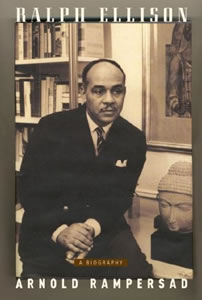
De Afro-Amerikaanse schrijver Ralph (Waldo) Ellison werd geboren in Oklahoma City op 1 maart 1913. Zie ook mijn blog van 1 maart 2007 en ook mijn blog van 1 maart 2009.


Uit: Ralph Ellison (Biografie door Arnold Rampersad)


„Decades after the blazing hot afternoon in June 1933 when Ralph Ellison, in his first and last outing as a hobo, climbed fearfully and yet eagerly aboard a smoky freight train leaving Oklahoma City on a dangerous journey that he hoped would take him to college in Tuskegee, Alabama, his memories of growing up in Oklahoma continued both to haunt and to inspire him. For a long time he had suppressed those memories; then the time came when he began to crave them.

The turning point had been his triumph in 1952 with his novel Invisible Man. That success had led to a cascading flow of honors such as no other African-American writer had ever enjoyed. In 1953, he won the National Book Award, besting The Old Man and the Sea, by Ernest Hemingway, one of his idols. Later, the American Academy of Arts and Letters elected him a member, one of the fifty distinguished American men and women who formed its inner core. At the White House, first Lyndon B. Johnson and then Ronald Reagan awarded him presidential medals. At the behest of the novelist and critic André Malraux, another of his idols, France made him a Chevalier of the Order of Arts and Letters. The most venerable social club in America connected to the arts, the Century, in New York, elected him as its first black member. Harvard University, awarding him an honorary degree, offered him
a professorship. Never out of print and translated into more than twenty languages, Invisible Man maintains its reputation as one of the jewels of twentieth-century American fiction.

Ellison’s triumph in 1952 had also led to a tangled mess of fears and doubts about his ability to finish a second novel at least as fine as Invisible Man. By the time of his death in 1994, his failure to produce that second novel had made Ellison, a proud man, the butt of surreptitious jokes and cruel remarks. The snickering and giggling behind his back often left him prickly and tart, if not downright hostile. Clinging fearlessly and stubbornly to the ideal of harmonious racial integration in America, he found it hard to negotiate the treacherous currents of American life in the volatile 1960s and 1970s.“


Ellison

Ralph Ellison (1 maart 1913 –  16 april 1994)


De Amerikaanse schrijver Steven Barnes werd geboren op 1 maart 1952 in Los Angeles. Zie ook mijn blog van 1 maart 2007 en ook mijn blog van 1 maart 2009.


Uit: Shadow Valley


„Summer’s warm rains had long since riven the earth, then dried again to dust. Three moons would wax and wane before the winter rivers swelled within their graveled banks.
Hot Tree had lived most of her adult life in Fire boma, the bamboowalled cluster of huts a day’s walk southeast of Great Sky. Now her hair was streaked with white, her brown skin deeply wrinkled, her breasts empty sacks. Years had cooled the fire in her dancing feet. She felt both hollow and heavy, and knew it would not be long before Father Mountain summoned her bones.
So much had changed in the past few moons.
For generations unknown the Ibandi had lived within the sheltering shadows of the mountains called Great Sky and Great Earth. The peaks were home to Father Mountain and Great Mother, whose timeless passion had birthed the world.
Three moons ago, Great Sky had exploded, the cataclysm wreathing the sky in stinking smoke and spewing rivers of boiling mud down its verdant slopes. Trees had been wrenched up by the roots, tumbling like dead brush. The Ibandi hunt chiefs had died. Some believed the god Himself had perished, but Hot Tree did not, though she well believed that the explosion was a sign of His displeasure with their wickedness.“ 


steven_barnes

Steven Barnes (Los Angeles, 1 maart 1952)

Jean-Edern Hallier, William Dean Howells, Marcel Cabon, John Byrom, Mercedes de Acosta

De Franse schrijver Jean-Edern Hallier werd geboren op 1 maart 1936 in Saint-Germain-en-Laye. Zie ook mijn blog van 1 maart 2009.


Uit: Un barbare en Asie du Sud-Est


« Et comment aurait-on pu, après la paix de Genève, en 1975, penser que l’Asie du Sud-Est intéresserait encore ? Las, les conséquences de la fin de la guerre du Vietnam et de la défaite des Américains auront été incalculables : tout un sous-continent, en proie à l’érosion interne et à un formidable glissement de terrain, est en train de s’effondrer comme une falaise d’où nous contemplerions paisiblement l’océan, assis tout en haut, tandis que les vagues invisibles la minent implacablement en dessous. Boat-people, pirates, réfugiés, famine au Cambodge, colonie de peuplement, nouveau capitalisme sauvage chinois, montée de l’Islam sont autant d’intersignes – termes désignant dans les légendes de la mort de Basse Bretagne les mauvais présages – de ce prochain changement de la carte du monde, sur de vastes territoires, qu’aucun traité de Yalta n’aura fixé… »


 Hallier

Jean-Edern Hallier (1 maart 1936 – 12 januari 1997)


De Amerikaanse dichter, schrijver en criticus William Dean Howells werd geboren op 1 maart 1837 in Martinsville, Ohio. Zie ook mijn blog van 1 maart 2009.


Tomorrow


Old fraud, I know you in that gay disguise,

That air of hope, that promise of surprise:

Beneath your bravery, as you come this way,

I see the sordid presence of Today;

And I shall see there, before you are gone,

All t
he dull Yesterdays that I have known.


Earliest Spring


Tossing his mane of snows in wildest eddies and tangles,

Lion-like March cometh in, hoarse, with tempestuous breath,

Through all the moaning chimneys, and ’thwart all the hollows and

angles

Round the shuddering house, threating of winter and death.


But in my heart I feel the life of the wood and the meadow

Thrilling the pulses that own kindred with fibres that lift

Bud and blade to the sunward, within the inscrutable shadow,

Deep in the oak’s chill core, under the gathering drift.


Nay, to earth’s life in mine some prescience, or dream, or desire

(How shall I name it aright?) comes for a moment and goes–

Rapture of life ineffable, perfect–as if in the brier,

Leafless there by my door, trembled a sense of the rose.


dean_howells

William Dean Howells (1 maart 1837 – 11 mei 1920)


De Mauritiaanse dichter, schrijver en journalist Marcel Cabon werd geboren op 29 februari 1912 in Curepipe. Zie ook mijn blog van 1 maart 2009. 


Kélibé-Kéliba (Fragment)


Une coiffure de plumes.

Kélibé-Kéliba.

Une coiffure de plumes,

des reins plus souples que le feu.


Des bracelets de coquillages

Kélibé-Kéliba,

des bracelets de coquillages,

des reins plus souples que le feu.


Des nattes de passiava.

Kélibé-kéliba,

des nattes de passiava,

des reins plus souples que le feu.


Et dans mes bras ma Kélibé.


Et dans tes bras ta kéliba.


Et dans mes bras ma Kélibé.


Et le vieux roi d’Asakali

qui avait perdu sa couronne

disait à la veuve jolie

qu’il avait prise dans ses bras:

“Hâtons-nous d’aimer:l’heure est douce.

Hatons-nous d’aimer:l’heure est brêve…”


Marcel Cabon

Marcel Cabon (29 februari 1912 – 31 januari 1972)


De Engelse dichter en vertaler  John Byrom werd geboren op 29 februari 1692 in Manchester. Zie ook mijn blog van 29 februari 2008 en ook mijn blog van 1 maart 2009.


Uit: Miscellaneous Poems


“God bless the King, I mean the Faith’s Defender;
God bless – no harm in blessing – the Pretender;
But who Pretender is, or who is King,
God bless us all – that’s quite another thing.”


Byrom

John Byrom (29 februari 1692 – 26 september 1763)


De Spaans-Amerikaanse schrijfster en dichteres Mercedes de Acosta werd geboren op 1 maart 1893 in New York. Zie ook mijn blog van 1 maart 2007 en ook mijn blog van 1 maart 2009.

 Uit: Here Lies the Heart


„In Madras I hired a car, and so anxious was I to arrive in Tiruvannamalai that I did not go to bed and traveled by night, arriving about seven o’clock in the morning after driving almost eleven hours. I was very tired as I got out of the car in a small square in front of the temple [Arunachaleswara Temple]. The driver explained he could take me no farther. I turned toward the hill of Arunachala and hurried in the hot sun along the dust-covered road to the abode about two miles from town where the Sage dwelt. As I ran those two miles, deeply within myself I knew that I was running toward the greatest experience of my life.When, dazed and filled with emotion, I first entered the hall, I did not quite know what to do. Coming from strong sunlight into the somewhat darkened hall, it was, at first, difficult to see; nevertheless, I perceived Bhagavan at once, sitting in the Buddha posture on his couch in the corner. At the same moment I felt overcome by some strong power in the hall, as if an invisible wind was pushing violently against me. For a moment I felt dizzy. Then I recovered myself. To my great surprise I suddenly heard an American voice calling out to me, “Hello, come in.” It was the voice of an American named Guy Hague, who originally came from Long Beach, California. He told me later that he had been honorably discharged from the American Navy in the Philippines and had then worked his way to India, taking up the study of yoga when he reached Bombay. Then he heard about Sri Ramana Maharshi and, feeling greatly drawn to him, decided to go to Tiruvannamalai. When I met him he had already been with the Maharshi for a year, sitting uninterruptedly day and night in the hall with the sage.”


DeCosta

Mercedes de Acosta (1 maart 1893 – 9 mei 1968)

Stephen Spender, Luc Dellisse, Marcel Pagnol, Marin Sorescu, Raphaële Billetdoux

De Engelse dichter, essayist en schrijver Stephen Spender werd geboren op 28 februari 1909 in Londen. Zie ook alle tags voor Stephen Spender op dit blog.


I Think Continually Of Those Who Were Truly Great


I think continually of those who were truly great.

Who, from the womb, remembered the soul’s history

Through corridors of light where the hours are suns

Endless and singing. Whose lovely ambition

Was that their lips, still touched with fire,

Should tell of the Spirit clothed from head to foot in song.

And who hoarded from the Spring branches

The desires falling across their bodies like blossoms.


What is precious is never to forget

The essential delight of the blood drawn from ageless springs

Breaking through rocks in worlds before our earth.

Never to deny its pleasure in the morning simple light

Nor its grave evening demand for love.

Never to allow gradually the traffic to smother

With noise and fog the flowering of the spirit.


Near the snow, near the sun, in the highest fields

See how these names are fŠted by the waving grass

And by the streamers of white cloud

And whispers of wind in the listening sky.

The names of those who in their lives fought for life

Who wore at their hearts the fire’s center.

Born of the sun they traveled a short while towards the sun,

And left the vivid air signed with their honor.


Uit: Poems


XXX


In railway halls, on pavements near the traffic,

They beg, their eyes made big by empty staring

And only measuring Time, like the blank clock.


No, I shall weave no tracery of pen-ornament

To make them birds upon my singing-tree:

Time merely drives these lives which do not live

As tides push rotten stuff along the shore.


– There is no consolation, no, none

In the curving beauty of that line

Traced on our graphs through history, where the oppressor

Starves and deprives the poor.


Paint here no draped despairs, no saddening clouds

Where the soul rests, proclaims eternity.

But let the wrong cry out as raw as wounds

This Time forgets and never heals, far less transcends.


Stephen Spender (28 februari 1909 – 16 juli 1995)


De Belgische-Franse dichter, schrijver, essayist, dramaturg en scenarioschrijver Luc Dellisse werd geboren op 28 februari 1953 in Brussel. Zie ook alle tags voor Luc Delisse op dit blog.


Uit: Le jugement dernier


“Maintenant que la partie est finie, je pense parfois que ce serait intéressant de dire la vérité.

D’avouer le secret que j’ai masqué jusqu’au bout sous le sérieux de mon apparence. Un secret que

savent, par expérience directe, quelques centaines de personnes disséminées dans deux ou trois pays. Que tous les autres ignorent.

Les autres, le reste du monde, ça ne constitue évidemment pas des foules. Je ne suis pas très sociable. Mais j’ai toujours été étonné de voir comme aux yeux de mes proches, j’étais lisse et insoupçonnable. C’était des hommes, bien sûr, des mâles, des dupes parfaites. Des amis qui connaissaient ma fièvre de lecture et d’écriture, qui m’avaient vu fonctionner en public ou dans quelques lieux plus intimes et qui ne croyaient pas qu’avec mon froid visage et mes façons penchées

de chèvre qui broute, je puisse servir d’autres dieux que la littérature.
Il faut dire que la plupart des hommes manquent d’imagination ; mais aussi je suis affligé d’un corps

tellement maladroit qu’on est déjà surpris que je parvienne à marcher et à parler ; imaginer en plus que j’ai une vie intime demanderait un effort surhumain.

Parfois j’avais des jouissances de dissimulation en pensant que depuis des années, à l’insu du monde, j’étais un agent double. Ceux qui ne connaissaient de moi que l’écorce ne pouvaient pas soupçonner que tous mes gestes, tous mes voyages, tous mes travaux, tous mes textes, tous mes emplois, toutes mes pensées, tout le long effort joyeux de mes journées, étaient sous-tendus par un secret sans fin.

Je n’ai jamais pris beaucoup de peine à le cacher, ce secret, et avec un peu d’observation ou de

psychologie, il aurait sauté aux yeux ; mais croyezmoi sur parole : personne n’est psychologue.”


 Luc Dellisse (Brussel, 28 februari 1953)


De Franse dichter, schrijver, dramaturg en regisseur Marcel Pagnol werd geboren op 28 februari 1895 in Aubagne, Bouches-du-Rhône. Zie ook alle tags voor Marcel Pagnol op dit blog.


Uit: La gloire de mon père


Les deux mains en avant, j’écartais les térébinthes, et les genêts, qui étaient aussi grands que moi… J’étais encore à cinquante pas du bord de la barre, lorsqu’une détonation retentit, puis, deux secondes plus tard, une autre ! Le son venait d’en bas : je m’élançai, bouleversé de joie, lorsqu’un vol de très gros oiseaux, jaillissant du vallon, piqua droit sur moi… Mais le chef de la troupe chavira soudain, ferma ses ailes et, traversant un grand genévrier, vint frapper lourdement le sol. Je me penchais pour le saisir, quand je fus à demi assommé par un choc violent qui me jeta sur les genoux : un autre oiseau venait de me tomber sur le crâne, et je fus un instant ébloui. Je frottai vigoureusement ma tête bourdonnante : je vis ma main rouge de sang. Je crus que c’était le mien, et j’allais fondre en larmes, lorsque je constatai que les volatiles étaient eux-mêmes ensanglantés, ce qui me rassura aussitôt.

Je les pris tous deux par les pattes, qui tremblaient encore du frémissement de l’agonie.

C’étaient des perdrix, mais leur poids me surprit : elles étaient aussi grandes que des coqs de basse-cour, et j’avais beau hausser les bras, leurs becs rouges touchaient encore le gravier.

Alors mon cœur sauta dans ma poitrine : des bartavelles ! Des perdrix royales ! Je les emportai vers le bord de la barre – c’était peut-être un doublé de l’oncle Jules ?

Mais, même si ce n’était pas lui, le chasseur qui devait les chercher me ferait sûrement grand accueil, et me ramènerait à la maison : j’étais sauvé !

Comme je traversais péniblement un fourré d’argéras, j’entendis une voix sonore, qui faisait rouler les R aux échos : c’était celle de l’oncle Jules, voix du salut, voix de la Providence !“


Marcel Pagnol (28 februari 1895 – 18 april 1974)


De Roemeense dichter Marin Sorescu werd geboren op 29 februari 1936 in Bulzeşti. Zie ook alle tags voor Marin Sorescu op dit blog.


Passport

To cross the border
Between the sunflower
And the moonflower
Between the alphabet
Of handwritten events
And printed events.

To be friend of all atoms
Which form the light
To sing with the atoms which sing
To cry
With the atoms which die
To enter into all the days of one’s life
Without restriction
No matter whether they fall on one side or the other
Of the word
Earth.

This passport
Is written in my bones
On my skull, femur, phalanges and spine
All arranged in a way
To make clear
My right to be man.


Vertaald door Constantin Roman & Timothy J.L. Cribb


Marin Sorescu (29 februari 1936 – 8 december 1996)


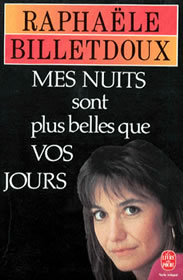
De Franse schrijfster Raphaële Billetdoux werd geboren op 28 februari 1951 in Neuilly sur Seine. Zie ook alle tags voor Raphaële Billetdoux op dit blog.


Uit: Mes nuits sont plus belles que vos jours


“Ils vivaient les heures comme mari et femme les années. Midi sonna sans que l’un et l’autre encore aient appréhendé minuit. Dans le cadre de fenêtre les voiliers lentement longeaient l’horizon du lit. Les bouillons de leurs draps finissaient aux lignes blanches de l’écume. Machoires à la renverse, cheveux épars, ils dormaient…”
Un homme, une femme, un hôtel, les draps d’un lit, la chaleur d’un mois de juillet, la lune et la mer : avec ces seuls éléments, Raphaël Billetdoux construit un roman qui a la rigueur d’une tragédie antique, où trois nuits sont toute une vie.”


Raphaële Billetdoux (Neuilly sur Seine, 28 februari 1951)


Zie voor meer schrijvers van de 28e en ook de 29e februari mijn vorige drie blogs van vandaag.
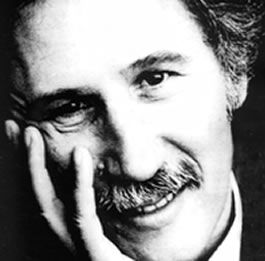
Daniel Handler, Bodo Morshäuser, John Montague, Bruce Dawe, Dee Brown

De Amerikaanse schrijver Daniel Handler werd geboren op 28 februari 1970 in San Francisco, Californië. Zie ook alle tags voor Daniel Handler op dit blog.


Uit: Adverbs


Love was in the air, so both of us walked through love on our way to the corner. We breathed it in, particularly me: the air was also full of smells and birds, but it was the love, I was sure, that was tumbling down to my lungs, the heart’s neighbors and confidants. Andrea was tall and angry. I was a little bit shorter. She smoked cigarettes. I worked in a store that sold things. We always walked to this same corner, Thirty — seventh and what’s — it, Third Avenue, in New York, because it was easier to get a cab there, the entire time we were in love.

“You must be nervous,” she said when we’d walked about two puffs.

“Yes,” I said. “I am nervous. I’ve never been to a reading of a will. I didn’t even know they still did things like this, read wills. I thought it was, I don’t know, a movie thing. In a movie. Do you think everybody will be dressed up?”

“Who cares?” Andrea said. She threw down her cigarette and ground it out with the heel of her shoe like a new kind of halfhearted dance. “Look,” she said, and shaded her eyes with her hand for a minute like she was actually looking at something. I turned my head to see. “I just mean, look,” she said, cupping my head with her hand. “The expression I mean. Look, I’m trying to be nice, but I’m scatterbrained right now, if you know what I mean. I’m frightened by your behavior. I woke up this morning and you said good morning and I said good morning, what do you feel like doing today and you said well I sort of have to do this thing and I said what thing and you said go to the reading of my father’s will and Isaid what are you talking about and then you told me your dad died. This morning. I mean, he died two weeks ago but that’s when you told me. That’s when you told me. I’m trying to think that you just must be in shock that your dad died but it’s very, very, very, very, very, very difficult.”


Daniel Handler (San Francisco, 28 februari 1970)


De Duitse dichter en schrijver Bodo Morshäuser werd geboren op 28 februari 1953 in Berlijn. Zie ook alle tags voor Bodo Morshäuser op dit blog.


Uit: Berliner Simulation


“Nur einer in diesem Ubahnzug läßt ein Rätsel bestehen. (…) Voller Gefühl sieht er finster drein. Wir haben den gleichen Weg. Er komme aus Süddeutschland, wo er arbeite, zum Wochenende nach Berlin, wo er wohne. Er macht einen militärischen Gruß und sagt: »Diesen hier! Vier Jahre freiwillig. Im Jahr verdiene ich 25 000 Mark. 6000 gebe ich für die Flüge oder Bahnfahrten aus. Am Wochenende muß ich eben zu meiner Frau!« (…)
Der Vermissende ist der Idiot. Das höchste der Gefühle anderer für ihn ist Mitgefühl – was ihn rasend macht.”

(…)


“Und dann (…) gehe ich nach Hause und was sehe ich? Ich sehe das Modell eines Fernsehbeitrags über das Modell einer Demonstration. Was wirklich ist, rutscht, wie üblich, hinten weg, und in der Hauptsache wird das gesagt, was an anderer Stelle auch schon gesagt worden ist. So geht das Tag für Tag. Nicht die Ereignisse, sondern die Modelle werden wiederholt. (…) In diesen Modellen sollen wir bleiben wie in einem Hamsterrad, denn in ihnen bleibt nichts wirklich; nur die Simulation.”
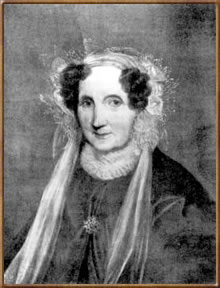


Bodo Morshäuser (Berlijn, 28 februari 1953)

Foto: Brigitte Friedrich


De Ierse dichter John Montague werd geboren in New York op 28 februari 1929. Zie ook alle tags voor John Montague op dit blog.
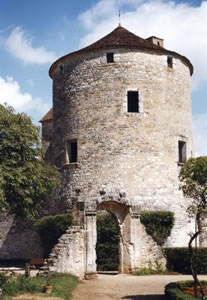
 

Uprooting


My love, while we talked

They removed the roof. Then

They started on the walls,

Panes of glass uprooting

From timber, like teeth.

But you spoke calmly on,

Your example of courtesy

Compelling me to reply.

When we reached the last

Syllable, nearly accepting

Our positions, I saw that

The floorboards were gone:

It was clay we stood upon.


The Golden Hook


Two fish float:


one slowly downstream

into the warm

currents of the known


the other tugging

against the stream,

disconsolate twin,


the golden

marriage hook

tearing its throat.


John Montague (New York, 28 februari 1929)


De Australische dichter en schrijver Donald Bruce Dawe werd geboren op 15 februari 1930 in Fitzroy, Melbourne. Zie ook mijn blog van 28 februari 2009.


In the Confessional


Bless me, Father, for I have sinned.

this week for the first time in seventy-eight years

I have committed the following sin:

I watched a rugby league game from start to finish.

And what is more, Father, I enjoyed it!

Especially Israel Folau’s high ‘screamer’

and his two touch-downs.

Oh, and also Johnathan Thurston’s

Dummy pass splitting the Blues’ back-line.

Oh, and also Billy Slater’s dashing subsequent touch-down!

For these, and for such other Origin-al sins

I may in future commit, I ask penance

and absolution of you, Father, and I firmly intend

with your help to sin no more, unless

as God’s AFL representative of the one true Game

which we are told is played in Heaven

I have indeed committed the one unforgivable

–hullo? Are you there, Father?

Hullo?!


Bruce Dawe (Fitzroy, 15 februari 1930)


De Amerikaanse schrijver en historicus Dee Brown werd geboren op 28 februari 1908 in Alberta, Louisiana. Zie ook mijn blog van 28 februari 2009.


Uit: Bury My Heart at Wounded Knee


Columbus kidnapped ten of his friendly Taino hosts and carried them off to Spain, where they could be introduced to the white man’s ways. One of them died soon after arriving there, but not before he was baptized a Christian. The Spaniards were so pleased that they had made it possible for the first Indian to enter heaven that they hastened to spread the good news throughout the West Indies.

The Tainos and other Arawak people did not resist conversion to theEuropeans’ religion, but they did resist strongly when hordes of these bearded strangers began scouring their islands in search of gold and precious stones. The Spaniards looted and burned villages; they kidnapped hundreds of men, women, and children and shipped them to Europe to be sold as slaves. Arawak resistance brought on the use of guns and sabers, and whole tribes were destroyed, hundreds of thousands of people in less than a decade after Columbus set foot on the beach of San Salvador, October 12, 1492.

Communications between the tribes of the New World were slow, and news of the Europeans’ barbarities rarely overtook the rapid spread of new conquests and settlements. Long before the English-speaking white men arrived in Virginia in 1607, however, the Powhatans had heard rumors about the civilizing techniques of the Spaniards. The Englishmen used subtler methods. To ensure peace long enough to establish a settlement at Jamestown, they put a golden crown upon the head of Wahunsonacook, dubbed him King Powhatan, and convinced him that he should put his people to work supplying the white settlers with food. Wahunsonacook vacillated between loyalty to his rebellious subjects and to the English, but after John Rolfe married his daughter, Pocahontas, he apparently decided that he was more English than Indian.“


Dee Brown (28 februari 1908 – 12 december 2002)

Bart Koubaa, Berthold Auerbach, Sophie Tieck, Michel de Montaigne

De Vlaamse schrijver Bart Koubaa (pseudoniem van Bart van den Bossche) werd geboren op 28 februari 1968 in Eeklo. Zie ook alle tags voor Bart Koubaa op dit blog.


Uit: De leraar


‘In feite zijn mijn lessen mijn grootste tijdverlies. Er is nog bitter weinig waarmee ik de leerlingen kan boeien. Het grootste gedeelte schrijft en spreekt gebrekkig Nederlands en kan met moeite lezen. Ik toon nooit documentaires die ondertiteld zijn. Sinds de uitbreiding van Europa hoor ik meer en meer Engels in de klas, zo’n pseudo-Hollywoodtaaltje met veel fuck en shit en asshole en Angelina Jolie.

(…)


Een paar weken geleden was er een nieuweling die zich op de speelplaats spontaan een volwaardige volzin liet ontvallen waarin het woord carjacking voorkwam; puur geluk waarschijnlijk, maar je moet ze niet altijd onderschatten. Toch krijg ik de laatste jaren meer en meer taalgevangenen in de klas. Ze zijn gefrustreerd omdat ze te oud zijn om bij mij op de banken te zitten en kennen wel degelijk het verschil tussen een werkwoord en een cirkel maar begrijpen me niet als ik hun vraag de werkwoorden in de zin te omcirkelen.’


Bart Koubaa (Eeklo, 28 februari 1968)


De Duitse schrijver Berthold Auerbach (eig. Moyses Baruch) werd geboren op 28 februari 1812 in Nordstetten in het Zwarte Woud. Zie ook mijn blog van 28 februari 2009.


Uit: Die feindlichen Brüder


„In der spärlich bewohnten kalten Gasse, »der Kniebis« genannt, steht ein kleines Häuschen, das außer einem Stall und einem Schuppen nur drei zum Teil mit Papier zugeklebte Fenster hat; oben am Dachfenster hängt ein Laden nur an einer Angel und droht jeden Augenblick herunterzufallen. Neben dem Hause ist ein kleines Gärtchen, das noch durch einen der Länge nach hindurchlaufenden Zaun von dürren Dornen in zwei Hälften geschieden ist. In dem H
ause wohnten zwei Brüder schon seit vierzehn Jahren in unabänderlicher Feindschaft. Wie im Garten, so war auch im Hause alles geteilt, von der Dachkammer bis hinab in den kleinen Keller; die Fallthüre war offen, aber drunten hatte jeder seinen durch Latten abgeteilten verschlossenen Raum. Auch sonst waren an allen Thüren noch Hängeschlösser befestigt, als ob man stündlich den Ueberfall von Dieben fürchtete; der Stall gehörte dem einen, der Schuppen dem andern Bruder. Kein Wort wurde im Hause vernommen, wenn nicht einer bisweilen laut vor sich hinfluchte.

Michel und Koanradle, so hießen die beiden Brüder, waren beide schon sehr bei Jahren und beide unbeweibt. Dem Koanradle war seine Frau schon früh gestorben, und er lebte nun so für sich allein; der Michel war nie verheiratet gewesen.

Eine blau angestrichene, lange, sogenannte Bankkiste war die erste Ursache des Bruderhasses.“


 Berthold Auerbach (28 februari 1812 – 8 februari 1882)
 Rond 1850


De Duitse dichteres en schrijfster
Sophie Tieck werd geboren op 28 februari 1775 in Berlijn. Zie
ook mijn blog van 28 februari 2009.


Uit: Die Stimme im Walde


„Nur noch eine Tagereise war Alfonso von seiner Heimath entfernt. Er hatte die Diener vorausgesendet, um der Mutter die frohe Bothschaft zu bringen, daß sie ihren geliebten Sohn wieder an ihren Busen drücken sollte. Er hatte die Nacht in einer einsamen Hütte, am Fuße eines Berges geruht, und die Bewohner hatten ihm wunderbare Dinge erzählt, von Geistern, die in dem Walde wohnen sollten, der jetzt vor dem Ritter lag. Er dachte an diese Erzählungen, als er hinein ritt, und die hohen Baumwipfel über ihm rauschten; eine sonderbare Empfindung beklemmte seine Brust, furchtsam schaute er um sich, und lächelte über seine eigne Thorheit. Bin ich denn noch derselbe, sprach er, der den Tod nicht [30] fürchtete, der mit Ruhm und Ehre kämpfte? Und nun erbebt mein Herz vor den Erzählungen einer leichtgläubigen Alten. Er ritt muthig weiter, und seine Augen schwärmten in den Blätterlabyrinthen, die sich über ihm durch einander bewegten. Er erreichte einen offnen Platz im Walde, und der hohe Rasen, den Alfonso nie so frisch und grün gesehen zu haben glaubte, die Bäume, die ringsum so still standen, ohne auch vom kleinsten Lüftchen bewegt zu werden, luden ihn zur Ruhe ein. Er stieg ab, und band sein Pferd an einen Baum, und setzte sich nieder. Es war ein heißer Tag, und die Kühle an diesem Plätzchen empfing ihn mit aller Lieblichkeit; er irrte mit den Augen durch die hohen Gräser, dann wieder in den Zweigen umher; kein Lüftchen regte sich. Endlich entstand in dem Baumwipfel über ihm ein Rauschen, als wenn ein sanfter Wind die Blätter durch einander kräuselt.“


Sophie Tieck (28 februari 1775 – 1 oktober 1833)


De Franse filosoof, schrijver en politicus Michel Eyquem de Montaigne werd geboren in Bordeaux op 28 februari 1533. Zie ook alle tags voor Michel de Montaigne op dit blog.

Uit: Les essais: De la force de l’imagination


J“e suis de ceux qui sentent tres-grand effort de l’imagination. Chacun en est heurté, mais aucuns en sont renversez. Son impression me perse ; et mon art est de luy eschapper, par faute de force à luy resister. Je vivroye de la seule assistance de personnes saines et gaies. La veuë des angoisses d’autruy m’angoisse materiellement : et a mon sentiment souvent usurpé le sentiment d’un tiers. Un tousseur continuel irrite mon poulmon et mon gosier. Je visite plus mal volontiers les malades, ausquels le devoir m’interesse, que ceux ausquels je m’attens moins, et que je considere moins. Je saisis le mal, que j’estudie, et le couche en moy. Je ne trouve pas estrange qu’elle donne et les fievres, et la mort, à ceux qui la laissent faire, et qui luy applaudissent. Simon Thomas estoit un grand medecin de son temps. Il me souvient que me rencontrant un jour à Thoulouse chez un riche vieillard pulmonique, et traittant avec luy des moyens de sa guarison, il luy dist, que c’en estoit l’un, de me donner occasion de me plaire en sa compagnie : et que fichant ses yeux sur la frescheur de mon visage, et sa pensée sur cette allegresse et vigueur, qui regorgeoit de mon adolescence : et remplissant tous ses sens de cet estat florissant en quoy j’estoy lors, son habitude s’en pourroit amender : Mais il oublioit à dire, que la mienne s’en pourroit empirer aussi.“


Michel de Montaigne (28 februari 1533 – 13 september 1592)

Chateaux-saint-michel-de-montaigne, de toren waar Montaigne werkte.


Martin Suter, Yórgos Seféris, Howard Nemerov, Ernest Renan, José Vasconcelos

 De Zwitserse schrijver Martin Suter werd geboren op 29 februari 1948 in Zürich. Zie ook mijn blog van 29 februari 2008 en ook mijn blog van 28 februari 2009.

Uit: Unter Freunden

Das also ist Meuli, denkt Haberstich, als er Brachingers Büro betritt. Der neue Mann sitzt auf dem Besprechungs­sofa und steht jetzt auf, um ihm die Hand zu schütteln. Brachinger bleibt sitzen. Zwei leere Kaffeetassen und ein paar zerknüllte Schokopapierchen verraten, dass die beiden schon länger zusammensitzen. Aha, ich bin also nachträg­lich dazugebeten worden. Wahrscheinlich nachdem die ver­traulichen Themen besprochen waren, fährt es Haberstich durch den Kopf.
So sieht er also aus, der Mann, der ihm gefährlich werden könnte. Grösser, als er ihn sich vorgestellt hat. Und jünger. Und mit mehr Haaren. Im ersten Vergleich mit sich selbst schneidet der andere, ehrlich gesagt, etwas besser ab. Äu­sserlich. Obwohl: Auf der rechten Schulter scheinen ein paar Schuppen zu liegen. Das ist die Kehrseite von dichtem Haarwuchs – Schuppen.
Von seinem Sessel aus verfolgt Brachinger die Begrü­ssungsszene. Haberstich spürt, wie auch er vergleicht. Da­mit wird er jetzt leben müssen: Mit Meuli verglichen zu werden. Nun, ihm soll’s recht sein. Er hat keine Vergleiche zu fürchten. Wenigstens keine fachlichen. Und was die äu­ssere Erscheinung angeht: So übel sieht er auch nicht aus. Er hat einfach keine Zeit für Bodyshaping und Hairstudios.  Wichtig ist einfach, dass er schon bei der ersten direkten Begegnung gut abschneidet. Er muss Brachinger alerter, re­aktionsschneller, informierter und schlagfertiger vorkom­men als der Neue. Er muss von Anfang an die Diskrepanz in allen Belangen (ausser vielleicht den äusserlichen) deutlich machen.“

Martin Suter (Zürich 29 februari 1948)


De Griekse dichter Yórgos Seféris werd geboren in Smyrna (nu Izmir, in Turkije) op 29 februari 1900. Zie ook mijn blog van 19 februari 2007 en ook mijn blog van 29 februari 2008 en ook mijn blog van 28 februari 2009.

The Leaf of the Poplar 

It trembled so, the wind set it sailing
it trembled so, how could it not yield to the wind
far beyond
the sea
far beyond
an island in the sun
and hand gripping oars
dying the last stroke at the sighting of port
tired eyes closing
like sea anemones

It trembled so much
I sought it so much
in the shade of the eucalyptus
Spring to Autumn
bare in the close woods
my God I sought it.


Lost worlds 

How can you gather together
the thousand fragments
of each person?
What’s wrong with the rudder?
The boat inscribes circles
and there’s not a single gull.
The world sinks:
hang on, it’ll leave you
alone in the sun.
You write:
the ink grew less,
the sea increases.
The body that hoped to flower like a branch,
to bear fruit, to become like a flute in the frost —
imagination has thrust it into a noisy bee-hive
so that musical time can come and torture it.


Yórgos Seféris (29 februari 1900 – 20 september 1971)


De Amerikaanse dichter en literatuurdocent Howard Nemerov werd geboren op 29 februari 1920 in New York. Zie ook mijn blog van 29 februari 2008. en ook mijn blog van 28 februari 2009.


Casting 


The waters deep, the waters dark,

Reflect the seekers, hide the sought,

Whether in water or in air to drown.

Between them curls the silver spark,

Barbed, baited, waiting, of a thought–

Which in the world is upside down,

The fish hook or the question mark?


Style 


Flaubert wanted to write a novel

About nothing. It was to have no subject

And be sustained upon the style alone,

Like the Holy Ghost cruising above

The abyss, or like the little animals

In Disney cartoons who stand upon a branch

That breaks, but do not fall

Till they look down. He never wrote that novel,

And neither did he write another one

That would have been called La Spirale,

Wherein the hero’s fortunes were to rise

In dreams, while his walking life disintegrated.


Even so, for these two books

We thank the master. They can be read,

With difficulty, in the spirit alone,

Are not so wholly lost as certain works

Burned at Alexandria, flooded at Florence,

And are never taught at universities.

Moreover, they are not deformed by style,

That fire that eats what it illuminates. 


Howard Nemerov (29 februari 1920 – 5 juli 1991)

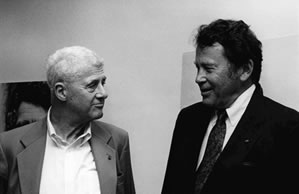
Hier (l) met collega dichter Richard Wilbur


De Franse schrijver en filosoof Ernest Renan werd op 28 februari 1823 geboren in Tréguier in Bretagne uit een vissersfamilie. Zijn vader was een vurig republikein, terwijl zijn moeder uit een royalistische familie stamde. Deze tweespalt heeft Renan zijn gehele leven gevoeld. In 1838 ging Renan na succesvolle schoolresultaten studeren aan het kerkelijk college van Saint-Nicolas du Chardonnet in Parijs. Met zijn achtergrond van een streng, Bretons katholicisme vond hij hier de stijl te spitsvondig. Hij hoopte meer degelijkheid te vinden op het seminarie van Issy-les-Moulineaux waar hij in 1840 begon. Door kennis te maken met de filosofie en de taalkunde werd zijn moeite om te geloven echter steeds groter, zodat hij uiteindelijk afzag van een religieus leven en ging werken als onderwijzer. Ondertussen zette hij zijn studie voort met name van de Semitische talen. In 1847 leverde dit hem een prijs op en een positie aan het lycée van Vendôme. In 1878 werd Renan verkozen tot lid van de Académie française. Één der bekendste werken van Renan, al tijdens zijn leven, was Het leven van Jezus (Frans: ‘La vie de Jésus’, 1863).


Uit: La poésie des races celtiques


„Lorsqu’en voyageant dans la presqu’île armoricaine on dépasse la région, plus rapprochée du continent, où se prolonge la physionomie gaie, mais commune, de la Normandie et du Maine, et qu’on entre dans la véritable Bretagne, dans celle qui mérite ce nom par la langue et la race, le plus brusque changement se fait sentir tout à coup. Un vent froid, plein de vague et de tristesse, s’élève et transporte l’âme vers d’autres pensées ; le sommet des arbres se dépouille et se tord ; la bruyère étend au loin sa teinte uniforme ; le granit perce à chaque pas un sol trop maigre pour le revêtir ; une mer presque toujours sombre forme à l’horizon un cercle d’éternels gémissements. Même contraste dans les hommes : à la vulgarité normande, à une population grasse et plantureuse, contente de vivre, pleine de ses intérêts, égoïste comme tous ceux dont l’habitude est de jouir, succède une race timide, réservée, vivant toute au dedans, pesante en apparence, mais sentant profondément et portant dans ses instincts religieux une adorable délicatesse. Le même contraste frappe, dit-on, quand on passe de l’Angleterre au paya de Galles, de la basse Écosse, anglaise de langage et de mœurs, au paya des Gaëls du Nord, et aussi, avec une nuance sensiblement différente, quand on s’enfonce dans les parties de l’Irlande où la race est restée pure de tout mélange avec l’étranger. Il semble que l’on entre dans les couches souterraines d’un autre âge, et l’on ressent quelque chose des impressions que Dante nous fait éprouver quand il nous conduit d’un cercle à un autre de son enfer.“


Ernest Renan (28 februari 1823 – 12 oktober 1892)


Zie voor onderstaande schrijver ook mijn blog van 28 februari 2009.


De Mexicaanse schrijver, filosoof en politicus José Vasconcelos Calderón werd geboren in Oaxaca op 28 februari 1882


John Steinbeck, André Roy, Lawrence Durrell, Henry Longfellow, Elisabeth Borchers, Irwin Shaw

De Amerikaanse schrijver John Steinbeck werd geboren in Salinas, Californië, op 27 februari 1902. Zie ook mijn blog van 27 februari 2007 en ook mijn blog van 27 februari 2008 en ook mijn blog van 27 februari 2009.


Uit: Of Mice and Men


“A few miles south of Soledad, the Salinas River drops in close to the hillside bank and runs deep and green. The water is warm too, for it has slipped twinkling over the yellow sands in the sunlight before reaching the narrow pool. On one side of the river the golden foothill slopes curve up to the strong and rocky Gabilan mountains, but on the valley side the water is lined with trees—willows fresh and green with every spring, carrying in their lower leaf junctures the debris of the winter’s flooding; and sycamores with mottled, white, recumbent limbs and branches that arch over the pool. On the sandy bank under the trees the leaves lie deep and so crisp that a lizard makes a great skittering if he runs among them. Rabbits come out of the brush to sit on the sand in the evening, and the damp flats are covered with the night tracks of ’coons, and with the spread pads of dogs from the ranches, and with the split-wedge tracks of deer that come to drink in the dark.

There is a path through the willows and among the sycamores, a path beaten hard by boys coming down from the ranches to swim in the deep pool, and beaten hard by tramps who come wearily down from the highway in the evening to jungleup near water. In front of the low horizontal limb of a giant sycamore there is an ash pile made by many fires; the limb is worn smooth by men who have sat on it.

Evening of a hot day started the little wind to moving among the leaves. The shade climbed up the hills toward the top. On the sand banks the rabbits sat as quietly as little gray, sculptured stones. And then from the direction of the state highway came the sound of footsteps on crisp sycamore leaves. The rabbits hurried noiselessly for cover. A stilted heron labored up into the air and pounded down river. For a moment the place was lifeless, and then two men emerged from the path and came into the opening by the green pool.”


John_Steinbeck-Monterey

John Steinbeck (27 februari 1902 – 20 december 1968)
Standbeeld in Monterey


De Canadese dichter, schrijver en essayist André Roy werd geboren op 27 februari 1944 in Montréal. Hij studeerde Frans en is werkzaam als docent en literair criticus. Het bekendst is zijn cyclus „Passions“, bestaande uit Les passions du Samedi (1979), Petit supplément aux passions (1980); en Monsieur Désir (1981).


Un rien d’amour


Le ciel distribué dans le temps massif ;

L’oeil est un temple dans la nuit ;

L’air marche

Parce que chacun possède son propre corps.

Pourquoi je rêve comme une bête

Quand tu n’es pas là ?


Je rêvais que tu rêvais dans mes songes,

Que tu étais heureux comme en enfer.

Il existe quatre lois pour la passion :

Avant, pendant, après, jamais.


Les étoiles digérées par ton corps

Deviennent des animaux dans tes yeux.

Ta passion veux que tu saignes,

Que tu puisses te pardonner de nous aimer.


The Muscles and Body Hairs


Melted in the mouth, colour hanging

A pink tool, but for now let”s talk

Of the ripple of his muscles (see how time

Is upset at a glance, the clock in

Slow motion) attuned to his technique, I exclaim

His body hairs briefly summing them up

In those cerain young spots that make me

Abandon all discretion now I’m summing up

Since at that time I was still coming.


Pleasure and Desire, Knowing and Wanting


knowing fatal pleasure, or very chemical,

so stupendously they I don’t dare write the word

they ejaculated but don’t fix me foor good

in those virile snapshots

despite their nervousness and the conversation that

helped I understand this will to tenderness,

the irritated look on their gorgeous faces

(“Your face is as cute as a love-word”)

because that swiftness, that suavity and

because desire has already scored you, teeth sweat,

the happenings that resist or that have disa
ppeared

too soon, but no zeal, no shame in admitting it.


Vertaald door Daniel Sloate


Roy

André Roy (Montréal, 27 februari 1944)


De Britse dichter en schrijver Lawrence George Durrell werd geboren op 27 februari 1912 in Jalandhar in India. Zie ook mijn blog van 27 februari 2007 en ook mijn blog van 27 februari 2008 en ook mijn blog van 27 februari 2009.


Delos 

For Diana Gould


On charts they fall like lace,

Islands consuming in a sea

Born dense with its own blue:

And like repairing mirrors holding up

Small towns and trees and rivers

To the still air, the lovely air:

From the clear side of springing Time,

In clement places where the windmills ride,

Turning over grey springs in Mykonos,

In shadows with a gesture of content.


The statues of the dead here

Embark on sunlight, sealed

Each in her model with the sightless eyes:

The modest stones of Greeks,

Who gravely interrupted death by pleasure.

And in harbours softly fallen

The liver-coloured sails –

Sharp-featured brigantines with eyes –

Ride in reception so like women:

The pathetic faculty of girls

To register and utter desire

In the arms of men upon the new-mown waters,

Follow the wind, with their long shining keels

Aimed across Delos at a star.


This Unimportant Morning 


This unimportant morning

Something goes singing where

The capes turn over on their sides

And the warm Adriatic rides

Her blue and sun washing

At the edge of the world and its brilliant cliffs.


Day rings in the higher airs

Pure with cicadas, and sl
owing

Like a pulse to smoke from farms,


Extinguished in the exhausted earth,

Unclenching like a fist and going.


Trees fume, cool, pour – and overflowing

Unstretch the feathers of birds and shake

Carpets from windows, brush with dew

The up-and-doing: and young lovers now

Their little resurrections make.


And now lightly to kiss all whom sleep

Stitched up – and wake, my darling, wake.

The impatient Boatman has been waiting

Under the house, his long oars folded up

Like wings in waiting on the darkling lake.


lawrence-durrell

Lawrence Durrell (27 februari 1912 – 7 november 1990)


De Amerikaanse dichter Henry Wadsworth Longfellow werd geboren in Portland, Maine, op 27 februari 1807. Zie ook mijn blog van 27 februari 2007 en ook mijn blog van 27 februari 2008 en ook mijn blog van 27 februari 2009.


Hymn to the Night 


I heard the trailing garments of the Night

Sweep through her marble halls!

I saw her sable skirts all fringed with light

From the celestial walls!


I felt her presence, by its spell of might,

Stoop o’er me from above;

The calm, majestic presence of the Night,

As of the one I love.


I heard the sounds of sorrow and delight,

The manifold, soft chimes,

That fill the haunted chambers of the Night

Like some old poet’s rhymes.


From the cool cisterns of the midnight air

My spirit drank repose;

The fountain of perpetual peace flows there,–

From those deep cisterns flows.


O holy Night! from thee I learn to bear

What man has borne before!

Thou layest thy finger on the lips of Care,

And they complain no more.


Peace! Peace! Orestes-like I breathe this prayer!

Descend with broad-winged flight,

The welcome, the thrice-prayed for, the most fair,

The best-beloved Night! 


henry-longfellow

Henry Longfellow (27 februari 1807 – 24 maart 1882)


De Duitse schrijfster en dichteres Elisabeth Borchers werd geboren in Homberg op 27 februari 1926. Zie ook mijn blog van 27 februari 2007 en ook mijn blog van 27 februari 2008 en ook mijn blog van 27 februari 2009.

November

Es kommt eine Zeit,
da lassen die Bäume
ihre Blätter fallen.
Die Häuser rücken
enger zusammen.
Aus dem Schornstein
kommt ein Rauch.

Es kommt eine Zeit,
da werden die Tage klein
und die Nächte groß,
und jeder Abend
hat einen schönen Namen.

Einer heißt Hänsel und Gretel.
Einer heißt Schneewittchen.
Einer heißt Rumpelstilzchen.
Einer heißt Katherlieschen.
Einer heißt Hans im Glück.
Einer heißt Sterntaler.


Dezember

Es kommt eine Zeit
da wird es still
Da gehn die Lichter aus
da kommt ein Wind
ruft nach dem Fährmann
Der träumt den Traum
vom goldnen Schiff
Das Schiff hat eine
große Fahrt bei Nacht
Es geht von Haus zu Haus
Es fährt die Straßen auf und ab
Es kommt durch alle Länder
Es kommt durch alle Stuben
Da bleibt ein goldner Schein zurück

Borchers

Elisabeth Borchers (Homberg, 27 februari 1926)


De Amerikaanse schrijver Irwin Shaw werd geboren op 27 februari 1913 als Irwin Gilbert Shamforoff in New York. Zie ook mijn blog van 27 februari 2009.


Uit: The Girls In Their Summer Dresses


‘Sure,’ he said. He took his eyes off the hatless girl with the dark hair, cut dancer-style, like a helmet, who was walking past him with the self-conscious strength and grace dancers have. She was walking without a coat and she looked very solid and strong and her belly was flat, like a boy’s, under her skirt, and her hips swung boldly because she was a dancer and also because she knew Michael was looking at her. She smiled a little to herself as she went past and Michael noticed all these things before he looked back at his wife. ‘Sure,’ he said, ‘we’re going to watch the Giants and we’re going to eat steak and we’re going to see a French picture. How do you like that?’
‘That’s it,’ Frances said flatly. ‘That’s the program for the day. Or maybe you’d just rather walk up and down Fifth Avenue.’
‘You always look at other women,’ Frances said. ‘At every damn woman in the city of New York.’
‘Oh, come now,’ Michael said, pretending to joke. ‘Only pretty ones. And, after all, how many pretty women are there in New York? Seventeen?’
‘More. At least you seem to think so. Wherever you go.’
‘Not the truth. Occasionally, maybe, I look at a woman as she passes. In the street. I admit, perhaps in the street I look at a woman once in a while….’
‘Everywhere,’ Frances said. ‘Every damned place we go. Restaurants, subways, theaters, lectures, concerts.’
‘Now, darling,’ Michael said. ‘I look at everything. God gave me eyes and I look at women and men and subway excavations and moving pictures and the little flowers of the field. I casually inspect the universe.’
‘You ought to see the look in your eye,’ Frances said, ‘as you casually inspect the universe on Fifth Avenue.’
‘I’m a happily married man.’ Michael pressed her elbow tenderly, knowing what he was doing. ‘Example for the whole twentieth century, Mr. and Mrs. Mike Loomis.’
‘You mean it?’
‘Frances, baby….’
‘Are you really happily married?’
‘Sure,’ Michael said, feeling the whole Sunday morning sinking like lead inside him.   ‘Now what the hell is the sense in talking like that?’

  ‘I would like to know.’ Frances walked faster now, looking straight ahead, her face showing nothing, which was the way she always managed it when she was arguing or feeling bad.“


IrwinShaw

Irwin Shaw (27 februari 1913 – 16 mei 1984)


Zie voor nog meer schrijvers van de 27e februari ook mijn vorige blog van vandaag.