Arnon Grunberg, Paul van Ostaijen, Hugo Ball, Danilo Kiš, Jane Bowles, Ishmael Reed

De Nederlandse schrijver Arnon Grunberg werd geboren in Amsterdam op 22 februari 1971. Zie ook alle tags voor Arnon Grunberg op dit blog.


Uit: Tirza


De gasten druppelen later binnen dan Hofmeester verwachtte. Het is half acht en er is nog niemand. Daarom eet hij de eerste portie gebakken sardines zelf maar op. Eigenlijk had hij pas later op de avond willen beginnen met het bakken van de sardines, maar hij had zich niet in kunnen houden. Drie sardines heeft hij al op. Hij eet de graat mee. Je merkt er weinig van, het zijn zulke kleine visjes.
Hij loopt naar Tirza’s kamer om haar een versgebakken sardientje aan te bieden. Ze heeft een zwarte jurk aan die al jaren in haar kast hangt, niet de jurk die hij samen met haar voor dit feest heeft aangeschaft. Een van driehonderd euro met bijpassende schoenen van bijna hetzelfde bedrag.
Hij moet teleurgesteld hebben gekeken, want ze slaat een arm om hem heen en zegt: ‘Ik doe hem nog weleens aan, pap, maar vanavond staat hij me niet.Vanavond gaat echt niet. Ik ben er niet voor in de stemming. Het is gewoon niet de jurk die bij deze avond hoort.’
Hij glimlacht grootmoedig met het bord sardientjes in zijn hand. ‘Maar we hebben hem voor deze avond gekocht, Tirza, speciaal voor jouw feest,’ zou hij willen zeggen. Hij zwijgt. Zijn teleurstellingen zijn zijn zaak. Ze moeten onzichtbaar blijven voor de wereld. Als Tirza zich omdraait, glimlacht haar vader nog steeds, schijnbaar onaangedaan. ‘Jou staat alles,’ zegt hij en laat haar alleen.
Hofmeester opent de badkamerdeur. Ibi is in bad gaan liggen met de Elle, het soort damestijdschrift dat ze vroeger verachtte.
‘Papa,’ roept ze, ‘kun je niet kloppen?’
Hij laat zijn blik gedachteloos over haar lichaam glijden, een paar seconden staart hij naar haar buik.‘Sorry,’ zegt hij,‘ben je zwanger?’
‘Papa,’ roept ze, ‘stel niet dat soort rare vragen en laat me alleen.’
Hij sluit de badkamerdeur en gaat zijn slaapkamer binnen. De echtgenote weet nog altijd niet wat ze zal aantrekken. Om de moeilijke beslissing uit te stellen – misschien schiet haar plotseling iets te binnen – föhnt ze eerst haar haren.Vrijwel naakt zit ze voor de spiegel in de slaapkamer, de föhn losjes in haar handen. Een nasmeulende peuk in een asbak.Kennelijk heeft ze de asbakken ergens gevonden.“


arnon-grunberg300

Arnon Grunberg (Amsterdam, 22 februari 1971)


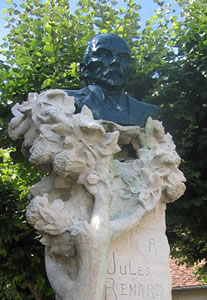
De Vlaamse dichter en schrijver Paul van Ostaijen werd geboren in Antwerpen op 22 februari 1896. Zie ook alle tags voor Paul van Ostaijen op dit blog.


VORST


Is Vorst

         breken scherp en helder de stenen rijen

         wegen scheuren

Schel schelt de schel

         van de trem in de duizelruimte

         hoge hoepel

         staalhemel   staalhelm

Naar klare spanbanen strammen stappen

         laarzen slaan de straat tot luide ruimte


Is Vorst

         breken stenen scherp

         slaan laarzen klaar

         schellen de schellen schel

         helder


                  helder

                            helder

         duizelruimte luidt


ARCHAÏSCHE PASTORALE


Ter kerk ging

de kleine jonkvrouw

                   in haar linkerhand draagt zij

                   voor de kleinsten suiker en zoethout


             &n
bsp;     in haar rechter   haar hart

                   roza suikergoed

                               voor Onze Lieve Vrouw


en heel wit

           kaarswit

zo is zij

           simpele zang

           in haar oranje franjeskleed

           het blauwe lint is blauw toch

Blauw


Avondgeluiden


Er moeten witte hoeven achter de zoom staan

van de blauwe velden langs de maan

’s avonds hoort gij aan de verre steenwegen

paardehoeven

dan hoort gij alles stille waan

van verre maanfonteinen zijpelt plots water

-gij hoort plots het zijpelen

van avondlik water –

de paarden drinken haastig

en hinniken

dan hoort men weer hun draven stalwaarts


van_ostaijen

Paul van Ostaijen (22 februari 1896 – 18 maart 1928)


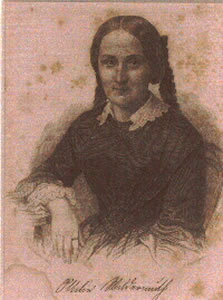
De Duitse dichter en schrijver Hugo Ball werd geboren op 22 februari 1886 in Pirmasens. Zie ook alle tags voor Hugo Ball op dit blog.


Ich liebte nicht


Ich liebte nicht die Totenkopfhusaren

Und nicht die Mörser mit den Mädchennamen

Und als am End die großen Tage kamen,

Da bin ich unauffällig weggefahren.


Gott sei’s geklagt und ihnen, meine Damen:

Gleich Absalom blieb ich an langen Haaren,

Dieweil sie schluchzten über Totenbahren

Im Wehbaum hängen aller ihrer Dramen.


Sie werden auch in diesen Versen finden

Manch Marterspiel und stürzend Abenteuer.

Man stirbt nicht nur durch Minen und durch Flinten.


Man wird nicht von Granaten nur zerrissen.

In meine Nächte drangen Ungeheuer,

Die mich die Hölle wohl empfinden ließen.


Cabaret


Der Exhibitionist stellt sich gespreizt am Vorhang auf

und Pimpronella reizt ihn mit den roten Unterröcken.

Koko der grüne Gott klatscht laut im Publikum.

Da werden geil die ältesten Sündenböcke.


Tsingtara! Da ist ein langes Blasinstrument.

Daraus fährt eine Speichelfahne. Darauf steht: »Schlange«.

Da packen alle ihre Damen in die Geigenkästen ein

und verziehen sich. Da wird ihnen bange.


Am Eingang sitzt die ölige Camödine.

Die schlägt sich die Goldstücke als Flitter in die Schenkel.

Der sticht einer Bogenlampe die Augen aus.

Und das brennende Dach fällt herunter auf ihren Enkel.


Hugo_Ball

Hugo Ball (22 februari 1886 – 14 september 1927)


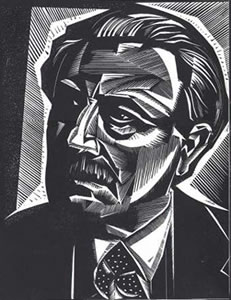
De Servische schrijver Danilo Kiš werd geboren op 22 febrari 1935 in Subotica. Zie ook alle tags voor Danilo Kiš op dit blog.


Uit: Ein Grabmal für Boris Dawidowitsch (Vertaald door Ilma Rakusa)


»Mögen die Angaben über seine früheste Kindheit noch so nichtssagend sein – sie beschwören deutlich genug die provinzielle Grisaille mitteleuropäischer Kleinstädte zu Beginn dieses Jahrhunderts: die ebenerdigen grauen Häuser mit ihren Höfen, welche von der langsam vorbeiziehenden Sonne durch eine klare Demarkationslinie in Quadrate von tödlicher Helligkeit und von modrigem, finsterem Schatten zerteilt werden; die Akazienalleen, die im Frühling widerlich duften, wie die nach Kinderkrankheiten riechenden Hustensirupe und Hustenbonbons; den kühlen Barockglanz der Apotheke mit ihren strahlendweißen gotischen Porzellangefäßen; das düstere gimnázium mit dem gepflasterten Schulhof (Bänke von abgeblättertem Grün, galgenähnliche verlassene Schaukeln, weißgetünchte Holzklosette); das Rathaus in Mariatheresiagelb, der Farbe welker Blätter und herbstlicher Rosen, wie’s in den Romanzen heißt, welche die Zigeunerkapelle allabendlich im Garten des Grandhotels zum besten gibt.
Karl Taube, der Sohn des Apothekers, träumte – wie viele Kinder der Provinz – von jenem glücklichen Tag, da er durch seine dicken Brillengläser zum letzten Mal, aus der Vogelperspektive des Abschieds, auf seine Stadt blicken würde – mit der gleichen Trauer und Abscheu, die man empfindet, wenn man im Album der Gymnasiumszeit mit der Lupe die abgeschmackten gelben Schmetterlingsleichen betrachtet. Im Herbst 1920 bestieg er im Budapester Ostbahnhof den Erste-KlasseWagen des Schnellzugs Budapest-Wien; als der Zug sich in Bewegung setzte, winkte der junge Karl noch einmal seinem Vater zu (der mit wehendem Seidentaschentuch wie ein kleiner dunkler Fleck in der Ferne verschwand), dann trug er seine Ledertasche eilig in den Dritte-Klasse- Wagen und setzte sich zwischen die Arbeiter.«


Danilo_Kis_az_Alternativ_kulturalis_forumon

Danilo Kiš (22 februari 1935 – 15 oktober 1989)
Hier samen met Susan Sontag (links)


De Amerikaanse schrijfster Jane Bowles werd als Jane Auer geboren op 22 februari 1917 in New York. Zie ook alle tags voor Jane Bowles op dit blog.


Uit:  Jane und Paul Bowles. Leben ohne anzuhalten (Dubbelbiografie van Jens Rosteck)


„Die höchst unkonventionelle Verbindung zweier der wichtigsten amerikanischen Schriftsteller ihrer Ära nahm im Vorkriegs- New York der späten Dreißiger ihren Anfang, führte das Duo auf Abenteuerreisen nach Mittelamerika und Paris, zum Inselkauf nach Sri Lanka und schließlich in einen jahrzehntelang

währenden (Alp-) »Traum am Ende der Welt«, in das Tanger der Nachkriegszeit.

Dort, im Grenzland zwischen Europa, Afrika und Atlantik, im ästhetischen, gesellschaftlichen wie erotischen Freiraum der »Internationalen Zone«, kamen sie Hippies, Drogenabhängigen und Aussteigern zuvor, hielten bereits ab den frühen Fünfzigern Hof, standen im Zentrum mondäner Parties, erweiterten ihre Kreativität und erprobten neue Schreibtechniken durch ungehemmten Kif-Konsum, spürten den Musiktraditionen des Maghrebs nach, erkundeten die Wüste, nahmen an rituellen Trance-Zeremonien teil, wurden Zeugen innenpolitischer Unruhen. Und lockten bald die Vertreter der beat generation – mit der sie nicht allzuviel gemein hatten, aber schleunigst von ihr

vereinnahmt wurden – in ihr Refugium an diesem geheimnisvollen, abgründigen und gefährlichen äußersten Zipfel Nordwestafrikas voller Verheißung, in die dream city.

Beide wurden in und um New York geboren. Beide verweigerten sich frühzeitig tradierten Vorstellungen von Familienleben und Männer- oder Frauenrolle. Jane wuchs vaterlos mit einer dominanten Mutter auf, erlitt einen schweren Reitunfall und wurde zu Pflegeaufenthalten in schweizerische Sanatorien eingewiesen. Nach unwirklichen Monaten in alpinem Ambiente kehrte sie auf einem Atlantikdampfer in die Staaten zurück, wo sie einem enfant maudit der französischen Literatur, dem Romancier Céline, begegnete – ein Schlüsselerlebnis. Janes augenblicklichen Entschluß, selbst Schriftstellerin zu werden, krönte ein abgeschlossener Roman

der Jugendlichen in französischer Sprache. Noch nicht volljährig, lebte sie mit älteren Gefährtinnen zusammen, führte ein Bohème-Dasein in Manhattan und wurde zum Dauergast so mancher Lesbenlokale. Die kettenrauchende Trinkerin, Exzentrikerin und Vielrednerin laborierte jahrelang an Romanen (Two Serious Ladies) und Fragmenten, bei deren mühseligem Abschluß ihr Paul willkommene Hilfestellung leistete.“


JaneBowles

Jane Bowles (22 februari 1917 – 4 mei 1973)
Hier met Truman Capote


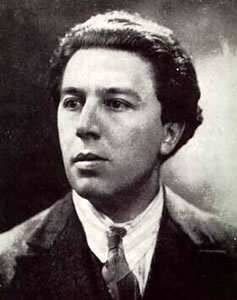
De Afro-Amerikaanse dichter, schrijver en essayist Ishmael Scott Reed werd geboren op 22 februari 1938 in Chattanooga, Tennessee. Zie ook alle tags voor Ishmael Reed op dit blog.


beware : do not read this poem


tonite, thriller was
abt an ol woman, so vain she
surrounded herself w /
many mirrors


it got so bad that finally she
locked herself indoors & her
whole life became the
mirrors


one day the villagers broke
into her house , but she was too
swift for them . she disappeared
into a mirror
each tenant who bought the house
after that , lost a loved one to


the ol woman in the mirror :
first a little girl
then a young woman
then the young woman/s husband


the hunger of this poem is legendary
it has taken in many victims
back off from this poem
it has drawn in yr feet
back off from this poem
it has drawn in yr legs


back off from this poem
it is a greedy mirror
you are into this poem . from
the waist down
nobody can hear you can they ?
this poem has had you up to here
belch
this poem aint got no manners
you cant call out frm this poem
relax now & go w / this poem

move & roll on to this poem


do not resist this poem
this poem has yr eyes
this poem has his head
this poem has his arms
this poem has his fingers
this poem has his fingertips


this poem is the reader & the
reader this poem


statistic : the us bureau of missing persons re-
ports that in 1968 over 100,000 people
disappeared leaving no solid clues
nor trace only
a space in the lives of their friends


IshmaelReed

Ishmael Reed (Chattanooga, 22 februari 1938)


Zie voor nog meer schrijvers van de 22e februari ook mijn vorige blog van vandaag.
 

Wayne C. Booth, Morley Callaghan, Jules Renard, Sean O’Faolain, James Russell Lowell, Edna St. Vincent Millay, Ottilie Wildermuth

De Amerikaanse letterkundige en literatuurwetenschapper Wayne Clayton Booth werd geboren op 22 februari 1921 in American Fork, Utah. In 1944 studeerde hij af aan de Brigham Young University. Na zijn diensttijd gedurende WO II studeerde Booth Engels aan de University of Chicago waar hij later ook promoveerde. In 1962 werd hij hoogleraar, eerst aan het Haverford College, later aan de universiteit van Chicago. In 1961 publiceerde hij “The Rhetoric of Fiction”. Andere belangrijke werken van hem zijn “A Rhetoric of Irony” (1974) und “The Company We Keep” (1988). Van Booth stamt het concept van de impliciete auteur. Daarmee week hij af van de school van het New Criticism. Hij formuleerde ermee belangrijke grondslagen van de receptie-esthetica en van de verteltheorie. Ook het begrip „onbetrouwbare verteller“ stamt af van Booth.


Uit: The Essential Wayne Booth


„Even in works that are somewhat successful, there is almost always some shrinking from a fully responsible engagement with the inherent difficulties. For example, in Tender Is the Night, which is in many ways strikingly similar to Macbeth, Fitzgerald waters down the effect in several ways. Dick Diver, Fitzgerald’s “noble” man, is destroyed, but he is destroyed only to helplessness-to unpopularity and drunkenness and poverty; he becomes a “failure.” The signs of his destruction are never grotesque acts of cruelty or wickedness of the kind committed by Macbeth or of a kind which, for the modern reader, would be analogous in their unsympathetic quality. Rather, he speaks more sharply to people than he used to; he is no longer charming. This is indeed pitiful enough, in its own way, but it is easy enough, too, especially when the artist chooses, as Fitzgerald does, to report the final demoralization of the hero only vaguely and from a great distance: one never sees Dick Diver’s final horrible moments as one sees Macbeth’s. The result is that, at the end of his downward path, Diver has been more sinned against than sinning, and we have no obstacles to our pity. On the other hand, since the fall has not been nearly so great, our pity that the fall should have occurred at all is attenuated, compared with the awfulness of the last hours of Macbeth. Other attenuations follow from this one. If the fall is not a very great one, the forces needed to produce it need not be great (although one might argue that even in Tender Is the Night they should have been greater, for credibility). Nicole and a general atmosphere of gloom and decay are made to do a job which, in Macbeth, requires some of the richest degenerative forces ever employed.“


Booth

Wayne C. Booth (22 februari 1921 – 9 oktober 2005)


De Canadese schrijver Morley Callaghan werd geboren op 22 februari 1903 in Toronto. Zie ook alle tags voor Morley Callaghan op dit blog.


Uit: They Shall Inherit the Earth


In the early summer evening Andrew Aikenhead, of the firm of Hillquist and Aikenhead, had gone out seeking his son. He had crossed slowly through the traffic with an eager expression on his upturned florid face. He was there on the sidewalk in the crowd, in the way of the passing people, looking up at the rooming house where his son lived, and he was full of delight, as though he had at last taken a necessary step that would bring joy again into his life.
He went into the house, and when he stood in the hall and saw by the names on the wall that his son was on the third floor, he began to climb the red-carpeted stairs, puffing and sighing at every fifth step. On the second floor, where the light was brighter, he saw a small, neat man with such delicate features and such fair wavy hair parted in the middle that he looked like a pretty boy, except that his blue eyes were redrimmed and shrewd, and this man was tiptoeing along the hall carrying a basket of fruit in both hands. The light overhead shone on the bl
ue grapes, the yellow pears and the glossy peaches as he stooped and placed the basket of fruit on the carpet by the door of a room.
“Could you tell me where Michael Aikenhead lives?” Andrew Aikenhead asked.
“Mike Aikenhead,” the man said, straightening up and looking embarrassed. “Sure, I can tell you. Go on upstairs. The last room on the right at the back. He’s in there.” Andrew Aikenhead went on climbing the stairs again, while the fairhaired young man looked doubtfully at the basket of fruit he had placed like an offering outside that door.

In the little hall at the top, where there were onlytwo doors, Andrew Aikenhead coughed, and then he began to clear his throat like a man who is about to make an important speech and offers a few preliminary sounds as a friendly gesture. Then he stood still, looking at the brown-painted door while his heart fluttered strangely and there was a yearning in him that his son might remember and know his voice that had sounded so loud. And when he rapped and his son’s voice called carelessly, “Come in,” he was full of gladness; and as he opened the door he thought, “That’s a good omen. Things will go well.”


Callaghan

Morley Callaghan (22 februari 1903 – 25 augustus 1990)


De Ierse schrijver Sean O’Faolain werd geboren op 22 februari 1900 in Cork. Zie ook alle tags voor Sean O’Faolain op dit blog.


Uit: The Trout


But she went back, pretending to be going somewhere else, and she found a hole scooped in the rock at the side of the walk, choked with damp leaves, so shrouded by ferns that she only uncovered it after much searching. At the back of this little cavern there was about a quart of water. In the water she suddenly perceived a panting trout. She rushed for Stephen and dragged him to see, and they were both so excited that they were no longer afraid of the darkness as they hunched down and peered in at the fish panting in his tiny prison, his silver stomach going up and down like an engine.

Nobody knew how the trout got there. Even Old Martin in the kitchen-garden laughed and refused to believe that it was there, or pretended not to believe, until she forced him to come down and see. Kneeling and pushing back his tattered old cap he peered in.

`Be cripes, you’re right. How the divil in hell did that fella get there?’

She stared at him suspiciously.

`You knew?’ she accused; but he said, `The divil a know;’ and reached down to lift it out.

Convinced she hauled him back. If she had found it then it was her trout.

Her mother suggested that a bird had carried the spawn. Her father thought that in the winter a small streamlet might have carried it down there as a baby, and it had been safe until the summer came and the water began to dry up. She said, `I see,’ and went back to look again and consider the matter in private. Her brother remained behind, wanting to hear the whole story of the trout, not really interested in the actual trout but much interested in the story which his mummy began to make up for him on the lines of, `So one day Daddy Trout and Mammy Trout . . . .’ When he retailed it to her she said, `Pooh.’

It troubled her that the trout was always in the same posi
tion; he had no room to turn; all the time the silver belly went up and down; otherwise he was motionless. She wondered what he ate and in between visits to Joey Pony, and the boat and a bathe to get cool, she thought of his hunger. She brought him down bits of dough; once she brought a worm. He ignored the food. He just went on panting. Hunched over him she thought how, all the winter, while she was at school he had been in there. All winter, in The Dark Walk, all day, all night, floating around alone. She drew the leaf of her hat down around her ears and chin and stared. She was still thinking of it as she lay in bed.“


O'Faolain

Sean O’Faolain (22 februari 1900 – 20 april 1991)
Buste in de Cork City Library


De Franse schrijver Jules Renard werd geboren op 22 februari 1864 in Châlons-du-Maine. Zie ook alle tags voor Jules Renard op dit blog.


Uit: Poil de Carotte


„- Il ne reste plus de melon pour toi, dit Madame Lepic ; d’ailleurs, tu es comme moi, tu ne l’aimes pas.
– Ca se trouve bien, se dit Poil de Carotte.
On lui impose ainsi ses goûts et ses dégoûts. En principe, il doit aimer seulement ce qu’aime sa mère. Quand arrice le fromage :
– Je suis bien sûre, dit Madame Lepic, que Poil de Carotte n’en mangera pas.
Et Poil de Carotte pense :
– Puisqu’elle en est sûre, ce n’est pas la peine d’essayer.
En outre, il sait que ce serait dangereux.
Et n’a-t-il pas le temps de satisfaire ses plus bizarres caprices dans des endroits connus de lui seul ? Au dessert, Madame Lepic lui dit :
– Va porter ses tranches de melons à tes lapins.
Poil de Carotte fait la commission au petit pas, en tenant l’assiette bien horizontale afin de ne rien renverser.
A son entrée sous leur toit, les lapins, coiffés en tapageur, les oreilles sur l’oreille, le nez en l’air, les pattes de devant raides comme s’ils allaient jouer du tambour, s’empressent autour de lui.
– Oh ! Attendez, dit Poil de Carotte ; un moment, s’il vous plaît, partageons.
S’étant assis d’abord sur un tas de crottes, de séneçon rongé jusqu’à la racine, de trognons de choux, de feuilles de mauves, il leur donne les graines de melon et boit le jus lui-même ; c’est doux comme du vin doux.
Puis il racle avec les dents ce que sa famille a laissé aux tranches de jaune sucré, tout ce qui peut fondre encore, et il passe le vert aux lapins en rond sur leur derrière.“


Jules_Renard_et_Poil_de_Carotte

Jules Renard (22 februari 1864 – 22 mei 1910)
Monument in Chitry-les-Mines


De Amerikaanse dichter, essayist, uitgever en diplomaat James Russell Lowell werd geboren op 22 februari 1819 in Cambridge, Massachusetts. Zie ook alle tags voor James Russell Lowell op dit blog.


My Love


Not as all other women are

Is she that to my soul is dear;

Her glorious fancies come from far,

Beneath the silver evening-star,

And yet her heart is ever near.


Great feelings hath she of her own,

Which lesser souls may never know;

God giveth them to her alone,

And sweet they are as any tone

Wherewith the wind may choose to blow.


Yet in herself she dwelleth not,

Although no home were half so fair;

No simplest duty is forgot,

Life hath no dim and lowly spot

That doth not in her sunshine share.


She doeth little kindnesses,

Which most leave undone, or despise:

For naught that sets one heart at ease,

And giveth happiness or peace,

Is low-esteemèd in her eyes.


She hath no scorn of common things,

And, though she seem of other birth,

Round us her heart entwines and clings,

And patiently she folds her wings

To tread the humble paths of earth.


Blessing she is: God made her so,

And deeds of week-day holiness

Fall from her noiseless as the snow,

Nor hath she ever chanced to know

That aught were easier than to bless.


She is most fair, and thereunto

Her life doth rightly harmonize;

Feeling or thought that was not true

Ne’er made less beautiful the blue

Unclouded heaven of her eyes.


She is a woman: one in whom

The springtime of her childish years

Hath never lost its fresh perfume,

Though knowing well that life hath room

For many blights and many tears.


I love her with a love as still

As a broad river’s peaceful might,

Which, by high tower and lowly mill,

Seems following its own wayward will,

And yet doth ever flow aright.


And, on its full, deep breast serene,

Like quiet isles my duties lie;

It flows around them and between,

And makes them fresh and fair and green,

Sweet homes wherein to live and die.


Russell-Lowell

James Russell Lowell (22 februari 1819 – 12 augustus 1891)


De Amerikaanse dichteres en schrijfster Edna St. Vincent Millay werd geboren op 22 februari 1892 in Rockland, Maine. Zie ook alle tags voor Edna St. Vincent Millay op dit blog.


Afternoon on a Hill


I will be the gladdest thing
Under the sun!
I will touch a hundred flowers
And not pick one.


I will look at cliffs and clouds
With quiet eyes,
Watch the wind bow down the grass,
And the grass rise.


And when lights begin to show
Up from the town,
I will mark which must be mine,
And then start down!


Sorrow

Sorrow like a ceaseless rain
Beats upon my heart.
People twist and scream in pain, —
Dawn will find them still again;
This has neither wax nor wane,
Neither stop nor start.


People dress and go to town;
I sit in my chair.
All my thoughts are slow and brown:
Standing up or sitting down
Little matters, or what gown
Or what shoes I wear.


Edna_St__Vincent_Millay

Edna St. Vincent Millay (22 februari 1892 – 19 oktober 1950)


De Duitse dichteres en schrijfster Ottilie Wildermuth werd geboren op 22 februari 1817 in Rottenburg am Neckar. Zie ook alle tags voor Ottilie Wildermuth op dit blog.


Klagst du leise, daß hienieden.


Klagst du leise, daß hienieden

Dir ein Frauenloos beschieden?

Neidest du des Mannes Streben

Und sein keckes, freies Leben?

Nimm das Beste dir zu eigen,


Was den rechten Mann kann zeigen!

Einen guten, reinen Willen,

Kraft und Muth, ihn zu erfüllen,

Feste Treue fort und fort,

Daß wie Gold dein schlichtes Wort;


Lust zu graben nach dem Quell

Edlen Wissens recht und hell;

Füg’ dazu in Ernst und Scherz

Warm und treu ein Frauenherz,

Liebevolles Frauensorgen,


Das da waltet still verborgen;

Ruhig heiteres Ergeben,

Was auch bringe dir das Leben:

Du und andre sinds dann wohl zufrieden

Daß nicht Mannesloos dir ward beschieden.


ottilie

Ottilie Wildermuth (22 februari 1817 – 12 juli 1877)

Herman de Coninck, Chuck Palahniuk, Hans Andreus, Wystan Hugh Auden, Laure Limongi, David Foster Wallace

De Vlaamse dichter, essayist, journalist en tijdschriftuitgever Herman de Coninck werd geboren in Mechelen op 21 februari 1944. Zie ook mijn blog van 21 februari 2007 en ook mijn blog van 21 februari 2008 en ook mijn blog van 21 februari 2009.


Met handen kun je alles


Met handen kun je alles: een sigaret
opsteken, haren strelen,
een borst aanraken, een borst niet aanraken –
dit allemaal opschrijven.


Men moest maar eens ophouden,
tenminste in de vakantie,
met daar zo’n, waardeonderscheid tussen te maken.


Heb mij nodig


Heb mij nodig. Kun mij niet missen

Heb verdriet. Ik heb daar van alles tegen,

Levensbeschouwing, aforismen, groter verdriet:

Het is familie. Van geluk weet ik dat niet.


Er is geluk waarmee je alleen

moet zijn. Het te grote,

Zo heb ik, toen jij geboren was, een dag

door bossen gelopen. En toen pas besloten

dat jij er misschien mee te maken had,

en je moeder, die ik kende van vroeger.


Er is keihard geluk, waarvoor je moet

achterlaten en hebben en twintig zijn

zoals in het Frans: twintig jaar hebben.

Heb mij niet nodig. Kun mij missen.


Pas later ben je ooit weer twaalf geweest.

Dan kun je ook rustig veertig worden.

Dan is geluk verdriet. Een naald die Schubert leest

Kun mij dan missen maar doe het niet.


Opnieuw


Een angorakat in de sneeuw: afgemeten,

om niet met elke stap zichzelf in al

dat witte te vergeten.


Sneeuw blijft het weten.

Het lijkt of hij zich pas nadien scrupuleus

rond al die pootjes heeft gelegd.


Zoals je praat rond tederheid

die nog niet wordt gezegd.


deConinck

Herman de Coninck  (21 februari 1944 – 22 mei 1997)


De Amerikaanse schrijver en journalist Chuck Palahniuk werd geboren op 21 februari 1962 in Pasco, Washington. Zie ook mijn blog van 21 februari 2009.


Uit: Choke


„I t’s dark and starting to rain when I get to the church, and Nico’s waiting for somebody to unlock the side door, hugging herself in the cold.

“Hold on to these for me,” she says and hands me a warm fistful of silk.

“Just for a couple hours,” she says. “I don’t have any pockets.” She’s wearing a jacket made of some fake orange suede with a bright orange fur collar. The skirt of her flower-print dress shows hanging out. No pantyhose. She climbs up the steps to the church door, her feet careful and turned sideways in black spike heels.

What she hands me is warm and damp.

It’s her panties. And she smiles.

Inside the glass doors, a woman pushes a mop around. Nico knocks on the glass, then points at her wristwatch. The woman dunks the mop back in a bucket. She lifts the mop and squeezes it. She leans the mop handle near the doorway and then fishes a ring of keys out of her smock pocket. While she’s unlocking the door, the woman shouts through the glass.

“You people are in Room 234 tonight,” the woman says. “The Sunday school room.”

By now, more people are in the parking lot. People walk up the steps, saying hi, and I stash Nico’s panties in my pocket. Behind me, other people hustle the last few steps to catch the door before it swings shut. Believe it or not, you know everybody here.

These people are legends. Every single one of these men and women you’ve heard about for years.

In the 1950s a leading vacuum cleaner tried a little design improvement. It added a spinning propeller, a razor-sharp blade mounted a few inches inside the end of the vacuum hose. Inrushing air would spin the blade, and the blade would chop up any lint or string or pet hair that might clog the hose.

At least that was the plan.“


chuck-palahniuk

Chuck Palahniuk (Pasco, 21 februari 1962)


De Nederlandse dichter en prozaschrijver Hans Andreus werd geboren in Amsterdam op 21 februari 1926. Zie ook mijn blog van 21 februari 2007 en ook mijn blog van 21 februari 2008 en ook mijn blog van 21 februari 2009.


Wanneer ik sterren was


Wanneer ik de armen van sterren had

zwaaide ik die door de grote leegte.

Wanneer ik benen van sterren had,

stapte ik door de grote leegte.


Laatst, in onze liefde,

schreeuwde je als een zeehond, maar dan mooi.

Dat was het begin van de leegte,

torn in de tijd.


Wanneer ik ogen van sterren had,

zwierven die door de grote leegte.

Wanneer ik een neus van sterren had,

stak ik die in de grote leegte.

Wanneer ik een mond van sterren had,

kuste ik de leegte.


Het wordt gezegd

dat de leegte geen hart heeft.

Ik weet zeker

dat het hart van de leegte klopt.


De lijster weer


De lijster weer.

Die was geen avond

het spoor bijster:

z’n soundtrack


tussen de huizen

liep feilloos synchroon

met het in deze

werkelijkheid on-


ontkoombaar effekt

van wolken, lucht en

dalende zon,


en terwijl ik me hield

alsof ik voor dood lag,

floot hij. Hij floot.


Ik hou van je


Ik hou van je,

jij

uit het noorden,

met je


glimlach

van

geheimschrift

en je


kijken

zuiverder

dan


zelfs het

zuiverste

licht hier.


Andreus

Hans Andreus (21 februari 1926 – 9 juni 1977) 


De Engelse dichter, essayist en criticus Wystan Hugh Auden werd geboren in York op 21 februari 1907. Zie ook mijn blog van 21 februari 2007 en ook mijn blog van 21 februari 2008 en ook mijn blog van 21 februari 2009.


The More Loving One    


Looking up at the stars, I know quite well

That, for all they care, I can go to hell,

But on earth indifference is the least

We have to dread from man or beast.


How should we like it were stars to burn

With a passion for us we could not return?

If equal affection cannot be,

Let the more loving one be me.


Admirer as I think I am

Of stars that do not give a damn,

I cannot, now I see them, say

I missed one terribly all day.


Were all stars to disappear or die,

I should learn to look at an empty sky

And feel its total dark sublime,

Though this might take me a little time.


If I could tell you


Time will say nothing but I told you so,

Time only knows the price we have to pay;

If I could tell you I would let you know.


If we should weep when clowns put on their show,

If we should stumble when musicians play,

Time will say nothing but I told you so.


There are no fortunes to be told, although,

Because I love you more than I can say,

If I could tell you I would let you know.


The winds must come from somewhere when they blow,

There must be reasons why the leaves decay;

Time will say nothing but I told you so.


Perhaps the roses really want to grow,

The vision seriously intends to stay;

If I could tell you I would let you know.


Suppose the lions all get up and go,

And all the brooks and soldiers run away;

Will Time say nothing but I told you so?

If I could tell you I would let you know.


Epitaph on a Tyrant    


Perfection, of a kind, was what he was after,

And the poetry he invented was easy to understand;

He knew human folly like the back of his hand,

And was greatly interested in armies and fleets;

When he laughed, respectable senators burst with laughter,

And when he cried the little children died in the streets.


AudenJong

W. H. Auden (21 februari 1907 – 29 september 1973)
Een zeer jonge Auden


De Franse schrijfster Laure Limongi werd geboren op 21 februari 1976 in Bastia (Corsica). Zie ook mijn blog van 21 februari 2009.


Uit: Le travail de rivière


Chaumont ressemble à une tête d’épingle dans la grande tapisserie française, elle-même minuscule pièce du vaste brocart du monde. L’univers est à portée de main quand on l’imagine faufilé. Chaumont est une tête d’épingle verte piquée sur le cœur de la France, qui n’en rougit pas, et c’est là que je suis née, en 1923, avec quelques dizaines de milliers d’autres âmes noyées dans cet ensemble. Têtes d’épingle sur tête d’épingle, on n’en finit pas. Océan de relativité. Ces échelles vertigineuses m’ont toujours tourné la tête mais je ne dois pas commencer à digresser. Pas déjà. M’est avis que je vous perdrai suffisamment tôt dans les méandres et leurs interstices. Combien finiront à la cave sans lumière de mon récit, sans en avoir visité le salon de musique ? Je reprends, donc, et je suis ma portée. Pas à pas, d’enjambée de sabot et d’élève appliquée. Je suis née à Chaumont, entre deux guerres. C’est là que mes yeux ont suivi un ruban d’histoire que j’aimerais vous raconter, d’une plume qui n’est bien sûr pas la mienne – imaginez-vous de quel lieu je pourrais vous parler ? – mais la voix est assez ressemblante. À la fois lente et essoufflée. Un peu absente, un peu perdue. Incongrue. Imaginez la Callas née à Clermont-Ferrand ou Camille Claudel passant sa vie à Arras. Je ne me compare pas à leur éclat, mais à leur mélancolie. Vous me citerez Emma Calvé, née à Millau, fille de brodeuse, parcourant les mers. Vous aurez raison de me porter cette contradiction brillante, parfois même ceinte du drapeau bleu blanc rouge – et rien en dessous – devant des milliers de spectateurs. Emma Calvé héritant des économies de sa mère, de sa grand-mère qui filaient paisiblement au coin du feu. Sa voix est faite de leur silence. Ma voix est faite de leur silence. Imaginez un écheveau de sentiments sombres naissant à Chaumont, se dévidant à toute vitesse à Chaumont, répétant sans cesse Chaumont, Chaumont, Chaumont, sans ordre ni logique, syllabes rassurantes et écœurantes, une aiguille à broder à la main, ou quasi, dès les balbutiements. Le temps se couvre, je suis fidèle aux éléments biographiques. Ou presque. »


Laure

Laure Limongi (Bastia 21, februari 1976)


De Amerikaanse schrijver David Foster Wallace werd geboren op 21 februari 1962 in New York. Zie ook mijn blog van 21 februari 2009.


Uit: A Supposedly Fun Thing I’ll Never Do Again


„One big girl with tattoos and a heavy-diapered infant wears a T-shirt that says ‘WARNING: I GO FROM 0 TO HORNEY IN 2.5 BEERS’

Have you ever wondered where these particular types of unfunny T-shirts come from? The ones that say things like ‘HORNEY IN 2.5’ or ‘Impeach president Clinton … AND HER HUSBAND TOO.’

As with New Yorker cartoons, there’s an elusive sameness about the shirts’ messages. A lot serve to I.D. the wearer as part of a certain group and then congratulate that group for its sexual dynamism — ‘Coon Hunters Do It All Night’ and ‘Hairdressers Tease It Till It Stands Up’ and ‘Save a Horse: Ride a Cowboy’. Some presume a weird kind of aggressive relation between the shirt’s wearer and its reader — ‘We’d Get Along Better … If You Were A BEER’ and ‘Lead Me Not Into Temptation, I Know The Way MYSELF’ and ‘What Part of NO Don’t You Understand?’

There’s something complex and compelling about the fact that these messages are not just uttered but worn, like they’re a badge or a credential. The message compliments the wearer somehow, and the wearer in turn endorses the message by spreading it across his chest, which fact is then in further turn supposed to endorse the wearer as a person of plucky or risqué wit. It’s also meant to cast the wearer as an Individual, the sort of person who not only makes but wears a Personal Statement. What’s depressing is that the T-shirts’ statements are not only preprinted and mass-produced, but so dumbly unfunny that they serve to place the wearer squarely in that large and unfortunate group of people who think such messages not only Individual but funny. It all gets tremendously complex and depressing.“


wallace

David Foster Wallace (21 februari 1962 – 12 september 2008)


Zie voor nog meer schrijvers van de 21e februari ook mijn vorige blog van vandaag.


Raymond Queneau, Anaïs Nin, Ha Jin, Ingomar von Kieseritzky, Ishigaki Rin, José Zorrilla y Moral, Justus van Effen

De Franse schrijver Raymond Queneau werd geboren op 21 februari 1903 in Le Havre. Zie ook mijn blog van 21 februari 2007 en ook mijn blog van 21 februari 2008 en ook mijn blog van 21 februari 2009.


Uit: Exercices de style


En partie double


Vers le milieu de la journée et à midi, je me trouvai et montai sur la plate-forme et la terrasse arrière d’un autobus et d’un véhicule des transports en commun bondé et quasiment complet de la ligne S et qui va de la Contrescarpe à Champerret. Je vis et remarquai un jeune homme et un vieil adolescent assez ridicule et pas mal grotesque : cou maigre et tuyau décharné, ficelle et cordelière autour du chapeau et couvre-chef. Après une bousculade et confusion, il dit et profère d’une voix et d’un ton larmoyants et pleurnichards que son voisin et covoyageur fait exprès et s’efforce de le pousser et de l’importuner chaque fois qu’on descend et sort. Ceci déclaré et après avoir ouvert la bouche, il se précipite et se dirige vers une place et un siège vides et libres.


Deux heures après et cent vingt minutes plus tard, je le rencontre et le revois cour de Rome et devant la gare Saint-Lazare. Il est et se trouve avec un ami et copain qui lui conseille de et l’incite à faire ajouter et coudre un bouton et un rond de corozo à son pardessus et manteau.


queneau

Raymond Queneau (21 februari 1903 – 25 oktober 1976)


De Franse schrijfster Anaïs Nin werd geboren op 21 februari 1903 in Neuilly. Zie ook mijn blog van 21 februari 2007  en ook mijn blog van 21 februari 2008 en ook mijn blog van 21 februari 2009.


Uit: Journal V (1947-1955)


“Hier, dans la pièce, Anaïs entre le soleil et moi. La chevelure illuminée, la fumée de cigarette s’élevant tout autour, grise, et puis bleue comme un rêve. Je voulais me lever et traverser la fumée pour explorer, toucher sa main. Je vois, d’après son Journal, que je ne suis pas le seul à la trouver irréelle : tout le monde l’a vue de cette manière, comme si on n’osa
it sourciller de peur que… pffft ! Cela fait partie de sa beauté, cette manière de ne pas être là tout à fait, comme un rêve. Je m’en aperçois moins maintenant parce que notre amitié est humaine, plus forte, et qu’elle a une fibre dans la réalité, mais, à des moments comme ceux-là, je vois l’aspect essentiellement spirituel.

Anaïs ne sera jamais maîtresse des formes artistiques. Cette faille est le prix que paient ses romans, en échange de la parfaite intégration de l’art et de la vie réalisée dans le Journal. Où est la forme dans le Journal ? La vie ? La vie est la grande œuvre. Sa solidité est dans la personne, pas dans l’artiste. L’unité du Journal est créée par la personne, pas par l’artiste. L’unité du Journal est dans la personne, pas dans l’artiste. Il y a une lumière brillante, superélectronique, la personne, aveugle de naissance, qui travaille à une seule chose, abattre les murs, supprimer les voiles, les écrans, les rideaux qui obstruent la lumière.

L’art d’Anaïs Nin est l’art de l’improvisation, son éclat et sa beauté, le résultat de moments de jazz, dans un monde de vision parfaite.”


nin

Anaïs Nin (21 februari 1903 – 14 januari 1977)


De Chinees-Amerikaanse schrijver Ha Jin werd geboren op 21 februari 1956 in Jinzhou, China. Zie ook mijn blog van 21 februari 2009.


Uit: The Crazed


Everybody was surprised when Professor Yang suffered a stroke in the spring of 1989. He had always been in good health, and his colleagues used to envy his energy and productiveness–he had published more than any of them and had been a mainstay of the Literature Department, directing its M.A. program, editing a biannual journal, and teaching a full load. Now even the undergraduates were talking about his collapse, and some of them would have gone to the hospital if Secretary Peng had not announced that Mr. Yang, under intensive care, was in no condition to see visitors.
His stroke unsettled me, because I was engaged to his daughter, Meimei, and under his guidance I had been studying for the Ph.D. entrance exams for the classical literature program at Beijing University. I hoped to enroll there so that I could join my fiancee in the capital, where we planned to build our nest. Mr. Yang’s hospitalization disrupted my work, and for a whole week I hadn’t sat down to my books, having to go see him every day. I was anxious–without thorough preparation I couldn’t possibly do well in the exams.
Just now, Ying Peng, the Party secretary of our department, had called me to her office. On her desk an electric fan was whirring back and forth to blow out the odor of dichlorvos sprayed in the room to kill fleas. Her gray bangs were fluttering as she described to me my job, which was to attend my teacher in the afternoons from now on. Besides me, my fellow graduate student Banping Fang would look after Mr. Yang too; he was to take care of the mornings.“


HaJin

Ha Jin (Jinzhou, 21 februari 1956)


De Duitse schrijver Ingomar von Kieseritzky werd geboren op 21 februari 1944 in Dresden. Zie ook mijn blog van 21 februari 2009.


Uit: Da kann man nichts machen


Zwischen den Füßen in furchtbar häßlichen Gesundheitsschuhen hütete dieser Randolf eine bauchige Tasche aus schwarzem Leder. Traurig entnahm Vicovic der leider anämischen Brieftasche ein wenig Geld für die Kinder, 4000 Schilling, 200 Franken, 300 deutsche Mark – eine einsame ägyptische Pfundnote legte er zurück, während er an den Tod dachte, den dieser Herr so diskret hinter sich gebracht hatte, ohne Lärm und ohne Schmutz.
Als leidenschaftlicher Leser populärer medizinischer Artikel wußte Vicovic, daß alle inneren Funktionen erloschen waren; auch die Haare wuchsen nicht mehr, und niemals würde der Tote seine Soljanka verdauen. Als er die zweite Innentasche des Saccos untersuchte, ertönte ein Magengeräusch, als trennten sich verschiedene Sekrete, um in den dunklen Röhren des Leibes zu verschwinden.
Was mochte der stille Herr hier von Beruf sein? Seine Hände waren zart, die Finger lang, und Vicovic fand ein paar Tintenspuren am Daumen der rechten Hand; er hatte X-Beine, ritt also nicht. Die Brille hatte dicke Gläser mit einer hohen Dioptrienzahl. Da wurde an die Tür geklopft, und Vicovic erstarrte, während eine Extrasystole ihm die Luft nahm. Er hielt den Atem an und betrachtete aufmerksam das Gesicht des schweigenden Herrn, die wohlgeformte, bleiche Stirn, die acht Querfalten und die abstehenden Ohren, die rosig schimmerten.
Er sieht, dachte Vicovic, geistvoll aus, aber er hat weißen Grind auf dem Schädel. Dann wusch er sich entschlossen die Hände in einem dünnen, lauen Strahl und machte sich an die Aufgabe, den Koffer zu inspizieren. Vielleicht war der Passagier Vertreter für elektronisches Spielzeug. Das Söhnchen Milan war ganz wild auf das Zeug. Oder dieser Herr war ein berühmter Schriftsteller, gar ein Poet, was noch interessanter wäre – denn Vicovic schrieb heimlich Gedichte; nicht über Vögelein, die Wolken, Blumen oder Mädchen, sondern über Lokomotiven, selbstverständlich Dampflokomotiven.“


Ingomarvonkieseritzky

Ingomar von Kieseritzky (Dresden, 21 februari 1944)


De Japanse dichteres Ishigaki Rin werd geboren op 21 februari 1920 in Tokio. Zie ook mijn blog van 21 februari 2009.


Mothers Need not be as beautiful as flowers.


Flowers blossom so magnificently

That we forget what season it is.

But industry has not progressed

To the point where it can grow hearts in greenhouses.


Washed by the cold waves

Assuming the expression of rocks

Mothers may have the profiles of damp white sand.


Though their gentleness is eroded

Though their love shattered

Though their hopes washed away.


In the solidity of this peninsula

It is fine for you to be a mother.


Connected to the continent of life

Tiny tiny land,

Mothers.

Join your hands together,

I can see a splendid coastline.

Vertaald door Leith Morton


IshigakiRin

Ishigaki Rin (21 februari 1920 – 26 december 2004)


De Spaanse dichter en schrijver José Zorrilla y Moral werd geboren op 21 februari 1817 in Valladolid. Zie ook mijn blog van 21 februari 2009.


Uit: Don Juan Tenorio


(Pointing to Don Juan)

All paid for by that master of mine.

BUTTARELLI:  He’s rich, eh?

CIUTTI: He’s rolling, in brief.

BUTTARELLI: Generous?

CIUTTI: Yes, like a student you see.

BUTTARELLI: And noble!

CIUTTI: As every prince should be.

BUTTARELLI: And fierce!

CIUTTI: As a pirate chief.

BUTTARELLI: A Spaniard?

CIUTTI: Well, I think so.

BUTTARELLI: His name?

CIUTTI:  I don’t know, again.

BUTTARELLI: Wretch!  Where’s he
heading?

CIUTTI: Here, I know.

BUTTARELLI: He’s been writing a lot.

CIUTTI: Well he has a big pen.

BUTTARELLI:  And who’s he writing to then as carefully and fully as he’s done?

CIUTTI: To his father.

BUTTARELLI: What a son!

CIUTTI:  For the times in which we live, he’s an extraordinary man. But: silence!


Zorilla

José Zorrilla y Moral (21 februari 1817 – 23 januari 1893)


De Nederlandse schrijver Justus van Effen werd geboren in Utrecht op 21 februari 1684. Zie ook mijn blog van 21 februari 2007 en ook mijn blog van 21 februari 2009.


Uit: Den 3. November 1732. De Hollandsche Spectator.


„Deze laatste Kermis by geval te Amsterdam zynde, besloot ik eens op een avond den Schouwburg te gaan zien: zo, om dat het regenachtig weêr my belette veel te wandelen; als, om dat ik een Spel aangeslagen zag dat my volkomen onbekend was; want ik ben niet zeer bedreven in de Nederduitsche Toneelstukken, die, sedert een jaar of twintig herwaard, gemaakt zyn. ’t Was noch vroeg toen ik ‘er kwam, en echter had ik niet veel minder dan een kwartieruurs werk met dringen tusschen de voorpoort en de bak, daar ik my dicht aan de deur met een hoek van een bank vernoegen moest, zynde alles bezet of besproken. Dewyl ik in verscheiden jaren hier niet geweest was, zag ik ten eersten verandering. In de plaats van vyf vergulde kroonen, hingen ‘er nu twee zogenaamde Lustres2 van glaze kralen, gelyk La Lauze weleer plag te gebruiken. Dit gaf een zekeren mis-[140]stand daar ik geen reden van geven kon, of het moest de ongewoonte wezen. Verder sloeg ik myn ogen rondom, en zag met groot vermaak al het gewoel aan. Ieder was even bezig om een plaats te zoeken, maar de helft kon pas te recht raken. Niet ver van my stonden drie mansperzoonen en even zo veel vrouwen, die ik voor Noord-Hollanders nam. Dezen waren in hevigen twist met de meid van den Kastelein, en wilden haar dwingen om zes anderen te doen opstaan, welken, zo ze zeiden, haar plek hadden ingenomen.“


VanEffen

Justus van Effen (21 februari 1684 – 18 september 1735)
Justus van Effen, gravure door J.C.G. Fritzsch, 1735

P. C. Boutens, Ellen Gilchrist, Julia Franck, David Nolens, Georges Bernanos, William Carleton

De Nederlandse dichter Pieter Cornelis Boutens werd geboren in Middelburg op 20 februari 1870. Zie ook alle tags voor P. C. Boutens op dit blog.


De smalle ring


De smalle ring, de gouden band

Schendt niet de naaktheid van uw hand,

Gelijk uw stralend lijf niet weet

De schaduw van zijn donkre kleed:

Uw stralend lichaam lijdt noch weet

De schaduw van zijn donker kleed,

Zooals geen lijf of stof bezwaart

De ziel die door uw oogen klaart:


Geen aardsche lijf, geen stof bezwaart

De ziel die door uw oogen klaart,

Als smalle ring, als gouden band

Niet schendt de naaktheid van uw hand.


Nacht-stilte


Stil, wees stil: op zilvren voeten

Schrijdt de stilte door den nacht,

Stilte die der goden groeten

Overbrengt naar lage wacht …

Wat niet ziel tot ziel kon spreken

Door der dagen ijl gegons,

Spreekt uit overluchtsche streken,

Klaar als ster in licht zoû breken,

Zonder smet van taal of teeken

God in elk van ons.


Uit: Strofen en andere verzen uit de nalatenschap van Andries de Hoghe


Eerste strofe


Aan sombren spiegel van zwoele wake

drijven, geloken leliën, mijn oogen.

Ik kan niet slapen: de geur der rozen

wordt oppermachtig met den nacht.


Ik zal niet stijgen tot luchten droomen:

diep in haar schachten de vleugelpennen

zijn zwaar en vochtig van reukig dauwen:

de geur der rozen houdt mij neêr.


Ik kan niet duiken naar donkren sluimer,

ik kan niet zinken tot zwart vergeten:

de geur der rozen omdwelmt mijn slapen:

de geur der rozen houdt mij op.


BOUTENS

Pieter Cornelis Boutens (20 februari 1870 – 14 maart 1943)


De Amerikaanse schrijfster Ellen Gilchrist werd geboren op 20 februari 1935 in Vicksburg, Mississippi. Zie ook alle tags voor Ellen Gilchrist op dit blog.


Uit: Nora Jane: A Life in Stories


NORA JANE’S GRANDMOTHER lived in a blue frame house on the corner of Laurel and Webster streets. It was there that Nora Jane was happy. There was a swing on the porch and a morning glory vine growing on a trellis. In April azaleas bloomed all around the edges of the porch, white and pink and red azaleas, blue morning glories, the fragrant white Confederate jasmine, red salvia and geraniums and the mysterious elephant ears, their green veins so like the ones on Nora Jane’s grandmother’s hands. Nora Jane hated the veins because they meant her grandmother was old and would die. Would die like her father had died, vanish, not be there anymore, and then she would be alone with only her mother to live with seven days a week.

“Let me set the table for you,” she said to her grandmother, waking beside her in the bed. “Let me cook you breakfast. I want you to eat an egg.”

“Oh, honey lamb,” her grandmother replied, and reached over and found her glasses and put them on, the better to see the beautiful little girl, the better to be happy with the child beside her. “We will cook it together. Then we’ll see about the mirlitons. You can take them to L
angenstein’s today. They said they would buy all that you had.”

“Then I’d better hurry.” Nora Jane got out of bed. If she was going to take the mirlitons to Langenstein’s she wanted to do it early so she wouldn’t run into any of her friends from Sacred Heart. She was the only girl at Sacred Heart so poor she had to sell vegetables to Langenstein’s. Still, they had not always been poor. Her grandfather had been a judge. Her father had gone to West Point. Her grandmother had sung grand opera all up and down the coast and auditioned for the Met. She kissed her grandmother on the cheek and swung her long legs out of the bed and began to search for her clothes. “You cook breakfast then,” she said. “I’ll go pick the mirlitons before it gets too hot.”


EllenGilchrist

Ellen Gilchrist (Vicksburg, 20 februari 1935)


De Duitse schrijfster Julia Franck werd geboren op 20 februari 1970 in Oost-Berlijn. Zie ook alle tags voor Julia Frank op dit blog.


Uit: Bäuchlings


“Ich knie auf dem Parkett vor dem Sofa und beobachte Luise, wie sie schläft. Sie schläft sich den Rausch ihres Geburtstags aus. Draußen Zionskirchplatz ohne Verkehr, auch von der Kastanienallee höre ich wenig. Luise schmatzt im Schlaf, ganz leise, fast unhörbar. Ich streiche über den Saum des Chiffons, der rauh ihren Hals umschließt, rieche sie, ihren vertrauten Geruch, der mich an frischgeschnittenes Gras erinnert, ziehe die rotblonde Locke aus der Falte, die sich am Hals gebildet

hat, und suche die glatte Haut ihrer Wangen ab – ob sich schon im entspannten Zustand eine Spur ihrer Grübchen entdecken läßt? –, ihre Haut ist von blassen Sommersprossen übersät. Ich liebe Luise. Und noch etwas: Sie ist meine Schwester.

Es klingelt, sie regt sich nicht. Als ich aufstehe, knarrt das Parkett unter meinen nackten Füßen. Über

der Lehne des Sofas hängt ihr schwarzes Lederbustier, ich nehme es, der warme Geruch steigt in meine Nase, ich ziehe es an. Meine Brüste haben Platz in den Schalen, beim Gehen stoßen sie vorn an das Leder. Draußen im Flur schlüpfe ich in ihre Schuhe: leichte altmodische Schuhe mit Absätzen, die laut sind und das Parkett zerkratzen, ich drücke auf den Summer und gehe in die Küche, wo über dem Stuhl mein Kleid hängt. Ich streife es über und bemerke, daß die langen Träger des Kleides viel von dem Bustier sehen lassen, aber es ist zu spät, etwas anderes zu suchen. Ich bleibe hinter der angelehnten Tür stehen und lausche in das Treppenhaus, bis ich die Schritte auf dem letzten Absatz

höre. Ich öffne.

»Was machst du hier?« frage ich Olek, fast möchte ich sagen: Sie empfängt noch nicht.

»Zu Luise«, sagt er hastig, er möchte zu Luise, fährt sich durch die kurzen verklebten Haare, ich lasse ihn herein, und sein nackter Arm berührt meinen.”


JuliaFranck

Julia Franck (Oost-Berlijn, 20 februari 1970)


De Vlaamse schrijver David Nolens werd geboren in Antwerpen op 20 februari 1973. Zie ook alle tags voor David Nolens op dit blog.


Uit: Melancholie, een oud zeer


Voor Fabian was het geen toeval dat Anne hem na zeven jaar verliet. Hij had zelf altijd relaties gehad die ofwel zeven dagen, weken, maanden en sinds kort ook jaren duurden. Zo had hij in het laatste jaar van de universiteit precies zeven weken met Jacob gevreeën, een slimme, mooie jongen die hem in de Griekse beginselen had ingewijd. Jacob kon hem als persoon niet echt bekoren. Ook dat ene lichaamsdeel waar het toen om ging, de penis als spiegelbeeld van zijn toenmalige identiteit, was bij Jacob onvolmaakt. Die penis, en hij zag het geslacht nog heel precies voor zich, was krom als een kleine, zoete, Afrikaanse banaan – en het duurde dus zeven weken voordat hij besefte dat hij met zo een penis geen gelijkwaardig gesprek, laat staan een langdurige, eerlijke liefde kon hebben. De penis waar hij naar verlangde was een penis die heel erg op die van hemzelf geleek, zodat hij als het ware zichzelf in de mond kon nemen, als een manier om wel heel diep thuis te komen, om door het spiegelglas in het beeld te stappen en zich definitief te omhelzen. Na zeven weken gaf hij Jacob de bons.

Iets later zat Fabian in de majestueuze bibliotheek aan het Ladeuzeplein te Leuven, terwijl hij werkte aan zijn eindverhandeling die ging over Confucius, belicht vanuit het Amerikaanse pragmatisme. Confucius bekoorde hem toen omdat de oude Chinees model stond voor een leven waarin elk gebaar, elk woord, elke houding werd afgestemd op een gepaste manier van samenleven met de anderen.“


david_nolens

David Nolens (Antwerpen, 20 februari 1973)


De Franse schrijver Georges Bernanos werd geboren in Parijs op 20 februari 1888. Zie ook alle tags voor Georges Bernanos op dit blog.


Uit: La grande peur des bien-pensants


J’écris ce livre pour moi, et pour vous — pour vous qui me lisez, oui : non pas un autre, vous, vous-même. J’ai juré de vous émouvoir — d’amitié ou de colère, qu’importe ? Je vous donne un livre vivant.

« Que nous veut-il avec ce Drumont ? » direz-vous. Hé bien, je veux l’honorer, voilà tout : Je ne demande pas justice. Quelle justice ? C’était un homme de mon pays, de mon lignage (de mon lignage ou du vôtre), un fort g
arçon français, un peu épais des épaules, au pas solide. De tels gens font leurs affaires eux-mêmes, aussi longtemps qu’ils tiennent debout, aussi longtemps qu’ils tiennent debout, ils portent leur vie tout seuls, sans rien demander à personne, ils portent le bon et le mauvais, chaque chose à sa place, pour que Dieu s’y reconnaisse plus vite, au jour du jugement. Ils portent le poids de leurs péchés. Le mot de justice évoque d’abord à leurs yeux l’image d’un pauvre diable mal payé, mal nourri, qui passe en hâte sur sa jaquette après déjeuner, une espèce de toge, et coiffe son chef d’un pot galonné d’or ou d’argent. Évidemment Drumont n’a jamais attendu grand chose de cette justice-là. De celle de la postérité, pas davantage. Qu’attendait-il donc ? Hé bien, il n’attendait rien, peut-être… Peut-être il n’espérait rien.

Tout ce qu’il écrit a ce signe tragique, ce signe fatal. Presque à chaque ligne de son œuvre forte et dense, à l’architecture si sobre, un peu gauche, avec un arrière-plan de gravité mélancolique — tel un oppidum au haut d’une colline, sur un fond de ciel d’automne, nu et doré, en terre ennemie — apparaît, comme par transparence, une espèce de résignation héroïque, l’acceptation délibérée de la mort. Oui, oui… On pense à je ne sais quel homme barbu, avec sa redingote à collet, débrouillard et chimérique, qui rêve de cracher dans la vaisselle plate de Monsieur de Rothschild, salue le drapeau en zinc des lavoirs muni­cipaux, puis va prendre son vermouth entre un offi­cier de gendarmerie en retraite, auquel le nez des y…s ne revient pas (sacrebleu !), et un commer­çant patriote qui pleure sur ΓAlsace-Lorraine… Ainsi le voient aujourd’hui tant de sots qui ne l’ont jamais lu.“


georges-bernanos1

Georges Bernanos (20 februari 1888  – 5 juli 1948)


De Ierse schrijver William Carleton werd geboren op 20 februari 1794 in Glogher, in het graafschap Tyrone. Zie ook alle tags voor William Carleton op dit blog.


Uit: The Evil Eye Or The Black Spector


In a certain part of Ireland, inside the borders of the county of Waterford, lived two respectable families, named Lindsay and Goodwin, the former being of Scotch descent. Their respective residences were not more than three miles distant; and the intimacy that subsisted between

them was founded, for many years, upon mutual good-will and esteem, with two exceptions only in one of the families, which the reader will understand in the course of our narrative. Each ranked in the class known as that of the middle gentry. These two neighbors–one of whom, Mr. Lindsay, was a magistrate–were contented with their lot in life, which was sufficiently respectable and independent to secure to them that true happiness which is most frequently annexed to the middle station. Lindsay was a man of a kind and liberal heart, easy and passive in his nature, but with a good deal of sarcastic humor, yet neither severe nor prejudiced, and, consequently, a popular magistrate as well as a popular man. Goodwin might be said to possess a similar disposition; but he was of a more quiet and unobtrusive character than his cheerful neighbor. His mood of mind was placid and serene, and his

heart as tender and affectionate as ever beat in a human bosom. His principal enjoyment lay in domestic life–in the society, in fact, of his wife and one beautiful daughter, his only child, a girl of nineteen when our tale opens. Lindsay’s family consisted of one son and two daughters; but his wife, who was a widow when he married her, had another son by her first husband, who had been abroad almost since his childhood, with a grand-uncle, whose intention was to provide for him, being a man of great wealth and a bachelor.”


William_Carleton

William Carleton (20 februari 1794 – 30 januari 1869)


Zie voor nog meer schrijvers van de 20e februari ook
mijn vorige blog van vandaag.
Pierre Boulle, Ludwig Steub, Johann Heinrich Voß, Johann Fr. Riederer, Cornelis Sweerts

De Franse schrijver Pierre Boulle werd geboren op 20 februari 1912 in Avignon. Zie ook alle tags voor Pierre Boulle op dit blog.

Uit: Planet of the Apes (Vertaald door Xan Fielding)


Jinn and Phyllis were spending a wonderful holiday, in space, as far away as possible from the inhabited stars.
In those days interplanetary voyages were an everyday occurrence, and interstellar travel not uncommon. Rockets took tourists to the wondrous sites of Sirius, or financiers to the famous stock exchanges of Arcturus and Aldebaran. But Jinn and Phyllis, a wealthy leisured couple, were distinguished in their cosmos for their originality and a few grains of poetry. They wandered over the universe for their pleasure—by sail.
Their ship was a sort of sphere with an envelope—the sail—which was miraculously fine and light and moved through space propelled by the pressure of light-radiation. Such a machine, left to its own devices in the vicinity of a star (though far enough away for the field of gravity not to be too power- ful), will always move in a straight line in the opposite direction to the star; but since Jinn and Phyllis’ stellar system contained three suns that were relatively close to one another, their vessel received rays of light along three different axes. Jinn had therefore conceived an extremely ingenious method of steering. His sail was lined inside with a series of black blinds that he could roll up or unroll at will, thus changing the effect of the light-pressure by modifying the reflecting power of certain sections. Furthermore, this elastic envelope could be stretched or contracted as the navigator pleased. Thus, when Jinn wanted to increase his speed, he gave it the biggest diameter possible. It would then take the blasts of radiation on an enormous surface and the vessel would hurtle through space at a furious velocity, which made his mate Phyllis quite dizzy. He would also be overcome by vertigo, and they would then cling passionately to each other, their gaze fixed on the mysterious and distant depths to which their flight propelled them. When, on the other hand, they wanted to slow down, Jinn pressed a button. The sail would shrink until it became a sphere just big enough to contain them both, packed tightly together. The effect of the light became negligible, and this minute bubble, reduced to nothing more than its own inertia, seemed motionless, as though suspended in the void by an invisible thread. The young couple would spend rapturous idle hours in this reduced universe, erected on their own scale and for them alone, which Jinn compared to a becalmed sailing ship and Phyllis to the air bubble of the sea spider.“


pierre_boulle

Pierre Boulle (20 februari 1912 – 30 januari 1994)


De Duitse schrijver Ludwig Steub werd geboren op 20 februari 1812 in Aichach. Zie ook alle tags voor Ludwig Steub op dit blog.

Uit: Die falsche Mutter Gottes


(Der Ökonom Johannes Duldenhofer zu Grünau schreibt an Herrn Lorenz Rehböckel, Oberförster zu Markwartstein:)

Grünau, den 15. September l869.


Lieber Freund Laurentius!

Es geht jetzt schon in den Herbst hinein und da muß ich Dir doch zu wissen tun, daß ich Deinen Brief zu Ostern richtig erhalten habe. Also Oberförster bist Du worden und geheiratet hast Du auch! Hast Dir wohl Zeit gelassen, lieber Freund, mit der Oberförsterei und mit der Hochzeit! Um so süßer wird er Dir jetzt vorkommen, der neue Stand, der Ehestand nämlich, und auch die hohe Würde und das nahrhafte Einkommen, welches ja die Herren Oberförster haben sollen. Hast es längst verdient, behaupt’ ich, eine brave Frau und eine hübsche Lebenszehrung, wobei ich mich Deiner Herzallerliebsten als Unbekannter schönstens empfohlen haben möchte.

Es muß schon lange her sein, daß ich Dir nimmer geschrieben habe, oder weißt Du’s schon, daß ich bei der letzten Wahl in der hiesigen Gemeinde Ortsvorsteher geworden bin? Auch sonst bin ich ganz ordentlich vorwärts getrippelt in den guten Zeiten. Vor zwanzig Jahren habe ich als kleiner Bauernmaler allhier meinen verehlichten Lebenslauf angefangen, hab’ aber standhaft gehaust und gespart und das kleine Anwesen nach und nach vergrößert und auf Anraten meines lieben Vetters, der schon ganz hoch in der Studi ist, schreib ich mich jetzt auf altgriechisch bereits Ökonom. In etlichen Jahren wär’s möglich, daß ich mich wieder in die deutsche Muttersprache übersetze und dann wird, so Gott will, ein »Gutsbesitzer« herausspringen. Auch in der Familie selber geht’s mir ganz gut. Meine liebe Frau, die ehemalige Lindenberger Burgel, läßt Dich und die Deinige herzlich grüßen und ist noch friedlich und freundlich wie vor und ehe.“


Ludwig_Steub

Ludwig Steub (20 februari 1812 – 16 maart 1888)


De Duitse dichter, schrijver en vertaler Johann Heinrich Voß werd geboren op 20 februari 1751 in Sommersdorf / Mecklenburg. Zie ook alle tags voor Johann Heinrich Voß op dit blog en eveneens alle tags voor Johann Voß.


Im Hut der Freiheit stimmet an (Fragment)


Im Hut der Freiheit stimmet an

Voll Ernst der Freundschaft Lied!

Der ist, bei Gott! kein Ehrenmann,

Dem hier sein Herz nicht glüht!

Die Freundschaft stärkt in Freud’ und Not,

Und folgt durch Leben und durch Tod!


Erbarmend sah des Lebens Müh

Der Menschen Vater, schwieg,

Erschuf die Freundschaft, wog; und sieh,

Des Elends Schale stieg.

Da sprach der Vater: Es ist gut!

Und alles Leben hauchte Mut.


Wohltun und Wohl empfangen, lehrt

Ein allgemeiner Bund.

Im Kerker ist die Spinn’ uns wert,

Auf öder Flur ein Hund,

Ein Hühnchen, das gerufen kam,

Und Brot aus unsern Händen nahm.


Doch selig, teilt ein Menschenherz,

Verständig, gut und treu,

Voll Mitgefühls in Freud’ und Schmerz,

Des Lebens Mancherlei:

Ein Freund, der sanft mit Rate nützt,

Und abends traulich bei uns sitzt!


voss

Johann Heinrich Voß  (20 februari 1751 – 29 maart 1826)


De Duitse dichter en schrijver Johann Friedrich Riederer werd geboren op 20 februari 1678 in Neurenberg. Zie ook alle tags voor Johann Friedrich Riederer op dit blog en eveneens alle tags voor J. F. Riederer.


Als einst ein alter Herr


Als einst ein alter Herr ein junges Mädchen freite

und ihm sein schwacher Leib nichts Gutes prophezeite,

sprach er zu ihr: Mein Kind, Sie wird sich ja bequemen,

und wird die ehl´ge Pflicht Quartal weis von mir nehmen?

Ihr Wiederfragen war, da sie sich kaum bedacht:

Allein wie viel Quartal gibt´s dann in einer Nacht?


Riederer_Nuernberg

Johann Friedrich Riederer (20 februari 1678 – 25 juni 1734)
Neurenberg (geen portert beschikbaar)


De Nederlandse dichter, liedtekstschrijver, toneelschrijver en boekhandelaar Cornelis Sweerts werd geboren in Amsterdam op 20 februari 1669. Zie ook alle tags voor Cornelis Sweerts op dit blog.

Op het schilderboek van de kleuren

Door den Grootkunstenaar Gerard de Lairesse. (Fragment)


LAiresse, door het kunstpenseel,

By d’allergrootste Kunstenaaren,

En die het beste zyn ervaaren,

Alom het hoogst geroemt, zo veel,

Of meer dan d’Oudheid, minder t’eeren

In al dat ieders oog voldoet,

Toont hoe haar kleur nu wyken moet,

Hoe hoog haar Kunst was te waardeeren.

Zyn Kleuren op het schoonst, door een,
En dan weêr zacht en mals gescheiden,

Den zin bevallig speelen leiden,

Door zyne penne, en kracht van reên,

Om dus die Kunst in top te haalen,

Door verwen, die, als Iris kleed

Gemengelt, toonen hoe gereed

Dat zonlicht spreit zyn glans en straalen

In zulk een held’ren regenboog,

Daar ’t zacht en zoet door een gedreeven,

Het schoonst de verwen weet te weeven,

Dat zelfs het allerkeurigste oog

Zich voelt, door deeze glans betov’ren,

Wyl ’t hart, verbystert en verrukt

Door ’t schoonste schoon haar ingedrukt,

Maar naau bezeft, zich laat verov’ren.


Sweerts

Cornelis Sweerts (20 februari 1669 – 23 maart 1749)

Siri Hustvedt, Helen Fielding, Jaan Kross, Herbert Rosendorfer, Amy Tan, Dmitri Lipskerov

De Amerikaanse schrijfster en essayiste Siri Hustvedt werd geboren op 19 februari 1955 in Northfield, Minnesota. Zie ook mijn blog van 19 februari 2007 en ook mijn blog van 19 februari 2009.


Uit: The Shaking Woman Or A History Of My Nerves


When my father died, I was at home in Brooklyn, but only days before I had been sitting beside his bed in a nursing home in Northfield, Minnesota. Although he was weak in body, his mind remained sharp, and I remember that we talked and even laughed, though I can’t recall the content of our last conversation. I can, however, clearly see the room where he lived at the end of his life. My three sisters, my mother, and I had hung pictures on the wall and bought a pale green bedspread to make the room less stark. There was a vase of flowers on the windowsill. My father had emphysema, and we knew he would not last long. My sister Liv, who lives in Minnesota, was the only daughter with him on the final day. His lung had collapsed for the second time, and the doctor understood that he would not survive another intervention. While he was still conscious, but unable to speak, my mother called her three daughters in New York City, one by one, so we could talk to him on the telephone.

I distinctly remember that I paused to think about what I should say to him. I had the curious thought that I should not utter something stupid at such a moment, that I should choose my words carefully. I wanted to say something memorable— an absurd thought, because my father’s memory would soon be snuffed out with the rest of him. But when my mother put the telephone to his ear, all I could do was choke out the words “I love you so much.” Later, my mother told me that when he heard my voice, he smiled.

That night I dreamed that I was with him and he reached out for me, that I fell toward him for an embrace, and then, before he could put his arms around me, I woke up. My sister Liv called me the next morning to say that our father was dead. Immediately after that conversation, I stood

up from the chair where I had been sitting, climbed the stairs to my study, and sat down to write his eulogy. My father had asked me to do it. Several weeks earlier, when I was sitting beside him in the nursing home, he had mentioned “three points” he wanted me to take down. He didn’t say, “I want you to include them in the text you will write for my funeral.” He didn’t have to. It was understood.“


siri_hustvedt

Siri Hustvedt (Northfield, 19 februari 1955)


De Engelse schrijfster Helen Fielding werd geboren in Morley, Yorkshire op 19 februari 1958. Zie ook mijn blog van 19 februari 2009.


Uit: Cause Celeb


It used to seem extraordinary to me that someone like Henry could actually exist, extraordinary that a person could be transported into an environment so alien to his own, and remain so utterly unaffected by his surroundings. It was as if he had been coated with a very strong sealant, the sort of thing they use to paint on oceangoing yachts.

Henry was spreading thick cut luxury marmalade from a Fortnum and Mason’s jar on a piece of Nambulan unleavened bread.

“Got up this morning, didn’t Boris Believe it—family of eight outside my hut wanting to move their tent nearer the river. I said to the chap, ‘I thought this was a bloody refugee camp, not a holiday camp, but you go ahead, mate, by all means. Never mind the old malnutrition—you go for the view.'”

Breakfast was taken in Safila, just after dawn. It was a quiet time, the hour before the heat became intolerable, with the silence broken only by the rooster and Henry, who was incapable of shutting up except when he was asleep. I was particularly annoyed by Henry that morning, because I suspected he had started an affair with one of our more emotionally fragile nurses, Sian. She was sitting next to him now, giving him a look you could have spread on a piece of toast. Sian was a sweet-natured girl who had joined us two months ago, after returning early from night shift to find her husband of eighteen months in bed with a Turkish minicab driver. Her therapy was being continued via correspondence.“


fielding

Helen Fielding (Morley, 19 februari 1958)


De Estlandse schrijver Jaan Kross werd geboren op 19 februari 1920 in Tallin. Zie ook mijn blog van 19 februari 2007 en ook mijn blog van 19 februari 2008 en ook mijn blog van 19 februari 2009.


Uit: Der Verrückte des Zaren (Vertaald door  Helga Viira)


« WOISECK, DONNERSTAG, DEN 26. MAI 1827. Zunächst möchte ich den Anlaß festhalten, der mich dieses Tagebuch beginnen läßt. Ja, ich schreibe »beginnen«, denn ob ich es fortführen werde, ist nicht abzusehen. Es scheint mir überaus zweifelhaft — weder die Zeit noch das Land noch gar unsere Familie sind geeignet für das Führen eines Tagebuches. Wenn überhaupt ein Tagebuch, kann es allenfalls ein völlig geheimes werden. Und gerade deshalb ist es möglich, den Grund seines Entstehens gleich zu Anfang auszusprechen.

Also: Ich habe mich entschlossen, Tagebuch zu führen, weil ich in Dinge verstrickt bin, die meines Erachtens so ungewöhnlich sind, daß ein denkender Mensch, der ungewollt ihr Zeuge geworden ist, nicht umhinkann, den Versuch zu unternehmen, seine Beobachtungen niederzuschreiben. Möglich,

daß nur ein oberflächlicher Denker so handelt. Jemand, der tiefer in die Dinge eindringt, würde bestimmt auf jegliche Aufzeichnungen verzichten. Weiß Gott.

Freilich, wenn ich zurückschaue, muß ich bekennen: Ich bin nicht erst jüngst in all das hineingeraten. Seit zehn Jahren bereits, nein, viel länger, bin ich darin verwickelt. Ich selbst habe mich in dieser Zeit in ein Kuriosum verwandelt. Denn welch anderer Bauernjunge aus der Gemeinde Holstfershof hätte in all den Jahren, man kann sagen seit 1814, das lernen und sehen können, was mir eine Reihe von Zufällen, die wechselten wie die Kulissen in einer italienischen Oper, zu Augen kommen ließ .. .

Also, heute vor zwei Wochen sind wir bei heftigem Frühlingsregen aus Petersburg hier in Woiseck eingetroffen: Eeva, der achtjährige Jüri, den sie entgegen meinem Ratschlag nach Petersburg mitgenommen hatte, Timo, der Diener Käsper, das Zimmermädchen Liiso und ich. Und der Kutscher Juhan natürlich. Des weiteren ein Feldjäger und drei Gendarmen. »


JaanKross

Jaan Kross (19 februari 1920 – 27 december 2007)


De Duitse schrijver Herbert Rosendorfer werd op 19 februari 1934 in Gries geboren. Zie ook mijn blog van 19 februari 2007 en ook mijn blog van 19 februari 2008 en ook mijn blog van 19 februari 2009.


Uit: Briefe in die chinesische Vergangenheit


“Erster Brief

(Mittwoch, io. Juli)


Treuer Freund Dji-gu.

Die Zukunft ist ein Abgrund. Ich würde die Reise nicht noch einmal machen. Nicht das schwärzeste

Chaos ist mit dem zu vergleichen, was unserem bedauernswerten Menschengeschlecht bevorsteht. Wenn ich könnte, würde ich sofort zurückkehren. Ich fühle mich in eine Fremde von unbeschreiblicher Kälte hinausgeworfen. (Obwohl es auch hier Sommer ist.) Für heute nur soviel: ich bin, in Anbetracht der ungewöhnlichen Art meiner Reise, leidlich gut angekommen. Ich kann nur rasch diese Zeilen kritzeln und den Zettel an den Kontaktpunkt legen. Ich hoffe, Du findest ihn. In Liebe grüßt Dich Dein

Kao-tai


Zweiter Brief

(Samstag, ‘3. Juli)


Teurer Freund Dji-gu.

Die Zukunft ist ein Abgrund. Ich glaube, ich habe diesen Satz schon auf den Zettel geschrieben, den ich Dir vor drei Tagen an den Kontaktpunkt gelegt habe — hoffentlich hast Du ihn gefunden und machst Dir keine Sorgen um mich. Was ich hier erlebe, ist so vollständig anders als das, was Du kennst und was ich gewohnt bin, daß ich gar nicht weiß, womit ich meine Schilderung beginnen soll. Hier — ich müßte eigentlich nicht »hier« sagen, sondern »jetzt«. Aber dieses »jetzt« ist so unvorstellbar fremd., daß es mir schwerfällt, an die Identität dieses »Ortes« mit dem Ort zu glauben, an dem Du — durch genau tausend Jahre getrennt — lebst.

Tausend Jahre, das weiß ich nun, sind ein Zeitraum, den der menschliche Verstand nicht fassen kann. Gewiß: Du kannst zählen — eins, zwei, drei … bis tausend — und Dir dabei vorzustellen versuchen, es vergehe jedesmal ein Jahr dabei, Geschlechter, Kaiser, ganze Dynastien wechselten, die Sterne wanderten … “


Rosendorfer

Herbert Rosendorfer (Gries, 19 februari 1934)


De Amerikaanse schrijfster Amy Tan werd geboren in Oakland, Ohio, op 19 februari 1952. Zie ook mijn blog van 19 februari 2007 en ook mijn blog van 19 februari 2009.


Uit: Feathers from a Thousand Li Away


„The olde woman remembered a swan she had bought many years ago in Shanghai for a foolish sum. This bird, boasted the market vendor, was once a duck that stretched its neck in hopes of becoming a goose, and now look! – it it too beautiful to eat.

Then the woman and the swan sailed across an ocean many thousands of li wide, stretching their necks towards America. On her journey she cooed to the swan: “In America I will have a daughter just like me. But over there nobody will say her worth is measured by the loudness of her husband’s belch. Over there nobody will look down on her, because I will make her speak only perfect American English.And over there she will always be too full to swallow any sorrow! She will know my meaning, because I will give her this swan– a creature that became more than what was hoped for.”

But when she arrived in the new country, the immigration officials pulled her swan away from her, leaving the woman fluttering her arms and with only one swan feather for a memory. And then she had to fill out so many forms she forgot why she had come and what she had left behind.

Now the woman was old. And she had a daughter who grew up speaking only English and swallowing more Coca-Cola than sorrow. For a long time now the woman had wanted to give her daughter the single feather and tell her, “This feather may look worthless, but it comes from afar and carries with it all my good intentions.” And she waited, year after year, for the day she could tell her daughter this in perfect American English.“


amy_tan

Amy Tan (Oakland, 19 februari 1952)


De Russische schrijver Dmitri Lipskerov werd geboren op 19 februari 1964 in Moskou. Zie ook mijn blog van 19 februari 2007 en ook mijn blog van 19 februari 2008 en ook mijn blog van 19 februari 2009.


The Last Sleep of Reason (vertaald door Dmitri Priven)


“But that day did not see the Guinness Book of Records man, the Bulgarian Zhechka Zhechkov, show up. A special courier arrived at the hospital, announcing that on that day, in one of the city parks there was to be cook-up of a record quantity of perogies. Two hundred and fifty thousand of them were to

be cooked simultaneously in one hundred cauldrons and consumed by a thousand eaters. The last thing the courier said was that the Guinness representative would show up the following day with a group of independent medical experts.

“Those bloody guzzlers!” concluded Sinichkin and sighed, for his dreams would not be coming true for another day. Yet the night brought an unbearable chill to Volodya’s thighs. The chill went right to the bone of detective’s limbs; he reached under the blanket and discovered that the diaphanous skin on his legs was covered with ice, that is to say, hoarfrost.

“My body temperature is negative,” concluded the captain and whimpered for the nurse.

The nurse called Petrovna appeared and rubbed Volodya’s frigid legs warm with alcohol until dawn, humming something ancient for the poor darling to fall asleep.

The captain dozed off, but found his legs in the morning drastically thinner. It was as if the limbs had deflated in half, like balloons. They did not require three beds anymore; two was enough.

The assistant – that is, the acting head physician – was called in; after examining Sinichkin, he frowned and lamented reproachfully: “Why couldn’t you wait until the evening! The Guinness man is coming today, you know!”


Lipskerov

Dmitri Lipskerov (Moskou, 19 februari 1964)


Zie voor nog meer schrijvers van de 19e februari ook mijn vorige twee blogs van vandaag.


Thomas Brasch, Carson McCullers, Alfredo Bryce Echenique, Björn Kuhligk, Wolfgang Fritz, Kay Boyle

De Duitse dichter en schrijver Thomas Brasch werd geboren in Westow,Yorkshire (Engeland) op 19 februari 1945. Zie ook mijn blog van 19 februari 2007 en ook mijn blog van 19 februari 2008.en ook mijn blog van 19 februari 2009.


Der schöne 27. September


Ich habe keine Zeitung

gelesen. 


Ich habe keiner Frau nachgesehn.


Ich habe den

Briefkasten nicht geöffnet. 


Ich habe keinem einen guten Tag

gewünscht.


Ich habe nicht in den Spiegel gesehn.


Ich habe

mit keinem über alte Zeiten gesprochen und 


mit keinem über 

neue Zeiten.


Ich habe nicht über mich nachgedacht.


Ich

habe keine Zeile geschrieben.


Ich habe keinen Stein ins 

Rollen gebracht.


Halbschlaf


Und wie in dunkle Gänge

mich in mich selbst verrannt,

verhängt in eigne Stränge

mit meiner eignen Hand:


So lief ich durch das Finster

In meinem Schädelhaus:

Da weint er und da grinst er

Und kann nicht mehr heraus.


Das sind die letzten Stufen,

das ist der letzte Schritt,

der Wächter hört mein Rufen

und ruft mein Rufen mit


aus meinem Augenfenster

in eine stille Nacht;

zwei rufende Gespenster:

eins zittert und eins lacht.


Dann schließt mit dunklen Decken

Er meine Augen zu:

Jetzt schlafen und verstecken

Und endlich Ruh.


ThomasBrasch1993

Thomas Brasch (19 februari 1945 – 3 november 2001)


De Amerikaanse schrijfster Carson McCullers werd geboren als Lula Carson Smith 19 februari 1917 in Columbus, Georgia. Zie ook mijn blog van 19 februari 2007 en ook mijn blog van 19 februari 2009.


Uit: The Heart is a Lonely Hunter


« In the late afternoon the friends would meet again. Singer came back to the fruit store and waited until Antonapoulos was ready to go home. The Greek would be lazily unpacking a case of peaches or melons, or perhaps looking at the funny paper in the kitchen behind the store where he cooked. Before their departure Antonapoulos always opened a paper sack he kept hidden during the day on one of the kitchen shelves. Inside were stored various bits of food he had collected—a piece of fruit, samples of candy, or the butt-end of a liverwurst. Usually before leaving Antonapoulos waddled gently to the glassed case in the front of the store where some meats and cheeses were kept. He glided open the back of the case and his fat hand groped lovingly for some particular dainty inside which he had wanted. Sometimes his cousin who owned the place did not see him. But if he noticed he stared at his cousin with a warning in his tight, pale face. Sadly Antonapoulos would shuffle the morsel from one corner of the case to the other. During these times Singer stood very straight with his hands in his pockets and looked in another direction. He did not like to watch this little scene between the two Greeks. For, excepting drinking and a certain solitary secret pleasure, Antonapoulos loved to eat more than anything else in the world.

In the dusk the two mutes walked slowly home together. At home Singer was always talking to Antonapoulos. His hands shaped the words in a swift series of designs. His face was eager and his gray-green eyes sparkled brightly. With his thin, strong hands he told Antonapoulos all that had happened during the day.

Antonapoulos sat back lazily and looked at Singer. It was seldom that he ever moved his hands to speak at all—and then it was to say that he wanted to eat or to sleep or to drink. These three things he always said with the same vague, fumbling signs. At night, if he were not too drunk, he would kneel down before his bed and pray awhile. Then his plump hands shaped the words ‘Holy Jesus,’ or ‘God,’ or ‘Darling Mary.’ These were the only words Antonapoulos ever said. Singer never knew just how much his friend understood of all the things he told him. But it did not matter.“


mccullers

Carson McCullers (19 februari 1917 – 29 september 1967)


De Peuaanse schrijver Alfredo Bryce Echenique werd op 19 februari 1939 in Lima geboren. Zie ook mijn blog van 19 februari 2009.


Uit: Küss mich, du Idiot  (Vertaald door Matthias Strobel)


“Wie dem auch sei, in jener Nacht brachte kein Tropfen das Fass zum ü
berlaufen, und ein äußerst netter, junger Diplomat aus El Salvador entlockte mit einer herrlichen Szene, deren Zeuge er am selben Abend geworden war, allen ein versöhnliches Lachen.
—–“Fernanda María de la Trinidad del Monte Montes, ein Name, wie er nur in unserer Heimat vorkommt, wie Sie noch sehen werden, Tochter aus gutem Hause, oh ja, aus der Hauptstadt, dem eigentlichen San Salvador, wie man so sagt, hatte kaum ein paar Tage zuvor in dem schicksten Internat von Lausanne ihren Schulabschluss gemacht, in fünf Sprachen und den besten Manieren, und wusste so unnütze Dinge wie, dass man ein Taxi so anhält.”
—–Der Salvadorianer, der Rafael Dulanto hieß, stellte sich auf die linke Fußspitze, streckte Rumpf, Hals, Arm, Hand und linken Daumen fast bis zur Mitte einer so breiten wie imaginären Avenue und erklärte seine Ausführungen erst dann für beendet, als das Taxi vollständig zum Halten gekommen war und nun der Taxifahrer sich zu voller Länge streckte, um die Tür zur Rückbank zu öffnen, ganz so, wie man es Fernanda María de la Trinidad del Monte Montes in Lausanne beigebracht hatte.
—– “Und was macht das arme Mädchen, wenn ein Bus kommt oder eine U-Bahn”, fragte ein altmodisch angehauchter Gast aus Honduras.

—–“Nun, sie ignorieren, was meinen Sie! Eine junge Dame, die eine Schule wie die Fernanda Marías durchlaufen hat, benutzt keine öffentlichen Massenverkehrsmittel, mein Herr.”
—– “Verstehe, ja, verstehe schon, Rafael. Und verzeihen Sie die Sssstörung.”
—– “Und das ist auch besser so”, fuhr dieser fort, “denn was dann erst los wäre, wenn sie die benutzen würde. Du liebe Güte, was dann erst los wäre. Und werden Sie Zeuge dessen, meine Damen und Herren, was auch ich gesehen habe, mit meinen eigenen Augen, im Auftrag keines Geringeren als meines Herrn Boschafters.”
—– Und dann ließ Rafael Dulanto die Geschichte vom Stapel, wie Fernanda María mit dem Zug in Paris ankam. Und selbst wenn Mía sagt, dass Rafael ein bisschen übertreibt, steht doch fest, dass sie noch heute rot wird, wenn sie sich an ihre erste Ankunft in Paris erinnert, eine einsame Seele, seit kurzem einen Schweizer Abschluss in der Tasche, der sie zu allem und zu nichts befähigte. Fernanda Mía stieg aus dem Zug, im Schlepptau den Träger ihrer zwei gewaltigen Koffer aus feinstem Schweinsleder, die allerdings wegen des vielen erblich bedingten Hin und Hers schon erste Ermüdungserscheinungen aufwiesen, rückte auf dem Bahnsteig vor, ohne auch nur einmal nach links oder rechts zu schauen, so wie sich das gehört, und machte erst wieder Halt, als sie bei der Touristeninformation angelangt war, mit dieser Selbstsicherheit, die einem nur besagte Erziehung verleihen kann.”


BryceEchenique

Alfredo Bryce Echenique (Lima, 19 februari 1939)


De Duitse dichter en schrijver Björn Kuhligk werd geboren op 19 februari 1975 in Berlijn. Zie ook mijn blog van 19 februari 2009.


Er hat seine Rituale

Er trinkt nach jedem guten Essen
einen Schwarzen mit Genickschuß
er pinkelt nur im Sitzen, wenn er
besoffen oder verliebt ist

in der Zeitung liest er vom Krieg
und bestimmt danach seine Kleidung
auf dem Weg zur Arbeit, zwischen Trasse
und Zäunen, kann er das Lama riechen

die letzte Geliebte warf eine Tasse
da stand sein Name drauf
ein Geschenk der Eltern
er ist der Idiot der Familie

er hat sein Schiff in der Flasche
die kann er schütteln oder auch nicht
er hat einen merkwürdigen Namen
und atmet zu flach, Gott steht ihm bei


Standortbestimmung

In dieser Einfaltskammer
aus diesem Blödsinnsbecher trinkend
und hier und jetzt auf dieser
herrgottsüberwinkelten Dorfstraße
unter diesem Himmel, diesem von Sternen gestanzten
auf diesem Entfernungsriff, auf dem ich
den Füßen, Händen nicht mehr traue
auf dieser Beklopptenrennbahn
behaupte ich Liebe und
nehm es nicht zurück


kuhligk

Björn Kuhligk (Berlijn, 19 februari 1975)


De Oostenrijkse schrijver Wolfgang Fritz werd geboren op 19. Februar 1947 in Innsbruck. Zie ook mijn blog van 19 februari 2009.


Uit: Das Bollwerk


Die folgende Geschichte spielt in den frühen Siebzigerjahren des eben vergangenen Jahrhunderts. 1970 hatten die Sozialdemokraten, angeführt von einem großen Zauberer, auch unser Ministerium, ein Bollwerk der Konservativen, das noch nie in seiner Geschichte einen Roten an seiner Spitze gesehen hatte, erobert. Und da regierten sie nun, nach der Art einer Besatzungsmacht, misstrauisch beäugt von der angestammten Beamtenschaft.

Der neue Minister berief zuerst Dr. Birnstingl, den einzigen Roten, der sich in unsere tausendköpfige Belegschaft je verirrt hatte, zum Leiter seines Büros. Birnstingl war ein stiller Dulder, der zwanzig Jahre ohne jeglichen Karriereschritt mit Gelassenheit ertragen hatte. Als Chef der Kommandozentrale eines Ministers vermochte er sich jedoch nicht zu bewähren. Die Boshaften, und von denen kamen, wie sich denken las st, zwölf auf ein Dutzend, schlössen sogar mit dem Spruch „Wie die Birne, so der Stingl” vom Gscher auf den Herrn, was sich, zu ihrem Bedauern, als voreilig erwies.

Birnstingl hatte gleich in den ersten Wochen seiner Stabschefzeit den Dr. Tietze zu sich in das Ministerbüro nachgezogen, der bislang für einen strammen Konservativen gegolten hatte. Parteipolitisch aus dem Fenster gelehnt hatte er sich, zu seinem nunmehrigen Glück, jedoch nie. Dieser Tietze nun zeigte das für einen Kabinettschef erforderliche Geschick. So wurde Birnstingl bei erster Gelegenheit mit einer Abteilung belohnt, Tietze aber blieb Herr der Kommandozentrale. Als dann der neue Minister nach dem Abgang des alten Korn seinen ersten Sektionschef zu ernennen hatte, überging er den fachlich so glänzenden, wenn auch etwas arroganten Tschermak geradeso wie den verdienten Kutschera und den roten Birnstingl, und bestellte stattdes-sen den famosen Tietze.“


fritz

 Wolfgang Fritz (Innsbruck, 19 februari 1947) 


De Amerikaanse dichteres en schrijfster Kay Boyle werd geboren op 19 februari 1902 in Saint Paul, Minnesota. ook mijn blog van 19 februari 2009.


In Defense of Homosexuality


II speak of it as a thing with a future

At present badly done by amateurs neglecting

An opportunity to be discriminating


It being an occupation in itself

It should not be confused with reticence

Or the perceptions of a shy man

Nor should it be segregated on a question of morality


To fit the part the incentive

Must be more than casual

Rather a weakness at the very roots

An appetite which leaves one flat, an inability

To get into the dirt, thread worms upon a hook,

Wash a floor clean; a vacancy

Which cannot read a page without a recognition

Of the symmetry of the thumb lying along it;

A similarity of gesture as professional as the whore’s

And to the tough taste as flavorless

The loyalties of such are more perishable

Than the curst of an egg


A dislike of sweat and odor, of blowing the nose,

Of raising children clears the emotions to the hem of the garment only.

(O how sacred is the hem of thy garment hem of they eyelid hem of they hem

O how sacred art thou to me thou delicate-veined thou wild boy.

Benvenuto swathed in silks the limbs of his fresh one his virgin

And the boy went among the women as a girl and made free with them

And then told them that he was with child

And the women did lay their compassionate hands upon his belly

And upon his limbs and upon the flesh of his thighs

In commiseration, and then were their hearts rended with sweet anguish

And with terror as the rod blossomed in their fingers.)


By incentive is meant that fidelity to purpose

Which determines one to hold a parasol

Over tomato plants to shield them from the elements.

I prefer a rabbit neatly killed (to serve a purpose not create one)

Who under the knife blade peels like a ripe fig

The skin while still warm ripped in a piece from the royal satin flesh

Which it has lipped with intimate tenacity

Such a caress is worth a generation of these indecisions

We are asked to accept as celebrations of a genuine passion


Nor does this signify that man cannot be to man a complement

Rather than a reflection of his own devices

Or that one might surprise those generosities, not of the mind

But richer, warmer than, which women find it imperative

(but no less valid) to make use of.

Nor does this state an apprehension placing

Women as women, men as fairies with a finality

That permits no accident.


A cat is initiated by his mother’s lovers

A necessary preamble to the method and satisfaction of fathering kittens.

The human proceeds in the reverse direction

Establishing a home, hearth, fireside within those organs

Which respond like blind men to a lick of fire.

Put under glass come of them could be worn as cameos

Their femininity plumbed to the depths of

A tedious vocation as engrossing as bee-raising

And as monotonous to the outsider.


Kay_Boyle

Kay Boyle (19 februari 1902 – 27 december 1992)


Yuri Olesha, André Breton, Paul Zech, Mark Prager Lindo, Heinrich L. Wagner

De Russische schrijver Yuri Olesha werd geboren op 19 februari 1899 in Elizavetgrad (nu Kirovohrad, Oekraïne). Zie ook mijn blog van 19 februari 2009.


Uit: The Cherry Seed


„On Sunday, I was visiting Natasha at her dacha. There were three other guests: two girls and Boris Mikhailovich. The girls, along with Natasha’s brother, Erast, set off to the river for a boat ride. We–that is to say, Natasha, Boris Mikailovich, and I–went into the forest. In the forest, we laid down in a glade, which was brightly lit by the sun. Natasha raised up her face, and suddenly her face seemed like a shining porcelain dish.
Natasha treats me like an equal. But Boris Mikhailovich she treats like an elder; she fawns on him. She understands that I don’t like it, that I
envy
Boris Mikhailovich, and so she often takes me by the hand and, no matter what she says, turns to me to ask:
“Right, Fedya?”
As if to ask my forgiveness, not directly, but by some sideways route.
We started to talk about birds because, from the thicket, we heard the funny voice of a bird. I said that I’ve never seen, for example, a thrush and asked, “What is it like–a thrush?”
A bird flew out of the thicket. It flew across the glade and sat on an upright branch not far from our heads. It didn’t sit, however, but stood on the wavering branch. It blinked. And I thought how ugly bird eyes are–no brow, but with strongly pronounced eyelids.
“What is that,” I asked in a whisper. “A thrush? Is that a thrush?”
No on answers. I turned my back to them. My greedy gaze doesn’t follow them. They delight in their solitude. I look at the bird. Glancing back, I see Boris Mikhailovich is stroking Natasha’s cheek. His hand is thinking, “Let him look at the bird, the offended young man.” I don’t see the bird anymore. I am listening. I hear the sound of a kiss breaking. I don’t turn around, but they are caught. They see that I flinched.
“Is that a thrush?” I ask.“

Olesha

Yuri Olesha (19 februari 1899 – 10 mei 1960)


De Franse dichter en essayist André Breton werd geboren in Tinchebray in het departement Orne op 19 februari 1896. Zie ook mijn blog van 18 februari 2007 en ook mijn blog van 18 februari 2008. en ook mijn blog van 19 februari 2009.


Pièce fausse

à Benjamin Péret

Du vase en cristal de bohème
Du vase en cris
Du vase en cris
Du vase en
En cristal
Du vase en cristal de bohême
Bohême
Bohême
Bohême
Hême hême oui bohême
Du vase en cristal de Bo Bo
Du vase en cristal de bohême
Aux bulles qu’enfant tu soufflais
Tu soufflais
Tu soufflais
Flais
Flais
Tu soufflais
Qu’enfant tu soufflais
Du vase en cristal de bohême
Aux bulles qu’enfant tu soufflais
Tu soufflais
Tu soufflais
oui qu’enfant tu soufflais
C’est là c’est là tout le poème
Aube éphé
Aube éphé
Aube éphémère de reflets
Aube ép

Aube éphé
Aube éphémère de reflets


Breton

André Breton (19 februari 1896 – 28 september 1966)


De Duitse dichter en schrijver Paul Zech werd geboren op 19 februari 1881 in Briesen. Zie ook mijn blog van 19 februari 2009.


Nächtlicher Marktplatz


Der grelle Strahl verzierter Kandelaber

schlägt breit auf das verregnete Gestein.

Vorm Wachtturm halten in zwei graden Reihn

kopfhängerisch die dürren Droschkentraber.


Schlafäugig schaun viel Fenster in das Blinken

der Lichter auf dem Brunnen von Porphyr.

Ein schwarzer Wächter huscht von Tür zu Tür

und prüft das Riegelwerk verstaubter Klinken.


Ein hagres Weib, geputzt und frech geschminkt,

hockt regungslos wie eine Spinne

im Dunkel eines Tors und spannt die Sinne,


bis einer, dem Gelüste das Blut zerwühlen,

das süße Gift mit Zartgefühlen

von ihren hartzerbissnen Lippen trinkt.


paul_zech

Paul Zech (19 februari 1881 – 7 september 1946)


De Nederlandse schrijver Mark Prager Lindo, beter bekend als Den Ouden Heer Smits werd geboren in Londen op 19 februari 1819. Zie ook mijn blog van 19 februari 2007 en ook mijn blog van 19 februari 2009.


Uit: Losse schetsen in en om Parijs, in den zomer van 1852.


„Eerst als men Brussel verlaten heeft, kan men zich verbeelden op reis te zijn. In de Belgische hoofdstad is de Nederlander evenzeer te huis als in Den Haag – wellicht omdat hij aldaar ook zoo veel slecht Fransch hoort babbelen, – en slechts als men aan het station zijn vijf en dertig frank en eenige centimes betaald heeft, begint men te beseffen, dat men zijn vaderland verlaten heeft.

Dit valt vooral op, als men de Belgische stationsgebouwen met die in Nederland vergelijkt. Doorgaans zijn ze in België veel onaanzienlijker en vuiler in uiterlijk; oneindig slechter afgewerkt, vooral wat hout en verf aangaat, oneindig kwistiger in het gebruik van steen voor pilaren en façades. De wachtkamers kunnen ook de vergelijking niet uithouden met die in Nederland; noch wat grootte, noch wat ameublement betreft, zijn ze iets beter dan de meeste vertrekken van denzelfden aard langs de Duitsche spoorwegen, en hetzelfde gebrek aan zindelijkheid heerscht in België als in het (ten dien opzichte) éénige Duitschland. Het is echter eene aangename vergoeding voor het gemis eener weelderig ingerichte zaal, die men in den regel slechts voor weinige minuten gebruikt, te ondervinden, dat ze niet gesloten blijft voor het publiek, zooals in Frankrijk en Nederland het geval is, en dat men een weggaanden vriend, evenals in Engeland, tot het oogenblik van zijn vertrek vergezellen en gerust met hem kan blijven praten, totdat hij plaats neemt in den wagen.“


Lindo

Mark Prager Lindo  (19 februari 1819 – Den Haag, 9 maart 1877)


De Duitse schrijver Heinrich Leopold Wagner werd geboren op 19 februari 1747 in Straatsburg. Zie ook mijn blog van 19 februari 2009.


Uit: Die Kindermörderin

(Ein schlechtes Zimmer im Wirthshaus zum gelben Kreutz: die Art, wie es meubliret seyn muß, ist a
us dem Akt selbst zu ersehn: auf der Seite eine Thüre, die in eine Nebenkammer fährt.
Lieutenant von Gröningseck führt Frau Humbrecht an der Hand herein. Evchen ihre Tochter geht hinterdrein: die Frauenzimmer haben Domino, Er eine Wildschur an, alle noch ihre Masken vor.)

Marianel. (setzt ein Licht auf den Tisch, im Abgehn.) Sie haben schon befohlen? (Lieutenant winkt ja, Magd ab.)

Fr. Humbrecht. (die Maske vom Gesicht ziehend.) Herr Hauptmann! sie stehn mir doch –

v. Gröningseck(wirft Wildschur, Maske und Hut hin.) Für alles, liebe Frau Humbrecht! für alles! – Ein Mäulchen, Kleine! das ist Ballrecht: (zieht Evchen die Maske auch ab) sey doch nicht so kleinstädtisch; ein Mäulchen! sag ich: (küßt sie; zur Mutter) Noch aber bin ich nicht Hauptmann, und ich laß mich nicht gern mehr schelten, als ich bin.

Fr. Humbrecht(verneigt sich) Wie sie befehlen: sie stehn mir doch, Herr Major –

v. Gröningseck. Bravo! bravo! immer besser! ha ha ha!

Evchen. Ey, Mutter, stell sie sich doch nicht so artig; Major ist ja noch mehr als Hauptmann, sie weiß ja gar nichts. – Der Herr Lieutenant wohnt schon einen ganzen Monat bey uns –

v. Gröningseck. Einen Monat und drey Tage, mein Kind! ich hab jede Minute gezählt.

Evchen. Denk doch! ist ihnen die Zeit so lang geworden.

v. Gröningseck. Noch nicht! aber bald möchte sie mirs werden, wenn du nicht –„


Hein_Wagner

Heinrich Leopold Wagner (19 februari 1747 – 4 maart 1779)


Nick McDonell, Bart FM Droog, Huub Beurskens, Elke Erb, Toni Morrison, Gaston Burssens, Níkos Kazantzákis

De Amerikaanse schrijver Nick McDonell werd geboren op 18 februari 1984 in New York. Zie ook mijn blog van 18 februari 2009.

Uit: The Third Brother

„The summer is dragging for Mike as he rises, by escalator, out of the cool subway into the Hong Kong heat. He is too tall, out of place as he crosses the jammed street to Taikoo Tower, where he has been working for six weeks. Seems like a year. The tower looms over him, silent workers and pulsing tech­nology, a kingdom of itself above the Hong Kong streets. Mike doesn’t like the skyscraper—it has become predictable—but he is grateful for the air-conditioning. Everything inside the tower works. Outside, not. His job, his internship, is at a news magazine that he had never read until the twenty-two-hour flight from New York.
Mike has several bosses at the magazine, but the reason he has the job is that the managing editor, Elliot Analect, is a friend of his father. Analect even looks like his father, Mike realized when they shook hands. All of those guys look alike, all tall, clean, white guys who have known one another for de­cades. They were in the same club at Harvard, wore the same ties. And then they went to Vietnam and almost all of them came back. Growing up, Mike didn’t see his father’s friends much but he had the sense they were in touch. So when it was time for his first internship, the summer after his freshman year, Mike was not surprised that he ended up working for Analect. He was glad, at least, that the job was in Hong Kong and not in midtown Manhattan.
As a summer intern, Mike seldom gets out of the office, spends his days wading the Internet. He is doing research, mostly for Thomas Bishop, one of the magazine’s correspon­dents. Mike has a view of Analect’s office and sometimes watches his father’s old friend through the smoked-glass walls, but they have had little contact since that initial welcome handshake. And the most excitement Mike has had was when Analect abruptly spoke with him in the hallway, promising to take him out to lunch at the end of the summer. Strange, Mike thinks, and wishes there was more for him to do. As he surfs the Internet he thinks about fathers and sons, and how friend­ship does not necessarily pass down. Mike has already seen this often among his friends and their fathers.“


mcdonell1

Nick McDonell (New York, 18 februari 1984)


De Nederlandse dichter Bart FM Droog werd geboren in Emmen op 18 februari 1966. Zie ook mijn blog van 18 februari 2008 en ook mijn blog van 18 februari 2009.

Mozes aan de Maas

Op de hoek van de Maasboulevard
luistert een blije burgemeester
naar het ritme van wereldhavens
en hoort het schreien van een baby

in lekke tobbe ronddobberend
in de Buitenhaven, gans alleen
zonder dralen duikt hij te water
en helpt de huiler aan hoger wal

banjert dan langs Vlaardinger dreven
schudt links en rechts een hand
duwt auto’s aan en draagt bejaarden
de veerboot op, op Pernis aan.


Stilleven

Voor me de schedel van grootvader
van koperen hersendak voorzien
met uitsparing voor sigaretten
hij grijnst al veertig jaar

Ernaast de baarmoeder van oma
keurig in wekfles bewaard, daarin
groeide mijn moeder: ei werd mens
deze machine in sterk water gevat

Als trofee de rechterarm van vader
en de moederkoeken van de zussen
eronder de foto’s van allen
die aan de fronten zijn verbleekt.

Droog

Bart FM Droog (Emmen, 18 februari 1966)


De Nederlandse dichter,vertaler en schilder Huub Beurskens is geboren in Tegelen op 18 februari 1950. Zie ook mijn blog van 18 februari 2007 en ook mijn blog van 18 februari 2008. en ook mijn blog van 18 februari 2009.

Overlevende ruiter

Onzinnig is het te menen dat uit de dood
wij eens tot de levenden weer in zullen keren,
maar zinvol zich innig in te beelden hoe
wij dan waren als het wel waar zou zijn.

Dat de ongestorvenen ons herkenden,
geloof ik niet. Hoe het ook geschiedde
dat wij met hen medegingen, hun ogen
waren te zeer bevangen. Wie echter

ooit zich even opgenomen wist in een paardenblik,
zich in heel zijn bloheid onhooggetild voelde in
zo’n wild, bang en toch gelijkmoedig oog, die weet:

paarden graasden eens al in de dood en galoppeerden
door een heel heelal. Is dat geen troost als achter ons
straks het leven dichtvalt als een stalpoort zonder stal?


beurskens

Huub Beurskens (Tegelen, 18 februari 1950)


De Duitse dichteres en schrijfster Elke Erb werd geboren op 18 februari 1938 in Scherbach in de Eifel. Zie ook mijn blog van 18 februari 2009.


Zum Beispiel


Die eine Kachel war knallgrün. Das ließ sich nicht ändern.

Sie war es, ist es, so ist es. Wenn sie noch ist.


Daran läßt sich nichts ändern. Eingesetzt sitzt sie fest.

Unzureichend gebilligt. Wirkt an erträglich vorbei.


Es bedarf einer Zutat, einer gewissen Dosis von Absehn,

Vorbeisehn an ihr, im Wissen, da sitzt sie.


Dessen bedurfte es wohl. Spürbarer Duldung sozusagen,

bei aber nicht verminderter Aufmerksamkeit.


Ein Knall ist ein Phänomen. Denke: Knall.


Schlaflos


Es steht eine Scheune Scheune

auf Zehen sie wankt welkes Gras

welkes Gras treulich

braungelb


gelbbraun treulich

übersommert schwach-

braun Gras Kraut getürmt für

die welke Geruchmacht die


Diemenwand

unter dem Dach Noch nicht

November Unsicherer Puls


Erb

Elke Erb (Scherbach, 18 februari 1938)


De Afro-Amerikaans schrijfster Toni Morrison werd geboren op 18 februari 1931 in Lorain, Ohio. Zie ook mijn blog van 18 februari 2007 en ook mijn blog van 18 februari 2009.


Uit: Sula


„Then summer came. A summer limp with the weight of blossomed things. Heavy sunflowers weeping over fences; iris curling and browning at the edges far away from their purple hearts; ears of corn letting their auburn hair wind down to their stalks. And the boys. The beautiful, beautiful boys who dotted the landscape like jewels, split the air with their shouts in the field, and thickened the river with their shining wet backs. Even their footsteps left a smell of smoke behind.

It was in that summer, the summer of their twelfth year, the summer of the beautiful black boys, that they became skittish, frightened and bold — all at the same time.

In that mercury mood in July, Sula and Nel wandered about the Bottom barefoot looking for mischief. They decided to go down by the river where the boys sometimes swam. Nel waited on the porch of 7 Carpenter’s Road while Sula ran into the house to go to the toilet. On the way up the stairs, she passed the kitchen where Hannah sat with two friends, Patsy and Valentine. The two women were fanning themselves and watching Hannah put down some dough, all talking casually about one thing and another, and had gotten around, when Sula passed by, to the problems of child rearing.

“They a pain.”

“Yeh. Wish I’d listened to mamma. She told me not to have ‘em too soon.”

“Any time atall is too soon for me.”

“Oh, I don’t know. My Rudy minds his daddy. He just wild with me. Be glad when he growed and gone.”

Hannah smiled and said, “Shut your mouth. You love the ground he pee on.”

“Sure I do. But he still a pain. Can’t help loving your own child. No matter what they do.”

“Well, Hester grown now and I can’t say love is exactly what I feel.”

“Sure you do. You love her, like I love Sula. I just don’t like her. That’s the difference.”

“Guess so. Likin’ them is another thing.”


toni-morrison

Toni Morrison (Lorain, 18 februari 1931)


De Vlaamse dichter en schrijver Gaston Burssens werd geboren in Dendermonde op 18 februari 1896. Zie ook mijn blog van 18 februari 2008 en ook mijn blog van 18 februari 2009.


Uit: Paul van Ostaijen als Vriend. Herinneringen


„VOORAF deze verklaring: het karakter van Paul van Ostaijen is een oprechte ontleding genoeg waard, om, in acht nemende de groote vriendschap, die ons heeft verbonden, een excuus te vinden in de interesse, welke dit uitzonderlijke karakter wekt.

Paul van Ostaijen was niet de poseur, die hij kon voorgeven te zijn. Ik meen: hij epateerde wetens en willens in de overtuiging, dat zijn pose nooit effect miste – om achteraf met dit effect te spotten, bitter en kleineerend. Hij berekende steeds zijn pose dusdanig, dat, wie met hem in aanraking kwam, zich telkens misrekende en schijn voor werkelijkheid aanvaardde.

Waarmee van Ostaijen één doel bereikte. Ik zeg één doel, omdat hij nog een tweede beoogde: zijn geestelijke superioriteit te laten constateeren. Eens op een avond zat ik met hem te schaken in het café ‘Hulstkamp’. Niet één van beiden beheerschte het spel volkomen. Op zeker moment nam een ons onbekend persoon plaats achter van Ostaijen’s rug en mengde zich ongevraagd en nonchalant in het spel. Van Ostaijen verbleekte plots en na een paar minuten achteloos spelen gooide hij zijn pions omver en zei: ‘ik moet weg’. Toen ik hem verwonderd naar de reden vroeg, zei hij met zijn gewoon afwijkend gebaar, dat hem vooral eigen was tegenover minder goede vrienden: ‘ze is van te intiemen aard’. Op straat, na langen tijd doelloos te hebben geloopen, kwam hij los en zei: ‘toen die onbekende achter mij had plaats genomen, voelde ik mij verbleeken, en toen hij zich nog in het spel mengde, brak het zweet mij in de lenden uit en verloor ik alle zelfcontrole. Ik weet niet, hoe het met anderen is gesteld, maar ik voel steeds wat Baudelaire heeft uitgedrukt met: ‘je ne veux pas tituber devant les imbéciles.’“


Burssens

Gaston Burssens (18 februari 1896 – 29 januari 1965)


De Griekse dichter en schrijver Níkos Kazantzákis werd geboren in Heraklion op  18 februari 1883. Zie ook mijn blog van 18 februari 2007 en ook mijn blog van 18 februari 2009.


Uit:  Odyssee  (Vertaald door A. Conradi)


Zur Mutter kehrte Helios heim, und seine Mutter zitterte.
Sie stürzt zum Unterbau des Himmels, facht die roten Oefen an,
und vierzig Laibe Brot schiebt sie, den Sohn zu stärken, rasch hinein.
Und die Gefährten sehn den Gott versinken, und sie zünden rasch
ein Feuer an am Fuss der Klip pen, stecken an den Spiess ein Zicklein,
das, zwischen Felsen eingeklemmt, sie mit der Schling herausgezogen.

(…)


„He, Nachbar, eilig hast du es, fragst nicht nach meinem eignen Wunsch.
Leck dir nicht schon die Lippen, Tod, ein starker Knochen bin ich noch:
bald werf ich dir ihn hin, doch wisse: noch benötige ich ihn—
die Seele hält den Körper fest, an ihrem Busen, bis er fault (… )
Bleib sieben Schritte hinter mir, ich werde dich schon rufen, Tod!“
Die sieben Schritte messend blieb, gebückt, der Tod ihm auf den Fersen.


Kazantzákis

Níkos Kazantzákis (18 februari 1883 – 26 oktober 1957)
Boekomslag biografie door Giorgos Panagiotakis


Zie voor nog meer schrijvers van de 18e februari ook mijn vorige blog van vandaag.