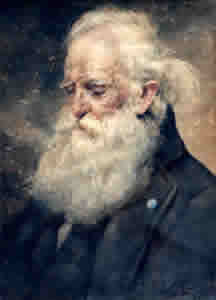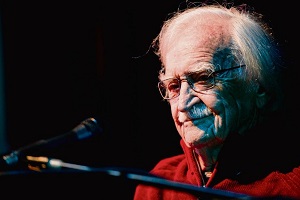
Allen Ginsberg, Philippe Djian, Maarten van Buuren, Solomonica de Winter, Monika Maron, Larry McMurtry, Norbert Gstrein, Wolfgang Cordan, Gerhard Zwerenz

De Amerikaanse dichter Irwin Allen Ginsberg werd geboren in Newark, New Jersey, op 3 juni 1926. Zie ook alle tags voor Allen Ginsberg op dit blog

Uit: Howl (Fragment)

“…upliftings & especially secret gas-station solipsisms of johns, & hometown alleys too,
who faded out in vast sordid movies, were shifted in dreams, woke on a sudden Manhattan, and picked themselves up out of basements hungover with heartless Tokay and horrors of Third Avenue iron dreams & stumbled to unemployment offices,
who walked all night with their shoes full of blood on the snowbank docks waiting for a door in the East River to open full of steamheat and opium,
who created great suicidal dramas on the appartment cliff-banks of the Hudson under the wartime blue floodlight of the moon & their heads shall be crowned with laurel in oblivion,
who ate the lamb stew of the imagination or digested the crab at the muddy bottom of the rivers of the Bowery,
who wept at the romance of the streets with their pushcarts full of onions and bad music,
who sat in boxes breathing in the darkness under the bridge, and rose up to build harpsichords in their lofts, who coughed on the sixth floor of Harlem crowned with flame under the tubercular sky surrounded by orange crates of theology,
who scribbled all night rocking and rolling over lofty incantations which in the yellow morning were stanzas of gibberish,
who cooked rotten animals lung heart feet tail borsht & tortillas dreaming of the pure vegetable kingdom,
who plunged themselves under meat trucks looking for an egg,
who threw their watches off the roof to cast their ballot for an Eternity outside of Time, & alarm clocks fell on their heads every day for the next decade,
who cut their wrists three times successively unsuccessfully, gave up and were forced to open antique stores where they thought they were growing old and cried,
who were burned alive in their innocent flannel suits on Madison Avenue amid blasts of leaden verse & the tanked-up clatter of the iron regiments of fashion & the nitroglycerine shrieks of the fairies of advertising & the mustard gas of sinister intelligent editors, or were run down by the drunken taxicabs of Absolute Reality,
who jumped off the Brooklyn Bridge this actually happened and walked away unknown and forgotten into the ghostly daze of Chinatown soup alleyways & firetrucks, not even one free beer,…
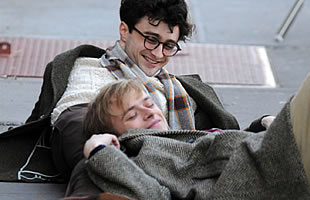


Allen Ginsberg (3 juni 1926 – 6 april 1997)
Daniel Radcliffe als Allen Ginsberg en Dane DeHaan als Lucien Carr in de film “Kill Your Darlings” uit 2013
Lees verder “Allen Ginsberg, Philippe Djian, Maarten van Buuren, Solomonica de Winter, Monika Maron, Larry McMurtry, Norbert Gstrein, Wolfgang Cordan, Gerhard Zwerenz”

Carlo Michelstaedter, Kathleen E. Woodiwiss, Eugène Van Oye, Pedro Mir, Detlev von Liliencron, Friederike Brun, Otto Erich Hartleben, Philippe Quinault

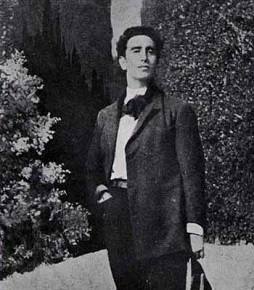
De Italiaanse dichter, filosoof en schilder Carlo Michelstaedter werd geboren op 3 juni 1887 in Gorizia. Zie ook alle tags voor Carlo Michaelstaedter op dit blog.


Say No To Life (Fragment)

Even as swallows year by year return
Back to the nests that held them featherless,
So man goes back in the course of his days,
Time after time to the thought of his cradle.
And as every year he keeps that day,
That to hunger and thirst, to sorrow and grief,
That to this mortal life did him awaken,
Every year he persuades himself again
To love his life.

And the parents who in the newly-born,
In the fragile and helpless little being,
Saw the fruit of their hopes;
And holding out to him with timorous love
All that life gives to him who asks to live,
Made of his tears a veil for their own eyes;

Trusting that clothes and food
Could make him live his life;
Year after year revive their ancient hope,
Their ancient grief,
And with a veil still cover their tired eyes,
Offering thanks to him for being born,
That he may thank them for his life,
and that The dumb grief be forgotten,
and the vain Promise be ever present.


Carlo Michelstaedter (3 juni 1887 – 17 oktober 1910)

Lees verder “Carlo Michelstaedter, Kathleen E. Woodiwiss, Eugène Van Oye, Pedro Mir, Detlev von Liliencron, Friederike Brun, Otto Erich Hartleben, Philippe Quinault”

Nico Noorman

De Nederlandse dichter Nico Noorman werd geboren op 3 juni 1949 te Groningen. Na het behalen van het Mulodiploma volgde hij van 1967-1971 de opleiding tot Zoölogisch Analist met specialisatie Ecologie. Tijdens zijn stagejaar bij de Rijksuniversiteit van Groningen deed hij onderzoek naar het eetgedrag van ratten en het gedrag van koolmezen. Na het vervullen van de dienstplicht bij de Koninklijke Marine trad hij in 1973 in dienst bij het toenmalige Centraal Diergeneeskundig Instituut, tegenwoordig ID-DLO, in Lelystad. Als analist was hij daar tot 1989 werkzaam op de afdeling Parasitologie en voornamelijk betrokken bij het epidemiologisch onderzoek van de leverbotziekte. Van 1989 tot 1992 werkte hij als analist/programmeur op de afdeling Automatisering van hetzelfde instituut. Daarna verbleef hij een jaar in Pakistan als medewerker bij het ‘Dutch Committee for Afghanistan’. Van 1994 tot 2000 was hij als technisch medewerker verbonden aan de afdeling Dierfysiologie van de Rijksuniversiteit in Groningen in het kader van het NWO/STW-project ‘Milieuvriendelijke bestrijding van huisvliegen door middel van gecombineerde visuele en chemische prikkels’. Sinds 2014 is hij editor van de websites nederlands.nl en gedichten.nl. Daarnaast schrijft hij gedichten, met name snelsonnetten.


Geen bereik

Ik zoef vaak op mijn e-bike door de velden
Maar ik zie niets van ’t wonderschone land
Gespannen staar ik naar mijn rechterhand
Weer geen bereik…al heb ik niets te melden

Niet appen op de fiets…nooit van gehoord
Want ik ben elke dag contactgestoord


Streefgewicht

Hè hè, het nieuwe jaar is aangebroken
Ik ga volledig voor mijn streefgewicht
Alleen door ‘t melden hier in dit gedicht
Zal ik bereiken wat is afgesproken

Ik vreet me dus het schompes ‘t hele jaar
Tien kilo meer krijg ik best voor elkaar


Kwartetten

Mag ik van jou de zingende Afghaan
En ook die Irakees met grote tanden
Geef mij die Syrische met lege handen
Tot slot die Eritreeër met banaan

Vier vluchtelingen heb ik nu…kwartet!
Maar vol is vol…ook in mijn snelsonnet!


Nico Noorman (Groningen, 3 juni 1949)

C. Buddingh’-Prijs voor Vicky Francken

C. Buddingh’-Prijs voor Vicky Francken

Het beste Nederlandstalige poëziedebuut van het afgelopen jaar is geschreven door de Nederlandse dichteres Vicky Francken.Voor haar bundel “Röntgenfotomodel” kreeg ze donderdag de C. Buddingh’-Prijs. Vicky Francken werd geboren op 18 maart 1989 in Boxmeer. Sinds 1988 wordt tijdens het Poetry International Festival de C. Buddingh’-prijs uitgereikt aan de schrijver van het beste Nederlandstalige poëziedebuut. Uit de dertig inzendingen van dit jaar nomineerde de jury: “Binnenplaats” van Joost Baars; “Röntgenfotomodel” van Vicky Francken; “De geluiden” van Paul Meeuws en “Anagrammen van een blote keizer” van Tijl Nuyts. De prijs is genoemd naar de dichter en dagboekschrijver C. (Kees) Buddingh’ (1918-1985). Zie ook alle tags voor Vicky Francken op dit blog.


Weekendtas voor langer dan een weekend

De condens op een raam van ademhalen kijkt uit
op een tuin waarvan ik weet dat je me erin zult zien
staan, je kunt niet naast me kijken. Ik schreef in sneeuw en kou
de letters van een werkwoordsvorm en
de letters van je naam.

In het steenwit van een kleermakerszit, mag je de brieven lezen
die ik je schrijven ga als ik weg ben en dat is waarschijnlijk
morgen. Niet mee neem ik

de deur waardoor ik wegloop voor eeuwiger dan even,
de vaas van je moeder die je lelijk vond en kapot wilde gooien
maar ik hield je tegen en

de hond. Verder bij benadering zo bijna alles.


Vicky Francken (Boxmeer, 18 maart 1989)

Jim Knipfel, Marcel Reich-Ranicki, Sibylle Berg, Carol Shields, Jean Nelissen, Thomas Hardy, Markies De Sade, Dorothy West, Max Aub

De Amerikaanse schrijver Jim Knipfel werd geboren op 2 juni 1965 in Green Bay, Wisconsin. Zie ook alle tags voor Jim Knipfel op dit blog.

Uit: These Children Who Come at You with Knives

“As if that wasn’t bad enough, the entire sidewalk in both directions had become a river of bodily fluids. Snot and puke and pus and bile and piss all flowed together in a thick noxious stream dotted with islands of shit. Great clouds of fat blackflies hung low over the flood, and even in the chill autumn air the unimaginable stench made Milton’s own gorge rise. Confronted with such a nightmarish landscape, most men would have screamed or called the police or written a strong let-ter of complaint to the EPA. Not Milton, who had almost ex-pected this. He didn’t simply want to identify the culprit anymore. He wanted revenge. This was a malicious premeditated attack aimed at him personally. He knew that. And whoever was responsible would pay. That night, instead of waiting by the window, Milton stepped outside, crossed the street, and hid in a darkened, recessed door-way. From that vantage point he could see a good stretch of side-walk in either direction. He would hide in that doorway as long as it took. The streets were silent. Even the cars were asleep. At the stroke of four, as Milton’s eyelids began to grow quite heavy, he caught a quick movement across the street to his left. A shadow dashed beneath a streetlamp. He strained his eyes but could see nothing. There was another dark flash to his right. In the pool of light he definitely saw a small leg. Another figure came dancing around the corner, fully visible, and Milton nearly let loose with a yelp of surprise. It was a tiny man, no more than three feet tall. He looked human, apart from the pointed ears, the stupid haircut, the peaked red cap, and a pair of strange curly-toed boots. Aside from the hat and the boots, the little man was naked as a jaybird. Not just naked, Milton noted with revulsion, but pissing as well. Dancing in circles and pissing. In his hands he held a crystal bucket. Milton couldn’t tell what was contained in the bucket, but whatever it was the little man was splashing it on the sidewalk as he danced and pissed. The bucket, though tiny, seemed to hold a bottomless supply of something thick and green. A second little man, equally naked apart from the hat and boots, came dancing down the block, snorting and spitting an endless stream of phlegm in every direction. Soon there was a third and a fourth and a fifth.


Jim Knipfel (Green Bay, 2 juni 1965)

Lees verder “Jim Knipfel, Marcel Reich-Ranicki, Sibylle Berg, Carol Shields, Jean Nelissen, Thomas Hardy, Markies De Sade, Dorothy West, Max Aub”

Patrick Besson, John Masefield, Ferdinand Raimund, Peter de Mendelssohn, Colleen McCullough, Macedonio Fernández, Elena Ferrante


De Franse schrijver en journalist Patrick Besson werd geboren op 1 juni 1956 in Montreuil. Zie ook mijn blog van 1 juni 2009 en alle tags voor Patrick Besson op dit blog.

Uit:La mémoire de Clara

„La lumière d’automne l’a toujours rendue, rendue, rendue quoi? Elle ne sait plus. Elle regarde la rue Alphonse Karr. Il y a de l’eau qui tombe du ciel comme hier. Comment s’appelle l’eau qui tombe du ciel ? Elle sait : la pluie. Elle sourit. Il y a des choses qui lui reviennent de temps en temps, ça fait plaisir. C’est comme pour l’ascenseur. Une fois sur deux, elle sonne chez un copropriétaire, croyant appeler l’ascenseur. L’autre ouvre la porte. Un homme petit et chauve. Il sourit. À moins qu’il ne soupire. C’est un peu les deux. Il la ramène doucement devant la cabine d’ascenseur. Elle s’excuse : « Ah oui, pardon. » Il dit : « De rien, Mademoiselle Bruti. » Il lui donne son nom de jeune fille, celui sous lequel elle était connue et restera dans les livres d’Histoire de la cinquième République française. Personne ne l’a jamais appelée Madame Brancusi, sauf elle-même quand elle se regardait, il y a cinquante-trois ans, dans les miroirs de l’Élysée, ancienne demeure des présidents français avant que le Palais ne soit préempté par l’émir du Qatar et ne devienne le musée national du football français, le bureau du général De Gaulle et de Georges Pompidou étant consacré aux coupes gagnées par le PSG avant son rachat par l’émirat en 2011. Mais il y a aussi des jours, de moins en moins nombreux il est vrai, où Clara, pour l’ascenseur de la rue Alphonse Karr, ne se trompe pas. Les deux portes s’ouvrent comme la caverne d’Ali Baba. Elle est aussi heureuse que si elle recevait, une nouvelle fois, une Victoire de la musique. Quant à la lumière d’automne, elle se souvient maintenant de ce que ça la rendait : heureuse. C’est le soleil qui l’attriste. Pourquoi, alors, s’est-elle installée dans cette ville du sud dont le nom va lui revenir ? Pas Cannes, car elle n’a vu personne qu’elle  connaît  monter des marches. Mais connaît-elle encore les gens qu’elle connaît ? C’est un mot anglais. Une glace. Ice. Avec une lettre devant, mais quelle lettre ? Il faudrait qu’elle se concentre mais elle préfère regarder la, la, elle le savait tout à l’heure : la pluie, voilà.
Nice. Elle est à Nice. Elle est contente, elle s’est souvenue de deux choses : Nice et … Zut, elle a oublié la première. Il faut qu’elle écrive ses mémoires avant de perdre ses souvenirs. Non: ses souvenirs avant de perdre la mémoire. Elle doit appeler Aurélia, elles sont amies depuis si longtemps. Clara lui a piqué plusieurs mecs, ça crée des liens entre filles. »

 
Patrick Besson (Montreuil, 1 juni 1956)

Lees verder “Patrick Besson, John Masefield, Ferdinand Raimund, Peter de Mendelssohn, Colleen McCullough, Macedonio Fernández, Elena Ferrante”

Wilfred Campbell

De Canadese dichter en schrijver William Wilfred Campbell werd geboren rond 1 juni 1858 in Berlin, Ontario, tegenwoordig Kitchener. De zoon van dominee Thomas Swainston Campbell groeide op in verschillende kleine steden in Ontario. Hij ging van 1877 tot 1879 naar de Highschool in Owen Sound en behaalde een leraarscertificaat. Vanaf 1882 studeerde hij aan University College van de Universiteit van Toronto, en vervolgens theologie aan Wycliffe College en de Episcopal Theological School iin Cambridge. In 1885 werkte Campbell als diaken in West Claremont / New Hampshire; In 1886 werd hij benoemd tot pastor. In 1888 werd hij rector van Trinity Church in St. Stephen / New Brunswick, 1890 rector van St. Paul’s Church in Southampton / Ontario. In 1891 kreeg hij een baan bij het ministerie van Spoorwegen en Kanalen in Ottawa, in 1892, trad hij toe tot het departement van Buitenlandse Zaken, in het volgende jaar tot het Ministerie van Militie en Defensie en in 1897 tot het Privy Council Office. In 1908 kreeg hij een functie in het archief van het ministerie van Landbouw, die hij tot zijn dood bekleedde. Campbell’s eerste dichtbundel “Poems” verscheen tijdens zijn studententijd in 1881. Tussen 1881 en 1888 werden verscheidene gedichten gepubliceerd in het tijdschrift Varsity. Zijn eerste publicatie in een groot tijdschrift (Atlantic Monthly) was “Canadian Folk Song” (1885). In 1888 verscheen de bundel “Snowflakes and sunbeams”, met o.a. het gedicht “Indian Summer” – een van de populairste Canadees gedichten tot op heden. Een jaar later volgde de bundel “Lake lyrics and other poems”. 1893 verscheen “The dread voyage”. In 1894 werd Campbell toegelaten tot de Royal Society of Canada, waarin hij tot 1911 verschillende functies bekleedde.. Vanaf 1895 schreef hij zeven vers drama’s. De eerste twee verschenen in 1895 onder de titel “Mordred and Hildebrand: a book of tragedies”: Na 1900 ontstonden zijn drie romans “Ian of the Orcades (1906), “A beautiful rebel” (1909) en “Richard Frizzell”.


How One Winter Came In The Lake Region

For weeks and weeks the autumn world stood still,
Clothed in the shadow of a smoky haze;
The fields were dead, the wind had lost its will,
And all the lands were hushed by wood and hill,
In those grey, withered days.

Behind a mist the blear sun rose and set,
At night the moon would nestle in a cloud;
The fisherman, a ghost, did cast his net;
The lake its shores forgot to chafe and fret,
And hushed its caverns loud.

Far in the smoky woods the birds were mute,
Save that from blackened tree a jay would scream,
Or far in swamps the lizard’s lonesome lute
Would pipe in thirst, or by some gnarlèd root
The tree-toad trilled his dream.

From day to day still hushed the season’s mood,
The streams stayed in their runnels shrunk and dry;
Suns rose aghast by wave and shore and wood,
And all the world, with ominous silence, stood
In weird expectancy:

When one strange night the sun like blood went down,
Flooding the heavens in a ruddy hue;
Red grew the lake, the sere fields parched and brown,
Red grew the marshes where the creeks stole down,
But never a wind-breath blew.

That night I felt the winter in my veins,
A joyous tremor of the icy glow;
And woke to hear the north’s wild vibrant strains,
While far and wide, by withered woods and plains,
Fast fell the driving snow.


In My Study

Out over my study,
All ashen and ruddy,
Sinks the December sun;
And high up over
The chimney’s soot cove,
The winter night wind has begun.

Here in the red embers
I dream old Decembers,
Until the low moan of the blast,
Like a voice out of Ghost-land,

Or memory’s lost-land,
Seems to conjure up wraiths of the past.

Then into the room
Through the firelight and gloom,
Some one steals,—let the night-wind grow bleak,

And ever so coldly,—
Two white arms enfold me,
And a sweet face is close to my cheek.

 
Wilfred Campbell (1 juni 1858 – 1 januari 1918)

Petra Morsbach


De Duitse schrijfster Petra Morsbach werd geboren op 1 juni 1956 in Zürich als dochter van een ingenieur en een arts. Na haar eindexamen gymnasium in Starnberg in 1975 studeerde zij tot 1981 aan de Ludwig Maximilian Universiteit van München theater, psychologie en Slavische talen en 1981-1982 in Leningrad aan het Theater Instituut regie. In 1983 promoveerde zij in München met een proefschrift over Isaac Babel tot doctor in de wijsbegeerte. Na 10 jaar als dramaturge en regisseur gewerkt te hebben publiceerde zij in 1995 haar eerste roman “Plötzlich ist es Abend”. Sindsdien woont en werkt zij als freelance schrijfster aan de Starnberger See. Veel aandacht trok haar in 2004 verschenen roman “Gottesdiener” over een Beierse priester. Morsbach is eveneens een eigenzinnige essayiste. Haar essaybundel „Warum Fräulein Laura freundlich war. Über die Wahrheit des Erzählens” gaat over het verschijsel dat onze taal meer lijkt te weten dan de mens, en trekt de canonieke lezing van drie beroemde boeken van Alfred Andersch, Marcel Reich-Ranicki en Günter Grass in twijfel. Morsbach is sinds 2004 lid van de Beierse Academie voor Schone Kunsten. In 2013 werd haar gehele literaire werk bekroond met de Beierse literatuurprijs.

Uit: Gottesdiener

“Heute, ausgerechnet am letzten Adventssonntag, hat er einen dummen Fehler gemacht; zumindest sieht es so aus. Nachfragen darf er nicht, also hadert er. Was ist passiert? Er hat nach der Abendmesse Frau Danninger beleidigt, weil er gereizt und müde war. Zwar hat sie ihn herausgefordert, aber er hätte sich nicht herausfordern lassen dürfen. Frau Danninger ist eine emsige Christin, nichts Schlechtes über sie!, aber sie hat ein unheimliches Gespür für alle Empfindlichkeiten ihrer Mitmenschen, da muß sie einfach losbohren, sie kann nicht anders, und dann saugt sie sich fest. Mittags auf der Straße hatte sie ihn auf die nächste Osterwallfahrt angesprochen, geh, fahr ma doch nächstes Jahr nach Konnersreuth! Er, angespannt vor dem Marathon der Weihnachtswoche, wollte erstens überhaupt nicht mit ihr über Ostern sprechen, zweitens nicht von einer Wallfahrt und drittens schon gar nicht von Konnersreuth. Er sagte knapp: »Hier in Bodering kann man genausogut beten!« und ließ sie stehen. Mehrere Adventstermine standen an: Seniorenweihnacht der Freiwilligen Feuerwehr, ein Ministrantengespräch, Stallweihnacht in Zwam mit Ansprache, Abendgottesdienst. Nach dem Abendgottesdienst aber, als er aus der Seitentür der Kirche auf den verschnei- ten Friedhof trat, ist Frau Danninger ihn richtig angesprungen: Warum er nicht zur heiligen Resl will? Ob er was gegen die hätte? Den Raucherkrebs von ihrem Schwager hätt die geheilt, wär das nicht zu ihrer aller Bestem? Er hätte wissen müssen, daß sie nicht locker läßt. Er war nicht geistesgegenwärtig. Er hatte Hunger und wußte, wenn Frau Danninger das Diskutieren anfängt, hört sie nicht wieder auf, also hat er ihr das Wort abgeschnitten: Sie könne jederzeit nach Konnersreuth fahren, er müsse ja nicht mit. Sie sagte, sie wollten aber alle zusammen … »Bei uns ist die Kirch leer!«, schnauzte er. »Wenn Ihr hier keine Gemeinschaft findet, findets in Konnersreuth auch keine!«, und das war der schwerste Fehler: daß er »Ihr« gesagt hat. Auf einmal merkte er nämlich, daß sie Zuhörer hatten. Leute waren stehengeblieben, einige, die schon am Tor gewesen waren, drehten wieder um: Sie lassen sich von Frau Danninger ganz gern unterhalten. Nun standen sie also da in der dunklen, feuchten Kälte, bliesen Atemwolken in die Luft und stampften mit den Füßen. Er musterte die Gruppe rasch: Tatsächlich waren einige notorische Wallfahrer darunter; die schauten verletzt drein. Die anderen hatten sich noch nicht entschlossen, ob sie nur neugierig oder auch vorwurfsvoll sein sollten. Ihm war unbehaglich. Seine Autorität besteht darin, daß sie glauben, er wisse Dinge, die sie nicht wissen und auch nicht wissen wollen; trotzdem oder gerade deshalb aber darf er sie nicht erniedrigen, sonst setzen sie sich zur Wehr, und das ist auch richtig so.“


Petra Morsbach (Zürich, 1 juni 1956)

Walt Whitman, Frank Goosen, Gabriel Barylli, Konstantin Paustovski, Svetlana Alexievich, Ludwig Tieck, Gerd Hergen Lübben, Saint-John Perse, Georg Herwegh

De Amerikaanse dichter Walt Whitman werd geboren op 31 mei 1819 in Westhills, Long Island, New York. Zie ook alle tags voor Whalt Whitman op dit blog.


Zang van de open weg

2

Jij, weg die ik opga en afkijk, ik geloof dat je niet alles bent dat hier is,
Ik geloof dat hier ook veel ongeziens is.

Hier de wijze les van het onthaal dat voorkeur noch verwerping is,
De zwarte met zijn kroeskop, de boef, de zieke, de ongeletterde worden niet verworpen;
De geboorte, het snellen naar de arts, de bedelaarstred, het strompelen van de dronkaard, de
lachende troep werklui,
De ontsnapte knaap, het rijtuig van de rijke, de dandy, het ontvluchtende paar,
De vroege marktman, de lijkkoets, het verhuizen van meubels naar de stad, de terugkeer uit
de stad,
Ze komen voorbij, ook ik kom voorbij, alles komt voorbij, niemand kan worden uitgesloten,
Geen mens die niet wordt aanvaard, geen mens die me niet lief zal zijn.


Vertaald door Jabik Veenbaas


“Are you the new person drawn toward me?”

Are you the new person drawn toward me?
To begin with, take warning, I am surely far different from what you suppose;
Do you suppose you will find in me your ideal?
Do you think it so easy to have me become your lover?
Do you think the friendship of me would be unalloy’d satisfaction?
Do you think I am trusty and faithful?
Do you see no further than this façade, this smooth and tolerant manner of me?
Do you suppose yourself advancing on real ground toward a real heroic man?
Have you no thought, O dreamer, that it may be all maya, illusion?


Uit: Calamus Poems (Fragment)

2
Through me shall the words be said to make death
exhilarating,
Give me your tone therefore, O Death, that I may
accord with it,
Give me yourself—for I see that you belong to me
now above all, and are folded together above all
—you Love and Death are,
Nor will I allow you to balk me any more with what
I was calling life,
For now it is conveyed to me that you are the pur-
ports essential,
That you hide in these shifting forms of life, for
reasons—and that they are mainly for you,
That you, beyond them, come forth, to remain, the
real reality,
That behind the mask of materials you patiently
wait, no matter how long,
That you will one day, perhaps, take control of all,
That you will perhaps dissipate this entire show of
appearance,
That may be you are what it is all for—but it does
not last so very long,
But you will last very long.


Walt Whitman (31 mei 1819 – 26 maart 1893)
Portret door Lawrence C. Earle, ca. 1890

Lees verder “Walt Whitman, Frank Goosen, Gabriel Barylli, Konstantin Paustovski, Svetlana Alexievich, Ludwig Tieck, Gerd Hergen Lübben, Saint-John Perse, Georg Herwegh”

T. T. Cloete


De Zuid-Afrikaanse dichter, vertaler en wetenschapper Theunis Theodorus Cloete werd geboren in Vredefort op 31 mei 1924, in de toenmalige Oranje Vrijstaat. Hij doorliep de lagere school in Vredefort en de middelbare school in Krugersdorp, alvorens in 1941 een studie aan de Universiteit van Pretoria te beginnen. Een ernstige ziekte (polio) maakte dat hij zijn studie moest onderbreken. Pas in 1945 vervolgde hij zijn studie, aan de Potchefstroomse Universiteit, waar hij in 1949 zijn Masters deed. In dat jaar werkte hij tijdelijk op het Departement Afrikaans-Nederlands aan dezelfde universiteit. Eind 1949 ging hij naar Nederland voor verdere studie aan de (gemeentelijke) Universiteit van Amsterdam, waar hij in 1953 promoveerde onder NP van Wyk Louw, die daar van 1949 tot 1958 Zuid-Afrikaanse letterkunde, geschiedenis en cultuur doceerde. In 1953 werd hij docent Afrikaans-Nederlands aan die Potchefstroomse Universiteit en in 1962 hoogleraar. In 1963 was hij voor studie in Amsterdam en Oxford. Vervolgens werd hij in 1965 hoogleraar aan de Universiteit van Port Elizabeth waar hij van 1967 tot 1970 rector was. In januari 1970 keerde Cloete terug naar het departement Afrikaans-Nederlands en Algemene Taal- en Literatuurwetenschappen van de Potchefstroomse Universiteit, waar hij in 1983 om gezondheidsredenen aftrad. Hoewel hij al op jonge leeftijd was begonnen met gedichten schrijven debuteerde hij pas in 1980, op 56-jarige leeftijd. Hij schreef veel wetenschappelijke artikelen en enkele monografieën. Ook vertaalde hij verhalen en gedichten uit het Frans. In 1990 werd Cloete door de NG Kerk gevraagd om 150 psalmen om te dichten. Deze zijn vervolgens opgenomen in het nieuwe Liedboek van de Kerk, dat in 2001 verscheen. Ook in 2001 verscheen een bundel met zijn gedichten, “Die baie ryk ure: 100 uitgesoekte gedigte”, samengesteld door Heilna du Plooy en Joan Hambidge. Al eerder verscheen, in 1984, “In teen die groot vergeet : ’n bundel opstelle opgedra aan T.T. Cloete by geleentheid van sy sestigste verjaarsdag op 31 Mei 1984”, samengesteld door Hein Viljoen.


schering en inslag

het begon heel gewoontjes: volle maan, een boerderij

nu hou ik jouw voelloze hand vast
terwijl je in jouw diep ingeslapen gebed
“Here, help” roept “Here, hoor mij”

ik ben bestemd om mijn geprevel aan te passen
en “Here, wordt wakker” daartussenin te lassen

om drie uur in de nacht help ik je naar het toilet,
heb ik jouw slappe lichaam rechtop gezet

ik voel hoe je terugdenkt aan je dikke bos haar
hoe je die glanzend los liet met één handgebaar

diep in de nacht
vol onvruchtbaar terugverlangen
naar al jouw meisjesachtige springveergangen
je kleine ferme champignons, als suikerspek zo zacht

veeg ik jouw natte ogen
af in die van mij, pak jou hoge
heupen en ik interpoleer
mijn gebeden en verlangens met die van jou heen en weer
zigzag
schering en inslag

ik zie je nog zwevend over de hordes glijden
met je schoot open en je dijen

zweet verschijnt op je voorhoofd als een waas
eens was jij iedereen de baas
toen er nog kalk was in jou botten
ik hou
je vast en dans met jou
je schoot is nu een teer gesloten vouw
liefdevol steriel

jij hebt het allerzachtste velletje
een fijn klassiek profiel

ik proef je oorlelletje

‘s nachts als ik je zacht hoor snikken
en mijn handen jouw natte wrongen om je wangen schikken


Vertaald door Carina van der Walt & Geno Spoormans


T. T. Cloete (31 mei 1924 – 29 juli 2015)