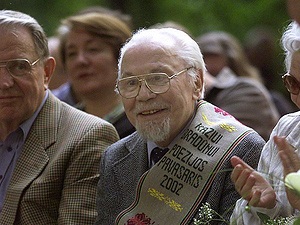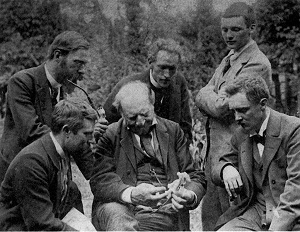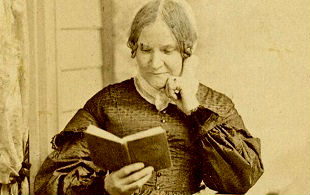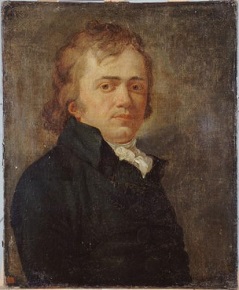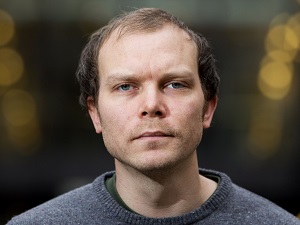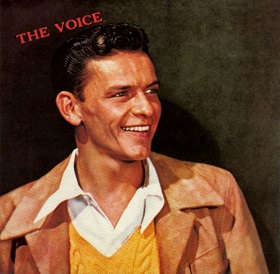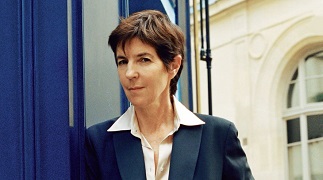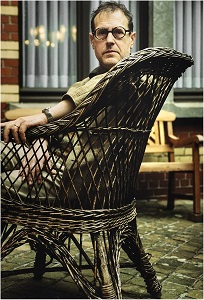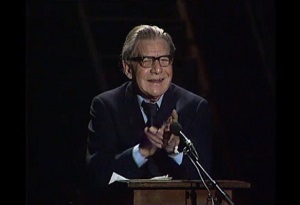
Barbara Honigmann, Detlev Meyer, Mariana Leky, Lou Andreas-Salomé, Sabahattin Ali, Friedrich de la Motte-Fouqué, Janwillem van de Wetering, Joachim Meyerhoff, John Hennessy

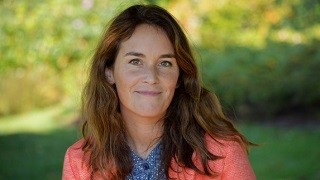
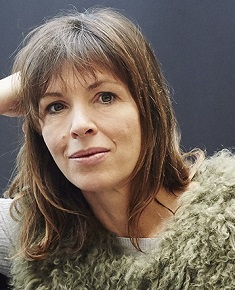
De Duitse schrijfster Barbara Honigmann werd geboren op 12 februari 1949 in Oost-Berlijn. Zie ook alle tags voor Barbara Honigmann op dit blog.

Uit: Das überirdische Licht

„Aber wie! Vielleicht ist sie eine Berühmtheit, vielleicht ist sie bloß die weiße Pudelqueen von der Charles Street. Vielleicht sieht sie auch nur aus wie eine Frau. Wer weiß, wie sie sich selbst nennt. Wir sind ja hier nicht weit von der legendären Christopher Street, in deren Nähe, in der Bethune Street, sich übrigens auch die Synagoge Simchat Tora für schwule, lesbische, bi- und transsexuelle Juden eingerichtet hat. Der Gedanke, daß dieses heimelige Village mit seinen Häuschen und Vorgärtchen die Heimat der amerikanischen Bohème und von diesem Dorf alle Queer-Kultur der Welt ausgegangen ist, wirkt erheiternd, ja paradox. Ich muß zugeben, daß es in manchen Schaufenstern tatsächlich Dinge zu sehen gibt, von denen ich nicht einmal genau weiß, wie herum man sie sich anschaut und wozu und an welchen Körperstellen sie etwa benutzt werden, so daß ich noch nicht einmal zu erröten brauche, weil mein Interesse rein technisch bleibt. Direkt daneben ist wieder eine ganz altbackene Drogerie, die lauter Krimskrams verkauft, wie ich ihn zum letzten Mal in meiner Kindheit in Ost-Berlin gesehen habe. Dann eine Galerie. Der marokkanische Fotograf, der darin ausstellt, bittet mich, ihn nach Paris weiterzuempfehlen. Dort würde es doch sicher auch eine synagogue connection geben, wie er das nennt. Davon weiß ich nichts, und warum sagt er mir das.
Auf die Frage Where do you come from, damit von Anfang an soviel Klarheit wie möglich geschaffen ist und vielleicht auch aus einer Art Bekenntnissucht, antworte ich in aller Aufrichtigkeit: I come from France, but I am a German Jew. Die Formelhaftigkeit, in der meine Existenz so ihren Ausdruck findet, beglückt mich. Und sogar in New York bleiben diese Zuordnungen mein magische Dreieck. Fast jeden Tag gehe ich im Deutschen Haus vorbei und lasse mich von Kathrin und Kathrina, die dort angestellt sind, um die deutsche Sprache und Kultur in Amerika zu verbreiten, betreuen, oder ich drucke mir etwas aus oder nehme mir eine deutsche Zeitung mit und halte die beiden von ihrer wichtigen Mission ab. Nebenbei tauschen wir unsere Beobachtungen über Amerika im allgemeinen und New York im besonderen aus, über Schwierigkeiten und Auffälligkeiten des Alltags und der Sprache, und dazu geben Kathrina und ich aus der Höhe unserer erwachsenen Kinder Kathrin Ratschläge für ihre erste Schwangerschaft und alles, was darauf folgt. Eine Art Schwangeren- und Mütterberatung. Mit einem der selten auftauchenden Herren, der dort auch noch irgendeine Funktion hat, verkrache ich mich schon, bevor wir uns noch mit unseren Kaffeetassen am Tisch niedergesetzt haben, natürlich über den Nahost-Konflikt und Israel. Ich würde so gerne gelassen bleiben, aber bei dem Thema reagiere ich, wie die meisten Juden, hysterisch. Leider.”
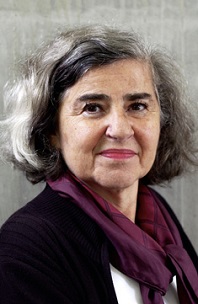


Barbara Honigmann (Oost-Berlijn, 12 februari 1949)


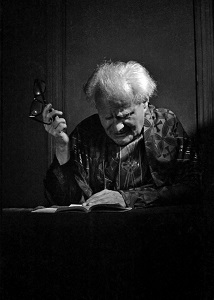
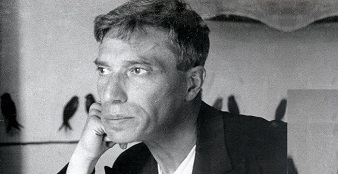
De Duitse schrijver en dichter Detlev Meyer werd geboren op 12 februari 1950 in Berlijn. Zie ook alle tags voor Detlev Meyer op dit blog.

Uit: Das Sonnenkind

„Aus diesem Grunde ist auch das Fräulein Reeskow offiziell Großvaters ehemalige Sekretärin und mehr nicht! Und aus diesem Grunde kann sie im Hause Wollin verkehren, mit Else Tee trinken, mit Max heimliche Blicke tauschen und die naseweisen Enkel mit knallbunten Fondants bestechen. Die Jungen sind nämlich furchtbar neugierig und ganz und gar nicht begabt mit dieser Wollin’schen Diskretion. Nach ihren Besuchen bei den Großeltern erzählen sie der Mutter jedes Mal aufgeregt, dass Fräulein Reeskow den Großvater wieder so komisch angeschaut habe. Der älteste Sohn, Stephan, will wissen, was zwischen den beiden sei, wird aber von Elses Tochter mit einem knappen »Später mal« abgespeist. Carsten liebt das Fräulein Reeskow sehr. Erstens hat sie lackierte Fingernägel, zweitens raucht sie Zigaretten in einer silbernen Spitze – Wer mag ihr die wohl geschenkt haben? -, und drittens hat sie die Angewohnheit, beim Kuchenessen ihre Fingerkuppen an die gespitzten Lippen zu führen, um die Krümelchen quasi wegzuküssen. Dabei werden dann jene berühmten Blicke getauscht. Fräulein Reeskows Haar ist von einem Blond schwankender Intensität, das Carsten immer an Gold denken lässt. Er mag ihre hohen Stöckelschuhe und die kurzen Röcke ihrer ansonsten züchtigen Kostüme. Wie sie sich mit der beringten linken Hand durchs Haar streicht, gefällt ihm auch. Diese Geste übt er vor dem mütterlichen Frisierspiegel, er sagt dann jedes Mal mit spitzem Mund: »Mein lieber Herr Wollin, nein, wie köstlich!« (so werden Großvaters Bonmots kommentiert), und lacht, wie nur Fräulein Reeskow zu lachen versteht: perlend, laut Großvater; affektiert, laut Großmutter. Dass Fräulein Reeskow Linkshänderin ist, macht sie zu Carstens Verbündeter. Niemand darf ihn auffordern, auch einmal die rechte Hand zu benutzen. Er antwortet dann: Tut Fräulein Reeskow auch nicht, und die war Opas Sekretärin! Das ist sie von 1925 bis zu Großvaters Pensionierung im Jahre 1945. Als Großvater mit vierunddreißig Abteilungsleiter in einem Versicherungsunternehmen wird, tritt sie in sein Berufsleben, wenig später in sein Privatleben und gehört zu diesen beiden Leben bis zu Großvaters letztem Atemzug.“



Detlev Meyer (12 februari 1950 – 30 oktober 1999)
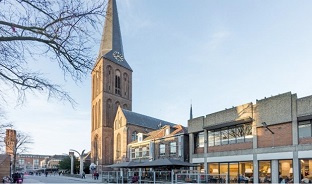
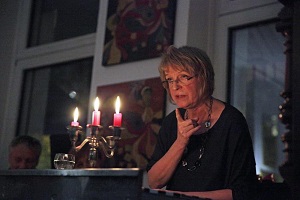
Poster voor een lezingenavond over de schrijver in Berlijn, 2018


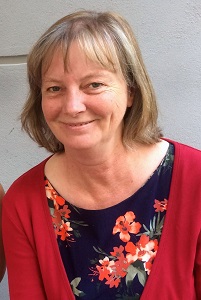
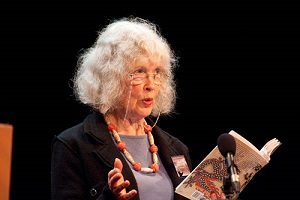
De Duitse schrijfster Mariana Leky werd geboren op 12 februari 1973 in Keulen. Zie ook alle tags voor Mariana Leky op dit blog.

Uit: Was man von hier aus sehen kann

“Als SeIrna sagte,sic habe in der Nacht von einem Okapi geträumt, waren wir sicher, dass einer von uns sterben musste, und zwar innerhalb der nächsten vierundzwanzig Stunden. Das stimmte beinahe. Es waren neunundzwanzig Stunden. Der Tod trat etwas verspätet ein, und das buchstäblich: Er kam durch die Tür. Vielleicht verspätete er sich, weil er lange gezögert hatte, über den letzten Augenblick hinaus. Selma hatte in ihrem 1 eben dreimal von einem Okapi geträumt, und jedes Mal war danach jemand gestorben. deshalb waren wir überzeugt, dass der Traum von einem Okapi und der Tod unbe-dingt miteinander verbunden waren. Unser Verstand funktioniert so. Er kann innerhalb kürzester Zeit dafür sorgen, dass die einan-der abwegigsten Dinge fest zusammengehören. Kaffeekannen und Schnürsenkel beispielsweise, oder Pfandflaschen und Tan-nenbäume. Der Verstand des Optikers war besonders gut darin. Man sagte dem Optiker zwei Sachen, die nicht im Geringsten zusammen gehörten, und er stellte aus dem Stand eine enge Verwandtschaft her. Und jetzt war es ausgerechnet der Optiker, der behauptete, dass der neuerliche Traum vom Okapi ganz gewiss niemandem den Tod brächte, dass der Tod und Selmas Traum vollkommen zusammenhangslos seien. Aber wir wussten, dass der Optiker es eigentlich auch glaubte. Vor allem der Optiker. Auch mein Vater sagte. dass das hanebüchener Unfug sei und unser Irrglaube vor allem daher käme, dass wir zu wenig Welt in unsere Leben hereinließen. Das sagte er immer: »Ihr müsst mehr Welt hereinlassen.« Er sagte es entschieden und vor allem zu Selma, im Vorhin-ein. Im Nachhinein sagte er das nur noch selten.
Das Okapi ist ein abwegiges Tier, viel abwegiger als der Tod, und es sieht vollkommen zusammenhangslos aus mit seinen Zebra-unterschenkeln, seinen Tatehüften, seinem gitaffenhaft gefortn-ten rostroten Leib, seinen Rehaugen und Mausohren. Bin Okapi ist absolut unglaubwürdig. in der Wirklichkeit nicht weniger als in den unheilvollen Träumen einer Westenvälderin. Es war Oberhaupt erst zweiundachtzig Jahre her, dass das Okapi offiziell in Afrika entdeckt worden war. Es ist das letzte große Säugetier, das der Mensch entdeckt hat; das glaubt er jedenfalls. Vermutlich stimmt das auch, denn nach einem Okapi kann eigentlich nichts mehr kommen. Wahrscheinlich hat schon sehr viel früher einmal jemand ein Okapi inoffiziell entdeckt, aber vielleicht hat er beim Anblick des Okapis geglaubt, er träume oder habe den Verstand verloren, weil eia Okapi, besonders ein plötzliches und unerwartetes, absolut zusammengeträumt wirkt. Das Okapi wirkt alles andere als unheilvoll. Es kann überhaupt nicht unheilvoll wirken, selbst wenn es sich anstrengen würde, was es, soweit man weiß, selten tut. Selbst wenn es in Sehnas Traum sich das Haupt von Krähen und Käuzchen hätte umflat-tern lassen, die ja die Unheilfülle gepachtet haben, hätte es im-mer noch einen sehr sanftmütigen Eindruck gemacht. in Selmas Traum stand das Okapi auf einer Wiese, nahe am Wald, in einer Gruppe von Feldern und Wiesen, die insgesamt «Uhlheck« heißen. Uhlheck bedeutet »Eulenwald«. Die Wester-wälder sagen vieles anders und kürzer, als es eigentlich ist, weil sie das Sprechen gerne schnell hinter sich bringen.“
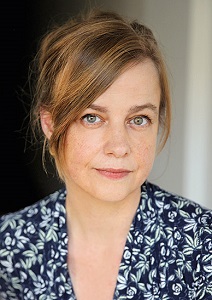


Mariana Leky (Keulen, 12 februari 1973)


De Russisch-Duitse dichteres en schrijfster Lou Andreas-Salomé werd geboren op 12 februari 1861 in Sint Petersburg. Zie ook alle tags voor Lou Andreas-Salomé op dit blog.

Uit: Aus fremder Seele

„Über dem Schreibtisch, der an einem Seitenfenster, nach dem Hof zu, stand, hing ein in Öl gemaltes Porträt der Mutter des Pastors, – einer schönen Jüdin mit tiefen schwermütigen Augen. Darunter eine Radierung von Klinger in einfachem Rähmchen: die tote Mutter mit dem Kinde, das mit erstaunten Blicken von der Leiche in die Ferne schaut.
Kurt lehnte an der Glastür, er öffnete sie dem Pastor und rief in froher Ungeduld: »Wie lange dauert doch solche Taufe! Und daß du heute überhaupt noch jemand anders gehörst, als mir allein!«
»Mein herrlicher Junge!« sagte der Pastor und faßte ihn an beiden Schultern, »ich hab’ dich ja noch gar nicht ordentlich wiedergesehen. Wie groß und stramm bist du geworden. O so frisch und stramm!«
»Und du so jung und hübsch, Vater!«
»Du Schlingel! Du Taugenichts!«
Und während er Kurt mit freudigen Augen betrachtete, fügte er hinzu: »Es ist sonderbar! Uns alten Leuten wird alles Vergangenheit. Ich habe dich das ganze Jahr als kleinen Buben um mich gesehen. Als ganz kleinen Buben, – so wie du warst, als ich dich noch zu Bett brachte.«
»Ja«, meinte Kurt, »das war die schönste Zeit. Warum hast du mich auch fortgelassen?«
»Weil die Gelegenheit günstig war, dich unter neue Menschen und Eindrücke zu bringen. Weil du selbständig werden, nicht an meinem Rock hängen bleiben solltest, – am Rock des Alten. Alt und jung, – das stimmt nicht.«
»O Vater, zwischen uns hat alt und jung immer gestimmt! Ich hätte sehr gut bei dir zu Ende lernen können, – ich hatte ja auch Lehrer und Kameraden in der Stadt. Aber du warst doch die Hauptsache. Und da draußen, – ja, da hab ich manchmal Angst bekommen, daß die lange Entfernung von dir dich mir noch ganz fortnimmt.«
»Dummer Bub! Wie sollte das wohl möglich sein?« versetzte der Pastor, der an den Schreibtisch getreten war und in zwei bereitstehende Gläser Wein eingoß.
Kurt nahm sein Glas, stieß mit dem Pastor an und leerte es auf einen Zug. Einen Augenblick schwieg er. Dann stellte er das Glas fast heftig nieder und sagte: »Wie? Nun zum Beispiel so, wie du es selbst vorhin erwähntest: daß du mich in der Erinnerung stets als den kleinen Jungen siehst, während ich doch längst groß bin und mich ganz fern von dir weiter entwickelt. Wäre das neben dir, unter deinen Augen geschehn, so wär es für mich ganz anders.«
»Du bist noch immer derselbe Brausekopf!« bemerkte der Pastor lächelnd, aber sein Gesicht war aufmerksam geworden, »also was wäre anders, mein heftiger, ungeduldiger Junge?«
Kurt antwortete nicht. Er war an die Glastür getreten und blickte hinaus. Nach einer Pause sagte er: »Ich möchte dich etwas fragen, Vater: warum hast du mich grade dort, – grade in diesem Jahr und im Auslande konfirmieren lassen?”
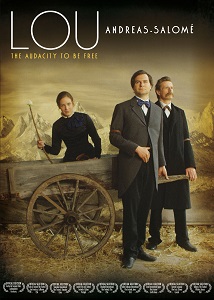


Lou Andreas-Salomé (12 februari 1861 – 5 februari 1937)
Poster voor de film “Lou Andreas-Salomé, The Audacity to be Free” uit 2016


De Turkse dichter en schrijver Sabahattin Ali werd geboren op 12 februari 1906 in Gümülcine, tegenwoordig, Komotini, Griekenland. Zie ook alle tags voor Sabahattin Ali op dit blog.

Uit: The Madonna in the Fur Coat (Vertaald door David Gramling en Ilker Hepkaner)

“Although I was 24 years old, I’d never had any adventures with women. A couple of licentious expeditions under the tutelage of some older friends in Havran were nothing but the gauntlets of intoxication, and the timidity in my nature protected me from the desire to repeat them. Woman was a creature that whipped my imagination; she was the abstract, unreachable heroine of my numerous, never-experienced adventures envisioned while lying under the olive trees on hot summer days. For years, I loved our neighbor Fahriye without saying a word, and I would have imaginary relations with her that bordered on shamelessness. When I came across her on the street here and there, my heart would pound strongly enough to knock me down, and I would look for a place to hide, my face burning as if it were ablaze. On Ramadan nights, I would go out and hide opposite their door and watch her accompany her mother to nightly prayers holding a torch; but as soon as those bodies appeared in their long coats at the open door—under the yellow light shining from inside the house—I would turn my head to the wall and start shivering, as if they had noticed I was there.
When I was fond of a woman for any reason, the first thing I did was run away from her. I feared that my every move, my every look would disclose my secret when I encountered her; and, with an inexplicable and suffocating shyness, I would turn into the most pitiful person on earth. I can’t recall looking into the eyes of any woman in my life, my mother included. Recently, especially in Istanbul, I found the determination to fight this meaningless bashfulness, and I tried to act at ease with some girls whom I had met through friends. But when they showed any interest in me, all my determination and decisiveness would fly off. I had never been an innocent person: When I was by myself, I would play out scenes more extreme than even the most experienced lovers could think of. With the women of my imagination, I could feel the inebriating pressure of hot, throbbing lips—a few times stronger than reality permitted.
However, this fur coat picture I saw at the exhibition shook me in a way that kept me from touching her, even in my imagination. I could not even envision us sitting across from each other, like two friends, let alone touching her. I put my coat on, and headed to the exhibition. And this continued for days.”
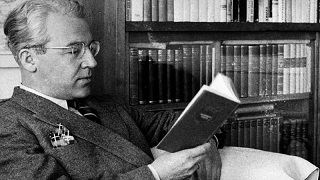


Sabahattin Ali (12 februari 1906 – 2 april 1948)


De Duitse dichter en schrijver Friedrich Heinrich Karl Freiherr de la Motte-Fouqué werd geboren in Brandenburg an der Havel op 12 februari 1777. Zie ook alle tags voor Friedrich de la Motte-Fouqué op dit blog.


Trost

Wenn alles eben käme, wie du gewollt es hast,
und Gott dir gar nichts nähme und gäb′ dir keine Last,
wie wär′s da um dein Sterben, du Menschenkind, bestellt?
Du müßtest fast verderben, so lieb wär′ dir die Welt!

Nun fällt – eins nach dem andern -manch süßes Band dir ab,
und heiter kannst du wandern gen Himmel durch das Grab;
dein Zagen ist gebrochen, und deine Seele hofft. –
Dies ward schon oft gesprochen, doch spricht man′s nie zu oft.


Gute Nacht

Allem schöne gute Nacht,
was da schläft und was noch wacht:
Kindern goldne Weihnachtsbäume,
Knaben Kampf– und Minneträume,
Jungfraun reiner Unschuld Walten,
Dichtern glänzende Gestalten,
Müttern aus prophet′schen Bronnen
ihrer Kinder Künf′ge Wonnen,
Männer hoher Taten Mahnung,
Greisen nahen Friedens Ahnung;
allem schöne gute Nacht,
was da schläft und was noch wacht.



Friedrich de la Motte-Fouqué (12 februari 1777 – 23 januari 1843)
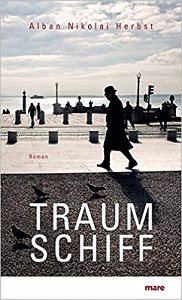
Cover


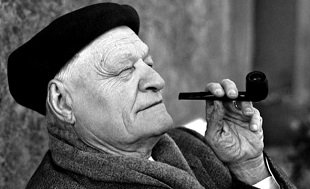
De Nederlandse schrijver Janwillem Van de Wetering werd geboren in Rotterdam op 12 februari 1931. Zie ook alle tags voor Janwillem van de Wetering op dit blog.

Uit: Outsider in Amsterdam

“Grijpstra dug in his wallet and after a while his square fat fingers found his police identification with its blue and red stripes and photograph of a much younger Grijpstra dressed in uniform with the silver button of his rank on both shoulders.
The dark man bent forward and read the card.“H. F. Grijpstra,” he read in a clear voice. “Adjutant. Municipal Police of Amsterdam.”
He paused.
“I have seen it. Please come in.”
“Extraordinary,” de Gier thought. “Fascinating. That fellow actually read the card. It never happens. Grijpstra always shows his credit card and nobody ever notices anything. He could have shown a receipt from the electricity department and nobody would object, but this chap really reads the identification.”
“Who are you?” Grijpstra was asking.
“Jan Karel van Meteren,” the man said.
They were in the corridor. There were three doors on the right, heavy oak doors. One of the doors was open and de Gier saw a bar and several young men with long hair and one elderly man with a bald head. Everybody was drinking beer. He had a glance of another young man behind the bar, dressed in a white T-shirt and decorated with a necklace of colored stones. Van Meteren was leading the way and they followed obediently. A staircase at the end of the corridor, again made of oak and recently polished. The floor of the corridor was covered with slabs of marble, cracked but very clean. Near the staircase Grijpstra noticed a niche with an upright Indian figure, made of bronze, life-size and with the right hand raised in a gesture of solemn greeting. Perhaps the gesture symbolized a blessing.
They climbed the staircase and came into a large open space with a high ceiling made of iron, painted white and with a relief of garlands picked out in gold. This was the restaurant, occupying the entire floor. De Gier counted ten tables, six seating four persons and four seating six persons. Nearly every chair was taken.
Grijpstra had stopped while their guide waited patiently. He was admiring a statue, standing on a stone platform attached to the wall. It was a statue of a female deity, performing a dance. The noble head on its slender neck seemed to contrast at first with the full breasts and the lewdly raised foot and Grijpstra was surprised that this naked sexual figure represented divinity and that he accepted her divinity.”
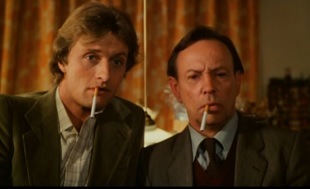


Janwillem van de Wetering (12 februari 1931 – 4 juli 2008)
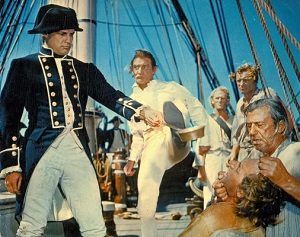
Rutger Hauer en Rijk de Gooyer in Wim Verstappens film “Grijpstra en De Gier” (internationale titel: Outsider in Amsterdam) uit 1979


Onafhankelijk van geboortedata

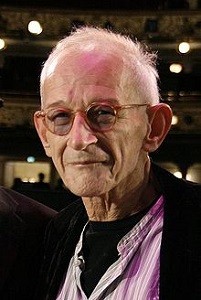
De Duitse schrijver, acteur en regisseur Joachim Philipp Maria Meyerhoff werd geboren in 1967 in Homburg (Saarland). Zie ook alle tags voor Joachim Meyerhoff op dit blog.

Uit: Alle Toten fliegen hoch

„Von der norddeutschen Kleinstadt, in der ich nicht geboren, aber aufgewachsen bin, braucht der Eilzug nach Hamburg keine zwei Stunden. In diesen Zug stieg ich ein und suchte mir einen Sitzplatz. Geboren bin ich seltsamerweise in Homburg im Saarland, von wo aus wir nach nur drei Jahren nach Norddeutschland umgezogen waren. Da ich leider nicht zu den genialischen Menschen gehöre, deren Erinnerung mit pränatalen Fnicht-wassererlebnissen oder Mozartschallwellen einsetzt, oder zu denen, die gestochen scharfe Bilder ihrer frühesten Le-bensjahre in wohlbehüteten Gehirnkammern aufbewahren, zum Beispiel, wie sie mit anderthalb gegen eine geschlossene Glasschiebetür geknallt sind, habe ich an Homburg im Saar-land nicht die geringste Erinnerung. Ganz verschwommen sehe ich hin und wieder eine Elster, eine saarländische Es-tcr, die auf der Schiebestange meines Kinderwagens sitzt und mich anstarrt. Das mir der Glasschieberür ist mir selbst widerfahren. Ich konnte gerade laufen. Mein ältester Bruder setzte mich in einen Sessel und ging auf die ‘Terrasse hinaus. Erst wenn er meinen Namen rief, durfte ich vom durchgesessenen Blu-menmustersessel hinunterkrabbeln und auf meinen noch wackeligen Beinen durch das Zimmer hinaus ins Freie, in seine Arme rennen. Über die Bodenschienen der Schiebe-tür hinweg hätte ich jedes Mal einen niedlichen Hopser ge-macht. Angeblich konnte ich von diesem Im-Sessel-Sitzen und Auf-Kommando-ins-Freie-laufen im Gegensatz zu mei-nem Bruder nicht genug bekommen. Schon in seinen Ar-men, den Bruderarmen, hätte ich *Noch mal! Noch mal!« gerufen. Nach dem zwanzigsten oder flinfundzwanzipten *Noch mal! Noch mal!« setzte mich mein Bruder wieder in den Sessel und zog die Schiebetür zu, um herauszufinden, ob ich schon wüsste, dass man nicht durch Glas gehen kann. Ich wusste es nicht und donnerte mit solcher ‘Wucht gegen die Scheibe, dass meiner Mutter vor Schreck das Buch bis an die Zimmerdecke flog und mein Vater in der Küche dachte, je-mand hätte mit voll Karacho einen Fußball gegen die Schie-betür geschossen. Wie eine unsichtbare Faust hatte mich die Scheibe auf dem Weg in die weit geöffneten Arme meines Bruders niedergestreckt. Mein Vater kam und wollte den Übeltäter schimpfen, fand aber nur mich. Vor der Tür lie-gend, benommen, wie eine gegen das Fenster geknallte Am-sel. Mein Bruder wurde ermahnt, keine Experimente mit mir zu machen, und in sein Zimmer geschickt. Auf der Scheibe waren in geringem Abstand ein Speichel- und ein Fettfleck. Ich soll nach dieser Kollision mir dem Nichts mehrere Tage lang beim Umhergehen verängstigt mit vorgestreckten Hän-den die Luft abgetastet und nach unsichtbaren Mauern ge-sucht haben. Das, so mein Vater, wäre ihm damals sehr zu Herzen gegangen.“


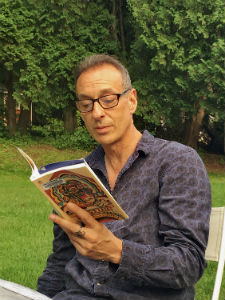
Joachim Meyerhoff (Homburg, 1967)
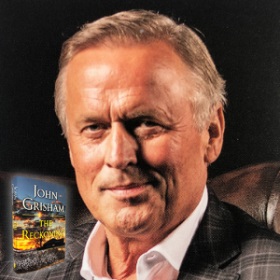
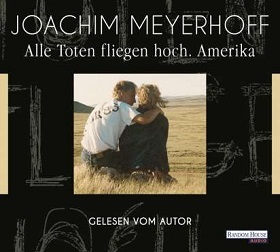
Cover luisterboek


De Amerikaanse dichter John Hennessy werd geboren in 1965 in New Jersey. Zie ook alle tags voor John Hennessy op dit blog.Zie ook alle tags voor John Hennessy op dit blog.


More Sky Please

More sky please push open the apartment shutters
crowbar the paint factory’s broken window frames rip
tar paper from the caving roof push it back crack it open

blast an airshaft through the neighboring buildings snap
it back expose the bird-ridden drafts the wren’s been busy
here mornings year-round churr and chip golden open-throat

yodel smack in the sleep cycle soldered to feeder suet
in ivy like titmouse chickadee refusing to shift it back
Carolina Canada climate haywire more sky please rik tik tik

break open more light all the way past oil tank farms
creosote docks the Kill Van Kull slide by kingfisher flap
past cormorant incongruous flights parallel and merging

plunge into slap out of tidal pools the Fresh Kills beak
full of killifish and silversides crayfish and krill tarp
past the salt grass and bridges fly Pulaski Skyway

Bayonne’s silver buildings blank tower blocks sky
wide as the river mouth more sky more please push it back
past tankers and tugboats the last hulking cruise ship

lasers fired across a spinning disco ball wobble bass
and echo chamber dancing on deck past clanging buoys
waveless channels to deepest basin all things even

terns drop away sea and sky opened wide and empty


John Hennessy (Philadelphia, 1965)


Zie voor nog meer schrijvers van de 12e februari ook mijn blog van 12 februari 2017 deel 2 en eveneens deel 3.
Maryse Condé, Else Lasker-Schüler, Kazys Bradūnas, Gerhard Kofler, Roy Fuller, Karoline von Günderrode, Hermann Allmers, Lydia Child, Marie-Joseph Chénier

De Franse schrijfster Maryse Condé werd op 11 februari 1937 in Pointe-à-Pitre op Guadeloupe geboren. Zie ook alle tags voor Maryse Condé op dit blog.

Uit: What Is Africa to Me? (Vertaald doorRichard Philcox)

“Why is it that any attempt to write about one’s life ends up as a jumble of half-truths? Why does it have to be that any autobiography or memoir all too often becomes a construction of fantasies where the simple truth fades, then disappears altogether? Why is it that we are so anxious to depict a life so different from what we have lived? I read, for example in my publisher’s press release on the basis of information I provide for journalists and booksellers: ‘In 1958, she married Mamadou Condé, an actor from Guinea, whom she saw perform at the Odeon theater in Les Nègres, a play by Jean Genet, directed by Roger Blin, and left with him for Guinea, the only African country that said ‘No’ to General de Gaulle’s referendum.’
The above information conjures up an appealing picture of love enlightened by political commitment. And yet it is far from the truth. I never saw Condé perform in Les Nègres. While I was with him in Paris, he acted in small parts in obscure theatres where he played ‘the nigger’ as he used to joke. It was only in 1959 that he played Archibald at the Odeon, long after the first of our many separations, since our marriage had been far from a success story. I was teaching at Bingerville in the Ivory Coast where Sylvie-Anne, our first daughter, was born.
Paraphrasing Jean-Jacques Rousseau, therefore, in his Confessions, I declare today that ‘I propose to show my fellows a woman as nature made her and this woman shall be me.’
In a manner of fashion I have always felt passionate about the truth which, both in private and in public, has often been to my detriment. In my childhood memories, Tales from the Heart: True Stories from My Childhood, I recount how my ‘vocation as a writer’ (if we can use such an expression) came about. I must have been around ten. I think it was one 28th April, the birthday of my mother whom I adored but whose singular, complex and capricious character never failed to disconcert me. I had apparently devised a piece that was composed of a poem and a short play where I attempted to act out the various facets of her personality, sometimes tender and serene like a sea breeze, sometimes spiteful and moody. My mother is said to have listened to me without saying a word while I paraded in front of her dressed in a blue frock . Then she looked up at me, her eyes brimming with tears, to my amazement, and sighed: ‘so that’s how you see me?’ At that very moment I felt a surge of power that I have attempted to relive, book after book.”


Maryse Condé (Pointe-à-Pitre, 11 februari 1937)


De Duitse schrijfster en dichteres Else Lasker-Schüler werd geboren in Elberfeld op 11 februari 1869. Dat is vandaag precies 150 jaar geleden. Zie ook alle tags voor Else Lasker-Schüler op dit blog.


Konzert
Ein Lied an Gott

Es schneien weiße Rosen auf die Erde,
Warmer Schnee schmückt milde unsere Welt;
Die weiß es, ob ich wieder lieben werde,
Wenn Frühling sonnenseiden niederfällt.

Zwischen Winternächten liegen meine Träume
Aufbewahrt im Mond, der mich betreut –
Und mir gut ist, wenn ich hier versäume
Dieses Leben, das mich nur verstreut.

Ich suchte Gott auf innerlichsten Wegen
Und kräuselte die Lippe nie zum Spott.
In meinem Herzen fällt ein Tränenregen;
Wie soll ich dich erkennen lieber Gott …

Da ich dein Kind bin, schäme ich mich nicht,
Dir ganz mein Herz vertrauend zu entfalten.
Schenk mir ein Lichtchen von dem ewigen Licht! – – –
Zwei Hände, die mich lieben, sollen es mir halten.

So dunkel ist es fern von deinem Reich
O Gott, wie kann ich weiter hier bestehen.
Ich weiß, du formtest Menschen, hart und weich,
Und weintetest gotteigen, wolltest du wie Menschen sehen.

Mein Angesicht barg ich so oft in deinem Schoß –
Ganz unverhüllt: du möchtest es erkennen.
Ich und die Erde wurden wie zwei Spielgefährten groß!
Und dürfen »du« dich beide, Gott der Welten, nennen.

So trübe aber scheint mir gerade heut die Zeit
Von meines Herzens Warte aus gesehen;
Es trägt die Spuren einer Meereseinsamkeit
Und aller Stürme sterbendes Verwehen.     


Else Lasker-Schüler (11 februari 1869 – 22 januari 1945)


De Litouwse dichter Kazys Bradūnas werd geboren in Kiršai, Rayon Vilkaviškis, op 11 februari 1917. Zie ook alle tags voor Kazys Bradūnas op dit blog.


Let The Blossoms Bloom

(For Loreta and Jurgis)

The river comes flowing
And brings with it a name.
Man comes forward
And brings with him a surname —
A toponym appears:
A cross is constructed,
Smoke rises from a chimney.
In this way Sūduva was born,
Absorbed into our hearts.

A daughter comes forward
And brings with her a fire.
A son comes forward
And brings with him bread.
At the shore of another world,
In the shade of another sky
And another tree
A table is constructed,
A loaf is sliced —
Life begins.
Put your clasped hands
On the ancient table
And let the blossoms bloom.


Vertaald door Rita Dapkus


Aanroeping

Verander, geest,
mijn eerste gedichten in doek,
en bezweer mijn gezichtsloze broer
er Sint Isidoor op te schilderen,
slechts gevoed met zwart brood.

Verander, wortels,
mijn volgende gedichten in hout,
en bezweer de lamme beeldhouwer
er een gezicht van verdriet op te houwen,
met de trekken van een moeder.

Verander, aarde,
mijn laatste gedichten in klei,
en bezweer de grijsaard in rouw
naast je kist, ruikend naar vurenhout,
te huilen in een aarden pot.


Vertaald door Frans Roumen


Kazys Bradūnas (11 februari 1917 – 9 februari 2009)


De Oostenrijkse dichter Gerhard Kofler werd geboren op 11 februari 1949 in Bozen. Zie ook alle tags voor Gerhard Kofler op dit blog.


DER EISACK

plötzlich so nah
der Eisack.
keine erinnerung
floß bisher so
in meine fahrtrichtung.
klare wasser,
als könnte endlich
nichts mehr
meine tote kindheit trüben.


ENVOI

einmal werde ich in Paris leben
und auf der Place Saint André des Arts sitzen
den brunnen von Saint-Michel vor augen
und die Rue Danton daneben
(gestürzte engel in monumentalen mythen)
bestelle ich einen cafd noir süß
mit einem rest
revolutionärer melancholie
höre ich um mich herum
die schwestersprache
viel verstehend
rede ich dann wenig


Gerhard Kofler (11 februari 1949 – 2 november 2005)
Cover


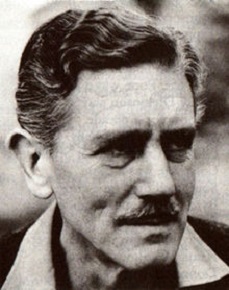
De Engelse dichter en schrijver Roy Fuller werd geboren op 11 februari 1912 Failsworth in Lancashire. Zie ook alle tags voor Roy Fuller op dit blog.


Sonnet

The crumbled rock of London is dripping under
Clouds of mechanical rain, and other cities
Lie frozen round their riven and the thunder:
For these new decades open of silent pities,
The poet dead by green enormous sculpture,
Roads sanded for expressionless invaders
And empty as flame the heavens for the vulture.
Here walk with open lips the pale persuaders
Of doom, over the concrete near the river,
Shadowed by mists on whose retreating faces
The glassy light and crimson vapors quiver.
This town is full of ghosts: successive bases
Lost to the living send their last battalion.
There is no face tonight that is not alien.


Soliloquy In An Air-Raid

The will dissolves, the bean becomes excited,
Skull suffers formication; moving words
Fortuitously issue from my hand.
The winter heavens, seen all day alone,
Assume the color of aircraft over the phthisic
Guns.

       But who shall I speak to with this poem?

Something was set between the words and the world
I watched today; perhaps the necrotomy
Of love or the spectre of pretense; a vagueness;
But murdering their commerce like a tariff.

Inside the poets the words are changed to desire,
And formulations of feeling are lost in action
Which hourly transmutes the basis of common speech.
Our dying is effected in the streets,
London an epicentrum; to the stench
And penny prostitution in the shelters
Dare not extend the hospital and bogus
Hands of propaganda.

Ordered this year:
A billion tons of broken glass and rubble,
Blockade of chaos, the other requisites
For the reduction of Europe to a rabble.
Who can observe this save as a frightened child
Or careful diarist? And who can speak
And still retain the tones of this civilization.


Roy Fuller (11 februari 1912 – 27 september 1991)


De Duitse dichteres Karoline von Günderode werd geboren op 11 februari 1780 in Karlsruhe. Zie ook alle tags voor Karoline von Günderode op dit blog


Gebet an den Schutzheiligen

Den Königen aus Morgenlanden
Ging einst ein hell Gestirn voran
Und führte treu sie ferne Pfade,
Bis sie das Haus des Heilands sah’n.

So leuchte über meinem Leben,
Laß glaubensvoll nach dir mich schaun,
In Qualen, Tod und in Gefahren
Laß mich auf deine Liebe traun.

Mein Auge hab ich abgewendet
Von allem, was die Erde gibt,
Und über alles, was sie bietet,
Hab ich dich, Trost und Heil geliebt.

Dir leb ich und dir werd ich sterben,
Drum lasse meine Seele nicht
Und sende in des Lebens Dunkel
Mir deiner Liebe tröstlich Licht.

O leuchte über meinem Leben!
Ein Morgenstern der Heimat mir,
Und führe mich den Weg zum Frieden,
Denn Gottes Friede ist in dir.

Laß nichts die tiefe Andacht stören,
Das fromme Lieben, das dich meint,
Das, ob auch Zeit und Welt uns trennen,
Mich ewig doch mit dir vereint.

Da du erbarmet mich erkoren,
Verlasse meine Seele nicht,
O Trost und Freude! Quell des Heiles!
Laß mich nicht einsam, liebes Licht!


Karoline von Günderode (11 februari 1780 – 26 juli 1806)
Cover


De Duitse schrijver Hermann Ludwig Allmers werd geboren op 11 februari 1821 in Rechtenfleth aan de Weser. Zie ook alle tags voor Hermann Allmers op dit blog.


Nachtsegen

Dämmrig wird’s auf allen Fluren,
Dunkel wird’s im Buchenhain
Alle Waldesvögel schlafen
Unter leisem Singen ein

Alle Tagesstimmen schweigen,
Aus den Wiesen steigt der Duft,
Und der braune Käfer surret
Durch die laue Sommerluft.

Und die bleichen Nachtphalänen
Flattern leis ohn Unterlaß,
Und des Taues Wonnetränen
Sinken still ins hohe Gras.

Doch die tiefgeheimsten Stimmen
Die der laute Tag verschlang,
Flüstern, murmeln, rauschen, singen
Ihren wundersamen Sang.

Und viel zage Menschenherzen –
Hat der Tag sie arm gemacht,
Arm an Glauben, arm an Lieben,
Macht sie reich die stille Nacht.


Hermann Allmers (11 februari 1821 – 9 maart 1902)
Hier zittend in het midden, tussen allemaal schilders uit Worpswede, 1895


De Amerikaanse dichteres en schrijfster Lydia Maria Francis Child werd geboren op 11 februari 1802 in Medford, Massachusetts. Zie ook alle tags voor Lydia Child op dit blog.

Uit: Letters from New York

“September 23,1841 Last week, a new synagogue was consecrated in Attorney-street; making I believe, five Jewish Synagogues in this city, comprising in all about thousand of this ancient people. The congregation of the new synagogues German emigrants, driven from Bavaria, the Duchy of Baden, &c., by oppressive laws. One of these laws forbade Jews to marry; and among the emigrants were many betrothed couples, who married as soon as they landed on our shores; trusting their future support to the God of Jacob. If not as “rich as Jews,” they are now most of them doing well in the world; and one of the first proofs they gave of prosperity, was the erection of a place of worship. The oldest congregation of Jews in New-York, were called Shewith Israel. The Dutch governors would not allow them to build a place of worship; but after the English conquered the colony, they erected a small wooden syna-gogue, in Mill-street, near which a creek ran up from the East River, where the Jewish women performed their ablutions. In the course of improvement this was sold; and they erected the handsome stone building in Crosbystreet, which I visited. It is not particularly striking or magnificent, either in its exterior or interior; nor would it be in good keeping, for a people gone into captivity to have garments like those of Aaron, “for glory and for beauty;” or an “ark overlaid with pure gold, within and without, and a crown of gold to it round about.” There is something deeply impressive in this remnant of a scattered people, coming down to us in continuous links through the long vista of recorded time; preserving themselves carefully unmixed by intermarriage with people of other nations and other faith, and keeping up the ceremonial forms of Abraham, Isaac, and Jacob, through all the manifold changes of revolving generations. Moreover, our religions are connected, though separated; they are shadow and substance, type and fulfilment. To the Jews only, with all their blindness and waywardness, was given the idea of one God, spiritual and invisible; and, therefore, among them only could such a one as Jesus have appeared. Tous they have been the medium of glorious truths; and if the murky shadowof their Old dispensation rests too heavily on the mild beauty of the New, it is because the Present can never quite unmoor itself from the Past; and well for the world’s safety that it is so.”


Lydia Child (11 februari 1802 – 7 juli 1880)


De Franse dichter en schrijver Marie-Joseph Chénier werd geboren op 11 februari 1764 in Constantinopel. Zie ook alle tags voor Marie-Joseph Chénier op dit blog.


Hymne à l’égalité (Fragment)

Des guerriers, des sages rustiques,
Conquérant leurs droits immortels,
Sur les montagnes, helvétiques
Ont posé tes premiers autels.

Et Franklin qui, par son génie,
Vainquit la foudre et les tyrans,
Aux champs de la Pensylvanie
T’assure des honneurs plus grands !

Le Rhône, la Loire et la Seine,
T’offrent des rivages pompeux
Le front ceint d’olive et de chêne
Viens y présider à nos yeux.

Répands ta lumière infinie,
Astre brillant et bienfaiteur ;
Des rayons de la tyrannie
Tu détruis l’éclat imposteur.

Ils rentrent dans la nuit profonde
Devant tes rayons souverains ;
Par toi la terre est plus féconde ;
Et tu rends les cieux plus sereins.


Marie-Joseph Chénier (11 februari 1764 – 10 januari 1811)
Portret, Franse school, ca. 1795


Zie voor nog meer schrijvers van de 11e februari ook mijn blog van 11 februari 2018 deel 2.

Johan Harstad, Åsne Seierstad, Marjolijn van Heemstra, Derek Otte, Jac. van Hattum, Simone Trieder, Bertolt Brecht, Boris Pasternak, Carry-Ann Tjong-Ayong

De Noorse schrijver Johan Harstad werd geboren op 10 februari 1979 in Stavanger. Zie ook alle tags voor Johan Harstad op dit blog.

Uit: Ambulance (Vertaald door Deborah Dawkin en Erik Skuggevik)

“I’m lying on my back in the ambulance, firmly strapped to the stretcher and we’re driving very fast through town, somebody’s placed an oxygen mask over my mouth, and the man sitting next to me in a red and yellow jacket, who goes constantly from watching me to watching his bleeping instruments, asks me if I can hear him, but doesn’t wait for an answer, and he flicks various switches, attaches things to my body, to my chest, he yells out to the ambulance driver, “Faster, drive faster,” and then, “We’re losing him,” and I’m about to say I can hear him, but he turns his face away, he’s preparing an injection, I think, and I lie completely still, staring into the ceiling, we’re on the motorway, and each time we pass a streetlamp, a shaft of light flashes across the roof and vanishes to the left, and he asks if I can hear him, “Can you hear me,” he talks so loud, his voice almost cracks, “You must be used to this,” I think to myself, “surely, you must have seen worse than this,” and I try to grip hold of the stretcher on the turns, but there’s no sensation in my left arm, as if it’s not there, and my right arm feels weak, practically without strength, and again he asks if I can hear him, looks at me, straight at me, lifts my eyelids, points a flashlight into my pupils, and I want to shut my eyes because the light’s so bright, but he forces them wide open and I roll my eyes and he yells to the man at the wheel that he must drive faster, because I’m dying, and I consider how everything’s happened so fast, and then my focus slips, disappearing into the driver, who turns his head to see the patient lying firmly strapped at the back of the ambulance, and I think “He’s not going to pull through, I must drive faster, drive as hard as I can,” and I’ve switched my blue lights on, and at the back of the ambulance the man whose name I don’t remember is trying to establish contact with the patient, I call switchboard, state our position, tell them we’re on our way, request necessary equipment to be put on standby, we’re just ten minutes away.
I lie firmly strapped to the stretcher, everything’s bleeping all round, and the man in the red and yellow ambulance jacket sits next to me, swinging from side to side as the ambulance swerves through the streets, sirens blaring, and I stare at the roof, saying nothing, and he asks if I can hear him, my eyes meet his, I raise my head, very slowly, and nod, I can hear him, “Good,” he says, “we’re nearly there,” and I lay my head back on the pillow, it aches, I try to hold the stretcher tightly, but there’s no strength in my hands, I realize I’m pissing myself, it’s warm in my crotch and I lie completely still, there’s nothing I can do, I can’t stop it, I can only lie there feeling the urine seep through the my pants, down over my thighs, through my trousers and out onto the mattress, it’ll get cold, I’m so tired, it’ll have to stay there, and the man at my side takes my hand, even though I’ve pissed myself, and tells me I must keep looking at him, “Look at me,” he says, “just keep looking at me,” and I look at him.”


Johan Harstad (Stavanger, 10 februari 1979)


De Noorse schrijfster en journaliste Åsne Seierstad werd geboren in Oslo op 10 februari 1970. Zie ook alle tags voor Åsne Seierstad op dit blog.

Uit: A Hundred and One Days. A Baghdad Journal

“First comes the light. It filters through eyelids, caresses its way into sleep, and slips into dreams. Not the way it usually does, white and cool, but golden.
Half-open eyes peer towards a window framed by long lace curtains, two patterned chairs, a rickety table, a mirror and a chest of drawers. A gaudy sketch hangs on the wall: a bazaar where shadows of women in long, black shawls slide through dark alleyways.
I’m in Baghdad!
So this is what the morning light is like here. Furtive.
The next revelation awaits behind the wispy curtains: the Tigris.
It is as though I have been here before, the view jumps out from my childhood Bible. The meandering river, the rushes, the little palm-clad islands, the trees towering nobly above their reflection in the water.
From far below the cacophony of car horns reaches me, dull roars and sharp high-pitched squeals, a snailing chaos. The road follows the river bank.
I arrived under cover of darkness, a journey of twelve hours from the Jordanian to the Iraqi capital. Night fell long before we reached Baghdad. A few scattered street lights shone palely. Without our being aware of it we crossed the river.
Euphrates and Tigris – the starting point of everything. Even the Flood had its origins here: the land between the two rivers – Mesopotamia. The Tigris is a treacherous river. Under layers of mud, on the river plain, archaeologists have uncovered towns. The cataclysms led to the accounts of God’s judgement, the Flood that covered the whole world. The waters of the Tigris made the Hanging Gardens bloom. The Garden of Eden was somewhere near; the Tower of Babel within easy reach. From this country Abraham and Sarah were exiled.”


Åsne Seierstad (Oslo, 10 februari 1970)
Cover


De Nederlandse dichteres, schrijfster en theatermaakster Marjolijn (barones) van Heemstra werd geboren in Amsterdam op 10 februari 1981. Zie ook alle tags voor Marjolijn van Heemstra op dit blog.


Meer hoef dan voet

De hond verspert mij het pad, stokstijf, zijn tong
een roerloze vis tussen de tanden, zijn grom
een ondergronds geluid, als door lagen korst
gedempt

en ik denk aan de man die zei: We weten niet
waarheen de dieren zijn die zich traag, in duizend,
duizend jaren, onttrokken aan het zicht.
We weten niet over welke rand ze tuimelden,
welke zee het laatste exemplaar verzwolg.
Hij noemde de kieuwslak met vijf platte windingen,
de schrikvogel die liever liep dan vloog,
de majorcahaas, het reuzenhert,
niemand weet met zekerheid in welk bos,
welk veld het reuzenhert verdween.

De hond blaft naar mijn sporen,
in de verte zwaait een riem,een mens
die in mij een naaste herkent
maar ik weet wat de hond weet:
er zijn dieren verdwenen
en mijn afdruk is meer hoef
dan voet.


Aan een ruimtevaarder
(Voor André Kuipers)

Ik ben een cluster dode zonnen, hardgeworden overschot
vol weerstand, zelfs met maximale aanloop
kaatst de lucht mijn sprong nog voor kniehoogte terug
ik drijf alleen op water en zelfs dat maar tijdelijk
de ruimte tussen mijn gespreide armen
vangt geen wind.

Ik ga in zoogdiergang, van zand naar zand
kom niet boven het rumoer van vee
het geroezemoes van zee of ooghoogte
ik moet de satellieten maar geloven;
het kleurig stromend ozonvel
het fijne edelstenen ei.

Ik weet van vacuümgevaren
het netwerk van nevels en cellen
speldenknoppen poorten naar het licht
andersom heb ik de reis al vaak gemaakt
dit nietig sterrenstoffenlijf uitvergroot
tot lege zalen.

Maar jij hebt ontsnappingssnelheid
stapt straks met veren voeten de explosie in
telt jezelf tussen de sterren
zwemt in de afwezigheid van grond en getijden
ziet ons voor de vlekken die we zijn.

Als jij met niks dan lucht op je rug
in het schijnsel van het eerste moment —
wil je richting het duister draaien
en wil je zeggen dat ik er ben?


Marjolijn van Heemstra (Amsterdam, 10 februari 1981)


De Nederlandse dichter en schrijver Derek Otte werd geboren in Rotterdam op 10 februari 1988. Zie ook alle tags voor Derek Otte op dit blog.


Nou en of

een soort van onverschilligheid
wellicht nog wel ons grootste goed
omdat het hier uiteindelijk
vrijwel niemand iets kan schelen
of jij mijn of andere kijk
of ik op stand en jij de wijk
of jij nou u terwijl ik jij
één voor allen
allen voorbij

mede-, Neder-, anderlander
hier werkt wie er werken ken
wie d’r hier doorgaans weinig vrij
boeit het meestal toch vrij weinig
of jij zondag of toch vrijdag
of ik jou moet of jij mij mag
of jij nou wit terwijl ik zwart
soms hand in hand
vaak hart tot hart

al lijken we als dag op nacht
onze strijd gelijkenissen
het zou er hier toe kunnen doen
wat zou het uit moeten maken
of jij van dame of toch heer
of ik met minder jij met meer
of jij nou groots waar ik dan klein
vooruit komt voort
uit anders zijn

kaders tralies
hokjes fabels
ik heb jou als
jij dan mij hebt
geen goed of slecht
slechts nep of echt
hier zijn we wij
en zonder zij

een soort van onverschilligheid


Derek Otte (Rotterdam, 10 februari 1988)


De Nederlandse dichter en schrijver Jacob (Jac.) van Hattum werd geboren in Wommels op 10 februari 1900. Zie ook alle tags voor Jac. Van Hattum op dit blog.


De zwervende monnik

Zeg: God – en zie: op zijn gelaat
vertrekt zich slechts een enk’le spier,
maar ’t is, of een gemarteld dier
zijn felle klauwen naar U slaat.

Want onder dit grootmogend Woord
heeft men in ’t machtige convent
zijn ongebreideldheid gesmoord
en hem slechts boeten toegekend.

En die een zesde werelddeel
in kaart bracht en ook vinden zou,
was elke litanie te veel,
de pij het mind’re kleed der vrouw.

Hij wilde dolende alom
en niets, dan enkel zwervend zijn
en van convent en trotse dom
viel elke zuilengang te klein.

Vloekend het opgedrongen lot,
gelofte brekend’ en ontvlucht,
werd hem de groote naam van God
meer ontzagwekkend en geducht.

Zeg: God – en zie: op zijn gelaat
vertrekt zich slechts een enk’le spier,
maar ’t is, of een gemarteld dier
zijn felle klauwen naar U slaat.


Jac. van Hattum (10 februari 1900 – 19 augustus 1981)
Eind jaren 1960


De Duitse schrijfster Simone Trieder werd geboren op 10 februari 1959 in Quedlinburg. Zie ook alle tags voor Simone Trieder op dit blog.

Uit: Individuum

“An sonnigen Tagen steht er an einem Tischchen vor dem Kiosk und spielt mit seinen Kunden Schach. Zwischendurch versorgt er die Hungernden mit neuen Nachrichten aus der Königsebene. Schnell sind sie satt und nicken zufrieden in dem Bewusstsein, grad kein König zu sein, bei den Problemen. Und schon stellt sich der Hunger nach dem nächsten Blatt ein. Sie sehen nicht, dass der blondlockige Zeitungsverkäufer selbst ein König ist, der seinen Königs kollegen die Dame wegnehmen kann.
In seinem Kiosk zwischen Playboy und Geo, über Bild und unter Brigitte wippt an einer Wäscheleine, gehalten von nur einer Klammer, das ernste Porträt eines Literaten, dessen schmale Bändchen zu verkaufen er bereit ist.“
Grad gegenüber, genau am Eck ist der Zigarren­laden. Der Händler, dessen Frauen den Laden am Leben halten, ist nur zeitig, ganz zeitig anzutreffen, wenn er schon oder noch betrunken den frühen Zigarettenkäufern mit dem Wechselgeld den immer gleichen Kommen­tar zum wechselnden poli­tischen Geschehen gibt: Es ist alles längst abgemacht und wir sind die Dummen. Kein Käufer widerspricht, denn er braucht seine Zigaretten. Vielleicht ist gar nicht der Chef, sondern nur eine Aushilfe, bis die Damen ihre Einkäufe erledigt haben. Oder die Post.
Wo die Schlangen der Ent­täuschten nicht abreißen, der Versandfirma den Traumpullover zurück zu senden, weil er wider Erwarten kein Traum war. Zwischen die Ent­täuschten mischen sich die Hoffnungs­vollen mit roten Hektikflecken am Hals. Ihre Pakete und Brief­umschläge enthalten Wer­bungen um Liebe, um einen Job, um Geld, die sie den blassen Damen hinter dem Schalter verschämt anvertrauen. Regungslos profes­sionell stapeln die Hoffnung auf Ent­täuschung bis unter die Decke. Nur ein Ticken in einem der Pakete kann sie irritieren. Sie schauen sich an, legen das Ohr an die einzelnen Pakete. Ein böser Blick streift die Kunden: Wir tun doch alles, was ihr von uns verlangt. Und ihr trachtet uns nach dem Leben. Dann klingelt ein Wecker. Da hat einer mit dem guten Gewissen, dass er das Postgeschäft erledigt hat, sich erschöpft niedergelegt und verpasst nun grad, woran ihn der Wecker erinnern sollte. An der Post vorbei geht eine Hausfrau und spricht in ihr Nokia-Handy: Du kannst die Kartoffeln jetzt aufsetzen.”


Simone Trieder (Quedlinburg, 10 februari 1959)


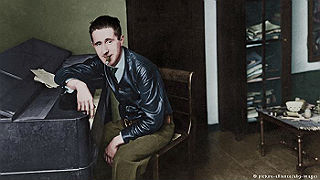
De Duitse dichter en schrijver Bertolt Brecht werd op 10 februari 1898 in de Zuid-Duitse stad Augsburg geboren. Zie ook alle tags voor Bertolt Brecht op dit blog.

Uit: Die heilige Johanna der Schlachthöfe

“DER FLEISCHKÖNIG PIERPONT MAULER BEKOMMT EINEN BRIEF VON SEINEN FREUNDEN IN NEW YORK.
Chicago, Schlachthöfe

MAULER liest einen Brief: „Wie wir deutlich merken, lieber Pierpont, ist der Fleischmarkt seit kurzer Zeit recht verstopft. Auch widerstehen die Zollmauern im Süden allen unseren Angriffen. Demnach scheint es geraten, die Hand vom Fleischhandel zu lassen, lieber Pierpont.“ Diesen Wink bekomme ich heute von meinen lieben Freunden aus New York. Hier kommt mein Kompagnon.
Er verbirgt den Brief.
CRIDLE: Warum so finster, lieber Pierpont?
MAULER: Erinnere, Cridle, dich, wie wir vor Tagen –
Wir gingen durch den Schlachthof, Abend war’s –
An unsrer neuen Packmaschine standen.
Erinnere, Cridle, dich an jenen Ochsen
Der blond und groß und stumpf zum Himmel blickend
Den Streich empfing: mir war’s, als gält er mir.
Ach, Cridle, ach, unser Geschäft ist blutig.
CRIDLE:Die alte Schwäche also, Pierpont?
Unglaublich fast, du, der Gigant der Packer
Des Schlachthofs König, vor dem Schlächter zittern
Zergehst in Schmerz um einen blonden Ochsen!
Verrat’s, ich bitt dich, niemand außer mir.
MAULER:O treuer Cridle!
Ich hätte nicht zum Schlachthof gehen sollen!
Seit ich in dies Geschäft hineinging, also sieben
Jahre, vermied ich’s, Cridle, ich vermag’s
Nicht länger: heute noch geb ich es auf, dies blutige Geschäft.
Nimm du’s, ich geb dir meinen Anteil billigst.
Dir gäb ich ihn am liebsten, denn wie du
Mit dem Geschäft verwachsen bist, ist’s keiner.
CRIDLE:Wie billig?
MAULER:Darüber kann’s bei alten Freunden
Wie du und mir kein langes Handeln geben.
Schreib zehn Millionen!”


Bertolt Brecht (10 februari 1898 – 14 augustus 1956)


De Russische dichter en schrijver Boris Leonidovich Pasternak werd geboren in Moskou op 10 februari 1890. Zie ook alle tags voor Boris Pasternak op dit blog.


Wind

I am no more but you live on,
And the wind, whining and complaining,
Is shaking house and forest, straining
Not single fir trees one by one
But the whole wood, all trees together,
With all the distance far and wide,
Like sail-less yachts in stormy weather
When moored within a bay they lie.
And this not out of wanton pride
Or fury bent on aimless wronging,
But to provide a lullaby
For you with words of grief and longing,


The Drowsy Garden

The drowsy garden scatters insects
Bronze as the ash from braziers blown.
Level with me and with my candle,
Hang flowering worlds, their leaves full-grown.

As into some unheard-of dogma
I move across into this night,
Where a worn poplar age has grizzled
Screens the moon’s strip of fallow light,

Where the pond lies, an open secret,
Where apple bloom is surf and sigh,
And where the garden, a lake dwelling,
Holds out in front of it the sky.


I Grew. Foul Weather, Dreams, Forebodings…

I grew. Foul weather, dreams, forebodings
Were bearing me – a Ganymede –
Away from earth; distress was growing
Like wings – to spread, to hold, to lead.

I grew. The veil of woven sunsets
At dusk would cling to me and swell.
With wine in glasses we would gather
To celebrate a sad farewell,

And yet the eagle’s clasp already
Refreshes forearms’ heated strain.
The days have gone, when, love, you floated
Above me, harbinger of pain.

Do we not share the sky, the flying?
Now, like a swan, his death-song done,
Rejoice! In triumph, with the eagle
Shoulder to shoulder, we are one.


Boris Pasternak (10 februari 1890 – 30 mei 1960)


De Surinaamse dichteres Carry-Ann Tjong-Ayong werd op 10 februari 1941 in Paramaribo, Suriname geboren Zie ook alle tags voor Carry-Ann Tjong-Ayong op dit blog.


Baanzand

verschroeide kindervoetjes
reppen zich door hete
kristallen korrels op weg naar
Bersaba
waar de
parakoranti kruimelig
lokken in de hutten
van pinabladeren
en droge stokken

in de middagkoelte
opgefrist door zuurwater
en pompelmoes
slepen zij
door de
nu weldadig
koele parels
hun weg terug
naar GeGe’s
rithmisch lonken

en de goudrode vonken
die de ijzeren draak
laat ontsnappen
als hij
zijn weg baant
onder de volle maan
in de oktobermaand
van
vakantiekindervreugd

baanzand
dat door
mijn vingers glijdt
als de sprookjes
die Ouma
mij toefluistert
met haar
warme stem
vol mystieke wonderen
van weleer


Carry-Ann Tjong-Ayong (Paramaribo, 10 februari 1941)
Hier tijdens een optreden samen met Patrick Karijowidjojo, 2008


Zie voor nog meer schrijvers van de 10e februari ook mijn vorige blog van vandaag.

Giuseppe Ungaretti, Fleur Adcock, Joseph Kessel, Charles Lamb, Margarete Hannsmann, Jakov Lind, Daniel Triller, Thomas Platter de oudere, Eugène Rellum

De Italiaanse dichter en schrijver Giuseppe Ungaretti werd geboren op 10 februari 1888 in Alexandrië, Egypte. Zie ook alle tags voor Giuseppee Ungaretti op dit blog.


Brothers

What regiment d’you belong to
brothers?

Word shaking
in the night

Leaf barely born

In the simmering air
involuntary revolt
of the man present at his
brittleness

Brothers


San Martino Del Carso

Of these houses
nothing
but fragments of memory

Of all who
would talk with me not
one remains

But in my heart
no one’s cross is missing
My heart is
the most tormented country of al


Giuseppe Ungaretti (10 februari 1888 – 2 juni 1970)


De Nieuwzeelandse dichteres Fleur Adcock werd geboren op 10 februari 1934 in Papakura, Auckland. Zie ook alle tags voor Fleur Adcock op dit blog.


The Man Who X-Rayed An Orange

Viewed from the top, he said, it was like a wheel,
the paper-thin spokes raying out from the hub
to the half-transparent circumference of rind,
with small dark ellipses suspended between.
He could see the wood of the table-top through it.
Then he knelt, and with his eye at orange-level
saw it as the globe, its pithy core
upright from pole to flattened pole. Next,
its levitation: sustained (or so he told us)
by a week’s diet of nothing but rice-water
he had developed powers, drawing upon which
he raised it to a height of about two feet
above the table, with never a finger near it.
That was all. It descended, gradually opaque,
to rest; while he sat giddy and shivering.
(He shivered telling it.) But surely, we asked,
(and still none of us mentioned self-hypnosis
or hallucinations caused by lack of food) ,
surely triumphant too? Not quite, he said,
with his little crooked smile. It was not enough:
he should have been able to summon up,
created out of what he had newly learnt,
a perfectly imaginary orange, complete
in every detail; whereupon the real orange
would have vanished. Then came explanations
and his talk of mysticism, occult physics,
alchemy, the Qabalah – all his hobby-horses.
If there was failure, it was only here
in the talking. For surely he had lacked nothing,
neither power nor insight nor imagination,
when he knelt alone in his room, seeing before him
suspended in the air that golden globe,
visible and transparent, light-filled:
his only fruit from the Tree of Life.


Fleur Adcock (Papakura, 10 februari 1934)


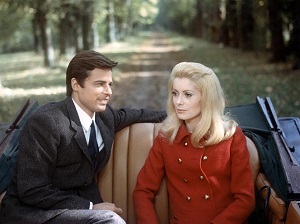
De Franse schrijver, journalist en avonturier Joseph Kessel werd geboren op 10 februari 1898 in Clara, Entre Rios, Argentinië. Zie ook alle tags voor Joseph Kessel op dit blog.

Uit: Belle de Jour

« Pierre Sérizy vérifiait le harnachement. Séverine, qui venait de mettre ses skis, demanda :
– Es-tu prêt ?
Elle portait un costume d’homme en grosse laine bleue, mais elle était si ferme et pure de lignes que le vêtement n’alourdissait pas son corps impatient.
– Je ne serai jamais trop prudent pour toi, dit Pierre.
– Mais je ne risque rien, mon chéri. La neige est si propre que tomber est un plaisir. Allons, décide-toi.
D’un rétablissement léger Pierre fut en selle. Le cheval ne fit pas d’écart, n’eut même pas de tressaillement. C’était une bête puissante et placide, large de flancs, habituée à porter plutôt qu’ àcourir. Séverine serra les poignées des longues guides fixées au harnachement, écarta légèrement les pieds. Elle essayait ce sport pour la première fois et l’attention lui faisait une figure un peu crispée.
Ainsi s’accusaient des défauts qui, dans l’animation, demeuraient peu sensibles : le menton trop carré, les pommettes saillantes. Mais cette violente fermeté, Pierre l’aimait dans le visage de Séverine. Pour lui voir quelques secondes de plus cette expression, il feignit d’arranger ses étriers.
– On part, cria-t-il enfin.
Les guides que tenait Séverine se tendirent, elle se sentit glisser lentement.
D’abord elle n’eut souci que de son équilibre et de ne point paraître ridicule. Avant de trouver l’espace libre il leur fallait traverser d’un bout à l’autre l’unique avenue de la petite ville suisse. A cette heure, tout le monde s’y croisait. De son sourire éclatant Pierre saluait des camarades de sport ou de bar, des jeunes femmes vêtues en hommes et d’autres allongées au fond de traîneaux à couleurs vives. Mais Séverine ne voyait personne, attentive seulement aux jalons qui annonçaient l’approche de la campagne : l’église avec sa petite place et sans mystère… la patinoire… la rivière toute sombre entre les berges toutes blanches… le dernier hôtel qui ouvrait ses fenêtres sur les champs. »


Joseph Kessel (10 februari 1898 – 23 juli 1979)
Scene uit de gelijknamige film van Luis Buñuel met Jean Sorel en Catherine Deneuve, 1967


De Engelse dichter, schrijver en essayist Charles Lamb werd geboren in Londen op 10 februari 1775. Zie ook alle tags voor Charles Lamb op dit blog.


The Old Familiar Faces

I HAVE had playmates, I have had companions,
In my days of childhood, in my joyful school-days–
All, all are gone, the old familiar faces.

I have been laughing, I have been carousing,
Drinking late, sitting late, with my bosom cronies–
All, all are gone, the old familiar faces.

I loved a Love once, fairest among women:
Closed are her doors on me, I must not see her–
All, all are gone, the old familiar faces.

I have a friend, a kinder friend has no man:
Like an ingrate, I left my friend abruptly;
Left him, to muse on the old familiar faces.

Ghost-like I paced round the haunts of my childhood,
Earth seem’d a desert I was bound to traverse,
Seeking to find the old familiar faces.

Friend of my bosom, thou more than a brother,
Why wert not thou born in my father’s dwelling?
So might we talk of the old familiar faces–

How some they have died, and some they have left me,
And some are taken from me; all are departed–
All, all are gone, the old familiar faces.


Charles Lamb (10 februari 1775 – 27 december 1834)
Cover


De Duitse dichteres en schrijfster Margarete Hannsmann werd geboren op 10 februari 1921 in Heidenheim. Zie ook alle tags voor Margarete Hannsmann op dit blog.

Uit: Tagebuch meines Alterns

“Den Rest der Nacht verbrachte ich vor dem Fernseher: Seid umschlungen, Millionen / So ein Tag, so wunderschön wie heute, Gesichter, Gesichter, junge, alte, Männer, Frauen, vom Lachen ins Weinen umkippende Gesichter, Fernsehen: woran immer es uns teilnehmen ließ, niemals zuvor riß es Millionen so in den Strudel. Menschen sagten ins Mikrofon: Ich bin heute früh in Dresden, in München, in Paris, in Amsterdam weggefahren, um dabeizusein. Leibhaftig. Wörterohnmacht. Vor einem halben Jahr kein Augenblick davon träumbar. Ich möchte jetzt endlich schreien. Keinen gibt es mehr, der mein Glück, Trauer, Angst, Hilflosigkeit teilt, der mir antworten, der mich schütteln könnte: Mädchen, altes, Geschichte, wach auf, schrei ruhig über das, was passiert, nimm es getrost in die Arme heut nacht, Vaterland, Mutterland, das gerühmte, das verhöhnte, mißbrauchte, verdrängte, abgenutzte Wort Volk. Unser Liebeswort. Unser Haßwort. Menschen in Leipzig, Dresden, Ostberlin haben es gereinigt: Wir sind das Volk, und Europa paßt auf, daß alles gut geht dieses Mal.'”
(…)

Würden meine Toten so mit mir reden? Oder würden sie sagen: erinnere dich. Du hast nicht „die Gnade der späten Geburt”. Keine Ausrede Deutschland. Erzähltest du nicht von einem 9. November, als du in München am Straßenrand standst, mit erhobenem Arm, eingekeilt in dein Volk, während Hitler und seine Paladine in breiten Reihen vorüberzogen auf ihrem alljährlichen stummen Marsch zur Feldherrenhalle, morgens um elf, den Blutzeugen der Partei zum Gedächtnis? Hast du vergessen: es war jener 9. November 1938? Während du ahnungslos mit dem Fahrrad nach Hause fuhrst, brannten die Synagogen. Wurden deutsche Juden erschlagen und weggeschleppt. Nicht im Verborgenen. Mitten im Volk. In deinem Volk, das diese Nacht erhob zur Reichskristallnacht.'” –


Margarete Hannsmann (10 februari 1921 – 29 maart 2007)
Cover


De Joods-Oostenrijks-Britse schrijver Jakov Lind (pseudoniem van Heinz Landwirth) werd geboren in Wenen op 10 februari 1927. Zie ook alle tags voor Jakov Lind dit blog.

Uit: Journey through the Night (Vertaald door Ralph Manheim)

“What do you see when you look back? Not a thing. And when you look ahead? Even less. That’s right. That’s how it is. It was three o’clock in the morning and raining. The train didn’t stop any-where. There were lights somewhere in the countryside, but you couldn’t be sure if they were windows or stars. The tracks were tracks—but why shouldn’t there be tracks in the clouds? Paris was somewhere at the end of the trip. Which Paris? The earthly Paris—with cafés, green buses, fountains, and grimy whitewashed walls? Or the heavenly Paris? Carpeted bathrooms with a view of the Bois de Boulogne? The fellow-passenger looked still paler in the bluish light. His nose was straight, his lips thin, his teeth uncommonly small. He had slick hair like a seal. A moustache, that’s what he needs. He could do a balancing act on his nose. Under his clothes he is wet. Why doesn’t he show his tusks? After “that’s how it is” he said nothing. That settled everything. Now he is smoking. His skin is grey, that’s obvious—it’s taut, too. If he scratches himself it will tear. What else is there to look at? He has only one face and his suitcase. What has he got in the suitcase? Tools? Saw, hammer and chisel? Maybe a drill? What does he need a drill for? To bore holes in skulls? Some people drink beer that way. When empty, they can be painted. Will he paint my face? What colours? Water-colour or oil? And what for? Children at Easter-time play with empty eggshells. His play with skulls. Well, he said non-committally, putting out his cigarette. He crushed it against the aluminium, making a scratching sound. Well, how about it? I don’t know, I said. I can’t make up my mind. Doesn’t the fellow un-derstand a joke? Maybe you need a little more spunk, he said. Now’s the time to make up your mind; in half an hour you’ll be asleep anyway, then I’ll do what I want with you. I won’t sleep tonight, I said. You’ve given me fair warning. Warning won’t do you any good, he said. Between three and four every-body falls into a dead sleep. You’re educated, you should know that.“


lind
Jakov Lind (10 februari 1927 – 17 februari 2007)
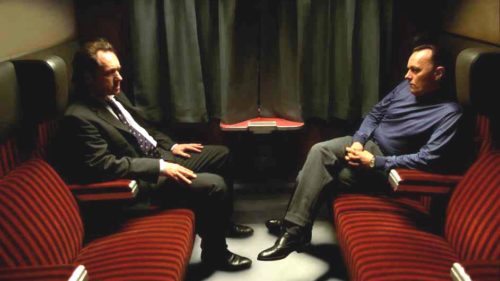
Scene uit de gelijknamige korte film van Joram ten Brink met Gijs Scholten van Aschat en Bert Luppes, 2000


De Duitse dichter, schrijver en medicus Daniel Wilhelm Triller werd geboren op 10 februari 1695 in Erfurt. Zie ook alle tags voor Daniel Triller op dit blog.


Der Storch und der Frosch

Ein Storch wollt’ einen Frosch verschlingen;
»Ach, schone meiner«, sagte der,
»Was treibt dich an? Wo rührt es her,
Dass du mich jetzt suchst umzubringen?
Ich tat dir ja nie was zuleid,
Drum denk doch an die Billigkeit.«

»Ja,« sprach der Storch, »ich muss gestehen,
Du hast mir nichts zuleid getan;
Allein, mich kommt der Hunger an,
Der soll mir nun durch dich vergehen?
Warum verzehrst du denn die Schnecken;
Warum schluckst du die Mücken ein,
Die dir doch nie zuwider sein?«
Hier blieb dem Frosch die Rede stecken,
An diesen Einwurf dacht’ er nicht;
Doch konnt’ er nichts dagegen sagen.
Drauf schlang ihn, als ein gut’ Gericht,
Der Storch in seinen leeren Magen.

Dies ist in die Natur gegeben
Und jederzeit der Welt ihr Lauf,
Der eine muss vom andern leben,
Der Größre frisst den Kleinern auf.
Wer nicht die Macht hat, sich zu wehren,
Der lass’ sich mit Geduld verzehren.


Daniel Triller (10 februari 1695 – 22 mei 1782)
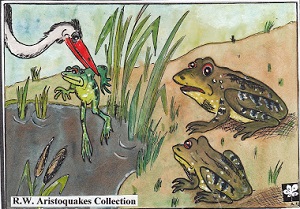
Illustratie door R.W. Aristoquakes


De Zwitserse humanistische schrijver en geleerde Thomas Platter de oudere werd geboren op 10 februari 1499 in Grächen in het kanton Wallis. Zie ook alle tags voor Thomas Platter de oudere op dit blog.

Uit: Lebensbeschreibung

„In der selben zyt seidt man, aes wurde ein schůlmeister von Einsidlen kummen, der weri vorhin zů Lucärn gsin, ein gar gelerter man und trüwer schůlmeister, aber grusam wunderlich. Do macht ich mier ein sitz in eim winkell, nit wyt von des schůlmeister stůll, und gedacht: in dem winkell wilt studierren oder sterben. Als der nun kam und anstůnd, gieng in die schůll zum frowen minster; sprach er: „Das ist ein hüpsche schůll (dan sy was erst kürtzlich nüw gebuwen); aber mich bedunkt, äs sigind ungeschikte knaben. Doch wellen wier lůgen; kerrend nů gůtten flyß an.“ Do weiß ich, hette äs mier min läben golten, ich hätte nit ein nomen 1ae declinationis können declinieren, kond doch den Donatt uff dem nägelin ußwendig; dan do ich zů Schletstat was, hatt Sapidus ein baccalaurium, hieß Georgius ab Andlow, was ein lediger von Andlow, gar ein glerter gsell, der vexiert die bacchanten so iämerlich übell mit dem Donat, das ich gedacht: ist es den so ein gůt bůch, so wiltz uswendig studierren, und in dem, das ichs lart läsen, studiert ich in ouch ußwendig. Das kam mier by dem patre Myconio woll; där, als er anstůnd, laß er uns den Terentium; do mießten wier alle wertlin, ein gantze commoedi, declinierren und coniugierren. Do ist er offt mit mier umbgangen, das min hembdlin naß ist worden, io ouch die gsicht ist vergangen, und doch nie kein streich gen, den einest mit der lätzen hand an baggen. Aer laß ouch in der heiligen geschrifft, das ouch vill leien die selben stunden drin giengen, dan es was im anfang, das das liecht des heiligen evangelii wolt uffgan, und hat man doch noch lang mäß und die götzen in der kilchen. Wen er aber schon ruch mit mier was, fürt er mich den heim und gab mier zů essen, dan er ghort mich gären sagen, wie ich alle land was usgeliffen in Tütschland, und wie es mier allenthalb ergangen was; das wußt ich do zmall woll.“


.
Thomas Platter (10 februari 1499 – 26 januari 1582)


Zie voor onderstaande schrijver ook mijn blog van 10 februari 2018 deel 2.

De Surinaamse dichter Eugène Rellum werd geboren in Paramaribo op 10 februari 1896. Zie ook alle tags voor Eugène Rellum op dit blog.

Fishers Of Men (Alfred Noyes)

Bij de vijfde zondag door het jaar


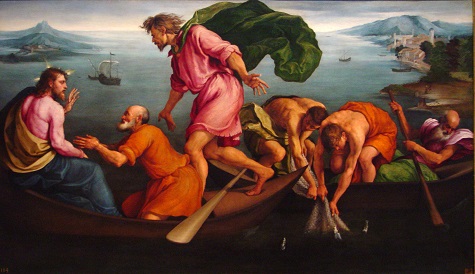
De wonderbare visvangst door Jacopo Bassano, 1545


Fishers Of Men

Long, long ago, He said,
He who could wake the dead
And walk upon the sea-

‘Come, follow Me.

Leave your brown nets and bring
Only your hearts to sing,
Only your souls to pray,
Rise, come away.

Shake out your spirit-sails,
And brave those wilder gales,
And I will make you then
Fishers of men.’

Was this, then, what He meant?
Was this His high intent,
After two thousand years
Of blood and tears?

God help us, if we fight
For right and not for might.
God help us if we seek
To shield the weak.

Then, though His heaven be far
From this blind welter of war,
He’ll bless us, on the sea
From Calvary.


Alfred Noyes (16 september 1880 – 28 juni 1958)
St Peter’s Church, Wolverhampton, de geboorteplaats van Alfred Noyes


Zie voor de schrijvers van de 10e februari ook mijn twee volgende blogs van vandaag.


Ouderdom (Rolf Jacobsen), John Coetzee, Kees Verheul, Jacques Schreurs


Dolce far niente


Winter, Italy door Igor Shulman, 2016


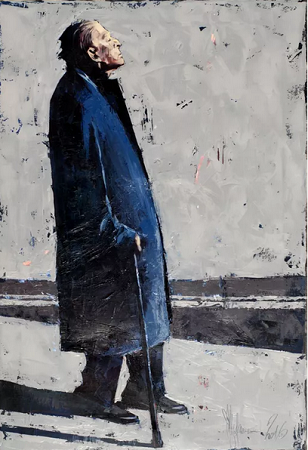
Ouderdom

Ik houd meer van oude mensen.
Ze zitten naar ons te kijken en zien ons niet.
Ze hebben genoeg aan zichzelf,
als vissers langs grote rivieren,
stil als stenen
in de zomernacht.
Ik houd veel van vissers langs grote rivieren
en bejaarden en zij die na een lang ziekbed
weer naar buiten gaan.

Er zit iets in hun ogen
wat de wereld niet meer ziet,
de oude mensen, als herstellenden
wier voeten nog niet sterk genoeg zijn
hun voorhoofd bleek als na hoge koorts.

De oude mensen
die langzaam weer zichzelf worden
en langzaam oplossen,
als een nevel, ongemerkt gaan ze over
in slaap
en licht.


Vertaald door Amy van Marken


Rolf Jacobsen (8 maart 1907 – 20 februari 1994)
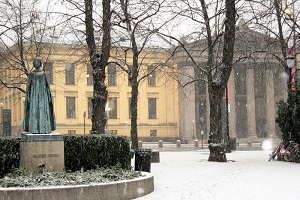
Universiteitsgebouw in Oslo, de geboorteplaats van Rolf Jacobsen


De Zuidafrikaanse schrijver John Maxwell Coetzee werd geboren op 9 februari 1940 in Kaapstad. Zie ook alle tags voor John Coetzee op dit blog.

Uit: The Schooldays of Jesus

“Bolivar unfolds himself and slides out of the car. From a dis tance he inspects the foreign dog, then decides to ignore him. The boy dashes into the sheds, re-emerges:They’ve got doubl. bunks!’ he shouts.tan I have a top bunk? Please!’
Now a large woman wearing a red apron over a loose cotton frock appears from the rear of the farmhouse and waddles down the path toward them. ‘Good day, good day!’ she calls out. She examines the laden car.’Have you come a long way?’ ‘Yes, a long way. We wondered if you can do with some extra hands.’ ‘We can always do with more hands. Many hands make light work — isn’t that what the books say?’ ‘It will be just two of us, my wife and I. Our friend here has commitments of his own.This is our boy, his name is David. And this is Bolivar.Will there be a place for Bolivar? He is pan of the family. We go nowhere without him: ‘Bolivar is his real name; says the boy.’He is an Alsatian. ‘Bolivar.That’s a nice name, says the woman. ‘Unusual. I am sure there will be a place for him as long he behaves himself and is content to cat scraps and doesn’t get into fights or chase the chickens. The workers are out in the orchards right now, but let me show you the sleeping quarters. On the left side the gentlemen, on the right side the ladies. No family rooms, I’m afraid: ‘I am going to be on the gentlemen’s side; says the boy. ‘Simon says I can have a top bunk. Simon is not my father: ‘Do as you please, young man. There is plenty of space. The others will be back ‘Simon is not my real father and David is not my real name. Do you want to know my real name?’ The woman casts Ines a puzzled look, which Ines pretends not to notice. ‘We were playing a game in the car: he, Simon, intervenes.`To pass the time. We were trying out new names for ourselves.’
The woman shrugs. ‘The others will be back for lunch soon, then you can introduce yourselves. The pay is twenty males a day, the same for men and for women. The day is from sunup until sundown, with a two-hour break at midday. On the seventh day we rest. That is the natural order, that is the order we follow. As for meals, we supply the foodstuffs and you do the cooking. Are you happy with the terms? Do you think you can manage? Have you done picking before? No?You will soon learn, it is not a high art. Do you have hats? You will need hats, the sun can be quite fierce. What else can I tell you? You can always find me in the big house. Roberta is my name. ‘Roberta, pleased to meet you. I am Simon and this is Ines and this is Juan, our guide, whom I am going to drive back to town: ‘Welcome to the farm. I am sure we will get on well. It’s good that you have a car of your own: ‘It has brought us a long way. It is a faithful car.You can’t ask for more than that in a car, fidelity: By the time they have unloaded the car, workers have begun straggling back front the orchards.”


John Coetzee (Kaapstad, 9 februari 1940)


De Nederlandse schrijver, vertaler, slavist en essayist Kees Verheul werd geboren in Hengelo op 9 februari 1940. Zie ook alle tags voor Kees Verheul op dit blog.

Uit: De nieuwe jongen

“Ik fantaseerde in mijn lagere schooltijd zelden over later, maar toen de juffrouw ons op een dag vertelde van de nieuwe jongen die we na de zomervakantie in de klas zouden krijgen, stelde ik me direkt voor dat ik zijn beste vriendje zou worden. Het weinige dat ze over hem zei maakte diepe indruk op me. Hij kwam van ver buiten onze streek, uit een provincie in het noorden waar ik nooit was geweest. Onze ouders hadden volgens de juffrouw vast wel gelezen van zijn vader, die in de krant had gestaan omdat hij direkteur was geworden van een van de fabrieken in ons dorp. De naam die ze opschreef was zo ingewikkeld dat hij het bord bijna over de hele lengte vulde – eerst de voornaam van de jongen en dan twee achternamen na elkaar, elk met een hoofdletter. Langzaam, met een gevoel alsof het onbekende vriendje naar me keek, schreef ik het geheel een paar keer over in mijn schrift.
’s Avonds aan tafel legde mijn vader me uit wat een ‘dubbele naam’ was. Ik herinner me sommige van zijn woorden: ‘duur’, ‘deftig’ en ‘van adel’. Het viel me op dat hij, ondanks de smalende trek om zijn mond, al vertellend iets vrolijks kreeg. Terwijl hij zoëven nog stil voor zich uit had zitten staren was zijn lichaam nu vol beweging. Hij trommelde met zijn vingers op tafel, lachte: ‘O ja, ik weet nóg een mooie’ en noemde een naam, die hij met het handvat van zijn mes in de lucht tekende. Dat hij de naam van de nieuwe jongen bleek te kennen – ‘vroeger had je een professor die zo heette’ – gaf me een gevoel van aanhankelijkheid tegenover mijn vader. Ik keek onwillekeurig even op naar zijn gezicht. Terwijl ik verder at zag ik mezelf in mijn fantasie naar hem toelopen en met mijn hoofd leunen tegen de mouw van zijn jasje.
De daarop volgende dagen moest ik steeds weer aan de onbekende jongen denken. Dat ik zo aandachtig naar de juffrouw had geluisterd, net of ze speciaal tegen mij had gepraat, kwam doordat ze was begonnen met te vertellen waar hij zou wonen: in een laan onmiddellijk achter de spoorlijn die onze buurt afgrensde van de villawijk. Geen van de jongens uit de klas woonde zo dichtbij. Als ik na schooltijd een speelkameraad wilde opzoeken moest ik het halve dorp doorfietsen. ’s Avonds, in de huiskamer bij de radio of in bed, voelde ik me soms verlaten, alsof alle jongens die ik op school aardig vond ergens verweg samen plezier hadden. Twee hadden er onlangs nog voorgedaan hoe ze iedere ochtend vanuit hun slaapkamerraam naar elkaar zwaaiden.
Alleen mijn vriendinnetje woonde op loopafstand. Maar sinds de plagerijen, thuis en op school, over ons ‘sjansen’ was ik de spelletjes met haar meisjesachtig gaan vinden en had ik haar ontweken tot ze me, na me een paar keer verbaasd te hebben aangekeken, nooit meer vroeg of ik straks gezellig bij haar kwam.”


Kees Verheul (Hengelo, 9 februari 1940)
Lambertusbasiliek, Hengelo


De Nederlandse dichter en schrijver Jacques Schreurs werd geboren in Sittard op 9 februari 1893. Zie ook alle tags voor Jacques Schreurs op dit blog.


De Liefde is dronken, zegt de wind

De Liefde is dronken, zegt de wind,
Want heel de nacht heeft zij haar lied doen schallen –
En zingend is zij uit ’t gebint’
Der sterren in het stroo gevallen
En slaapt met alle maten en getallen
Hier in haar armen als een kind…
De Liefde is dronken, zegt de wind
En Engelen dwalen om de stallen.


Duiven

NIET om gewijd of ongewijd symbool
Houd ik van duiven; noch omdat op school
De duif mij dikwijls als model moest gelden;
Dat men mij vrij den duivenmelker schelde:
Ik houd van duiven, en wel even boud
Als gij, Anselm, van goede verzen houdt,
Mijn zus van paarden en mijn broer van honden.
Ik heb de duiven altijd duifsch gevonden
Zooals de duivels duivelsch en de Duitschers dom;
Vraag, bid ik u, dus liever niet waarom
Ik duiven houd, waarom geen witte pauwen,
Of, indien wit te wit is, dan geen blauwe;
Of waarom niet een groene papegaai.
De voorkeur vraagt niet en is even taai
Als teeder, Anselm; lààt mij mijn gebreken
En, àls ik spreken moet, van duiven spreken,
Want duiven en geen pauwen hebben ’t mij gedaan;
De trippeldans en niet het trotsche gaan;
De tuimelvlucht en niet de sleepgewaden
Dier schemerige prinsen langs de paden;
Het koeren en het spiegelen in de bron
En niet de rauwe kreet, de schrik van het gazon.
Als ik een Geest moest prijzen, zou ik prijzen
Hem die uit rozen, sneeuw en parelgrijzen
De duiven schiep: het kanten broekje wit
Onder het frakje dat, voornaam van snit,
Het borstje bloot laat en parmantig open,
Op pootjes als van bessensap bedropen;
En dan in het fraai en frank geheel die drang,
Dat voetenvier, dat vleugelenverlang!

Zoo, als ‘k een Geest moest prijzen, prees ik dezen
Die, in het oerbegin, in zóó’n klein wezen
Het klaar staan schiep voor zeg maar welke reis….
De duif gaat voor en dan naar ’t paradijs!


Jacques Schreurs (9 februari 1893 – 31 januari 1966)


Zie voor nog meer schrijvers van de 9e februari ook mijn blog van 9 februari 2018 en mijn blog van 9 februari 2017 en ook mijn drie blogs van 9 februari 2014.

Zie voor bovenstaande schrijvers ook mijn blog van 9 februari 2007 en ook mijn blog van 9 februari 2008 en eveneens mijn blog van 9 februari 2009.

John Grisham, Robin Block, Rachel Cusk, Elizabeth Bishop, Neal Cassady, Henry Roth, Eva Strittmatter, Gert Jonke, Jules Verne

De Amerikaanse schrijver John Grisham werd geboren in Jonesboro, Arkansas, op 8 februari 1955. Zie ook alle tags voor John Grisham op dit blog.

Uit: The Reckoning

“On a cold morning in early October of 1946, Pete Banning awoke before sunrise and had no thoughts of going back to sleep. For a long time he lay in the center of his bed, stared at the dark ceiling, and asked himself for the thousandth time if he had the courage. Finally, as the first trace of dawn peeked through a window, he accepted the solemn reality that it was time for the killing. The need for it had become so overwhelming that he could not continue with his daily routines. He could not remain the man he was until the deed was done. Its planning was simple, yet difficult to imagine. Its aftershocks would rattle on for decades and change the lives of those he loved and many of those he didn’t. Its notoriety would create a legend, though he certainly wanted no fame. Indeed, as was his nature, he wished to avoid the attention, but that would not be possible. He had no choice. The truth had slowly been revealed, and once he had the full grasp of it, the killing became as inevitable as the sunrise.
He dressed slowly, as always, his war‑wounded legs stiff and painful from the night, and made his way through the dark house to the kitchen, where he turned on a dim light and brewed his coffee. As it percolated, he stood ramrod straight beside the breakfast table, clasped his hands behind his head, and gently bent both knees. He grimaced as pain radiated from his hips to his ankles, but he held the squat for ten seconds. He relaxed, did it again and again, each time sinking lower. There were metal rods in his left leg and shrapnel in his right.
Pete poured coffee, added milk and sugar, and walked outside onto the back porch, where he stood at the steps and looked across his land. The sun was breaking in the east and a yellowish light cast itself across the sea of white. The fields were thick and heavy with cotton that looked like fallen snow, and on any other day Pete would manage a smile at what would certainly be a bumper crop. But there would be no smiles on this day; only tears, and lots of them. To avoid the killing, though, would be an act of cowardice, a notion unknown to his being. He sipped his coffee and admired his land and was comforted by its security. Below the blanket of white was a layer of rich black topsoil that had been owned by Bannings for over a hundred years. Those in power would take him away and would probably execute him, but his land would endure forever and support his family.
Mack, his bluetick hound, awoke from his slumber and joined him on the porch. Pete spoke to him and rubbed his head.
The cotton was bursting in the bolls and straining to be picked, and before long teams of field hands would load into wagons for the ride to the far acres. As a boy, Pete rode in the wagon with the Negroes and pulled a cotton sack twelve hours a day. The Bannings were farmers and landowners, but they were workers, not gentrified planters with decadent lives made possible by the sweat of others.”


John Grisham (Jonesboro, 8 februari 1955)


De Nederlandse dichter, songwriter en musicus Robin Block werd geboren op 8 februari 1980 in Heemskerk. Zie ook alle tags voor Robin Block op dit blog. 


Archeoloog van de verbeelding

Geef me een steen, één steen
en ik bouw een paleis dwars door de tijden heen
Vul de oude tuin met geuren

Geef me een rots, een letter
en ik bikkel een gezicht uit
droom er een naam bij

Ik hoor de kreten van mijn voorvaderen
al van meters onder de grond,
Volg het spoor naar hun zanderige mond

Ik blaas silhouetten uit het stof
Draag hun botten door de uitgegraven straten
Zoek een oog voor hun tranen

Hele wat geheeld moet worden
7 generaties voor ons
en 7 erna

Ik lijm de scherven tot een lichaam
Vang in elke barst een lichtstraal
Ontdek in ieder mozaïek een kleurige processie


Robin Block (Heemskerk, 8 februari 1980)


De Canadese schrijfster Rachel Cusk werd geboren op 8 februari 1967 in Saskatoon. Zie ook alle tags voor Rachel Cusk op dit blog.

Uit: Transit

“An astrologer emailed me to say she had important news for me concerning events in my immediate future. She could see things that I could not: my personal details had come into her possession and had allowed her to study the planets for their information. She wished me to know that a major transit was due to occur shortly in my sky. This information was causing her great excitement when she considered the changes it might represent. For a small fee she would share it with me and enable me to turn it to my advantage.
She could sense—the email continued—that I had lost my way in life, that I sometimes struggled to find meaning in my present circumstances and to feel hope for what was to come; she felt a strong personal connection between us, and while she couldn’t explain the feeling, she knew too that some things ought to defy explanation. She understood that many people closed their minds to the meaning of the sky above their heads, but she firmly believed I was not one of those people. I did not have the blind belief in reality that made others ask for concrete explanations. She knew that I had suffered sufficiently to begin asking certain questions, to which as yet I had received no reply. But the movements of the planets represented a zone of infinite reverberation to human destiny: perhaps it was simply that some people could not believe they were important enough to figure there. The sad fact, she said, is that in this era of science and unbelief we have lost the sense of our own significance. We have become cruel, to ourselves and others, because we believe that ultimately we have no value. What the planets offer, she said, is nothing less than the chance to regain faith in the grandeur of the human: how much more dignity and honor, how much kindness and responsibility and respect, would we bring to our dealings with one another if we believed that each and every one of us had a cosmic importance? She felt that I of all people could see the implications here for improvements in world peace and prosperity, not to mention the revolution an enhanced concept of fate could bring about in the personal side of things. She hoped I would forgive her for contacting me in this way and for speaking so openly. As she had already said, she felt a strong personal connection between us that had encouraged her to say what was in her heart.
It seemed possible that the same computer algorithms that had generated this email had also generated the astrologer herself: her phrases were too characterful, and the note of character was repeated too often; she was too obviously based on a human type to be, herself, human. As a result her sympathy and concern were slightly sinister; yet for those same reasons they also seemed impartial.”


Rachel Cusk (Saskatoon, 8 februari 1967)


De Amerikaanse dichteres en schrijfster Elizabeth Bishop werd geboren op 8 februari 1911 in Worcester, Massachusetts. Zie ook alle tags voor Elizabeth Bishop op dit blog.


Songs For A Colored Singer

II
The time has come to call a halt;
and so it ends.
He’s gone off with his other friends.
He needn’t try to make amends,
this occasion’s all his fault.
Through rain and dark I see his face
across the street at Flossie’s place.
He’s drinking in the warm pink glow
to th’ accompaniment of the piccolo.

The time has come to call a halt.
I met him walking with Varella
and hit him twice with my umbrella.
Perhaps that occasion was my fault,
but the time has come to call a halt.

Go drink your wine and go get tight.
Let the piccolo play.
I’m sick of all your fussing anyway.
Now I’m pursuing my own way.
I’m leaving on the bus tonight.
Far down the highway wet and black
I’ll ride and ride and not come back.
I’m going to go and take the bus
and find someone monogamous.

The time has come to call a halt.
I’ve borrowed fifteen dollars fare
and it will take me anywhere.
For this occasion’s all his fault.
The time has come to call a halt.


Elizabeth Bishop (8 februari 1911 – 6 oktober 1979)
Cover


De Amerikaanse schrijver Neal Cassady werd geboren op 8 februari 1926 in Salt Lake City. Zie ook alle tags voor Neal Cassady op dit blog.

Uit: Collected Letters

“TO ALLEN GINSBERG
May 8, 1947 1242 Clarkson St. [Denver]
DEAR ALLEN; Can you ever forgive me? I mean it, can you? Really, I feel very guilty about my failure to write; of course, I could rationalize myself indefinitely concerning all the lack of time I’ve had, troubles etc., however, I shan’t do that for I should have written anyhow. The real reason I’ve failed to is, I think, due to my not knowing what would happen next. As I received your last letter I was packing to go to Las Vegas & gamble. Quickly I dashed off a letter telling you so, & the reasons why, then, before I mailed it, I had a minor brush with the police which, incidentally, caused me to move to this address. This change in plans voided my unmailed letter, so I started another, but just then I got a job, and I mean a job! Honestly, I work ten hours a day and it’s so hard on me that even after ten days at it, I can still hardly drag myself home to fall into bed. I have not done anything, haven’t seen Justin, (although I phoned him two weeks ago and made a date), haven’t seen Hal, haven’t even written to you, man, I’ve been beat into the ground by this hard work; enough of these excuses, onward. Your last letter was a pip, truly the best you’ve written; insofar as the groove we’ve been striving for it’s perfect. I feel as I reread it that you’re right in there, now all we need is for me to fall into it properly. Of course, you’ve forgotten most of what you wrote but that’s not important. You’re in!
I must repeat the jobs I suggested as Justin’s best are only what I think, as far as I know he might make you vice-president, so try not to feel any drag, and about all remember, he’s fallen for you hook, line and whatever else he has; I’m quite convinced that you are, by far, the most important and best loved thing that has happened to him in years, so during the summer really bear down on him and where he’ll now eat out of your hand, then he’ll even feed you out of his. If it means anything. I swear I’ll see Justin before the week’s out and then write to you on the “whole thing in general” whatever I meant by that.”


Neal Cassady (8 februari 1926 – 4 februari 1968)
Hier met Allen Ginsberg (links)


De Amerikaanse schrijver Henry Roth werd geboren op 8 februari 1906 in Tysmenitz nabij Stanislawow, Galicië, in het toenmalige Oostenrijk-Hongarije. Zie ook alle tags voor Henry Roth op dit blog.

Uit: Mercy of a Rude Stream (A Diving Rock on the Hudson)

“They, and other Jewish youth, more recent arrivals on the block, or in the immediate neighborhood, became, as it were by default, Ira’s provisional companions during that barren, that grievous period. Izzy (who became Irving) Winchel, with blanched blue eyes, a hooked nose, had aspirations of becoming a baseball pitcher. Utterly unscrupulous, the nearest thing to a pathological liar, and phony as a three-dollar bill; his arrant cribbings and copyings still hadn’t saved him from flunking out of Stuyvesant. He did peculiar things with words: mayonnaise became maysonay, trigonometry trigonomogy. Maxie DaM, short of stature, quick, alert, well-informed, best-spoken of any in the group (perhaps because his family had moved here from Ohio), ambitious, an office boy in an advertising firm, and Ira was sure a capable one. Maxie DaM’s father, blocky and affable, owned the new candy store, whose rear was depot for card games. Jakey Shapiro, short of stature and motherless; his short and cinnamon-mustached widowed father had moved here from Boston, married svelte Mrs. Glott, gold-toothed widow, mother of three married daughters, and janitress of 112 East 119th. It was in her abode, in the janitorial quarters assigned her on the ground floor rear, that seemingly inoffensive Mrs. Shapiro set up a clandestine alcohol dispensary—not a speakeasy, but a bootleg joint, where the Irish and other shikkers of the vicinity could come and have their pint bottles filled up, at a price. And several times on weekends, when Ira was there, for he got along best with Jake, felt closest to him, because Jake was artistic, some beefy Irishman would come in, hand over his empty pint bottle for refilling, and after greenbacks were passed, and the transaction completed, receive as a goodwill offering a pony of spirits on the house. And once again those wry (rye? Out vile pun!), wry memories of lost opportunities: Jake’s drab kitchen where the two sat talking about art, about Jake’s favorite painters, interrupted by a knock on the door, opened by Mr. Shapiro, and the customer entered. With the fewest possible words, perhaps no more than salutations, purpose understood, negotiations carried out like a mime show, or a ballet: ecstatic pas de deux with Mr. McNally and Mr. Shapiro—until suspended by Mr. Shapiro’s disappearance with an empty bottle, leaving Mr. McNally to solo in anticipation of a “Druidy drunk,” terminated by Mr. Shapiro’s reappearance with a full pint of booze. Another pas de deux of payment? Got it whole hog—Mr. Shapiro was arrested for bootlegging several times, paid several fines, but somehow, by bribery and cunning, managed to survive in the enterprise, until he had amassed enough wealth to buy a fine place in Bensonhurst by the time “Prohibition” was repealed. A Yiddisher kup, no doubt.”


Henry Roth (8 februari 1906 – 13 oktober 1995)
Cover


De Duitse dichteres en schrijfster Eva Strittmatter werd als Eva Braun geboren op 8 februari 1930 in Neuruppin. Zie ook alle tags voor Eva Strittmatter op dit blog.


Das Geheimnis

Dort,wo du bist:schreib ein paar Worte
In deinen Himmel.Schick sie her.
Ich fang sie auf an meinem Orte
Und sende sie,von Liebe schwer,
Zu dir zurück.In dieser Zeile
Wird unser Leben sich verbinden:
Geheimnis,das ich mit dir teile.
Und keiner wird die Lösung finden
Für dieses Rätsel im Gedicht.
Die andern sollen dran erblinden:
So sehr ist es gemacht aus Licht.


Schrei

Andre gibt es, die können die Kunst
Zu leben besser als ich.
Ich weiß nicht: Ist das eine Gunst Des Schicksals?
Ich weiß nur: Auf mich
Fällt alles mit Gewalt herab.
Wie ein Steinschlag trifft mich das Glück.
Und Unglück ist für mich das Grab.
Ich stürze ins Nichts zurück.
Der Preis ist hoch, den ich bezahl
Für die Fähigkeit zu sagen. Ich muß das Glück und auch die Qual
Bis an den Schrei ertragen.


Sein

Ich sehne mich sehr nach Freiheit.
Leicht und im Licht möcht ich sein.
Ich will sie, wies sein soll, verdienen:
Arbeiten. Aber auch: einfach sein.


Eva Strittmatter (8 februari 1930 – 3 januari 2011)
Cover


De Oostenrijkse dichter en schrijver Gert Jonke werd geboren op 8 februari 1946 in Klagenfurt. Zie ook alle tags voor Gert Jonke op dit blog.

Uit: Geometrischen Heimatroman

Der Dorfplatz ist viereckig, grenzt an die um ihn versammelten Häuser, Straßen und Wege münden in ihn, außer dem Brunnen in der Mitte, in dem die Pflastersteinsysteme ihren Ursprung suchen, strahlen-artig sich verteilen, befindet sich nichts auf dem Dorf-platz. Eine auf den Platz hingeworfene Figur nähen sich dem Brunnen, schöpft Wasser, daß die Winde knarrt; sie wendet sich vom Brunnen ab, den Krug am Kopf, verschwindet in einer Seitengasse. Oder aber an den Rändern die vier Hausmauerlinien entlang die einander austauschenden Vorminagsbesuche, die sich rasch hinter den Türen verbergen, in den Türspalten verschwinden Haare und Kopftücher. Zu Mittag dann tummeln sich einige herum, die Kinder kommen aus der Schule, werfen Mützen und Schul-taschen über die Dächer, der Lehrer geht ins Wirtshaus, der Pfarrer schließt das Fenster. – Wir können über den Dorfplatz gehn. – Ja, gehn wir über den Dorfplatz. – Ausgenommen den Brunnen in der Mine ist der Dorf-platz ansonsten leer. Nein, das ist nicht wahr, denn es sind Bänke aufgestellt entlang den Rändern, die Rückseiten der Lehnen zu den Mauern gewandt. Wir hatten uns in der Werkstatt des Schmiedes versteckt, die Wangen eng an die Mauern gepreßt, niemand hat uns geschn, und du hast gesagt – gehn wir über den Dorfplatz. – Nein, gehn wir nicht über den Dorfplatz, habe ich entgegnet, denn ich habe die Leute auf den Bänken sitzen gesehn auf einmal wie hingeworfen plötzlich auf jeder Bank zwei. Wir konnten nicht über den Dorfplatz gehn, weil wir nicht gesehen werden durften. – Gehn wir über den Dorfplatz. – Wir können nw&: über den Dorfplatz gebn, habe ich noch einmal gesagt, währenddem hat sich die erste auf der ersten uns am nächsten liegenden Bank sitzende Figur erhoben, wäh-rend sich die auf jener der ersten Bank gegenüberstehen-den Bank sitzende Figur ebenfalls erhoben hat, dann sind sie einander entgegengegangen, auf der den Dorfplatz teilenden Mittellinie begegnet, haben ihre rechten Hände gehoben, deren Handflächen einander zugestreckt, umschlossen, auf und ab geschüttelt, gelöst, sich voneinander wieder abgewandt, sind zu ihren Bän-ken zurückgegangen, haben sich wieder gesetzt, während die zweite auf der ersten uns am nächsten liegenden Bank sitzende Figur sich erhoben hat, während die auf jener der ersten Bank gegenüberstehenden Bank sitzende zweite Figur sich ebenfalls erhoben hat, dann sind sie einander entgegengegangen … … bis alle auf den einander gegenüberstehenden Bänken gegenübersitzenden Figuren sich erhoben hatten, einander entgegengegangen waren, die Hände einander geschüttelt hauen, zu den jeweiligen Bänken zurückgegangen waren und sich wieder gesetzt hatten.“


Gert Jonke (8 februari 1946 – 4 januari 2009)


De Franse schrijver Jules Verne werd geboren in Nantes op 8 februari 1828. Zie ook alle tags voor Jules Verne op dit blog.

Uit: Les Révoltés de la Bounty

“Pas le moindre souffle, pas une ride à la surface de la mer, pas un nuage au ciel. Les splendides constellations de l’hémisphère austral se dessinent avec une incomparable pureté. Les voiles de la Bounty pendent le long des mâts, le bâtiment est immobile, et la lumière de la lune, pâlissant devant l’aurore qui se lève, éclaire l’espace d’une lueur indéfinissable.
La Bounty, navire de deux cent quinze tonneaux monté par quarante-six hommes, avait quitté Spithead, le 23 décembre 1787, sous le commandement du capitaine Bligh, marin expérimenté mais un peu rude, qui avait accompagné le capitaine Cook dans son dernier voyage d’exploration.
La Bounty avait pour mission spéciale de transporter aux Antilles l’arbre à pain, qui pousse à profusion dans l’archipel de Tahiti. Après une relâche de six mois dans la baie de Matavaï, William Bligh, ayant chargé un millier de ces arbres, avait pris la route des Indes occidentales, après un assez court séjour aux îles des Amis.
Maintes fois, le caractère soupçonneux et emporté du capitaine avait amené des scènes désagréables entre quelques-uns de ses officiers et lui. Cependant, la tranquillité qui régnait à bord de la Bounty, au lever du soleil, le 28 avril 1789, ne faisait rien présager des graves événements qui allaient se produire. Tout semblait calme, en effet, lorsque tout à coup une animation insolite se propage sur le bâtiment. Quelques matelots s’accostent, échangent deux ou trois paroles à voix basse, puis disparaissent à petits pas.
Est-ce le quart du matin qu’on relève? Quelque accident inopiné s’est-il produit à bord ?
« Pas de bruit surtout, mes amis, dit Fletcher Christian, le second de la Bounty. Bob, armez votre pistolet, mais ne tirez pas sans mon ordre. Vous, Churchill, prenez votre hache et faites sauter la serrure de la cabine du capitaine. Une dernière recommandation : Il me le faut vivant !»
Suivi d’une dizaine de matelots armés de sabres, de coutelas et de pistolets, Christian se glissa dans l’entrepont; puis, après avoir placé deux sentinelles devant la cabine de Stewart et de Peter Heywood, le maître d’équipage et le midshipman de la Bounty, il s’arrêta devant la porte du capitaine.”


Jules Verne (8 februari 1828 – 24 maart 1905)
Scene uit de film “Mutiny On The Bounty” uit 1962 met o.a. Marlon Brando als Fletcher Christian


Zie voor nog meer schrijvers van de 8e februari ook mijn blog van 8 februari 2018 en ook mijn twee blogs van 8 februari 2015.

Lisel Mueller

De Duits-Amerikaanse dichteres en vertaalster Lisel Mueller werd geboren op 8 februari 1924 in Hamburg als dochter van de pedagoog Fritz C. Neumann en zijn vrouw, de lerares Ilse Burmester. Fritz C. Neumann was tot 1930 leraar aan de Lichtwarkschule en vervolgens aan een Hamburgs Realgymnasium. Hij werd ontslagen uit het beroep van leraar na de overdracht van de macht aan de nazi’s in 1933 en was tijdelijk werkzaam als leraar aan scholen voor Duitse vluchtelingen in Frankrijk en Italië. In 1937 slaagde hij erin de Verenigde Staten binnen te komen en in 1939 kon hij zijn vrouw en twee dochters over laten komen. Daar vond hij eerst een baan als docent Duits en Frans aan het Evansville College in Evansville, Indiana, waar het gezin zich ook vestigde. Lisel studeerde in 1944 af aan de Universiteit van Evansville. Ze trouwde met de musicoloog Paul Mueller, die als redacteur bij een juridische uitgeverij werkte en met wie ze twee kinderen kreeg. Ze woonden in Lake Forest, Illinois. Paul Mueller stierf in 2001. Lisel Mueller doceerde enige tijd literatuur aan de Universiteit van Chicago,aan Elmhurst College in Elmhurst (Illinois) en aan Goddard College in Plainfield (Vermont).In 1965 publiceerde Mueller haar eerste poëziebundel “Dependencies”. Haar essays en poëzie werden in verschillende tijdschriften opgenomen, waaronder de Chicago Review, Plowshares, de New England Review en Poetry. Mueller vertaalde ook gedichten van Marie Luise Kaschnitz en teksten van Anna Mitgutsch in het Engels. Voor de in 1980 verschenen bundel “The Need to Hold Still” ontvingzij in 1981 de National Book Award for Poetry. Als de eerste en tot nu toe enige Duitse dichteres ontving Lisel Mueller de Pulitzer Prize voor poëzie in 1997 voor haar bundel “Alive Together”. In 2002 ontving Mueller de Ruth Lilly Poëzieprijs, waaraan een bedrag van $100,000 verbonden is.


Moon Fishing

When the moon was full they came to the water.
some with pitchforks, some with rakes,
some with sieves and ladles,
and one with a silver cup.

And they fished til a traveler passed them and said,
“Fools,
to catch the moon you must let your women
spread their hair on the water —
even the wily moon will leap to that bobbing
net of shimmering threads,
gasp and flop till its silver scales
lie black and still at your feet.”

And they fished with the hair of their women
till a traveler passed them and said,
“Fools,
do you think the moon is caught lightly,
with glitter and silk threads?
You must cut out your hearts and bait your hooks
with those dark animals;
what matter you lose your hearts to reel in your dream?”

And they fished with their tight, hot hearts
till a traveler passed them and said,
“Fools,
what good is the moon to a heartless man?
Put back your hearts and get on your knees
and drink as you never have,
until your throats are coated with silver
and your voices ring like bells.”

And they fished with their lips and tongues
until the water was gone
and the moon had slipped away
in the soft, bottomless mud.


A Day Like Any Other

Such insignificance: a glance
at your record on the doctor’s desk
or a letter not meant for you.
How could you have known? It’s not true
that your life passes before you
in rapid motion, but your watch
suddenly ticks like an amplified heart,
the hands freezing against a white
that is a judgment. Otherwise nothing.
The face in the mirror is still yours.
Two men pass on the sidewalk
and do not stare at your window.
Your room is silent, the plants
locked inside their mysterious lives
as always. The queen-of-the-night
refuses to bloom, does not accept
your definition. It makes no sense,
your scanning the street for a traffic snarl,
a new crack in the pavement,
a flag at half-mast — signs
of some disturbance in the world
because your friend, the morning sun,
has turned its dark side toward you.


Lisel Mueller (Hamburg, 8 februari 1924)

Charles Dickens, Gay Talese, Christine Angot, Pjeroo Roobjee, Emma McLaughlin, A. den Doolaard, Lioba Happel, Rhijnvis Feith, Alban Nikolai Herbst

De Engelse schrijver Charles Dickens werd geboren op 7 februari 1812 in Landport. Zie ook alle tags voor Charles Dickens op dit blog.

Uit: Hard Times

“It wouldn’t hurt them, sir. They wouldn’t crush and wither, if you please, sir. They would be the pictures of what was very pretty, and pleasant, and I would fancy — —” “Ay, ay, ay! But you mustn’t fancy,” cried the gentleman, quite elated by coming so happily to this point. “That’s it! You are never to fancy.” “Fact, fact, fact,” said the gentleman. “Fact, fact, fact,” repeated Mr. Gradgrind. “You are to be in all things regulated and governed,” said the gentleman, “by fact. We hope to have, before long, a board of fact, composed of commissioners of fact, who will force the people to be a people of fact, and of nothing but fact. You must discard the word Fancy altogether. You have nothing to do with it. You are not to have, in any object of use or ornament, what would be a contradiction in fact. You don’t walk upon flowers in fact; you can not be allowed to walk upon flowers in carpets. You don’t find that foreign birds and butterflies come and perch upon your crockery; you can not be permitted to paint foreign birds and butterflies upon your crockery. You must use for all these purposes combinations and modifications (in primary colours) of mathematical figures, which are susceptible of proof and demonstration. This is the new discovery. This is fact. This is taste.” Then Mr. M’Choakumchild was asked to teach his first lesson. He went to work in this preparatory lesson not unlike Morgiana in the Forty Thieves: looking into all the vessels ranged before him, one after another, to see what they contained. Say, good M’Choakumchild, when from thy boiling store thou shalt fill each jar brim full by and by, dost thou think that thou wilt always kill outright the robber Fancy lurking within — or sometimes only maim him and distort him? The “maiming and distorting” of the imagination filled Dickens with alarm. He recognised with great clearness the law that all evil springs from misused good, and he knew that if the imagination is not cultivated properly the child not only loses the many intellectual and spiritual advantages that would result from its true culture, but that it is exposed to the terrible danger of a distorted imagination. Tom Gradgrind is used as a type of the degradation that results from “the strangling of the imagination.” Its ghost lived on to drag him down “in the form of grovelling sensualities.” That which, truly used, has most power to ennoble, has also, when warped or dwarfed, most power to degrade. As Mr. Varden told his wife, “All good things perverted to evil purposes are worse than those which are naturally bad.” The five young Gradgrinds had little opportunity to develop their imaginations. They were watched too closely to have any imaginative plays; they were not allowed to read poetry or fiction; they heard no stories; they had no fairies or genii in their lives; they heard nothing of giants or such false things; no little Boy Blue ever blew his horn for them; no Jack Homer took a plum out of any pie in their experience; no such ridiculous person as Santa Claus ever put anything in their stockings; no cow ever performed the impossible feat of jumping over the moon, so far as they knew; they had never even heard of the cow with the crumpled horn that tossed the dog that worried the cat that killed the rat that ate the malt that lay in the house that Jack built.”


Charles Dickens (7 februari 1812 – 9 juni 1870)
Cover


De Amerikaanse schrijver en journalist Gay Talese werd geboren op 7 februari 1932 in Ocean City. Zie ook alle tags voor Gay Talese op dit blog.

Uit: Frank Sinatra Has a Cold

“I had seen something of this Sicilian side of Sinatra last summer at Jilly’s saloon in New York, which was the only other time I’d gotten a close view of him prior to this night in this California club. Jilly’s, which is on West Fifty-second Street in Manhattan, is where Sinatra drinks whenever he is in New York, and there is a special chair reserved for him in the back room against the wall that nobody else may use. When he is occupying it, seated behind a long table flanked by his closest New York friends—who include the saloonkeeper, Jilly Rizzo, and Jilly’s azure-haired wife, Honey, who is known as the “Blue Jew”—a rather strange ritualistic scene develops. That night dozens of people, some of them casual friends of Sinatra’s, some mere acquaintances, some neither, appeared outside of Jilly’s saloon. They approached it like a shrine. They had come to pay respect. They were from New York, Brooklyn, Atlantic City, Hoboken. They were old actors, young actors, former prizefighters, tired trumpet players, politicians, a boy with a cane. There was a fat lady who said she remembered Sinatra when he used to throw the Jersey Observer onto her front porch in 1933. There were middle-aged couples who said they had heard Sinatra sing at the Rustic Cabin in 1938 and “We knew then that he really had it!” Or they had heard him when he was with Harry James’s band in 1939, or with Tommy Dorsey in 1941 (“Yeah, that’s the song, ‘I’ll Never Smile Again’—he sang it one night in this dump near Newark and we danced…”); or they remembered that time at the Paramount with the swooners, and him with those bow ties, The Voice; and one woman remembered that awful boy she knew then—Alexander Dorogokupetz, an eighteen-year-old heckler who had thrown a tomato at Sinatra and the bobby-soxers in the balcony had tried to flail him to death. Whatever became of Alexander Dorogokupetz? The lady did not know.”


Gay Talese (Ocean City, 7 februari 1932)
Frank Sinatra


De Franse schrijfster Christine Angot werd geboren op 7 februari 1959 in Châteauroux. Zie ook alle tags voor Christine Angot op dit blog.

Uit: Un tournant de la vie

« Je traversais la rue… Vincent passait sur le trottoir d’en face. Je me suis arrêtée au milieu du carrefour. J’étais là, figée. Le cœur battant. Je regardais son dos qui s’éloignait. Torse large, hanches étroites, il avait une stature impressionnante. J’aurais pu courir, le rattraper. Il a tourné au coin de la rue. Je suis restée debout, les jambes coupées. Les yeux fixés sur la direction qu’il avait prise. Je tremblais. Je n’arrivais plus à respirer. J’ai pris mon téléphone dans mon sac, j’ai appelé une amie.
— Qu’est-ce qui se passe, t’as une petite voix ?
— Je viens de voir Vincent. Là. À l’instant. Dans la rue. Je sortais du métro, il marchait sur le trottoir d’en face. J’avais envie de l’appeler. Je l’ai pas fait.
— Il t’a vue ?
— Non.
— Il était seul ?
— Il était avec une fille. Je pense que j’aurais appelé sinon. Je suis dans un état là ! Si tu me voyais. Au milieu de la rue, avec mon téléphone. J’arrive plus à avancer.
— Tu veux que je te retrouve quelque part ?
— Ça va aller Claire, merci.
— T’es où exactement ?
— Ça s’est passé au croisement de la rue des Gardes et de la rue de la Goutte-d’Or. Je suis à deux pas de chez moi. Je vais rentrer. Ça m’a fait du bien de te parler. Je vais me calmer. Et je vais rentrer.
— Tu es sûre tu veux pas qu’on se retrouve ?
— Je pourrai pas parler. Il vaut mieux que je rentre. C’est la première fois que je le revois depuis neuf ans.
— Tu l’avais pas revu ? Depuis que vous vous étiez séparés. Tu l’avais jamais revu ?
— Jamais.
— Si vous vous revoyiez, vous pourriez être amis tu crois ?
— Je pense pas. C’est aussi pour ça que j’ai pas appelé. Il réessaierait…
— Ah oui !?
— Je me trompe peut-être, mais je pense oui… Ne serait-ce que par rivalité avec Alex… Enfin je sais pas. Franchement je sais pas.”


Christine Angot (Châteauroux, 7 februari 1959)


De Vlaamse schrijver, schilder, tekenaar, graficus, causeur, auteur, theatermaker, entertainer en zanger Pjeroo Roobjee (pseudoniem van Dirk De Vilder) werd geboren in Gent, op 7 februari 1945. Zie ook alle tags voor Pjeroo Roobjee op dit blog.

Uit: Niets te vieren

“Op stel en sprong wilde Roderick terstond de treurige mare uit zijn memorie weren. Middels enig wanbeheer in de gestie van zijn rede en begrip verhuisde in zijn klokhuis het heengaan van de bloedverwante, een besnorde tante van zijn ook al in de mistige hel van het natte Noorden toevende moeder, alras en met gemak naar de gewassen holte der vergetelheid. Tot, zowat anderhalve week na de aankomst van de doodsbrief ten kastele, Nanda in haar pathetisch omnipresente korte rokken en met verkrot gelaat nader tot hem trad en, hoe groot was zijn naar wijd en zijd uitdeinende ontsteltenis!, haar kaakgebeente spalkte om zonder dralen aan een tatering te beginnen. De hoogbejaarde minne was anders altijd even zwijgzaam. Behalve haar morgenvraag, wat ze dien dag koken moest en haar geen tegenstand duldend wederwoord wat ze dien dag koken zoude, hoorde hij verder nooit enig geklank van haar tong over het overjaars vlees harer lippen de buitenwereld binnendruppelen. En nu, ongedwongen plots en integraal redelijk miraculeus, leek het wel alsof Nanda Lumbroso’s babbelwater nimmermeer kon opdrogen. `Signore barone,’ zo luidde in het kort hertaald de complete inhoud van haar oeverloos gesnap, ‘die vuile luis van een Oreste Greppo, die cretino van mijn vunzigste voeten, awel, die en niemand anders was hier. En in al zijn staten, madre mia de Jesu de san grato, wat was hij in al zijn staten, die smerige cretino van mijn profijtig verschoond achterste portaal, quos Deus perdere vult! En ondertussen maakte hij mij al tuitend wijs dat gij, signore barone, binnen de kortste keren in het kabinet van rechter Zampone moet verschijnen om aldaar uw opwachting te maken. En hij bracht ook nog een brief in zijn afgezwijnde poten naar hier mede, die dweil, een rozig gebobbelde, met een of andere buitenlandse postzegel ontsierde enveloppe, waaromtrent dat waterhoofd van een benepen bambocheur mij wist te verklappen dat die op de griffie van de rechtbank is gearriveerd. Gepikeerd als ik was, heb ik met uw welnemen, signore barone, dat vermaledijd obsceen getint papieren ding verre van mij ergens ginderachter tegen de spiegel nedergekwakt. Of tegen iets heeltegans anders en elders.’ Met tot spleten vernauwde ogen volgde Roderick de richting die Nanda’s in het luchtruim circulerende index aanwees. Na een beestachtig lange zoektocht ontdekte hij op het marmer van de schoorsteenmantel de fameuze, wijvig bleekgeroodselde missive.”


Pjeroo Roobjee (Gent, 7 februari 1945)
In 2005


De Amerikaanse schrijfster Emma Lanier McLaughlin werd geboren op 7 februari 1974 in Elmira, New York. Zie ook alle tags voor Emma McLaughlin op dit blog.

Uit: How to Be a Grownup (Samen met Nicola Kraus)

“Marrying an actor was not something I’d set out to do.
It was, in fact, the embodiment of my parents’ worst fears—any parent’s, probably. Right up there with your child joining a cult—or having no sense of humor. Certainly for Sheryl and Randy McGovern of Oneonta, New York, this was nowhere in the plan. My parents had met at accounting school, and I’d like to be able to tell you they’re not exactly what you’re picturing—that they have a leather fetish or even high cholesterol. But they are exactly, endearingly, the people you would trust to keep you out of trouble with the IRS. So I lose a lot of time imagining what it was like for them the first day I came downstairs in the sparkly beret I salvaged from the YMCA lost-and-found and forced them to sit through my third-grade rendition of “Hey, Big Spender.”
Amazingly, they were supportive. Mystified. But supportive. Even when I decided I wanted to forgo a traditional college education to attend the performing arts conservatory at SUNY Purchase, where I discovered two unexpected things: first, set design. Second: Blake Turner.
The first time I saw him on campus, I thought I was hallucinating. I thought some potent combination of homesickness and paint thinner had conjured my teen crush, as if he were a genie sprung from the well-kissed pages of Tiger Beat magazine. I could not believe Blake Turner, the Blake Turner, was at my college.
As he slipped into his cafeteria chair in his ripped plaid shirt, dirty wool hat pulled low over his painfully beautiful features, only one sentence blared in my head: I will die if I don’t touch him. I immediately ran back to my room and called my seventh-grade best friend. Because it was 1992 and no one had e-mail yet.”


Emma McLaughlin (Elmira, 7 februari 1974)
Hier met Nicola Kraus (rechts)


De Nederlandse dichter en schrijver A. den Doolaard werd geboren op 7 februari 1901 in Hoenderloo. Zie ook alle tags voor A. den Doolaard op dit blog

Uit: De herberg met het hoefijzer

“Drie dagen later kwam Raine te Scutari aan. Zijn ganse bagage bestond uit een rugzak met zijn tekengerei, geologische instrumenten, kaartentas, wat ondergoed, een tandenborstel en een grote Steyrrevolver. De oosters uitziende stad bekoorde hem dadelijk, en hij sjouwde geduldig zijn drager na langs het blauwe bergmeer vol diepgroene drijvende eilandjes. Het was half twee in de hete namiddag, en gans Scutari scheen te slapen, op twee schildwachten voor de kazerne na, en drie in ’t wit geklede vrouwen die met gekruiste blote benen op het plaveisel zaten en Raine cocons van zijderupsen te koop aanboden. Het grote hotel was vol. Met een zucht van verlichting gaf hij zijn rugzak aan de drager, en weer slenterden zij de stoffige straten door. Op de hoek van een pleintje zonder naambord, recht tegenover een lage moskee met een afbladderende minaret, zag hij een aanlokkelijk donkere herberg. Op de rose pui stond in versleten letters ‘Grand Hotel London’. Raine lachte, betaalde de drager en ging naar binnen. Reeds sinds zijn studententijd had hij een passie voor kleine en donkere kroegen, waar hij rustig zijn benen op een tweede stoel kon leggen en zijn pijp tegen de tafelkant uitkloppen; en ‘Grand Hotel London’ zag er precies uit zoals hij het zich wenste. Bovendien wist hij uit ervaring dat hij in dit soort herbergen eenvoudige lieden uit het volk ontmoette, die hem voor het geven van inlichtingen dikwijls honderdmaal meer van nut waren dan de officiële persoonlijkheden wier namen en adressen hij netjes op een getypt lijstje meekreeg.
Rechts in de verlaten gelagkamer stond een scheerstoel bekleed met rood pluche, dat enige generaties Albanezen met ellebogen en ruggen zwartgesleten hadden. Daarboven een stel oleografieën van Mekka, Napoleon te Austerlitz, en een ijsberenjacht in de Poolzee, in lijstjes die kromgetrokken waren van de hitte. Raine plofte zijn rugzak neer en ging in de stoel zitten, om de oleografieën, die hij heimelijk liefhad, op zijn gemak te bewonderen. Tussen de kleurige prenten hing een spiegel vol vliegepoep, waarin hij plotseling zijn vertrokken gezicht zag. Hij streek ontsteld over zijn voorhoofd. Bezat hij werkelijk zoveel rimpels? Hij had nooit de gewoonte gehad zichzelf nauwkeurig te bekijken, en staarde nu verbaasd naar de diepe kerven opzij van zijn mond. Nog geen maand geleden was hij zorgeloos geweest en gelukkig. Zes weken daarvoor had hij gelachen om liefde en noodlot; en nu ontdekte hij zijn gezicht bol en bleek, in de halve schemering van de gelagkamer. Had dit afscheid hem zo aangepakt? Of was het de hitte, die hij sinds Mexico niet meer gewend was? Of zijn baard van twee dagen, die hem zo bleek maakte? Hij stampte op de vloer en riep luid: ‘Scheren!’ In de stilte die volgde, hoorde hij enkel het hoefgestamp van een paard.”


A. den Doolaard (7 februari 1901 – 26 juni 1994)


De Duitse dichteres, schrijfster en vertaalster Lioba Happel werd geboren op 7 februari 1957 in Aschaffenburg. Zie ook alle tags voor Lioba Happel op dit blog.


Du hängst mir schon lang’ zum Aug’ raus

Du hängst mir schon lang’ zum Aug’ raus
Und da hockst du auf einem Stuhl!

Und die Nacht lacht
Und ein Stern blakt –
Meinetwegen?
Deinetwegen?

Küss mich, wenn’s recht ist noch einmal –
Tick mir im Ohr!
Komm nochmal
Ohne Adjektive
Oder geh!

Ich spring auf die Beine –
Bittesehr ein Gedicht!
Tschüss, adieu, du Schmerzensreicher, Gehenkter
In meinem Nachtaug’ –
Tschüss, adieu!

Zärtlich wie du bist
Bin ich ganz rabiat!
Ich hab’ genug von dir
Ich öffne die Tür –
Draußen staubt’s!


Rechtender, Hochwohlvermögender
Dahergelaufener über die wermutblaue
& sakrosankte & Horizontlinie

Verfechten Sie doch nicht hier das rhythmisierteste
Weltenelend zur Besserung Ihres
Allgemeinbefindens, will sagen

Verzeihen Sie, ich kann keinen Reim für Sie finden

Ein Gedicht, mein Herr
ist eine Scheußlichkeit
Es hat sich der Schönheit verpflichtet

Es begnadigt nicht, ist
wie dieser strahlende Mittag über dem Meer
das böse Gewissen der Welt


Lioba Happel (Aschaffenburg, 7 februari 1957)


De Nederlandse schrijver Rhijnvis Feith werd geboren in Zwolle en daar op 7 februari 1753 gedoopt. Zie ook alle tags voor Rhijnvis Feith op dit blog.


Droom

Schoon elk hem weerstand bood,
En jammrend van hem vlood,
Hij ’s doof voor hun gekerm.
Hij neemt ze in zijne arm,
En brengt ze, rij na rij,
Gestaag aan de overzij.
Maar nauwlijks zijn ze daar,
Of ‘k zie de blijdste schaar.
De laatste zucht vervloog;
De zielrust blinkt in ’t oog,
De jongling wordt bemind
En is hun beste vrind.

Verbaasd van ’t vreemd gezicht,
Wens ik mijzelve licht.
‘k Dring tot de jongling door.
Verleen me een poos gehoor.
Wie zijt gij? (sprak mijn wens)
Een engel of een mens?

Hij zucht, en staart mij aan.
Ik zie in ’t oog een traan.
Wat vraagt gij naar mijn naam?
Niet dat ik mij hem schaam;
Maar, (ach, hier zonk zijn blik)
Hier wekt hij niets dan schrik;
Maar ginds (zijn oog herrees)
Vervangt verrukking vrees.
Hij zucht nog eens en vlood,
En zegt: “ik ben de dood.”

‘k Ontwaak met ene gil!
’t Is alles om mij stil.
Ik vinde in ’t eind mij weer,
Ik zie op ’t mensdom neer.
Ik zie al ’t foltrend wee.
Een bloed-en tranenzee
Bruist golvend mij voorbij;
Maar ‘k zie ook de overzij,
Hare eeuwig groene kust,
Hare ongestoorde rust,
Haar eindeloos verschiet,
Dat niets dan weelde biedt, —
Dáár juicht mijn hart tot God.
Ik draag gerust mijn lot.
Zijn engel brengt ook mij
Eerlang aan de overzij!


Rhijnvis Feith (7 februari 1753 – 8 februari 1824)
Cover


De Duitse schrijver Alban Nikolai Herbst (pseudoniem van Alexander Michael v. Ribbentrop) werd geboren op 7 februari 1955 in Refrath. Zie ook alle tags voor Alban Nikolai Herbst op dit blog.

Uit: Traumschiff

“Lange habe ich gedacht, dass wir einander erkennen. Aber das stimmt nicht. Wir verstehen uns nur. Dennoch lehne ich stets an der Reling des Promenadendecks, wenn die Reisegäste das Traumschiff verlassen. Und wenn die neuen eingeschifft werden, sehe ich mir jeden Menschen sehr genau an. Wie er seine Füße auf die Gangway setzt, zum Beispiel, ob fest, ob unsicher. Ob er sich am Geländer festhält.
Viele sind krank. Andere können nicht mehr richtig gehen und stützen sich auf rollbare Hilfen.
Ich möchte wissen, ob jemand das Bewusstsein schon mitbringt.
Ich habe es seit Barcelona. Das liegt lange zurück.
Einhundertvierundvierzig Passagiere von vierhundert, fünfhundert. Das ist ein Drittel, zumindest ein Viertel. Wie kann man sich da nicht erkennen?
»Vergangenheit«. Was für ein weiches Wort. »Gegenwart«. Was für ein hartes. Es bezeichnet doch alles, was ist. – Nicht aber alles auch, was war? Wissen das, frage ich mich, diese Menschen? Woran erkenne ich die, die es wissen? Erkennen sie mich?
Geht von den Neuen zufällig ein Blick zu mir hoch, schweift er meistens weiter. Als wäre ich nicht da oder niemand, der einem auffällt. Was auch stimmt. Auffällig bin ich wohl nicht. – Der einzige, der mich sofort bemerkte, und schneller als ich ihn, war Monsieur Bayoun. Dann war er abermals schneller, indem er mir vorausging.
Mein Rücken. Die Schulter. Das Bein. Von Frau Seiferts Gehstock sind unter meinen rechten Fingerwurzeln die schmalen Ballen zu Schwielen geworden. Sogar der Ring drückt. Wobei ich gar nicht weiß, wozu ich ihn noch trage. Von wem habe ich ihn? Schön ist er aber schon, mit diesem Mittwochs-Topas.
Obwohl er mir lieb ist, mag ich den Gehstock nicht.
An Monsieur Bayoun habe ich ein Gebrechen nie bemerkt. So etwas war zwischen uns kein Thema. Ich kam bei ihm auf gar nicht die Idee. So sehr hat seine Haut geglänzt, wie polierte Kaffeebohnen. Und wenn er lachte, musste man einfach mitlachen. Dann blitzten seine etwas schiefen, trotz der Cigarillos perlweißen Zähne. Er habe lange in Marseille gelebt, hat er mir erzählt. So leidenschaftlich sei sein Vater an den Unruhen beteiligt gewesen, dass seine Mutter mit ihm bis ganz nach dort habe fliehen müssen. Schieße deine Strahlen und schrecke sie! habe er oft ausgerufen.
Immer schwang ein Stolz mit, wenn Monsieur Bayoun seinen Vater erwähnte. Der meine, den ich nicht kenne, hat mich lebenslang beklemmt.“


Alban Nikolai Herbst (Refrath, 7 februari 1955)


Zie voor nog meer schrijvers van de 7e februari ook mijn blog van 7 maart 2017 en eveneens mijn blog van 7 februari 2016 deel 2 en eveneens deel 3.
In Memoriam Rosamunde Pilcher

In Memoriam Rosamunde Pilcher

De Britse schrijfster Rosamunde Pilcher is gisteren op 94-jarige leeftijd overleden. Rosamunde Pilcher werd op 22 september 1924 geboren in Lelant, Cornwall, Groot-Brittannië. Zie ook alle tags voor Rosamunde Pilcher op dit blog.
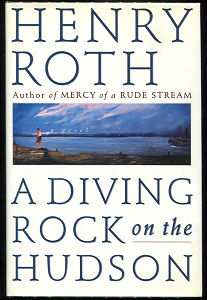
Uit: The Shell Seekers

“Well … if you’re really all right, I might put it off for a bit. I’m ac-tually frightfully busy this weekend. Mumma, have you spoken to Nancy yet?” “No. I did think about it, and then I chickened out. You know how she fusses. I’ll call tomorrow morning, when Mrs. Plackett’s here, and I’m safely dug in and can’t possibly be budged.” “How are you feeling? Truthfully, now.” “Perfectly all right. Except, as I told you, a bit short of sleep.” “You won’t do too much, will you? I mean, you won’t plunge out into the garden and start digging trenches or moving trees?” “No, I won’t. I promise. Anyway, everything’s hard as iron. You couldn’t get a spade into the earth.” “Well, thank God for small mercies. Mumma, I must go, I’ve got a colleague here in the office with me …” “I know. Your secretary told me. I’m sorry I disturbed you, but I wanted you to know what was happening.” “I’m glad you did. Keep in touch, Mumma, and cherish yourself a little.” “I will. Goodbye, my darling,” “Goodbye, Mumma.”
She rang off, put the telephone back on the table, and leaned back in her chair. Now, there was nothing more to be done. She discovered that she was very tired, but it was a gentle tiredness, assuaged and comforted by her surroundings, as though her house were a kindly person, and she was being embraced by loving arms. In the warm and firelit room and the deep familiar armchair, she found herself surprised by, filled by, the sort of reasonless happiness she had not experienced for years. It is because I am alive. I am sixty-four, and I have suffered, if those idiot doctors are to be believed, a heart attack. Whatever. I have survived it, and I shall put it behind me, and not talk nor think about it, ever again. Because I am alive. I can feel, touch, see, hear, smell; look after myself; discharge myself from the hospital; find a taxi, and get myself home. Mere are snowdrops coming out in the garden, and spring is on the way. I shall see it. Watch the yearly miracle, and feel the sun grow warmer as the weeks slip by. And because I am alive, I shall watch it all happen and be part of that miracle. Shc remembered the story of dear Maurice Chevalier. How does it feel to be seventy? they had asked him. Not too bad, he had replied. When you consider the alternative. But for Penelope Keeling it felt a thousand times better than just not too bad. Living, now, had become not simple existence that one took for granted, but a bonus, a gift, with every day that lay ahead an experience to be savoured. Time did not last forever. I shall not waste a single moment, she promised herself. She had never felt so strong, so optimistic. As though she was young once more, starting out, and something marvellous was just about to happen.”


Rosamunde Pilcher (22 september 1924 – 6 februari 2019)