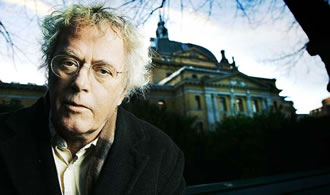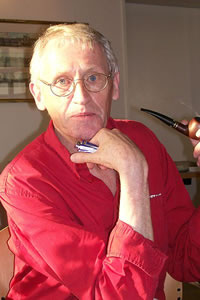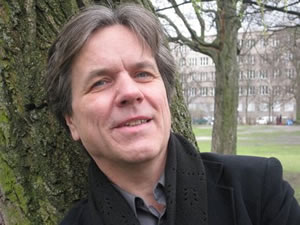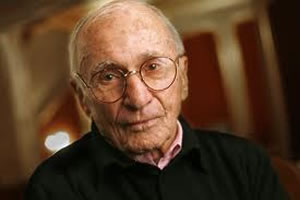
James Purdy, Martin R. Dean, Eelke de Jong, Roger Garaudy, Alie Smeding, Clara Viebig

De Amerikaanse schrijver James Purdy werd geboren in Fremont in de staat Ohio op 17 juli 1914. Zie ook alle tags voor James Purdy op dit blog.

Uit: Color of Darkness

Sometimes he thought about his wife, but a thing had begun of late, usually after the boy went to bed, a thing which should have been terrifying but which was not: he could not remember now what she had looked like. The specific thing he could not remember was the color of her eyes. It was one of the most obsessive things in his thought. It was also a thing he could not quite speak of with anybody. There were people in the town who would have remembered, of course, what color her eyes were, but gradually he began to forget the general structure of her face also. All he seemed to remember was her voice, her warm hearty comforting voice.
Then there was the boy, Baxter, of course. What did he know and what did he not know. Sometimes Baxter seemed to know everything. As he hung on the edge of the chair looking at his father, examining him closely (the boy never seemed to be able to get close enough to his father), the father felt that Baxter might know everything.
“Bax,” the father would say at such a moment, and stare into his own son’s eyes. The son looked exactly like the father. There was no trace in the boy’s face of anything of his mother.
“Soon you will be all grown up,” the father said one night, without ever knowing why he had said this, saying it without his having even thought about it.
“I don’t think so,” the boy replied.
“Why don’t you think so,” the father wondered, as surprised by the boy’s answer as he had been by his own question.
The boy thought over his own remark also.
“How long does it take?” the boy asked.
“Oh a long time yet,” the father said.

“Will I stay with you, Daddy,” the boy wondered.
The father nodded. “You can stay with me always,” the father said.
The boy said Oh and began running around the room. He fell over one of his engines and began to cry.
Mrs. Zilke came into the room and said something comforting to the boy.
The father got up and went over to pick up the son. Then sitting down, he put the boy in his lap, and flushed from the exertion, he said to Mrs. Zilke: “You know, I am old!”
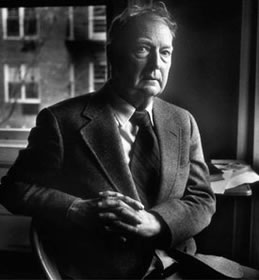
 

James Purdy (17 juli 1914 – 13 maart 2009)

Lees verder “James Purdy, Martin R. Dean, Eelke de Jong, Roger Garaudy, Alie Smeding, Clara Viebig”
Rainer Kirsch, Mattie Stepanek, Jakob Christoph Heer, Bruno Jasieńsk, Shmuel Yosef Agnon, Christina Stead, Michio Takeyama

De Duitse dichter en schrijver Rainer Kirsch werd geboren op 17 juli 1934 in Döbeln. Zie ook alle tags voor Rainer Kirsch op dit blog.


Aufschub

Damit wir später reden können, schweigen wir.
Wir lehren unsere Kinder schweigen, damit
Sie später reden können.
Unsere Kinder lehren ihre Kinder schweigen.
Wir schweigen und lernen alles
Dann sterben wir.
Auch unsere Kinder sterben. Dann
Sterben deren Kinder, nachdem
Sie unsere Urenkel alles gelehrt haben
Auch das Schweigen, damit die
Eines Tages reden können.
Jetzt, sagen wir, sit nicht die Zeit zu reden.
Das lehren wir unsere Kinder
Sie ihre Kinder
Die ihre.
Einmal, denken wir, muß doch die Zeit
kommen.


Rainer Kirsch (Döbeln, 17 juli 1934)
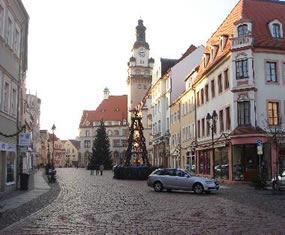
Döbeln, centrum


Lees verder “Rainer Kirsch, Mattie Stepanek, Jakob Christoph Heer, Bruno Jasieńsk, Shmuel Yosef Agnon, Christina Stead, Michio Takeyama”

Tony Kushner, Reinaldo Arenas, Georges Rodenbach, Anita Brookner, Jörg Fauser

De Amerikaanse schrijver Tony Kushner werd geboren op 16 juli 1956 in New York. Zie ook alle tags voor Tony Kushner op dit blog.


Uit: The Intelligent Homosexual’s Guide to Capitalism and Socialism with a Key to the Scriptures

“GUS

You are.But this… (A shrug.)Complicated, honey.

(Little pause.)

You remember, I think I told you this, the Daily News strike, I helped out, I was ILWU liaison with the teamsters, the paper and printing trades, when they went out against the Daily News? With the writers, the writers went out too, word and muscle, 1991? Same year the Committees of Correspondence broke from the party, same year I left, I left the party, later I rejoined but — 1991, the year pop died, and Gorbachev was, you know, that whole (gesture, something immense).The coup attempt in Moscow and Yeltsin and Gus Hall, that (another gesture, throwing away).

The first Iraq — all that crazy s— that year. Anyway. This old guy, this printer, who I met then on the pickets, we liked each other a lot, he was a smart man, he had a perspective, maybe not… (To Clio:) But a perspective.

CLIO

Yeah.

GUS

So a year after all that, I got a call that this old printer, the guy’s been felled by a heart attack, wham, in a hospital. I went to see him, eyes screwed shut, with a stupid tube down his throat, tape around his mouth to, to hold it, and I saw, I sat for a while, and I noticed his hands was going

(He shows how the printer’s hands were going.)

Like, I thought, what is it, is he, is this, like, piano practicing.

(Again with the hands. The gestures aren’t much like piano playing: the fingers are rapidly moving unseen objects up, down, sideways.)

Then I thought, oh I get what — it made me cry, I cried. I thought, his hands want to pull out that tube, dumb Irish, probably he’d let some c—sucking Priest –

(A quick gesture to Pill, placating and acknowledging; Pill lets him off the hook.)

GUS

Some creep got to him, talked him out of a living will, so… And here he was, a prisoner, in that bed. So his hands were going –

(The printer’s hands again:)

His grandson offered me a Kleenex box, and I said, I said look at his hands, he… Maybe you think he wants to get at that tube, or, or the power cord to that goddamn pump?His grandson says, no, that’s just muscle memory. He’s a typesetter, a compositor. His hands are still working, see? He’s still setting stories and headlines in lead type.

(Little pause.)

That’s what it was, the kid was right. But so was I: His hands were working. Homo laborans. Homo faber. Man the maker. Man the worker. That’s what hands do.

(A look at his hands, then:)

My friend the printer. They left him alone that night, and somehow he managed to pull out the breathing tube. He asphyxiated.

The work of your hands makes the world.

And while you still have the use of them, they can unmake the goddam world, just as well.“


Tony Kushner (New York, 16 juli 1956)

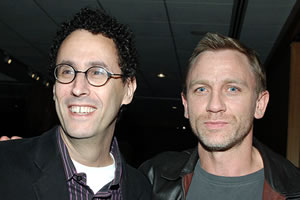
Hier met de acteur Daniel Craig (rechts)

Lees verder “Tony Kushner, Reinaldo Arenas, Georges Rodenbach, Anita Brookner, Jörg Fauser”

Dag Solstad, Bernard Dimey, Andrea Wolfmayr, Pierre Benoit, Franz Nabl

De Noorsde schrijver Dag Solstad werd geboren op 16 juli 1941 in Sandefjord. Zie ook alle tags voor Dag Solstad op dit blog.

Uit: Professor Andersens Nacht (Vertaald door Ina Kronenberger)

„Es war Heiligabend, und Professor Andersen hatte in seinem Wohnzimmer einen Weihnachtsbaum.

Er sah ihn an. »Na, so was«, dachte er. »Ich muß schon sagen.« Er wandte sich ab und ging durch das Zimmer, während er den Weihnachtsliedern im Fernsehen lauschte. »Ja, ich muß schon sagen «, wiederholte er. »Ja, was will ich eigentlich sagen?« fragte er sich sodann nachdenklich. Er betrachtete den schön gedeckten Tisch im Eßzimmer. Für eine Person gedeckt. »Seltsam, wie tief es doch sitzt«, dachte er, »und noch dazu ohne jegliche Ironie«, dachte er und schüttelte den Kopf.

Er freute sich auf das Essen. Unter dem Weihnachtsbaum lagen zwei Geschenke, von jedem seiner beiden erwachsenen Neffen eins. »Wenn ich hoffe, daß mir die Speckschwarte schön knusprig gelingt, liegt darin dann ein Hauch von Ironie?

Nein«, dachte er, »gelingt mir die Speckschwarte nicht, werde ich richtig wütend und fluche laut, obwohl Heiligabend ist«, dachte er. So wie er laut geflucht hatte, als er sich damit abmühte, den Baum in den Baumständer zu zwingen, damit dieser richtig saß und anschließend gerade und nicht schief stand, so wie ein Weihnachtsbaum im Haus zu stehen hat. Wie er ebenfalls geflucht hatte, als er die elektrischen Kerzen an den Zweigen des Baums befestigt hatte und feststellte, daß er auch in diesem Jahr im Kreis gegangen war, weswegen sich das Kabel in sich verdreht hatte und er kehrtmachen und wieder zurückgehen mußte, eine Kerze nach der anderen abnehmen und noch einmal fast ganz von vorn beginnen. Verflucht, hatte er da gesagt. Verflucht. Laut und vernehmlich, doch das war gestern gewesen. »Seltsam, wie tief Heiligabend in uns sitzt«, dachte er. Die feierliche Stimmung. Die Heilige Nacht. Die um Mitternacht eingeläutet wird. Nicht vorher, wie so viele in Norwegen glauben, heute ist der Abend vor der Heiligen Nacht. Oder der Stillen Nacht.“


Dag Solstad (Sandefjord, 16 juli 1941)

Lees verder “Dag Solstad, Bernard Dimey, Andrea Wolfmayr, Pierre Benoit, Franz Nabl”

Iris Murdoch, Richard Russo, Jean Christophe Grangé, Driss Chraïbi, Walter Benjamin, Jacques Rivière

De Iers-Britse schrijfster en filosofe Iris Murdoch werd geboren in Dublin op 15 juli 1919. Zie ook alle tags voor Iris Murdoch op dit blog.

Uit: The Black Prince

„I lived then and had long lived in a ground-floor flat in a small shabby pretty court of terrace houses in North Soho, not far from the Post Office Tower, an area of perpetual seedy brouhaha. I preferred this genteel metropolitan poverty to the styleless surburban affluence favoured by the Baffins. My ‘rooms’ were all at the back. My bedroom looked on to dustbins and a fire escape. My sitting-room on to a plain brick wall caked with muck. The sitting-room, half a room really (the other half, stripped and degraded, was the bedroom) had wooden panels of that powdery dignified shade of green which can only be achieved by about fifty years of fading. This place I had crammed with too much furniture, with Victorian and oriental bric-à-brac, with tiny heterogeneous objets d’art, little cushions, inlaid trays, velvet cloths, antimacassars even, lace even. I amass rather than collect. I am also meticulously tidy though resigned to dust. A sunless and cosy womb my flat was, with a highly wrought interior and no outside. Only from the front door of the house, which was not my front door, could one squint up at sky over tall buildings and see above the serene austere erection of the Post Office Tower.

So it was that I deliberately delayed my departure. What if I had not done so? I was proposing to disappear for the whole summer, to a place incidentally which I had never seen but had adopted blind. I had not told Arnold where I was going. I had mystified him. Why I wonder? Out of some sort of obscure spite? Mystery always bulks larger. I had told him with a firm vagueness that I should be travelling abroad, no address. Why these lies? I suppose I did it partly to surprise him. I was a man who never went anywhere. Perhaps I felt it was time I gave Arnold a surprise. Neither had I informed my sister Priscilla that I was leaving London. There was nothing odd in that. She lived in Bristol with a husband whom I found distasteful. Suppose I had left the house before Francis Marloe knocked on the door? Suppose the tram had arrived at the tram stop and taken Prinzip away before the Archduke’s car came round the corner?

I repacked the suitcases and transferred to my pocket, for re-reading in the train, the third version of my review of Arnold’s latest novel. As a one-book-a-year man Arnold Baffin, the prolific popular novelist, is never long out of the public eye. I have had differences of opinion with Arnold about his writing. Sometimes in a close friendship, where important matters are concerned, people agree to differ and, in that area, fall silent. So, for a time, it had been with us. Artists are touchy folk. I had, however, after a superficial glance at his latest book, found things in it which I liked, and I had agreed to review it for a Sunday paper. I rarely wrote reviews, being in fact rarely asked to.“

Iris Murdoch (15 juli 1919 – 8 februari 1999)
Lees verder “Iris Murdoch, Richard Russo, Jean Christophe Grangé, Driss Chraïbi, Walter Benjamin, Jacques Rivière”

Robert Wohlleben, Heinrich Peuckmann, Clive Cussler, Jacques Derrida, Kunikida Doppo, Hammond Innes

De Duitse dichter, schrijver, vertaler, essayist en uitgever Robert Wohlleben werd geboren op 15 juli 1937 in Rahlstedt. Zie ook alle tags voor Robert Wohlleben op dit blog en ook mijn blog van 15 juli 2010.


An mich

Lasierter Himmel ohne große Farben
bleicht langsam hin – das sagt mir wohl was jetzt?
Ich spür zu scharf das Kinn, rasurverletzt.
Verheilen tuts bereits für weitre Narben.

Der Schmerz ebbt weg, wie andre längst verdarben,
in Hirnverliesen erst mal weggeätzt.
Da steh ich da: versetzt, verpetzt, vergrätzt
und weiß nicht mal, wohin die Schmerzen starben.

Die Bomben, schlechte Zeit, die jungen Jahre
verschwimmen kaum und gehn doch in die Binsen,
vom Rand her nimmt die Schärfe mählich ab.

Sie solls nicht – doch wie oft ich mich auch paare
und fruchtbar bin: Mein väterliches Grinsen
geht schief, weil ich zu knapp nach Atem schnapp.


Altwerden

In Kladde ohne Ton gefragt: was war?
Den Tigern springen Funken von den Ketten.
Die Stadt brennt. Schwarzgepudert die Reinetten.
Der Sterne flic flac. Falsch und wunderbar.

Mit Flügeln schlägt ein abgeknallter Star.
Den Triggerfinger kann nu nix mehr retten.
Dann dreh die Platte um. Laß Ella scatten.
Im Jive verkettet jetzt sich Paar um Paar.

Im Schädel bleicht die Mahd der Bordgeschütze.
Kartoffelsackbedeckte Haufen. Kamen
von fern hierher. Wo Tod das Leben frißt
.

Ich leb. Den Schädel deckt die Baskenmütze.
Die Bilder führ ich mit. Und all die Namen.
Von der und dem. Da weiß ich doch: was ist.


Robert Wohlleben (Rahlstedt, 15 juli 1937)
Lees verder “Robert Wohlleben, Heinrich Peuckmann, Clive Cussler, Jacques Derrida, Kunikida Doppo, Hammond Innes”

Volker Kaminski, Irving Stone, Natalia Ginzburg, Jacques de Lacretelle, Gavrila Derzjavin

De Duitse schrijver Volker Kaminski werd op 14 juli 1958 in Karlsruhe geboren. Kaminski studeerde 1981-1983 aan de universiteit van Freiburg en 1983-1990 aan de Vrije Universiteit van Berlijn Germanistiek en filosofie. Hij werkte als prive-leraar en opvoeder, maakte zijn debuut in 1994 met de novelle Die letzte Prüfung” en publiceerde romans, diverse korte verhalen en artikelen in kranten, tijdschriften en bloemlezingen. Volker Kaminski werkt als freelance schrijver in Berlijn. In 1995 nam hij deel aan de Ingeborg Bachmann-Wettbewerb in Klagenfurt. Kaminski werd bekroond met de Alfred Doblin beurs 1996 en ontving subsidies ​​van de Kunststiftung Baden-Württemberg en van de Berlijnse Senaat. In 2003 verbeelf hij in het kunstenaarsdorp Schöppingen. In 2008 ontving hij voor drie maanden een beurs voor het Künstlerhaus Edenkoben.

Uit: Mit der Strömung

Sie trafen sich vor dem Frühstück an der Badebucht. Victor stand auf dem Holzsteg und hatte die Hände hinter dem Rücken verschränkt. Er ließ die Au-gen langsam über die Bucht kreisen. Rechts die Umrisse einer mittelalterlichen Burg, deren Befestigungsmauern bis ans Meer reichten; links vor der Sonne ein runder Kirchturm, so hoch wie ein Leuchtturm; oben in den Hügeln ein steinernes Kastell. Das Dorf schien um neun Uhr morgens noch menschenleer. Trotzdem hatte es schon etwas Ungewöhnliches gegeben; ein mit Blumen und Kränzen geschmückter Wagen war vor die Kirche gefahren, fünfzehn Minuten lang hatte die Glocke geschlagen. Dann war das Auto im Schritttempo durchs Dorf gefahren, gefolgt von einer kleinen Trauergemeinde.
„Heute ist das Meer viel wärmer“, rief Ines vom Ufer. Sie klang fröhlich wie immer. Victor und Sonja gingen hinunter ans Wasser, wo Ines stand und sich mit einer jungen Französin unterhielt. „C’est une catastrophe“, hörte er die Frau sagen. Ein paar Kinder liefen mit Käschern und Plastikeimerchen herum. Sie sammelten Quallen ein – Feuerquallen. Die roten Quallen waren über Nacht auf den Strand zugetrieben. Victor ließ sich von Ines mit spitzem Finger die Stellen im Meer zeigen, wo sich die MEDUSES in Schwärmen herumtrieben. Die Quallen konnten ihnen den ganzen Urlaub verderben, doch Ines lachte und behandelte sie wie eine Sensation.
Es war kühl und windig, obwohl es Mitte Juli war. Bei solchen Temperaturen badete Victor nicht. Auch Sonja war noch nicht schwimmen gewesen. Das Meer musste einen schon unwiderstehlich anlocken, damit man sich unter diesen Umständen hinein getraute.”


Volker Kaminski (Karlsruhe, 14 juli 1958)

Lees verder “Volker Kaminski, Irving Stone, Natalia Ginzburg, Jacques de Lacretelle, Gavrila Derzjavin”

Arthur Laurents, Owen Wister, Béatrix Beck, Willard Motley, Joshua Ferris, Chimamanda Ngozi Adichie

De Amerikaanse schrijver, scenarioschrijver en regisseur Arthur Laurents is geboren in New York op 14 Juli 1918.Zie ook alle tags voor Arthur Laurents op dit blog.

Uit: West Side Story

“SNOWBOY: What about the day we clobbered the Emeralds?
A-RAB: Which we couldn’t have done without Tony.
BABY JOHN: He saved my ever-lovin’ neck!
RIFF: Right! He’s always come through for us and he will now.

(sings)
When you’re a Jet,
You’re a Jet all the way
From your first cigarette
To your last dyin’ day.

When you’re a Jet,
If the spit hits the fan,
You got brothers around,
You’re a family man!

You’re never alone,
You’re never disconnected!
You’re home with your own:
When company’s expected,
You’re well protected!

Then you are set
With a capital J,
Which you’ll never forget
Till they cart you away.
When you’re a Jet,
You stay a Jet!

(spoken) I know Tony like I know me. I guarantee you can count him in.

ACTION: In, out, let’s get crackin’.
A-RAB: Where you gonna find Bernardo?
RIFF: At the dance tonight at the gym.
BIG DEAL: But the gym’s neutral territory.
RIFF: (innocently) I’m gonna make nice there! I’m only gonna challenge him.”


Arthur Laurents (14 juli 1918 – 5 mei 2011)

Lees verder “Arthur Laurents, Owen Wister, Béatrix Beck, Willard Motley, Joshua Ferris, Chimamanda Ngozi Adichie”

Isaak Babel, Wole Soyinka, Rebecca Salentin, Scott Symons, Claire Beyer, Adam Scharrer

De Russische schrijver Isaak Emmanuïlovitsj Babel werd geboren in Odessa op 13 juli 1894. Zie ook alle tags voor Isaak Babel op dit blog.

Uit: Old Shloyme

„Although our town is small, its inhabitants few in number, and although Shloyme had not left this town once in sixty years, you’d be hard-pressed to find a single person who was able to tell you exactly who Shloyme was or what he was all about. The reason for this, plain and simple, is that he was forgotten, the way you forget an unnecessary thing that doesn’t jump out and grab you. Old Shloyme was precisely that kind of thing. He was eighty-six years old. His eyes were watery. His face—his small, dirty, wrinkled face—was overgrown with a yellowish beard that had never been combed, and his head was covered with a thick, tangled mane. Shloyme almost never washed, seldom changed his clothes, and gave off a foul stench. His son and daughter-in-law, with whom he lived, had stopped bothering about him—they kept him in a warm corner and forgot about him. His warm corner and his food were all that Shloyme had left, and it seemed that this was all he needed. For him, warming his old broken bones and eating a nice, fat, juicy piece of meat were the purest bliss. He was the first to come to the table, and greedily watched every bite with unflinching eyes, convulsively cramming food into his mouth with his long bony fingers, and he ate, ate, ate till they refused to give him any more, even a tiny little piece. Watching Shloyme eat was disgusting: his whole puny body quivered, his fingers covered with grease, his face so pitiful, filled with the dread that someone might harm him, that he might be forgotten. Sometimes his daughter-in-law would play a little trick on Shloyme. She would serve the food, and then act as if she had overlooked him. The old man would begin to get agitated, look around helplessly, and try to smile with his twisted, toothless mouth. He wanted to show that food was not important to him, that he could perfectly well make do without it, but there was so much pleading in the depths of his eyes, in the crease of his mouth, in his outstretched, imploring arms, and his smile, wrenched with such difficulty, was so pitiful, that all jokes were dropped, and Shloyme received his portion.“

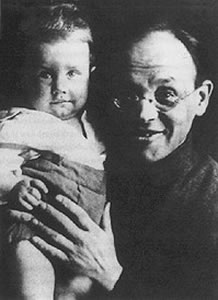
Isaak Babel (13 juli 1894 – 27 januari 1940)
Babel met dochter

Lees verder “Isaak Babel, Wole Soyinka, Rebecca Salentin, Scott Symons, Claire Beyer, Adam Scharrer”

Gustav Freytag, Wilhelm Wackenroder, John Clare, Julius Caesar, Silvio Pfeuffer, Peter Zantingh

De Duitse schrijver en journalist Gustav Freytag werd geboren op 13 juli 1816 in Kreuzburg. Zie ook alle tags voor Gustav Freytag op dit blog.


Uit: Soll und Haben

„Ostrau ist eine kleine Kreisstadt unweit der Oder, bis nach Polen hinein berühmt durch ihr Gymnasium und süße Pfefferkuchen, welche dort noch mit einer Fülle von unverfälschtem Honig gebacken werden. In diesem altväterischen Orte lebte vor einer Reihe von Jahren der königliche Kalkulator Wohlfart, der für seinen König schwärmte, seine Mitmenschen – mit Ausnahme von zwei Ostrauer Spitzbuben und einem groben Strumpfwirker – herzlich liebte und in seiner sauren Amtstätigkeit viele Veranlassung zu heimlicher Freude und zu demütigem Stolze fand. Er hatte spät geheiratet, bewohnte mit seiner Frau ein kleines Haus und hielt den kleinen Garten eigenhändig in Ordnung. Leider blieb diese glückliche Ehe durch mehrere Jahre kinderlos. Endlich begab es sich, daß die Frau Kalkulatorin ihre weißbaumwollene Bettgardine mit einer breiten Krause und zwei großen Quasten verzierte und unter der höchsten Billigung aller Freundinnen auf einige Wochen dahinter verschwand, gerade nachdem sie die letzte Falte zurechtgestrichen und sich überzeugt hatte, daß die Gardine von untadelhafter Wäsche war. Hinter der weißen Gardine wurde der Held dieser Erzählung geboren.

Anton war ein gutes Kind, das nach der Ansicht seiner Mutter vom ersten Tage seines Lebens die staunenswertesten Eigenschaften zeigte. Abgesehen davon, daß er sich lange Zeit nicht entschließen konnte, die Speisen mit der Höhlung des Löffels zu fassen, sondern hartnäckig die Ansicht festhielt, daß der Griff dazu geeigneter sei, und abgesehen davon, daß er eine unerklärliche Vorliebe für die Troddel auf dem schwarzen Käppchen seines Vaters zeigte und das Käppchen mit Hilfe des Kindermädchens alle Tage heimlich vom Kopf des Vaters abhob und ihm lachend wieder aufsetzte, erwies er sich auch bei wichtigerer Gelegenheit als ein einziges Kind, das noch nie dagewesen.“


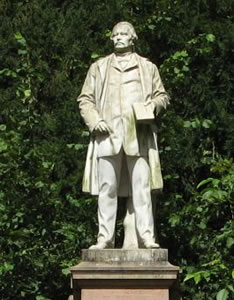
Gustav Freytag (13 juli 1816 – 30 april 1895)

Standbeeld in Wiesbaden

Lees verder “Gustav Freytag, Wilhelm Wackenroder, John Clare, Julius Caesar, Silvio Pfeuffer, Peter Zantingh”